How I’m Setting My Business Goals for 2026 (And Why Target-Setting Isn’t Just for Students)
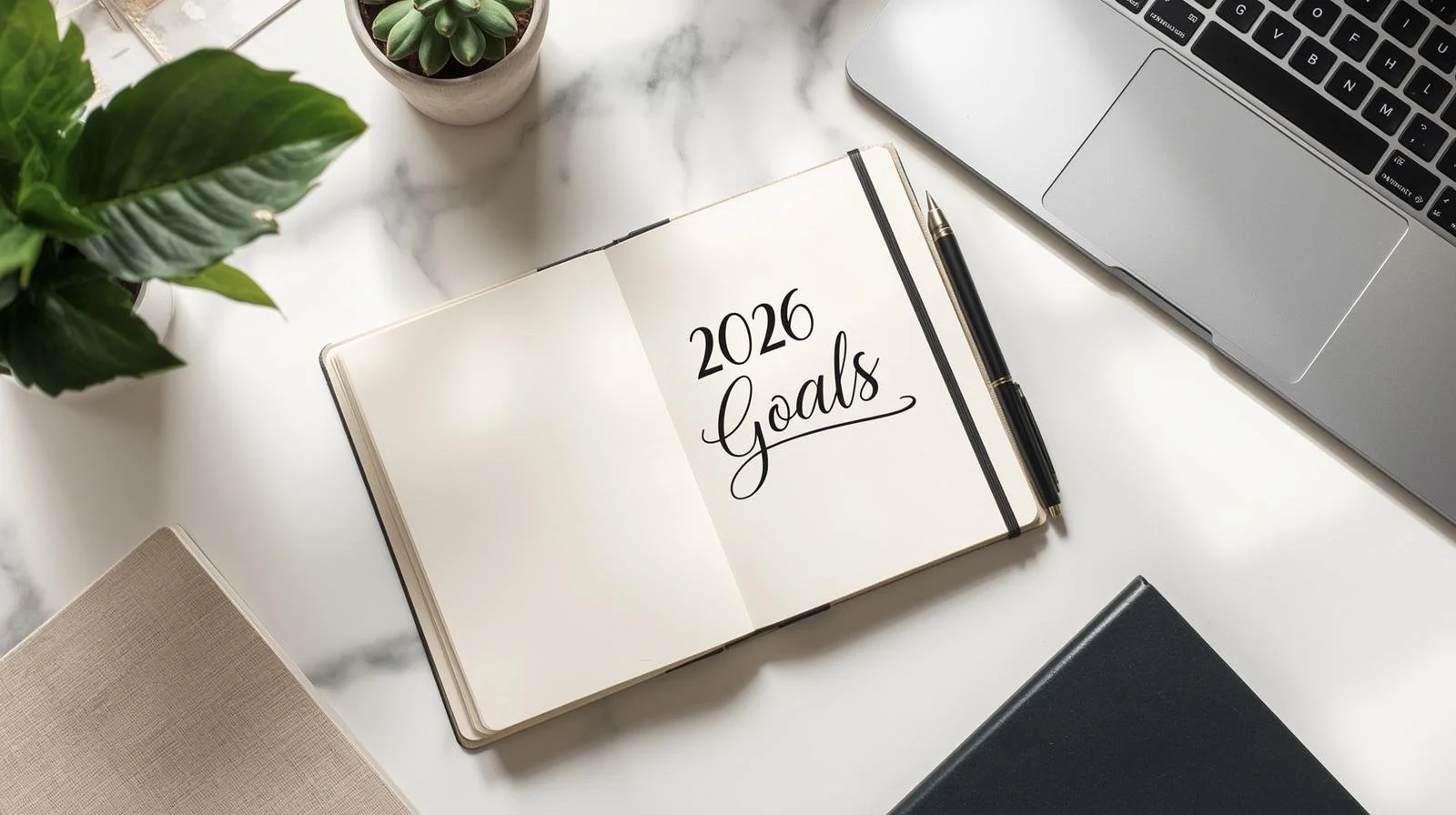
Teachers talk about targets constantly. Progress checks, grade boundaries, success criteria, learning intentions — everything we do is anchored in clarity. We don’t expect students to drift through a year and magically make progress. We give them milestones, direction, and a framework to grow, because without them most students would work hard without really understanding what “progress” even looks like. Somewhere in the midst of juggling classrooms, deadlines, resources, planning, and the emotional weight of teaching, I realised I had never given my own business that same structure. Ink & Insights had grown, yes — but it had grown in that frantic, reactive way teachers know all too well: bursts of productivity held together by adrenaline and good intentions.
So for 2026, I’m taking my own advice. I’m building the kind of plan I would expect from my students: grounded, realistic, intentional, and rooted in systems that actually support long-term growth. This isn’t a resolution list. It’s a roadmap for a year I’m choosing to approach with clarity, not chaos.
Why Teachers Are Naturally Good at Setting Business Goals
What surprised me most when I started treating Ink & Insights like a classroom was how familiar it all felt. Teachers already understand the foundations of strategic planning better than most business owners ever will. We break down enormous tasks — entire GCSE curricula, full Shakespeare plays, exam technique, whole-school behaviour systems — and make them manageable. We track progress constantly, not out of obsession, but because it’s the only way to ensure our students aren’t lost in the noise. We reflect after every lesson, refining our approach almost automatically. It’s built into us.
So when I applied that mindset to the business, everything began to settle. I stopped bouncing between ideas and started moving in a clear direction. I stopped panicking about whether something was “working” and instead looked at the evidence. I stopped guessing and started planning. It turns out that teacher-brain — the part of us that intuitively differentiates, assesses, scaffolds, reflects, and adapts — is one of the most valuable business tools we have. We just don’t always recognise it.
My Business Priorities for 2026
I want to be transparent about the shape of next year, not because the goals are perfect, but because sharing them gives them weight. Ink & Insights grew powerfully this year, but I know it can grow more intentionally. So these are the pillars guiding my decisions in 2026 — the foundations I want every piece of work to rest on:
◆ Systemise everything — I want workflows that are predictable, repeatable, and calm. Launches planned months ahead. Resources created in batches. Content that moves through a clear pipeline instead of being pulled together at the last minute.
◆ Deepen my content library — Writing prompts, teaching resources, creative tasks, and writing boxes are the heart of what I do. Expanding these means expanding value for teachers and students who rely on them.
◆ Grow the Ink & Insights community — Not through pressure or gimmicks, but through consistency. Through meaningful resources. Through blog posts that help. Through prompts that inspire. Through giving more than I ask.
◆ Increase financial predictability — Creative work can feel turbulent. I want stable, long-term revenue streams that allow me to spend more time creating and less time worrying about the numbers behind the scenes.
◆ Expand my creative product lines — New writing boxes, deeper themes, stronger worldbuilding, and richer monthly prompts. 2026 is about developing the Ink & Insights ecosystem, not just maintaining it.
These goals give shape to the year ahead. They anchor the work. And more importantly, they stop me slipping into that exhausting pattern of “keep up at all costs” that teachers know too well.
How I Apply Classroom Strategies to Business Growth
The overlap between teaching and entrepreneurship is bigger than people think. Not in the cliché sense of “teachers are organised,” but in the deeper mechanics of how we plan, reflect, and respond under pressure.
1. Baseline Assessment = Honest Business Audit
At the start of every school year, we check where our students are. Not where we wish they were — where they actually are. I now do the same with the business. A real audit of what sold, what resonated, what fell flat, what I overworked on, and what I didn’t work on enough. It’s uncomfortable, but it means I’m building on truth rather than assumption.
2. Success Criteria = Clear Benchmarks
Students need to know what “good” looks like. So do I. For the business, that means setting measurable benchmarks across output, engagement, traffic, and revenue. Not perfection. Just clarity. When I know what I’m aiming for, I can stop feeling guilty and start feeling grounded.
3. Retrieval Practice = Monthly Reviews
If we don’t look back, we forget what we’ve achieved. Teachers see this constantly with students, but it happens to us too. Monthly reviews let me recognise progress, identify patterns, and catch issues early before they become bigger problems. It’s one of the most powerful business habits I’ve built.
4. Differentiation = Smarter Time Allocation
Not every project needs the same level of intensity. Some need deep focus. Some are quick wins. Some need to simmer quietly in the background. Teachers do this instinctively in classrooms; applying it to business feels like finally giving myself permission to work in a way that aligns with reality, not pressure.
5. Reflective Practice = Sustainable Growth
Reflection is the backbone of teaching, and it’s becoming the backbone of Ink & Insights too. I’m learning to look at what worked, what didn’t, and what needs a different approach without seeing any of it as failure. It’s just data. It’s just growth.
Why Goal-Setting Protects Creativity
The biggest misconception about structure is that it limits creativity. In reality, it does the opposite. When I have clear targets, I’m not creating in survival mode anymore. I’m not wondering which idea to start next. I’m not overwhelmed by the number of projects living in my head. Structure gives space. Space gives focus. And focus gives creativity the room it needs to deepen and flourish.
When you know the direction you’re heading, even loosely, the work becomes calmer. More intentional. More satisfying. You stop racing and start building. And you start noticing the kind of progress you usually only notice in retrospect.
Final Thoughts
Teachers understand progress better than anyone. We see it unfold gradually, shaped by small decisions, consistent habits, and clear expectations. Applying that mindset to my business has allowed me to step into 2026 with more confidence, direction, and purpose than any other year so far.
Goal-setting isn’t about pressure. It isn’t about perfection. It’s about alignment — between what I value and what I’m creating. It’s about making decisions that move me forward rather than sideways. And it’s about trusting that my teacher instincts, the same ones that guide me in the classroom, can guide a business too.
Target-setting isn’t just for students. It’s a life tool. And when you use it intentionally, the difference is unmistakable.
