70 Dark Fantasy Writing Prompts for Teens: Story Starters, Characters, Settings & Visual Ideas
oral tension. In dark fantasy stories, enchanted castles are often cursed, heroes are forced to confront their own inner darkness, and every spell carries a price. It’s a genre where hope and horror coexist — making it especially powerful for teen writers exploring complex emotions, ethical dilemmas, and unsettling but imaginative worlds.
This collection of 70 dark fantasy writing prompts for teens is designed to spark creativity both in the classroom and beyond. Inside, you’ll find a rich mix of story starters, writing prompts, opening and closing lines, character concepts, atmospheric settings, and visual prompts — all carefully crafted to help students and young writers create rich, immersive fantasy stories.
If you’re looking for more inspiration, you can explore the Fairytale and Folklore Writing Prompts Hub, the Fantasy Writing Hub, or browse the Creative Writing Archive for a wider range of atmospheric and genre-based ideas.
1. Plot Hooks
Plot hooks in dark fantasy set the stage for conflict, curses, and impossible choices. They create scenarios where magic is dangerous, victories are bittersweet, and characters are pushed to their limits. These dark fantasy plot hooks for teens offer a clear way into the genre while leaving space to twist each idea in unexpected directions.
Write a story about a kingdom where the sun has not risen for a hundred years — and no one can remember what daylight felt like.
Write a story about a queen whose crown whispers secrets, warnings, and commands to whoever wears it.
Write a story about a knight who discovers their shadow no longer obeys them — and seems to have its own purpose.
Write a story about a village where every wish granted causes someone else to vanish without explanation.
Write a story about a forest whose trees remember every harm done to them — and decide when it is time to respond.
Write a story about a cursed library where the books rewrite themselves each night, altering history and memory.
Write a story about a sorcerer who trades memories for spells, until the next spell demands the one memory they cannot lose.
Write a story about a river that runs with blood once every decade — and begins flowing early this year.
Write a story about a healer who discovers that every life they save shortens their own.
Write a story about a monster that can only be defeated by someone willing to become just as monstrous.
2. Title Ideas
Titles in dark fantasy often combine beauty and menace, hinting at both the setting and the struggle at the heart of the story. A powerful title can capture the tone before a reader even turns the first page. These examples can be used directly or adapted to fit original ideas.
The Crown of Ashes
Shadows of the Forgotten
The Bone Cathedral
Whispers in the Hollow Court
The Last Candle Before Dawn
Bloodroot and Iron
The Sorcerer’s Bargain
Thorns and Ruin
The Midnight Throne
Kingdom of Chains
3. Opening Lines
A strong opening line sets the tone for the entire story. In dark fantasy, beginnings often hint at curses, secrets, or looming danger. These examples help writers establish atmosphere from the very first sentence and invite readers into worlds where something is already unsettling.
“The candles burned black, though no flame touched them.”
“I had always known my magic would kill me; I just never thought it would choose today.”
“The castle bells rang, not for celebration, but for the dead.”
“His shadow was still on the wall, long after he had gone.”
“We called her the witch-queen, but even that word was too kind.”
“The first snowfall was red as rust.”
“When the king smiled, I saw the fangs he tried to hide.”
“The villagers lit their lanterns at dusk, not to see, but to keep the darkness away.”
“Every child in the kingdom was born with a mark — except me.”
“The prophecy said a hero would rise. No one said it would be me.”
4. Closing Lines
Endings in dark fantasy rarely tie everything up neatly. They leave readers with questions about sacrifice, morality, and the lingering effects of magic. These closing lines help writers finish stories in ways that feel haunting, memorable, and thematically complete.
“The kingdom cheered, but I couldn’t tell if we’d been saved or cursed.”
“The shadow leaned closer, and I let it in.”
“We burned the throne, but its ashes still whispered.”
“She smiled through bloodied teeth, and I finally understood why we feared her.”
“The forest closed behind us, erasing every trace we had lived.”
“Light returned to the world, but I never trusted it again.”
“The crown sat heavy in my hands, demanding its next sacrifice.”
“In silence, I became the monster I had once hunted.”
“The war was over, but the curse had only just begun.”
“Even in victory, the darkness had claimed us.”
5. Character Ideas
Characters in dark fantasy are rarely simple heroes or villains. They carry curses, make difficult bargains, and often blur the lines between right and wrong. These character concepts encourage writers to explore motivation, sacrifice, and the heavy weight of power.
A healer whose magic was meant to save lives — but instead brings death.
A scholar who uncovers forbidden texts that slowly begin to rewrite their mind.
A monster hunter who realises they are becoming the very thing they hunt.
A noble cursed to never feel warmth, comfort, or kindness again.
A witch bound to the forest she once tried to burn to the ground.
A prince who carries a coffin everywhere he goes — and knows who it is meant for.
A thief who steals shadows instead of gold.
A girl who sees people’s true faces, twisted and monstrous beneath their skin.
A warrior whose weapon demands blood, even in times of peace.
A child who has never spoken, but whose silence carries powerful magic.
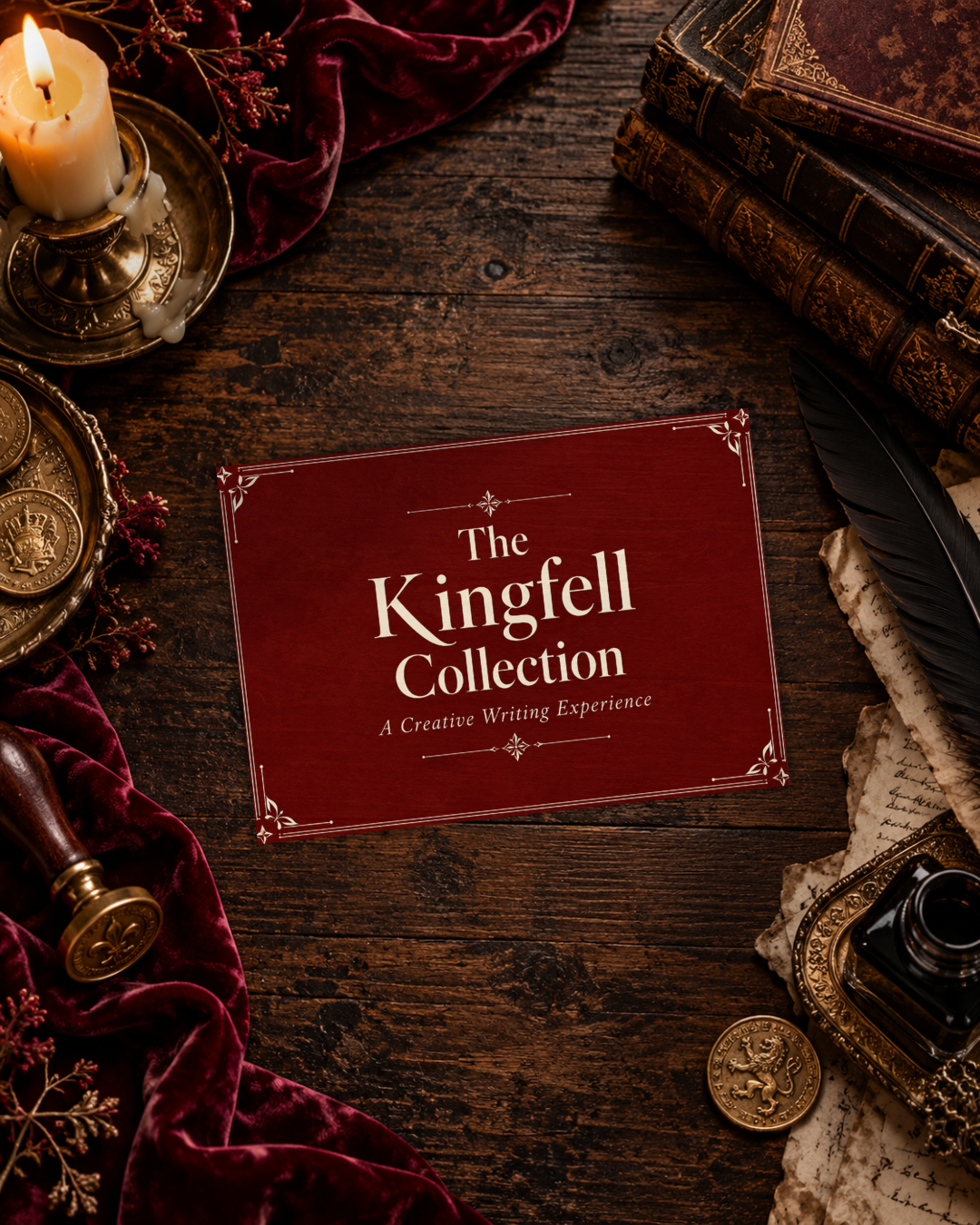
The King is dead.
His daughter is eight years old.
And the kingdom is beginning to fracture.
When King Edmund Mortimer dies, his young daughter Matilda inherits the throne of Kingfell. Too young to rule, she is placed under the protection of Sir Thomas Marshal, Lord Protector of the Realm.
Five Great Houses watch the crown.
Some pledge their loyalty.
Others have ambitions of their own.
Then Queen Matilda disappears from Stonebrige Keep.
No body is found.
No explanation is given.
And a kingdom already divided descends into suspicion, accusations and civil war.
The Kingfell Collection is an immersive fantasy archive filled with royal proclamations, noble family histories, portraits, handwritten letters, secret correspondence, witness testimonies, childhood drawings, religious texts, prophecies, maps and other surviving artefacts from a kingdom on the brink of collapse.
Some documents support the official accounts.
Others contradict them.
Who truly controlled the kingdom after Edmund's death?
What secrets were the Five Great Houses trying to protect?
Why was an innocent lord condemned for treason?
What part did the Seven Lights, forbidden beliefs and ancient prophecies play in the kingdom's downfall?
And what really happened to the little queen?
There is no official explanation.
No final answer.
No single truth.
Only fragments of a lost kingdom, waiting for someone to piece them together.
What's Inside?
◆ 40+ Printable documents and artefacts from the fictional Kingdom of Kingfell
◆ Heraldry, histories, portraits and political secrets of the Five Great Houses
◆ Royal proclamations, letters, diaries, testimonies, warrants, financial records and other historical documents
◆ Queen Matilda's personal writings, childhood drawings and mysterious keepsakes
◆ Fantasy maps, religious texts, folklore, prophecies and worldbuilding materials
◆ A printable prompt card to inspire exploration and storytelling
◆ An exploration guide with ideas for creative writing and classroom use
◆ Instant digital download in PDF format
Who Is It For?
Perfect for:
◆ Fantasy writers and worldbuilders
◆ Novelists, short-story writers and screenwriters
◆ Mystery lovers and historical fantasy enthusiasts
◆ Teachers looking for imaginative creative writing inspiration
◆ Journalers, roleplayers and curious minds
◆ Fans of fictional archives, political intrigue and found-document storytelling
What Makes This Different?
This isn't a fantasy story with a predetermined ending.
It's an archive.
Every document offers another glimpse into Kingfell's history, but no single account reveals the whole truth.
Study the royal proclamations.
Examine the noble houses.
Read the little queen's diary.
Follow the rumours, question the witnesses and consider the secrets hidden between the lines.
Perhaps Matilda was murdered.
Perhaps she escaped.
Perhaps someone helped her disappear.
Or perhaps the truth is stranger than anyone imagined.
You decide what happened.
Use the archive to inspire a short story, develop a novel, build a fantasy world or investigate a mystery with your students.
Follow the evidence.
Question the history.
Create your own version of events.
What truths will you unravel? What story will you write?
Digital download: 44-page PDF collection. Some pages contain multiple individual artefacts. No physical product will be shipped.
What If Your Dark Fantasy World Had a History You Could Hold?
A crumbling castle is intriguing. A crumbling castle with a missing heir, a disputed inheritance and centuries of buried secrets is the beginning of an entire story.
That's the idea behind The Kingfell Collection, an original dark fantasy storyworld archive from Ink & Insights.
Rather than simply describing a fictional kingdom, Kingfell invites you to discover it through beautifully designed historical documents and artefacts. Explore a world of noble houses, royal mysteries, accusations of witchcraft and unsettling secrets, where every surviving fragment might reveal another piece of the story.
For writers who love cursed kingdoms, morally complicated characters and atmospheric fantasy settings, Kingfell offers a different kind of creative inspiration. Use its mysteries to imagine your own characters, explore conflicting accounts of the past, or consider how an entire kingdom's history might be constructed from the evidence it leaves behind.
Discover The Kingfell Collection — £5
Explore the complete digital collection
Curious about Kingfell? Explore a free sample first.
Enter your email below to receive a free preview of the archive and discover the secrets waiting inside Kingfell.

6. Setting Ideas
Atmosphere is central to dark fantasy, and settings often feel like characters in their own right. These places are eerie, cursed, or steeped in history that refuses to stay buried. They provide backdrops for stories where even the environment resists the characters’ survival.
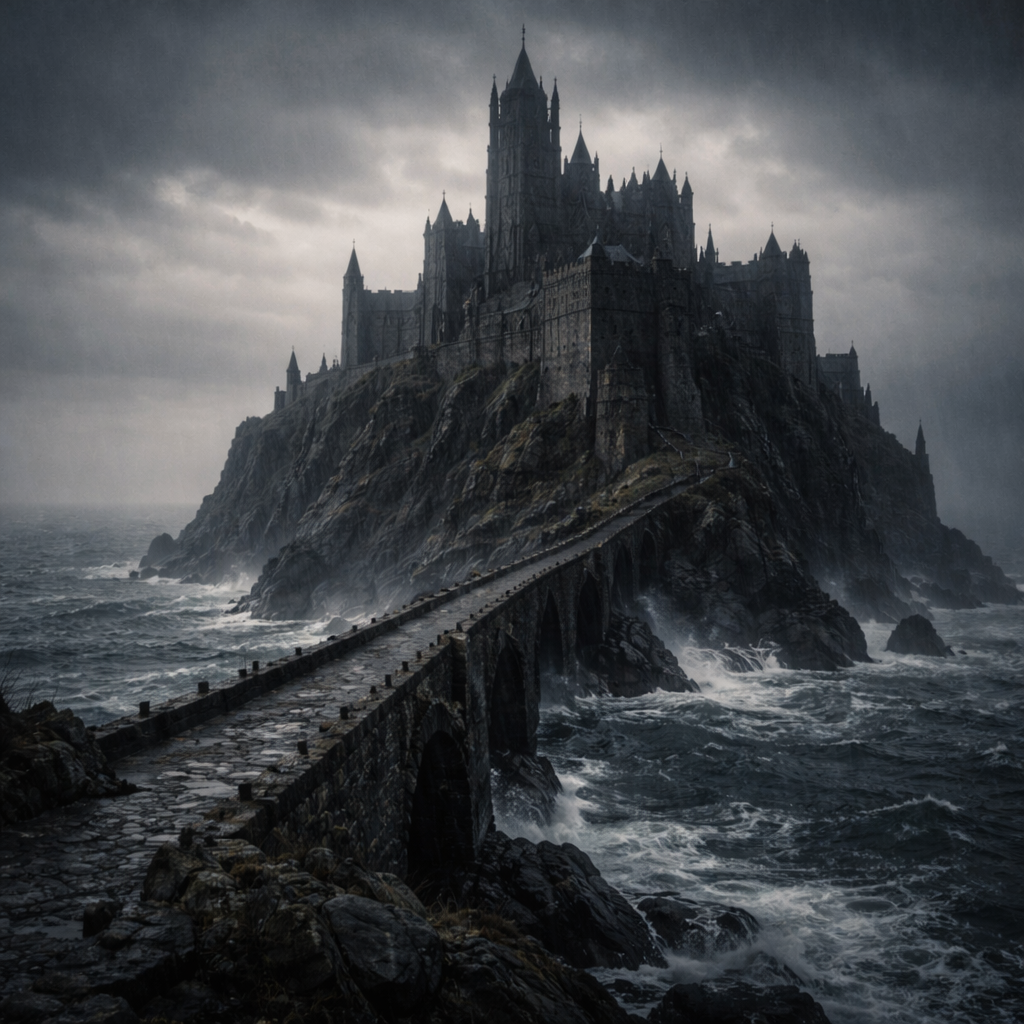
A crumbling castle perched on cliffs that scream when the wind blows.
A labyrinth beneath the city where candles refuse to stay lit.
A mountain where the dead whisper beneath the snow.
A cursed village where no one can die — but no one can heal, either.
A marketplace that opens only at midnight, where every bargain costs more than money.
A battlefield where the ghosts still fight each night.
A cathedral built from bone and glass, its light warped and distorted.
A vast desert of black sand that swallows every footprint.
A forest where trees bleed tar instead of sap.
An abandoned throne room where the tapestries shift to reveal new horrors each day.
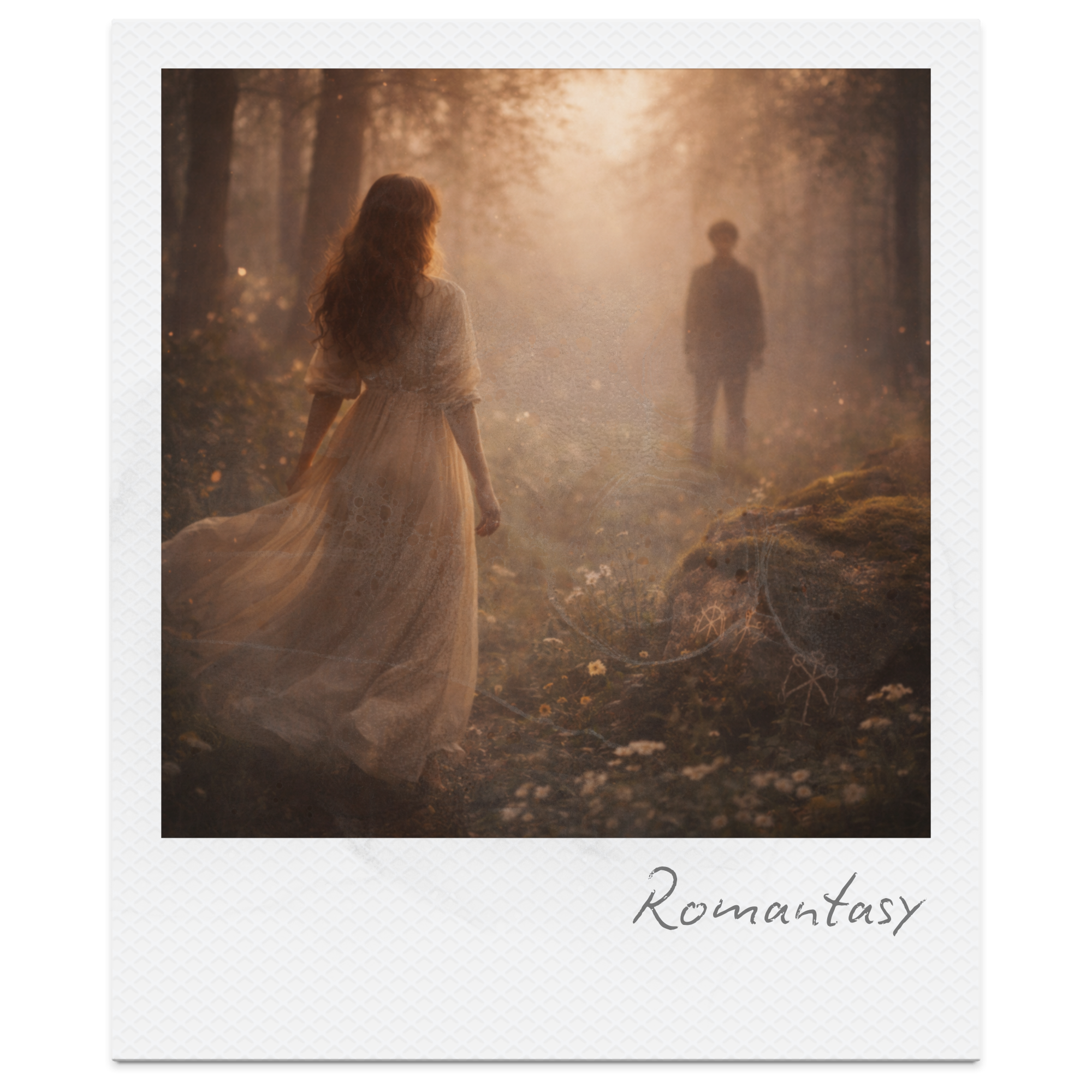
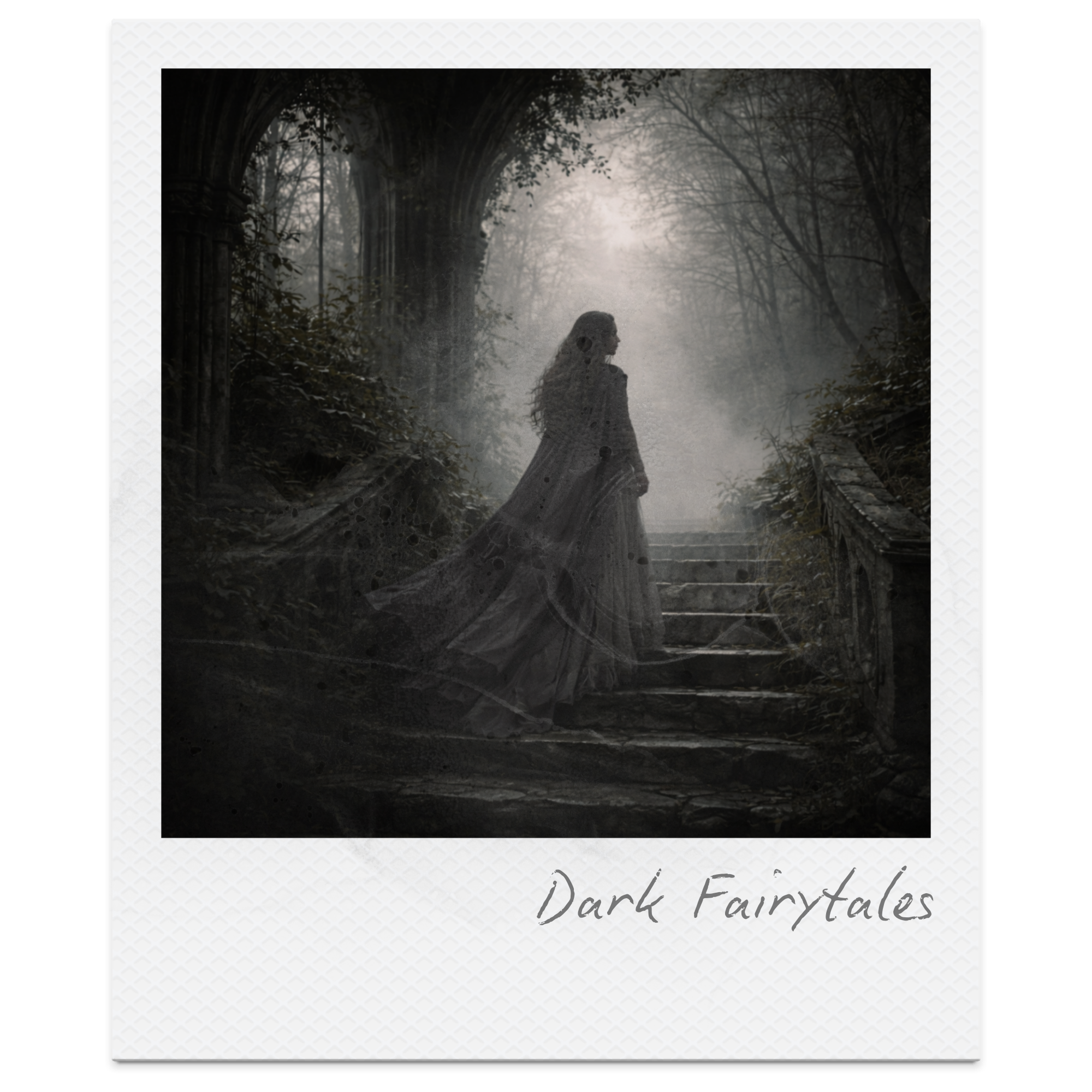
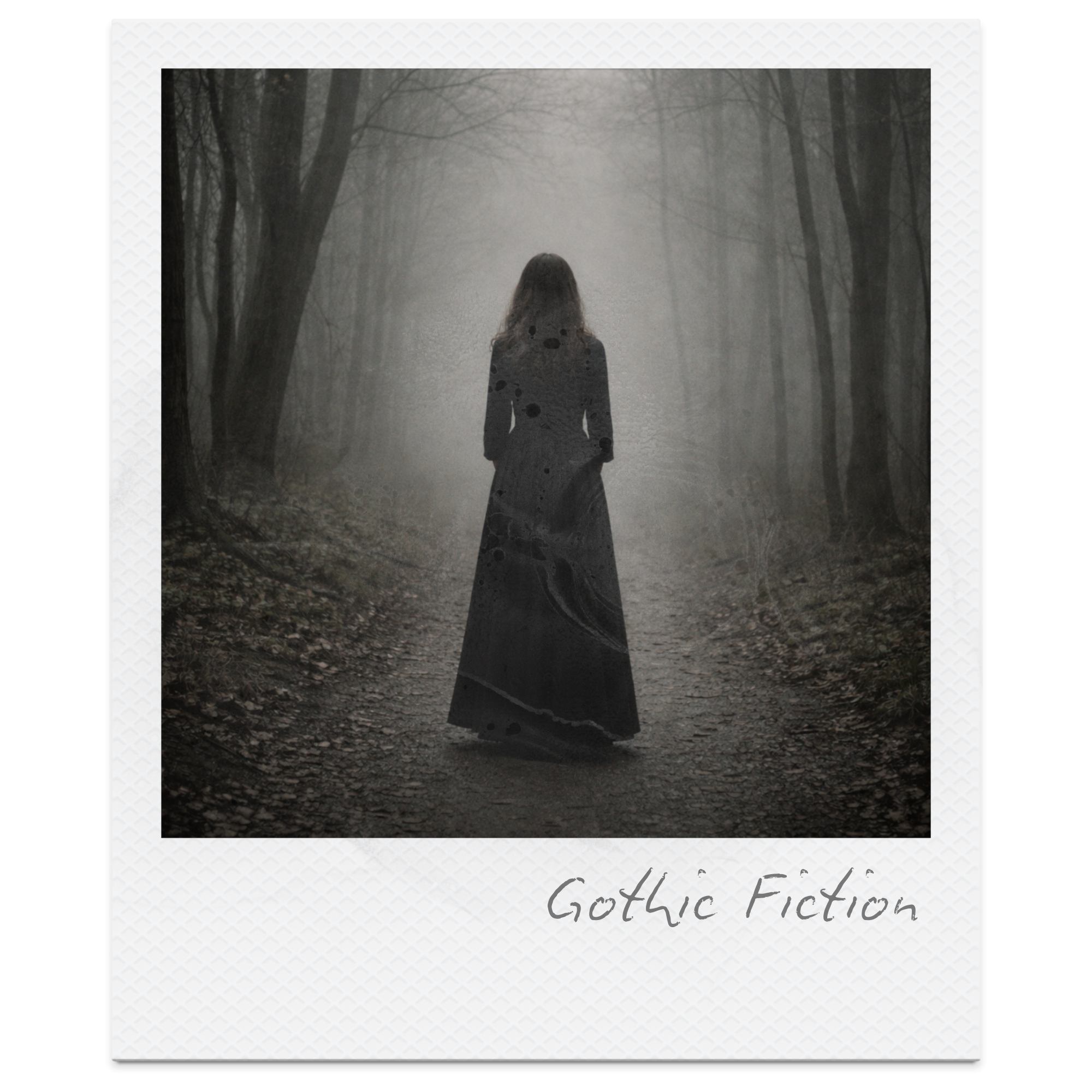
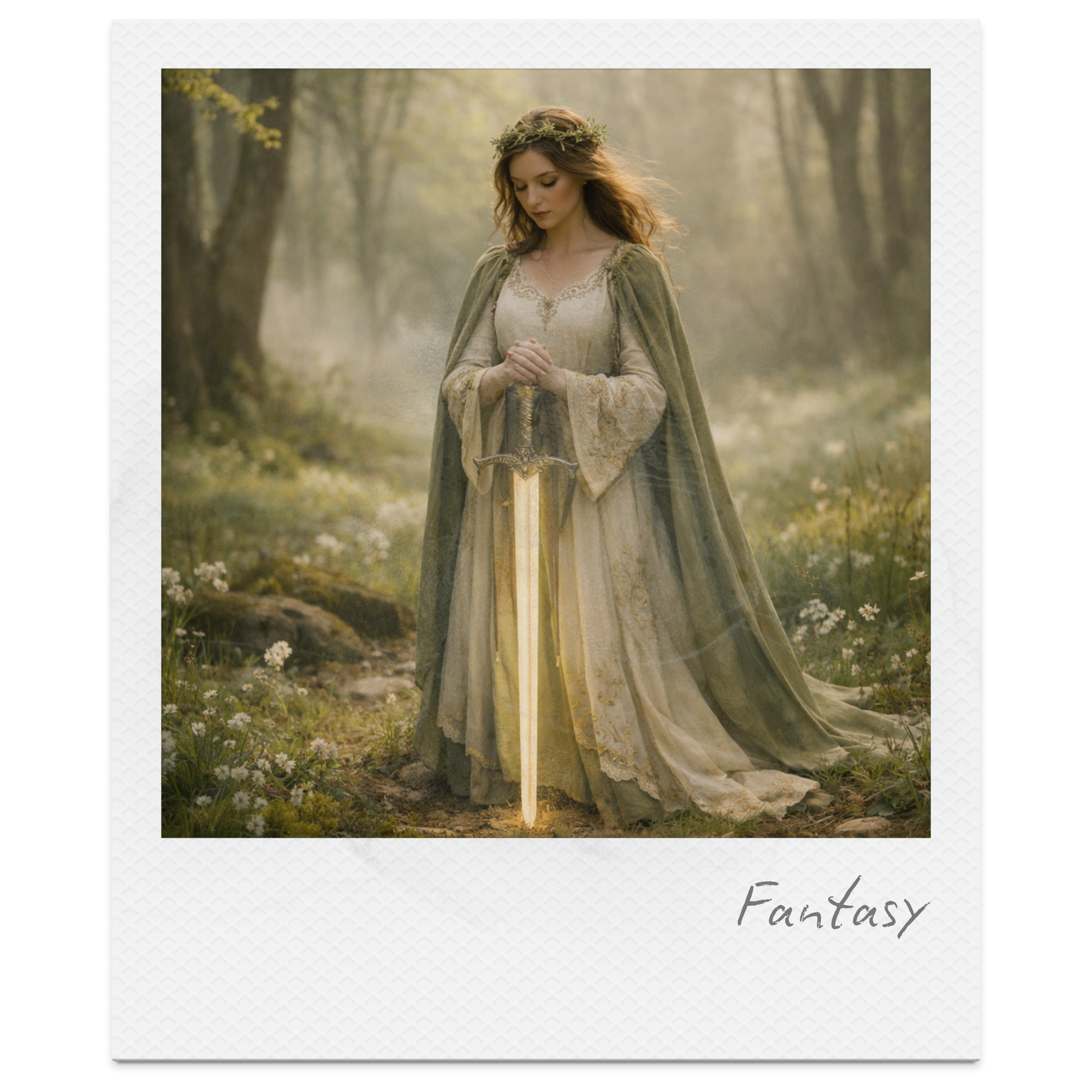
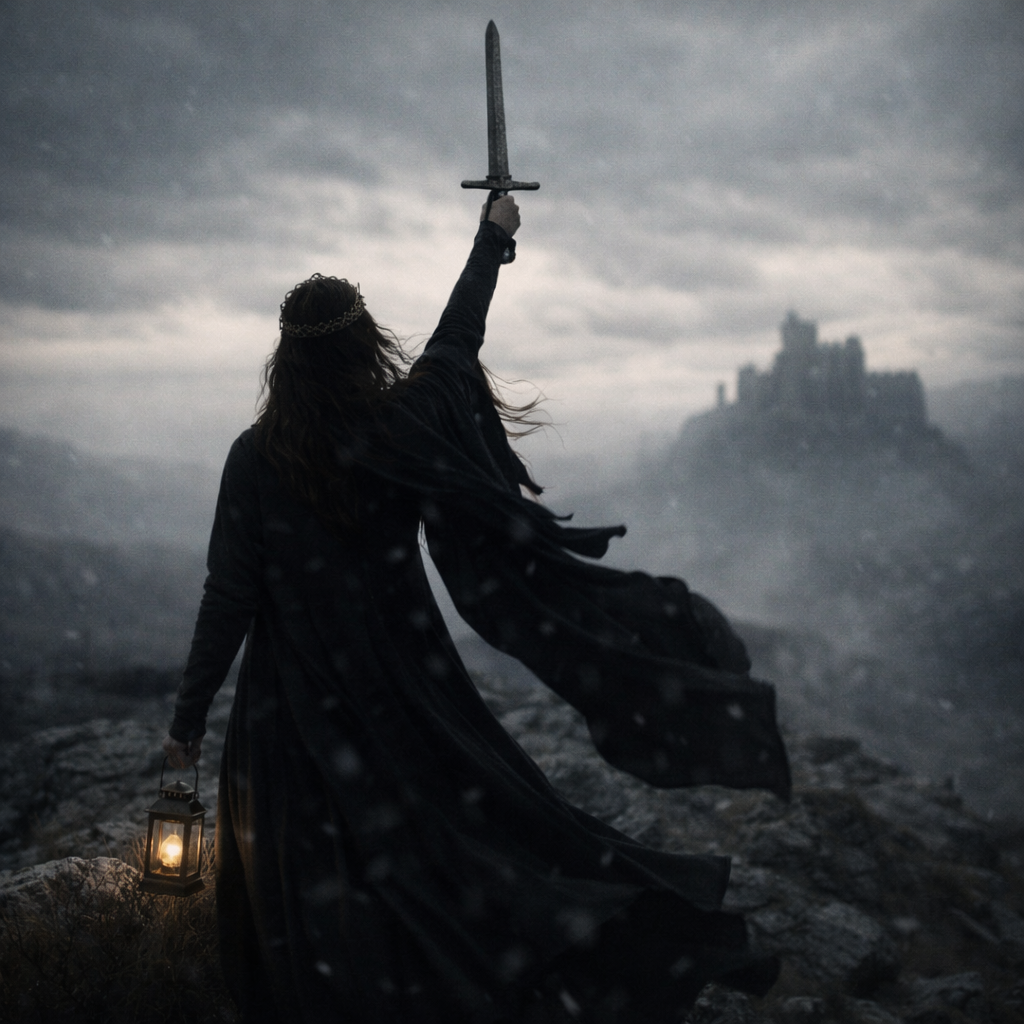
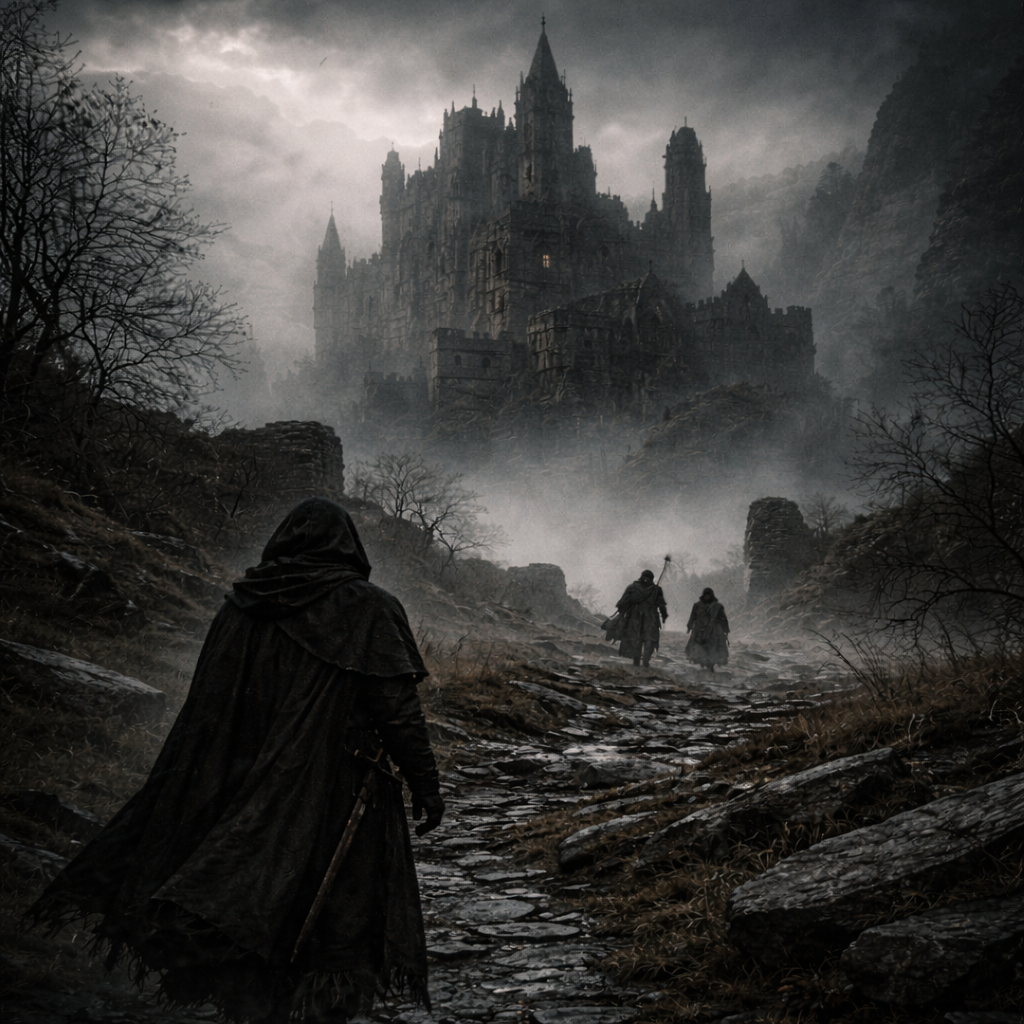
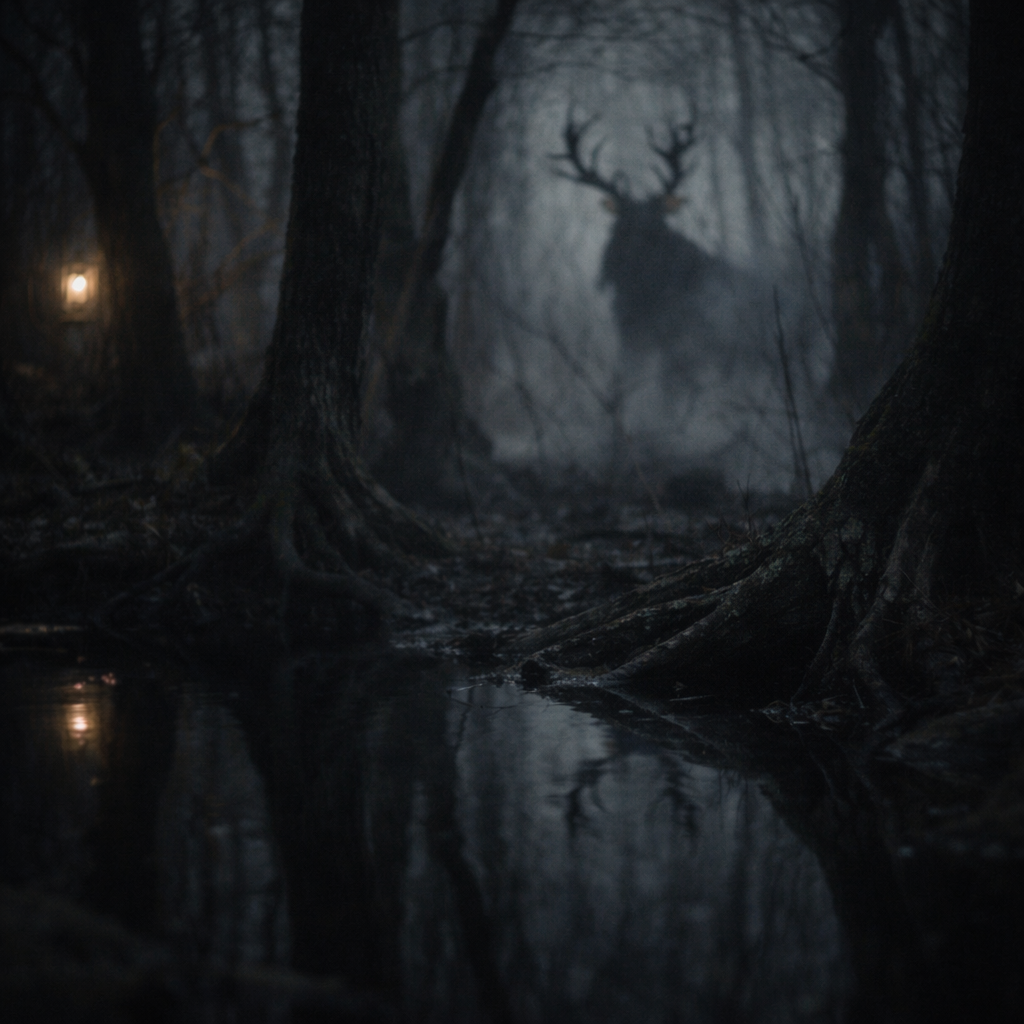
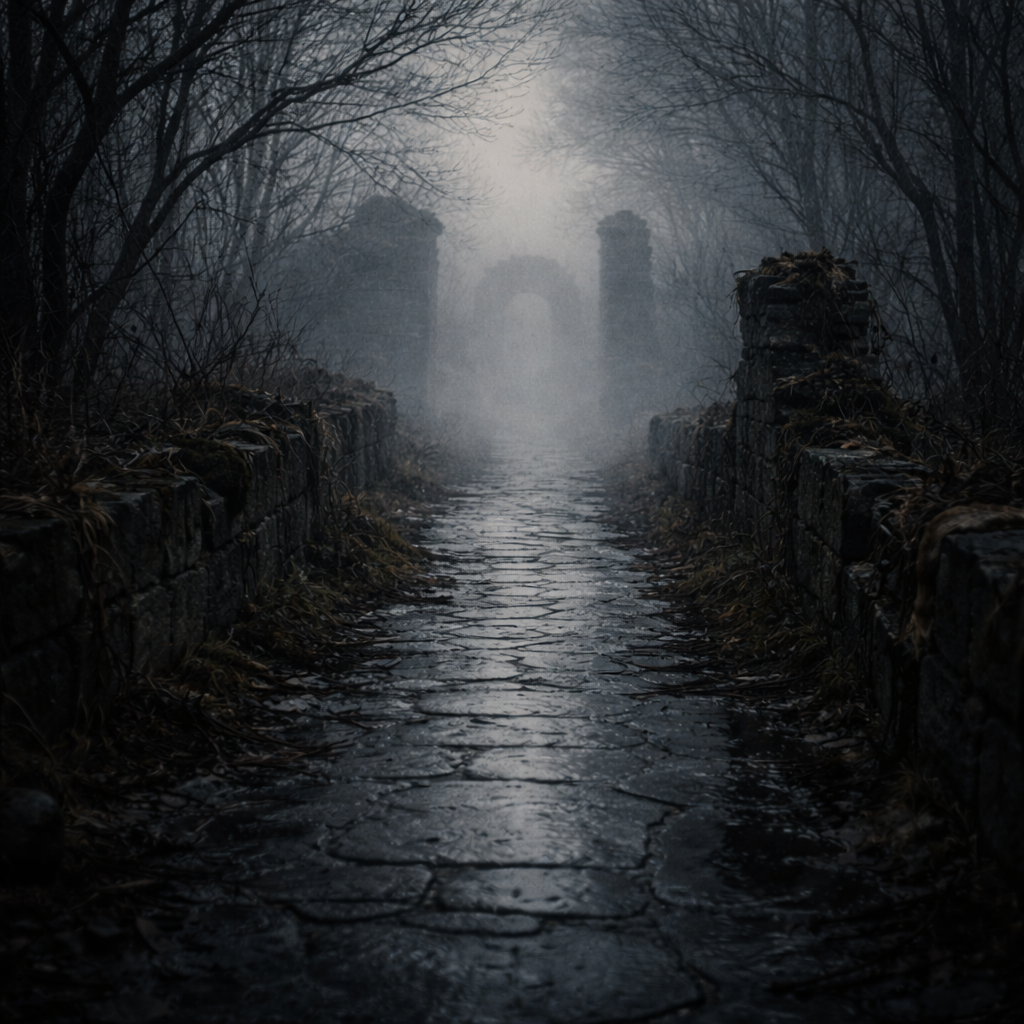
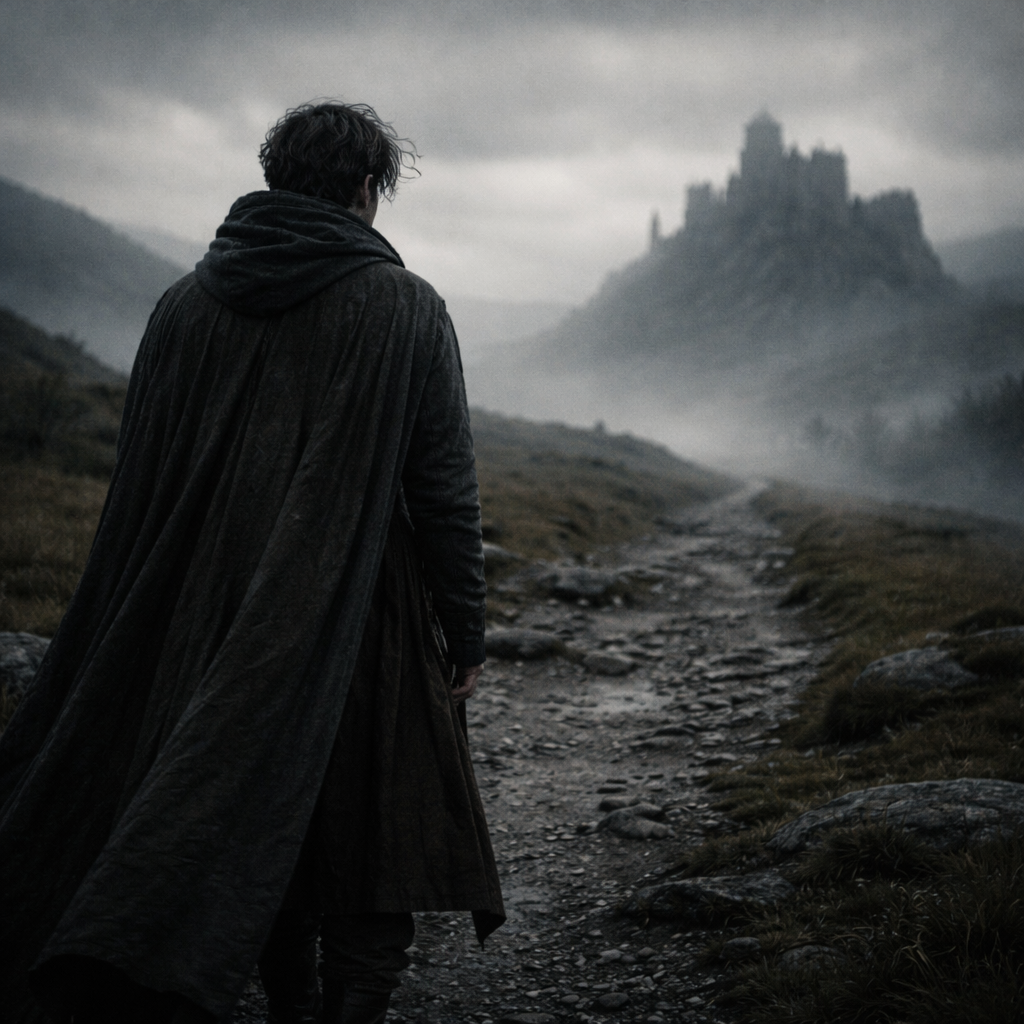
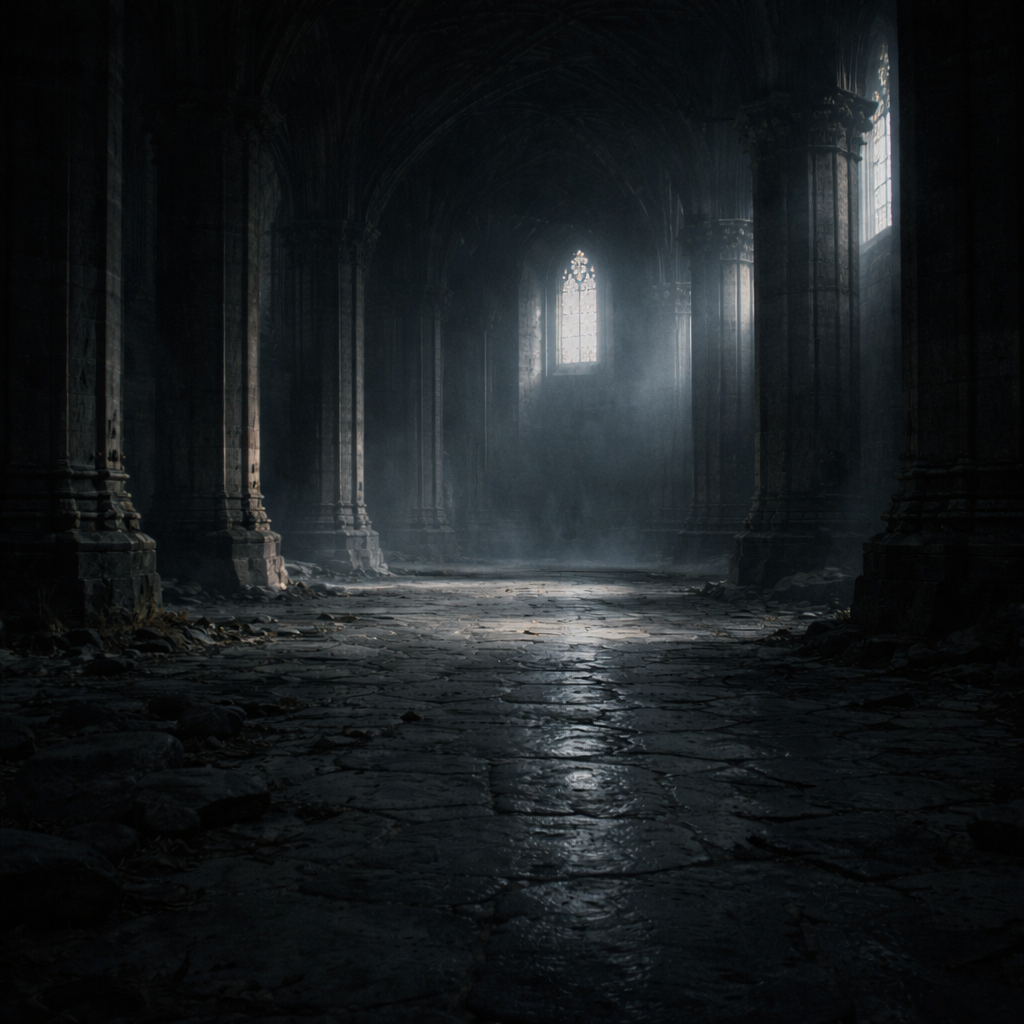
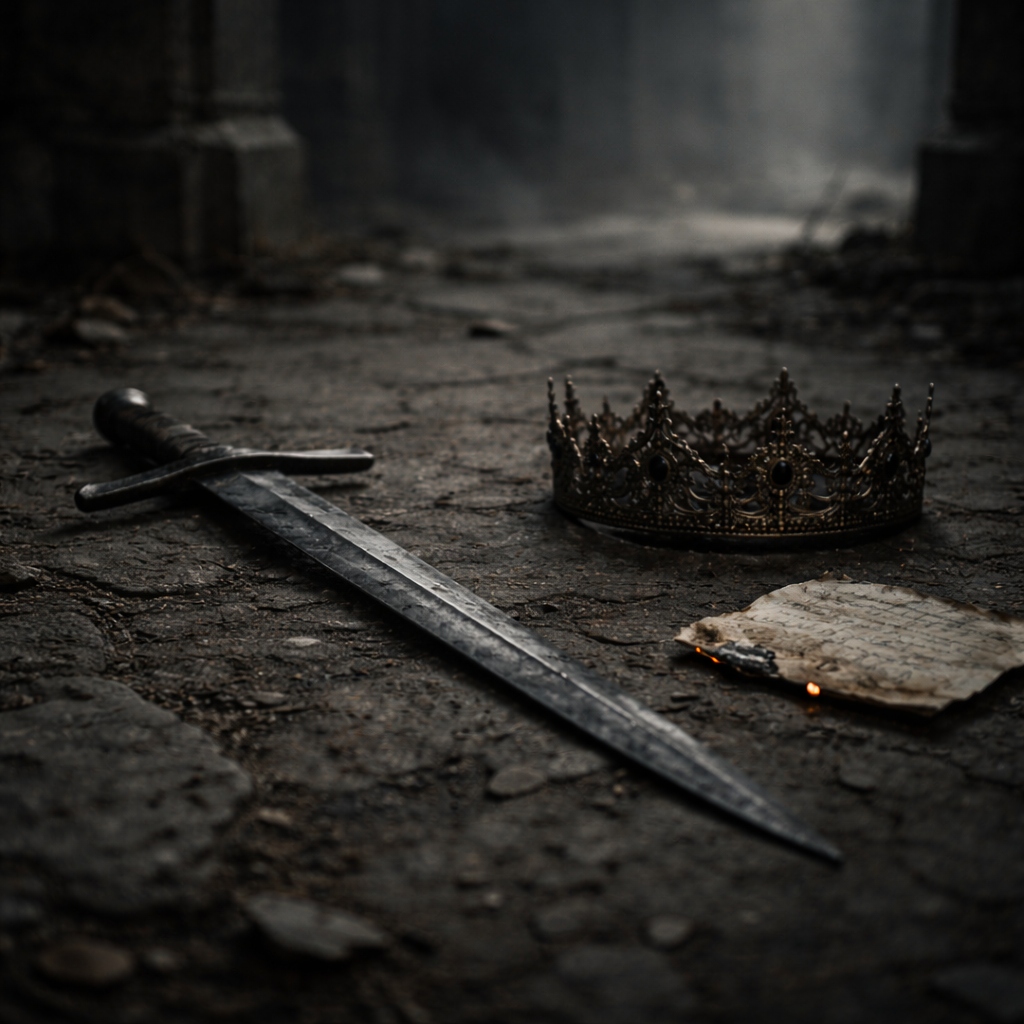
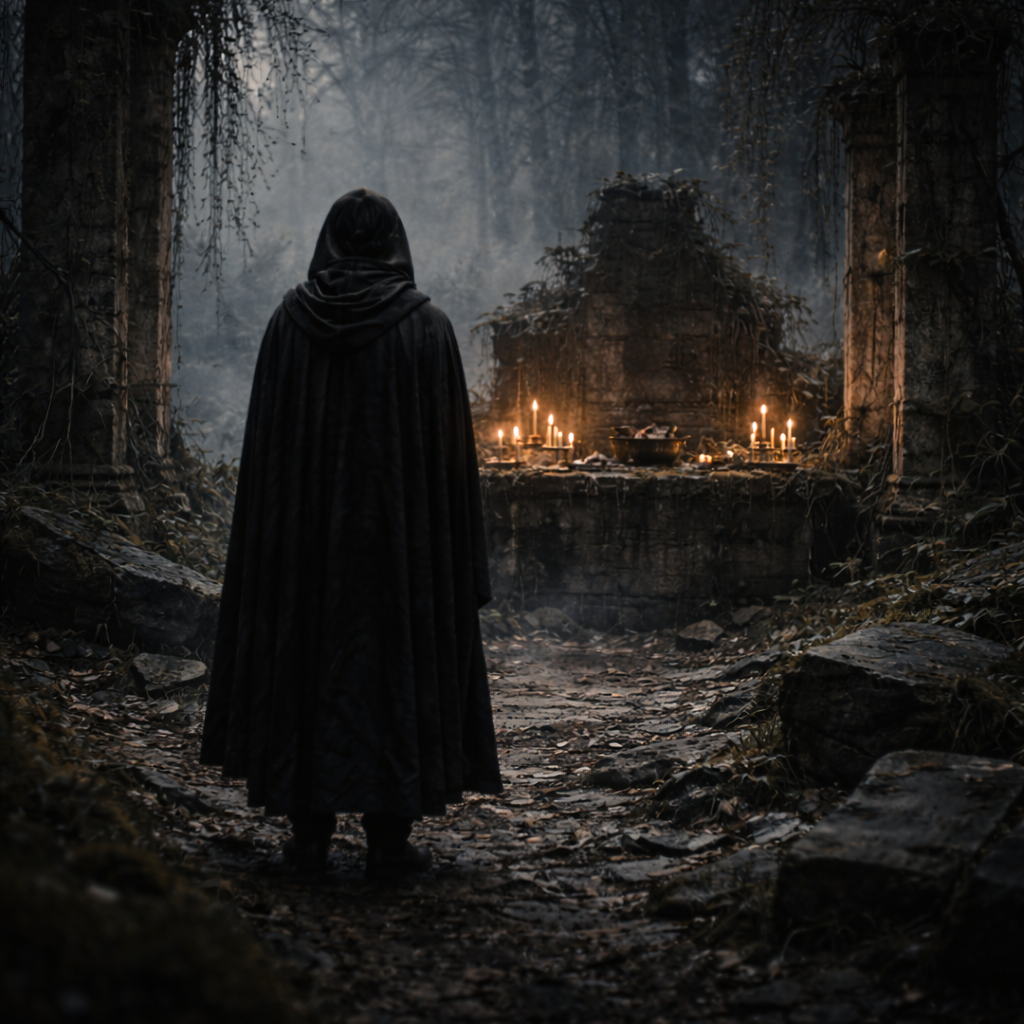
7. Picture Prompts
Visual prompts bring dark fantasy to life for teen writers by providing an immediate image to respond to or build a story around. They help students capture atmosphere quickly, encouraging rich description and imaginative worldbuilding. These visual prompts are designed to be eerie, vivid, and open-ended, leaving space for writers to shape each idea in their own direction.

Go Deeper into Dark Fantasy Writing
If you want to develop these dark fantasy writing prompts further, try approaching them from different angles to deepen atmosphere, moral tension, and emotional impact. Dark fantasy often thrives on consequence rather than spectacle, where magic is costly, power is ambiguous, and resolution is rarely clean.
◆ Rewrite a prompt by shifting the balance of power — consider who holds control at the beginning of the story and how that power changes by the end.
◆ Treat magic as a burden rather than a gift, focusing on its physical, emotional, or ethical cost to the characters who rely on it.
◆ Experiment with perspective by telling the story from the viewpoint of a secondary figure, an observer, or even the setting itself.
◆ Rewrite a key moment twice: once as it is anticipated, and once after it has passed, allowing the weight of the choice to matter more than the action.
◆ Remove the obvious threat and explore how fear, loyalty, or corruption operates quietly beneath the surface of the world.
These approaches encourage writers to move beyond familiar fantasy tropes and into stories shaped by difficult decisions, unresolved tension, and uneasy outcomes.
Final Thoughts
Dark fantasy is a genre where wonder and menace exist side by side. It explores worlds shaped by magic, but also by loss, sacrifice, and moral compromise. Rather than clear victories or simple villains, dark fantasy stories ask difficult questions about power, responsibility, and what must be given up in order to survive.
These 70 dark fantasy writing prompts give teen writers space to experiment with atmosphere-driven storytelling, complex characters, and unsettling settings. Whether used for short stories, creative warm-ups, or longer narrative projects, the prompts are designed to build confidence with dark fantasy themes while leaving room for originality and interpretation.
If you’re looking for more inspiration, you can explore the Fantasy Writing Hub, the Fairytale and Folklore Writing Prompts Hub or browse the Creative Writing Archive for a wider range of atmospheric and genre-based ideas.
Dark fantasy rewards writers who linger in uncertainty, allow consequences to unfold slowly, and resist neat endings — making it a powerful genre for developing depth, voice, and emotional resonance in creative writing.
Choose Your Next Adventure