70 Urban Fantasy Writing Prompts for Teens: Story Starters, Characters, Settings & Visual Ideas
Urban fantasy blends the familiar grit of the modern world with the strange, often hidden logic of magic. These stories imagine supernatural systems operating just out of sight — hidden covens behind coffee shops, enchanted public transport, and supernatural politics unfolding between skyscrapers. From Percy Jackson and The Mortal Instruments to Shadowhunters and The Magicians, teens are drawn to urban fantasy because it feels close enough to touch, as if the impossible might be waiting just beyond the next street corner.
This collection of 70 urban fantasy writing prompts for teens is designed for writers who want to explore magic colliding with modern life. Inside, you’ll find plot hooks, story title ideas, opening and closing lines, character sketches, atmospheric settings, and cinematic picture prompts. Ideal for classroom writing, creative writing clubs, or independent teen writers, these prompts explore themes of identity, secrecy, power, and the rules we break to protect the things we love.
If you’d like to explore more fantasy prompts, worldbuilding ideas, and genre-based writing inspiration, visit the Fantasy Writing Hub or browse the Creative Writing Archive for a wider collection of prompts organised by theme, style, and storytelling focus.
1. Plot Hooks
In urban fantasy, magic works best when it disrupts the familiar. These urban fantasy plot hooks drop the uncanny into everyday settings — schools, streets, transport, and workplaces — where supernatural systems operate quietly alongside modern life. Each hook is designed to give teen writers an immediate sense of conflict, discovery, and consequence.
Write about a teen who realises the city’s graffiti artists are actually spellcasters, using tags and murals to mark magical territory.
Write about a coffee shop that only appears after midnight, serving drinks that alter memories — and a customer who remembers too much.
Write about a school where detention is supervised by frustrated ghosts who still care deeply about the rules.
Write about someone who can only see magical creatures in reflections — mirrors, windows, phone screens — but never directly.
Write about a city-wide blackout caused by a creature that feeds on electricity, growing stronger with every power surge.
Write about a delivery driver who accidentally becomes the courier for enchanted items belonging to a secret magical guild.
Write about a teen whose phone keeps receiving texts from someone claiming to be their future familiar — and demanding to be found.
Write about a subway station where passengers vanish if they board the wrong train, and no one admits those routes exist.
Write about a healer working undercover in an overcrowded city hospital, treating injuries no medical training can explain.
Write about two rival magical families who run competing restaurants on the same street, hiding spells in recipes and grudges in plain sight.
2. Title Ideas
Strong urban fantasy titles hint at magic woven into everyday life. They sound modern, grounded, and slightly unsettling, suggesting hidden systems, secret rules, or moments when the ordinary world slips just out of alignment. These titles work well for short stories, YA novels, web fiction, or serial storytelling, and can also be adapted as chapter titles.
The City That Learned My Name
Midnight on the Wrong Platform
Spells Written in Spray Paint
The Coffee Shop That Wasn’t There Yesterday
When the Streetlights Blinked First
Messages Sent After Tomorrow
The Rules Beneath the Pavement
Everyone Else Missed the Signs
The Building That Refused to Close
Maps That Only Work at Night
3. Opening Lines
Strong urban fantasy opening lines establish atmosphere immediately, placing magic into recognisable, everyday spaces. These openings drop readers straight into moments where the ordinary world cracks — on streets, buses, in shops, and schools — inviting curiosity before explanation. For teen writers, they model how to begin with tension, voice, and discovery from the very first sentence.
Magic was banned years ago, but someone on our street clearly didn’t get the memo.
The bus was late again, which would have been fine if it hadn’t been chased by a dragon.
I never believed in curses until my phone started predicting deaths.
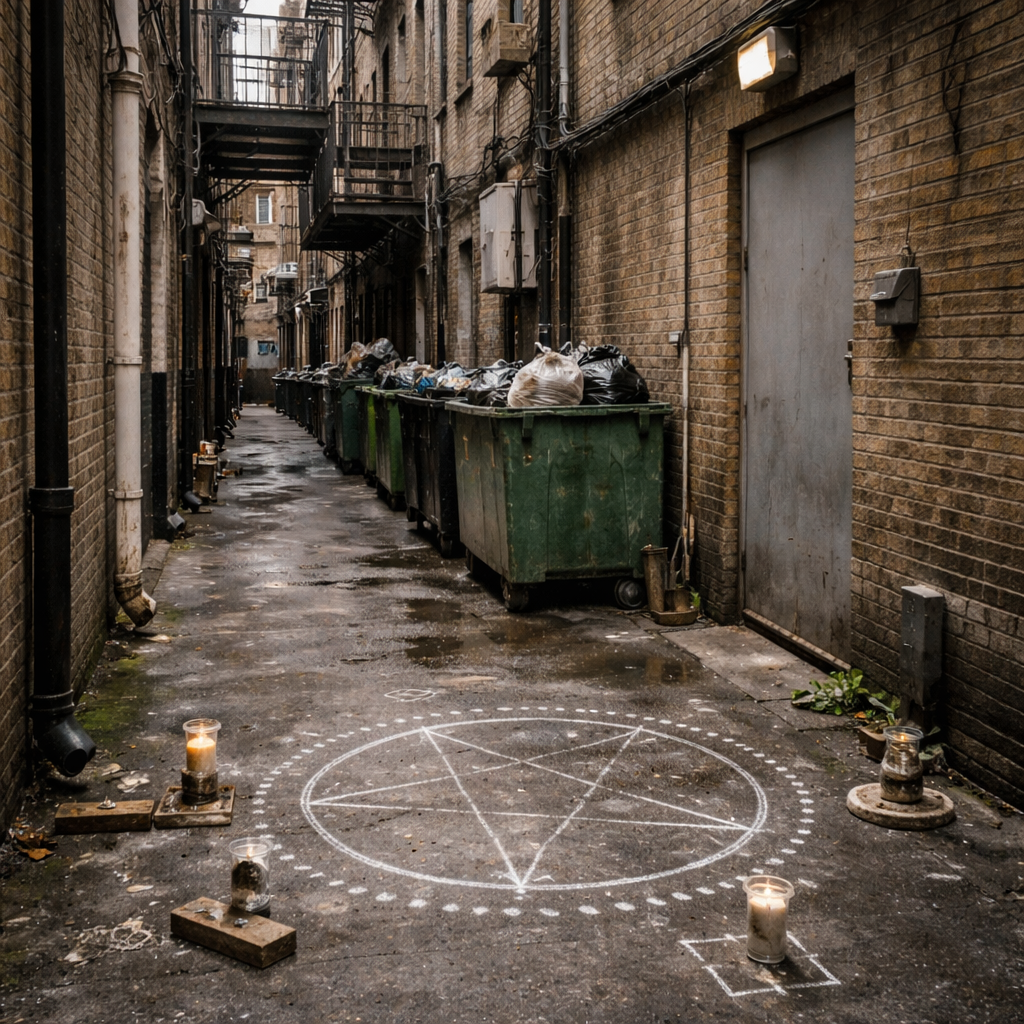
The alley behind our school wasn’t just a shortcut — it was a border.
He looked like a regular customer, until his shadow whispered back at him.
It was my turn to close the shop when the runes on the door began to glow.
Nobody noticed the wings at first — only the feathers scattered down the hallway.
The city slept. The magic did not.
I used to think the library was boring, until the books started arguing with each other.
The first rule of the metro was simple: never make eye contact with the mirrors.
4. Closing Lines
Effective urban fantasy closing lines leave the world slightly altered. Rather than resolving everything neatly, these endings suggest new rules, hidden consequences, or a beginning disguised as an ending, allowing magic to settle quietly back into the city.
The city didn’t need saving anymore — only understanding.
We stepped back under the streetlights and agreed never to talk about what had changed.
The magic was gone, but the city refused to let me forget it.
Maybe I didn’t choose the familiar — maybe it had been choosing me all along.
The last train vanished into the tunnel, taking our only way back with it.
Everyone else went home. I stayed, watching the runes fade with the dawn.
The curse broke at sunrise, but we hadn’t prepared for what replaced it.
The city seemed to breathe out, and for the first time, so did I.
No one believed us, which was exactly how the council intended it.
The world didn’t end — it simply expanded.
5. Character Ideas
Strong urban fantasy characters live double lives. They move through ordinary streets, schools, and workplaces while quietly navigating hidden systems of magic, rules, and consequences. These character ideas are built around secret identities, concealed power, and the tension between who someone appears to be and what they truly are.
A barista who can read destinies in coffee foam and pretends it’s just part of the job.
A witch raised by scientists who rejects superstition and insists magic must follow rules.
A ghost who refuses to haunt and instead works as a private investigator for supernatural cases.
A runaway familiar searching the city for a partner they believe is worthy of them.
A healer who can transfer pain into plants, watching the city’s greenery suffer in their place.
A young mage banned from spellcasting who craves the rush of forbidden magic.
A sentient library book disguised as a human student, terrified of being returned to the shelf.
A city bus driver responsible for transporting magical beings safely between hidden districts.
An empath who absorbs other people’s nightmares and struggles to tell which fears are their own.
A potion dealer who hides dangerous ingredients behind the shelves of an ordinary corner shop.
6. Setting Ideas
Effective urban fantasy settings fuse contemporary life with the uncanny, placing magic in spaces people pass through every day. These locations feel familiar at first glance, then unsettling on closer inspection, giving writers natural entry points for discovery, secrecy, and conflict.
A 24-hour laundrette where abandoned clothing slowly develops personalities of its own.
A metro line that runs on both electricity and emotion, changing routes based on the mood of its passengers.
An abandoned shopping mall quietly repurposed as a magical black market after closing hours.
A high-rise rooftop garden tended by invisible caretakers, its plants thriving where they shouldn’t.
A school basement used to store confiscated magical relics that refuse to stay dormant.
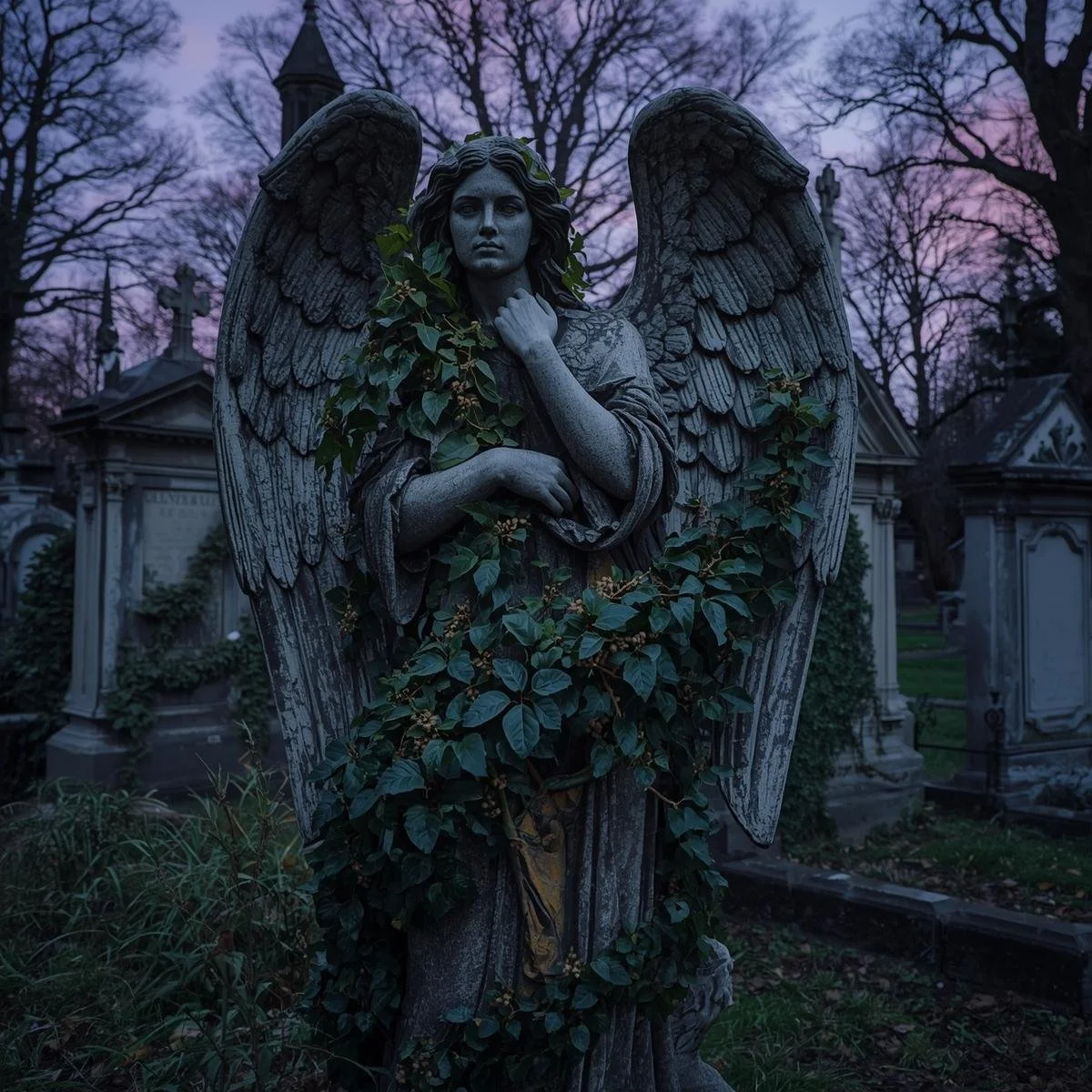
A city cemetery where the statues subtly change position whenever no one is watching.
A minimalist apartment stripped of furniture, its walls covered in protective runes instead.
A community centre offering spellcasting workshops disguised as beginner yoga classes.
A high-tech hospital treating magical injuries alongside mundane ones, with certain wards kept off the official floor plan.
A public library with restricted floors that only exist after dark — and never appear on the map.
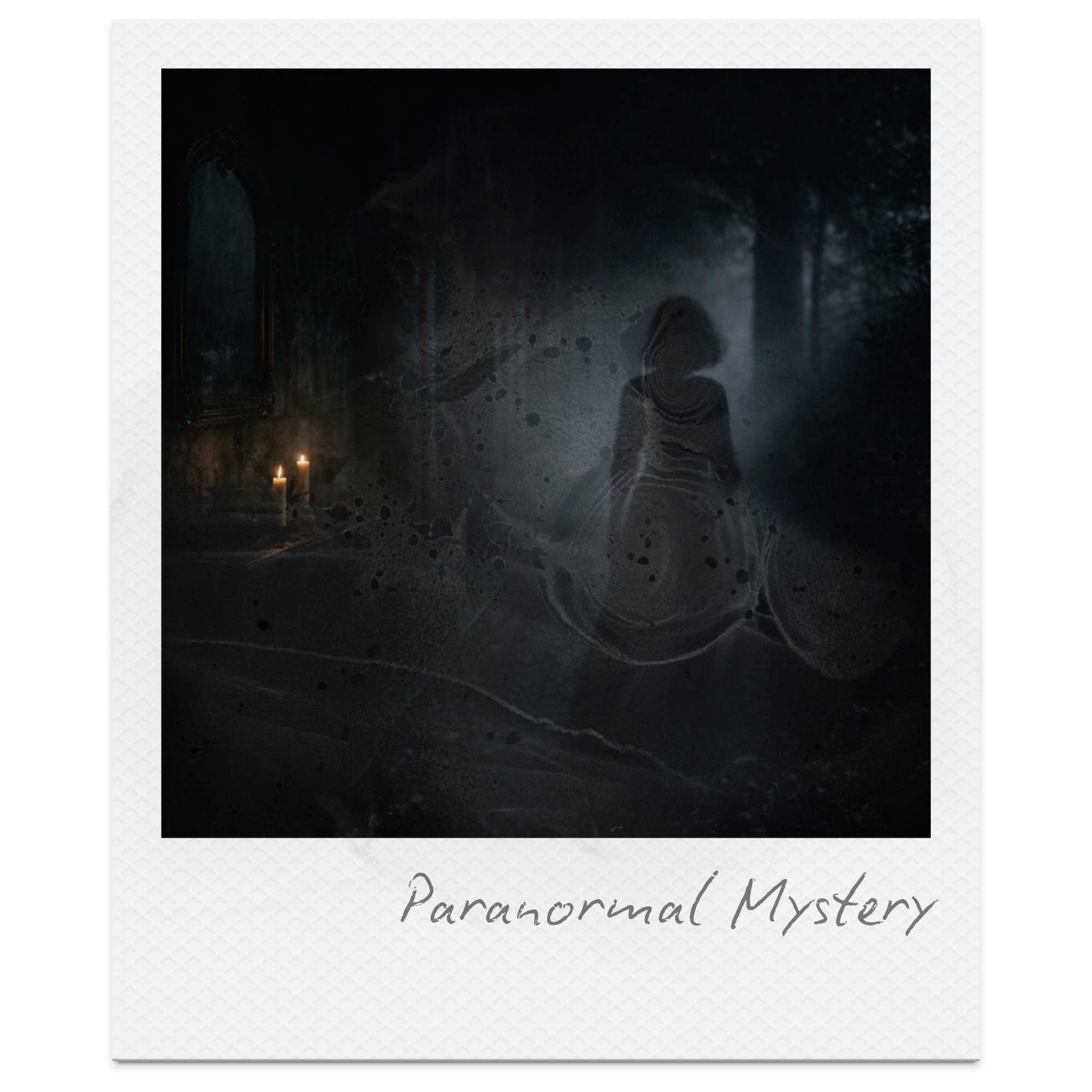
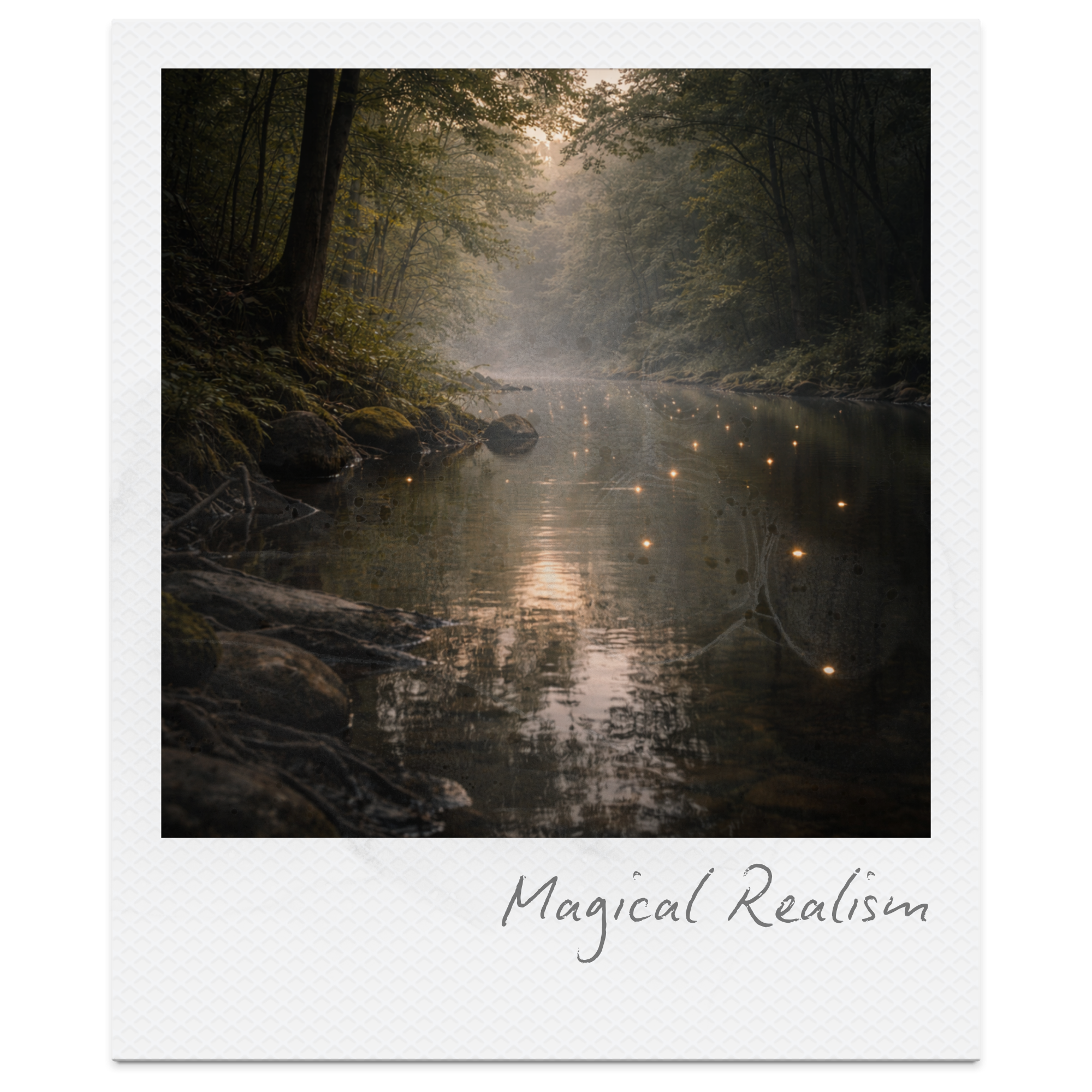
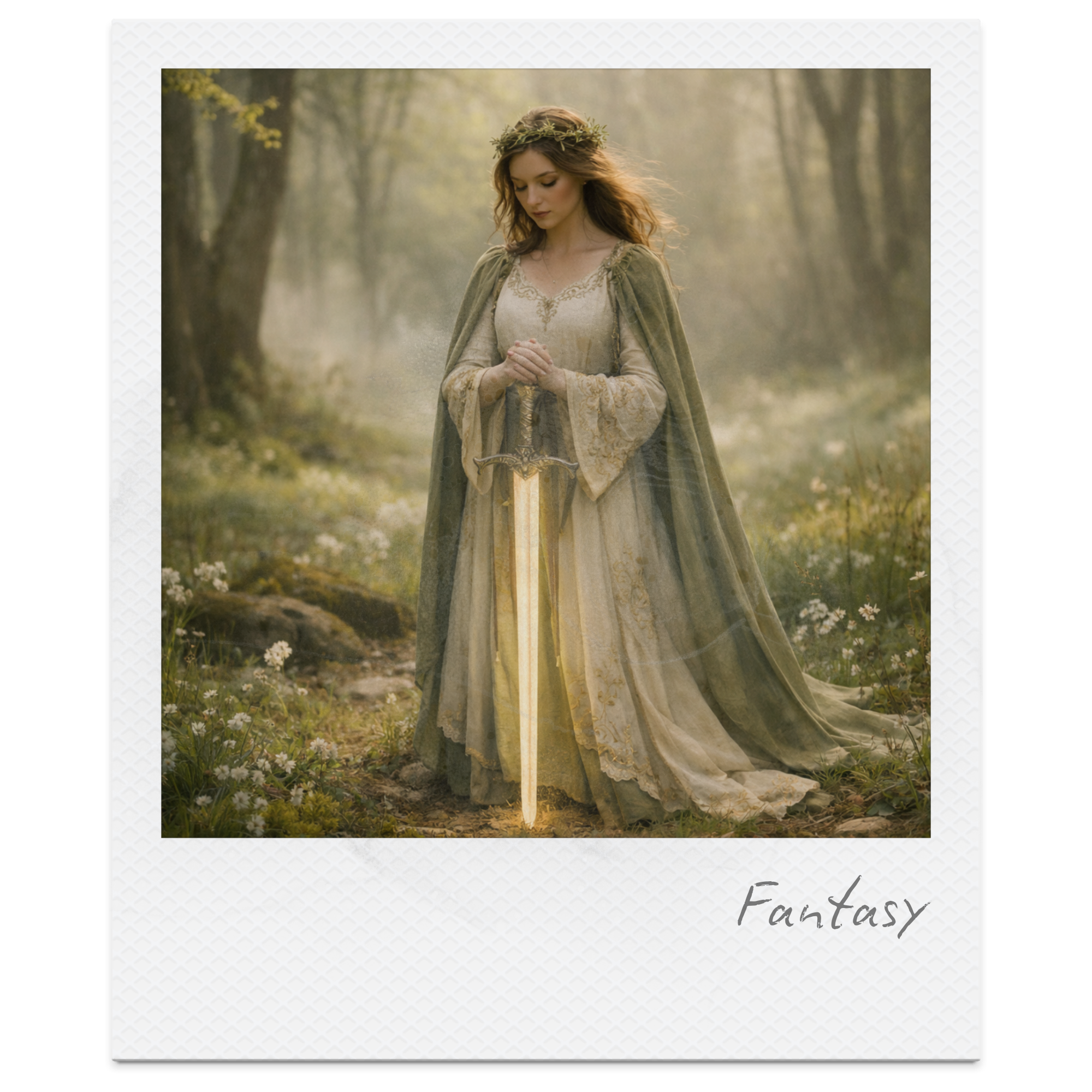
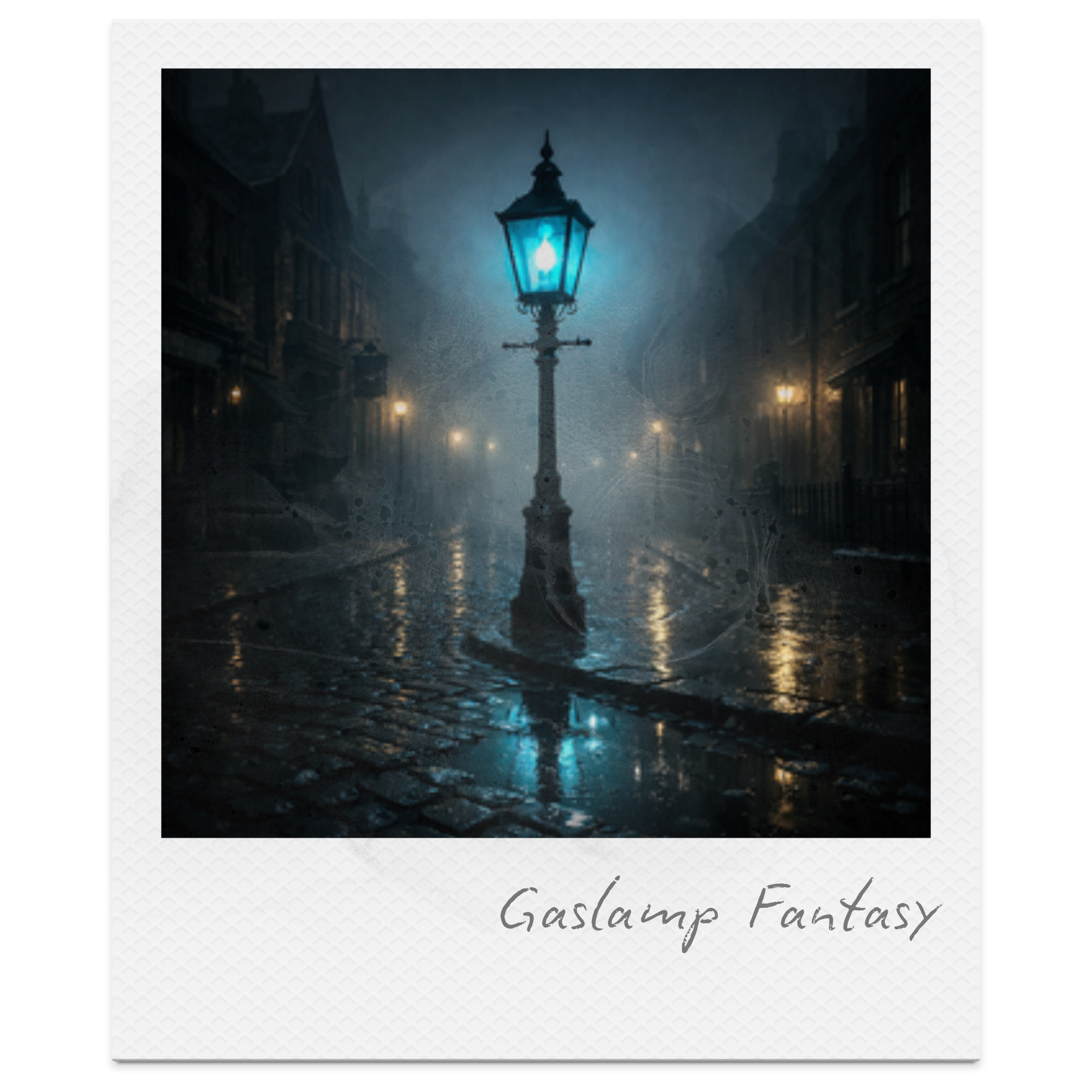
7. Picture Prompts
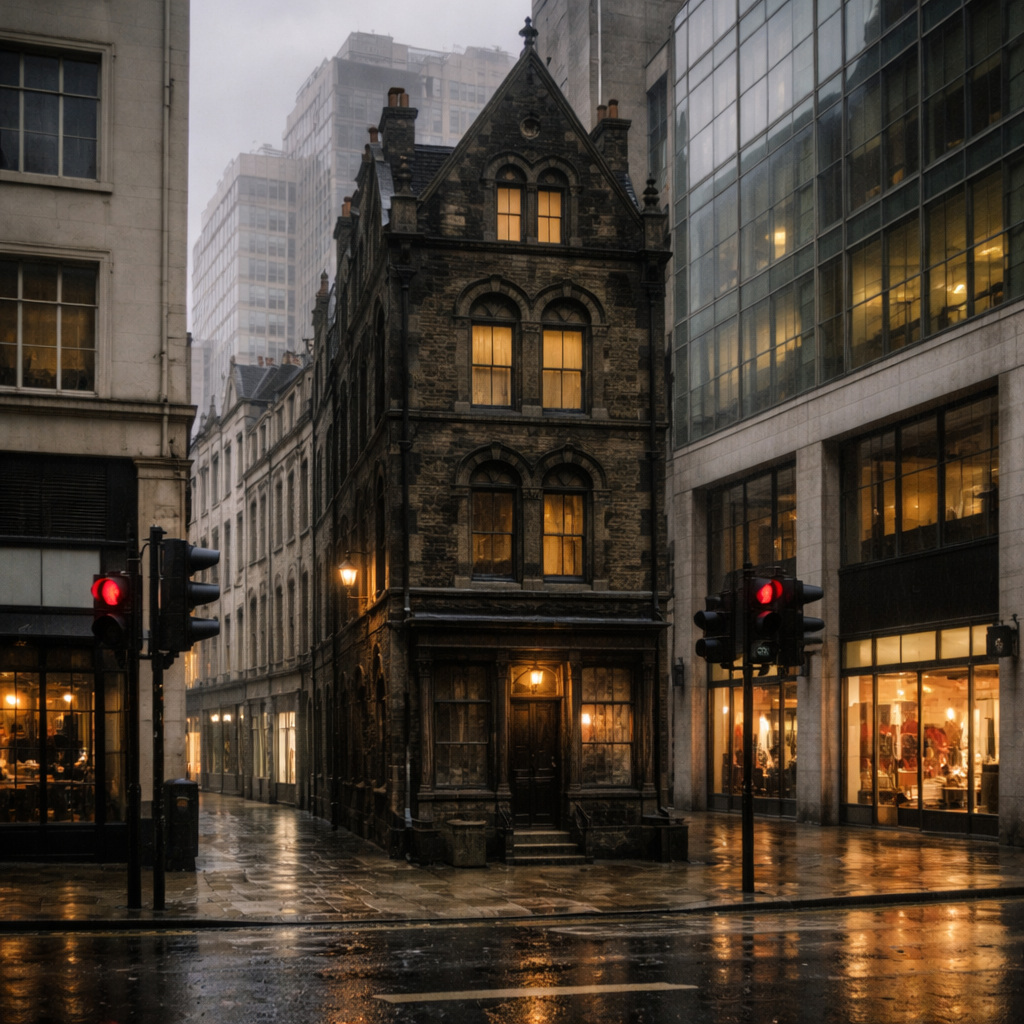
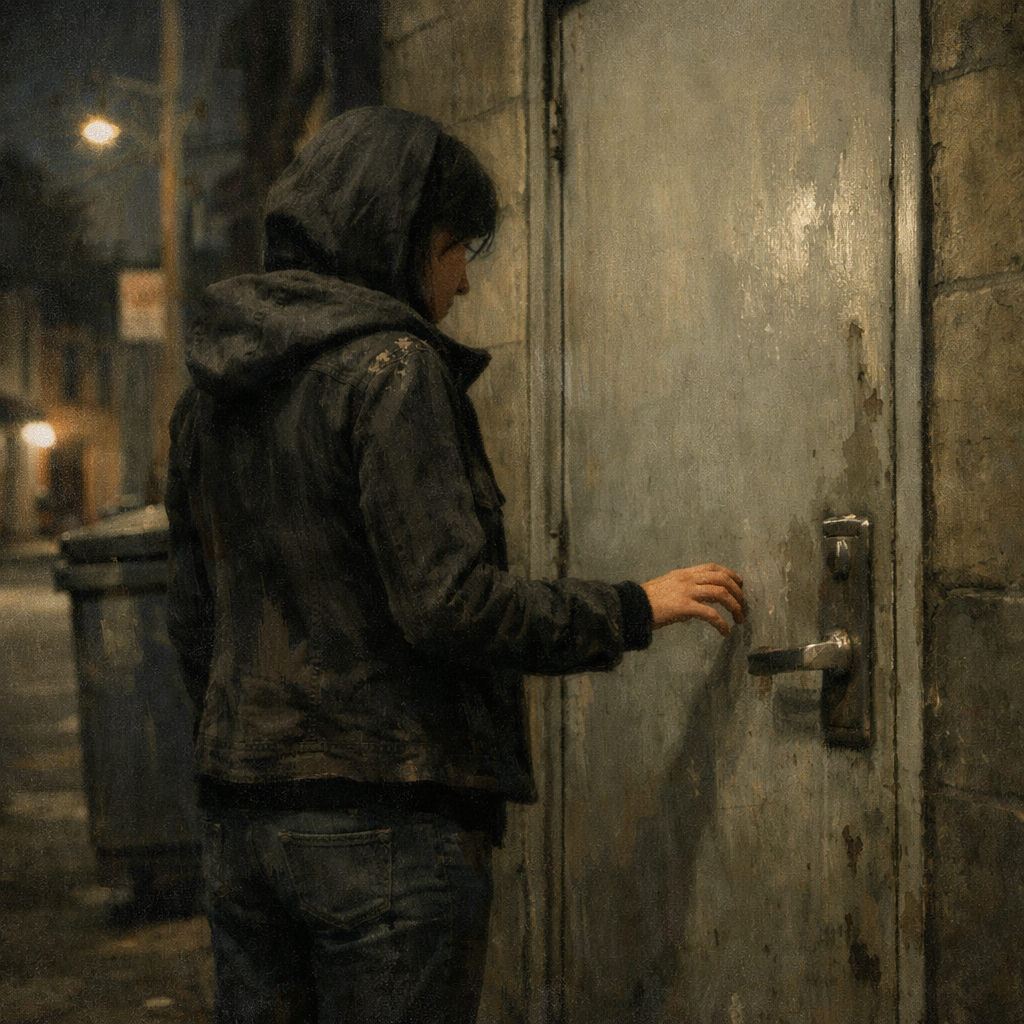
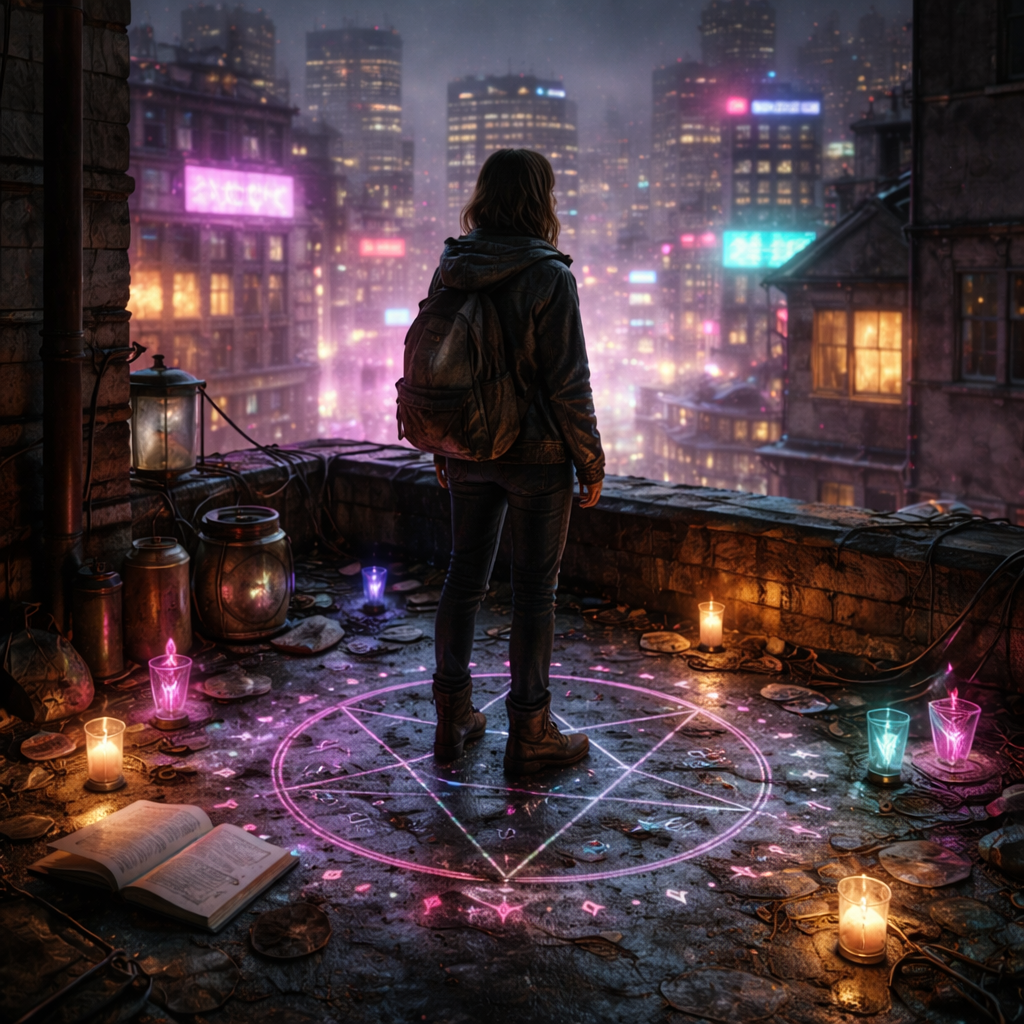
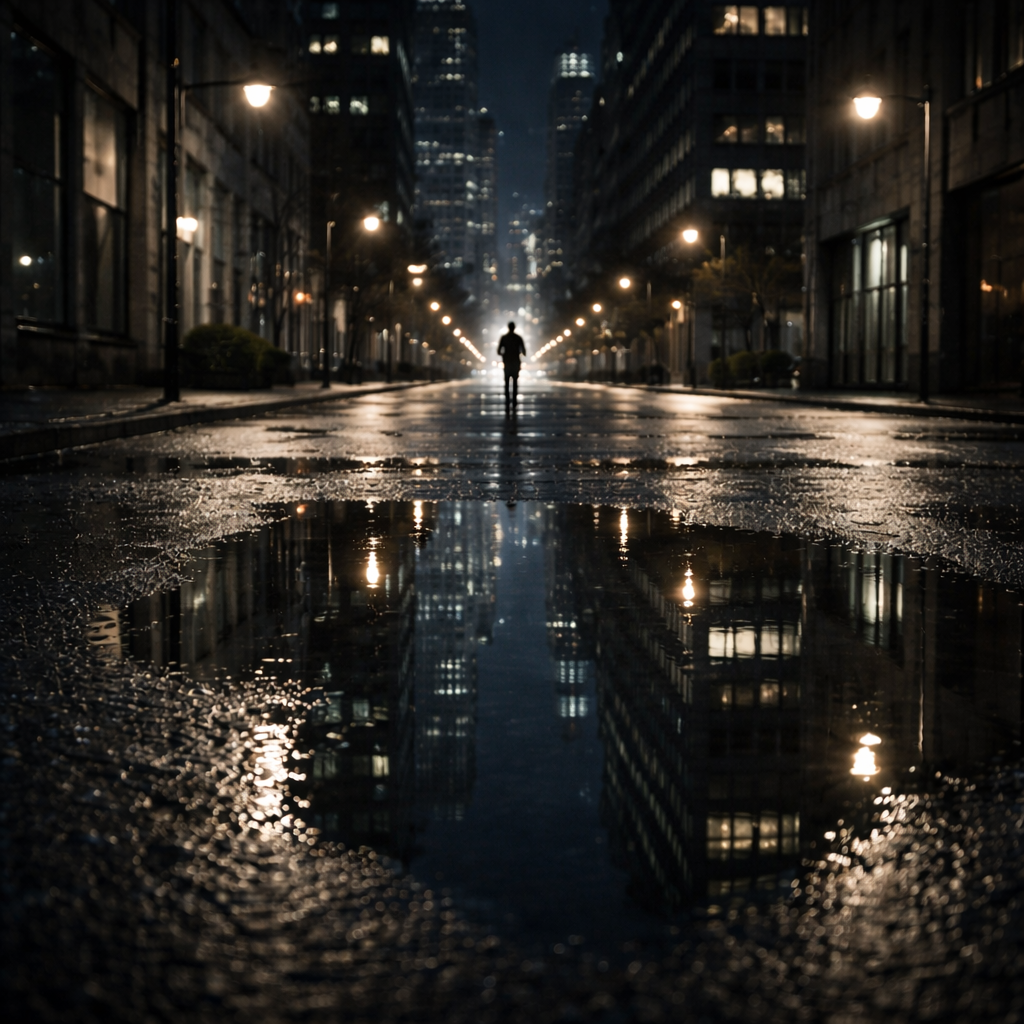
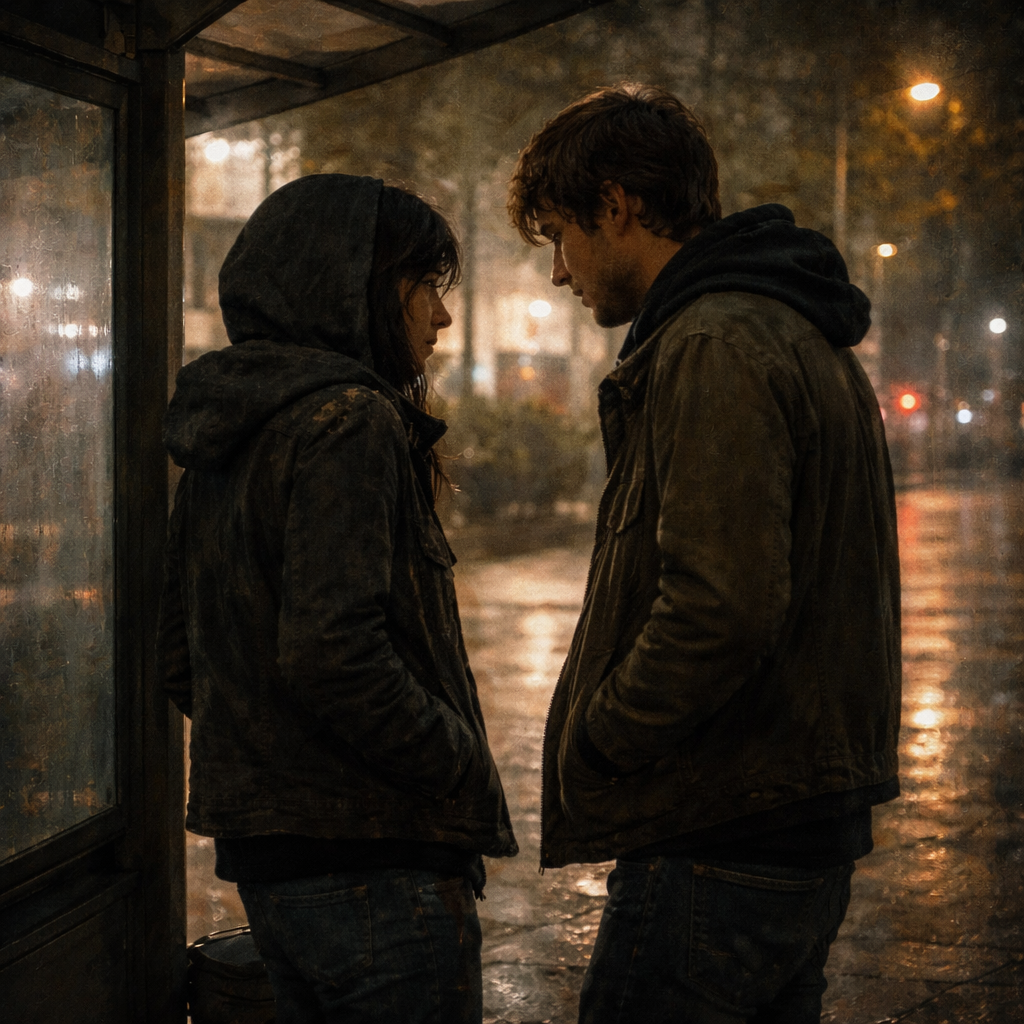
Visual prompts help writers imagine urban fantasy as it exists alongside everyday life. Rather than explaining the magic outright, these images suggest hidden systems, altered rules, and moments where the city behaves differently than it should. Each picture prompt below is designed to spark a story by hinting at what most people walk past without ever noticing.



Go Deeper into Urban Fantasy Writing
If you want to develop these urban fantasy writing prompts further, try focusing on how magic changes behaviour rather than how it looks. Urban fantasy works best when supernatural systems sit just beneath everyday routines, shaping choices, relationships, and consequences in subtle ways.
◆ Rewrite a prompt by reducing the visible magic and focusing on how secrecy, risk, or double lives affect the characters involved.
◆ Let the city itself act as a character by exploring how specific neighbourhoods, buildings, or public spaces enforce hidden rules.
◆ Experiment with limited knowledge — allow the protagonist to understand only part of the magical system and learn the rest through mistakes.
◆ Rewrite a scene twice: once from inside the magical world, and once from the perspective of someone who senses something is wrong but cannot see it clearly.
These approaches help writers move beyond spectacle and into stories that feel grounded, tense, and believable within a modern setting.
Final Thoughts
Urban fantasy is about more than magic in cities. At its core, the genre explores identity, belonging, and the cost of living between worlds — balancing ordinary life with hidden responsibilities and impossible choices. The most effective urban fantasy stories feel close to home, suggesting that the supernatural is not elsewhere, but woven quietly into the streets we already know.
These 70 urban fantasy writing prompts for teens give young writers space to experiment with modern settings, secret systems, and character-driven storytelling shaped by consequence rather than spectacle. Whether used for short stories, creative writing warm-ups, classroom activities, or longer YA urban fantasy projects, the prompts are designed to build confidence with tone, tension, and worldbuilding.
If you’d like to explore more fantasy prompts, worldbuilding ideas, and genre-based writing inspiration, visit the Fantasy Writing Hub or browse the Creative Writing Archive for a wider collection of prompts organised by theme, style, and storytelling focus.
Choose Your Next Adventure