Notes from the Inkpot
Writing, teaching, creating - one ink-stained idea at a time.




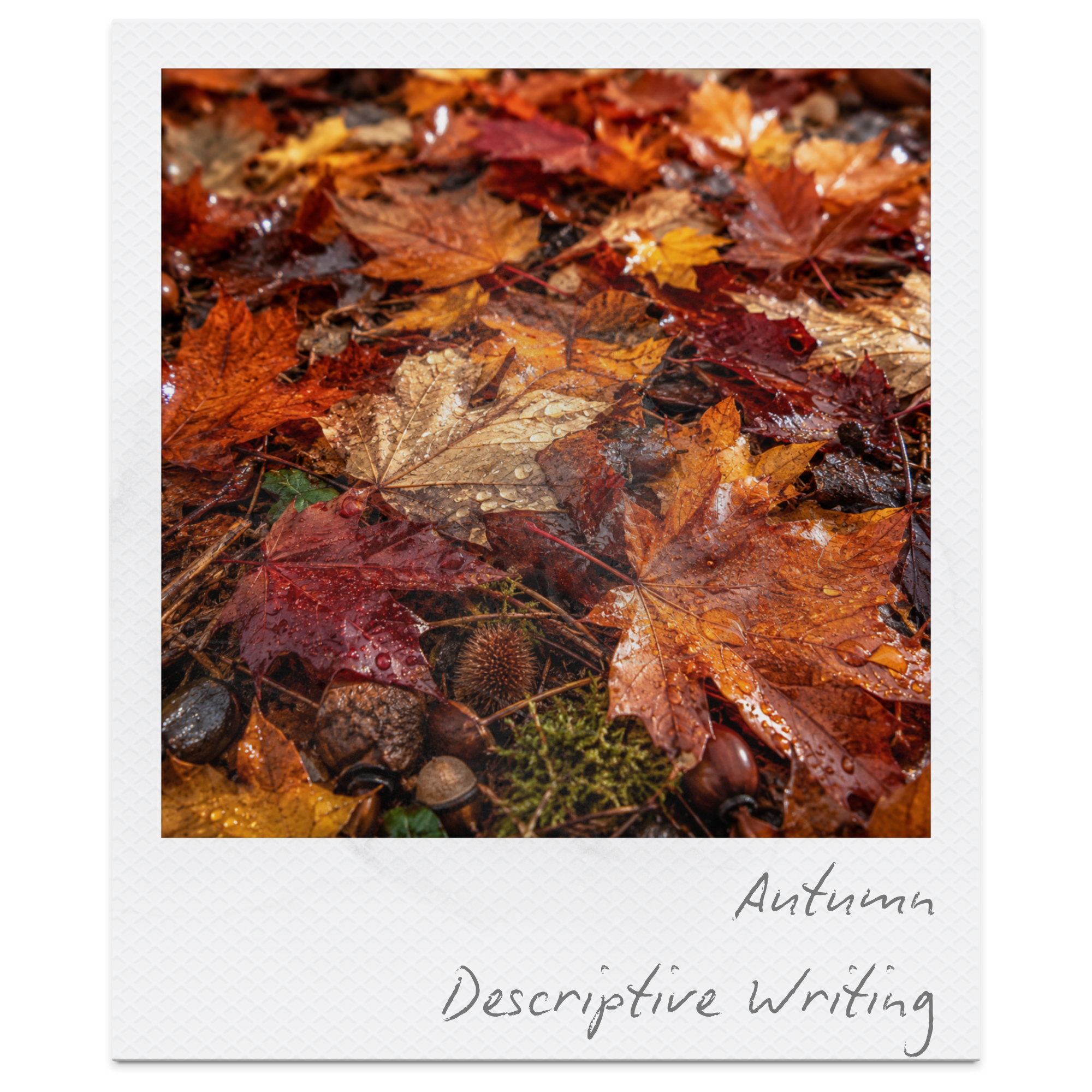
70 Autumn Descriptive Writing Prompts: Seasonal Scenes, Sensory Details & Creative Challenges
Explore 70 autumn descriptive writing prompts inspired by golden woodlands, fallen leaves, harvest moons, misty mornings, apple orchards, autumn rain, seasonal markets and the first frosts of approaching winter. From sensory observations and contrasting seasonal scenes to language exercises, creative challenges and picture prompts, these autumn writing activities will help you experiment with vivid imagery, precise vocabulary, figurative language, colour, texture and atmosphere while capturing one of the most beautiful and transformative seasons of the year.
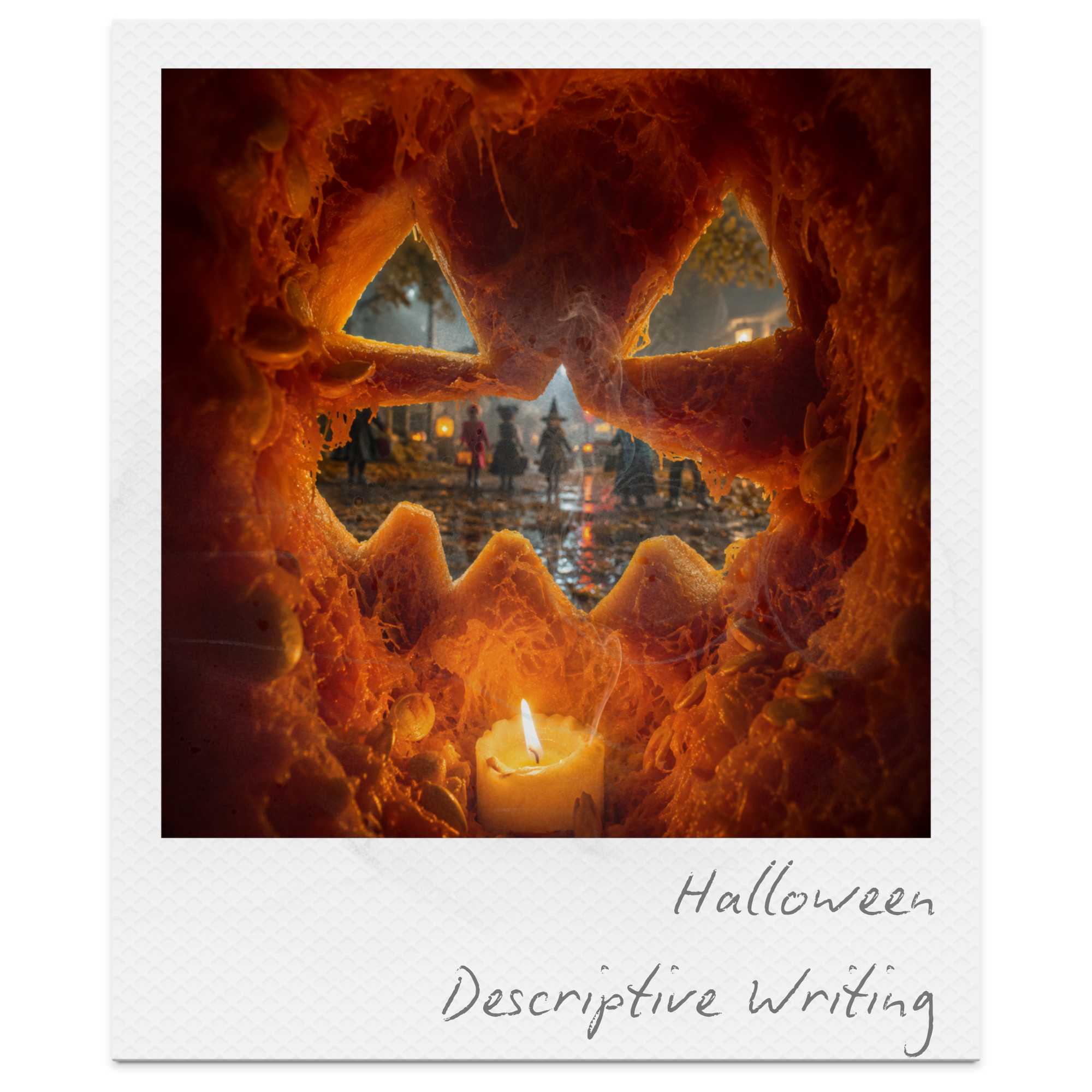
70 Halloween Descriptive Writing Prompts: Spooky Scenes, Sensory Details & Creative Challenges
Explore 70 Halloween descriptive writing prompts filled with glowing jack-o'-lanterns, elaborate costumes, trick-or-treating streets, pumpkin patches, Halloween parties, candlelit graveyards and atmospheric October nights. From sensory observations and contrasting scenes to language exercises, creative challenges and picture prompts, these Halloween writing activities will help you experiment with vivid imagery, precise vocabulary, figurative language and atmosphere while describing the sights, sounds, textures and experiences of Halloween.
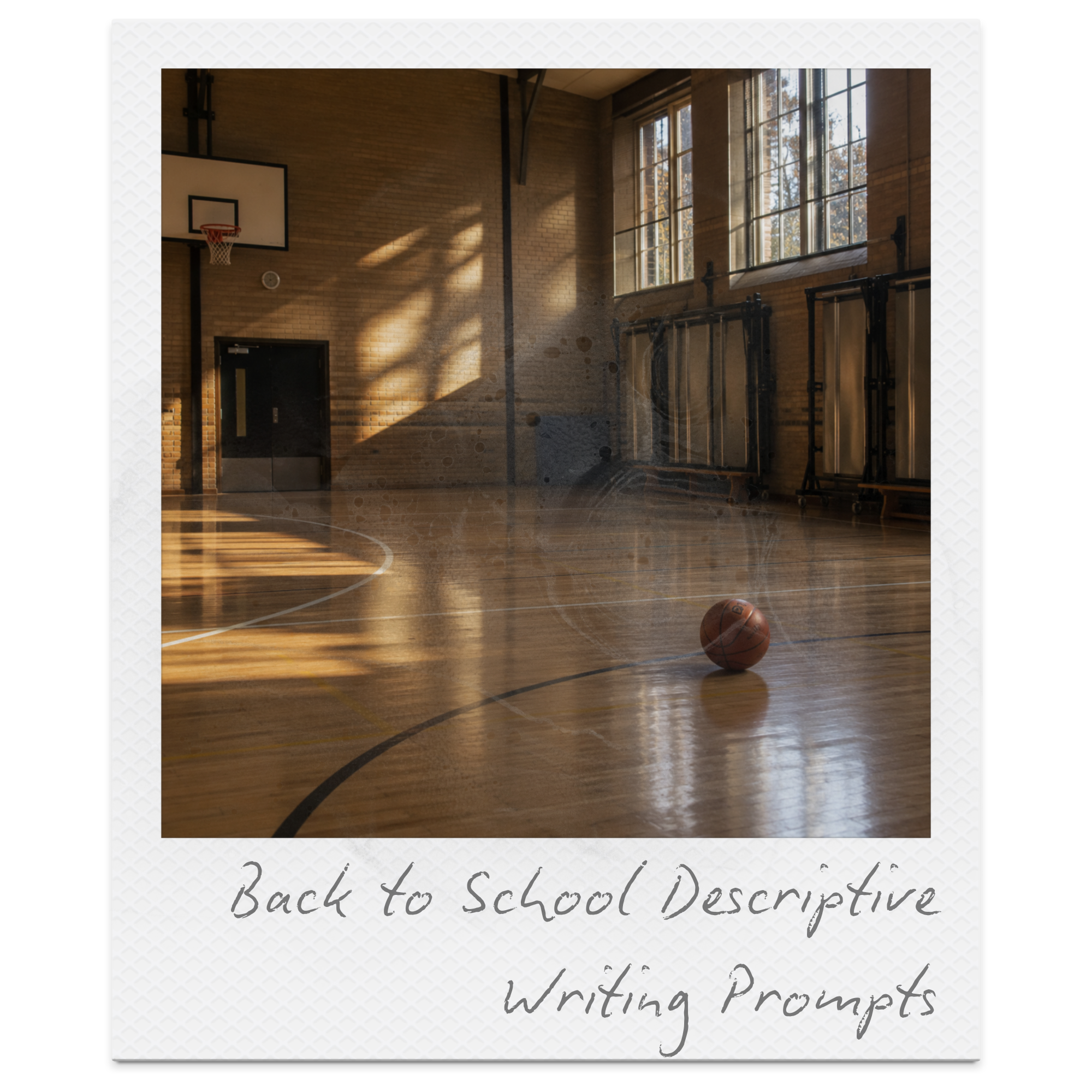
70 Back to School Description Prompts: Classroom Scenes, School Settings & Picture Prompts
Bring school settings to life with these 70 Back-to-School Description Prompts. Featuring descriptive titles, scene-based challenges, contrasting settings, observation exercises, language and style tasks, creative writing challenges, and premium picture prompts, this collection is designed to help students and writers develop richer sensory detail, stronger imagery, and more atmospheric descriptions. Perfect for classroom lessons, English assessments, or improving your creative writing skills.
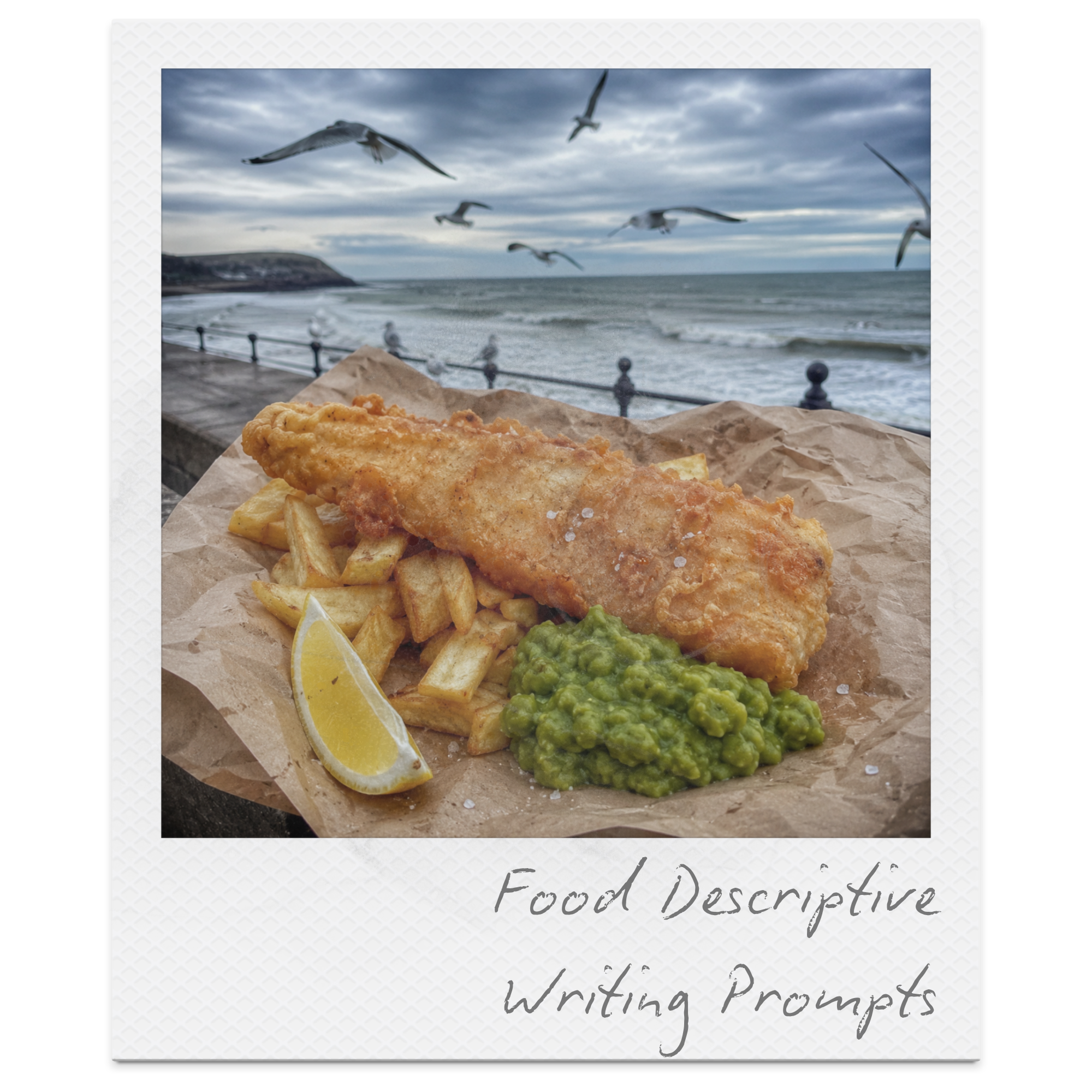
70 Food Description Prompts: Flavours, Textures & Sensory Writing
Explore 70 Food Description Prompts designed to help you create rich, sensory descriptions inspired by meals, markets, cafés, bakeries, celebrations, and everyday moments. This collection includes descriptive titles, food-based scene prompts, contrasting descriptions, observation exercises, language and style challenges, creative writing tasks, and picture prompts to help students and writers develop vivid imagery, stronger sensory detail, and immersive descriptive writing across every genre.
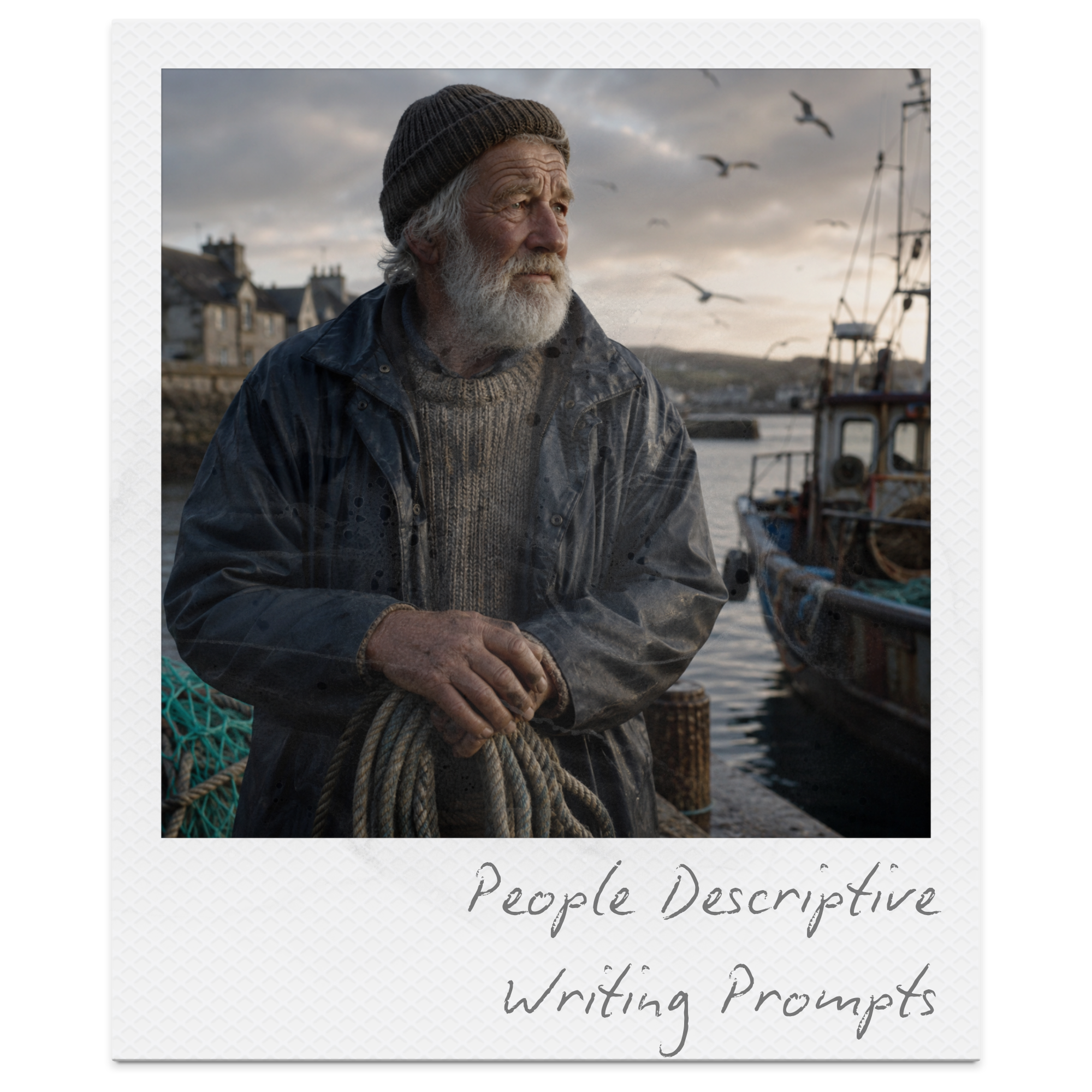
70 People Description Prompts: Characters, Expressions & First Impressions
Explore 70 People Description Prompts designed to help you create vivid, believable characters through expressive body language, facial expressions, movement, and rich sensory detail. This collection includes descriptive titles, character-based scene prompts, contrasting descriptions, observation exercises, language and style challenges, creative writing tasks, and picture prompts to help students and writers develop stronger character descriptions across every genre.
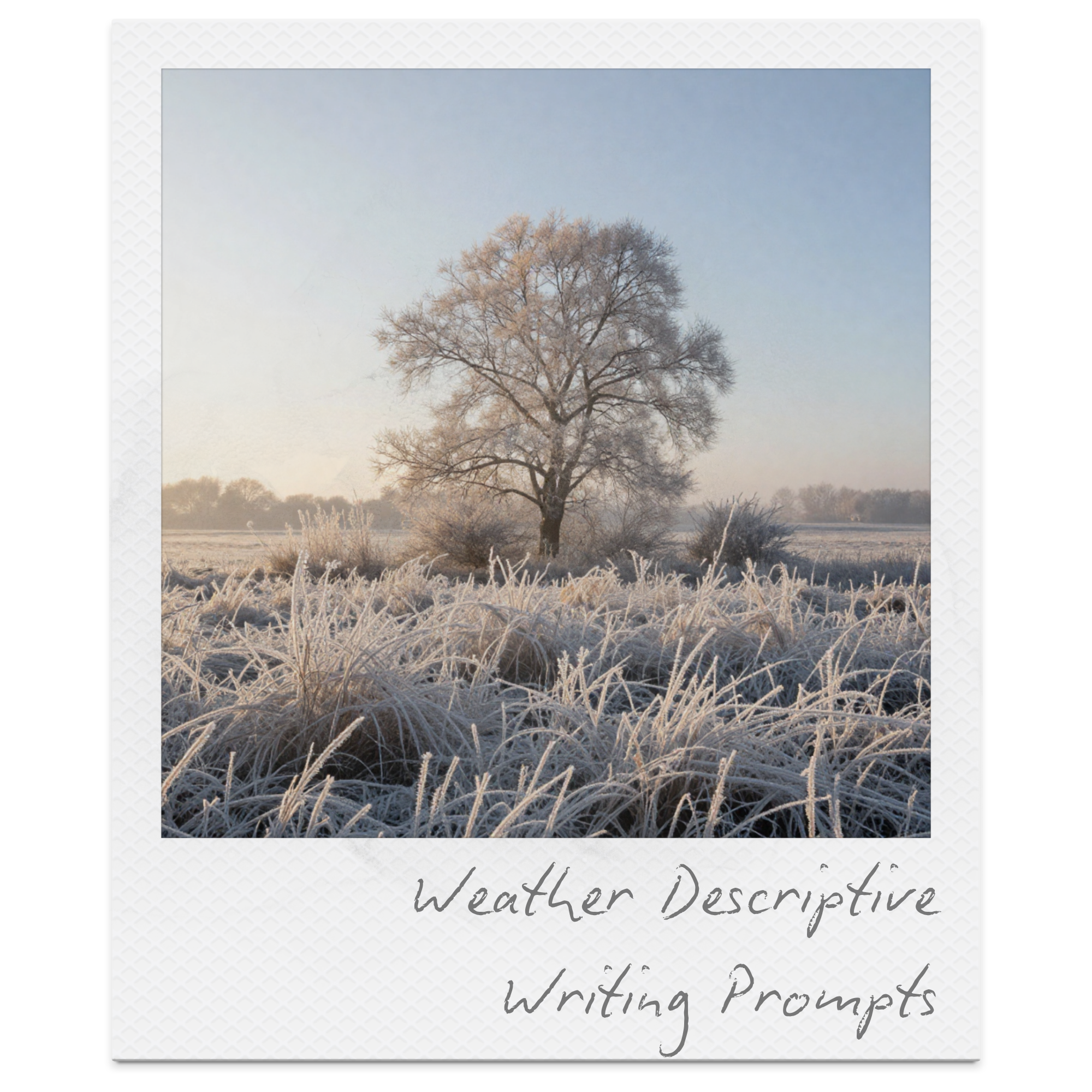
70 Weather Description Prompts: Storms, Sunshine & Seasonal Scenes
Explore 70 Weather Description Prompts designed to help you create vivid, atmospheric scenes inspired by storms, sunshine, rain, snow, fog, frost, and changing seasons. This collection includes descriptive titles, weather-based scene prompts, contrasting descriptions, observation exercises, language and style challenges, creative writing tasks, and picture prompts to help students and writers strengthen their descriptive writing through rich sensory detail, figurative language, and immersive imagery.
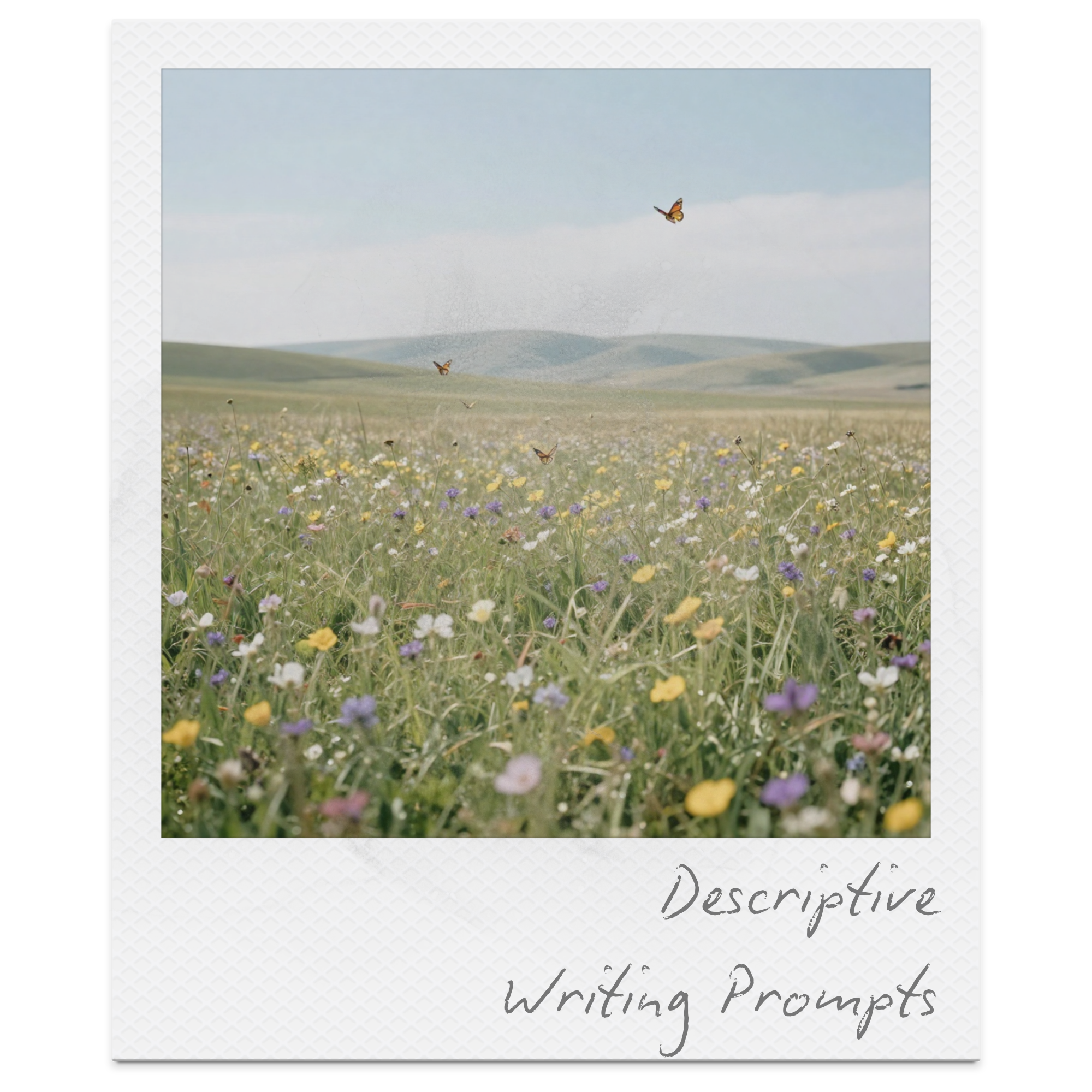
70 Descriptive Writing Prompts: Settings, Scenes & Sensory Challenges
Explore 70 Descriptive Writing Prompts designed to help you create vivid, immersive descriptions through rich sensory detail, figurative language, and carefully chosen imagery. This collection includes descriptive titles, scene-based prompts, contrasting descriptions, observation exercises, language and style challenges, creative writing tasks, and picture prompts to help students and writers strengthen their descriptive writing skills across every genre.
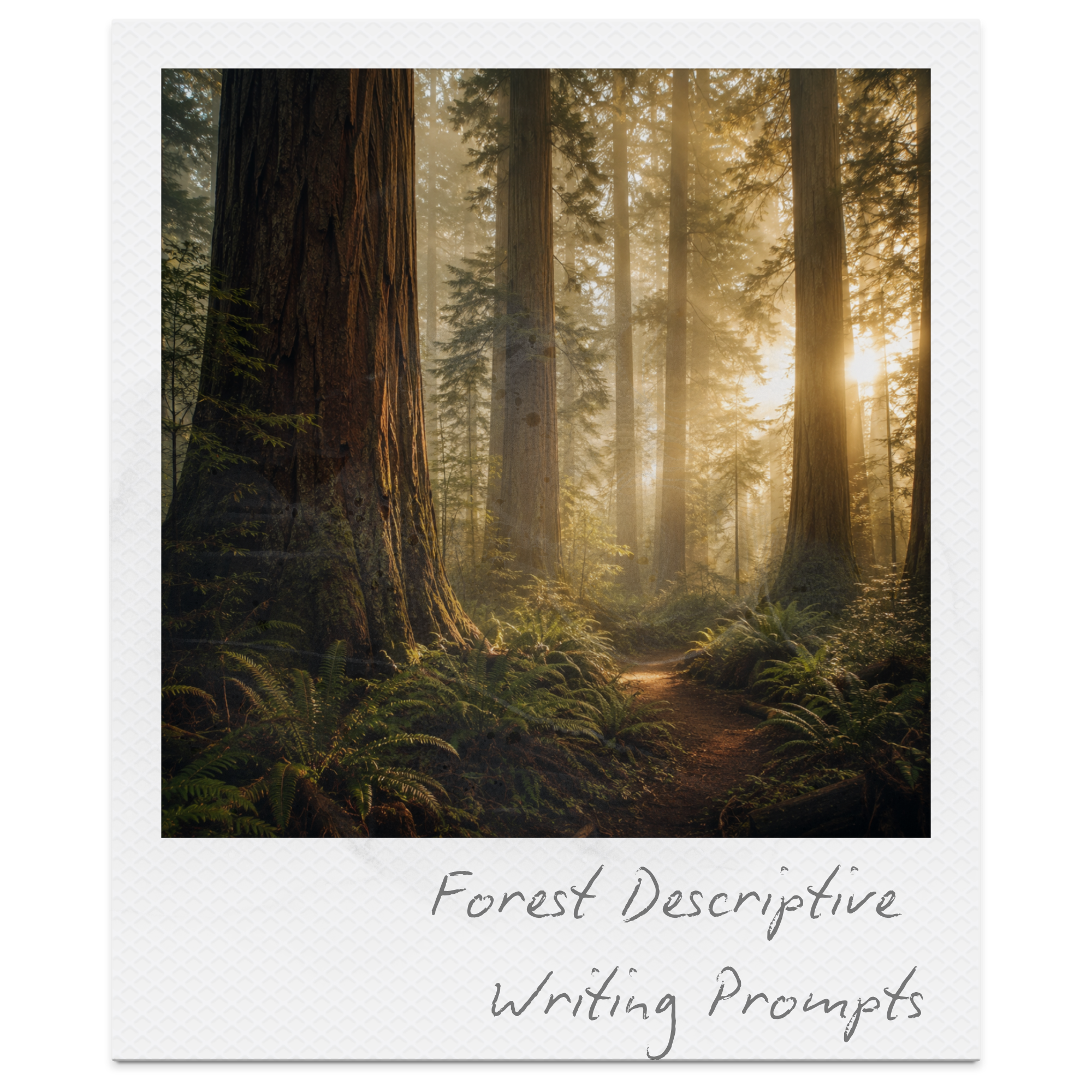
70 Forest Description Prompts: Atmospheric Woodland Writing Ideas
Explore 70 Forest Description Prompts designed to help you write vivid, atmospheric woodland scenes filled with rich sensory detail and immersive imagery. This collection includes descriptive titles, scene descriptions, contrasting settings, observation challenges, language and style exercises, creative writing challenges, and picture prompts to help students and writers develop stronger descriptive writing skills across every genre.
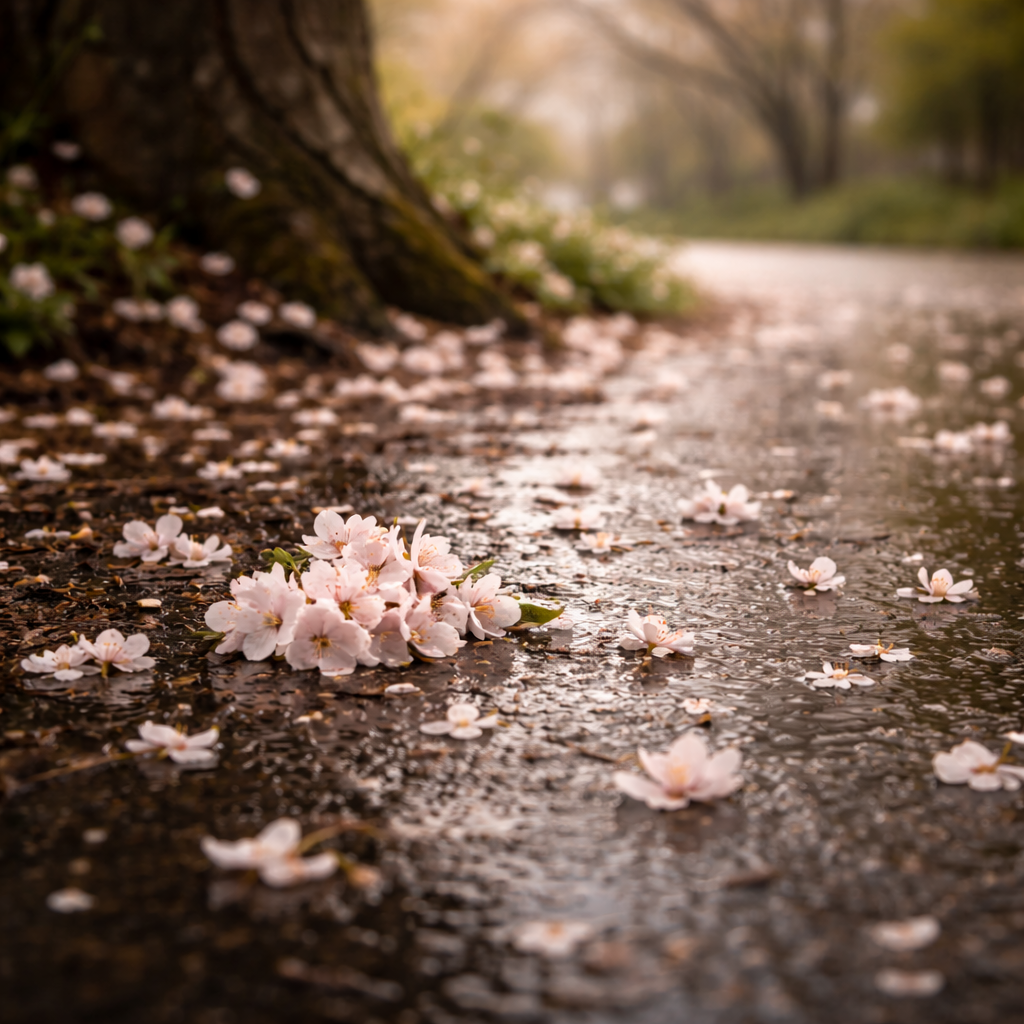
70 April Writing Prompts for Teens: Seasonal Story Starters, Characters, Settings & Visual Ideas
April is a month of transition. The light begins to change, routines start to shift, and there’s a sense of waiting — for answers, for outcomes, for what comes next. It’s a time when pressure and possibility exist side by side. This collection of 70 April writing prompts for teens invites students to explore uncertainty, anticipation, and emotional movement through character, setting, and mood. Designed for English classrooms, these prompts work across genres and abilities, making them ideal for reflective writing, creative units, and seasonal lessons throughout April.
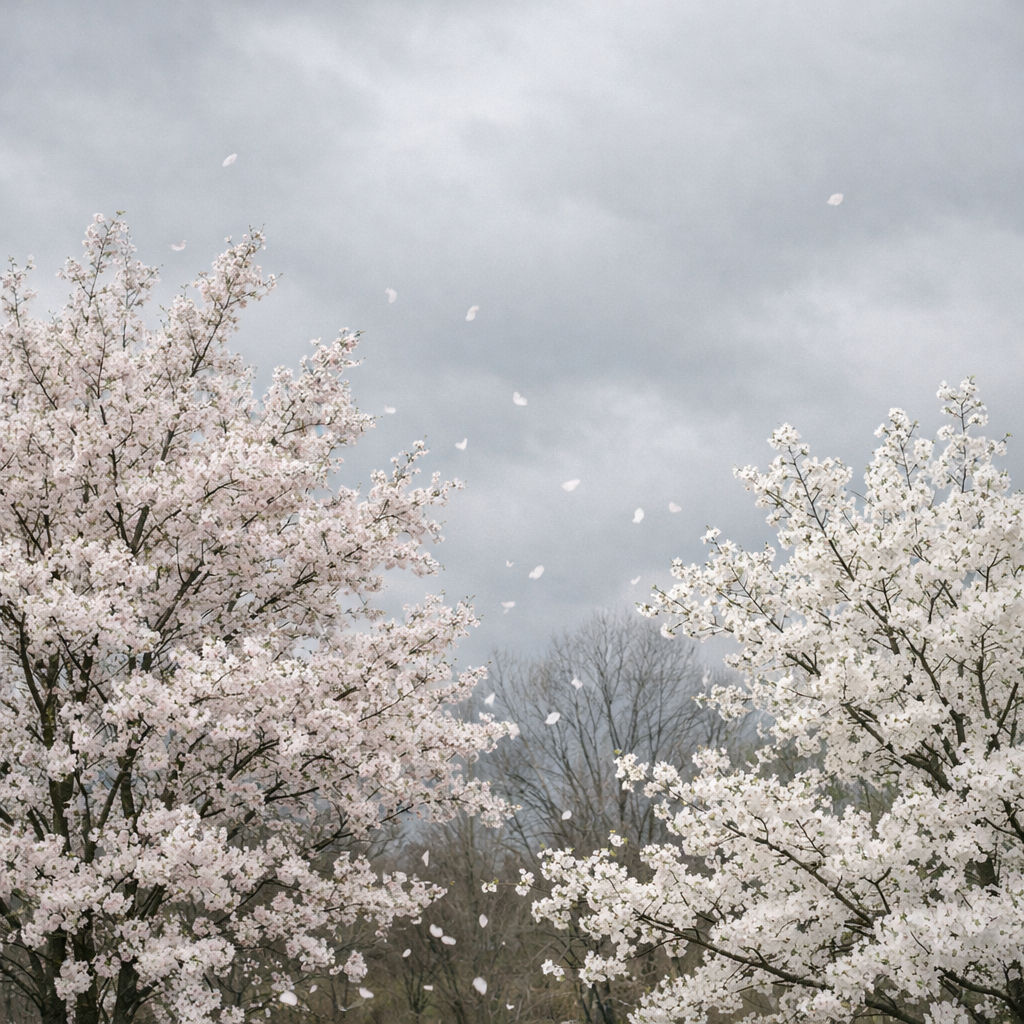
70 Spring Writing Prompts for Teens: Story Starters, Characters, Settings & Visual Ideas
Spring writing invites stories of change, return, and new beginnings — but not all renewal is simple or easy. The season brings shifting light, reopened spaces, and moments where something old gives way to something new. This collection of 70 spring writing prompts for teens encourages students to explore growth, uncertainty, and quiet transformation through character, setting, and mood. With flexible, classroom-ready ideas, these prompts work across genres and abilities, making them ideal for seasonal lessons and reflective writing.
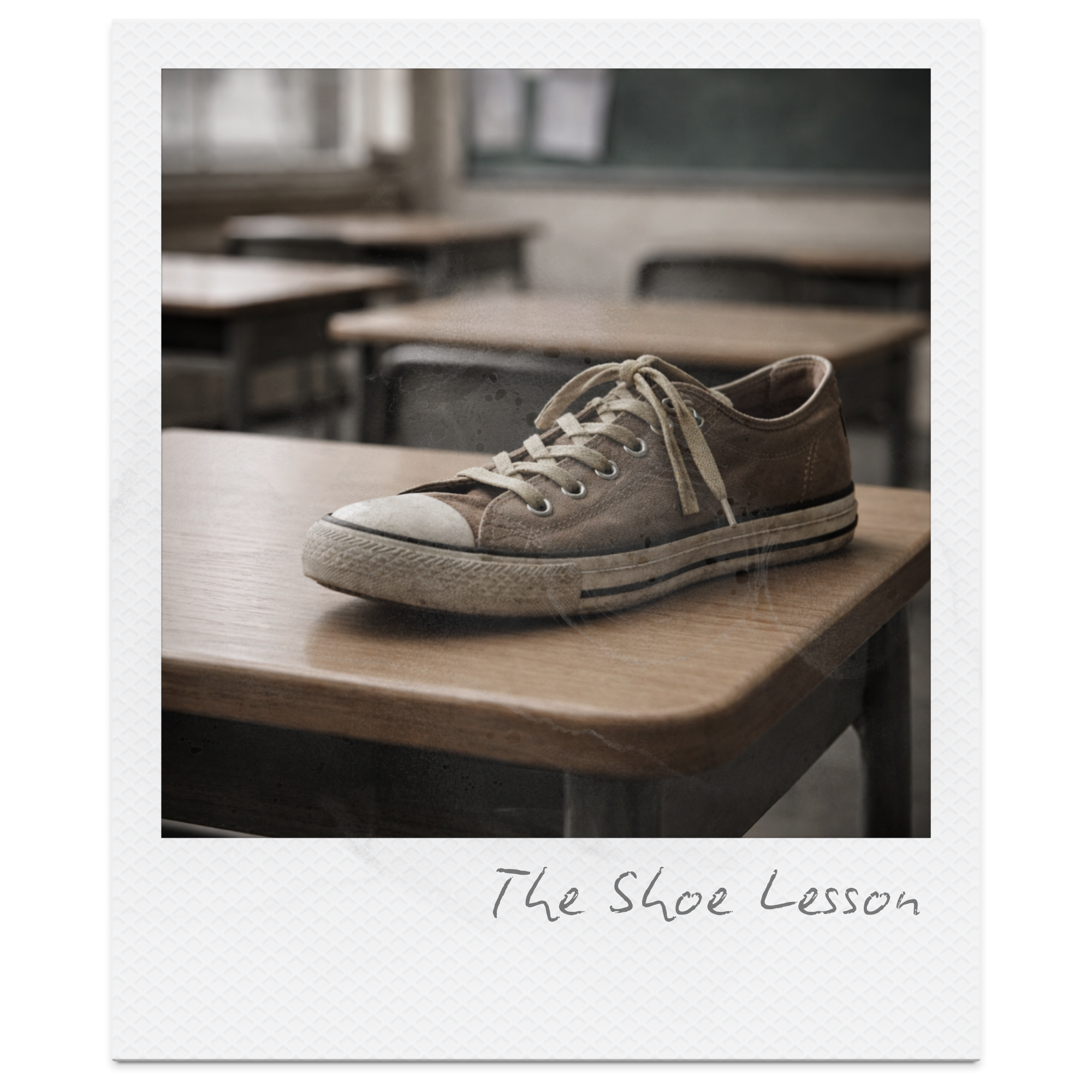
The Shoe Lesson: A Simple, Powerful Creative Writing Activity
The Shoe Lesson is a simple but powerful creative writing activity that helps students develop believable characters without the fear of the blank page. By giving students a single, ordinary object — a shoe — this lesson encourages close observation, inference, and thoughtful character development. It works particularly well in the secondary English classroom, where students often struggle to move beyond surface-level description or feel pressured to “be creative” on demand. Used at the start of a creative writing unit, the Shoe Lesson invites students to build characters from evidence rather than imagination alone. Scuffed soles, worn laces, and small details become clues to a life beyond the page, leading to writing that feels grounded, realistic, and human. It’s a low-stakes, high-impact approach that consistently engages even reluctant writers — and proves that the most powerful stories often begin with the most ordinary things.