William Shakespeare: Context, Themes, Plays & Literary Significance
William Shakespeare is one of the most widely studied and enduring writers in the English literary canon, yet his work is often reduced to plot summaries or famous quotations. Writing at the turn of the Elizabethan and Jacobean periods, Shakespeare produced a body of plays and poetry that continues to shape how we understand power, ambition, love, identity, violence, and morality. His work resists simple classification, sitting at the intersection of tragedy, comedy, history, and romance, and drawing on both classical influence and popular performance culture.
To read Shakespeare in context is to recognise how deeply his writing is embedded in the political, social, and cultural tensions of early modern England. Questions of kingship and legitimacy, gender and authority, religion and conscience, and public reputation versus private self recur across his plays, not as abstract ideas but as lived conflicts. Shakespeare’s characters are rarely symbols alone; they are figures shaped by fear, desire, loyalty, and contradiction, making his work both historically rooted and psychologically modern.
This post explores William Shakespeare’s historical context, the key themes that run across his plays, and the literary significance of his work within the wider tradition of English literature. Rather than offering close analysis of a single text, it provides a broader framework for understanding how Shakespeare’s writing operates — why his language endures, how his plays generate meaning through performance and conflict, and where his work sits in relation to genre, power, and cultural change.
Who Was William Shakespeare?
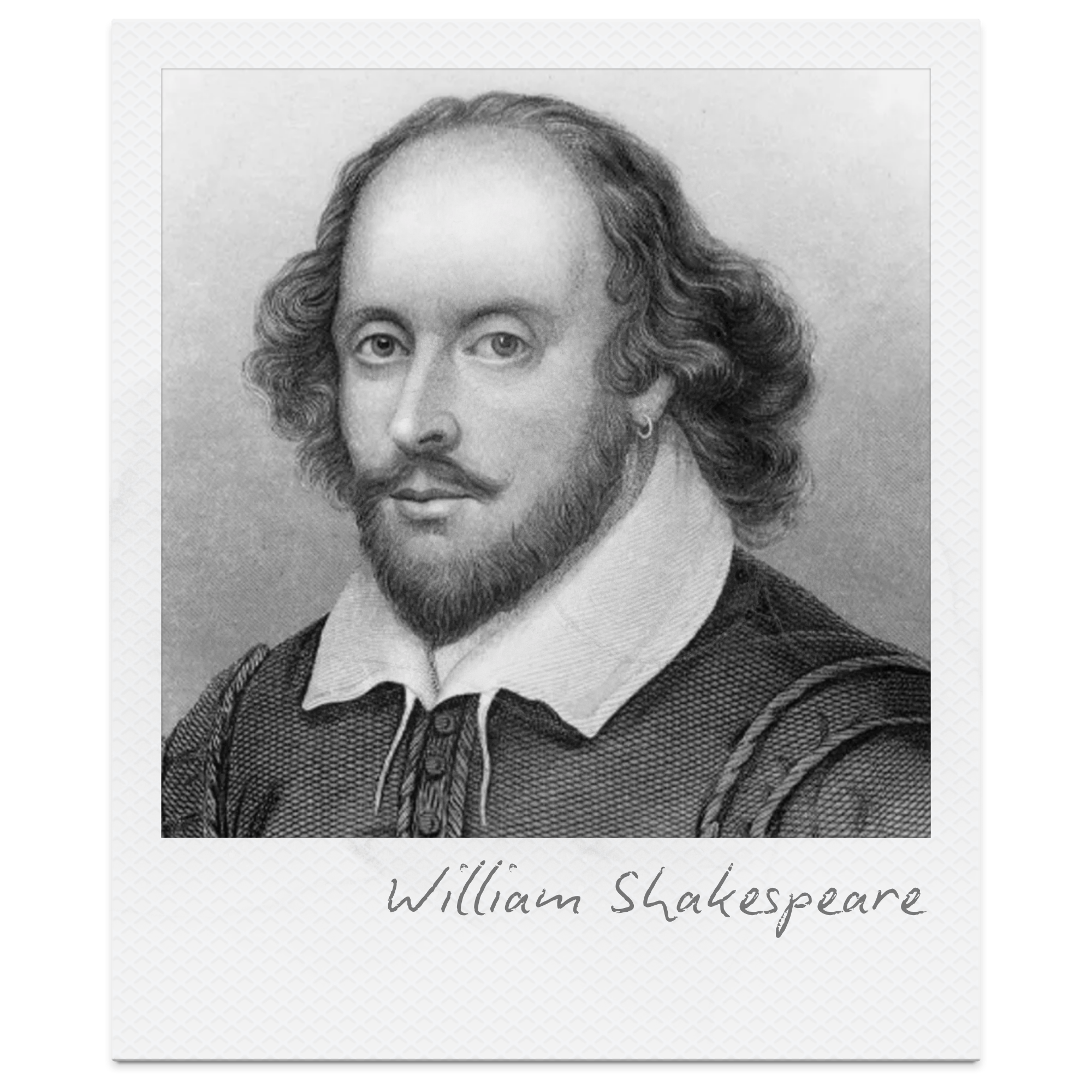
William Shakespeare (1564–1616) was an English playwright, poet, and actor whose work sits at the centre of English Renaissance literature. Born in Stratford-upon-Avon, Shakespeare lived and worked during a period of profound political uncertainty, religious tension, and social change. Although relatively little is known about the details of his private life, the surviving records place him firmly within the world of the Elizabethan theatre, both as a writer and a shareholder in the Lord Chamberlain’s Men, later known as the King’s Men.
Shakespeare wrote for performance rather than posterity. His plays were created for a living, commercial theatre culture that brought together audiences from across the social spectrum — from courtiers and merchants to apprentices and labourers. This context matters. Shakespeare’s language is often richly poetic, but it is also shaped by oral delivery, rhythm, and dramatic tension, designed to be heard, seen, and embodied on stage rather than silently read.
While his life remains partially obscured, Shakespeare’s work reveals an acute understanding of human behaviour, social hierarchy, and political power. His characters are driven by competing desires — loyalty and ambition, love and fear, duty and self-preservation — and it is this psychological complexity, rather than biographical detail, that has sustained critical interest in his writing for over four centuries.
Historical and Social Context
Shakespeare was writing during the late sixteenth and early seventeenth centuries, a period marked by instability beneath the surface of apparent order. The reign of Elizabeth I and the subsequent accession of James I brought shifting attitudes toward monarchy, succession, and national identity, concerns that surface repeatedly in Shakespeare’s history plays and tragedies. Questions of legitimate rule, rebellion, and the consequences of political ambition are not abstract ideas in his work, but urgent and dangerous realities.
Early modern England was also shaped by religious conflict. Following the English Reformation, tensions between Catholicism and Protestantism created an atmosphere of suspicion and surveillance. Open discussion of religion was dangerous, and Shakespeare’s plays often explore conscience, guilt, and moral uncertainty indirectly, embedding these concerns within personal relationships and political drama rather than overt religious debate.
Social hierarchy was rigid, yet increasingly unstable. Urban growth, the expansion of trade, and the rise of the professional theatre disrupted traditional ideas about class and authority. Shakespeare’s plays reflect this tension through characters who challenge their assigned roles — servants who speak truth, women who disguise themselves, fools who articulate uncomfortable wisdom. Issues of gender, power, and identity are therefore not modern impositions on Shakespeare’s work, but integral to the world in which he was writing.
The theatre itself was a contested space. Playhouses were periodically closed due to plague outbreaks, moral opposition, or political anxiety, and playwrights operated under censorship from the Master of the Revels. Shakespeare’s ability to navigate these constraints — using ambiguity, metaphor, and dramatic irony — contributes to the layered meanings and enduring interpretive richness of his plays.
Literary Movements and Genre Positioning
Although William Shakespeare is often treated as a category unto himself, his work emerges from — and reshapes — the traditions of Renaissance humanism, classical drama, and popular English theatre. Educated in a grammar school system steeped in Latin rhetoric and classical texts, Shakespeare drew heavily on writers such as Ovid, Seneca, and Plutarch, adapting their ideas to suit the demands of the early modern stage.
Shakespeare’s writing spans multiple dramatic genres, including tragedy, comedy, history, and romance, yet these categories remain fluid rather than fixed. His tragedies frequently incorporate moments of dark humour; his comedies are often shaped by cruelty, threat, or exclusion; and his histories blur the line between political record and dramatic interpretation. This resistance to neat classification is one of the defining features of Shakespeare’s literary significance.
Unlike earlier morality plays, Shakespeare’s drama does not offer simple ethical instruction. Instead, it reflects a humanist emphasis on complexity, contradiction, and individual experience. Characters are rarely wholly virtuous or wholly corrupt. Moral certainty gives way to ambiguity, and meaning is generated through conflict, language, and consequence rather than authorial judgement. In this sense, Shakespeare stands at a turning point between medieval theatrical traditions and a more psychologically driven modern drama.
Performance is central to Shakespeare’s genre positioning. His plays were written for live theatre, shaped by the physical space of the playhouse, the presence of an audience, and the capabilities of specific actors. Soliloquies, asides, and direct address collapse the distance between character and audience, drawing viewers into moments of introspection, persuasion, or self-deception. Genre, in Shakespeare’s work, is therefore not simply a label, but a dynamic framework shaped by voice, action, and audience response.
Core Themes Across Shakespeare’s Work
Across his plays and poetry, Shakespeare’s themes recur with remarkable consistency, even as genres and settings shift. These themes are not isolated ideas, but overlapping pressures that drive character, conflict, and tragedy.
Power, Authority, and Control
Shakespeare’s plays are preoccupied with the nature of power — how it is gained, maintained, and lost. Authority is shown as unstable, dependent on perception, legitimacy, and consent rather than force alone. Kings, rulers, and leaders are repeatedly tested by rebellion, ambition, and moral weakness, revealing the tension between political control and ethical responsibility. These concerns are deeply shaped by the historical and social context of early modern England, where questions of succession, loyalty, and governance carried real and dangerous consequences.
Identity, Performance, and Selfhood
Across Shakespeare’s comedies and tragedies, identity is presented as something performed rather than fixed. Disguise, role-playing, and shifting social roles complicate the boundary between public self and private conscience. Characters struggle to reconcile who they believe themselves to be with how they are seen by others, suggesting that selfhood is shaped by language, power, and circumstance. The theatrical setting itself reinforces this idea, blurring the line between authenticity and performance.
Love, Desire, and Conflict
Love in Shakespeare’s work is rarely idealised. Romantic desire is entangled with jealousy, rivalry, social expectation, and violence, generating conflict rather than harmony. Relationships become sites of negotiation and control, where emotional attachment collides with honour, ambition, or duty. Shakespeare’s exploration of love frequently exposes its volatility, revealing how desire can both connect and destabilise individuals.
Gender, Obedience, and Resistance
Shakespeare’s plays reflect and interrogate the rigid gender hierarchies of early modern society. Women are often positioned within structures of obedience — to fathers, husbands, or rulers — yet many resist these constraints through wit, silence, disguise, or defiance. These moments of resistance do not always lead to liberation, but they expose the fragility of patriarchal authority and invite questions about agency, voice, and power.
Violence, Revenge, and Justice
Violence in Shakespeare’s work is rarely contained or justified. Acts of revenge and punishment trigger cycles of retribution that blur the distinction between justice and cruelty. Shakespeare is less interested in spectacle than in consequence: guilt, psychological collapse, and moral uncertainty linger long after the violent act itself. The pursuit of justice often becomes indistinguishable from personal vengeance, raising uncomfortable ethical questions.
Fate, Choice, and Moral Responsibility
Shakespeare repeatedly stages tension between fate and free will. Prophecies, omens, and chance events suggest forces beyond human control, yet characters remain responsible for their decisions. Shakespeare resists deterministic answers, instead exploring how individuals interpret fate to justify action or evade accountability. Moral responsibility, rather than destiny, ultimately defines character and consequence.
Shakespeare’s Enduring Literary Significance
The continued relevance of William Shakespeare lies not in the universality of his plots, but in the flexibility of his writing. His plays are structured to absorb new meanings as social values, political systems, and cultural anxieties shift. Themes of power, identity, gender, violence, and moral responsibility are not resolved in Shakespeare’s work; they are staged, tested, and left open to interpretation. This openness allows each generation to read Shakespeare in context, responding to contemporary concerns while remaining anchored in early modern England.
Shakespeare’s language plays a central role in this durability. His writing balances rhetorical control with emotional immediacy, allowing characters to persuade, conceal, justify, and betray themselves through speech. Soliloquies and extended monologues invite audiences into moments of moral uncertainty rather than offering definitive judgement. Meaning is created through tension — between action and reflection, public duty and private desire — rather than through authorial instruction.
Equally important is Shakespeare’s relationship with performance. His plays were written for a living theatre, shaped by actors, audience response, and physical space. This performative foundation resists fixed interpretation. The same Shakespearean text can support multiple readings depending on staging, emphasis, and historical moment, reinforcing Shakespeare’s position not as a static literary monument but as an evolving body of work.
For this reason, Shakespeare functions less as a single authorial voice and more as a cultural framework. His work provides a shared language for examining authority, conscience, conflict, and human behaviour, while remaining resistant to closure. It is this combination of historical specificity and interpretive openness that secures William Shakespeare’s literary significance at the centre of English literature.
Go Deeper Into Shakespeare’s Context and Ideas
Shakespeare’s plays invite deeper exploration across a range of historical, social, and thematic contexts. The ideas outlined above connect directly to broader discussions of power, identity, gender, violence, and moral responsibility in early modern literature. The following posts explore these areas in greater depth, building on the contextual framework established here.
◆ Power, Authority, and Control in Shakespeare
A closer examination of kingship, legitimacy, rebellion, and political fear in Shakespeare’s tragedies and histories, grounded in the realities of early modern England.
◆ Identity, Performance, and the Self
Explores disguise, role-playing, and the tension between public identity and private conscience across Shakespeare’s plays.
◆ Gender, Obedience, and Resistance
An exploration of Shakespeare’s female characters, patriarchal authority, and moments of resistance that complicate early modern gender expectations.
◆ Violence, Revenge, and Justice
Considers cycles of revenge, moral ambiguity, and the psychological consequences of violence in Shakespearean drama.
◆ Fate, Choice, and Moral Responsibility
Examines prophecy, free will, and ethical accountability, tracing how Shakespeare resists deterministic readings of human action.
You may also wish to explore individual plays, genres, and comparative contexts, where these ideas take on different forms across tragedy, comedy, history, and romance.
Final Thoughts
Understanding William Shakespeare begins with context. His plays emerge from a specific historical moment shaped by political instability, religious tension, and rigid social hierarchies, yet they continue to resonate because they refuse easy answers. Shakespeare’s writing does not instruct readers what to think; it presents conflicts — of power, identity, desire, and moral responsibility — and allows meaning to develop through language, action, and consequence.
Approaching Shakespeare through context and theme rather than isolated texts reveals the coherence of his work across genres. Tragedy, comedy, history, and romance become different lenses through which Shakespeare explores the same fundamental pressures: who holds authority, how identity is performed, where justice ends and violence begins, and what responsibility individuals bear for their choices.
For further exploration of Shakespeare and other major writers, texts, and themes, visit the Literature Library, where related analyses, contextual studies, and critical frameworks are organised to support deeper reading and interpretation across English literature.
Choose Your Shakespeare Text