70 Creative Writing Prompts Inspired by Macbeth: Plot Hooks, Opening Lines, Characters & Visual Ideas
Some stories don’t begin with a crime, a crown, or a battlefield. They begin with a thought — a suggestion that feels harmless at first, a sense that something has already been decided, a moment where desire quietly reshapes reality.
Macbeth endures not because of its violence or ambition alone, but because it captures how easily people talk themselves into becoming someone else. The play is filled with fog, fractured sleep, prophetic language, and moral uncertainty, making it an ideal foundation for atmosphere-driven creative writing that prioritises psychology, symbolism, and inner conflict.
This collection of 70 creative writing prompts inspired by Macbeth draws on the play’s themes, imagery, and emotional logic rather than its plot. The prompts invite teen writers to explore ambition, fate, guilt, influence, and identity through original storytelling — encouraging them to focus on mood, voice, and internal turning points rather than retelling Shakespeare’s events.
Designed for classroom use, writing clubs, creative warm-ups, journaling, or longer YA projects, these prompts work across age groups and curricula. They can be used as short starters, extended writing tasks, or inspiration for atmosphere-led stories that sit at the intersection of literature and imagination.
If you’d like to explore more creative writing prompts inspired by literature, genre, or aesthetic-driven themes, you can browse the full Creative Writing Archive and discover new ways to shape your next story.
You can also explore our Literature-Inspired Creative Writing Prompts Hub to discover more creative prompts based on classic novels, poems and short stories.
1. Plot Hooks
These plot hooks are inspired by the psychological tension at the heart of Macbeth: ambition, suggestion, and the moment where a thought begins to feel inevitable. Rather than retelling events from the play, each prompt invites writers to explore how influence, desire, and uncertainty quietly shape decisions — often before the character realises what is happening.
Write about a character who overhears a prediction about their future that was never meant for them — and cannot stop thinking about it.
Write about a moment when a single sentence changes the way a character understands their own potential.
Write about a character who begins to believe that wanting something strongly enough makes it inevitable.
Write about a promise that feels more like a warning, delivered by someone the protagonist does not fully trust.
Write about a character who realises they are being influenced — and decides to continue anyway.
Write about a choice that feels decided long before it is made.
Write about a whispered suggestion that feels more powerful than a direct command.
Write about a figure — real or imagined — who appears at moments of uncertainty and seems to know exactly what the protagonist wants.
Write about a moment when ambition starts to sound like destiny.
Write about the instant when a thought becomes an action — and there is no undoing it.
2. Title Ideas
Titles inspired by Macbeth often sound ominous without explanation. They draw on concrete imagery — night, blood, thresholds, movement in the natural world — to suggest consequence, fate, and moral unease. Rather than naming events directly, these titles hint that something has already shifted, inviting the reader into a story shaped by ambition, uncertainty, and irreversible choice.
The Night the Forest Shifted
Blood on the Threshold
What Was Whispered Before Midnight
The Omen We Ignored
A Crown of Quiet Things
When the Path Chose Me
The Hour the World Turned
Marks That Wouldn’t Wash Away
The Shape of a Promised Future
After the First Crossing
3. Opening Lines
Strong opening lines inspired by Macbeth often introduce unease before explanation. They hint at influence, ambition, or consequence through atmosphere rather than action, allowing the reader to sense that something has already begun to shift.
I didn’t decide anything that night — I only stopped resisting the thought.
The words stayed with me long after the voice was gone.
Nothing had happened yet, but I already felt responsible.
The future arrived in my head before it arrived in my life.
I remember the exact moment the idea stopped feeling dangerous.
The night felt as though it was waiting for me to act.
I told myself it was only a thought, and then it wasn’t.
By morning, the choice felt older than the day itself.
I realised too late that I had been preparing for this.
Something had already crossed a line inside me.
4. Closing Lines
Closing lines inspired by Macbeth rarely offer relief or explanation. Instead, they suggest irreversible change — the sense that something has been set in motion and cannot be undone, even if the world appears unchanged.
Nothing looked different, but I knew I would never step back over that line.
By the time I understood the cost, it no longer mattered.
What followed felt less like punishment and more like continuation.
I had what I wanted, and it weighed exactly as much as it should have.
The night gave no answer, only silence.
Whatever had been promised was already gone.
I stopped asking whether it had been worth it.
The future arrived, and it did not recognise me.
There was no moment of return — only after.
I understood then that the damage had already been done.
5. Character Ideas
Characters inspired by Macbeth are often shaped by desire, influence, and internal fracture. They may feel watched, guided, or pushed by forces they don’t fully understand — whether those forces are other people, belief systems, or their own thoughts. These character ideas focus on inner change rather than external action, making them well suited to atmosphere-led storytelling.
A character who believes they are destined for something greater but cannot explain why, only that the feeling has never left them.
A member of a small coven whose role is not to act, but to observe — recording omens and outcomes without intervening.
A character who mistakes encouragement for permission and slowly loses the ability to tell the difference.
Someone who feels most powerful at night and increasingly uncertain in daylight.
A character haunted by a ghost who never speaks, but appears whenever a difficult decision is about to be made.
A person whose ambition grows louder the more they try to ignore it.
A character who begins to feel watched even when alone, as if the future itself is paying attention.
A member of a coven who realises that their prophecies only come true because people believe them.
A character who is unsure whether the ghost following them is a consequence, a warning, or a reflection of their own guilt.
Someone who crosses a moral boundary and immediately senses that they can never return to who they were before.
6. Setting Ideas
Settings inspired by Macbeth often feel slightly misaligned, as if the world itself is responding to human desire. These places are familiar at first, but something about them resists comfort — light behaves strangely, spaces feel altered, and time seems to hesitate or hurry. Each setting below invites writers to use atmosphere and symbolism to reflect inner conflict.
A forest that appears unchanged by day but seems to shift position at night, making familiar paths unreliable.
A stone building that feels heavier with each decision made inside it.
A crossroads visited at midnight, where nothing happens — and yet everything feels decided.
A landscape wrapped in fog where distances are difficult to judge and direction feels uncertain.
A threshold — doorway, gate, or bridge — that feels harder to cross each time it is approached.
A place where silence feels intentional, as if the world is waiting.
A room where light refuses to settle, casting uneven shadows that never quite repeat.
A familiar location that begins to feel accusatory after a moral choice is made there.
A path through trees that seems to lean inward, closing behind those who walk it.
A setting where night lingers longer than it should, blurring the boundary between hours.
7. Picture Prompts
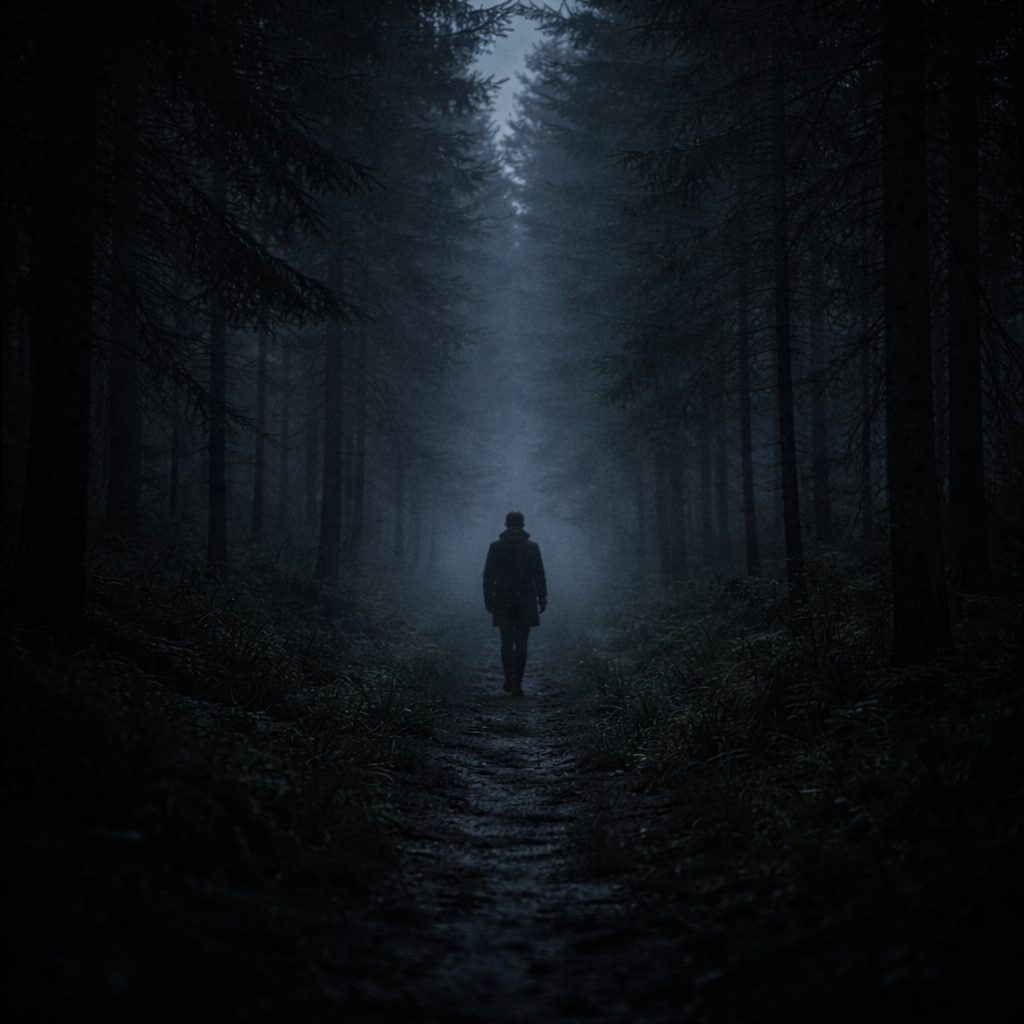
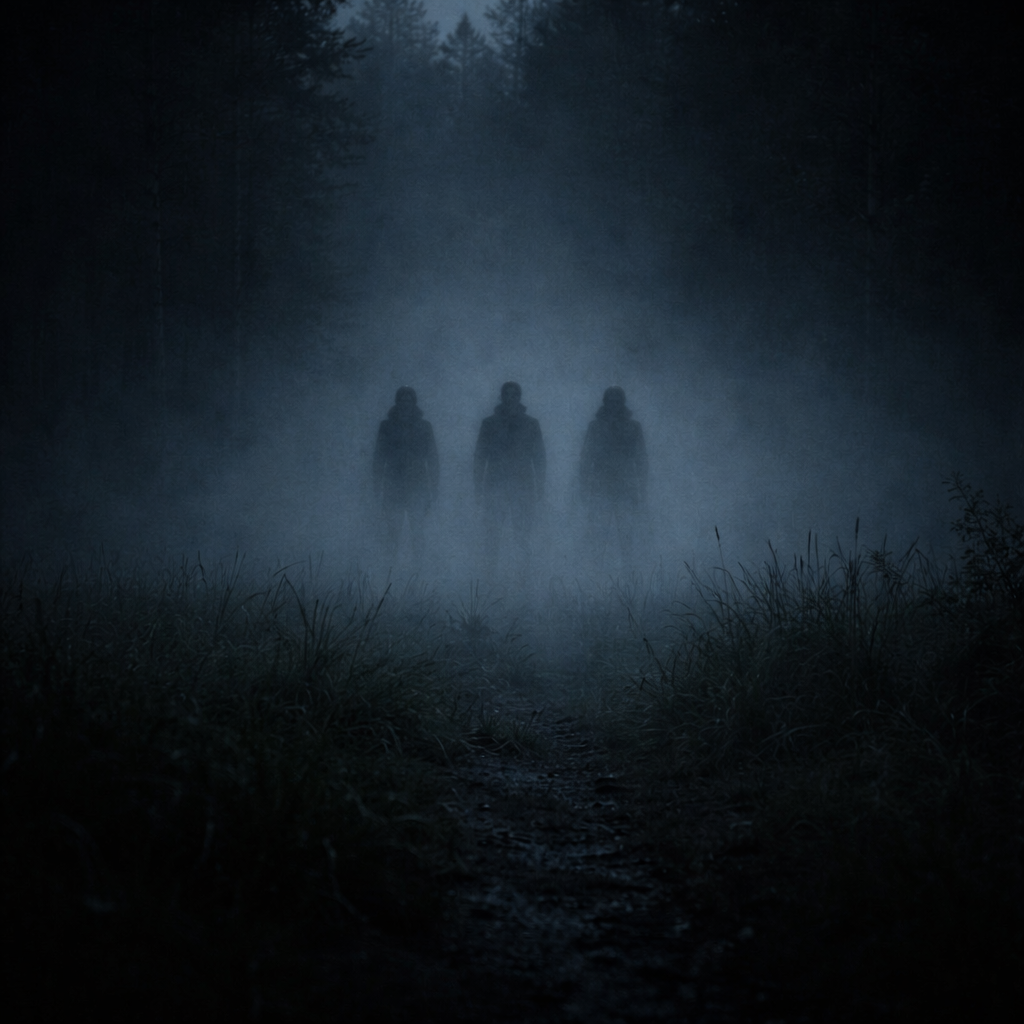
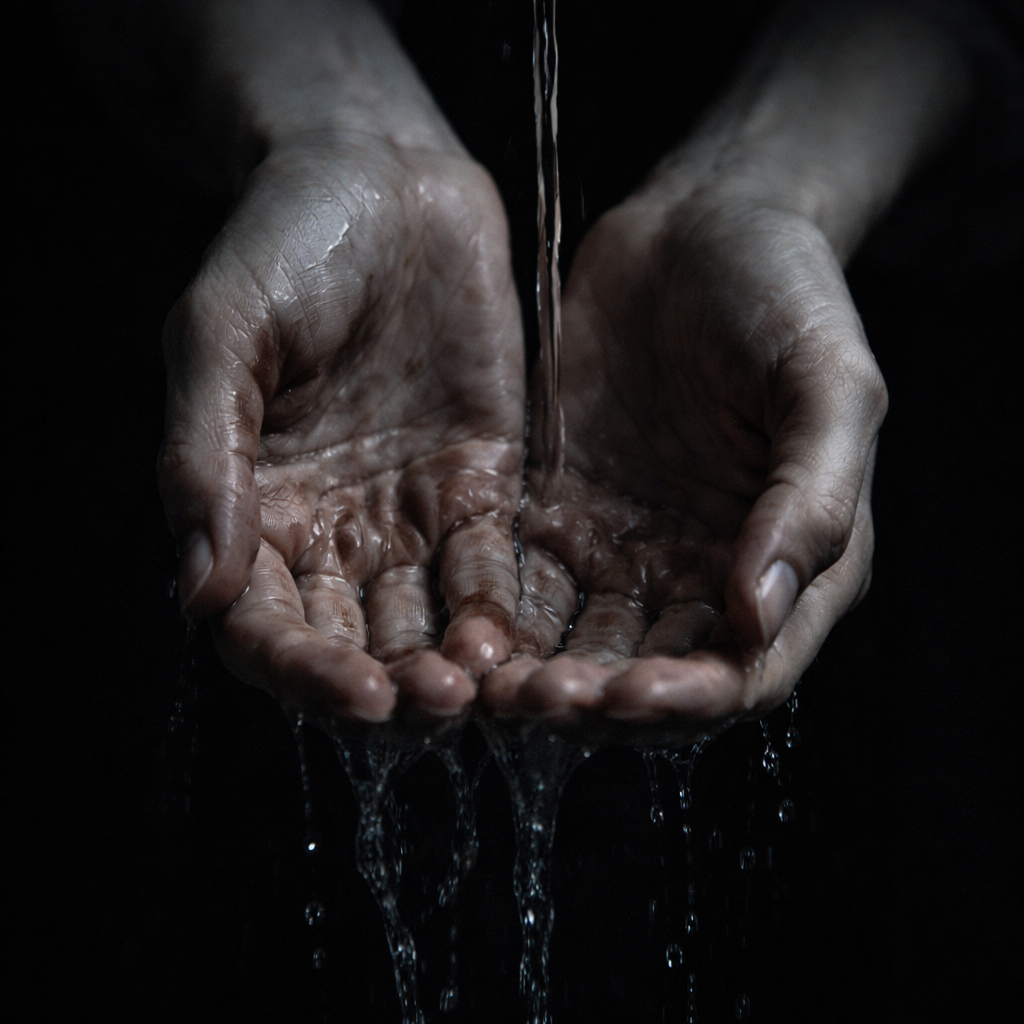
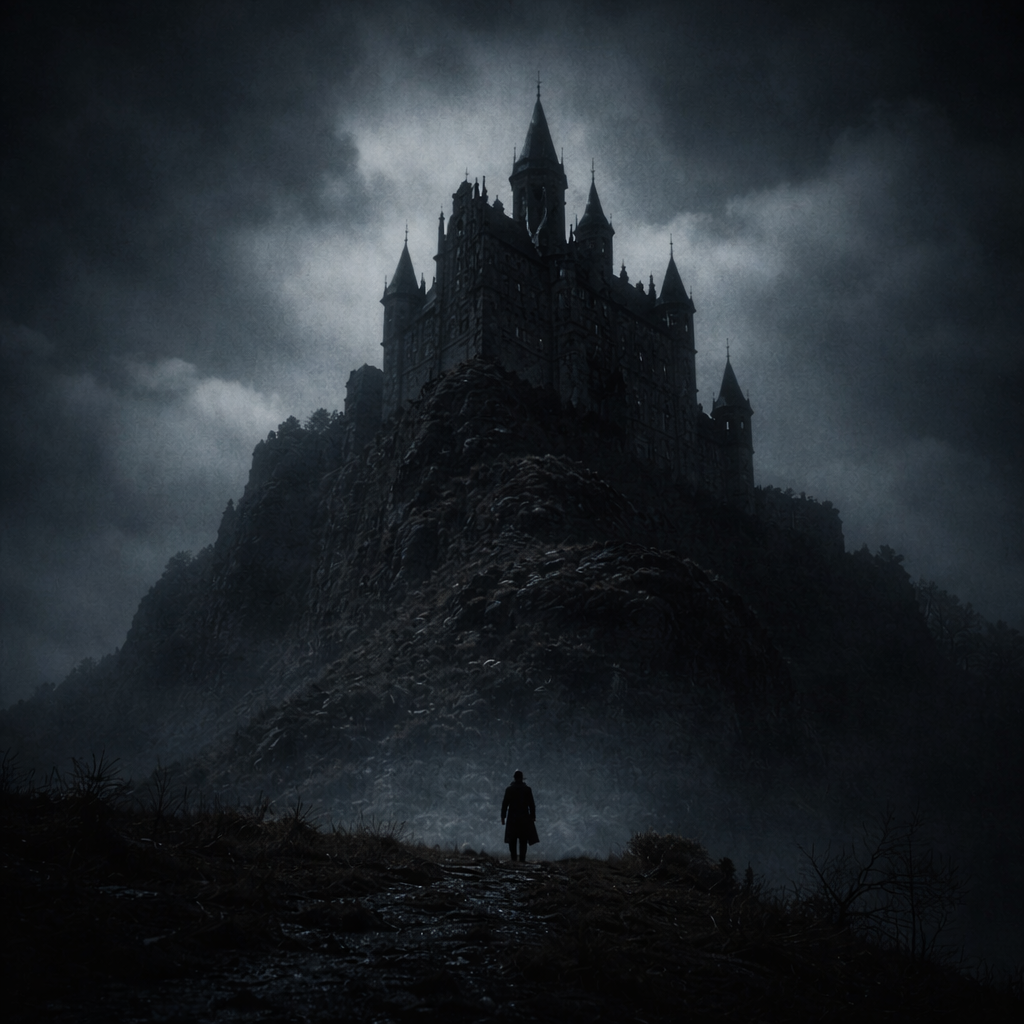
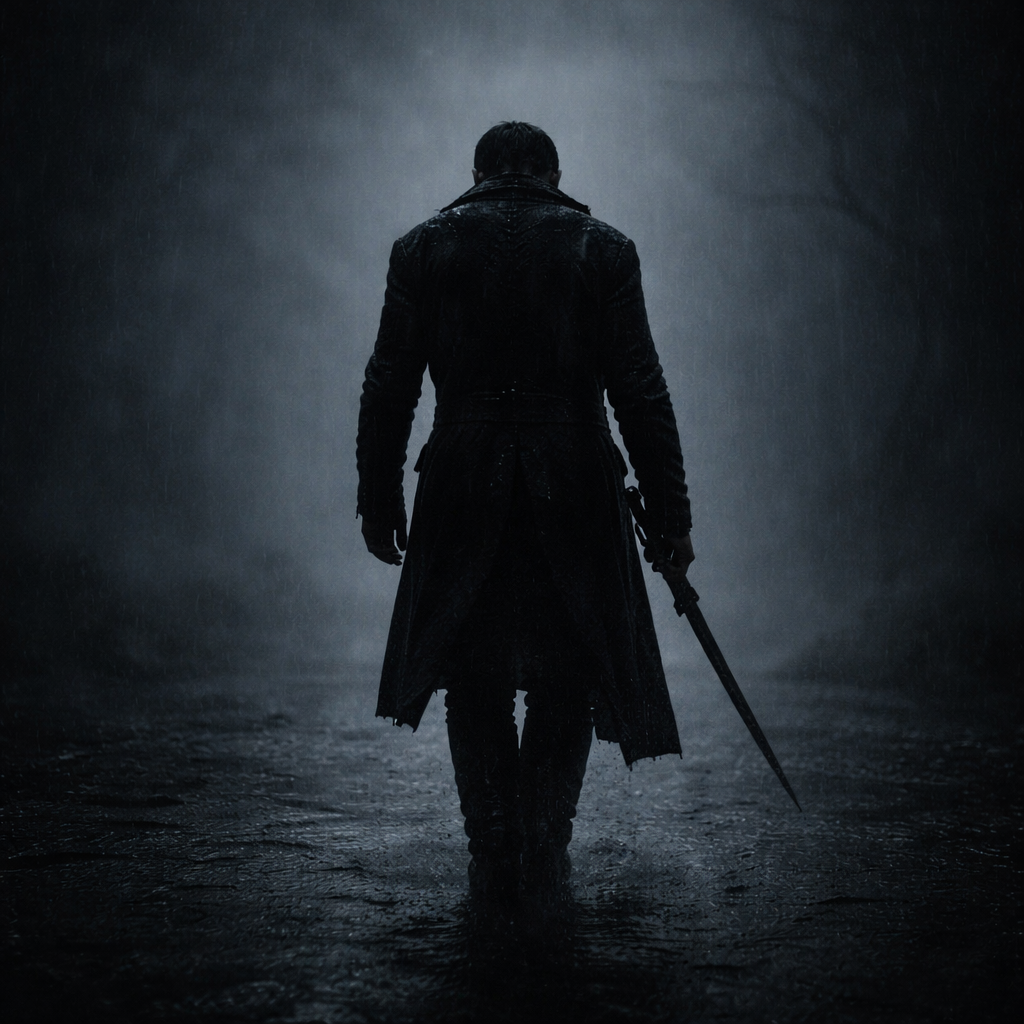
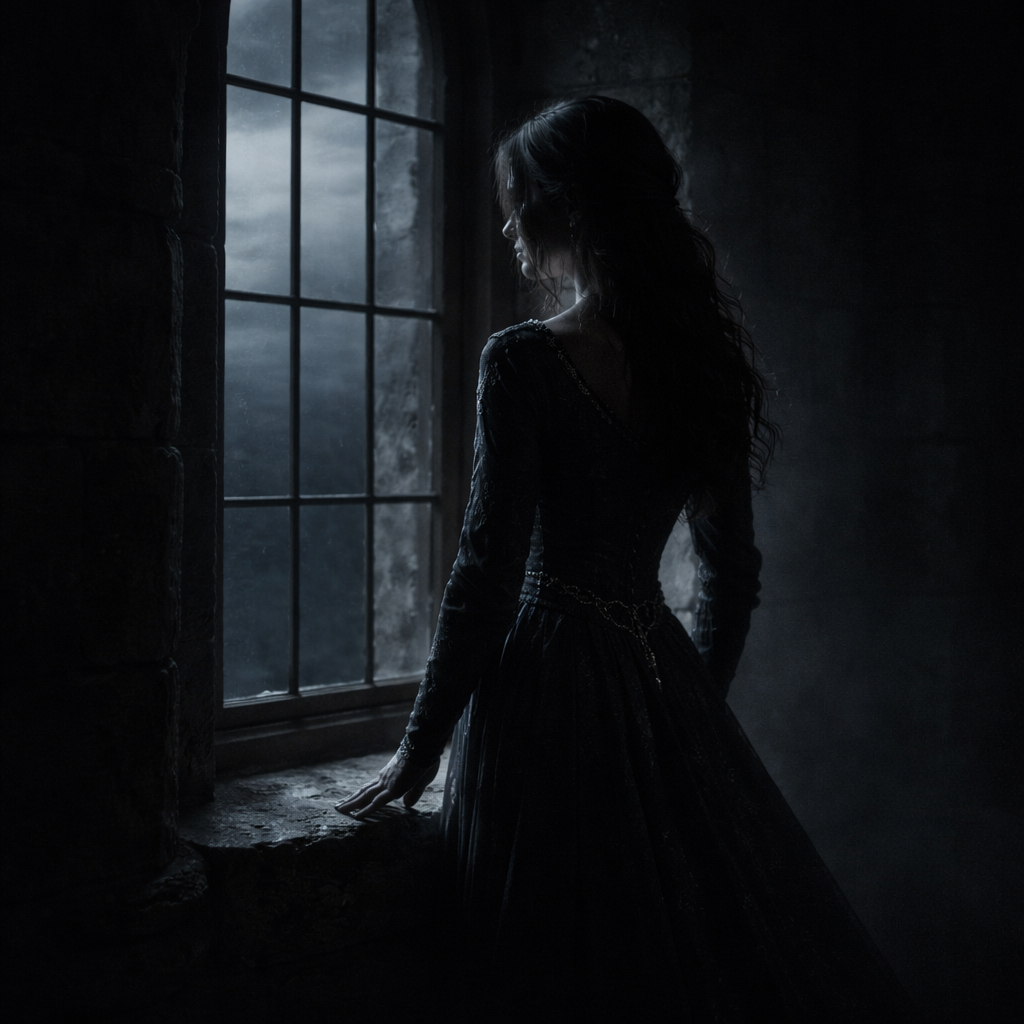
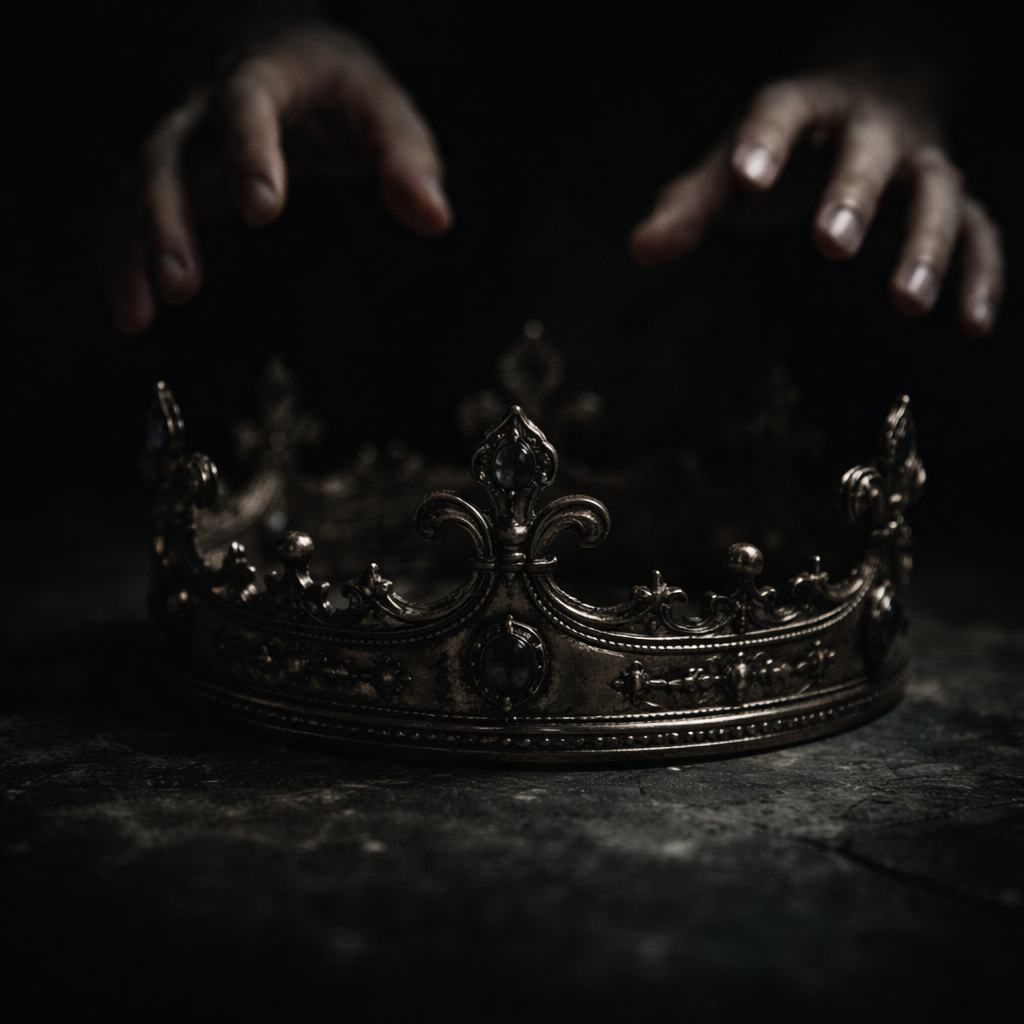
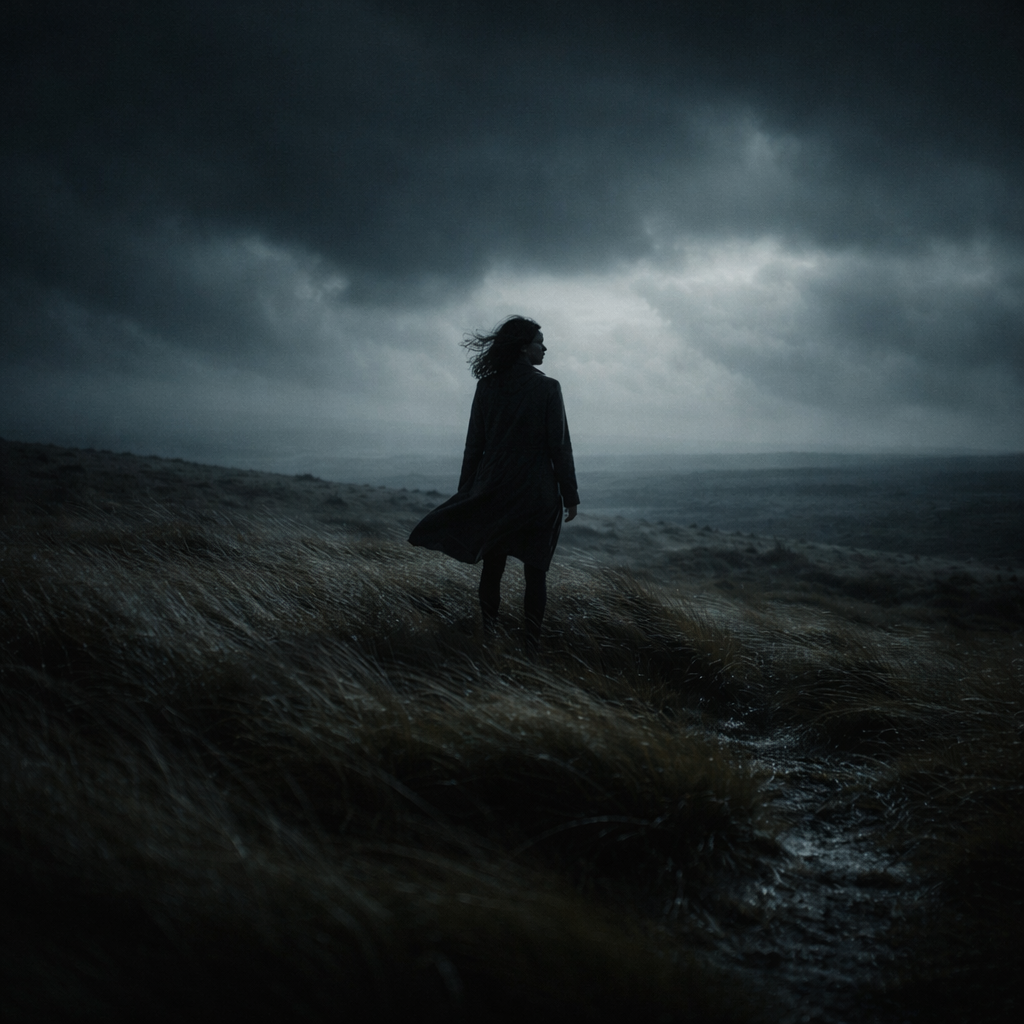
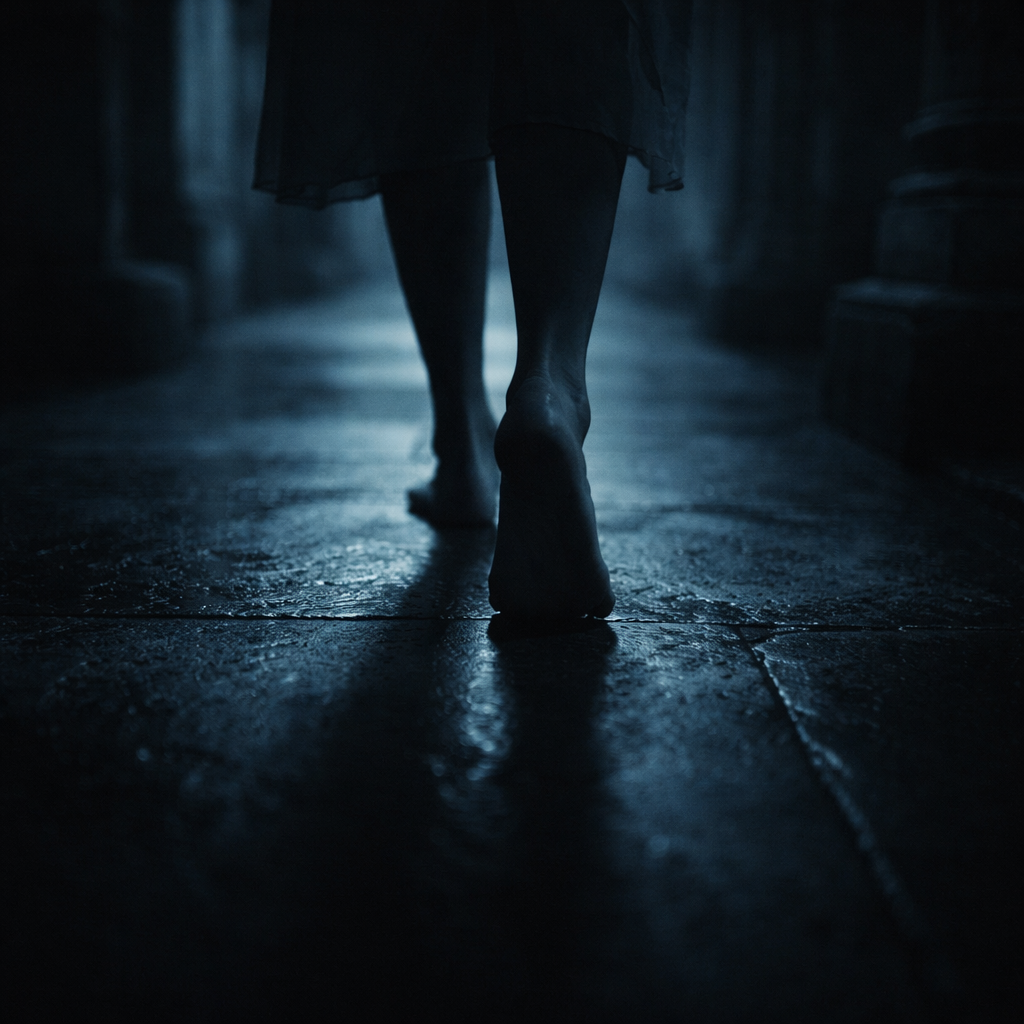
Visual prompts inspired by Macbeth focus on atmosphere, symbolism, and restraint rather than literal scenes from the play. These images are designed to suggest tension and consequence through light, shadow, landscape, and stillness — allowing writers to interpret meaning rather than receive it.
Effective images for this section often feature liminal spaces, natural environments, or quiet interiors where something feels unsettled or watchful. Subtle details — a threshold, a path, a shadow, a mark — can carry more narrative weight than dramatic action.
Writers can use each image as a starting point for short descriptions, extended scenes, or mood-driven narratives, paying close attention to how setting and symbolism reflect inner change.

Go Deeper into Macbeth-Inspired Writing
These prompts are designed to open up Macbeth creatively — encouraging writers to explore ambition, influence, guilt, and consequence through atmosphere-led storytelling rather than retelling the play itself. Used as starters or standalone tasks, they work well for sparking engagement and building confidence with tone, voice, and symbolism.
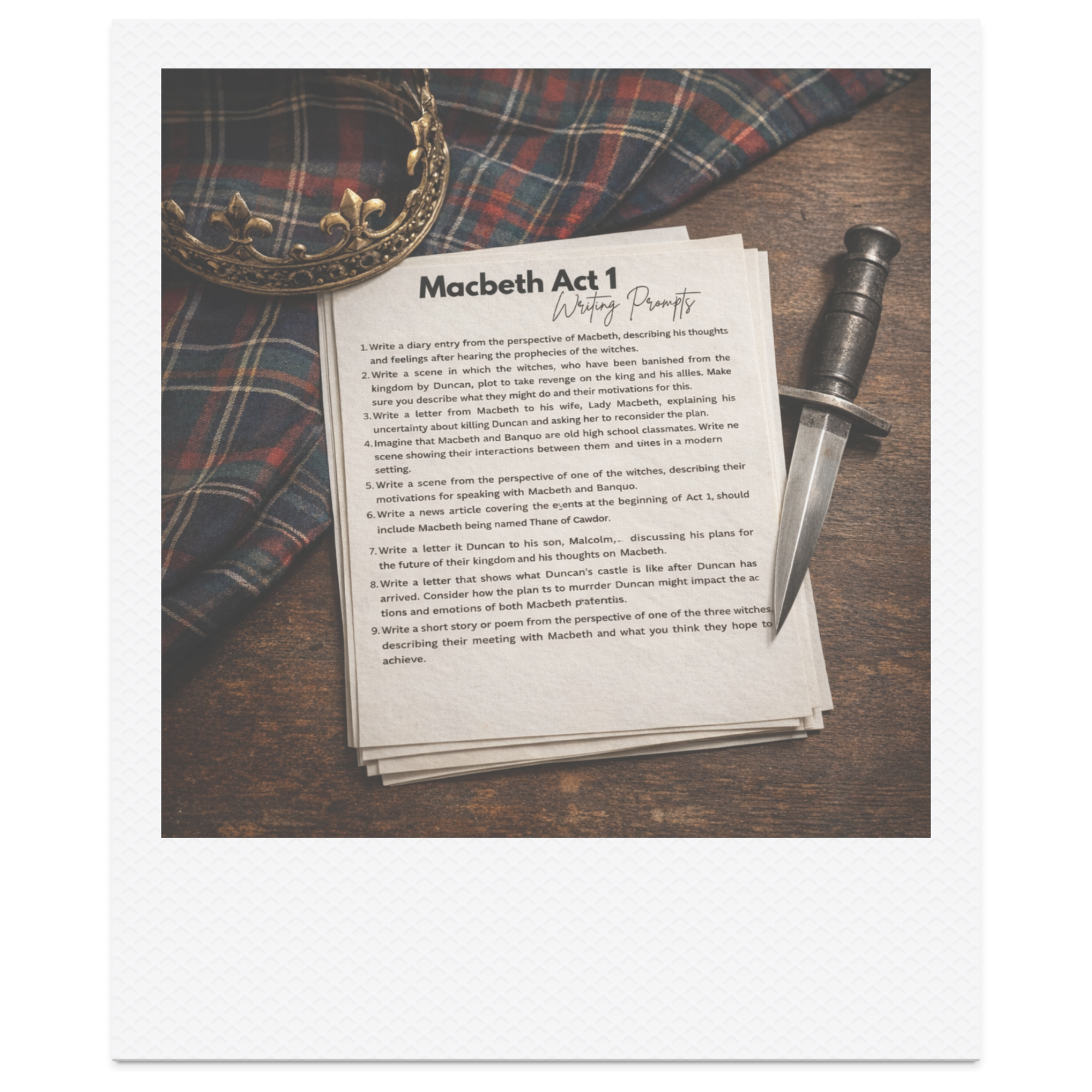
For deeper study, especially in classroom settings, creative writing becomes even more powerful when it follows the structure of the play itself. Act-by-act prompts allow students to trace how characters shift over time, how themes intensify, and how key decisions reshape both the narrative and the psychological landscape of the text.
If you’re looking to extend this work, a structured set of Macbeth creative writing prompts linked to specific scenes, character turning points, and major themes can help students move from inspired responses to text-rooted writing with real analytical value. Formats such as diary entries, letters, modern retellings, newspaper reports, and alternative perspectives encourage imaginative engagement while still reinforcing understanding of Shakespeare’s choices.
Used together, open-ended inspired prompts and scene-specific creative tasks offer a balanced approach: one builds atmosphere and confidence, the other deepens textual understanding and prepares students for more analytical work.
Final Thoughts
Creative writing inspired by Macbeth allows students and young writers to engage with Shakespeare’s ideas in a way that feels immediate and meaningful. By focusing on atmosphere, inner conflict, and symbolic detail, these prompts invite writers to explore ambition, influence, and consequence without needing to retell the play itself.
Whether used as quick writing starters, discussion-led extensions, or longer creative projects, Macbeth-inspired prompts help build confidence with language while deepening understanding of how stories are shaped by choice, power, and perspective.
If you’d like to explore more creative writing prompts by genre, theme, or aesthetic, you can browse the full Creative Writing Archive, where literary inspiration meets original storytelling. For readers and teachers looking to develop contextual understanding, thematic analysis, and text-specific resources, the Literature Library offers in-depth guides, teaching ideas, and curriculum-linked content across a wide range of commonly taught texts.
Together, creative exploration and literary study create a richer, more connected reading experience — one where imagination supports understanding, and writing becomes a way of thinking as well as creating.
You can also explore our Literature-Inspired Creative Writing Prompts Hub to discover more creative prompts based on classic novels, poems and short stories.
