Remember by Christina Rossetti: Summary, Meaning & Critical Analysis
Christina Rossetti’s “Remember” is a poem frequently taught at GCSE, AS, and A Level, yet its emotional restraint and moral complexity are often underestimated. On the surface, the poem appears to present a speaker asking to be remembered after death. However, as the sonnet unfolds, Rossetti complicates this request, shaping a meditation on love, memory, and loss that ultimately privileges emotional responsibility over personal desire.
Written in the tightly controlled form of a Petrarchan sonnet, Remember explores the tension between wanting to be held in another’s thoughts and recognising the harm that memory can cause. The speaker’s voice moves from quiet insistence to deliberate self-denial, revealing a conception of love that is defined not by possession, but by restraint. Through careful shifts in tone, imagery, and structure, Rossetti transforms remembrance from an act of devotion into a moral choice.
This poem rewards close reading. Its power lies not in dramatic declarations of grief, but in what is withheld — the pauses, the softened commands, and the final willingness to be forgotten. In this analysis of “Remember” by Christina Rossetti, we will explore the poem’s meaning, its treatment of love and death, and the literary methods that make it one of Rossetti’s most quietly radical sonnets.
If you're exploring Rossetti’s poetry more broadly, you can also visit the Christina Rossetti Poetry Hub, where I’ve collected analyses of her major poems alongside themes, context, and teaching resources.
If you’re teaching Remember in the classroom, keep scrolling for free essay questions on “Remember” by Christina Rossetti, along with discussion ideas and close-reading activities.

Christina Rossetti and the World Behind Remember
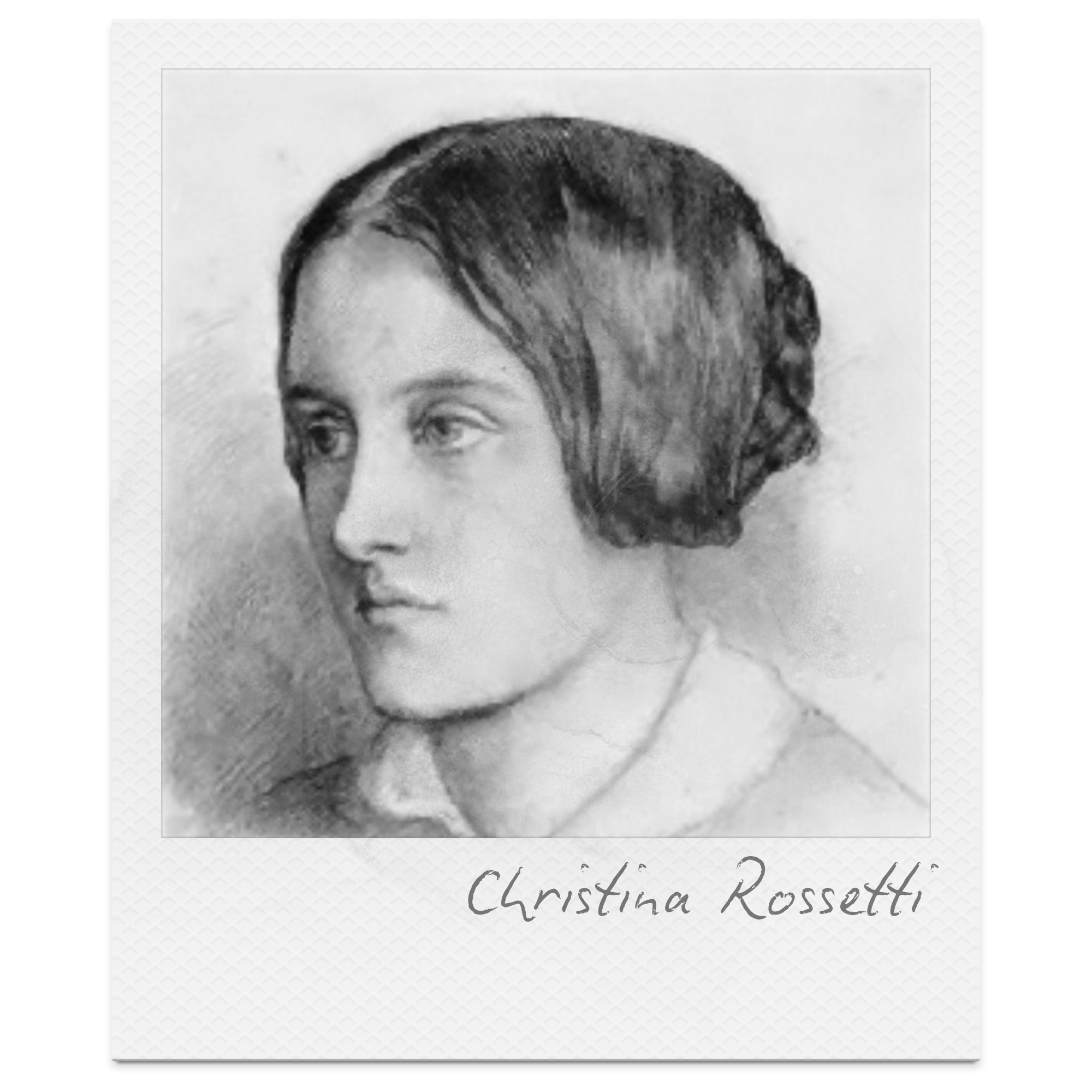
Christina Rossetti was a central figure in Victorian poetry, closely associated with the Pre-Raphaelite movement through both her family and her aesthetic values. While her work often engages with love, desire, and devotion, it is equally shaped by restraint, renunciation, and moral seriousness. Rossetti’s deeply held religious beliefs, particularly her Anglo-Catholic faith, informed her view that emotional fulfilment could not be separated from ethical responsibility.
This tension between longing and self-denial appears repeatedly across Rossetti’s poetry. She experienced intense personal attachments during her life, yet chose not to marry, prioritising spiritual conviction over romantic fulfilment. Rather than presenting love as something to be possessed or preserved at all costs, her work frequently explores what it means to let go — to love without demanding return.
Remember sits comfortably within this pattern. First published in Goblin Market and Other Poems (1862), the sonnet reflects Rossetti’s interest in how memory, grief, and affection intersect. Written during a period when Victorian culture placed great emphasis on mourning and remembrance, the poem resists sentimental excess. Instead, it questions whether remembering the dead is always an act of kindness, suggesting that emotional restraint may itself be a form of love.
If you would like to read more about the social and historical context surrounding Rossetti’s work, then you might find this post useful.
Summary of Remember by Christina Rossetti
In “Remember” by Christina Rossetti, the speaker addresses a loved one while anticipating her own death. She asks to be remembered after she has gone “far away into the silent land,” linking memory to love and shared plans for the future. As the poem develops, the speaker begins to reconsider this request and recognises that remembrance may cause pain. A clear shift occurs when she allows the possibility of being forgotten if remembering leads to grief. By the end of the poem, the speaker prioritises the beloved’s happiness over her own desire to be remembered. The final message suggests that forgetting can be an act of love when it allows the living to move forward.
What Is the Meaning of Remember?
The meaning of “Remember” by Christina Rossetti centres on the idea that love involves emotional responsibility, not possession. The speaker initially asks to be remembered after her death, presenting memory as a continuation of intimacy and shared experience. However, as the poem develops, she recognises that remembrance may cause the living pain rather than comfort.
The poem’s central message emerges in its closing lines, where the speaker releases her claim on memory and allows the possibility of being forgotten. Rossetti suggests that forgetting can be kinder than remembering if memory sustains grief. In this way, the poem redefines love as an act of generosity and restraint rather than emotional attachment.
Ultimately, Remember argues that true affection prioritises another person’s happiness, even at the cost of one’s own desire to be remembered. Love, Rossetti implies, is most meaningful when it is willing to let go.
Title, Form and Structure: The Petrarchan Sonnet
“Remember” by Christina Rossetti is written in the form of a Petrarchan sonnet, a structure traditionally associated with love, devotion, and emotional intensity. By choosing this form, Rossetti places the poem within a long tradition of lyric expressions of attachment, only to quietly challenge the expectations that tradition creates. The sonnet’s tightly controlled structure mirrors the speaker’s emotional discipline, reinforcing the poem’s emphasis on restraint rather than excess.
Even before the poem begins, its title establishes the central tension of the sonnet. The single-word imperative Remember is striking in its simplicity. It frames the poem as a direct address and positions memory as both a request and a demand. At the same time, the lack of elaboration in the title reflects the poem’s emotional economy: Rossetti offers no explanation, no justification, only the act of remembering itself. This simplicity anticipates the poem’s concern with what is necessary, and what can — or should — be relinquished.
The poem follows the conventional Petrarchan division into an octave and sestet, a structural split that allows Rossetti to stage an argument within the poem itself. Rather than presenting a single, unchanging emotional stance, the form enables a progression from desire to renunciation. Meaning in Remember is shaped as much by this movement as by the speaker’s words.
The Octave: Insistence and Shared Memory
In the opening eight lines, the speaker urges the beloved to remember her after death, grounding memory in physical closeness and shared plans for the future. Images of holding hands and speaking “day by day” create an atmosphere of intimacy, suggesting that remembrance is a continuation of love. The repeated imperative “remember” reinforces this insistence, giving the octave a tone that is tender but quietly forceful.
At the same time, the octave introduces a subtle tension. By instructing the beloved how to respond to loss, the speaker exerts a degree of emotional control. The language of planning and anticipation implies an attempt to fix the future, even as death renders such plans impossible.
The Volta and the Sestet: Renunciation and Release
The volta occurs at “Yet if you should forget me for a while,” marking a decisive shift in the poem’s emotional direction. The conjunction “yet” signals a reversal of the earlier insistence, as the speaker reconsiders the cost of being remembered. From this point, the poem moves away from desire and towards self-denial.
In the sestet, Rossetti reframes forgetting as an act of kindness rather than betrayal. The imagery darkens — “darkness and corruption” suggest the physical realities of death — but this realism leads not to despair, but to generosity. The speaker releases her claim on the beloved’s memory, prioritising their happiness over her own posthumous presence.
The poem’s closing comparison — that it is “better by far you should forget and smile / Than that you should remember and be sad” — completes the sonnet’s ethical argument. The structure itself enacts the poem’s meaning: love begins as a desire to be remembered, but reaches its fullest expression in the willingness to let go.
Language, Imagery, and Control
Rossetti’s language in “Remember” is marked by restraint and precision. Rather than relying on elaborate metaphor, the poem uses plain diction and familiar images, allowing emotional meaning to emerge through control rather than ornament. This simplicity reflects the speaker’s disciplined approach to love and loss.
Imperatives and Softened Command
The repeated use of the imperative “remember” gives the speaker’s voice an authoritative quality, yet Rossetti carefully tempers this authority. Phrases such as “you understand” and “if you should forget me for a while” soften the command, transforming it into an appeal rather than a demand. This modulation of tone mirrors the poem’s ethical movement: love is expressed, but never imposed.
Physical Imagery and Intimacy
Early images of physical closeness — “hold me by the hand” — anchor memory in the body. Touch becomes a symbol of shared presence, reinforcing the idea that remembrance initially functions as a continuation of intimacy. However, the image is fleeting. The speaker “half turn[s] to go yet turning stay,” capturing a moment of hesitation that reflects the poem’s broader emotional uncertainty.
Darkness, Corruption, and Realism
In the sestet, Rossetti introduces darker imagery, particularly the phrase “darkness and corruption.” These words strip away romantic idealism, confronting the physical reality of death. Importantly, this realism does not heighten despair. Instead, it motivates the speaker’s renunciation. By acknowledging decay, the poem rejects sentimental memory in favour of emotional honesty.
The Final Comparison
The closing comparison — “Better by far you should forget and smile / Than that you should remember and be sad” — is striking for its clarity. The balanced structure of the sentence reinforces the moral choice at the heart of the poem. Forgetting is aligned with happiness, remembrance with sorrow. Rossetti’s careful phrasing ensures that the speaker’s final request feels neither bitter nor self-pitying, but quietly resolute.
Themes in Remember
Having examined Rossetti’s use of form, structure, and language, the poem’s central ideas come into sharper focus. Rather than presenting a single emotional response to death or loss, “Remember” by Christina Rossetti explores a set of interlinked themes that develop as the speaker’s thinking evolves. Love, memory, and death are treated not as sentimental abstractions, but as ethical concerns shaped by restraint, responsibility, and choice.
The themes of Remember emerge from the poem’s movement from insistence to renunciation. What begins as a request to be remembered becomes a meditation on when remembrance is kind — and when it may cause harm.
Love as Restraint Rather Than Possession
One of the poem’s most significant ideas is its redefinition of love. Rather than portraying love as something that must endure through memory at any cost, Rossetti presents it as an act of restraint. The speaker’s eventual willingness to be forgotten challenges romantic expectations that love should cling, persist, or leave a permanent mark.
In Remember, love is measured not by emotional endurance, but by generosity. The speaker’s final request places the beloved’s well-being above her own desire to be remembered, suggesting that true affection may involve self-denial rather than emotional possession.
Memory and Moral Responsibility
Memory is central to the poem, but it is never treated as neutral. Rossetti presents remembering as a morally charged act — one that can preserve intimacy, but also prolong suffering. The speaker comes to recognise that insisting on remembrance may impose grief on the living.
This awareness transforms forgetting into an ethical alternative. Forgetting, when it allows happiness, becomes an act of kindness rather than betrayal. Rossetti reframes memory as a choice, not an obligation, and questions the assumption that remembering the dead is always an expression of love.
Death Without Sentimentality
Although Remember anticipates death, it avoids melodrama or spiritual reassurance. References to the “silent land” emphasise absence rather than certainty, while later images of “darkness and corruption” confront the physical reality of decay. Death is not romanticised or softened.
This unsentimental approach strengthens the poem’s emotional honesty. By refusing consolation, Rossetti clears space for a love that is realistic rather than idealised — one that accepts finality without demanding prolonged mourning.
Renunciation and Letting Go
Renunciation is a recurring theme in Rossetti’s work, and Remember is no exception. The speaker’s emotional journey is defined by what she chooses to relinquish: her claim on memory, her desire for continued presence, and ultimately her own emotional legacy.
Letting go is presented not as loss, but as moral clarity. The poem suggests that emotional maturity involves recognising when attachment becomes harmful, and having the courage to release it.
Control, Choice, and Emotional Discipline
Underlying all of the poem’s themes is a concern with control — not over others, but over the self. The poem’s careful structure, restrained language, and measured tone reflect the speaker’s emotional discipline. Even the shift from command to concession is tightly managed.
Rossetti presents choice as central to love: the choice to remember, the choice to forget, and the choice to prioritise another’s happiness. In this way, Remember becomes a poem not about loss alone, but about the ethics of emotional control.
Alternative Interpretations of Remember
While “Remember” by Christina Rossetti is often read as a poem of generosity and emotional restraint, its language and structure also invite more ambiguous interpretations. Rossetti’s control is so deliberate that readers are encouraged to question not only what the speaker says, but how sincerely that renunciation operates.
One alternative reading suggests that the speaker’s apparent selflessness masks a quieter form of emotional control. The repeated imperatives in the octave, followed by conditional permission to forget, may still position the speaker as directing the beloved’s response. Even the act of renunciation is carefully framed, raising the possibility that the speaker retains authority by defining the terms on which forgetting is allowed.
Another interpretation questions whether the final comparison is emotionally manipulative. By aligning forgetting with smiling and remembering with sadness, the speaker simplifies the emotional consequences of loss. This binary may function less as moral clarity and more as persuasion, encouraging the beloved to choose forgetting in order to avoid guilt.
These readings do not undermine the poem’s power. Instead, they deepen it. Remember allows space for tension between generosity and control, sincerity and self-protection. Rossetti resists presenting renunciation as uncomplicated, reminding readers that even acts of apparent selflessness can carry emotional complexity.
Key Quotes Explained
The following quotations have been selected to reflect the full emotional and structural movement of “Remember” by Christina Rossetti. Taken together, they trace the speaker’s progression from insistence to renunciation, while also highlighting Rossetti’s control of language, imagery, and tone. Each quote offers scope for close analysis and can be used flexibly to support interpretations about love, memory, and loss.
“Remember me when I am gone away,”
◆ The imperative verb “remember” establishes a direct, authoritative address, positioning memory as both a request and a demand
◆ The phrase “gone away” softens death, suggesting absence rather than finality
◆ Sets up the poem’s initial assumption that love should continue through remembrance
“Gone far away into the silent land;”
◆ The metaphor “silent land” avoids religious certainty, presenting death as absence rather than spiritual consolation
◆ “Silent” implies emotional distance and separation, reinforcing restraint
◆ Reflects Rossetti’s unsentimental approach to death
“Nor I half turn to go yet turning stay.”
◆ The paradoxical phrasing captures emotional hesitation and internal conflict
◆ Physical movement mirrors psychological uncertainty
◆ Suggests the speaker’s difficulty in fully letting go, even as she anticipates departure
“Yet if you should forget me for a while”
◆ The conjunction “Yet” signals the poem’s volta, marking a decisive shift in tone
◆ “If” introduces conditionality, softening the earlier imperative
◆ Forgetting is framed as permissible rather than disloyal
“For if the darkness and corruption leave / A vestige of the thoughts that once I had,”
◆ The imagery of “darkness and corruption” confronts the physical reality of death without sentimentality
◆ “Vestige” suggests fragility and incompleteness, undermining idealised remembrance
◆ Memory is presented as unreliable and potentially distorted
“Better by far you should forget and smile / Than that you should remember and be sad.”
◆ The balanced comparative structure reinforces moral clarity and resolution
◆ Forgetting is aligned with happiness, remembrance with suffering
◆ Encapsulates the poem’s central argument: love expressed through release rather than possession
Teaching Remember: Ideas and Activities
Christina Rossetti’s Remember works particularly well in the classroom because it invites discussion rather than fixed interpretation. The poem’s emotional restraint, moral ambiguity, and structural shift encourage students to move beyond summary and engage in evaluative thinking. The following activities are designed to support close reading, discussion, and high-level written responses.
1. Tracking the Emotional Shift
Ask students to divide the poem into two halves and annotate how the speaker’s attitude changes across the sonnet. Encourage them to focus on:
◆ verb choices
◆ tone of address
◆ changes in certainty and control
This activity helps students understand how form and structure shape meaning, rather than treating the sonnet as a single emotional moment.
2. Is Forgetting an Act of Love?
Pose the central ethical question of the poem:
Is forgetting ever kinder than remembering?
Students can respond through:
◆ paired discussion
◆ a silent debate
◆ short written reflections
This task pushes students to engage with evaluation and alternative interpretations, key features of high-level responses.
3. Title as Argument
Before reading the poem, show students only the title Remember. Ask them to predict:
◆ who is speaking
◆ who is being addressed
◆ what emotional stance the poem might take
After reading, revisit the title and discuss how its meaning shifts across the poem. This reinforces the idea that titles do conceptual work, not just identification.
4. Close-Reading Challenge
Give students one of the key quotations from the poem and ask them to:
◆ analyse a single word or phrase in detail
◆ link language choices to emotional effect
◆ connect the quote to the poem’s wider meaning
This builds confidence in precise quotation use and avoids narrative summary.
5. Writing Task: Ethical Reading
Ask students to write a short paragraph responding to the question:
How does Rossetti present love as a moral choice in “Remember”?
Encourage them to:
◆ focus on one section of the poem
◆ integrate form and language
◆ offer a supported personal interpretation
This mirrors the kind of writing required for top-level analytical responses.
6. Creative Writing: Remember-Inspired Prompts
Explore a collection of 70 creative writing prompts inspired by Remember, designed to help students engage with the poem’s themes through storytelling and reflective writing.
These prompts focus on:
◆ memory, loss, and letting go
◆ emotional restraint and selfless love
◆ absence, distance, and unfinished connections
Students can use these prompts to develop personal narrative pieces, short stories, or descriptive writing, making them ideal for both classroom activities and independent creative work.
Explore the full Remember Writing Prompts collection
Free Essay Questions for Remember
If you’re looking for ready-to-use essay questions on “Remember” by Christina Rossetti, including prompts designed to encourage conceptual, evaluative responses, you can download my free essay question pack below. These questions are ideal for assessment, revision, or independent practice and pair naturally with the activities above.
Go Deeper into Remember
Once students have a secure understanding of “Remember” by Christina Rossetti, the poem opens into wider conversations about love, memory, and emotional responsibility. This is where Rossetti’s sonnet moves beyond personal grief and into questions that feel ethically complex rather than emotionally simple.
Going deeper with this poem works best when students are encouraged to resist sentimental readings. Remember is not a poem that asks readers to admire devotion or permanence. Instead, it quietly interrogates the assumption that remembering the dead is always an act of love.
◆ Shift discussion from memory to responsibility.
Rather than focusing solely on the speaker’s desire to be remembered, encourage students to consider who memory serves. Does remembrance honour the dead, or does it bind the living to grief? At what point does memory become a burden rather than a comfort?
◆ Explore love as a moral choice.
The speaker’s final request reframes love as an ethical decision rather than an emotional instinct. Students can explore how Rossetti presents love not through attachment, but through restraint — and why letting go may be a more demanding form of care than holding on.
◆ Interrogate the idea of forgetting as kindness.
For many readers, forgetting feels instinctively wrong. Challenging this assumption allows students to engage more critically with the poem’s ending. Why does Rossetti align forgetting with happiness and remembering with sorrow? What does this suggest about emotional generosity?
◆ Examine control and self-discipline.
Much of the poem’s power lies in what is withheld. Returning to moments of softened language, conditional phrasing, and measured tone helps students see how emotional discipline shapes meaning. The speaker’s restraint is not accidental — it is carefully chosen.
◆ Resist neat emotional conclusions.
Remember offers no reassurance about the afterlife, no promise of reunion, and no emotional reward for sacrifice. Allowing students to sit with this ambiguity mirrors Rossetti’s refusal to console. The poem’s quietness is deliberate — and deeply unsettling.
For classes ready to make broader connections, Christina Rossetti’s poetry offers a rich body of work that repeatedly explores renunciation, restraint, and desire. Reading Remember alongside other Rossetti poems helps students recognise how consistently she returns to questions of love, loss, and moral responsibility.
Going deeper into “Remember” means allowing its discomfort to remain unresolved. Rossetti does not argue that forgetting is easy, only that it may be kinder. The poem asks readers to consider when love should release rather than cling — and whether remembrance is always the most generous response to loss.
That tension is not something to smooth over.
And that is precisely the point.
Final Thoughts
“Remember” by Christina Rossetti endures not because it offers comfort, but because it resists it. Rossetti does not present love as something that must survive through memory at any cost. Instead, she traces a quieter, more demanding form of devotion — one that prioritises another’s happiness over emotional permanence.
When taught thoughtfully, Remember becomes a powerful way for students to explore the ethics of love, loss, and memory. It challenges the assumption that remembrance is inherently virtuous, and it complicates familiar narratives about grief and loyalty. The poem’s restraint is its strength: its refusal to indulge emotion forces readers to confront what love requires when possession is no longer possible.
In the classroom, this makes the poem especially valuable. It rewards close reading, encourages evaluative thinking, and invites disagreement rather than resolution. Rossetti asks readers to consider not just how we remember, but why — and at what cost.
That is why “Remember” continues to resonate. Not as a sentimental reflection on death, but as a meditation on emotional generosity — and the courage it takes to let go.
If you’d like to explore more of Rossetti’s poetry, visit the Christina Rossetti Poetry Hub, where you can browse analyses of her poems and discover recurring themes across her work. You can find further analyses like this in the Literature Library, where poems, plays, and prose texts are organised to support close reading, interpretation, and thoughtful classroom discussion.
Choose Your Next Text