7 Genre Writing Collections to Transform Your Creative Writing Lessons (With 30 Daily Prompts Each!)
Every English teacher knows the moment: you announce “Today we’re doing creative writing,” and half the room lights up while the other half stares at the ceiling like they’ve been asked to wrestle a bear. Turns out, creative freedom is inspiring for some — and terrifying for many.
Writer’s block is real, blank pages are existential, and the phrase “just write anything” has never once helped anyone in the history of pedagogy.
The Blank Page Problem (And Why Genre Helps)
Creative writing isn’t just about inventing stories — it’s about:
◆ experimenting with voice
◆ understanding tension
◆ shaping atmosphere
◆ recognizing conventions
◆ building narrative stamina
◆ and making choices about what to reveal (and what to withhold)
But here’s the catch: students need scaffolding, not interrogation. If we want them to develop narrative craft, we need to give them constraints to push against — ideally with images, prompts, and genre conventions to spark ideas.
That’s where the Genre Writing Prompt Collections come in.
They’re built to remove the fear of “I don’t know what to write,” and replace it with “Ooh, I know exactly where this is going.”
What Are Genre Writing Collections?
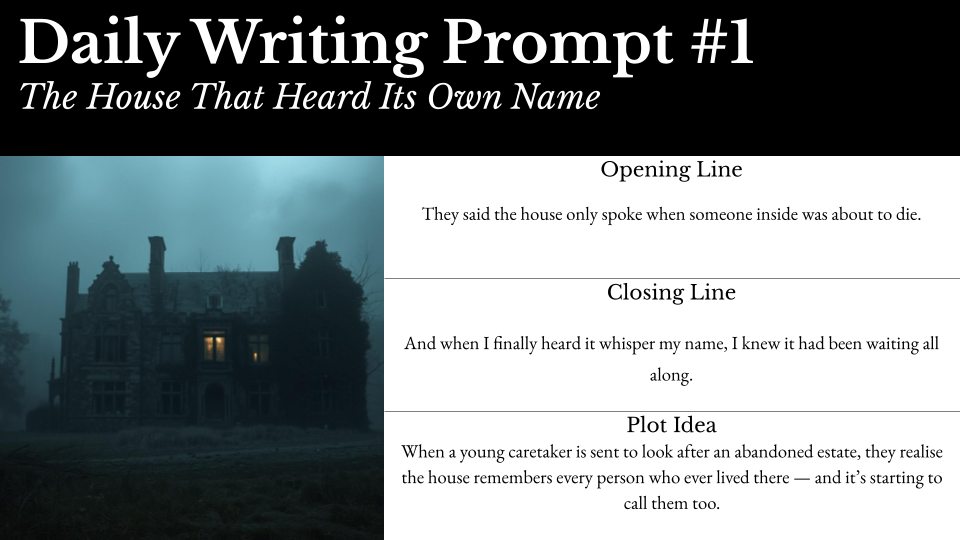
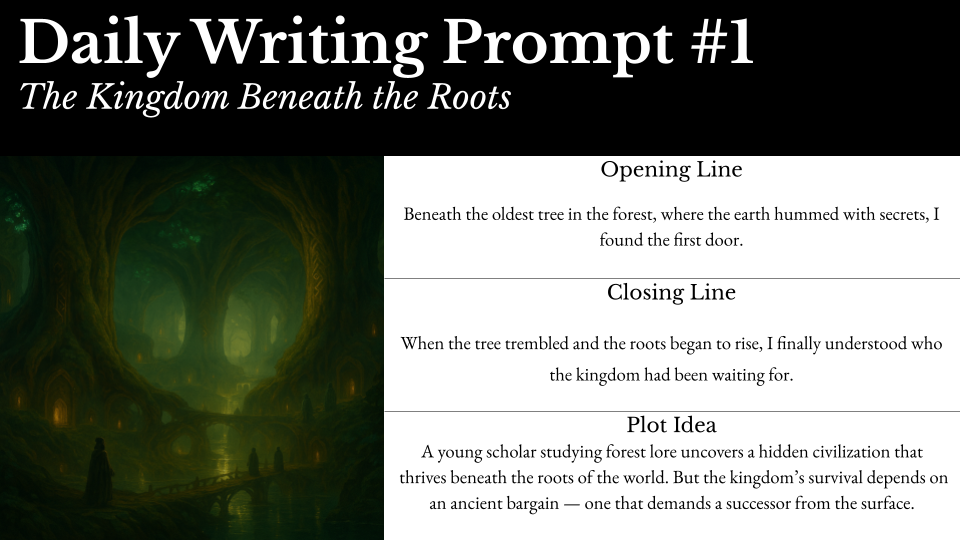
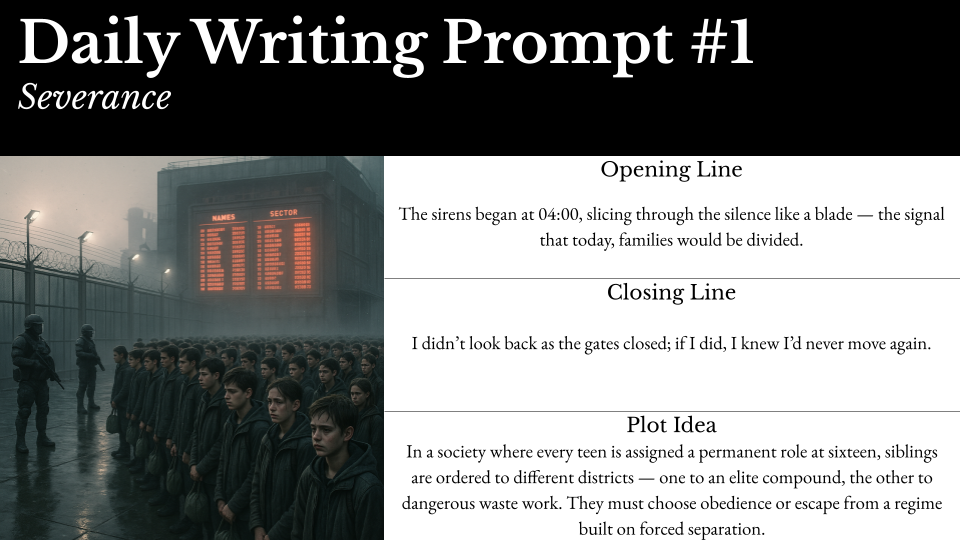
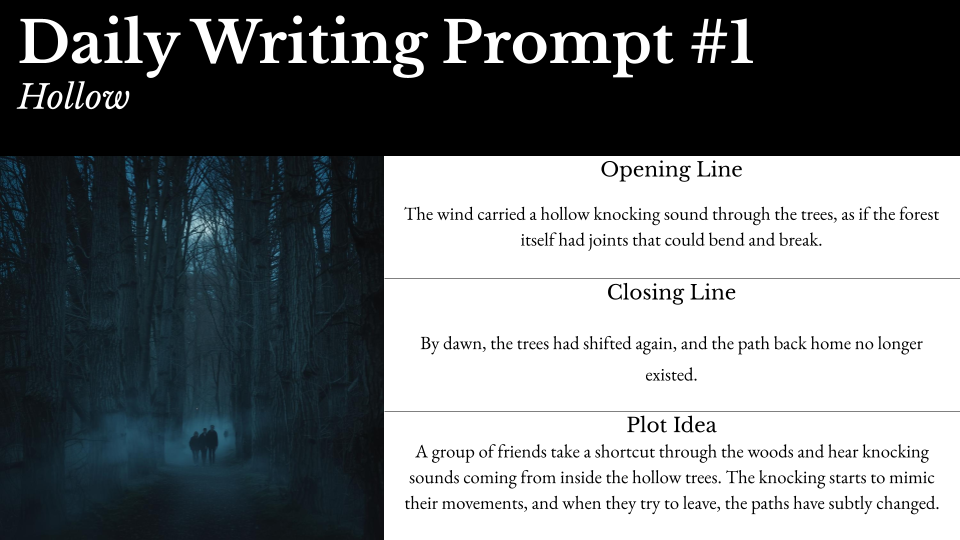
Each collection contains 30 daily creative writing prompts, each built around:
◆ a cinematic, genre-inspired image
◆ a thematic title
◆ a model opening line
◆ a closing line option
◆ a plot idea for scaffolding
◆ 20 discussion questions
In other words, they’re no-prep, student-friendly, and teacher-approved templates that make creative writing sustainable — not a once-a-year novelty.
Meet the Genre Collections
Each genre focuses on different narrative muscles, so students get breadth and depth across a term or semester.
★ Gothic Writing Prompts – 30 Daily Prompts
Immerse your students in stories of shadow and atmosphere — where echoes linger, secrets fester, and beauty meets decay.
★ Fantasy Writing Prompts – 30 Daily Prompts
Inspire magical realms and epic adventures with prompts that encourage worldbuilding, mythmaking, and wonder. (PS: This one is currently FREE on TpT — more on that below.)
★ Science Fiction Writing Prompts – 30 Daily Prompts
Launch your students into futures filled with innovation and uncertainty — where technology transforms, stars collide, and reality bends beyond imagination.
★ Magical Realism Writing Prompts – 30 Daily Prompts
Where the ordinary meets the impossible — invite students into dreamlike worlds of quiet magic, hidden truth, and wonder woven into everyday life.
★ Dystopian Writing Prompts – 30 Daily Prompts
Lead your students into worlds shaped by control, scarcity, and rebellion — where regimes watch, cities crumble, and humanity fights to endure.
★ Mystery Writing Prompts – 30 Daily Prompts
Draw students into secrets, clues, and unanswered questions — where nothing is accidental, every detail matters, and the truth hides in plain sight.
★ Mythology Writing Prompts – 30 Daily Prompts
Guide students into ancient realms shaped by gods, heroes, and origins — where whispers become legends, devotion holds power, and every story explains the world.
★ Horror Writing Prompts – 30 Daily Prompts
Cultivate dread, suspense, and psychological tension as students explore eerie settings, uncanny encounters, and the fears that wait just out of sight.




What Students Actually Learn Through This
Alongside the “fun stuff,” students are building:
◆ narrative craft & structure
◆ genre literacy
◆ descriptive writing techniques
◆ tension & pacing control
◆ sensory detail & atmosphere
◆ voice & tone experimentation
◆ critical thinking through discussion
◆ writing stamina
◆ metacognitive reflection
And because everything is suggested, not demanded, students still get creative autonomy — just without the paralysis.
Teacher Reality: Why These Are Quietly a Lifesaver
Teachers don’t need more marking, planning, or chaos. They need things that actually work on a Tuesday in November.
These genre collections are practical because they can disappear into the background of your routine. They run beautifully as:
◆ bell-ringers
◆ sub-day fillers
◆ homework without extra marking
◆ independent writing stations
◆ extension tasks for early finishers
◆ creative writing units
◆ exam or narrative prep exercises
◆ or quick “settle and write” sessions
They’re also editable, compatible with digital classroom platforms, and don’t require special training or preparation. Students can self-direct, which quietly builds independence, confidence, and classroom calm.
Format Breakdown (What You Get)
Each prompt includes all the scaffolding students need to write without fear:
◆ a cinematic, genre-specific image
◆ a thematic title
◆ an opening line (model)
◆ a closing line (model)
◆ a plot idea for direction
◆ and 20 discussion questions
This means you can run silent writing sessions, collaborative story-building, speaking and listening activities, or extended narratives from the same slide without generating more work for yourself.
The Growing Bundle
The Genre Collections are also available as a Growing Bundle, which teachers tend to prefer because it covers an entire year of creative writing in one place. The price increases as new genres are added, so locking it in early is a planning decision rather than a spending decision.
Most teachers go for the bundle when they want:
◆ creative writing built into their routine
◆ a “grab-and-go” folder for sub days
◆ mixed-ability classes supported without reworking resources
◆ genre coverage without designing content from scratch
◆ independent work that doesn’t require hovering
◆ creative electives or clubs without reinventing the wheel
The bundle isn’t just convenient — it’s a classroom management strategy disguised as a resource.
Final Thoughts
Creative writing shouldn’t drain your planning time or your students’ confidence. With the right scaffolding, a daily prompt becomes less about “what do I write” and more about “what happens next?”
If you’re curious, explore them on TpT — start with the free Fantasy set and see what happens.
