Edgar Allan Poe: Context, Themes, and Literary Significance
Edgar Allan Poe is one of the most frequently taught American writers in the secondary English classroom, yet his work is often reduced to Gothic horror or shock endings. Writing in the early nineteenth century, Poe produced short stories and poems that explore psychological instability, moral ambiguity, grief, and intellectual control, shaping modern ideas about narrative voice, atmosphere, and reader manipulation. His writing resists simple moral instruction, instead demanding interpretation through implication, symbolism, and structure.
To read Poe in context is to recognise how deeply his work is shaped by uncertainty — cultural, psychological, and social. Rather than offering stable narrators or clear ethical frameworks, Poe consistently foregrounds fractured perception, unreliable authority, and the tension between rational explanation and emotional collapse. His writing sits at the intersection of Gothic fiction, psychological realism, and early detective writing, making it both historically significant and strikingly modern.
This section provides a brief contextual framework for understanding Edgar Allan Poe’s work as a whole. Rather than focusing on biography or isolated texts, it outlines the cultural influences, literary movements, and recurring concerns that shape his writing, offering a foundation for teaching Poe through theme, discussion, and close reading. To explore these ideas further, visit the Edgar Allan Poe Hub for detailed analysis and study guides, or browse the Literature Library for a wider collection of classroom-focused resources.
Who Was Edgar Allan Poe?
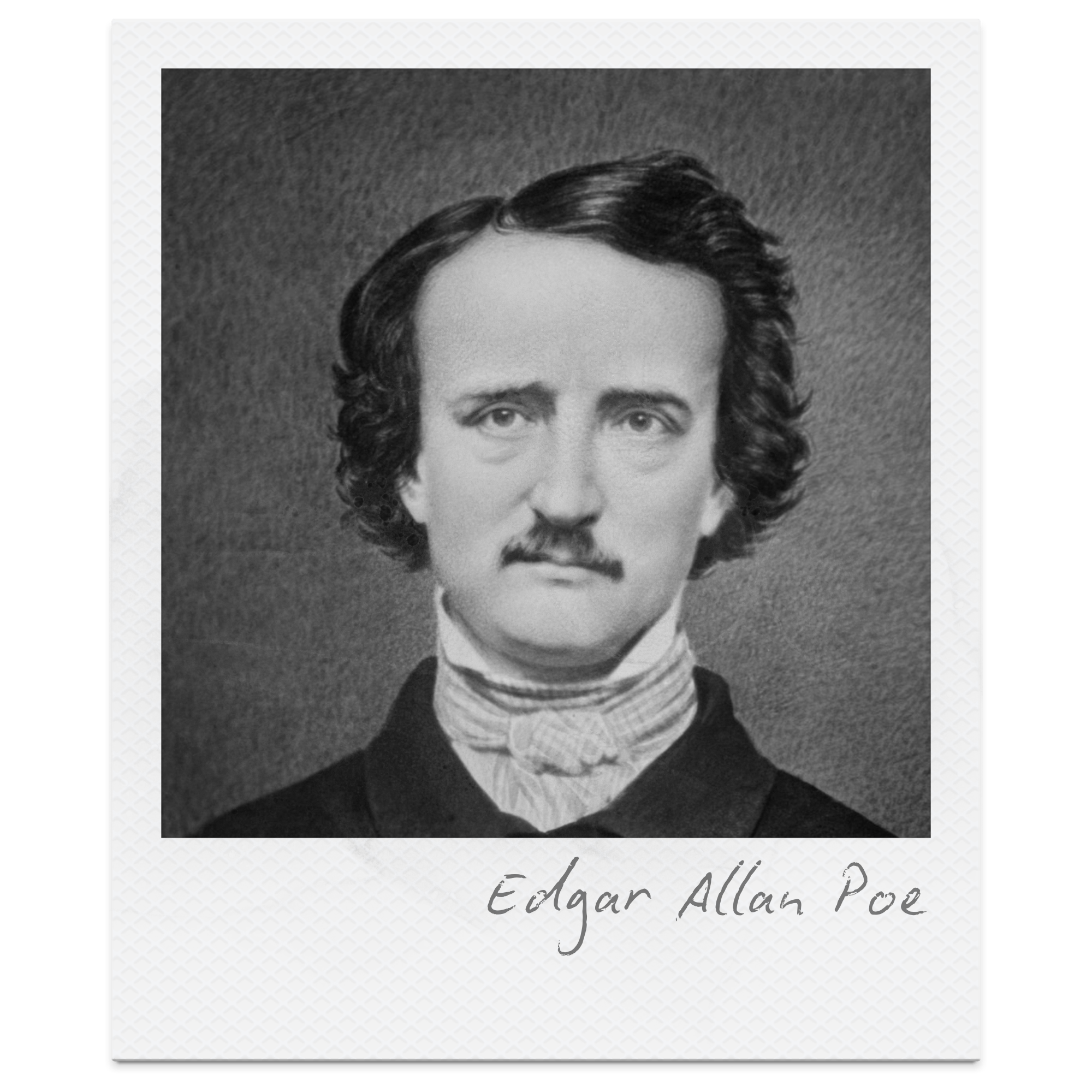
Edgar Allan Poe (1809–1849) was an American writer, poet, editor, and literary critic. He wrote primarily for magazines and journals at a time when short fiction and poetry were dominant literary forms, shaping his emphasis on brevity, unity, and intensity. Poe believed that literary works should be tightly controlled, with every element contributing to a single emotional or psychological effect.
Unlike many of his contemporaries, Poe was deeply concerned with technique. He wrote extensively about the craft of writing, arguing that meaning should be shaped deliberately rather than emerging accidentally. This focus is visible across his work, where repetition, rhythm, and narrative framing guide reader response. His narrators are often highly self-aware, attempting to control the story they tell while inadvertently revealing instability or guilt.
Although Poe’s life is frequently foregrounded in popular interpretations, his literary importance lies less in biography and more in method. His writing offers sustained insight into how voice, perspective, and structure shape meaning, making his work particularly valuable for teaching close reading and interpretation.
Historical and Social Context
Poe was writing during the early nineteenth century, a period marked by rapid social change, scientific advancement, and shifting ideas about reason and emotion. Enlightenment faith in logic and progress coexisted with Romantic fascination with imagination, subjectivity, and the darker aspects of the human mind. Poe’s writing frequently stages conflict between these impulses, exploring what happens when reason is asserted but fails, or when intellect is used to justify cruelty or denial.
The rise of mass publishing also shaped Poe’s work. Writing for periodicals meant competing for attention, encouraging concise, impactful storytelling. Poe’s emphasis on atmosphere, delayed revelation, and retrospective narration reflects these conditions, as well as his belief that effective writing should leave a lasting impression.
Psychological inquiry was also emerging as a field of interest. Although modern psychology did not yet exist, Poe’s writing anticipates later explorations of obsession, fixation, and unreliable perception. His stories often place readers inside unstable minds, forcing them to evaluate truth and motive without external authority.
Literary Movements and Genre Positioning
Edgar Allan Poe occupies a distinctive position at the intersection of Gothic fiction, Romanticism, and emerging psychological realism. Drawing on Gothic conventions such as decay, enclosure, and death, Poe shifts the source of terror inward, transforming external threat into internal collapse.
Poe was also instrumental in shaping new genres. His detective stories established key conventions of modern mystery fiction, foregrounding logic, observation, and explanation while simultaneously questioning intellectual authority. These texts reveal how reasoning can function as performance rather than neutral truth.
Unlike earlier moral or sentimental writing, Poe’s work resists didacticism. Meaning is rarely explained or resolved. Instead, it emerges through structure, repetition, and implication, positioning the reader as an active interpreter. This resistance to closure places Poe as a transitional figure between Gothic tradition and modern narrative experimentation.
Core Themes Across Edgar Allan Poe’s Writing
Across Poe’s stories and poems, a number of themes recur with striking consistency. These themes overlap and interact, shaping character, voice, and narrative tension rather than functioning as abstract ideas.
Guilt, obsession, and the unreliable mind
Poe’s narrators frequently insist on their own rationality while revealing psychological instability. Guilt surfaces through fixation, repetition, and defensiveness rather than confession, inviting readers to interrogate reliability and moral responsibility.
Power, control, and moral blindness
Characters often believe themselves insulated from consequence through intellect, planning, or social position. Poe exposes how authority and confidence can distort ethical judgement and conceal wrongdoing.
Grief, loss, and emotional fixation
In Poe’s poetry and Gothic fiction, mourning becomes obsessive rather than restorative. Grief is embedded in voice, rhythm, and repetition, shaping atmosphere and psychological enclosure.
Logic, observation, and intellectual performance
Poe’s detective fiction foregrounds reasoning as spectacle. Intelligence is asserted, displayed, and admired, raising questions about authority, visibility, and who is permitted to define truth.
Edgar Allan Poe’s Enduring Literary Significance
Edgar Allan Poe’s significance lies in his mastery of narrative control. His writing demonstrates how voice, structure, and atmosphere can guide interpretation without offering certainty. Rather than resolving ambiguity, Poe sustains it, placing responsibility on the reader.
His work continues to resonate in the secondary English classroom because it rewards close reading. Small details carry disproportionate weight, encouraging students to analyse how writers shape meaning through language and form. Poe’s texts invite disagreement rather than consensus, making them ideal for discussion-led teaching.
Across poetry, Gothic fiction, and detective writing, Poe interrogates rationality, authority, and moral certainty. His influence can be traced through later psychological fiction, modern horror, and crime writing, securing his position as a foundational figure in American literature.
Go Deeper into Poe’s Context and Ideas
The ideas outlined above connect directly to wider discussions of voice, morality, power, and psychological realism. The following posts explore these concepts in greater depth, building on the contextual framework established here.
◆ Unreliable Narrators in Gothic Fiction
◆ Power, Control, and Moral Blindness in Poe
◆ Gothic Atmosphere and Psychological Space
◆ Poe and the Origins of Detective Fiction
You may also wish to explore individual texts and comparative contexts, where these ideas take on different forms across short stories and poetry.
Final Thoughts
Understanding Edgar Allan Poe begins with context. His writing emerges from a nineteenth-century world shaped by uncertainty, scientific curiosity, and shifting ideas about reason and emotion, yet it continues to resonate because it refuses easy answers. Poe’s work does not instruct readers what to think; it constructs voices and structures that demand interpretation.
Approaching Poe through context and theme rather than isolated texts reveals the coherence of his writing across genre and form. Gothic horror, poetry, and detective fiction become different lenses through which Poe explores the same pressures: guilt and self-deception, authority and blindness, logic and instability.
For further exploration of the works of Edgar Allan Poe, visit our Poe Hub. For other major authors and texts, visit the Literature Library, where related contextual studies and thematic guides are organised to support deeper reading and confident interpretation across English literature.
