Futility by Wilfred Owen: Meaning, Themes, and How to Teach the Poem
Futility by Wilfred Owen is often taught as a quiet, reflective war poem, and on the surface, it appears deceptively simple. There is no battlefield action, no graphic violence, and no dramatic confrontation. Instead, the poem centres on a single moment: a dead soldier, the winter sun, and a speaker who cannot accept that life should end so easily or so pointlessly.
This apparent simplicity is exactly why teaching Futility can be more demanding than it first appears. Students usually understand what is happening in the poem almost immediately. The challenge comes later, when that initial emotional response needs to be shaped into close analysis, thoughtful discussion, and clear interpretation. The poem resists tidy conclusions, and it does not offer the moral certainty students often expect from First World War poetry.
At its core, Futility is not just about death in war, but about the failure of meaning itself. Wilfred Owen questions the purpose of human creation, the reliability of nature, and the value of sacrifice, all within fourteen short lines. The poem moves from tenderness to doubt, from routine to disbelief, and finally to a devastating uncertainty that is never resolved.
This post explores the meaning and themes of Futility in detail, focusing on how the poem works at both a surface and conceptual level. It is written for teachers who want more than a summary, and who need ways to support students in moving from emotional engagement to confident analysis — particularly at higher levels of study, where ambiguity, interpretation, and philosophical challenge matter just as much as language and structure.
Just a quick note, you’ll find more teaching strategies, prompts, and resources for other set texts in the Literature Library.
Wilfred Owen and the Question of Purpose
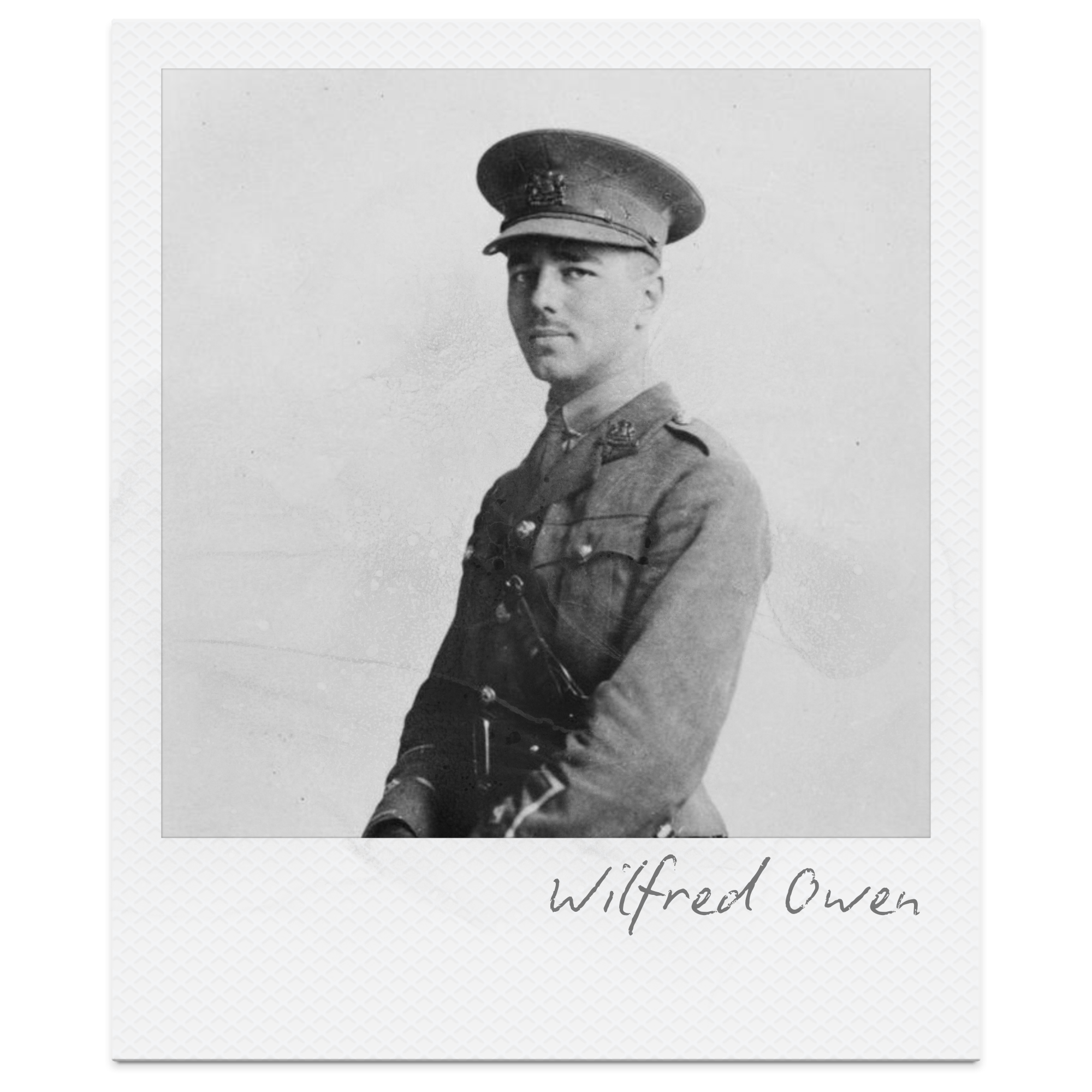
To understand Futility by Wilfred Owen, it is important to place the poem within the context of Owen’s life and his wider body of First World War poetry. Owen did not write from ideological distance or patriotic abstraction. His work emerged directly from lived experience — from prolonged exposure to trench warfare, psychological trauma, and the persistent presence of death.
Owen enlisted in the British Army in 1915 and served on the Western Front in 1916, where he encountered the conditions that shape much of his poetry: freezing temperatures, exhaustion, and the relentless loss of life. After suffering shell shock, he was sent to Craiglockhart War Hospital, where his meeting with Siegfried Sassoon proved decisive. Sassoon encouraged Owen to abandon conventional war verse and commit himself to what Owen famously described as “the pity of war.”
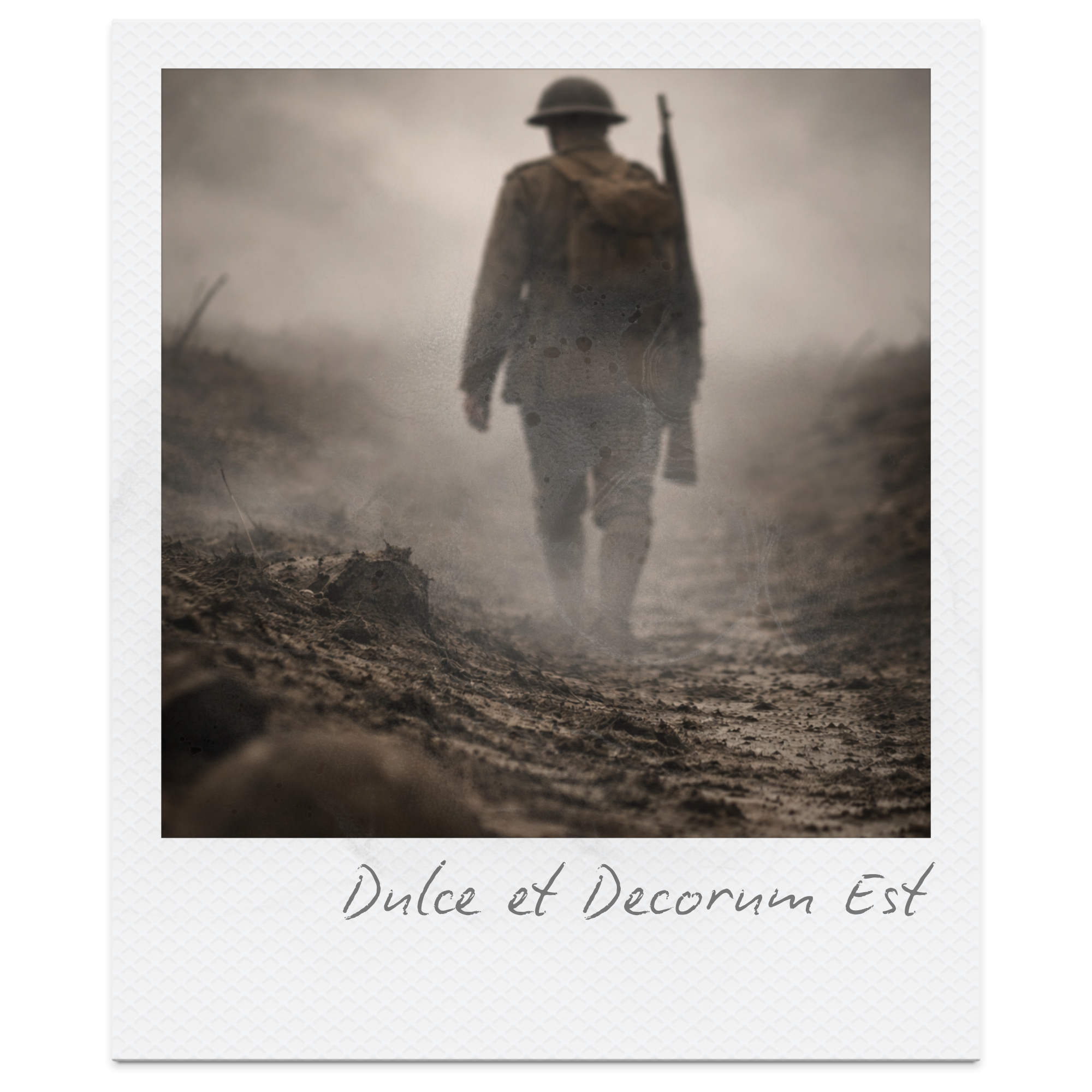
Much of Owen’s writing confronts war directly. Poems such as Dulce et Decorum Est, Anthem for Doomed Youth, and Exposure expose the physical suffering of soldiers and the moral hypocrisy behind patriotic rhetoric. These poems often rely on bitterness, irony, and graphic imagery to dismantle romanticised views of conflict.
Futility occupies a different space within Owen’s work. There is no public address, no attack on propaganda, and no depiction of violence in motion. Instead, the poem focuses on a single, private moment after death has already occurred. The battlefield is absent, but its consequences remain. This shift is significant. Rather than exposing how war kills, Owen interrogates what that death does to belief, meaning, and purpose.
In this poem, Owen’s questioning moves beyond politics and protest. The speaker does not ask whether the war was justified, but whether life itself was ever purposeful if it can be ended so easily. By turning towards the sun, creation, and the origins of life, Futility pushes into philosophical and existential territory that is rarer in Owen’s more overtly condemnatory poems.
Seen in this context, Futility represents a quiet but profound development in Owen’s writing. Anger gives way to disbelief; protest gives way to doubt. The poem does not seek to persuade or accuse. It simply asks whether the forces that once gave life can still be trusted to give it meaning. That unresolved question places Futility among Owen’s most unsettling and enduring poems — and explains why it demands careful, thoughtful teaching at higher levels of study.
The Title, Form, and Structure: Futility and the Limits of Meaning
The title Futility by Wilfred Owen prepares the reader for the poem before a single line is read. It signals not just sadness or grief, but the idea that effort itself may be pointless — that actions, care, and belief no longer lead to meaningful outcomes. From the outset, the poem is framed as an exploration of purposelessness, rather than simply a depiction of death in war.
This expectation is reinforced by the poem’s form and structure. Futility is tightly controlled and deliberately restrained. At just fourteen lines, it closely resembles a sonnet, a form traditionally associated with love, intimacy, and preservation. Sonnets have historically been used to honour what is valued — a beloved person, a moment, a feeling — and to hold it still against the threat of loss or time.
Owen’s decision to adapt a sonnet-like structure for this poem is therefore significant. The form can be read as reflecting a kind of love, but not in a romantic sense. Instead, it gestures towards the quiet, unspoken bond between soldiers — a relationship shaped by shared vulnerability, endurance, and proximity to death. The tenderness of the speaker’s actions, the care shown towards the body, and the absence of anger or accusation all suggest a deep, personal attachment that has no place in patriotic narratives of war.
At the same time, the sonnet form can also be read as expressing a love for life itself. Sonnets often attempt to preserve what is fleeting, and in Futility, that impulse is tragically misplaced. Life has already ended, yet the form continues to honour it. The appeal to the sun, to warmth, and to creation reflects not just grief for one man, but a lingering attachment to the idea that life should matter — that it should respond, revive, and endure.
Structurally, however, the poem refuses the resolution a traditional sonnet might offer. There is no concluding reassurance, no final insight that restores meaning. Instead, the poem moves from instruction to questioning, and then stops. The first stanza is marked by action and routine, as if care and habit might still reverse death. The second stanza abandons this approach entirely, replacing certainty with doubt and questions that remain unanswered.
This lack of closure is deliberate. The poem’s structure enacts its title. Meaning does not build or resolve; it collapses. The sonnet-like form becomes a container for love and value that can no longer function as it once did. What is honoured cannot be saved.
Taken together, the title, form, and structure of Futility work to limit expectation rather than fulfil it. Hope is permitted briefly, but it is never allowed to settle. Love is present, but powerless. By the time the imagery of the sun and the body appears, the poem has already made clear that this will not be a narrative of recovery or consolation. Instead, it is an exploration of what remains when belief, purpose, and meaning can no longer be relied upon.
Stanza One: Tenderness, Habit, and Resistance to Death
The opening stanza of Futility by Wilfred Owen begins not with grief or protest, but with an instruction: “Move him into the sun.” The tone is calm, controlled, and deliberate. This is not a desperate attempt to reverse death, but a final act of care. The speaker does not want the body left cold. Tenderness comes first.
The adverb “gently” sets the emotional register of the stanza. The touch of the sun is described as something that has “awoke him once”, a familiar and dependable force rather than a miraculous one. The emphasis here is on habit and routine. The sun has always worked before. It has woken him “at home”, whispering of “fields half-sown”, and it has continued to wake him “even in France”. These lines collapse distance between the battlefield and home, between war and ordinary life. The sun belongs to a world that still makes sense.
The image of “fields half-sown” is especially significant. It suggests potential, growth, and incompletion — life in progress rather than life fulfilled. In doing so, it reinforces the sense of loss without naming it directly. The soldier is not only dead; he is unfinished. What the sun once nurtured can no longer respond.
Crucially, the speaker already recognises the fragility of this appeal. The phrase “If anything might rouse him now” is conditional, not confident. Hope is present, but it is thin. The appeal to “the kind old sun” reads less as belief than as memory — a reaching back to something that once gave life meaning and structure. The sun is personified as gentle and knowing, but that kindness already feels outdated.
Throughout the stanza, love and respect between soldiers underpin the action. The care shown here reflects a bond shaped by shared hardship and proximity to death. These men are each other’s family at the front, and this gesture becomes a way of preserving dignity in a system that routinely strips it away. In the brutal, freezing conditions of trench warfare, tenderness itself becomes an act of resistance.
This is especially striking when set against Owen’s wider portrayal of soldiers elsewhere in his poetry, where men are often rendered inhuman — “bent double, like old beggars”, reduced to objects or grotesque figures. In Futility, the soldiers are still human. They are capable of gentleness, ritual, and care. The poem lingers in this moment before that humanity is fully eroded.
Emotionally, the stanza is best described as numbness tinged with calm and fragile hope. The speaker may know that the sun will not revive the dead, but action continues anyway. Stillness would force recognition of finality. Movement allows the illusion of care to persist — not because it will work, but because to stop would mean surrendering what remains of their humanity.
Seen in this way, Stanza One is not about faith in nature, but about resistance to death and meaninglessness. Love, routine, and care continue even when their purpose has already begun to collapse. The stanza preserves a final moment where life is still treated as sacred — before the poem turns, and begins to question whether that belief was ever justified at all.
The Shift: From Care to Questioning
The central movement of Futility by Wilfred Owen is not emotional, but intellectual. The poem does not suddenly erupt into grief or anger. Instead, it widens its focus. What begins as an intimate moment on the battlefield expands outward into a question about human life itself.
This shift is marked by a move from action to reflection. In the opening stanza, the speaker does something — moving the body, appealing to warmth, clinging to habit. In the second half of the poem, that impulse falters. Action no longer feels adequate. Instead, the speaker begins to ask why.
The appeal to nature deepens and becomes more abstract. When the speaker urges us to “Think how it wakes the seeds”, the sun is no longer a comforting presence but a force to be examined. The poem moves beyond the immediate death of one man and begins to treat the battlefield as a microcosm — a single point from which larger questions radiate outward. The fate of this soldier becomes inseparable from the fate of humanity more broadly.
At this point, the poem begins to engage with ideas of creation and belief. The reference to “the clays of a cold star” evokes both scientific and religious accounts of human origin. There is an echo of biblical creation — humanity shaped from dust — alongside a colder, more cosmic vision of life emerging from indifferent matter. The sun, once gentle and familiar, now appears as an impersonal force that gave life without guaranteeing meaning.
This is where faith comes under pressure. The poem does not outright reject belief, but it tests it. If the same force that once animated life can no longer respond to it, then the systems that promised purpose begin to look unreliable. Nature continues regardless of human suffering. Life ends, but the sun still rises.
Emotionally, the shift carries a sense of resignation rather than outrage. The speaker does not rage against death. Instead, there is a quiet acceptance that neither war nor the world will justify itself. The poem’s questions are not asked in hope of reassurance, but in recognition that none may be forthcoming.
What is ultimately being questioned here is not just the death of one man, but the logic of sacrifice and creation. If life was brought into being only to be extinguished without reason, then the very act of creation begins to look futile. The poem widens from personal loss to philosophical doubt, allowing the reader to feel the full weight of that realisation.
This shift is crucial to the poem’s power. By expanding from the particular to the universal, Owen ensures that Futility cannot be read as a private moment of grief alone. It becomes a meditation on whether life, once created, is owed meaning at all — or whether meaning was something humans simply hoped for, rather than something the world ever promised.
Stanza Two: Creation, Indifference, and the Collapse of Faith
In the second stanza of Futility by Wilfred Owen, the poem moves fully away from care and into interrogation. The speaker no longer instructs or appeals; instead, he questions the logic of existence itself. The focus shifts from what might be done for the dead man to whether his life — and life more broadly — ever had a purpose that could justify its end.
The image of the sun returns, but its meaning has changed. No longer “kind” or familiar, it becomes a symbol of impersonal creation. When the speaker reflects on how it “wakes the seeds” and once “woke the clays of a cold star,” the poem stretches beyond the battlefield into cosmic time. Human life is placed within a vast, indifferent process that brought matter into being without promising meaning or protection.
The language of creation here carries both scientific and religious echoes. The idea of life shaped from “clay” recalls biblical imagery, while the description of a “cold star” strips that creation of warmth or intention. Life emerges, but without tenderness. What once felt purposeful now appears accidental.
This widening perspective sharpens the poem’s central doubt. The speaker asks whether limbs that were “dear-achieved” and “full-nerved” — words that emphasise effort, complexity, and value — can really be so easily rendered inert. The question is not rhetorical in the conventional sense. It carries disbelief rather than accusation. Life required immense energy to form, yet it can be extinguished without explanation.
The final questions of the poem bring this doubt into focus. “Was it for this the clay grew tall?” does not seek an answer. It exposes the imbalance between creation and destruction, between the labour of life and the ease of death. The phrase “fatuous sunbeams” introduces a quiet bitterness. The sun’s earlier kindness is reimagined as foolish, even wasteful. If life ends here, then all that creative effort begins to look misguided.
Crucially, the poem does not resolve these questions. There is no declaration that faith is false, no claim that creation is cruel. Instead, the stanza ends in uncertainty. The speaker does not replace belief with certainty; he allows belief to collapse without filling the space it leaves behind.
In this way, Stanza Two completes the movement begun earlier in the poem. What started as an act of care becomes a confrontation with indifference. Nature continues. Creation persists. But meaning does not return. The sun still rises, not as a comfort, but as a reminder that the forces which made life possible do not guarantee its value.
This is what gives Futility its lasting power. The poem does not argue against faith or belief. It simply asks whether the world ever supported them in the first place — and then leaves that question unanswered.
Where Students Often Struggle with Futility
Although Futility by Wilfred Owen appears straightforward on first reading, many students find it unexpectedly difficult once analysis begins. The poem resists clear conclusions, and that resistance can be unsettling — particularly for students who are used to poems offering a message, a moral, or a moment of resolution.
One common difficulty lies in tone. Because the poem is gentle and restrained, students sometimes assume it is hopeful. The presence of the sun, warmth, and natural imagery can be misread as reassurance rather than irony. Without careful guidance, students may overlook how fragile that hope is, and how quickly it collapses into questioning rather than comfort.
Students also tend to focus heavily on the sun as a symbol, often treating it as a simple stand-in for life or goodness. While this reading is not wrong, it can become limiting if taken too far. In Futility, the sun does not restore life or offer meaning. Its significance lies in what it used to do, not in what it can do now. Helping students recognise this shift is key to moving beyond surface-level symbolism.
Another challenge is the poem’s lack of resolution. Futility does not end with a clear statement about war, faith, or humanity. For some students, this feels unsatisfying or incomplete. There is often a strong impulse to impose a conclusion — that the poem is anti-religious, anti-nature, or purely nihilistic. These readings can flatten the poem by closing down its uncertainty.
At higher levels of study, students may also struggle with the poem’s philosophical scope. The movement from one dead soldier to questions about creation and existence can feel abstract or disconnected if the shift is not carefully unpacked. Without support, students may retreat to safer ground, focusing on imagery or technique rather than engaging with the ideas the poem raises.
Finally, there is the emotional challenge. Futility asks students to sit with quiet grief and resignation, rather than dramatic suffering or anger. This can be harder to articulate in discussion and writing, particularly for students who expect war poetry to shock or provoke. The poem’s power lies in its restraint, but that restraint can be difficult to name.
Recognising these difficulties is not about lowering expectations. It is about understanding why Futility feels elusive, and why students often sense that it is important without being able to explain exactly why. Once those pressure points are acknowledged, students are far better placed to engage with the poem’s ambiguity rather than trying to escape it.
Teaching Futility Without Flattening It
One of the greatest challenges in teaching Futility by Wilfred Owen is resisting the urge to resolve it too quickly. The poem does not offer clarity or comfort, and effective teaching needs to protect that uncertainty rather than erase it. Students often want to know what the poem “means,” but Futility is far more interested in what happens when meaning fails.
For that reason, the most productive lessons tend to prioritise discussion, reflection, and gradual interpretation, rather than immediate formal analysis. Activities that encourage multiple entry points — emotional, conceptual, and creative — are particularly effective with a poem this restrained.
The following approaches support that balance:
◆ Structured discussion without forced conclusions
Tools such as Roll the Dice discussion boards and silent debate questions allow students to explore themes like love, creation, sacrifice, and indifference without feeling pressured to agree or reach a single interpretation. These formats are especially useful for quieter students and for poems that rely on uncertainty rather than argument.
◆ Retrieval that secures understanding without oversimplifying
Short review activities — including digital quizzes, crosswords, word searches, and bingo-style revision games — help reinforce key vocabulary, imagery, and ideas. Used strategically, these tasks support recall while leaving space for deeper discussion and writing.
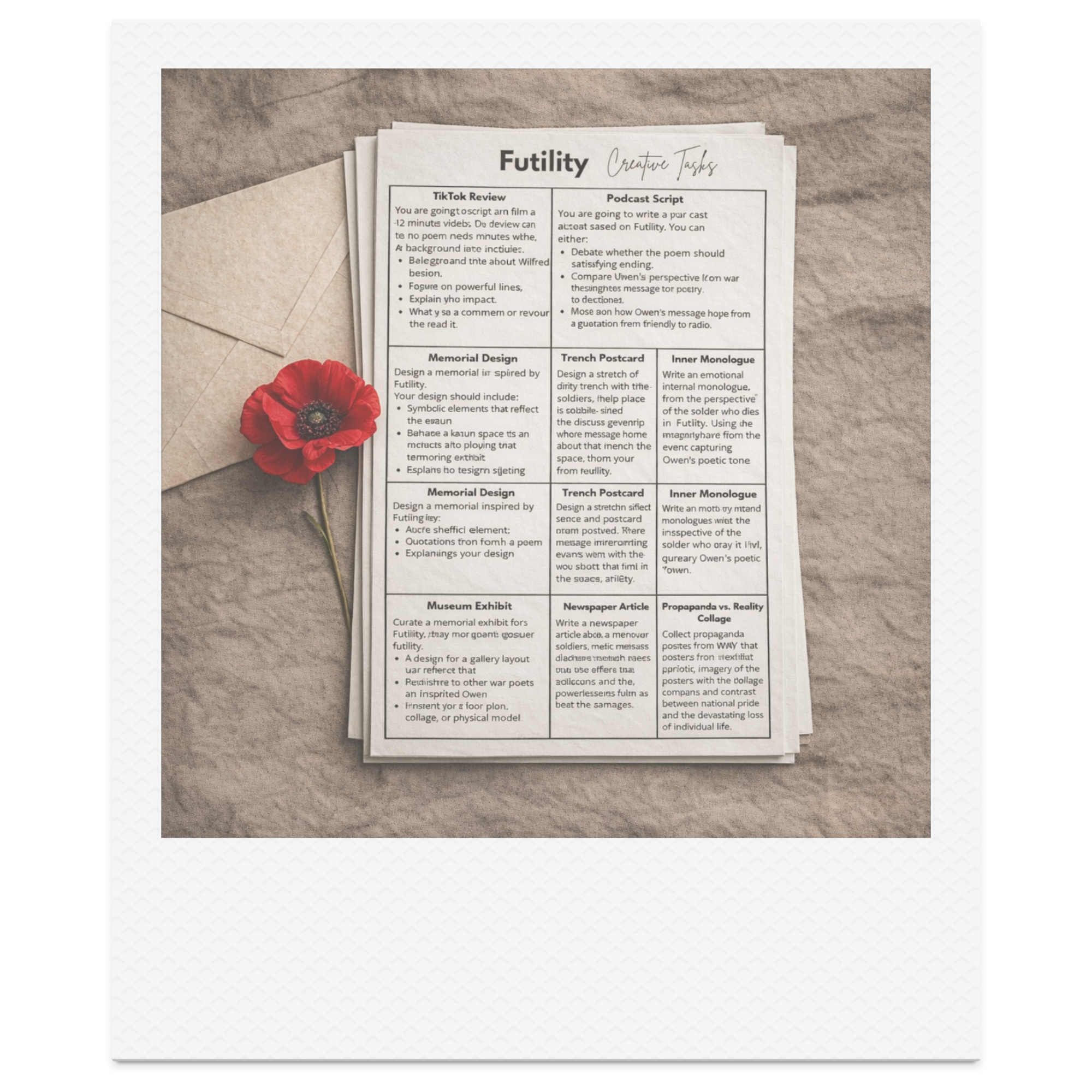
◆ Creative responses that deepen analysis
Post-reading creative writing prompts and picture prompts allow students to engage with the poem’s quiet grief, natural imagery, and cosmic perspective in a reflective way. These tasks work best when framed as interpretive rather than imaginative — students must understand the poem’s tone and ideas in order to respond effectively.
◆ Flexible routes into formal writing
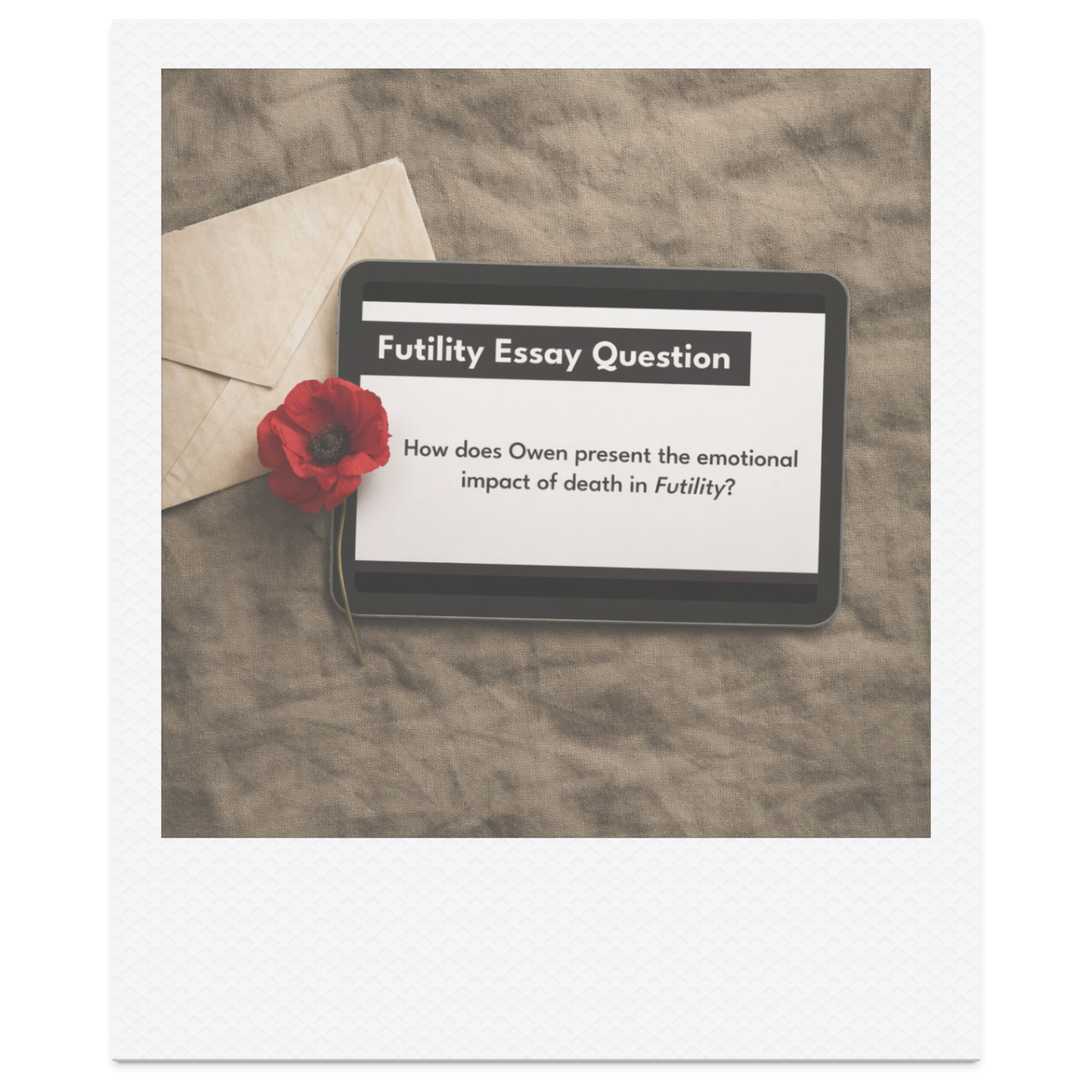
A carefully designed set of essay questions allows teachers to introduce structured writing when students are ready. Open-ended prompts that reward exploration rather than certainty work particularly well with Futility, encouraging students to justify ideas without forcing resolution.
◆ Adaptability across settings
With a mix of printable and digital resources, these activities can be used for in-class teaching, homework, revision, or remote learning. Editable formats also allow teachers to adjust tasks to suit different cohorts without redesigning lessons from scratch.
Across all of these approaches, the goal remains the same: to help students engage thoughtfully with a poem that resists easy answers. When students are supported through discussion, reflection, and carefully structured tasks, Futility retains its emotional power while still allowing for confident analysis and effective revision.
Go Deeper into Futility
Once students have a secure understanding of Futility by Wilfred Owen, the poem opens into wider conversations about conflict, sacrifice, and meaning, particularly how war poetry moves beyond protest and into philosophical questioning. This is where Futility stops functioning as a single WW1 poem and begins to make sense as part of a much longer tradition of conflict writing.
Rather than pushing students towards a clear moral stance, going deeper with Futility works best when they are encouraged to notice how war poetry evolves — from patriotic certainty, to lived disillusionment, to reflection on whether creation, belief, or sacrifice can still be trusted at all.
◆ Shift discussion from war to consequence.
Futility is not concerned with combat or heroism, but with what remains after violence has already occurred. Encourage students to compare this with poems that focus on action or protest, and to consider why Owen chooses stillness and questioning instead.
◆ Explore how conflict poetry moves from certainty to doubt.
Position Futility alongside earlier poems that promote honour or duty, and later poems that interrogate responsibility, memory, or ethical discomfort. This helps students see Owen’s work as part of a turning point rather than an endpoint.
◆ Examine creation and sacrifice across conflicts.
Owen’s questioning of whether life was created “for this” pairs powerfully with later conflict poems that challenge the justification of violence, technological warfare, or distant power. Students can track how the language of sacrifice becomes harder to sustain as conflict changes.
◆ Encourage comparison without hierarchy.
Rather than treating Futility as more “serious” or “advanced” than other war poems, invite students to explore how different historical moments demand different poetic responses — from immediacy and protest to reflection and moral unease.
◆ Allow uncertainty to remain unresolved.
Like many of the most enduring conflict poems, Futility does not offer answers. Encouraging students to sit with ambiguity mirrors how later conflict poetry resists closure, particularly in poems focused on aftermath, witnessing, or ethical distance.
For teachers looking to place Futility within a wider teaching sequence, it fits naturally into a broader exploration of conflict poetry across time. I explore this progression in more detail in 20 Conflict Poems to Teach: A Timeline from WW1 to Modern Warfare, where poems are grouped to show how attitudes to war shift from patriotism and protest to reflection, trauma, and moral uncertainty.
Seen in this wider context, Futility becomes more than a poem about one dead soldier. It becomes a hinge text — linking the immediate realities of World War One with later poems that question responsibility, creation, and the human cost of conflict long after the fighting has ended.
That deeper discomfort is not something to resolve.
And, as with the poem itself, that is the point.
Final Thoughts
Futility by Wilfred Owen endures not because it shocks, but because it unsettles. The poem does not dramatise war or condemn it outright. Instead, it lingers in the quiet aftermath, where care continues even as belief begins to fail. In doing so, Owen shifts the focus of war poetry away from action and towards consequence.
What makes Futility particularly powerful in the classroom is its refusal to explain itself. The poem does not argue, persuade, or resolve. It asks questions that remain unanswered — about creation, sacrifice, and whether meaning was ever guaranteed in the first place. For students, this can feel disorienting. For teachers, it is precisely where the poem does its most important work.
Taught thoughtfully, Futility helps students recognise that not all literature exists to provide clarity or closure. Some texts demand patience, ambiguity, and intellectual humility. They require readers to sit with doubt rather than master it. In a curriculum that often prioritises certainty, this is a valuable experience.
Owen does not deny love, care, or humanity in this poem. They are present throughout — in tenderness, routine, and resistance to dehumanisation. What he questions is whether those qualities are protected or rewarded by the world that created life and then allowed it to be destroyed. That tension remains unresolved, and the poem ends not with protest, but with silence.
This is why Futility continues to matter. It does not tell students what to think about war, faith, or existence. Instead, it shows them what it feels like when the structures that once gave meaning begin to collapse — and leaves them to decide what, if anything, can replace them.
When students are given the space to explore that uncertainty through discussion, comparison, and careful reflection, Futility becomes more than a set poem. It becomes a way of thinking about conflict, humanity, and the limits of understanding itself.
And that quiet, uncomfortable questioning is exactly what gives the poem its lasting power.
Choose Your Next Text