The Fly by Katherine Mansfield: Post-War Grief, Masculinity, and Trauma (For English Teachers)
Katherine Mansfield’s The Fly is not a story about the First World War in any direct or dramatic sense. There are no battlefields, no soldiers in combat, and no moments of heroism. Instead, it is a story about what comes after — when the war is officially over, daily life has resumed, and grief is expected to be finished with.
This is what makes The Fly such a powerful text to teach alongside, or immediately after, WW1 poetry. Where war poems often capture shock, violence, and immediacy, Mansfield’s story explores the aftermath of conflict: emotional numbness, suppressed grief, and the uneasy persistence of loss years later. The fighting has ended, but the psychological damage remains.
For students, this distinction matters. The Fly invites them to think about trauma as something long-term, not just a moment of crisis. For teachers, it offers a way to move from war poetry into post-war prose, helping students understand that literature about conflict does not end with the armistice — it simply changes shape.
Just a quick note, you’ll find more teaching strategies, prompts, and resources for other set texts in the Literature Library.
Katherine Mansfield, Loss, and Lived Experience
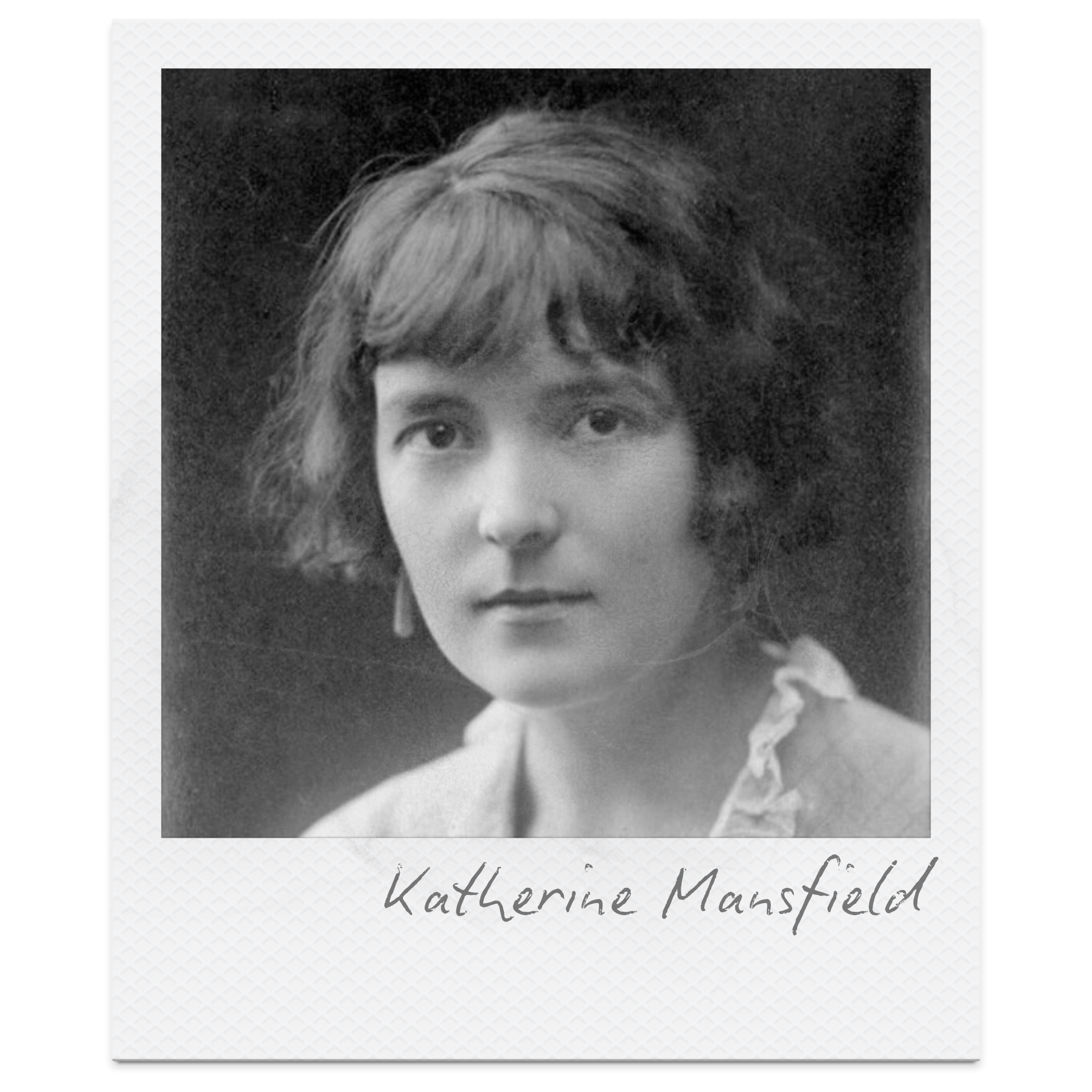
Katherine Mansfield’s writing is shaped by loss in a very real and personal way. In 1915, her younger brother Leslie “Chummie” Beauchamp was killed while serving in the First World War. His death had a profound and lasting effect on Mansfield, and it sits quietly behind many of her later stories — including The Fly, published several years after the war had ended.
What’s striking about The Fly is that Mansfield is not writing from the moment of shock or immediate grief. Instead, she is writing from a distance, when time has passed and society expects mourning to have softened or resolved. This mirrors her own experience. Mansfield was not processing loss in the heat of the moment, but living with its long-term emotional consequences — the numbness, detachment, and difficulty of sustaining feeling over time.
That delayed perspective gives the story its unsettling power. The boss’s inability to cry, his need to manage grief rather than feel it, reflects a version of mourning shaped by restraint and expectation. Mansfield does not dramatise her loss; she filters it through silence, control, and emotional exhaustion, allowing absence to speak louder than overt sorrow.
In this sense, The Fly is not simply a symbolic story about grief — it is a piece of writing grounded in lived experience, transformed into fiction.
Why Lived Experience Matters in War Writing
Many of the most enduring texts written about the First World War draw their authority from proximity to loss. Poets like Wilfred Owen and Siegfried Sassoon wrote from direct experience of the trenches, capturing the physical and psychological violence of war as it happened. Mansfield’s experience is different, but no less authentic.
She writes not as a soldier, but as someone left behind — a position shared by countless families after the war. Where poetry often captures the immediacy of trauma, The Fly captures what lingers when the noise has faded and life is expected to continue as normal.
This is why the story pairs so effectively with WW1 poetry in the classroom. Both poetry and prose are shaped by lived experience; they simply record different stages of it. Together, they help students understand that war literature is not confined to the battlefield — it extends into memory, routine, and the uneasy work of surviving afterwards.
Why Teach The Fly After WW1 Poetry?
Teaching The Fly after WW1 poetry allows students to see how literature responds to conflict over time. War poems often capture the immediacy of experience — fear, anger, disillusionment, physical suffering. They place readers inside the moment, confronting the violence and shock of war as it unfolds. Mansfield’s story, by contrast, shows what happens when that moment has passed and nothing feels resolved.
In The Fly, grief has not disappeared, but it has changed shape. It is no longer loud or overwhelming; it is suppressed, fragmented, and difficult to access. This makes the story an ideal follow-on text after poems such as Futility, Disabled, or Mental Cases, where the emotional cost of war is already evident, but still closely tied to its immediate aftermath.
For students, this sequencing deepens understanding. They begin to recognise that trauma does not end with survival, and that time alone does not heal loss. The boss’s emotional numbness challenges the idea that moving on is healthy or inevitable, complicating simpler narratives of resilience and recovery.
For teachers, The Fly offers a way to extend conversations about conflict, grief, and psychological damage beyond the battlefield. It helps students connect poetry and prose, immediacy and aftermath, and personal experience and social expectation — showing that war literature is not a single genre, but an evolving response to shared trauma.
Masculinity, Power, and Emotional Control
At the centre of The Fly is a character who appears, on the surface, to embody strength and authority. The boss is successful, wealthy, and firmly in control of his professional world. He occupies a position of power, and he performs that power confidently — through his office, his routines, and his treatment of others. Yet emotionally, he is deeply unstable.
Mansfield uses the boss to explore a particular model of post-war masculinity, one shaped by restraint, dominance, and the expectation that grief should be contained. He does not lack feeling; rather, he struggles to access it. His decision to “arrange to weep” exposes how grief has become something procedural — a task to be completed rather than an emotion to be experienced.
This emotional repression is closely tied to power. The boss is comfortable exercising authority over others, particularly over Woodifield, whom he treats with a mixture of patronage and control. When his own grief resists management, that need for dominance is displaced elsewhere. The story suggests that when vulnerability is denied, control becomes a substitute for feeling.
For students, this raises uncomfortable questions about how masculinity is constructed and rewarded. The boss is respected precisely because he appears composed and capable, yet that composure masks emotional damage rather than healing it. Mansfield does not present this as admirable resilience. Instead, she exposes the cost of emotional suppression — not just to the individual, but to those subjected to their need for control.
The Fly as a Symbol of Trauma
The fly at the centre of Mansfield’s story is one of the most disturbing examples of trauma symbolism in short fiction — not because it is subtle, but because it is relentlessly controlled. Each time the fly struggles free from the ink, the boss intervenes, testing its endurance rather than offering genuine rescue.
At first glance, the fly appears to represent resilience. The boss even admires its determination, framing its repeated survival as bravery. But this interpretation is precisely what Mansfield wants readers — and students — to question. The fly does not recover; it is forced to endure the same trauma again and again, with no chance of escape. Survival becomes a punishment rather than a triumph.
This mirrors the boss’s own relationship with grief. Like the fly, he is unable to move forward, trapped in a cycle of emotional repression and repeated exposure to pain. His control over the fly allows him to externalise his inner conflict, turning private trauma into something visible, manageable, and ultimately disposable.
For students, the symbolism is powerful because it resists neat conclusions. The fly is not heroic. It is not “stronger” for enduring more. Instead, Mansfield exposes the danger of celebrating endurance without compassion — a mindset that echoes post-war expectations of stoicism and emotional silence. In The Fly, survival alone is not healing, and persistence is not the same as recovery.
Classroom Activities for Teaching The Fly
Once students have a secure understanding of The Fly, the most effective activities are those that encourage interpretation, reflection, and discussion, rather than rushing into formal assessment. The story rewards slow thinking and close attention, making it ideal for lessons that explore psychological depth and moral discomfort.
◆ Cold Read and Emotional Tracking
Ask students to track the boss’s emotional state as the story progresses. Where does emotion seem expected — and where is it noticeably absent? This helps students identify emotional repression and recognise how Mansfield signals inner conflict through restraint rather than description.
◆ Endurance vs Healing Discussion
Pose a deliberately uncomfortable question: Is the fly brave? Encourage students to debate whether resilience is always a positive trait, and who benefits when suffering is reframed as strength. This often leads naturally into discussions about post-war masculinity and emotional silence.
◆ Perspective Shift Writing
Have students rewrite the inkpot scene from a different viewpoint — the fly, Woodifield, or an outside observer. This activity highlights power imbalance and encourages empathy without simplifying the story’s moral complexity.
◆ Comparative Response with WW1 Poetry
Pair the story with a poem such as Futility or Disabled. Ask students to compare how grief is presented in poetry versus prose, focusing on immediacy versus aftermath rather than content alone.
◆ Symbolism in Action
Rather than identifying the fly’s meaning outright, ask students to list what the fly endures and who controls those conditions. This shifts analysis away from neat symbolism and towards the story’s ethical implications.
Used this way, activities don’t dilute the story’s impact. They deepen it — allowing students to sit with discomfort, question assumptions about resilience, and return to the text with sharper insight.
Go Deeper into Conflict, Trauma, and the Aftermath of War
Once students grasp the quiet brutality of The Fly, the story opens naturally into wider conversations about conflict beyond combat — particularly the emotional and psychological damage that lingers long after war has officially ended. This is where the text stops being a contained short story and becomes part of a much broader literary pattern.
Mansfield’s focus on delayed grief, emotional numbness, and displaced control aligns closely with conflict poetry that explores aftermath rather than action. While many WW1 poems capture shock and immediacy, others — particularly those dealing with disillusionment, memory, and psychological trauma — reflect the same uneasy emotional terrain as The Fly.
To deepen students’ understanding, it can be useful to place The Fly alongside conflict poems that explore what remains once violence is over:
◆ Pair The Fly with poems such as Futility or Disabled, asking students to compare how grief is expressed when meaning collapses rather than explodes
◆ Explore how trauma is represented differently in poetry and prose, focusing on immediacy versus emotional distance
◆ Return to earlier WW1 poems after reading The Fly, encouraging students to reassess moments of silence, restraint, or bitterness
◆ Frame discussion around aftermath and responsibility — what does survival demand, and who bears the cost when grief is suppressed rather than acknowledged?
At this stage, students are often ready to move beyond single-text analysis and towards comparative thinking. This is where I often direct them to my Conflict Poetry timeline, which traces how war writing shifts from idealism and propaganda to disillusionment, memory, and moral unease across the twentieth and twenty-first centuries.
Designed for secondary classrooms, 20 Conflict Poems to Teach: A Timeline from WW1 to Modern Warfare helps students see how writers respond to conflict at different distances — from the trenches, from the home front, and from long after the fighting has ended. Used alongside The Fly, it reinforces the idea that war literature does not end with ceasefires or victory, but continues through reflection, silence, and unresolved loss.
Because there is no single emotional response to conflict — and no neat resolution — teaching these texts together encourages students to sit with ambiguity rather than rush towards answers. Meaning emerges through comparison, not certainty.
Final Thoughts
The Fly endures because it refuses to offer comfort. It does not present grief as cathartic or redemptive, nor does it suggest that time alone resolves loss. Instead, Mansfield exposes what happens when grief is managed, suppressed, and ultimately displaced, leaving behind emotional numbness rather than healing.
When taught with care, The Fly becomes more than a post-war short story. It becomes a way for students to explore masculinity, power, memory, and responsibility, and to recognise how trauma can persist long after conflict has officially ended. The story challenges assumptions about resilience, asking whether endurance is always virtuous — and at what cost.
Approached thoughtfully, The Fly encourages students to sit with discomfort rather than resolve it too quickly. It invites close reading, ethical questioning, and comparison across poetry and prose, helping students understand that war literature does not end with the battlefield.
That is why The Fly continues to matter — not as a story about war itself, but as a quiet, unsettling reminder of what remains when the war is over.
