How to Teach The Crucible: Context, Chaos, and Classroom Activities That Actually Work
Teaching The Crucible is always an interesting ride. On the surface it’s witch trials and Puritan hysteria, but underneath it’s about fear, reputation, and how quickly a community will implode if everyone decides telling the truth is someone else’s job. Students tend to recognise the social dynamics straight away, which is half the battle won.
If you’ve taught Lord of the Flies, you’ll already know how quickly students latch onto group panic, performative morality, and the need to belong. The same thing happens here — just with more confessions and significantly worse judicial procedures. (If you want to see how I handle Lord of the Flies, that post is here.)
To make life easier, I’m giving away a set of Act 1 discussion cards that work for talk, quick writes, or general “we are not ready for an essay yet” scaffolding. Scroll down to see how to get them.
Below, I’m breaking down how to approach the play without turning Week One into a Puritan history lecture, how to handle context and hysteria in a way that keeps students thinking, and a few activities that have actually worked in the classroom (including one for when the room is 90% chaos and you need something structured immediately).
Why Teach The Crucible?
Because students get it — not instantly, but inevitably. They recognise the social dynamics. They recognise the power of a rumour. They recognise the moment when someone realises the truth but says nothing because the cost feels too high. You don’t need to convince them this matters; you just need to point them in the right direction and get out of the way.
At a language and structure level it also gives you clean opportunities to teach:
◆ rhetoric (Proctor vs Danforth vs Hale)
◆ dramatic tension
◆ the anatomy of accusation
◆ reputation as currency
◆ performative morality vs actual morality
It’s also flexible: you can approach it as drama, political allegory, social commentary, or a character-driven morality implosion. (I’ve done all four. All four work. All four have also resulted in extended student debates about who is the worst character. It’s Abigail. It’s always Abigail.)
Keep Context Manageable
If you launch into Puritan theology + 1692 Salem + McCarthyism on Day One, they will look at you with the face that says: “Please can we go back to annotating poems.” Context is useful, but it needs to do its job without killing the momentum.
What they actually need upfront is a working understanding of:
◆ strict theocratic communities
◆ reputation as survival
◆ confession culture
◆ mass hysteria
◆ McCarthyism (seed it early, teach it properly later)
Everything else can be layered in as the noose tightens — literally and metaphorically.
Before Reading: Set Up the Lens
I like to frame The Crucible around a handful of questions that will keep resurfacing as the play gets increasingly hysterical:
◆ What makes a community “moral”?
◆ What makes a person “good”?
◆ Who decides, and based on what evidence?
◆ Why do people comply with systems they know are broken?
◆ How do rumours become truth?
You can get surprisingly far with just those.
If you want to add context without PowerPoint fatigue, bring in short paired sources:
◆ a paragraph on public confessions
◆ a political cartoon about McCarthyism
◆ a 30-second clip of crowd hysteria (sporting events work)
◆ a short non-fiction extract on witch trials
Let the play do the heavy lifting — it’s good at it.
Get Them Talking Straight Away (Free Download)
Act 1 is where hysteria and reputation start doing the heavy lifting, and students either lean in or get lost. To make that easier, I’ve put together a set of Act 1 discussion cards for structured talk, quick writes, and cover lessons.
They’re short, evidence-focused, and designed to push students past “Abigail is dramatic” into something actually analytical. To get them just enter your email below.
During Reading: Managing the Chaos
Once you’re into Act One, the goal is to keep them tracking character motivations and social pressures without turning the lesson into a free-for-all about who would have been hanged first.
A few things that work:
◆ Character tracking — motives, fears, leverage, and reputation
◆ Confession vs accusation charts — who confesses, who accuses, when, and why
◆ Rhetoric mini-lessons — Danforth during examinations is a goldmine
◆ “Hysteria scale” moments — rate key scenes 1–10 for escalation
◆ Perspective writing — a quick diary entry from Hale at the end of Act II is always enjoyable in a bleak sort of way
Students start to see how the system consumes everyone — including the people who built it.
After Reading: Push Into Thematic Thinking
Once the final scene lands (and inevitably shocks at least three students who assumed someone would swoop in and sort it out), shift into the bigger ideas:
◆ truth vs self-preservation
◆ reputation as currency
◆ fear as governance
◆ complicity and silence
◆ moral responsibility
This is the stage where the writing gets interesting and the discussion moves from plot to interpretation.


Activities That Consistently Work With The Crucible
Creative Writing Tasks
These help students inhabit the play without drifting into fanfiction territory. Good formats include:
◆ Proctor’s final letter to Elizabeth (unsent)
◆ a diary entry from Hale mid-crisis
◆ a modern news broadcast covering the trials
◆ Abigail defending herself in court (good for rhetoric)
◆ a micro-scene set ten years later
The trick is to keep the constraints tight (voice, context, era) so students have to engage with the text, not reinvent it.
Discussion & Critical Thinking
Whole-class discussions often collapse into chaos, so structure is your friend.
◆ silent debates
◆ roll-the-dice discussion boards
◆ carousel statements
◆ four-corner debates
◆ quick-writes before talking
Prompts that actually generate thought:
◆ “Is Proctor moral or just guilty?”
◆ “Is reputation a form of power or a form of currency?”
◆ “Does Abigail believe she’s doing the right thing?”
◆ “Where does the hysteria actually start?”
Revision & Retrieval
Low-stakes activities that keep facts and themes active without tears:
◆ crosswords
◆ bingo
◆ quizzes
◆ word searches (good for start-of-lesson warm-ups)
◆ act-by-act reviews
◆ quote retrieval tasks
These also double as cover lessons if you suddenly find yourself supervising a Year 9 football match for reasons that remain unclear.
The Crucible Resource Bundle (For Teachers Who Are Tired)
If you want a full set of resources that cover creative response, discussion, revision, and digital quizzes, I’ve bundled everything together here. It includes:
◆ post-reading creative writing (PDF)
◆ digital creative writing prompts
◆ creative tasks (TikTok reviews, soundtracks, set/costume design)
◆ review word search
◆ roll-the-dice discussion board
◆ essay questions
◆ discussion cards / quick writes
◆ review crossword
◆ bingo review game
◆ act review word searches
◆ digital act review quizzes
◆ silent debate statements
◆ picture prompts
It’s designed to save planning time without reducing the quality of discussion or writing. You can view the full bundle here.

The Hemlock Collection (The Add-On That Actually Makes Sense)
After teaching The Crucible, students tend to be primed for:
◆ atmosphere
◆ fear
◆ unreliable truth
◆ moral ambiguity
◆ investigation
◆ historical setting
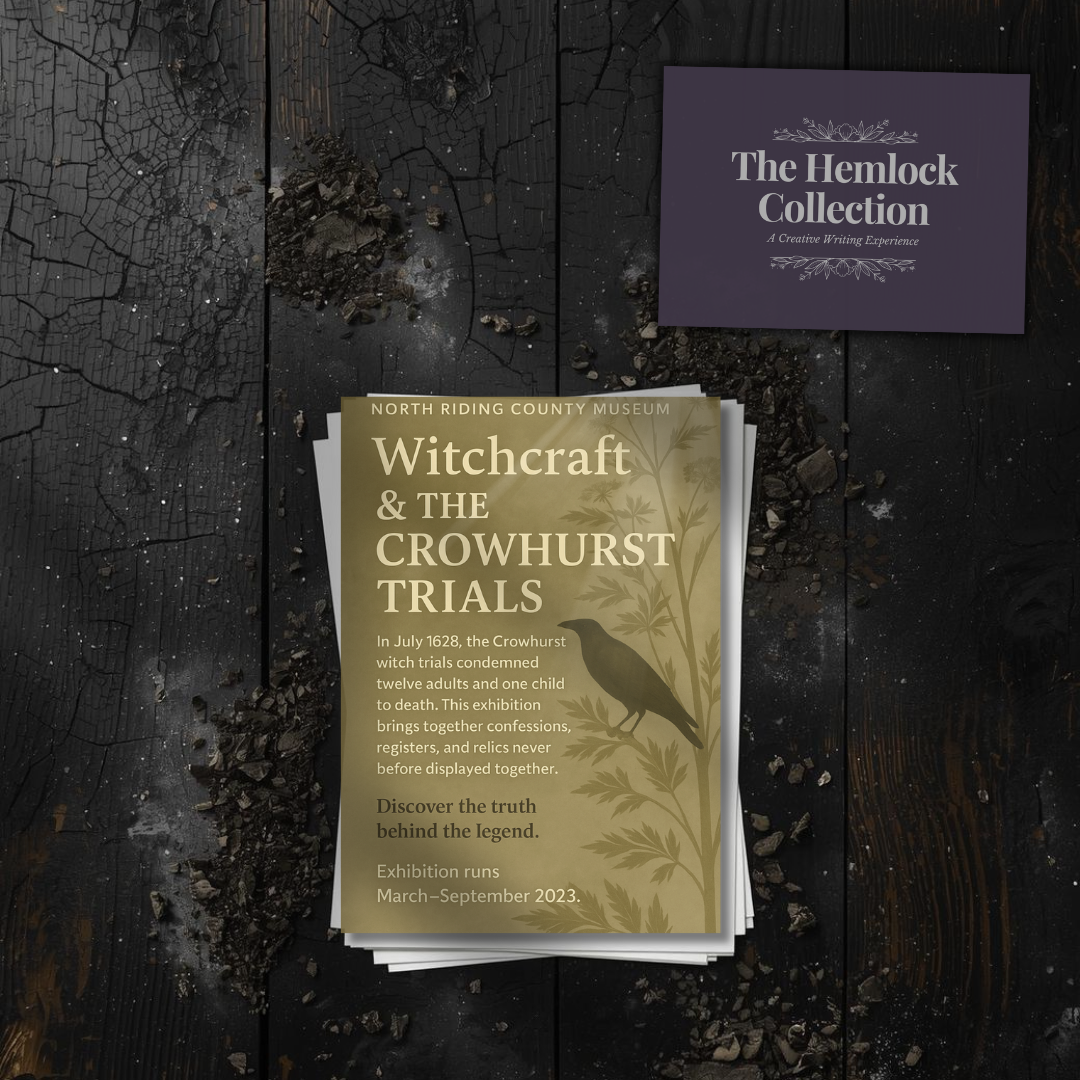
Which makes The Hemlock Collection a perfect pivot into creative writing. It scratches the same thematic itch (fear, power, truth, silence) but in a completely different form.
Hemlock gives students:
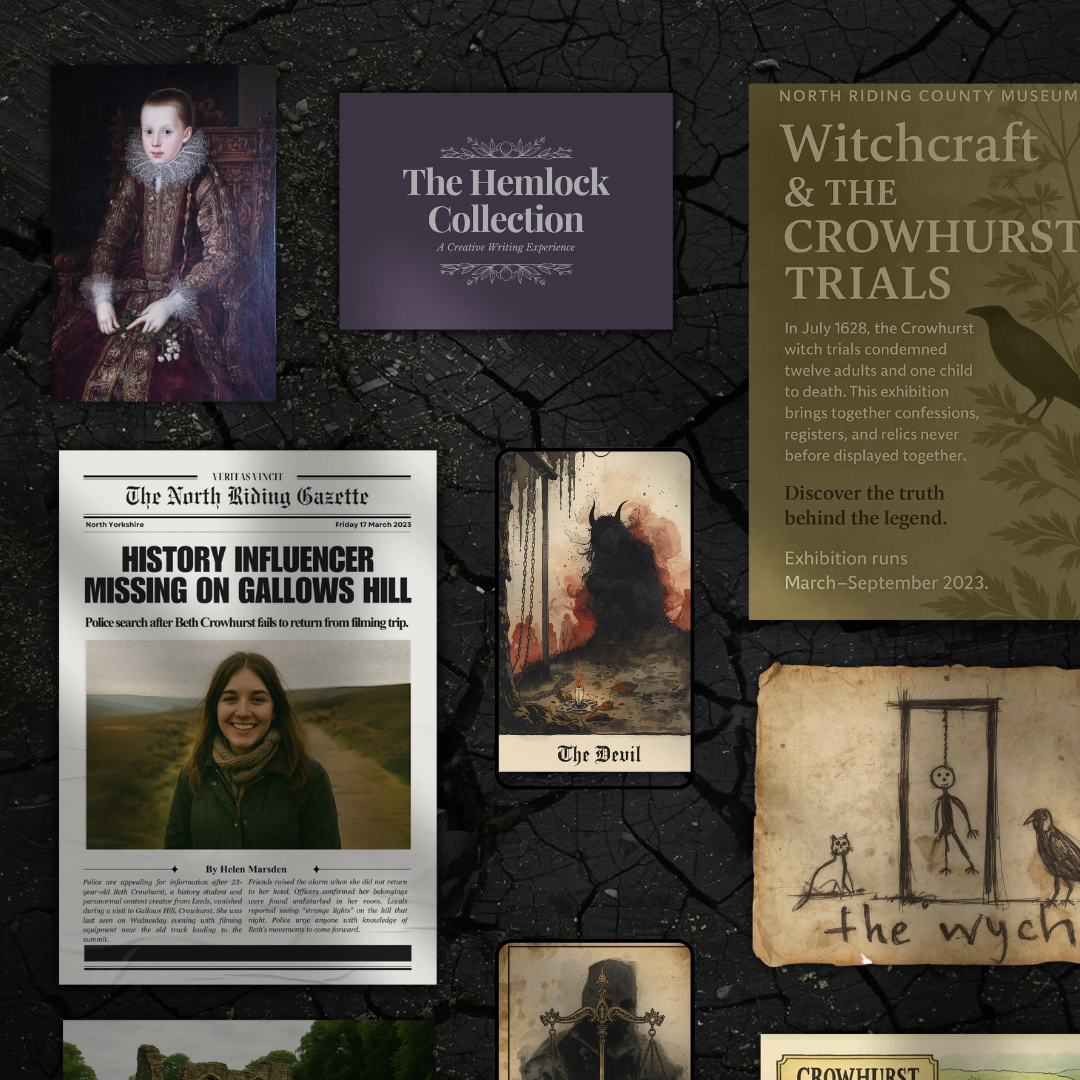
◆ artefacts
◆ confessions
◆ nursery rhymes
◆ sermons
◆ register pages
◆ newspaper clippings
…and asks them to build a narrative from the evidence. It’s immersive, historical, and deeply atmospheric without being tied to Salem, so nothing feels recycled or derivative.
It works beautifully as:
◆ a post-Crucible genre unit
◆ a narrative writing assessment
◆ a Halloween project
◆ a gothic mini-scheme
◆ an independent investigation project
If you already know you want both (because you also enjoy having free weekends occasionally), they’re bundled together here.
Final Thoughts
The Crucible earns its place on the curriculum because it’s one of the few texts that forces students to confront what fear does to a community — and what silence does to a person. Teach it slowly, don’t overdo the context, keep the structure tight, and let the play make its point. It always does.
Then, if you want to take all that energy and funnel it into creative writing that actually terrifies them a little (academically, not emotionally — we’re not monsters), Hemlock is waiting.
