Notes from the Inkpot
Writing, teaching, creating - one ink-stained idea at a time.


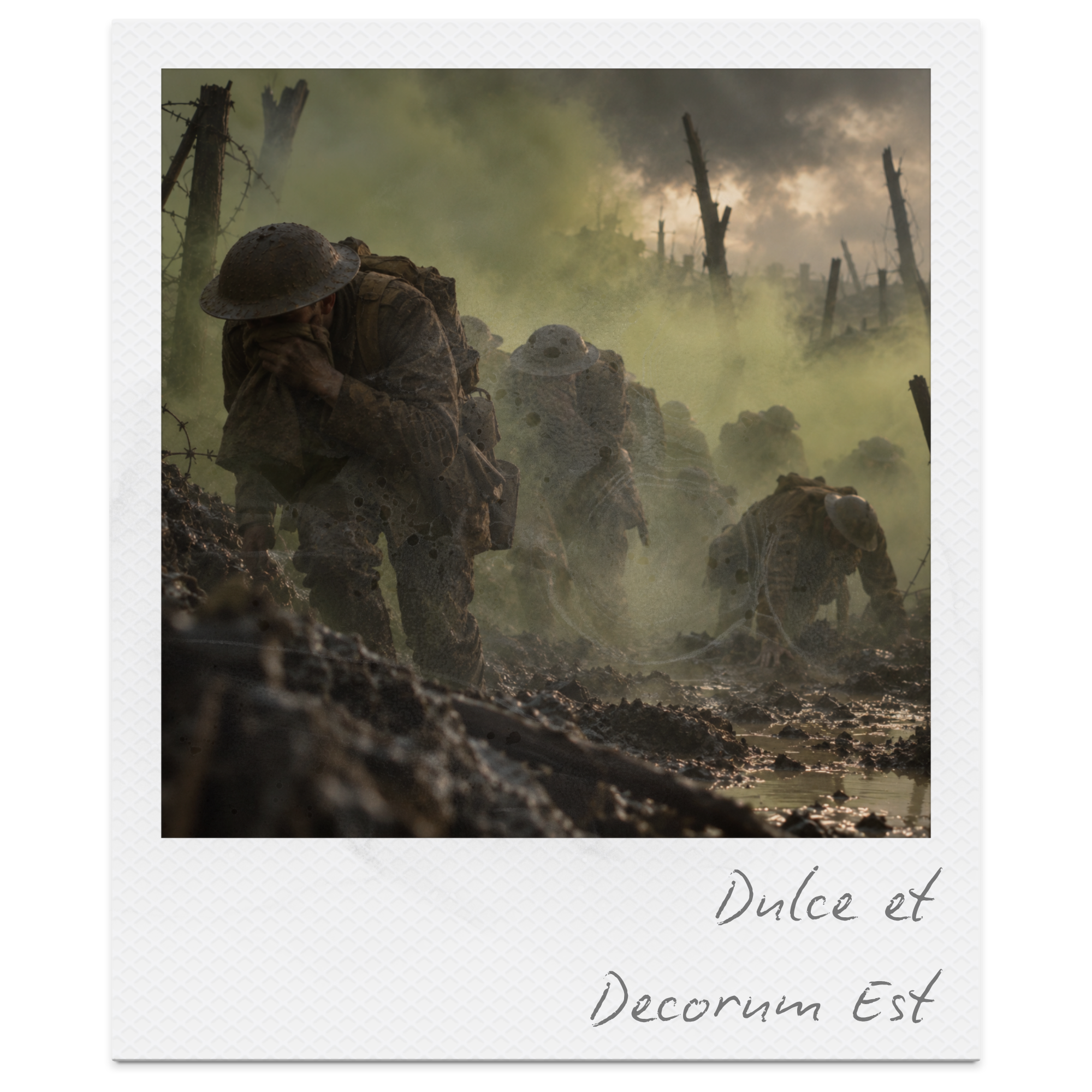
Dulce et Decorum Est by Wilfred Owen: Summary, Themes & Analysis
Explore Dulce et Decorum Est by Wilfred Owen with detailed analysis of its meaning, themes, form, structure, metre, symbolism, imagery and poetic techniques. Discover how Owen uses the horror of a gas attack and its traumatic aftermath to challenge patriotism, propaganda, glorious sacrifice and romanticised ideas of war.
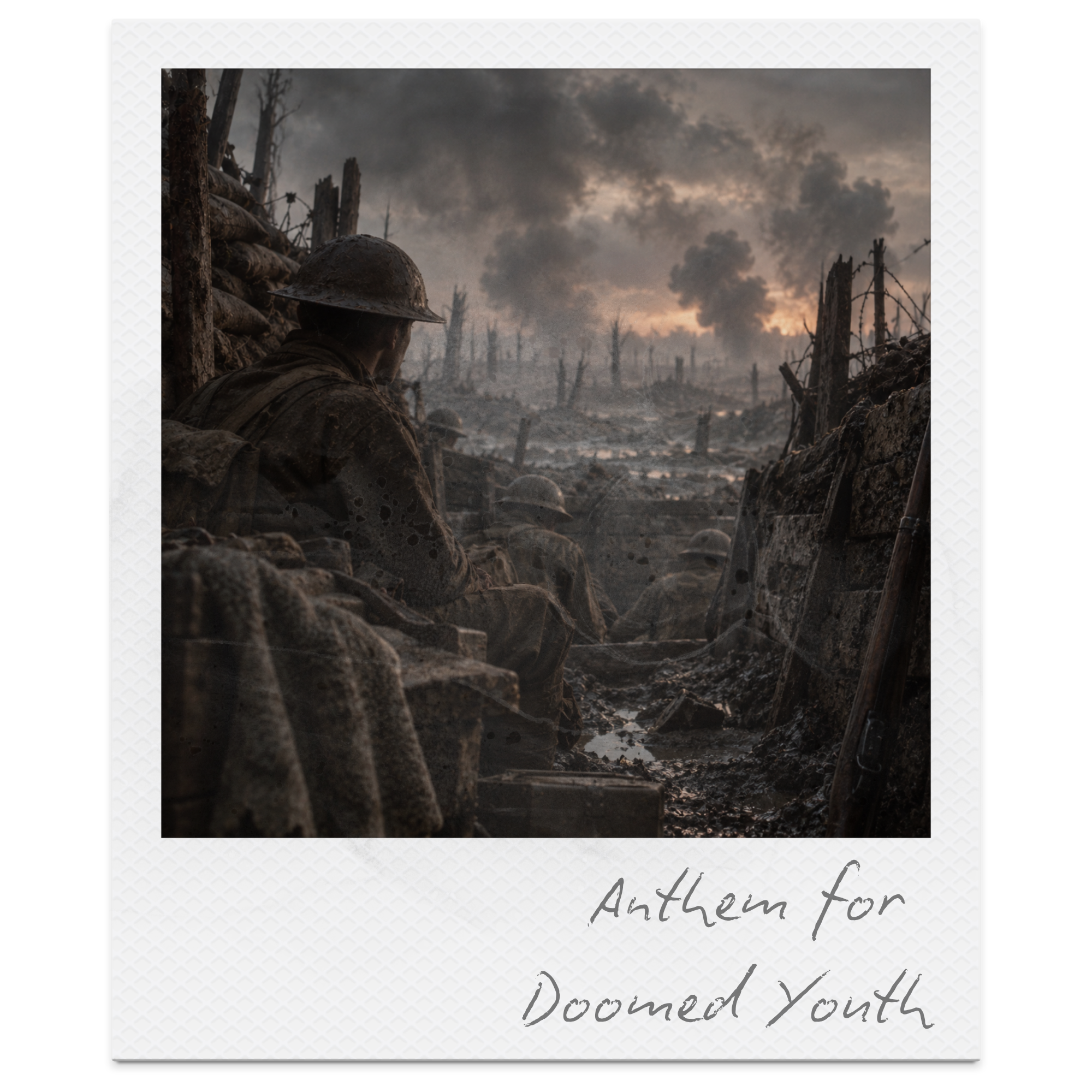
Anthem for Doomed Youth by Wilfred Owen: Summary, Themes & Analysis
Explore Anthem for Doomed Youth by Wilfred Owen with detailed analysis of its meaning, themes, form, structure, metre, symbolism, imagery and poetic techniques. Discover how Owen contrasts the brutal sounds of the battlefield with funeral rituals, private grief and remembrance to expose the human cost of the First World War.
The Send-Off by Wilfred Owen: Summary, Themes & Analysis
Explore The Send-Off by Wilfred Owen with detailed analysis of its meaning, themes, form, structure, metre, symbolism, imagery and poetic techniques. Discover how Owen transforms a soldiers’ departure for war into an unsettling exploration of death, uncertainty, separation, loss and the possibility of returning home profoundly changed.
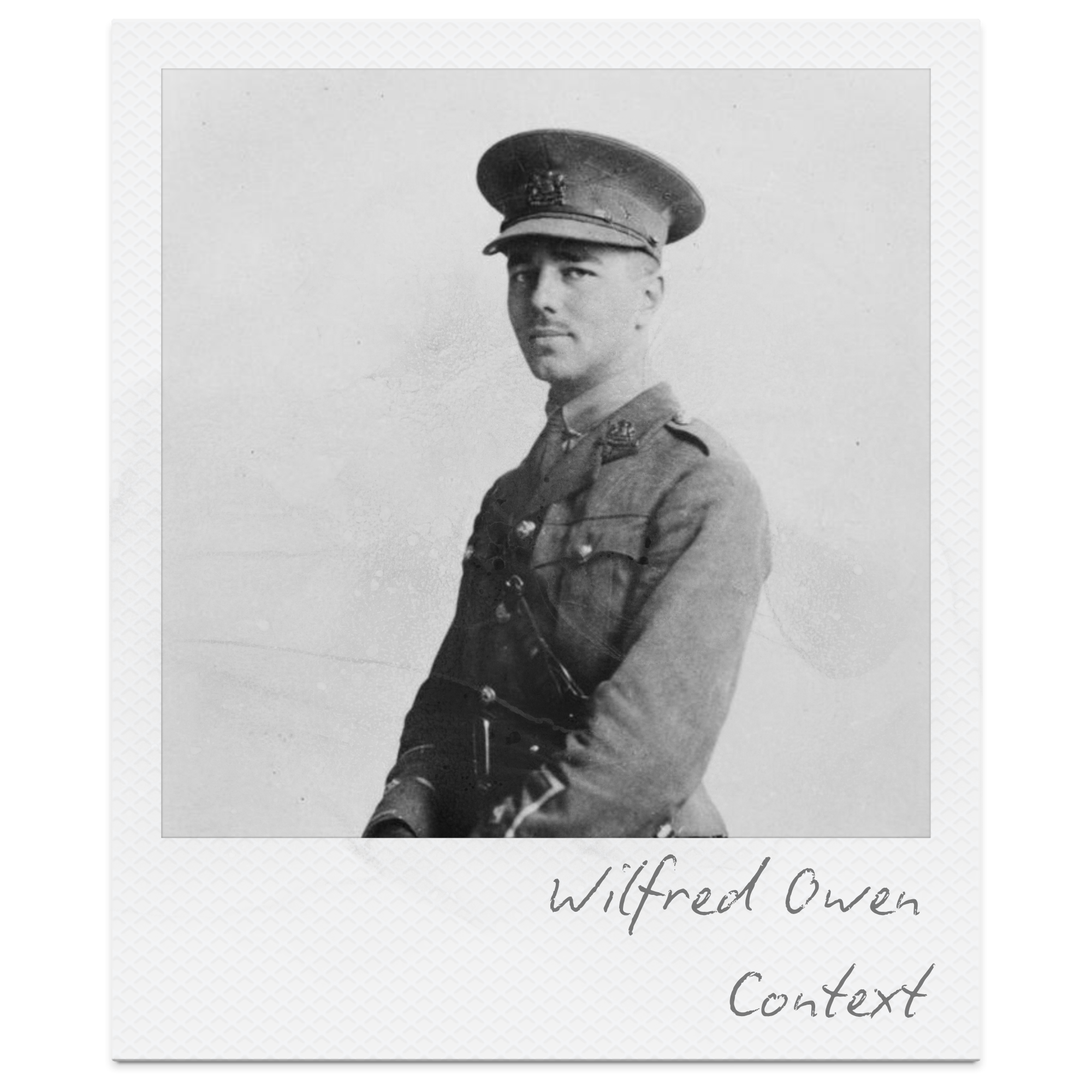
Wilfred Owen: Context, War Poetry, and Literary Significance
Explore the life, historical context, major themes, and literary significance of Wilfred Owen, one of the defining voices of First World War poetry. From patriotic ideas of King and Country to the brutal realities of trench warfare, shell shock, and mass loss, discover how Owen challenged romanticised representations of war and transformed the suffering of ordinary soldiers into some of the most powerful poetry of the twentieth century.
Lament by Gillian Clarke: Summary, Themes & Analysis
Lament by Gillian Clarke presents a powerful, cumulative expression of grief, exploring the impact of war, environmental destruction, and human responsibility. Through repetition, vivid imagery, and structured listing, Clarke connects the suffering of animals, people, and landscapes, showing how these losses are deeply interconnected. By building a sequence of images that move from individual creatures to global devastation, the poem creates a sense of scale and inevitability, while its restrained tone allows the destruction to speak for itself. The result is a poem that not only mourns what has been lost, but also challenges the reader to recognise the ongoing consequences of human actions.
Alternative Interpretations of Suicide in the Trenches by Siegfried Sassoon
Suicide in the Trenches is often taught as a poem with a clear message about the horrors of war. Yet Sassoon’s restraint, ambiguity, and shifting focus invite multiple interpretations about responsibility, blame, and silence. This post explores alternative interpretations of Suicide in the Trenches, examining whether the poem functions as a moral accusation against civilians, a critique of systems, or an exposure of emotional numbness. Designed to support discussion and debate, it encourages students to move beyond surface readings and engage with interpretation as an active, evidence-based process.
Themes in Suicide in the Trenches by Siegfried Sassoon
Suicide in the Trenches explores some of the most unsettling ideas in war poetry, from the erasure of individual lives to the moral responsibility of those who remain safely removed from conflict. Through restraint and contrast, Siegfried Sassoon exposes how innocence is worn away and suffering is quietly absorbed. This post examines the key themes in Suicide in the Trenches, including civilian complicity, loss of innocence, the reality of death, and the horrors of war. Designed for classroom use, it supports confident discussion and comparison while encouraging deeper, evidence-based interpretation.
Suicide in the Trenches by Siegfried Sassoon: Line-by-Line Analysis
Suicide in the Trenches is a short poem, but its impact depends on restraint. Reading it line by line reveals how meaning builds through small details, blunt statements, and deliberate silence rather than dramatic language or imagery. This post offers a clear line-by-line analysis of Suicide in the Trenches, exploring how innocence gives way to erasure and moral accusation. It’s designed to support close reading in the classroom, helping students move beyond paraphrase and towards confident, evidence-based interpretation.
Suicide in the Trenches: Overview, Context, Key Ideas & Teaching Approaches
Suicide in the Trenches is often introduced as a simple war poem, yet its power lies in what it refuses to explain. Through restraint, regularity, and plain language, Siegfried Sassoon presents suffering without consolation, exposing how easily individual lives are absorbed into silence. This pillar post brings together context, key ideas, interpretation, and teaching approaches for Suicide in the Trenches. It explores how meaning is shaped through tone, structure, and omission, and shows how the poem functions as both protest writing and a powerful gateway text for studying war poetry, responsibility, and moral judgement.
Teaching Remains by Simon Armitage: Poem Analysis, Context, Themes and Key Ideas
Remains by Simon Armitage is one of the most powerful poems studied in the GCSE Power and Conflict anthology, exploring the psychological impact of war and the way violence lingers long after the moment itself has passed. Rather than focusing on combat or heroism, the poem examines guilt, memory, and moral responsibility through the voice of a soldier haunted by a single act of killing. This post offers a clear, stanza-by-stanza analysis of Remains, exploring its context, form, imagery, and key ideas, alongside practical teaching strategies for secondary English classrooms. It also considers why the poem is so effective for studying power and conflict, and how it fits within wider conflict poetry, making it a useful guide for teachers and students alike.
Futility by Wilfred Owen: Meaning, Themes, and How to Teach the Poem
Futility by Wilfred Owen is one of the most quietly devastating poems in First World War poetry, challenging readers to confront loss, creation, and the possibility that meaning itself may fail under pressure. Rather than depicting the violence of battle, Owen focuses on a single, still moment after death, using restrained language and natural imagery to question whether life, care, and sacrifice were ever guaranteed purpose. This deep dive explores the meaning, themes, form, and structure of Futility, examining how tenderness, love between soldiers, and faith in nature gradually give way to philosophical doubt. Written for teachers, this post moves beyond summary to support classroom discussion, close analysis, and thoughtful teaching, showing why Futility remains one of the most challenging and powerful war poems to study at higher levels.
The Fly by Katherine Mansfield: Post-War Grief, Masculinity, and Trauma (For English Teachers)
The Fly by Katherine Mansfield is often taught as a short, symbolic story — but its real power lies in what it reveals about post-war grief, masculinity, and emotional repression. Written in the aftermath of the First World War, The Fly explores what happens when loss is expected to be over, yet trauma quietly persists beneath ordinary life. This post is designed for English teachers looking to bridge WW1 poetry and post-war prose, showing how lived experience shapes literature long after conflict has ended. It explores Mansfield’s personal connection to war, the symbolism of the fly as repeated trauma, and the story’s unsettling portrayal of power, control, and suppressed emotion. With classroom-ready activity ideas and links to wider conflict poetry, this deep dive helps teachers position The Fly as more than a standalone short story — but as part of a broader conversation about aftermath, memory, and the long shadow of war.
10 Best WWI Poems to Teach (And How to Teach Them)
World War One poetry is a powerful and enduring part of secondary English literature, offering students a direct literary response to war, trauma, memory, and loss. This post explores 10 of the best WWI poems to teach, with clear teaching focuses, classroom-ready ideas, and suggestions for discussion and creative response. The poems are grouped thematically to support comparative study and flexible unit planning. Designed for global classrooms, this guide supports close reading, empathy-building discussion, and analytical writing, while linking to deeper teaching resources and the wider Literature Library. Whether you’re planning a full World War One poetry unit or selecting individual poems to complement a wider literature course, this post offers practical guidance rooted in strong literary foundations.
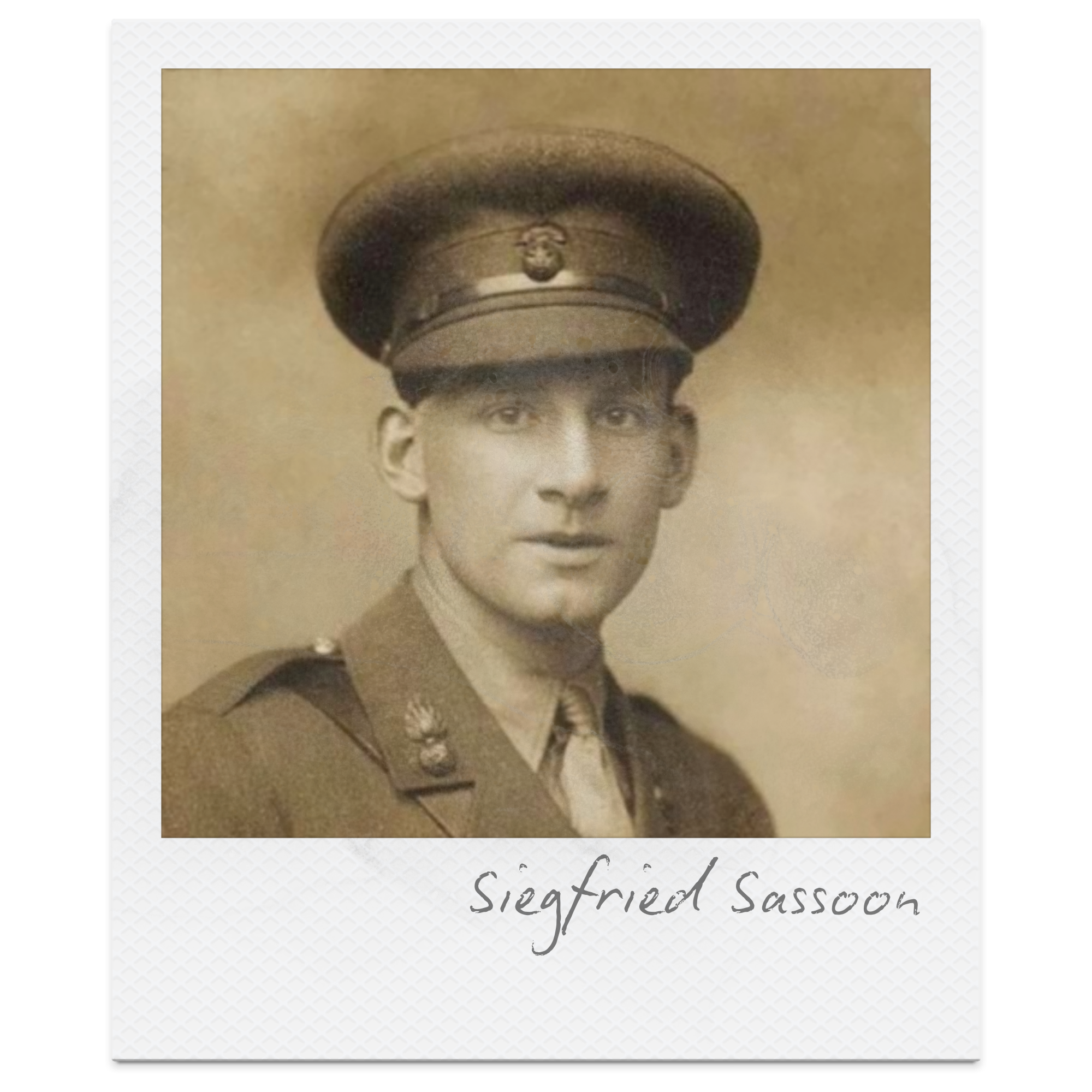
Siegfried Sassoon: Context, War Poetry, and Literary Significance
Siegfried Sassoon is one of the most important voices in First World War poetry, writing not from imagination but from direct experience of trench warfare. His poems expose the brutality, futility, and moral failure of modern war, challenging patriotic narratives that present suffering as noble or necessary. Through irony, anger, and controlled restraint, Sassoon forces readers to confront the gap between those who fight and those who authorise violence from a distance. Understanding Sassoon’s context is essential for reading poems such as “Suicide in the Trenches.” Shaped by frontline combat, public protest, and psychological trauma, his writing interrogates responsibility, authority, and the language used to justify mass death. Rather than offering comfort or heroic sacrifice, Sassoon’s war poetry demands ethical engagement, making it central to the study of WWI literature and modern protest writing.