Alternative Interpretations of Suicide in the Trenches by Siegfried Sassoon
Suicide in the Trenches is often approached as a poem with a clear message about the horrors of war. However, Sassoon’s restraint, tonal control, and careful use of contrast mean that the poem remains open to multiple interpretations.
On the surface, the poem presents the death of a young soldier and the indifference that follows. Yet beneath this apparent simplicity lies a more complex set of questions about responsibility, silence, and who is ultimately blamed for suffering. Sassoon does not explain his moral position directly; instead, he constructs a poem that forces the reader to interpret, judge, and respond.
This post explores alternative interpretations of Suicide in the Trenches, moving beyond a single, fixed reading to consider how meaning shifts depending on where responsibility is placed — with the soldier, the system, or the society that allows war to continue.
Context: Sassoon’s Protest and the Politics of Blame
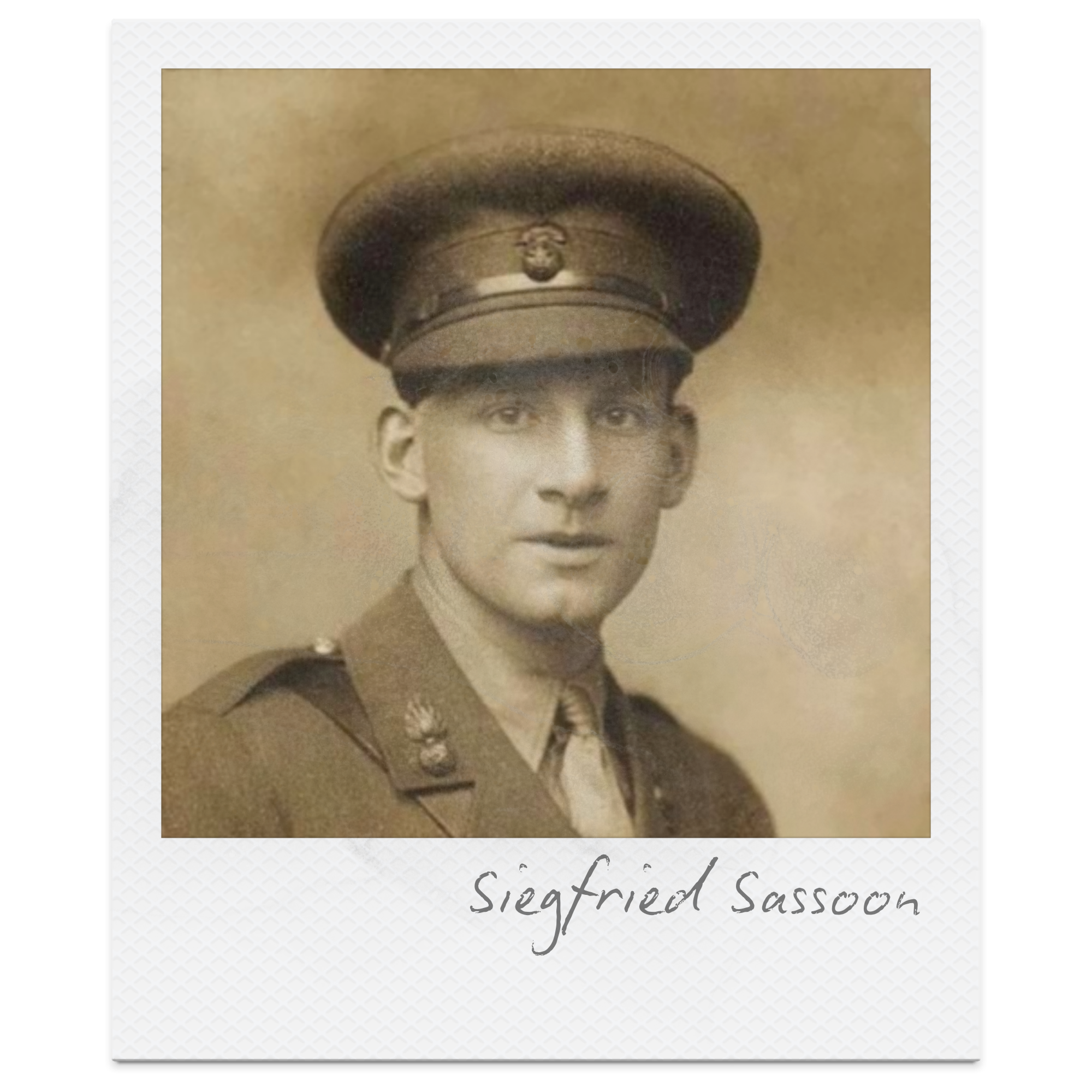
Siegfried Sassoon wrote Suicide in the Trenches during the First World War, after serving on the front line and becoming increasingly vocal in his opposition to the conflict. By this point, Sassoon’s poetry had shifted from early patriotism to open protest, driven by anger at both military leadership and civilian attitudes towards the war.
Unlike poets who frame death as sacrifice or duty, Sassoon consistently exposes emotional exhaustion, psychological damage, and the distance between those who fight and those who applaud from safety. His poems are often controlled in tone, avoiding overt sentimentality in favour of direct address and moral pressure.
This context matters when considering alternative interpretations of the poem. Sassoon is not writing as a distant observer, but as someone who had witnessed trench warfare first-hand — a position that complicates where responsibility is placed and raises questions about who the poem ultimately condemns.
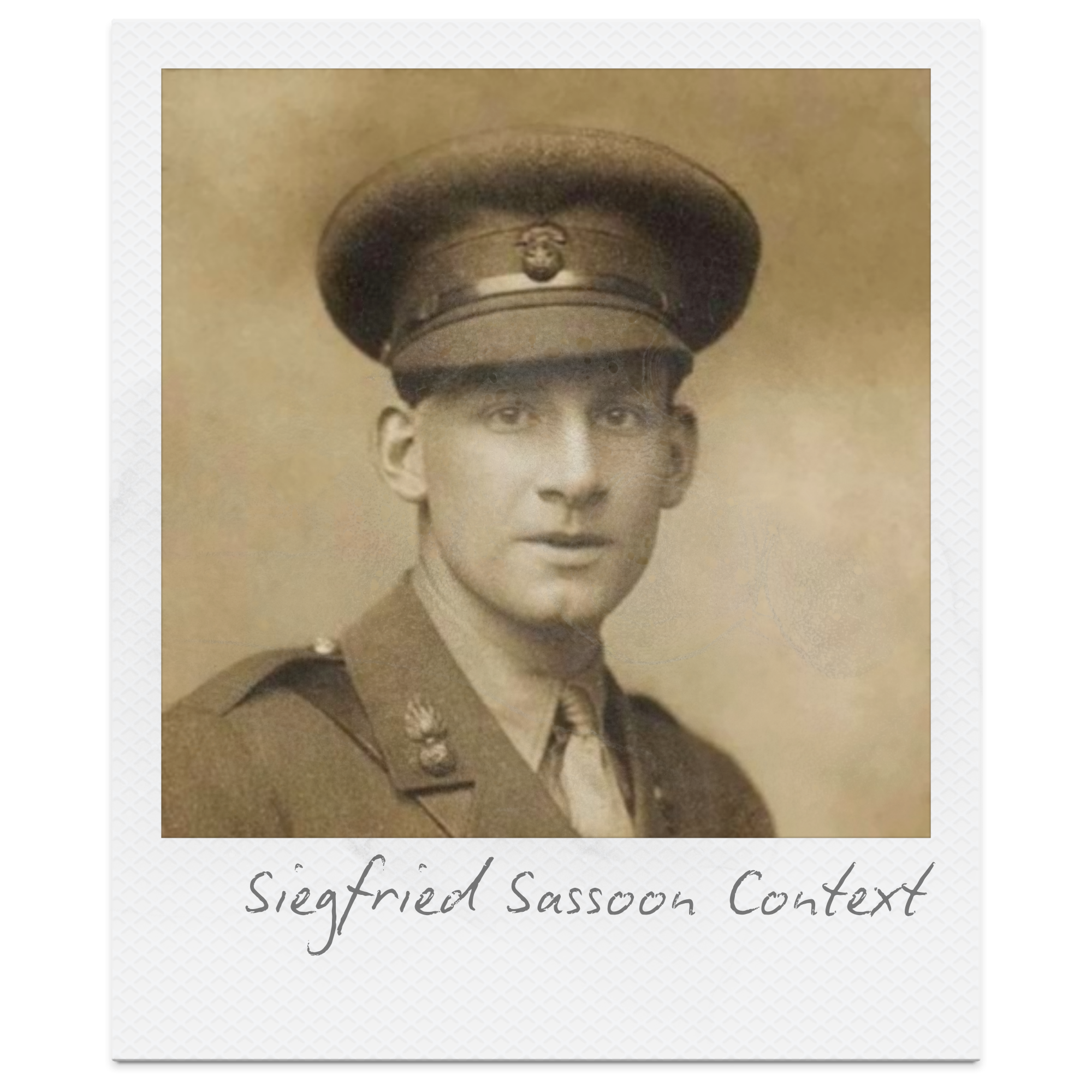
If you’d like to explore this further, you can read the full Sassoon context post here, which looks in more depth at how his experiences shaped his protest poetry.
What Suicide in the Trenches Appears to Be About
On a surface level, Suicide in the Trenches presents the story of a young soldier whose initial cheerfulness is destroyed by the conditions of trench warfare. The poem moves quickly from innocence to suffering, ending with the soldier’s suicide and the silence that follows.
Read this way, the poem appears to be a straightforward condemnation of the horrors of war and the psychological damage it inflicts on individuals. The soldier is presented as a victim of circumstances beyond his control, worn down by fear, deprivation, and isolation.
The final stanza seems to widen the poem’s focus, shifting attention towards civilians who cheer soldiers as they march past but remain untouched by the reality of conflict. At this level, the poem can be understood as a protest against war’s cruelty and the emotional distance between those who fight and those who remain at home.
This reading is coherent and convincing — but it is not the only way the poem can be understood. The sections that follow explore how meaning changes when responsibility, blame, and moral focus are placed elsewhere.
Alternative Interpretation: The Poem as a Moral Accusation Against Civilians
One alternative reading of Suicide in the Trenches is that the poem is less concerned with the soldier’s death itself and more focused on who is morally responsible for it. From this perspective, Sassoon uses the soldier’s suicide not as the central tragedy, but as evidence in a wider accusation directed at civilian society.
The poem’s final stanza is crucial to this interpretation. Sassoon shifts abruptly from the private suffering of the individual to a direct confrontation with those who remain safely removed from the war, suggesting that emotional distance and public enthusiasm help sustain the conditions that destroy soldiers.
◆ “You smug-faced crowds with kindling eye”
The use of direct address places responsibility firmly with civilians. “Smug-faced” suggests self-satisfaction rather than ignorance, while “kindling eye” implies excitement and eagerness. The crowds are not passive observers; they are emotionally invested in the spectacle of war.
◆ “Who cheer when soldier lads march by,”
Cheering reduces war to performance. The phrase “soldier lads” emphasises youth and vulnerability, exposing the imbalance between the civilians’ excitement and the soldiers’ lived reality. The act of cheering becomes morally suspect rather than supportive.
◆ “Sneak home and pray you’ll never know”
This line exposes hypocrisy. The verb “sneak” implies guilt and avoidance, while the religious language of “pray” suggests a desire to escape responsibility rather than confront it. Civilians celebrate war publicly, then privately hope to remain untouched by its consequences.
◆ “The hell where youth and laughter go.”
War is redefined as a place that consumes innocence and vitality. The civilians’ enthusiasm is shown to be sustained by ignorance of — or refusal to acknowledge — this destruction.
Viewed this way, the poem becomes a moral indictment rather than a lament. The soldier’s death is not presented as an isolated tragedy, but as the inevitable result of a society willing to glorify war while outsourcing its suffering. Sassoon’s restraint sharpens the accusation, forcing the reader to confront their own position in relation to the poem.
Alternative Interpretation 2: The Poem as a Critique of Systems Rather Than Individuals
Another way to read Suicide in the Trenches is as a critique of the systems that produce suffering, rather than a direct attack on either the soldier or individual civilians. From this perspective, the poem exposes how institutional structures — military, social, and cultural — make the soldier’s death feel inevitable.
In this reading, responsibility is diffused. No single character is blamed outright; instead, Sassoon shows how conditions accumulate until collapse becomes unavoidable.
◆ “In winter trenches, cowed and glum,”
The emphasis on environment places pressure on circumstance rather than choice. The soldier is shaped by his surroundings, emotionally subdued by conditions he cannot control.
◆ “With crumps and lice and lack of rum,”
The list structure suggests repetition and routine. Suffering is not the result of a single trauma, but of constant deprivation built into the system of trench warfare.
◆ “He put a bullet through his brain.”
The bluntness of the line presents suicide as an outcome rather than a decision. There is no exploration of motive, reinforcing the sense that the system has left no alternatives.
◆ “No one spoke of him again.”
Silence becomes structural rather than personal. The system absorbs loss without pause, treating the individual as replaceable.
From this angle, the poem condemns not people, but a war machine that normalises suffering and erases those it consumes.
Alternative Interpretation 3: The Poem as an Exposure of Emotional Numbness
A further interpretation sees Suicide in the Trenches not primarily as an angry protest, but as a poem about emotional flattening — the gradual loss of feeling that makes both suffering and death easier to ignore.
Here, Sassoon’s restraint is central. The poem’s calm tone mirrors the emotional numbness it critiques.
◆ “Who grinned at life in empty joy,”
The soldier’s happiness is already described as hollow. Emotion is present, but lacks depth or resilience.
◆ “Slept soundly through the lonesome dark,”
Isolation is survivable at first, but it also signals emotional detachment rather than connection.
◆ “He put a bullet through his brain.”
The unemotional phrasing mirrors the numbness that precedes the act. There is no dramatic build-up, reflecting psychological shutdown.
◆ “No one spoke of him again.”
The absence of response suggests collective numbness. Death no longer disrupts routine or provokes reflection.
Read this way, the poem is less about outrage and more about what happens when feeling fails — when both soldiers and civilians become desensitised to loss.
Explore Suicide in the Trenches from Different Perspectives
This post explores alternative interpretations of Suicide in the Trenches, showing how meaning shifts depending on where responsibility, blame, and moral focus are placed. Reading the poem from multiple angles helps students move beyond fixed answers and towards more flexible, evidence-based interpretation.
Click the tiles below to explore related posts on Suicide in the Trenches, including line-by-line analysis, themes, form, structure and metre, and historical context. Together, these perspectives reveal how Sassoon’s choices shape meaning in different ways.
Teaching Alternative Interpretations of Suicide in the Trenches
Alternative interpretations work best when students are encouraged to see disagreement as productive rather than problematic. Sassoon’s restraint means meaning is often implied rather than stated, making the poem particularly well suited to discussion-led approaches.
◆ Silent debate on responsibility
Place key quotations around the room and ask students to respond in writing to the question: Who does the poem blame most? Students can agree, challenge, or extend each other’s responses without speaking, keeping the focus on evidence rather than confidence.
◆ Competing interpretations task
Assign each group a different interpretation (civilian responsibility, systemic failure, emotional numbness). Students must defend their reading using quotations from across the poem, then respond to challenges from other groups.
◆ Interpretation vs summary sorting
Give students a mixture of surface statements and interpretive claims. Ask them to sort which statements are descriptive and which require judgement, reinforcing the difference between explaining what happens and interpreting meaning.
◆ Quotation ownership
Ask students to choose a single quotation and explain how it could support more than one interpretation. This highlights ambiguity and discourages rigid thinking.
◆ Justified disagreement
Encourage students to disagree with an interpretation only if they can support their view with evidence. This legitimises challenge while keeping discussion grounded.
Go Deeper into Interpreting Suicide in the Trenches
Once students are confident recognising different interpretations, deeper analysis comes from weighing those interpretations against each other and considering why Sassoon refuses to resolve the poem into a single moral position.
◆ Compare interpretations, not just quotations
Ask students which interpretation they find most convincing and why, then require them to acknowledge what that reading does not fully explain.
◆ Examine what the poem withholds
Encourage students to focus on what Sassoon does not describe — motives, reactions, explanations — and how this absence shapes interpretation.
◆ Link interpretation to tone and restraint
Explore how the poem’s calm, controlled tone affects how blame is assigned. Would a more emotional voice change which interpretation feels strongest?
◆ Test interpretations through comparison
Compare Suicide in the Trenches with another war poem and evaluate whether Sassoon’s approach places responsibility differently.
◆ Question authorial intention carefully
Invite discussion about whether the poem’s meaning is fixed by Sassoon’s beliefs, or whether its ambiguity allows readers to reach different conclusions.
Final Thoughts
Suicide in the Trenches resists being reduced to a single, settled meaning. Sassoon’s control, restraint, and refusal to explain his moral position directly ensure that responsibility remains contested rather than resolved. Whether the poem is read as an accusation against civilians, a critique of systems, or an exposure of emotional numbness, each interpretation reveals something different about how war operates — and how suffering is sustained.
What matters most is not arriving at a single “correct” reading, but recognising how interpretation is shaped by emphasis, omission, and moral focus. Sassoon forces the reader to decide where blame lies, and in doing so, implicates them in the poem’s ethical questions.
To explore this poem alongside other war poetry, context posts, and teaching resources, you can visit the Literature Library, where Suicide in the Trenches sits within a wider study of conflict, responsibility, and protest writing.
Choose Your Next Text