Teaching Remains by Simon Armitage: Poem Analysis, Context, Themes and Key Ideas
Remains by Simon Armitage is a powerful poem about the psychological impact of war and the way violence lingers long after the physical conflict has ended. Rather than focusing on heroism or battle, the poem explores guilt, memory, and trauma, showing how a single moment of killing can dominate a soldier’s thoughts long after he has returned home.
Written from the perspective of a British soldier, Remains recounts the shooting of a looter during a patrol and the aftermath of that act. Although the event is initially described in casual, conversational language, the poem gradually reveals that the experience has left the speaker deeply scarred. Through vivid imagery, fractured structure, and repeated moments of recall, Armitage presents trauma as something that cannot be contained in the past — it resurfaces in memory, dreams, and daily life.
This is what makes Remains such a powerful poem to study in the classroom. It invites students to consider not only what happens in war, but what happens after — when responsibility, regret, and moral uncertainty refuse to fade.
Just a quick note, you’ll find more teaching strategies, prompts, and resources for other set texts in the Literature Library.
Background and Context: Simon Armitage and Modern Warfare
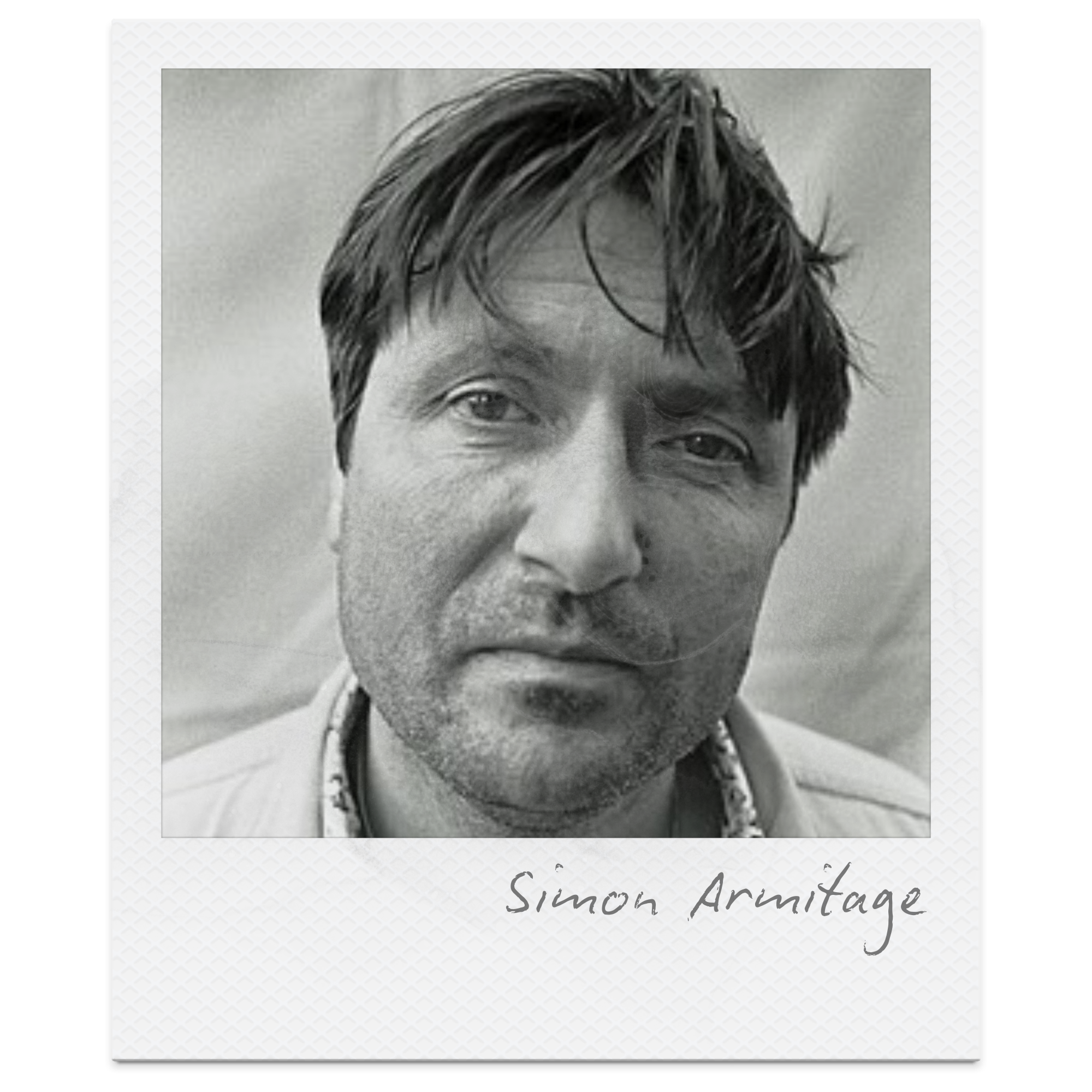
Remains was written by Simon Armitage, a contemporary British poet, and is based on the testimony of a real soldier who served in the Iraq War. The poem first appeared in Armitage’s collection The Not Dead (2008), which draws directly on interviews with veterans about their experiences of conflict and its aftermath.
Unlike traditional war poetry that focuses on the battlefield itself, Remains reflects a modern understanding of war — one shaped by urban combat, blurred moral boundaries, and the psychological consequences faced by soldiers after deployment. The speaker is not presented as a hero or a villain, but as an ordinary soldier grappling with the consequences of a moment that cannot be undone.
This context is crucial to understanding why the poem feels so raw and unsettling. Armitage deliberately uses plain, conversational language to reflect how soldiers speak about their experiences, avoiding elevated or poetic diction. This makes the violence feel more immediate and real, and it mirrors the way trauma is often recalled: fragmented, repetitive, and intrusive.
The poem also reflects growing public awareness of post-traumatic stress disorder (PTSD) and the long-term mental health impact of war. By focusing on memory, guilt, and repetition rather than action or victory, Remains shifts attention away from conflict as spectacle and towards the lasting human cost.
Understanding this context helps explain why Remains is so effective in the classroom. It bridges traditional war poetry with contemporary conflict, allowing students to connect older ideas about war and trauma with modern experiences — and to see conflict not as something that ends when fighting stops, but as something that continues long after soldiers return home.
Why Remains Is So Powerful in the Classroom
Remains is powerful because it refuses to distance students from the consequences of violence. There are no sweeping descriptions of battle, no heroic framing, no patriotic comfort. Instead, Armitage focuses on one moment and shows how it fractures a life long after the event itself has ended.
This makes the poem particularly effective for teaching Power and Conflict. The poem explores conflict not as a dramatic battlefield clash, but as a sustained psychological experience — one that continues long after the shooting stops. The real conflict in Remains is internal: between action and consequence, memory and reality, control and guilt.
At the same time, the poem interrogates power in unsettling ways. The soldiers hold immediate, physical power over the looter’s life — yet that power offers no resolution or relief. Instead, it leaves the speaker powerless against his own memories. Armitage quietly overturns expectations here: the armed soldier does not emerge dominant or victorious, but trapped, haunted, and unable to escape responsibility.
What makes this especially impactful for students is the poem’s voice. The conversational tone, broken syntax, and repeated phrases mirror the way traumatic memories intrude on everyday life. Students often notice how the speaker tries to control the narrative — “end of story” — only for the poem to prove that it isn’t. That moment alone opens up rich discussion about denial, repetition, and the limits of language.
In the classroom, Remains consistently prompts strong emotional responses, but it also supports rigorous analysis. Students can explore how form mirrors meaning, how imagery exposes trauma, and how Armitage challenges traditional representations of war. It’s a poem that invites empathy without simplifying blame, and that balance is rare.
Ultimately, Remains works so well because it doesn’t ask students to admire conflict — it asks them to sit with it. And that makes it one of the most quietly devastating poems in the Power and Conflict anthology.
Title and Form
Before analysing individual stanzas, it’s worth pausing on the title and form of Remains, as both play a crucial role in shaping meaning.
The Significance of the Title
The title Remains is deliberately ambiguous, and that ambiguity reflects the poem’s central concern.
◆ It refers to the physical remains of the looter’s body after the shooting, reinforced by the graphic imagery later in the poem.
◆ It also suggests what remains psychologically — the memories, guilt, and trauma that persist long after the event itself.
◆ The word implies something that cannot be cleared away or resolved, reinforcing the idea that the conflict does not end when the soldier returns home.
From the outset, the title signals that this is not a poem about action, but about aftermath.
Form and Structure
Remains is written in eight irregular stanzas, each made up of four lines, but without a consistent rhyme scheme. This loose structure mirrors the speaker’s fractured state of mind.
◆ The lack of a regular rhyme scheme reflects a lack of emotional resolution or closure.
◆ The poem moves between past and present, showing how the memory of the shooting repeatedly intrudes into the speaker’s current life.
◆ Enjambment is used frequently, creating a sense of momentum that mirrors how events spiral beyond the speaker’s control.
Although the poem appears orderly on the page, its internal movement is unstable — much like the speaker himself.
Voice and Language
Armitage’s use of conversational, colloquial language is one of the poem’s most striking features.
◆ Phrases such as “legs it” and “sort of inside out” sound casual and understated, which makes the violence more disturbing rather than less.
◆ The repeated use of first-person pronouns (“I”, “we”) traps the reader inside the speaker’s perspective, offering no emotional distance.
◆ Attempts to impose narrative control — “End of story” — are immediately undermined by the poem’s structure, reinforcing the speaker’s lack of control over memory.
This voice makes Remains feel unsettlingly authentic, as if the speaker is talking through the event rather than performing it for an audience.
How the Poem Begins: Routine, Distance, and Moral Uncertainty
The opening of Remains deliberately presents violence as routine. The speaker frames the incident as “on another occasion,” immediately suggesting that this is not a unique or shocking event, but part of an ongoing pattern. Conflict is introduced as procedure rather than crisis.
◆ The casual phrasing “we got sent out” strips the moment of agency, implying obedience and routine rather than personal choice.
◆ The colloquial verb “legs it” reduces the looter’s flight to something almost comic, revealing how emotional distance is created through language.
◆ The phrase “probably armed, possibly not” introduces moral ambiguity from the outset, showing that the decision to shoot is based on assumption rather than certainty.
What’s striking here is the lack of emotional commentary. The speaker does not pause to reflect or justify his actions. Instead, the uncertainty is stated plainly and left unresolved, foreshadowing the guilt and repetition that will dominate the rest of the poem.
Armitage uses this opening to establish one of the poem’s central ideas: how quickly irreversible violence can become normalised, and how that normalisation becomes psychologically devastating later.
Stanza 2: Collective Action and Shared Responsibility
In the second stanza, the focus shifts from uncertainty to action. The speaker describes how he and two other soldiers reach the same conclusion at the same time, turning an individual decision into a collective one.
◆ The repeated reference to “myself and somebody else and somebody else” is deliberately vague, suggesting a loss of individual identity and responsibility. No one is singled out; blame is shared and diluted.
◆ The phrase “all of the same mind” implies consensus, but it also removes space for hesitation or moral reflection. Acting together becomes a form of justification.
◆ Armitage’s use of the collective pronoun “we” reinforces the idea that the shooting is not the result of one person’s choice, but of group mentality in moments of pressure.
The metaphor “three of a kind” is particularly unsettling. It borrows language from gambling, making the act of shooting feel random, almost casual, as if lives are being wagered rather than taken. This choice of language highlights how violence can become depersonalised when responsibility is spread across a group.
At this point in the poem, the speaker still appears emotionally detached. The language is controlled and procedural, but the seeds of guilt are already present. By emphasising shared action, Armitage raises an uncomfortable question that will echo throughout the poem: when everyone is responsible, is anyone truly accountable?
In the third stanza, the speaker’s tone changes sharply. The emotional distance established earlier collapses as the memory of the shooting becomes vivid and unavoidable.
◆ The repetition of “I see” signals a loss of control over memory. The speaker is no longer choosing to recall the event; it forces itself back into his mind. This reflects how traumatic memories operate, returning in unwanted flashes rather than orderly narratives.
◆ The image of “broad daylight on the other side” is shocking in its clarity. Rather than darkness or obscurity, the speaker sees straight through the body, suggesting that violence has stripped away any protective barrier between life and death.
◆ The matter-of-fact admission that the looter is hit “a dozen times” reinforces the excessiveness of the violence. It is not a single defensive shot, but overwhelming force.
The language here is no longer casual. Instead, it becomes graphic and fixated, suggesting that this is the moment the speaker cannot escape. While earlier stanzas attempt to normalise the event, this one exposes the reality that resists suppression.
Armitage uses this stanza to mark a turning point in the poem. The killing is no longer an action that can be justified or explained away — it becomes an image that repeats, intrudes, and dominates, laying the groundwork for the psychological collapse that follows.
Stanza 4: Graphic Imagery and the Collapse of Distance
In this stanza, Armitage removes any remaining emotional buffer. The violence is no longer implied or recalled — it is confronted directly through disturbing, bodily imagery.
◆ The description of the body as “sort of inside out” is deliberately blunt and imprecise. The casual phrasing clashes with the horror of the image, reflecting the speaker’s attempt to cope by understating the trauma.
◆ The phrase “pain itself” strips the victim of individuality and turns him into a symbol of pure suffering. This suggests that the speaker can no longer separate the person from the sensation of pain he associates with him.
◆ When a fellow soldier “tosses his guts back into his body,” the violence becomes almost procedural. The action is practical, unemotional, and routine — reinforcing how desensitisation operates in conflict zones.
This stanza is particularly difficult for students, but that discomfort is purposeful. Armitage refuses to sanitise the consequences of violence, forcing readers to confront the physical cost of conflict rather than viewing it at a safe distance.
At the same time, the speaker’s flat tone suggests emotional shutdown. The horror is described without overt commentary, implying that the mind has numbed itself in order to survive. This emotional suppression, however, is temporary — and the poem will soon reveal the cost of pushing trauma aside.
Stanza 5: “End of Story” — Denial and the Failure of Closure
At the start of this stanza, the speaker attempts to impose finality on the event, declaring it the “end of story.” This phrase sounds definitive, almost rehearsed, as if the speaker is trying to convince himself that the incident is finished and contained in the past.
◆ The phrase “except not really” immediately undermines this attempt at closure. It exposes the gap between what the speaker wants to believe and what he actually experiences.
◆ The image of the “blood-shadow” left on the street suggests a stain that cannot be erased. Even when the body is removed, the consequences remain visible.
◆ The speaker walking “right over it week after week” shows how trauma becomes routine, embedded in daily life rather than resolved over time.
This stanza marks a crucial turning point. The conflict shifts fully from the external world to the internal one. The speaker may continue his patrols, but psychologically he is trapped in repetition.
Armitage uses this moment to show that trauma is not dramatic or explosive — it is persistent, quietly resurfacing long after the event itself. The idea of an “end” becomes impossible, reinforcing the poem’s central message: violence does not conclude neatly, even when the action stops.
Stanza 6: Trauma Invades the Present
In this stanza, the boundary between past and present completely breaks down. The speaker is no longer recalling the event — he is reliving it.
◆ The abrupt shift from patrol to being “home on leave” suggests safety and distance, but this is immediately undermined. The speaker cannot escape the memory simply by returning home.
◆ The verb “blink” implies that the memory returns involuntarily, without warning. Trauma intrudes into ordinary moments, reinforcing the idea that the speaker has lost control over his own thoughts.
◆ The repetition of uncertainty — “probably armed, possibly not” — resurfaces here, showing that the speaker is trapped in the moment of doubt that preceded the killing.
Sleep, which should offer rest or relief, instead becomes another space where the violence repeats. The poem shows how trauma does not respect boundaries between waking and dreaming; it colonises both.
At this point, the speaker’s attempts to distance himself from the event have fully collapsed. What began as casual recollection has turned into psychological imprisonment, where the past reasserts itself again and again.
Stanza 7: Inescapable Memory and Failed Coping
In this stanza, the speaker admits that he has tried to suppress the memory — and failed. The language suggests increasing desperation and loss of control.
◆ The reference to “drink and the drugs” implies unhealthy coping mechanisms, suggesting that the speaker is attempting to numb his thoughts rather than confront them.
◆ The phrase “won’t flush him out” is particularly telling. The violent metaphor suggests that the looter has become an occupying force inside the speaker’s mind, reinforcing the idea of trauma as an internal enemy.
◆ The repetition of the looter being “here in my head” confirms that the conflict has fully shifted inward. The battlefield is no longer external — it exists inside the speaker’s consciousness.
What’s striking here is the futility of escape. Substances that might offer temporary relief fail entirely, suggesting that trauma cannot simply be erased or drowned out. The speaker is no longer in control of his thoughts, language, or memory.
Armitage uses this stanza to expose the long-term psychological cost of violence, particularly the way unresolved guilt can turn inward and become self-destructive. The poem makes it clear that surviving a conflict does not mean surviving it unscathed.
Stanza 8: Guilt That Is Immediate and Inescapable
The final stanza brings the poem to a close by collapsing any remaining distance between the speaker and the act of killing. There is no escape into time, geography, or abstraction.
◆ The phrase “near to the knuckle, here and now” emphasises immediacy. The trauma is not distant or historical — it is physically close, present, and ongoing.
◆ The repeated adjective “bloody” in “bloody life in my bloody hands” carries a double meaning: it refers both to literal blood and to guilt. The violence cannot be washed away, either physically or psychologically.
◆ The image of “my hands” places responsibility firmly back with the speaker. After earlier attempts to diffuse blame through collective language (“we”), the poem ends with ownership and isolation.
This closing image deliberately echoes ideas of culpability and moral responsibility. The speaker cannot shift the burden onto others, onto circumstance, or onto war itself. What remains is the weight of having taken a life — and the knowledge that this weight is permanent.
Armitage ends the poem without resolution or comfort. There is no redemption, no lesson neatly learned. Instead, Remains leaves both the speaker and the reader with the understanding that some consequences cannot be undone, and that the true cost of conflict often emerges after the violence has ended.
Teaching Ideas for Remains
Because Remains is emotionally intense, it works best when students are given structured ways to think, speak, and write rather than being pushed straight into an essay. The poem rewards slow reading, reflection, and discussion that allows uncertainty to exist.
Before Close Analysis: Establishing Tone and Voice
Before diving into the poem line by line, it’s useful to focus on voice and perspective.
◆ Ask students to identify what makes the speaker sound ordinary rather than heroic, and why that choice matters.
◆ Explore how conversational language affects their emotional response compared to more traditional war poetry.
◆ Discuss what expectations students bring to a war poem — and how Remains immediately challenges them.
This helps students understand that the poem’s power lies as much in how it is told as in what is described.
During Analysis: Tracking Trauma Across the Poem
As you move through the stanzas, encourage students to track how the speaker’s state of mind changes.
◆ Create a simple timeline showing the movement from routine action, to graphic memory, to psychological entrapment.
◆ Ask students to note where language shifts from casual to disturbing, and what triggers that shift.
◆ Focus on repetition — particularly recurring uncertainty — and how it reflects the speaker’s inability to move on.
This keeps analysis rooted in structure and development, rather than isolated quotations.
Discussion-Based Activities
Remains works particularly well for structured discussion, as it resists easy moral conclusions.
◆ Silent debate on responsibility: Is the speaker more a victim of war, or accountable for his actions?
◆ Small-group discussion on power: Who holds power in the poem — and who ends up powerless?
◆ Whole-class exploration of the ending: Why does Armitage refuse to offer resolution?
These discussions naturally support Power and Conflict comparisons without forcing them.
Creative and Reflective Responses
Creative tasks can help students process the poem’s emotional weight while deepening understanding.
◆ Writing a reflective monologue from the speaker years later, focusing on what has — or hasn’t — changed.
◆ Rewriting a moment of the poem from a detached third-person perspective to explore distance and guilt.
◆ Creating a visual or symbolic representation of what “remains” at the end of the poem.
These tasks often lead to stronger analytical writing, as students gain a clearer grasp of the poem’s central ideas.
Go Deeper in Teaching Remains
Once students have a secure understanding of Remains, it’s often helpful to place the poem within a wider conversation about conflict, power, and the lasting impact of violence. Armitage’s poem works particularly well as a bridge between traditional war poetry and more contemporary representations of trauma.
Encouraging students to explore a range of conflict poems helps them recognise that war is not presented as a single experience, but as something shaped by voice, context, and perspective.
You might ask students to consider questions such as:
◆ How do different poets represent the aftermath of conflict, rather than the fighting itself?
◆ In what ways does Remains challenge or subvert expectations of heroism?
◆ How do poets use imagery, voice, and structure to convey psychological damage?
◆ Which poems focus on individual experience, and which explore collective or national responsibility?
At this stage, comparative reading becomes especially powerful. Studying Remains alongside other conflict poems allows students to track recurring ideas — such as guilt, memory, disillusionment, and moral uncertainty — while also noticing how poets make very different artistic choices.
If you’re looking to extend this work, my post 20 Conflict Poems to Teach in Secondary English brings together a curated selection of poems that explore conflict from a range of perspectives, including soldiers, civilians, and witnesses. The collection is designed to support comparison, discussion, and thematic teaching, making it a natural next step after Remains.
Used thoughtfully, comparative study helps students see that Remains is not just a poem about one incident, but part of a much wider literary conversation about war, responsibility, and what lingers when violence ends.
Final Thoughts
Remains is powerful precisely because it refuses resolution. Simon Armitage does not offer comfort, justification, or closure; instead, he shows how violence lingers, reshaping memory and identity long after the moment itself has passed. The poem asks readers to confront the reality that conflict does not end when fighting stops — it continues internally, often invisibly.
For students, this makes Remains both challenging and deeply affecting. It encourages careful attention to voice, structure, and imagery, while opening space for thoughtful discussion about power, responsibility, and the human cost of war. Importantly, it also resists easy moral answers, inviting students to sit with uncertainty rather than resolve it too quickly.
In the classroom, Remains works best when it is taught slowly and reflectively. When students are given time to track how trauma unfolds across the poem — and to compare it with other representations of conflict — they begin to understand that war poetry is not only about events, but about what stays behind. And in Remains, what stays behind is impossible to ignore.
Choose Your Next Text