Notes from the Inkpot
Writing, teaching, creating - one ink-stained idea at a time.




O Earth by Siriman Cissoko: Summary, Themes & Analysis
Explore O Earth by Siriman Cissoko with this in-depth poetry analysis covering context, summary, stanza-by-stanza analysis, key quotes, literary techniques, themes, alternative interpretations, and exam-ready insights. Discover how Cissoko uses the personified earth, natural and musical imagery, and spiritual resonances to explore grief, remembrance, brotherhood, sacrifice, and cultural identity. Moving from the burial of “my dead” towards the hope that “liberty might live,” the poem transforms personal mourning into a powerful reflection on political freedom, heroism, collective memory, and the human cost of liberation.
The Time Machine by Ray Bradbury: Summary, Themes, Meaning & Analysis
Explore our comprehensive The Time Machine analysis, featuring a clear summary, in-depth discussion of themes, characters, symbolism, structure, setting, important quotes, and literary techniques. Discover how Ray Bradbury transforms the idea of time travel into a moving exploration of memory, storytelling, history, and human connection, showing that the greatest journeys into the past are made through the experiences we preserve and the stories we choose to share.
Homecoming by Lenrie Peters: Analysis of Memory, Identity and Return
Explore Homecoming by Lenrie Peters with this detailed analysis of memory, identity, belonging, displacement, and the passage of time. Discover how Peters uses symbolism, natural imagery, structure, and contrast to examine the emotional consequences of returning to a homeland transformed by change. This guide explores the poem's themes, symbolism, literary techniques, key quotations, alternative interpretations, anthology comparisons, and exam-ready insights, making it ideal for students and teachers studying Cambridge International AS & A Level Literature in English (9695) Songs of Ourselves: Volume 2.

Lion Heart by Amanda Chong: Analysis of Identity, Nationhood and Transformation
Amanda Chong's Lion Heart is a rich and ambitious exploration of national identity, cultural memory, and transformation. Drawing upon Singapore's founding myths, maritime history, and modern development, Chong presents the nation as a living being whose journey from sea to skyscraper reflects both remarkable progress and an enduring connection to its origins. Through powerful symbolism, vivid natural imagery, and an extended metaphor centred on the lion, the poem celebrates resilience, growth, and collective identity while questioning what must be preserved as a nation evolves. This detailed analysis of Lion Heart explores the poem's structure, voice, symbolism, themes, and literary techniques, alongside its treatment of history, belonging, and nationhood. It includes stanza-by-stanza analysis, key quotations, alternative interpretations, anthology comparisons, and exam-ready insights.

Praise Song for My Mother by Grace Nichols: Summary, Themes & Analysis
Praise Song for My Mother by Grace Nichols explores motherhood, nurture, and identity through a sequence of extended metaphors, repetition, and sensory imagery, presenting the mother as a sustaining, life-giving force. The poem moves through images of water, the moon, and sunrise, each representing different forms of care, while the repeated structure “You were” creates a rhythmic, cumulative pattern that mirrors the ongoing nature of maternal influence. As the poem develops, the imagery shifts from elemental and universal to more specific, culturally grounded detail, particularly in the final stanza, where references to food and environment highlight the importance of heritage and lived experience. The repetition of “replenishing” reinforces the idea of continuous nourishment, suggesting that the mother’s influence does not end, but remains present in shaping identity. Through its controlled voice and patterned structure, the poem presents nurture as both foundational and enduring.
Where I Come From by Elizabeth Brewster: Summary, Themes & Analysis
Elizabeth Brewster’s Where I Come From explores how identity is shaped by place, using imagery, metaphor, and contrast to show that people carry their environments within them. Moving from urban scenes to rural memory, the poem presents identity as something built through lived experience rather than fixed. Through its sensory detail and reflective tone, the poem reveals how places remain in the mind, influencing thought and feeling over time. Brewster ultimately suggests that we do not leave places behind—we continue to carry them within us.
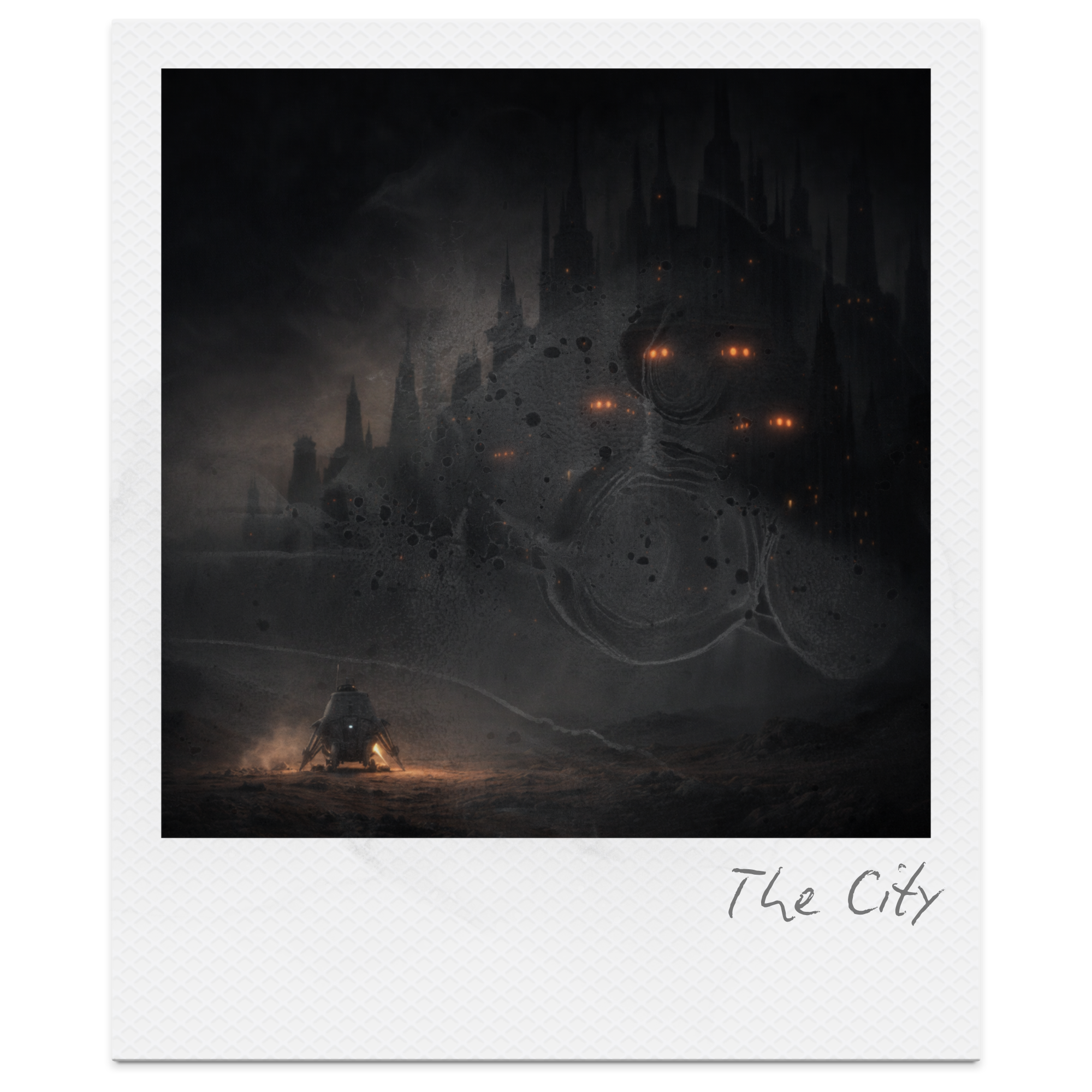
The City by Ray Bradbury: Summary, Themes, Meaning & Analysis
Ray Bradbury’s The City is a haunting work of speculative science fiction that explores revenge, memory, and technological power through the image of a vast, silent city waiting across twenty thousand years. At first, the city appears empty and lifeless, but as human explorers arrive, it becomes clear that it is watching, analysing, and responding with cold precision. Bradbury transforms setting into a conscious force, creating a narrative where the environment itself becomes the central intelligence. As the story unfolds, the city reveals its true purpose: to enact a long-delayed act of revenge against humanity. What makes this particularly unsettling is the way emotion has been embedded into a mechanical system, removing empathy and replacing it with calculation. The result is a chilling exploration of how violence and memory can be preserved beyond human life, raising questions about justice, control, and the consequences of past actions that continue to shape the future.

The Other Foot by Ray Bradbury: Summary, Themes, Symbolism & Analysis
The Other Foot by Ray Bradbury is a powerful work of speculative fiction that explores racism, revenge, and the possibility of moral transformation through a striking reversal of power. Set on a Martian colony built by Black settlers who fled Earth, the story imagines what happens when the oppressed are given the chance to become the oppressors. As news spreads of a white survivor arriving from a devastated Earth, long-buried memories of violence and segregation resurface, pushing the community toward retaliation. However, Bradbury complicates this desire for revenge by revealing the complete destruction of Earth and the collapse of the very systems the characters seek to punish. In doing so, the story shifts from anger to reflection, asking whether true justice lies in reversal or in breaking the cycle altogether. Through its tense narrative and powerful moral turning point, The Other Foot challenges readers to reconsider what equality, responsibility, and humanity really mean.

Kaleidoscope by Ray Bradbury: Summary, Themes, Symbolism & Analysis
Ray Bradbury’s Kaleidoscope is a striking exploration of human insignificance, mortality, and isolation, set against the vast and indifferent backdrop of space. After a catastrophic explosion scatters a crew of astronauts, the story follows their fragmented descent as they drift apart, connected only by fading voices. Through this disintegration, Bradbury examines how individuals respond when faced with the loss of control, connection, and certainty. As the astronauts confront their inevitable deaths, the story becomes a powerful reflection on memory, regret, and the search for meaning. While some find comfort in the lives they have lived, others are left questioning what their existence has amounted to. Blending science fiction with existential philosophy, Kaleidoscope leaves readers with a haunting question: when everything falls away, what truly gives a life value?

The Exiles by Ray Bradbury: Summary, Themes, Symbolism & Analysis
Bradbury’s The Exiles is a haunting exploration of censorship, imagination, and the fragility of stories, set on a dying Mars where forgotten authors and their creations struggle to survive. As books are banned and burned on Earth, the figures they once sustained begin to fade, turning the story into a powerful reflection on what happens when culture is erased and memory is lost. Blending science fiction, gothic atmosphere, and a deeply meta-literary perspective, the story challenges readers to consider the true cost of suppressing imagination. Through its unsettling imagery and quiet, devastating ending, The Exiles asks a central question: if stories disappear, what happens to the parts of ourselves they once held together?

Our Mothers, Lovely Women Pitiful by Christina Rossetti: Summary, Themes, Symbolism & Analysis
Christina Rossetti’s Our Mothers, Lovely Women Pitiful explores themes of memory, faith, and moral inheritance, presenting past generations as guiding figures whose lives continue to shape the present. Through its reflective tone and collective voice, the poem emphasises the importance of learning from experience and enduring with patience and belief. This analysis examines how Rossetti uses structure, language, and symbolism to balance reverence with uncertainty. As the poem shifts from shared instruction to personal doubt, it raises deeper questions about spiritual continuity, responsibility, and whether the past can truly offer reassurance in the present.