10 Whimsical Poetry Prompts for Teens & Adults: Imagination, Lightness, and Wonder
Whimsical poetry explores the imaginative edges of experience. Rather than focusing on realism or emotional gravity, it allows poets to play with possibility, curiosity, and gentle absurdity. Across literary traditions, poets have used whimsy to reveal surprising truths about perception, creativity, and the everyday world.
At its strongest, whimsical poetry is not simply playful or decorative. Instead, it approaches imagination with control and attentiveness, allowing unexpected images, unusual perspectives, and imaginative shifts to illuminate familiar ideas. The result is poetry that feels inventive without losing emotional clarity.
Rather than relying on randomness or nonsense alone, effective whimsical poems maintain a sense of internal logic. Their images may be unusual — talking animals, shifting landscapes, impossible events — but they remain grounded in voice, rhythm, and observation.
These whimsical poetry prompts for teens and adults are designed to support imaginative, craft-focused poetry writing in classrooms, writing groups, and independent practice. Each prompt encourages writers to explore wonder, surprise, and curiosity through imagery, voice, and perspective while maintaining control of language and structure.
If you’re looking for more inspiration, you can explore the Fairytale and Folklore Writing Prompts Hub, Poetry Writing Hub or browse the Creative Writing Archive for a wider range of atmospheric and genre-based ideas.
Short on time?
Scroll down for the 10 whimsical poetry prompts, or keep reading for writing techniques and poetic examples that support writing whimsical poetry with intention and craft.
How to Approach Whimsical Poetry
Writing whimsical poetry begins with curiosity. Instead of asking what something is, ask what it might become. Many whimsical poems begin with a small imaginative shift: an object that speaks, a place that changes rules, or a familiar experience seen from an unusual angle.
Perspective is particularly important. Whimsy often emerges when the poem adopts an unexpected voice — a wandering narrator, a curious observer, or even an inanimate object describing the world around it. By altering perspective, the poem invites readers to reconsider what they normally take for granted.
Imagery plays a central role. Whimsical poems often rely on surprising visual details or playful comparisons. However, the goal is not simply to be strange. The strongest whimsical images feel purposeful, suggesting something about the world, perception, or human behaviour.
Tone also matters. Whimsy works best when it remains light but sincere. A poem can be playful without becoming exaggerated or ironic. When the voice trusts the image rather than explaining it, the poem retains its sense of quiet discovery.
Finally, structure shapes whimsical poetry as effectively as language. Short lines, repetition, and gentle rhythmic patterns can give whimsical poems a musical, story-like quality, allowing imagination to unfold gradually rather than rushing toward explanation.
Techniques to Try in Whimsical Poetry
Whimsical poetry writing often appears spontaneous, but its effects usually rely on careful craft. The techniques below help writers create imaginative poems that remain clear, controlled, and engaging.
Try one or two techniques at a time, allowing playfulness to emerge through structure rather than randomness.
◆ Personified Perspective
Give voice to something that normally cannot speak — an umbrella, a staircase, a tree branch, or a cloud. By allowing the object to describe the world from its own point of view, the poem creates humour, surprise, and new perspective.
◆ Unexpected Scale
Shift the size or importance of something familiar. A teacup might become an ocean, or an ant might consider the vastness of a picnic blanket. Playing with scale encourages imaginative thinking and fresh observation.
◆ Playful Metaphor
Use comparisons that feel imaginative but coherent. Instead of conventional metaphors, choose unexpected but meaningful comparisons — a thought might behave like a runaway balloon, or a shadow might act like a curious companion.
◆ Gentle Absurdity
Introduce a small impossible element and treat it as ordinary. Perhaps the moon is late for an appointment, or a garden rearranges itself overnight. Accepting the absurdity calmly creates a whimsical tone rather than chaos.
◆ Curious Questions
Allow the poem to unfold through questions rather than statements. Curiosity invites exploration and wonder, encouraging readers to imagine possibilities rather than receiving conclusions.
◆ Repetition with Variation
Repetition can create a musical rhythm. Returning to a phrase while altering it slightly each time allows the poem to build momentum while maintaining a playful narrative flow.
◆ Everyday Magic
Look for moments where the ordinary already feels mysterious: light moving across a wall, wind through leaves, animals pausing to watch. Whimsical poetry often begins by amplifying quiet moments of wonder.
◆ Light Narrative Movement
Some whimsical poems tell miniature stories — brief journeys, discoveries, or transformations. Keeping the narrative simple allows imaginative imagery to remain central.
Read for Inspiration: Whimsy in Poetry
Reading established poems helps writers see how imagination and craft work together in whimsical poetry. The poets below demonstrate different approaches to playful imagery, voice, and perspective.
◆ Lewis Carroll – “Jabberwocky”
A famous example of inventive language and playful imagination. Carroll demonstrates how rhythm and structure can give nonsense surprising clarity.
◆ Edward Lear – Limericks
Lear’s limericks show how absurd situations, rhythm, and humour can create memorable poetry while maintaining tight structural control.
◆ Emily Dickinson – “I’m Nobody! Who are you?”
Dickinson’s playful tone and unusual perspective show how curiosity and quiet humour can shape poetic voice.
◆ Robert Louis Stevenson – poems from A Child’s Garden of Verses
Stevenson demonstrates how childlike observation and imagination can transform everyday moments into miniature adventures.
◆ Shel Silverstein – selected poems
Silverstein blends absurdity, storytelling, and emotional insight, proving whimsical poetry can remain meaningful beneath its playfulness.
Choose one or two poems to read closely before writing. Notice how imagery, rhythm, and voice shape imaginative worlds while maintaining clarity.
Whimsical Poetry Writing Prompts
The prompts below encourage writers to explore imagination, curiosity, and playful imagery while maintaining control of language and structure.
You can work through them in order or choose one that sparks interest.
Whimsical Poetry Prompt 1: The Object That Speaks
Write a poem from the perspective of an everyday object quietly observing the world.
Possible opening line:
I have watched you for years.
Craft focus:
Personification and voice.
Whimsical Poetry Prompt 2: A Curious Question
Write a poem built entirely around a series of curious questions about something ordinary.
Possible opening line:
What do the trees talk about at night?
Craft focus:
Question-driven structure.
Whimsical Poetry Prompt 3: A Small Impossible Event
Write about a small, impossible event that occurs during an otherwise normal day.
Possible opening line:
This morning the sky forgot its colour.
Craft focus:
Gentle absurdity and tone.
Whimsical Poetry Prompt 4: The Secret Life of an Object
Imagine that an ordinary object has a hidden life when no one is watching.
Possible opening line:
The chairs begin their meeting at midnight.
Craft focus:
Imaginative perspective.
Whimsical Poetry Prompt 5: A Landscape with Rules
Write about a place where nature follows different rules.
Possible opening line:
In this valley, shadows grow first.
Craft focus:
World-building through imagery.
Whimsical Poetry Prompt 6: Something That Refuses to Behave
Write about something in the world that refuses to follow expected rules.
Possible opening line:
The wind refuses to leave today.
Craft focus:
Metaphor and narrative movement.
Whimsical Poetry Prompt 7: A Conversation with an Animal
Write a poem where an animal offers unexpected advice.
Possible opening line:
The fox paused before answering.
Craft focus:
Voice and dialogue.
Whimsical Poetry Prompt 8: A Change in Scale
Write about something tiny becoming enormous, or something vast becoming small.
Possible opening line:
The teacup widened into an ocean.
Craft focus:
Imaginative metaphor.
Whimsical Poetry Prompt 9: The Day the World Shifted Slightly
Describe a day when something subtle but impossible happens.
Possible opening line:
Everyone noticed it eventually.
Craft focus:
Atmosphere and pacing.
Whimsical Poetry Prompt 10: Wonder Without Explanation
Write about something mysterious without explaining why it happens.
Possible opening line:
No one remembers when it began.
Craft focus:
Ambiguity and restraint.
Ekphrastic Whimsical Poetry: Writing from Images
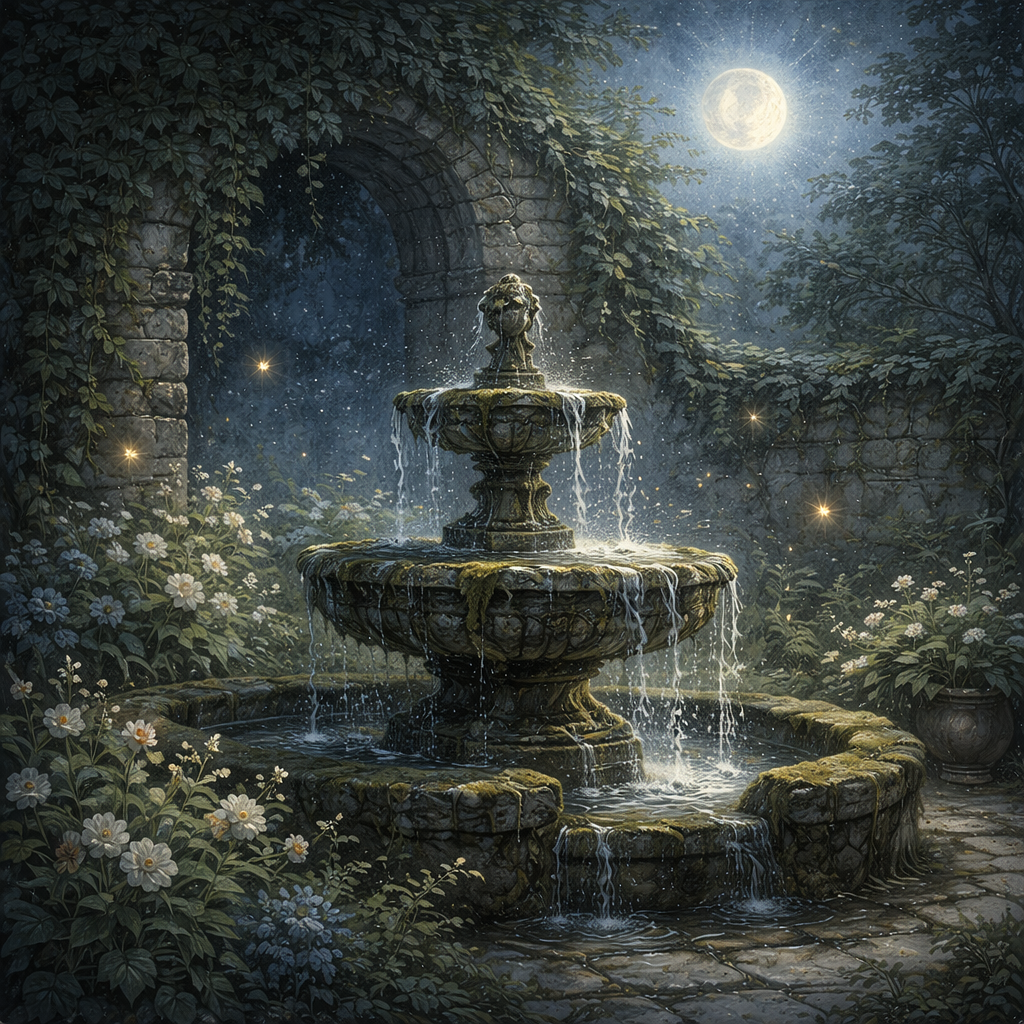
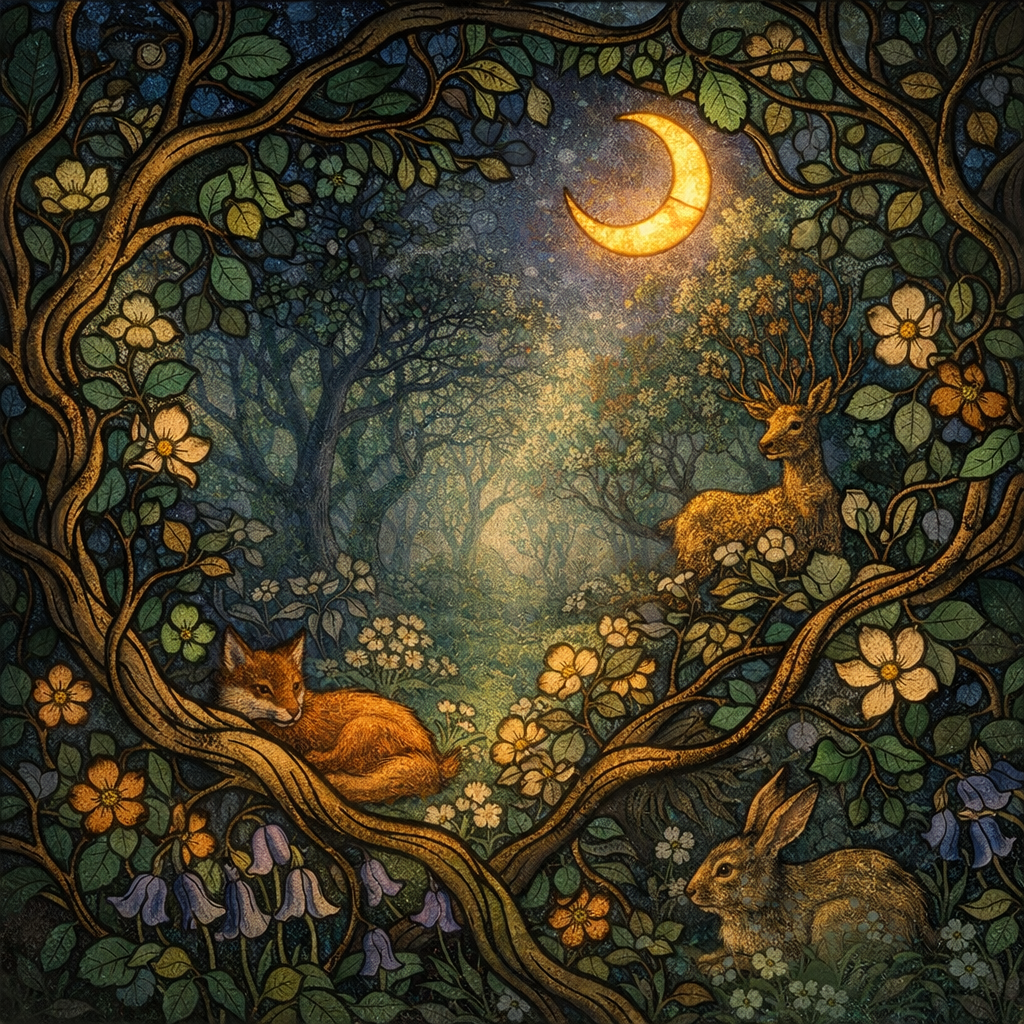
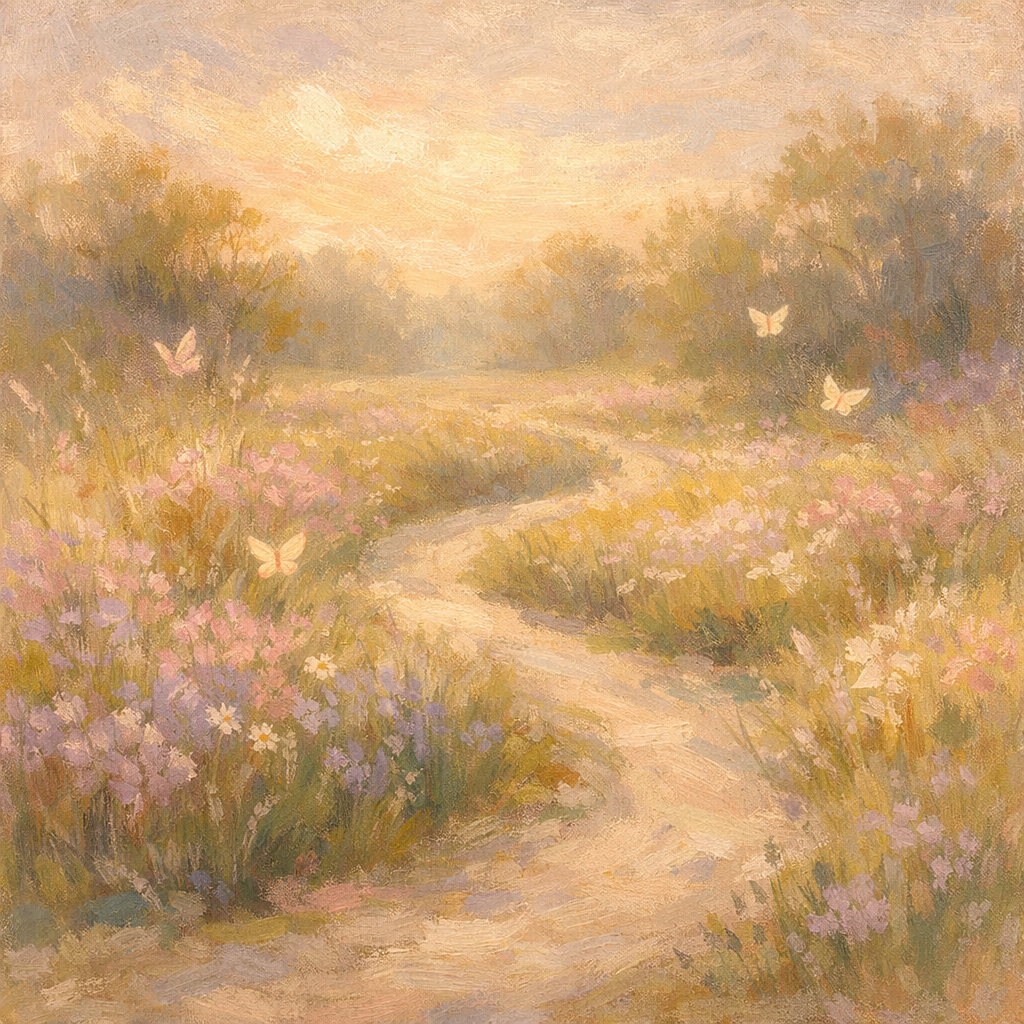
Ekphrastic poetry provides a powerful entry point into whimsical poetry writing by beginning with observation. Images of unusual landscapes, curious objects, or surreal scenes can inspire poems that explore imagination without needing elaborate narrative.
When writing ekphrastic whimsical poetry, focus on what the image suggests rather than what it literally shows. Often the most imaginative poems emerge from noticing a small detail and allowing imagination to expand it.
You might try:
◆ Writing from the perspective of an object within the image
◆ Imagining what happened just before or after the scene
◆ Letting colour, light, or movement suggest magical possibilities
◆ Treating impossible elements as ordinary
The image becomes a doorway rather than the destination.


Go Deeper into Whimsical Poetry
If these whimsical poetry prompts sparked ideas, consider extending your writing through variation and sequence.
You might try:
◆ Writing several poems about the same imaginative object or place
◆ Revisiting a whimsical poem from a different perspective
◆ Transforming a playful poem into a reflective version
◆ Combining whimsical imagery with emotional depth
Whimsical poetry rewards curiosity and patience. By allowing imagination to interact with careful observation, poets create work that feels inventive without losing clarity.
Final Thoughts
Whimsical poetry does not rely on randomness.
It emerges from curiosity, careful imagery, and imaginative attention.
Notice something small.
Imagine one change.
Follow that idea patiently.
If you’re looking for more inspiration, you can explore the Fairytale and Folklore Writing Prompts Hub, Poetry Writing Hub, or browse the Creative Writing Archive for a wider range of atmospheric and genre-based ideas.
Whimsy in poetry reminds us that imagination is simply another way of paying attention.
