70 Valentine’s Day Writing Prompts for Teens: Story Starters, Characters, Settings & Visual Ideas
Valentine’s Day is one of the most emotionally loaded days on the calendar — not because everyone is in love, but because it brings up every possible reaction to love: excitement, dread, awkwardness, nostalgia, fear, jealousy, longing, and sometimes indifference. It’s flowers in supermarkets and anonymous notes in lockers. It’s boxed chocolates, messy feelings, accidental confessions, and avoiding eye contact with the person you actually like.
For many teens, Valentine’s Day isn’t hearts-and-roses at all: it’s school fundraisers, friendship groups, complicated crushes, breakups, and questions about what love actually means in a world that feels very online.
This collection of 70 Valentine’s Day writing prompts is designed for teen writers who want depth, humour, and variety — not just romance clichés. Inside you’ll find plot hooks, title ideas, opening and closing lines, character sketches, atmospheric settings, and picture prompts. Perfect for classrooms, clubs, or independent writers, these prompts explore friendship, first love, heartbreak, identity, social awkwardness, comedy, and the very modern messiness of Valentine’s Day.
If you’re looking for more genres, tropes or seasonal collections, you can browse the full master list of 2000+ creative writing prompts here.
1. Plot Hooks
Plot hooks are short scenario starters that hand writers a situation with built-in tension. Valentine’s Day offers plenty — grand gestures that go wrong, anonymous notes, awkward fundraisers, surprising friendships, and public moments that feel ten times bigger than they are. Here are ten to spark full stories:
Write about a school where Valentine candy-grams accidentally reveal everyone’s crushes.
Write about a student who receives a romantic letter… addressed to someone else.
Write about a florist’s apprentice trying to keep up with chaotic Valentine orders.
Write about a group of friends who create an “Anti-Valentine’s Night” tradition.
Write about someone who tries to confess using a grand gesture and it goes wrong.
Write about a shy illustrator hired to draw custom Valentine cards for strangers.
Write about a secret admirer who leaves clues that form a puzzle across campus.
Write about a teen who must deliver a Valentine gift from one person to another.
Write about an online friend who sends a real-life Valentine without revealing who they are.
Write about two exes forced to work together during a Valentine’s Day fundraiser.
2. Title Ideas
Titles set the tone before a single line is written. For Valentine’s Day, good titles can be romantic, ironic, mysterious, or funny — especially for teens who want to avoid cliché. These ten options give writers ready-made names for stories, poems, comics, or scripts:
The Catastrophe
Paper Hearts & Sharp Pencils
Confessions in Red Ink
The Florist’s Apprentice
The Last Single Table
Cupid is Overrated
Heart-Shaped Mistakes
Deliveries Before Midnight
Letters with No Name
The Valentine Pact
3. Opening Lines
Opening lines drop writers straight into a scene without warm-up. For Valentine’s Day, strong openings hint at social stakes — a secret, a confession, a mix-up, a delivery, an expectation, or a misunderstanding. These ten beginnings are designed to create instant intrigue:
“I didn’t mean to open the candy-gram bag, but it split right across my shoes.”
“By third period, everyone knew someone’s secret.”
“The florist shop smelled like roses, panic, and too much sugar.”
“Valentine’s Day was my least favorite holiday — until this one.”
“The letter was folded perfectly, but it wasn’t mine.”
“Someone had taped a paper heart to my locker.”
“The announcements started with, ‘Don’t panic,’ which meant everyone did.”
“The list of deliveries was longer than my patience.”
“I’d promised I wouldn’t care this year, but I was wrong.”
“The sky was grey and heavy, which felt accurate.”
4. Closing Lines
Closing lines are where stories land — not with perfect resolution but with resonance, humour, or quiet honesty. For Valentine’s Day, good endings might involve bittersweet insight, unexpected connection, awkward realism, or a twist. These ten closers leave room for interpretation:
“We walked home slowly, letting the glitter shake off.”
“The truth was out, and somehow it wasn’t a disaster.”
“I didn’t get what I wanted, but I got what I needed.”
“The last rose wilted, but the memory didn’t.”
“No one talked about the notes, but everyone remembered.”
“We never did figure out who sent the letters.”
“There was no grand confession — just a quiet yes.”
“Valentine’s Day ended, and so did the pretending.”
“The candy-grams stopped being funny weeks later.”
“In the end, it wasn’t about love at all — just connection.”
5. Character Ideas
Characters are the engine of Valentine’s Day stories — not just lovers, but observers, creators, avoiders, and analysts. These characters work especially well for teen writers because they focus on roles, not stereotypes:
A student volunteer running a Valentine fundraiser table.
A florist’s apprentice managing impossible orders.
A shy writer who secretly crafts other people’s love notes.
A musician hired to play romantic songs at lunch.
A delivery runner carrying mysterious Valentine packages.
A theatre kid who loves grand gestures more than romance.
A hopeless romantic who has never actually dated anyone.
An aromantic teen navigating everyone else’s drama.
A gamer who only celebrates Valentine’s Day online.
A photography student documenting love around campus.
6. Setting Ideas
Valentine’s Day isn’t just a theme — it’s a setting rich with props (roses, lockers, pastries), public rituals (exchanges, deliveries, concerts), and social contrast (alone vs surrounded). These ten environments give writers vivid backdrops to build from:
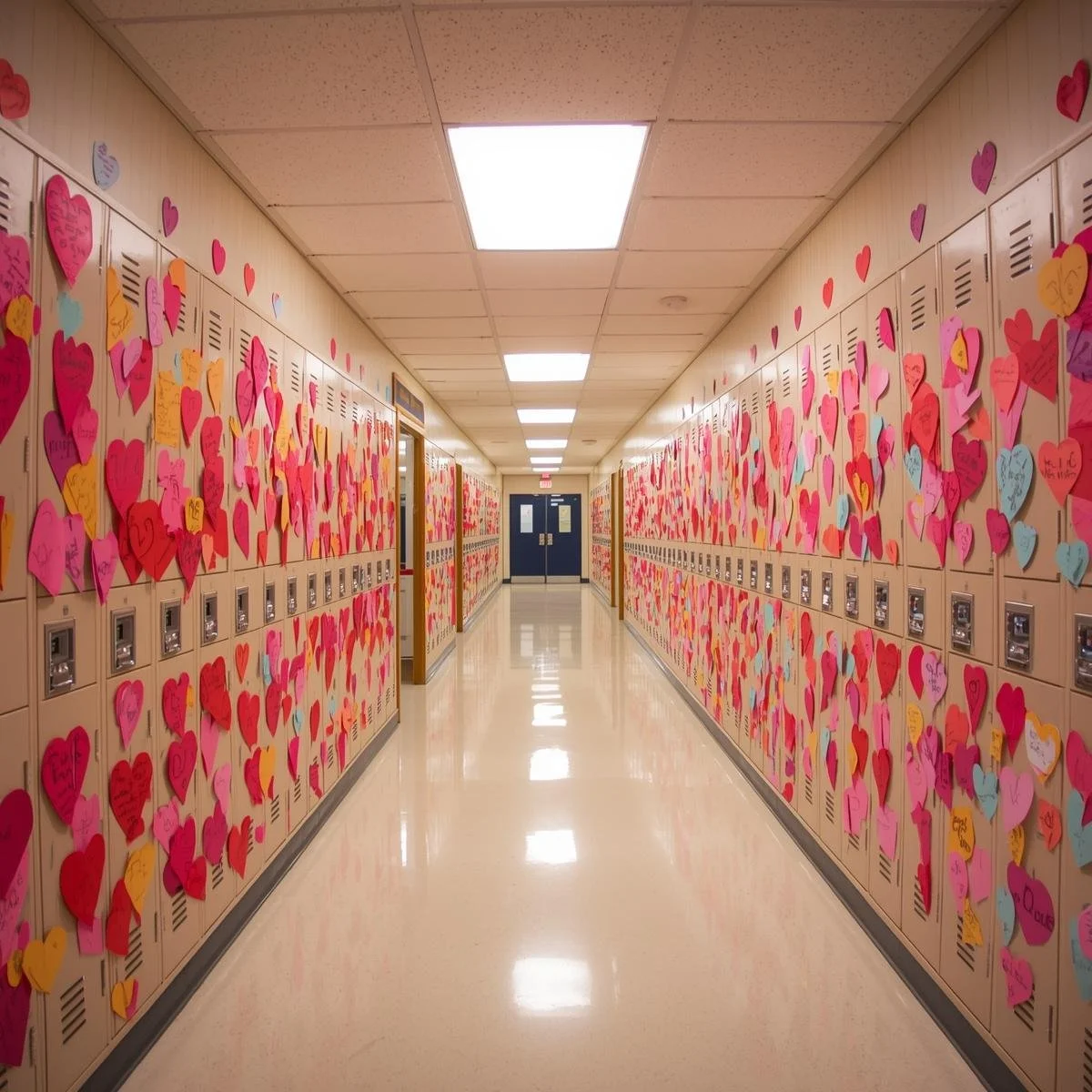
A crowded hallway full of decorated lockers and candy-grams.
A florist shop stacked with roses, ribbons, and chaos.
A classroom during a Valentine’s card exchange.
A cafeteria where a jazz trio plays romantic songs.
An auditorium set up for a Valentine’s talent show.
A bookstore with handwritten love notes tucked into novels.
A train station where someone waits with flowers.
A mall photo booth with heart-themed props.
An online event space for long-distance friendships.
A messy bedroom where unmailed confession letters pile up.
7. Picture Prompt Ideas
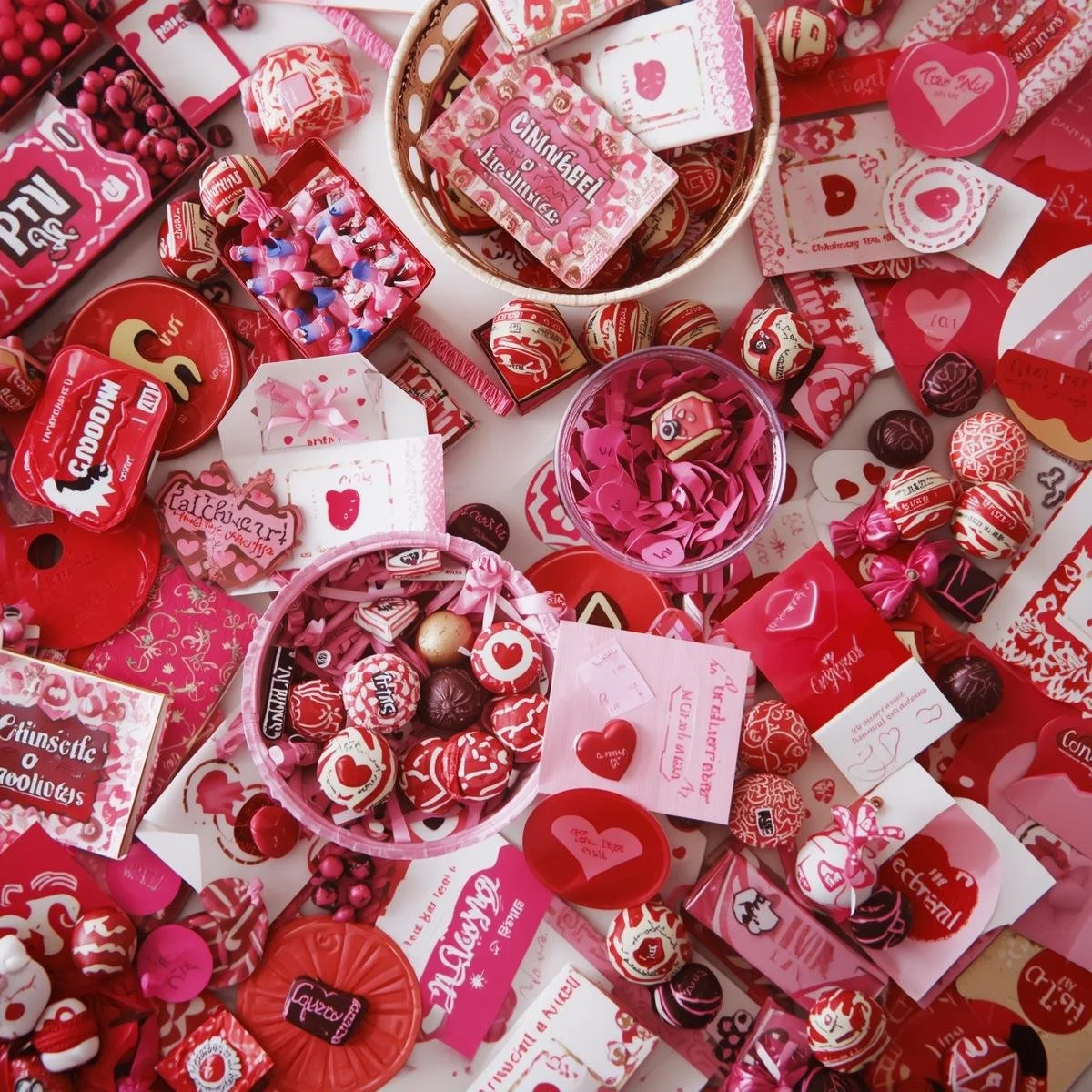
Picture prompts give visual thinkers a starting point. For Valentine’s Day, images can feel romantic, ironic, lonely, funny, chaotic, or commercial — all valid creative directions:





Final Thoughts
Valentine’s Day writing doesn’t need to revolve around perfect romance — it’s also about comedy, friendship, awkwardness, heartbreak, courage, identity, and all the ways people try (and fail) to communicate what they feel.
If you’re looking for more genres, tropes or seasonal collections, you can browse the full master list of 2000+ creative writing prompts here.
