What Are Digital Writing Boxes? (And Why Teachers & Writers Are Quietly Obsessed)
If you’ve ever tried to coax creative writing out of a teenager at 9AM on a Tuesday, you’ll know the battle usually goes: “I don’t know what to write,” followed by a long stare at the ceiling. Swap ‘teenager’ for ‘adult writer’ and you get the same result, just with nicer stationery.
Enter digital writing boxes — printable sets of fictional relics, documents, and artefacts designed to spark writing without relying on vague prompts like “a door appears…”.
These boxes give you something to investigate, which makes writing less about conjuring genius from the void and more about piecing together a world. It works beautifully for teachers in classrooms and writers working solo, because humans are naturally nosey. Give us clues and we’ll build a story around them.
So… What Exactly Is a Digital Writing Box?
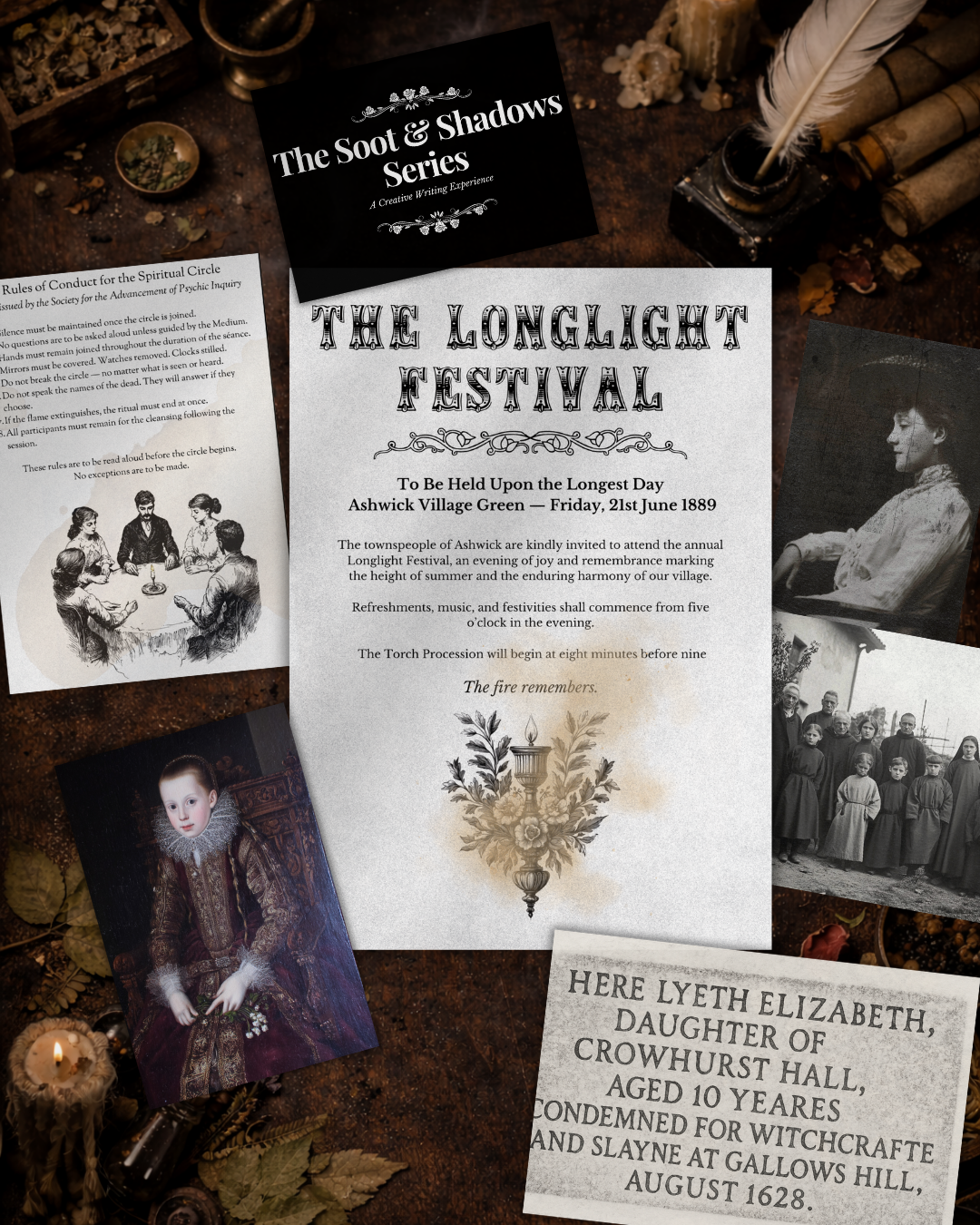
A digital writing box is a downloadable creative writing resource made up of printable relics — things like:
missing persons reports
annotated herbarium pages
festival pamphlets
witness testimonies
bureaucratic ledgers
newspaper clippings
postcards, receipts, and “found” documents
Writers treat these as evidence from a fictional world and write into the gaps. Teachers call this close reading, inference, and perspective work. Writers call it fun and surprisingly productive.
The best part? They’re digital only — you download, print, and reuse as many times as needed. No physical shipping, no waiting, no customs fees, just instant creative chaos.
Why Immersive Writing Resources Work
There’s a reason crime dramas and fantasy novels always start with a clue: clues activate curiosity, and curiosity unlocks writing.
Digital writing boxes encourage:
◆ close reading
◆ inference & deduction
◆ atmospheric worldbuilding
◆ character voice development
◆ narrative cohesion (without forcing it)
◆ creative confidence
They also solve the eternal problem of:
“I don’t know what to write about.”
Instead, students and writers are thinking:
“Okay, who is this person and why are they missing?”
“What does that handwritten note mean?”
“Was this a festival… or a warning?”
When the prompt arrives disguised as a document, the writing happens almost by accident.
Meet The Soot & Shadows Series
Now that we’ve defined the concept, let’s look at a real example: The Soot & Shadows Series, a bundle of three digital writing boxes designed for classrooms, independent writers, and writing groups.
History leaves clues.
Folklore leaves warnings.
Some stories leave both.
The Soot & Shadows Series is a trilogy of immersive archives connected by mystery, memory, and the darker corners of British history. Each collection stands alone, yet hidden connections, recurring themes, and unanswered questions echo between them.
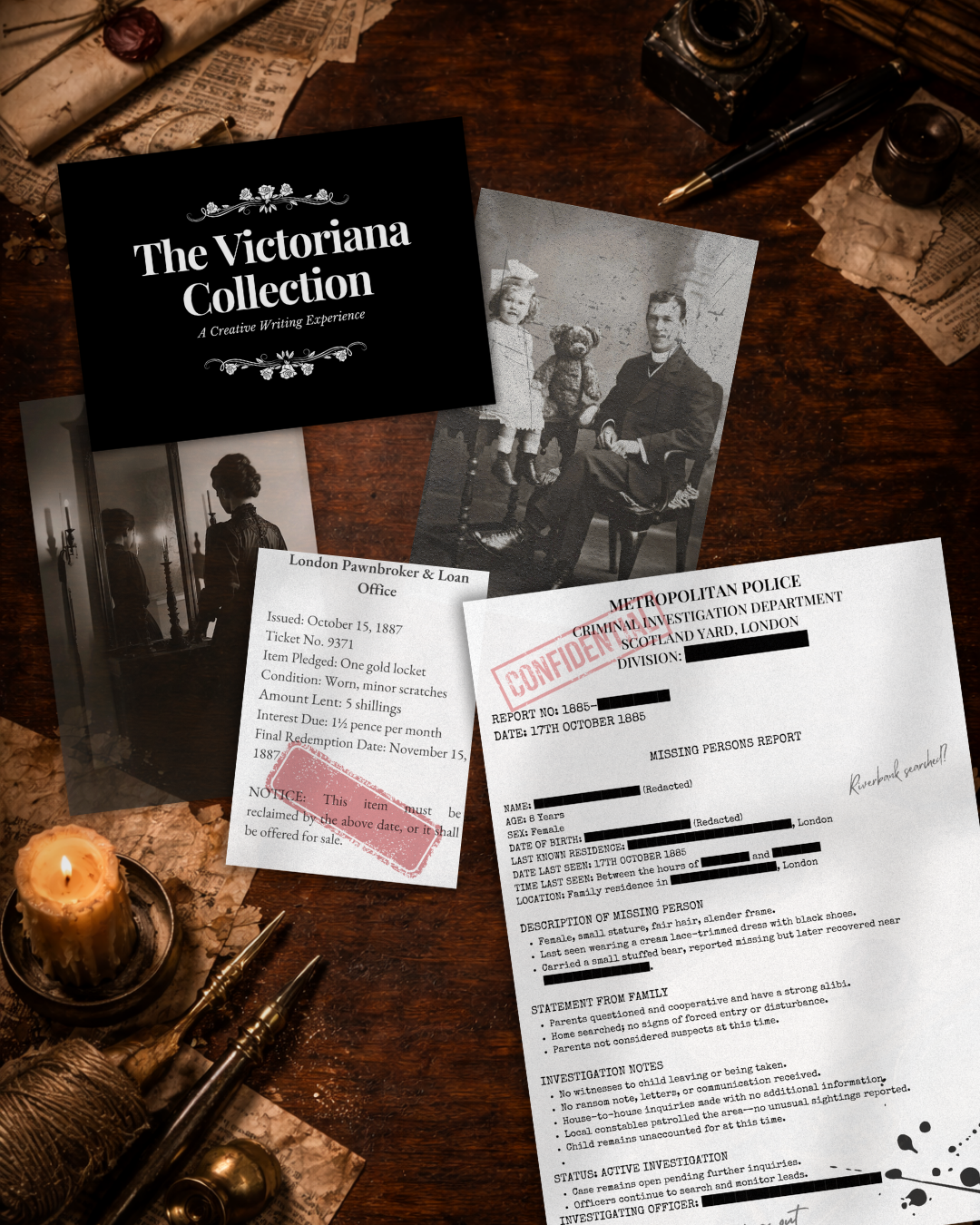
A missing person's file in Victorian London.
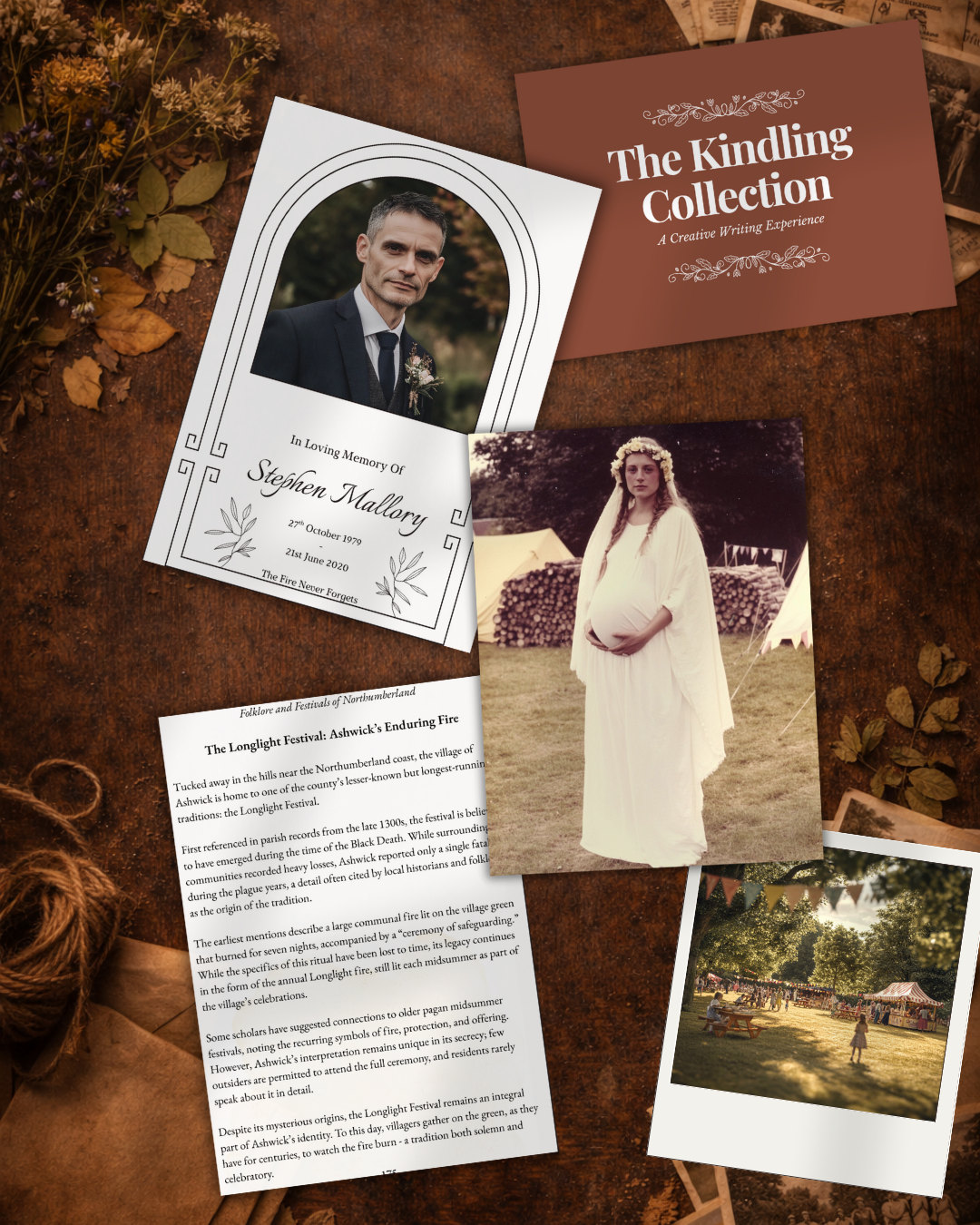
A village festival nobody dares question.
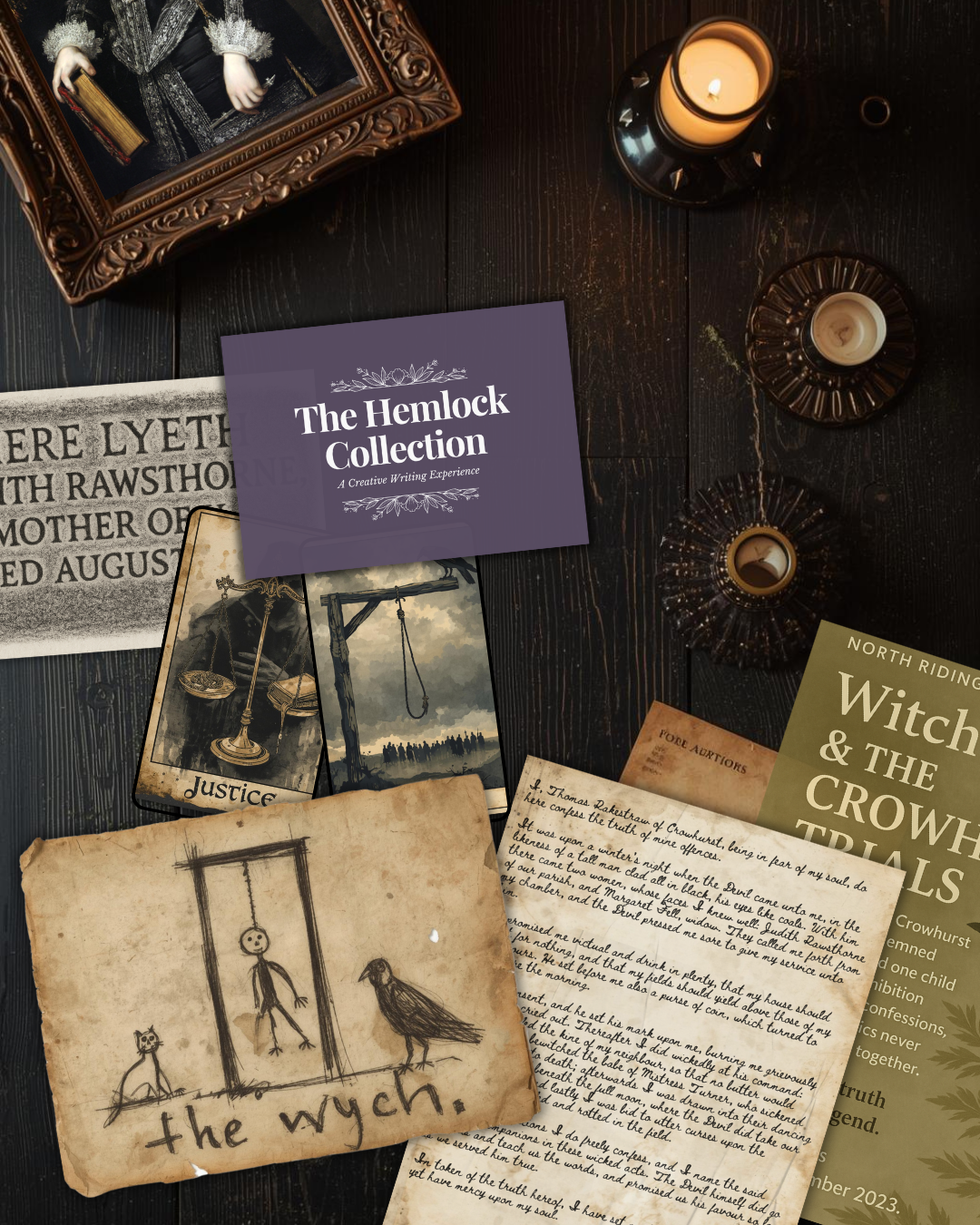
A community haunted by accusations that refuse to die.
Separated by years, places, and people, their stories should have nothing in common.
And yet they do.
Through forgotten documents, photographs, reports, personal writings, warnings, relics, and fragments of evidence, you'll uncover traces of three mysteries scattered across time. Some details repeat. Some contradict. Others seem determined to be remembered.
No official explanation is provided.
Only the archive remains.
What's Inside?
The Victoriana Collection
London investigations, missing persons, spiritualism, forgotten lives, and unsolved mysteries.
The Kindling Collection
Rural folklore, midsummer rituals, village traditions, memorials, and communal silence.
The Hemlock Collection
Witchcraft accusations, witness accounts, graveyard relics, museum archives, and lingering suspicion.
◆ 150+ printable documents and artefacts across three complete collections
◆ Photographs, reports, letters, journal entries, posters, newspaper clippings, warnings, relics, and more
◆ Three collection prompt cards and one exclusive Soot & Shadows master prompt card
◆ Instant digital download in PDF format
Who Is It For?
Perfect for:
◆ Writers and worldbuilders
◆ Fans of folklore, gothic fiction, and historical mystery
◆ Mystery lovers and curious minds
◆ Teachers and students
◆ Anyone fascinated by forgotten histories, strange traditions, and stories hidden inside archives
If you enjoy detective fiction, folk horror, dark academia, gothic mysteries, or speculative history, you'll feel at home here.
What Makes This Different?
This isn't a bundle of prompts.
It's a collection of archives.
There is no official timeline. No single interpretation. No correct version of events.
Every document reveals part of a larger story, but none reveal the whole truth.
Explore one collection at a time, follow recurring threads across all three, or build entirely new narratives from the fragments left behind.
Some readers uncover mysteries.
Others uncover connections.
Every reader discovers something different.
Because there are a million stories hidden in the archive.
And none of them are the same.
The bundle includes:
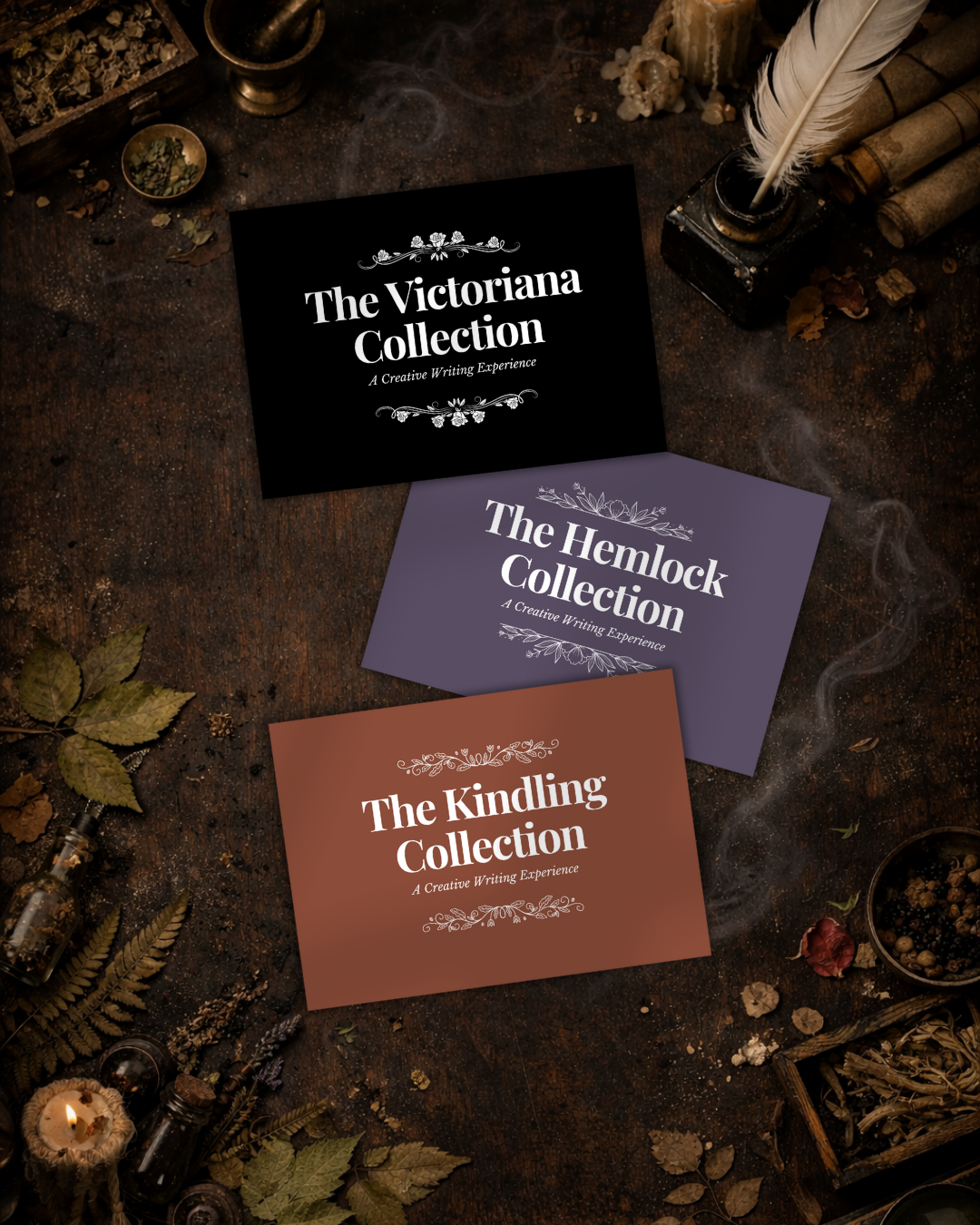
◆ The Victoriana Collection
◆ The Kindling Collection
◆ The Hemlock Collection
They share a unifying theme of historical mystery, folklore, and investigation, but each one has its own flavour.
For full deep dives, you can explore each collection by checking out the blog post on Victoriana, Kindling, and Hemlock.
Or if you want straightforward prompts by the hundreds, you can access my Master Prompt List, sorted by genres, tropes, and seasons here!
The Three Boxes (Short Overview)
1. The Victoriana Collection
Victorian investigation meets foggy bureaucracy. Think constables, clerks, missing persons, and too much paperwork. Great for mystery, detective fiction, and historical stories.
Example relic types:
◆ ledgers & reports
◆ correspondence
◆ police notices
◆ administrative documents
Use it for: noir, mystery, gaslamp fantasy, gothic horror, and historical fiction.
2. The Kindling Collection
Rural folklore, grief, and oral storytelling. Slightly softer, slightly stranger. Feathers, cinnamon, handwritten notes, old festival pamphlets, and things no one wants to talk about.
Example relic types:
◆ festival pamphlets
◆ recipe fragments
◆ memorial notes
◆ local history prints
Use it for: rural horror, contemporary folklore, and emotional fiction.
3. The Hemlock Collection
Witch trial archives meet herbarium pages. Herb sketches, testimonies, marginalia, and documents that ask: who gets to write the official version of events?
Example relic types:
◆ grave rubbings
◆ trial transcripts
◆ witness statements
◆ historical portraits
Use it for: historical fiction, dark fantasy, psychological horror, moral ambiguity, character voice.
How Teachers Use Digital Writing Boxes
Teachers don’t need another 6-page worksheet on “adjectives to improve your writing.” They need something that works, quickly, without feeling like a children’s party game.
Here are practical uses that don’t require rewriting your curriculum:
1. Bell Tasks / Warm-Ups
Project one relic on the board, ask students:
What do you notice?
What do you infer?
What do you wonder?
It triggers curiosity before anyone has time to groan.
2. Creative Writing Tasks
Pick 3–5 relics and have students write:
a scene
a monologue
a diary entry
a story opening
a missing chapter
3. Mixed-Mode Assessments
Document analysis + creative output = chef’s kiss.
4. Reluctant Writer Engagement
The document invites writing, rather than demanding it.
5. Cross-Curricular Links
History teachers love these because witch trials, Victorians, and folklore slot into multiple units.
How Writers Use Digital Writing Boxes
Whether you’re 14 or 40, writing is easier when you’re not doing it in a vacuum.
Writers use digital boxes for:
◆ daily writing practice
◆ character development
◆ worldbuilding
◆ warm-ups before drafting
◆ writing group challenges
◆ competition entries
They’re also brilliant for:
historical fiction
mystery/thriller
magical realism
dark academia
speculative fiction
fanfic (seriously, fanfic writers thrive here)
The Hemlock testimonies alone could launch 100 different novels.
Digital Delivery (No Shipping, No Drama)
All three boxes are:
✔ digital
✔ printable
✔ instantly downloadable
✔ classroom-friendly
✔ writing-group-friendly
Each Collection comes as a PDF that you download, print, reuse, repeat. Teachers can keep them in folders; writers can pin them to mood boards.
If you’re allergic to clutter, digital is your friend.
Final Thoughts
The Soot & Shadows Series was built to be flexible. If you’re curious but not fully committed, start with one box and see how your students (or your writing brain) respond. If you’re already someone who colour-codes character arcs and annotates novels for fun, the bundle is probably the obvious choice.
If you're on the fence, begin with a single collection and ease in.
If you already know you're a worldbuilding goblin (respect), grab the bundle and call it character development.
Either way, you get instant access, printable relics, and endless writing potential — no shipping, no waiting, no assembly required.
