Christina Rossetti: Context, Themes, and Literary Significance
Christina Rossetti is one of the most frequently studied Victorian poets in the secondary and post-16 English classroom, yet her work is often reduced to religious devotion or surface-level melancholy. Writing in the mid-nineteenth century, Rossetti produced poetry that explores desire, repression, spiritual conflict, and emotional self-discipline, shaping enduring discussions around voice, gender, faith, and interior struggle.
To read Rossetti in context is to recognise how deeply her writing is shaped by tension — between longing and denial, expression and silence, belief and doubt. Her poetry repeatedly stages inner conflict rather than outward action, foregrounding psychological restraint, moral self-surveillance, and the costs of obedience. Rather than offering resolution, Rossetti’s poems often end in suspension, withholding closure in ways that feel strikingly modern.
This section provides a brief contextual framework for understanding Christina Rossetti’s poetry as a whole. Rather than focusing narrowly on biography or isolated poems, it outlines the religious, cultural, and intellectual pressures shaping her writing, offering a foundation for teaching Rossetti through theme, discussion, and close reading.
For readers looking to explore Rossetti’s work in more detail, you can also explore our collection of Christina Rossetti poem analysis and summaries, or browse the Christina Rossetti essay questions page for discussion prompts and exam-style practice across many of her most studied poems.

Who Was Christina Rossetti?
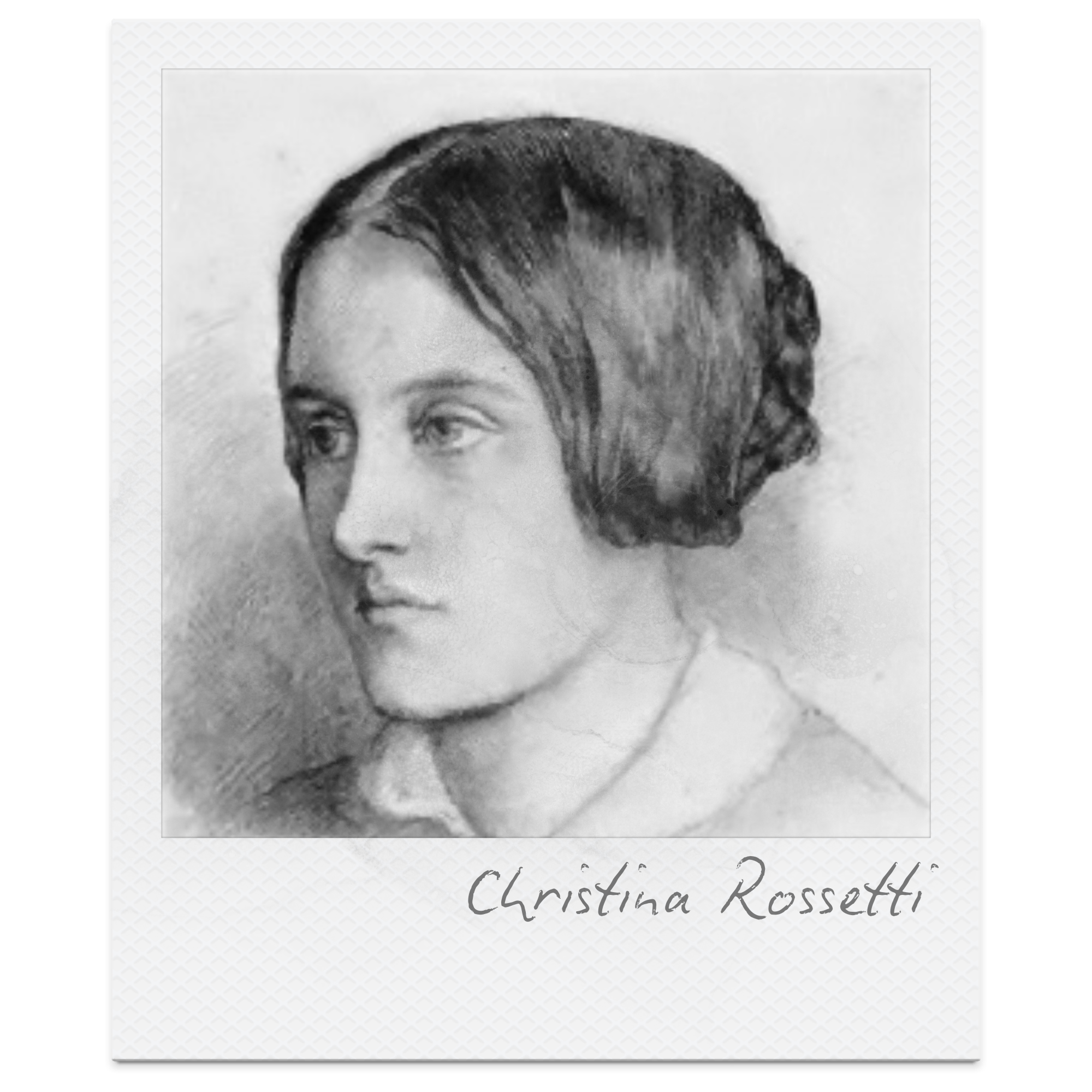
Christina Rossetti (1830–1894) was an English poet writing during the Victorian period, closely associated with the Pre-Raphaelite circle but working largely apart from its visual excess and romantic idealism. While her brother Dante Gabriel Rossetti embraced aesthetic experimentation, Christina’s work is marked by restraint, control, and disciplined emotional expression.
Rossetti published extensively across her lifetime, producing lyric poetry, devotional verse, and writing for children. Her poetic voice is often deceptively simple, relying on repetition, rhythm, and patterned form to contain emotionally complex ideas. This controlled style mirrors the inner conflicts her speakers frequently experience, where intense feeling is managed rather than released.
Although Rossetti’s personal life is often referenced in criticism, her literary significance lies less in biography than in method. Her poems offer sustained insight into how voice, form, and restraint shape meaning, making her work particularly valuable for teaching close analysis, psychological reading, and interpretive debate.
Historical, Religious, and Social Context
Rossetti was writing within a Victorian society shaped by strict expectations around gender, morality, and religious conduct. Women were encouraged to embody emotional self-control, spiritual obedience, and moral purity, while expressions of desire — particularly female desire — were frequently coded as dangerous or transgressive.
Religion played a central role in Rossetti’s life and writing. Influenced by Anglican doctrine and the Oxford Movement, she engaged deeply with ideas of renunciation, sacrifice, and spiritual testing. Her poetry often presents faith not as comfort, but as constraint, demanding vigilance, self-denial, and constant moral evaluation.
At the same time, Victorian culture was increasingly preoccupied with mental health, melancholia, and the regulation of emotion. While modern psychological frameworks did not yet exist, Rossetti’s poetry anticipates later discussions of depression, anxiety, and emotional suppression, exploring what happens when feeling is continually monitored rather than expressed.
Psychological Interior Life and Emotional Restraint
A defining feature of Rossetti’s poetry is its intense focus on interior experience. Rather than dramatising external events, her poems trace thought patterns, emotional loops, and moments of self-correction. Speakers frequently pause, revise themselves, or turn inward, suggesting a heightened awareness of emotional risk.
This inwardness has led many critics to read Rossetti’s work through the lens of psychological struggle. Her poems often depict states of weariness, longing, and emotional withdrawal, particularly where desire conflicts with religious or moral duty. Importantly, these states are not resolved; they are endured.
Rossetti’s use of repetition and circular structure reinforces this sense of mental containment. Thoughts return rather than progress, creating a poetics of containment rather than catharsis. This makes her work especially resonant for students exploring mental health, self-regulation, and the pressures of internalised authority.
Literary Movements and Genre Positioning
Christina Rossetti occupies a distinctive position within Victorian literature, intersecting with Pre-Raphaelitism, devotional poetry, and emerging psychological realism. While she shares the Pre-Raphaelites’ interest in symbolism and medieval imagery, her focus is markedly inward rather than visual or romanticised.
Unlike many Victorian poets, Rossetti resists narrative development and dramatic resolution. Her poems are often lyric meditations, structured around pause, hesitation, and emotional stasis. Meaning emerges through what is withheld, rather than what is declared.
This resistance to closure positions Rossetti as a transitional figure between Victorian moral poetry and more modern explorations of interiority and silence, aligning her work with later writers concerned with psychological depth and emotional ambiguity.
Core Themes Across Christina Rossetti’s Poetry
Across Rossetti’s poetry, several themes recur with striking consistency. These themes overlap and interact, shaping voice and structure rather than functioning as abstract ideas.
Desire and Renunciation
Rossetti’s poetry repeatedly stages conflict between desire and renunciation, presenting longing as something that must be managed, redirected, or refused rather than fulfilled. Desire is rarely expressed directly; instead, it is mediated through negation, conditional phrasing, and restraint, creating sustained emotional pressure beneath the surface of the poem.
Renunciation is not framed as simple moral triumph. Instead, it is often accompanied by loss, emotional fatigue, or diminished selfhood, suggesting that self-denial carries psychological consequences. This tension invites interpretation around whether restraint functions as spiritual discipline or internalised repression, a question that runs across Rossetti’s work.
Faith, Doubt, and Spiritual Discipline
Religion in Rossetti’s poetry operates as a system of discipline rather than reassurance. Speakers engage in continual self-examination, measuring thought and feeling against religious expectation. Faith is portrayed as a process of vigilance, correction, and endurance, not as a stable state of certainty.
Moments of doubt, hesitation, and silence are central to this dynamic. Rather than rejecting belief, Rossetti’s poems expose the psychological strain produced by sustained obedience, allowing faith to be read as both sustaining and constraining.
Psychological Conflict and Emotional Self-Regulation
A defining feature of Rossetti’s poetry is its focus on psychological conflict rather than external action. Her speakers frequently monitor their own thoughts, revise emotional responses, or retreat into silence, suggesting a heightened awareness of emotional risk and moral accountability.
This emphasis on emotional self-regulation aligns her work with wider nineteenth-century concerns around melancholia, restraint, and the governance of feeling. Rather than offering catharsis, Rossetti’s poems often depict endurance — states of weariness, withdrawal, or emotional stasis — where feeling is contained rather than resolved.
Silence, Withheld Voice, and Internal Authority
Silence in Rossetti’s poetry functions as a form of meaning-making rather than absence. What remains unsaid often carries greater weight than explicit declaration, positioning silence as a response to religious, social, and gendered authority.
Rossetti’s controlled lyric voice raises questions about who is permitted to speak, what must remain unexpressed, and how authority becomes internalised. These tensions are embedded structurally through omission, restraint, and unresolved endings.
Time, Waiting, and Emotional Stasis
Many of Rossetti’s poems are structured around waiting rather than progression. Temporal movement is slowed or suspended, reinforcing states of anticipation, deferral, and emotional paralysis. This resistance to narrative development mirrors the internal conflicts experienced by her speakers.
Time often becomes a moral and emotional test, where endurance is valued over action. This theme connects closely to ideas of obedience, self-discipline, and the psychological cost of prolonged restraint.
Christina Rossetti’s Enduring Literary Significance
Christina Rossetti’s significance lies in her exploration of controlled emotional expression. Her poetry demonstrates how form, repetition, and restraint can convey psychological depth without overt confession. Rather than resolving conflict, Rossetti sustains it, compelling readers to sit with discomfort and ambiguity.
Her work continues to resonate in the English classroom because it rewards close reading and thematic interpretation. Small linguistic choices carry significant emotional weight, encouraging students to analyse how meaning is shaped through structure, omission, and tone.
Across devotional poetry and lyric meditation, Rossetti interrogates desire, authority, and self-regulation, securing her position as one of the most psychologically complex voices in Victorian literature.
Go Deeper into Rossetti’s Context and Ideas
The ideas outlined above connect directly to wider discussions of mental health, female voice, religious pressure, and psychological realism. The following posts explore these concepts in greater depth, building on the contextual framework established here.
◆ Psychological Conflict and Self-Surveillance in Rossetti
◆ Desire and Renunciation in Victorian Women’s Poetry
◆ Faith, Doubt, and Emotional Control in Rossetti
◆ Silence and Withheld Voice in Nineteenth-Century Poetry
You may also wish to explore individual poems and comparative contexts, where these tensions surface in different forms across Rossetti’s work.
Final Thoughts
Understanding Christina Rossetti begins with context. Her poetry emerges from a Victorian world shaped by religious discipline, gendered restraint, and emotional regulation, yet it continues to resonate because it refuses simple consolation.
Approaching Rossetti through context and theme rather than isolated poems reveals the coherence of her writing across form and subject. Lyric poetry, devotional verse, and meditative fragments become different ways of exploring the same pressures: longing and obedience, faith and doubt, expression and silence.
For readers who wish to explore Rossetti’s work in greater depth, you can also browse our collection of Christina Rossetti poem analysis and summaries, or explore the Christina Rossetti essay questions page for discussion prompts and exam-style practice questions across many of her most studied poems.
Choose Your Rossetti Text