The Resurrection Collection: Writing Into the Dark History of Body Snatching
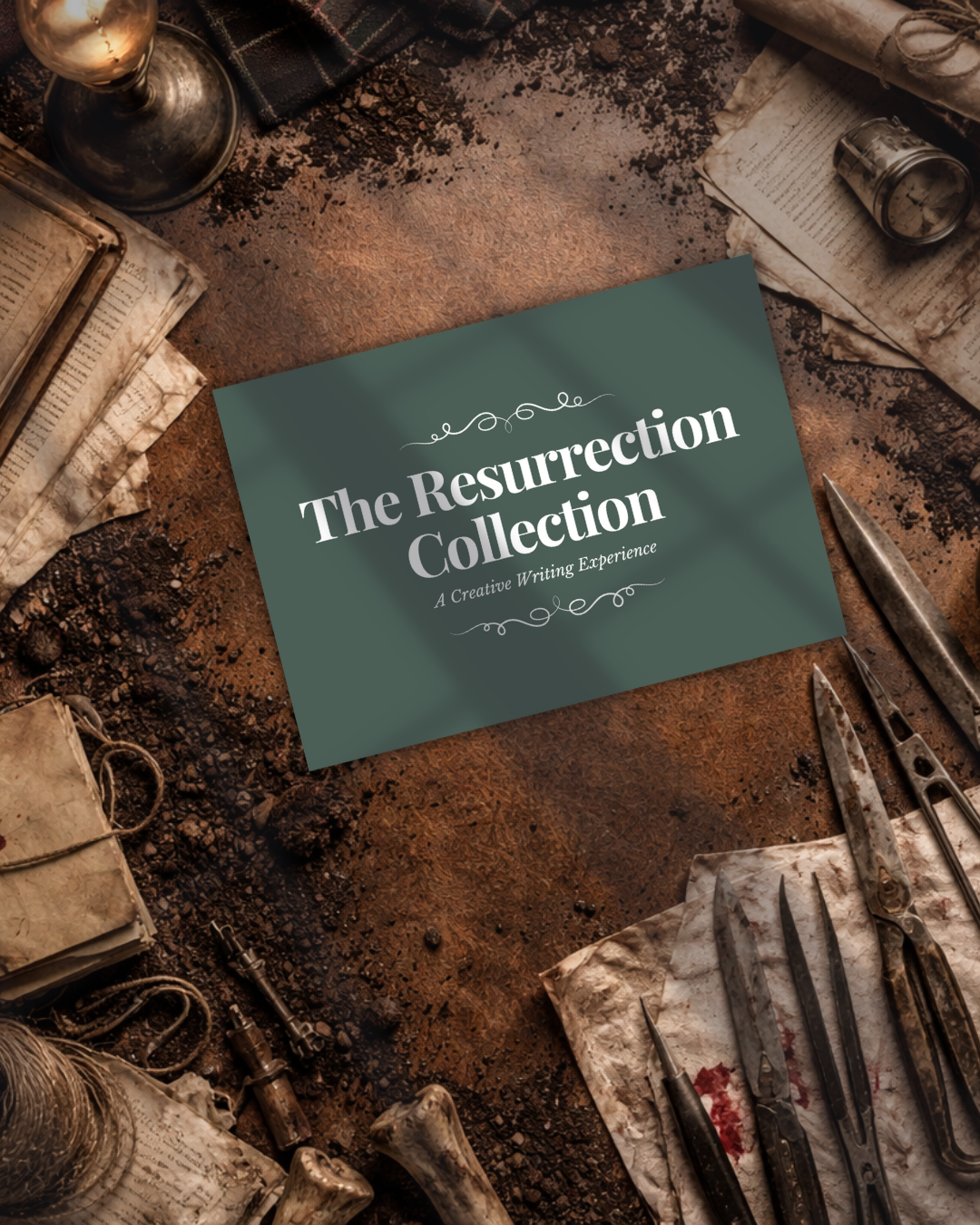
Edinburgh, 1828. Anatomy lectures are full. Graves are not staying closed.
Before modern medicine, before consent laws, before ethics committees and paperwork, knowledge came at a price — and it was often paid by the poor, the forgotten, and the recently dead. When the law failed to supply enough bodies for anatomical study, a black market stepped in. Resurrection men dug up the dead. Surgeons looked the other way. The city learned not to ask questions.
The Resurrection Collection is a digital writing box inspired by this real and unsettling history — particularly the world of Burke and Hare, Dr Knox, and the wider network that made body snatching possible.
This isn’t a retelling of a single crime. It’s an invitation to investigate a system.
What Is The Resurrection Collection?
The Resurrection Collection is an immersive, document-led creative writing resource built around the practice of body snatching in early 19th-century Britain. Rather than offering a single storyline or guided narrative, it presents you with an archive — fragmented, contradictory, and morally uncomfortable.
You are given evidence.
You decide what it means.
Inside the collection are documents that hint at:
bodies appearing too quickly
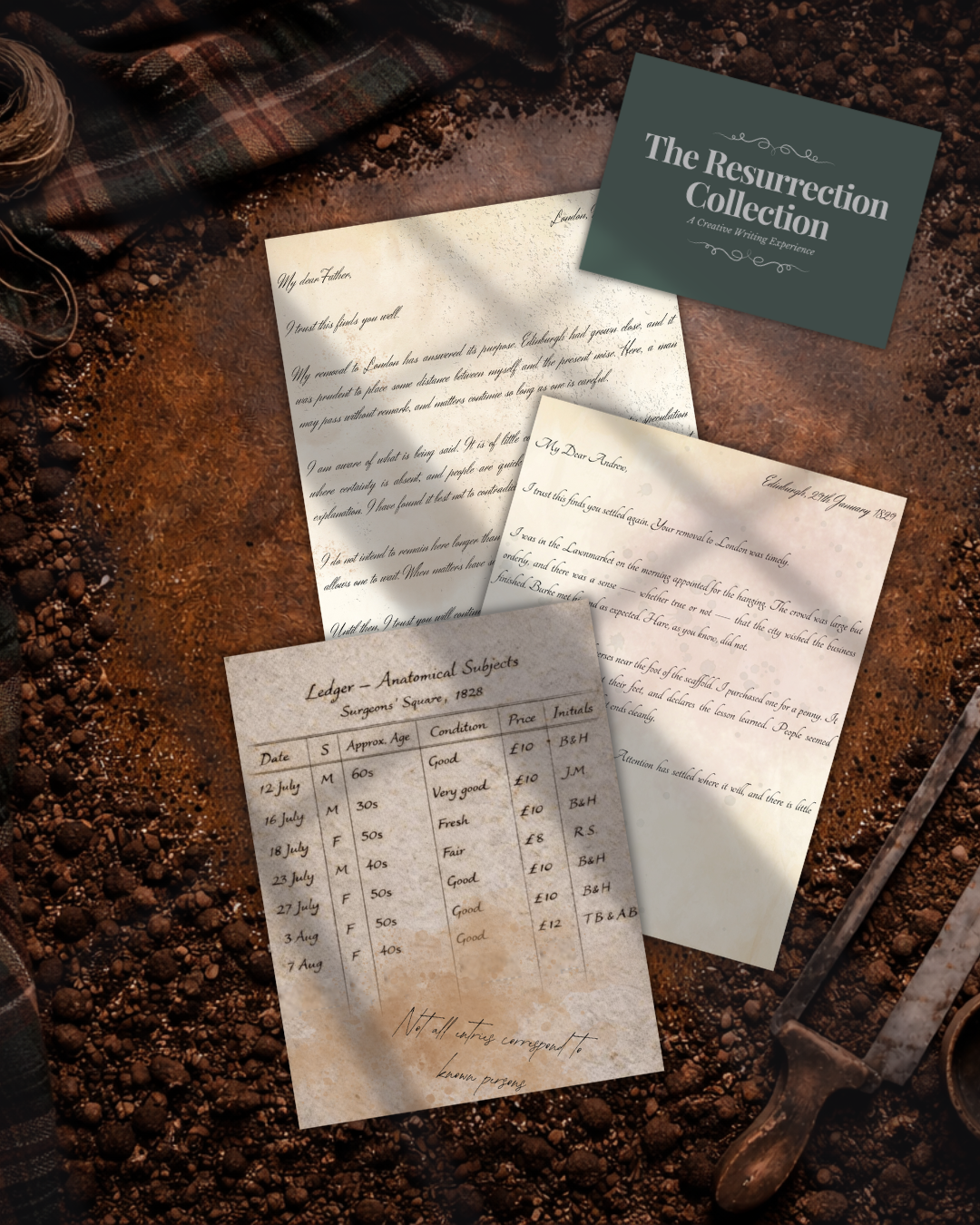
ledgers that reduce people to initials and payments
respectable institutions continuing as normal
individuals whose voices never made it into the official record
Some of what you read feels historical. Some feels disturbingly modern.
Edinburgh, 1828.
The anatomy schools are expanding.
The demand for bodies is growing.
And the dead are not resting peacefully.
Across the city, churchyards are watched through the night. Coffins are reinforced. Graves are guarded. Rumours spread between mourners, surgeons, students, and those willing to make a profit from the recently buried.
Somewhere between the cemetery and the lecture hall, a quiet trade flourishes.
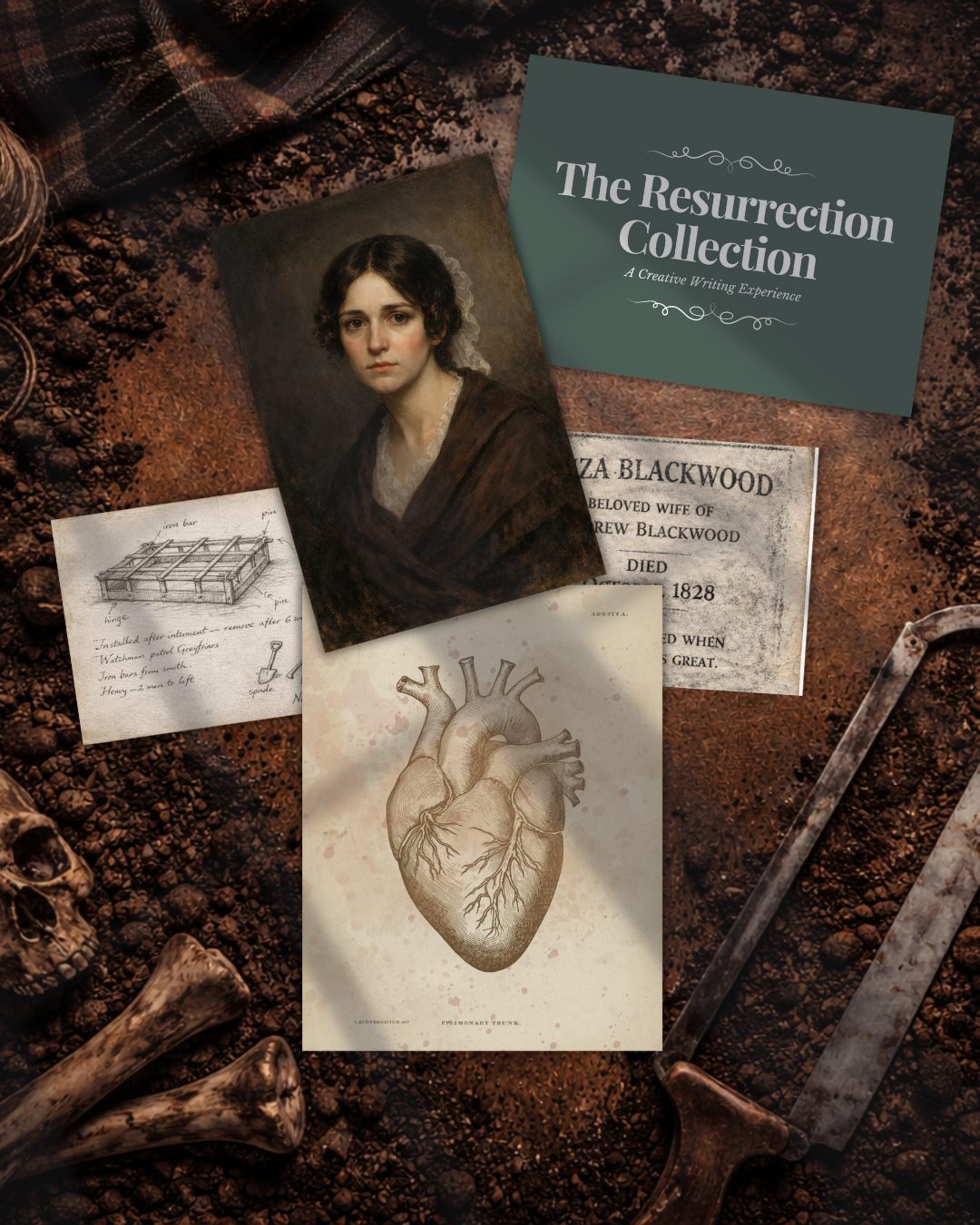
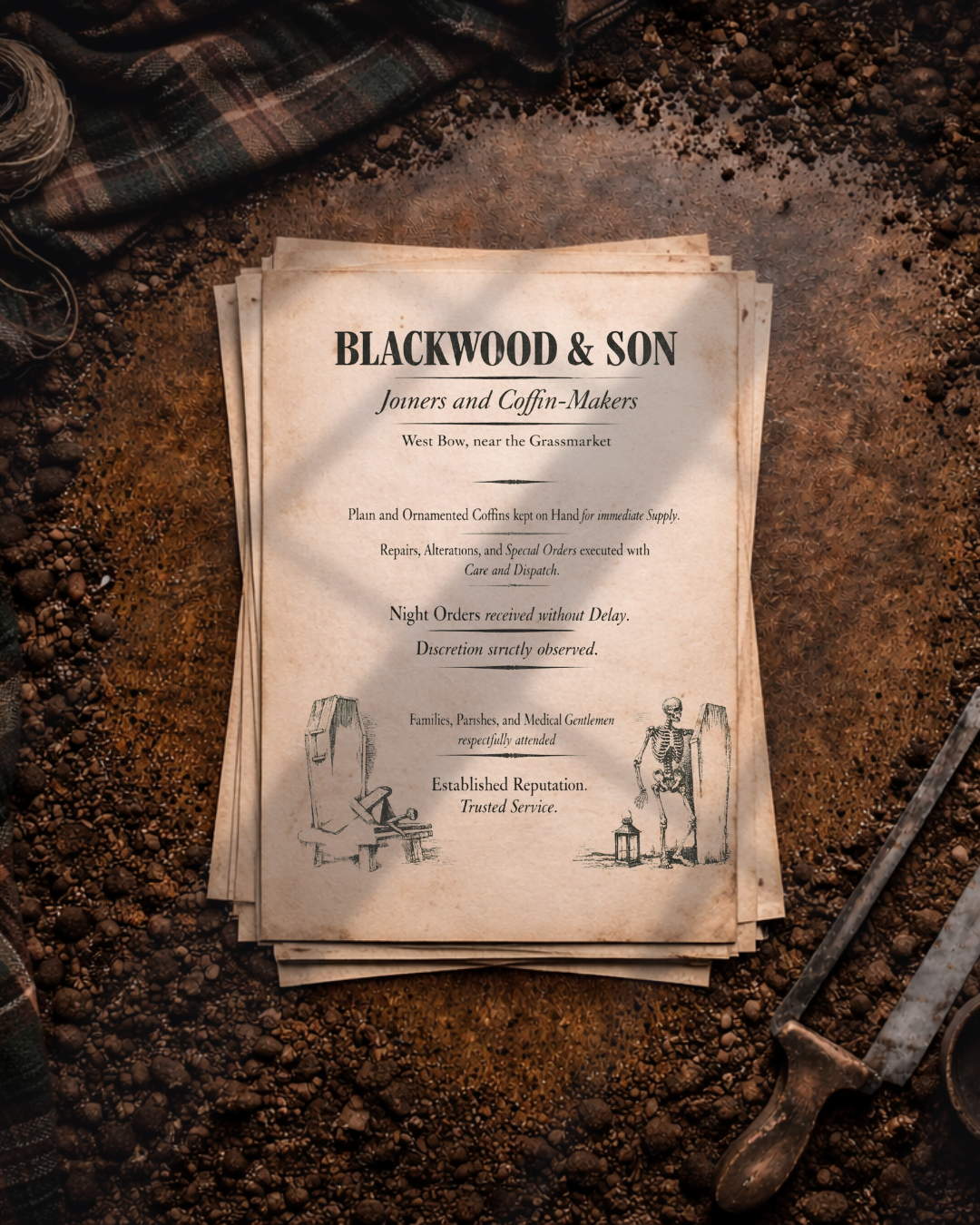
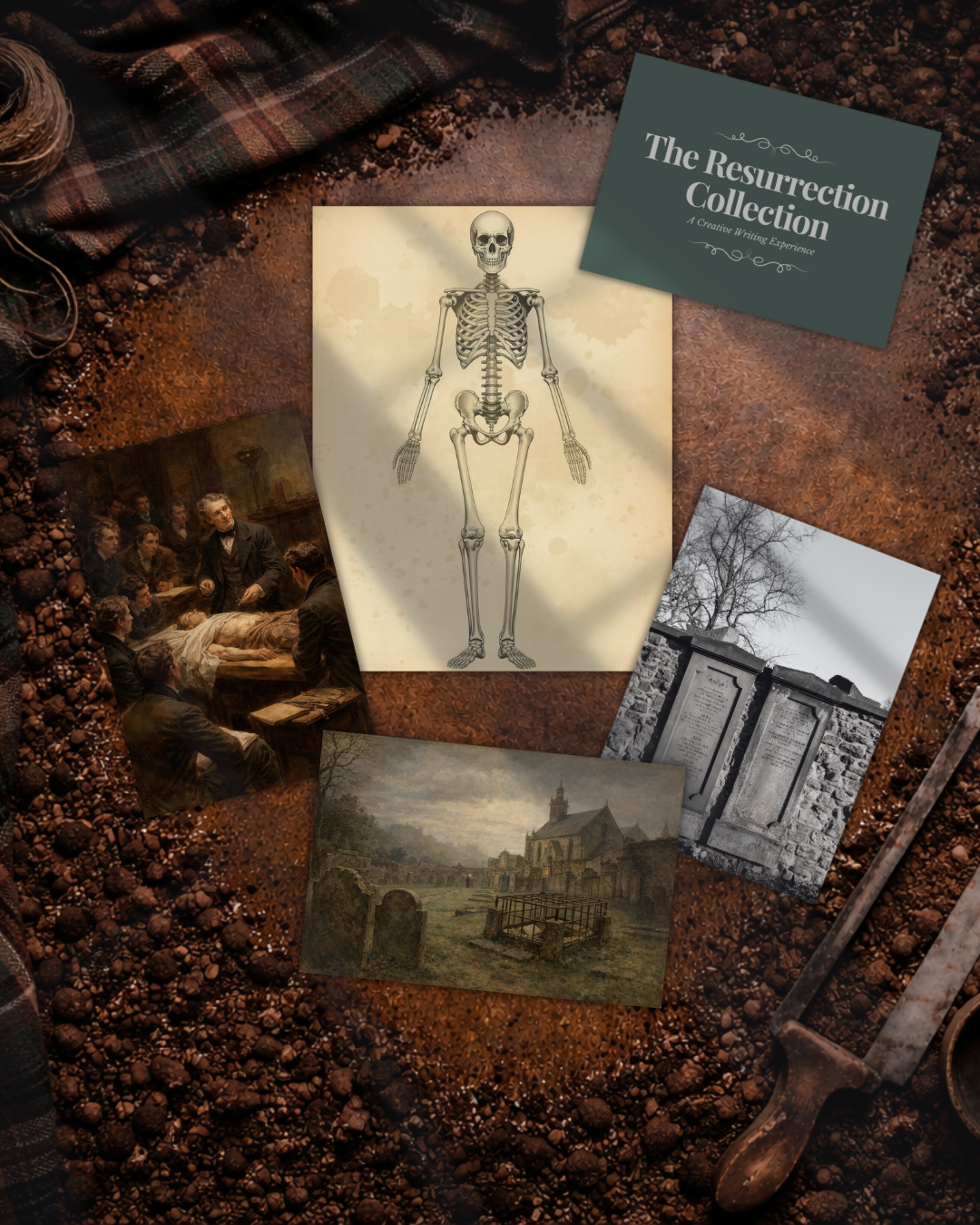
The Resurrection Collection is an immersive archive inspired by the real history of body snatching, anatomical study, and institutional silence in nineteenth-century Edinburgh. Inside you'll discover letters, diaries, advertisements, ledgers, archive records, paintings, newspaper reports, and personal accounts that reveal fragments of a story hidden beneath the city's pursuit of knowledge.
Some documents appear trustworthy.
Others raise uncomfortable questions.
Who supplied the bodies?
Who looked the other way?
And how many people knew more than they were willing to admit?
There is no official explanation.
No single narrative.
Only evidence.
What's Inside?
◆ 50+ printable documents and artefacts inspired by the world of nineteenth-century Edinburgh
◆ Letters, diaries, ledgers, advertisements, archive records, textbook extracts, silhouettes, paintings, and more
◆ A document-based experience designed for exploration, interpretation, and storytelling
◆ Instant digital download in PDF format
Who Is It For?
Perfect for:
◆ Writers and worldbuilders
◆ History enthusiasts
◆ Mystery lovers and curious minds
◆ Teachers and students
◆ Anyone fascinated by gothic realism, historical crime, and hidden stories
What Makes This Different?
This isn't a guided story or a puzzle with a solution.
It's an archive.
The documents don't agree. Some voices are missing. Others speak too clearly.
Every piece reveals part of a larger story, but none reveal the whole truth.
What happened depends on what you trust, what you question, and what connections you choose to make.
Every reader uncovers a different version of events.
What’s Inside the Box?
The Resurrection Collection contains 50+ printable documents, designed to be read, questioned, and written into.
You’ll find:
◆ anatomy lecture adverts
◆ medical ledgers recording age, condition, and payment
◆ diary entries and personal writings
◆ newspaper headlines and public notices
◆ seized papers and marginal notes
◆ silhouettes, portraits, and paintings
◆ modern historical commentary pages
Each document offers part of the picture — but never the whole thing.
There are no instructions telling you what happened.
No “correct” interpretation.
Just traces.
Why Resurrection?
The story of body snatching isn’t just about crime — it’s about complicity.
Surgeons needed bodies.
The law couldn’t supply them.
Resurrection men filled the gap.
And in between were families, labourers, women, the poor, the unnamed — people who existed just long enough to be useful.
This collection is deliberately uncomfortable. It asks:
Who benefits from progress?
Who gets written out of history?
What happens when institutions quietly accept the unacceptable?
These are questions students and writers are more than capable of engaging with — when they’re given something real to grapple with.
How Teachers Use The Resurrection Collection
For teachers, this box works beautifully as a bridge between history, literature, and creative writing.
Common classroom uses include:
◆ document analysis and inference tasks
◆ creative writing inspired by primary-style sources
◆ perspective writing (voices missing from the record)
◆ ethical debates about progress and responsibility
◆ gothic and historical fiction units
You can project a single ledger entry and ask:
What do we notice?
What’s missing?
Who benefits from this being written this way?
From there, the writing almost writes itself.
How Writers Use It
Writers tend to approach The Resurrection Collection like a case file.
They use it for:
◆ short stories and flash fiction
◆ historical fiction planning
◆ dark academia and gothic projects
◆ character backstory development
◆ mood-building and worldbuilding
◆ writing group prompts
Some writers follow a single name through the documents.
Others reconstruct a timeline.
Some write from the perspective of the silent institution itself.
There is no wrong way in — only deeper layers.
This Isn’t a Prompt. It’s an Archive.
Unlike traditional writing prompts, The Resurrection Collection doesn’t ask you to imagine from nothing. It gives you fragments and lets your curiosity do the work.
The documents don’t agree.
Some feel sanitised.
Others feel personal.
That tension is the point.
Every reader uncovers a different story, shaped by what they trust, what they question, and what they choose to overlook.
Final Thoughts
The Resurrection Collection is for writers and teachers who enjoy reading between the lines — and aren’t afraid of what they might find there. It’s a resource built on fragments, silences, and contradictions, where meaning emerges through close attention rather than clear answers.
If you’re drawn to historical mystery, moral ambiguity, gothic realism, or dark academia, this collection invites you to engage with the uncomfortable edges of progress and ask who pays the price when knowledge advances quietly and without scrutiny.
Readers who enjoy this document-led approach may also want to explore other collections in the series, including The Victoriana Collection, The Kindling Collection, The Hemlock Collection, and The Silent Directive. For those looking to dive in more deeply, The Soot & Shadows Series brings together our three best-selling boxes as a trilogy, designed to be used together or explored independently.
The dead may be silent — but the documents are not.
