Notes from the Inkpot
Writing, teaching, creating - one ink-stained idea at a time.





The Exiles by Ray Bradbury: Summary, Themes, Symbolism & Analysis
Bradbury’s The Exiles is a haunting exploration of censorship, imagination, and the fragility of stories, set on a dying Mars where forgotten authors and their creations struggle to survive. As books are banned and burned on Earth, the figures they once sustained begin to fade, turning the story into a powerful reflection on what happens when culture is erased and memory is lost. Blending science fiction, gothic atmosphere, and a deeply meta-literary perspective, the story challenges readers to consider the true cost of suppressing imagination. Through its unsettling imagery and quiet, devastating ending, The Exiles asks a central question: if stories disappear, what happens to the parts of ourselves they once held together?
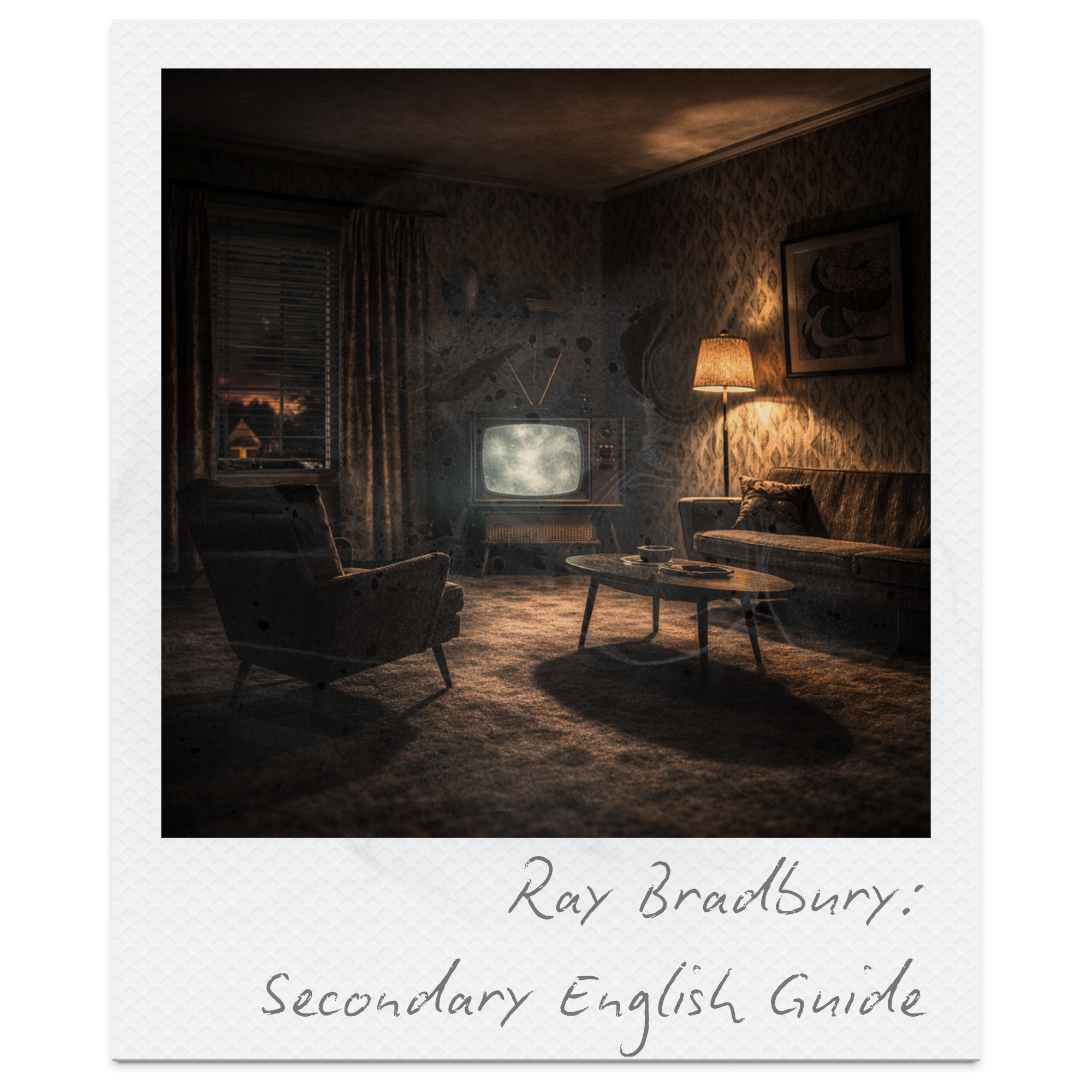
The Ultimate Guide to Teaching Ray Bradbury in the Secondary English Classroom
Ray Bradbury is one of the most powerful and versatile writers to teach in the secondary English classroom. His short stories and novels combine accessible narratives with conceptual depth, making them ideal for close reading, discussion-led learning, and ethical debate. From dystopian fiction to speculative moral fables, Bradbury’s work encourages students to question technology, conformity, media influence, and human responsibility — themes that remain strikingly relevant in a modern, screen-driven world. This guide offers a complete framework for teaching Ray Bradbury with confidence, bringing together key contexts, recurring themes, teachable texts, classroom strategies, and creative writing extensions. Designed for middle and high school English teachers, it shows how Bradbury can be used for analytical study, comparative work, and idea-led creative writing across a range of age groups and learning contexts.

Ray Bradbury: Context, Themes, Works & Literary Significance
Ray Bradbury’s fiction is often associated with dystopian futures and speculative technologies, but his work is best understood through the historical and cultural context in which it was written. Emerging in mid-twentieth-century America, Bradbury wrote during a period shaped by war, Cold War paranoia, mass media expansion, and growing anxieties about conformity and control. His stories use speculative settings not to predict the future, but to expose how fear, censorship, and emotional detachment operate within ordinary domestic and social spaces. This context-focused overview explores the key themes that define Ray Bradbury’s work, including technology versus humanity, media and passive living, parental responsibility, childhood and power, and moral failure. Rather than offering close analysis of individual texts, it provides a broader framework for understanding how Bradbury uses speculative fiction to examine human behaviour, ethical responsibility, and the consequences of choosing comfort over connection.