Descriptive Writing Prompts, Story Ideas and Creative Writing Inspiration
Description is one of the most powerful tools available to a writer. It transforms simple ideas into vivid experiences, helping readers picture unfamiliar worlds, understand complex emotions, and connect deeply with characters and settings. Whether you're writing fantasy, romance, horror, historical fiction, science fiction, mystery, or literary fiction, strong descriptive writing creates atmosphere, builds immersion, and brings every scene to life through carefully chosen words and sensory detail.
Effective description extends far beyond physical appearance. Writers use descriptive language to capture emotions, weather, movement, sounds, smells, textures, architecture, landscapes, and the subtle details that make fictional worlds feel authentic. A storm can become a symbol of grief, an abandoned house can reveal forgotten history, and a single gesture can communicate more than pages of dialogue. Through imagery, figurative language, precise vocabulary, and observation, description shapes the mood, pacing, and emotional impact of every story.
For writers, descriptive writing offers endless opportunities to strengthen both style and storytelling. You might be searching for the perfect words to describe a windswept coastline, a bustling medieval marketplace, a haunted forest, a joyful reunion, a terrifying villain, or the first snowfall of winter. You may want to improve your use of similes, metaphors, personification, sensory language, or simply learn how to make every sentence more vivid and engaging. Whatever you're writing, stronger description helps readers experience your story rather than simply read it.
This hub brings together a growing collection of descriptive writing prompts, vocabulary lists, figurative language guides, sensory writing exercises, setting inspiration, character descriptions, imagery techniques, and practical writing guides designed to help you write with greater clarity, confidence, and creativity. You'll find inspiration for describing people, places, weather, emotions, seasons, landscapes, buildings, sounds, colours, movement, atmosphere, and much more.
If you're looking for inspiration beyond descriptive writing, you can also explore the Creative Writing Archive, which contains hundreds of writing prompts, story ideas, picture prompts, character collections, and genre guides covering fantasy, horror, romance, science fiction, gothic fiction, mystery, fairytales, folklore, historical fiction, mythology, and more.
Explore the sections below to discover descriptive writing prompts, practical writing techniques, rich vocabulary, and creative exercises that will help you craft immersive scenes and unforgettable stories.
Descriptive Writing Topics
Descriptive writing can transform even the simplest scene into something memorable. Whether you're bringing landscapes to life, capturing emotion, or helping readers visualise a character, these prompts explore every aspect of description through settings, weather, people, nature, and atmosphere.
Inside this section:
◆ Descriptive Writing Sparks – sharpen your descriptive writing with a free random exercise generator exploring landscapes, interiors, objects, people, animals, food, weather, light, sounds, smells, textures, movement, atmosphere, contrasting scenes, close-up details and imaginative writing constraints designed to make you notice more and describe it differently.
◆ Descriptive Writing Prompts – creative writing prompts, scene descriptions, language challenges, observation exercises, and picture prompts designed to help writers develop vivid imagery, sensory detail, figurative language, and immersive descriptions. Explore settings, weather, landscapes, characters, emotions, everyday moments, and creative writing techniques that strengthen atmosphere, precision, and confidence across every genre.
◆ Forest Description Prompts – descriptive writing ideas, scene challenges, language exercises, observation tasks, and picture prompts inspired by ancient woodlands, mist-covered forests, towering pines, sunlit clearings, winding woodland paths, moss-covered ruins, seasonal landscapes, and changing weather. Designed to help writers develop vivid imagery, sensory detail, atmosphere, figurative language, and immersive descriptions across every genre.
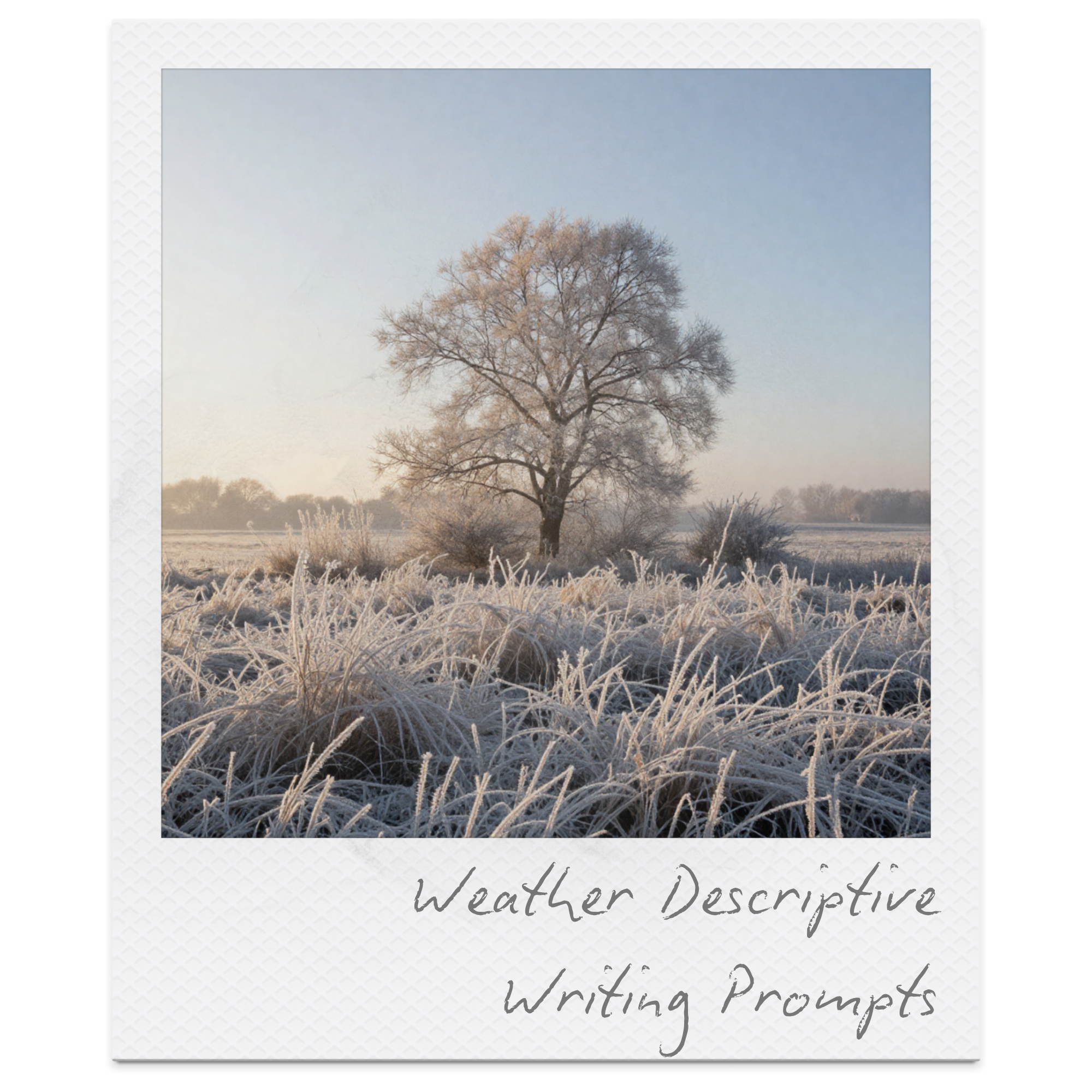
◆ Weather Description Prompts – descriptive writing ideas, scene challenges, language exercises, observation tasks, and picture prompts inspired by thunderstorms, sunshine, rain, snow, fog, frost, wind, heatwaves, rainbows, and changing seasons. Designed to help writers develop vivid imagery, sensory detail, figurative language, and immersive weather descriptions that build atmosphere, reflect emotion, and bring every genre to life.
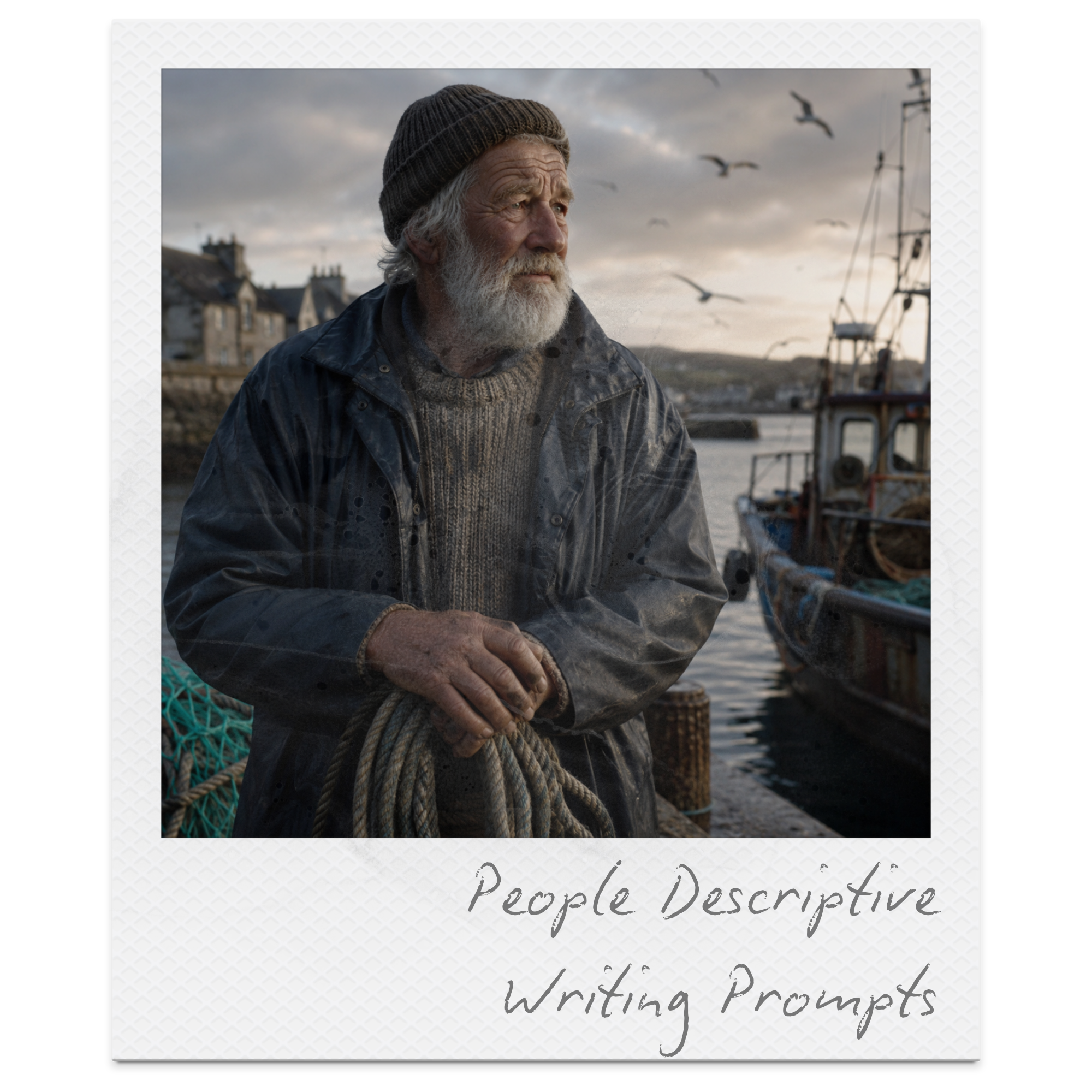
◆ People Description Prompts – descriptive writing ideas, character challenges, language exercises, observation tasks, and picture prompts inspired by people of different ages, personalities, occupations, and emotions. Designed to help writers create vivid, believable characters through expressive body language, facial expressions, movement, clothing, sensory detail, and figurative language, bringing people to life across every genre.
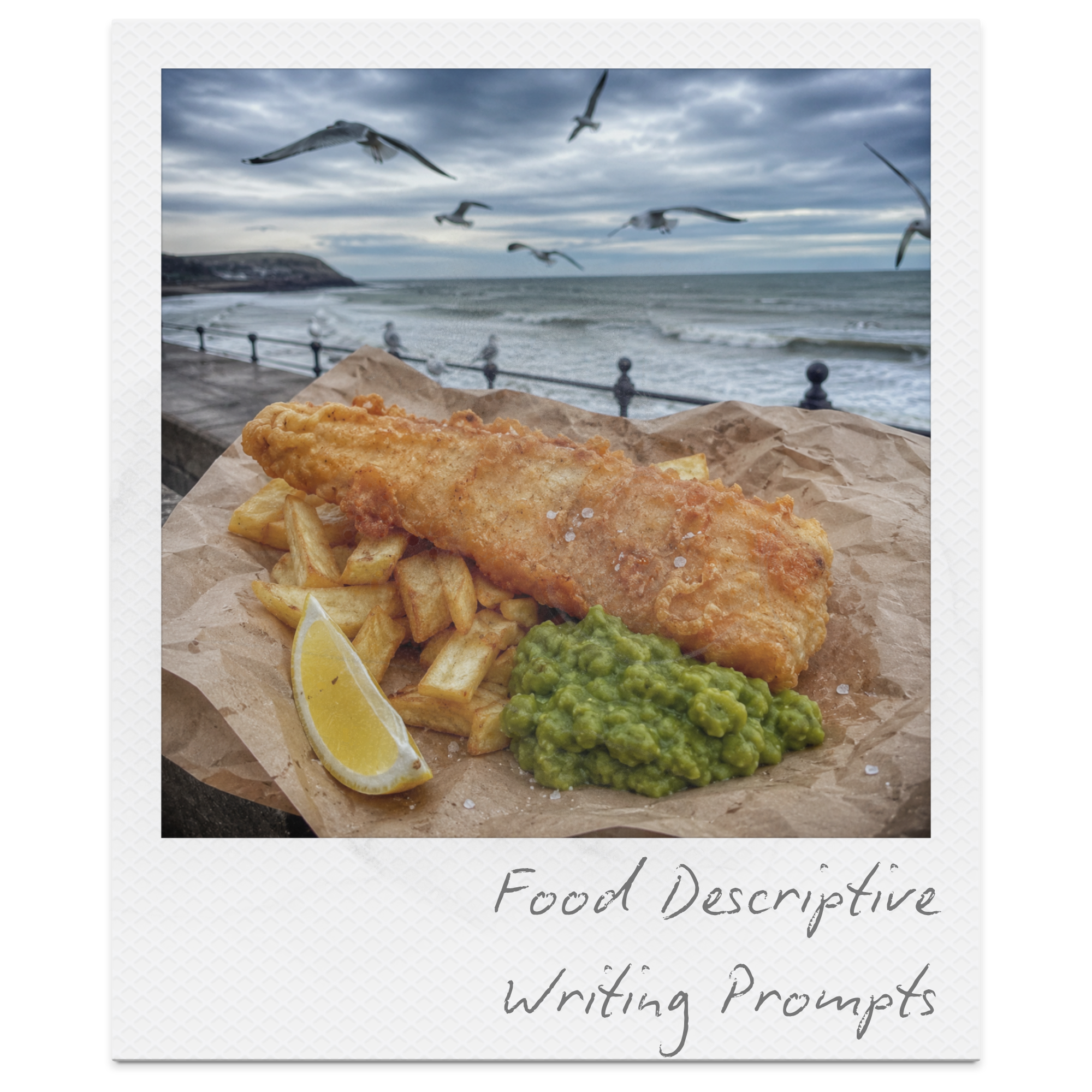
◆ Food Description Prompts – descriptive writing ideas, sensory challenges, language exercises, observation tasks, and picture prompts inspired by cafés, bakeries, markets, family meals, feasts, desserts, street food, and seasonal ingredients. Designed to help writers create vivid food descriptions through flavour, texture, aroma, colour, temperature, and figurative language, bringing meals, memories, and atmosphere to life across every genre.
Descriptive Vocabulary
Strong description begins with precise vocabulary. These resources help writers expand their word choices through carefully organised collections of adjectives, verbs, figurative language, and sensory vocabulary that create vivid, engaging prose.
Inside this section:
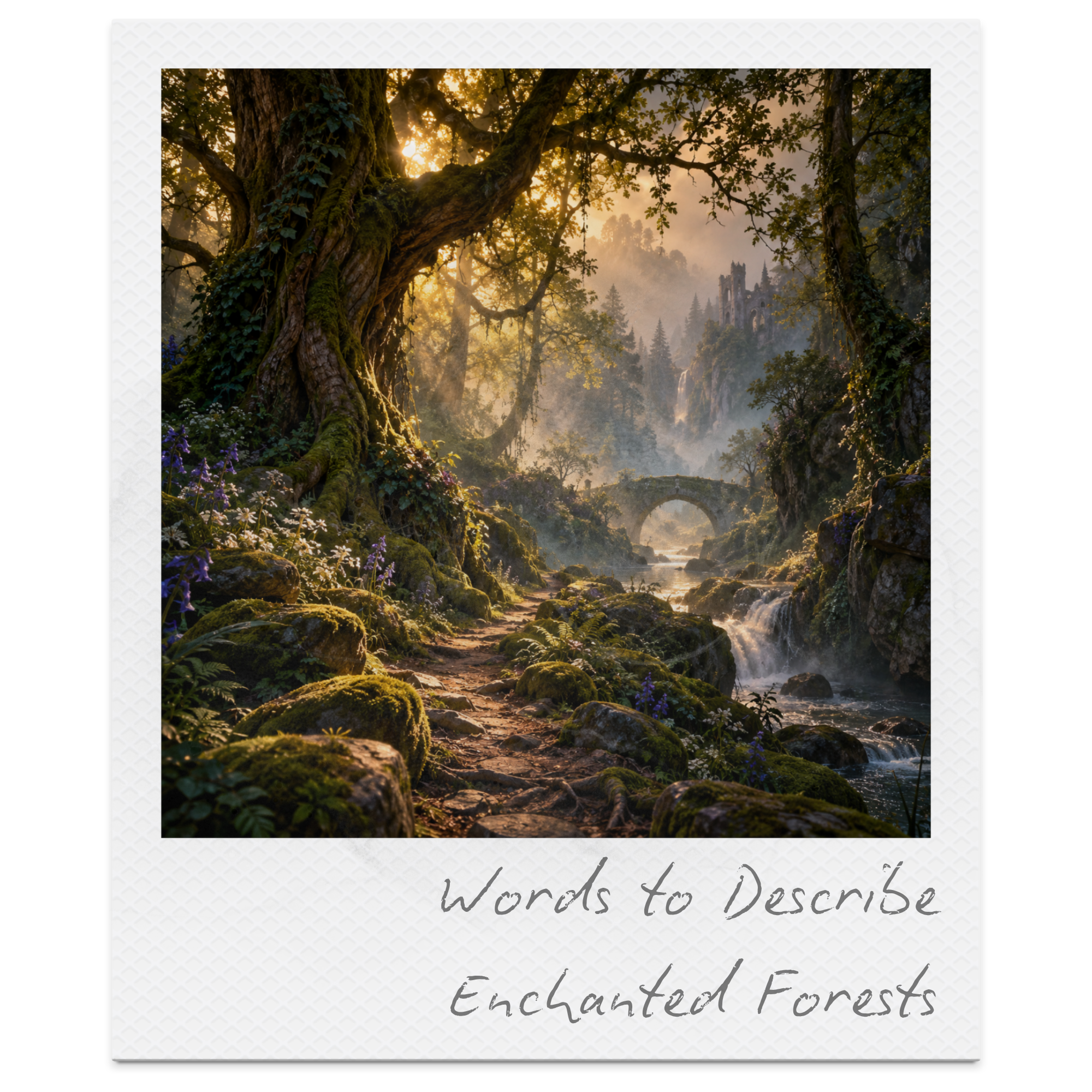
◆ 100 Words to Describe an Enchanted Forest – a descriptive vocabulary collection exploring 100 words for magical forests, ancient trees, tangled undergrowth, shifting light, woodland sounds, scents, textures, atmosphere, beauty, mystery and danger. Each word includes a clear meaning and original example sentence to help writers create vivid, immersive forest descriptions for fantasy, fairytale, folklore, gothic and descriptive writing.
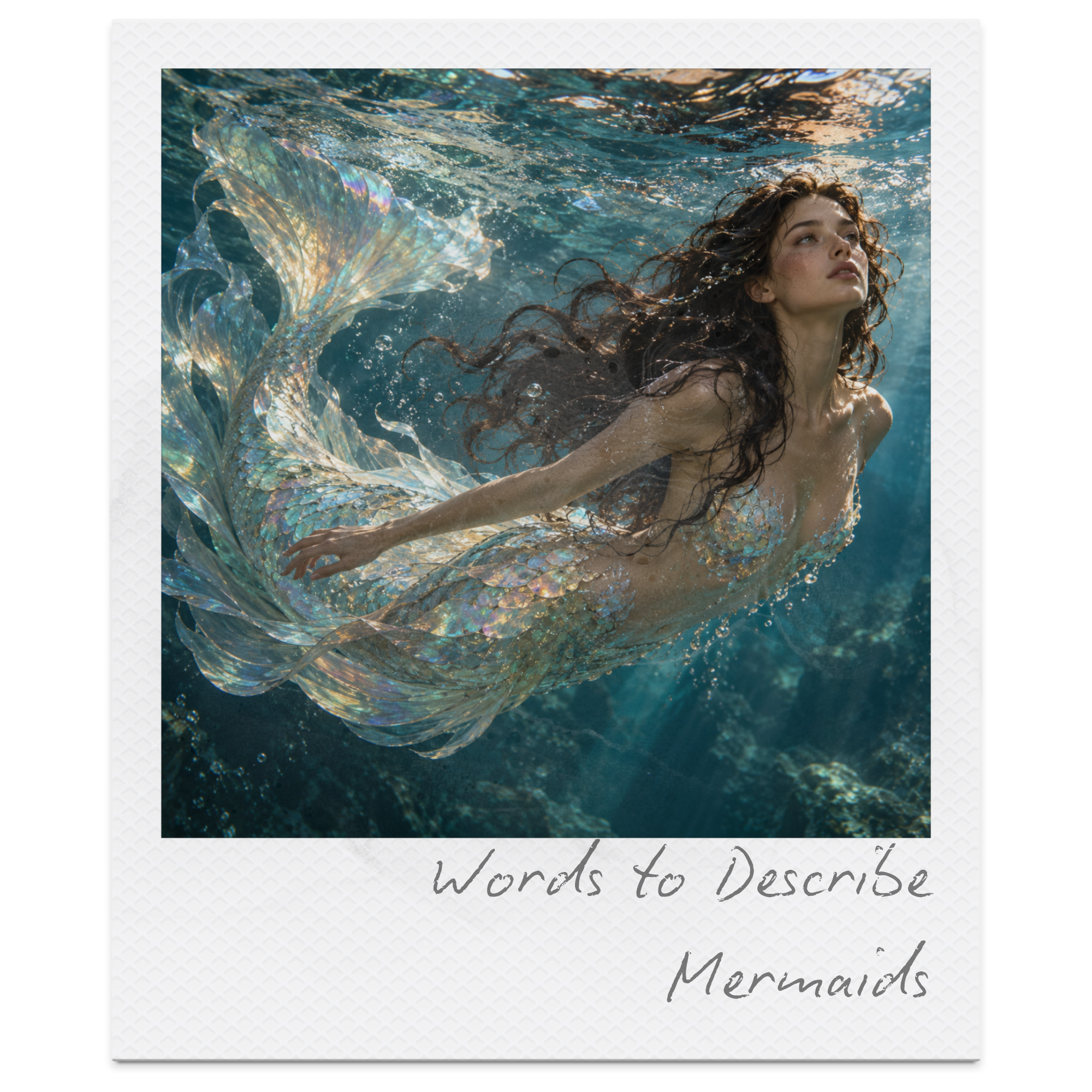
◆ 100 Words to Describe a Mermaid – vivid, imaginative and atmospheric words to describe a mermaid’s appearance, hair, features, scales, tail, movement, voice, personality and magic, with meanings and original examples for enchanting mermaids, mythical sea creatures and dark, dangerous sirens.
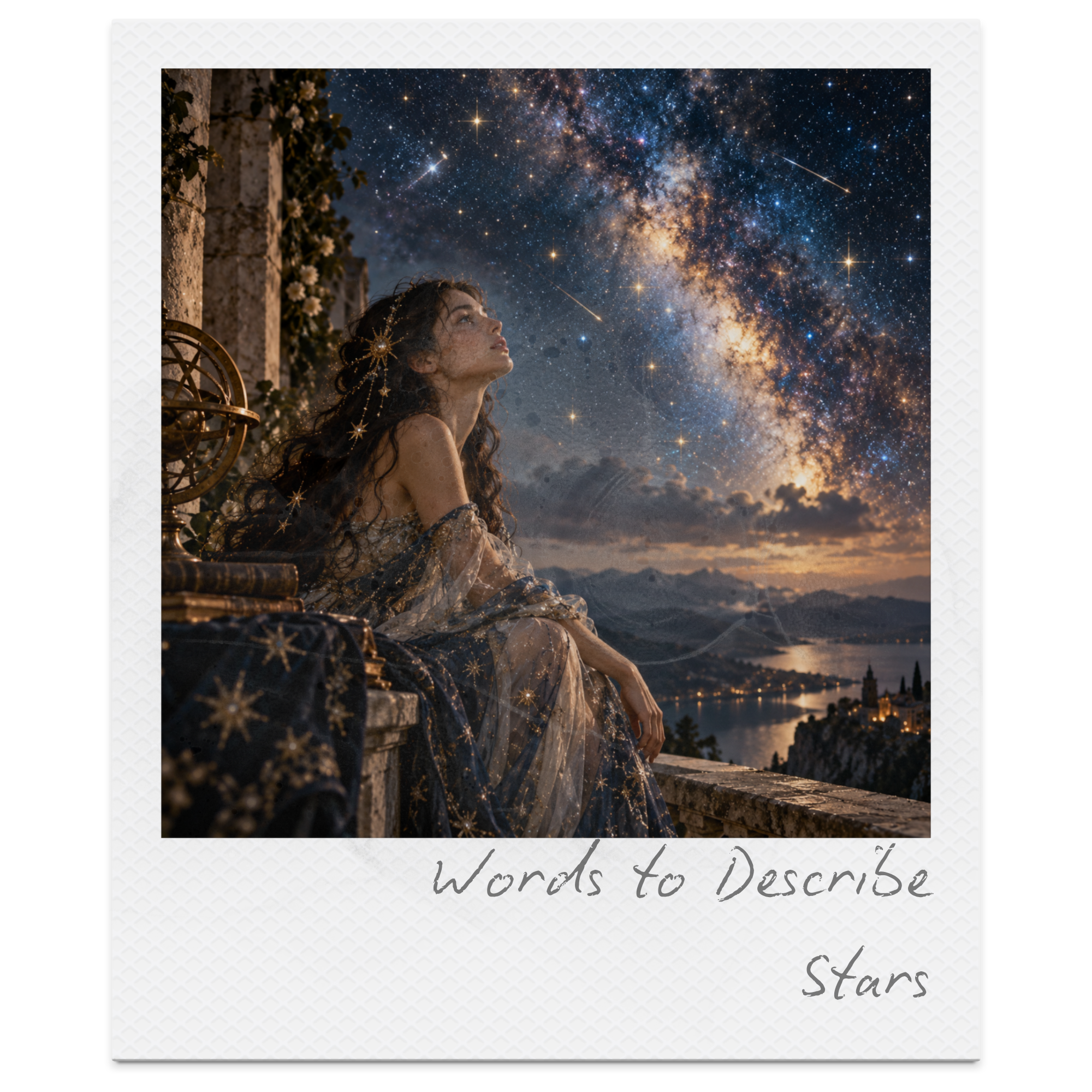
◆ 100 Words to Describe Stars – vivid, atmospheric and imaginative words to describe stars and the night sky, including their appearance, brightness, colour, movement, distance and mood, with meanings and original examples for beautiful, magical, mysterious and otherworldly starry skies.
Figurative Language
Figurative language helps writers communicate emotion, atmosphere, and imagery in memorable ways. These prompts encourage writers to experiment with comparisons, symbolism, and creative expression that make descriptions more vivid and meaningful.
Coming soon:
◆ Simile Writing Prompts – prompts encouraging writers to create imaginative comparisons that strengthen imagery and emotion.
◆ Metaphor Writing Prompts – prompts exploring symbolism and figurative language to develop deeper, more memorable descriptions.
◆ Personification Writing Prompts – prompts bringing weather, landscapes, objects, and nature to life through human qualities and behaviour.
◆ Imagery Writing Prompts – exercises designed to strengthen visual, auditory, tactile, olfactory, and gustatory imagery.
◆ Symbolism Writing Prompts – prompts encouraging writers to use symbolic objects, settings, weather, and recurring imagery to add deeper meaning to stories.
Writing Craft & Techniques
Descriptive writing is a skill that can be developed through practice and technique. These practical guides help writers strengthen imagery, atmosphere, sensory writing, and scene construction while learning how to create descriptions that feel natural rather than overwritten.
Coming soon:
◆ How to Describe... – practical writing guides covering people, emotions, weather, settings, landscapes, buildings, seasons, sounds, colours, movement, and much more, helping writers craft vivid, immersive descriptions across every genre.
◆ Show, Don't Tell – practical guides and exercises exploring how to reveal emotions, actions, and character through description rather than direct explanation.
◆ Writing with the Five Senses – techniques for using sight, sound, smell, taste, and touch to create immersive, believable scenes.
◆ Atmosphere & Mood – guides exploring how setting, weather, pacing, vocabulary, and sensory detail combine to shape emotional impact.
◆ Imagery & Style – practical advice for writing stronger imagery, varying sentence structure, avoiding repetition, and developing a more engaging descriptive voice.
Story Starters & Writing Inspiration
Sometimes the best way to improve descriptive writing is simply to begin. These prompts encourage writers to build scenes from vivid images, intriguing openings, and imaginative visual inspiration.
Inside this section:
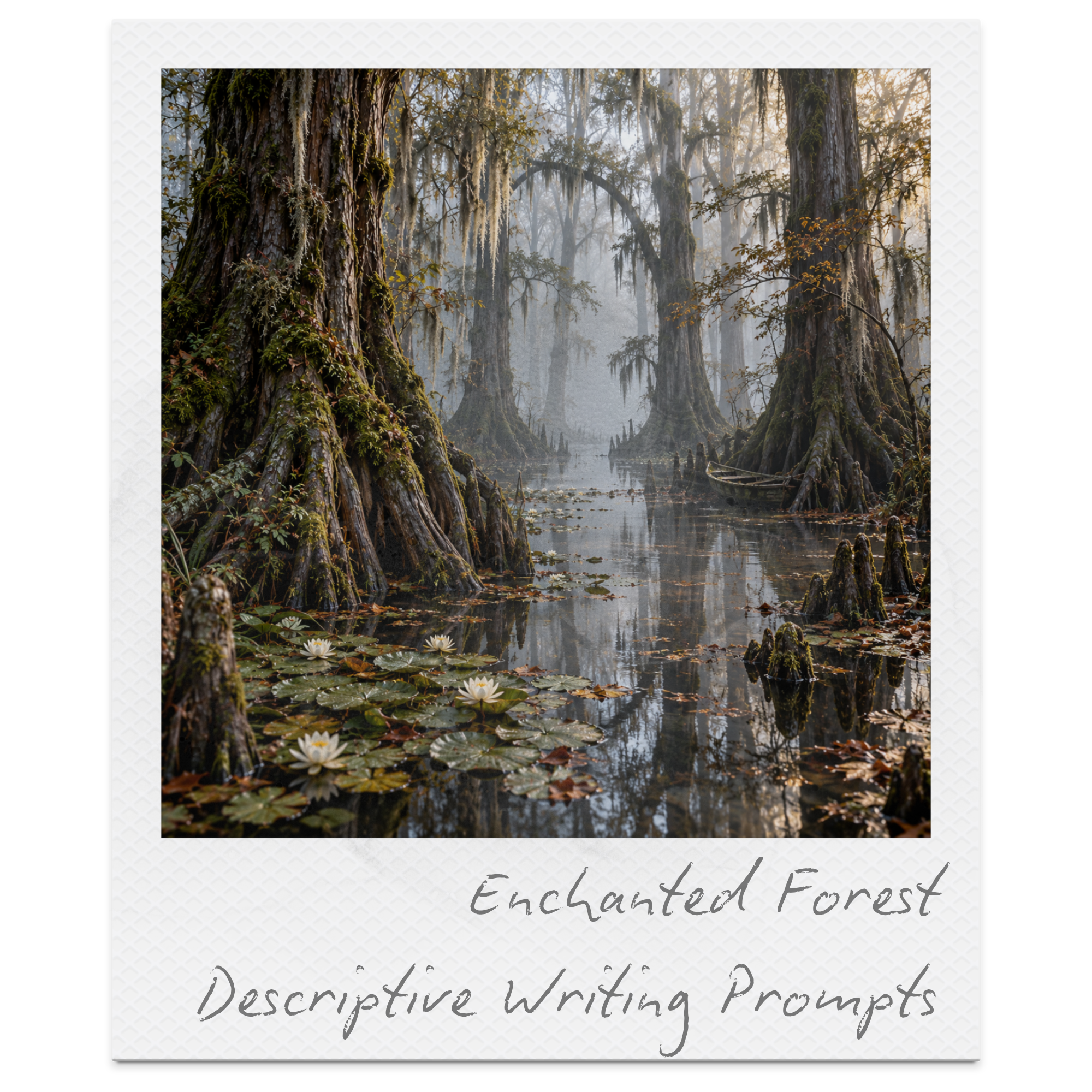
◆ Enchanted Forest Description Prompts – imaginative descriptive writing challenges inspired by magical woodlands, shifting paths, ancient trees, hidden clearings, impossible landscapes, strange magic, and darker forest secrets. Explore sensory exercises, contrasting scenes, language challenges, creative constraints, and picture prompts designed to help writers create vivid, atmospheric enchanted forests for fantasy, fairytale, folklore, and magical stories.
Seasonal, Aesthetics, & Atmosphere
Atmosphere is often what readers remember most. These prompts focus on creating immersive environments where description becomes central to mood, tension, and storytelling.
Inside this Section:
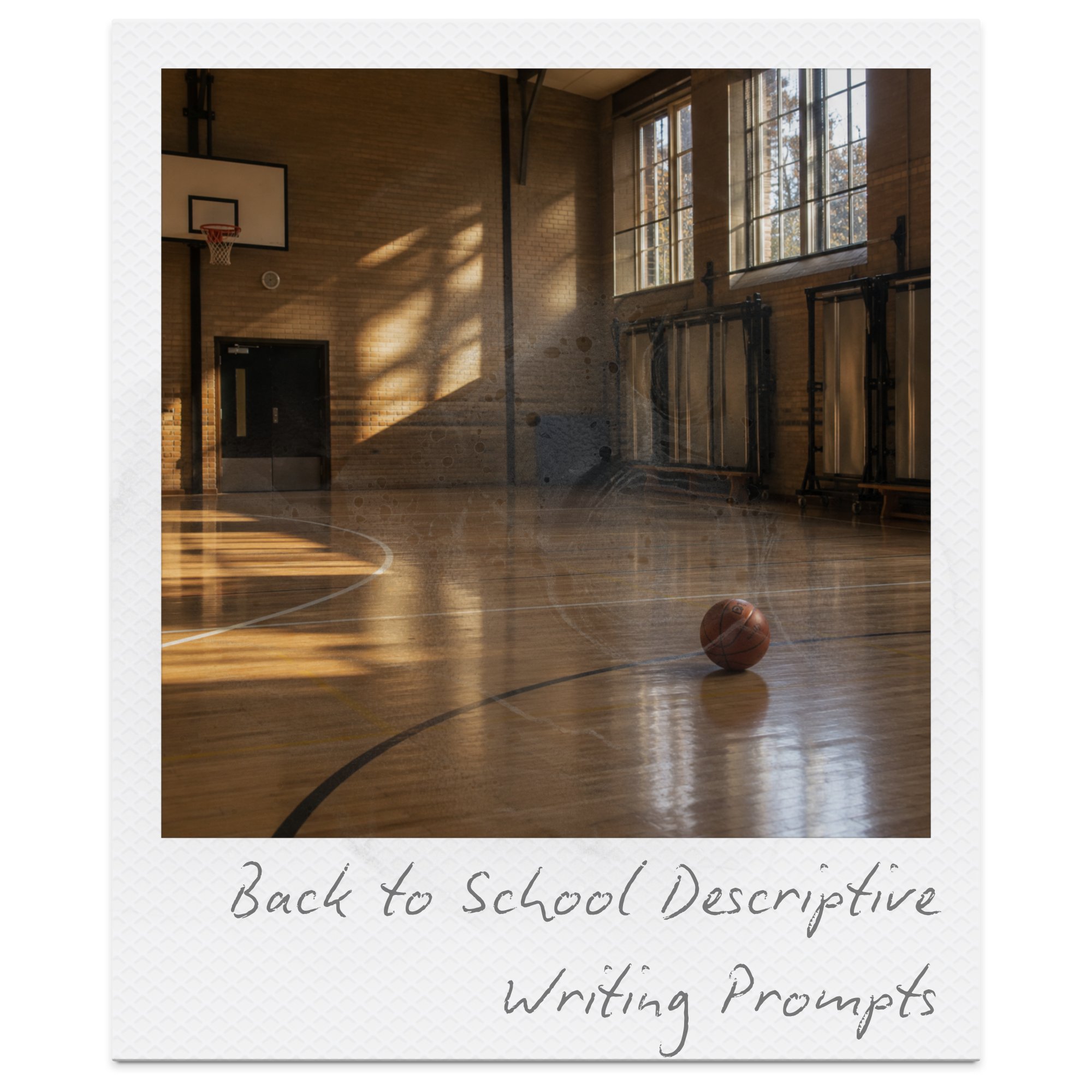
◆ Back-to-School Description Prompts – school scenes, classroom settings, sensory writing exercises, observation challenges, contrasting descriptions, language and style activities, creative writing tasks, and premium picture prompts to help students create vivid, immersive descriptions rich in atmosphere, imagery, and detail.
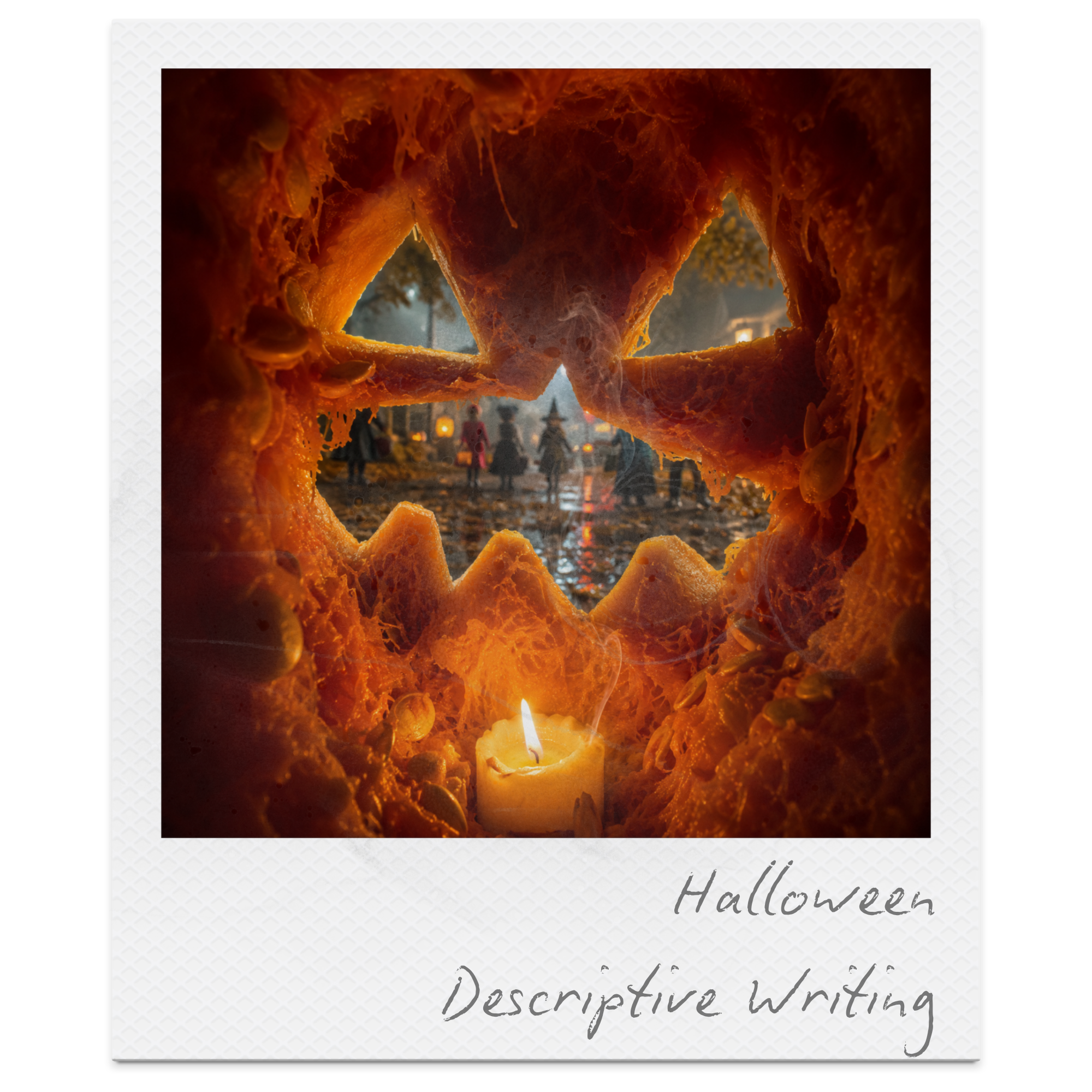
◆ Halloween Descriptive Writing Prompts – trick-or-treating streets, glowing pumpkins, elaborate costumes, Halloween parties, atmospheric October nights, sensory writing exercises, observation challenges, contrasting descriptions, language and style activities, creative writing tasks, and premium picture prompts to help writers create vivid, immersive Halloween descriptions rich in atmosphere, imagery, and sensory detail.
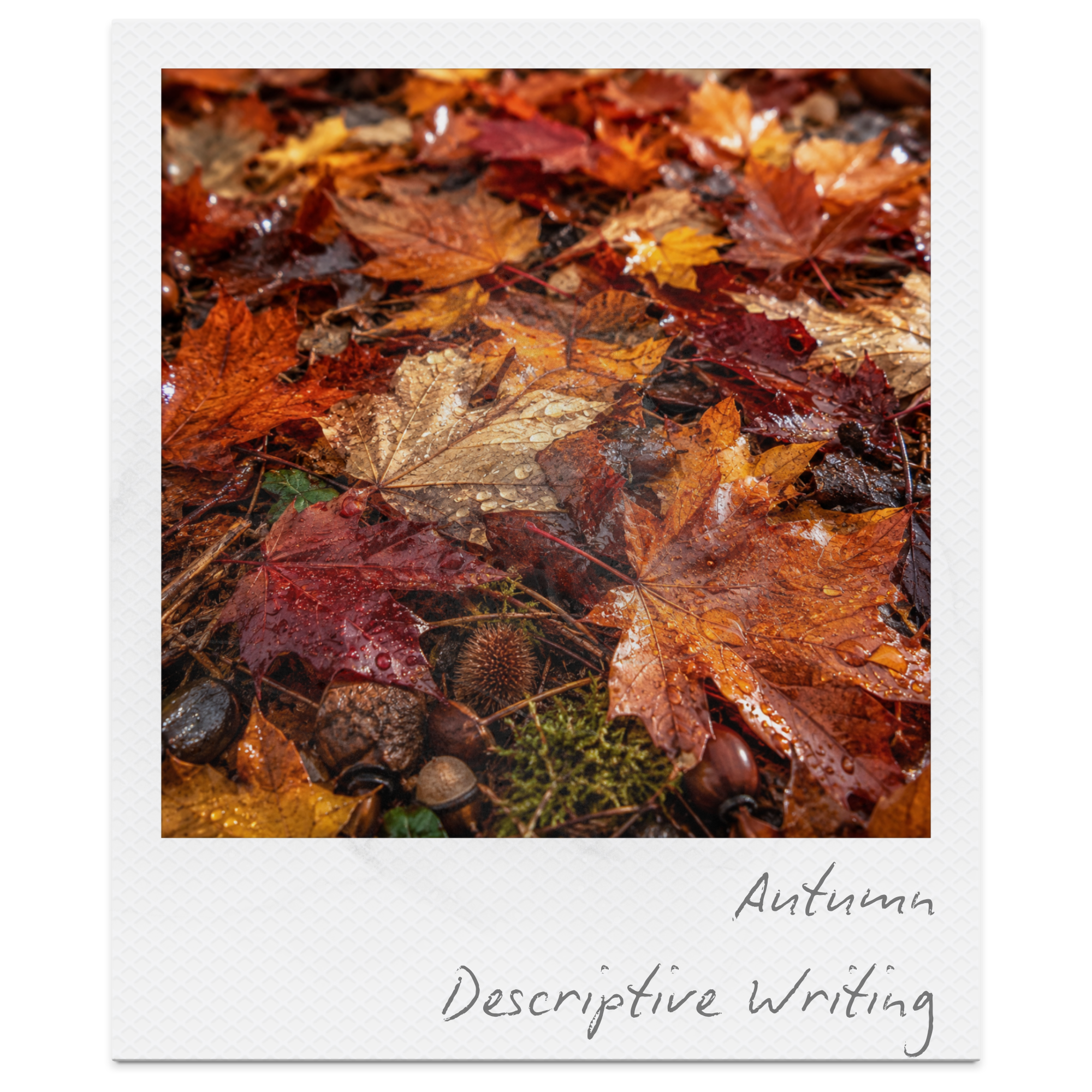
◆ Autumn Descriptive Writing Prompts – golden woodlands, fallen leaves, harvest moons, misty mornings, apple orchards, autumn rain, seasonal landscapes, sensory writing exercises, observation challenges, contrasting descriptions, language and style activities, creative writing tasks, and premium picture prompts to help writers create vivid, immersive autumn descriptions rich in colour, atmosphere, imagery, and sensory detail.
Descriptive Poetry & Creative Exercises
Poetry and short creative exercises encourage writers to slow down, observe carefully, and experiment with language. These activities develop stronger imagery, richer vocabulary, and greater confidence in descriptive writing.
Coming soon:
◆ Descriptive Poetry Prompts – poetry prompts exploring imagery, atmosphere, emotions, landscapes, weather, and sensory language.
◆ Observation Writing Prompts – exercises encouraging careful observation of everyday people, objects, places, and moments.
◆ Sensory Writing Exercises – focused activities designed to strengthen descriptive writing through the five senses and immersive detail.
◆ Creative Description Challenges – imaginative exercises that encourage writers to experiment with perspective, figurative language, mood, and atmosphere while developing a distinctive writing style.
Choose Your Next Adventure