70 Halloween Descriptive Writing Prompts: Spooky Scenes, Sensory Details & Creative Challenges
Halloween is a feast for the senses. Pumpkins glow from darkened windows, fallen leaves scrape across pavements, sweet wrappers spill from overflowing bowls, elaborate decorations transform familiar houses, and masked trick-or-treaters disappear from view beneath the flickering streetlights. From the sharp scent of woodsmoke on a cold October evening to the sticky sweetness of Halloween treats, even the smallest details can turn an ordinary autumn night into something vivid and atmospheric.
That makes Halloween the perfect inspiration for descriptive writing. A carved pumpkin can become an exercise in colour, texture and light. A crowded costume party offers movement, sound and intricate visual detail. An extravagantly decorated house can appear playful in the afternoon and deeply unsettling after dark. Even something as simple as a discarded mask, an empty sweet wrapper or a candle burning in a window can create an entirely different mood depending on the language used to describe it.
These 70 Halloween Descriptive Writing Prompts explore Halloween through atmospheric titles, vivid scenes, contrasting descriptions, sensory experiences, language and style exercises, creative writing challenges and picture prompts. You'll describe everything from pumpkin patches and trick-or-treating streets to Halloween masks, decorated houses, overflowing bowls of sweets, candlelit graveyards and the strange quiet that settles over a neighbourhood after the celebrations have ended.
Whether you're practising descriptive writing for an English assessment, developing your creative writing skills or simply looking for seasonal inspiration, use these prompts to experiment with precise vocabulary, sensory imagery, figurative language, sentence structure and atmosphere—and discover just how many different ways there are to describe Halloween. For even more inspiration, explore the Descriptive Writing Hub, where you'll find prompts, exercises and creative challenges covering settings, weather, landscapes, characters, emotions, sensory writing and descriptive techniques.

How to Approach Halloween Descriptive Writing
Halloween offers an enormous range of details to explore, so begin by deciding what you want your reader to experience. Your description might capture the excitement of a crowded trick-or-treating street, the warmth of glowing pumpkins outside decorated houses, the strange appearance of a costume mask in low light, or the eerie silence that remains once everyone has gone home. The same Halloween scene can feel playful, nostalgic, beautiful or unsettling depending on the details you choose to emphasise.
Think beyond what your setting looks like and explore all five senses. Listen for leaves scraping across pavements, excited voices behind masks, distant music and the rustle of sweet wrappers. Consider the smell of candle wax, damp earth, woodsmoke and carved pumpkin, or the textures of rough pumpkin skin, sticky sweets, cold metal gates and elaborate costumes. Use precise vocabulary, figurative language and varied sentence structures to strengthen the atmosphere, but avoid overcrowding every sentence with description. Choose a few memorable details and allow them to bring your Halloween scene to life.
1. Halloween Descriptive Titles
A strong title can immediately suggest atmosphere, setting and mood. Choose one of the Halloween-inspired titles below and use it as the starting point for a piece of descriptive writing. Think about the colours, sounds, textures, light and sensory details the title brings to mind, and focus on creating a vivid scene rather than telling a story.
The Last Night of October
Beneath the Halloween Moon
When the Pumpkins Glow
After the Last Trick-or-Treater
The House at the End of the Street
Masks After Midnight
An October Night
By Candlelight
Where the Shadows Gather
The Morning After Halloween
2. Describe These Halloween Scenes
Halloween can transform familiar places, objects and moments into scenes filled with colour, texture, movement and atmosphere. Choose one of the scenes below and bring it to life through vivid sensory detail, precise vocabulary and carefully chosen imagery. Think beyond what you can see and consider the sounds, smells, textures and sensations that would make your reader feel as though they were standing inside the scene.
A suburban street crowded with trick-or-treaters on Halloween night.
A pumpkin patch at sunset, filled with pumpkins of every shape, colour and size.
A house covered from roof to garden in extravagant Halloween decorations.
A crowded Halloween party where every guest is wearing an elaborate costume or mask.
A kitchen table covered with freshly carved jack-o'-lanterns, pumpkin seeds, candles and carving tools.
A Halloween fairground glowing with colourful lights beneath a dark October sky.
A bowl overflowing with brightly wrapped Halloween sweets beside the front door.
An old graveyard illuminated by moonlight, candles and the distant glow of jack-o'-lanterns.
A shop window packed with Halloween masks, costumes, decorations and flickering lights.
A neighbourhood street after the last trick-or-treaters have gone home, scattered with fallen leaves, discarded sweet wrappers and extinguished pumpkins.
3. Contrasting Halloween Descriptions
Small changes in light, time, weather and activity can completely transform the atmosphere of a Halloween scene. Choose one of the contrasting scenarios below and describe both versions, paying attention to how colour, sound, movement, sensory detail and mood change between them.
A street decorated for Halloween during the afternoon and again after darkness falls.
A pumpkin patch on a bright autumn morning and at dusk beneath a rising moon.
A Halloween party just before the guests arrive and after the final person has gone home.
A freshly carved jack-o'-lantern and the same pumpkin several days later.
A costume shop on a busy afternoon and after the shop has closed for the night.
A house covered in Halloween decorations on a calm evening and during a violent autumn storm.
A neighbourhood at the beginning of trick-or-treating and several hours later when the streets are deserted.
A Halloween fairground when it is crowded with visitors and after the rides have stopped and the lights are being switched off.
A graveyard covered with golden autumn leaves in daylight and the same graveyard beneath the Halloween moon.
A Halloween mask displayed beneath bright shop lights and the same mask illuminated only by flickering candlelight.
4. Halloween Observation & Experience
Some of the strongest descriptions come from imagining exactly what it would feel like to experience a moment for yourself. Choose one of the Halloween situations below and pay close attention to the small details you might notice through sight, sound, smell, taste and touch. Consider how the atmosphere changes around you and how your own position within the scene influences what you notice.
Carving a pumpkin and scooping out the seeds and pulp with your hands.
Walking along a decorated street while trick-or-treating on a cold October evening.
Reaching into an enormous bowl filled with different Halloween sweets and choosing one without looking.
Standing in the middle of a crowded Halloween party surrounded by elaborate costumes, masks, music and decorations.
Walking through a pumpkin patch on a crisp autumn afternoon and searching for the perfect pumpkin.
Approaching a house with an extravagant Halloween display for the first time.
Sitting beside a bonfire on Halloween night as sparks rise into the darkness.
Wearing an elaborate Halloween mask and experiencing the evening through its narrow eyeholes.
Walking through a Halloween fairground filled with bright lights, music, food stalls and moving rides.
Stepping outside late on Halloween night after the celebrations have ended and experiencing the sudden quiet of the empty streets.
5. Halloween Language & Style Challenges
The language you choose can completely transform the atmosphere of a Halloween description. Experiment with different techniques to control mood, pace and imagery, paying attention to how individual words and sentence structures influence the way your reader experiences each scene.
Describe a row of glowing jack-o'-lanterns using personification to give each pumpkin its own expression or personality.
Describe a bowl overflowing with Halloween sweets using vivid colour, texture and taste imagery.
Describe a Halloween mask using an extended metaphor that gradually makes the object appear increasingly unsettling.
Describe a crowded trick-or-treating street using powerful verbs to capture movement, noise and excitement.
Describe an elaborate Halloween display outside a house by moving from tiny individual details to the appearance of the entire scene.
Describe a single candle burning inside a carved pumpkin using contrasting imagery of light and darkness.
Describe fallen autumn leaves blowing along an empty street on Halloween night using alliteration, onomatopoeia and carefully chosen sound imagery.
Describe a Halloween fairground using long, flowing sentences to capture its crowds, lights and movement before switching to short sentences as something changes in the atmosphere.
Describe an old graveyard on Halloween night without using the words spooky, scary, creepy, eerie or haunted. Create the atmosphere entirely through the details you choose.
Describe a person wearing an elaborate Halloween costume from the shoes upwards, gradually revealing the complete appearance of the costume to the reader.
6. Halloween Creative Writing Challenges
Challenge yourself to describe familiar Halloween scenes in unexpected ways. Each exercise introduces a different restriction, perspective or structural challenge designed to encourage more imaginative vocabulary, careful observation and creative approaches to descriptive writing.
Describe a jack-o'-lantern in exactly 50 words without using the words pumpkin, orange, face, candle or glow.
Describe a Halloween party without mentioning what anything looks like. Create the entire scene through sound, smell, taste and touch.
Begin with a single Halloween sweet inside its wrapper before gradually widening your description to reveal an enormous bowl, the table around it, the decorated hallway and finally the house beyond.
Describe an extravagantly decorated Halloween house from the perspective of someone standing across the street. You cannot move closer, so concentrate on distance, scale, light, movement and the details visible from afar.
Describe a Halloween mask as though it is something beautiful and luxurious rather than frightening.
Write a description of a busy trick-or-treating street that begins with the entire neighbourhood before gradually narrowing its focus until the final sentence describes one tiny detail.
Describe a pumpkin patch at sunset without naming a single colour. Use comparisons, light, texture and natural imagery to create the visual scene instead.
Describe the aftermath of a Halloween party without directly explaining what happened. Allow discarded costumes, decorations, food, furniture and other details to reveal the earlier celebration.
Describe someone putting on an elaborate Halloween costume while never describing the completed outfit. Reveal its appearance gradually through individual fabrics, textures, accessories, sounds and movements.
Write two descriptions of the same candlelit Halloween room: one that makes it feel warm and inviting, and another that makes exactly the same room feel deeply unsettling. Change only the details you emphasise and the language you use.
7. Halloween Descriptive Picture Prompts
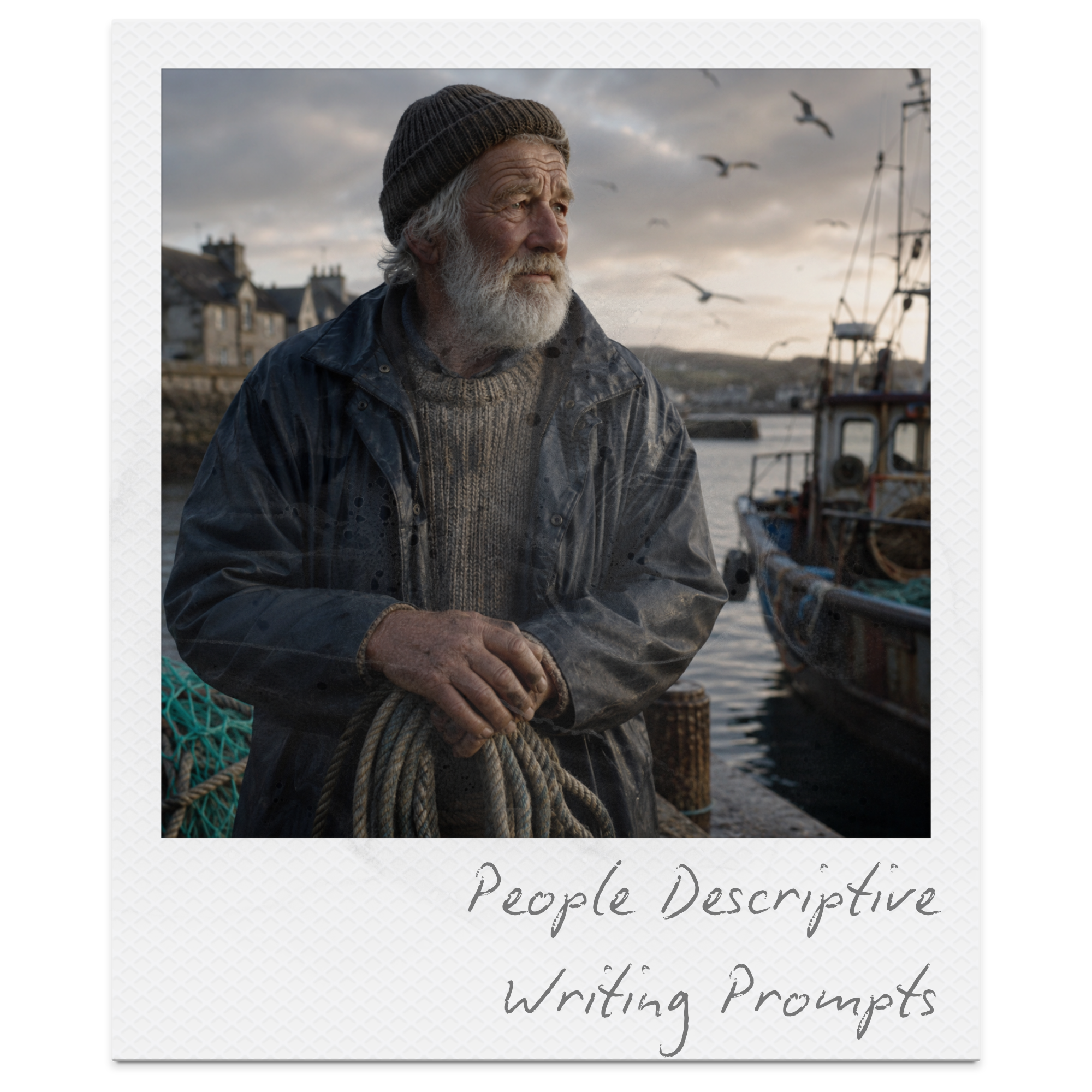
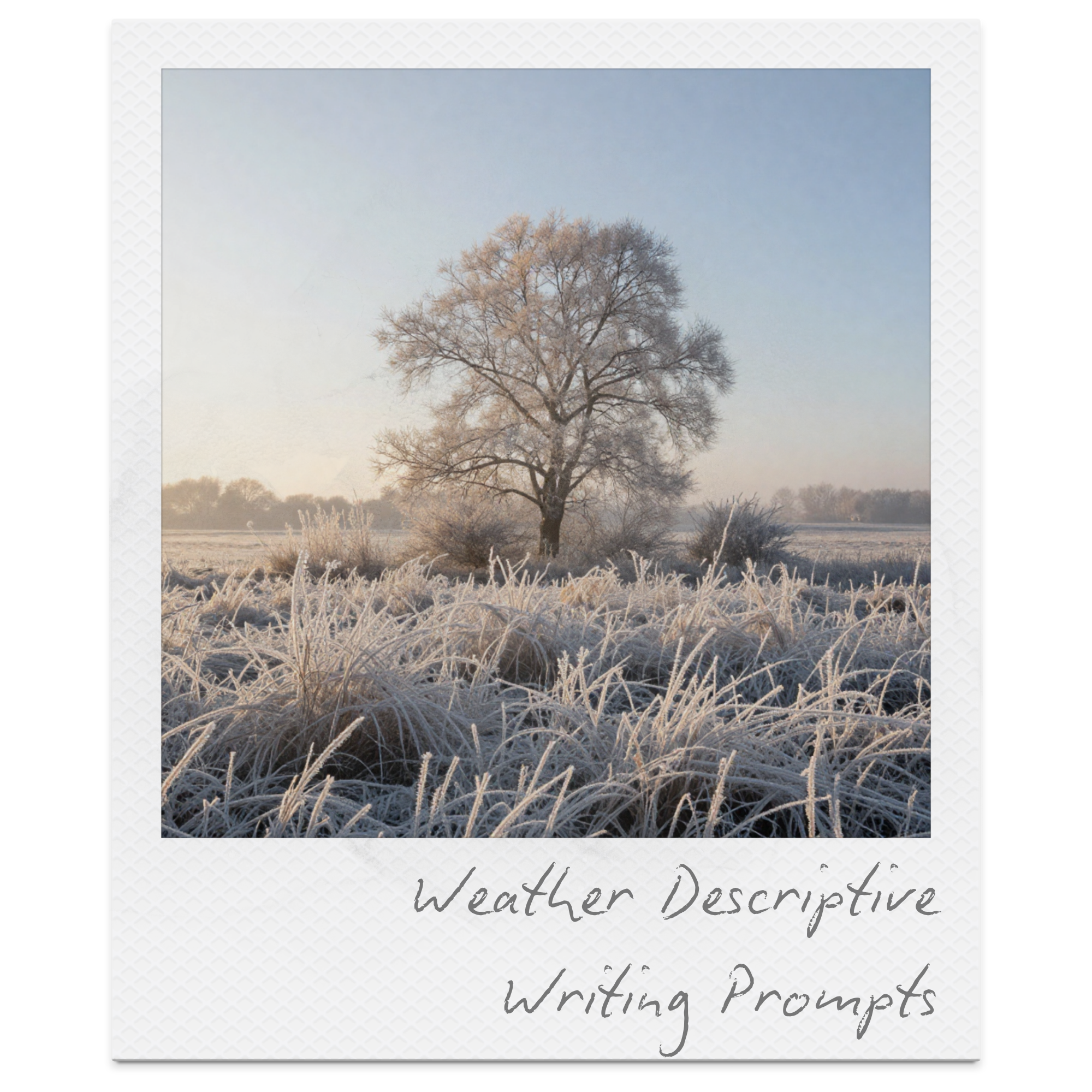
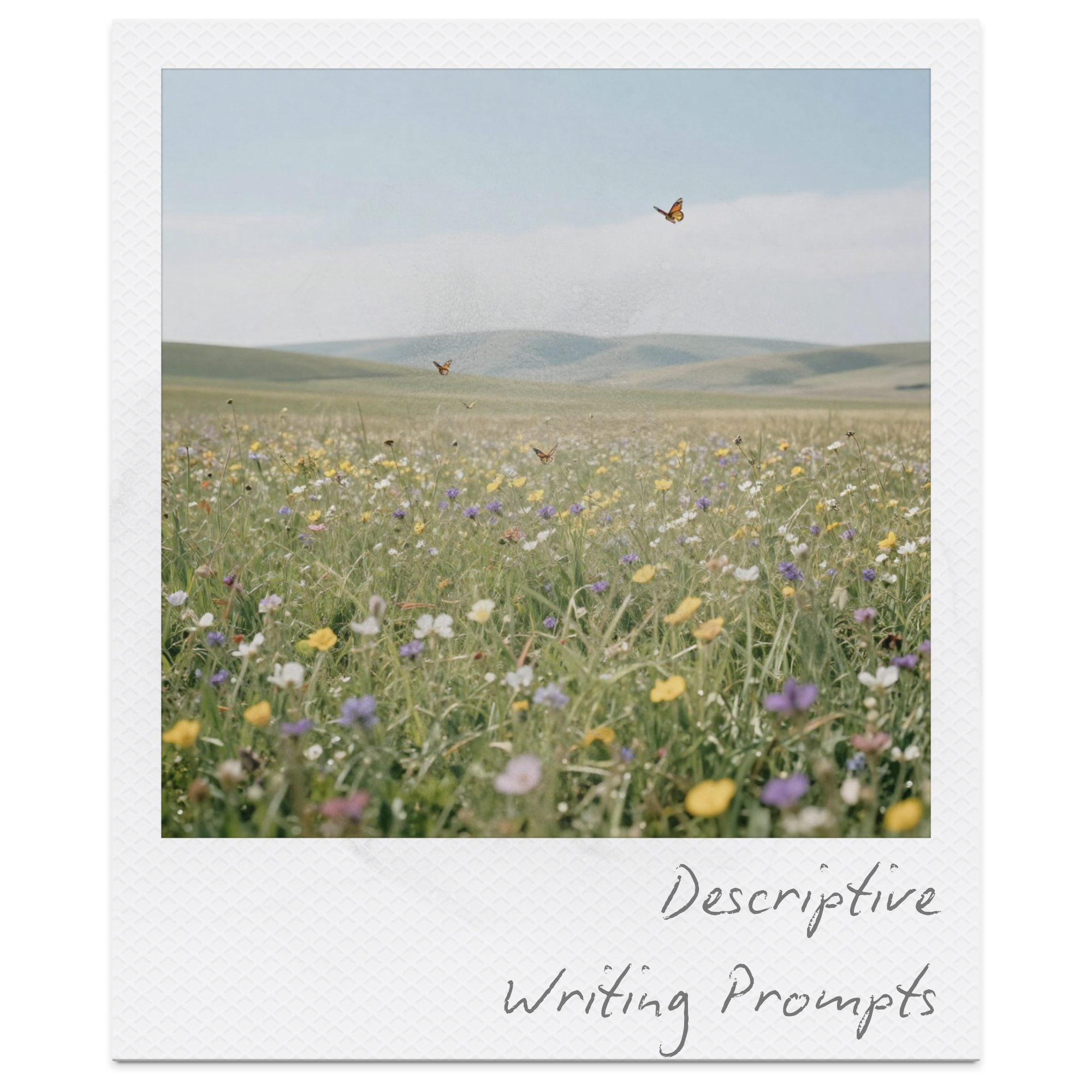
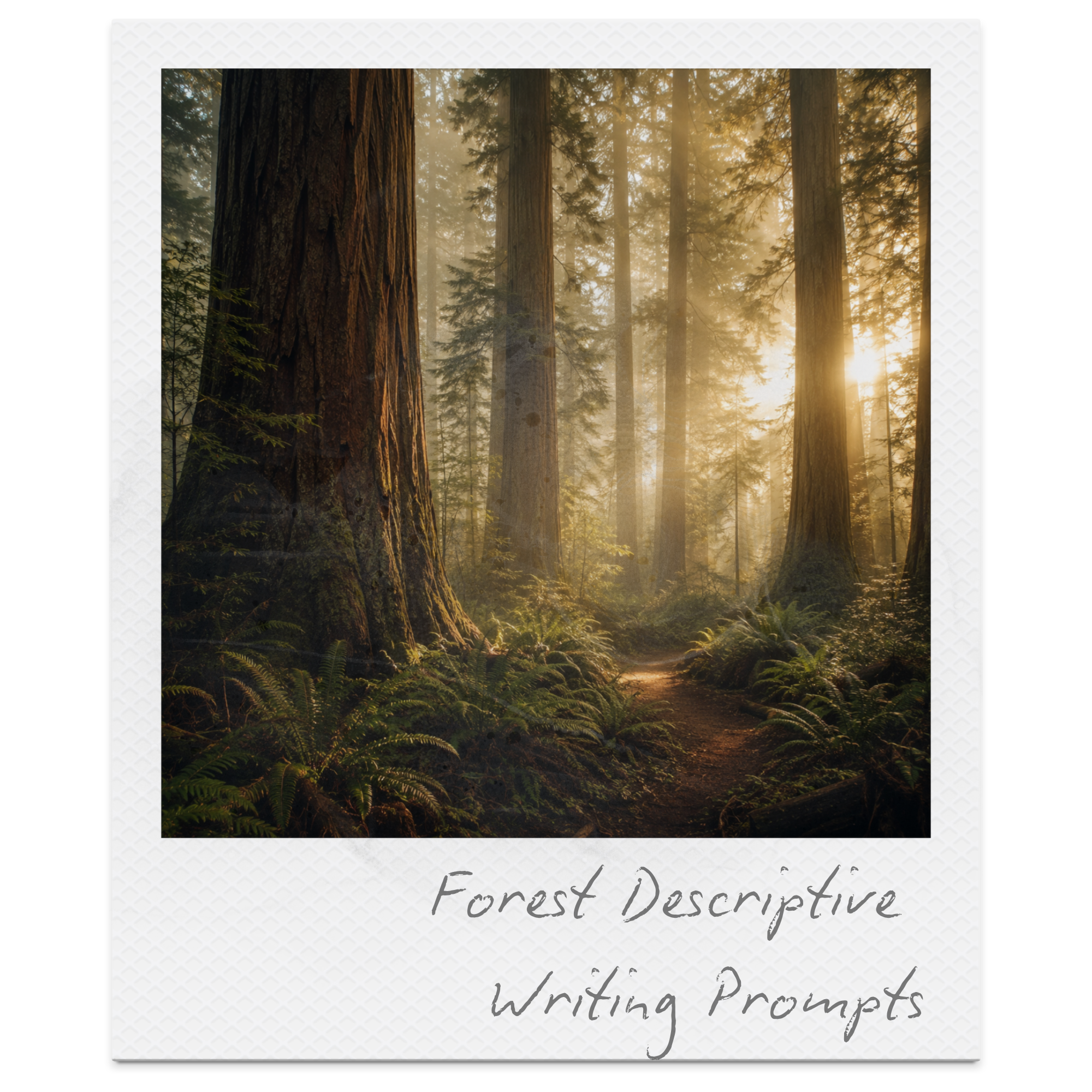
Halloween images are filled with details that can help inspire vivid descriptive writing, from glowing pumpkins and elaborate costumes to overflowing bowls of sweets and houses transformed by decorations. Study each image carefully before you begin writing, paying attention to colour, light, texture, movement, atmosphere and the smaller details you might initially overlook.
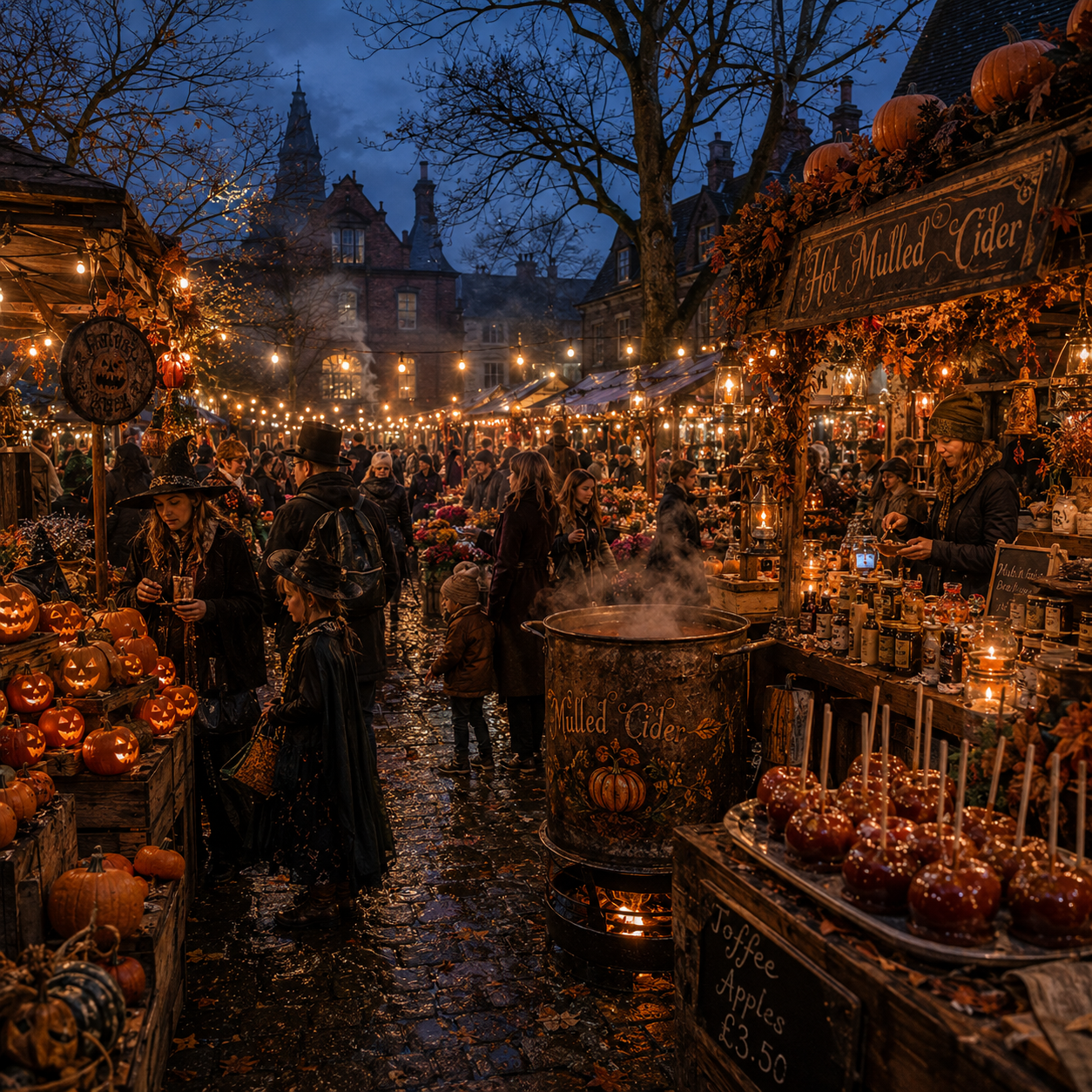
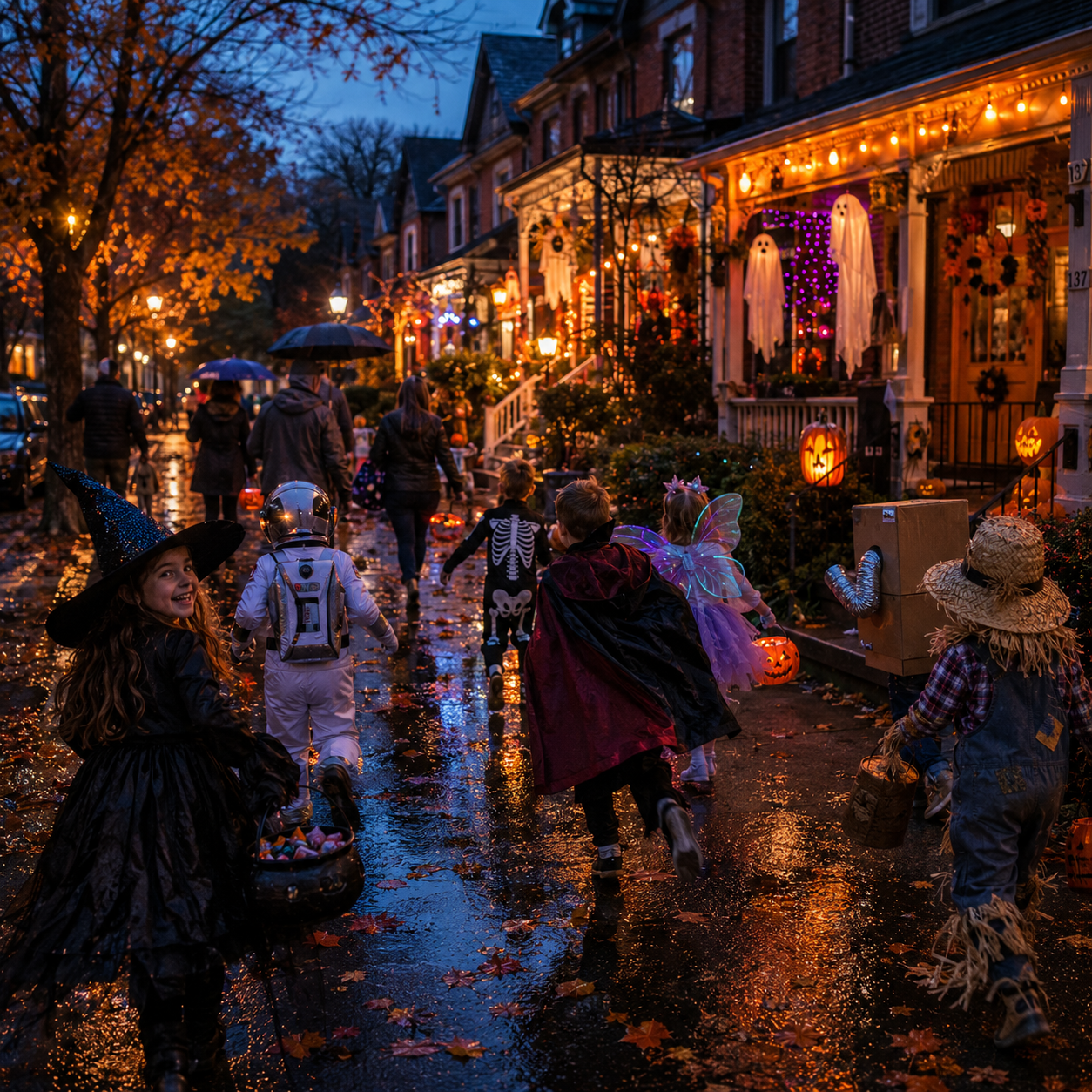
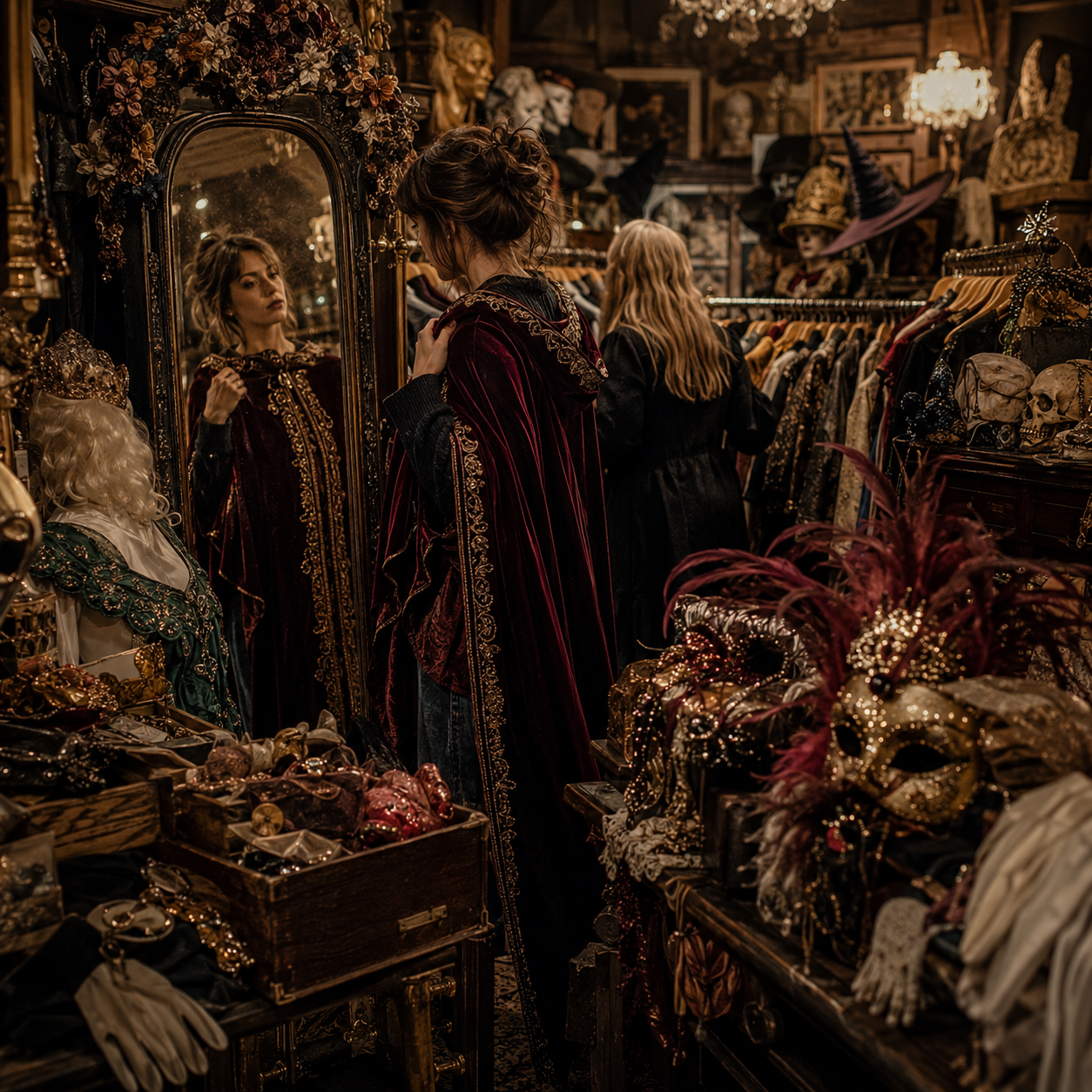
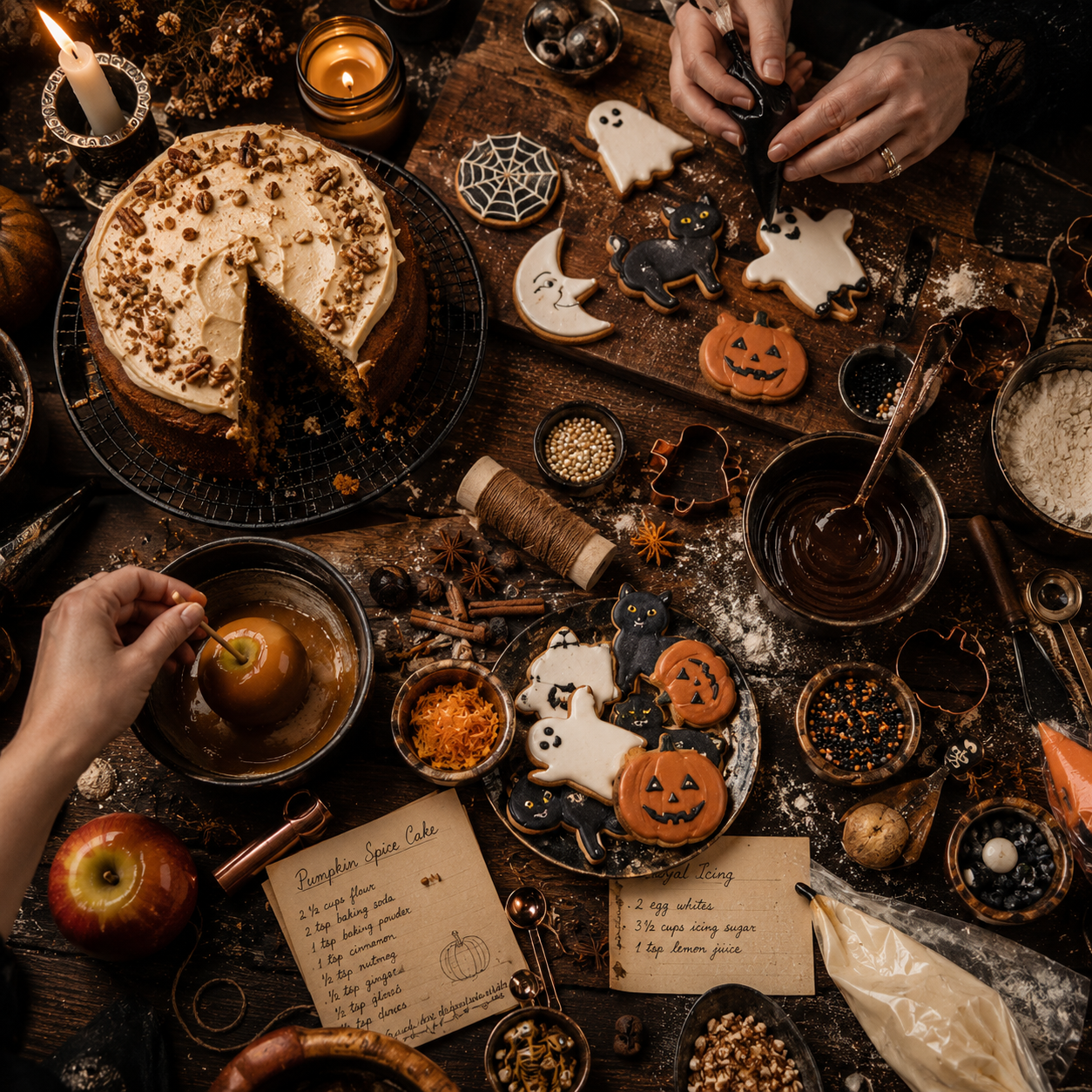
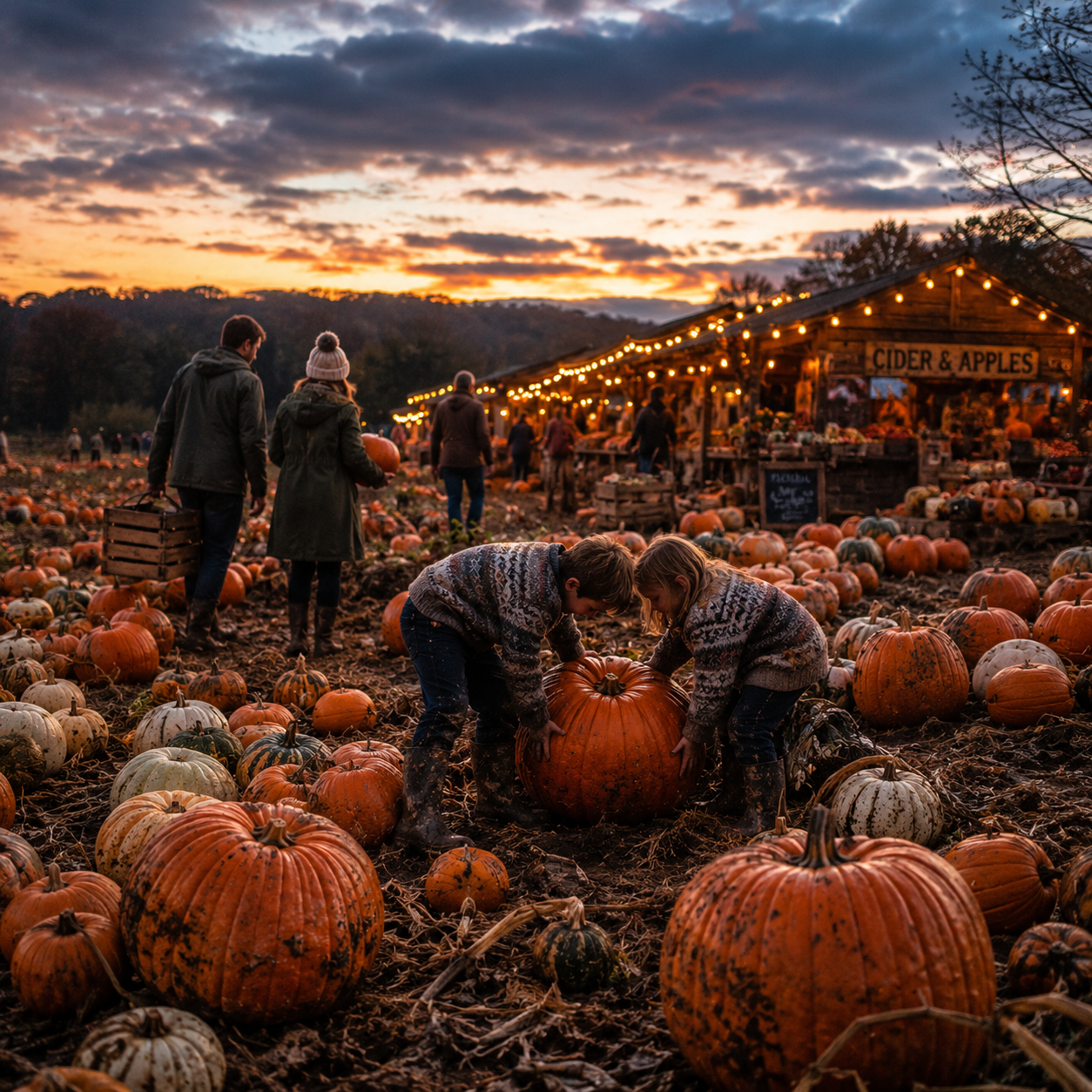
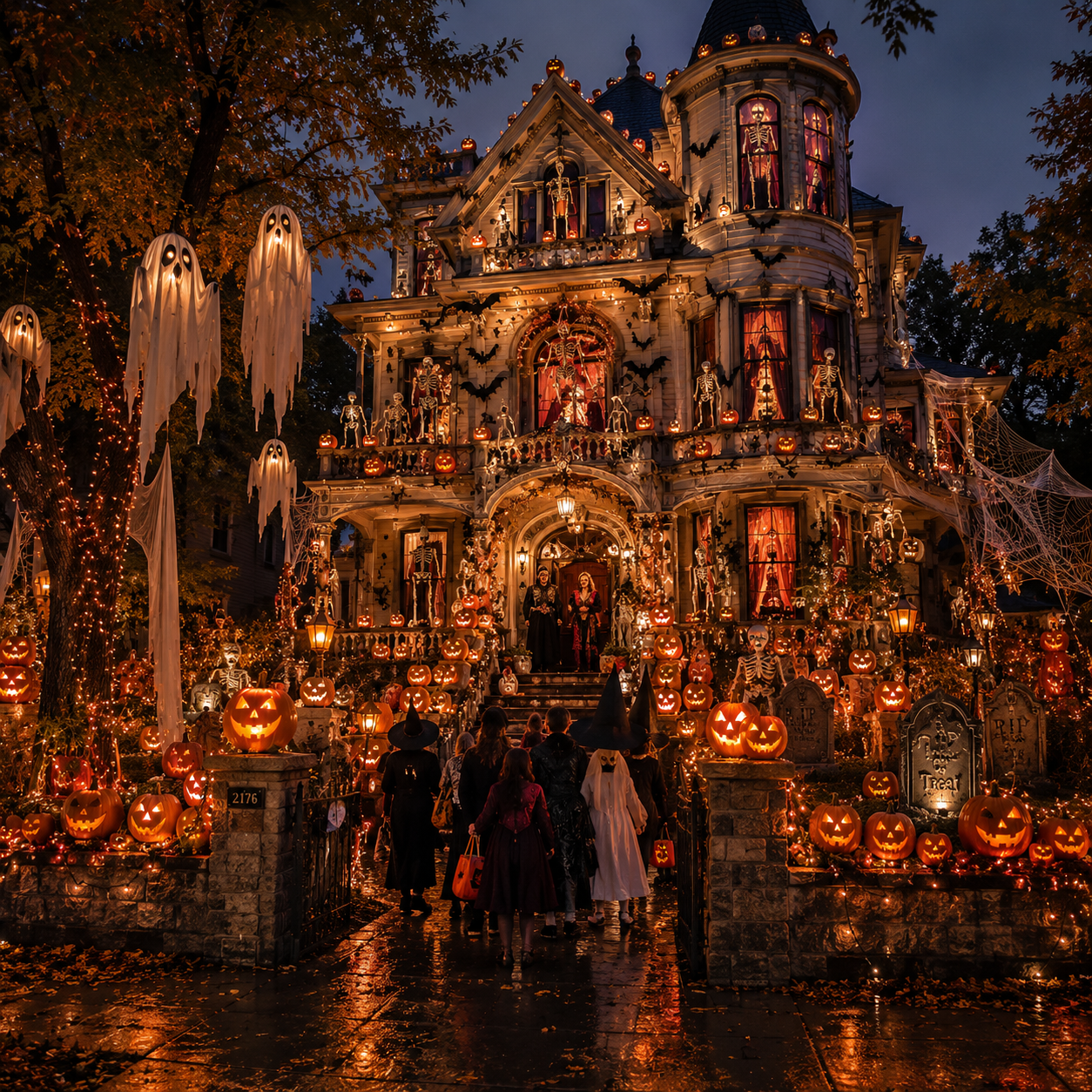
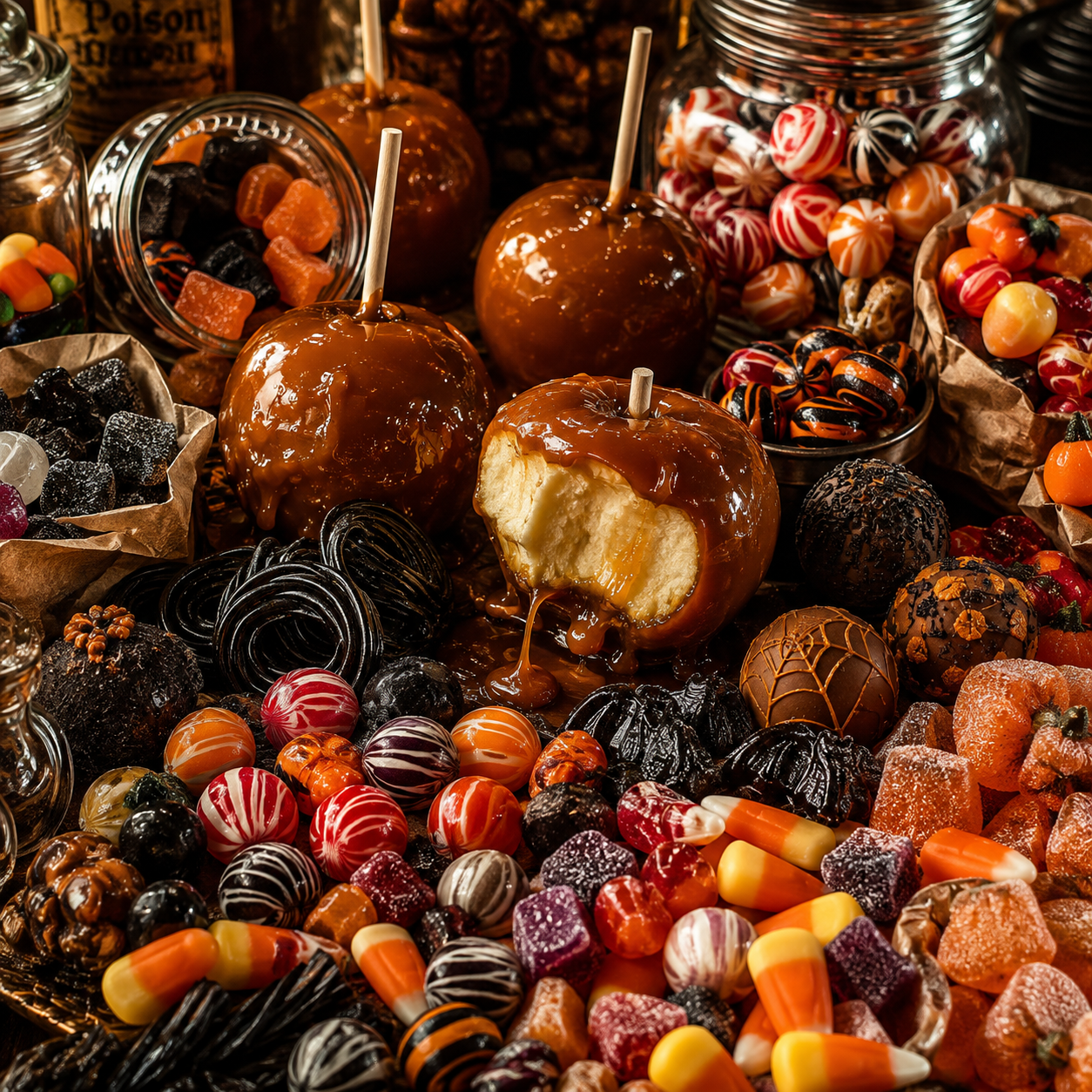
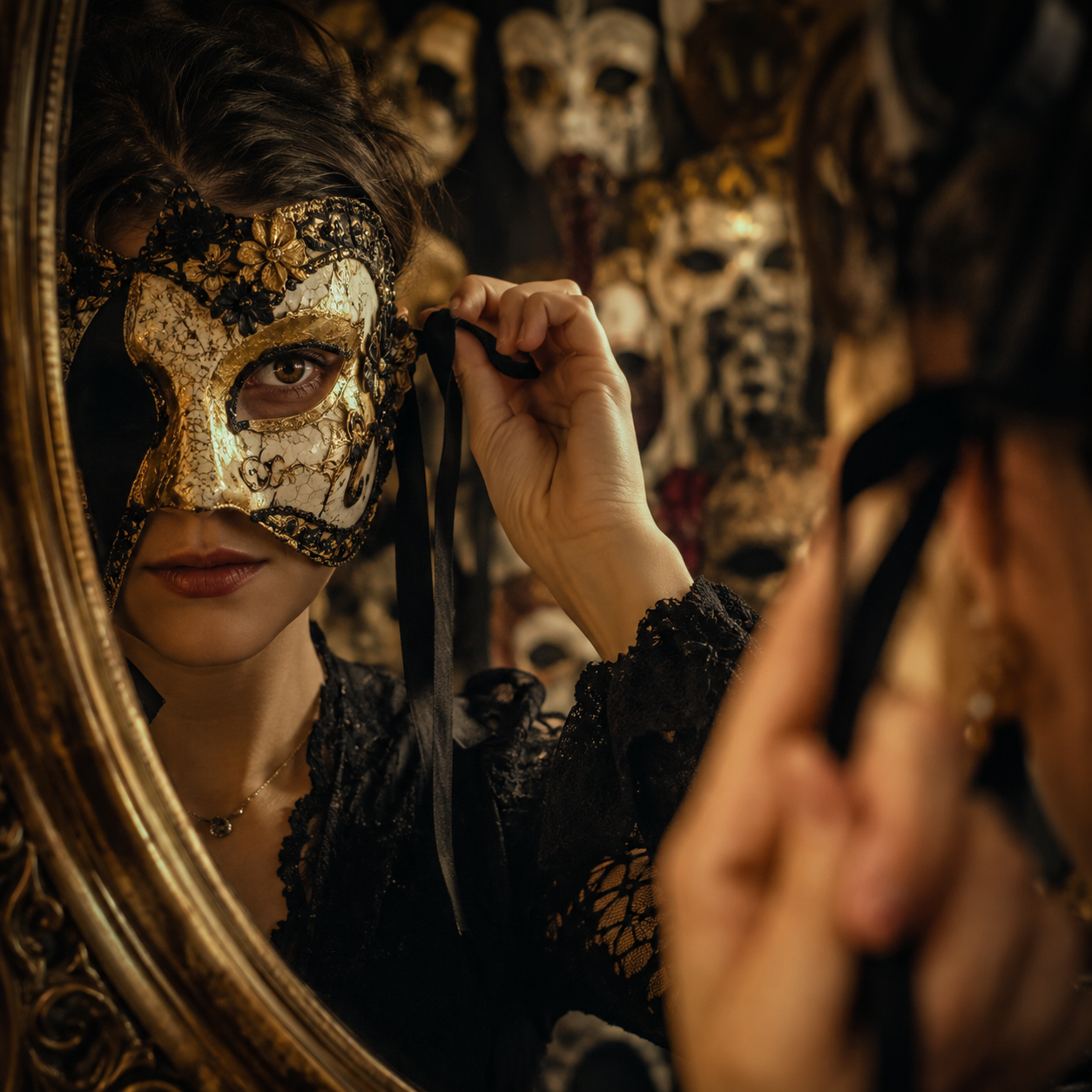
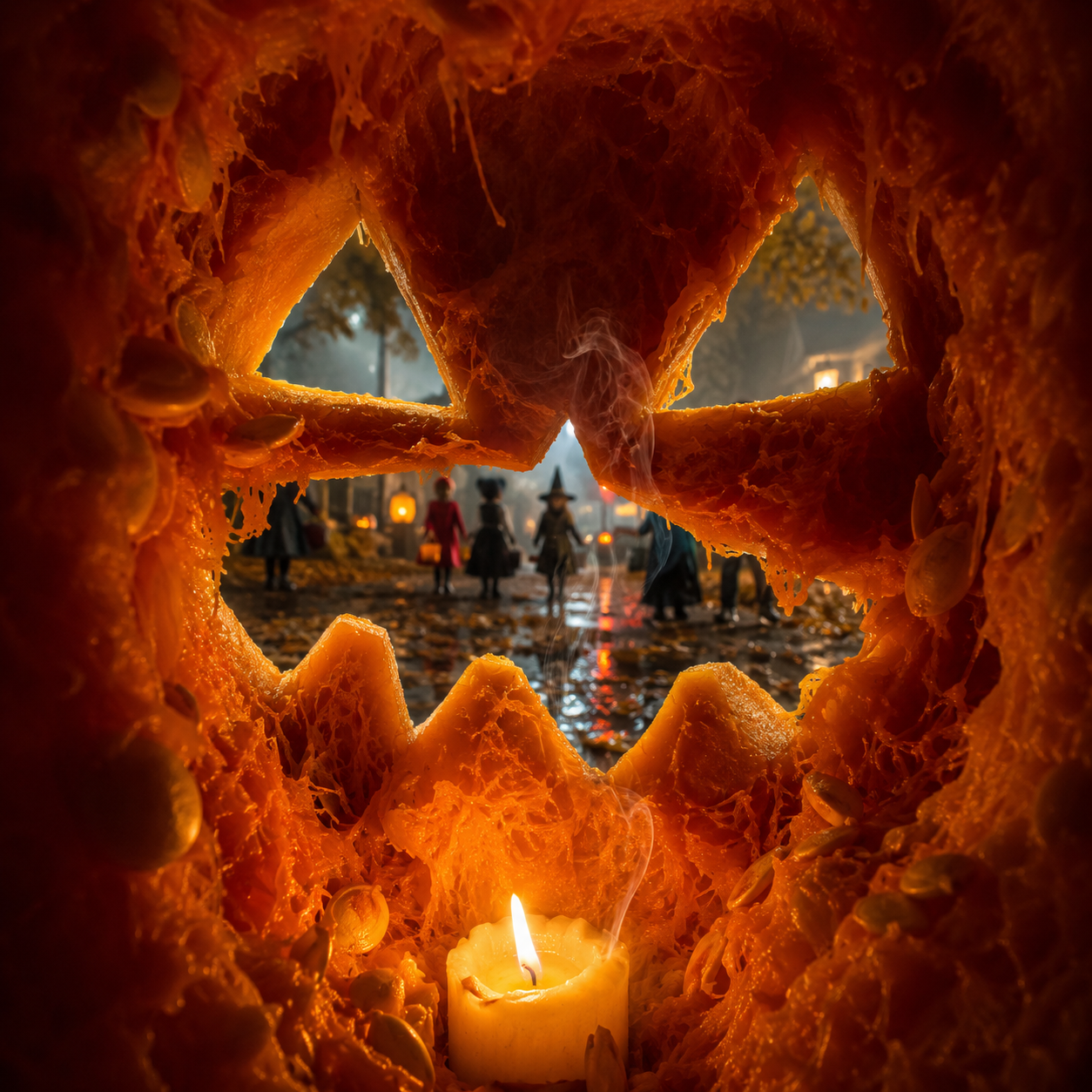
What Do You Notice?
What immediately draws your attention in this Halloween scene?
Which three small details would make your description feel more vivid and realistic?
How do the colours, lighting and shadows influence the atmosphere?
Where does your eye travel after looking at the image for a few moments?
Which detail could you focus on closely before gradually revealing the wider scene?
Sensory Questions
What sounds would you expect to hear if you were standing inside this scene?
What smells might you notice, from autumn air and candle wax to sweets, food, leaves or smoke?
Which objects or surfaces would have the most interesting textures to describe?
How might the temperature, air or weather feel against your skin?
If taste is relevant to the image, what flavours might become part of the experience?
Atmosphere & Language
Which three words best capture the atmosphere of the image?
How could you describe the scene without using the words spooky, scary, creepy or eerie?
What simile, metaphor or example of personification could strengthen your description?
Which colours, textures or patterns could you describe using more precise vocabulary?
How could you make this same image feel playful, nostalgic or unsettling simply by changing the details you emphasise?
Writing Task
Write a vivid descriptive paragraph inspired by the image. Use precise vocabulary, sensory imagery and carefully chosen figurative language to bring the Halloween scene to life. Concentrate on atmosphere, texture, colour, light and sensory experience rather than developing a story.
Go Deeper into Halloween Descriptive Writing
Halloween is particularly effective for descriptive writing because it brings together strong sensory details, dramatic contrasts and familiar objects that can be transformed by atmosphere. A suburban street, front garden, pumpkin or costume might seem completely ordinary in daylight, yet appear entirely different once darkness falls, candles are lit and shadows begin to obscure familiar details. Learning to control these changes through language can help you create descriptions that feel vivid without relying on obvious Halloween clichés.
◆ Use light and darkness carefully. Halloween scenes often contain small sources of light surrounded by darkness: candles inside pumpkins, illuminated windows, strings of decorations, fairground lights, torches and streetlamps. Instead of simply saying that something is dark, describe what the available light reveals—and what remains hidden.
◆ Look for contrasts. Halloween is full of opposing details: colourful sweets against dark decorations, excited children running through quiet streets, warm houses surrounded by cold October air, playful costumes beside unsettling masks, or cheerful pumpkins glowing outside an otherwise deserted home. Placing contrasting details beside one another can make both feel more noticeable.
◆ Describe texture as well as appearance. Think about the smooth surface of a sweet wrapper, sticky caramel, rough pumpkin skin, slippery pumpkin pulp, brittle leaves, damp stone, scratchy costume fabric, cold metal gates or melting candle wax. Texture can make a description feel physical rather than purely visual.
◆ Make ordinary objects interesting. You do not need a haunted house or supernatural event to create an atmospheric Halloween description. A discarded mask, half-burned candle, empty sweet bowl, abandoned costume or collapsed decoration can become memorable when observed closely.
◆ Use sound to reveal what you cannot see. Footsteps approaching along a pavement, leaves scraping across the ground, wrappers rustling inside a bucket, distant laughter, a doorbell ringing or music drifting from another house can suggest activity beyond the immediate scene. Silence can be equally effective, particularly when describing the streets after Halloween celebrations have ended.
◆ Experiment with distance and focus. Begin with an entire decorated neighbourhood before narrowing your attention to one flickering pumpkin, or start with the sticky surface of a single sweet before gradually revealing the enormous bowl surrounding it. Moving between wide views and tiny details can give your description a more cinematic quality.
◆ Let colour establish mood. Halloween offers far more than orange and black. Look for amber candlelight, copper leaves, deep burgundy costumes, silver moonlight, purple decorations, ivory masks, faded green pumpkins, glossy black feathers and brightly coloured sweet wrappers. Precise colour vocabulary can make familiar Halloween imagery feel richer and less predictable.
◆ Control the atmosphere through selection. The same Halloween street could feel exciting, cosy, nostalgic, chaotic, lonely or unsettling. You do not need to change the setting—you only need to change what you notice. Focus on laughter, warm windows and overflowing sweet buckets for one mood; extinguished pumpkins, empty pavements and decorations moving in the wind for another.
◆ Avoid relying on obvious adjectives. Words such as scary, creepy, spooky and eerie tell the reader how a scene should feel rather than allowing the description to create that feeling. Instead, show the details that produce the atmosphere and allow your reader to respond to them.
◆ Remember that Halloween can be beautiful. Descriptive writing does not always need to make Halloween frightening. Autumn leaves beneath streetlights, intricately carved pumpkins, elaborate costumes, candlelit windows and decorated houses can create descriptions that are warm, nostalgic, magical or visually spectacular. Exploring different moods will give your Halloween writing far greater variety.
Final Thoughts
Halloween is an ideal subject for descriptive writing because even the most familiar scenes can be transformed through careful observation. A pumpkin glowing beside a doorway, a crowded street filled with costumes, an overflowing bowl of sweets or a trail of fallen leaves can become vivid and memorable when you pay attention to colour, texture, sound, movement, light and atmosphere.
These 70 Halloween Descriptive Writing Prompts are designed to encourage you to look beyond obvious Halloween imagery and experiment with different ways of describing the season. By exploring contrasting scenes, sensory experiences, language techniques, creative restrictions and picture prompts, you can practise creating everything from lively and nostalgic Halloween celebrations to quiet, mysterious October nights.
The strongest descriptive writing does not simply tell readers that somewhere is beautiful, exciting or unsettling—it chooses the details that allow them to experience that atmosphere for themselves. Experiment with perspective, focus closely on unexpected details, play with sentence structure and challenge yourself to describe familiar Halloween sights in ways that feel fresh and original.
For even more exercises, techniques and inspiration, explore the Descriptive Writing Hub, where you'll find descriptive writing prompts covering settings, landscapes, weather, seasons, characters, emotions, sensory details and much more.
Choose Your Next Adventure