Gothic Story Sparks: Random Gothic Writing Prompt Generator
Sometimes a story begins with a fully formed idea. Sometimes it begins with a strange object, an unsettling sentence, a family secret or a place you cannot stop thinking about. Gothic Story Sparks is designed for the second kind.
Click the generator and chance will give you a single piece of Gothic inspiration. You might receive a title, setting, character, opening line, closing line, object, conflict, plot hook, plot twist, secret, relationship, discovery, threat, mysterious message, rule or event. Take the spark exactly as it appears, twist it into something entirely different, or keep clicking until something refuses to leave your imagination.
The sparks wander across the breadth of Gothic fiction, from crumbling estates, isolated villages and ancestral secrets to contemporary homes, universities, hospitals, strained families, dangerous relationships and modern hauntings. Some are supernatural. Some are psychological. Others could lead to Gothic romance, folk Gothic, historical Gothic, domestic Gothic or stories in which nothing supernatural happens at all.
For more inspiration, explore the Gothic Writing Hub for Gothic prompts, story ideas, settings, characters and darker writing inspiration, or browse the Creative Writing Archive or the Creative Writing Generator Hub to discover ideas across fantasy, horror, romance, mystery and more.
Ready? Let chance choose where your story begins.
Your next story starts here.
Click the button and let chance choose your inspiration. You might receive a title, character, setting, opening line, plot twist, mysterious object — or something else entirely.
How to Use Gothic Story Sparks
Gothic Story Sparks is designed to help you move from a blank page to the beginnings of a dark, atmospheric story. Use the generator as many times as you like, keeping the ideas that intrigue you and reshaping anything that does not quite fit the Gothic tale you want to tell.
1. Generate Your Gothic Story Spark
Click the generator to create a new piece of Gothic inspiration. You might discover an eerie setting, troubled character, opening line, mysterious object, hidden secret, supernatural threat, strange discovery or unsettling event.
2. Choose What You Want to Keep
You do not have to use every generated idea exactly as it appears. Keep the details that immediately create questions, discard the ones that do not interest you, or combine several Story Sparks to create something entirely new.
A haunted manor might become a decaying space station. A mysterious inheritance could belong to a modern teenager. A ghost might turn out to be a memory, deception or manifestation of guilt rather than a supernatural being.
3. Build the Mystery
Gothic stories thrive on questions, secrets and uncertainty. Once you have your initial spark, ask what your protagonist does not know.
What happened here before they arrived? Who is hiding something? Why is one room forbidden? What does the family refuse to discuss? Is the supernatural threat real, imagined or deliberately created by someone else?
You do not need to answer every question immediately. Let uncertainty become part of the story.
4. Create the Atmosphere
Think beyond simply making your setting dark or frightening. Gothic atmosphere can emerge through architecture, landscape, weather, isolation, decay, silence, beauty and the lingering presence of the past.
Choose details that reflect the emotional world of your characters. A crumbling house, endless coastline, frozen landscape or perfectly preserved bedroom can become much more than a backdrop when the setting begins to influence the story itself.
5. Find the Fear Beneath the Story
The supernatural is only one source of Gothic fear. Your story might explore obsession, imprisonment, forbidden desire, isolation, inherited guilt, madness, identity, family secrets, grief or the fear of losing control.
Ask what your character fears most — and then consider how the setting, mystery and other characters could force them to confront it.
6. Start Writing
Once a Story Spark makes you want to know what happens next, stop generating and follow it.
Begin with the arrival at the house, the opening of the letter, the discovery behind the locked door, the first unexplained sound or the moment your protagonist realises that something they believed about their world may not be true.
You do not need to understand the entire mystery before you begin. Sometimes the most interesting Gothic stories start with one unanswered question.
Yes — 5 max for every Story Sparks “Take It Further” section. Otherwise we're recreating the hub and giving people too many choices.
For Gothic, I'd choose these five because together they cover plot, characters, secrets, setting and genre direction:
Take Your Gothic Story Further
Found a Gothic Story Spark you want to explore? Use these writing resources to develop the characters, mysteries, settings and atmosphere behind your idea and begin turning a single spark into a complete Gothic story.
◆ Gothic Story Generator – create complete Gothic story ideas combining atmospheric settings, troubled characters, dark secrets, supernatural threats, unsettling discoveries and haunting plot twists. Pasted text
◆ Gothic Character Prompts – create brooding aristocrats, tragic heroines, haunted heirs, mysterious children, eccentric scholars, grieving widows and Gothic villains carrying secrets of their own. Pasted text
◆ Gothic Secrets – uncover hidden identities, cursed bloodlines, forgotten rooms, buried family histories, occult conspiracies and revelations capable of changing an entire story. Pasted text
◆ Haunted House Writing Prompts – explore abandoned mansions, forbidden rooms, hidden passageways and houses haunted by restless spirits, buried histories, family secrets and memories that refuse to disappear. Pasted text
◆ Gothic Horror, Romance, Mystery & Fantasy – choose the direction your story takes, from psychological terror and supernatural horror to dangerous romance, buried mysteries, cursed kingdoms and dark magical worlds.
Explore More Story Sparks
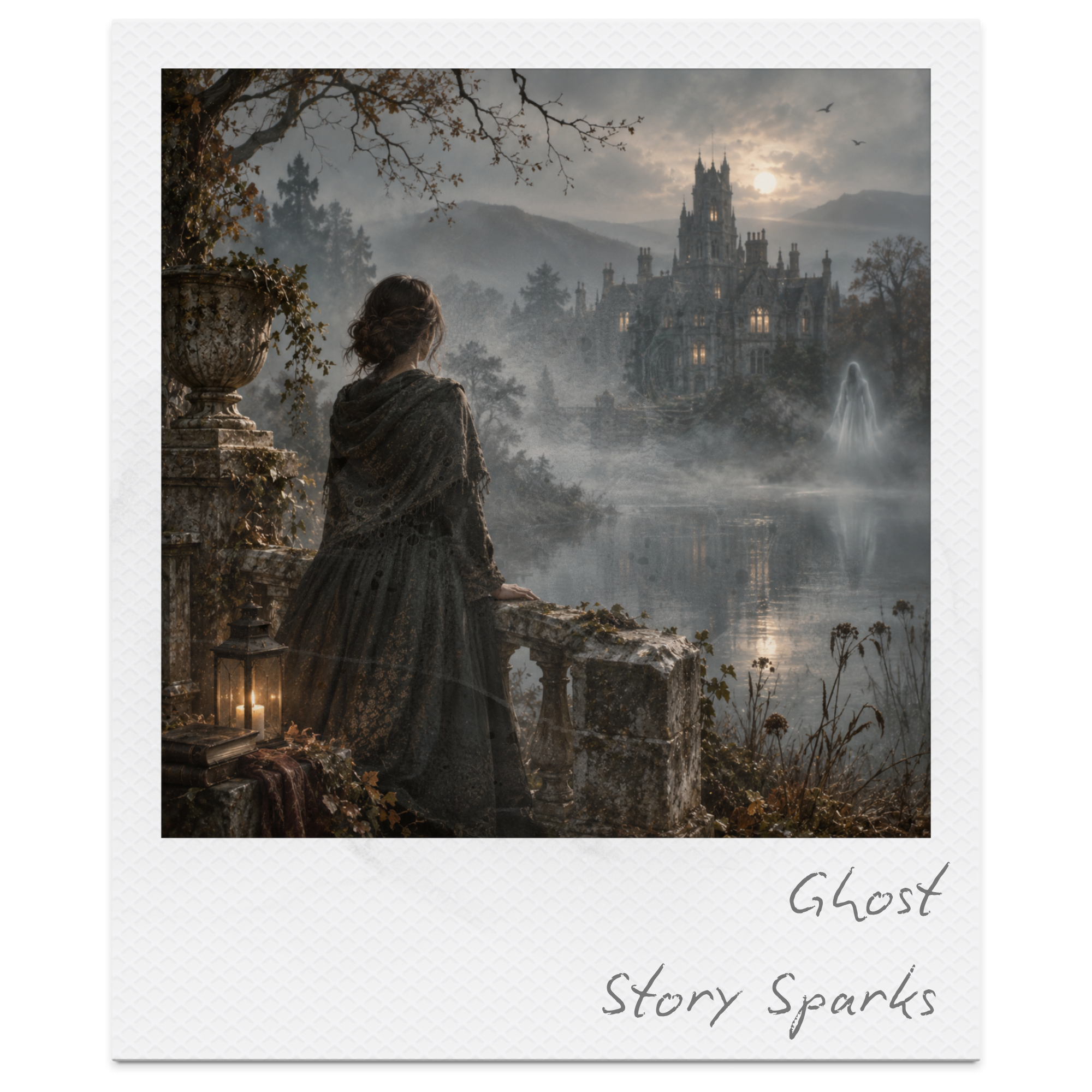
Ready to jump into a different genre? Explore more Story Sparks generators for instant creative writing inspiration, from science fiction, romance and horror to fairytales, folklore, mystery and beyond. Choose a genre, generate a random writing prompt and discover where your next story might begin.
Gothic Story Sparks FAQs
-
Gothic fiction is a literary genre that combines mystery, fear, psychological tension, powerful settings and the influence of the past. Gothic stories often explore characters who are isolated, threatened or haunted by secrets they do not fully understand.
Traditional Gothic fiction frequently features castles, manor houses, ruins, supernatural events and mysterious inheritances, but contemporary Gothic stories can take place almost anywhere. A university, apartment building, isolated village, space station or ordinary family home can become Gothic when the setting develops a sense of history, confinement, secrecy and unease
-
A Gothic writing prompt is an idea designed to inspire a dark, atmospheric story. It might provide an eerie setting, mysterious character, family secret, supernatural event, forbidden object, unsettling discovery, opening line or unexplained threat.
Gothic prompts are particularly useful when you have the mood of a story in mind but need a character, conflict or mystery to begin developing the plot.
-
Gothic Story Sparks is a free random Gothic writing prompt generator designed to produce new pieces of story inspiration each time you use it.
Generate a spark and use it as the foundation of a story, keep generating until something captures your imagination, or combine several results. An eerie setting from one spark might work perfectly with a character, secret or supernatural threat from another.
There is no correct way to use the generator. The aim is simply to give you an intriguing place to begin.
-
Common elements of Gothic fiction include atmospheric settings, isolation, mystery, suspense, secrets, psychological conflict, decay, imprisonment, obsession, complicated characters and the intrusion of the past into the present. Supernatural events such as ghosts, curses and hauntings are also common, although they are not essential. Penguin
A Gothic story does not need to include every convention. Choosing a few elements and connecting them meaningfully to your characters and conflict is usually more effective than trying to include every Gothic trope at once.
-
Start with a character, setting or mystery that immediately creates questions. Decide what has happened in the past, what remains hidden in the present and what your protagonist risks discovering.
Then build tension gradually. Allow strange details, unanswered questions and discoveries to accumulate rather than explaining the mystery immediately.
Most importantly, connect the Gothic elements to the story itself. A locked room becomes more interesting when somebody desperately wants it to remain locked. A ruined house becomes more powerful when its decay reflects the collapse of the family living inside it. A ghost becomes more meaningful when its appearance forces somebody to confront something they would rather forget.
-
Gothic atmosphere comes from more than darkness, storms and abandoned buildings. Think about how setting, sensory description, isolation, uncertainty and your character's emotional state work together.
Use sound, temperature, texture, light, smell and silence to make the environment tangible. Let characters notice details that create questions: footsteps in an empty corridor, a room nobody enters, a portrait that has been removed from the wall or a window that is always locked.
The strongest Gothic settings often feel as though they have histories and personalities of their own.
-
A good Gothic setting creates both atmosphere and narrative possibilities. It should contain places to explore, histories to uncover and boundaries that restrict or challenge the characters.
Castles, ruined abbeys, isolated mansions and ancient forests are classic choices, but Gothic settings do not have to be historical. Hotels, schools, hospitals, apartment buildings, remote research stations, coastal towns and even futuristic environments can become Gothic settings.
Consider what happened there before your story began, what physical traces remain and how the environment influences the people who enter it. Setting frequently functions almost like another character in Gothic fiction.
-
No. Gothic fiction can include ghosts, vampires, curses, monsters and other supernatural forces, but the supernatural is not compulsory.
Some Gothic stories deliberately leave readers uncertain about whether strange events have supernatural or psychological explanations. Others contain no literal supernatural element at all and create unease through obsession, isolation, family secrets, unreliable perception or human behaviour.
That uncertainty can itself become an important source of Gothic tension.
-
Gothic fiction and horror overlap considerably, but they are not identical.
Horror generally places greater emphasis on creating fear, shock or dread, while Gothic fiction characteristically combines darkness with atmosphere, mystery, psychological conflict, history, isolation, decay and secrets. A Gothic story may be frightening, but it can also be romantic, melancholic, mysterious or beautiful.
Many stories belong to both genres, which is why Gothic horror has become such a natural combination.
-
Gothic fiction often features characters carrying secrets, desires or histories that create internal as well as external conflict.
You might encounter haunted heirs, imprisoned heroines, Byronic heroes, mysterious strangers, obsessive scholars, grieving widows, controlling relatives, unreliable narrators, eccentric servants, doomed lovers, ghosts, vampires and characters whose identities are not what they initially appear to be.
Rather than simply using a Gothic archetype, ask what the character wants, what they fear and what they are hiding.
-
Popular Gothic tropes include haunted houses, forbidden rooms, mysterious inheritances, cursed families, doomed lovers, unreliable narrators, secret passages, doubles, hidden identities, madness, imprisonment, ancestral guilt, supernatural warnings and dangerous knowledge.
Tropes become more interesting when writers alter the reader's expectations. The haunted house might be protecting its inhabitants. The apparent villain might be trying to prevent a greater danger. The family curse might actually be a lie created to conceal something entirely human.
-
Absolutely. Romance has been intertwined with the Gothic tradition for centuries. Gothic romance often combines attraction with danger, secrecy, isolation, obsession, unequal power, forbidden relationships or uncertainty about whether another character can be trusted.
The romantic relationship can become part of the central mystery rather than existing separately from it, allowing desire and danger to intensify one another.
-
Yes. Gothic fiction does not have to take place in a Victorian mansion or medieval castle.
A contemporary Gothic story could unfold in an isolated coastal community, decaying hotel, prestigious university, suburban house, abandoned shopping centre, remote research facility or apartment building with a disturbing history.
The period matters less than the underlying Gothic qualities: atmosphere, isolation, secrets, psychological tension and a past that continues to shape the present. Contemporary writing guidance explicitly treats Gothic settings as adaptable beyond traditional castles and manor houses.
-
Yes. Gothic Story Sparks is free to use for creative inspiration. Generate as many Gothic writing prompts as you need and adapt, combine or transform the ideas to create your own original characters, settings and stories.
You can use the sparks for short stories, novels, creative writing exercises, classroom activities, Gothic romance, Gothic horror, Gothic fantasy, mysteries and other dark fiction projects.