70 Gothic Horror Writing Prompts: Dark Story Starters, Characters, Settings & Visual Ideas
Gothic horror explores the darker side of human experience through atmosphere, psychological tension, and unsettling mysteries. Emerging from gothic literature traditions of the eighteenth and nineteenth centuries, these stories often unfold in isolated locations — abandoned houses, storm-battered coastlines, forgotten villages, and shadow-filled corridors where secrets refuse to remain hidden. Rather than relying solely on shock or violence, gothic horror builds dread slowly, allowing fear to emerge through atmosphere, suggestion, and the feeling that something is deeply wrong beneath the surface of ordinary life.
Gothic horror writing prompts invite teen writers to explore stories shaped by haunting presences, hidden histories, cursed places, and characters confronting forces they cannot fully understand. These narratives often explore themes of guilt, isolation, forbidden knowledge, psychological conflict, and the fragile boundary between the living and the dead. While gothic horror shares elements with supernatural horror and dark fantasy, it typically emphasises mood, symbolism, and emotional unease rather than fast-paced action.
This collection of 70 Gothic Horror Writing Prompts is designed as a complete creative toolkit, combining story starters, plot hooks, character ideas, setting prompts, opening lines, closing lines, and cinematic visual prompts inspired by haunted landscapes, psychological horror, and classic gothic storytelling traditions. The prompts work equally well for creative writing lessons, English classrooms, writing clubs, journaling, or longer horror projects, offering young writers a structured way to explore suspense, atmosphere, and psychological tension.
If you’d like to explore more gothic writing prompts, atmospheric horror ideas, and dark storytelling collections, you can browse the Creative Writing Archive or explore the dedicated Gothic Writing Hub, or the Horror Writing Hub where you’ll find prompts inspired by gothic fantasy, gothic mystery, haunted settings, and other dark literary traditions.
1. Plot Hooks
Gothic horror plot hooks often begin with disturbances in familiar places — houses that remember former occupants, towns hiding long-buried tragedies, or characters who slowly realise the past is still present. Drawing on gothic literature traditions, these prompts introduce mysteries where fear grows through atmosphere, secrecy, and psychological tension.
Write about a teenager who moves into an old house where every mirror in the building has been carefully covered with cloth.
Write about a village where the church bell rings every night at the exact time someone died there decades ago.
Write about a student who begins seeing the same unknown figure standing in the background of every old photograph in their house.
Write about a character who discovers a hidden room in their home containing objects that seem to belong to people who vanished long ago.
Write about a boarding school where students whisper about a corridor that appears only after midnight.
Write about a character who begins hearing footsteps in their house every night, always stopping just outside their bedroom door.
Write about a town where every resident refuses to speak about the abandoned house at the end of the street.
Write about a teenager who finds a diary describing events in their life several days before they actually happen.
Write about a character who realises the shadows in their house move even when the lights remain still.
Write about a visitor who arrives in a quiet village only to discover no one there seems willing to leave.
2. Title Ideas
Gothic horror titles often suggest atmosphere, unease, and hidden danger rather than explaining the story directly. Drawing on gothic literary traditions, these titles evoke haunted places, lingering memories, and unsettling secrets.
The House at the End of the Lane
The Silence Upstairs
Where the Shadows Wait
The Locked Room
A Visitor After Midnight
The Portrait in the Hall
The House That Never Sleeps
The Corridor Behind the Wall
The Town That Watches
What Was Left in the Attic
3. Opening Lines
Strong gothic horror openings create immediate unease, often beginning with an ordinary moment that slowly becomes disturbing. Rather than explaining the threat directly, these openings suggest that something in the environment is wrong.
The first night in the house was quiet, except for the sound of someone walking upstairs.
Everyone in town knew the old house was empty, which made the light in the attic window impossible to explain.
The photograph had been taken fifty years ago, but the person standing behind my grandmother looked exactly like me.
No one warned me about the locked door at the end of the corridor.
The diary described the moment I was reading it.
The first time I heard the whispering in the walls, I thought it was the wind.
The village seemed normal until I realised no one had left it in years.
The painting had always hung in the hallway, but the figure inside it had never looked directly at me before.
I noticed the graveyard from my bedroom window on the second night, though it had not been there the day before.
The footsteps began the same night I moved into the house.
4. Closing Lines
Gothic horror endings rarely restore complete safety. Instead, they suggest that the haunting, curse, or unsettling truth continues beyond the final page, leaving readers with lingering unease.
By morning the house was silent again, but the footprints on the stairs were still there.
The mirror looked normal once more, though I could still feel something watching from inside it.
The diary ended there, but the next page was already beginning to write itself.
I left the town before sunrise, though I knew it would eventually find me again.
The portrait returned to its place on the wall, smiling the way it never had before.
Nothing moved in the house again, except the door that had always remained locked.
The footsteps stopped after that night, but the space outside my door never felt empty.
The attic was sealed again, though I knew something was still inside.
When the lights came back on, the shadows were standing in the wrong places.
The house looked abandoned again by morning, just as everyone insisted it always had been.
5. Character Ideas
Gothic horror characters often carry secrets, guilt, or connections to disturbing histories. These characters are frequently drawn into events they cannot easily escape, forcing them to confront the darker sides of human nature and memory.
A teenager who inherits an abandoned house that no one in town will enter.
A historian researching local disappearances who begins finding references to themselves in old records.
A caretaker responsible for maintaining a house that has been empty for decades.
A student who realises their new school was built on the ruins of something deliberately destroyed.
A character who begins receiving letters from a person who died years earlier.
A photographer whose camera begins capturing figures invisible to the naked eye.
A librarian responsible for a collection of journals that describe strange deaths in the same building.
A teenager whose family refuses to explain why they moved away from their hometown years ago.
A night watchman who begins hearing conversations in rooms that should be empty.
A character who suspects that someone — or something — in their house has been observing them for years.
6. Setting Ideas
Gothic horror settings are defined by isolation, decay, and lingering history. These places often feel haunted by memory, creating an atmosphere where the past intrudes upon the present.
A decaying manor house slowly collapsing into the surrounding forest.
A small coastal town where thick fog hides the sea for days at a time.
An abandoned boarding school closed after a mysterious incident decades earlier.
A churchyard where several graves bear dates that have not happened yet.
A narrow street lined with identical houses where one building has always remained empty.
A ruined asylum standing on a hill above a quiet town.
A forgotten railway station where trains have not stopped in years.
A crumbling theatre whose stage lights occasionally turn on by themselves.
A lonely lighthouse overlooking cliffs where ships once disappeared.
A silent countryside village where every house appears inhabited, yet no one is ever seen outside.
7. Picture Prompts
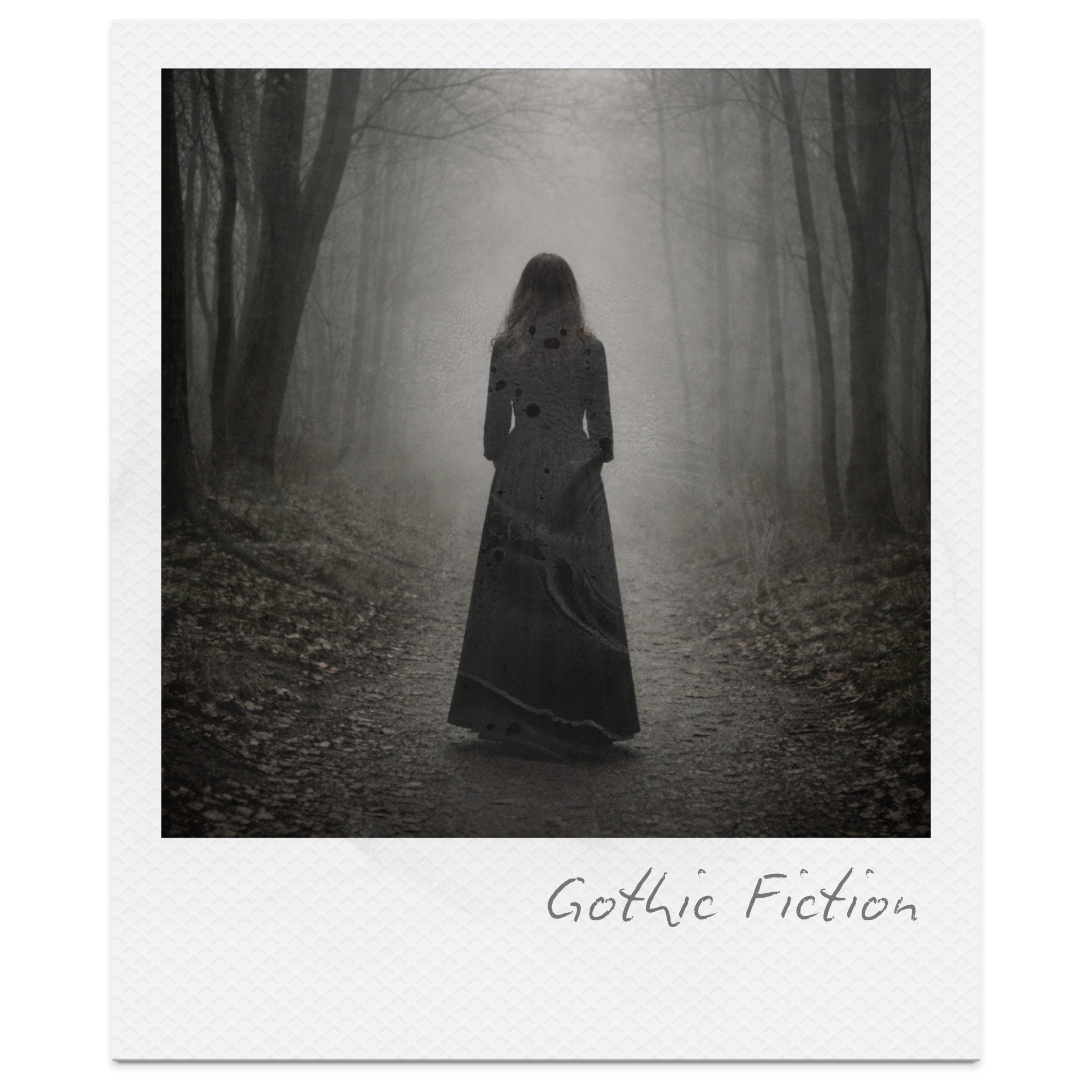
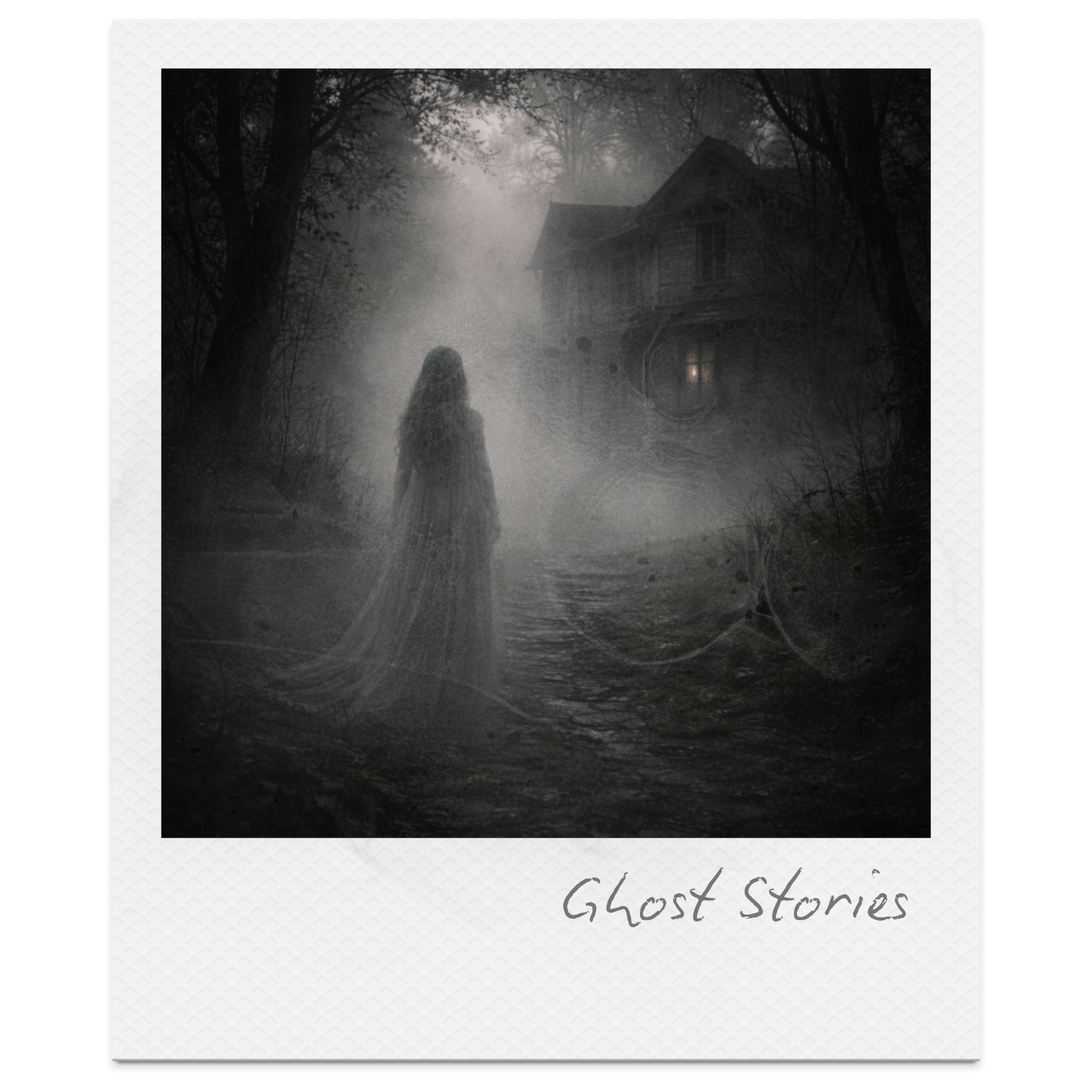
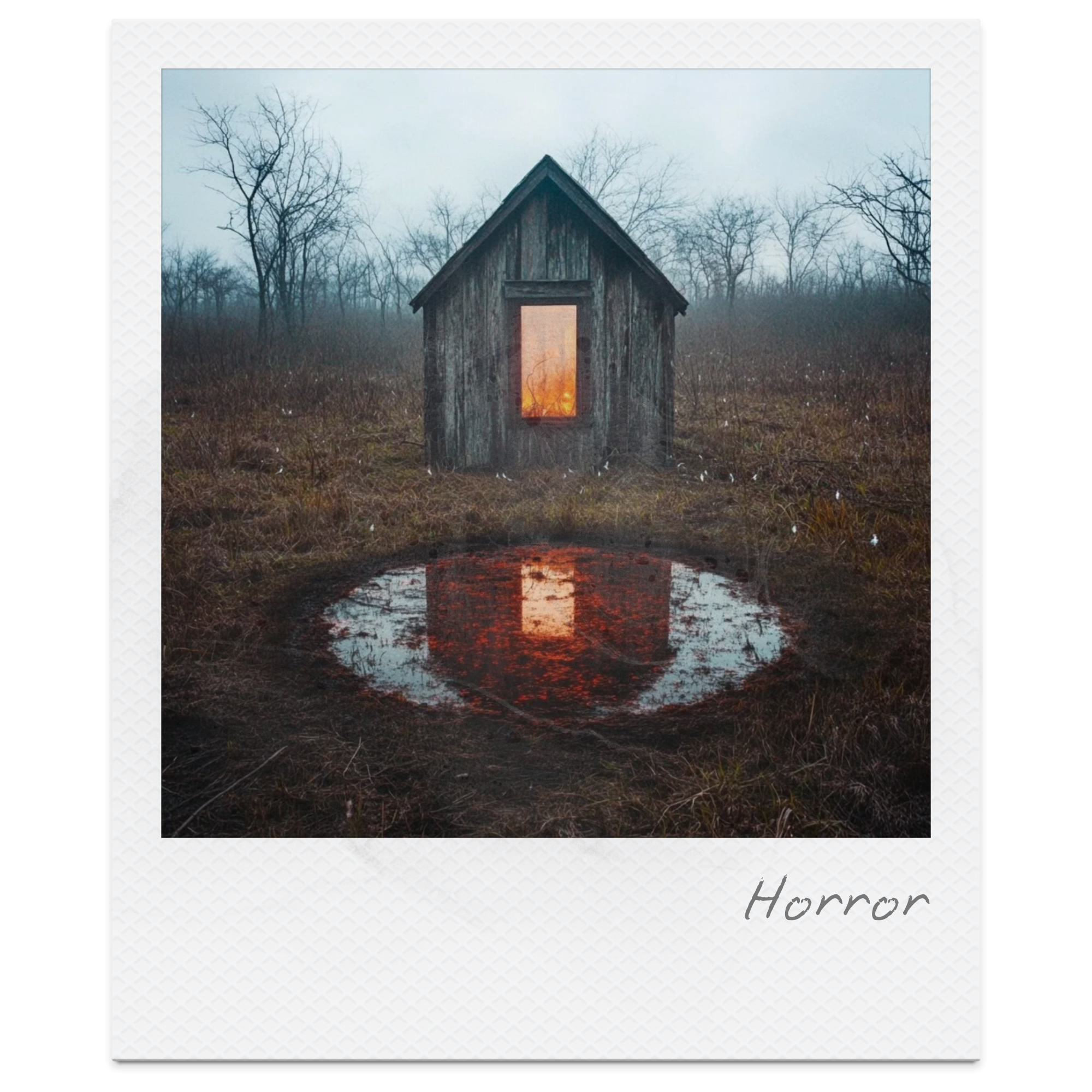
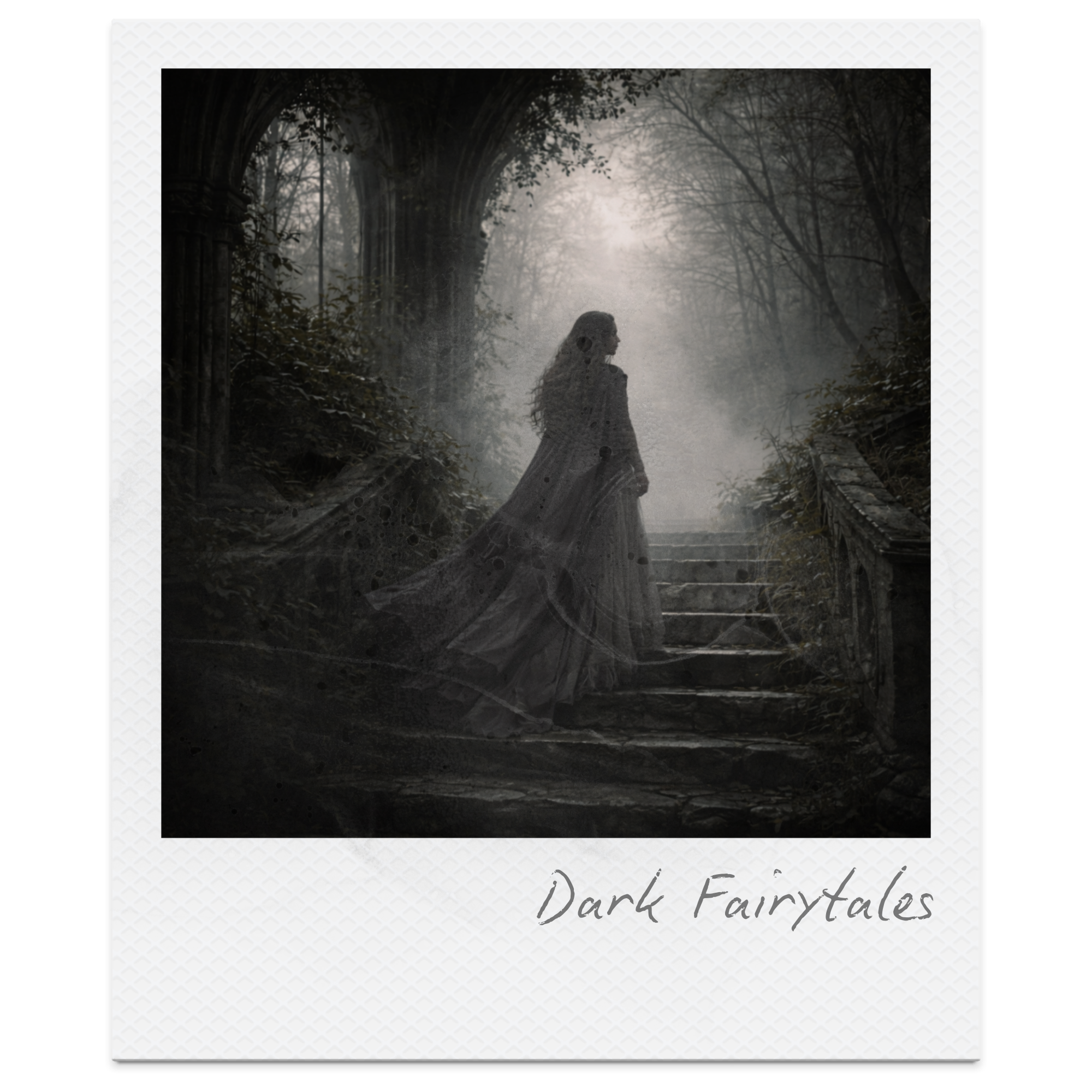
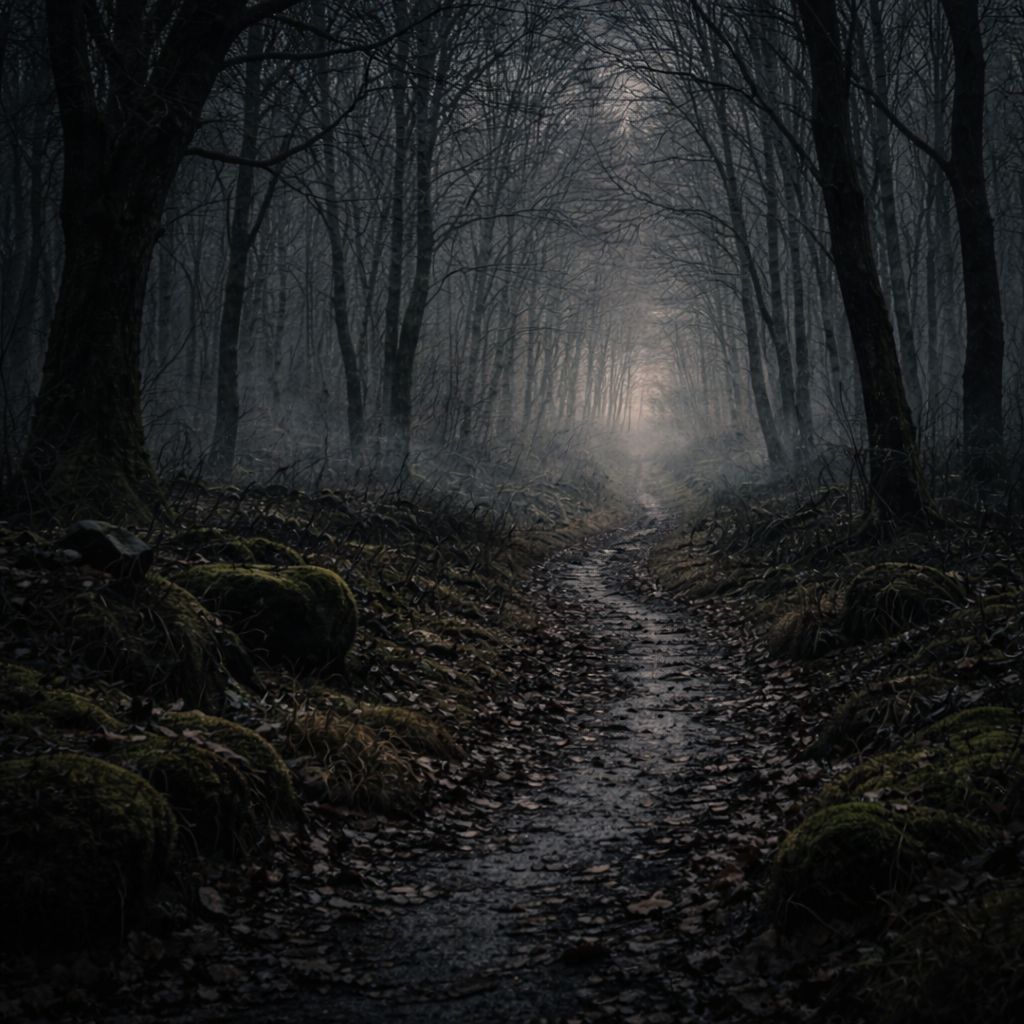
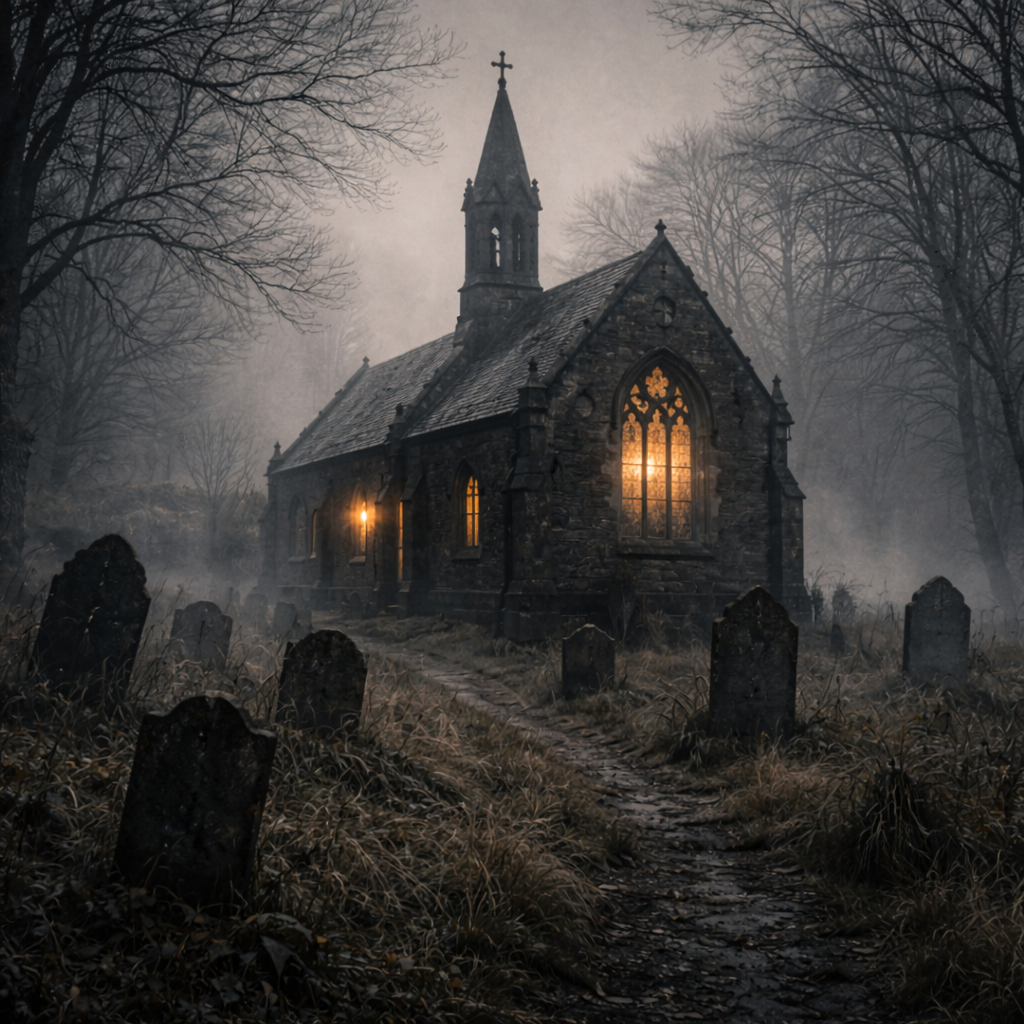
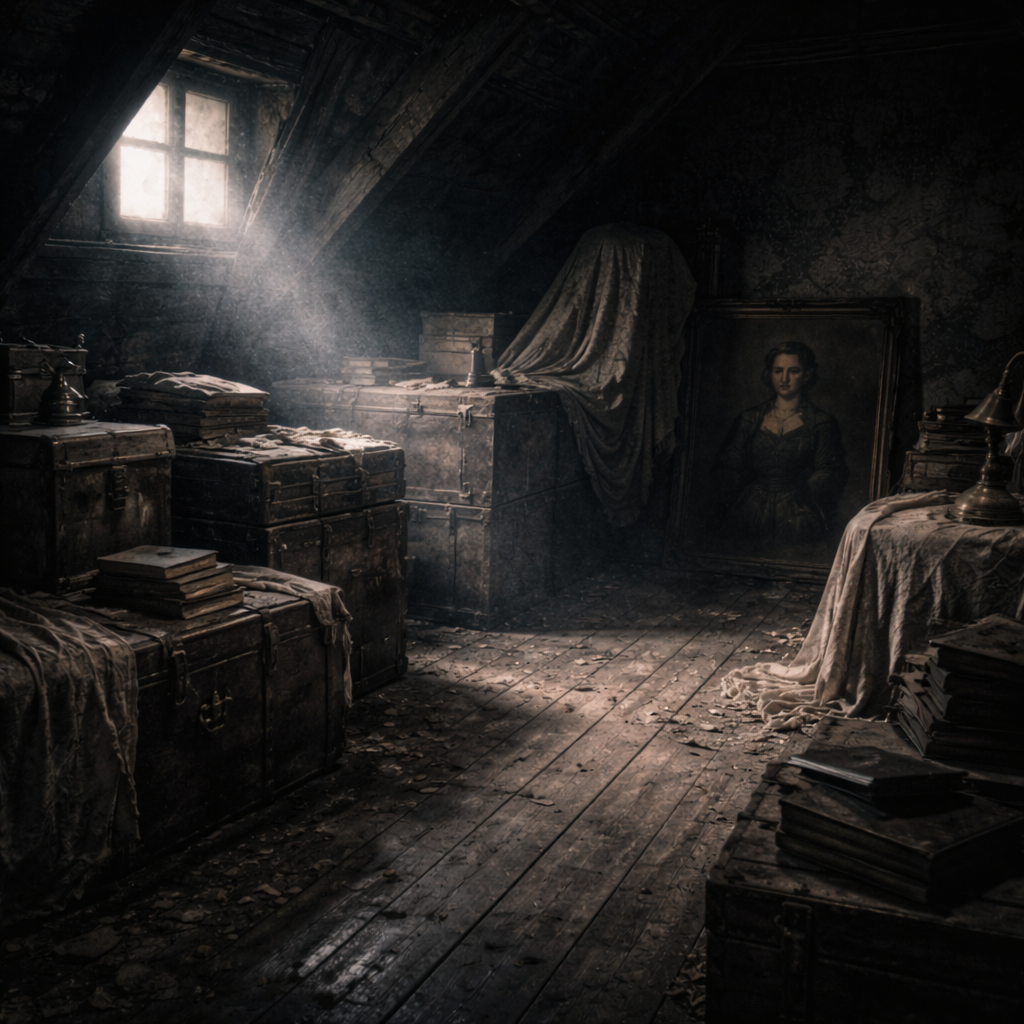
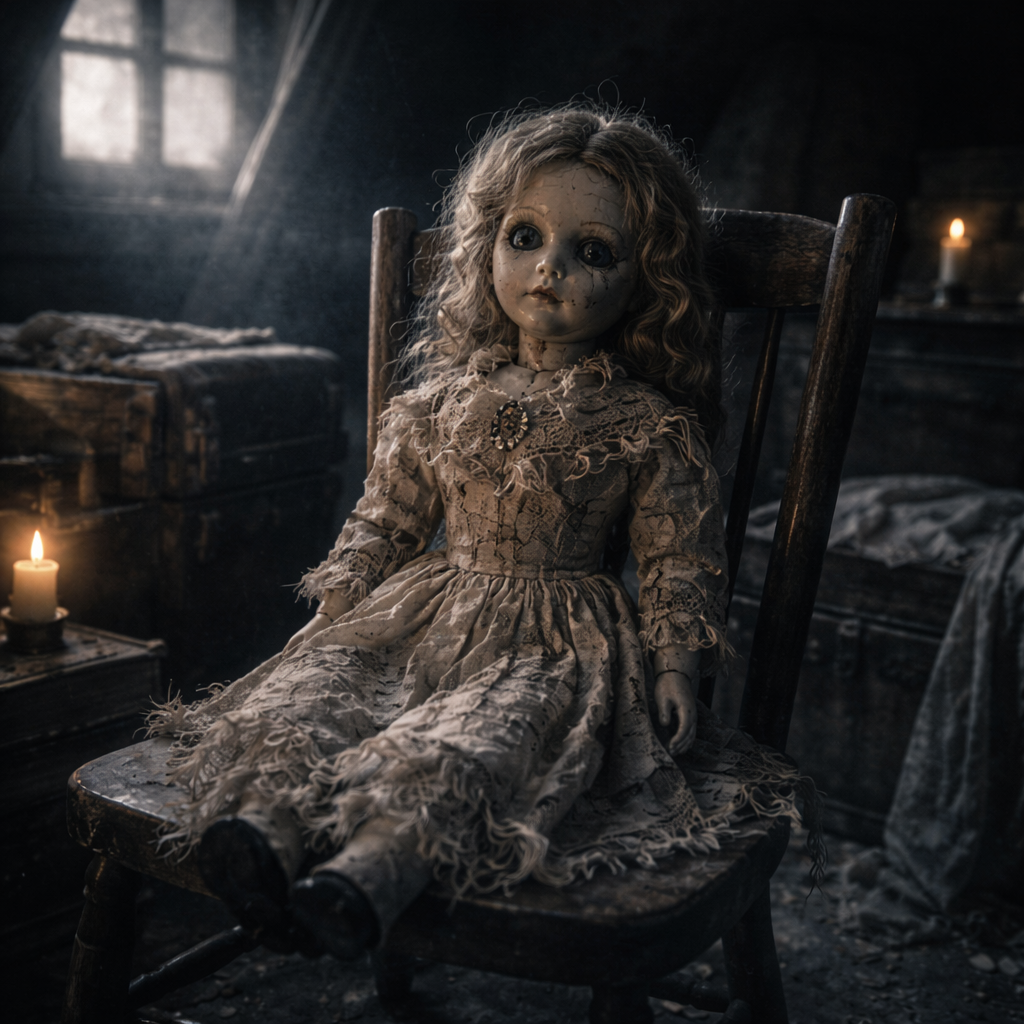
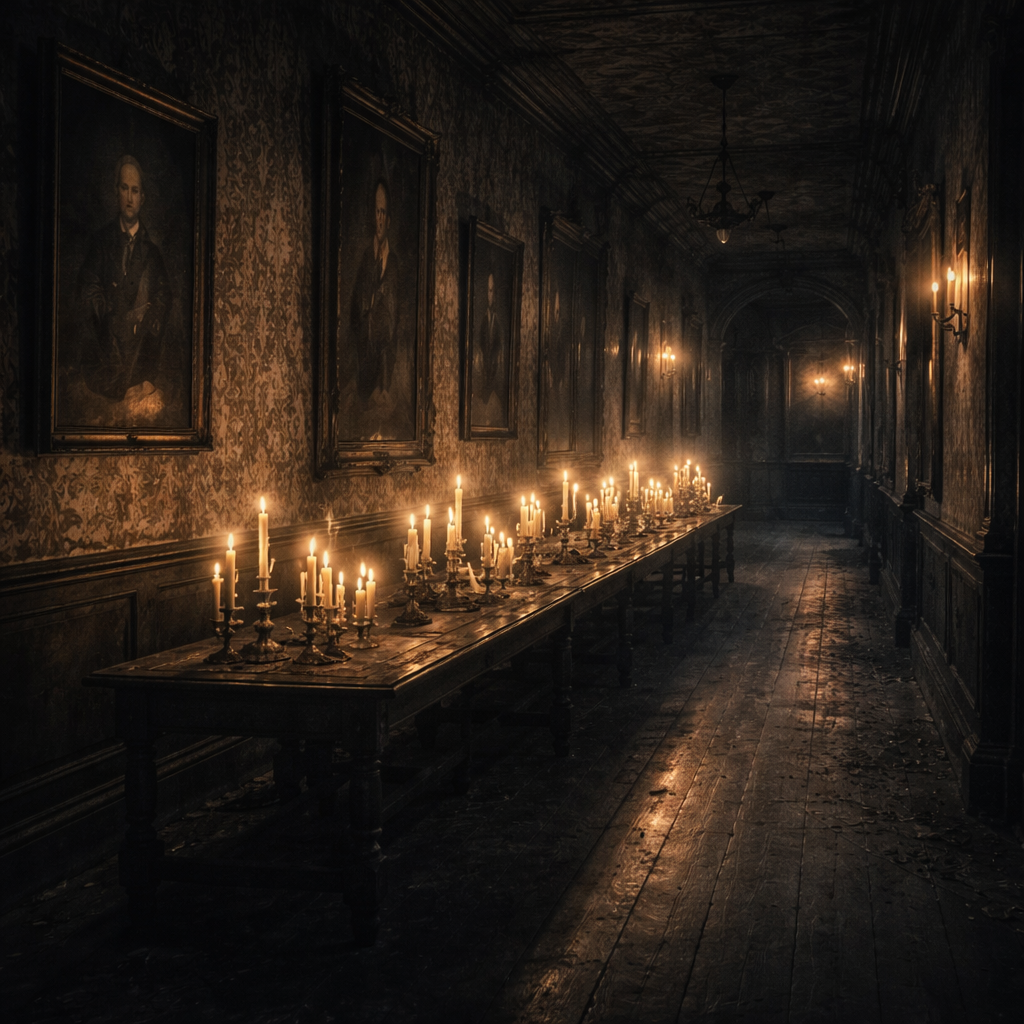
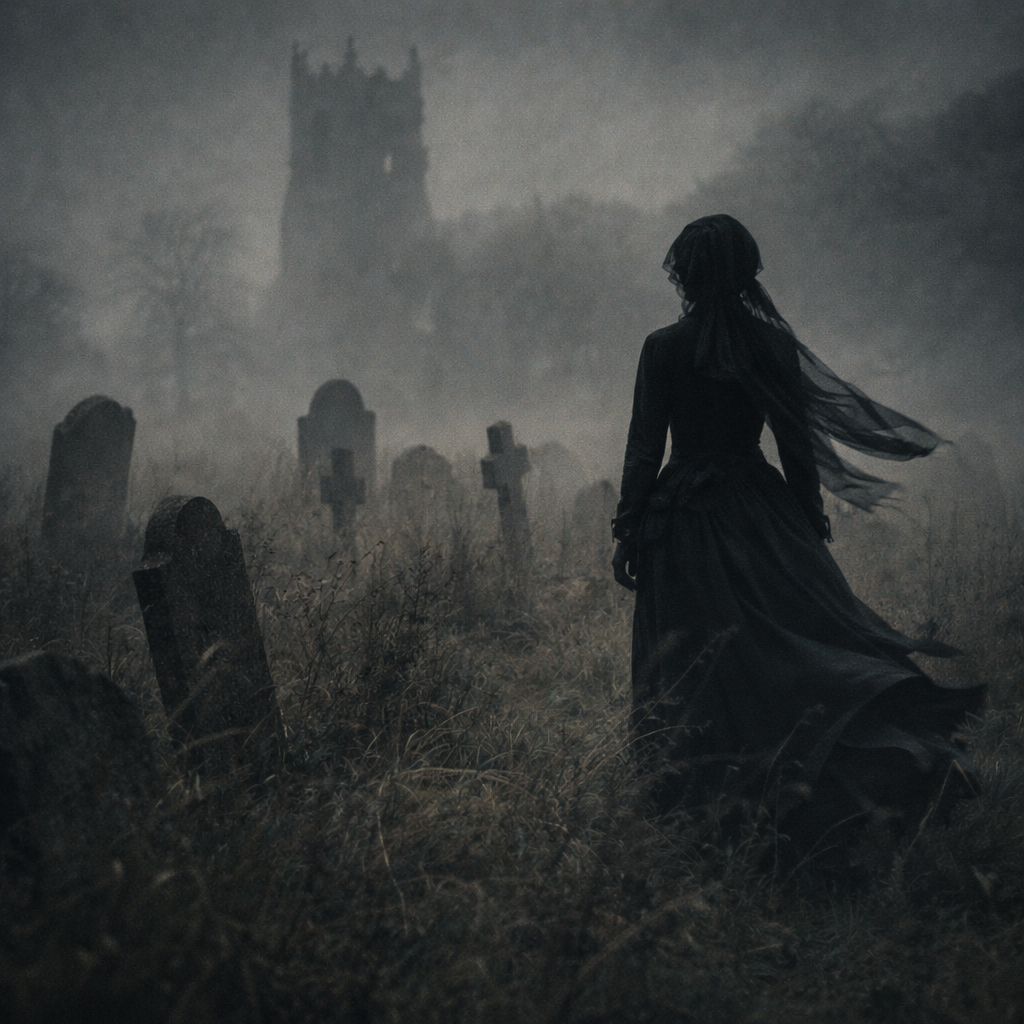
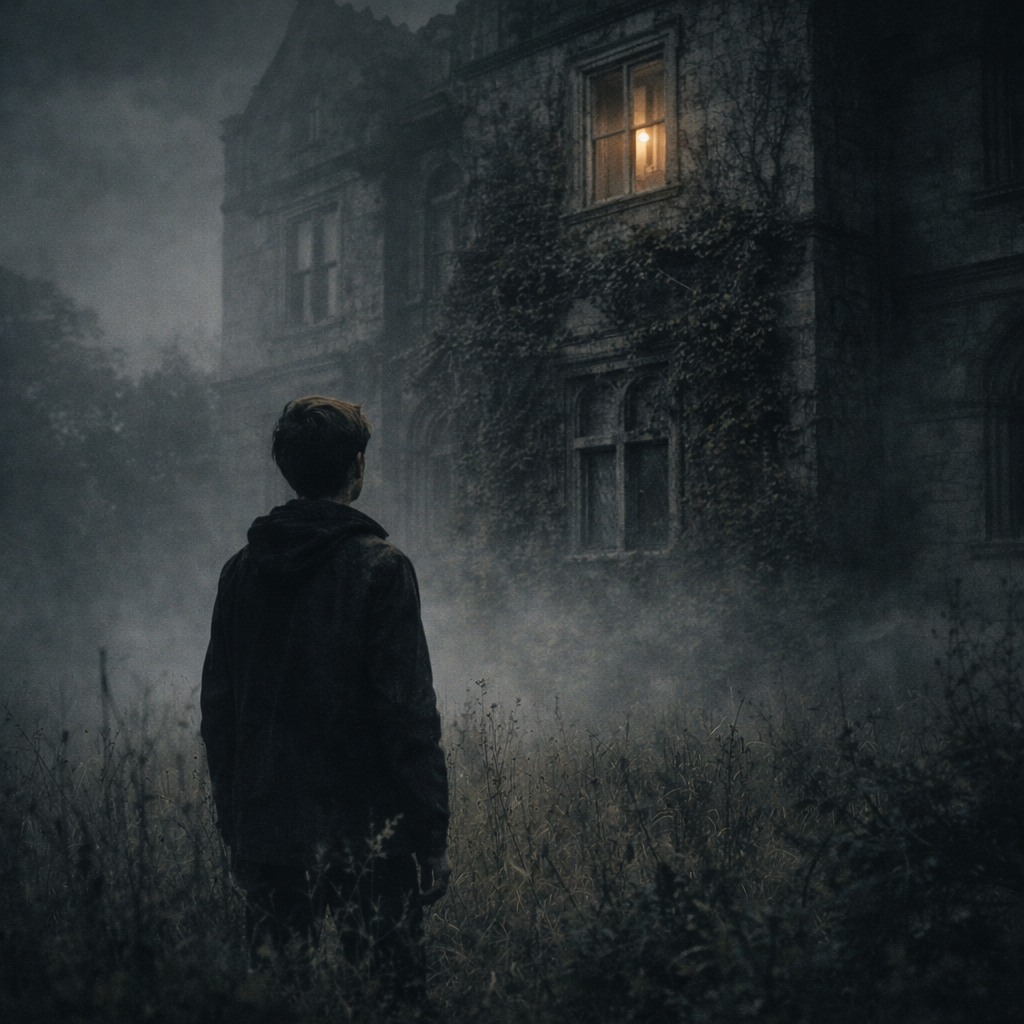
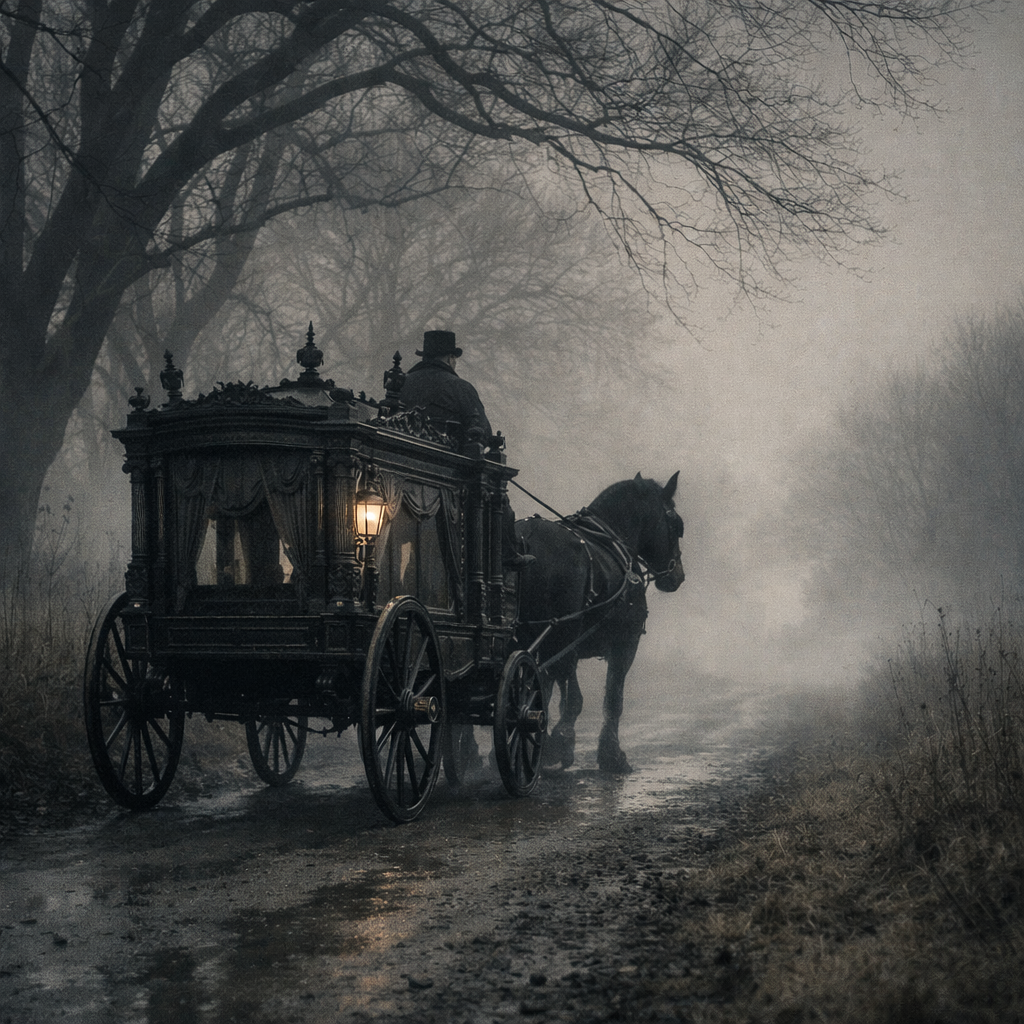
Visual prompts are particularly effective for gothic horror, where atmosphere, architecture, and shadow often reveal more than action. In many gothic stories, fear emerges gradually through place — an empty corridor, a forgotten portrait, a candlelit room where something feels slightly wrong.
These images are designed to capture the unsettling aesthetics of gothic horror: abandoned houses, dimly lit interiors, fog-filled landscapes, and spaces shaped by silence and memory. Rather than illustrating a single narrative, the images invite writers to ask what happened before the moment captured, who once occupied the space, and whether something unseen might still remain there.
Writers might use these prompts for descriptive writing exercises, short horror scenes, or longer gothic stories where atmosphere and psychological tension shape the narrative.


Go Deeper into Gothic Horror Writing
To develop gothic horror stories beyond surface-level scares, encourage writers to focus on psychological tension, atmosphere, and the slow revelation of hidden truths. The most effective gothic horror narratives often reveal their secrets gradually, allowing fear to emerge through suggestion rather than direct explanation.
◆ Focus on place and atmosphere. Write a scene where the setting — a house, forest, church, or abandoned building — creates tension before anything supernatural is revealed.
◆ Experiment with unreliable perception. Write a scene where a character begins questioning whether what they are experiencing is supernatural or psychological.
◆ Explore hidden histories. Create a moment where a character discovers a forgotten object, diary, or photograph that reveals a disturbing secret about a place or family.
◆ Write from the perspective of the haunting itself. Describe how a ghost, presence, or unseen force experiences the living characters entering its space.
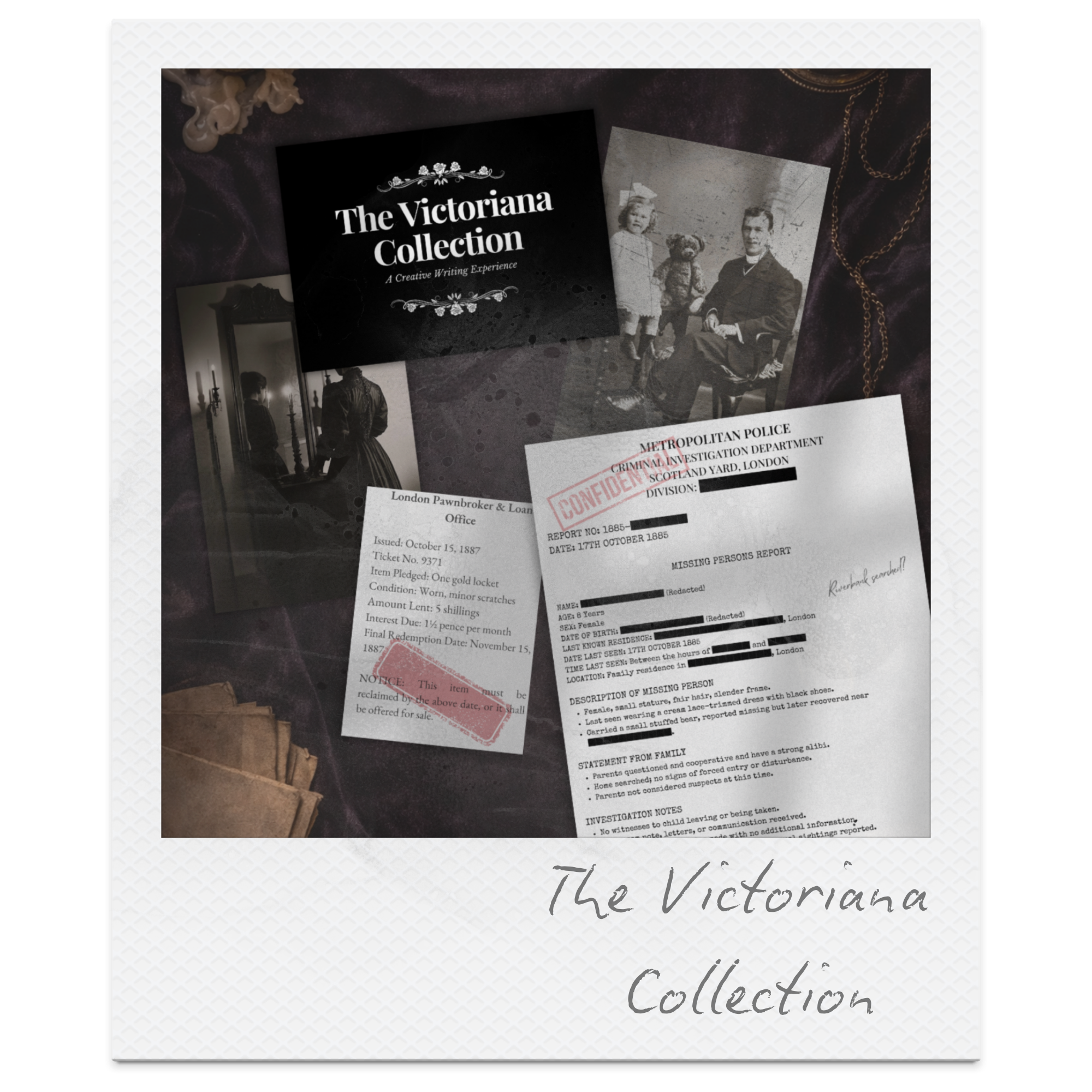
If you’d like a more immersive gothic storytelling experience, you can also explore The Victoriana Collection, a narrative writing box inspired by nineteenth-century mysteries, archival storytelling, and atmospheric gothic worlds where fragments of letters, photographs, and historical clues invite writers to reconstruct a haunting story.
Final Thoughts
Gothic horror continues to resonate because it explores the relationship between fear, memory, and the unknown, often revealing that the past never disappears entirely. Rooted in gothic literature traditions, these stories invite writers to explore how places, secrets, and human psychology intertwine to create tension and unease.
These 70 Gothic Horror Writing Prompts for Teens are designed to help young writers practise atmosphere-driven storytelling, experiment with gothic suspense, and develop stories that prioritise mood, symbolism, and emotional depth rather than simple shock.
Whether used for creative writing warm-ups, classroom lessons, writing clubs, or longer horror projects, the prompts encourage thoughtful storytelling that embraces ambiguity, dread, and imagination.
If you’d like to explore more gothic storytelling ideas, supernatural prompts, and dark creative writing collections, you can browse the Creative Writing Archive or explore the wider Gothic Writing Hub or the Horror Writing Hub to discover new prompts and inspiration for your next story.
Choose Your Next Adventure