Gothic Story Generator: Create Dark, Haunting Story Ideas
Gothic stories rarely begin with a monster waiting in the darkness. They begin with something quieter: a locked room, an inherited house, a portrait nobody wants to discuss, a letter that should never have arrived, or the uneasy feeling that the past has not stayed where it belongs.
The Gothic Story Generator is designed to help you build those stories from the ground up. Generate a complete Gothic premise with an atmospheric setting, protagonist, mysterious character, inciting incident, family secret, forbidden place, strange object, supernatural element, threat, obsession, buried event, Gothic motif, twist and ending. You can create an entirely random story or choose a particular style, including Classic Gothic, Victorian Gothic, Romantic Gothic, Psychological Gothic, Supernatural Gothic, Folk Gothic, Southern Gothic, Dark Academia and Contemporary Gothic.
Use the generator to spark a short story, develop the foundations of a novel, create a classroom writing challenge or simply keep generating ideas until something makes you want to open a blank document and start writing. You can reroll individual elements too, so if you love your crumbling manor and unreliable protagonist but want a different secret lurking behind the locked door, you can keep the parts that work and change the ones that don't.
Gothic fiction is particularly rich territory for this kind of story-building because setting, secrecy and psychology are often closely intertwined: places carry histories, characters inherit old conflicts, and apparently supernatural events may remain suspended somewhere between haunting and human explanation.
For even more dark and atmospheric inspiration, explore the Gothic Writing Hub, where you'll find Gothic writing prompts, characters, settings, tropes and story ideas covering everything from haunted houses and Victorian Gothic to Folk Gothic, Dark Academia and the sublime.
You can also browse the Creative Writing Archive for more writing prompts, story generators, character ideas, worldbuilding resources and creative writing inspiration across fantasy, horror, mystery, romance, science fiction and more.
Choose your Gothic style below, generate your story, and see what is waiting behind the locked door.
Gothic Story Generator
Build a haunting Gothic story filled with secrets, obsession, decay and things best left undisturbed.
—
—
—
—
—
—
—
—
—
—
—
—
—
—
—
—
—
How to Use the Gothic Story Generator
The Gothic Story Generator creates the foundations of an original Gothic tale by combining characters, settings, secrets, fears, supernatural possibilities and buried events into a new story framework.
Start by choosing the Gothic style you want to explore. You can select a particular subgenre — such as Psychological Gothic, Victorian Gothic or Folk Gothic — or choose Random and let the generator decide where the darkness leads.
Click Generate a Gothic Story to create a complete combination. You don't have to keep everything you receive. Use the individual reroll buttons to replace any element that doesn't fit while preserving the parts that have already caught your imagination.
You might love the protagonist but want a more sinister setting. Perhaps the family secret is perfect, but the supernatural element feels too obvious. Keep changing individual pieces until the beginnings of a story emerge.
Then take the generated framework and make it your own. Ask questions, create connections and look for consequences the generator hasn't explicitly given you.
The best result isn't necessarily the neatest combination. Sometimes it's the strange contradiction that gives you the story.
What Makes a Story Gothic?
Gothic fiction thrives on unease.
A ruined mansion and a thunderstorm can certainly help, but a story doesn't become Gothic simply because it takes place somewhere dark. Gothic stories often explore what happens when the past refuses to remain buried.
Family histories return. Old crimes shape new lives. Buildings preserve the traces of former inhabitants. Characters become trapped by inheritance, reputation, obsession, guilt or fear. The familiar becomes subtly unfamiliar, and both characters and readers begin questioning what they can trust.
Some particularly useful elements of Gothic storytelling include:
◆ Atmosphere and isolation — remote houses, enclosed communities and inaccessible landscapes can separate characters from ordinary sources of safety.
◆ The return of the past — old crimes, relationships, betrayals and injustices continue influencing the present.
◆ Secrets and repression — somebody usually knows more than they are willing to reveal.
◆ Decay — families, buildings, fortunes, traditions and even identities can deteriorate beneath apparently respectable surfaces.
◆ Forbidden spaces — locked rooms, sealed wings, hidden passages and prohibited places turn curiosity into danger.
◆ Psychological tension — fear, grief, guilt, obsession, memory and unreliable perception can be as important as external threats.
◆ The uncanny — something is almost normal, but not quite. A portrait looks subtly different. Footsteps stop outside an empty room. A familiar voice comes from somewhere impossible.
◆ Supernatural uncertainty — ghosts and curses may be real, imagined, fabricated or deliberately left unexplained.
The strongest Gothic stories often combine several of these elements so that the external mystery reflects something happening within the characters themselves.
Choose Your Gothic Story Style
Not every Gothic story needs to resemble a nineteenth-century haunted-house novel. Gothic fiction can shift dramatically depending on its setting, period, themes and relationship with the supernatural.
The generator includes several Gothic styles so you can explore those differences.
Classic Gothic
Think ancient castles, isolated estates, ruined buildings, family mysteries, forbidden chambers, dangerous inheritances and an atmosphere of escalating dread.
Classic Gothic works particularly well when the setting itself seems to contain the past. Give your protagonist somewhere they should not enter, something they should not discover and a very good reason to ignore both warnings.
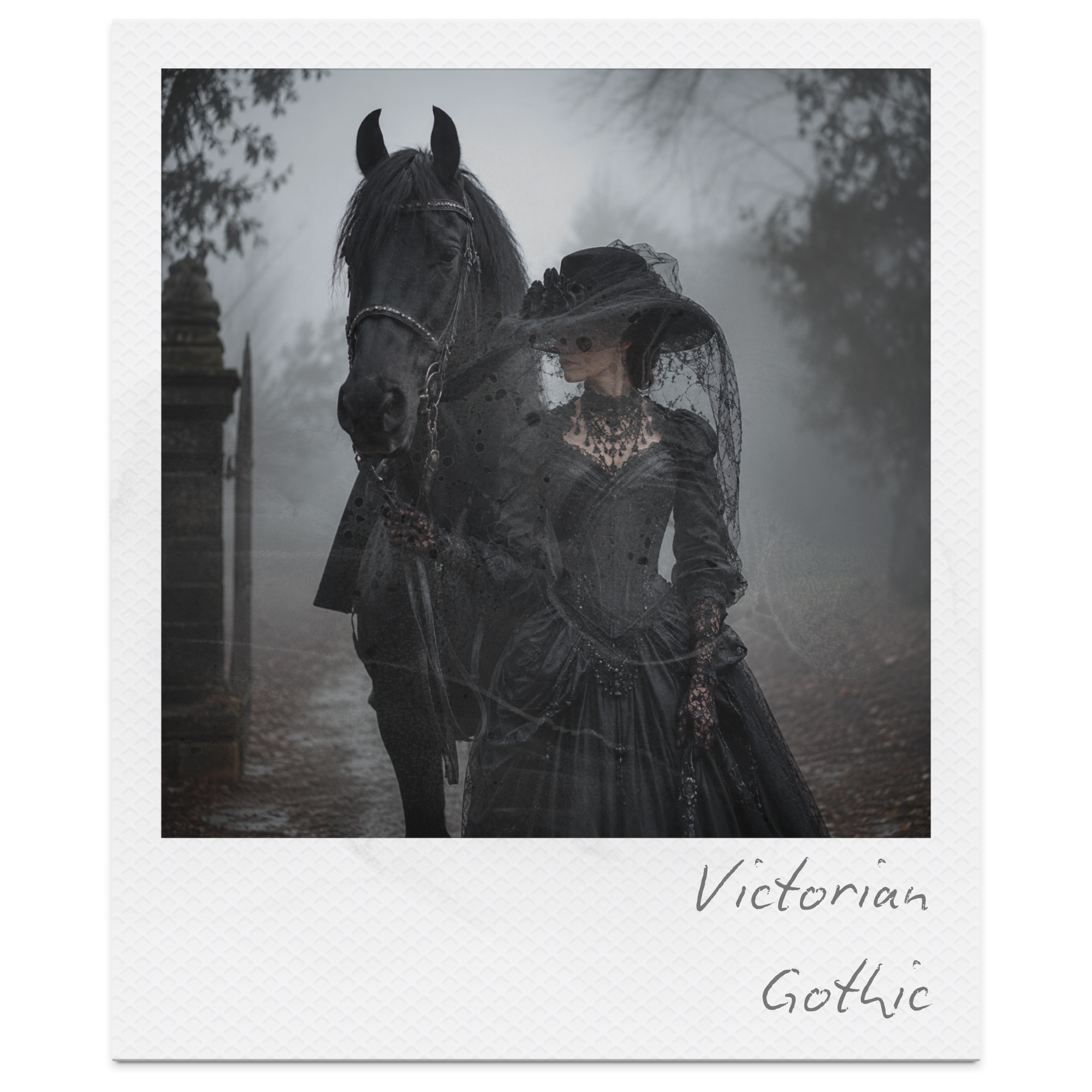
Victorian Gothic
Victorian Gothic can place respectable appearances beside uncomfortable secrets.
Grand townhouses, declining estates, rigid social expectations, scientific anxieties, hidden identities, inheritance disputes and private scandals all offer fertile ground for stories in which maintaining a reputation can become almost as important as surviving.
Look for tension between what society sees and what is happening behind closed doors.
Romantic Gothic
Romantic Gothic combines emotional intensity with mystery, danger and atmosphere.
Love may be complicated by family history, social expectations, grief, obsession, inheritance or the possibility that one character cannot entirely be trusted.
The romance should not make the Gothic elements disappear. Let the mystery place pressure on the relationship, and allow desire itself to become tangled with uncertainty.
Psychological Gothic
In Psychological Gothic, the most frightening place may be the protagonist's own mind.
Memory can become unreliable. Grief can distort perception. Obsession can make ordinary details seem significant. Manipulative characters may exploit existing fears, and apparently supernatural events can remain suspended between reality and interpretation.
Try asking not only "What is happening?" but "Why is this particular protagonist so vulnerable to it?"
Supernatural Gothic
Ghosts, hauntings, curses, impossible events and restless dead can all move to the foreground in Supernatural Gothic.
But supernatural does not have to mean predictable.
Consider what the haunting actually wants. Perhaps the ghost is not the antagonist. Perhaps the curse has been misunderstood. Perhaps the frightening presence is attempting to expose something the living desperately want concealed.
Sometimes the dead are considerably less dangerous than the people trying to silence them.
Folk Gothic
Folk Gothic moves the darkness into landscapes, traditions and communities.
Remote villages, forests, ancient customs, seasonal rituals, local legends and inherited beliefs can create stories where outsiders struggle to understand rules everyone else seems to know.
The landscape can be especially important here. Woods, mountains, marshes, islands and isolated settlements should feel culturally and historically significant rather than simply picturesque.
Ask what the community remembers that the protagonist does not.
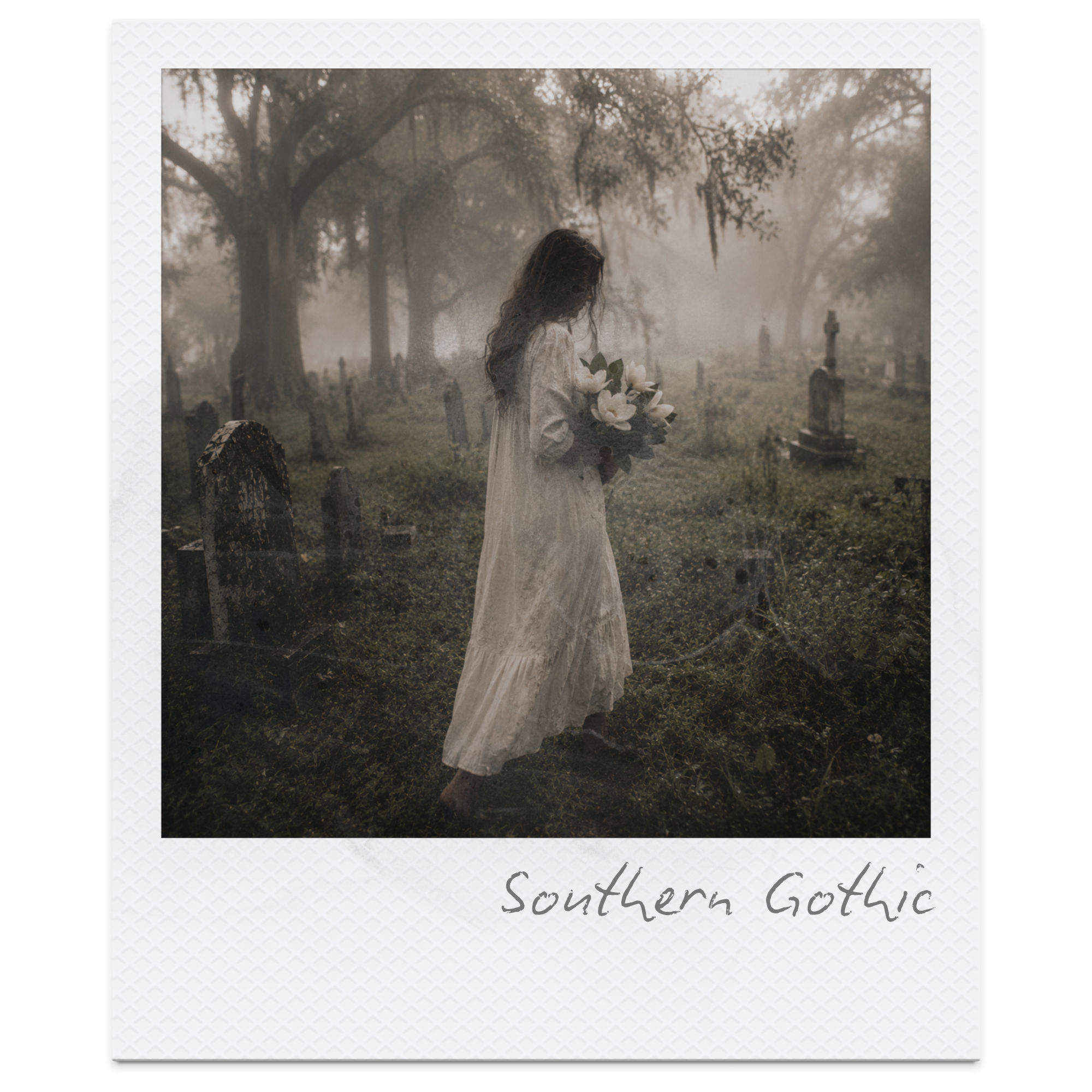
Southern Gothic
Southern Gothic frequently explores decaying families, damaged communities, buried histories, social tensions and the grotesque beneath respectable appearances.
A once-grand house can become a physical expression of a family's decline, while old injustices continue shaping relationships long after people insist they have been forgotten.
Rather than treating decay as decoration, connect it to the people, institutions and histories at the centre of the story.
Dark Academia
Libraries, archives, elite institutions, intellectual obsession, academic rivalries and secretive societies give Dark Academia its distinctive atmosphere.
Knowledge itself can become dangerous.
A student might uncover something in an archive. A professor may have built a career upon a lie. An obscure manuscript could expose the history of an institution. A group united by intellectual fascination might gradually become destructive.
Give your characters something they want to know badly enough that they continue investigating after common sense tells them to stop.
Contemporary Gothic
Gothic stories don't need to remain in the past.
Apartment buildings, inherited suburban homes, abandoned hospitals, modern universities, dying towns, hotels and ordinary family houses can all become Gothic spaces.
Contemporary technology can create new possibilities too: photographs that change, messages from dead accounts, corrupted recordings, forgotten online archives or smart devices detecting movement in an apparently empty room.
The surroundings may change, but the central Gothic questions remain remarkably persistent.
What happened here? Who benefits from hiding it? And why hasn't the past finished with us yet?
How to Turn Your Generated Idea Into a Gothic Story
A generator gives you ingredients. Your job as the writer is to discover the connections between them.
Start With the Central Mystery
Give the reader a question they want answered.
Who is walking through the abandoned wing every night?
Why was one daughter removed from every family photograph?
Who keeps leaving flowers on a grave containing no body?
Why does the protagonist remember a house they have never visited?
The central mystery creates forward movement. Each discovery should answer something while raising another question.
Connect the Past to the Present
In Gothic fiction, history shouldn't merely provide interesting background.
Make it dangerous.
If a bride disappeared a century ago, something about that disappearance should matter now. If an ancestor committed a crime, somebody living with its consequences should still have something to gain or lose.
The past becomes powerful when uncovering it changes the protagonist's present.
Make the Setting Matter
Don't simply place your story inside a creepy building because creepy buildings look Gothic.
Ask what the setting does.
Perhaps the estate's architecture conceals a crime. The village's isolation protects a tradition. The flooded landscape prevents escape. The university archive contains records someone needs destroyed.
A useful test is to ask:
Could this exact story happen somewhere completely different?
If the answer is yes, look for ways to make the setting more essential.
Decide Whether the Supernatural Is Real
You don't necessarily have to tell the reader.
Your story might contain a genuine ghost, curse or impossible phenomenon.
Alternatively, apparently supernatural events could have a rational explanation.
Or you can occupy the wonderfully uncomfortable territory between the two.
Perhaps almost everything is explained — except one detail.
That lingering uncertainty can be more disturbing than confirmation.
Give Your Protagonist Something Personal to Fear
"Being frightened of ghosts" isn't particularly specific.
A protagonist who fears becoming like their mother has something more interesting at stake.
So does someone terrified that their memories cannot be trusted, that grief is changing them, that their family history determines who they will become, or that uncovering the truth will destroy the person they love.
Connect the external Gothic threat to an internal vulnerability.
Now the protagonist cannot simply walk away.
Make the Secret Change Something
A good secret doesn't merely produce the reaction:
"Oh. That's interesting."
It changes relationships.
It changes ownership.
It changes identity.
It changes who appears guilty.
It changes what happened in the past.
It changes what the protagonist must do next.
If revealing the secret has no consequences, make the secret more dangerous.
Build Towards the Twist
A Gothic twist should feel surprising when it arrives but plausible when the reader looks backwards.
Plant clues.
Let characters lie by omission. Allow objects to acquire new meanings. Repeat details that initially appear insignificant. Give different characters conflicting versions of the same event.
The reader doesn't need enough information to solve everything immediately, but they should eventually be able to recognise that the truth was hiding in the story all along.
Decide What the Ending Costs
Escaping the house does not necessarily mean winning.
Perhaps the protagonist uncovers the truth but destroys their family in the process.
Perhaps they inherit the estate they spent the entire story trying to escape.
Perhaps the haunting ends, but only because someone finally acknowledges what happened.
Perhaps the mystery is solved, yet one impossible detail remains.
Gothic endings are particularly effective when the protagonist gets an answer but cannot return unchanged to the life they had before.
Go Deeper into Writing Gothic Stories
A Gothic story needs more than a crumbling mansion, a mysterious stranger and something moving behind a locked door. The best Gothic fiction uses its setting, characters and supernatural elements to create a growing sense that something is deeply wrong — even when nobody can quite explain what it is.
◆ Make the setting part of the story. Gothic settings should rarely feel like passive backdrops. Let the house conceal things, the landscape isolate your characters, the weather restrict their choices or the architecture reflect something about the people living within it. A setting becomes much more unsettling when it actively shapes what can happen there.
◆ Build dread before revealing the danger. Resist explaining everything too quickly. Strange sounds, missing objects, contradictory stories, unexplained rules and glimpses of something impossible can create far more tension than immediately showing the monster.
◆ Give your protagonist a reason to stay. If something terrifying is happening, readers will naturally wonder why the character does not simply leave. Love, inheritance, duty, poverty, obsession, isolation, curiosity or nowhere else to go can trap a character just as effectively as a locked door.
◆ Let the past intrude on the present. Gothic stories are often haunted by what came before. A family secret, old crime, forbidden relationship, buried body, broken promise or inherited curse can make the present feel like the consequence of something that was never properly resolved.
◆ Use uncertainty carefully. You do not always need to confirm whether the supernatural is real. A character might genuinely be haunted — or grief, fear, guilt and isolation might be changing what they perceive. Allowing both possibilities to exist can make a Gothic story even more unsettling.
◆ Create rules, then threaten them. Perhaps nobody enters the west wing after sunset. Perhaps the portraits must remain covered. Perhaps the bell in the abandoned chapel must never ring. Establishing an unusual rule immediately creates a question — and breaking it gives your story somewhere to go.
◆ Use objects as clues. Letters, portraits, jewellery, keys, photographs, diaries, clothing, mirrors and inherited possessions can reveal information gradually. An ordinary object becomes Gothic when it carries evidence of a history your characters would rather forget.
◆ Make beauty uncomfortable. Gothic fiction often thrives on contrasts: a magnificent ballroom in a decaying house, beautiful flowers growing over a grave, an elegant stranger who never seems to eat, or an exquisite portrait whose subject died centuries ago.
◆ Give the fear an emotional core. The supernatural threat becomes much stronger when it connects to something human. Grief, jealousy, repression, loneliness, obsession, guilt, forbidden desire and fear of death can all sit underneath the ghosts and shadows.
◆ Do not explain every mystery. You can answer the central questions of your story without making the strange completely ordinary. Sometimes one unexplained footprint, unopened room or final impossible detail is enough to leave the reader wondering long after the story ends.
History leaves clues.
Folklore leaves warnings.
Some stories leave both.
The Soot & Shadows Series is a trilogy of immersive archives connected by mystery, memory, and the darker corners of British history. Each collection stands alone, yet hidden connections, recurring themes, and unanswered questions echo between them.
A missing person's file in Victorian London.
A village festival nobody dares question.
A community haunted by accusations that refuse to die.
Separated by years, places, and people, their stories should have nothing in common.
And yet they do.
Through forgotten documents, photographs, reports, personal writings, warnings, relics, and fragments of evidence, you'll uncover traces of three mysteries scattered across time. Some details repeat. Some contradict. Others seem determined to be remembered.
No official explanation is provided.
Only the archive remains.
What's Inside?
The Victoriana Collection
London investigations, missing persons, spiritualism, forgotten lives, and unsolved mysteries.
The Kindling Collection
Rural folklore, midsummer rituals, village traditions, memorials, and communal silence.
The Hemlock Collection
Witchcraft accusations, witness accounts, graveyard relics, museum archives, and lingering suspicion.
◆ 150+ printable documents and artefacts across three complete collections
◆ Photographs, reports, letters, journal entries, posters, newspaper clippings, warnings, relics, and more
◆ Three collection prompt cards and one exclusive Soot & Shadows master prompt card
◆ Instant digital download in PDF format
Who Is It For?
Perfect for:
◆ Writers and worldbuilders
◆ Fans of folklore, gothic fiction, and historical mystery
◆ Mystery lovers and curious minds
◆ Teachers and students
◆ Anyone fascinated by forgotten histories, strange traditions, and stories hidden inside archives
If you enjoy detective fiction, folk horror, dark academia, gothic mysteries, or speculative history, you'll feel at home here.
What Makes This Different?
This isn't a bundle of prompts.
It's a collection of archives.
There is no official timeline. No single interpretation. No correct version of events.
Every document reveals part of a larger story, but none reveal the whole truth.
Explore one collection at a time, follow recurring threads across all three, or build entirely new narratives from the fragments left behind.
Some readers uncover mysteries.
Others uncover connections.
Every reader discovers something different.
Because there are a million stories hidden in the archive.
And none of them are the same.
Ready for a Bigger Gothic Mystery? Enter Soot & Shadows
The Gothic Story Generator gives you the pieces of a story — a setting, a character, a secret, a forbidden place, a mysterious object, a buried event and something unsettling waiting beneath it all.
But what happens when you're given the evidence instead?
The Soot & Shadows Series is a collection of three interconnected Storyworld Archives — Victoriana, Kindling and Hemlock — containing more than 150 fictional artefacts from dark, mysterious worlds shaped by secrets, superstition, disappearances and the past refusing to stay buried.
Instead of generating a complete premise, you begin with fragments.
Open letters, photographs, diary entries, reports, records, newspaper clippings, warnings, drawings and other pieces of evidence. Follow recurring names. Notice strange connections. Question what witnesses claim happened. Decide which details matter and which version of events you actually believe.
One archive might pull you towards Victorian mystery, spiritualism and forgotten lives. Another leads into an isolated village where an old midsummer festival hides generations of unanswered questions. Elsewhere, accusations of witchcraft, superstition and buried history blur the boundary between folklore and truth.
And because the collections are interconnected, something you notice in one archive may change how you interpret something elsewhere.
There is no official solution and no single story you're supposed to uncover. You might discover a haunting, reconstruct a disappearance, expose a human crime, create a family history, follow a supernatural explanation or take the evidence somewhere completely unexpected.
Use one artefact as a writing prompt. Choose a mysterious figure and build their story. Reconstruct an entire chain of events, or spread everything out and see what connections begin to emerge.
For writers who love Gothic mysteries, unreliable evidence, Victorian secrets, folk horror, witchcraft, supernatural ambiguity, hidden histories and stories assembled from clues, Soot & Shadows turns the process of generating a Gothic idea into something much more immersive.
The generator gives you the pieces. Soot & Shadows gives you an entire world of them. What story you find between them is up to you.
→ Enter The Soot & Shadows Series
Final Thoughts
A Gothic story can begin with something as small as a locked room, an inherited object, a stranger arriving after dark or a rule nobody will explain. Use the generator as a starting point, keep the elements that spark something interesting, discard the ones that do not, and keep generating until you find a combination that makes you want to know what happens next.
Once you have the beginnings of your story, head to the Gothic Writing Hub for more Gothic writing prompts, character ideas, atmospheric settings, story inspiration and resources for building darker fictional worlds.
You can also explore the Creative Writing Archive for hundreds of writing prompts, story ideas, generators, worldbuilding resources and inspiration across fantasy, horror, mystery, romance, science fiction and more.
And remember: the generator gives you the pieces. The Gothic story begins with what you decide is hiding between them.
Choose Your Next Adventure