70 Cozy Gothic Writing Prompts: Candlelit Cottages, Haunted Bookshops & Gentle Ghost Stories
Cozy Gothic blends the atmospheric beauty of Gothic fiction with the warmth and comfort of slower, character-driven storytelling. Rather than focusing on relentless horror, these stories embrace candlelit cottages, forgotten bookshops, misty gardens, rain against old windows, hidden libraries, curious antiques, gentle ghosts, and quiet mysteries waiting to be uncovered. They celebrate beautiful places touched by melancholy, where every creaking floorboard, weathered journal, and overgrown garden hints at a story that deserves to be remembered.
Influenced by classic Gothic literature while embracing the comforting aesthetics of cottagecore, dark academia, and gentle supernatural fiction, Cozy Gothic explores themes of belonging, healing, memory, found family, hidden histories, and the quiet magic hidden within ordinary lives. Haunted houses become welcoming homes, ghosts become storytellers rather than monsters, and mysteries are solved through curiosity, kindness, and careful observation instead of violence.
This collection of 70 Cozy Gothic Writing Prompts is designed as a complete creative toolkit, featuring plot prompts, title ideas, opening lines, closing lines, character ideas, setting prompts, and atmospheric picture prompts. Explore candlelit libraries, sleepy villages, forgotten cemeteries, enchanted gardens, antique shops, lonely lighthouses, ivy-covered cottages, mysterious journals, and beautifully haunted places where comfort and mystery exist side by side.
If you're looking for even more inspiration, explore the Gothic Writing Hub or browse the Creative Writing Archive, where you'll discover hundreds of prompts, characters, settings, worldbuilding ideas, and creative writing resources across gothic fiction, fantasy, horror, mystery, folklore, historical fiction, and many more genres.
1. Plot Prompts
Cozy Gothic stories embrace quiet mysteries, beautiful old places, gentle hauntings, and characters finding belonging in worlds touched by the supernatural. These prompts focus on atmosphere, hidden histories, and comforting melancholy rather than relentless horror.
A young bookseller inherits a beautifully crumbling bookshop where anonymous notes tucked inside old novels slowly reveal the story of a forgotten disappearance.
Every autumn, the ghosts of a quiet village return for one evening to help their descendants prepare for the annual harvest festival.
A woman restoring an abandoned cottage discovers each room contains carefully preserved journals written by previous owners spanning two hundred years.
The caretaker of an ancient cemetery begins noticing fresh flowers appearing on neglected graves every morning, though nobody admits leaving them.
A reclusive clockmaker repairs an ornate grandfather clock that briefly allows visitors to speak with lost loved ones.
After opening a tiny tearoom inside a former manor house, the owner discovers certain customers seem to have been visiting for generations.
An elderly librarian quietly protects a hidden collection of books that only appear to readers searching for answers they cannot ask aloud.
A gardener restoring the grounds of a forgotten abbey uncovers a series of stone statues that seem to move a little closer each dawn.
A small coastal village welcomes a mysterious traveller every winter, though nobody can remember where they stay overnight.
A woman inherits her great-aunt's apothecary and discovers every handwritten remedy also tells the story of someone the village has long forgotten.
2. Title Ideas
Cozy Gothic titles should feel inviting while hinting at quiet mystery, forgotten histories, and beautiful places filled with stories waiting to be rediscovered.
The Lantern Cottage
The Forgotten Bookshop
Beneath Ivy House
The Keeper of Quiet Graves
Where Ravens Rest
Candlelight & Ivy
The Secret Garden Gate
The House of Forgotten Letters
The Ghosts of Rosemere
The Library at Hollow Hill
3. Opening Lines
Cozy Gothic openings invite readers into peaceful places where something quietly unusual has always existed beneath the surface.
The cottage smelled of old books, lavender, and rain long before I unlocked the door.
Everyone in the village knew the cemetery was haunted, though nobody considered that a bad thing.
My grandmother always insisted every old house chose its next owner carefully.
The book arrived without a return address, just as it had every October for the past twenty years.
Nobody questioned why the library stayed open long after the last candle had burned out.
The garden had continued blooming faithfully despite being abandoned for almost a century.
Every portrait inside the manor smiled a little differently depending on the weather.
The raven appeared on my windowsill the same morning I inherited the cottage.
The village map included a lane that only seemed to exist after heavy rain.
I realised the ghost had been trying to help me long before I accepted the house was haunted.
4. Closing Lines
Cozy Gothic endings leave readers with warmth, reflection, and the comforting feeling that some mysteries are meant to be cherished rather than completely solved.
Some houses never stop looking after the people who love them.
The ghost never returned, but the flowers bloomed every spring.
Not every mystery needs an ending to become a beautiful story.
The cottage felt quieter after that, though never truly empty.
Every forgotten letter had finally found its reader.
The library welcomed another curious soul as though it had been expecting them all along.
Some memories choose where they wish to live.
The old garden continued blooming long after everyone else had gone home.
I never saw the raven again, but I always left the window open.
Some places remain haunted only by kindness.
5. Character Ideas
Cozy Gothic characters are compassionate, curious, and deeply connected to the places they inhabit. They uncover mysteries through patience, empathy, and careful observation rather than confrontation.
A quiet village bookseller who knows the history behind every donated book.
An elderly gardener tending the forgotten grounds of a ruined manor.
A young archivist restoring neglected family journals.
A gentle ghost determined to reunite a long-lost family heirloom with its rightful owner.
A village herbalist preserving generations of local folklore.
A lonely lighthouse keeper who believes the sea occasionally returns lost memories.
An antique dealer specialising in objects with unusual histories.
A widow restoring her family's abandoned greenhouse one plant at a time.
A local historian documenting every forgotten gravestone in the parish.
A cat that seems determined to lead newcomers towards hidden corners of the village.
6. Setting Ideas
Cozy Gothic settings balance comfort with mystery, creating beautiful spaces where forgotten histories quietly linger alongside everyday life.
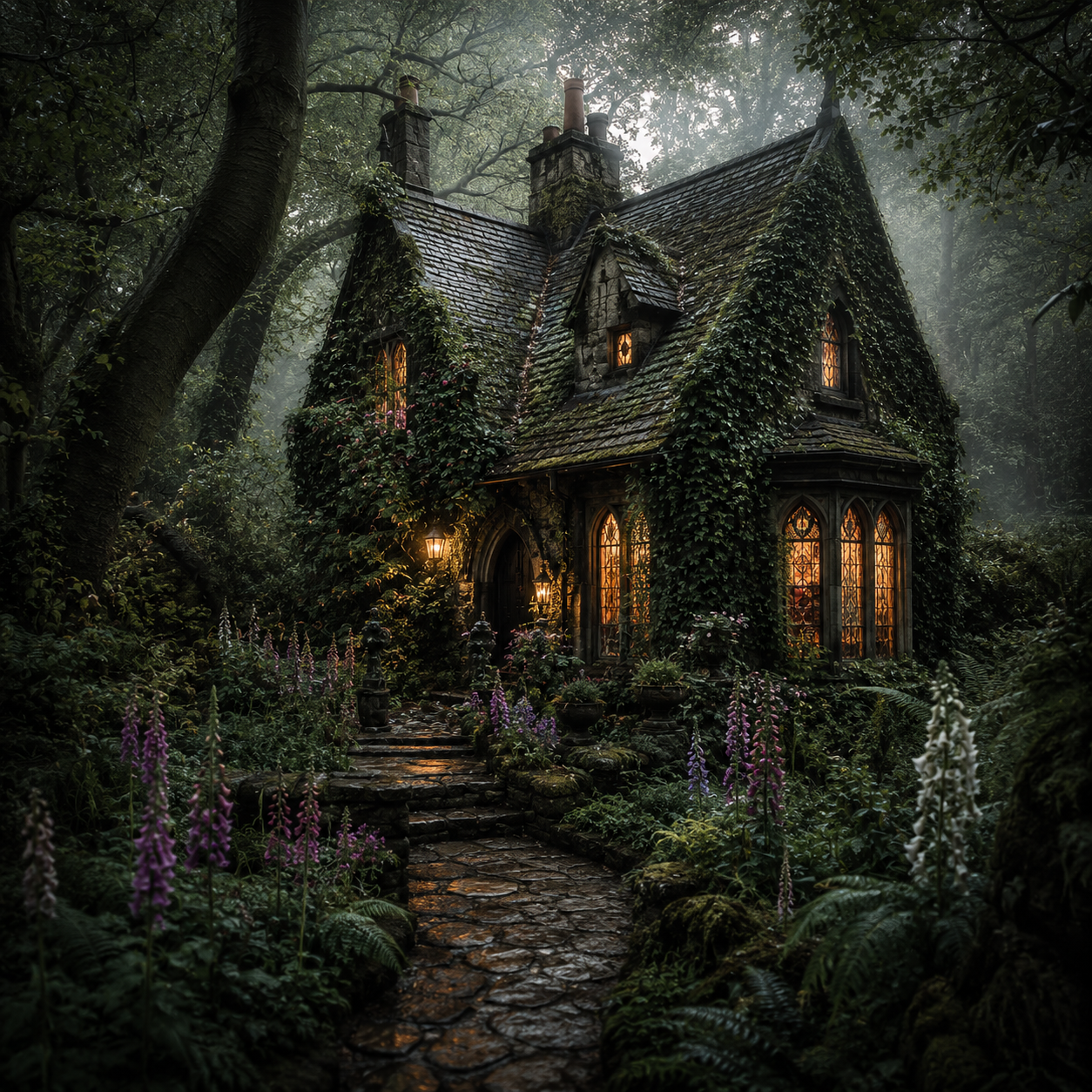
A candlelit cottage surrounded by an overgrown garden and ancient oak trees.
A tiny independent bookshop hidden down a cobbled village lane.
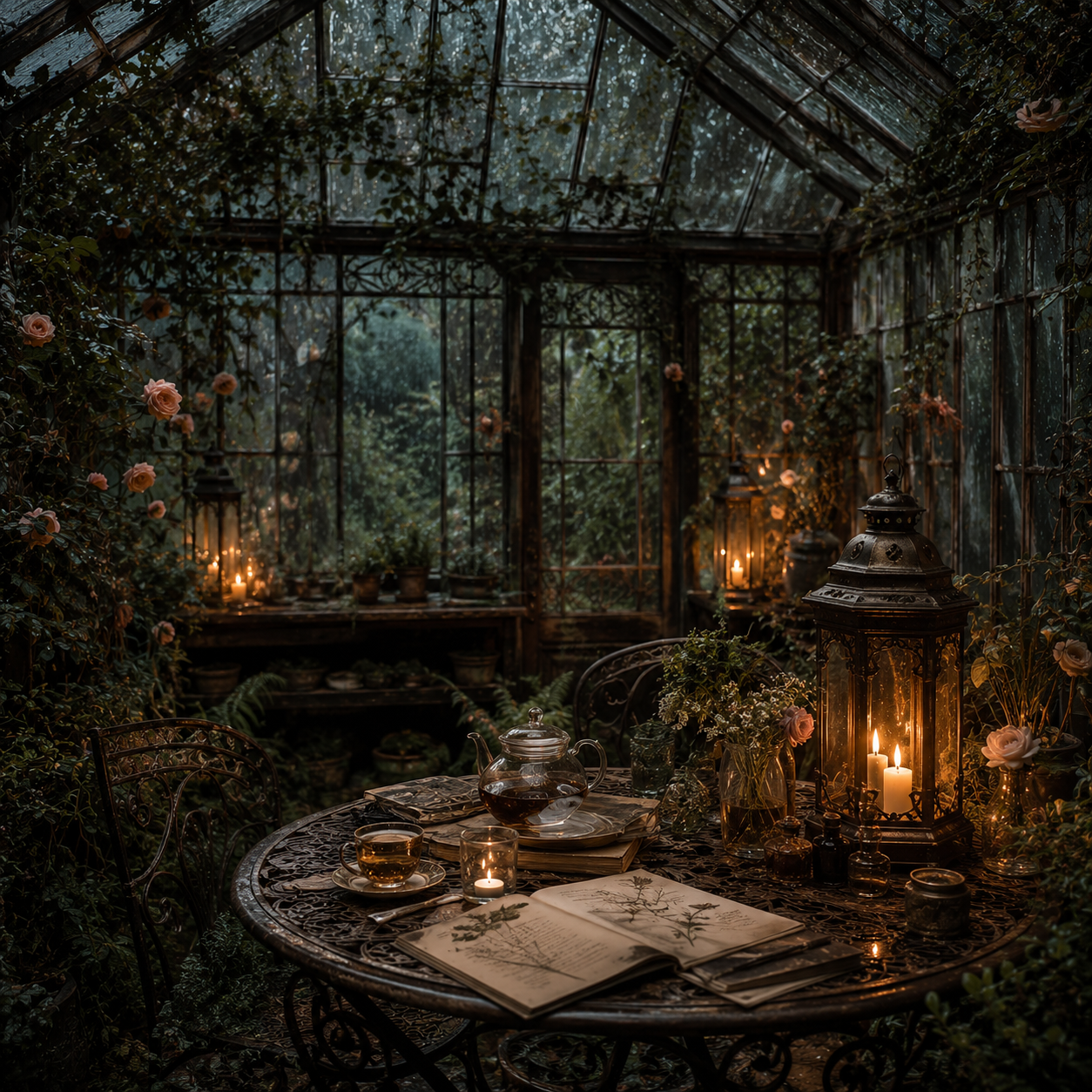
A Victorian greenhouse filled with climbing roses and forgotten statues.
A sleepy churchyard where ivy slowly covers weathered gravestones.
An old manor house converted into a welcoming tearoom.
A rain-soaked village overlooking dramatic coastal cliffs.
A forgotten monastery transformed into a peaceful community library.
An antique shop overflowing with clocks, portraits, maps, and handwritten letters.
A woodland cottage nestled beside a moss-covered cemetery.
A centuries-old apothecary lined with dried herbs, old books, and glass bottles.
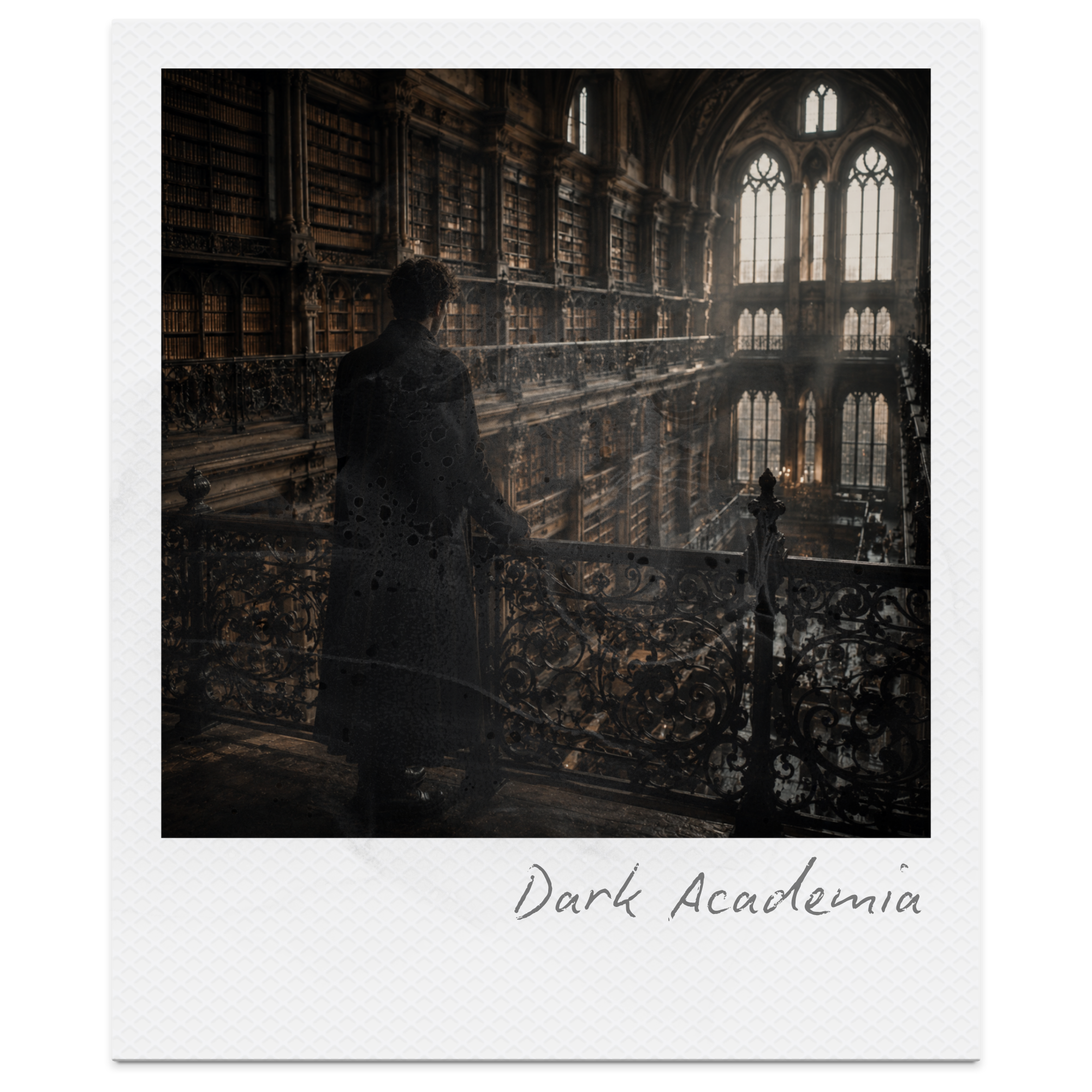
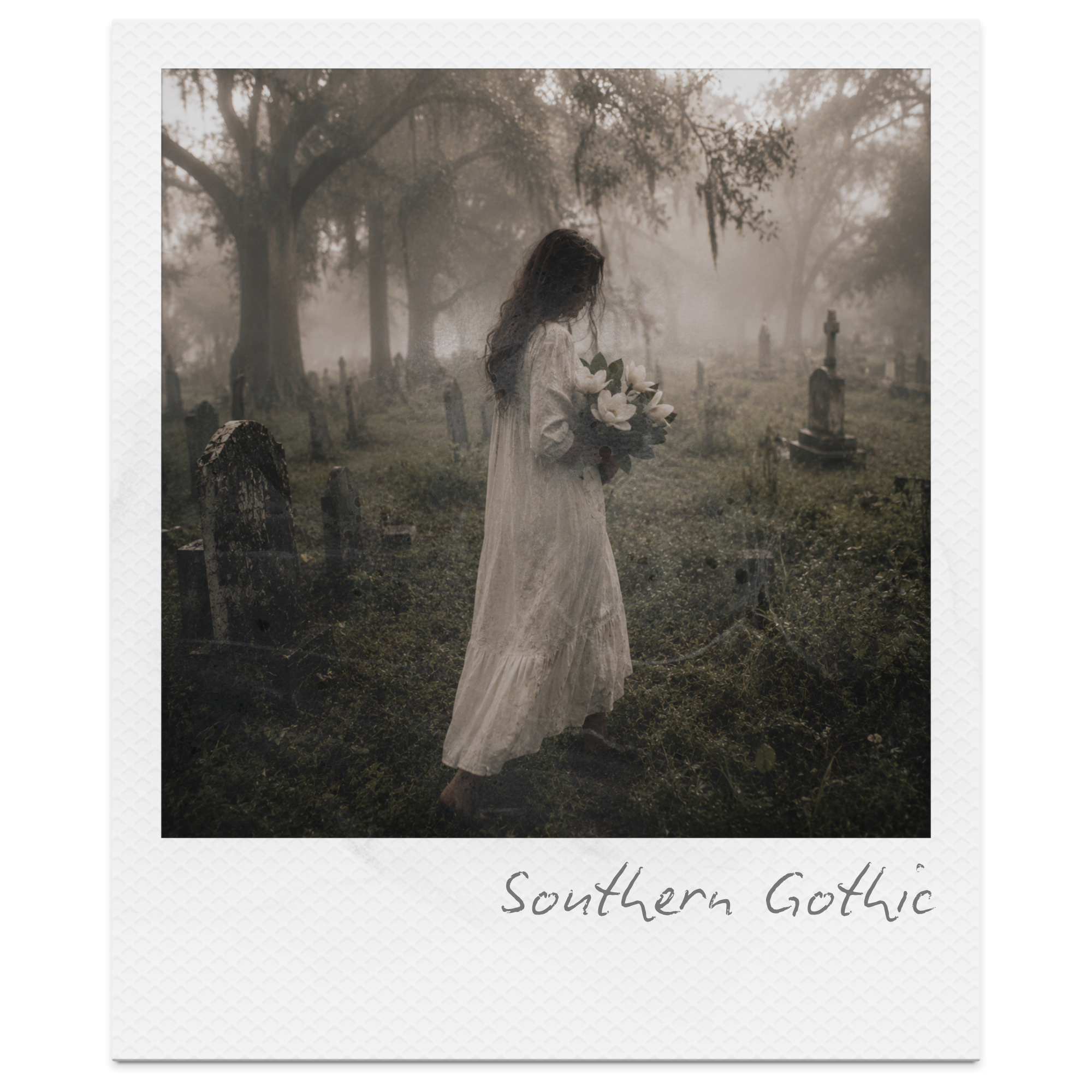
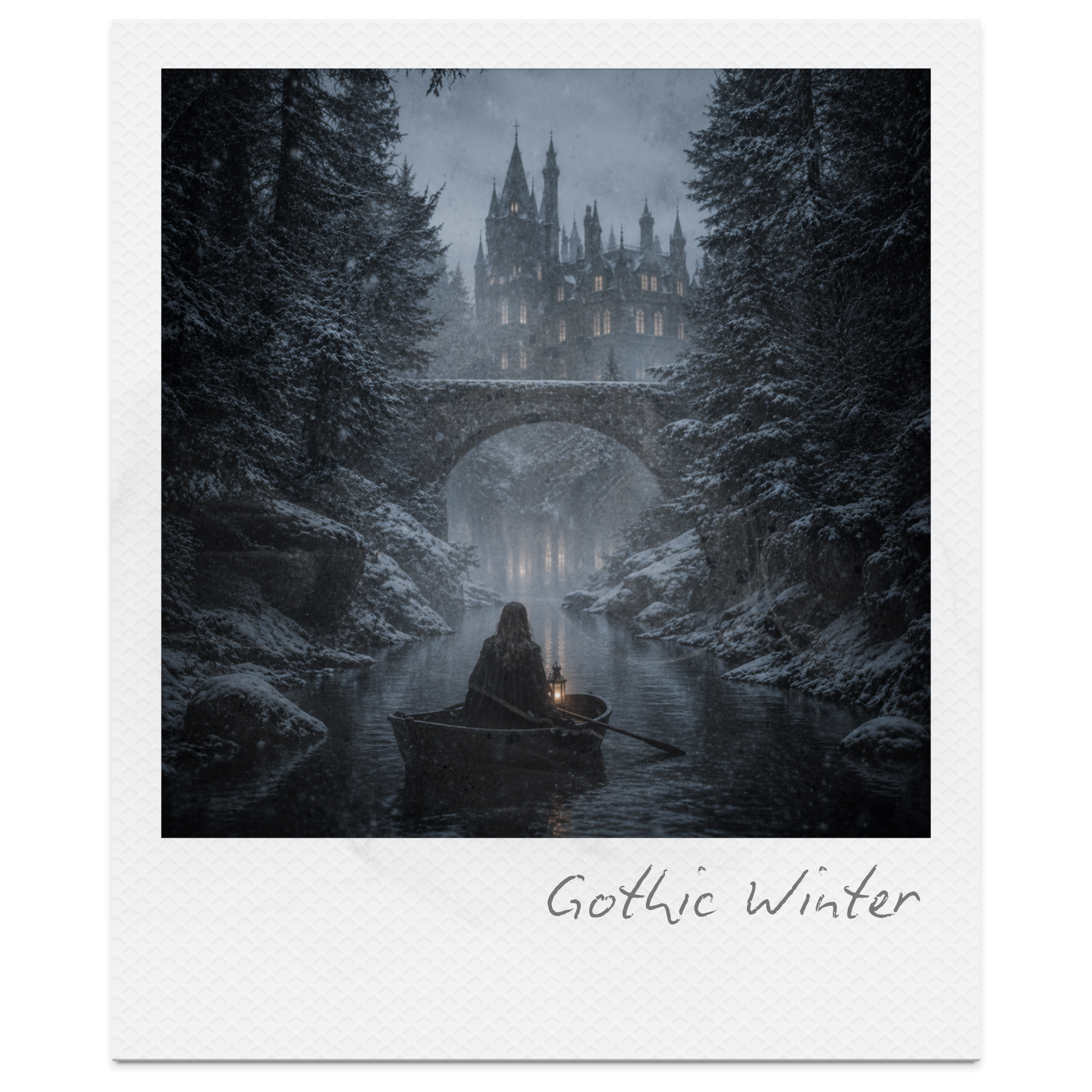
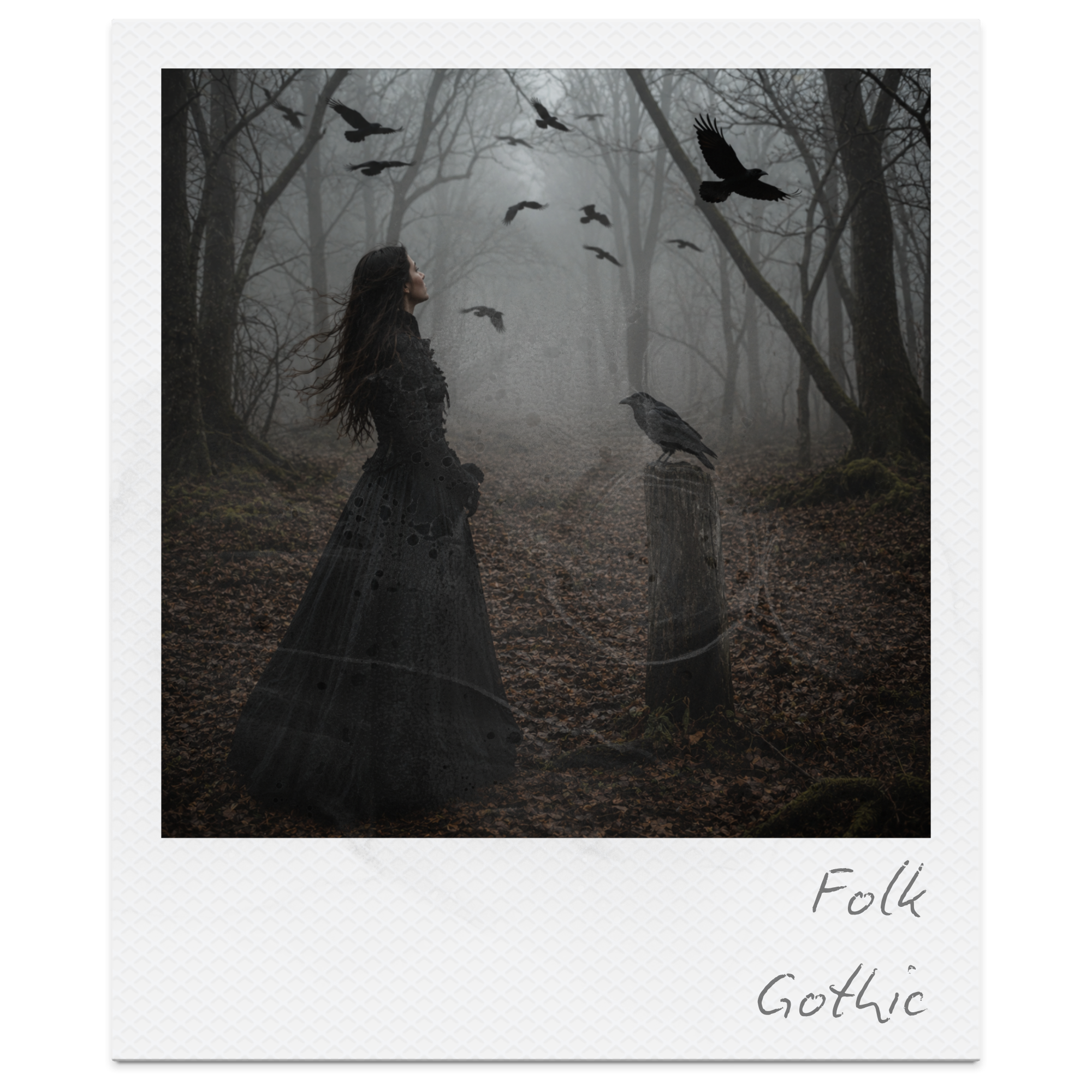
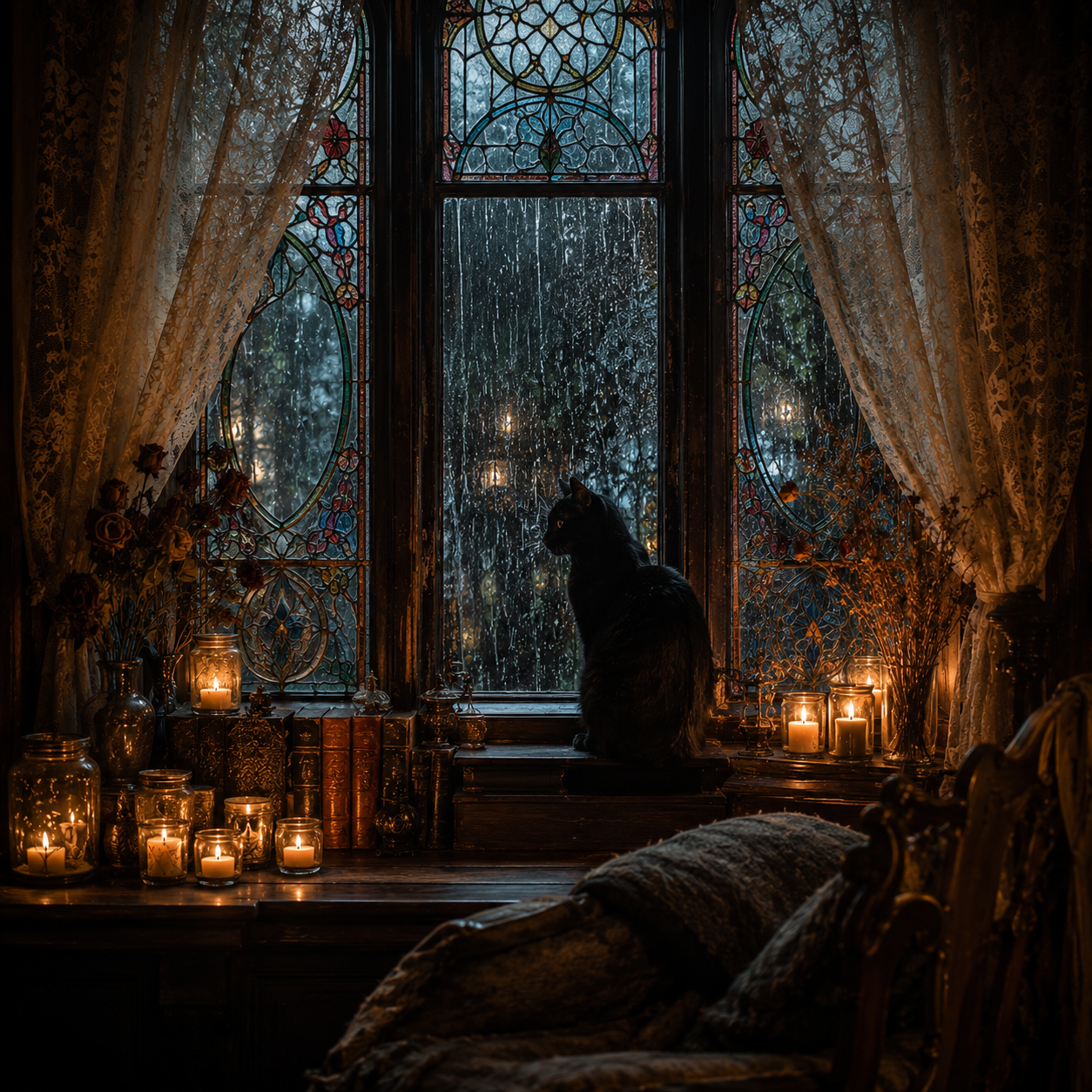
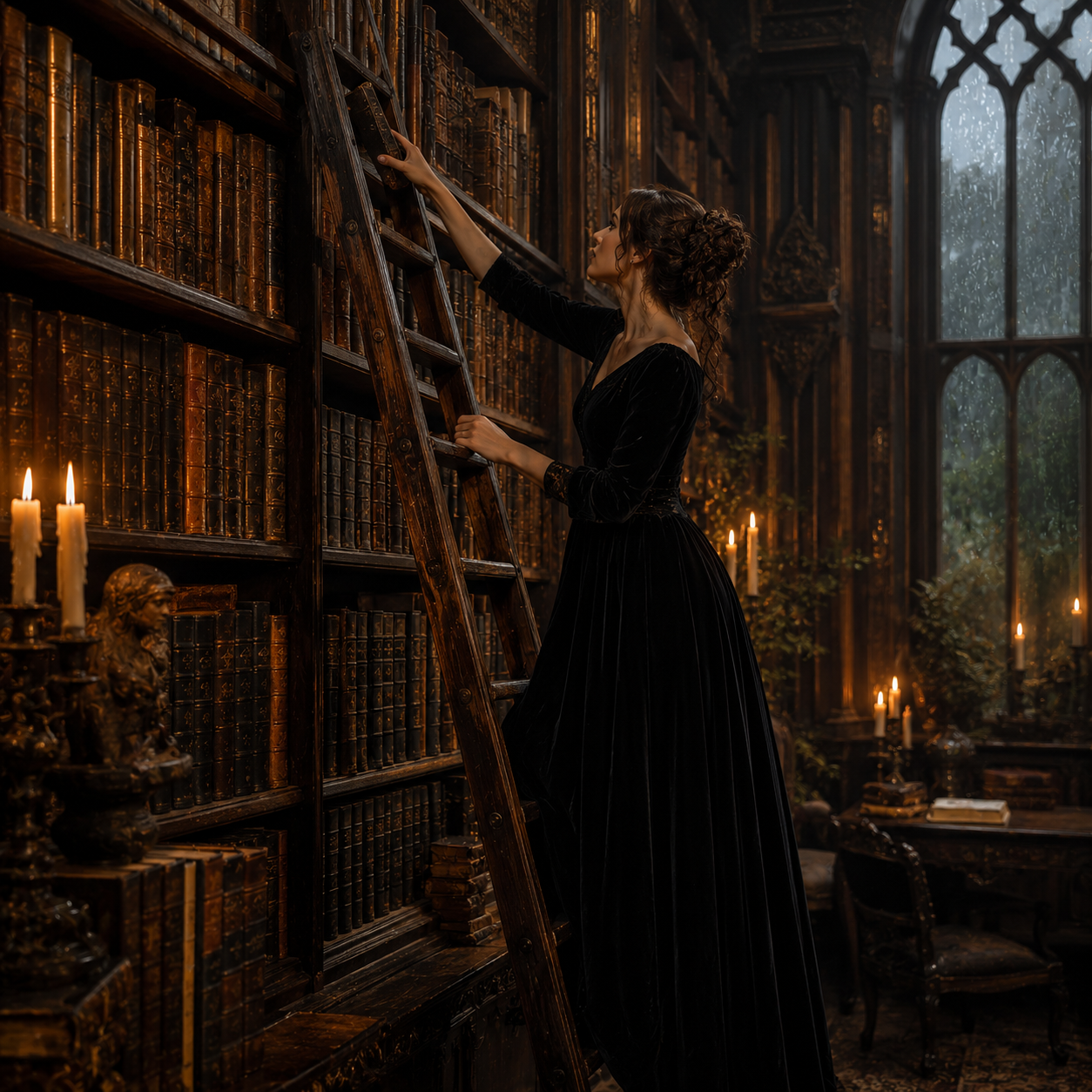
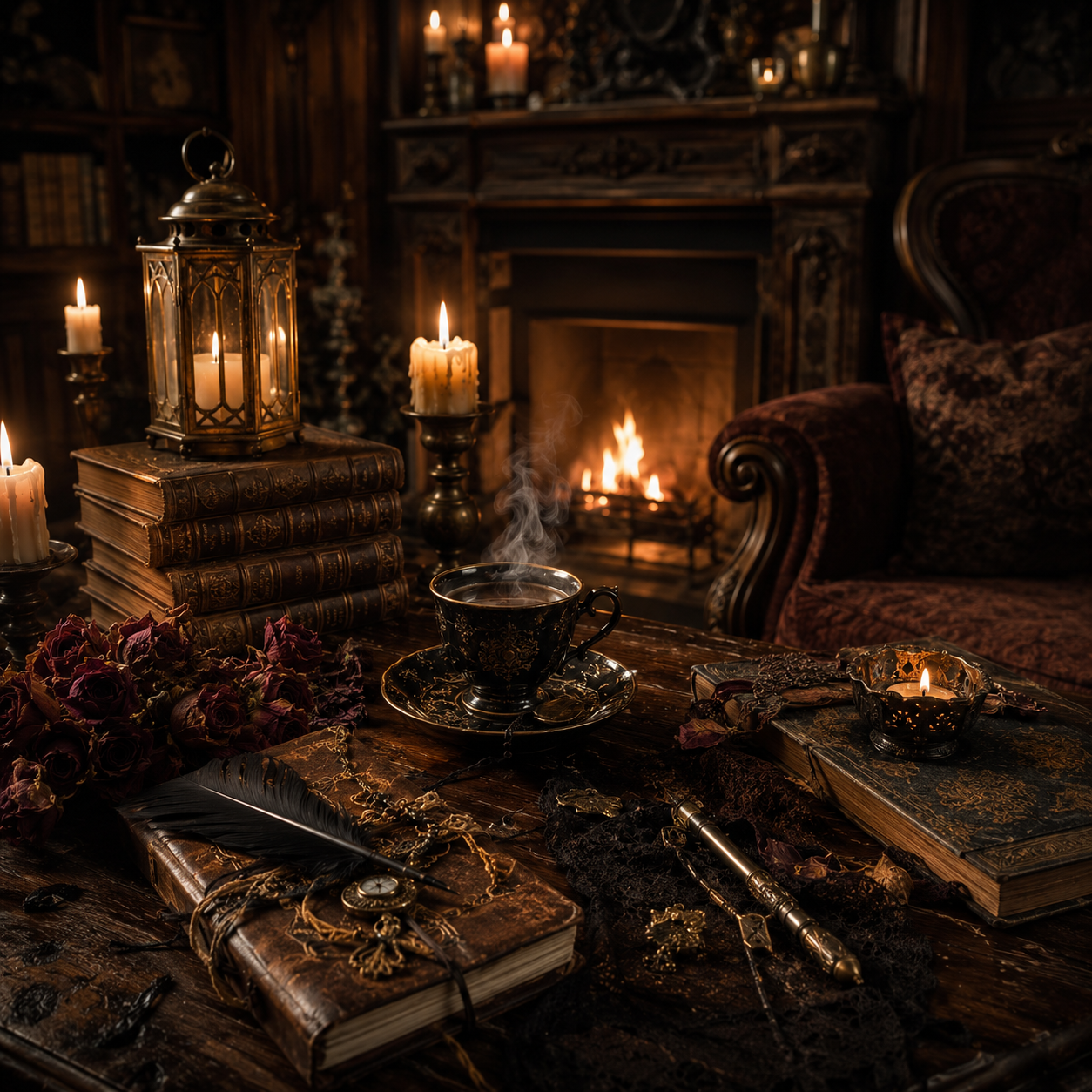
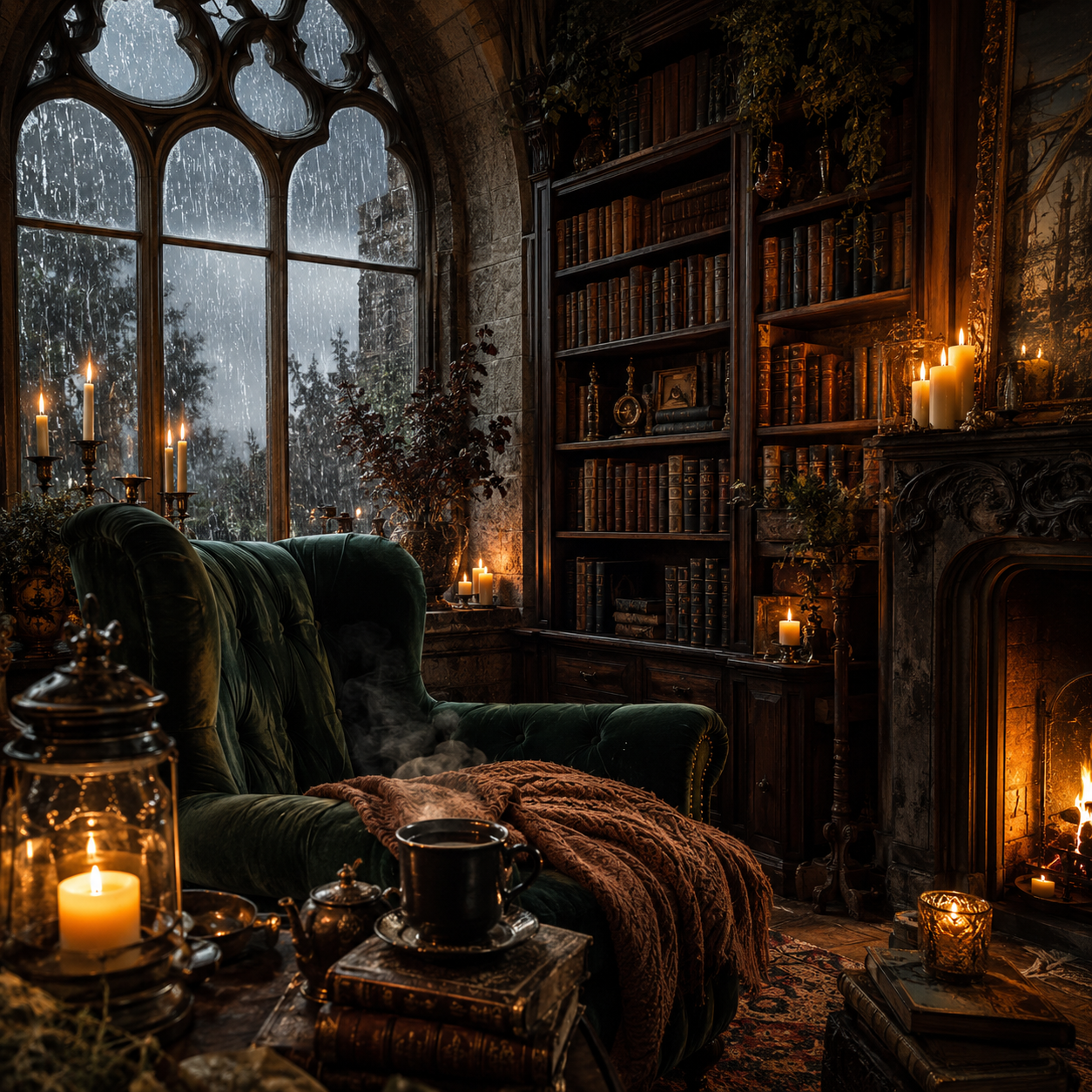
7. Picture Prompts
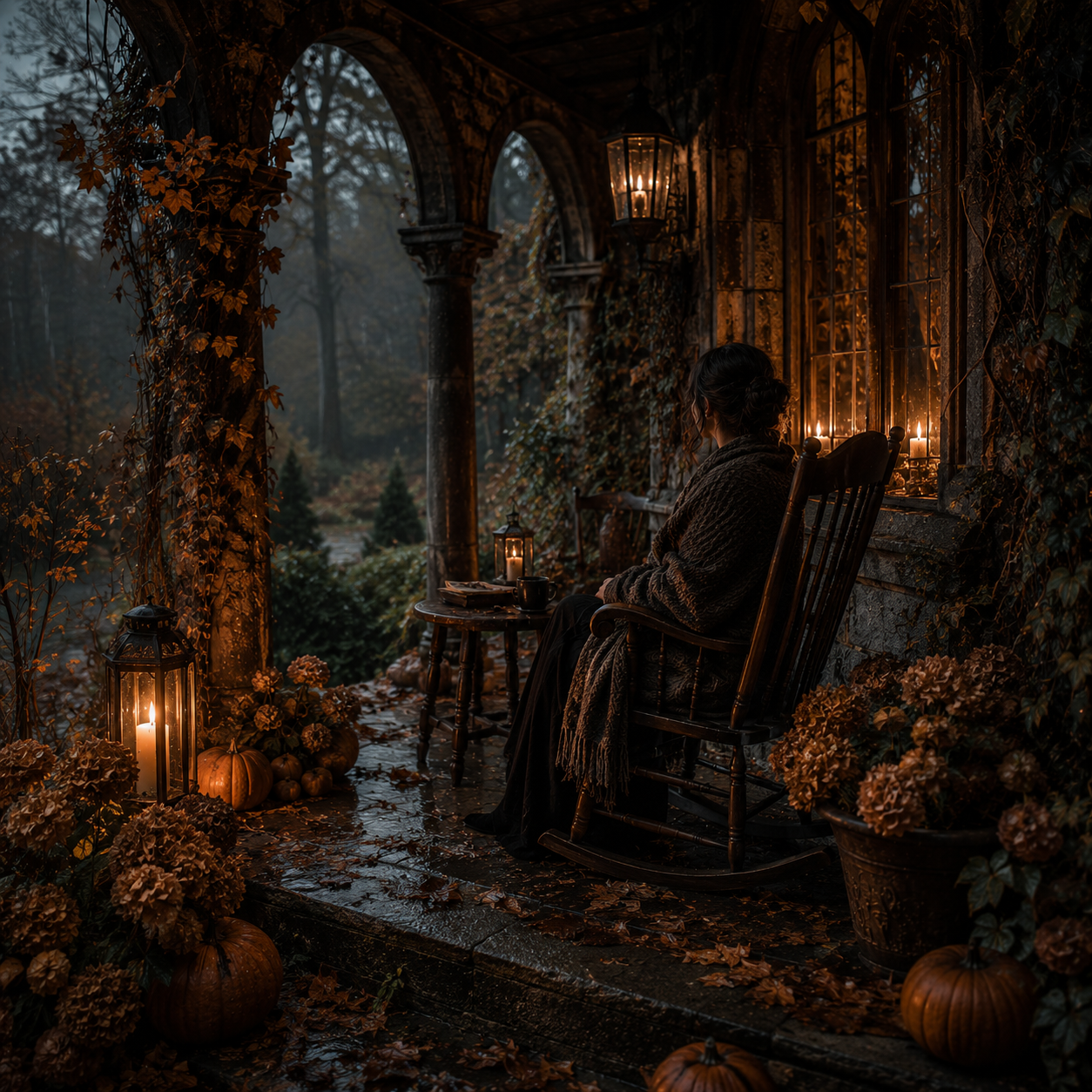
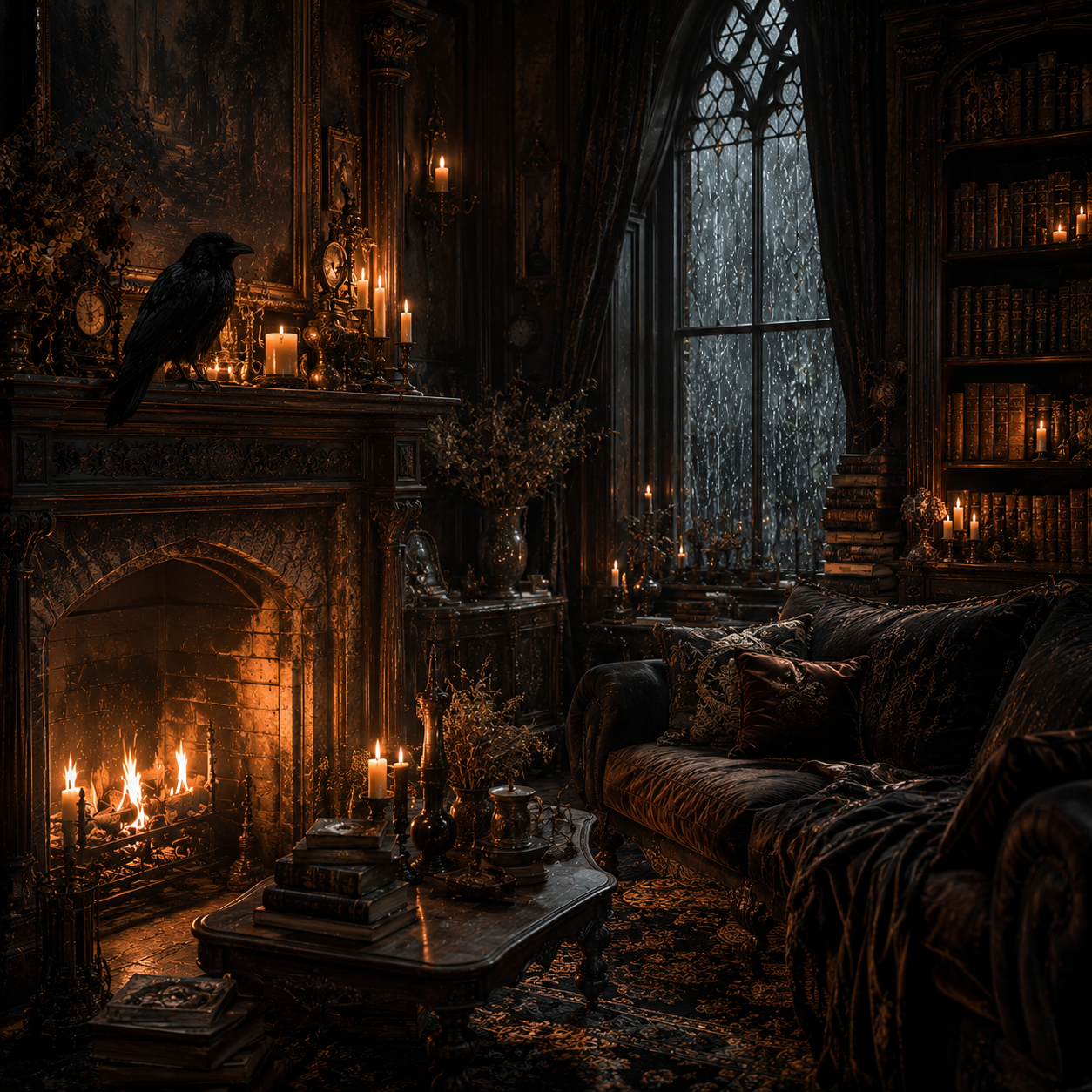
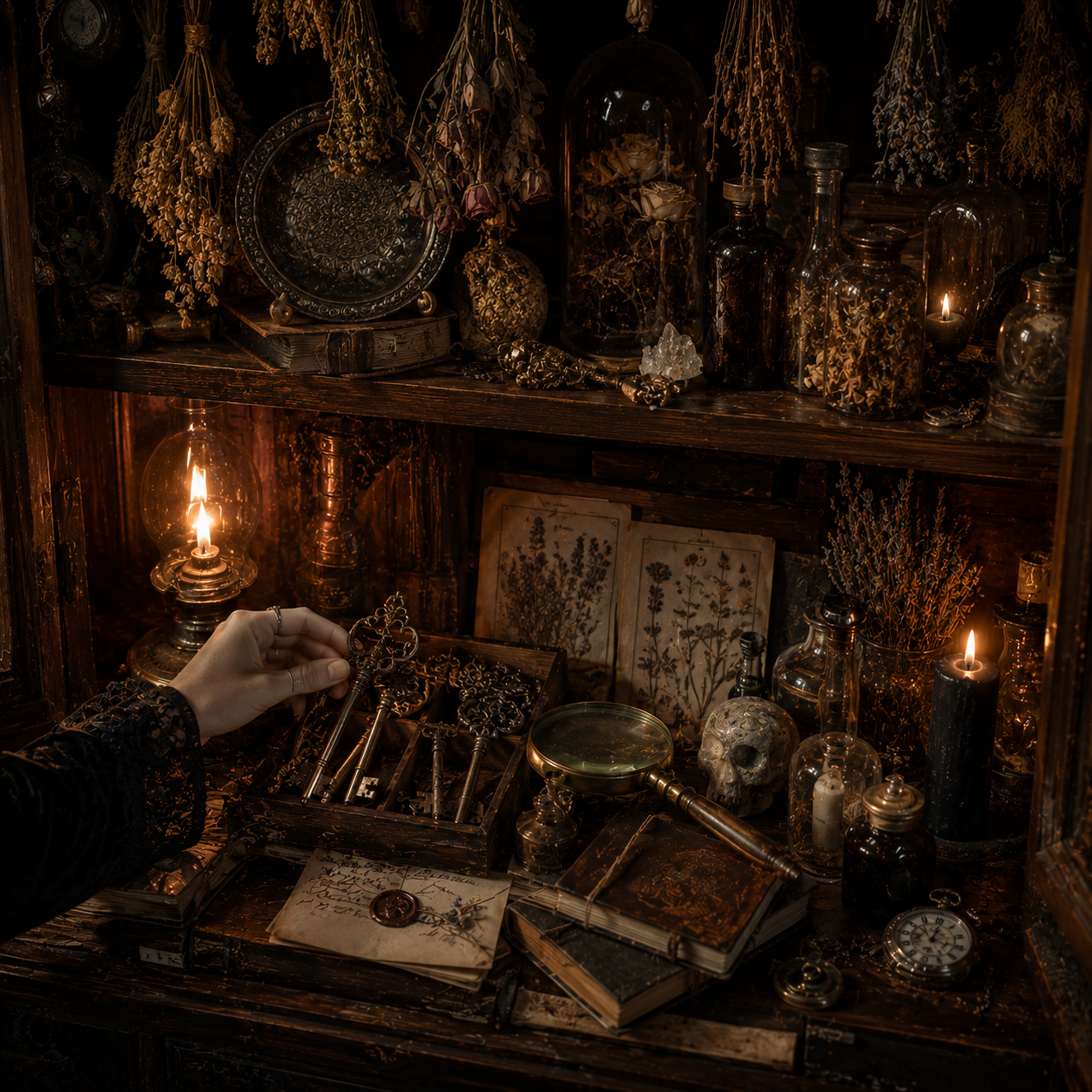
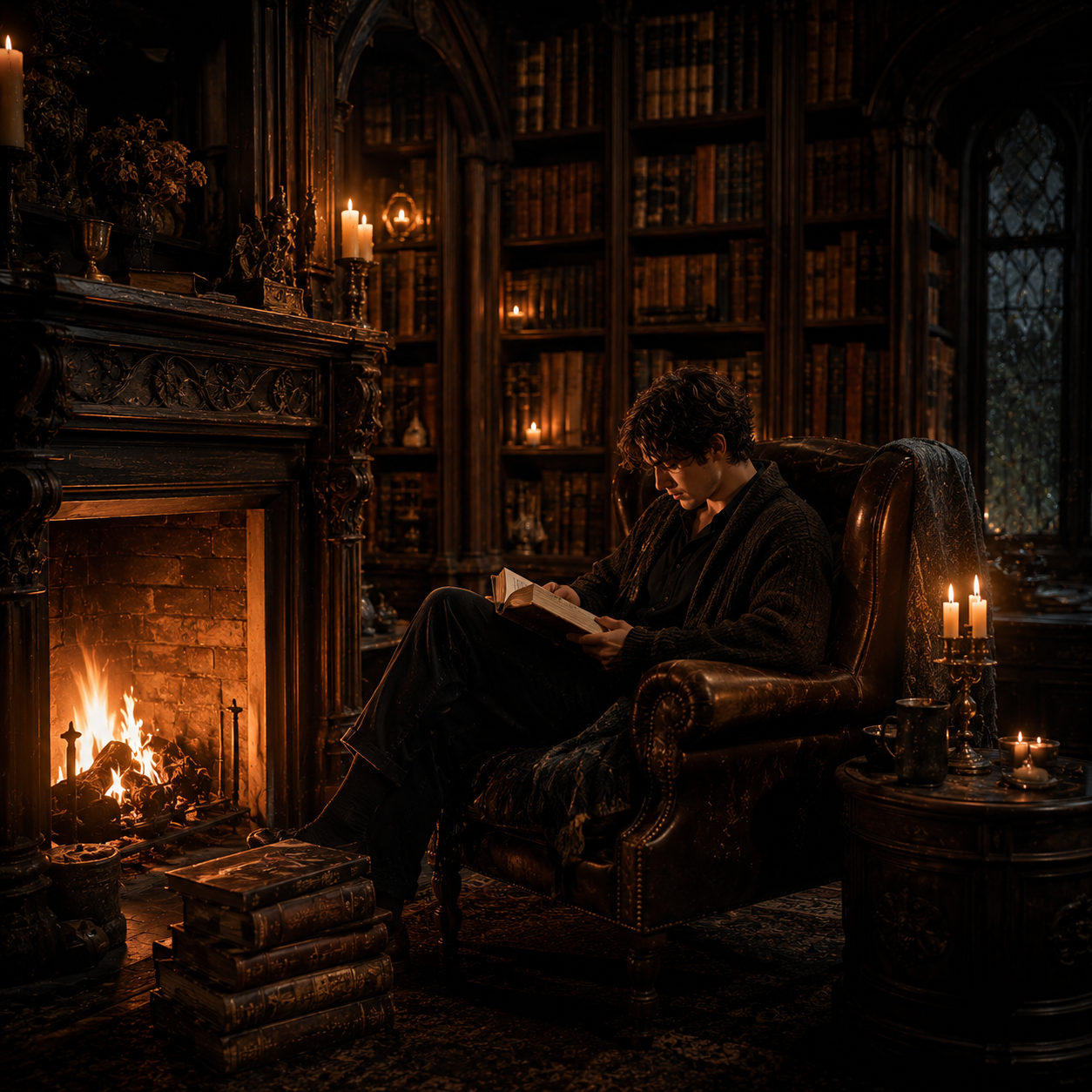
Cozy Gothic combines warmth, nostalgia, and quiet mystery. These scenes invite stories filled with beautiful old buildings, gentle hauntings, forgotten histories, and comforting spaces where every object seems to hold a memory.
Go Deeper into Cozy Gothic
Cozy Gothic proves that Gothic fiction doesn't have to rely on relentless horror to create powerful atmosphere. Instead of monsters and violence, it embraces quiet mystery, forgotten places, gentle hauntings, and characters who find comfort in uncovering the stories hidden within old houses, weathered journals, antique objects, and overgrown gardens. Melancholy is balanced by hope, allowing readers to experience the beauty of the Gothic without losing its sense of wonder.
Atmosphere is everything. Rain tapping against leaded windows, candles flickering across old bookshelves, ivy climbing forgotten walls, ravens watching from garden gates, fireplaces glowing inside centuries-old cottages, and the scent of old paper, cedar wood, and dried lavender all help create immersive settings where history feels alive. Rather than threatening your characters, these places often invite them to slow down, listen carefully, and uncover mysteries that have patiently waited to be found.
◆ Focus on quiet mysteries rather than terrifying ones. Lost letters, forgotten family histories, abandoned gardens, mysterious portraits, hidden rooms, missing journals, and gentle ghost stories often feel more powerful than dramatic horror.
◆ Let your setting become a place readers want to visit. Bookshops, libraries, cottages, greenhouses, manor houses, village churches, antique shops, and coastal villages should feel rich with warmth, history, and character.
◆ Use ghosts as storytellers instead of villains. Spirits can offer guidance, preserve forgotten memories, protect old homes, or quietly help living characters uncover the truth.
◆ Fill your stories with meaningful objects. Antique keys, handwritten journals, pressed flowers, pocket watches, teacups, botanical sketches, family portraits, old maps, and forgotten books can all carry emotional significance.
◆ Explore themes of healing and belonging. Cozy Gothic often centres on characters rebuilding their lives, restoring neglected places, reconnecting with family history, or finding unexpected communities.
◆ Balance melancholy with comfort. Misty mornings, candlelight, rain-soaked gardens, overgrown cemeteries, ivy-covered cottages, and quiet churchyards should feel peaceful as well as mysterious.
◆ Draw inspiration from folklore and local history. Village traditions, herbal remedies, old superstitions, seasonal festivals, forgotten legends, and generations of oral storytelling can add richness without overwhelming the gentle tone.
◆ Remember that not every mystery needs a perfect solution. Some questions are more satisfying when they remain partially unanswered, allowing readers to imagine the stories that continue beyond the final page.
Some stories are best left buried.
But this one has surfaced.
Hidden inside a dust-covered box of forgotten papers lies the remains of a mystery. A child's drawing. A missing persons report. A letter never sent. Photographs with names scratched from the back. Newspaper clippings that seem to contradict one another.
Individually, they reveal very little.
Together, they suggest something far stranger.
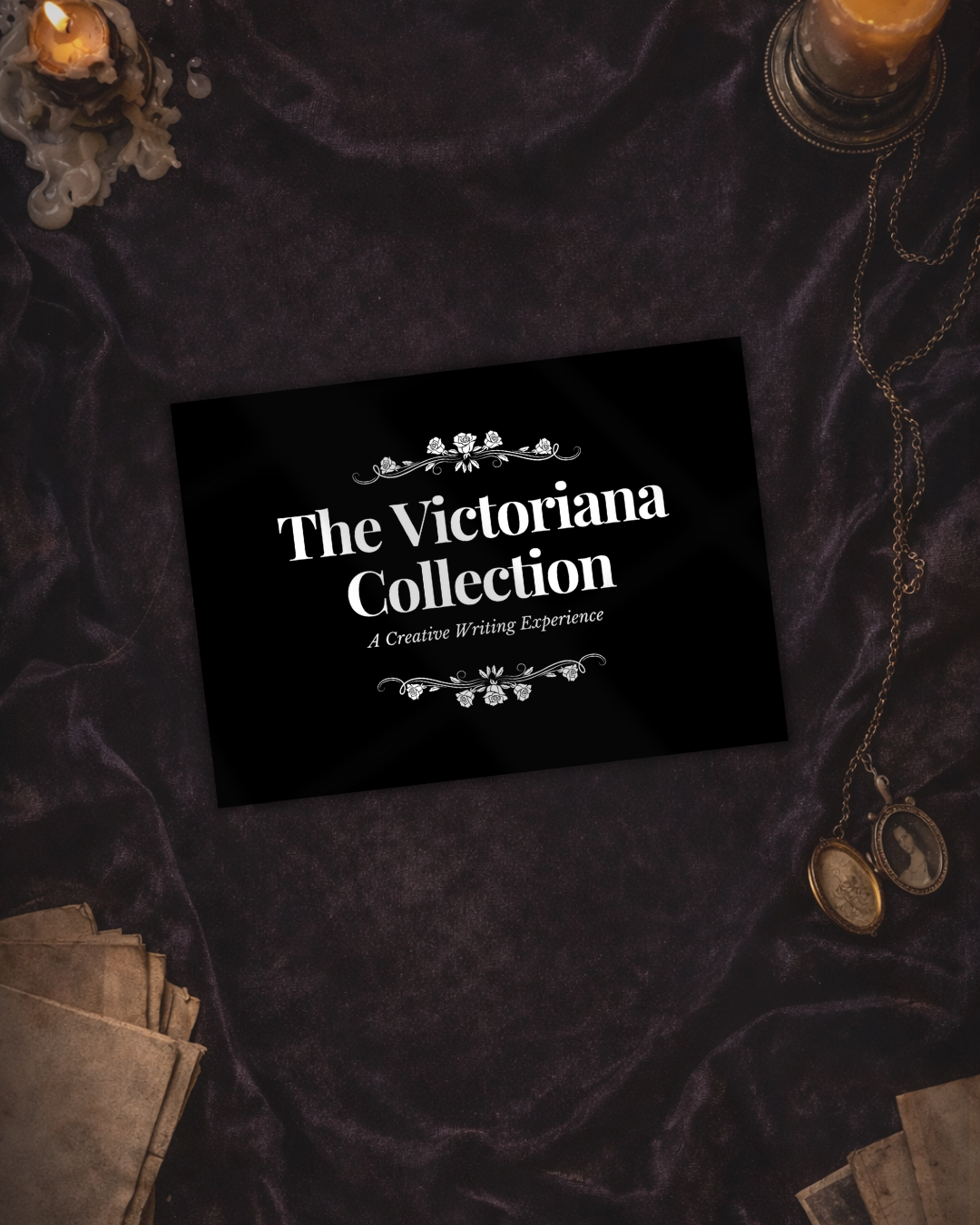
The Victoriana Collection is an immersive archive inspired by gothic fiction, Victorian spiritualism, forgotten histories, and the mysteries that linger long after the people involved have vanished. Inside you'll discover letters, diary entries, photographs, reports, spiritualist notes, newspaper clippings, and personal mementoes that hint at a story hidden beneath layers of silence and time.
Some documents feel ordinary.
Others seem determined to be remembered.
Who disappeared?
Who was searching for them?
And why do so many pieces of the story appear to be missing?
There are no answers waiting at the end.
Only fragments.
What's Inside?
◆ 50+ printable documents and artefacts from the world of The Victoriana Collection
◆ Letters, diary entries, photographs, missing persons reports, spiritualist notes, newspaper clippings, personal mementoes, and more
◆ A printable prompt card to inspire exploration and storytelling
◆ Instant digital download in PDF format
Who Is It For?
Perfect for:
◆ Writers and worldbuilders
◆ Lovers of gothic fiction and Victorian mystery
◆ Mystery enthusiasts and curious minds
◆ Teachers and students
◆ Anyone fascinated by forgotten histories, spiritualism, and unexplained disappearances
What Makes This Different?
This isn't a guided story or a mystery with a solution.
It's an archive.
Every document reveals part of a larger narrative, but none reveal the whole truth.
Some pieces fit together neatly. Others raise more questions than they answer.
The story hidden inside these papers depends on what you notice, what you question, and what connections you choose to make.
Every reader uncovers a different mystery.
Open a Box of Forgotten Stories: The Victoriana Collection
Cozy Gothic is filled with the kinds of things that seem ordinary until you realise they have a story to tell.
An old photograph tucked inside a book. A handwritten letter nobody remembers keeping. A name repeated across several documents. A family record with one unexplained gap. The faded traces of people whose lives might otherwise have been completely forgotten.
The Victoriana Collection turns that feeling of quiet discovery into an immersive storytelling experience.
Instead of beginning with a traditional writing prompt, you open a fictional archive filled with letters, photographs, reports, records and other fragments from a mysterious Victorian past.
There is a larger story hidden amongst them — but nobody tells you exactly what it is.
You can take your time exploring the archive, noticing small connections between different pieces, following the people who interest you and deciding which unanswered questions deserve another look.
Perhaps a photograph makes you wonder about the person standing just outside the frame. A letter might reveal a relationship nobody recorded elsewhere. A forgotten name could lead you through several generations of family history, while an apparently insignificant object might inspire an entirely new story of its own.
There is no official solution and no single correct interpretation. You don't have to solve everything. Sometimes the most interesting stories are found simply by imagining the lives that existed between the surviving fragments.
Write the diary that was never discovered. Reconstruct a forgotten relationship. Give a minor figure in the records an entire life of their own, or use one photograph, letter or unexplained detail as the beginning of a completely new tale.
For writers drawn to old photographs, handwritten letters, forgotten histories, family mysteries, Victorian atmosphere, quiet supernatural possibilities and the simple pleasure of discovering stories hidden inside ordinary things, Victoriana gives you an archive filled with possibilities.
Some mysteries aren't waiting to frighten you. They're simply waiting to be remembered.
→ Explore The Victoriana Collection
Final Thoughts
Cozy Gothic reminds us that the most memorable mysteries are not always the darkest ones. Beautiful old houses, forgotten libraries, quiet villages, rain-soaked gardens, antique bookshops, and gentle ghosts create stories where curiosity is rewarded, history is cherished, and even melancholy carries a sense of comfort. Instead of fearing the past, Cozy Gothic invites us to listen to it, preserving forgotten lives and hidden memories through kindness, patience, and quiet discovery.
These 70 Cozy Gothic Writing Prompts explore candlelit cottages, haunted bookshops, forgotten cemeteries, hidden libraries, mysterious journals, overgrown gardens, antique treasures, and gentle supernatural encounters. Whether you're writing gothic fiction, magical realism, mystery, fantasy, historical fiction, or beautifully atmospheric literary fiction, these prompts will help you create immersive stories filled with warmth, wonder, and quiet intrigue.
If you're looking for even more inspiration, explore the Gothic Writing Hub for prompts, characters, settings, names, worldbuilding ideas, and genre guides, or browse the Creative Writing Archive for hundreds of creative writing resources spanning gothic fiction, fantasy, horror, mystery, folklore, historical fiction, romance, and many more genres.
Choose Your Next Adventure