70 Victorian Gothic Writing Prompts: Haunted Manors, Hidden Secrets & Victorian Mysteries
Victorian Gothic sits at the heart of the Gothic tradition, blending elegant society with unsettling mystery, scientific curiosity with supernatural fear, and rigid respectability with hidden corruption. Set against the backdrop of nineteenth-century Britain, these stories unfold in grand country estates, fog-filled London streets, isolated manor houses, decaying abbeys, workhouses, asylums, cemeteries, and candlelit drawing rooms, where every portrait, diary, and locked door conceals another layer of the past. Beneath the polished surface of Victorian life lie family scandals, forbidden romances, spiritualist séances, dangerous experiments, unexplained disappearances, and secrets powerful enough to haunt generations.
Inspired by classics such as Dracula, Jane Eyre, The Strange Case of Dr Jekyll and Mr Hyde, The Woman in White, The Turn of the Screw, and the ghost stories of M. R. James, Victorian Gothic explores themes of repression, identity, grief, obsession, morality, class, religion, scientific ambition, and the uneasy boundary between the rational and the supernatural. Whether your story embraces ghosts, psychological suspense, mystery, or historical realism, the Victorian era provides one of fiction's richest and most atmospheric settings.
This collection of 70 Victorian Gothic Writing Prompts is designed as a complete creative toolkit, featuring plot prompts, title ideas, opening lines, closing lines, character ideas, setting prompts, and atmospheric picture prompts. Explore haunted manor houses, forgotten diaries, séance parlours, abandoned asylums, hidden passages, family curses, mysterious benefactors, spiritualist circles, and long-buried scandals waiting to resurface.
If you're looking for even more inspiration, explore the Historical Fiction Writing Hub for ideas rooted in real historical settings, the Gothic Writing Hub for atmospheric prompts, characters, settings, and worldbuilding resources, or browse the Creative Writing Archive, where you'll find hundreds of creative writing prompts spanning historical fiction, gothic fiction, fantasy, horror, mystery, folklore, romance, and many more genres.

1. Plot Prompts
Victorian Gothic stories explore the hidden darkness beneath a respectable society. Family scandals, haunted estates, forbidden experiments, spiritualist séances, inheritance disputes, mysterious benefactors, and long-buried crimes create worlds where appearances are carefully maintained while terrible secrets wait behind locked doors.
A young governess accepts a position at an isolated country estate where every previous governess disappeared without explanation.
While cataloguing the contents of a deceased collector's library, a solicitor discovers letters suggesting an entire aristocratic family erased one child from history.
A respected physician's revolutionary medical experiments begin producing impossible results that threaten to expose his darkest secret.
Following the death of a wealthy industrialist, his heirs discover a hidden wing of the family manor sealed for more than forty years.
A newspaper reporter investigating a series of séances uncovers evidence that one medium appears to know details about murders before they occur.
A woman inherits an abandoned London townhouse where every mirror has been deliberately covered for generations.
An ambitious archaeologist returns from Egypt with an artefact that slowly changes the behaviour of everyone living in his household.
During renovations beneath an old abbey, workers uncover a forgotten crypt containing dozens of unmarked coffins and a journal documenting their occupants.
A barrister defending an accused murderer begins receiving anonymous evidence proving the victim should never have existed.
Every winter, a mysterious black carriage arrives outside the same manor house, though nobody has ever seen anyone step inside or leave it.
2. Title Ideas
Victorian Gothic titles often suggest hidden histories, respectable appearances masking darker truths, and places where the past refuses to remain buried.
The House on Blackwood Hill
Beneath the Mourning Veil
The Silent Séance
Letters Never Burned
The Ashcroft Inheritance
Shadows on Wren Hall
The Lady of Hollow House
The Forgotten Parlour
A Study in Shadows
Beneath Gaslight
3. Opening Lines
Victorian Gothic stories often begin with ordinary events—a new appointment, an unexpected inheritance, or a formal invitation—that gradually reveal something deeply unsettling beneath the surface.
The invitation arrived precisely three days after my aunt's funeral.
Nobody at Blackwood Hall ever mentioned the west wing unless directly questioned.
My employer insisted the library remain locked after sunset, though he never explained why.
Every portrait in the drawing room had its eyes carefully scratched away.
The séance was advertised as harmless entertainment until one guest failed to leave.
I accepted the governess position because the salary seemed impossible to refuse.
The diary should never have survived the fire.
Every servant knew which staircase was forbidden after dark.
The solicitor paused before handing me the final key.
By the time the fog reached the front gates, it was already too late to leave.
4. Closing Lines
Victorian Gothic endings often suggest that justice comes at a cost and that some secrets can never truly be erased from history.
Some family names carry their curses forever.
The manor stood empty once more, waiting patiently for another heir.
Certain doors are locked for reasons history prefers to forget.
The final diary page remained blank.
London carried on exactly as though nothing had happened.
Not every ghost requires death to haunt the living.
By dawn, the evidence had disappeared once again.
Some experiments should never be repeated.
The portrait smiled only after everyone had gone.
Respectability had survived—but truth had not.
5. Character Ideas
Victorian Gothic characters often struggle between duty and desire, reputation and truth, science and superstition. They inhabit a society built upon strict expectations while quietly confronting the extraordinary.
A newly appointed governess with a hidden family connection to the estate.
A respected physician concealing increasingly unethical experiments.
An elderly housekeeper who has protected the manor's secrets for decades.
A spiritualist medium unsure whether the voices she hears are genuine.
A determined investigative journalist exposing London's forgotten scandals.
An antiquarian obsessed with collecting objects linked to unexplained deaths.
A grieving widow convinced her late husband is still trying to communicate with her.
A young solicitor handling an inheritance unlike any other in his career.
An eccentric professor researching Victorian occult societies.
A reclusive aristocrat who never appears in daylight.
6. Setting Ideas
Victorian Gothic thrives in atmospheric settings where elegance and decay exist side by side. Architecture, weather, and social expectations all contribute to the feeling that every place conceals another story.
A grand manor house overlooking windswept moorland.
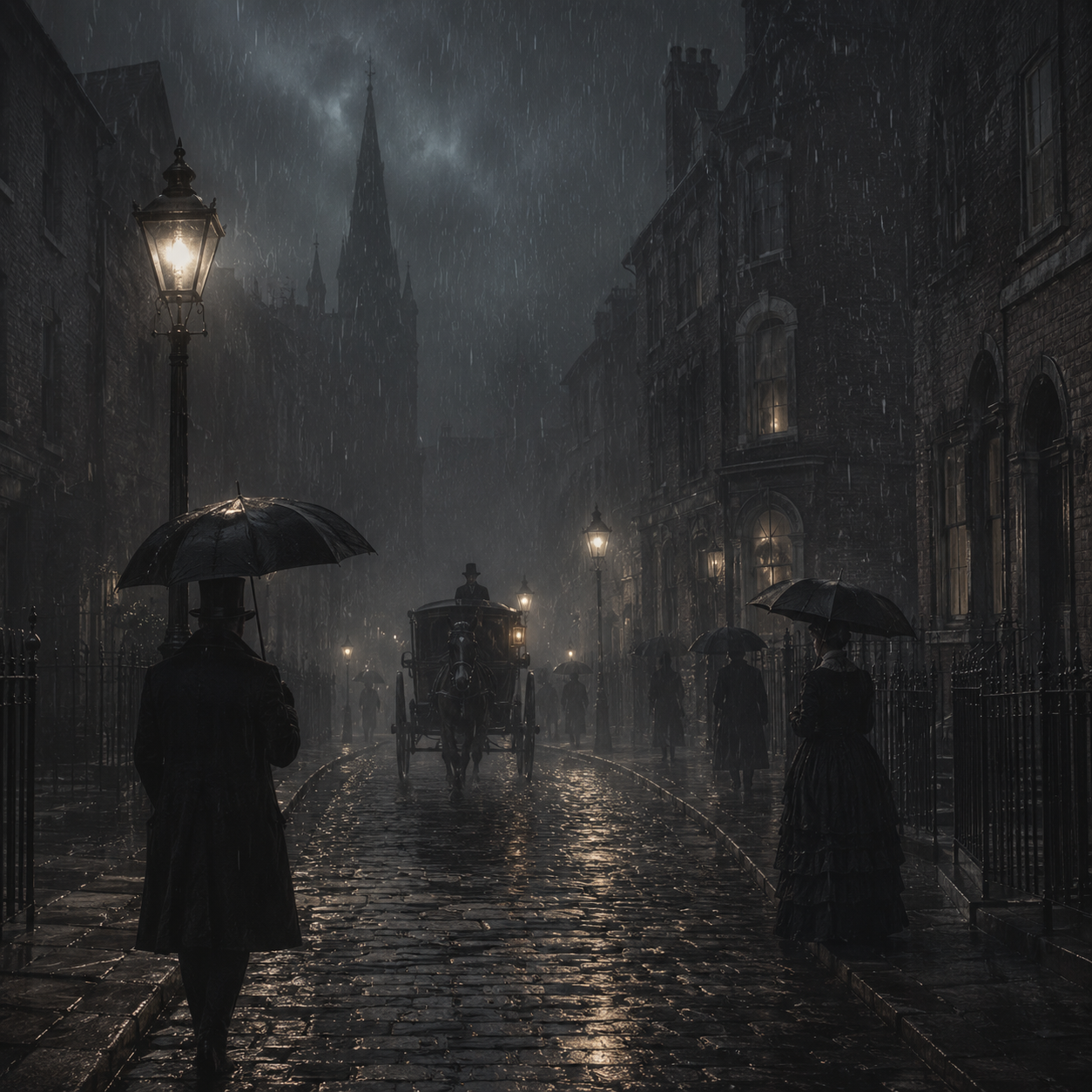
A fog-filled London street illuminated by flickering gas lamps.
An abandoned asylum standing at the edge of a quiet village.
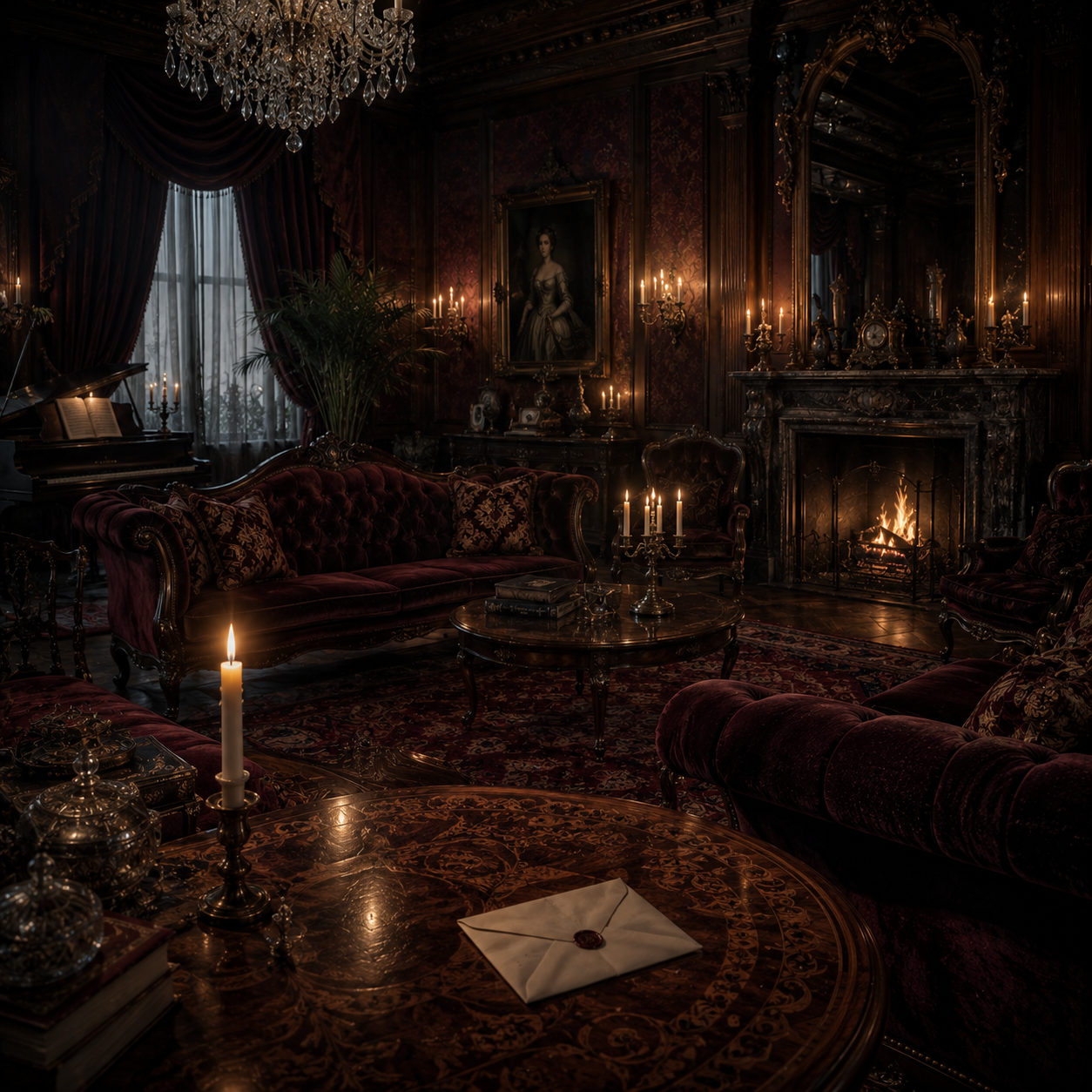
A richly furnished séance parlour filled with heavy velvet curtains and candlelight.
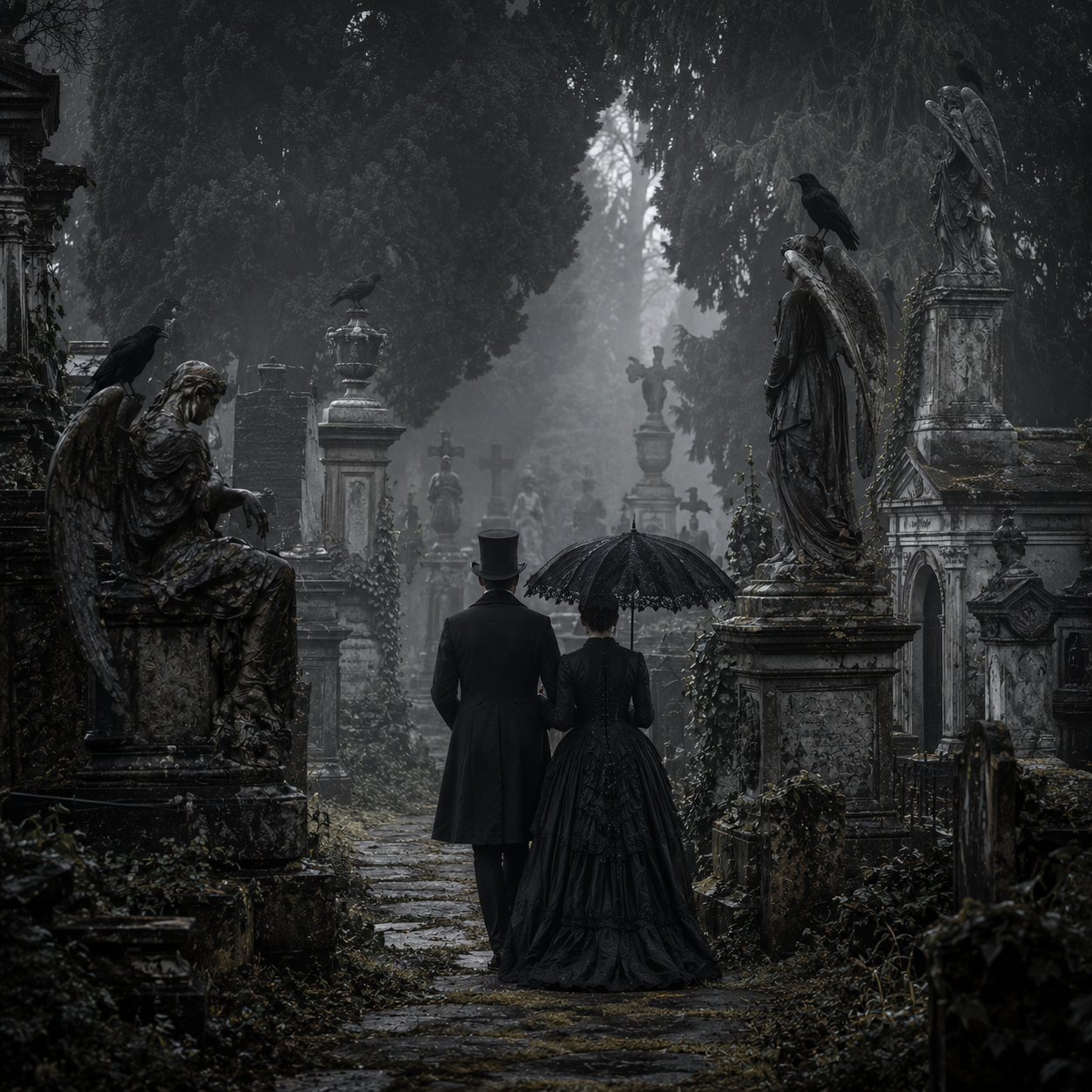
A forgotten cemetery hidden behind an ivy-covered church.
A sprawling country estate surrounded by formal gardens slowly returning to wilderness.
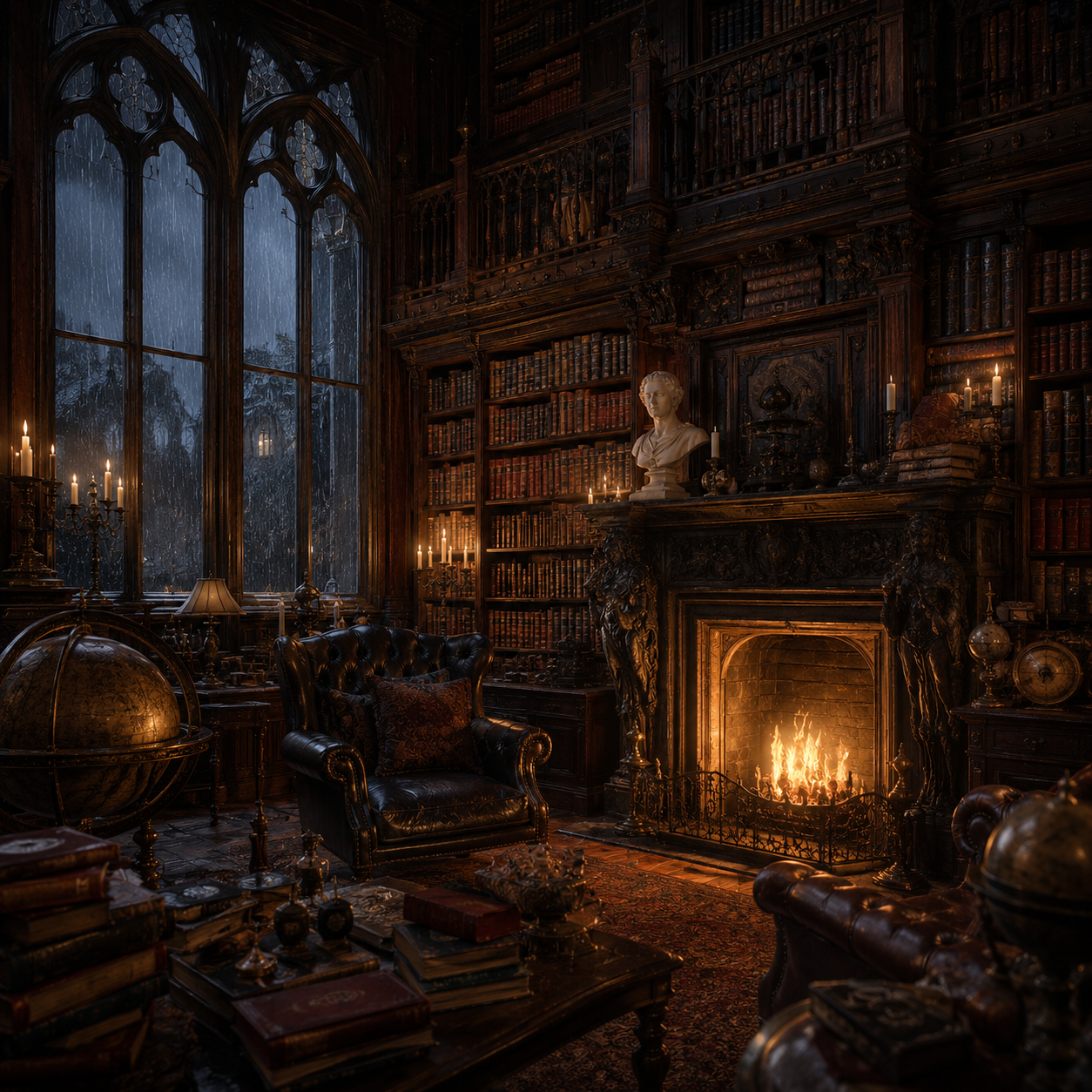
A private gentleman's library filled with rare scientific journals and occult manuscripts.
A decaying abbey overlooking dramatic coastal cliffs.
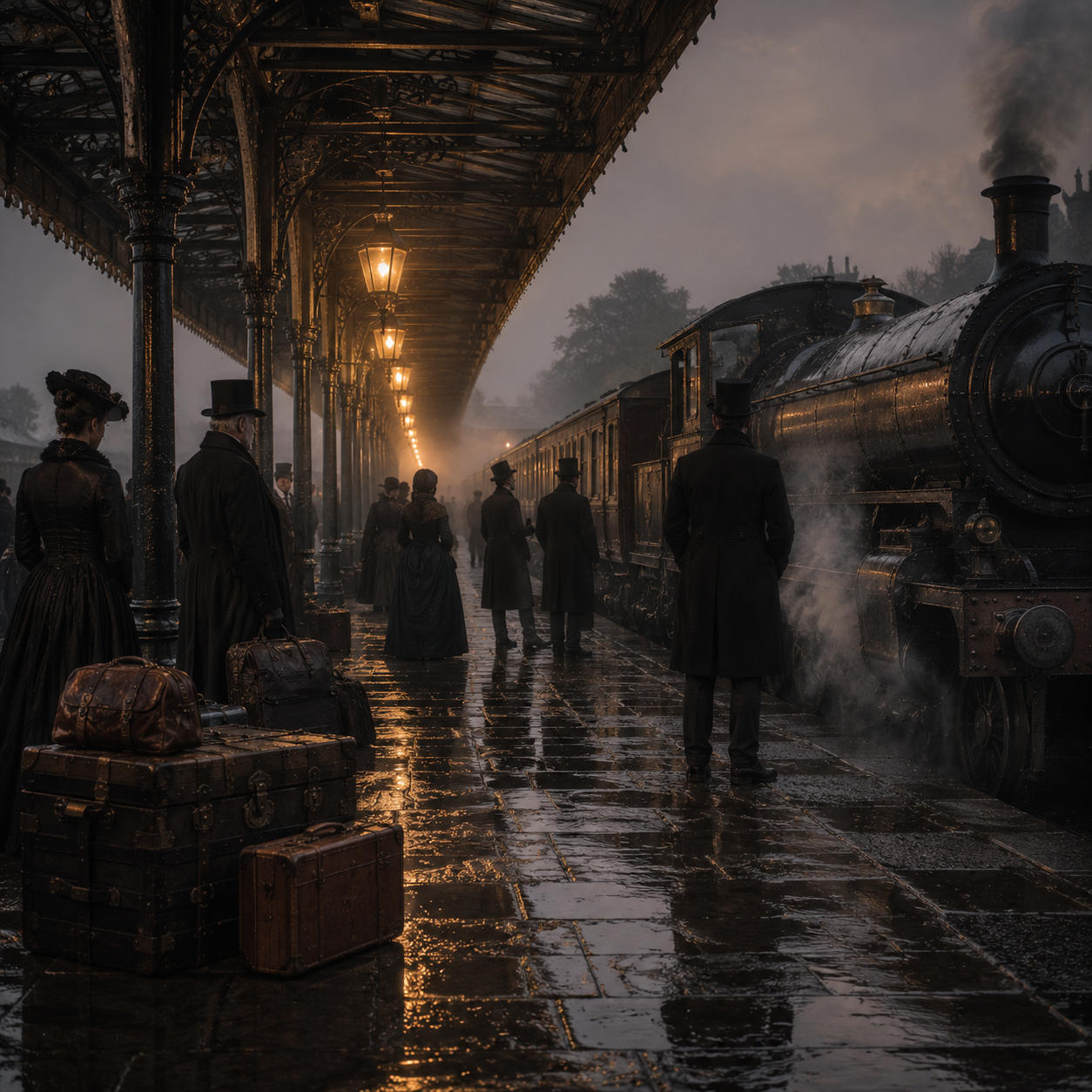
A Victorian railway station where one platform has remained permanently closed.
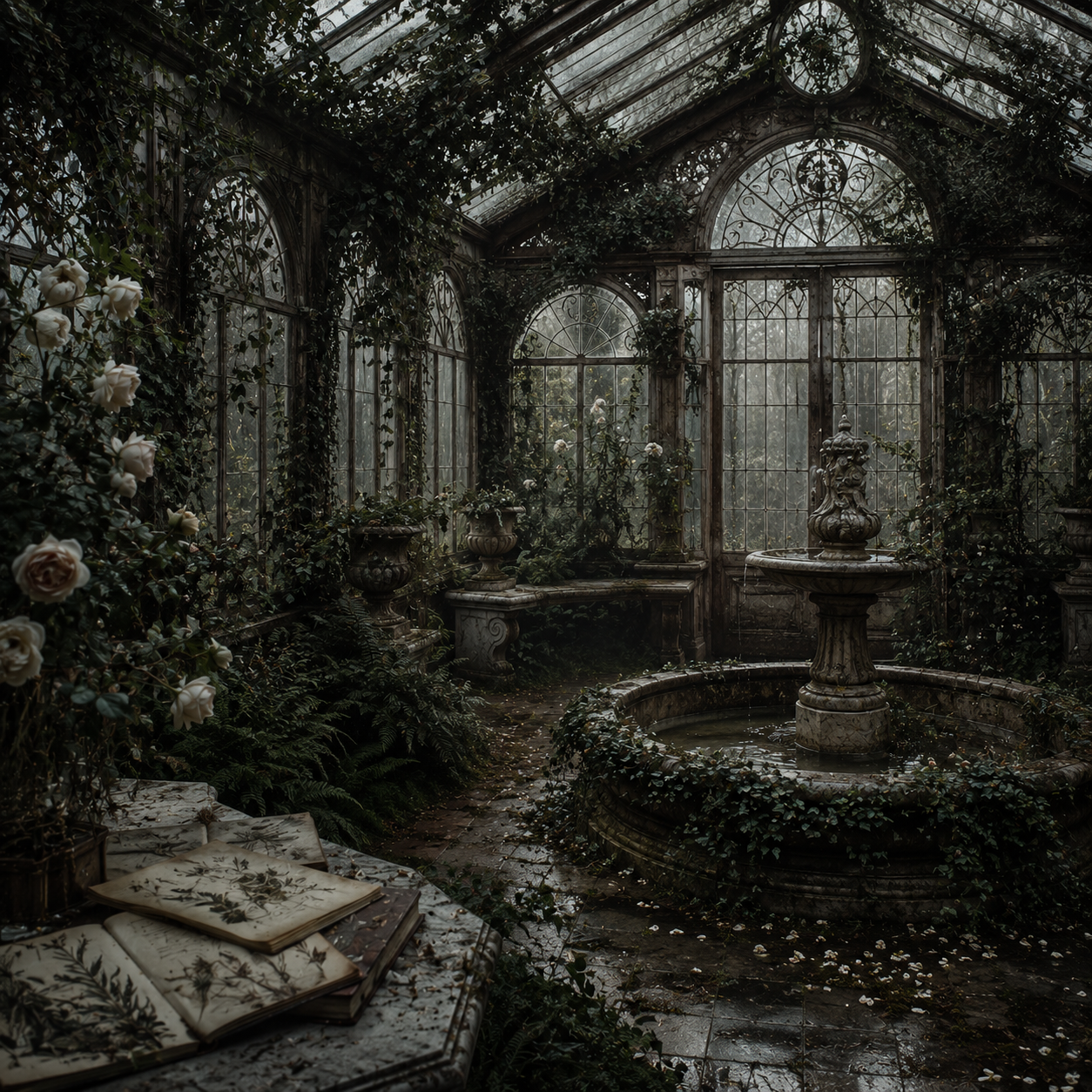
A lavish conservatory overflowing with exotic plants gathered from across the Empire.
7. Picture Prompts
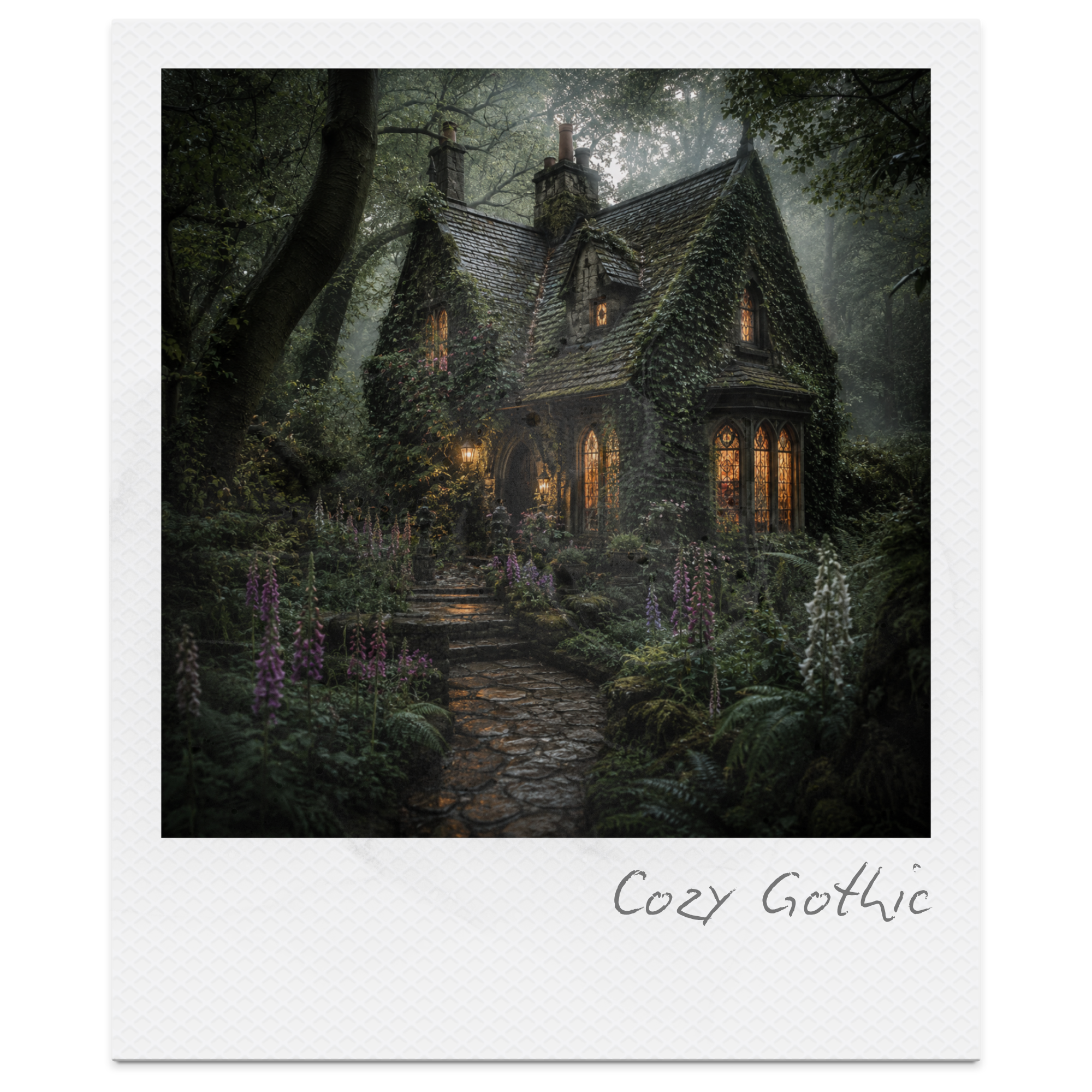
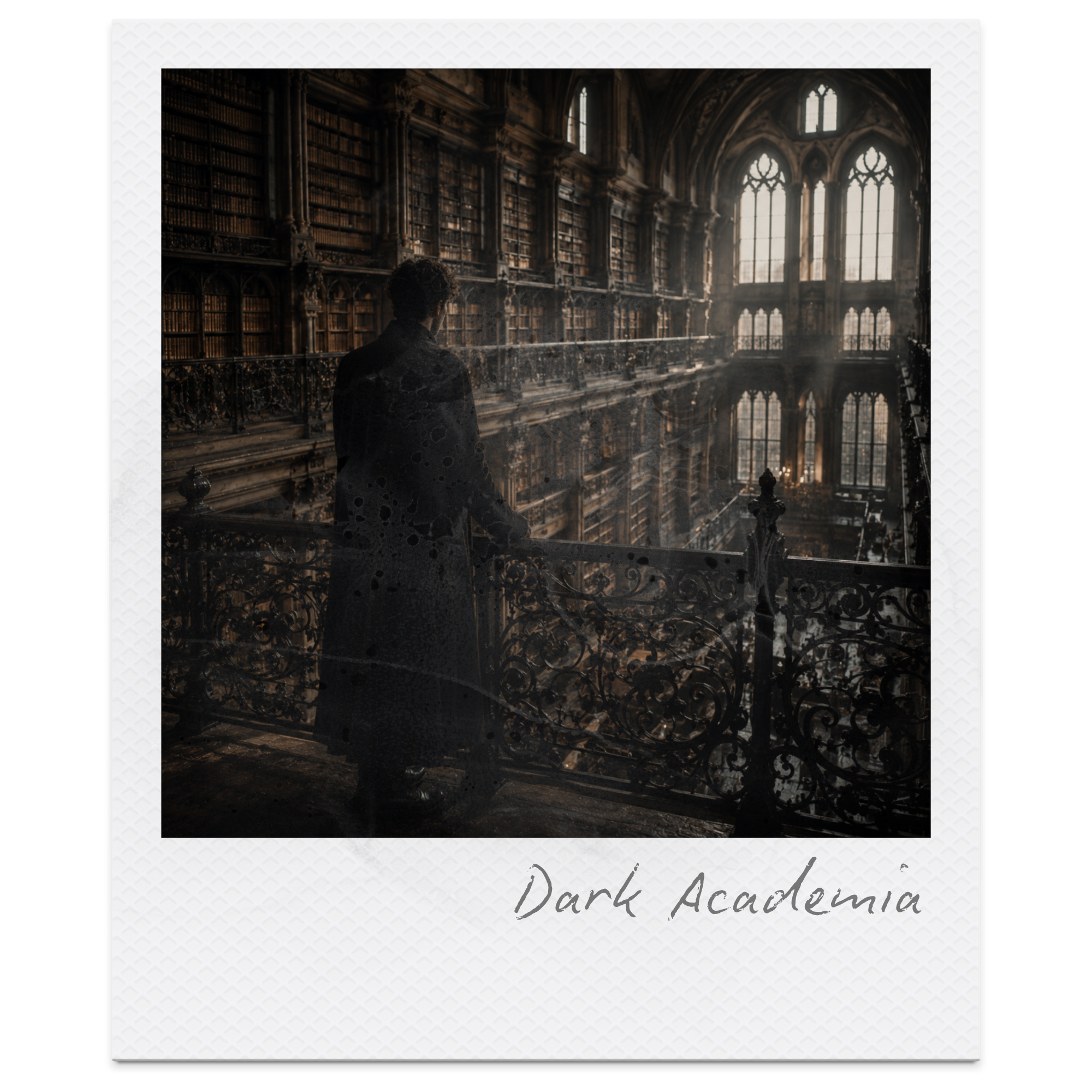
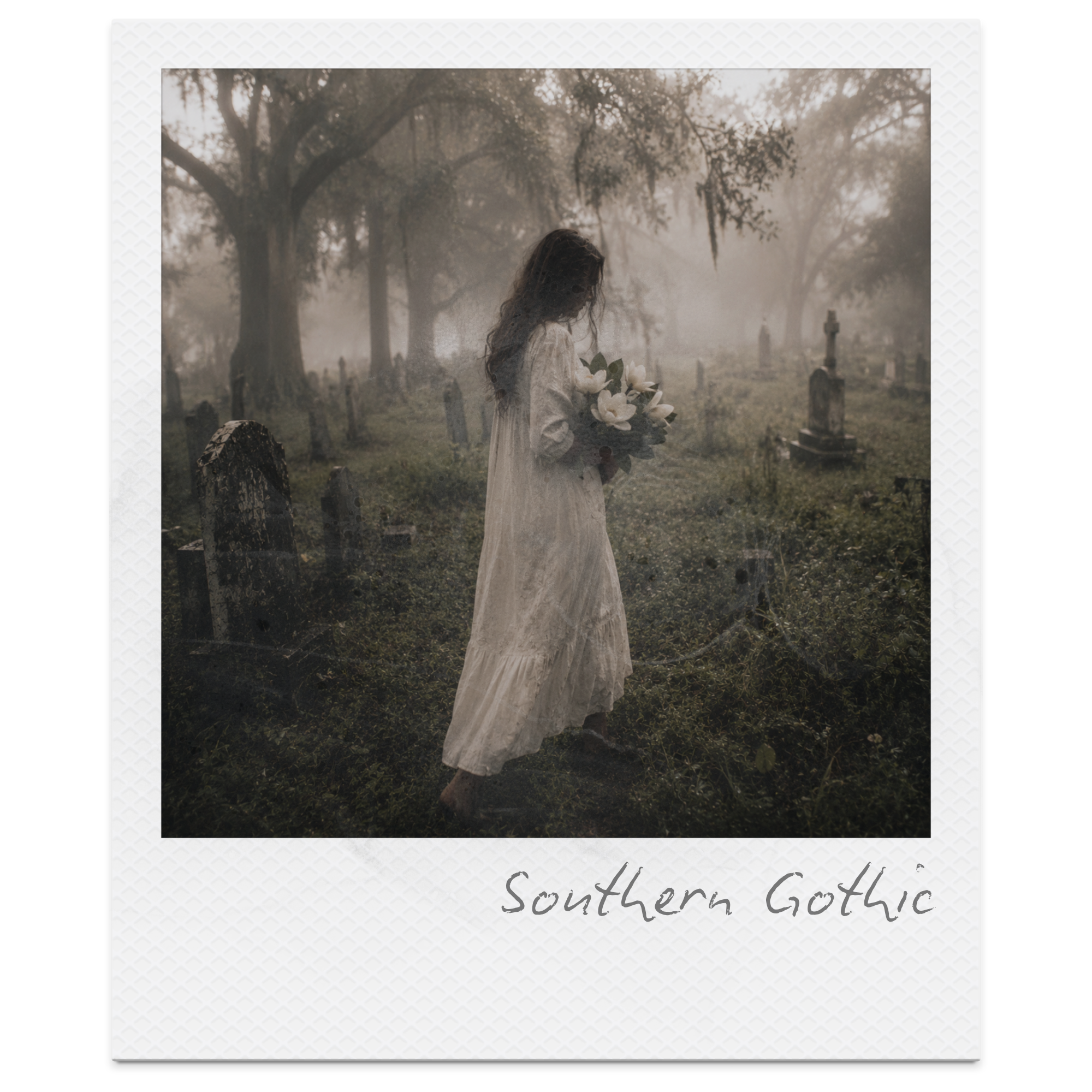
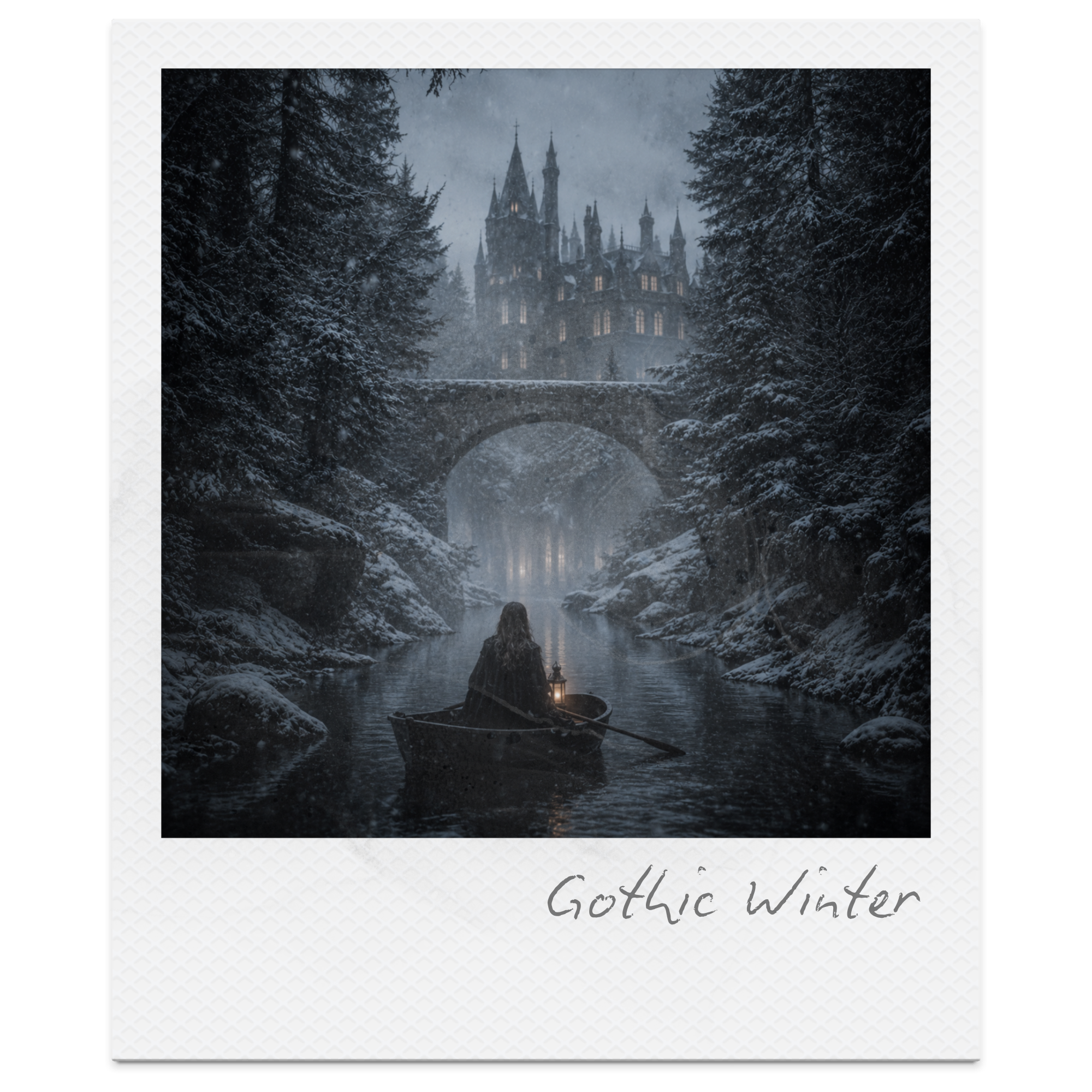
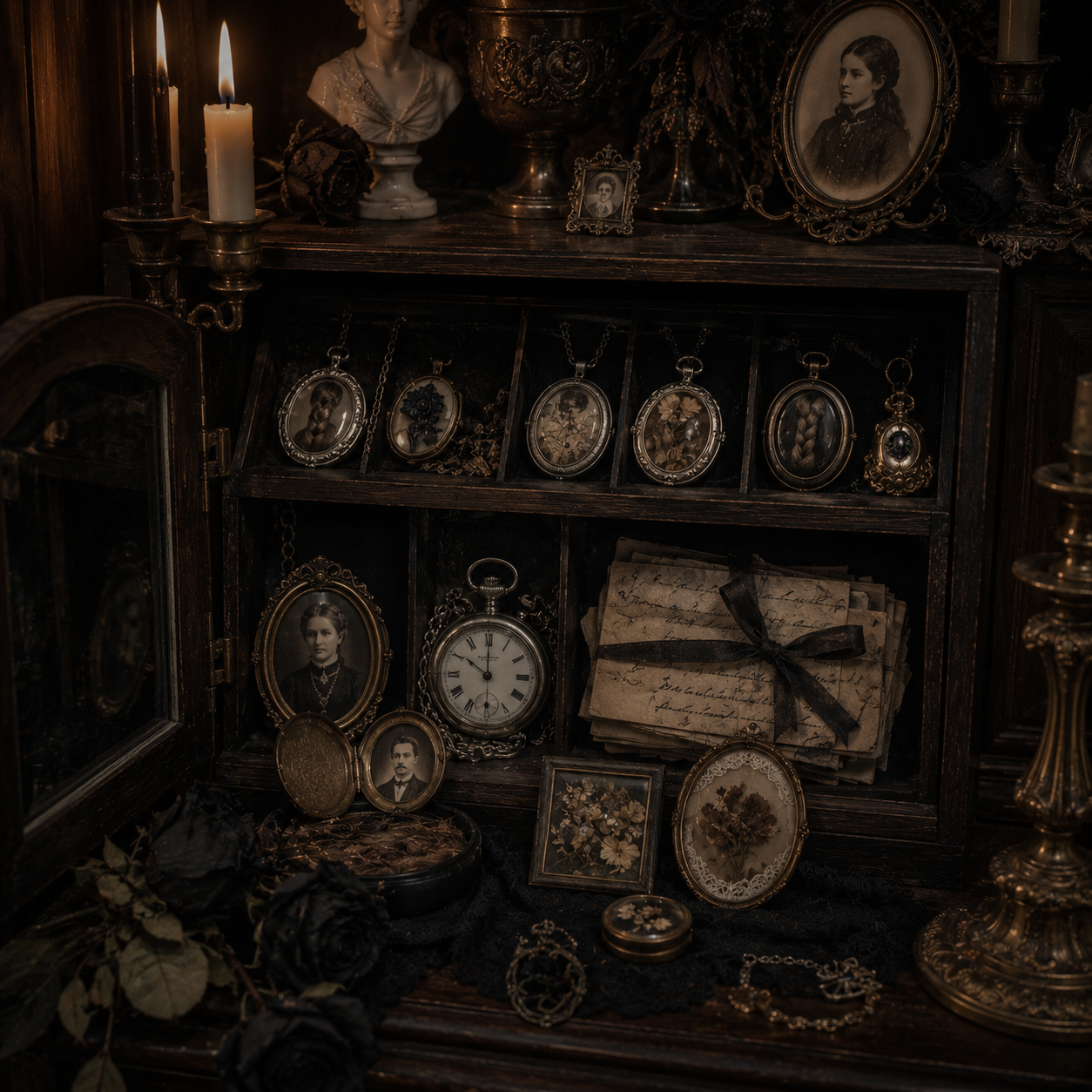
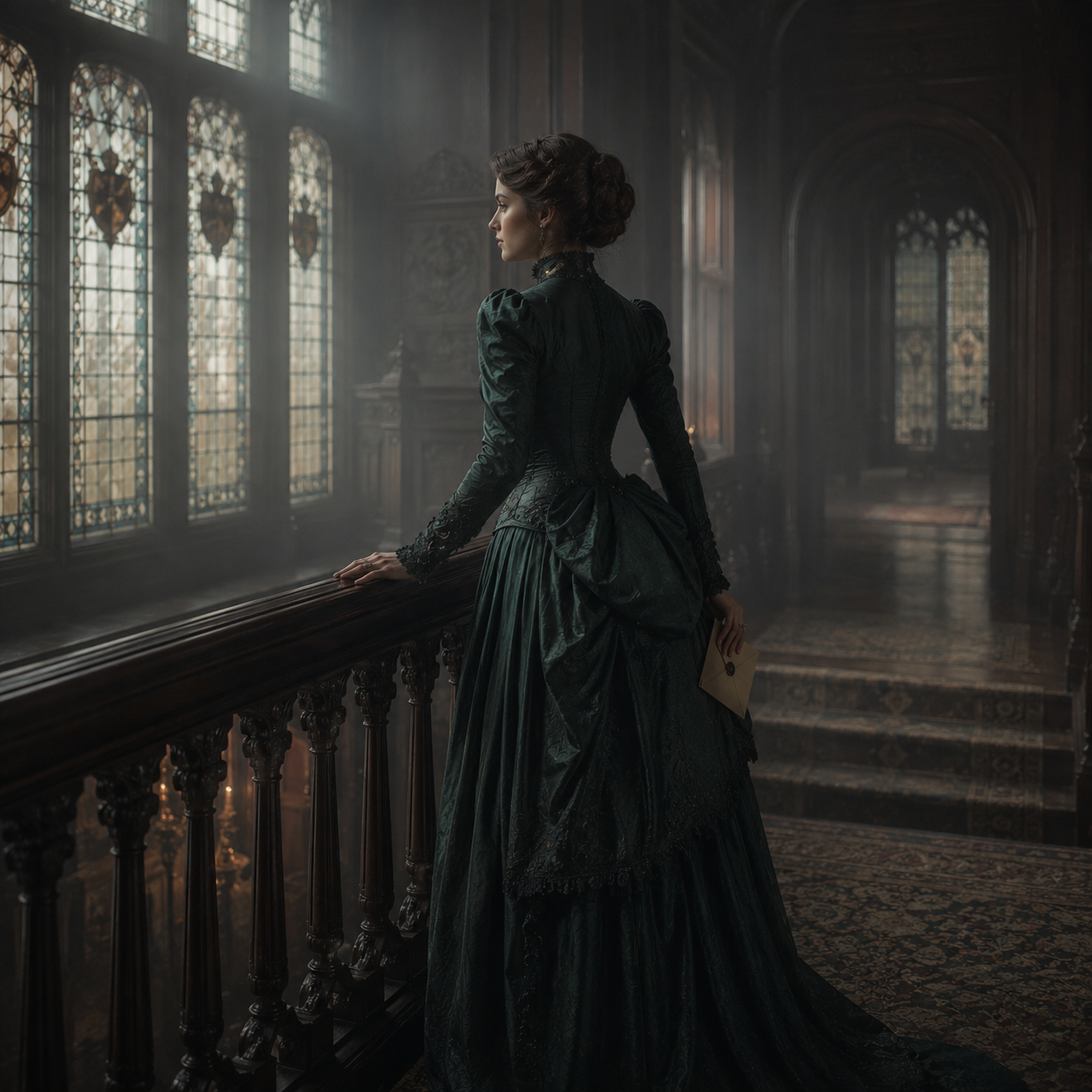
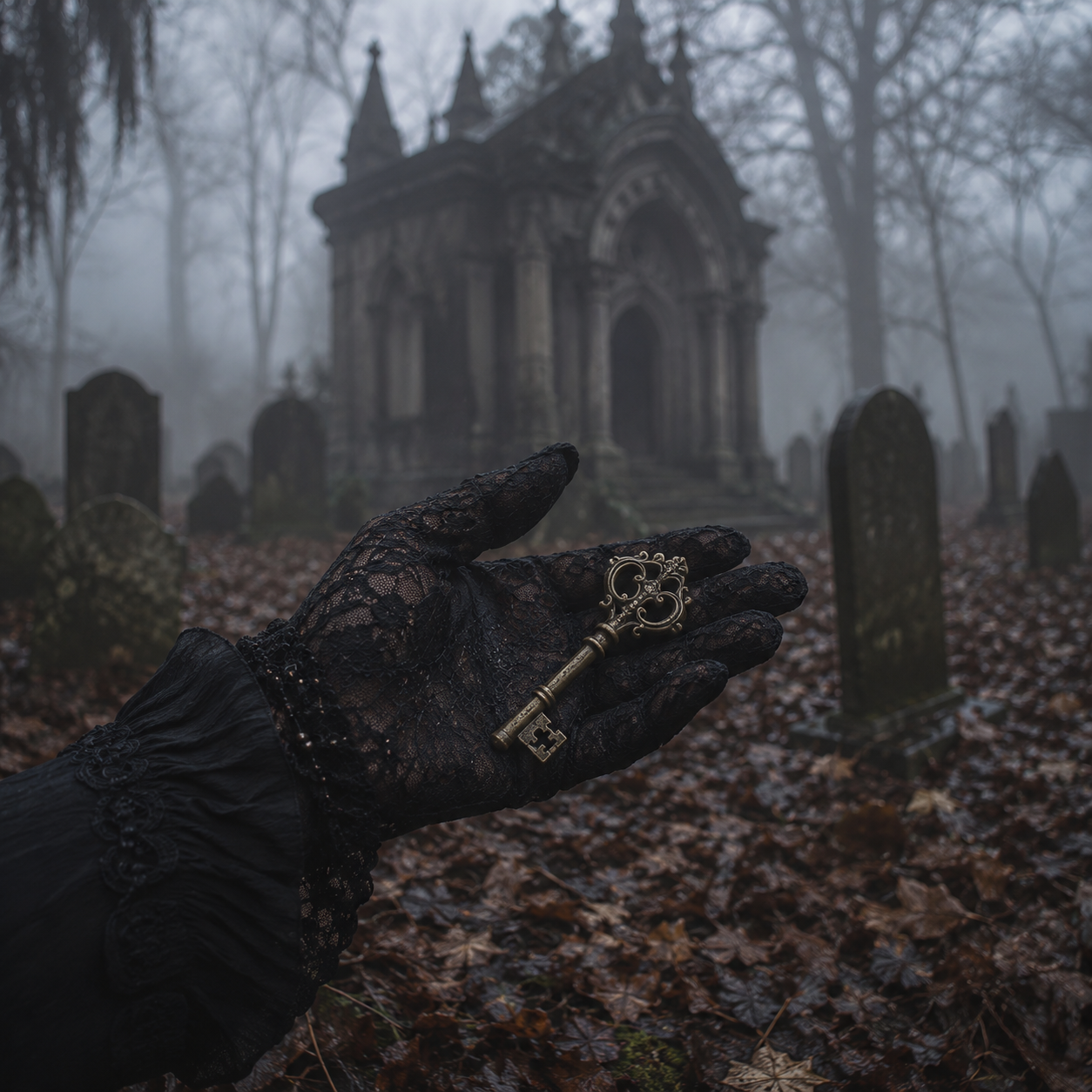
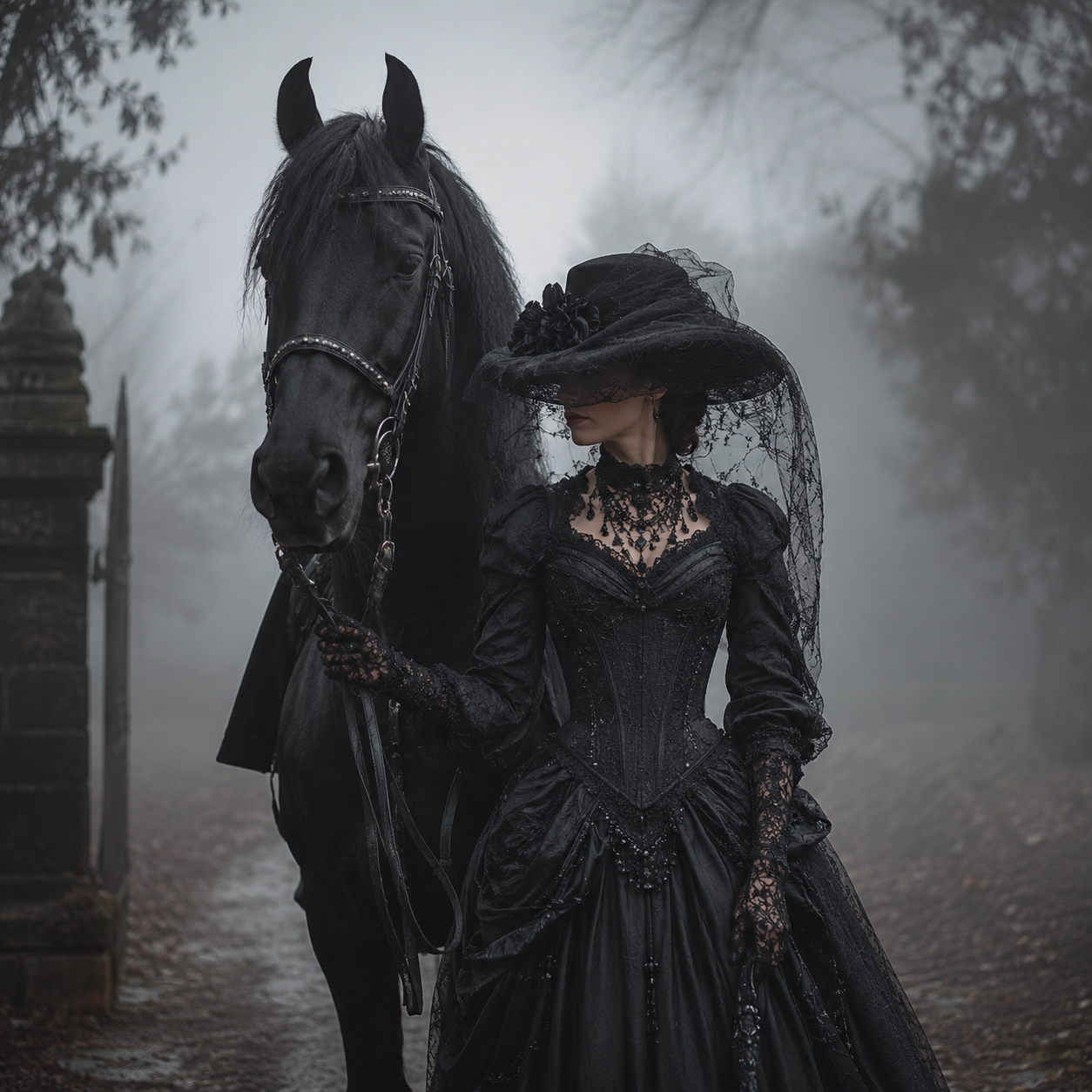
Victorian Gothic combines elegance with quiet unease, creating beautiful scenes where respectability conceals mystery. Use these images as inspiration, asking what secrets remain hidden behind every curtain, locked door, or weathered portrait.
Go Deeper into Victorian Gothic
Victorian Gothic explores the tension between outward respectability and the darkness hidden beneath it. Set during a period of extraordinary scientific progress, rigid social expectations, religious uncertainty, and rapid industrialisation, the genre asks what happens when society attempts to suppress fear, grief, ambition, guilt, and desire. Behind elegant drawing rooms, immaculate country estates, and respectable London townhouses lie family scandals, dangerous obsessions, supernatural mysteries, and truths powerful enough to destroy carefully maintained reputations.
The Victorian era offers one of the richest historical settings for Gothic fiction. Fog-filled streets, gaslit alleyways, sprawling manor houses, abandoned abbeys, crowded workhouses, forgotten cemeteries, secluded asylums, railway stations, botanical conservatories, and candlelit libraries all create environments where mystery feels entirely believable. Every setting should carry the weight of history, suggesting generations of stories hidden beneath polished surfaces.
◆ Explore the conflict between science and the supernatural. Victorian Gothic often blurs the line between rational explanation and impossible phenomena, allowing readers to question whether events are truly supernatural or rooted in human obsession and psychology.
◆ Build stories around reputation and secrecy. Family scandals, hidden inheritances, concealed identities, illegitimate heirs, forbidden relationships, and carefully protected social standing all create compelling sources of tension.
◆ Let architecture shape the atmosphere. Grand manor houses, decaying estates, Gothic churches, secluded abbeys, foggy London streets, iron railway stations, conservatories, and imposing libraries should influence the emotional tone of every scene.
◆ Use Victorian society to create conflict. Expectations surrounding class, gender, religion, education, and public morality often force characters to conceal their fears, ambitions, and true identities.
◆ Draw inspiration from Victorian fascinations. Spiritualism, séances, medical experimentation, archaeology, photography, mesmerism, natural history, and the rise of forensic science all provide rich foundations for original stories.
◆ Create morally complex characters. Doctors, governesses, solicitors, journalists, housekeepers, clergymen, professors, aristocrats, servants, and investigators should all possess motivations that extend beyond simple heroism or villainy.
◆ Fill your world with meaningful objects. Mourning jewellery, handwritten letters, family portraits, botanical specimens, antique keys, locked cabinets, pocket watches, medical journals, pressed flowers, and forgotten diaries can all become powerful storytelling devices.
◆ Remember that the greatest horrors are often human. While ghosts and supernatural forces have their place, Victorian Gothic is equally concerned with obsession, repression, greed, grief, ambition, and the terrible consequences of secrets left unspoken.
Final Thoughts
Victorian Gothic remains one of literature's most enduring genres because it reveals the darkness hidden beneath elegance. Beautiful manor houses, candlelit libraries, bustling London streets, forgotten cemeteries, and quiet country villages become places where family secrets, scientific ambition, social expectations, and supernatural mysteries quietly intertwine. Whether your story explores ghosts, psychological suspense, historical mystery, forbidden love, or moral corruption, the Victorian era provides a timeless setting where every locked door invites another question.
These 70 Victorian Gothic Writing Prompts explore haunted manor houses, spiritualist séances, forgotten diaries, hidden passages, abandoned asylums, mysterious benefactors, family curses, fog-filled streets, and long-buried scandals. Whether you're writing gothic horror, historical fiction, mystery, literary fiction, supernatural thrillers, or dark romance, these prompts are designed to help you create richly atmospheric stories filled with unforgettable characters, immersive settings, and haunting secrets.
If you're looking for even more inspiration, explore the Historical Fiction Writing Hub for prompts rooted in fascinating historical periods, the Gothic Writing Hub for atmospheric writing ideas, characters, settings, names, and worldbuilding resources, or browse the Creative Writing Archive, where you'll discover hundreds of prompts spanning gothic fiction, fantasy, horror, mystery, folklore, historical fiction, romance, and many more genres.
Choose Your Next Adventure