How to Write Victorian Fiction: Characters, Settings & Story Ideas
Writing Victorian fiction means doing more than adding fog, corsets and gas lamps to a story. The Victorian era was a period of enormous social, industrial and technological change, filled with striking contrasts: extraordinary wealth and severe poverty, rigid expectations and growing demands for reform, expanding cities and quiet rural communities, scientific discovery and enduring fascination with the supernatural.
For writers, those tensions create endless possibilities. A Victorian story might unfold in a grand country house, crowded city street, railway station, factory, seaside town or village pub. Your protagonist could be an aristocrat protecting the family name, a servant who knows too much, an ambitious journalist, a factory worker, a doctor confronting new ideas, or an ordinary person trying to build a life within the expectations of nineteenth-century society.
This guide will help you turn the period into more than an atmospheric backdrop by thinking carefully about character, setting, occupation, social expectations, conflict and historical detail. Along the way, you’ll find Victorian writing prompts, character ideas, names, settings and story inspiration to help you develop your own historical fiction.
For more journeys into the past, explore the Historical Fiction Writing Hub, where you’ll find prompts and story ideas spanning different eras, or browse the Creative Writing Archive for writing prompts, characters, settings, generators and creative resources across every genre.
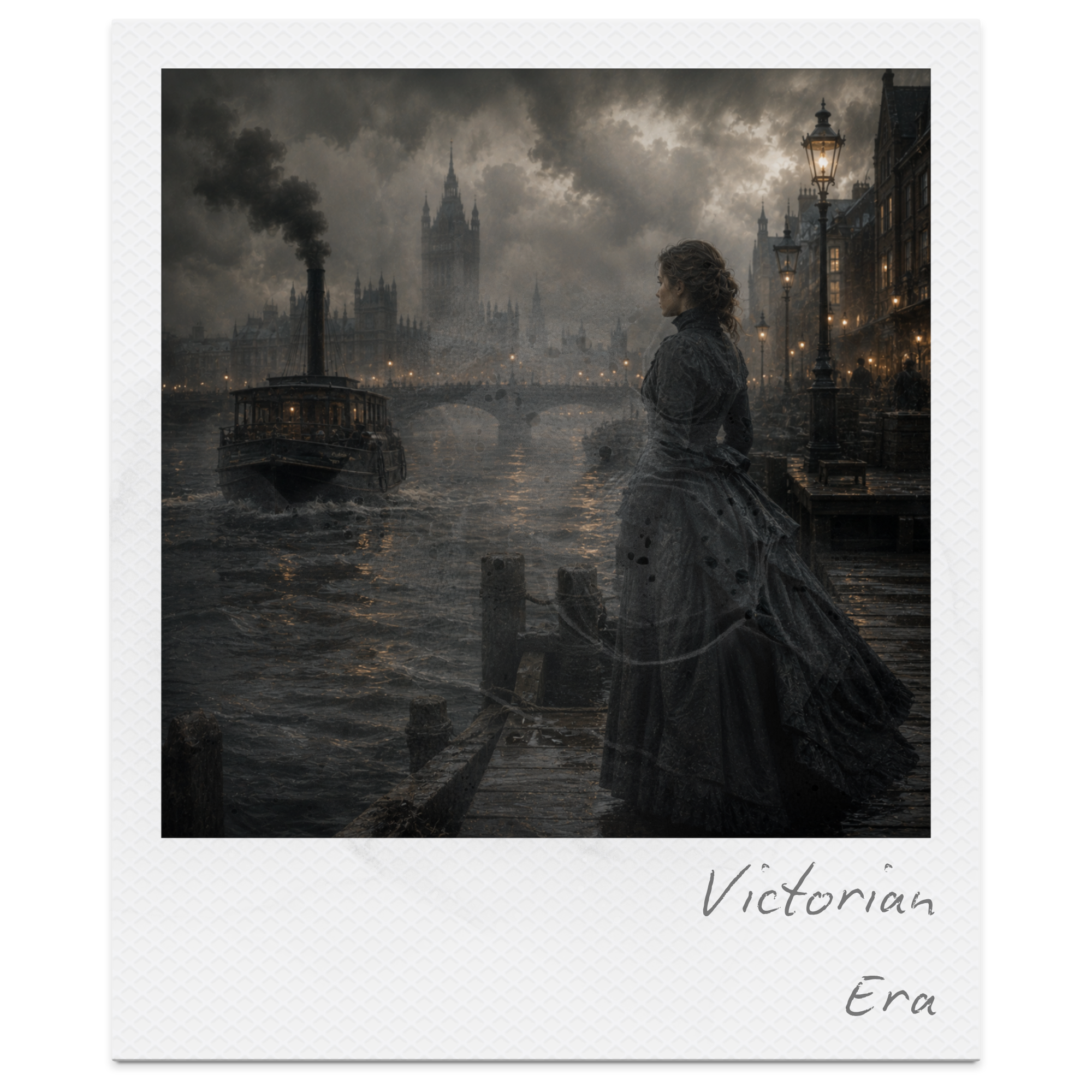
1. Choose When Your Victorian Story Takes Place
One of the easiest mistakes to make when writing Victorian fiction is treating the Victorian era as though it were a single, unchanging moment in history. Queen Victoria's reign stretched from 1837 to 1901, meaning a character living in the early Victorian period could experience a very different world from someone living during its final decades.
Before you begin writing, decide roughly when your story takes place. You don't necessarily need an exact date immediately, but choosing a decade will make researching everything from clothing and transport to occupations, technology and everyday life much easier.
An earlier Victorian story might exist in a world where railways are rapidly transforming travel and industrial cities are expanding, while a story towards the end of the century can draw on very different developments in technology, communication, science and popular culture. Even familiar Victorian details should be checked against the particular year in which your story occurs rather than assumed to belong to the entire period.
Think about:
◆ When does your story take place? Choose a year or decade rather than simply "Victorian."
◆ Where is it set? Victorian experiences differed enormously between London, industrial cities, rural communities, coastal towns and other parts of Britain — and, of course, beyond Britain itself.
◆ What is changing? Consider which technologies, ideas, industries or social debates are emerging around your characters.
◆ What already feels ordinary? Your characters shouldn't react to their own everyday world as though they're visiting it from the twenty-first century.
◆ What historical events matter to them? You don't need to force famous events into your plot, but understanding what is happening around your characters can make their world feel much more convincing.
If you're still deciding where in the period your story belongs, explore these 70 Victorian Era Writing Prompts for ideas spanning Victorian characters, settings, conflicts and stories. Use one as your starting point, or combine different ideas to create a story of your own.
2. Create a Convincing Victorian Setting
A convincing Victorian setting needs more than foggy streets, gas lamps and grand country houses. Think about how your characters actually experience the place around them: where they live, how they travel, where they work, what they hear outside their windows, where they socialise and which parts of their surroundings they can realistically access.
Start by choosing the kind of environment your story needs. A crowded London neighbourhood creates very different possibilities from an industrial town, remote village, fashionable seaside resort or isolated country estate. Then move closer. What does the street look like? Who else lives there? Which businesses are nearby? How far must your character travel to work? Where do people gather?
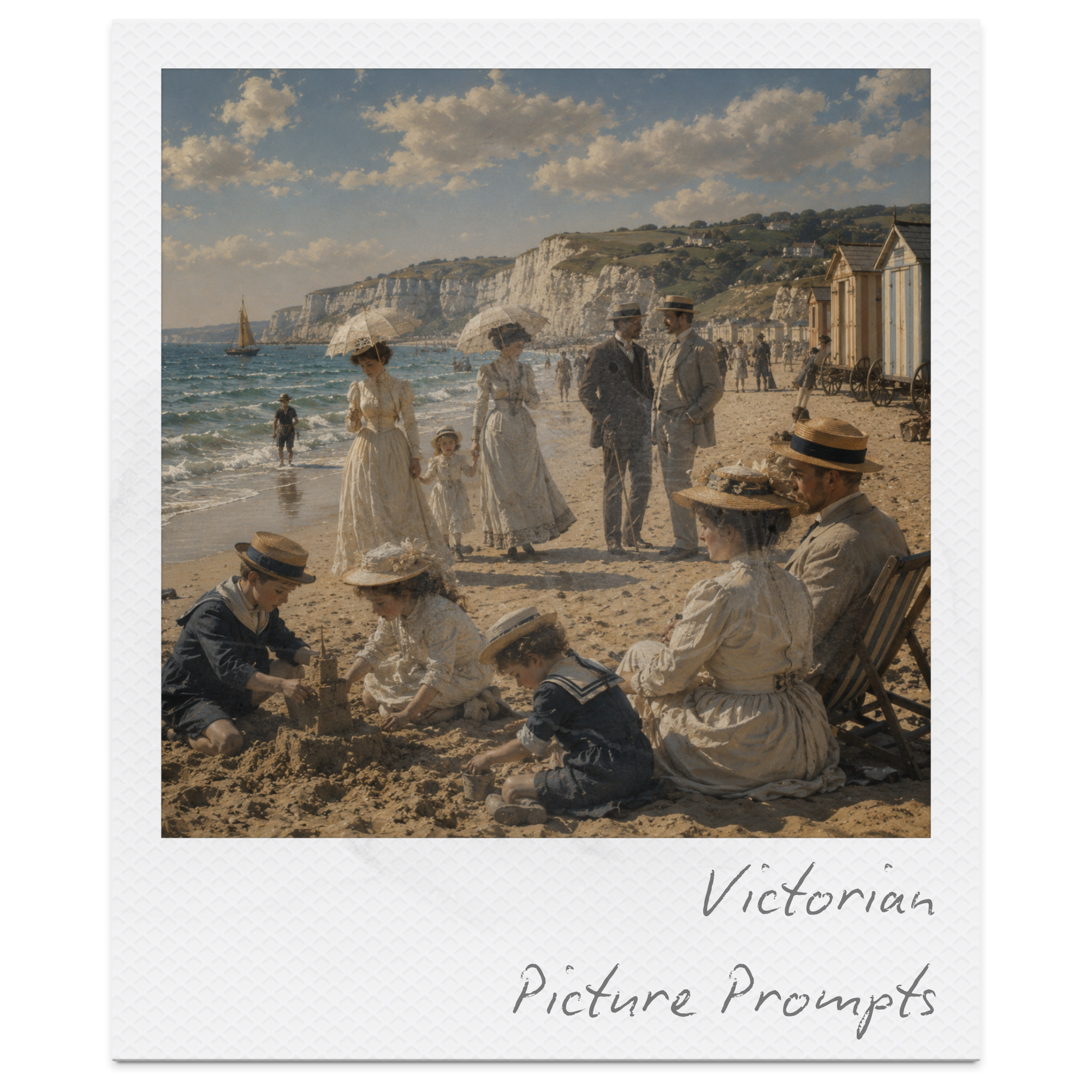
Use Setting to Shape the Story
The strongest historical settings don't simply provide scenery. They create opportunities and obstacles for your characters.
A railway station can bring a stranger unexpectedly into town. A factory can connect characters from different backgrounds while exposing inequalities between them. A country estate can create an enclosed world of family, servants, visitors and secrets. A busy city can offer anonymity that would be impossible in a small village.
When developing your setting, consider:
◆ Home – does your character live in a townhouse, terrace, cottage, lodging house, servants' quarters, rented room or country estate?
◆ Work – where do they spend most of their day, and who do they encounter there?
◆ Transport – how easily can they move through their world, and how long would an important journey actually take?
◆ Public spaces – think about markets, shops, railway stations, parks, theatres, churches, pubs and other places where characters might naturally meet.
◆ Sensory detail – what can your character hear, smell, touch and see? A setting becomes more convincing when it feels inhabited rather than merely described.
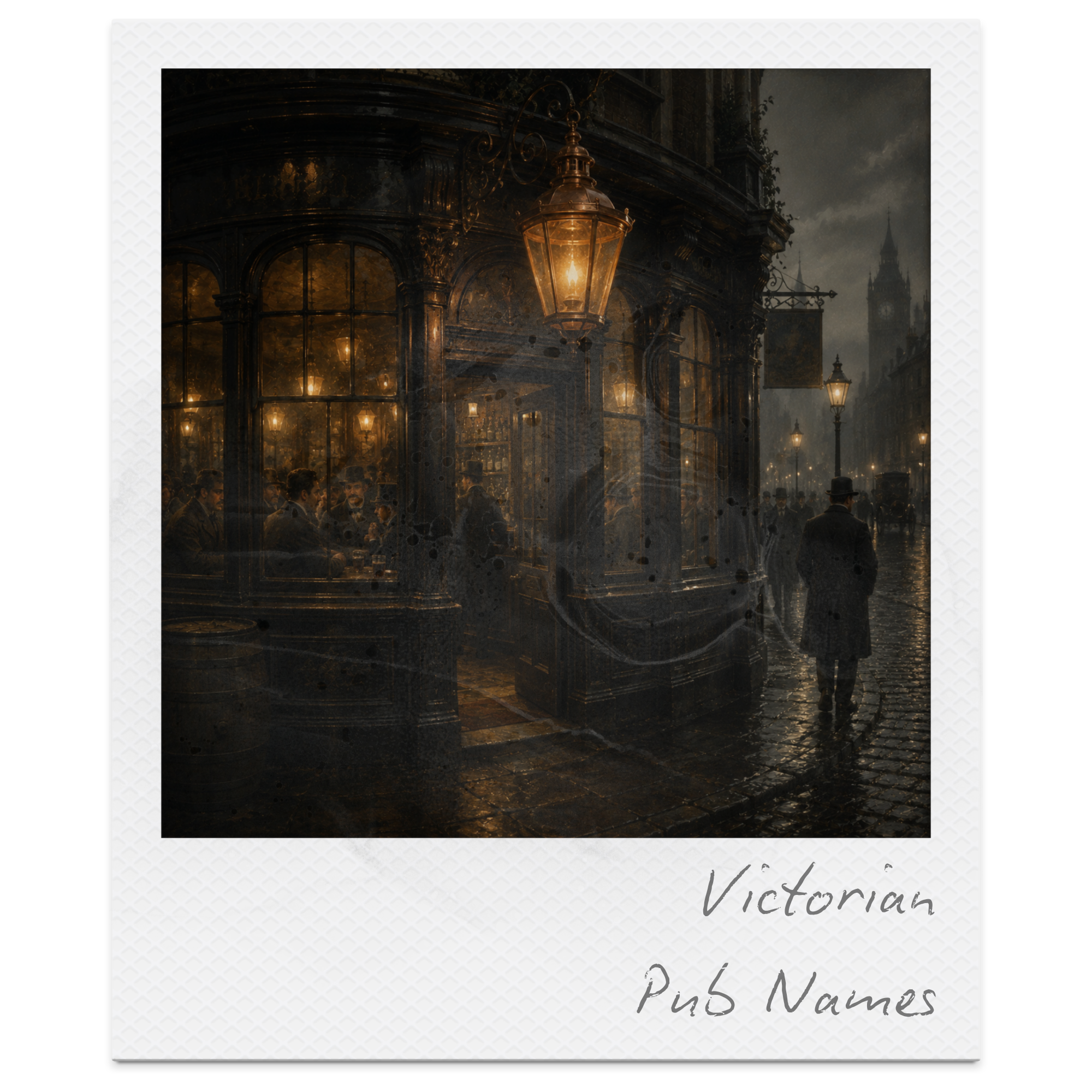
◆ Social boundaries – which places can your character comfortably enter, and where might their class, occupation, gender, money or reputation affect how they are received?
For visual inspiration, explore these 20 Victorian Historical Fiction Picture Prompts, which use different nineteenth-century scenes as starting points for characters, settings and stories.
Give Everyday Places Their Own Stories
Don't overlook ordinary locations. A Victorian pub, shop, boarding house, railway platform or village street can become just as important to a story as a palace or Gothic mansion.
A pub, for example, might be where workers gather after a shift, travellers hear local rumours, political arguments begin, strangers arrive, illicit meetings take place or somebody notices that a familiar customer has suddenly disappeared. Giving recurring locations their own atmosphere, clientele and history helps the wider world feel interconnected.
If your characters need somewhere to meet, investigate or cause trouble, browse these 100 Victorian Pub Names with Story Ideas for fictional pubs, inns and taverns you can build into your setting.
3. Create Victorian Characters
A memorable Victorian character should feel shaped by the world they live in. Rather than creating a modern character and dressing them in nineteenth-century clothes, think about how their family, social class, education, occupation, money, gender, beliefs and reputation influence the choices available to them.
This doesn't mean every character must obediently follow the expectations of their society. Characters who challenge convention can be fascinating — but their decisions become much more convincing when the reader understands what they are challenging and what it might cost them.
Give Your Character a Place in Victorian Society
Before deciding exactly what happens to your character, establish where they begin.
Consider:
◆ Family – who raised them, what does their family expect from them, and who depends upon whom?
◆ Money – are they wealthy, comfortable, struggling or living precariously? Where does their money actually come from?
◆ Social position – how are they perceived by other people, and how important is respectability to them?
◆ Education – what opportunities have they had to learn, and which knowledge or skills might be inaccessible to them?
◆ Occupation – do they work because they need an income, because their family expects it, or because they have ambitions of their own?
◆ Relationships – who are they permitted or expected to associate with, and which relationships might create gossip, conflict or danger?
◆ Beliefs – what assumptions about society, morality, religion, science, family or duty might feel completely ordinary to them?
◆ Ambition – what does this particular character want that their world makes difficult to obtain?
That final question is particularly useful for creating a story. A character becomes interesting when their personal desires collide with the circumstances of their life.
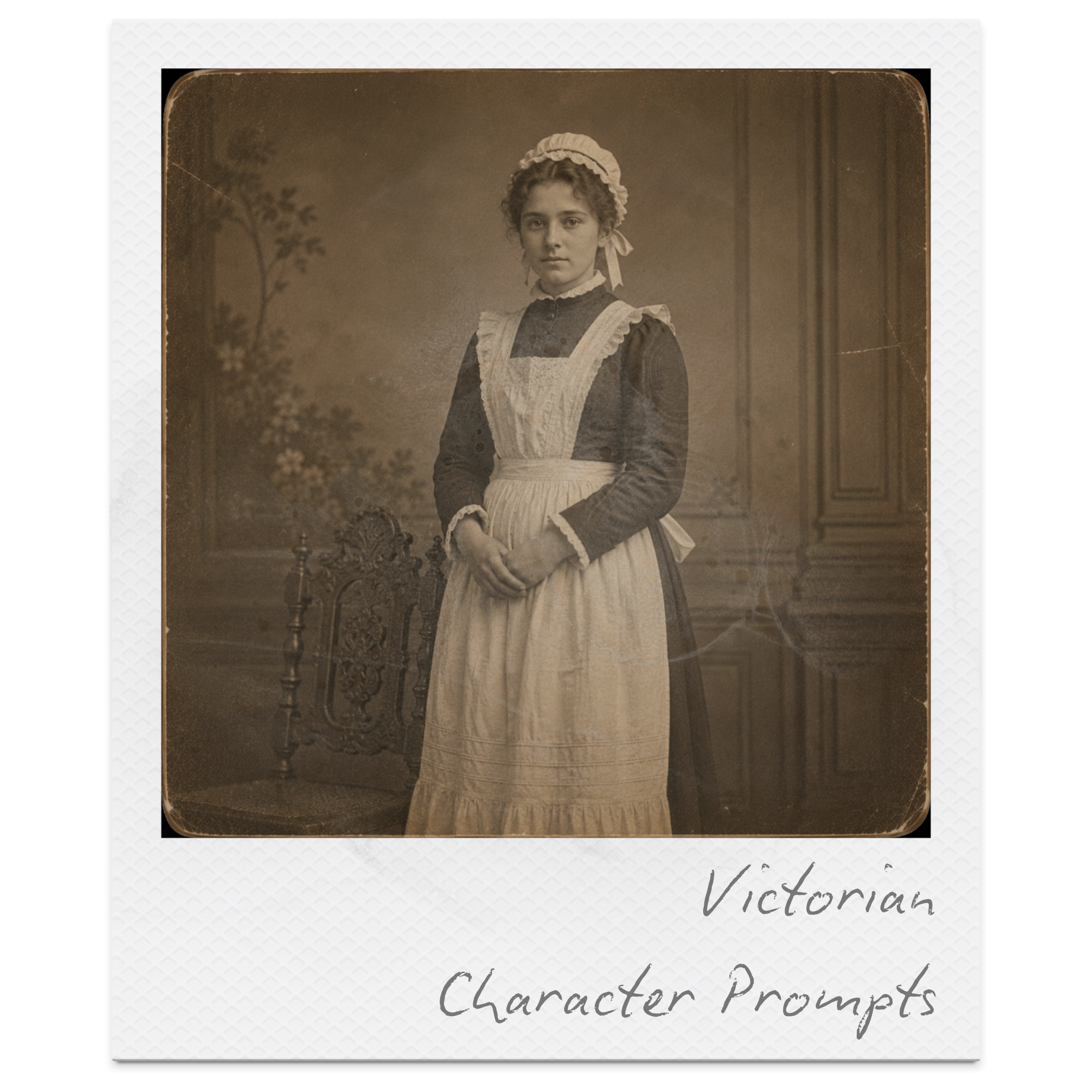
Let Characters Respond Differently to the Same World
Avoid giving every Victorian character the same attitudes simply because they live in the same period. People disagree with their families, question expectations, embrace new ideas, cling to old traditions, behave hypocritically, take risks and change their minds.
Two characters can therefore experience exactly the same social rule very differently. One might desperately protect their reputation while another is willing to destroy theirs. One might welcome technological change while another fears what it will replace. One might accept the future their family has planned while another spends the entire story attempting to escape it.
Those differences create relationships, disagreements and conflict without requiring you to manufacture drama from nowhere.
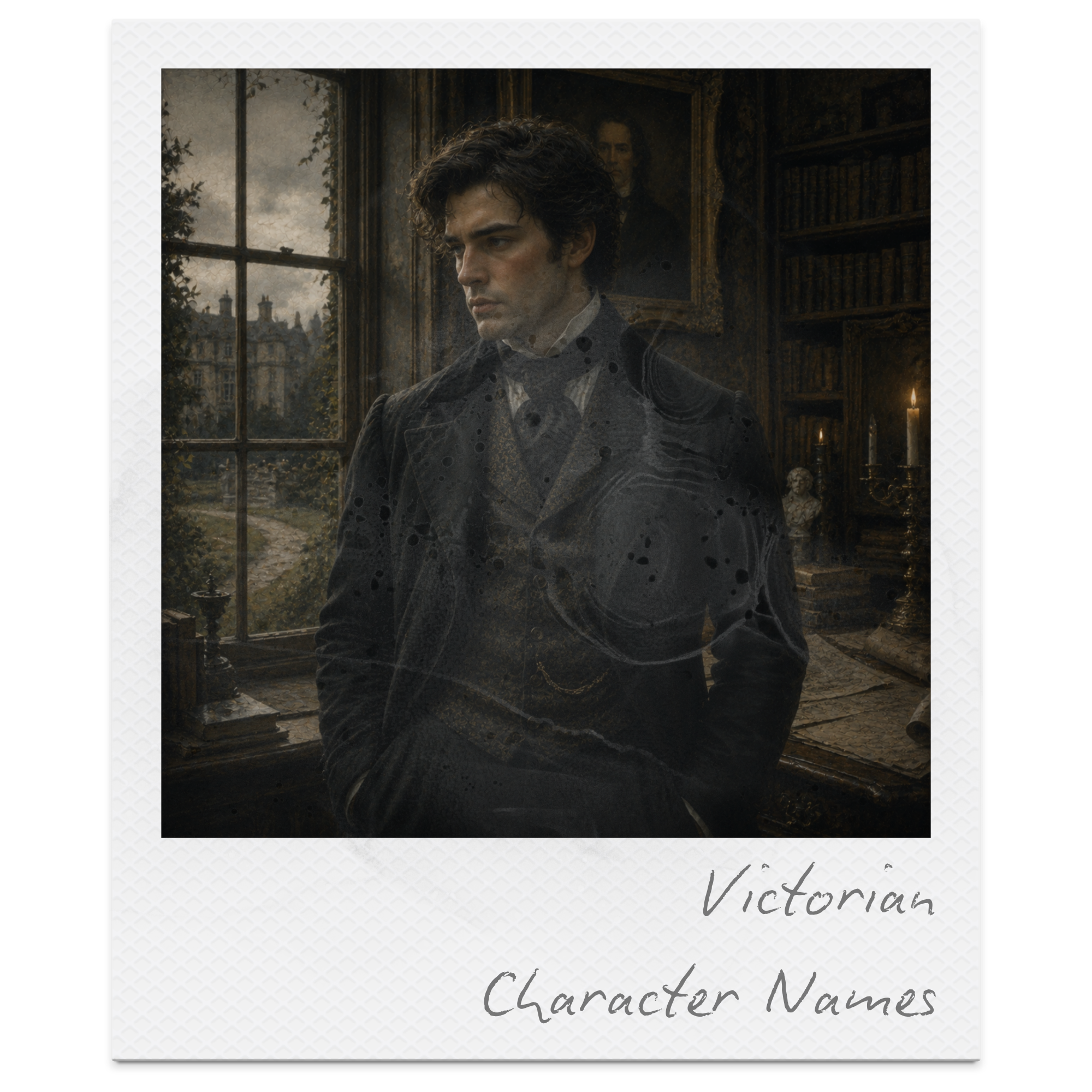
For ready-made character inspiration, explore these 50 Victorian Historical Fiction Character Prompts, featuring characters from different corners of nineteenth-century society.
Choose a Name That Fits the Character
A character's name is another small detail that can help establish their identity, family and background. Think beyond whether a name merely sounds Victorian: consider who chose it, whether it reflects family tradition, whether the character likes it and how different people address them.
A formal name used by family might become a nickname among friends, while titles, surnames and forms of address can reveal relationships and social boundaries before you explicitly explain them.
If you need inspiration, browse these 100 Victorian Character Names with Story Ideas, where each name comes with character and historical-fiction inspiration you can develop into your own story.
4. Give Your Character a Victorian Occupation
Your character's occupation can tell you an enormous amount about their Victorian life. Work influences income, social status, daily routine, clothing, skills, relationships and even where a character spends most of their time, making it one of the easiest ways to connect character development with historical worldbuilding.
Instead of choosing an occupation simply because it sounds interesting, consider what that job actually means for the person doing it.
Let Work Shape Your Character's World
Ask yourself:
◆ Why do they do this work? – Is it a necessity, family tradition, respectable career, unwanted obligation or opportunity for independence?
◆ Where do they work? – A character might spend their days in a private household, factory, shop, office, school, hospital, workshop, railway station or outdoors.
◆ Who do they meet? – Occupation determines which parts of society your character encounters and can naturally bring people from very different backgrounds into the same story.
◆ What do they know? – Every profession gives a character particular skills, information and access that may become important to the plot.
◆ What do they earn? – Income affects where they live, what they eat, how they travel and which choices are realistically available to them.
◆ What does society think of their work? – An occupation can bring respectability, suspicion, prestige, invisibility or social stigma.
◆ What could go wrong? – Workplace accidents, difficult employers, financial pressure, professional rivalries, secrets and ethical dilemmas can all create natural sources of conflict.
Turn an Occupation Into a Story
Once you've chosen a profession, ask what your character might see, hear or discover because of their work.
A servant may overhear conversations the family assumes nobody notices. A railway worker might recognise a passenger who should be hundreds of miles away. A journalist could uncover a story somebody powerful wants buried. A doctor might encounter an injury whose explanation doesn't make sense. A photographer may realise something unexpected has appeared in the background of an image.
The occupation doesn't have to become the entire plot. It simply gives your character a believable position from which to encounter it.
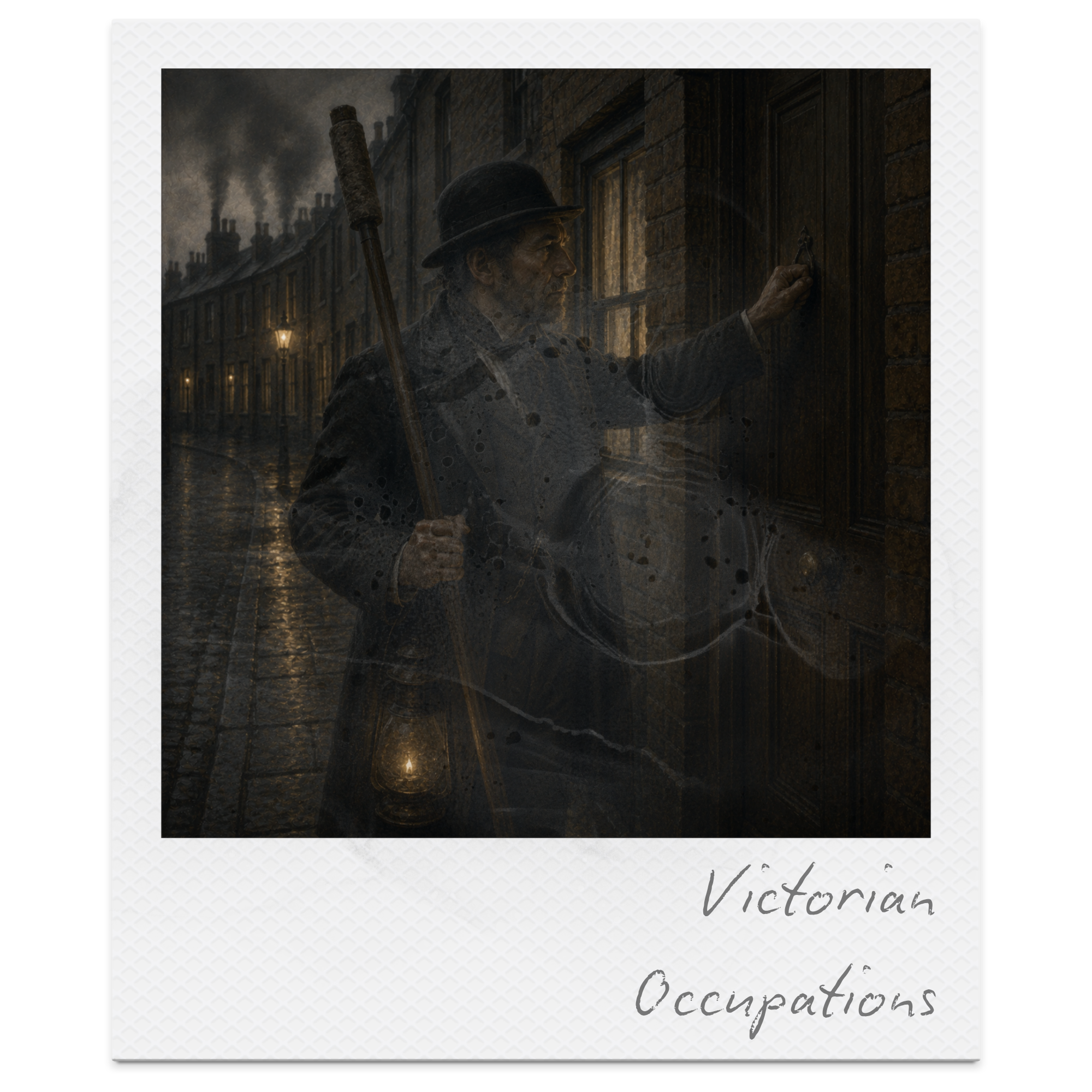
For more inspiration, explore these 100 Victorian Occupations with Story Ideas, covering professions from across nineteenth-century society with ideas for turning each one into a character, conflict or story.
5. Use Victorian Society to Create Conflict
Historical context becomes most useful when it changes what your characters can do. Rather than stopping the story to explain Victorian society, look for ways that money, class, family, reputation and social expectations can complicate what your characters want.
Start with your character's goal, then ask: what about their particular world makes achieving it difficult?
Turn Social Expectations Into Story Problems
◆ Class and status – friendships, romances, careers and ambitions can become more complicated when characters occupy very different positions in society.
◆ Money and inheritance – financial security might depend upon employment, marriage, family support, property or inheritance, giving money the power to shape apparently personal decisions.
◆ Reputation – gossip, scandal and public perception can raise the stakes of a secret, relationship or mistake, particularly when a character's future depends upon remaining respectable.
◆ Marriage and family – love does not exist separately from practical concerns. Family expectations, finances, social position and responsibility can all influence whom a character is expected to marry and what happens if they refuse.
◆ Gender and opportunity – consider which choices are realistically available to your particular character and what obstacles they encounter when pursuing ambitions outside expected roles.
◆ Work and social mobility – ambition can create conflict when a character wants greater independence, wealth or status than their circumstances easily allow.
◆ Industrial and technological change – progress creates winners as well as losers. New industries, transport and technologies can offer extraordinary opportunities while threatening established occupations and ways of life.
◆ Old ideas and new ideas – characters do not need to agree about the changes happening around them. Generational disagreements, scientific developments, political debates and shifting attitudes can create conflict within families and communities.
Make the Conflict Personal
You don't need your protagonist to become involved in every major issue of the Victorian era. Usually, the history becomes more powerful when a larger social reality creates a specific personal problem.
Instead of explaining that Victorian society was divided by class, create two characters whose relationship crosses a boundary their families care deeply about.
Instead of describing changing technology, give an established craftsman a livelihood threatened by a new process.
Instead of explaining the importance of reputation, give your character a secret whose discovery could alter their future.
The question to keep asking is:
What does my character want — and why is it particularly difficult for this person to get it in this time and place?
That is where historical context stops being background research and starts becoming story.
6. Decide What Kind of Victorian Story You're Writing
A Victorian setting doesn't determine the kind of story you have to tell. The period can provide the backdrop for historical fiction, mystery, romance, family drama, adventure, Gothic fiction, supernatural stories and even speculative fiction.
Choosing your story's genre early can help you decide which parts of Victorian life deserve the most attention. A mystery might focus on crime, investigation and hidden information, while a romance may depend more heavily on family expectations, reputation and the practical consequences of a relationship.
Victorian Mystery
The Victorian world offers plenty of opportunities for mystery: missing people, suspicious inheritances, anonymous letters, unexplained deaths, stolen objects, family secrets and crimes concealed behind respectable appearances.
Think about how an investigation works without modern forensic technology or instant communication. Information may travel through letters, newspapers, witnesses, railway journeys and personal connections, allowing misunderstandings and missing evidence to become part of the plot.
Victorian Romance
A Victorian romance becomes more convincing when the relationship is shaped by the characters' circumstances. Money, family, occupation, class, reputation and expectations surrounding marriage can all influence who can meet, how openly they can communicate and what they risk by pursuing a relationship.
Rather than simply placing a modern romance in historical clothing, ask what makes this relationship particularly complicated in this particular society.
Victorian Adventure
Railways, ships, scientific expeditions, growing cities and journeys between very different environments can all provide foundations for adventure. A character might leave the familiarity of home for a new job, investigation, expedition, inheritance or unexpected journey.
Adventure also gives you an opportunity to contrast different Victorian settings rather than keeping the entire story in one place.
Victorian Gothic
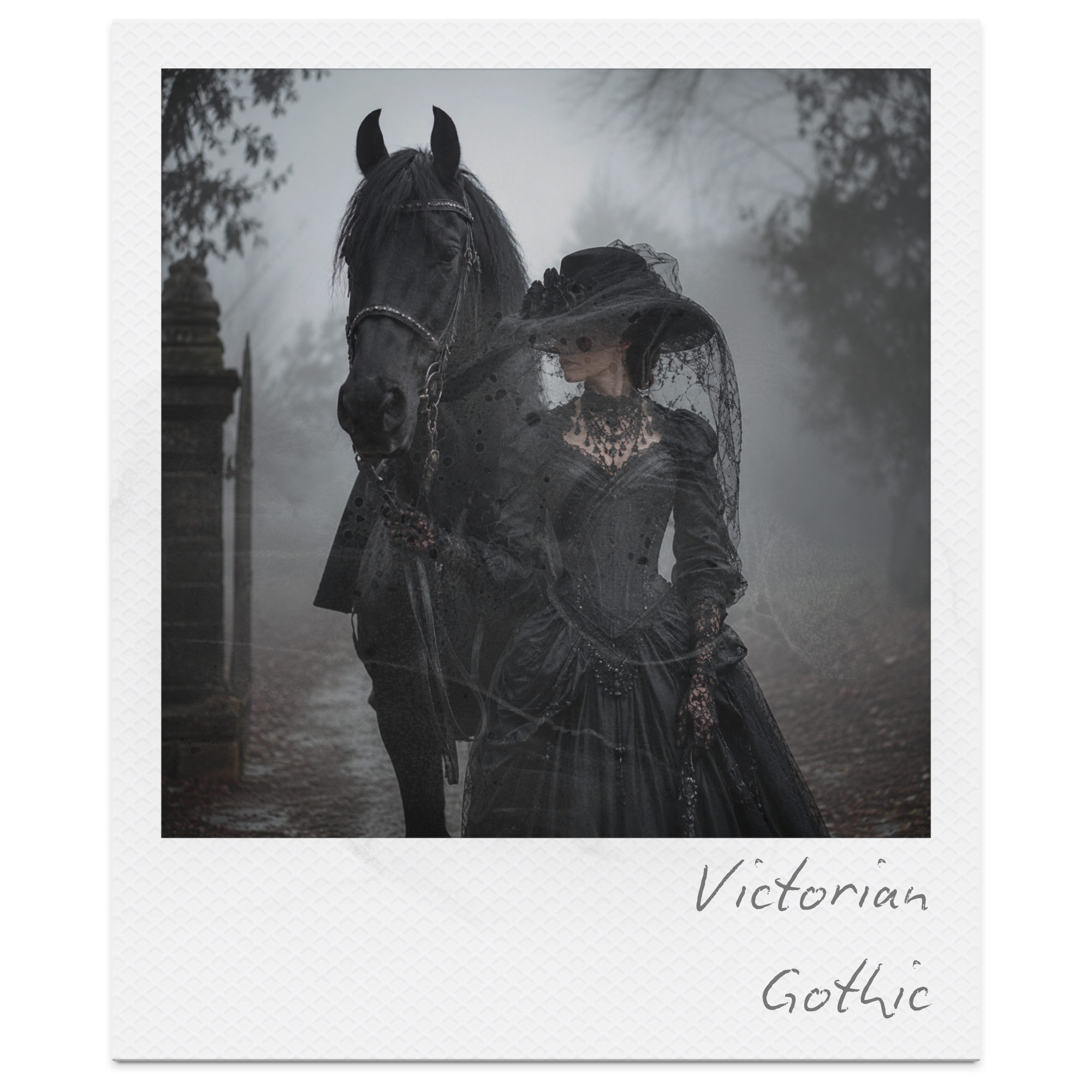
Victorian settings are particularly well suited to Gothic storytelling, where atmosphere and psychological tension can transform familiar places into something unsettling.
Grand houses can conceal family histories. Fog-covered streets can obscure identities. New scientific ideas can challenge established beliefs, while spiritualism, superstition and the possibility of the supernatural create uncertainty about what characters should trust.
If you want to take your story somewhere darker, explore these 70 Victorian Gothic Writing Prompts for haunted houses, hidden histories, strange encounters, dangerous secrets and atmospheric nineteenth-century story ideas.
You Can Combine Genres
You don't have to choose only one.
A Victorian story could be a Gothic romance with a mystery at its centre, a historical adventure involving scientific discovery, or a family drama that gradually becomes a supernatural investigation.
Start with the kind of story you want to tell, then use the Victorian setting to make its conflicts, possibilities and atmosphere something that could not happen in quite the same way anywhere else.
7. Start Your Victorian Story
Once you've researched your setting and characters, resist the temptation to explain everything you've learned before the story begins. Your reader doesn't need a history lesson on the first page — they need a reason to wonder what happens next.
A strong Victorian story can begin at the moment something changes: a letter arrives, somebody disappears, an unexpected visitor knocks at the door, a train pulls into the station, an inheritance is announced or a character discovers something they were never supposed to see.
Begin With Change
Look for a moment that disrupts your character's ordinary life.
Instead of beginning with a long description of the street where your protagonist lives, let them notice the unfamiliar carriage waiting outside their house.
Instead of explaining a complicated family history, begin with the relative everyone believed was dead walking into dinner.
Instead of describing your character's occupation for several paragraphs, begin with something unusual happening during an otherwise ordinary working day.
The historical setting can then reveal itself naturally as the character moves through the story.
Let Historical Detail Appear Naturally
You don't need to prove that you've researched the Victorian era in every paragraph. Choose details that matter to the character or the action.
If someone urgently needs to reach another city, the available transport matters.
If a secret has to be communicated, the way information travels matters.
If a character arrives somewhere they are not expected to be, clothing, manners or forms of address might reveal immediately that they don't belong.
Historical detail is most effective when it affects what happens, rather than interrupting the story to demonstrate accuracy.
Give the Reader a Question
Your opening doesn't necessarily need an explosion, murder or dramatic chase. It simply needs to create curiosity.
Ask yourself:
◆ What has changed?
◆ What does my protagonist immediately want?
◆ What doesn't make sense yet?
◆ What might the character lose?
◆ What question do I want the reader to keep reading to answer?
Sometimes the smallest disturbance creates the strongest beginning: an unopened letter, an empty chair, an unfamiliar name in a newspaper or a person who fails to arrive on the expected train.
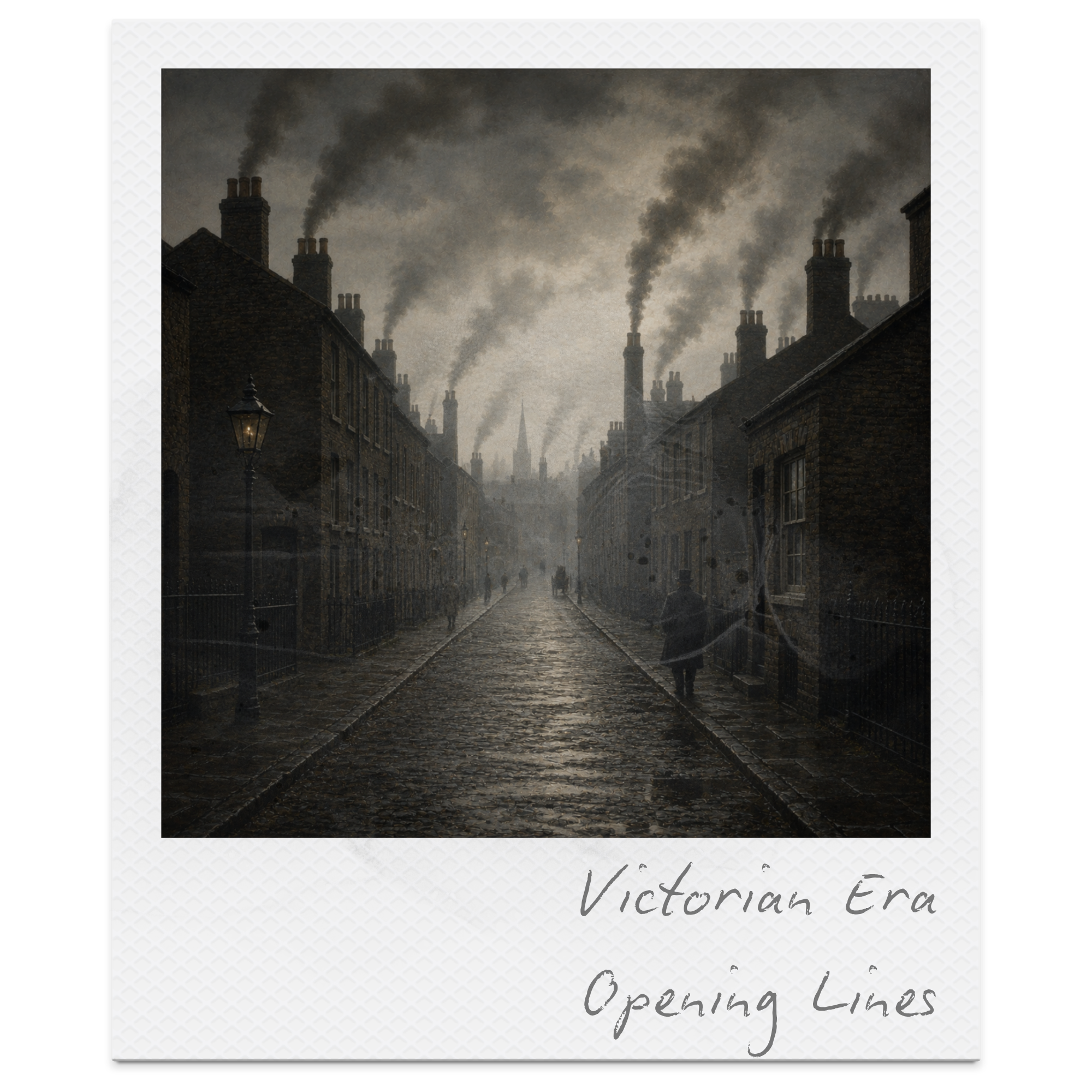
If you're struggling with that first sentence, explore these 50 Victorian Historical Fiction Opening Lines for openings inspired by Gothic mysteries, family secrets, Victorian society and everyday nineteenth-century life.
8. Find Your Victorian Story Idea
You don't need to wait for a complete plot to appear fully formed. One of the easiest ways to create a Victorian story idea is to combine a few simple elements and look for the conflict between them.
Try starting with:
Character + Setting + Social Pressure + Goal + Complication
Choose one element from each category, then ask what happens when you put them together.
Build a Victorian Story Step by Step
Imagine you begin with:
Character: A young railway clerk
Setting: A busy London station
Social Pressure: His family depends upon his wages
Goal: He wants to become a journalist
Complication: He finds an abandoned suitcase containing letters addressed to a famous politician
You already have the foundations of a historical mystery. The character has something to lose, the setting gives him believable access to the discovery, and his ambition provides a reason he might investigate rather than simply hand the suitcase to somebody else.
Change only a few ingredients and you get a completely different story:
Character: A wealthy widow
Setting: An isolated country estate
Social Pressure: Her family expects her to remarry
Goal: She wants control of her own future
Complication: Someone begins sending letters apparently written by her dead husband
Now you're moving towards Victorian Gothic.
Or:
Character: A factory worker
Setting: A rapidly expanding industrial town
Social Pressure: Losing his employment would leave his family without an income
Goal: He wants to expose dangerous conditions at the factory
Complication: The person who can prove his accusations suddenly disappears
The same formula has produced a story centred on class, industry and social conflict.
Look for the Collision
The most interesting combination isn't necessarily the most dramatic one. Look for ingredients that create tension with one another.
A character obsessed with respectability becomes interesting when they possess a dangerous secret.
An ambitious scientist becomes interesting when their discovery threatens the beliefs of somebody they love.
A servant becomes interesting when they know something powerful people assume they could never know.
A respectable family becomes interesting when maintaining that respectability requires them to hide what happened behind closed doors.
You can also return to the resources you've already explored in this guide and randomly combine a character, occupation, setting and opening line. You may discover connections you would never have deliberately planned.
Let the Idea Grow
Once you find a combination you like, don't immediately worry about plotting an entire novel. Ask a few questions first:
◆ Why does this matter to the protagonist?
◆ What do they want?
◆ What prevents them from simply getting it?
◆ Who else wants something different?
◆ What happens if the protagonist does nothing?
◆ What could make the situation worse?
The answers will begin turning your premise into conflict, relationships and eventually plot.
If you'd rather begin with a ready-made spark, explore these 100 Victorian Historical Fiction Story Ideas, with ideas spanning Victorian mysteries, family dramas, romance, social change, Gothic stories, scientific discoveries and everyday nineteenth-century life.
9. Research Without Drowning Your Story in History
Research is essential when writing Victorian fiction, but everything you learn does not need to appear on the page. Historical detail should make the world feel convincing without making the reader feel as though the story has stopped for a history lesson.
The most useful research usually begins with your character. Instead of trying to learn everything about the Victorian era, investigate the parts of nineteenth-century life that this particular person would actually encounter.
Research From the Character Outwards
Once you know who your protagonist is, create a research list around their life.
You might need to investigate:
◆ Home – what kind of building would they realistically live in, and who would live with them?
◆ Occupation – what would an ordinary working day involve?
◆ Money – what could they afford, and what would be completely beyond their means?
◆ Clothing – what would someone of their age, occupation and circumstances actually wear?
◆ Food – what might they eat regularly rather than only on special occasions?
◆ Transport – how would they travel, how much would it cost and how long would the journey take?
◆ Communication – how could they contact somebody, and how quickly might they receive a response?
◆ Social expectations – which behaviours would seem ordinary, unusual or potentially damaging to their reputation?
◆ Current events – what is happening during your chosen year that your character might reasonably know or care about?
This approach keeps research manageable while helping you uncover details that can genuinely affect the story.
Check the Details That Affect Your Plot
Some historical inaccuracies matter more than others.
If the entire mystery depends upon a character travelling from London to another city within a particular amount of time, research the journey.
If your plot relies on somebody sending an urgent message, check which methods of communication were available in that year and place.
If a character's occupation gives them access to particular information, make sure that access is plausible.
The more important a historical detail is to the mechanics of your plot, the more carefully it deserves to be checked.
Avoid the Research Dump
One of the biggest temptations in historical fiction is including a fascinating detail simply because you spent three hours researching it.
You can know far more than the reader ever needs to know.
Instead of explaining an entire historical process, show the small part your character encounters. Instead of describing every object in a Victorian room, choose the few details they would actually notice. Instead of explaining a social convention, allow the consequences of breaking it to reveal why it matters.
Think of research as the structure underneath the story. Much of it may remain invisible, but its presence makes everything above it feel more secure.
Remember That the Victorian Era Wasn't One Experience
Finally, be wary of statements beginning with “Victorians always…”
Experiences varied according to time, place, class, wealth, occupation, gender, age, religion, family and countless individual circumstances. The Victorian period also lasted more than six decades, during which society and technology continued to change.
Whenever possible, narrow your research question.
Instead of asking:
“What did Victorians wear?”
ask:
“What might a middle-class woman living in London in the 1870s wear while travelling by train?”
The more specific the question becomes, the more useful the answer is likely to be for your story.
You don't need to recreate every detail of nineteenth-century life. You need to create enough specific, accurate and story-relevant detail that the reader believes your characters belong there.
Step Inside a Victorian Storyworld
Sometimes the best way to find a story isn't to begin with a prompt at all. Instead, you can begin with the evidence somebody left behind.
The Storyworld Archives are immersive creative writing experiences built from fictional documents, photographs, letters, records and fragments of evidence. Rather than telling you exactly what happened, they invite you to investigate the material, make connections, question what you can trust and decide for yourself which story might exist between the surviving pieces.
Some stories are best left buried.
But this one has surfaced.
Hidden inside a dust-covered box of forgotten papers lies the remains of a mystery. A child's drawing. A missing persons report. A letter never sent. Photographs with names scratched from the back. Newspaper clippings that seem to contradict one another.
Individually, they reveal very little.
Together, they suggest something far stranger.
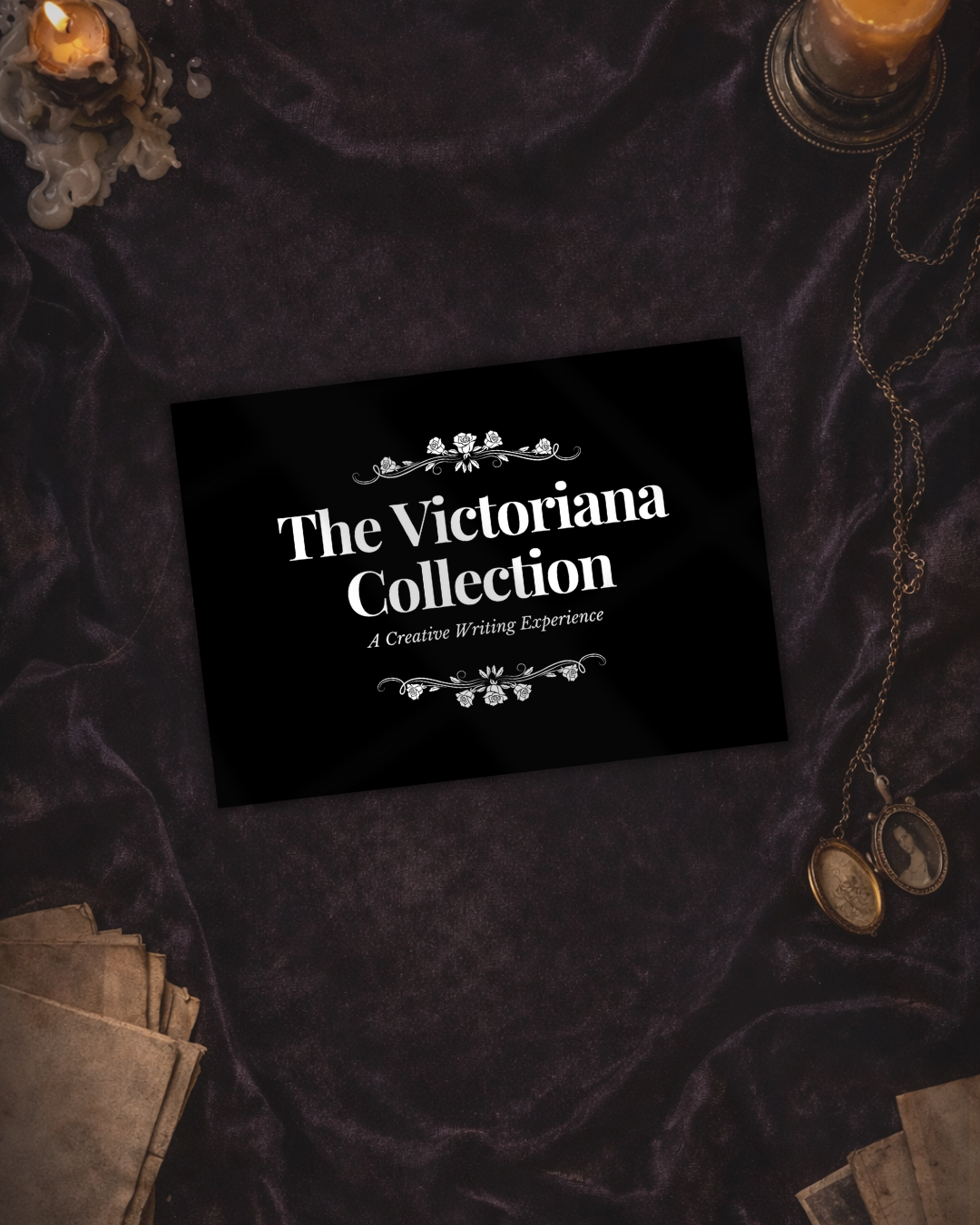
The Victoriana Collection is an immersive archive inspired by gothic fiction, Victorian spiritualism, forgotten histories, and the mysteries that linger long after the people involved have vanished. Inside you'll discover letters, diary entries, photographs, reports, spiritualist notes, newspaper clippings, and personal mementoes that hint at a story hidden beneath layers of silence and time.
Some documents feel ordinary.
Others seem determined to be remembered.
Who disappeared?
Who was searching for them?
And why do so many pieces of the story appear to be missing?
There are no answers waiting at the end.
Only fragments.
What's Inside?
◆ 50+ printable documents and artefacts from the world of The Victoriana Collection
◆ Letters, diary entries, photographs, missing persons reports, spiritualist notes, newspaper clippings, personal mementoes, and more
◆ A printable prompt card to inspire exploration and storytelling
◆ Instant digital download in PDF format
Who Is It For?
Perfect for:
◆ Writers and worldbuilders
◆ Lovers of gothic fiction and Victorian mystery
◆ Mystery enthusiasts and curious minds
◆ Teachers and students
◆ Anyone fascinated by forgotten histories, spiritualism, and unexplained disappearances
What Makes This Different?
This isn't a guided story or a mystery with a solution.
It's an archive.
Every document reveals part of a larger narrative, but none reveal the whole truth.
Some pieces fit together neatly. Others raise more questions than they answer.
The story hidden inside these papers depends on what you notice, what you question, and what connections you choose to make.
Every reader uncovers a different mystery.
The Victoriana Collection: Enter a World of Victorian Secrets
If the darker and stranger possibilities of Victorian fiction have captured your imagination, The Victoriana Collection gives you an entire nineteenth-century storyworld to explore.
Built around missing persons, spiritualism, forgotten lives, mysterious photographs and secrets hidden beneath respectable Victorian society, Victoriana replaces the traditional writing prompt with fragments of evidence. Instead of being told what the story is, you're invited to reconstruct it for yourself.
That makes it especially suited to writers interested in Victorian Gothic, historical mystery, supernatural fiction, family secrets and character-driven historical stories. You might become fascinated by one missing person, question whether an apparently supernatural event has another explanation, notice a connection between documents or wonder why somebody appears to have been deliberately erased from the surviving record.
And there is no requirement to arrive at one predetermined story.
One writer might interpret the evidence as the beginning of a Gothic mystery. Another could discover a family drama hidden underneath it. Someone else might follow an apparently minor character and create an entirely new story about the life that existed beyond the archive.
That's the fun of working with fragmented evidence: the gaps belong to you.
You can use the collection to practise historical storytelling, develop characters, experiment with unreliable evidence, create mysteries or simply spend time exploring a fictional Victorian world until something catches your imagination.
It also offers a useful exercise for anyone writing Victorian fiction: look at what each document tells you without explicitly explaining it. Consider handwriting, language, relationships, omissions, contradictions and the difference between an official version of events and a private one. Those same techniques can make your own historical fiction feel richer and more layered.
If you've enjoyed creating the characters, settings and conflicts in this guide but want something more immersive than another list of prompts, Victoriana gives you the raw materials of a mystery and leaves the storytelling in your hands.
Edinburgh, 1828.
The anatomy schools are expanding.
The demand for bodies is growing.
And the dead are not resting peacefully.
Across the city, churchyards are watched through the night. Coffins are reinforced. Graves are guarded. Rumours spread between mourners, surgeons, students, and those willing to make a profit from the recently buried.
Somewhere between the cemetery and the lecture hall, a quiet trade flourishes.
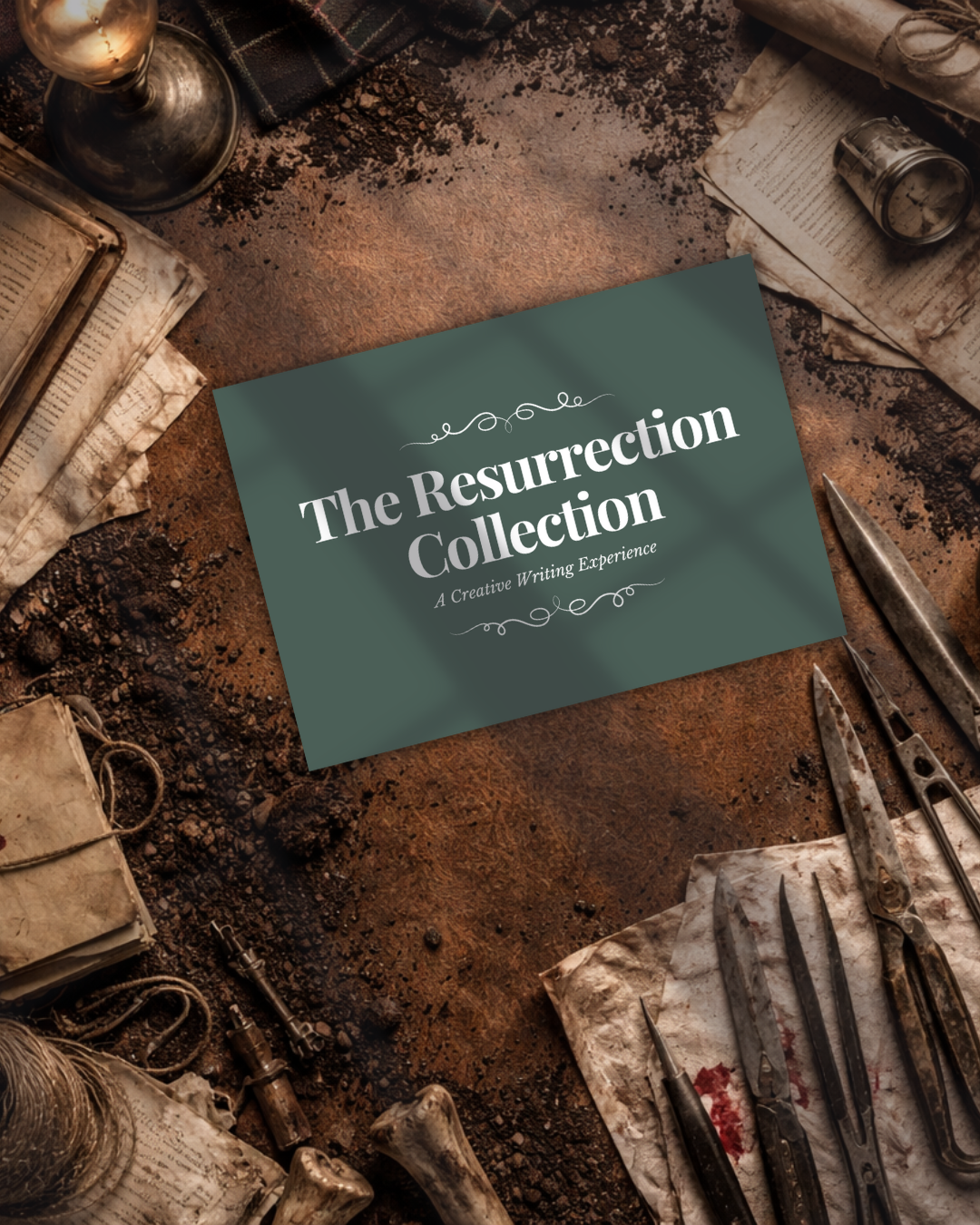
The Resurrection Collection is an immersive archive inspired by the real history of body snatching, anatomical study, and institutional silence in nineteenth-century Edinburgh. Inside you'll discover letters, diaries, advertisements, ledgers, archive records, paintings, newspaper reports, and personal accounts that reveal fragments of a story hidden beneath the city's pursuit of knowledge.
Some documents appear trustworthy.
Others raise uncomfortable questions.
Who supplied the bodies?
Who looked the other way?
And how many people knew more than they were willing to admit?
There is no official explanation.
No single narrative.
Only evidence.
What's Inside?
◆ 50+ printable documents and artefacts inspired by the world of nineteenth-century Edinburgh
◆ Letters, diaries, ledgers, advertisements, archive records, textbook extracts, silhouettes, paintings, and more
◆ A document-based experience designed for exploration, interpretation, and storytelling
◆ Instant digital download in PDF format
Who Is It For?
Perfect for:
◆ Writers and worldbuilders
◆ History enthusiasts
◆ Mystery lovers and curious minds
◆ Teachers and students
◆ Anyone fascinated by gothic realism, historical crime, and hidden stories
What Makes This Different?
This isn't a guided story or a puzzle with a solution.
It's an archive.
The documents don't agree. Some voices are missing. Others speak too clearly.
Every piece reveals part of a larger story, but none reveal the whole truth.
What happened depends on what you trust, what you question, and what connections you choose to make.
Every reader uncovers a different version of events.
The Resurrection Collection: Explore the Darker Side of Nineteenth-Century History
For writers drawn to the darker history surrounding the Victorian world, The Resurrection Collection travels slightly further back to Edinburgh in 1828.
This is therefore pre-Victorian rather than Victorian, but the world it explores makes it a fascinating companion for writers interested in nineteenth-century historical fiction, Gothic storytelling and the uneasy relationship between scientific progress and human cost.
The collection enters a society shaped by body snatching, anatomy schools, stolen corpses and the demand for bodies for medical study. Graveyards, medical institutions and the shadowy trade surrounding the dead provide the backdrop to a storyworld where scientific advancement, poverty, morality and crime begin to collide.
But once again, you aren't simply given a finished narrative.
The story emerges through fragmented records, personal writings, ledgers, advertisements and historical commentary, allowing different pieces of evidence to reveal different versions of the world. Documents may raise as many questions as they answer, and what is missing can become just as important as what survives.
For a historical fiction writer, that opens up dozens of possibilities.
You might follow somebody whose livelihood brings them into contact with the trade. You might become interested in the people whose bodies were treated as commodities. You could explore the ambitions of someone working within medicine, the desperation of somebody living in poverty or the institutions that benefit when uncomfortable questions remain unanswered.
It can also provide inspiration for broader nineteenth-century themes that work particularly well in Victorian fiction: medicine and morality, scientific ambition, class inequality, institutional power, crime, death, respectability and the question of whether progress can ever justify its cost.
Those themes don't disappear when Queen Victoria takes the throne nine years later. For writers creating Victorian doctors, medical students, investigators, reformers, criminals or Gothic characters, understanding the world immediately preceding the period can create interesting foundations for later stories.
The collection is therefore less about finding a specifically Victorian prompt and more about stepping into an adjacent nineteenth-century world and asking whose story has been preserved, whose has been forgotten and what might really have happened between the documents.
If your historical fiction tends to drift towards graveyards, anatomy rooms, suspicious deaths, moral ambiguity and the murkier corners of nineteenth-century society, this archive gives you an entire mystery to start investigating.
Explore The Resurrection Collection
Go Deeper into Victorian Writing
Once you have the foundations of your Victorian story, go beyond the obvious details and think about the quieter ways the period shapes your characters. The most convincing historical fiction doesn't simply look Victorian on the surface; its time and place influence what characters want, fear, notice, believe and are able to do.
◆ Choose a specific decade. The Victorian era lasted more than sixty years. Narrowing your story to the 1840s, 1870s or 1890s immediately gives you more useful questions to research.
◆ Research your character's life, not the entire century. Focus on the home, work, clothing, transport, relationships and everyday experiences your particular protagonist would encounter.
◆ Let class affect the story. Consider not only how much money your character has, but who they meet, where they can go, how others perceive them and which opportunities are realistically available.
◆ Give characters different attitudes towards their world. People living in the same period do not automatically share the same beliefs. Let characters disagree about tradition, progress, family, morality, science, politics and social expectations.
◆ Use occupation as a storytelling tool. A character's work can determine the people they encounter, the information they possess and the places they can access.
◆ Make historical restrictions create plot. If something would be difficult because of distance, communication, money, reputation or social convention, don't automatically write around the problem. Ask whether the obstacle makes the story more interesting.
◆ Remember ordinary life. Not every Victorian scene needs a dramatic historical event. Meals, work, shopping, journeys, family arguments, entertainment and everyday routines can make extraordinary events feel more believable.
◆ Use sensory detail selectively. Choose the sound of machinery outside a window, coal smoke in the air or the movement of a crowded railway platform rather than trying to describe every historical object in the room.
◆ Let objects carry stories. Letters, photographs, newspaper clippings, jewellery, tickets, ledgers, keys and inherited possessions can reveal relationships and secrets without lengthy exposition.
◆ Question the obvious version of events. Ask who recorded something, whose perspective is missing and what another character might remember differently.
◆ Allow setting to create opportunity. A railway station brings strangers together. A pub carries rumours. A country house traps a small group inside the same social world. A crowded city allows somebody to disappear.
◆ Make research invisible. The reader should feel that your characters naturally inhabit the nineteenth century, not that the author is standing beside them explaining it.
◆ Mix genres when the story wants it. Victorian fiction can become mystery, romance, Gothic fiction, adventure, family drama or supernatural fiction without losing its historical foundations.
◆ Look for contradiction. Wealth beside poverty, scientific advancement beside superstition, public respectability beside private scandal, tradition beside rapid change — contradictions are often where the strongest Victorian stories begin.
◆ Ask one final question before you write: Could this story happen in exactly the same way in another time period? If the answer is yes, look for another way the Victorian setting can influence the characters, conflict or consequences.
Final Thoughts
Writing Victorian fiction well isn't about squeezing every piece of nineteenth-century research onto the page. It's about creating characters whose lives make sense within their particular moment in history and allowing that world to shape the stories that happen to them.
Choose your period carefully. Give your characters occupations, relationships, ambitions and limitations that connect them to their surroundings. Think about how class, money, reputation, family and social expectations affect their choices. Then use historical detail where it matters most — when it changes what a character can do, raises the stakes of a decision or makes a conflict possible in the first place.
Your Victorian setting can be grand or ordinary: a country estate filled with family secrets, a crowded railway platform, a smoky industrial town, a village pub, a rented room or a London street. What makes it compelling isn't how many Victorian objects you can describe, but what happens to the people living there.
If you're ready to travel beyond the Victorian era, explore the Historical Fiction Writing Hub for writing prompts, story ideas, characters and inspiration spanning different periods of the past.
Or leave the planning behind and try Historical Fiction Story Sparks, a free random generator that combines historical periods, settings, characters, occupations, social circumstances, conflicts, relationships, secrets and unexpected events to give you the beginnings of a story.
And if you still don't know what you want to write next, wander through the Creative Writing Archive, where you'll find hundreds of writing prompts, story ideas, character collections, picture prompts, generators and worldbuilding resources spanning fantasy, Gothic fiction, horror, romance, mystery, science fiction, fairytales, folklore, historical fiction and more.
History gives you the world. Your characters decide what happens inside it.
