70 Victorian Era Writing Prompts: Story Ideas, Characters, Settings & Plot Inspiration
The Victorian era remains one of the richest periods in history for storytelling. Spanning the reign of Queen Victoria from 1837 to 1901, it was an age of remarkable contrasts. Glittering royal courts and elegant country estates existed alongside crowded industrial cities, smoky factories, and impoverished workhouses. Scientific discoveries transformed society, the British Empire stretched across the globe, and rapid social change created opportunities, conflicts, and mysteries that continue to inspire writers today.
Some of the greatest works of historical fiction and Victorian literature draw upon this fascinating period. Charles Dickens captured the hardships and inequalities of nineteenth-century Britain in Oliver Twist and Great Expectations, while Arthur Conan Doyle's Sherlock Holmes stories transformed Victorian London into the world's most famous city of mystery. Sarah Waters' Fingersmith explores deception, identity, and class within Victorian society, and Michel Faber's The Crimson Petal and the White offers a vivid portrait of London's hidden lives. Countless Gothic novels, detective stories, romances, and historical adventures continue to return to the Victorian era because it offers such an extraordinary blend of elegance, innovation, and hidden darkness.
From bustling railway stations and grand country houses to fog-covered streets, remote lighthouses, colonial expeditions, bustling markets, and glittering debutante balls, Victorian Britain offers endless possibilities for historical fiction. Whether you're writing an atmospheric mystery, an epic family saga, a sweeping romance, a Gothic ghost story, or an adventure inspired by scientific discovery and exploration, the era provides unforgettable characters, dramatic settings, and compelling conflicts at every turn.
This collection of 70 Victorian Era Writing Prompts is designed as a complete creative toolkit, featuring plot hooks, title ideas, opening lines, closing lines, character ideas, setting prompts, and cinematic visual inspiration. Whether you're exploring London's poorest neighbourhoods, aristocratic drawing rooms, distant colonies, isolated manor houses, or the rapidly changing industrial landscape, these prompts will help you create authentic historical stories filled with intrigue, ambition, romance, mystery, and the unforgettable atmosphere of Victorian Britain.
If you're looking for even more historical inspiration, explore the Historical Fiction Writing Hub or browse the Creative Writing Archive, where you'll find hundreds of creative writing prompts, story ideas, character inspiration, and genre resources to help bring every era of history to life.
1. Plot Hooks
The Victorian era was a time of extraordinary change, where wealth and poverty, progress and superstition, science and faith existed side by side. These plot hooks explore social ambition, hidden identities, family secrets, criminal investigations, forbidden love, industrial Britain, colonial adventures, and the darker corners of Victorian society.
Write about a young governess who discovers that every portrait in her employer's country house depicts the same mysterious woman across generations.
Write about a railway engineer whose newest tunnel uncovers a forgotten medieval crypt beneath the city.
Write about an ambitious journalist investigating a series of disappearances connected to London's workhouses.
Write about the daughter of a wealthy industrialist who secretly volunteers in the East End, only to uncover a conspiracy that threatens both worlds she inhabits.
Write about a detective asked to solve the theft of a priceless royal artefact before Queen Victoria's visit to a provincial city.
Write about two rival inventors competing to unveil a revolutionary machine at the Great Exhibition, unaware someone is sabotaging both of their creations.
Write about a housemaid who overhears a conversation revealing that the family's respected patriarch has built his fortune upon a terrible secret.
Write about an Arctic explorer who returns home years after being declared dead, refusing to explain what happened to the rest of the expedition.
Write about a young doctor investigating a mysterious illness spreading through an isolated mill town where every victim shares an impossible connection.
Write about a widowed botanist who receives anonymous parcels containing rare plants believed to have vanished from the British Empire decades earlier.
2. Title Ideas
Victorian stories often evoke mystery, elegance, ambition, hidden lives, and social change. These titles are designed to capture the atmosphere of nineteenth-century Britain while leaving readers eager to discover the story behind them.
Beneath the London Fog
The House on Blackwood Lane
Ashes of the Empire
The Governess's Secret
Echoes of Whitechapel
The Last Train to Ashcombe
Velvet & Smoke
Beneath the Gaslight
The Clockmaker's Daughter
A Letter from Ravenscroft Hall
3. Opening Lines
A Victorian story should immediately immerse readers in a world of gaslit streets, elegant drawing rooms, bustling factories, or windswept country estates. These opening lines introduce mystery, conflict, and atmosphere from the very first sentence.
By the time the final train reached London, everyone in first class knew someone had vanished.
The portrait had hung above the fireplace for fifty years, yet today its subject was smiling.
My employer insisted that I never enter the west wing after sunset, which naturally became the first place I explored.
The factory whistle sounded precisely at six, but no workers emerged from the gates.
No respectable lady would be seen in Whitechapel after dark, which was precisely where I found myself.
The telegram arrived two days after Father's funeral and claimed he was still alive.
Every servant in Ashcombe Hall knew never to answer the third bell.
London's fog concealed many sins, but none as extraordinary as the one I witnessed that November morning.
The Great Exhibition promised the future, yet someone seemed determined to ensure nobody lived to see it.
I knew the gentleman was lying the moment he claimed never to have visited the cemetery.
4. Closing Lines
Victorian fiction often ends with justice, sacrifice, revelation, or lingering uncertainty. These closing lines leave readers reflecting on the secrets uncovered and the lives forever changed.
The house stood empty once more, but the portrait had finally disappeared.
Some fortunes are inherited, while others are buried forever beneath London's streets.
When the fog lifted, the city looked unchanged, though none of us ever would be again.
The final page of her diary answered every question except the one I feared most.
They unveiled the statue the following spring, never knowing who the true hero had been.
As the train disappeared into the distance, so too did the last witness to the truth.
The bell rang midnight, and at last the house fell silent.
History would remember him as a gentleman, but I alone knew the price of his reputation.
We locked the laboratory forever, praying no one would repeat our mistake.
The letter remained unopened until the day Queen Victoria herself passed away.
5. Character Ideas
Victorian society was shaped by strict social expectations, rapid industrialisation, scientific discovery, and imperial expansion. These characters reflect every level of society, from aristocrats and inventors to servants, journalists, explorers, and reformers.
A determined suffragist secretly writing political articles under a male pseudonym.
A Scotland Yard detective haunted by the one case he never solved.
A brilliant female surgeon forced to practise medicine in secret.
A chimney sweep determined to escape London's poorest streets through education.
An aristocratic widow who finances dangerous archaeological expeditions across Egypt.
A telegraph operator who begins intercepting coded messages linked to a criminal network.
A reclusive inventor whose greatest creation may be too dangerous to reveal.
A lady's maid who knows every secret hidden within the great house she serves.
A naval officer returning from distant colonies to find his family torn apart by scandal.
A schoolteacher establishing one of the first free schools for working-class children despite fierce local opposition.
6. Setting Ideas
Victorian Britain offered extraordinary contrasts, from elegant estates and thriving ports to smoke-filled factories, crowded cities, and distant colonial outposts. These settings provide rich backdrops for mysteries, romances, adventures, and family dramas.
A sprawling country estate preparing for an extravagant Christmas house party.
A fog-covered London street lined with gas lamps and hidden alleyways.
A bustling railway station during the height of Britain's railway boom.
A textile mill dominating a rapidly expanding industrial town.
An isolated lighthouse battered by relentless North Sea storms.
A grand natural history museum unveiling a controversial new discovery.
A fashionable seaside resort welcoming wealthy holidaymakers for the summer season.
A remote Scottish hunting lodge surrounded by mist-covered moorland.
A botanical glasshouse filled with exotic plants collected from across the Empire.
A bustling dockyard where ships depart daily for every corner of the world.
7. Picture Prompts
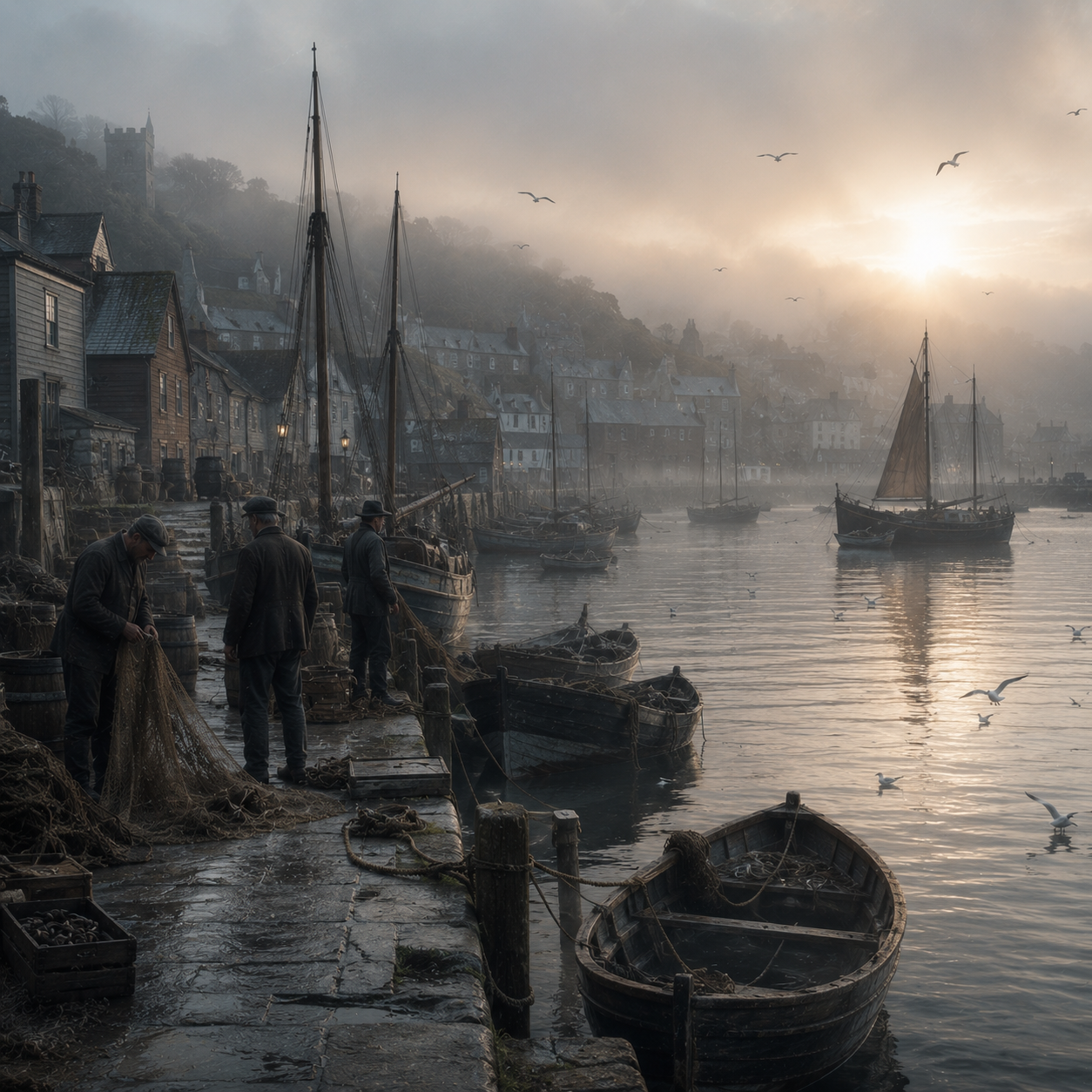
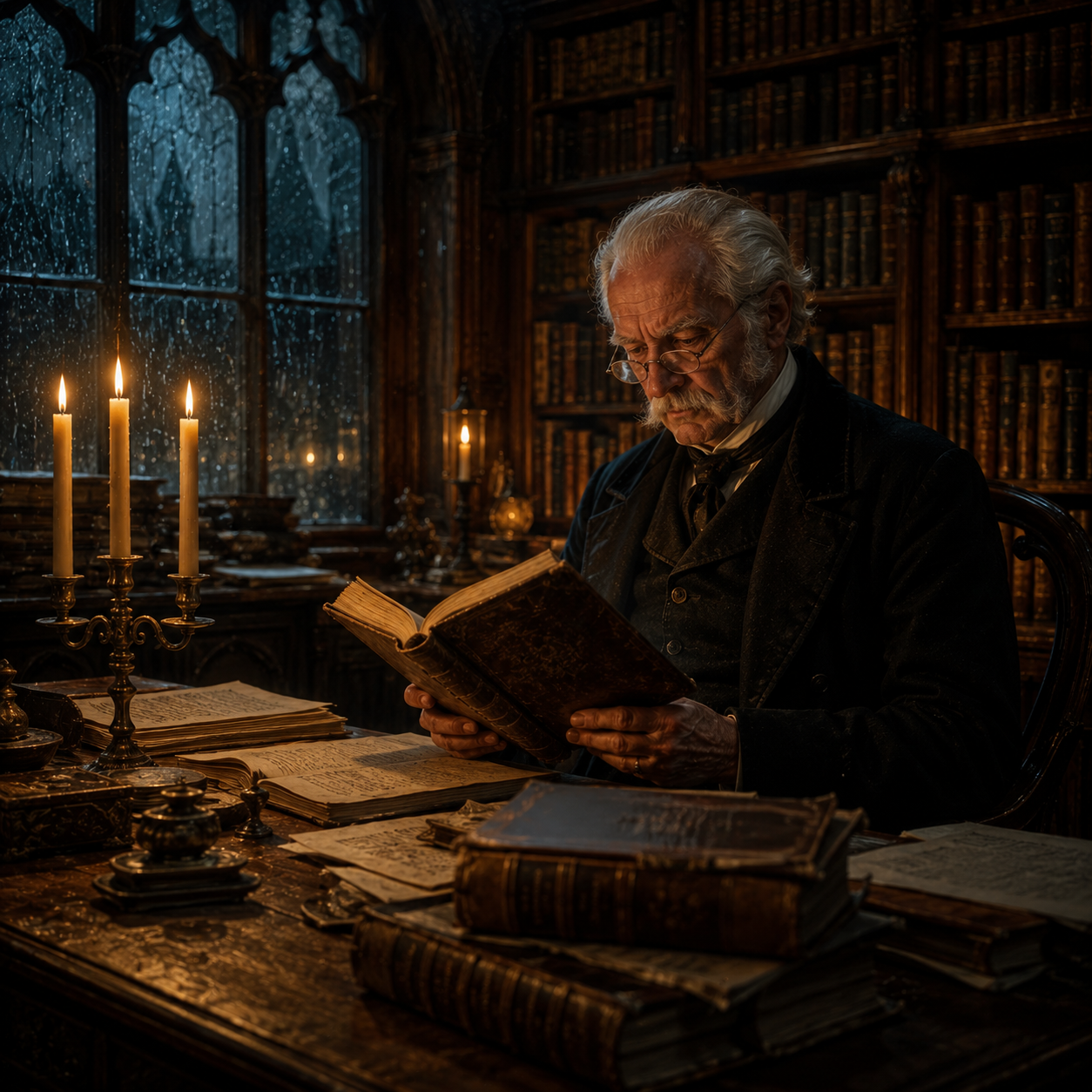
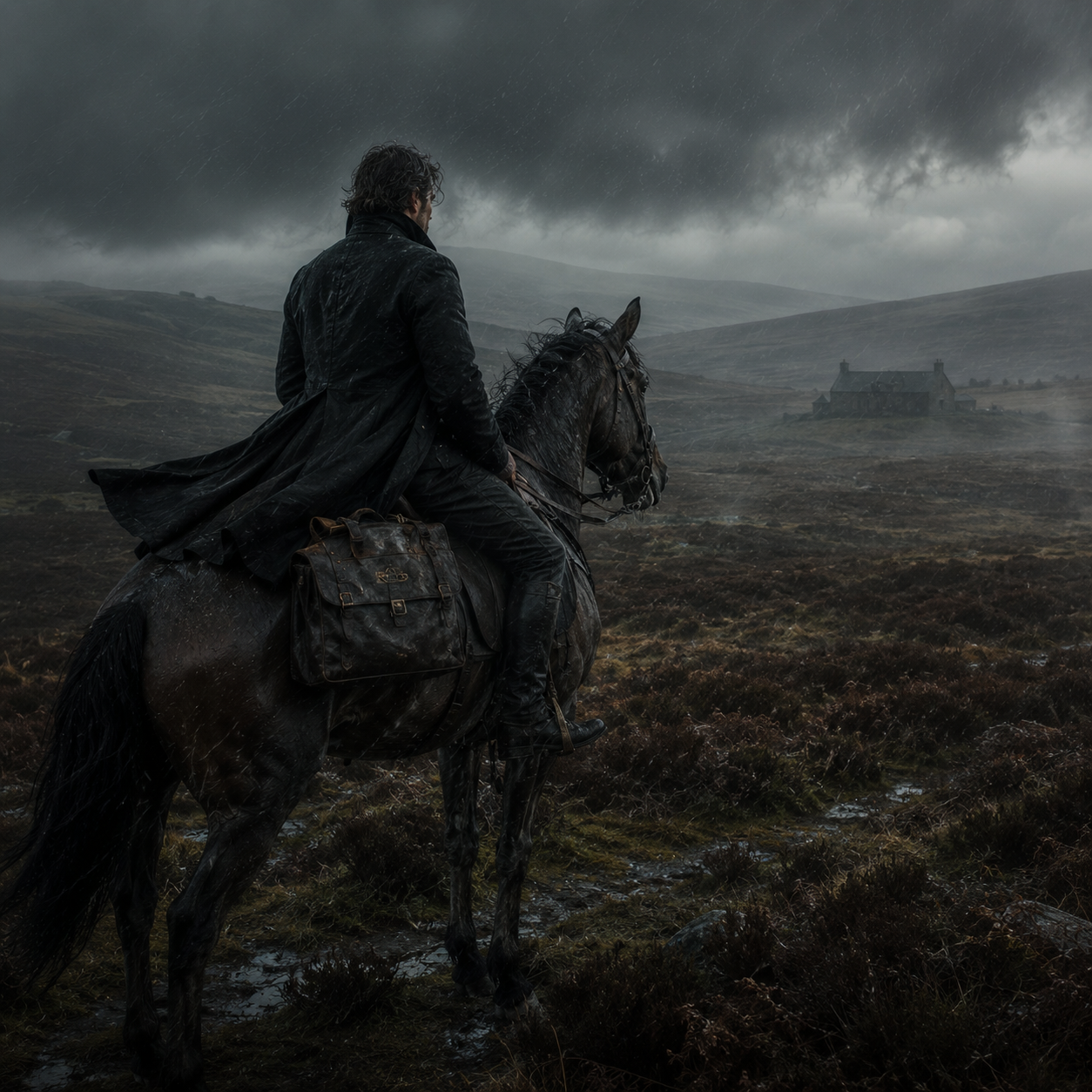
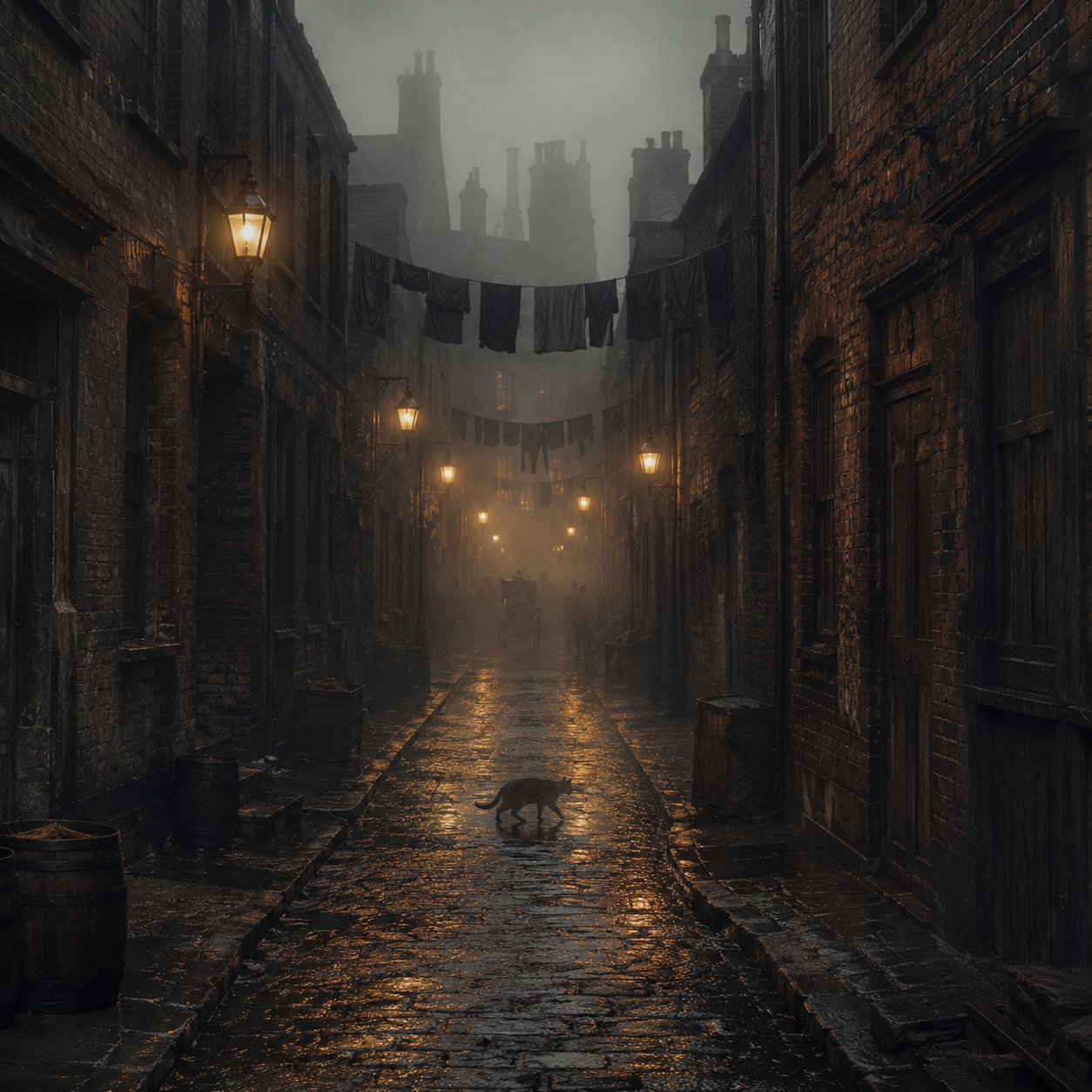
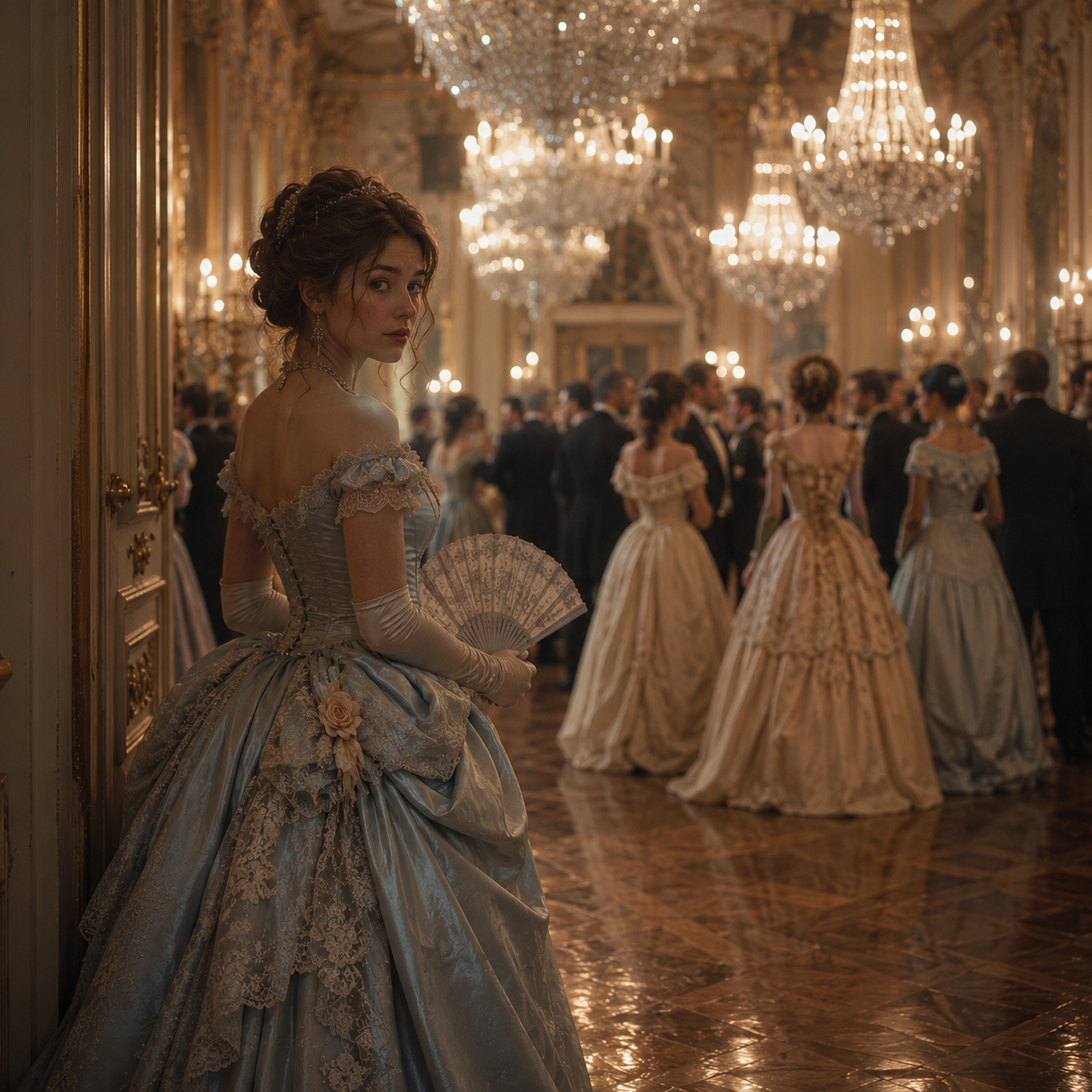
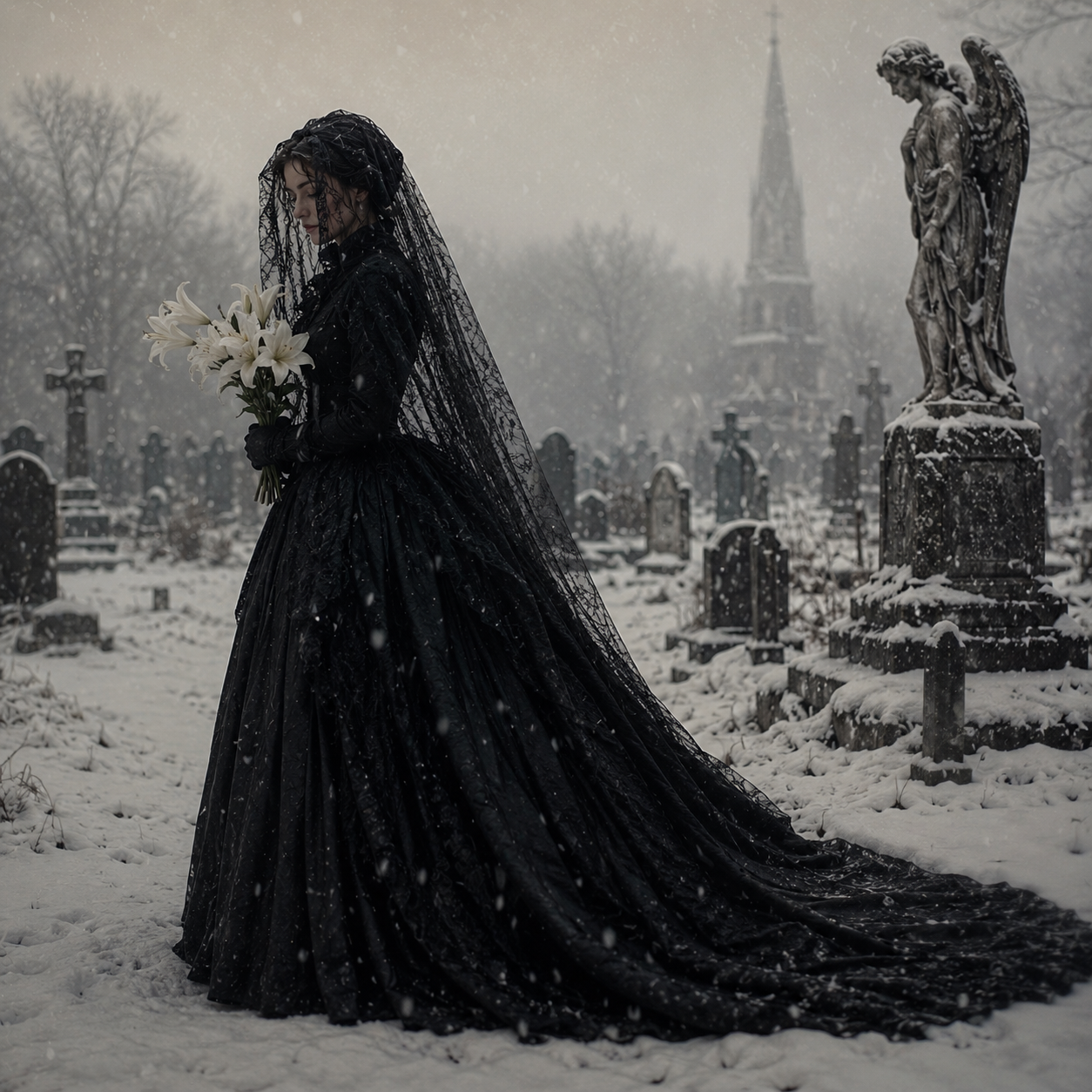
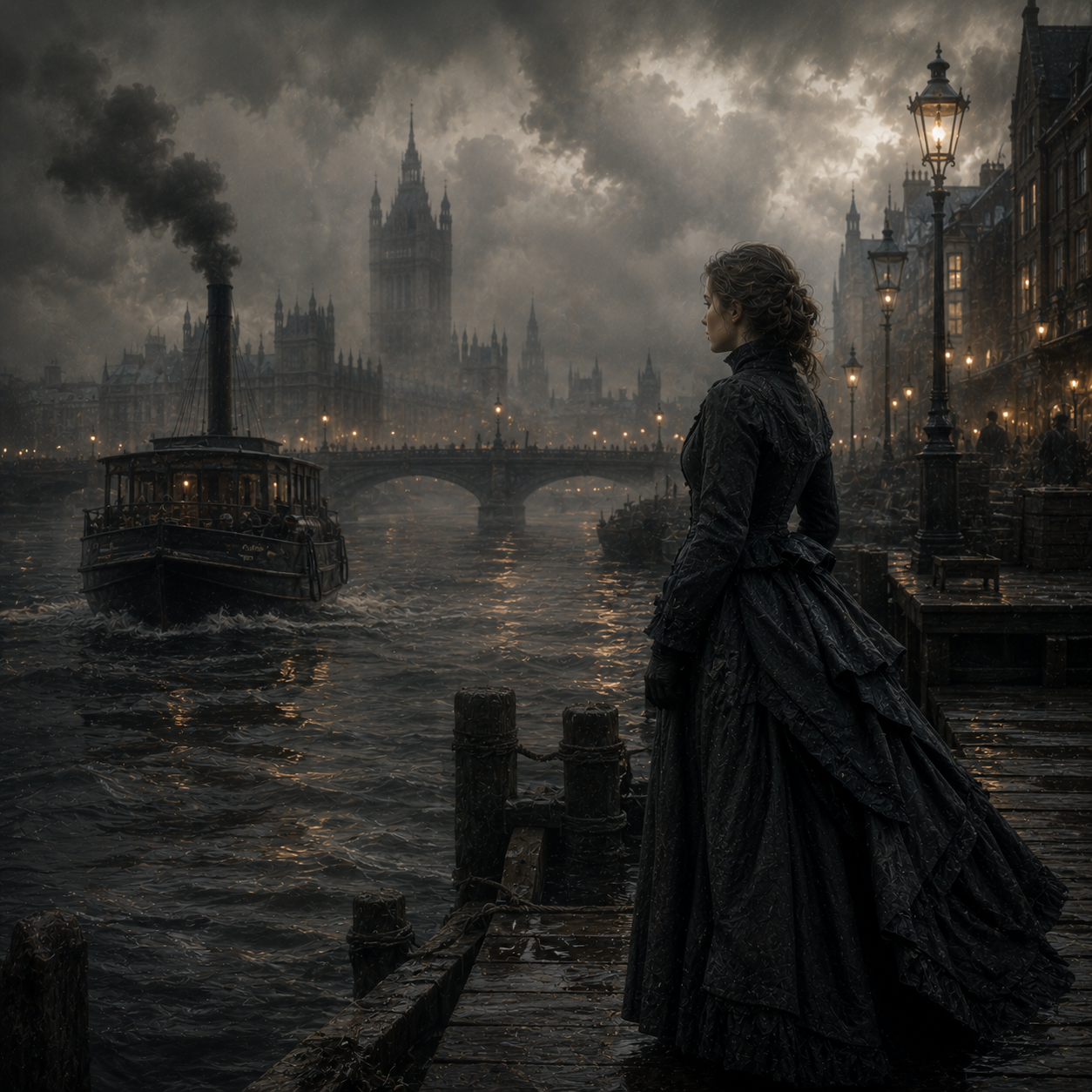
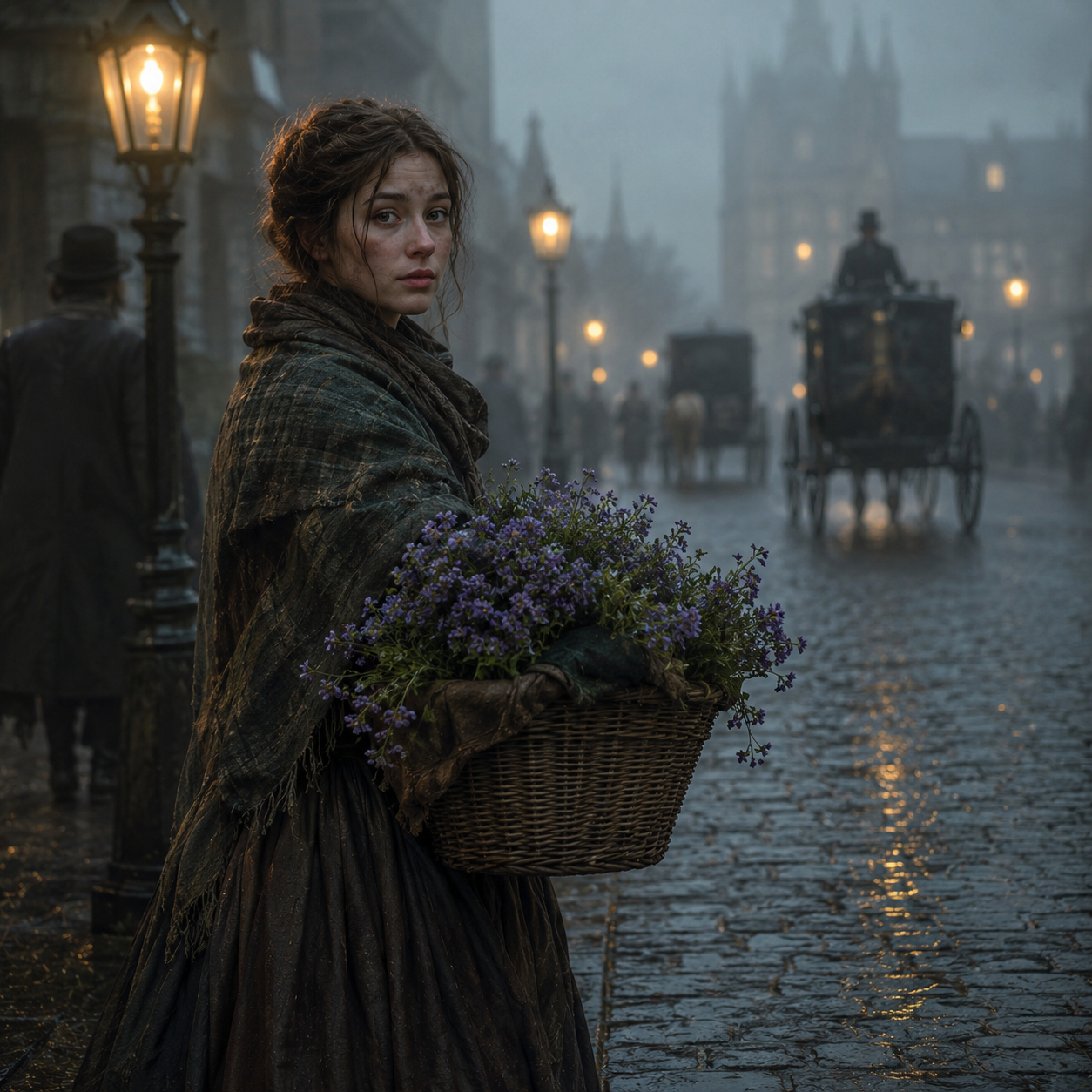
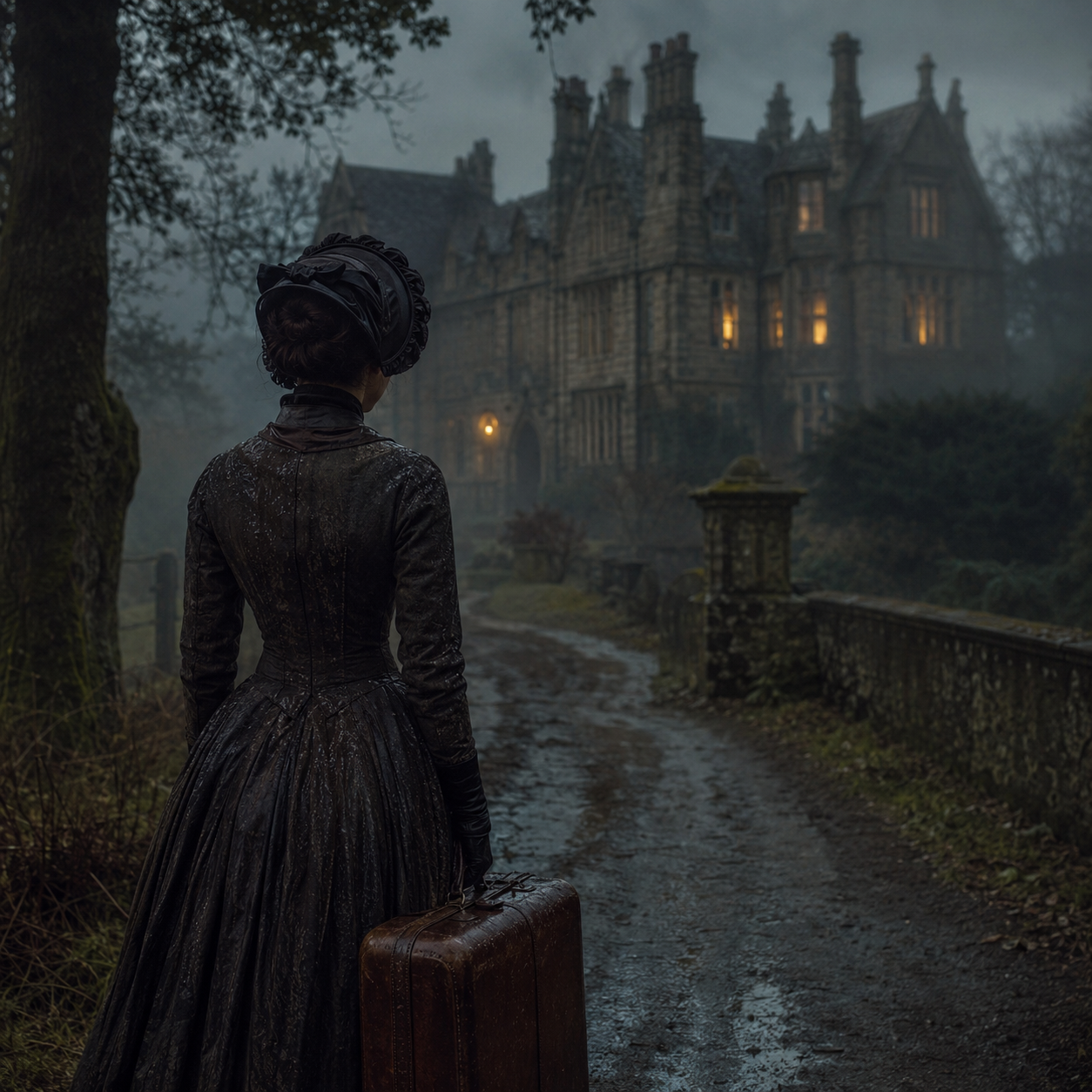
Victorian fiction thrives on atmosphere, social contrast, and remarkable historical detail. These visual prompts encourage you to study elegant architecture, industrial landscapes, bustling city streets, quiet country villages, lavish interiors, and authentic nineteenth-century clothing. Pay close attention to light, weather, class differences, expressions, and the small details of everyday life, then imagine the stories, relationships, mysteries, and ambitions unfolding within each scene.


Go Deeper into Victorian Era Writing
The Victorian era offers far more than elegant dresses, grand manor houses, and fog-covered London streets. It was a period shaped by astonishing technological progress, expanding cities, scientific discovery, social reform, and the vast reach of the British Empire. Every new railway line, factory chimney, telegraph wire, and steamship changed the way people lived, worked, and understood the world. At the same time, strict social expectations, widening inequalities, and lingering superstition created endless opportunities for conflict, mystery, and unforgettable characters.
As you develop your Victorian stories, think beyond the famous landmarks and historical figures. Consider how ordinary people experienced this rapidly changing society. A servant might overhear secrets capable of destroying an aristocratic family, an inventor may risk everything to prove a revolutionary idea, or a journalist could uncover corruption hidden beneath respectable society. Whether you're writing a sweeping family saga, an atmospheric detective mystery, a Gothic ghost story, or a historical romance, grounding your characters within the realities of Victorian life will make your fiction feel authentic and emotionally compelling.
◆ Explore the contrasts that defined Victorian Britain. Wealth and poverty often existed only streets apart. Lavish country estates stood alongside overcrowded slums, while glittering society balls contrasted with dangerous factory floors. These extremes naturally create tension, conflict, and powerful character journeys.
◆ Use historical events to shape personal stories. The Great Exhibition, Jack the Ripper investigations, the expansion of the railways, scientific discoveries, colonial expeditions, industrial strikes, and growing campaigns for women's rights can all provide meaningful backdrops without overwhelming your fictional characters.
◆ Research everyday Victorian life. Clothing, etiquette, household servants, transport, education, medicine, food, social class, and popular entertainments all influence how characters think and behave. Small historical details often make a story feel far more immersive than focusing only on major events.
◆ Embrace the era's contradictions. The Victorian age celebrated progress and reason while remaining fascinated by séances, ghosts, spiritualism, Gothic literature, and unexplained mysteries. Allow science and superstition, tradition and change, respectability and scandal to exist side by side, creating richer and more believable historical fiction.
Final Thoughts
The Victorian era remains one of the most rewarding settings for historical fiction because it captures a society standing at the crossroads of tradition and modernity. Scientific breakthroughs, industrial expansion, imperial ambition, rigid social expectations, and rapid cultural change created a world where almost every character—whether aristocrat, servant, factory worker, explorer, detective, inventor, or reformer—faced opportunities and challenges unlike any generation before them. It is an era where grand country houses, bustling cities, distant colonies, and isolated villages all offer equally compelling stories waiting to be told.
These 70 Victorian Era Writing Prompts are designed to help you explore every corner of nineteenth-century Britain, from glittering ballrooms and fog-covered London streets to windswept coastlines, bustling railway stations, industrial factories, and quiet country estates. Mix and adapt the prompts, deepen your historical research, and use them as the foundation for novels, short stories, classroom activities, or writing challenges that bring the remarkable people and places of the Victorian age vividly to life.
When you're ready to journey into more fascinating periods of the past, explore the Historical Fiction Writing Hub for prompts spanning civilisations and centuries, or browse the Creative Writing Archive, where you'll find hundreds of writing resources covering fantasy, mystery, romance, horror, science fiction, mythology, descriptive writing, poetry, and much more.
Choose Your Next Adventure