70 Ancient Egypt Story Ideas: Pharaohs, Tombs & Nile Mysteries
Ancient Egypt offers one of the richest settings for historical fiction, filled with powerful pharaohs, vast temples, sacred rituals, desert journeys, palace intrigue, hidden tombs, river trade, scribes, priests, artisans, soldiers, farmers, and mysteries buried beneath sand and stone. The Nile shapes daily life, the gods influence every decision, and monuments are built not only for power and beauty, but for memory, legacy, and the afterlife. From royal courts and temple complexes to workers' villages, bustling markets, tomb-building communities, and remote desert routes, Ancient Egypt gives writers endless ways to explore ambition, loyalty, belief, survival, and the cost of power.
This period works especially well for stories centred on political rivalry, religious conflict, family duty, forbidden love, missing artefacts, hidden identities, dangerous expeditions, royal succession, and secrets preserved across generations. Writers can draw inspiration from pharaohs and queens, temple priests, tomb painters, embalmers, scribes, soldiers, traders, healers, dancers, astronomers, and ordinary people living in the shadow of extraordinary monuments. Ancient Egypt can support sweeping historical epics, intimate character dramas, mysteries, adventures, romances, supernatural stories, and richly atmospheric tales of discovery.
This collection of 70 Ancient Egypt Story Ideas is designed as a complete creative toolkit, featuring plot prompts, title ideas, opening lines, closing lines, character ideas, setting prompts, and atmospheric picture prompts. Explore sunlit temples, hidden tombs, palace corridors, sacred crocodile pools, desert caravans, moonlit Nile journeys, royal burial chambers, forgotten shrines, and stories where history, faith, and human desire meet beneath the Egyptian sun.
If you're looking for even more inspiration, explore the Historical Fiction Writing Hub for prompts rooted in fascinating time periods, or browse the Creative Writing Archive for hundreds of creative writing resources across historical fiction, fantasy, mystery, romance, gothic fiction, folklore, and many more genres.
1. Plot Prompts
Ancient Egypt stories can explore power, faith, survival, ambition, and the fragile boundary between human life and divine authority. These plot prompts are designed to inspire historical fiction rooted in temples, tombs, royal courts, desert roads, and the life-giving presence of the Nile.
A young scribe discovers that a royal decree has been secretly altered, changing the rightful heir to the throne.
A tomb painter working in the Valley of the Kings hides a dangerous message inside the wall art of a pharaoh’s burial chamber.
A priestess begins questioning her loyalty after witnessing a sacred ritual being used to cover up a political murder.
A palace servant overhears a conversation that could prevent a war, but revealing it would place their entire family in danger.
During a season when the Nile fails to flood, a village must decide whether to trust the royal priests, a local healer, or an exiled astronomer.
A young noblewoman is promised in marriage to secure an alliance, but she secretly investigates the disappearance of her older sister from the same household.
A desert guide leading a caravan across dangerous trade routes discovers one traveller is carrying a stolen object from a royal tomb.
An apprentice embalmer notices something impossible about the body of a newly deceased court official.
A soldier returning from a distant campaign finds his family home occupied by strangers and his name erased from official records.
A child born during an eclipse is believed to be favoured by the gods, attracting the attention of priests, rivals, and the royal court.
2. Title Ideas
Ancient Egypt titles should evoke sunlight, stone, river journeys, sacred power, royal secrets, and mysteries hidden beneath sand. These title ideas suggest stories shaped by legacy, belief, ambition, and the enduring pull of the ancient world.
Beneath the Golden Sand
The Scribe of Karnak
The House of the Hidden Sun
Daughter of the Nile
The Pharaoh’s Last Decree
The Tomb Painter’s Secret
When the River Failed
The Priestess of Black Stone
The Forgotten Cartouche
Before the Gods Awaken
3. Opening Lines
A strong Ancient Egypt opening can immediately place readers inside a world shaped by river, desert, ritual, and royal power. These first lines are designed to create atmosphere while hinting at mystery, conflict, or hidden danger.
The Nile should have risen three days ago.
My father taught me never to change a royal name once it had been carved in stone.
By dawn, the priestess knew the offering had been stolen.
The tomb was never meant to be opened twice.
I first saw the stranger beneath the shadow of the unfinished obelisk.
The pharaoh’s death was announced before the palace doors had opened.
Every scribe in the archive knew the missing scroll existed, though none dared speak of it.
The desert returned my brother’s sandals, but not my brother.
On the morning of my wedding, a crocodile surfaced beside the temple steps carrying a gold bracelet in its jaws.
The old astronomer said the stars had changed, and for that he was sentenced to silence.
4. Closing Lines
Ancient Egypt endings often leave readers thinking about legacy, memory, and what survives long after a life has ended. These closing lines suggest secrets preserved in stone, stories carried by the Nile, and truths that outlast kingdoms.
The river carried the truth farther than any messenger could.
By sunset, the false name had been carved away.
Some secrets survive because stone remembers what people fear to say.
The tomb was sealed again, but not in silence.
When the Nile rose at last, it covered every footprint.
The gods had been listening after all.
My name was never written in the records, but my story remained.
The desert kept what the palace could not protect.
Centuries later, someone would read the wall and understand.
The kingdom endured, though none remembered the price.
5. Character Ideas
Ancient Egypt offers a vast range of characters beyond pharaohs and queens. Scribes, artisans, priests, embalmers, soldiers, farmers, healers, traders, servants, and astronomers can all become powerful centres for stories about loyalty, ambition, belief, and survival.
A young scribe whose flawless handwriting makes them valuable to dangerous people.
A tomb painter hiding personal grief within sacred images.
A priestess torn between temple duty and forbidden political knowledge.
A desert guide who knows secret routes avoided by royal patrols.
An apprentice embalmer who notices details others are paid to ignore.
A palace servant trusted because everyone assumes they are invisible.
A royal daughter determined to escape a marriage arranged for diplomacy.
A village healer blamed when the Nile flood arrives too late.
A soldier haunted by what he witnessed on campaign beyond Egypt’s borders.
An astronomer whose predictions threaten the authority of powerful priests.
6. Setting Ideas
Ancient Egypt settings should feel vivid, textured, and alive with daily life. Temples, tombs, markets, riverbanks, workshops, palaces, desert roads, and farming villages all offer different ways to explore power, belief, labour, beauty, and danger.
A sunlit temple courtyard filled with incense, chanting priests, and carved columns.
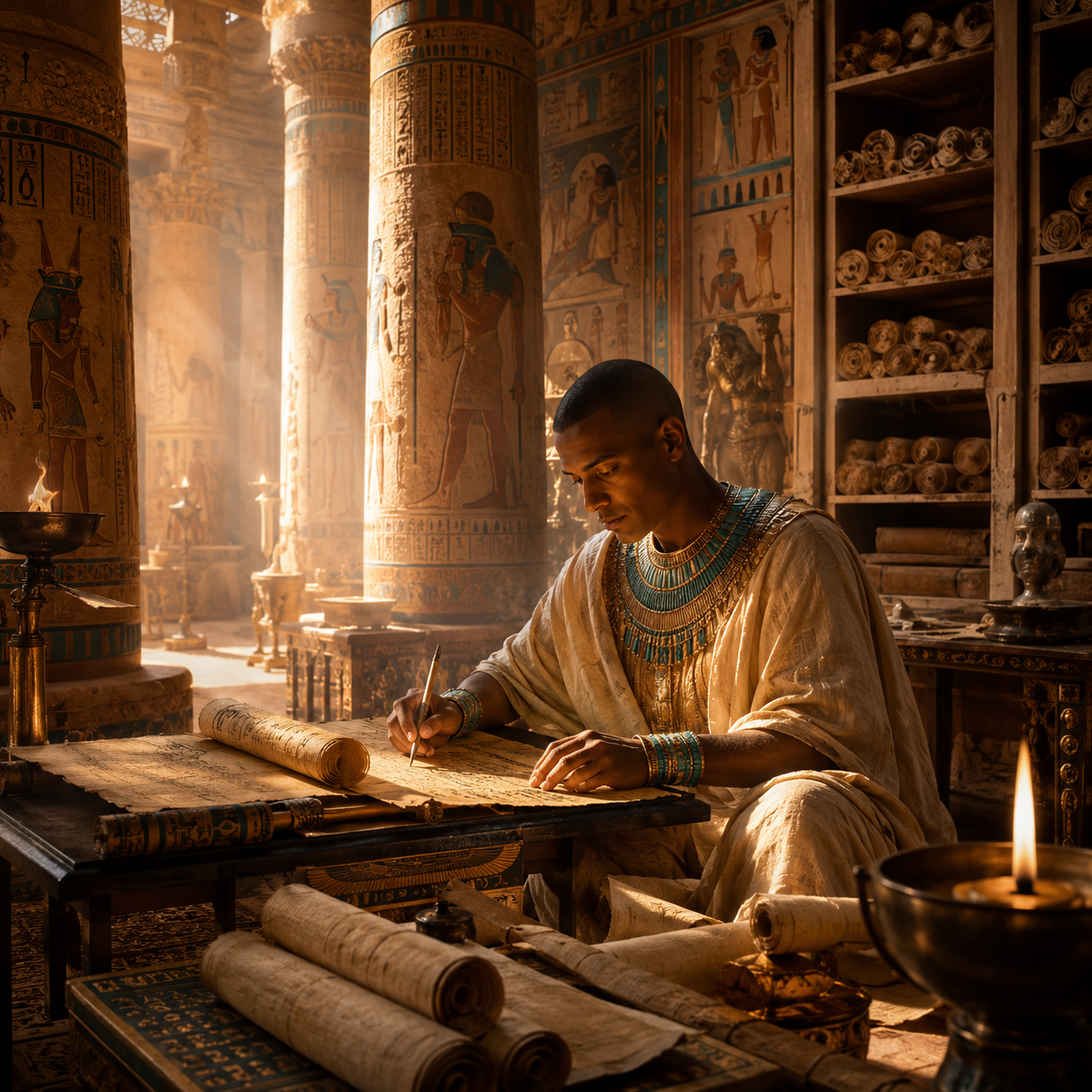
A royal archive where scribes copy decrees beneath shelves of sealed scrolls.
A tomb-builders’ village near the Valley of the Kings.
A crowded market beside the Nile during flood season.
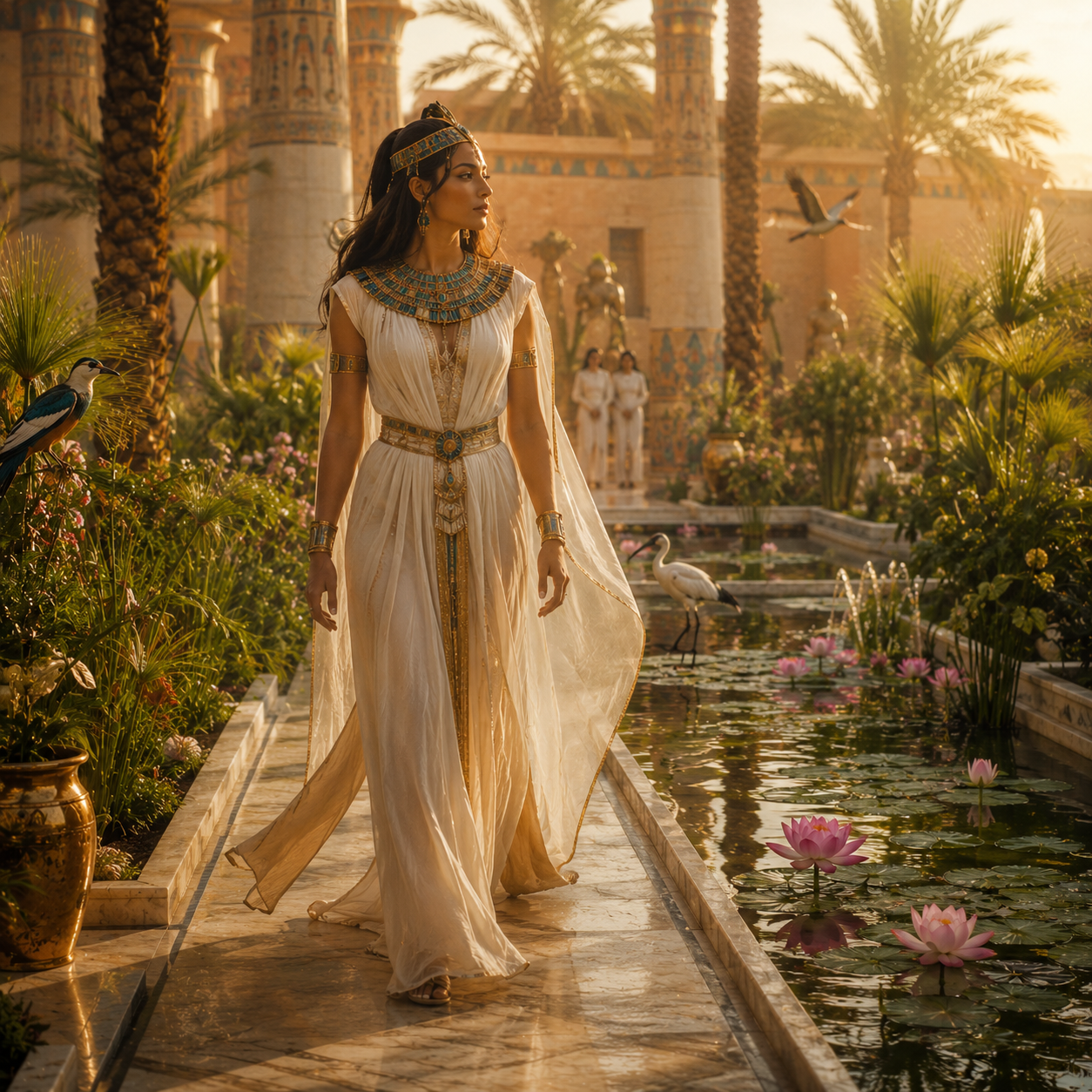
A palace garden filled with pools, lotus flowers, painted walls, and whispered conversations.
A desert caravan route marked by half-buried statues and abandoned shrines.
An embalmer’s workshop hidden behind a quiet temple district.
A moonlit riverboat travelling between sacred cities.
A quarry where workers carve enormous blocks of stone beneath the desert sun.
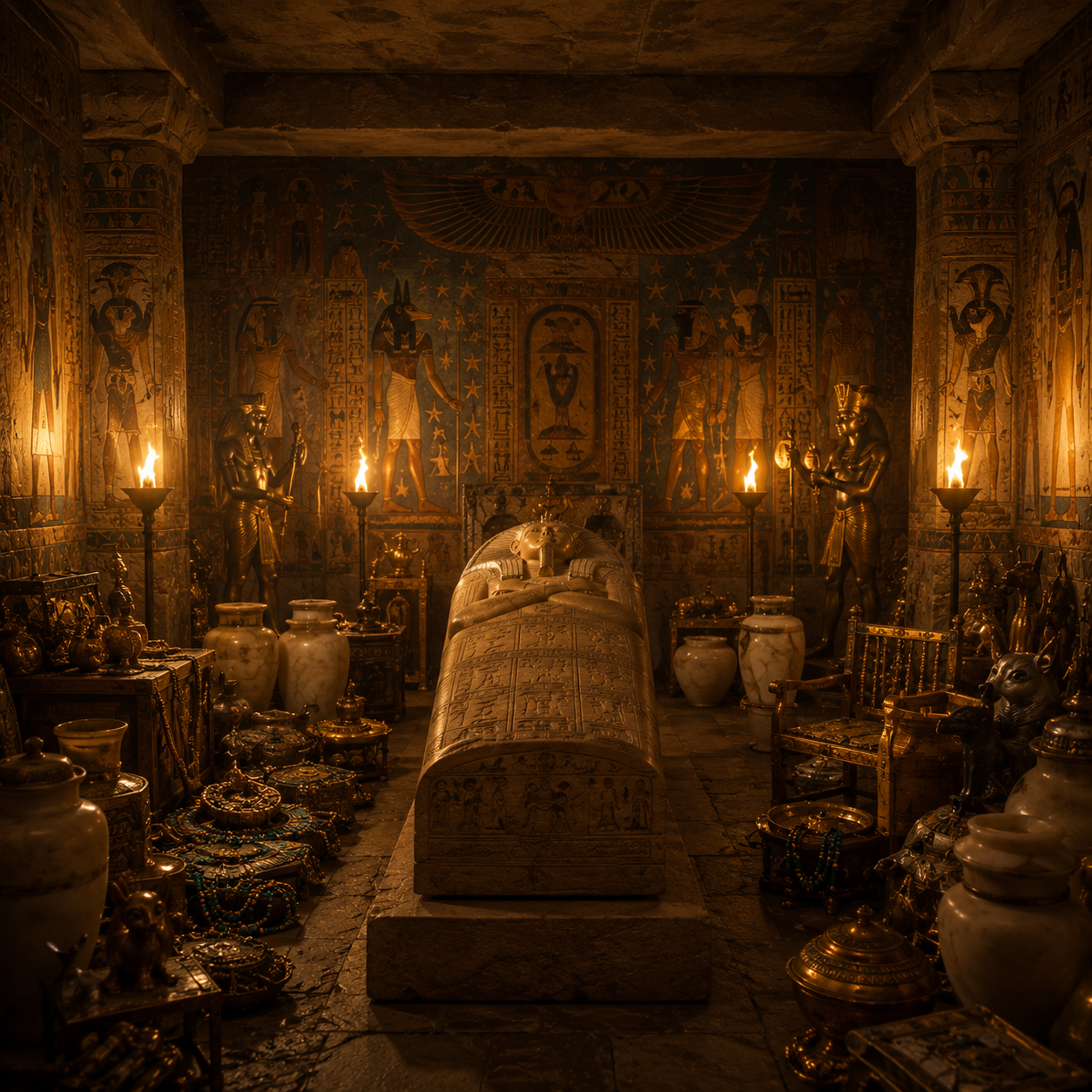
A sealed burial chamber painted with stars, gods, offerings, and warnings for the afterlife.
7. Picture Prompts
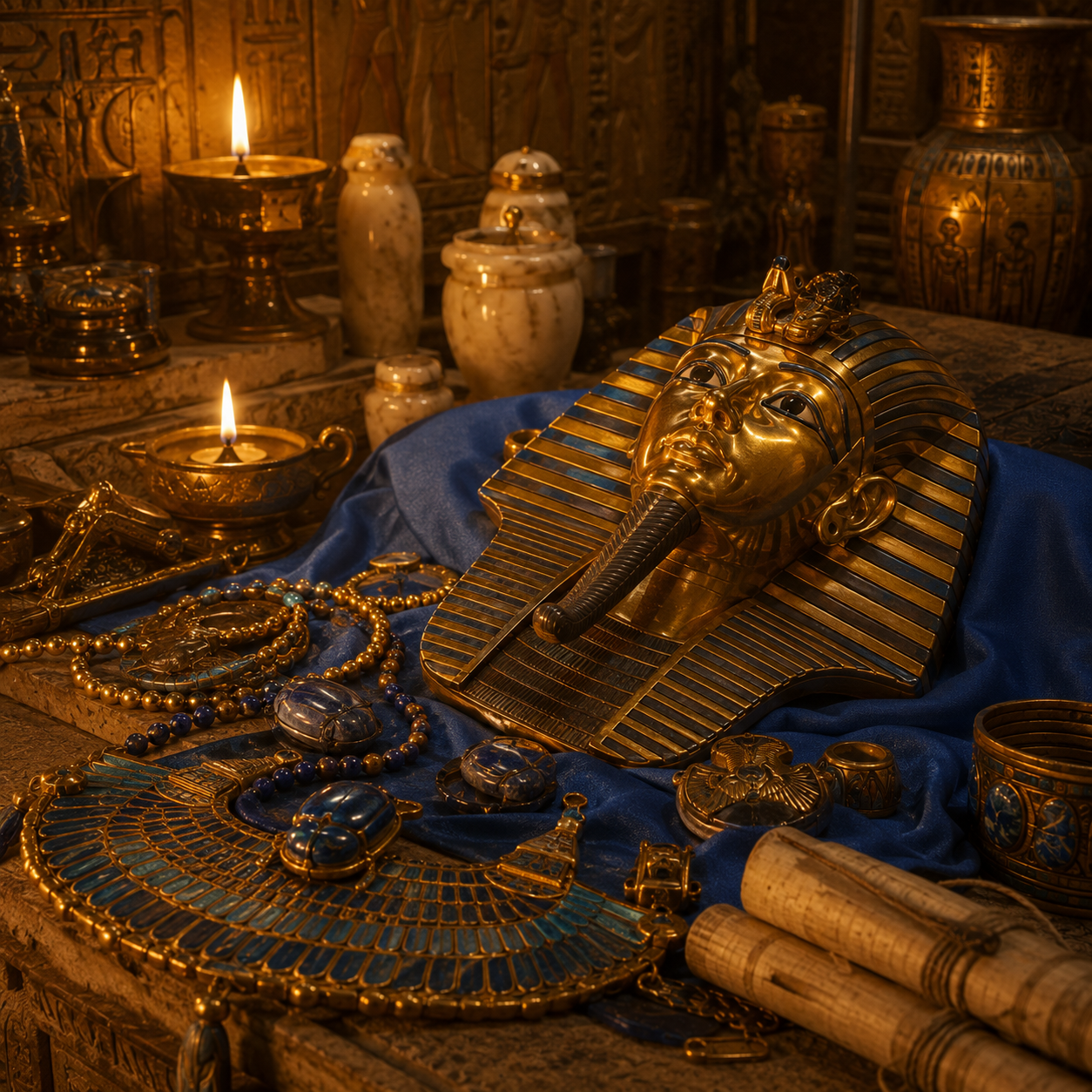
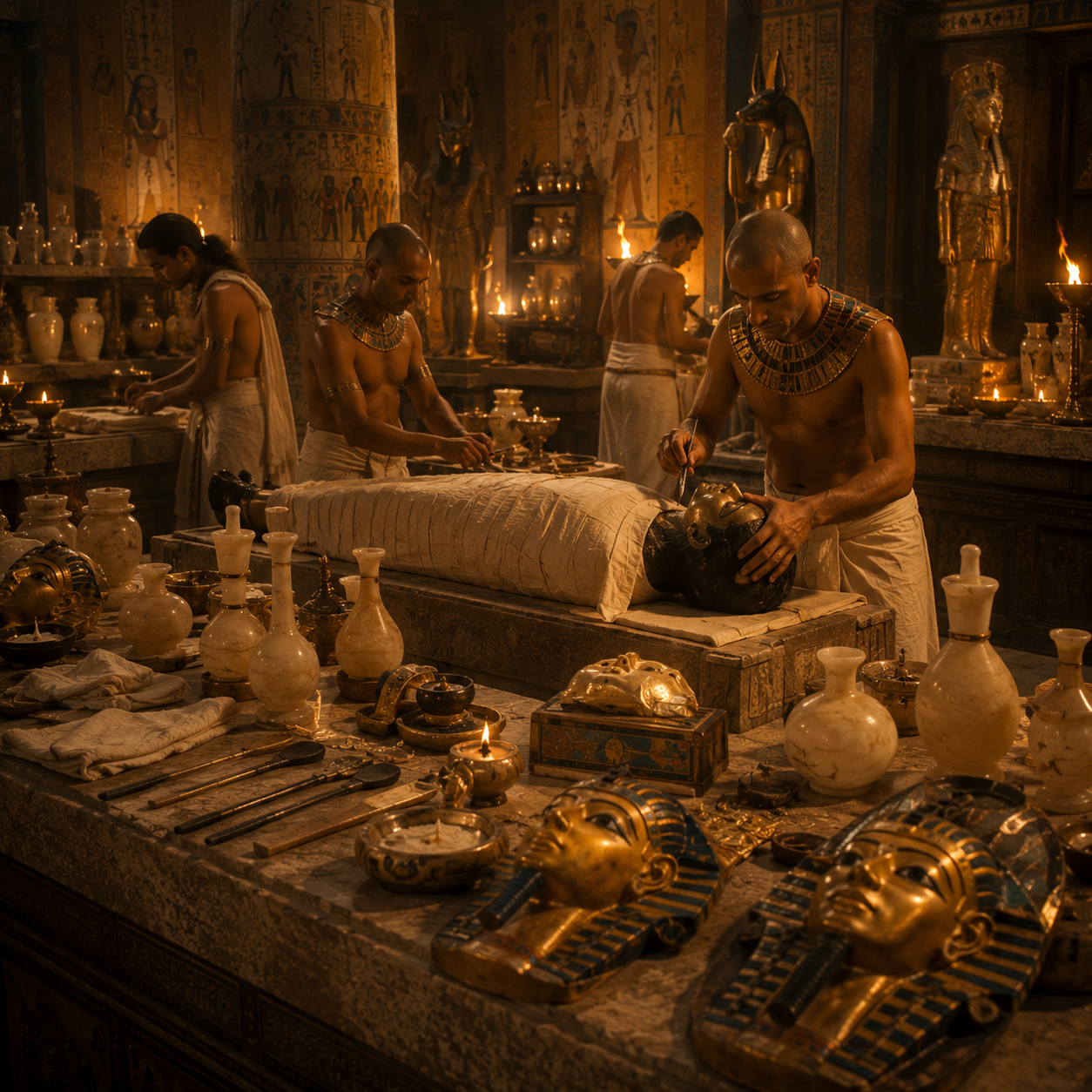
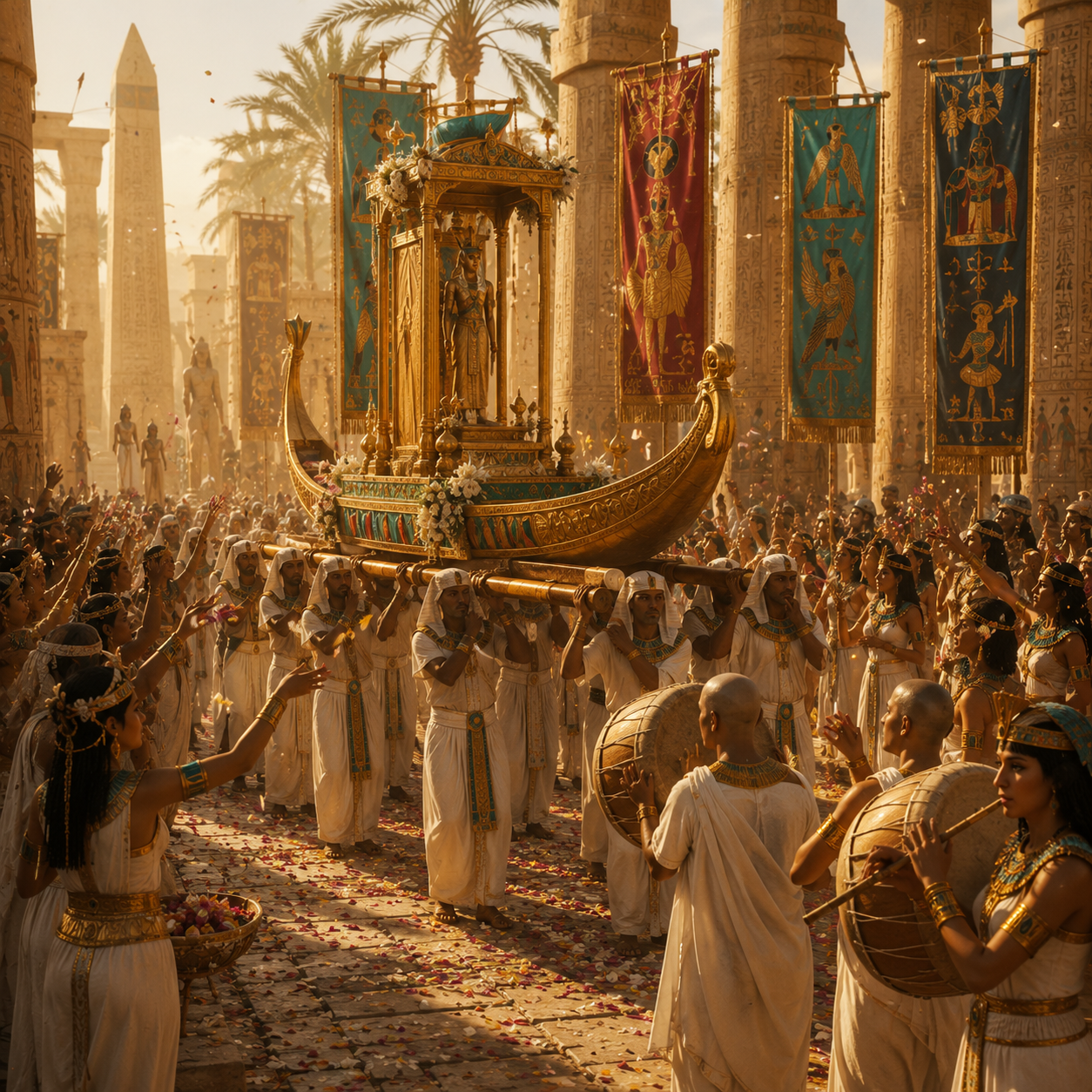
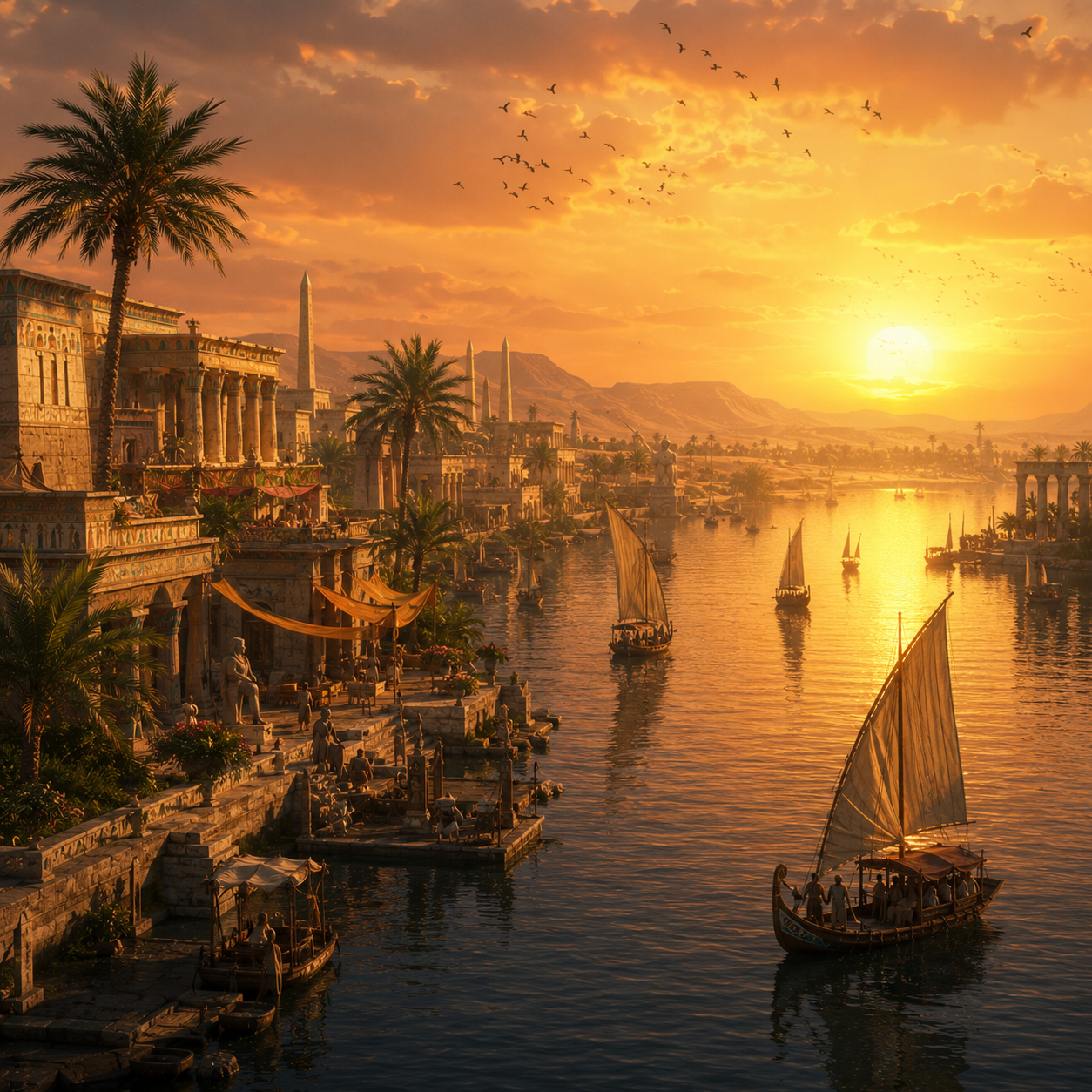
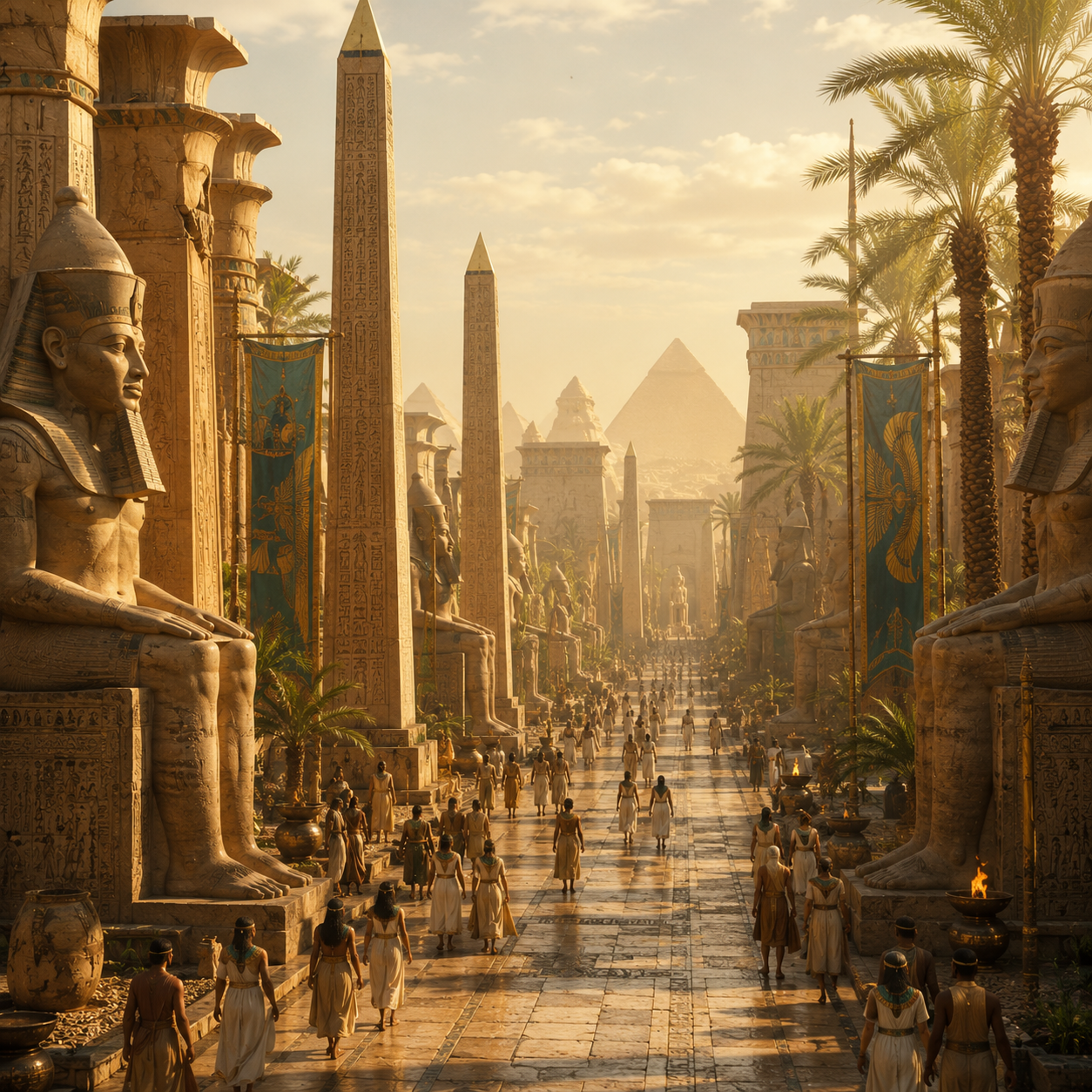
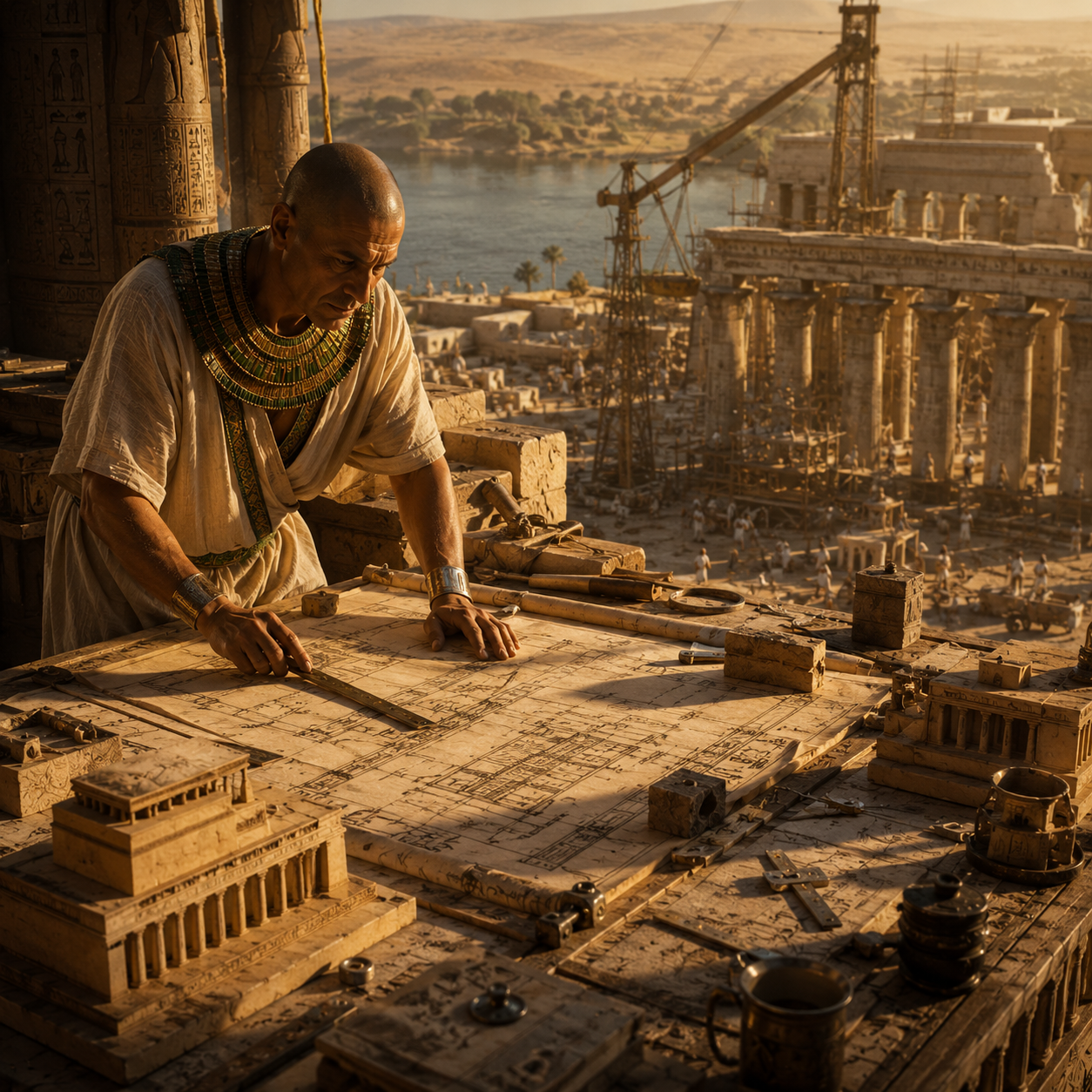
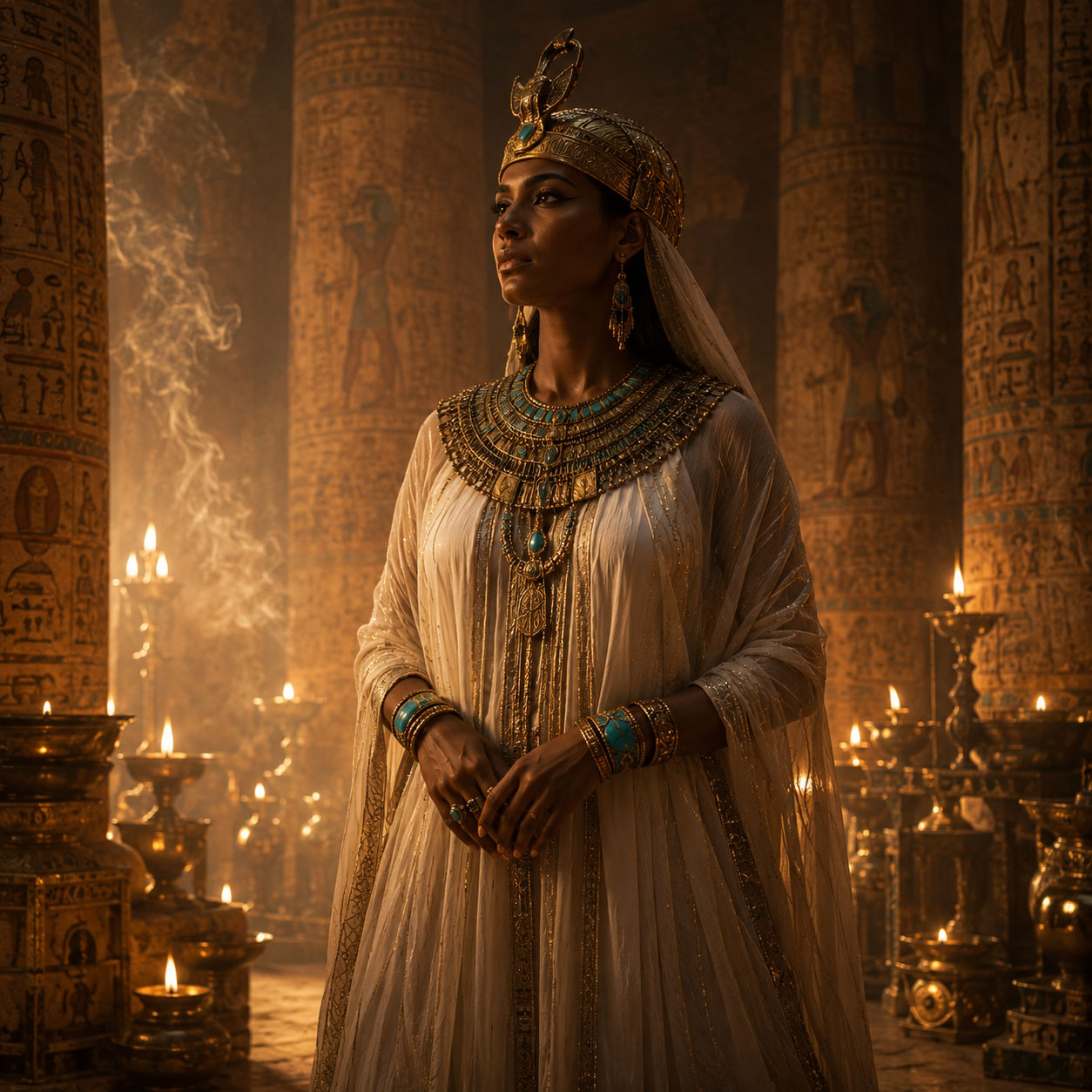
Ancient Egypt is visually rich, filled with golden light, sacred architecture, desert horizons, river journeys, painted tombs, carved stone, linen clothing, jewellery, papyrus scrolls, and symbols of life, death, and power. Use these picture prompts to imagine characters, mysteries, and stories hidden within each scene.
Go Deeper into Ancient Egypt
Ancient Egypt is one of history's most enduring civilisations, offering writers a setting shaped by powerful rulers, monumental architecture, religious devotion, and everyday life along the Nile. While pharaohs, pyramids, and golden treasures often dominate popular imagination, the real richness of Ancient Egyptian storytelling comes from the people who built temples, copied sacred texts, cultivated farmland, traded along the river, served in royal households, and devoted their lives to the gods. From bustling cities and fertile riverbanks to vast deserts and hidden tombs, every part of Egypt provides opportunities for compelling historical fiction.
The Ancient Egyptian world was deeply connected to faith, order, and legacy. Religion influenced government, law, agriculture, medicine, astronomy, and daily routines, while belief in the afterlife shaped everything from monumental tombs to simple family burials. Writers can explore political ambition, succession crises, temple life, military campaigns, diplomacy, trade, family loyalty, forbidden love, mystery, and adventure while creating stories grounded in one of history's most fascinating cultures.
◆ Explore life beyond the royal court. Farmers, fishermen, scribes, artisans, builders, merchants, healers, soldiers, priests, servants, musicians, and craftsmen all offer unique perspectives on Ancient Egyptian society and create opportunities for fresh, original stories.
◆ Let the Nile shape your world. The river controlled farming, transport, trade, religion, and survival. Seasonal flooding influenced every aspect of life and can naturally become part of your story's conflict and atmosphere.
◆ Use historical settings to create immersion. Temples, palace complexes, workers' villages, bustling markets, river harbours, tomb-building sites, desert caravan routes, sacred lakes, and royal archives all provide distinctive locations that feel authentically Egyptian.
◆ Build stories around legacy and remembrance. Ancient Egyptians placed enormous importance on names, monuments, family lineage, written records, and the afterlife. Characters may go to extraordinary lengths to protect their memory—or erase someone else's.
◆ Draw inspiration from religion without relying solely on mythology. Festivals, temple rituals, offerings, astronomy, mummification, sacred animals, oracles, and priesthoods all played important roles in everyday life and can enrich historical fiction naturally.
◆ Create conflict through politics and succession. Rival heirs, ambitious officials, powerful priesthoods, diplomatic marriages, military campaigns, and shifting loyalties all provide believable foundations for historical drama.
◆ Fill your stories with meaningful objects. Papyrus scrolls, carved scarabs, alabaster jars, reed pens, ceremonial jewellery, painted coffins, canopic jars, statues, seals, and beautifully crafted amulets can all become central to your plot.
◆ Remember that Ancient Egypt lasted for thousands of years. Customs, rulers, architecture, and political circumstances changed dramatically over time, giving writers the freedom to choose periods that best suit the stories they want to tell.
Final Thoughts
Ancient Egypt continues to captivate readers because it combines breathtaking landscapes, extraordinary monuments, complex beliefs, and deeply human stories. Beneath the towering pyramids and magnificent temples lived ordinary people striving for security, love, recognition, and purpose while serving powerful rulers and honouring ancient traditions. Whether your story follows a palace scribe, a tomb painter, a priestess, a royal heir, a desert guide, or a village healer, Ancient Egypt offers endless opportunities for unforgettable historical fiction.
These 70 Ancient Egypt Story Ideas explore royal succession, hidden tombs, sacred rituals, Nile expeditions, palace intrigue, forgotten temples, dangerous desert journeys, mysterious artefacts, family loyalty, and the enduring power of memory. Whether you're writing historical fiction, historical mystery, adventure, romance, supernatural fiction, or stories inspired by ancient mythology, these ideas are designed to help you create immersive worlds filled with atmosphere, conflict, and timeless wonder.
If you're looking for even more inspiration, explore the Historical Fiction Writing Hub for story ideas inspired by fascinating periods throughout history, or browse the Creative Writing Archive, where you'll discover hundreds of writing prompts, story ideas, characters, settings, and worldbuilding resources spanning fantasy, mystery, romance, gothic fiction, folklore, science fiction, and many more genres.
Choose Your Next Adventure