70 Ancient Rome Story Ideas: Emperors, Legions & Imperial Intrigue
Ancient Rome is one of history's most compelling settings for fiction, offering vast empires, powerful emperors, ambitious senators, disciplined legions, bustling cities, magnificent temples, sprawling villas, gladiatorial arenas, and political rivalries that could determine the fate of millions. From the crowded streets of Rome itself to distant frontier forts, wealthy merchant ports, military camps, and luxurious country estates, every corner of the Roman world presents opportunities for stories filled with ambition, loyalty, betrayal, honour, and survival.
The Roman Empire was shaped by military conquest, political manoeuvring, engineering, law, trade, religion, and social hierarchy, creating an extraordinary backdrop for historical fiction. Writers can explore senate conspiracies, succession crises, military campaigns, gladiatorial contests, merchant expeditions, espionage, forbidden romance, family dynasties, legal disputes, and everyday life beneath imperial rule. Whether your protagonist is an emperor, senator, legionary, slave, merchant, physician, engineer, priestess, gladiator, or ordinary citizen, Ancient Rome provides endless possibilities for dramatic and deeply human storytelling.
This collection of 70 Ancient Rome Story Ideas is designed as a complete creative toolkit, featuring plot prompts, title ideas, opening lines, closing lines, character ideas, setting prompts, and atmospheric picture prompts. Explore marble forums, military fortresses, bustling marketplaces, hidden catacombs, lavish villas, gladiatorial arenas, frontier outposts, sacred temples, and stories where power, duty, and personal ambition collide beneath the banners of Rome.
If you're looking for even more inspiration, explore the Historical Fiction Writing Hub for story ideas inspired by fascinating periods throughout history, or browse the Creative Writing Archive for hundreds of creative writing resources spanning historical fiction, fantasy, mystery, romance, gothic fiction, folklore, science fiction, and many more genres.
1. Plot Prompts
Ancient Rome was a civilisation built on ambition, discipline, conquest, and political power. These plot prompts explore imperial politics, military campaigns, legal intrigue, family loyalty, and the lives of ordinary people beneath the shadow of one of history's greatest empires.
A young senator uncovers evidence that a respected ally is plotting to assassinate the emperor.
A legionary stationed on a distant frontier receives orders that conflict with everything he believes honour demands.
A wealthy merchant discovers a shipment intended for the imperial treasury has mysteriously disappeared before reaching Rome.
A gladiator wins unexpected fame in the arena, attracting dangerous attention from powerful political figures.
A physician serving the imperial household begins to suspect that a series of unexplained illnesses have been carefully engineered.
A noblewoman secretly gathers evidence to prove her family was falsely accused of treason decades earlier.
An engineer overseeing the construction of a monumental aqueduct discovers an ancient shrine buried beneath its foundations.
A courier carrying military intelligence must cross hostile territory before an invasion reaches Rome's borders.
A former slave unexpectedly inherits a fortune, forcing powerful families to question everything they thought they knew about his past.
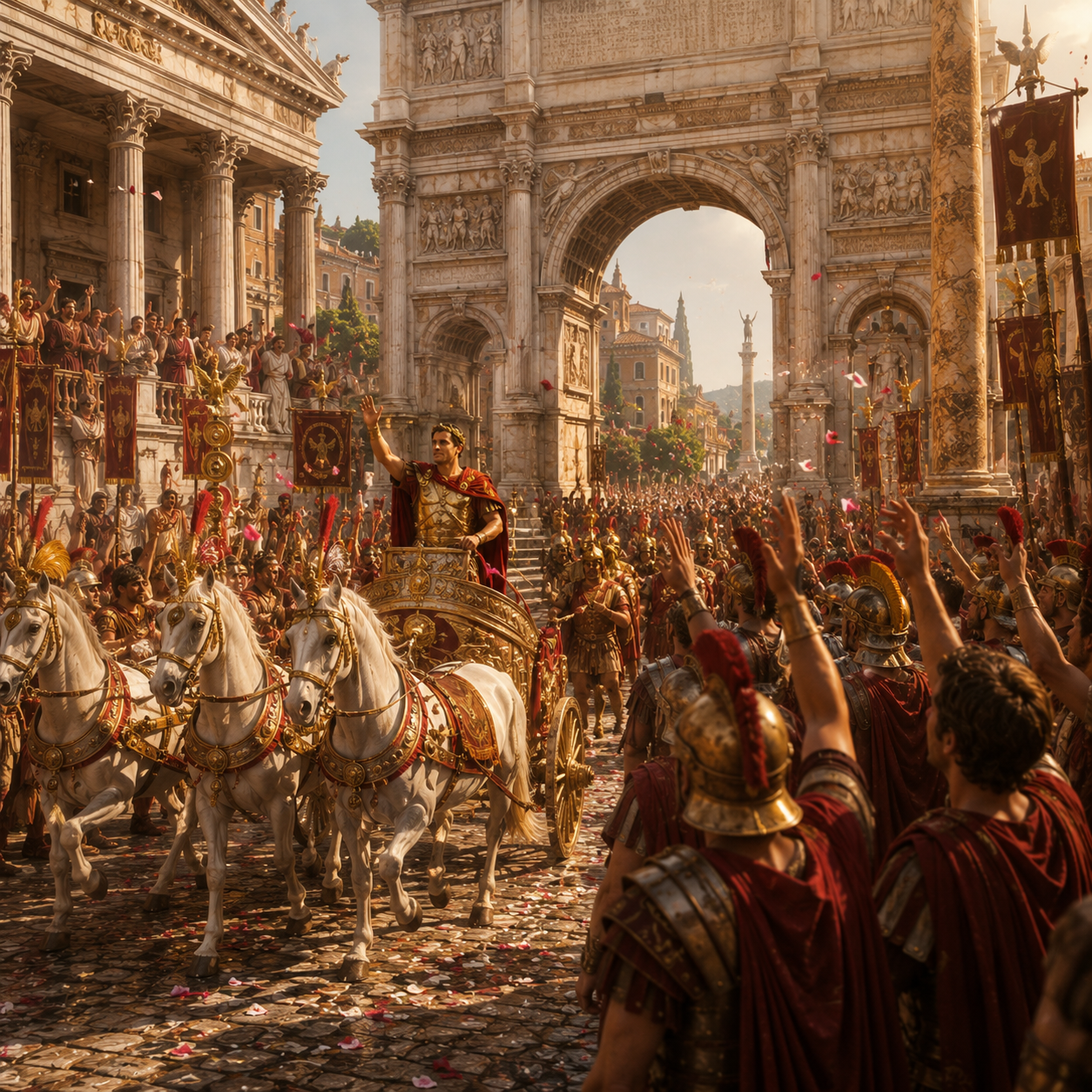
During a triumph celebrating military victory, an anonymous warning suggests the next emperor will never reach the throne.
2. Title Ideas
Ancient Rome titles should evoke imperial power, military honour, political ambition, and the grandeur of one of history's greatest civilisations.
Beneath the Eagle Standard
The Emperor's Shadow
Blood Beneath the Forum
The Last Tribune
The House of Marble
The Forgotten Legion
Beneath the Laurel Crown
The Roads of Rome
The Senator's Secret
Ashes of the Empire
3. Opening Lines
Ancient Rome offers dramatic openings filled with power, ceremony, danger, and political uncertainty. These opening lines immediately immerse readers in the world of emperors, senators, soldiers, and citizens.
Rome celebrated victories long before it learned their true cost.
The emperor smiled only once during the triumph.
Every senator knew someone would not survive the day's debate.
My father always said the roads belonged to Rome, but the shadows belonged to everyone else.
The eagle standard returned without the men who had carried it.
I first entered the Colosseum believing courage could defeat destiny.
The letter bearing the imperial seal should never have reached my hands.
The aqueduct uncovered more than water.
No one questioned why the general refused his victory parade.
The statue collapsed moments before the emperor arrived.
4. Closing Lines
Ancient Rome endings often reflect the lasting influence of legacy, reputation, and empire, reminding readers that history remembers only fragments of the truth.
Rome endured because someone chose silence.
The empire would remember the victory, but never the sacrifice.
My name disappeared from every official record except one.
Another emperor claimed the throne before sunrise.
The eagle still flew above the city.
History honoured the wrong hero once again.
Marble outlasted memory.
Some empires fall long before their walls do.
The road carried me away from Rome, but never beyond its reach.
The Senate recorded the decision, though not the truth behind it.
5. Character Ideas
Ancient Rome was filled with people from every level of society, each navigating power, duty, ambition, and survival in different ways.
A young senator forced to choose between family loyalty and the future of the Republic.
A veteran legionary struggling to adapt after decades serving on distant frontiers.
A gladiator whose growing popularity threatens influential political figures.
A physician trusted with treating both emperors and their enemies.
A merchant controlling trade across the Mediterranean while hiding dangerous secrets.
An engineer responsible for constructing one of Rome's greatest public works.
A Vestal Virgin protecting a secret capable of destabilising the empire.
A palace servant who quietly witnesses every political conspiracy.
A provincial governor balancing justice with the demands of Rome.
A courier whose ordinary deliveries gradually become matters of imperial importance.
6. Setting Ideas
Ancient Rome stretched across continents, offering magnificent cities, frontier settlements, military camps, temples, villas, and ports that all provide rich historical settings.
The bustling Forum Romanum during a heated political debate.
A frontier legionary fort overlooking hostile territory.
A magnificent marble villa outside Rome surrounded by vineyards and olive groves.
The Colosseum preparing for a day of gladiatorial games.
A crowded Mediterranean harbour filled with merchants from across the empire.
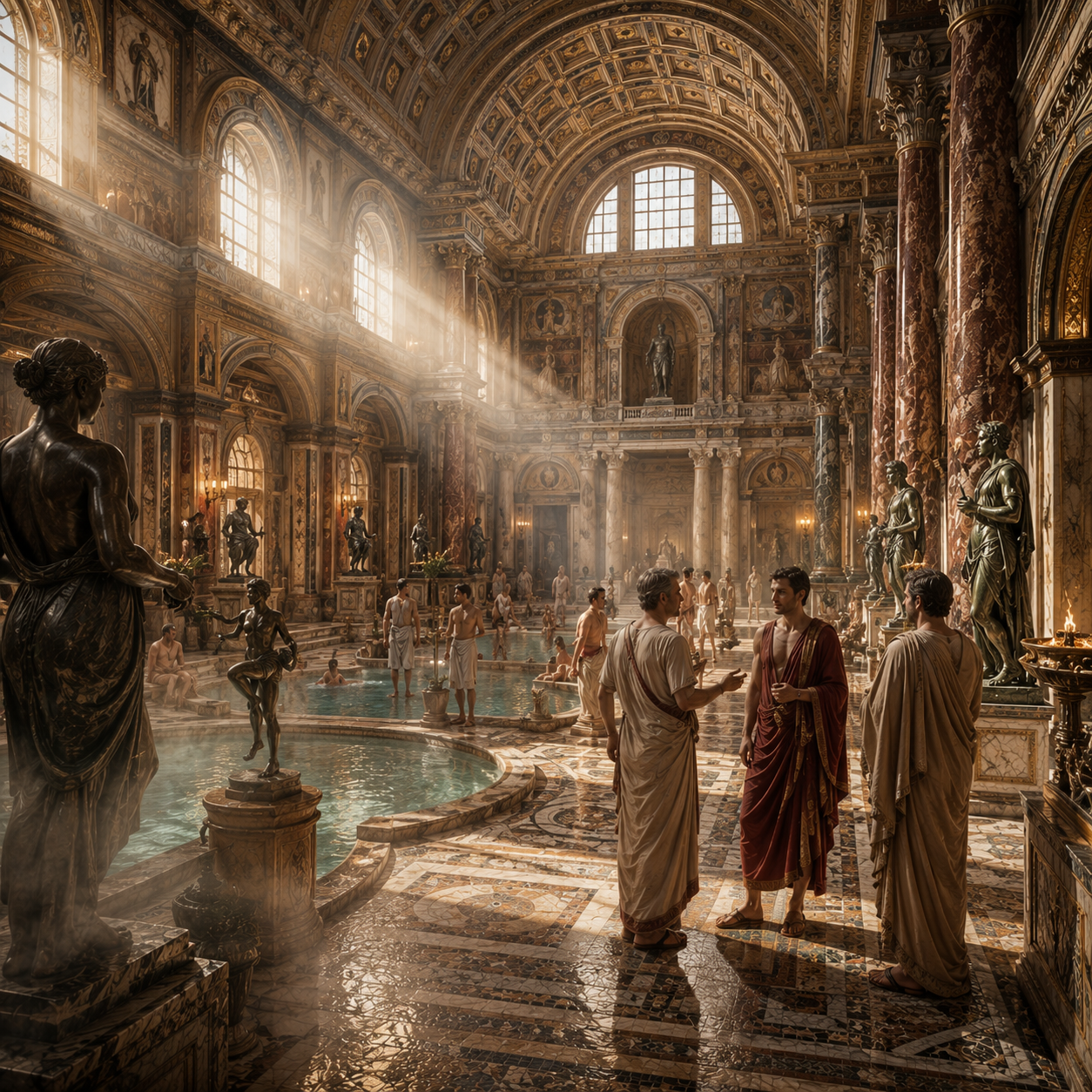
A luxurious public bathhouse where politics are discussed as freely as business.
A sacred temple overlooking the city's rooftops.
A hidden network of catacombs beneath Rome.
A military road stretching across distant provinces.
The imperial palace overlooking the capital at sunset.
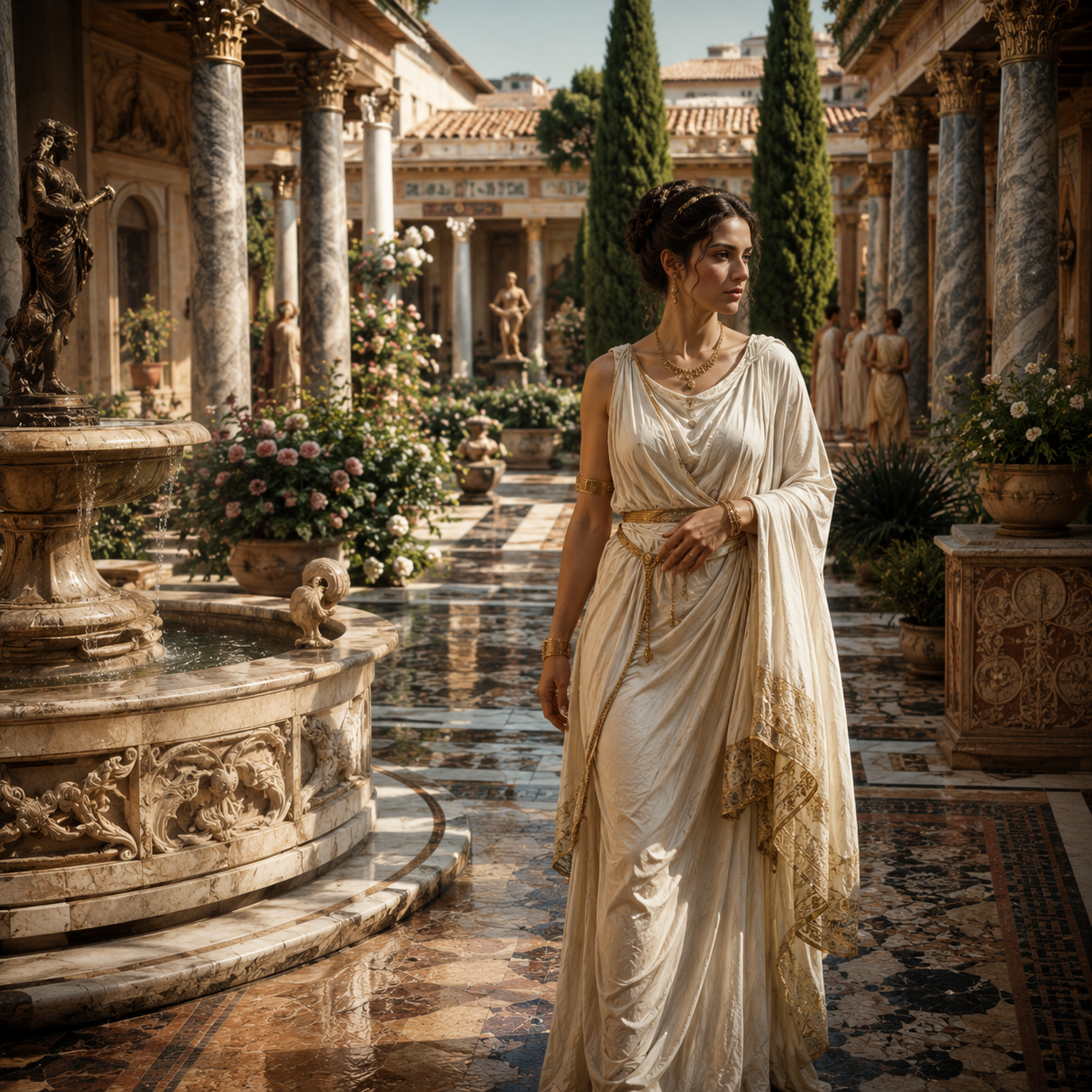
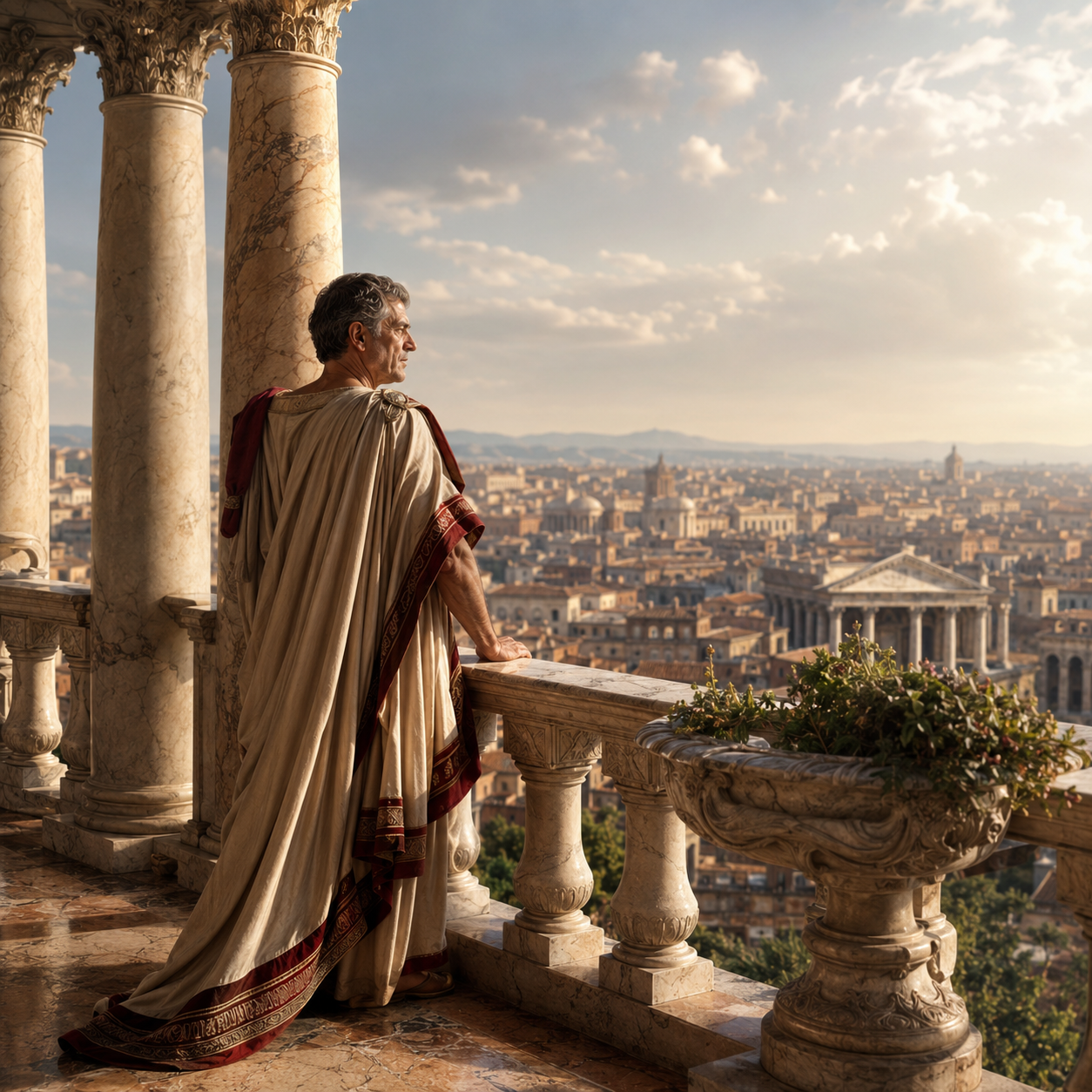
7. Picture Prompts
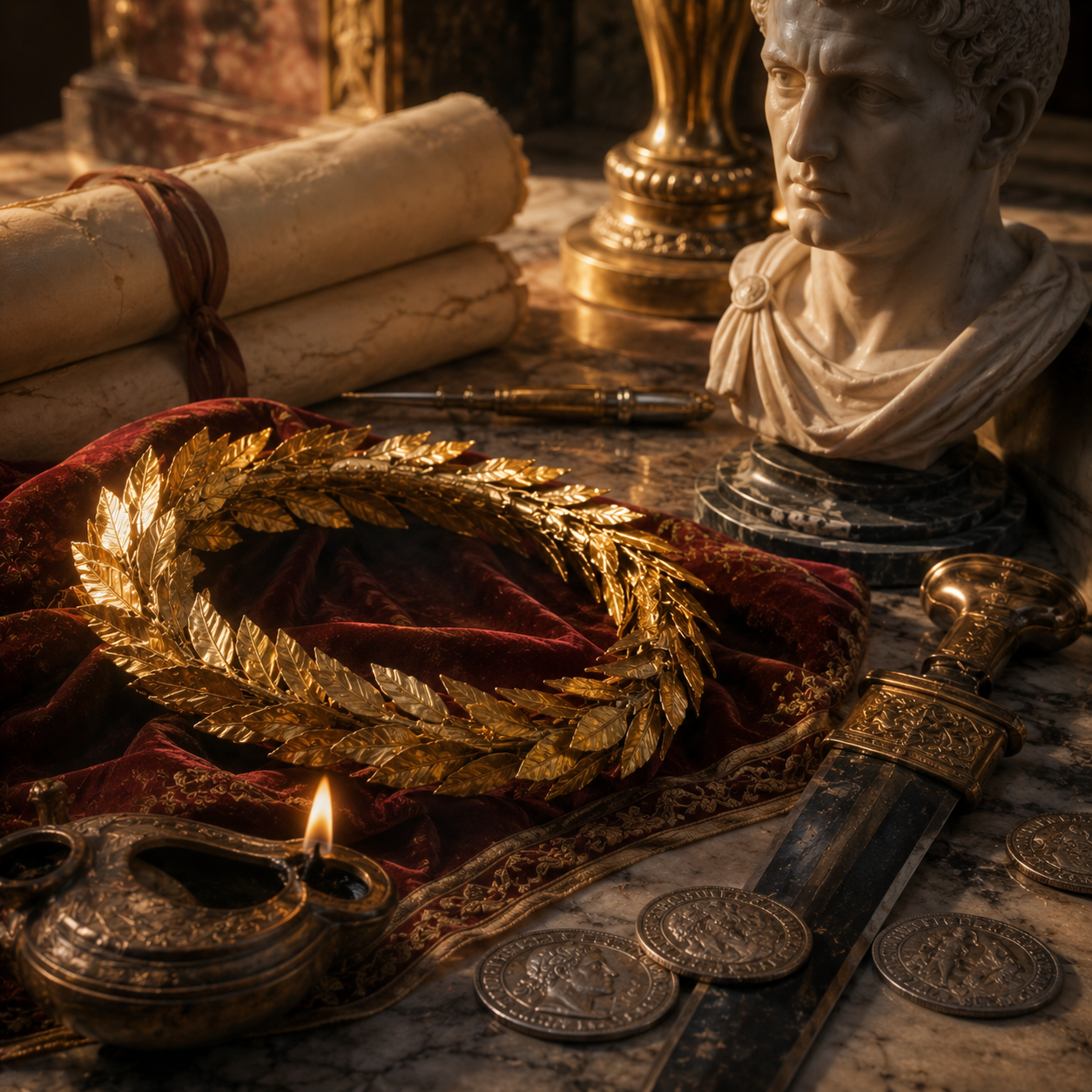
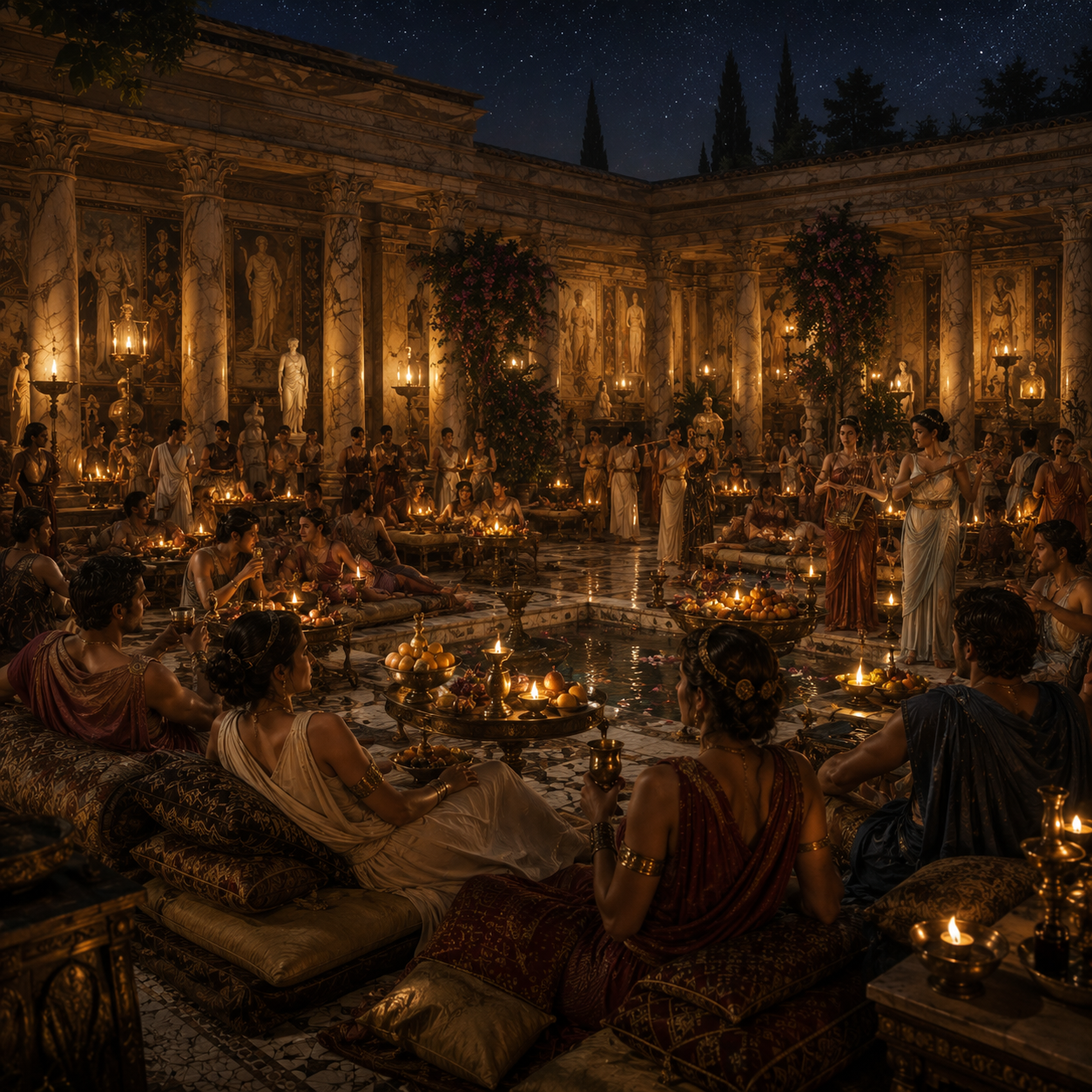
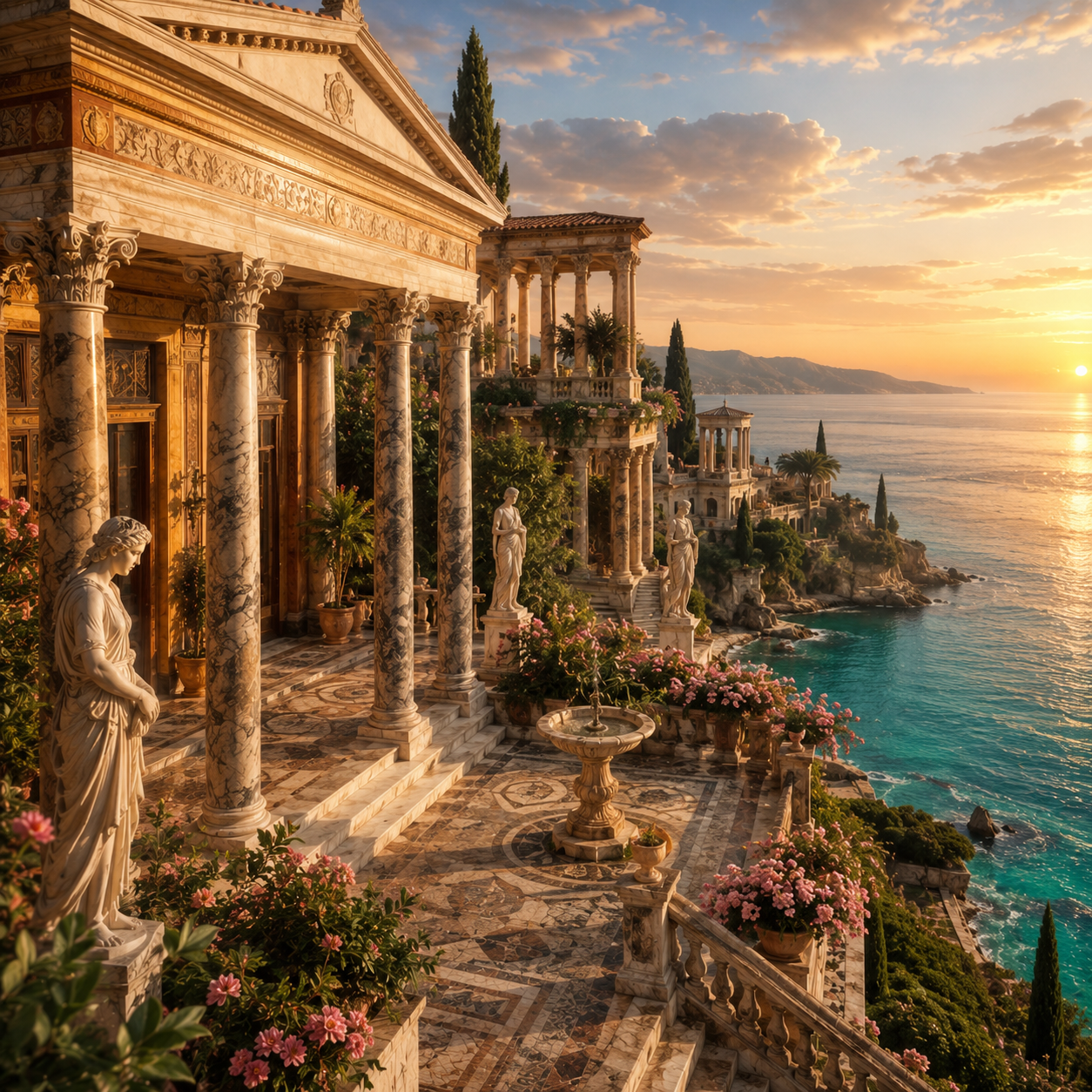
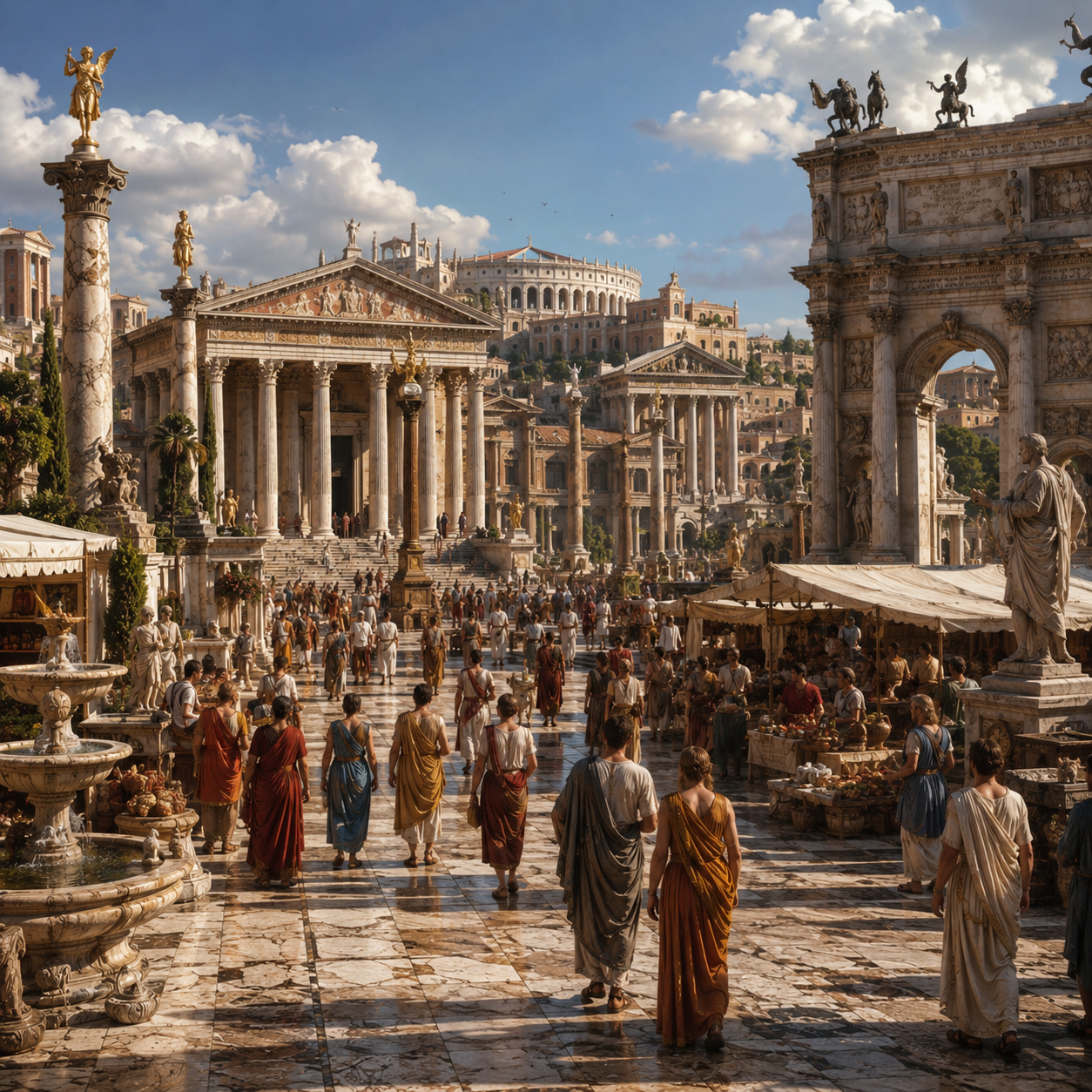
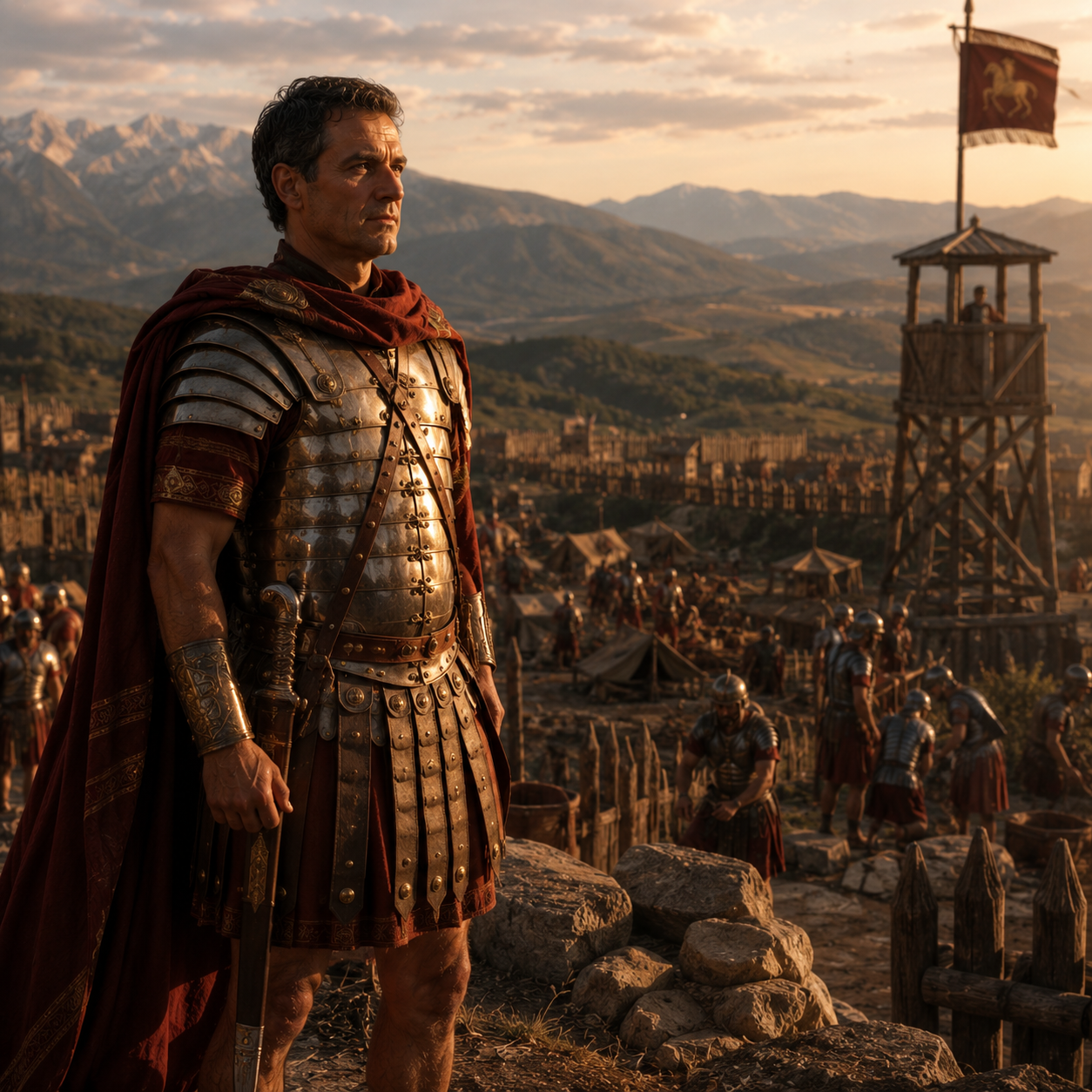
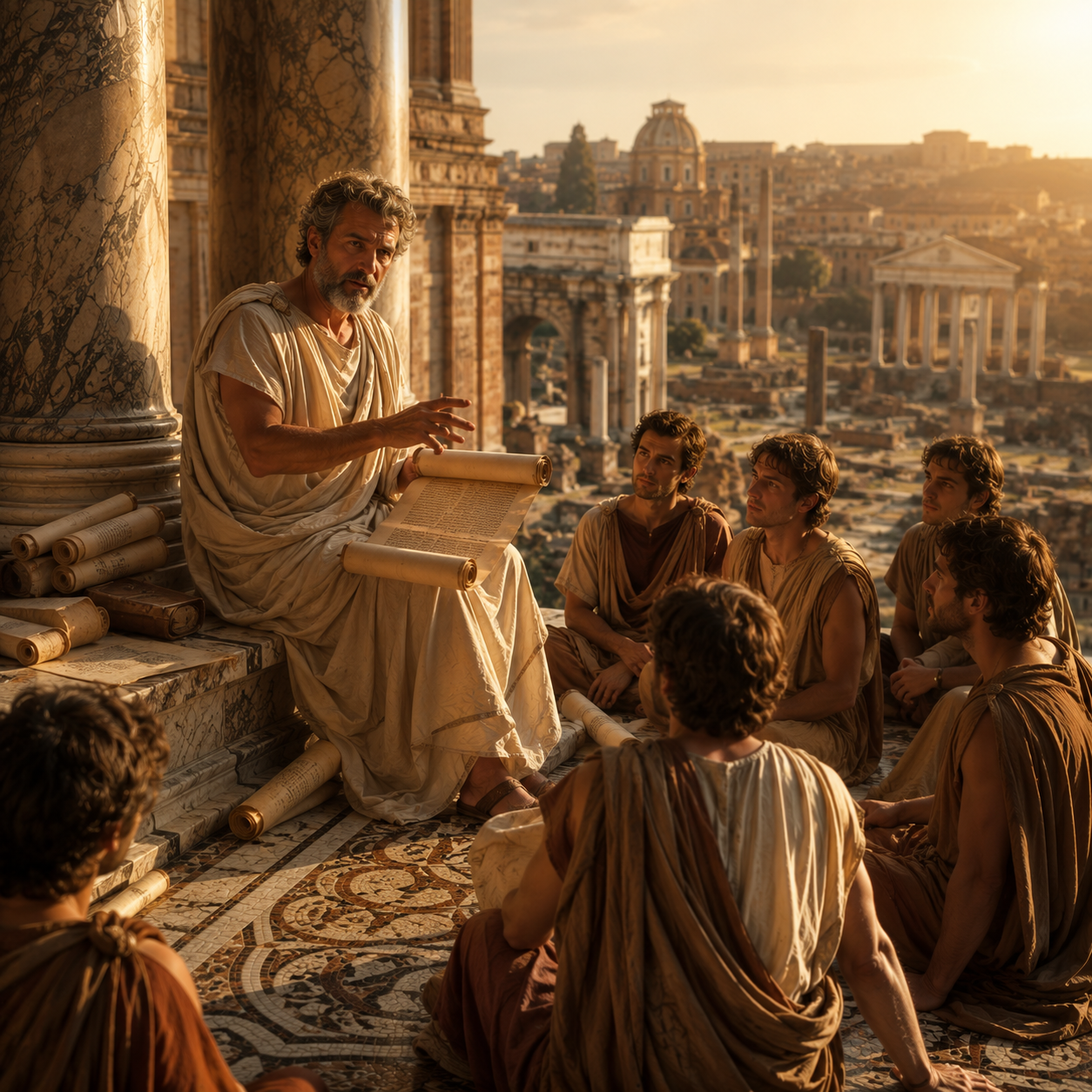
Ancient Rome combines monumental architecture, disciplined military life, bustling cities, and everyday moments beneath imperial rule. These scenes invite stories of ambition, honour, conspiracy, and the extraordinary lives hidden within one of history's greatest empires.
Go Deeper into Ancient Rome
Ancient Rome offers writers one of the most varied historical settings imaginable. Spanning centuries and stretching across Europe, North Africa, and the Middle East, the Roman world combined military power, political ambition, engineering, trade, law, religion, and culture on an extraordinary scale. While emperors, gladiators, and famous battles often dominate popular imagination, countless stories can also be found among merchants, physicians, architects, scribes, farmers, slaves, senators, artisans, and soldiers whose everyday lives helped sustain the empire.
The Roman world was driven by honour, reputation, family loyalty, civic duty, and political influence. Public life mattered enormously, while private rivalries often shaped the future of the empire behind closed doors. Whether you're writing a sweeping political epic, a military adventure, a historical mystery, a romance, or a character-driven drama, Ancient Rome provides endless opportunities for compelling historical fiction grounded in real human conflicts.
◆ Explore life beyond the imperial palace. Merchants, engineers, teachers, lawyers, physicians, slaves, artisans, gladiators, sailors, and ordinary citizens all experienced Rome differently, offering fresh perspectives on familiar history.
◆ Use the empire's vast geography. Stories can unfold in bustling Rome, frontier forts in Britain, Mediterranean ports, wealthy villas, mountain settlements, North African cities, or isolated military outposts. The diversity of the Roman Empire allows every setting to feel unique.
◆ Build conflict around politics and power. Senate debates, succession disputes, military promotions, corruption, conspiracies, legal trials, and rival noble families all provide natural foundations for dramatic storytelling.
◆ Let Roman engineering become part of the narrative. Aqueducts, roads, bridges, amphitheatres, bathhouses, temples, villas, and fortifications are more than impressive landmarks—they shape travel, trade, communication, and everyday life.
◆ Draw inspiration from Roman society. Patronage, citizenship, slavery, military service, family honour, religious festivals, education, public entertainment, and legal traditions all offer authentic details that bring historical settings to life.
◆ Create morally complex characters. Roman society rewarded ambition, loyalty, discipline, and achievement, but these values often conflicted with compassion, justice, family duty, and personal freedom. Characters should face difficult choices where no outcome is entirely right or wrong.
◆ Fill your stories with meaningful objects. Wax tablets, legionary standards, laurel wreaths, mosaics, marble statues, military diplomas, signet rings, bronze coins, ceremonial armour, scrolls, and family heirlooms can all become powerful symbols within your story.
◆ Remember that Rome changed dramatically over time. The Republic, the early Empire, the height of imperial expansion, and the later Empire all offer distinct political systems, cultures, and historical events. Choosing a specific period will help your world feel more authentic and immersive.
Final Thoughts
Ancient Rome remains one of the world's greatest sources of historical inspiration because it combines extraordinary achievements with deeply human stories. Beneath its marble temples, triumphal arches, military victories, and imperial ceremonies lived people driven by ambition, loyalty, love, fear, duty, and the desire to leave their mark on history. Whether your story follows a senator navigating dangerous politics, a legionary guarding the empire's frontiers, a gladiator fighting for freedom, a merchant travelling across the Mediterranean, or an ordinary citizen caught in extraordinary events, Ancient Rome offers endless opportunities for unforgettable storytelling.
These 70 Ancient Rome Story Ideas explore imperial politics, military campaigns, gladiatorial contests, frontier adventures, family rivalries, hidden conspiracies, legal conflicts, merchant expeditions, engineering marvels, and the everyday lives of those who lived beneath the power of Rome. Whether you're writing historical fiction, historical mystery, adventure, romance, political drama, or mythology-inspired stories, these ideas are designed to help you create immersive worlds filled with atmosphere, conflict, and timeless historical detail.
If you're looking for even more inspiration, explore the Historical Fiction Writing Hub for story ideas inspired by fascinating periods throughout history, or browse the Creative Writing Archive, where you'll discover hundreds of writing prompts, story ideas, characters, settings, and worldbuilding resources spanning fantasy, mystery, romance, gothic fiction, folklore, science fiction, and many more genres.
Choose Your Next Adventure