70 World War I Writing Prompts: Story Ideas, Characters, Settings & Plot Inspiration
The First World War transformed the modern world, reshaping nations, societies, and millions of individual lives. Fought between 1914 and 1918, it stretched from the muddy trenches of the Western Front to the deserts of the Middle East, the skies above Europe, the oceans of the Atlantic, and the towns and villages of the Home Front. It was a conflict defined not only by devastating battles, but also by extraordinary courage, technological innovation, impossible moral choices, and the resilience of ordinary people living through extraordinary times.
World War I has inspired some of history's most powerful literature and historical fiction. Erich Maria Remarque's All Quiet on the Western Front offers an unforgettable portrayal of soldiers enduring the horrors of trench warfare, while Sebastian Faulks' Birdsong combines romance with the brutal realities of the Somme. Michael Morpurgo's Private Peaceful explores friendship, family, and sacrifice, and Pat Barker's Regeneration examines the psychological scars carried by those who returned from the front. Alongside these novels, the poetry of Wilfred Owen, Siegfried Sassoon, Isaac Rosenberg, Rupert Brooke, and many others continues to shape our understanding of the war's human cost.
Yet the First World War was far more than life in the trenches. Nurses worked tirelessly in overcrowded hospitals, codebreakers intercepted enemy communications, pilots fought in the skies during the birth of aerial warfare, merchant sailors faced constant danger at sea, and families on the Home Front endured rationing, loss, and uncertainty. From Gallipoli and Passchendaele to military hospitals, munitions factories, intelligence offices, and quiet English villages forever changed by the departure of their young men, the Great War offers countless perspectives for compelling historical fiction.
This collection of 70 World War I Writing Prompts is designed as a complete creative toolkit, featuring plot hooks, title ideas, opening lines, closing lines, character ideas, setting prompts, and cinematic visual inspiration. Whether you're writing an emotional family saga, a military adventure, a historical mystery, a wartime romance, or a story of survival and remembrance, these prompts will help you create authentic historical fiction that captures both the devastation and the enduring humanity of the Great War.
If you're looking for even more historical inspiration, explore the Historical Fiction Writing Hub or browse the Creative Writing Archive, where you'll find hundreds of creative writing prompts, story ideas, character inspiration, and genre resources to help bring every era of history to life.
1. Plot Hooks
The First World War reached far beyond the trenches, affecting soldiers, nurses, civilians, families, and entire nations. These plot hooks explore courage, sacrifice, espionage, survival, friendship, loss, and the extraordinary human stories that emerged from one of history's most devastating conflicts.
Write about two childhood friends who find themselves fighting on opposite sides of the same battlefield.
Write about a nurse working in a casualty clearing station who begins recognising wounded soldiers from her hometown.
Write about a young code clerk who intercepts a message that could change the course of an entire campaign.
Write about a messenger pigeon that repeatedly returns carrying notes from a soldier officially listed as missing.
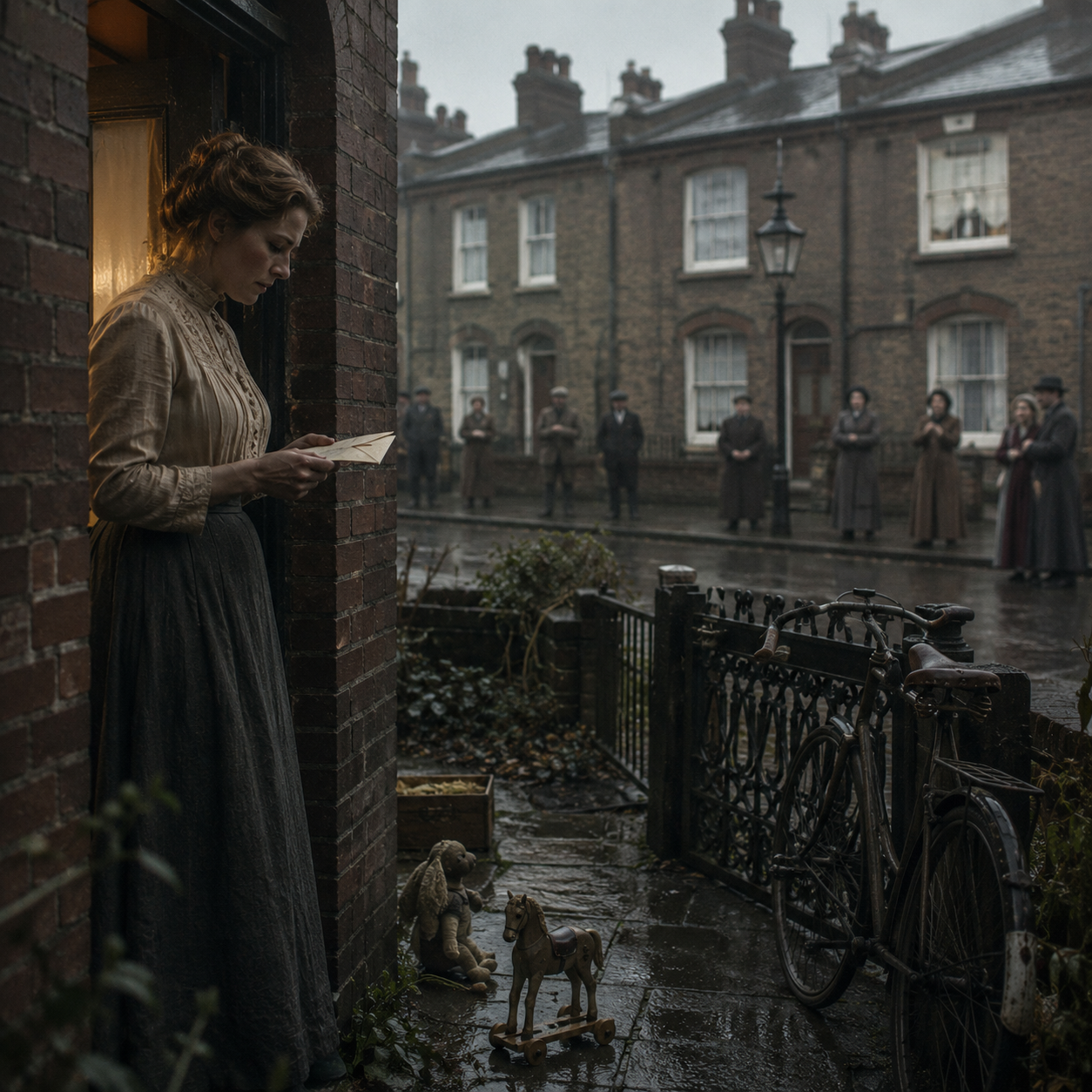
Write about a family on the Home Front who continue receiving letters from their son months after the War Office announced his death.
Write about an Australian soldier arriving at Gallipoli believing the war will be over by Christmas.
Write about an archaeologist whose excavation is interrupted by the outbreak of war, forcing them to become an intelligence officer in the Middle East.
Write about an ambulance driver who discovers a wounded enemy officer carrying documents that neither side can afford to lose.
Write about a young woman working in a munitions factory who uncovers evidence of sabotage among her colleagues.
Write about a pilot flying one of Britain's earliest fighter aircraft who becomes obsessed with the mysterious ace who always spares his life.
2. Title Ideas
World War I stories often balance hope and loss, courage and fear, remembrance and sacrifice. These titles evoke the emotional and historical atmosphere of the Great War.
Beyond the Trenches
Before the Last Whistle
Letters from No Man's Land
The Poppy Field
Until the Guns Fell Silent
Beneath the Broken Sky
The Winter Offensive
Where the Larks Once Sang
The Final Telegram
After Armistice
3. Opening Lines
A World War I story should immediately immerse readers in uncertainty, duty, and the rapidly changing world of 1914–1918. These opening lines introduce conflict, mystery, and emotion from the very first sentence.
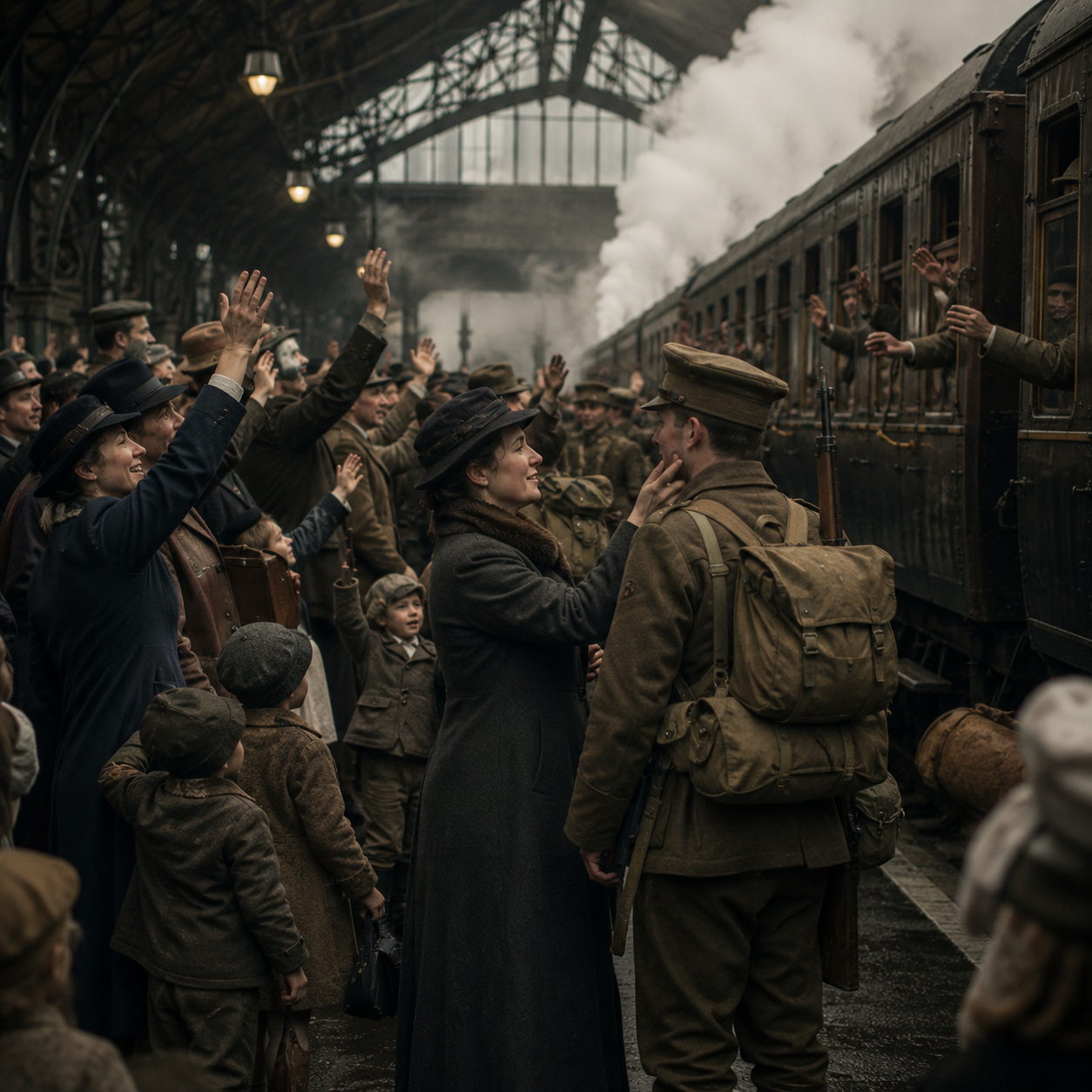
The train station was crowded with cheering families who had no idea how few of us would return.
The guns had fallen silent for only an hour when we discovered the abandoned trench.
Mother's final letter arrived the same morning the shells began falling.
Every man in the village volunteered except my brother.
The pilot removed his goggles, smiled at me across enemy lines, and flew away.
The telegram arrived before breakfast, though no one dared open it.
We were told the offensive would last a single day.
The poppies had begun to bloom where the battlefield had once been.
I realised the war had changed me when I could no longer remember what silence sounded like.
The diary belonged to a soldier whose name appeared on both armies' casualty lists.
4. Closing Lines
World War I endings often reflect remembrance, reconciliation, survival, or the lasting impact of loss. These closing lines leave readers considering the human cost long after the final page.
The church bells rang for peace, but many of us never truly left the trenches.
I finally buried his final letter beside the poppies he never lived to see.
The medals remained polished long after the memories began to fade.
We survived the war, but none of us returned home unchanged.
Every Armistice Day, someone still leaves flowers where the trench once stood.
His name was carved into the memorial before he walked through the village gates.
The final page of the diary ended on the morning the guns fell silent.
We never found his grave, only the stories he left behind.
The whistle blew once more, this time calling us home.
When the last veteran was gone, the memories remained.
5. Character Ideas
The Great War touched every corner of society. These characters represent the soldiers, civilians, medical staff, volunteers, and ordinary people whose lives were forever altered by the conflict.
A young lieutenant struggling to lead men older and more experienced than himself.
A Voluntary Aid Detachment nurse determined to save as many lives as possible despite overwhelming conditions.
A Welsh coal miner turned tunneller digging beneath enemy trenches.
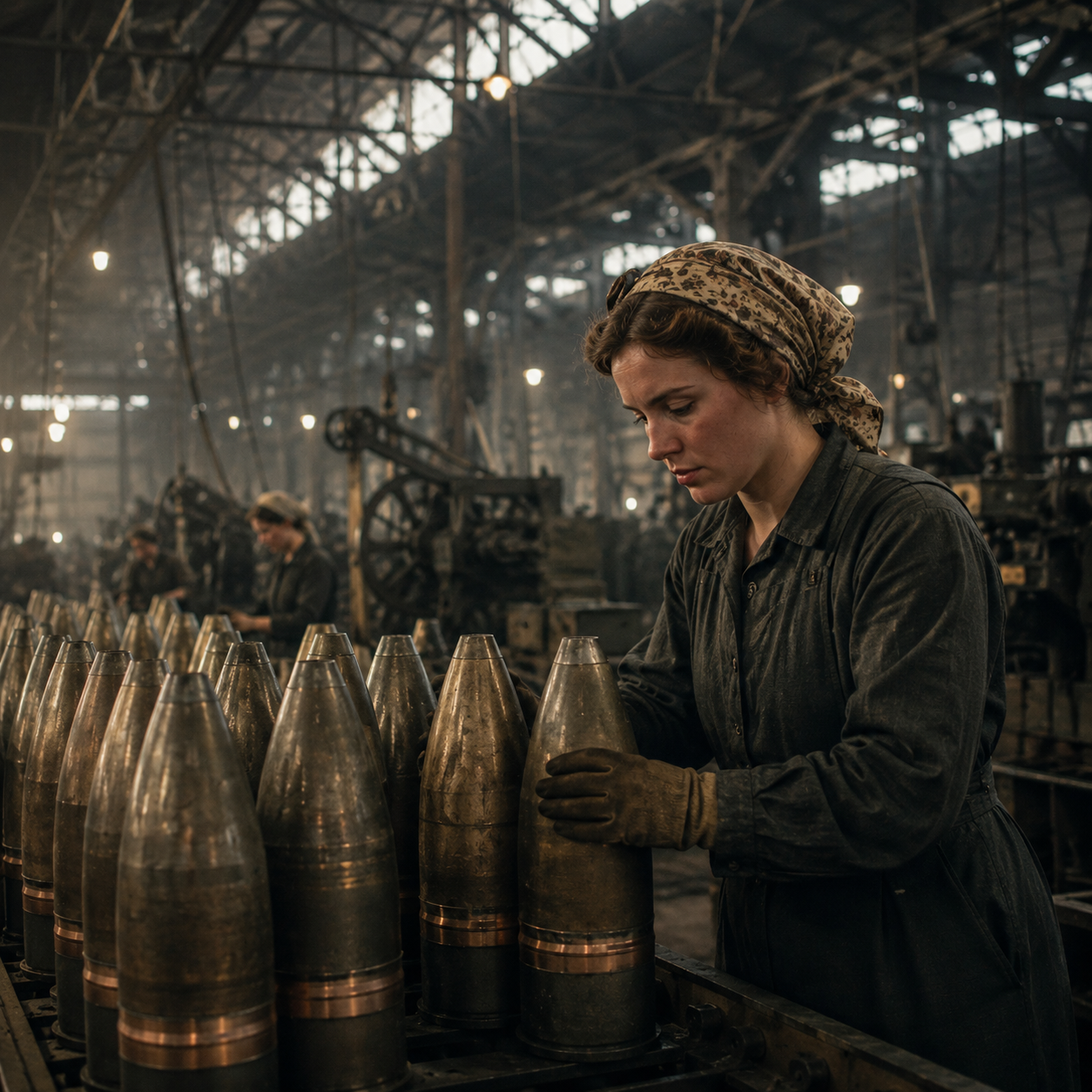
A female munitions worker risking her health to supply the war effort.
A war correspondent determined to report the truth despite strict military censorship.
A German medical officer secretly treating wounded soldiers regardless of nationality.
A Canadian sniper wrestling with the psychological burden of his remarkable accuracy.
A teenage messenger delivering urgent dispatches across dangerous battlefields.
A French farmer whose land becomes the front line for four long years.
A blind veteran learning to rebuild his life after returning home.
6. Setting Ideas
World War I unfolded across an extraordinary variety of landscapes, from muddy trenches and ruined villages to military hospitals and bustling cities supporting the war effort. These settings provide authentic backdrops for historical fiction.
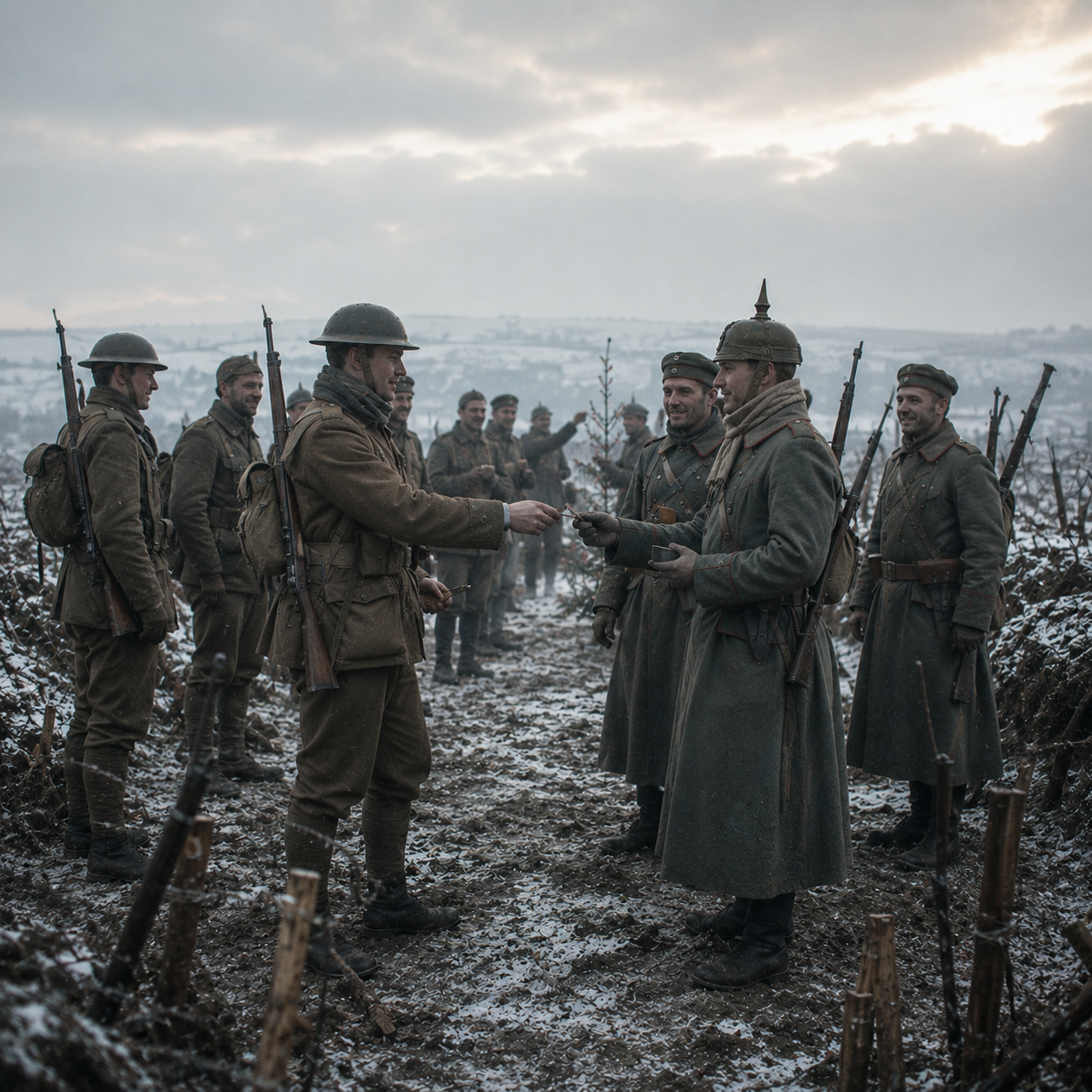
A trench overlooking No Man's Land during a freezing winter.
A casualty clearing station operating around the clock behind the front lines.
A peaceful English village preparing to welcome soldiers home after the Armistice.
A sprawling munitions factory employing thousands of women.
A military headquarters hidden within an old French château.
A field of shell craters slowly filling with wildflowers.
A Royal Flying Corps airfield where fragile biplanes depart each dawn.
A hospital ship crossing the English Channel filled with wounded soldiers.
A railway station crowded with troops leaving for the Western Front.
A ruined Belgian town abandoned after years of relentless shelling.
7. Picture Prompts
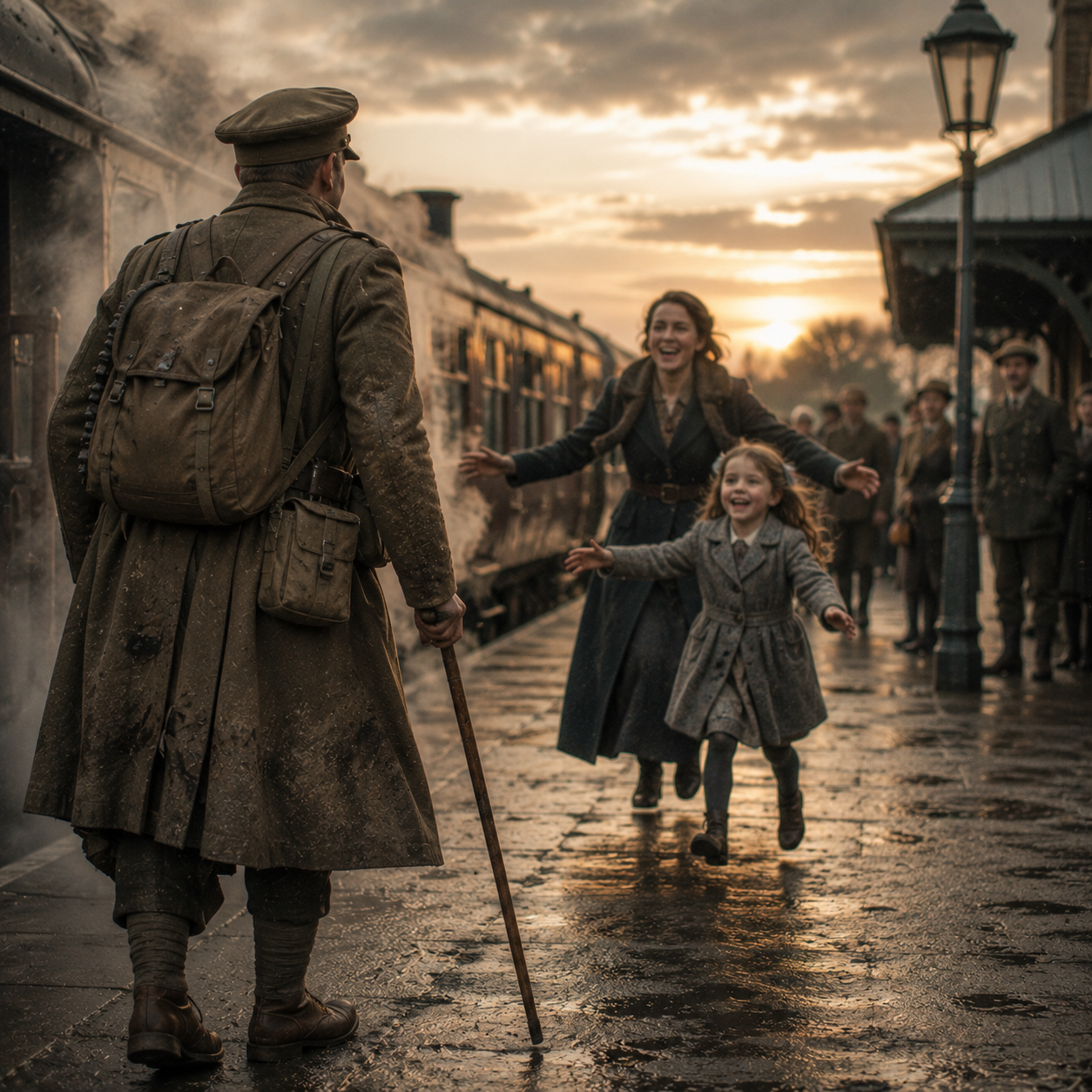
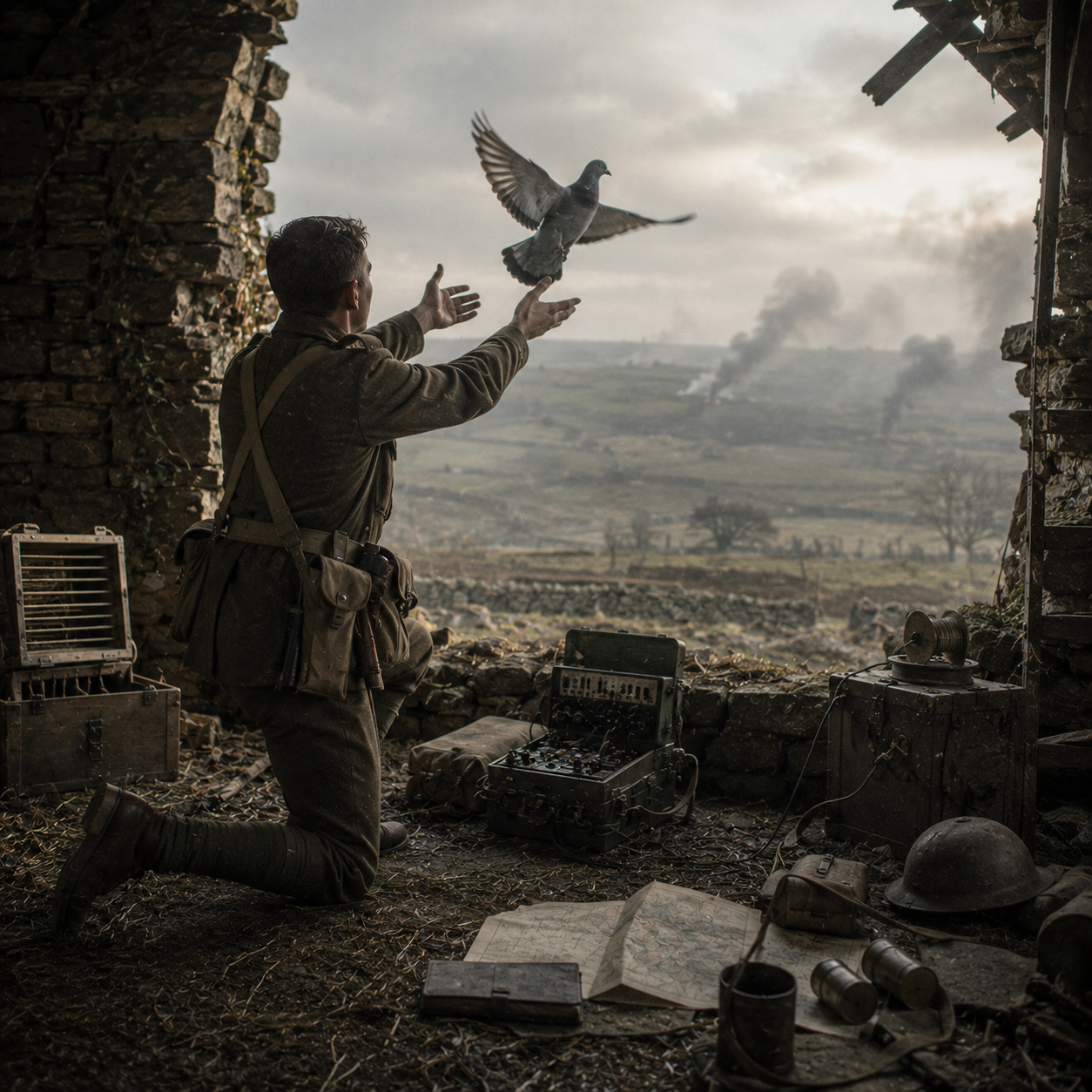
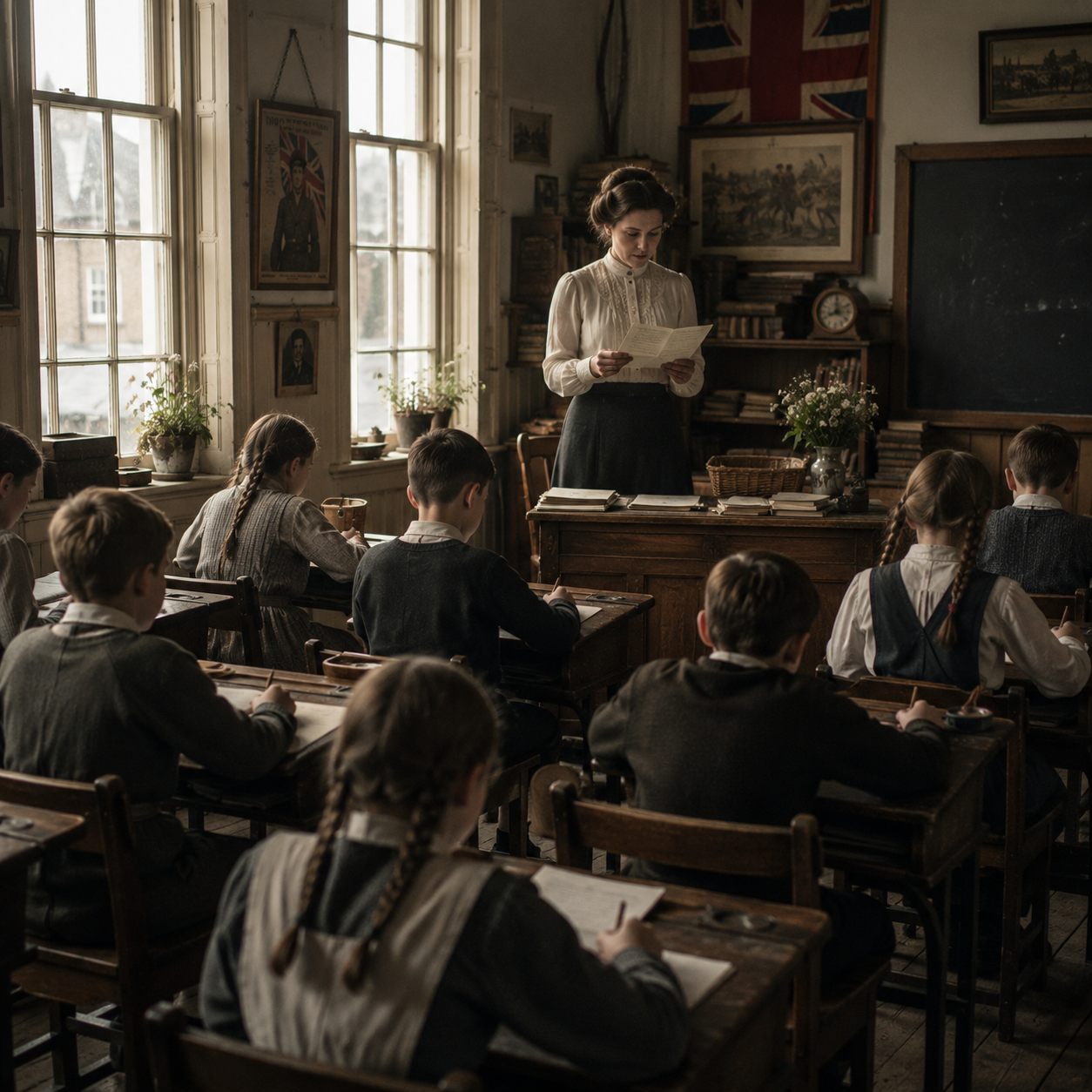
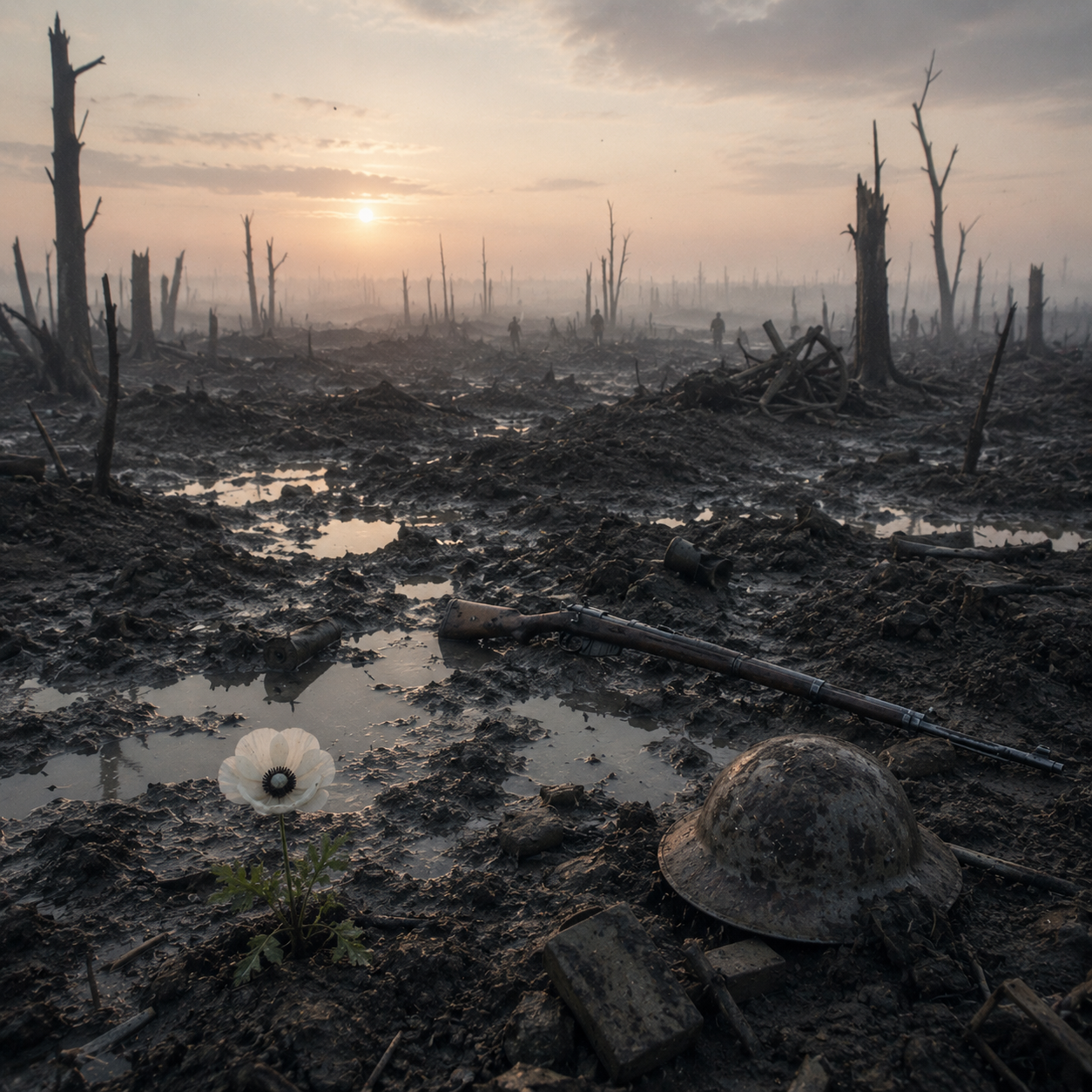
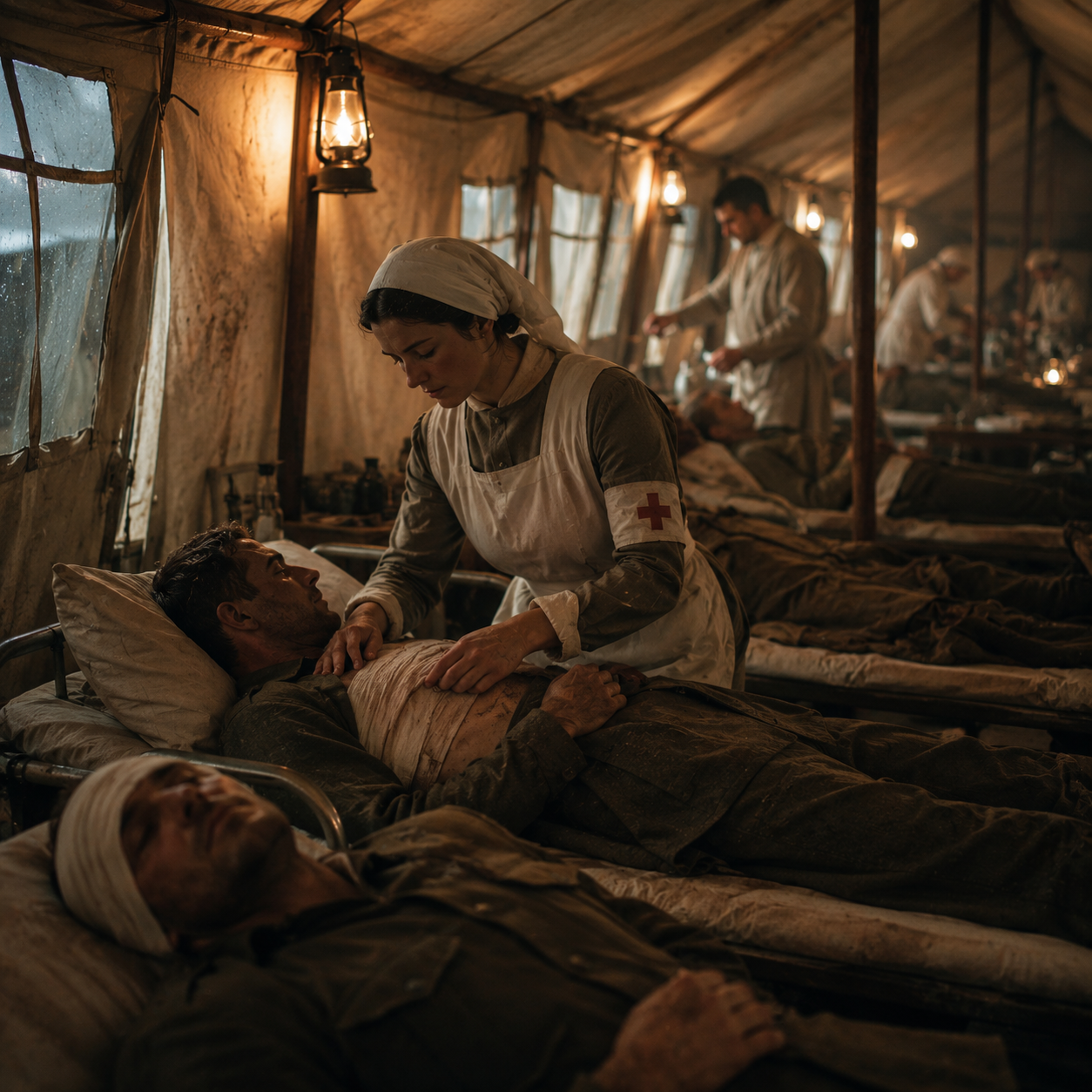
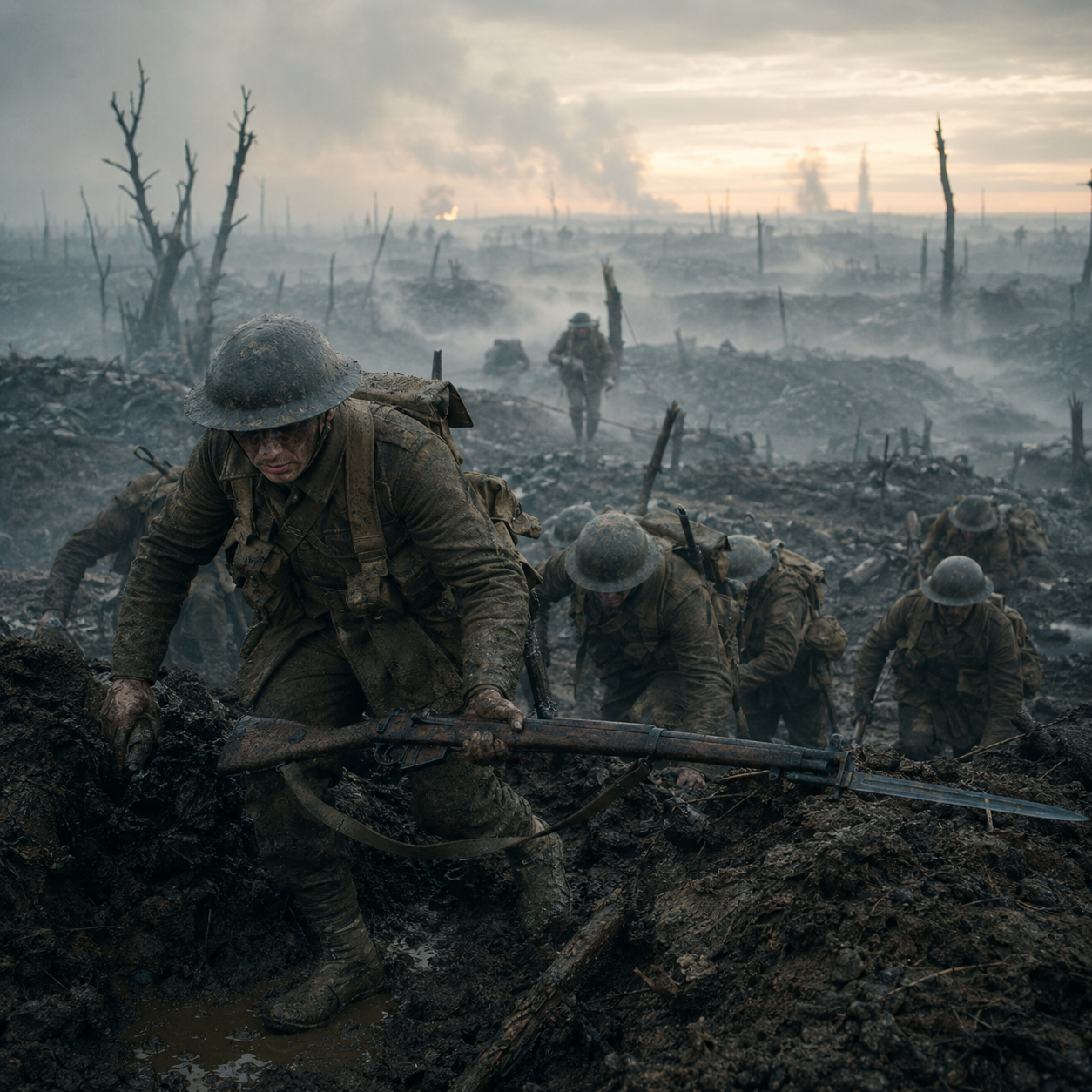
World War I fiction is shaped by both the immense scale of the conflict and the deeply personal stories within it. These visual prompts encourage you to study trench systems, military hospitals, wartime transport, rural villages, battle-scarred landscapes, uniforms, civilian life, and moments of quiet humanity amid extraordinary hardship. Pay close attention to expressions, weather, architecture, light, and historical detail, then imagine the friendships, sacrifices, hopes, and memories that might unfold within each scene.
Go Deeper into World War I Writing
The First World War was one of the defining events of the twentieth century, affecting millions of people across every continent. While trench warfare has become the conflict's most recognisable image, the war reached far beyond the front lines. Families waited anxiously for letters that might never arrive, women entered industries that had once excluded them, new technologies transformed warfare forever, and entire communities lived with uncertainty, grief, and hope for a future they could scarcely imagine. Exploring these different perspectives will give your stories greater emotional depth and historical authenticity.
As you develop your World War I stories, remember that every soldier, nurse, civilian, pilot, engineer, and volunteer experienced the war differently. Some fought on the Western Front, while others served in Gallipoli, the Middle East, East Africa, or aboard ships crossing dangerous seas. Consider how the conflict changed not only those who fought but also the families, friendships, and communities left behind. Whether you're writing an intimate character study, a sweeping historical novel, a wartime romance, or a story of survival and resilience, grounding your fiction in the everyday realities of the era will make your characters feel genuine and memorable.
◆ Look beyond the trenches. While the Western Front remains iconic, World War I also unfolded in military hospitals, munitions factories, naval convoys, intelligence offices, prisoner-of-war camps, farming communities, and homes across the world. These lesser-explored settings can provide fresh perspectives on the conflict.
◆ Use real historical events to shape personal stories. Battles such as the Somme, Passchendaele, Gallipoli, and Jutland, alongside events like the Christmas Truce, the introduction of tanks, the rise of military aviation, and the 1918 Armistice, can provide powerful historical anchors without overshadowing your fictional characters.
◆ Research everyday wartime life. Uniforms, trench routines, military slang, rationing, wartime medicine, censorship, communication, transport, and the changing roles of women all help create believable historical worlds. Often, the smallest details make the greatest difference to authenticity.
◆ Explore the lasting impact of war. World War I did not simply end when the fighting stopped. Many returned home carrying physical injuries, psychological trauma, grief, and memories that shaped the rest of their lives. Stories of remembrance, recovery, reconciliation, and rebuilding can be just as compelling as those set on the battlefield itself.
Final Thoughts
The First World War remains one of the most powerful settings for historical fiction because it brings together extraordinary courage, unimaginable hardship, and deeply personal stories of hope, sacrifice, and resilience. From the trenches of the Western Front and the beaches of Gallipoli to military hospitals, factory floors, quiet villages, and grieving families waiting at home, every aspect of the conflict offers opportunities to explore the strength of the human spirit during one of history's darkest chapters. Whether your story follows soldiers on the battlefield or civilians whose lives were forever changed by the war, the Great War provides an unforgettable backdrop for meaningful and emotionally resonant storytelling.
These 70 World War I Writing Prompts are designed to help you explore every side of the conflict, from moments of bravery and friendship to loss, remembrance, innovation, and survival. Mix and adapt the prompts, deepen your historical research, and use them as the foundation for novels, short stories, classroom activities, or writing challenges that honour the many voices and experiences of the First World War.
When you're ready to explore more remarkable periods from the past, visit the Historical Fiction Writing Hub for prompts spanning ancient civilisations to the modern era, or browse the Creative Writing Archive, where you'll find hundreds of writing resources covering fantasy, mystery, romance, horror, science fiction, mythology, descriptive writing, poetry, and much more.
Choose Your Next Adventure