100 Victorian Historical Fiction Story Ideas for Your Next Novel
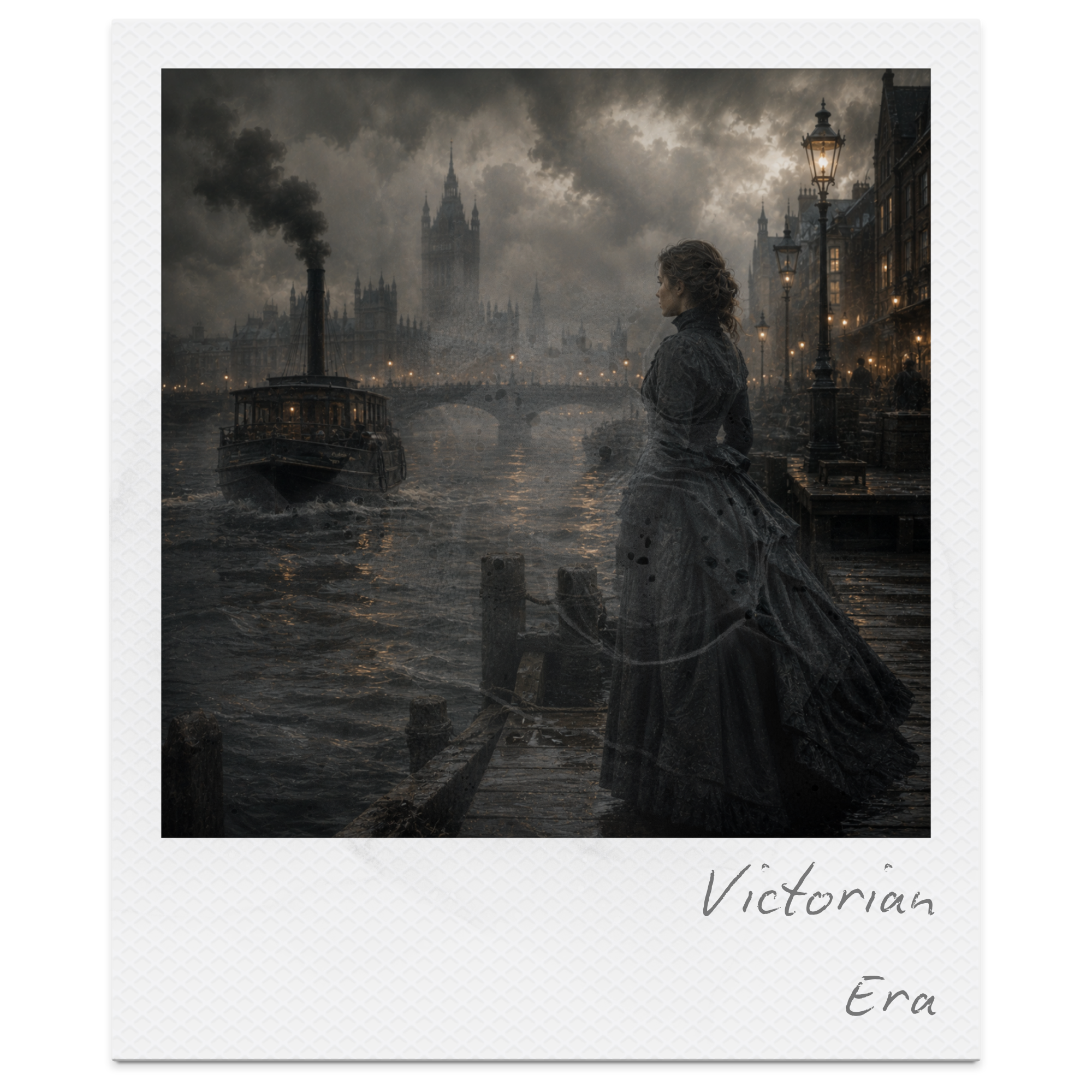
One of the reasons the Victorian era continues to inspire writers is its extraordinary contrasts. It was an age of rapid industrial progress and scientific discovery, yet superstition, strict social expectations, and deep inequalities still shaped everyday life. Grand country estates stood alongside overcrowded slums, glittering society balls contrasted with dangerous factory work, and the British Empire connected distant cultures while creating new conflicts and opportunities. These contradictions make Victorian Britain one of the richest settings for historical fiction.
Whether you're writing a sweeping family saga, a gothic mystery, a romance, an adventure, or a literary historical novel, the Victorian period offers endless inspiration. A governess may uncover a dangerous secret in an isolated manor, a young doctor might challenge accepted medical practices, a factory worker could become caught up in political unrest, or an explorer may return from distant colonies carrying something that should never have been brought home.
This collection of 100 Victorian historical fiction story ideas explores every corner of the nineteenth century, from elegant drawing rooms and bustling London streets to remote villages, workhouses, railways, theatres, prisons, and the far reaches of the British Empire. Each idea is designed to help you develop believable characters, authentic settings, and compelling conflicts while leaving plenty of room to create your own original historical fiction.
If you're looking for even more inspiration, explore the Historical Fiction Writing Hub for additional story ideas, character names, settings, historical eras, and worldbuilding resources. You can also browse the Creative Writing Archive for hundreds of writing prompts, plot ideas, opening lines, and storytelling tools across every genre.

1. Society, Class & Family Secrets
Victorian society was governed by strict expectations of class, reputation, and respectability. A family's social standing could determine careers, marriages, friendships, and even personal freedom, while scandals were often hidden at any cost. Behind the elegant drawing rooms and lavish country estates, countless secrets remained carefully concealed—from hidden inheritances and forbidden romances to illegitimate children and long-buried betrayals. These story ideas explore the tensions between public appearances and private lives, offering rich inspiration for historical fiction novels filled with family drama, social ambition, and impossible choices.
1. The Unwanted Heiress
When the wealthy owner of a country estate dies unexpectedly, his fortune is left to a young woman nobody has ever heard of. High society assumes she is an opportunist, but she soon discovers the inheritance was never the true secret her benefactor wanted to protect. As distant relatives challenge her claim, hidden letters begin revealing a decades-old scandal that could destroy one of England's most respected families. Your story could explore questions of identity, legitimacy, and whether the truth is worth sacrificing an entire family's reputation.
2. The Governess's Secret
A quietly spoken governess arrives at a remote manor to educate two unusually reserved children whose mother disappeared years earlier. The household insists she must never enter the locked west wing, yet strange sounds and whispered conversations continue long after the servants retire each evening. As she gains the children's trust, she realises they know far more about their mother's disappearance than anyone suspects. The novel could become a gothic family mystery exploring grief, manipulation, and the dangerous cost of protecting appearances.
3. A Marriage for Respectability
After a public scandal threatens to ruin two prominent Victorian families, their children are pressured into a marriage neither truly wants. Both bride and groom enter the arrangement believing the other is hiding something, but the secrets they uncover prove far more shocking than either imagined. As genuine affection slowly develops, they must decide whether loyalty belongs to each other or to the families determined to control their lives. This story offers opportunities to explore duty, love, class expectations, and the consequences of living according to society's rules.
4. The Missing Son
For twenty years, an aristocratic family has mourned the son believed to have died during childhood. When a stranger unexpectedly arrives claiming to be the missing heir, the household becomes divided between hope, suspicion, and fear of public humiliation. As lawyers, servants, and distant relatives begin investigating his past, long-forgotten events surrounding the boy's disappearance slowly come back to light. Your story could examine inheritance, identity, and whether family is defined by blood, memory, or choice.
5. The Seamstress and the Duchess
A gifted young seamstress is unexpectedly summoned to work exclusively for one of London's most influential duchesses. While fitting magnificent gowns for society's elite, she overhears private conversations that expose affairs, political conspiracies, and dangerous blackmail schemes hidden beneath polite conversation. She soon realises that one secret directly involves her own family and could change everything she believed about her upbringing. This novel could combine social commentary with mystery while exploring the invisible people who quietly witnessed Victorian high society.
6. Beneath the Family Portraits
While restoring portraits in a decaying ancestral home, an artist notices subtle changes hidden within paintings created across several generations. The alterations point towards a carefully concealed family history involving a missing inheritance and the deliberate removal of one branch of the family from every official record. As more evidence emerges, descendants become increasingly desperate to stop the truth from resurfacing. This story blends historical mystery with questions of memory, legacy, and who has the power to rewrite history.
7. The House on Belgrave Square
One of London's grandest townhouses has remained in the same family for generations, despite repeated financial ruin that should have forced its sale long ago. A newly employed lady's companion gradually discovers the household survives through an arrangement nobody dares discuss openly, even among family members. Every elegant dinner party hides another carefully managed deception designed to preserve their place in society. Your protagonist must decide whether exposing the truth would deliver justice—or destroy innocent lives alongside the guilty.
8. The Forgotten Sister
While organising papers after her father's death, a respectable Victorian woman discovers evidence that she once had an older sister whose existence has been erased from every family record. Determined to uncover what happened, she follows a trail leading through orphanages, private hospitals, and country estates where uncomfortable truths were hidden from polite society. The closer she comes to the answer, the more her own future becomes uncertain. This story explores women's lives, family honour, and the devastating consequences of protecting social reputation.
9. The Invitation to Court
A modest country family receives an unexpected invitation to a prestigious royal function, despite having no obvious connection to the aristocracy. As preparations begin, elderly relatives become increasingly anxious, refusing to explain why the invitation should never have arrived. Hidden correspondence reveals an act of extraordinary courage—and betrayal—that has remained secret since the early years of Queen Victoria's reign. Your novel could weave together political intrigue, forgotten heroism, and the long shadow cast by past decisions.
10. The Last Will and Testament
Following the death of a wealthy industrialist, his final will contains one unusual condition: every member of his estranged family must spend a month together at the isolated family estate before the inheritance can be divided. As old rivalries resurface, hidden rooms, forgotten diaries, and carefully concealed letters begin exposing decades of lies. Each revelation forces the family to question everything they believed about the man whose fortune they hope to inherit. The story could develop into a compelling historical fiction novel exploring forgiveness, greed, loyalty, and the complex legacy left behind by one extraordinary Victorian family.
2. Crime, Mystery & Justice
Beneath the polished image of Victorian respectability lay a world of crime, corruption, and social inequality. London's crowded streets, isolated country estates, workhouses, prisons, and rapidly expanding police forces created endless opportunities for mystery and suspense. From notorious murder cases and organised gangs to wrongful convictions and hidden conspiracies, the Victorian era remains one of the richest periods for crime fiction and historical mysteries. These story ideas explore justice, deception, morality, and the blurred line between law and truth.
11. The Inspector's Final Case
After thirty years serving with Scotland Yard, an experienced inspector plans to retire quietly until he is asked to investigate the murder of a respected judge. Every clue points towards an obvious suspect, yet the inspector quickly realises someone has carefully arranged the evidence to be discovered. As powerful figures attempt to close the investigation, he must decide whether exposing the truth is worth sacrificing the career he spent a lifetime building. Your novel could explore corruption, justice, and the personal cost of doing what is right.
12. The Workhouse Child
A young orphan disappears from a London workhouse without explanation, but the authorities show little interest in finding them. A newly appointed teacher begins asking uncomfortable questions and discovers several children have vanished under similar circumstances over the past decade. The deeper she investigates, the more resistance she encounters from people determined to keep the truth hidden. This story could combine social commentary with a gripping historical mystery surrounding Victorian institutions.
13. The Poisoner's Diary
While cataloguing the belongings of a recently deceased apothecary, an apprentice discovers a hidden journal documenting dozens of mysterious illnesses among London's wealthiest families. At first, the entries appear to be ordinary medical observations until the apprentice notices each patient died shortly after treatment. Unsure whether the diary records murder or medical misunderstanding, they begin investigating events that powerful families would rather leave buried. The novel could explore early forensic science, ethics, and the dangers of knowledge.
14. Murder at Blackwood Manor
A wealthy industrialist is found dead during a lavish country house gathering, leaving every guest trapped by heavy snowfall until the authorities arrive. Each member of the household appears to have both motive and opportunity, while decades of family resentment quickly surface beneath polite conversation. As servants quietly reveal overlooked details, the carefully constructed image of a respectable family begins to collapse. Your story could blend classic locked-room mystery with Victorian family drama and social hierarchy.
15. The Woman in Cell Seven
A quiet young woman awaits execution after confessing to a brutal murder she could not possibly have committed. A prison doctor becomes convinced she is protecting someone else, but every attempt to reopen the investigation is blocked by influential officials. With the execution date approaching, he races to uncover the truth before an innocent woman is hanged. This novel offers opportunities to explore justice, sacrifice, and the limitations of the Victorian legal system.
16. The Whitechapel Copycat
Months after London's most infamous murderer appears to have vanished, a new series of killings begins in another district of the city. Although the crimes resemble the earlier murders, subtle differences convince an ambitious journalist that someone is deliberately recreating them. As panic spreads through the capital, the investigation becomes a battle between sensational headlines and careful detective work. Your protagonist must uncover whether history is repeating itself—or whether someone is exploiting public fear for their own purposes.
17. The Prison Governor's Secret
A newly appointed prison governor inherits one of Britain's harshest correctional institutions, where rumours persist that certain prisoners have simply disappeared without release or execution. Official records reveal nothing unusual, yet missing files and altered registers suggest someone has systematically erased lives from history. Every discovery places the governor under increasing pressure from influential figures demanding the investigation stop immediately. The story could become a tense conspiracy exploring abuse of power and institutional corruption.
18. The Pickpocket's Promise
One of London's most talented young pickpockets accidentally steals a notebook containing evidence of political corruption reaching the highest levels of government. Hunted by criminals and respected gentlemen alike, they reluctantly form an alliance with a detective who represents everything they distrust. Together, they uncover a conspiracy capable of changing the future of Victorian Britain. This story combines fast-paced adventure with themes of trust, survival, and unlikely friendship.
19. The Trial of Eleanor Ashcroft
When a respected schoolteacher is accused of murdering a wealthy benefactor, public opinion turns against her almost overnight despite the lack of convincing evidence. A young barrister taking on his first major case becomes convinced key witnesses have been intimidated into silence. As the trial unfolds, hidden connections between the victim, the jury, and several prominent families begin emerging. Your novel could examine class prejudice, courtroom drama, and the struggle for justice within Victorian society.
20. Beneath Newgate
During renovation work beneath Newgate Prison, labourers uncover a hidden network of forgotten tunnels containing abandoned cells and the belongings of prisoners who officially never existed. A curious historian begins tracing their identities, uncovering evidence of secret imprisonments ordered to protect influential families and political interests. The closer he comes to exposing the truth, the more determined others become to silence him permanently. This historical mystery could explore forgotten histories, abuse of authority, and the lengths people will go to preserve power.
3. Industry, Progress & Invention
The Victorian era transformed Britain more rapidly than almost any period in history. Railways connected distant towns, factories reshaped entire cities, scientific discoveries challenged long-held beliefs, and inventors dreamed of changing the future through engineering and innovation. Yet progress came at a price, bringing dangerous working conditions, environmental change, social unrest, and ethical dilemmas that still resonate today. These story ideas explore ambition, invention, industry, and the extraordinary people who lived through one of history's greatest periods of transformation.
21. The Last Steam Engineer
When a respected railway engineer is asked to oversee the construction of Britain's most ambitious railway line, he believes it will be the crowning achievement of his career. However, mysterious accidents, missing workers, and acts of sabotage begin delaying construction, threatening both the project and the lives of everyone involved. As pressure from wealthy investors increases, he discovers someone is willing to kill to prevent the railway from reaching its destination. Your story could combine industrial history, engineering, and a gripping conspiracy.
22. The Inventor's Workshop
A brilliant but overlooked inventor spends years developing a revolutionary machine capable of transforming Victorian manufacturing. Before the invention can be patented, detailed plans disappear from his workshop, forcing him into a race against rival industrialists determined to claim his work as their own. With only his apprentice willing to help, he must decide whether protecting the invention matters more than exposing those responsible. This novel could explore ambition, innovation, and the human cost of progress.
23. Smoke Over Millbridge
The rapid expansion of textile mills has transformed the once peaceful town of Millbridge into a thriving industrial centre filled with opportunity—and danger. When workers begin falling mysteriously ill, factory owners insist poor sanitation is to blame, but a local doctor suspects something far more troubling. As profits continue to rise, the town becomes divided between those who depend upon the mills and those demanding reform. Your story could examine industrialisation through the lives of workers, employers, and families caught between prosperity and survival.
24. The Great Exhibition
A young engineer earns the opportunity of a lifetime when one of her inventions is selected for display at the Great Exhibition of 1851. Surrounded by groundbreaking technology from across the world, she soon realises someone is systematically sabotaging exhibits belonging to rival inventors. As international competition intensifies, she must uncover the culprit before Britain's greatest celebration of innovation becomes a public disaster. The story could blend historical spectacle with mystery, invention, and fierce professional rivalry.
25. Telegraph Hill
When a telegraph operator begins receiving fragments of messages that appear to have been sent before the events actually occur, he dismisses them as technical faults. As the impossible transmissions become increasingly accurate, he realises they may be warning him about disasters that have not yet happened. Determined to prevent tragedy, he soon attracts unwanted attention from powerful figures who have their own interest in the mysterious messages. This historical fiction novel could combine Victorian technology with suspense and speculative elements.
26. Beneath the Iron Bridge
During the construction of a magnificent iron bridge, workers uncover the remains of a forgotten medieval settlement buried beneath the foundations. While engineers push to continue building, historians insist the discovery could rewrite local history. As tensions rise between progress and preservation, strange artefacts begin disappearing from the excavation site. Your protagonist must uncover whether an ordinary thief—or someone with much bigger ambitions—is responsible.
27. The Clockmaker's Apprentice
An elderly master clockmaker spends decades perfecting an extraordinary mechanical masterpiece unlike anything Victorian Britain has ever seen. As his health begins to fail, his young apprentice discovers that the unfinished creation hides coded messages relating to a political secret buried for generations. Completing the masterpiece may expose a conspiracy stretching back to the beginning of Queen Victoria's reign. This story combines craftsmanship, historical mystery, and the passing of knowledge between generations.
28. The Lighthouse Engineer
A talented civil engineer is sent to supervise the construction of a new lighthouse on a remote and dangerous coastline where previous attempts have all ended in disaster. The isolated workforce becomes increasingly suspicious after unexplained accidents and disappearances interrupt the project. Local fishermen warn that disturbing the headland has awakened something long forgotten, while the engineer searches for a practical explanation. Your novel could explore the conflict between science, superstition, and human determination.
29. The Factory Bell
When the bell signalling the beginning of each factory shift mysteriously stops ringing, the workers initially welcome the unexpected delay. However, strange events soon begin unfolding throughout the mill, exposing hidden tensions between wealthy owners, exhausted employees, and families whose livelihoods depend upon the factory remaining open. As the mystery deepens, the missing bell becomes symbolic of much larger struggles within the industrial town. This story offers opportunities to examine class, labour, and community during the Industrial Revolution.
30. The Airship Society
A secret group of Victorian engineers, scientists, and wealthy patrons gathers regularly to discuss ambitious ideas considered impossible by the wider world. Their greatest project—a prototype airship capable of crossing continents—promises to change history if it can ever leave the ground. When confidential plans are stolen shortly before the first test flight, suspicion falls upon every member of the society. Your story could blend adventure, scientific innovation, espionage, and the boundless optimism that defined the Victorian age.
4. Empire, Exploration & Adventure
The Victorian era was defined not only by change at home but by exploration abroad. British explorers mapped unknown regions, archaeologists uncovered lost civilisations, missionaries travelled to distant lands, and soldiers, sailors, merchants, and scientists carried the Empire across the globe. These journeys created opportunities for discovery, ambition, cultural exchange, and conflict, while also raising complex questions about power, identity, and the consequences of imperial expansion. These story ideas explore adventure, exploration, and the people whose lives were shaped by the far-reaching ambitions of Victorian Britain.
31. The Explorer's Journal
When an experienced explorer fails to return from an expedition into Central Africa, only his weathered journal is recovered. The final pages describe a remarkable discovery before abruptly ending in the middle of a sentence. Years later, his daughter decides to complete the journey herself, determined to uncover what her father found and why someone wanted the expedition forgotten. Your novel could explore courage, family legacy, and the blurred line between historical discovery and obsession.
32. The Lost Expedition
A celebrated Arctic expedition disappears without leaving a single confirmed survivor, becoming one of Victorian Britain's greatest mysteries. Decades later, a young naval officer uncovers evidence suggesting that at least one crew member returned home under a different identity. As he pieces together the expedition's final months, he discovers the greatest secret was never what happened in the Arctic—but why it had to remain hidden. This story blends historical mystery with survival, loyalty, and impossible choices.
33. The Egyptologist's Discovery
A brilliant archaeologist working in Egypt uncovers an untouched tomb hidden beneath the desert sands. Rather than priceless treasure, the burial chamber contains documents that challenge accepted beliefs about one of history's greatest civilisations. Powerful collectors, rival archaeologists, and government officials soon compete to control the discovery before it becomes public knowledge. Your story could examine the ethics of archaeology, historical truth, and the price of uncovering the past.
34. Passage to India
A young governess accepts a position with a wealthy British family living in colonial India, expecting a life of privilege and adventure. Instead, she finds herself caught between vastly different cultures, political tensions, and growing unrest that many around her refuse to acknowledge. As she forms unexpected friendships beyond British society, her understanding of loyalty, identity, and justice begins to change. The novel could explore empire through personal relationships rather than battlefield conflict.
35. The Mission Station
A Victorian missionary establishes a remote settlement believing he has arrived to transform the local community, only to discover he has far more to learn than he has to teach. As disease, famine, and political unrest threaten everyone around him, long-held assumptions begin to unravel. The people he came to help ultimately become the ones protecting him from dangers he never anticipated. Your story could examine faith, humility, and cross-cultural understanding through a deeply personal historical narrative.
36. The Captain's Map
A retired Royal Navy captain leaves behind an unfinished map containing mysterious annotations that do not appear on any official chart. His grandchildren initially believe it marks hidden treasure, but the clues instead point towards a forgotten island deliberately removed from maritime records. As rival treasure hunters and government officials begin searching for the same destination, they must uncover why the island was erased from history. This story combines maritime adventure with historical mystery and family legacy.
37. The Botanist's Collection
A gifted botanist travels across South America searching for rare plant species that could transform Victorian medicine. While documenting unfamiliar ecosystems, she uncovers evidence that a powerful trading company is exploiting local communities while disguising its activities as scientific research. Forced to choose between career-defining discoveries and exposing injustice, she risks losing everything she has worked to achieve. This novel offers opportunities to explore science, ethics, and environmental history.
38. The Ivory Caravan
A young interpreter joins a trading caravan crossing East Africa, believing the journey will provide wealth and adventure. Instead, he witnesses the devastating human cost of the ivory trade and becomes caught between competing loyalties as violence threatens the expedition. Every decision places innocent lives at greater risk while forcing him to confront his own role in the system. Your story could become a powerful historical novel exploring morality, survival, and the consequences of empire.
39. The Mountain Survey
Tasked with mapping an unexplored mountain range for the British government, a team of surveyors discovers ruins that appear on no existing map. The official expedition quickly shifts from scientific research to a race against rival powers determined to claim the remarkable discovery first. As dangerous weather, political intrigue, and conflicting ambitions threaten the mission, the surveyors must decide who the discovery truly belongs to. This story blends exploration with diplomacy, archaeology, and survival.
40. The Last Voyage of The Endeavour
An ageing steamship prepares for one final voyage carrying scientists, merchants, soldiers, and passengers across the Empire before being permanently retired. When a violent storm forces the ship far from its intended route, those aboard discover an isolated island whose existence contradicts every known chart. The unexpected discovery brings opportunity, danger, and fierce disagreement over whether the island should be revealed to the world. Your novel could explore exploration, colonial ambition, and the question of whether every place should be discovered at all.
5. Gothic, Supernatural & Spiritualism
The Victorian era was an age of remarkable scientific progress, yet it was also fascinated by ghosts, séances, curses, and the possibility of life after death. Spiritualism flourished in drawing rooms across Britain, while gothic novels captivated readers with haunted houses, mysterious strangers, and family secrets hidden beneath crumbling estates. Whether supernatural events are real or merely products of fear and grief is entirely up to the writer, making Victorian gothic fiction one of the richest branches of historical storytelling. These story ideas blend history with mystery, folklore, and the supernatural to inspire atmospheric historical fiction novels.
41. The Medium's Last Séance
A celebrated spiritualist becomes famous for apparently communicating with the dead, attracting wealthy clients from across Victorian society. During one final séance, a spirit reveals details of a decades-old murder that only the killer could possibly know. Suddenly, influential families begin pressuring the medium to abandon her investigations before long-buried truths emerge. Your story could leave readers questioning whether the voices were genuine—or whether someone cleverly used belief to uncover the truth.
42. Blackwood Hall
Following the death of a distant relative, a young solicitor inherits the isolated Blackwood Hall, a once-grand estate abandoned for nearly fifty years. Every room remains perfectly preserved, yet each morning furniture has subtly moved, portraits appear slightly different, and unfamiliar footsteps echo through empty corridors after dark. Local villagers refuse to approach the estate after sunset, insisting the house remembers everyone who has ever lived within its walls. Your novel could explore whether the haunting is supernatural or the result of generations of carefully hidden family secrets.
43. The Mourning Portrait
A respected portrait artist is commissioned to paint the recently widowed wife of a wealthy industrialist. With every sitting, the finished portrait begins changing in impossible ways, revealing unfamiliar figures, hidden rooms, and scenes that never took place. As more people recognise faces from unsolved disappearances, the painting becomes the centre of a growing mystery. Your protagonist must determine whether the artwork is exposing the truth—or manipulating everyone who looks upon it.
44. The Society for Psychic Inquiry
A distinguished group of scientists, doctors, and academics establishes a society dedicated to proving—or disproving—the existence of supernatural phenomena using strict Victorian scientific methods. Their investigations begin with harmless ghost stories before leading them to an isolated manor where every previous explanation fails. As scepticism slowly gives way to fear, the members must decide whether some mysteries are better left unexplored. This story offers a fascinating balance between rational science and the unknown.
45. The Widow of Grey Abbey
Every evening, a veiled woman walks the ruins of Grey Abbey before disappearing without leaving footprints in the dew-covered grass. Villagers believe she has haunted the abbey for over a century, mourning a husband who never returned from war. When a young historian uncovers evidence suggesting the legend began much later than anyone realised, the carefully accepted story begins to unravel. Your novel could combine historical research, local folklore, and gothic mystery.
46. The Collector of Curses
A wealthy antiquarian spends decades acquiring objects believed to be cursed, convinced that every legend has a logical explanation. After his sudden death, his collection is auctioned across Britain, and strange misfortunes begin following each new owner. His reluctant granddaughter races to recover the artefacts before they become scattered forever, discovering her grandfather may have understood far more than he admitted. This story could blend folklore, historical adventure, and supernatural suspense.
47. Beneath Hollow Church
Renovation work beneath an ancient village church uncovers a sealed crypt that official records insist has never existed. The chamber contains unusual symbols, personal belongings left untouched for generations, and journals describing impossible events witnessed by Victorian clergymen. As the crypt is opened, unexplained disturbances spread throughout the surrounding village. Your story could explore religious faith, ancient folklore, and the dangers of disturbing places deliberately forgotten.
48. The House of Echoes
A respected physician purchases a London townhouse where previous occupants reportedly suffered hallucinations, unexplained illnesses, and sudden madness. Determined to prove there is a medical explanation, he begins documenting every unusual occurrence with scientific precision. However, his carefully kept journal soon records events even he cannot rationally explain. This novel could blur the boundary between psychology, grief, supernatural horror, and Victorian medicine.
49. The Ghost Station
A newly opened railway station gains a sinister reputation after passengers repeatedly report seeing strangers waiting on a platform that officially does not exist. Those who speak with the mysterious travellers often disappear from public life within days, leaving behind possessions but no explanation. A determined railway inspector begins investigating the reports before the growing panic damages public confidence in the railways. Your story could combine Victorian innovation with eerie supernatural folklore.
50. The Lantern Keeper
Each night, an elderly lighthouse keeper carries a single lantern into the surrounding woodland despite having retired many years earlier. Local children believe he is guiding restless spirits home, while adults dismiss the ritual as harmless superstition. When the keeper dies unexpectedly, strange lights begin appearing across the coastline, and ships soon vanish under mysterious circumstances. A young schoolteacher may become the only person willing to uncover why the lantern was never meant to be extinguished.
6. Love, Society & Impossible Choices
Love in Victorian Britain was rarely a simple matter of the heart. Social class, family expectations, wealth, reputation, religion, and duty often determined who could marry and who could not. Many people sacrificed happiness to protect their family's standing, while others risked everything for forbidden relationships that challenged Victorian conventions. These story ideas explore romance, sacrifice, loyalty, and the difficult choices people made when love came into conflict with society's expectations.
51. The Duke's Daughter
The daughter of a powerful duke has spent her entire life preparing for a marriage that will strengthen her family's influence. Weeks before the wedding, she unexpectedly falls in love with a talented architect restoring one of her father's estates. As rumours begin spreading through society, she must choose between fulfilling her duty or risking exile from the only world she has ever known. Your novel could explore privilege, sacrifice, and the courage required to defy expectation.
52. The Widow's Second Chance
After years of mourning her late husband, a respectable widow finally begins rebuilding her life through charitable work in London's East End. There she meets a compassionate doctor whose modest background makes him entirely unsuitable in the eyes of her family. As affection grows between them, painful memories and social expectations threaten to keep them apart. This story could examine grief, healing, and the possibility of finding happiness later in life.
53. The Clockmaker's Daughter
The gifted daughter of a respected clockmaker dreams of designing intricate mechanical inventions rather than marrying into another local business. When a wealthy industrialist's son secretly encourages her ambitions, their growing friendship develops into something neither family would ever approve of. As both households attempt to control their futures, the couple must decide whether their dreams are worth the cost of losing everything familiar. Your story could combine romance with themes of ambition, independence, and changing social roles.
54. Letters Across the Atlantic
A young schoolteacher in rural England begins exchanging letters with a Scottish-born bookseller who emigrated to Canada years earlier. Their correspondence grows into a deep friendship before becoming an unexpected romance despite the vast distance between them. When circumstances finally allow them to meet, family obligations on both sides of the Atlantic threaten to separate them once again. This historical novel could explore migration, hope, and the enduring power of written words.
55. Beneath the Ballroom Chandeliers
During London's social season, a quiet lady's companion unexpectedly attracts the attention of a rising politician known for his impeccable reputation. Their growing relationship soon becomes complicated when she discovers he is secretly investigating corruption involving her employer's influential family. Every elegant ball and dinner party becomes another opportunity to gather information while concealing their true feelings. Your story could blend romance with political intrigue and Victorian high society.
56. The Artist and the Heiress
A talented painter receives a commission to create a portrait of one of Britain's wealthiest young heiresses before her arranged engagement is announced. As weeks of sittings pass, they develop a genuine connection built on shared curiosity, creativity, and dreams of lives neither family would approve of. When the finished portrait reveals more emotion than convention allows, it becomes impossible to hide their growing affection. This novel could explore art, identity, and the price of choosing love over security.
57. The Stationmaster's Promise
A hardworking stationmaster and a local schoolmistress have quietly planned their future together for years, saving every spare penny to build a life beyond their small railway town. Everything changes when an unexpected inheritance offers one of them entry into a far higher social class. Friends and relatives insist the engagement should be reconsidered before irreversible mistakes are made. Your story could examine whether love can survive when society suddenly begins treating two people very differently.
58. The Soldier's Fiancée
A young woman eagerly awaits the return of her fiancé following military service overseas, only to discover he has come home profoundly changed by everything he experienced abroad. While neighbours celebrate his safe return, he struggles to reconnect with the life he left behind. Together they must decide whether love alone is enough to overcome distance, silence, and memories neither fully understands. This story offers opportunities to explore resilience, compassion, and the hidden consequences of imperial service.
59. The Seamstress of Mayfair
A talented seamstress working for London's wealthiest families spends her days creating gowns for society's grandest occasions while remaining almost invisible to the people she serves. Her quiet life changes when a respected barrister begins recognising her remarkable intelligence during regular visits to his sister's dress fittings. As their friendship deepens, both become painfully aware of the expectations separating their worlds. Your novel could explore class, education, and the courage required to challenge Victorian convention.
60. The Last Dance
At the close of a magnificent winter ball, two strangers share a final dance before believing they will never meet again. Years later, chance brings them together under entirely different circumstances, each carrying responsibilities that make rekindling their connection almost impossible. As old feelings resurface, they must confront the choices that shaped the lives they have built apart. This historical romance explores timing, second chances, and whether love can survive the passing of years.
7. Everyday Lives & Forgotten Voices
History often remembers monarchs, politicians, inventors, and military leaders, but most Victorians lived very different lives. They worked in factories, scrubbed floors in grand houses, taught crowded classrooms, laboured in mines, sold flowers on busy street corners, or struggled simply to survive another day. Their stories are filled with resilience, sacrifice, friendship, and quiet acts of courage that shaped Victorian society just as much as the decisions made by the powerful. These story ideas shine a light on the ordinary men, women, and children whose voices are too often overlooked in historical fiction.
61. The Housemaid's Notebook
A young housemaid working in one of London's grandest townhouses secretly keeps a journal documenting the conversations, arguments, and scandals she overhears while cleaning empty rooms. What begins as harmless curiosity soon becomes dangerous when she unknowingly records evidence linking several influential families to a serious crime. As rumours begin spreading through society, she must decide whether revealing the truth is worth risking the only livelihood she has ever known. Your story could explore class, loyalty, and how those considered invisible often witness history most clearly.
62. The Flower Seller of Covent Garden
Every morning before sunrise, a teenage flower seller travels across London to secure the freshest blooms before the city's markets open. Her cheerful smile hides growing concern as her younger siblings struggle to survive following their mother's illness. An unexpected friendship with a successful theatre actress offers opportunities she never imagined, but accepting help may mean abandoning the family who depend upon her. This novel could explore poverty, ambition, and the strength found within ordinary communities.
63. Beneath the Mill Chimneys
A teenage girl begins work in one of northern England's largest textile mills, believing the wages will finally lift her family out of poverty. Instead, she discovers dangerous working conditions, exhausted children, and growing unrest among employees demanding safer treatment. As friendships form across the factory floor, she becomes unexpectedly involved in efforts to improve conditions for everyone. Your story could examine industrial life through the eyes of those whose labour powered Victorian Britain.
64. The Village Schoolmistress
A newly qualified schoolmistress arrives in an isolated rural village determined to improve educational opportunities for local children. She quickly discovers that many families cannot afford to lose valuable working hands during harvest seasons, leaving attendance painfully low. As she earns the trust of the community, hidden struggles within several households begin emerging. This historical novel could explore education, rural life, and the quiet determination required to bring lasting change.
65. The Chimney Sweep's Apprentice
A young chimney sweep dreams of becoming an engineer after watching locomotives thunder through the countryside, but every day spent climbing dangerous chimneys pushes that dream further away. When a wealthy inventor notices his remarkable problem-solving abilities, an unlikely opportunity begins to emerge. However, escaping his apprenticeship proves far more difficult than either of them expected. Your story could explore childhood, social mobility, and the importance of recognising talent regardless of background.
66. The Midwife's Rounds
A respected village midwife spends her days travelling between isolated cottages, grand estates, and crowded workers' homes, witnessing every stage of life regardless of wealth or status. Through births, illnesses, celebrations, and tragedies, she quietly becomes the keeper of countless family secrets. When one newborn's identity is deliberately concealed, she finds herself protecting a truth capable of changing several lives forever. This story offers rich opportunities to explore women, family, and community in Victorian Britain.
67. The Crossing Sweeper
Each day, a young crossing sweeper earns a few pennies by clearing mud from London's busiest streets so wealthy pedestrians can cross without dirtying their boots. Invisible to most passers-by, he quietly observes politicians, aristocrats, criminals, journalists, and servants moving through the city. One rainy afternoon he witnesses something no one else notices—a respected gentleman exchanging a mysterious package beneath the cover of a passing carriage. Your novel could show how overlooked people often become accidental witnesses to extraordinary events.
68. The Laundress of Whitechapel
Long hours spent washing clothes for wealthy households provide little reward, yet a determined laundress refuses to abandon hope of building a better future for her children. While sorting garments each week, she begins noticing strange stains, hidden letters, and expensive jewellery appearing where they should not. Her discoveries slowly connect several seemingly unrelated crimes unfolding across the city. This story could combine social history with mystery while highlighting the unseen work performed by Victorian women.
69. The Lighthouse Keeper's Daughter
Raised on a remote stretch of coastline, the daughter of a lighthouse keeper has spent her life helping guide ships safely through dangerous waters. When her ageing father becomes ill during a violent winter storm, she must assume responsibility for the lighthouse despite local disbelief that a young woman can manage the task alone. At the same time, she notices unfamiliar signals flashing from the cliffs each night. Your story could blend survival, courage, and coastal mystery against a vividly historical backdrop.
70. The Last Letter Home
A young postman delivering letters across a growing industrial town becomes fascinated by the lives unfolding behind every address on his route. Over the years he watches friendships begin, families grow, fortunes change, and neighbours disappear, all through the correspondence he carefully delivers without ever opening. One undelivered letter, however, remains unclaimed for decades despite repeated attempts to find its recipient. Your novel could explore ordinary lives, interconnected communities, and how a single forgotten letter might finally bring long-buried truths into the light.
8. War, Politics & Social Change
Although the Victorian era is often remembered for grand architecture and industrial progress, it was also a period of profound political and social change. Reformers campaigned to improve working conditions, expand education, challenge poverty, and secure greater rights for women and workers. Wars abroad shaped families at home, newspapers transformed public opinion, and ordinary people increasingly questioned the traditions that had governed British society for generations. These story ideas explore activism, conflict, political ambition, and the people who helped shape a changing Victorian world.
71. The Reformer's Daughter
The daughter of a respected Member of Parliament has been raised to support her father's political ambitions without question. However, after secretly volunteering in London's poorest districts, she begins witnessing the realities of poverty that polite society prefers to ignore. Torn between loyalty to her family and her growing desire for reform, she risks everything by publicly supporting legislation her father fiercely opposes. Your novel could explore class, conscience, and the difficult choices faced by those challenging Victorian convention.
72. The Crimean Nurse
Inspired by the work of Florence Nightingale, a young woman volunteers as a nurse during the Crimean War despite fierce opposition from her family. Confronted by overcrowded hospitals, disease, and unimaginable suffering, she discovers that courage often takes quieter forms than heroism on the battlefield. While caring for wounded soldiers, she uncovers evidence that official reports are concealing the true conditions faced by those serving overseas. This story could explore compassion, resilience, and the beginnings of modern nursing.
73. Ink and Influence
A determined young journalist secures a position at one of London's leading newspapers by concealing her identity behind a male pseudonym. As her investigations expose corruption, dangerous working conditions, and political scandals, her articles begin influencing debates across Britain. Success brings increasing scrutiny, threatening to reveal both her identity and the powerful individuals determined to silence her. Your story could explore freedom of the press, women's opportunities, and the growing influence of Victorian journalism.
74. The Strike at Ashcroft Mill
When wages are suddenly reduced at one of the region's largest textile mills, exhausted workers organise a strike despite knowing failure could leave their families destitute. A local solicitor is asked to represent the factory owners but gradually begins sympathising with the workers' demands after witnessing conditions firsthand. As tensions escalate, violence threatens to overshadow the cause itself. This novel could examine labour rights, community solidarity, and the personal cost of demanding change.
75. Votes for Tomorrow
Long before women gained the right to vote, a small group of educated women begins organising public meetings advocating greater educational opportunities, property rights, and political representation. Their campaign attracts growing support but also fierce criticism from newspapers, politicians, and even members of their own families. As friendships are tested and reputations threatened, they must decide how much they are willing to sacrifice for a future they may never personally experience. Your story could explore hope, perseverance, and the foundations of later suffrage movements.
76. The Factory Inspector
A newly appointed government factory inspector is determined to enforce recently introduced safety regulations across Britain's rapidly expanding industrial towns. Many mill owners welcome his recommendations, while others resort to bribery, intimidation, and deception to protect their profits. During one inspection, he uncovers evidence of a disaster that was deliberately concealed from the authorities years earlier. This story could blend historical investigation with themes of justice, responsibility, and reform.
77. Beneath the Banner
Following a controversial government decision, peaceful demonstrations begin spreading through several industrial cities. A young police constable, a union organiser, and a factory owner's son all find themselves caught on opposite sides of the growing movement despite sharing similar hopes for the future. As protests intensify, each must decide where loyalty truly belongs. Your novel could examine political division through multiple perspectives while highlighting the complexity of social change.
78. The Irish Tenant
A farming family forced from their Irish home travels to England hoping to rebuild their lives amid growing anti-Irish prejudice. Struggling to find work and acceptance, they gradually become involved in political movements campaigning for fairness both in Ireland and Britain. As tensions between communities rise, the family must navigate questions of identity, belonging, and justice. This historical fiction story offers opportunities to explore migration, resilience, and the lasting impact of political decisions on ordinary people.
79. The Sanitary Commission
Following a devastating outbreak of disease in a growing industrial town, a young doctor joins a government commission investigating public health conditions. The team quickly discovers overcrowded housing, polluted water, and poor sanitation are claiming more lives than anyone in authority wishes to admit. Powerful business owners resist every recommendation, fearing expensive reforms will damage local industry. Your story could explore science, politics, and the determination required to improve everyday life during the Victorian era.
80. The Election at Briarford
For the first time in living memory, a fiercely contested parliamentary election transforms the quiet market town of Briarford into the centre of national attention. Candidates promise reform, prosperity, and progress while secretly employing bribery, intimidation, and carefully orchestrated scandals behind the scenes. A local schoolmaster unexpectedly finds himself holding evidence that could determine the outcome of the election—and change the town forever. This novel could explore democracy, corruption, and the changing political landscape of Victorian Britain.
9. Medicine, Science & Dangerous Discoveries
The Victorian era was an age of extraordinary scientific progress. Surgeons pioneered new techniques, hospitals expanded, forensic science began to emerge, and discoveries in biology, psychology, and public health challenged long-held beliefs about the world. Yet every breakthrough raised new ethical questions, and many advances came at great personal cost. These story ideas explore the intersection of science, medicine, morality, and ambition, offering rich inspiration for historical fiction filled with discovery, suspense, and human drama.
81. The Anatomy Theatre
A talented young medical student earns a coveted place assisting one of London's most respected surgeons at a prestigious teaching hospital. During a routine anatomy lesson, he notices strange inconsistencies in the records accompanying several unidentified bodies delivered for dissection. As he quietly investigates their origins, he uncovers a network of corruption reaching far beyond the hospital walls. Your story could explore medical ethics, ambition, and the lengths institutions will go to protect their reputations.
82. The Asylum Physician
A compassionate physician accepts a position at a progressive psychiatric asylum determined to introduce kinder methods of treating patients. While reviewing old case files, she discovers that many residents were committed for reasons that appear to have little to do with mental illness. As powerful families pressure her to remain silent, she must decide whether exposing the truth is worth destroying her own career. This novel could examine Victorian attitudes towards mental health, gender, and institutional power.
83. The Poison Garden
An ambitious botanist is invited to catalogue the extraordinary collection of poisonous plants belonging to an eccentric aristocrat. Initially fascinated by the scientific possibilities, she soon realises several rare specimens have recently been harvested in secret. When unexplained illnesses begin affecting members of the household, she suspects someone is using botanical knowledge as the perfect murder weapon. Your story could combine historical science, murder mystery, and the dangerous pursuit of knowledge.
84. The Photographer's Evidence
A pioneering photographer begins documenting crime scenes to assist local police, believing the new technology can reveal details overlooked by investigators. While developing glass plate negatives from a routine investigation, he notices a figure reflected in a mirror who was never listed among the witnesses. The discovery reopens a case already considered solved, placing him in conflict with officials eager to avoid public embarrassment. This story explores the birth of forensic investigation and the power of new technology.
85. The Darwin Correspondence
A young naturalist receives a bundle of letters intended for Charles Darwin but mistakenly delivered to his own rural research station. The correspondence contains observations from around the world that challenge accepted scientific theories and attract the interest of influential academics determined to suppress controversial ideas. Unsure whom to trust, the naturalist becomes caught between scientific integrity and professional survival. Your novel could explore intellectual debate, discovery, and the changing understanding of the natural world.
86. Fever Ward
A deadly outbreak sweeps through an industrial town, overwhelming its small hospital within days. As fear spreads faster than the illness itself, a determined nurse and an inexperienced doctor work tirelessly to identify the source before more lives are lost. Their investigation uncovers evidence that poor sanitation—not fate—is responsible for the tragedy, bringing them into conflict with wealthy factory owners. This story offers opportunities to explore public health, compassion, and the difficult fight for reform.
87. The Electric Experiment
A brilliant inventor and a respected physician begin collaborating on a revolutionary device that uses electricity to treat chronic illness. Early successes attract wealthy investors eager to profit from the invention, while sceptics dismiss the project as dangerous pseudoscience. When unexpected side effects begin appearing among patients, both inventors must question whether they have gone too far in pursuit of progress. Your story could examine scientific optimism, ethical responsibility, and the risks of innovation.
88. The Chemist's Apprentice
A gifted apprentice working in a respected London pharmacy notices unusual requests for the same combination of chemicals from several unrelated customers. Curious, she begins keeping careful records, gradually uncovering a pattern linking the purchases to suspicious deaths across the city. As her investigation draws unwanted attention, she discovers someone is using ordinary medicines to commit extraordinary crimes. This novel combines historical chemistry, suspense, and detective fiction.
89. The Observatory
An astronomer overseeing a remote Victorian observatory notices subtle irregularities while charting the night sky, leading him to predict a rare celestial event that contradicts accepted scientific calculations. As fellow academics dismiss his findings, he becomes obsessed with proving his theory before the phenomenon occurs. Alongside the scientific challenge, he uncovers coded observations hidden within decades of astronomical records that point towards a forgotten discovery. Your story could blend scientific ambition, historical mystery, and the pursuit of knowledge against the backdrop of Victorian astronomy.
90. The Surgeon's Promise
One of London's most celebrated surgeons develops a groundbreaking operation that could save countless lives, but the procedure remains dangerously experimental. When his own daughter becomes the only patient who might survive because of the operation, he faces an impossible decision between his duty as a father and his responsibility as a doctor. Colleagues, journalists, and politicians all have their own opinions about the risks involved, turning a deeply personal choice into a national debate. This story explores love, sacrifice, medical ethics, and the emotional burden carried by those at the forefront of scientific progress.
10. Secrets, Survival & Hidden Histories
History is full of stories that were never recorded in official documents. Hidden diaries, forgotten inheritances, abandoned villages, coded letters, and family secrets often reveal a very different version of the Victorian era than the one preserved in newspapers and history books. These story ideas explore ordinary people caught up in extraordinary circumstances, where uncovering the past may prove just as dangerous as living through it. They are perfect for writers who enjoy historical mysteries, family sagas, and novels where long-buried truths finally come to light.
91. The Locked Trunk
While clearing the attic of a crumbling country manor, a young widow discovers an ornate trunk hidden behind a false wall. Inside are journals, letters, and official documents spanning forty years, all belonging to someone whose name appears nowhere in the family's history. As she pieces together the forgotten life recorded within its pages, she begins questioning everything she thought she knew about her own ancestry. Your story could explore identity, inheritance, and the lengths families will go to preserve their reputation.
92. The Last Passenger
When an abandoned Victorian railway carriage is uncovered during the construction of a new station, workers discover a perfectly preserved suitcase bearing no owner's name. Its contents include expensive clothing, foreign currency, and an unfinished diary that abruptly ends midway through a remarkable journey. A local archivist becomes determined to discover who the mysterious passenger was—and why they seemed to vanish without trace. This novel could blend historical mystery with travel, espionage, and forgotten lives.
93. The Forgotten Village
An ambitious historian travelling through rural England stumbles upon the overgrown remains of a village missing from every official map. Although the cottages appear abandoned for decades, personal belongings remain untouched, as though the residents expected to return at any moment. Parish records reveal the settlement once existed before disappearing entirely from public records within a single year. Your story could explore disease, political secrecy, or a deliberate attempt to erase an entire community from history.
94. The Code in the Quilt
Following her grandmother's death, a young seamstress inherits an elaborate patchwork quilt stitched with unusual patterns that seem strangely deliberate. An elderly neighbour reveals the designs resemble symbols once used to pass secret messages throughout Victorian Britain. As she deciphers the quilt one section at a time, it leads her towards a hidden fortune—and a dangerous family secret that others are still trying to protect. This story combines domestic history with mystery, symbolism, and generational storytelling.
95. The Photographer's Album
A forgotten leather-bound photograph album purchased at a London auction contains portraits of ordinary Victorians whose names have long been forgotten. As a museum curator researches the images, she realises every photograph contains the same unidentified figure quietly observing from the background. The recurring stranger appears not to have aged despite the photographs spanning decades. Your novel could become a fascinating historical mystery exploring memory, identity, and the stories hidden behind everyday lives.
96. The Hidden Room
Builders restoring a grand Georgian townhouse uncover a concealed room that had remained sealed since the middle of the Victorian era. Inside they find furniture left exactly as it was, unfinished correspondence scattered across a writing desk, and evidence that its occupant disappeared without explanation. Every discovery raises new questions about why someone would intentionally erase an entire life from the house. Your story could examine family loyalty, betrayal, and the cost of protecting uncomfortable truths.
97. The Keeper of Lost Letters
For decades, an elderly postmaster has quietly stored letters that could never be delivered because their recipients disappeared, emigrated, or died before receiving them. Knowing his own retirement is approaching, he begins searching for surviving descendants who may finally uncover the messages their families never read. Each letter changes a life in unexpected ways, but one sealed envelope appears capable of exposing a scandal still affecting a powerful Victorian family. This novel could explore memory, forgiveness, and the extraordinary influence of ordinary correspondence.
98. The Smuggler's Ledger
A ledger recovered from the wreck of a Victorian merchant ship initially appears to record nothing more than routine cargo shipments. However, coded entries hidden among the accounts reveal a sophisticated smuggling network involving respected businessmen, politicians, and members of the aristocracy. As an accountant slowly cracks the code, he realises exposing the truth may cost him everything. Your story could combine maritime history, organised crime, and financial intrigue.
99. The Time Capsule Society
Members of an exclusive Victorian literary society secretly bury a collection of journals, predictions, inventions, and personal confessions, intending them to be opened exactly one hundred years later. Before the capsule can be recovered, every member mysteriously disappears from public life. A modern restoration project unexpectedly uncovers the cache, revealing stories that challenge accepted history and expose events deliberately hidden for generations. Your novel could alternate between Victorian and modern timelines while exploring legacy, truth, and the enduring power of written records.
100. The Forgotten Witness
An elderly woman living quietly in a coastal village summons a young solicitor with an extraordinary request: she wishes to record her testimony before she dies about a crime she witnessed as a child more than sixty years earlier. Her account contradicts one of Victorian Britain's most famous criminal cases and suggests the wrong person was convicted to protect someone far more influential. As the solicitor investigates, surviving descendants become desperate to prevent the truth from emerging. This story could explore justice, memory, and whether history can ever truly be rewritten.
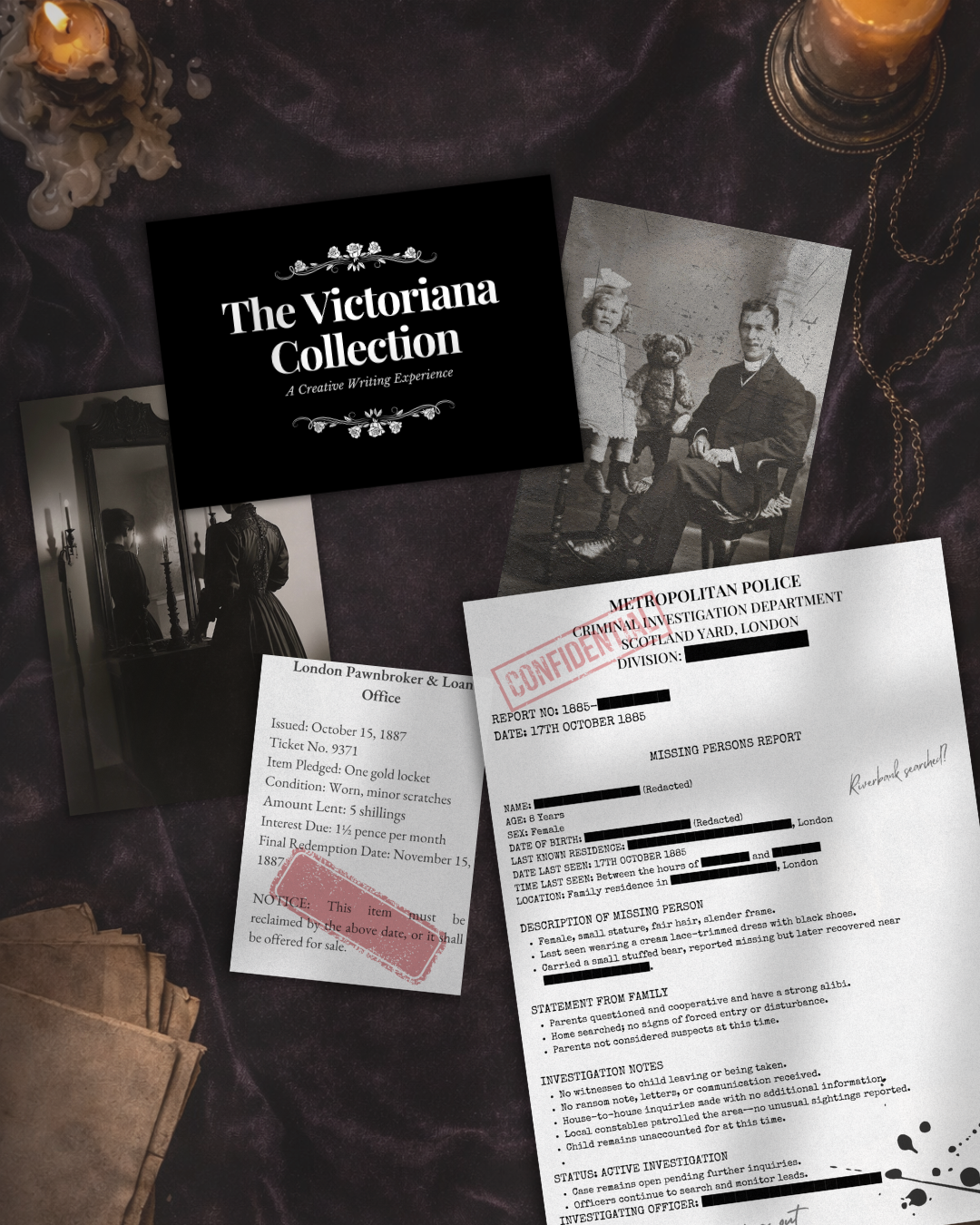
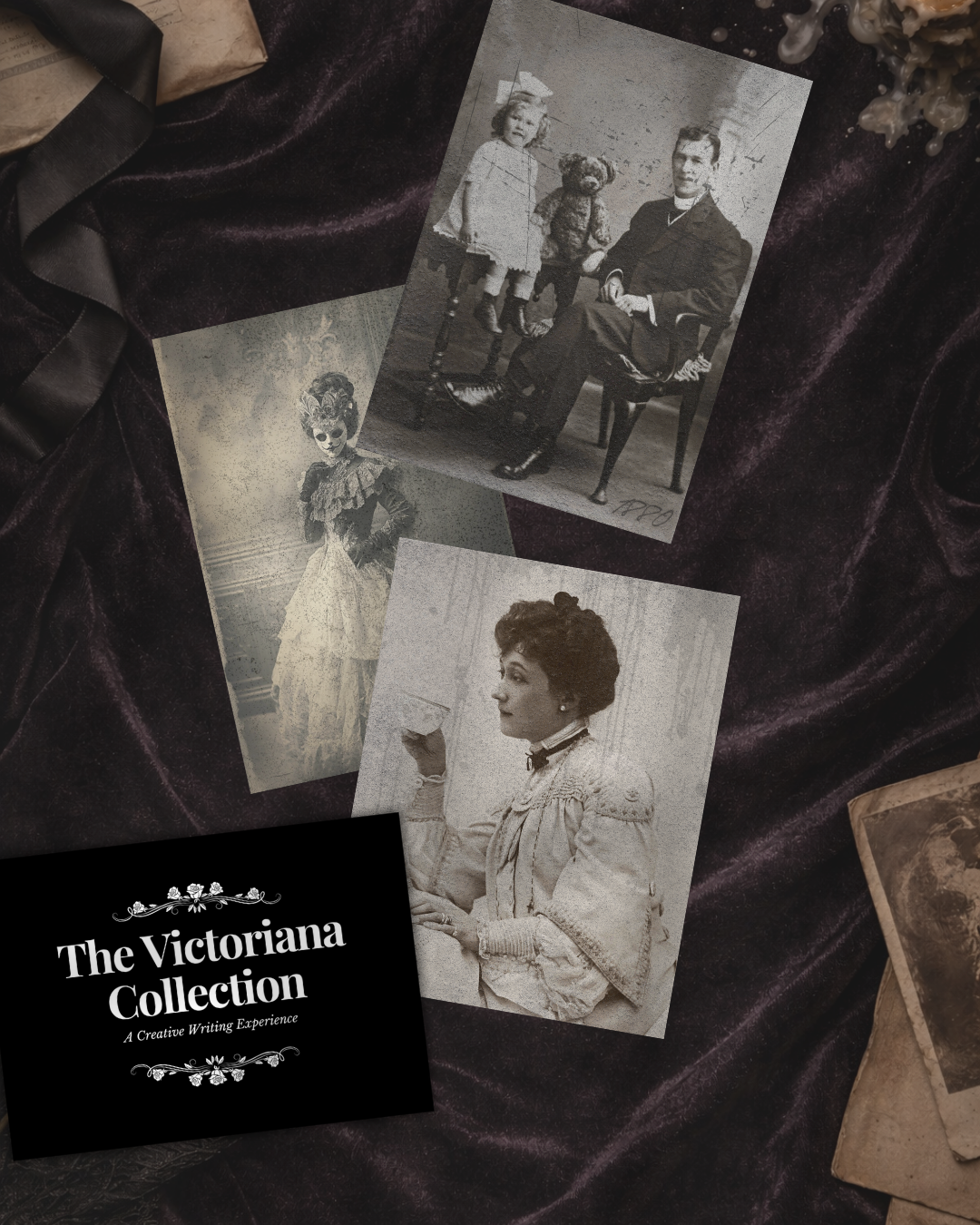
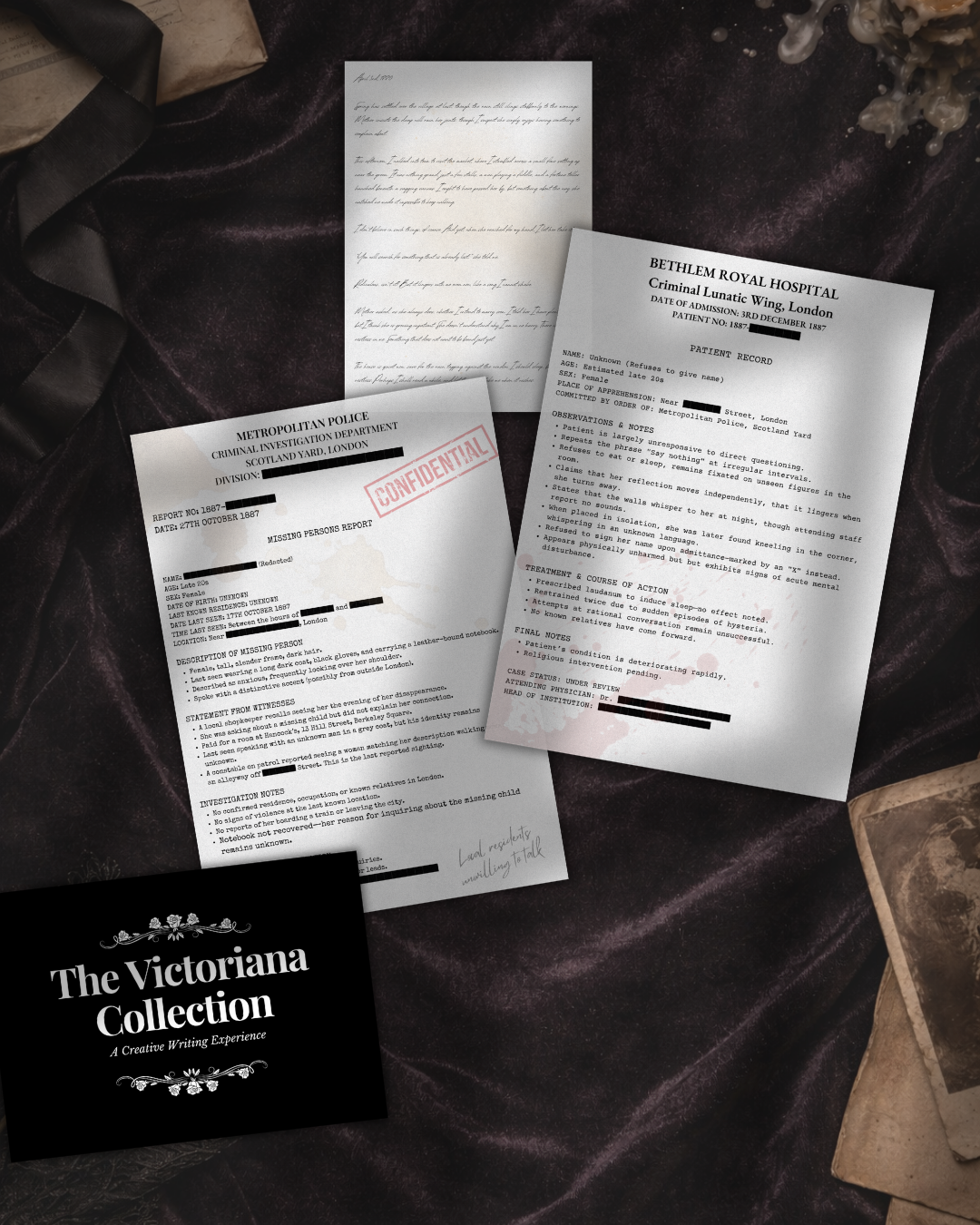
Explore The Victoriana Collection
If these Victorian story ideas have inspired you, why not step inside a Victorian mystery yourself?
The Victoriana Collection is an immersive digital archive designed for writers, readers, and lovers of historical mysteries. Inspired by Victorian spiritualism, gothic fiction, forgotten histories, and unexplained disappearances, it contains more than 50 printable documents and artefacts that gradually reveal the fragments of a hidden story.
Inside you'll discover faded letters, diary entries, missing persons reports, photographs, newspaper clippings, spiritualist notes, personal mementoes, and forgotten records that appear ordinary at first glance—but together hint at a mystery buried beneath decades of silence.
Unlike a traditional mystery novel, there are no chapters, no narrator, and no definitive ending. Instead, you'll piece together the evidence yourself, deciding which documents can be trusted, which stories conflict, and what really happened to the people whose lives have been scattered across the archive.
Whether you're researching the Victorian era, searching for authentic inspiration, developing your own historical fiction, or simply enjoy solving atmospheric mysteries, The Victoriana Collection offers a unique way to experience the world you're writing about.
Perfect for:
◆ Historical fiction writers looking for authentic inspiration and storytelling techniques
◆ Lovers of Victorian mysteries, gothic fiction, and atmospheric worldbuilding
◆ Teachers and students exploring Victorian life through primary source-style documents
◆ Readers who enjoy uncovering hidden stories, forgotten histories, and unanswered questions
If you enjoy writing Victorian historical fiction, The Victoriana Collection offers an entirely different kind of inspiration—one where every document raises new questions, every clue suggests another possibility, and the story only becomes complete through your own imagination.
Go Deeper into Victorian Historical Fiction
The Victorian era offers far more than top hats, foggy London streets, and grand country houses. It was a period of extraordinary contradiction, where scientific breakthroughs existed alongside widespread superstition, immense wealth contrasted with crushing poverty, and strict ideas about morality often concealed deeply complicated private lives. The most compelling Victorian historical fiction embraces these tensions, creating stories that feel both authentic and emotionally timeless.
As you develop your novel, think beyond famous historical events and consider how ordinary people experienced this rapidly changing world. A railway engineer, a housemaid, a newspaper editor, a schoolteacher, a factory owner, or a dock worker all witnessed the Victorian era from very different perspectives. Choosing whose story you tell will shape not only your plot but the themes and conflicts that drive it.
To create richer Victorian historical fiction, consider exploring these ideas:
◆ Build your story around genuine historical change. The expansion of the railways, industrialisation, advances in medicine, the growth of photography, the telegraph, and public health reforms all transformed everyday life, creating natural opportunities for conflict and character development.
◆ Let social class influence every decision. In Victorian Britain, class affected education, employment, marriage, friendships, justice, and even the way people spoke. A simple conversation between a servant and an aristocrat could carry enormous social significance.
◆ Research everyday routines alongside major historical events. Meals, clothing, transport, etiquette, household duties, working hours, schools, religious observance, and leisure activities often make historical settings feel more authentic than simply mentioning famous dates or people.
◆ Use real places to anchor fictional stories. London's East End, Whitechapel, Manchester's mills, Yorkshire villages, Cornish fishing communities, Scottish Highlands, grand country estates, bustling railway stations, workhouses, and seaside resorts all offer distinctive settings with their own histories and atmosphere.
◆ Allow historical figures to appear naturally. Queen Victoria, Charles Dickens, Florence Nightingale, Joseph Bazalgette, Isambard Kingdom Brunel, Arthur Conan Doyle, and countless lesser-known reformers, inventors, artists, and campaigners can enrich a story without becoming its central focus.
◆ Explore moral complexity rather than modern judgement. Victorian society was shaped by values that often differ dramatically from today's. Characters become more believable when they reflect the beliefs, prejudices, hopes, and contradictions of their own time while still feeling emotionally relatable.
◆ Don't overlook regional Britain. Victorian life differed enormously between London's wealthy neighbourhoods, industrial northern towns, isolated Scottish crofts, Welsh mining communities, Irish villages, and growing colonial settlements. Geography can shape every aspect of your story.
◆ Think about the hidden lives history rarely records. Domestic servants, laundresses, factory workers, nurses, chimney sweeps, governesses, teachers, dock labourers, shopkeepers, immigrants, and children all experienced the Victorian era differently, offering fresh perspectives beyond the familiar aristocratic setting.
◆ Draw inspiration from Victorian literature itself. The novels of Charles Dickens, the Brontë sisters, Elizabeth Gaskell, Wilkie Collins, Thomas Hardy, Arthur Conan Doyle, Robert Louis Stevenson, and Oscar Wilde reveal the concerns, language, humour, and anxieties of the age while offering excellent models for atmosphere and storytelling.
◆ Remember that every family has a history. Long-held grudges, hidden inheritances, forgotten scandals, missing relatives, military service, emigration, adoption, financial ruin, and carefully guarded secrets all provide believable foundations for historical fiction while reflecting genuine Victorian experiences.
The strongest Victorian historical fiction feels lived-in rather than researched. Instead of simply recreating the nineteenth century, immerse readers in its sights, sounds, ambitions, inequalities, and everyday realities. Whether you're writing a sweeping family saga, a detective novel, a gothic mystery, a romance, or an adventure across the British Empire, the Victorian era offers endless opportunities to tell stories that feel both historically authentic and deeply human.
Final Thoughts
The Victorian era remains one of the richest periods for historical fiction because it was an age of extraordinary contrasts. Great wealth existed alongside extreme poverty, scientific innovation challenged centuries of tradition, and society constantly balanced progress with deeply rooted ideas about class, duty, religion, and reputation. Whether you're writing an intimate family saga, a gripping detective novel, a sweeping romance, a gothic mystery, or an epic tale of exploration, the nineteenth century offers endless opportunities to create unforgettable stories grounded in real history.
As you develop your ideas, remember that the most compelling historical fiction is built on authentic human experiences. Look beyond famous events and consider how ordinary people lived, worked, loved, struggled, and dreamed during this remarkable period. A compelling protagonist, believable historical detail, and emotional authenticity will always create a more memorable story than simply recreating Victorian costumes and settings.
If you're looking for more inspiration, explore the Historical Fiction Writing Hub, where you'll find story ideas, character names, historical settings, real historical figures, research guides, and writing prompts spanning dozens of different eras. You can also browse the Creative Writing Archive for hundreds of resources covering fantasy, mystery, romance, gothic fiction, science fiction, mythology, fairytales, poetry, and every stage of the writing process.
Choose Your Next Adventure