50 Victorian Historical Fiction Opening Lines: Gothic Mysteries, Family Secrets & Victorian Society
The opening line of a historical novel does more than introduce a story—it immediately transports readers into another time. Victorian historical fiction is especially powerful because it combines elegant society with rapid industrial change, scientific discovery with lingering superstition, and polished respectability with secrets waiting just beneath the surface. A compelling opening can hint at a family scandal, an unsolved crime, a dangerous romance, or a mystery hidden within the drawing rooms, factories, railways, and fog-filled streets of nineteenth-century Britain.
Some of the most memorable Victorian novels captivate readers from the very first page. Jane Eyre by Charlotte Brontë immediately establishes a lonely childhood, The Woman in White by Wilkie Collins introduces mystery through an unexpected encounter on a moonlit road, while Dracula by Bram Stoker transforms an ordinary business journey into mounting unease. Charles Dickens, Elizabeth Gaskell, Arthur Conan Doyle, Robert Louis Stevenson, and Oscar Wilde all demonstrate how Victorian fiction can combine atmosphere, character, and intrigue from the very first sentence.
This collection of 50 Victorian Historical Fiction Opening Lines is designed as a creative writing resource for students, teachers, novelists, and historical fiction writers looking to strengthen their story beginnings. These opening lines explore aristocratic families, servants, railways, haunted manors, bustling industrial towns, scientific discovery, forbidden romance, political change, crime, exploration, and the quieter lives of ordinary Victorians. Whether you're planning a sweeping family saga, a gothic mystery, a historical romance, or a literary novel, these openings are designed to spark authentic and compelling stories.
If you'd like even more inspiration, explore the Historical Fiction Writing Hub for story ideas, character names, historical settings, and research resources spanning dozens of different eras. You can also browse the Creative Writing Archive for hundreds of creative writing prompts, opening lines, worldbuilding guides, and storytelling resources across every genre.

1. Atmospheric Opening Lines
Victorian historical fiction often begins by immersing readers in the sights, sounds, and rhythms of nineteenth-century life. Whether it's the smoke of an industrial city, the quiet elegance of a country estate, the bustle of a railway station, or the stillness of a rural village, atmosphere helps establish both setting and mood before the central conflict unfolds. These opening lines use place and environment to draw readers naturally into Victorian Britain.
By the time the first train arrived, half the town was already awake.
Every chimney in Blackwell Street was already pouring smoke into the grey morning sky.
The bells of St Matthew's Church rang across the village just as the post coach disappeared over the hill.
Ashcombe Hall looked magnificent from a distance, which was precisely why visitors never noticed how empty it truly was.
The London fog arrived before dawn and refused to leave until the city had swallowed another secret.
The greenhouse had produced roses every winter since Lady Ashcroft disappeared.
From the nursery window, I could see the factory chimneys rising higher each year than the church steeple.
Every evening, the lighthouse beam swept across the sea exactly twelve times before darkness claimed the coastline.
The marketplace was loud with traders, horses, and gossip long before the magistrate's carriage arrived.
Nobody passing through Ravenswood ever realised the village kept two sets of records—one for visitors, and another for its own people.
2. Dialogue Opening Lines
Dialogue can immediately immerse readers in Victorian society by dropping them into conversations filled with tension, mystery, romance, or conflict. A single line can reveal hidden relationships, dangerous secrets, or life-changing decisions before readers know the full story.
"You must promise never to open that door."
"The railway company insists it was an accident."
"Miss Ashcroft, your father left you considerably more than his fortune."
"The police have returned, and this time they're asking about your brother."
"You cannot marry a factory owner."
"The last person who read this diary disappeared."
"Your train leaves for India in one hour."
"Someone has stolen the Queen's correspondence."
"Nobody is to mention what happened at Blackwood Hall."
"Tell me truthfully... have we met before?"
3. Mysterious Opening Lines
Mystery lies at the heart of many Victorian novels. Whether it's an anonymous letter, an unexplained disappearance, or a forgotten diary, unanswered questions immediately encourage readers to keep turning the page.
The letter waiting on my desk had been posted twelve years after its author died.
Every portrait in the drawing room showed the same woman, yet no one could remember her name.
Somebody had carefully removed an entire branch of our family from the parish register.
When I unlocked the desk, the hidden compartment was already empty.
The village appeared on maps printed before 1854—and nowhere afterwards.
Beneath the wallpaper we discovered another fireplace, still warm.
The first page of Grandfather's journal had been torn away.
Nobody questioned why the cemetery contained two graves bearing the same name.
My inheritance included a key that fitted no lock in the house.
The solicitor refused to explain why the will required me to travel to Yorkshire alone.
4. Action & Immediate Conflict Opening Lines
Some stories begin with a moment that changes everything. These openings throw readers directly into disasters, arrests, escapes, public scandals, or life-changing decisions that immediately propel the story forward.
The bridge collapsed just as the morning train crossed the river.
I watched the police lead my father away before breakfast.
The factory bell never rang that morning.
Half the guests fled the ballroom when the gunshot echoed through the house.
We had almost reached Dover when they stopped our carriage.
Someone set fire to the newspaper office before dawn.
By the time we reached the docks, the ship had already sailed.
The execution was cancelled moments before the trapdoor opened.
The telegraph arrived too late to prevent the disaster.
My sister disappeared between King's Cross and York.
5. Quiet or Emotional Opening Lines
Some of the most memorable Victorian novels begin not with dramatic action but with quiet moments of reflection, grief, memory, or longing. These openings establish emotional depth before larger events begin to unfold.
I inherited my grandmother's house but none of her answers.
Father's study still smelled of tobacco three years after his funeral.
Mother always insisted our family had nothing to hide.
I hadn't intended to return to London until the letter arrived.
The nursery had remained untouched since my little brother vanished.
Every Sunday, Mrs Ellison placed fresh flowers beneath the same photograph.
I was twenty-four before anyone told me who my mother really was.
My wife never explained why she refused to enter the west wing.
The first lie my family ever told me was also the kindest.
Looking back now, I realise our story ended long before it truly began.
Explore The Victoriana Collection
If these Victorian opening lines have sparked your imagination, why not step directly into a Victorian mystery?
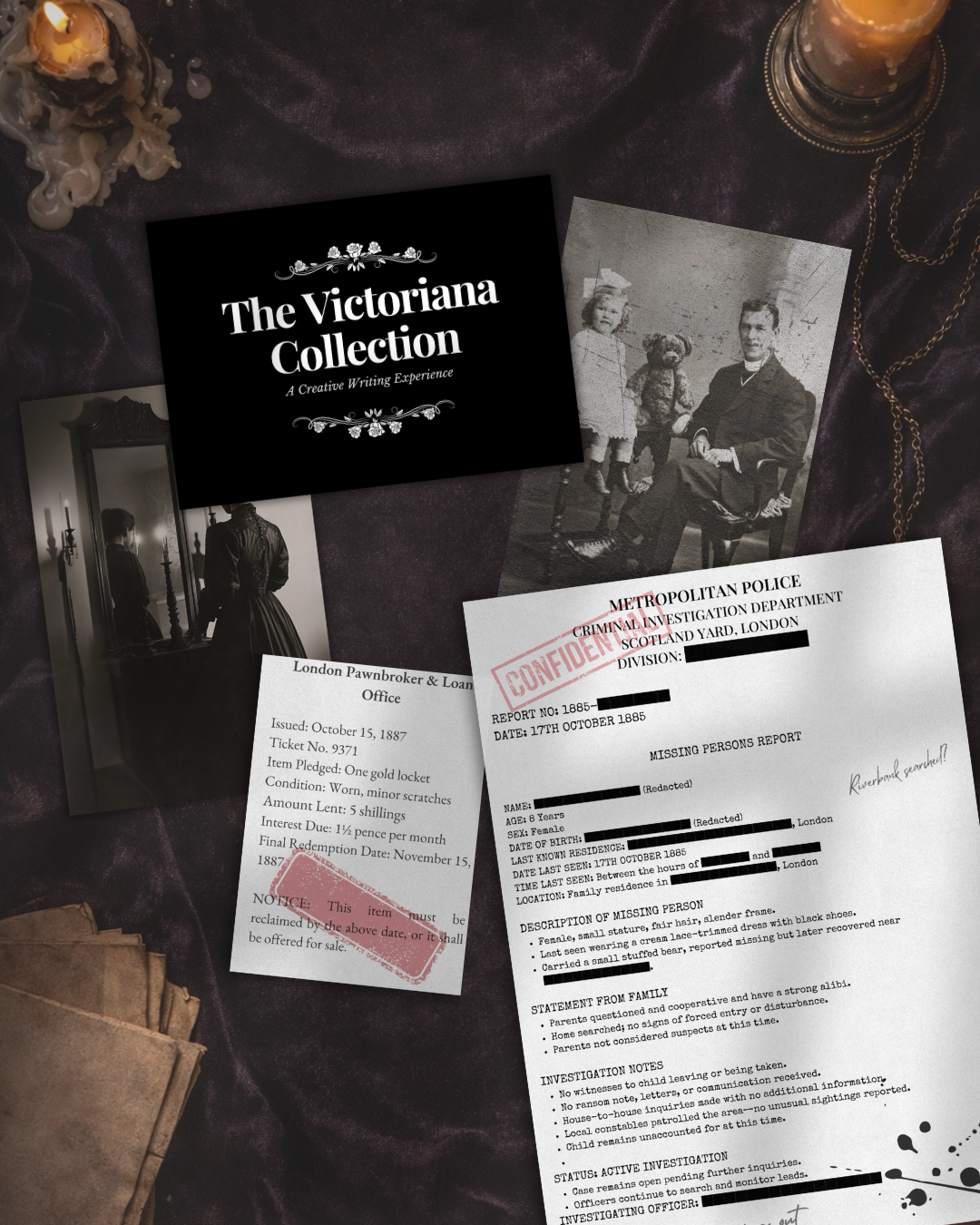
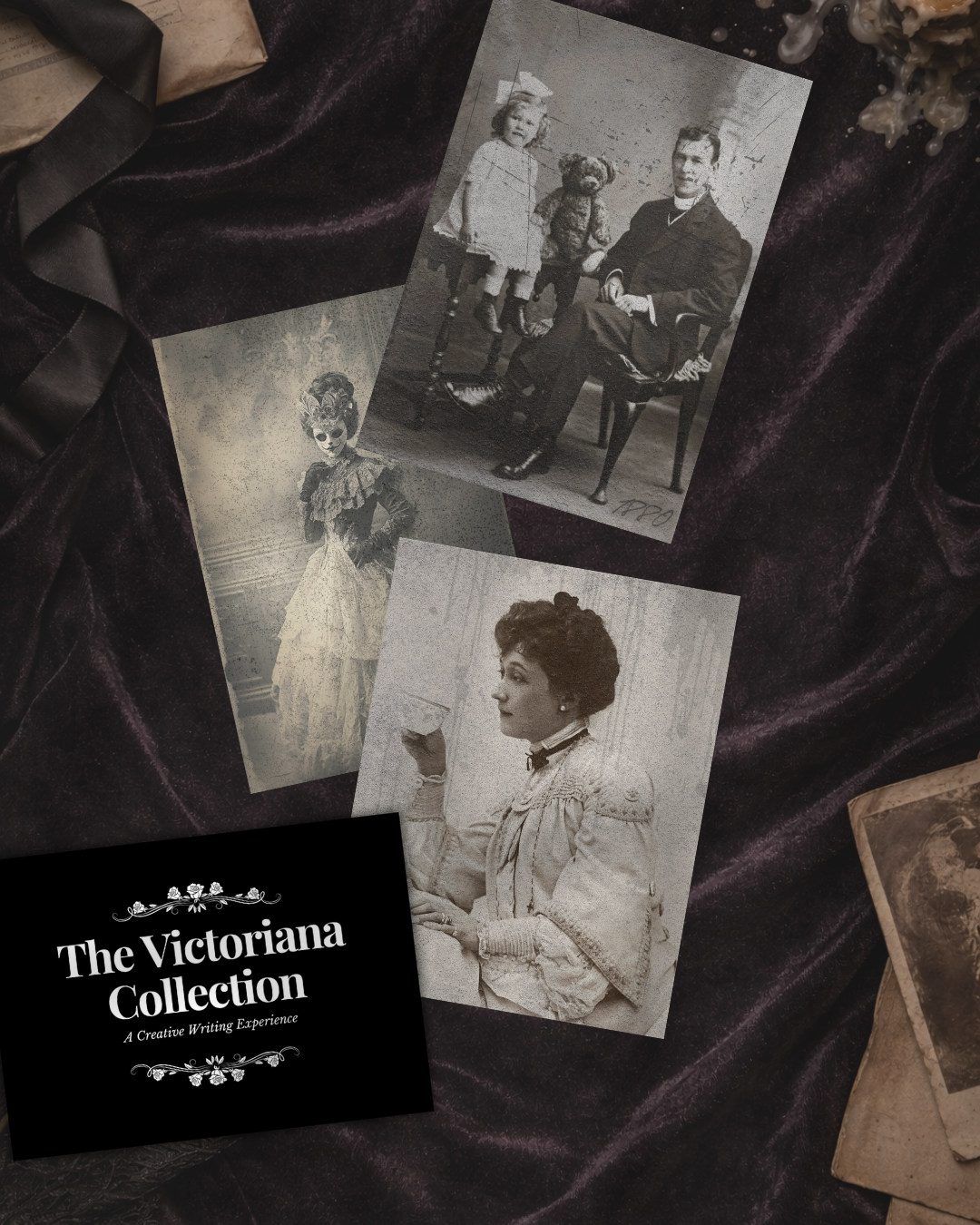
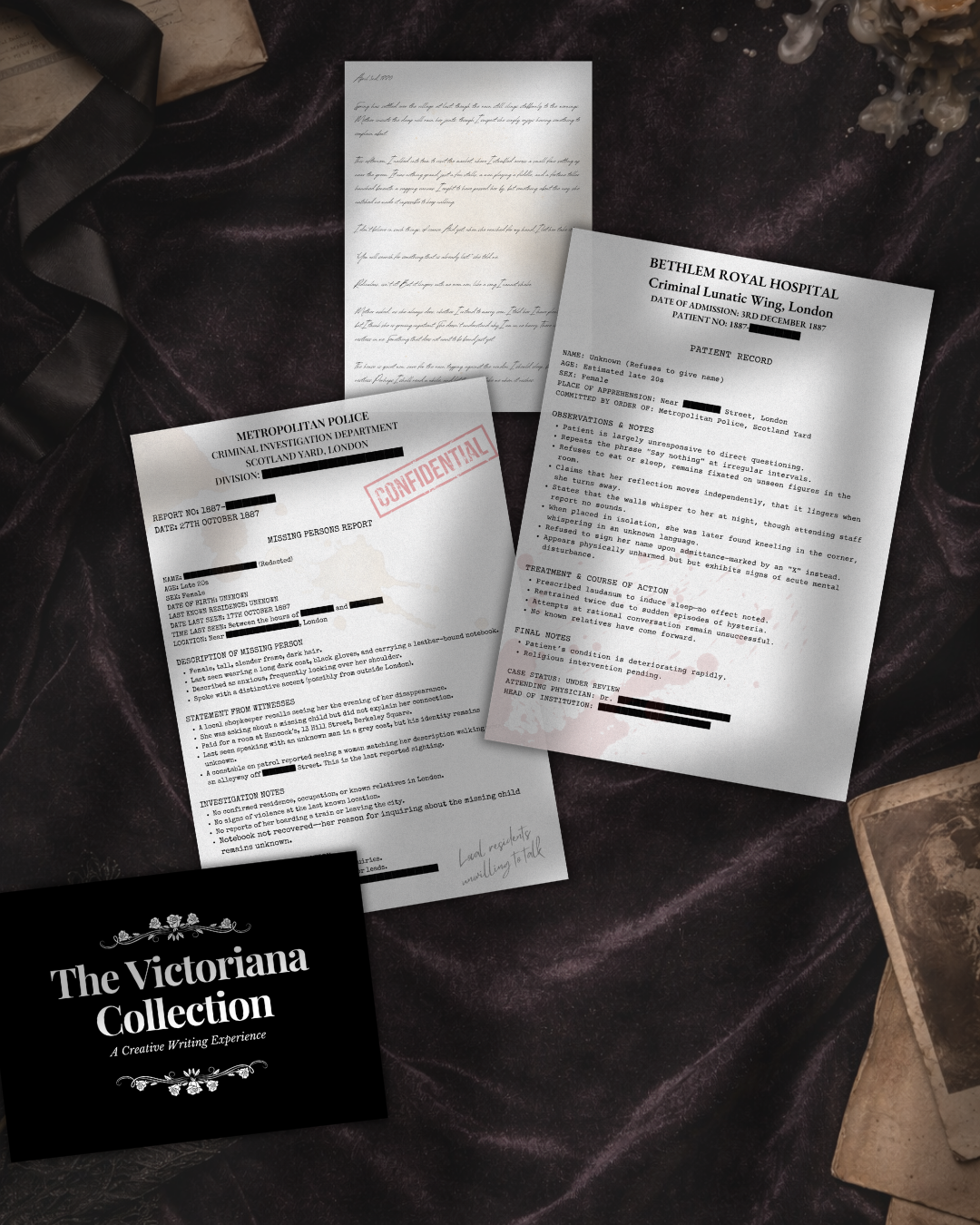
The Victoriana Collection is an immersive Storyworld Archive designed for writers, readers, teachers, and lovers of historical fiction who enjoy discovering stories through authentic-looking historical documents rather than traditional chapters. Inspired by Victorian spiritualism, gothic fiction, forgotten histories, and unexplained disappearances, it invites you to investigate a mystery by examining the evidence for yourself.
Inside the archive you'll uncover more than 50 printable Victorian-inspired artefacts, including faded letters, diary entries, missing persons reports, newspaper clippings, photographs, spiritualist notes, official records, personal mementoes, and forgotten papers. Individually they seem ordinary. Together they reveal fragments of a much larger mystery waiting to be pieced together.
Unlike a novel, there is no narrator guiding you towards a solution. There are no chapters telling you what happened. Instead, every document raises new questions, every clue suggests another possibility, and every reader notices different connections. Some stories emerge clearly, while others remain hidden beneath contradictions, omissions, and carefully guarded secrets.
Whether you're developing a Victorian historical novel, researching authentic voices and period details, creating your own mysteries, or simply love immersive storytelling, The Victoriana Collection offers a unique source of inspiration unlike any traditional writing guide.
Perfect for:
◆ Historical fiction writers looking for authentic Victorian inspiration
◆ Lovers of gothic fiction, Victorian mysteries, and historical suspense
◆ Teachers and students exploring Victorian life through primary source-style documents
◆ Worldbuilders, roleplayers, and mystery enthusiasts who enjoy uncovering stories through evidence rather than exposition
If you love writing historical fiction where every letter matters, every photograph hides a clue, and every forgotten document has a story to tell, The Victoriana Collection offers an atmospheric journey into the shadows of Victorian Britain—one that may inspire your next novel long after you've closed the final page.
Go Deeper into Victorian Historical Fiction
The strongest Victorian historical fiction does far more than recreate gas lamps, corsets, and grand houses. It captures a society in the middle of extraordinary change, where industrial progress transformed cities, scientific discoveries challenged long-held beliefs, and rigid social expectations shaped every aspect of daily life. By grounding your story in authentic historical detail while focusing on compelling human experiences, you can create novels that feel both immersive and timeless.
As you develop your story, think about how the Victorian era affected every level of society. An aristocratic heiress, a factory worker, a railway engineer, a governess, a dock labourer, a newspaper editor, and a village doctor all experienced nineteenth-century Britain in completely different ways. Choosing whose perspective you tell can transform familiar historical events into something fresh and original.
To strengthen your Victorian historical fiction, try exploring these ideas:
◆ Open with change. The Victorian era was constantly evolving. Railways, telegraphs, photography, sanitation, industry, and scientific discovery transformed everyday life. Introducing readers at the moment something changes immediately creates momentum.
◆ Let class shape every interaction. Victorian society was built upon hierarchy. Conversations, marriage, education, careers, friendships, and even body language were influenced by social class, making it one of the most powerful sources of conflict available to historical writers.
◆ Use everyday life to create authenticity. Research meals, transport, etiquette, domestic service, schooling, fashion, household routines, newspapers, entertainment, and working conditions. These small details often make a setting feel more believable than referencing famous historical events alone.
◆ Look beyond London. Victorian Britain included industrial Manchester, the Yorkshire mills, Cornish fishing villages, Scottish Highland estates, Welsh mining communities, growing seaside resorts, rural market towns, and expanding colonial settlements. Each offers its own distinctive atmosphere and storytelling opportunities.
◆ Explore forgotten voices. Many of the era's most fascinating stories belong to people rarely remembered by history—servants, seamstresses, teachers, nurses, crossing sweepers, laundresses, miners, factory workers, immigrants, children, and shopkeepers whose everyday lives reveal a different side of Victorian Britain.
◆ Build mysteries from the past. Hidden wills, abandoned houses, coded letters, missing heirs, forgotten diaries, family scandals, unexplained disappearances, and long-buried crimes all fit naturally into Victorian settings while allowing you to blend historical fiction with mystery or gothic suspense.
Victorian historical fiction rewards writers who balance historical accuracy with emotional truth. Whether you're writing a family saga, detective novel, romance, literary drama, gothic mystery, or adventure across the British Empire, focus on creating characters whose hopes, fears, and choices feel as real today as they would have in the nineteenth century.
Final Thoughts
The opening line is your reader's first step into the Victorian world. In just a sentence or two, it can establish atmosphere, introduce conflict, hint at hidden secrets, or reveal a character whose life is about to change forever. Whether your novel begins in a grand country house, a bustling railway station, a crowded factory, a remote lighthouse, or a quiet London street, a compelling opening encourages readers to ask questions—and, more importantly, to keep reading.
These 50 Victorian Historical Fiction Opening Lines are designed to inspire a wide variety of stories, from sweeping family sagas and historical romances to detective fiction, gothic mysteries, literary novels, and tales of exploration across the British Empire. Use them as complete story starters, combine them with your own ideas, or adapt them into entirely new plots that reflect the people, places, and complexities of nineteenth-century Britain.
If you're looking for even more inspiration, explore the Historical Fiction Writing Hub, where you'll find hundreds of story ideas, character names, historical settings, worldbuilding resources, and writing prompts covering every major historical era. You can also browse the Creative Writing Archive for genre guides, opening lines, plot ideas, and creative writing resources spanning fantasy, mystery, gothic fiction, romance, science fiction, mythology, fairytales, and more.
Choose Your Next Adventure