100 Victorian Pub Names with Story Ideas for Historical Fiction Writers
Victorian pubs were far more than places to buy a drink—they were the social heart of nineteenth-century communities. For many working-class families living in overcrowded streets and cramped lodgings, the local public house offered warmth, light, companionship, and a brief escape from the pressures of daily life. Long before community centres, cafés, or modern entertainment venues became commonplace, pubs were where friendships formed, news travelled, business was negotiated, and ordinary lives quietly unfolded.
Some of the greatest works of Victorian literature recognise the importance of the public house. Charles Dickens regularly used inns and taverns as places where strangers crossed paths, secrets emerged, and unforgettable characters gathered, from The Pickwick Papers to Great Expectations. Arthur Conan Doyle's Sherlock Holmes frequently follows clues through London's public houses, where landlords, bar staff, and regular patrons often know far more than they first admit. In The Moonstone by Wilkie Collins, village inns become natural meeting places where rumours spread and investigations gather momentum, while modern historical novels such as The Essex Serpent continue to use Victorian pubs as settings where every conversation has the potential to change the course of a story.
For historical fiction writers, the Victorian pub is one of the richest settings you can create. It naturally brings together characters from different walks of life who might otherwise never meet. Labourers finish long factory shifts beside travelling salesmen. Police inspectors question witnesses over a quiet pint. Journalists overhear local gossip. Railway workers exchange news from distant towns, while wealthy visitors step into private saloon bars separated from the bustle of the public bar. Every table, every back room, and every regular customer offers opportunities for conflict, friendship, romance, mystery, and unexpected alliances.
Victorian pubs were also centres of community life. Friendly societies met in private rooms to provide financial support during illness or bereavement. Trade unions organised meetings behind closed doors. Employers sometimes recruited workers there, politicians addressed local voters, and auctions, inquests, and club gatherings were regularly held beneath the same roof. Even the buildings themselves reflected Victorian society, with separate public bars, saloon bars, snug rooms, and private parlours quietly reinforcing the social divisions of the age. Understanding how these spaces functioned allows writers to create settings that feel authentic rather than simply atmospheric.
This collection of 100 Victorian Pub Names with Story Ideas is designed to help you build believable nineteenth-century settings filled with memorable characters and compelling stories. Each fictional pub includes a distinctive name, historical atmosphere, and original story inspiration, making it easy to create inns, taverns, coaching houses, and public houses that feel as though they have served their communities for generations. Whether you're writing historical mysteries, gothic fiction, romances, literary novels, or sweeping family sagas, these pubs will help bring your Victorian world vividly to life.
If you're looking for even more inspiration, explore the Historical Fiction Writing Hub for Victorian character names, occupations, story ideas, opening lines, worldbuilding resources, and historical research. You can also browse the Creative Writing Archive for hundreds of writing prompts, setting guides, and creative resources to help you build richer characters, more immersive worlds, and unforgettable historical fiction.

1. Coaching Inns
Before the arrival of the railway transformed Victorian travel, coaching inns were among the busiest places in Britain. Located along major roads between towns and cities, they welcomed stagecoaches carrying passengers, merchants, mail, and news from across the country. Travellers stopped to change horses, eat hot meals, rest for the night, and exchange stories, making these inns ideal settings for strangers meeting by chance, hidden identities, mysterious packages, and journeys that change lives. In historical fiction, a coaching inn is the perfect place for your story to begin—or for everything to take an unexpected turn.
1. The King's Coach
Standing proudly beside one of the busiest coaching roads in the county, The King's Coach has welcomed travellers for generations. Merchants, government officials, soldiers, and weary families all pause beneath its timber-framed porch before continuing their journeys. When an exhausted passenger arrives carrying a locked leather case that several strangers seem desperate to recover, the entire inn becomes caught in a dangerous mystery. This inn is perfect for historical adventures, espionage, and political intrigue.
2. The Iron Wheel
Named after the great iron-rimmed coach wheels that thunder past its windows each day, The Iron Wheel is famous for its hearty food and reliable stables. Coach drivers gather beside the fire each evening, sharing news from distant towns long before it reaches the newspapers. A stable boy notices one particular coach arriving with fewer passengers than it departed with, raising questions nobody wants answered. This setting is ideal for mysteries, disappearances, and stories built around hidden journeys.
3. The Traveller's Rest
For hundreds of miles, weary travellers know The Traveller's Rest as a welcoming refuge before the next long stretch of road. Warm fires, fresh bread, and comfortable beds make it one of the region's most respected coaching inns. Guests arrive from every corner of Britain, bringing rumours, opportunities, and secrets with them. A chance conversation over supper could alter the course of an entire novel, making this inn perfect for romances, family sagas, and historical dramas.
4. The White Stallion
Its famous white horses have become almost as well known as the inn itself, drawing travellers who expect dependable transport and excellent hospitality. Wealthy passengers dine in the private parlour while coachmen and labourers exchange stories in the public taproom below. When one of the prized horses refuses to pull a particular coach, the owner begins investigating what frightened the normally calm animal. This inn lends itself beautifully to gothic mysteries and suspense.
5. The Lantern & Compass
Positioned where two important coaching routes meet, The Lantern & Compass rarely enjoys a quiet evening. Explorers, salesmen, actors, military officers, and fortune-seekers all cross paths beneath its oak beams. The walls are decorated with maps from across the British Empire, each donated by grateful guests returning from distant lands. This coaching inn is perfect for stories involving exploration, unexpected friendships, and adventures that begin with a single conversation.
6. The Post Horn Inn
The sound of the mail coach's post horn echoes through the village several times a day, announcing another arrival at this bustling inn. Important letters, government dispatches, and valuable parcels pass through its hands with remarkable regularity. When several deliveries mysteriously disappear before reaching their destination, suspicion falls upon everyone connected to the coaching route. This setting is ideal for detective fiction, espionage, and historical thrillers.
7. The Coachman's Arms
Coach drivers have made this inn their unofficial headquarters for decades, filling the taproom with tales of impossible weather, dangerous roads, and unusual passengers. The landlord knows every regular by name and can often predict which coach will arrive simply by listening to the sound of its wheels. When an experienced driver disappears between two familiar coaching stops, rumours begin spreading faster than the coaches themselves. This pub works wonderfully for mysteries and community dramas.
8. The Galloping Mare
Famous for changing horses with extraordinary speed, The Galloping Mare is an essential stop along one of Britain's busiest coaching routes. Stable yards bustle from dawn until well after dark as fresh teams prepare for the next journey. A young groom notices that the same mysterious woman has arrived on three different coaches in the space of a week, each time using a different name. This inn is perfect for historical suspense, romance, and stories of mistaken identity.
9. The Turnpike House
Built beside a busy toll road, The Turnpike House watches an endless procession of coaches, wagons, and riders travelling through the countryside. The publican quietly keeps track of familiar faces while newcomers rarely escape notice. When someone begins avoiding the toll gate by travelling across neighbouring farmland, questions arise about exactly what—or who—they are trying to hide. This setting is ideal for crime fiction, smuggling stories, and rural mysteries.
10. The Mile Marker
Named after the old stone milestone standing outside its front door, The Mile Marker has offered food, shelter, and conversation to travellers for more than a century. Its guestbook contains signatures from famous explorers, politicians, actors, and ordinary families whose lives briefly crossed beneath the same roof. One forgotten entry written decades earlier becomes the key to solving a mystery that has puzzled the village for generations. This coaching inn is perfect for literary historical fiction, family sagas, and long-buried secrets.
2. Village Inns
The village inn was often the true centre of a Victorian community. More than simply somewhere to eat or drink, it was where neighbours exchanged news, local businesses struck deals, travelling salesmen shared stories from distant towns, and celebrations and funerals alike often ended beneath the same roof. The landlord usually knew every family for miles around, making the village pub the perfect setting for hidden rivalries, unexpected romances, long-held grudges, and mysteries that refuse to stay buried. These inns feel lived-in, familiar, and full of history, making them ideal locations for historical fiction.
11. The Fox & Lantern
Nestled beside the village green, The Fox & Lantern has welcomed generations of farmers, blacksmiths, teachers, and passing travellers. Its low oak beams, roaring fireplace, and uneven flagstone floors have witnessed countless celebrations and whispered confessions. The landlord remembers every family story, including one that nobody has spoken about for over thirty years. This inn is perfect for family sagas, village mysteries, and slow-burning literary fiction.
12. The Old Mill Inn
Standing beside an abandoned watermill, The Old Mill Inn overlooks the same river that has sustained the village for centuries. Mill workers, fishermen, and farmers gather each evening to exchange gossip while children play outside beneath the old willow trees. When unusual sounds begin echoing from the abandoned mill after dark, old legends suddenly feel far more believable. This setting works beautifully for gothic fiction, folklore, and historical mysteries.
13. The Harvest Crown
Every autumn the entire village gathers inside The Harvest Crown to celebrate another successful harvest, continuing traditions older than anyone can remember. During quieter months the inn remains the social heart of the community, where birthdays, weddings, and village meetings all take place. A disagreement over inherited farmland slowly exposes secrets that have divided neighbouring families for generations. This inn is ideal for rural dramas, romances, and multigenerational stories.
14. The Shepherd's Rest
Situated on the edge of rolling hills, The Shepherd's Rest welcomes shepherds, drovers, and weary walkers seeking warmth after long days outdoors. The walls are decorated with carved walking sticks, faded maps, and local paintings donated by regular customers. When a shepherd arrives claiming to have found something impossible on the moor, the villagers dismiss his story—until others begin seeing the same thing. This inn is perfect for folklore-inspired historical fiction and atmospheric mysteries.
15. The Swan & Willow
The Swan & Willow sits beside a quiet village pond where white swans drift peacefully beneath ancient willow trees. Its peaceful appearance makes it a favourite gathering place for schoolteachers, clergy, and local families. Beneath its calm atmosphere, however, everyone quietly watches everyone else's business. This pub lends itself wonderfully to domestic mysteries, gentle romances, and character-driven fiction.
16. The Oak & Acorn
Built around one of the oldest oak trees in the county, The Oak & Acorn has served the village since before anyone can remember. Its private parlour hosts parish meetings, harvest committees, and the occasional heated debate over local affairs. When builders discover an old boundary stone hidden beneath the tree's roots, forgotten claims to the surrounding land begin resurfacing. This setting is perfect for inheritance stories, village politics, and historical drama.
17. The Blackbird Inn
Each dawn the gardens surrounding The Blackbird Inn fill with birdsong, giving the inn its distinctive name and welcoming atmosphere. Travelling musicians often stop here, filling the taproom with songs collected from across Britain. A forgotten ballad performed one evening contains clues to a disappearance that has puzzled the village for decades. This inn is ideal for literary fiction, historical mysteries, and stories celebrating local traditions.
18. The Church Gate
Standing opposite the parish church, The Church Gate has always occupied an unusual place within village life. Weddings, christenings, funerals, and harvest festivals naturally spill across the road into its welcoming taproom. The publican knows exactly which families refuse to sit together—and why. This setting works perfectly for family dramas, romances, and stories exploring community relationships.
19. The Green Dragon
Despite its dramatic name, The Green Dragon is a cosy village inn famous for homemade pies, warm cider, and lively evenings around the fire. Local storytellers delight children and travellers alike with tales of dragons, smugglers, ghosts, and hidden treasure said to surround the nearby countryside. When an ancient carving is uncovered during repairs, those old stories suddenly begin attracting serious attention. This inn is perfect for folklore, adventure, and historical fantasy-inspired fiction.
20. The Village Bell
Named after the church bell that marks every important moment in village life, The Village Bell has witnessed births, marriages, celebrations, and farewells for generations. Its walls are lined with faded photographs, handwritten notices, and local memorabilia collected by successive landlords. When an old photograph reveals someone who officially never existed, the quiet village finds itself questioning everything it thought it knew about its own history. This inn is ideal for mysteries, literary historical fiction, and stories built around hidden family secrets.
3. London Taverns
London's Victorian taverns never truly slept. From the narrow alleys of Whitechapel to the bustling streets of Holborn and the Strand, these public houses welcomed an extraordinary mix of people every day—clerks finishing work, journalists chasing stories, detectives gathering information, dockworkers seeking warmth, actors celebrating after performances, and criminals watching from the shadows. The constant flow of strangers made London's taverns ideal places for overheard conversations, secret meetings, hidden identities, and dangerous discoveries. For historical fiction writers, few settings offer more opportunities for mystery, suspense, and unexpected encounters.
21. The Black Anchor
Hidden down a narrow lane not far from the Thames, The Black Anchor serves sailors, dockworkers, customs officers, and merchants returning from long voyages. The walls display faded maps and weather-beaten ship models collected over decades. When a regular customer leaves behind a sea chest that nobody dares open, rumours spread long before the authorities arrive. This tavern is perfect for maritime mysteries, smuggling stories, and Victorian adventures.
22. The Copper Lantern
Its polished copper lantern glows brightly above the doorway each evening, guiding customers through London's evening fog. Clerks, solicitors, journalists, and police officers gather here after work, often discussing the day's biggest stories over supper. One quiet listener begins noticing that several unrelated conversations all point towards the same unsolved crime. This setting works beautifully for detective fiction, journalism, and historical thrillers.
23. The Thames Crown
Standing within sight of the river, The Thames Crown has become a favourite meeting place for ship captains, warehouse managers, and businessmen negotiating valuable cargoes. Every tide seems to bring new faces through its doors, each carrying stories from distant ports. When an expensive shipment disappears before reaching the docks, suspicion falls upon someone who has been drinking in the tavern every evening for weeks. This pub is ideal for commercial intrigue, crime fiction, and international mysteries.
24. The White Lion Tavern
The White Lion has earned a reputation as one of the busiest taverns near London's legal district, attracting barristers, clerks, magistrates, and newspaper reporters. Heated debates regularly continue long after the courthouse has closed for the day. A young law clerk overhears two strangers discussing a trial that has not yet taken place, setting in motion an investigation into judicial corruption. This tavern is perfect for courtroom dramas, political intrigue, and historical mysteries.
25. The Gaslight Arms
Rows of gleaming gas lamps illuminate the polished mahogany bar of The Gaslight Arms, creating an inviting refuge from the city's crowded streets. Musicians perform most evenings while visitors from every social class briefly forget the pressures of Victorian life. A performer notices the same mysterious audience member attending every show without ever speaking to anyone. This setting lends itself wonderfully to suspense, romance, and literary fiction.
26. The King's Exchange
Located close to London's financial district, The King's Exchange attracts bankers, merchants, investors, and businessmen discussing fortunes over brandy and cigars. Deals worth thousands of pounds are agreed beneath its elegant ceilings without ever reaching official paperwork. When confidential financial information begins appearing in rival businesses, suspicion quietly spreads among the tavern's most trusted regulars. This public house is perfect for business dramas, espionage, and economic intrigue.
27. The Clockmaker's Arms
Surrounded by workshops filled with jewellers, printers, engravers, and skilled craftsmen, The Clockmaker's Arms welcomes artisans whose work demands extraordinary precision. Every table seems occupied by people discussing inventions, commissions, and ambitious new ideas. A watchmaker accidentally leaves behind a pocket watch containing a hidden compartment that no one can explain. This tavern is ideal for invention, mystery, and stories celebrating Victorian craftsmanship.
28. The Raven & Crown
The Raven & Crown occupies an ageing Georgian building whose reputation is almost as famous as its clientele. Detectives, journalists, theatre performers, and politicians all pass through its doors, making discretion one of the landlord's greatest talents. When a respected customer suddenly disappears, everyone remembers seeing them—but nobody recalls exactly when they left. This setting is perfect for detective fiction, gothic mysteries, and political thrillers.
29. The Iron Gate
Standing beside one of London's busiest markets, The Iron Gate welcomes traders, porters, delivery drivers, and customers from dawn until late evening. The constant movement of goods means strangers rarely attract attention, making it an ideal meeting place for people who wish to remain unnoticed. A market porter observes the same sealed crate arriving every week despite no record of anyone collecting it. This tavern is perfect for crime fiction, smuggling stories, and urban mysteries.
30. The Midnight Bell
Open later than most neighbouring taverns, The Midnight Bell attracts night-shift workers, newspaper printers, railway employees, police constables, and travellers arriving after dark. The conversations here are quieter, the faces more mysterious, and the stories often stranger than those heard elsewhere in the city. One rainy evening, a woman arrives carrying a bloodstained carpet bag before vanishing without leaving her name. This tavern is ideal for gothic fiction, Victorian crime novels, and atmospheric historical suspense.
4. Railway Inns
The arrival of the railway transformed Victorian Britain, shrinking journeys that once took days into mere hours. Almost overnight, railway stations became gateways to opportunity, bringing tourists, businessmen, performers, soldiers, politicians, and families into towns that had previously felt remote. Railway inns flourished beside stations, offering food, accommodation, meeting rooms, and a place to wait before the next departure. Constantly filled with strangers arriving and leaving, these pubs became natural settings for chance encounters, mistaken identities, hurried departures, secret exchanges, and mysteries that begin with a single train ticket.
31. The Steam Engine
Standing directly opposite the railway station, The Steam Engine is the first building many visitors see when they arrive in town. Railway workers mingle with commercial travellers and curious tourists beneath ceilings stained by decades of coal smoke drifting from nearby locomotives. When a passenger repeatedly arrives on the evening express but never boards a return train, the landlord begins asking questions. This railway inn is perfect for mysteries, romances, and stories built around unexpected arrivals.
32. The Signal House
Named after the signal box overlooking the station, The Signal House has become a favourite gathering place for station masters, guards, telegraph operators, and engine drivers finishing long shifts. Every conversation revolves around delayed trains, unusual passengers, and news travelling along the railway. A signalman quietly admits that one train appears in his records despite never arriving at the station. This setting is ideal for detective fiction, historical suspense, and railway mysteries.
33. The Iron Horse
The Iron Horse celebrates the engineering marvels that transformed Victorian travel, with polished brass fittings, railway maps, and framed locomotive prints decorating its walls. Engineers, investors, and curious travellers gather here to discuss Britain's rapidly expanding rail network. When confidential plans for a new railway line disappear from an engineer's luggage, suspicion falls on everyone staying at the inn. This pub works beautifully for industrial dramas, espionage, and historical adventures.
34. The Platform Inn
Built beside one of the county's busiest stations, The Platform Inn rarely enjoys a quiet afternoon. Families waiting for connections, travelling performers, wealthy businessmen, and soldiers heading home all pass through its crowded dining room. A forgotten suitcase left beneath a table contains documents linking several seemingly unrelated passengers. This railway inn is perfect for ensemble stories, historical thrillers, and chance encounters that change lives.
35. The Station Master's Arms
Originally opened by the family of the town's first station master, this respected inn has become an unofficial meeting place for railway employees from across the region. Every timetable alteration and local rumour is discussed over supper before appearing anywhere else. When trains begin arriving with unexplained delays, the regulars suspect the railway itself is hiding something. This setting lends itself to community mysteries, industrial fiction, and stories celebrating railway life.
36. The Red Signal
Its unusual name comes from the warning signal standing just beyond the station platforms, visible through the inn's front windows. Railway guards often stop here after difficult shifts, sharing stories of storms, breakdowns, and remarkable journeys. One guard becomes convinced someone has deliberately altered the signals to cause a catastrophic accident. This pub is ideal for suspense, sabotage, and historical detective fiction.
37. The First Class
Designed to attract wealthier passengers, The First Class offers elegant dining rooms, polished oak panelling, and private parlours away from the bustle of the station. Lawyers, industrialists, politicians, and visiting aristocrats often conduct business over dinner while ordinary travellers gather elsewhere. A discreet waiter overhears negotiations that could alter the future of the entire town. This inn is perfect for political intrigue, business drama, and upper-class historical fiction.
38. The Ticket Office
Just a short walk from the booking hall, The Ticket Office welcomes travellers whose journeys have been delayed by weather, mechanical problems, or missed connections. The landlord has learned never to ask too many questions when unfamiliar faces arrive carrying expensive luggage. When several passengers claiming not to know one another all book rooms on the same evening, the staff begin to suspect an extraordinary coincidence—or something far more dangerous. This setting is perfect for mysteries, espionage, and hidden identities.
39. The Whistle & Wheel
Named after the unmistakable sound of steam whistles echoing across the platforms, The Whistle & Wheel is a lively establishment where railway workers celebrate promotions and mourn colleagues lost in accidents. Musicians often entertain crowds while travellers exchange stories from every corner of Britain. A young porter overhears a conversation about a robbery scheduled to take place before the next morning's express arrives. This railway inn is ideal for crime fiction, historical adventures, and railway communities.
40. The Last Departure
The Last Departure keeps its doors open until the final train has left for the evening, serving late arrivals, exhausted railway staff, and travellers forced to stay overnight. As the station falls silent, the atmosphere changes completely, with only a handful of guests remaining around the fire. One winter night, a stranger checks into the inn carrying a railway ticket printed for a destination that officially closed years earlier. This setting is perfect for gothic historical fiction, literary mysteries, and atmospheric Victorian suspense.
5. Riverside & Dockside Public Houses
Victorian Britain's rivers and docks were among the busiest places in the world. Every day, merchant ships, fishing boats, naval vessels, and steamships arrived carrying cargo, passengers, and news from across the globe. The pubs that lined these waterfronts became gathering places for sailors, dockworkers, customs officers, shipbuilders, merchants, fishermen, and travellers preparing to leave Britain—or returning home after months at sea. Constantly filled with unfamiliar faces, these public houses are perfect settings for smuggling, maritime adventures, mysterious disappearances, hidden cargo, and stories where every arrival brings new possibilities.
41. The Salt Gull
Standing beside a weathered harbour wall, The Salt Gull has welcomed generations of fishermen and sailors seeking warmth after long days at sea. Nets hang from the beams, and every table carries stories of storms, shipwrecks, and remarkable voyages. When a badly damaged lifeboat drifts into the harbour without a single crew member aboard, the regulars begin searching for answers before the authorities arrive. This dockside inn is perfect for maritime mysteries, survival stories, and historical adventures.
42. The Harbour Bell
Named after the great bell that announces arriving ships through thick sea fog, The Harbour Bell rarely enjoys a quiet evening. Merchants negotiate contracts while captains celebrate safe returns and families wait anxiously for loved ones to come ashore. A sailor arrives carrying a sealed wooden chest addressed to someone who died years earlier. This pub is ideal for family sagas, mysteries, and stories of reunion and loss.
43. The Mariner's Arms
The Mariner's Arms has become famous among sailors travelling between Britain's busiest ports. Its walls are covered with carved ships, faded charts, and souvenirs collected from every corner of the world. Every newcomer brings fresh stories of distant places, strange customs, and dangerous waters. When several experienced captains refuse to discuss the same recent voyage, curiosity quickly turns into suspicion. This setting is perfect for nautical adventures and historical thrillers.
44. The Rope & Anchor
Situated beside the ropewalks where rigging is produced for the Royal Navy and merchant fleets, The Rope & Anchor attracts shipbuilders, rope makers, dock labourers, and naval officers alike. The air smells of tar, timber, and the sea, while the taproom echoes with conversations about new vessels under construction. A shipbuilder quietly admits that someone has been tampering with the rigging of newly launched ships. This inn works beautifully for mysteries, industrial fiction, and maritime drama.
45. The Pilot's Rest
Harbour pilots responsible for guiding ships safely through dangerous channels have made The Pilot's Rest their unofficial headquarters. Their knowledge of tides, currents, and hidden sandbanks is unmatched anywhere along the coast. When an experienced pilot insists a ship vanished where no ship could possibly disappear, even the most sceptical regulars begin to wonder what really happened offshore. This public house is perfect for gothic coastal fiction, mysteries, and adventure.
46. The Compass Rose
The Compass Rose welcomes explorers, merchants, naval officers, and travellers preparing for journeys across the world. Large maps cover the walls, with visitors marking the places they have travelled using coloured pins and handwritten notes. A faded map donated decades earlier appears to show an island no modern chart recognises. This inn lends itself to exploration stories, archaeological adventures, and literary historical fiction.
47. The Dockmaster's Arms
Standing beside the busiest warehouses on the waterfront, The Dockmaster's Arms is where cargo supervisors, customs officers, warehouse clerks, and ship captains gather after work. Business agreements are often completed here long before official paperwork is signed. When valuable cargo repeatedly disappears without leaving the docks, suspicion quietly falls upon several respected regulars. This setting is ideal for crime fiction, commercial intrigue, and historical mysteries.
48. The Weathered Mast
Built using timber salvaged from a shipwreck many years ago, The Weathered Mast is one of the oldest public houses on the waterfront. Locals insist parts of the building still creak whenever storms approach, giving rise to countless ghost stories among sailors. A mysterious visitor arrives searching for the identity of the vessel whose timbers built the inn itself. This pub is perfect for gothic fiction, ghost stories, and maritime mysteries.
49. The Smuggler's Lantern
Although the landlord strongly denies its reputation, everyone in town suspects The Smuggler's Lantern once played a part in the coastal smuggling trade. Hidden cellars, unusually thick walls, and a forgotten tunnel leading towards the shoreline continue to fuel local rumours. When renovation work uncovers a concealed room filled with abandoned cargo, long-forgotten crimes suddenly become very current. This setting is ideal for historical thrillers, mysteries, and adventure novels.
50. The Tide's End
The Tide's End stands at the edge of the harbour where land finally gives way to the open sea. Families gather here to welcome ships home, while departing sailors share one final meal before months away from Britain. Every farewell carries hope, uncertainty, and the possibility that someone may never return. When a familiar vessel sails into port flying the wrong colours, the entire waterfront senses that something has gone terribly wrong. This dockside inn is perfect for emotional historical fiction, maritime adventures, and stories shaped by journeys across the sea.
6. Country Estate Inns
Scattered across the countryside near grand houses, hunting estates, and sprawling parkland, country estate inns occupied a unique place in Victorian society. They welcomed everyone from local farmers and gamekeepers to visiting aristocrats, estate workers, travelling artists, and wealthy guests arriving for shooting parties or seasonal celebrations. Unlike village pubs, these inns often existed in the shadow of a great house, meaning conversations frequently revolved around estate affairs, changing fortunes, family scandals, and the lives of those who lived both above and below stairs. They are ideal settings for historical fiction exploring class, inheritance, romance, and the hidden tensions that existed beneath Victorian respectability.
51. The Stag & Oak
Situated beside the entrance to one of the county's largest deer parks, The Stag & Oak has served estate workers and visiting sportsmen for generations. Its walls are decorated with antlers, oil paintings, and faded maps of the surrounding woodland. Every autumn, hunting parties fill the taproom with stories that grow taller as the evening progresses. When a gamekeeper discovers an unfamiliar set of footprints leading deep into the estate, local gossip quickly turns into genuine concern. This inn is perfect for country house mysteries, historical adventures, and gothic fiction.
52. The Huntsman's Rest
For decades, riders have gathered at The Huntsman's Rest before setting out across the surrounding countryside. Stable boys, landowners, veterinarians, and huntsmen all know one another by name, creating a close-knit community built upon shared traditions. When an experienced horse refuses to approach a particular stretch of woodland, long-forgotten local legends begin resurfacing. This setting is ideal for rural mysteries, folklore, and historical suspense.
53. The Cedar Crown
Standing beneath magnificent cedar trees planted by the estate's original owner, The Cedar Crown enjoys an atmosphere of quiet elegance without losing its welcoming character. Estate managers discuss business over supper while gardeners and servants enjoy the public taproom after long working days. A gardener overhears a conversation suggesting that the family will soon lose the estate altogether. This inn works beautifully for inheritance stories, family sagas, and literary historical fiction.
54. The Keeper's Lodge
Originally built to house the estate's senior gamekeeper, The Keeper's Lodge gradually evolved into a respected country inn serving both local residents and visiting guests. Hunters, foresters, naturalists, and travellers all find shelter beneath its heavy oak beams. When an injured stranger appears from the surrounding woodland with no memory of how they arrived, the landlord realises someone is hiding far more than their name. This setting is perfect for adventure, mystery, and psychological historical fiction.
55. The Pheasant's Feather
Famous for its excellent food and welcoming hospitality, The Pheasant's Feather becomes particularly lively during the shooting season when wealthy visitors arrive from across Britain. Servants, beaters, and aristocrats briefly occupy the same building, even if they rarely share the same rooms. A missing heirloom disappears during one particularly lavish estate dinner, leaving every guest under suspicion. This inn lends itself wonderfully to classic country house mysteries and historical dramas.
56. The Green Lodge
Overlooking rolling farmland and ornamental lakes, The Green Lodge has become a favourite stopping place for artists, writers, and walkers seeking inspiration from the surrounding landscape. The quiet atmosphere encourages conversation between strangers who might never otherwise meet. When a landscape painter repeatedly includes the same mysterious woman in otherwise ordinary countryside scenes, curiosity spreads throughout the village. This inn is perfect for romances, literary fiction, and gentle mysteries.
57. The Foxglove Arms
The Foxglove Arms sits beside the estate's walled gardens, where generations of gardeners have cultivated flowers, orchards, and rare plants. Estate staff gather here each evening to exchange news long before it reaches the house itself. During renovations to the gardens, workers uncover an abandoned stone staircase leading somewhere no living resident remembers. This pub is ideal for gothic fiction, hidden histories, and archaeological mysteries.
58. The Gamekeeper's Horn
Recognisable by the carved hunting horn hanging above its doorway, this popular inn attracts foresters, stable hands, land agents, and neighbouring farmers throughout the year. Visitors often exchange information about wildlife, weather, and changes taking place across the surrounding estates. When poachers begin targeting valuable deer, suspicion falls upon someone who appears to know the estate almost as well as its own staff. This setting works beautifully for crime fiction, adventures, and rural suspense.
59. The Manor Gate
Standing opposite the imposing gates of Ashcombe Manor, The Manor Gate has watched generations of owners come and go. Every engagement, funeral, auction, and celebration connected to the estate eventually finds its way into conversation around the inn's fireplace. A visiting solicitor quietly admits that the newest owner may not be the rightful heir after all. This inn is perfect for inheritance disputes, historical mysteries, and family dramas.
60. The Golden Bridle
The Golden Bridle serves travellers approaching the estate from the old coaching road, offering elegant accommodation alongside a welcoming public taproom. Carriages regularly arrive carrying distinguished guests whose reputations often precede them. One winter evening, a carriage arrives exactly on schedule—but its passengers have vanished without leaving a trace. This country estate inn is ideal for gothic mysteries, historical thrillers, and stories where appearances conceal far darker truths.
7. Industrial & Factory Pubs
As factories, mills, foundries, and workshops transformed Victorian Britain, a new kind of public house emerged alongside them. Industrial pubs became gathering places for mill workers, engineers, railway labourers, foremen, clerks, and tradesmen finishing long shifts in noisy, demanding workplaces. They were places to celebrate payday, discuss working conditions, organise friendly societies and trade unions, and escape the relentless pace of industrial life for a few precious hours. These pubs are ideal settings for stories of ambition, social change, labour movements, friendship, and mysteries hidden within Britain's rapidly expanding industrial towns.
61. The Foundry Arms
Standing opposite the town's largest iron foundry, The Foundry Arms fills each evening with blacksmiths, moulders, engineers, and furnace workers still carrying traces of soot from the day's labour. The walls glow warmly beneath polished brass lamps that contrast sharply with the smoke-blackened streets outside. When one respected foreman disappears immediately after collecting his wages, the regulars quietly begin asking questions the factory owners would rather avoid. This public house is perfect for industrial mysteries, social dramas, and historical thrillers.
62. The Weaver's Rest
The rhythmic sound of nearby textile mills forms the constant backdrop to life at The Weaver's Rest. Mill workers gather after exhausting shifts to share meals, exchange gossip, and discuss rumours spreading across the factory floor. When a young spinner claims someone has been deliberately damaging expensive machinery after dark, few believe her—until another accident follows. This inn is ideal for historical drama, labour stories, and community mysteries.
63. The Steam Hammer
Named after the enormous engineering works nearby, The Steam Hammer welcomes machinists, mechanics, boilermakers, and inventors fascinated by the rapid advances of Victorian industry. Drawings of locomotives and bridges decorate its walls, celebrating the engineering achievements shaping Britain. An ambitious apprentice engineer arrives with plans for a revolutionary invention, but someone seems determined to prevent him from presenting it. This setting works beautifully for stories of innovation, rivalry, and industrial espionage.
64. The Mill Bell
Every evening the mill bell signals the end of another demanding shift, and within minutes The Mill Bell fills with familiar faces seeking warmth and conversation. Families often meet here after work before walking home together through the factory district. When the bell rings unexpectedly in the middle of the night, workers rush towards the mill fearing the worst. This public house is perfect for disaster stories, historical suspense, and community-driven fiction.
65. The Iron Chimney
Recognisable by the tall brick chimney rising behind it, The Iron Chimney sits at the heart of a rapidly growing industrial neighbourhood. Factory clerks mix with labourers, warehouse managers, and railway workers beneath ceilings stained by decades of coal smoke. A clerk overhears discussions suggesting the owners are secretly planning to close the factory without warning. This inn lends itself to social history, family drama, and stories exploring the changing industrial landscape.
66. The Boiler House
Built beside one of the town's oldest engineering works, The Boiler House has become a favourite gathering place for skilled craftsmen who take immense pride in their trade. Heated debates about machinery, inventions, and railway expansion continue late into the evening around its roaring fire. When an explosion damages the nearby works, several regulars suspect it was no accident. This setting is ideal for mysteries, industrial thrillers, and historical adventures.
67. The Cotton Exchange
Situated near the warehouses where bales of cotton arrive daily, The Cotton Exchange attracts merchants, warehouse clerks, mill owners, and textile workers alike. The conversations range from international trade to local politics, with fortunes often rising and falling alongside the price of cotton. When valuable shipments begin disappearing between the docks and the mills, suspicion spreads throughout the neighbourhood. This public house is perfect for commercial intrigue, crime fiction, and historical mysteries.
68. The Engineer's Lantern
The Engineer's Lantern has earned a reputation as the meeting place for ambitious inventors, surveyors, architects, and railway designers. Sketches, blueprints, and calculations frequently cover its tables as ideas are debated over supper. A forgotten notebook left behind after one particularly lively evening contains designs that someone is willing to kill for. This inn works beautifully for engineering fiction, espionage, and Victorian adventures.
69. The Worker's Hearth
Simple, welcoming, and always busy, The Worker's Hearth provides a rare sense of community in the middle of an expanding factory town. Families gather here on Sundays while trade societies and charitable groups use the upstairs room for meetings throughout the week. A routine gathering unexpectedly reveals that several families are connected by a secret stretching back more than twenty years. This setting is ideal for family sagas, social history, and literary historical fiction.
70. The Coal Wagon
Located beside the railway sidings where coal is unloaded throughout the day, The Coal Wagon welcomes miners, railway porters, engine drivers, and dock labourers passing through the industrial district. Every table seems occupied by people whose livelihoods depend upon Britain's growing transport network. One evening, a coal wagon arrives carrying far more than fuel, drawing the regulars into a mystery that reaches well beyond the town itself. This public house is perfect for crime fiction, railway adventures, and industrial-era suspense.
8. Historic & Legendary Inns
Some Victorian pubs had already stood for centuries by the time Queen Victoria came to the throne. Originally coaching inns, medieval taverns, monastery guest houses, or market alehouses, these establishments carried generations of stories within their walls. Their ancient oak beams, uneven floors, hidden cellars, and weathered fireplaces inspired local legends that blurred the line between history and folklore. For historical fiction writers, these inns are ideal settings for gothic mysteries, ghost stories, hidden treasures, forgotten crimes, and family secrets stretching back across generations.
71. The Black Raven
The Black Raven occupies one of the oldest buildings in the county, its blackened timber frame leaning slightly after centuries of storms and hard winters. Locals claim every landlord has added another story to its already remarkable history. When builders repairing the chimney uncover a sealed room hidden behind the fireplace, the village begins questioning everything it thought it knew about the inn's past. This setting is perfect for gothic fiction, historical mysteries, and hidden histories.
72. The Hanging Oak
Named after the enormous oak tree standing outside its entrance, The Hanging Oak has long been associated with whispered ghost stories and local superstition. Travellers often pause to admire the tree without realising the darker legends attached to it. An old diary discovered beneath loose floorboards suggests the stories may be based upon real events rather than village folklore. This inn is ideal for gothic novels, psychological mysteries, and historical suspense.
73. The Crown & Griffin
According to local tradition, a carved griffin above the entrance has watched over the inn since Tudor times. Merchants, pilgrims, soldiers, and noblemen have all passed beneath it on journeys now forgotten by history. When an elderly guest recognises the griffin from a centuries-old family manuscript, an investigation begins into the building's remarkable origins. This public house lends itself beautifully to family sagas, adventures, and literary historical fiction.
74. The Pilgrim's Lantern
Standing beside an ancient church, The Pilgrim's Lantern once offered shelter to travellers making religious journeys across England. Although pilgrimage has faded into history, the inn still welcomes visitors drawn by its remarkable age and peaceful surroundings. During renovations, workers uncover an old stone passage leading beneath the churchyard towards the cellar. This setting is perfect for archaeological mysteries, gothic fiction, and stories of forgotten faith.
75. The Three Crows
Nobody remembers exactly how The Three Crows received its unusual name, but every generation seems to invent a different explanation. Some speak of smugglers, others of highwaymen, while a few insist the birds themselves never leave the inn's roof for very good reason. When three unfamiliar strangers arrive on the same evening, villagers cannot help noticing the coincidence. This inn works wonderfully for folklore-inspired fiction, mysteries, and atmospheric historical novels.
76. The Bell & Candle
The Bell & Candle sits at the end of a winding cobbled street, illuminated each evening by rows of flickering lanterns that make the ancient building appear almost timeless. Its low ceilings and hidden alcoves have sheltered travellers for hundreds of years, many of whom have left messages carved discreetly into the timber beams. One forgotten inscription becomes the first clue in a mystery stretching back nearly a century. This public house is ideal for literary mysteries, ghost stories, and historical adventures.
77. The White Hart
Once a prosperous coaching inn, The White Hart now survives largely on its remarkable reputation and centuries of local tradition. Family portraits, faded hunting prints, and antique furniture fill every room, creating the impression that time has barely touched the building. When an art historian recognises one portrait as something thought lost for generations, the quiet inn suddenly attracts attention from far beyond the village. This setting is perfect for inheritance stories, art mysteries, and historical dramas.
78. The Old Abbey Inn
Built using stone reclaimed from a dissolved medieval abbey, The Old Abbey Inn carries fragments of history within its very walls. Guests often remark upon the unusual carvings built into the fireplaces and staircases without realising their true origin. During a violent storm, part of the cellar wall collapses, revealing an untouched chamber sealed for centuries. This inn is perfect for gothic fiction, archaeological discoveries, and supernatural mysteries.
79. The King's Head
The King's Head proudly displays portraits of monarchs stretching back generations, reflecting centuries of changing British history. Village elders enjoy debating which stories are true and which have simply grown taller with time. When a faded royal document is discovered hidden behind one of the portraits, historians arrive hoping to authenticate a remarkable piece of forgotten history. This setting is ideal for historical mysteries, political intrigue, and literary fiction.
80. The Whispering Hearth
No one agrees why the old fireplace at The Whispering Hearth carries its unusual name, although regular customers claim voices seem to echo strangely whenever the fire burns low. Whether caused by clever architecture or village imagination, the stories continue attracting curious visitors year after year. When a traveller hears a name whispered from the empty room and later discovers it belongs to a woman who vanished decades earlier, the inn's legends become impossible to ignore. This public house is perfect for gothic historical fiction, ghost stories, and atmospheric mysteries.
9. Elegant Saloon Bars
Not every Victorian public house catered primarily to labourers and travellers. As towns and cities expanded, many larger establishments developed elegant saloon bars designed for wealthier customers seeking greater comfort, privacy, and refinement. Plush carpets, polished mahogany, etched glass, upholstered seating, and attentive table service created an atmosphere closer to a gentlemen's club than a bustling taproom. Merchants, solicitors, doctors, industrialists, politicians, artists, and prosperous professionals met here to negotiate business, discuss current affairs, and quietly shape the future of their communities. These saloon bars are perfect settings for sophisticated mysteries, political intrigue, literary fiction, and upper-class Victorian dramas.
81. The Imperial Crown
The Imperial Crown occupies one of the grandest corners of the town, with crystal chandeliers, polished oak panelling, and brass fittings that reflect the prosperity of the British Empire. Wealthy merchants and visiting dignitaries often reserve private rooms for confidential meetings away from public attention. When a distinguished guest disappears during an exclusive dinner, every respectable attendee suddenly becomes a potential suspect. This saloon bar is perfect for historical mysteries, political intrigue, and literary fiction.
82. The Golden Hart
Known for its exceptional wine cellar and elegant dining room, The Golden Hart attracts barristers, physicians, bankers, and successful businessmen each evening. Soft piano music drifts through the saloon while discreet waiters ensure conversations remain uninterrupted. A young solicitor overhears fragments of a discussion that appears to predict a financial collapse weeks before it happens. This setting works beautifully for business dramas, detective fiction, and Victorian suspense.
83. The Royal Exchange
Located close to the commercial district, The Royal Exchange has become the preferred meeting place for investors, industrialists, shipping magnates, and newspaper proprietors. Fortunes are made and lost over quiet dinners long before official announcements reach the public. When confidential documents disappear from a locked private dining room, suspicion falls upon some of the city's most influential citizens. This public house is ideal for commercial intrigue, espionage, and historical thrillers.
84. The Silver Oak
Elegant yet understated, The Silver Oak prides itself on attracting thoughtful conversation rather than noisy celebration. Professors, authors, architects, and artists gather beneath its high ceilings to debate literature, science, and the changing face of Victorian Britain. A celebrated novelist begins describing a murder in remarkable detail—days before the crime actually occurs. This saloon bar is perfect for literary fiction, psychological mysteries, and intellectual dramas.
85. The Victoria Rooms
Named in honour of Queen Victoria herself, The Victoria Rooms combines refined hospitality with impeccable service expected by the town's professional classes. Separate private parlours allow discreet meetings away from curious eyes, making it popular with politicians and prominent families alike. A waiter accidentally delivers the wrong sealed letter, placing an unsuspecting guest at the centre of a political scandal. This setting lends itself beautifully to romances, political fiction, and social dramas.
86. The Merchant's Table
The Merchant's Table has become famous for long business lunches where contracts worth thousands of pounds are agreed with little more than a handshake. Visiting traders from across Britain regularly gather here before continuing their journeys by rail. When a respected merchant fails to appear for an important meeting, his untouched table becomes the first clue in a much larger mystery. This public house is ideal for commercial fiction, historical mysteries, and stories of ambition.
87. The Ambassador
Frequented by diplomats, military officers, academics, and wealthy travellers returning from abroad, The Ambassador is filled with maps, globes, and artefacts collected from across the world. Conversations drift effortlessly between politics, exploration, and international affairs. A mysterious visitor leaves behind an embroidered dispatch case containing papers written in several different languages. This saloon bar is perfect for espionage, historical adventures, and international intrigue.
88. The Crystal Parlour
With etched glass screens, velvet seating, and sparkling gaslight reflected from polished mirrors, The Crystal Parlour represents Victorian elegance at its finest. Afternoon teas are as popular as evening dinners, attracting fashionable ladies alongside prosperous businessmen. A valuable diamond necklace disappears during a charity reception attended by the town's most respectable families. This setting is ideal for society mysteries, romances, and upper-class dramas.
89. The Cedar Room
Hidden behind an unassuming entrance, The Cedar Room offers privacy to those wishing to conduct sensitive business away from public attention. Lawyers, estate agents, doctors, and industrialists quietly occupy its secluded booths throughout the day. The landlord notices that one particular private room has been booked every Thursday for years—always by different people using the same initials. This public house works beautifully for conspiracies, detective fiction, and historical suspense.
90. The Regent's Saloon
The Regent's Saloon is considered one of the most fashionable establishments in the city, where successful professionals celebrate achievements and influential visitors are entertained in style. Musicians perform softly while waiters move almost unnoticed between beautifully dressed guests. During an elaborate anniversary banquet, one empty place setting remains untouched because the expected guest never arrives. This elegant saloon bar is perfect for literary historical fiction, political intrigue, and sophisticated Victorian mysteries.
10. Curious & Memorable Pub Names
Some Victorian pubs carried names that were so distinctive they became local landmarks in their own right. Whether inspired by unusual objects, forgotten legends, local trades, family crests, or curious historical events, these memorable public houses naturally sparked conversation long before anyone stepped inside. Their unusual names invite readers to ask questions, making them perfect settings for stories filled with eccentric characters, hidden histories, unexpected friendships, and mysteries waiting to unfold. A memorable pub name doesn't simply describe a building—it immediately suggests a story.
91. The Clockmaker's Arms
The great clock above the entrance has marked every hour for more than a century, earning The Clockmaker's Arms a reputation as one of the town's most recognisable landmarks. Watchmakers, jewellers, engineers, and railway clerks gather beneath its ticking clocks to discuss new inventions and local news. When the ancient clock unexpectedly stops at the exact moment a wealthy industrialist disappears, even the sceptics begin paying attention. This pub is perfect for historical mysteries, detective fiction, and literary novels.
92. The Brass Compass
Decorated with maritime instruments collected by generations of travelling merchants, The Brass Compass attracts explorers, mapmakers, surveyors, and adventurous travellers. Every wall tells a different story of distant lands and remarkable journeys. A weathered compass left behind by an elderly sailor appears to point somewhere no map has ever recorded. This setting is ideal for adventures, exploration, and historical mysteries.
93. The Widow's Lantern
Every evening a single lantern burns outside The Widow's Lantern regardless of the weather, continuing a tradition begun decades earlier by its original owner. Villagers tell different stories about the woman who first lit it, though none can agree which version is true. When someone quietly extinguishes the lantern for the first time in living memory, the entire village senses something has changed. This inn is perfect for gothic fiction, romance, and atmospheric historical mysteries.
94. The Sleeping Fox
Hidden at the edge of an ancient woodland, The Sleeping Fox appears peaceful enough to be overlooked by passing travellers. Local gamekeepers and foresters claim the surrounding woods have a habit of keeping secrets far longer than people do. When an injured stranger stumbles out of the trees carrying an antique silver fox brooch, the quiet inn suddenly becomes the centre of attention. This public house is ideal for folklore, woodland adventures, and historical suspense.
95. The Painted Sparrow
Named after the colourful sign swinging gently above its doorway, The Painted Sparrow has long attracted travelling artists, musicians, actors, and poets seeking inexpensive lodgings. Sketches and handwritten verses decorate the walls, each donated by former guests passing through the town. A forgotten painting discovered in the attic appears to portray a crime that officially never happened. This setting works beautifully for literary fiction, artistic communities, and mysteries.
96. The Crooked Key
The Crooked Key stands at the end of a narrow cobbled lane where locksmiths, cabinetmakers, and silversmiths have worked for generations. The landlord proudly displays an extraordinary collection of antique keys, each with its own story. When a customer recognises one key as belonging to a long-abandoned manor house, forgotten family secrets begin resurfacing. This pub is perfect for inheritance stories, detective fiction, and gothic mysteries.
97. The Paper Crown
Popular with teachers, journalists, printers, booksellers, and aspiring writers, The Paper Crown is known as one of the liveliest places in town for debate and discussion. Newspapers from across Britain are laid out each morning for customers to read over breakfast. An anonymous article left on one of the tables accuses a respected citizen of a crime committed decades earlier. This setting is ideal for investigative fiction, literary drama, and historical thrillers.
98. The Whispering Oak
An enormous oak tree shades the courtyard of The Whispering Oak, and village children delight in inventing stories about the voices supposedly carried through its branches. The landlord dismisses the legends, although few regulars entirely believe him. During a violent storm, part of the tree collapses and reveals a hidden cache that has remained concealed for generations. This inn is perfect for folklore-inspired fiction, village mysteries, and family sagas.
99. The Silver Teacup
Elegant without being pretentious, The Silver Teacup is famous for its afternoon teas, homemade cakes, and welcoming atmosphere that attracts visitors from neighbouring villages. Ladies' reading circles, charitable committees, and local historians all use its private parlour for regular meetings. When an antique silver teacup is identified as part of a priceless missing collection, a seemingly peaceful gathering turns into an unexpected investigation. This setting is perfect for cosy historical mysteries, romances, and character-driven fiction.
100. The Three Feathers
The Three Feathers has stood proudly on the town square for generations, its distinctive sign depicting three white feathers against a deep blue sky. Nobody remembers exactly why the inn received its unusual name, but every regular has a favourite explanation. When an old ledger discovered in the cellar reveals the true origin of the sign, it uncovers a forgotten act of courage that transformed the lives of an entire community. This public house is ideal for historical dramas, literary fiction, and uplifting stories built around local history.
Bring Your Victorian World to Life with The Victoriana Collection
Every memorable Victorian pub has its regulars.
Its rumours.
Its hidden rooms.
Its stories that no one tells in full.
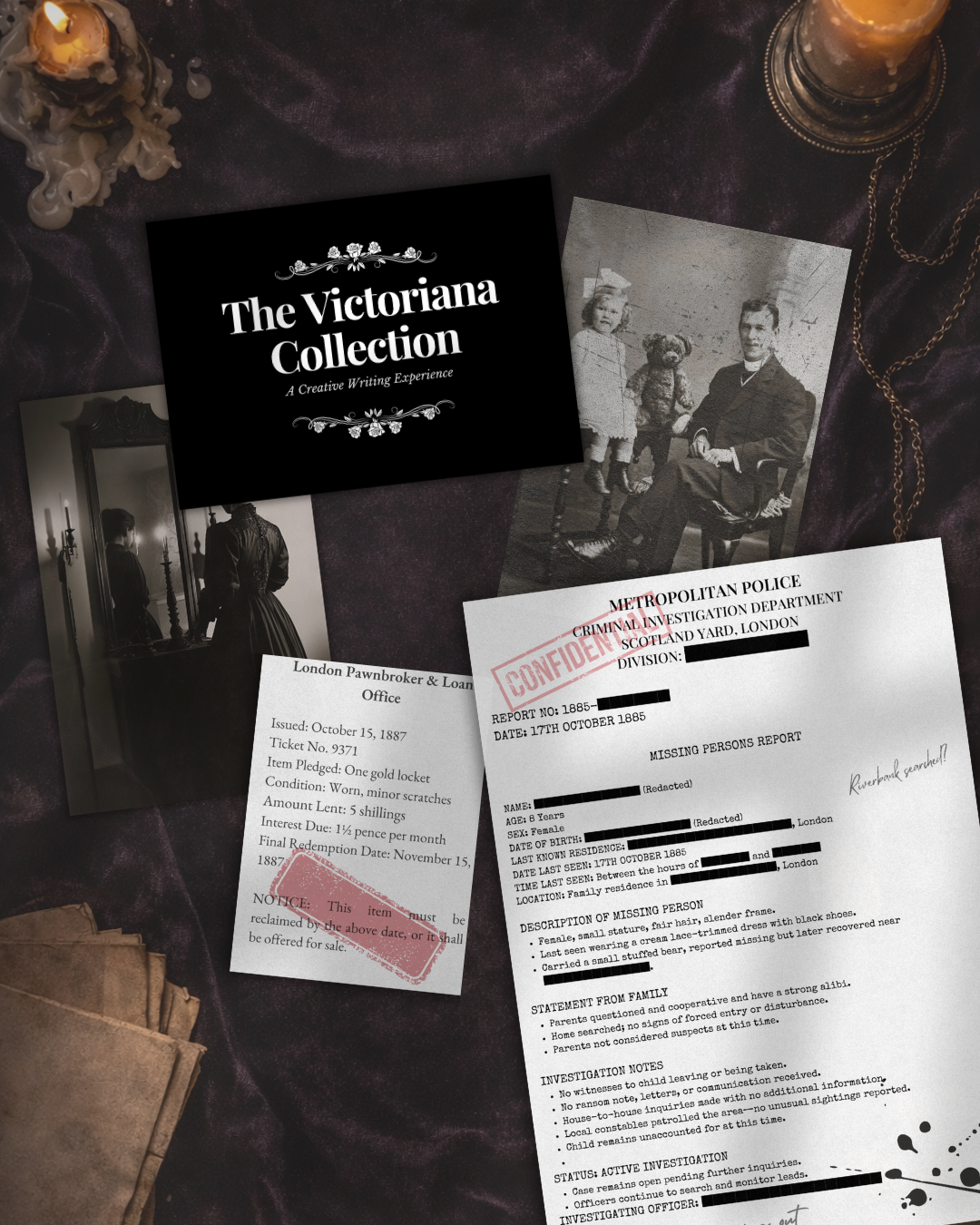
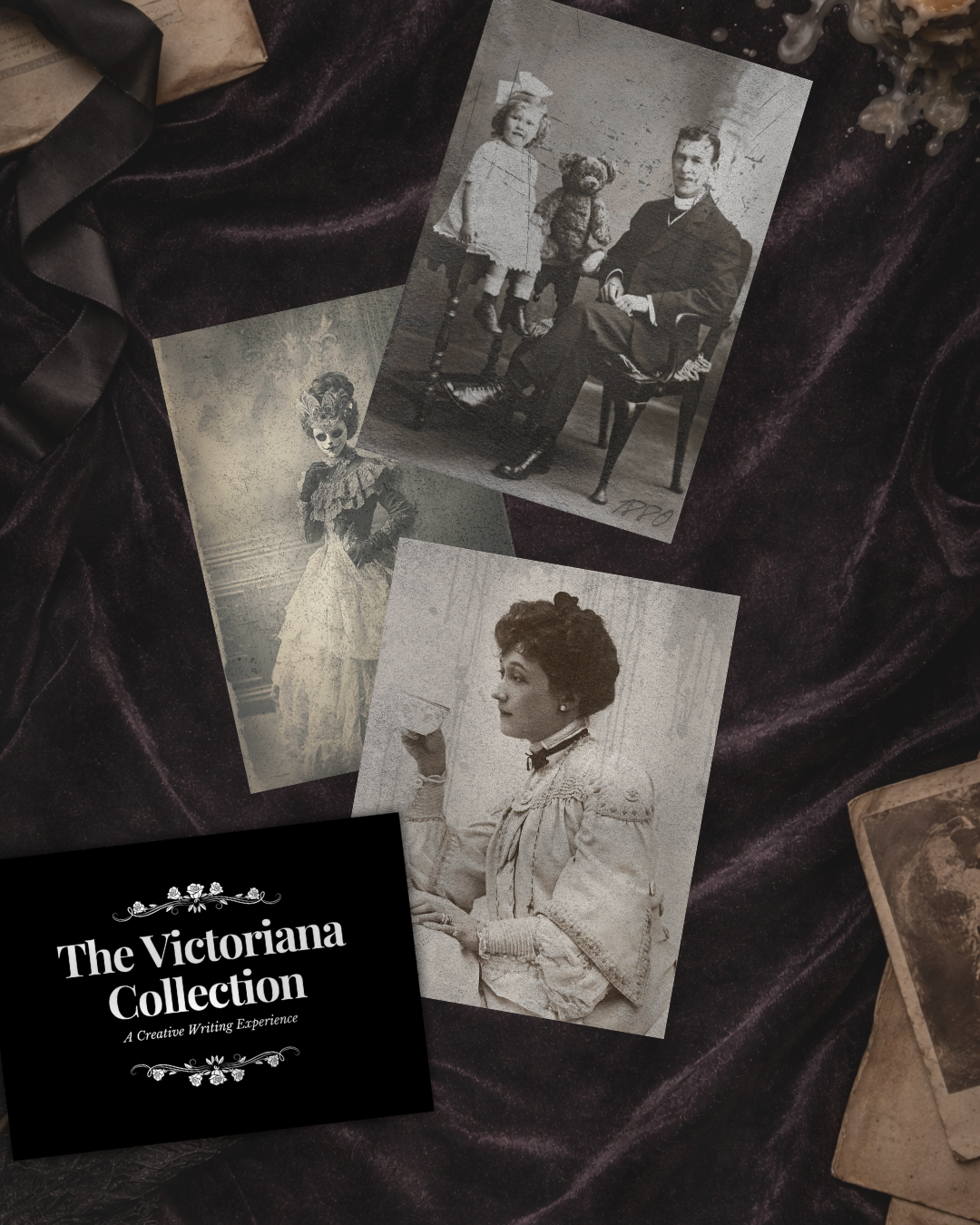
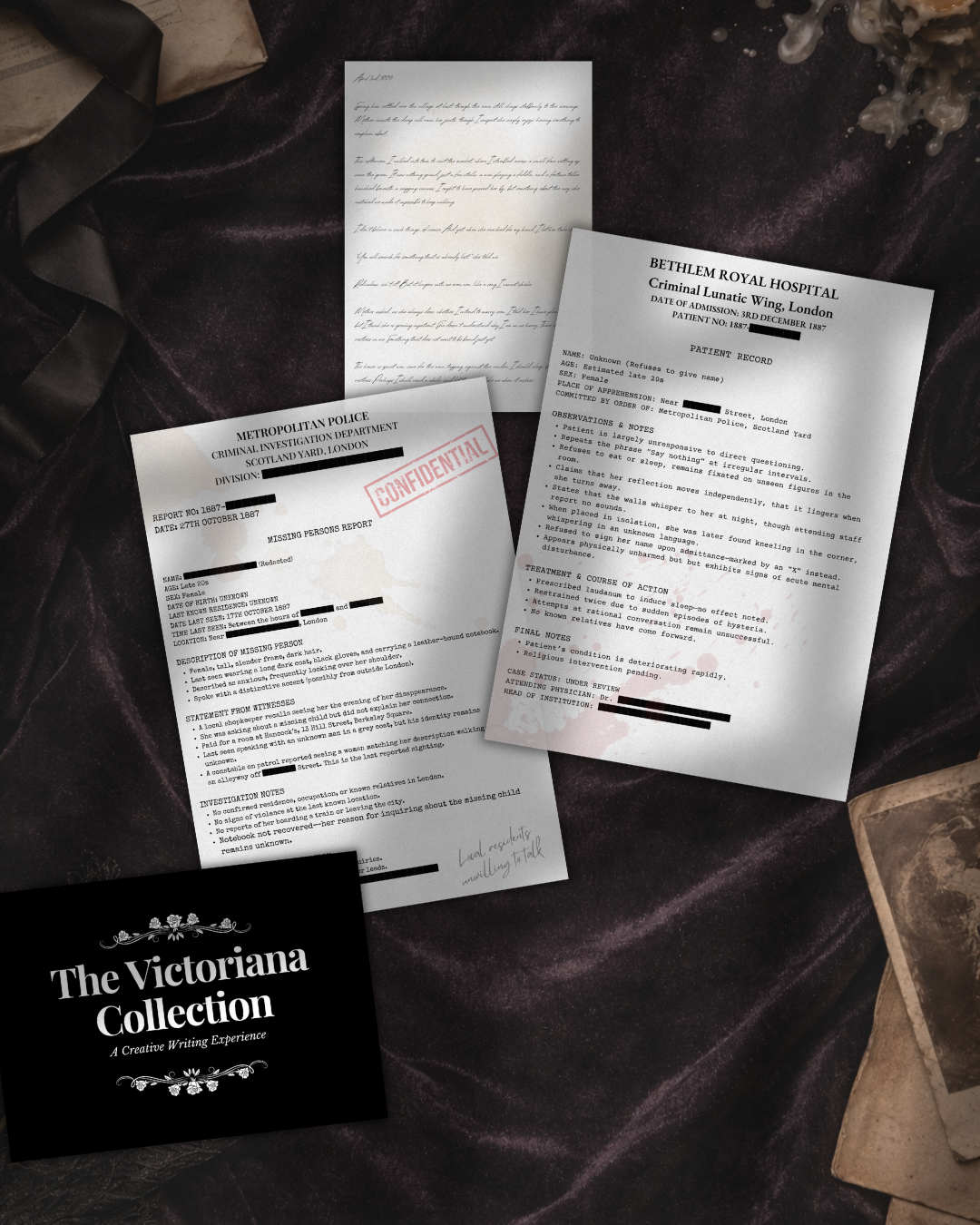
The most convincing historical fiction isn't built from settings alone—it's built from the letters tucked inside desk drawers, newspaper cuttings pinned behind the bar, forgotten diaries locked away upstairs, missing persons notices folded into coat pockets, and faded photographs left behind by guests who never returned. These small details make a public house feel like a place where real people have lived, laughed, argued, mourned, and disappeared.
That's exactly what The Victoriana Collection was created to inspire.
This immersive Storyworld Archive contains more than 50 beautifully designed Victorian-inspired documents and artefacts, including handwritten letters, diary entries, newspaper clippings, missing persons reports, spiritualist notes, official records, photographs, calling cards, and personal mementoes. Rather than telling you a complete story, the collection presents fragments of an unsolved mystery, inviting you to decide how the pieces fit together.
Imagine discovering one of these documents inside your fictional inn.
Perhaps the landlord keeps a forgotten ledger recording guests who vanished without explanation. A regular customer leaves behind a bundle of letters tied with faded ribbon. A newspaper clipping pinned beside the fireplace describes a disappearance that no one in the pub is willing to discuss. A photograph slipped beneath a loose floorboard raises questions about a family who once owned the building. Every document has the potential to become the beginning of an entirely new story.
Whether your pub serves dockworkers on the Thames, railway travellers between distant cities, wealthy industrialists in an elegant saloon, or farmers gathering after harvest, The Victoriana Collection helps you fill those spaces with authentic Victorian details that feel discovered rather than invented. The result is a setting that readers can truly believe has existed for generations.
Perfect for:
◆ Historical fiction writers building believable Victorian settings
◆ Writers creating mysteries, gothic fiction, romance, and literary historical novels
◆ Worldbuilders looking for authentic nineteenth-century documents and everyday details
◆ Teachers and students exploring Victorian life through immersive storytelling
◆ Anyone who enjoys piecing together forgotten histories from letters, photographs, and official records
If you're creating Victorian inns, taverns, and public houses that readers will remember long after they finish your story, The Victoriana Collection offers the kind of immersive historical inspiration that transforms a simple pub into the heart of an entire community—and perhaps the centre of its greatest mystery.
Go Deeper into Victorian Settings
The best Victorian pubs feel like living parts of the community rather than simple backdrops for conversation. Every public house develops its own character over time, shaped by the people who gather there, the events it has witnessed, and the stories passed from one generation to the next. Think about who owns the inn, who drinks there regularly, which rooms are always busy, and what secrets the building itself might be quietly protecting.
As you build your own Victorian pub, consider not only its name but also its history, atmosphere, clientele, and role within the wider community. A busy London tavern serving journalists and detectives will feel completely different from a remote coaching inn welcoming weary travellers or a quiet village pub where every customer knows everyone else's family. The setting should naturally influence the kinds of stories that unfold within its walls.
To create richer Victorian public houses, try exploring these ideas:
◆ Develop the inn's history. Was it once a coaching inn, a medieval tavern, a converted farmhouse, or a former monastery guest house? Buildings with long histories often carry forgotten stories waiting to be rediscovered.
◆ Decide who gathers there. Every pub develops its own regular customers. Railway workers, dock labourers, lawyers, factory workers, artists, sailors, gamekeepers, or wealthy landowners will each create a completely different atmosphere.
◆ Use different rooms to shape your scenes. Victorian pubs often contained public bars, saloon bars, snug rooms, dining parlours, private meeting rooms, kitchens, courtyards, stables, and upstairs bedrooms. Each space offers different opportunities for conversation, secrecy, conflict, and unexpected discoveries.
◆ Think beyond drinking. Public houses hosted auctions, trade union meetings, friendly societies, inquests, election speeches, musical performances, birthday celebrations, funeral gatherings, business negotiations, and community events. Your pub can become the social heart of an entire town.
◆ Fill the building with meaningful details. Faded coaching timetables, framed hunting prints, shipping maps, brass beer pumps, worn guest books, carved beams, old newspapers, handwritten notices, and well-used fireplaces all help create an authentic Victorian atmosphere without overwhelming the reader.
◆ Let the landlord become part of the story. Few people know a community better than the publican. They notice unfamiliar faces, remember old arguments, hear local gossip before anyone else, and quietly witness the friendships, romances, rivalries, and secrets that unfold around their bar every day.
Victorian pubs naturally bring together characters who might never otherwise meet. A solicitor could share a table with a dockworker. A governess might overhear a conversation between two railway engineers. A travelling actor may become stranded beside a local blacksmith during a snowstorm. By allowing different lives to intersect beneath one roof, your public house becomes more than a setting—it becomes the engine that drives the story forward.
For even richer worldbuilding, combine your Victorian pubs with authentic occupations, memorable character names, realistic historical settings, and real nineteenth-century events. When every location feels connected to the people who inhabit it, your Victorian world becomes somewhere readers will want to return to long after the final page.
Final Thoughts
Victorian pubs were among the most important social spaces of the nineteenth century. They were places where communities gathered, travellers rested, businesses were negotiated, celebrations were held, and rumours spread long before they reached the newspapers. Every public house developed its own personality, shaped by its location, regular customers, history, and the countless ordinary moments that unfolded beneath its roof. Whether your story takes place in a bustling London tavern, a quiet village inn, a dockside alehouse, or an elegant railway hotel, the right pub can become one of the most memorable settings in your novel.
These 100 Victorian Pub Names with Story Ideas are designed to help you create more than simply believable names. Each one offers a glimpse into the kind of people who gather there, the atmosphere readers will experience, and the stories waiting to unfold inside. Use them to inspire mysterious first meetings, overheard conversations, hidden identities, political debates, family celebrations, ghost stories, and unexpected romances. The best historical settings don't simply contain the story—they actively shape it.
If you're looking for even more inspiration, explore the Historical Fiction Writing Hub, where you'll find Victorian character names, occupations, opening lines, worldbuilding resources, historical research, and creative writing prompts covering dozens of different historical periods. You can also browse the Creative Writing Archive for hundreds of resources designed to help you build richer settings, stronger characters, and more immersive stories.
Choose Your Next Adventure