70 Autumn Descriptive Writing Prompts: Seasonal Scenes, Sensory Details & Creative Challenges
Autumn is a season of transformation. Green leaves deepen into amber, copper and crimson, mist settles across fields in the early morning, orchards grow heavy with fruit, and the first cold evenings begin to carry the scent of rain, damp earth and woodsmoke. Familiar landscapes can change almost daily as leaves fall, daylight fades and the abundance of early autumn gradually gives way to bare branches, frost and the approaching winter.
These changes make autumn particularly rich inspiration for descriptive writing. A single fallen leaf offers colour, shape, pattern and texture to explore, while an entire woodland can become an exercise in light, movement and atmosphere. Rain against a café window creates a completely different sensory experience from walking through an orchard at harvest, standing beneath a dramatic autumn sunset or watching thousands of migrating birds gather against the evening sky. Even ordinary autumn moments can become vivid when you slow down and notice their smallest details.
These 70 Autumn Descriptive Writing Prompts explore the season through atmospheric titles, autumn scenes, contrasting descriptions, observation and sensory experiences, language and style exercises, creative writing challenges and picture prompts. You'll describe golden woodlands, mist-covered landscapes, harvest moons, rainy streets, orchards, fallen leaves, autumn storms and cosy interiors while experimenting with the different techniques that make descriptive writing immersive and memorable.
If you're looking for even more inspiration, explore the Descriptive Writing Hub for prompts covering settings, weather, characters, emotions, vocabulary, and writing techniques, or browse the Creative Writing Archive to discover hundreds of writing prompts, picture prompts, story ideas, character collections, and genre guides across every style of creative writing.
1. Autumn Descriptive Titles
A strong title can capture the colour, atmosphere and changing character of autumn before the description even begins. Choose one of the titles below and use it as inspiration for a piece of descriptive writing. Think about the landscapes, weather, light, sounds, textures and emotions suggested by the title, and focus on creating a vivid sense of the season.
When the Leaves Begin to Fall
Beneath a Copper Sky
The First Morning of Mist
After the Autumn Rain
Where the Leaves Gather
The Last Golden Afternoon
Beneath the Harvest Moon
When the Wind Changes
Before the First Frost
At the Edge of Winter
2. Describe These Autumn Scenes
Autumn landscapes are constantly changing, offering countless opportunities to explore colour, texture, weather, light and movement. Choose one of the scenes below and bring it to life through vivid sensory detail, precise vocabulary and carefully chosen imagery. Think beyond what you can see and consider the sounds, scents, textures and sensations that make each autumn setting distinctive.
A woodland path completely covered by freshly fallen leaves after an autumn rain shower.
A countryside landscape beneath an enormous golden harvest moon.
An apple orchard on a crisp autumn morning, its branches heavy with ripe fruit.
A quiet park on a windy afternoon as hundreds of brightly coloured leaves tumble from the trees.
A cosy café on a rainy autumn afternoon, with steamed-up windows overlooking the wet street outside.
A mist-covered lake at sunrise surrounded by trees turning gold, copper and crimson.
A bustling autumn market filled with pumpkins, apples, flowers, baked goods and seasonal produce.
A country lane during a sudden autumn downpour, with rainwater gathering in puddles between drifts of fallen leaves.
A wide valley at sunset as migrating birds gather overhead and the last sunlight catches the changing trees.
A garden on the first frosty morning of late autumn, when frozen leaves, berries and fading flowers glitter in the early light.
3. Contrasting Autumn Descriptions
Autumn can transform the same landscape within hours, days or weeks. Choose one of the contrasting scenarios below and describe both versions, paying close attention to how changes in colour, weather, light, temperature, movement and sound alter the atmosphere of the scene.
The same woodland at the beginning of autumn, when most leaves are still green, and several weeks later when the trees are ablaze with autumn colour.
A leaf-covered park on a bright, crisp autumn afternoon and during a heavy rainstorm.
An apple orchard before the harvest and after every piece of fruit has been gathered.
A countryside landscape beneath warm afternoon sunlight and later beneath a full harvest moon.
A quiet lake on a clear autumn morning and the same lake almost completely hidden beneath thick mist.
A busy autumn market at the height of the day and after the stalls have closed and the crowds have disappeared.
A garden filled with late-autumn flowers and colourful foliage and the same garden after the first hard frost.
A country lane on a perfectly still autumn morning and during a powerful windstorm that sends leaves swirling through the air.
The same view from a window on a golden autumn afternoon and on a dark, rain-soaked evening.
A woodland in early autumn, filled with colour and life, and the same woodland at the end of the season when most branches are bare and winter is approaching.
4. Autumn Observation & Experience
Autumn is a particularly sensory season, filled with changing temperatures, distinctive scents, shifting light and constantly moving landscapes. Choose one of the experiences below and imagine yourself within the moment. Pay attention to what you can see, hear, smell, taste and touch, as well as the smaller details you might notice if you slowed down and observed your surroundings carefully.
Walking through a woodland while freshly fallen leaves crunch beneath your feet.
Standing beneath a tree during a strong autumn wind as leaves tumble and swirl around you.
Picking apples in an orchard on a cool, bright autumn morning.
Sitting beside a window in a warm café while heavy autumn rain falls outside.
Walking beside a lake at sunrise when thick mist is drifting across the water.
Exploring a busy autumn market filled with seasonal produce, flowers, food and crowds.
Standing outside just before an autumn storm arrives and noticing the changes in the air, light and landscape.
Sitting beside a bonfire on a cold autumn evening as smoke, sparks and the scent of burning wood fill the air.
Walking through a park immediately after heavy rain, when fallen leaves are wet, pathways are covered with puddles and water still drips from the trees.
Stepping outside on the first frosty morning of late autumn and noticing how the cold has transformed the familiar landscape overnight.
5. Autumn Language & Style Challenges
The language you choose can capture everything from the abundance of early autumn to the quiet approach of winter. Choose one of the challenges below and experiment with vocabulary, figurative language, sentence structure and sensory imagery to create a vivid impression of the season.
Describe a single autumn leaf falling from a tree using personification to transform its journey to the ground into something graceful and deliberate.
Describe an autumn woodland at the height of the season using precise colour imagery without using the words red, orange, yellow or brown.
Describe a powerful autumn windstorm using strong verbs and onomatopoeia to capture the movement and sound of the landscape.
Describe a mist-covered lake at sunrise using an extended metaphor that develops throughout the description.
Describe an apple orchard at harvest time using all five senses, including details of texture, scent and taste as well as appearance and sound.
Describe heavy autumn rain against a window by alternating short sentences with longer, flowing sentences to imitate the changing rhythm of the rainfall.
Describe a woodland floor covered with fallen leaves, acorns, fungi and broken twigs by beginning with tiny details before gradually widening your focus to reveal the surrounding forest.
Describe an autumn sunset over the countryside using at least five original similes to capture the changing sky, light and landscape.
Describe a flock of migrating birds crossing an autumn sky using repetition and sentence rhythm to emphasise their movement, number and scale.
Describe a nearly bare tree at the end of autumn without directly mentioning sadness, loneliness or the approach of winter. Create the mood entirely through imagery and carefully selected details.
6. Autumn Creative Writing Challenges
Challenge yourself to describe autumn in unexpected ways. Each exercise introduces a different restriction, perspective or structural challenge designed to encourage careful observation, imaginative vocabulary and fresh approaches to familiar seasonal scenes.
Describe an autumn woodland in exactly 50 words, capturing its colour, texture, sound and atmosphere within the word limit.
Describe a pile of freshly fallen leaves without using the words leaf, leaves, tree, autumn, fall, red, orange, yellow or brown.
Begin with a single raindrop resting on an autumn leaf before gradually widening your description to reveal the woodland surrounding it.
Describe an autumn storm without directly describing the rain or wind. Reveal the weather entirely through its effects on trees, buildings, animals, people and the surrounding landscape.
Describe an apple orchard at harvest time without using visual imagery. Build the scene entirely through sound, smell, taste and touch.
Write two descriptions of the same autumn park: one that makes it feel warm, beautiful and inviting, and another that makes exactly the same setting feel bleak and unsettling.
Describe a harvest moon rising over the countryside by beginning with the entire landscape and gradually narrowing your focus until the final sentence concentrates on one tiny detail.
Describe a rainy autumn afternoon from inside a cosy room without allowing the narrator to go outside. Use the window, sounds, changing light and glimpses of the world beyond to create the outdoor scene.
Describe the transition from autumn into winter as one continuous scene, beginning with a landscape filled with autumn colour and ending with the first signs of winter.
Describe a woodland path before and after a gust of wind passes through it. Concentrate on movement and change so that the reader can recognise the exact moment the landscape is disturbed.
7. Autumn Descriptive Picture Prompts
Autumn images are filled with rich descriptive details, from rain-covered leaves and misty landscapes to harvest moons, orchards, changing woodlands and the first signs of frost. Study each image carefully before you begin writing, paying attention to colour, light, texture, movement, weather and the subtle signs of seasonal change.

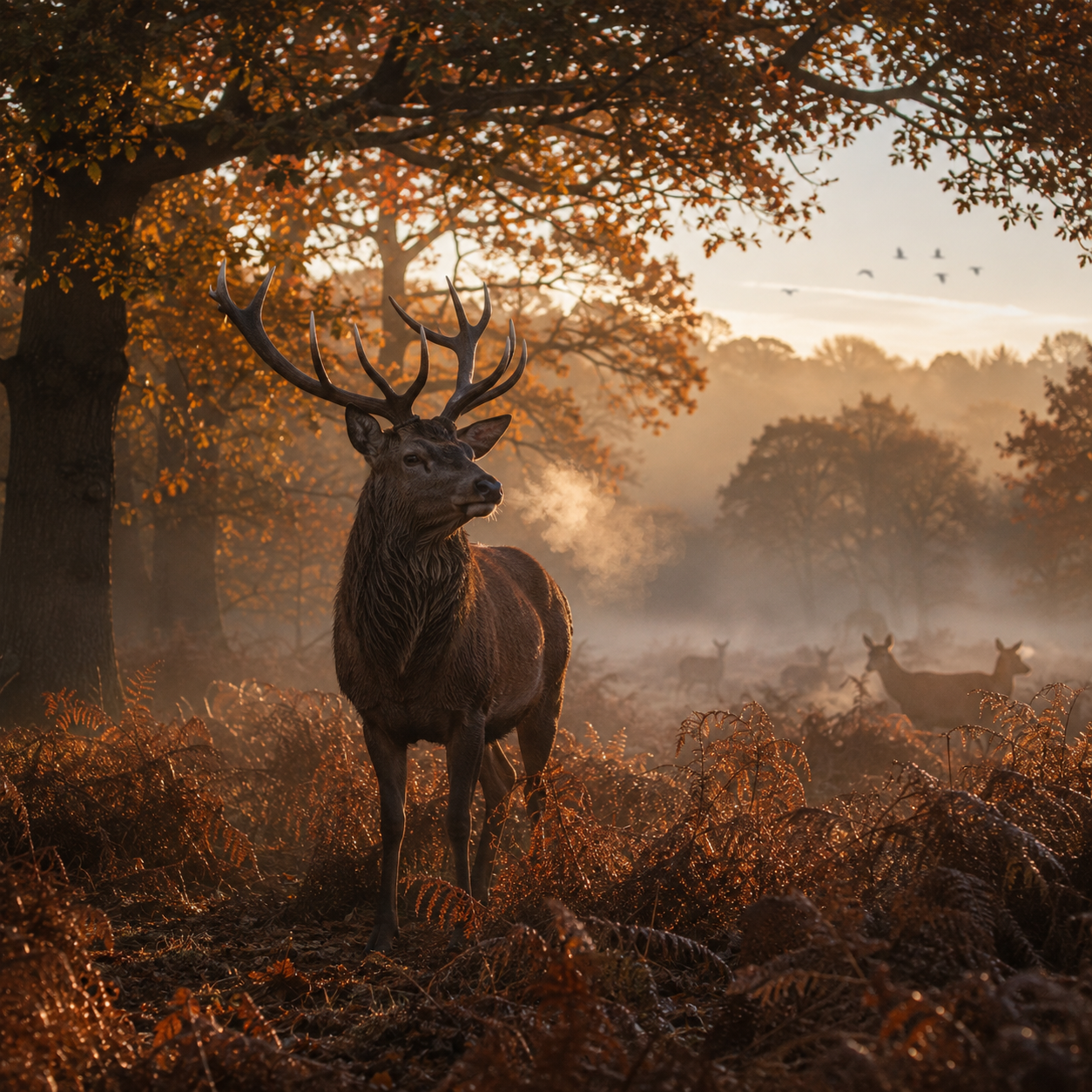
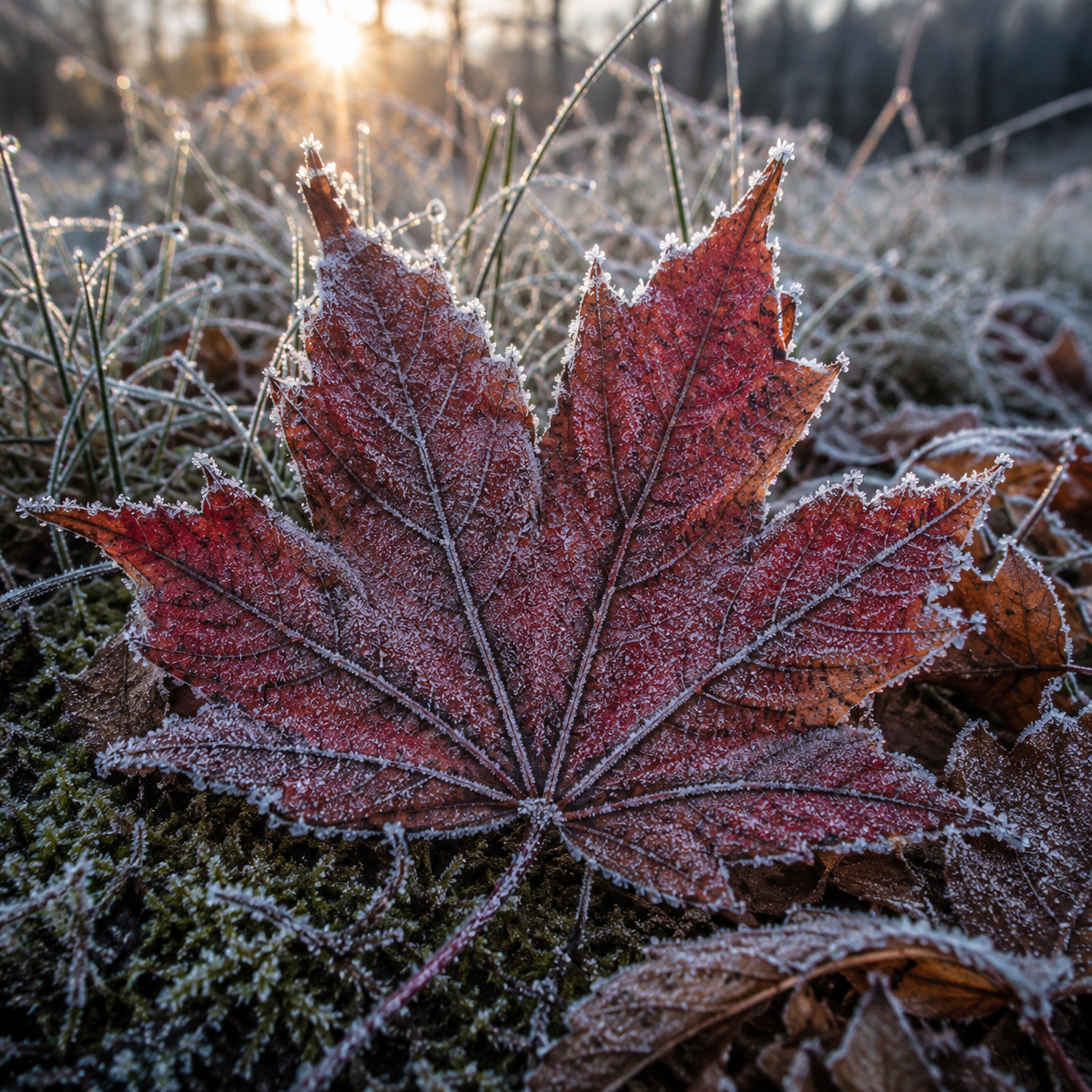
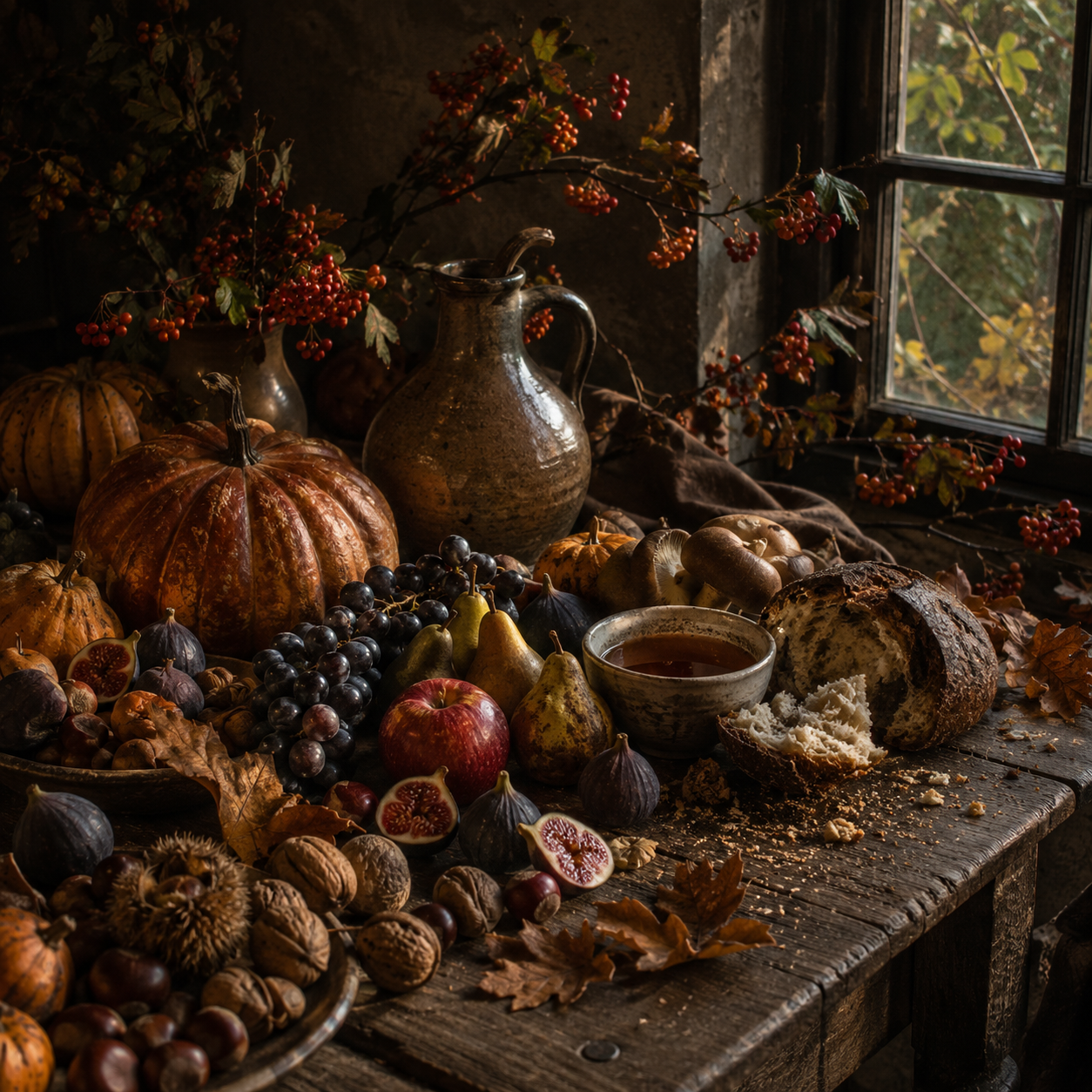
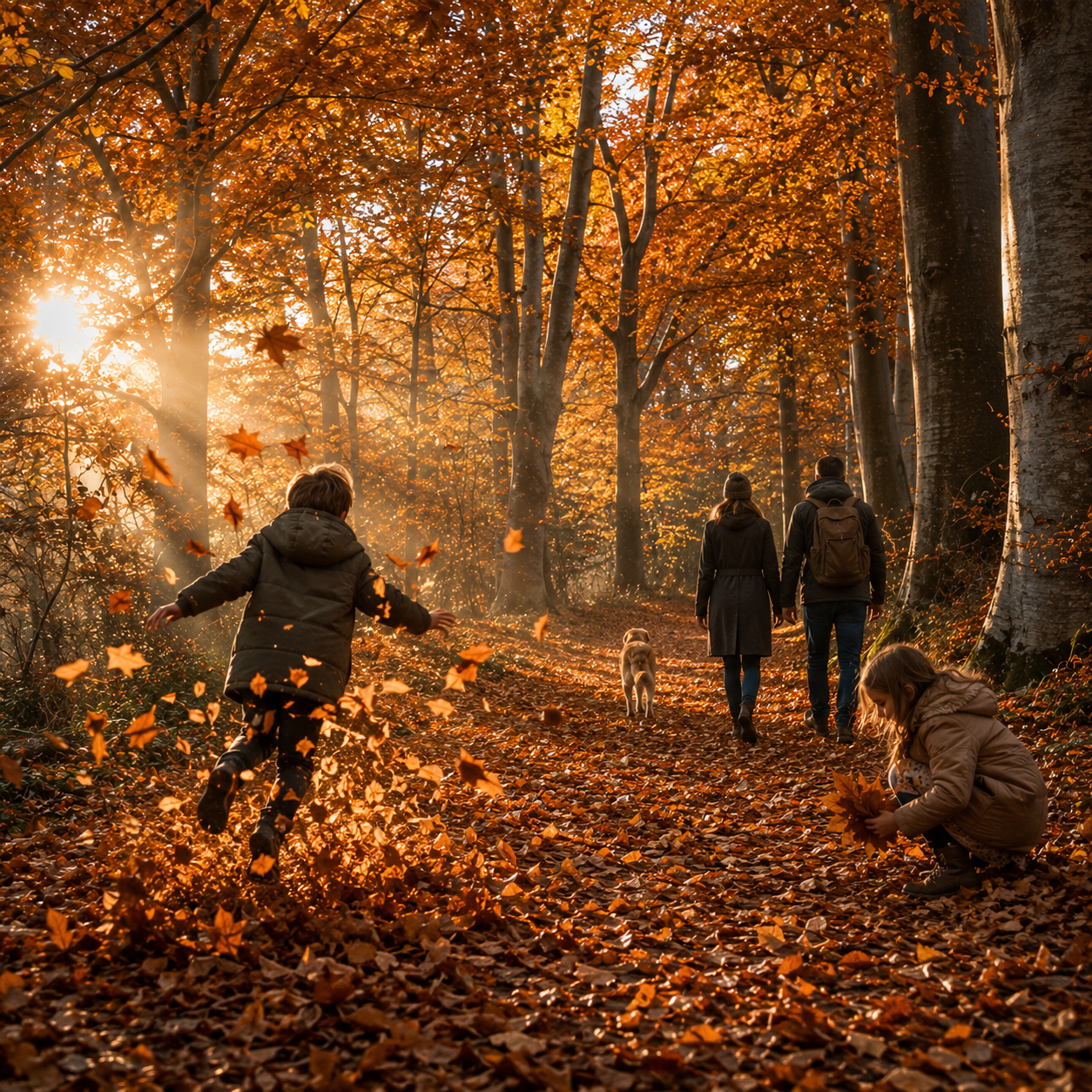
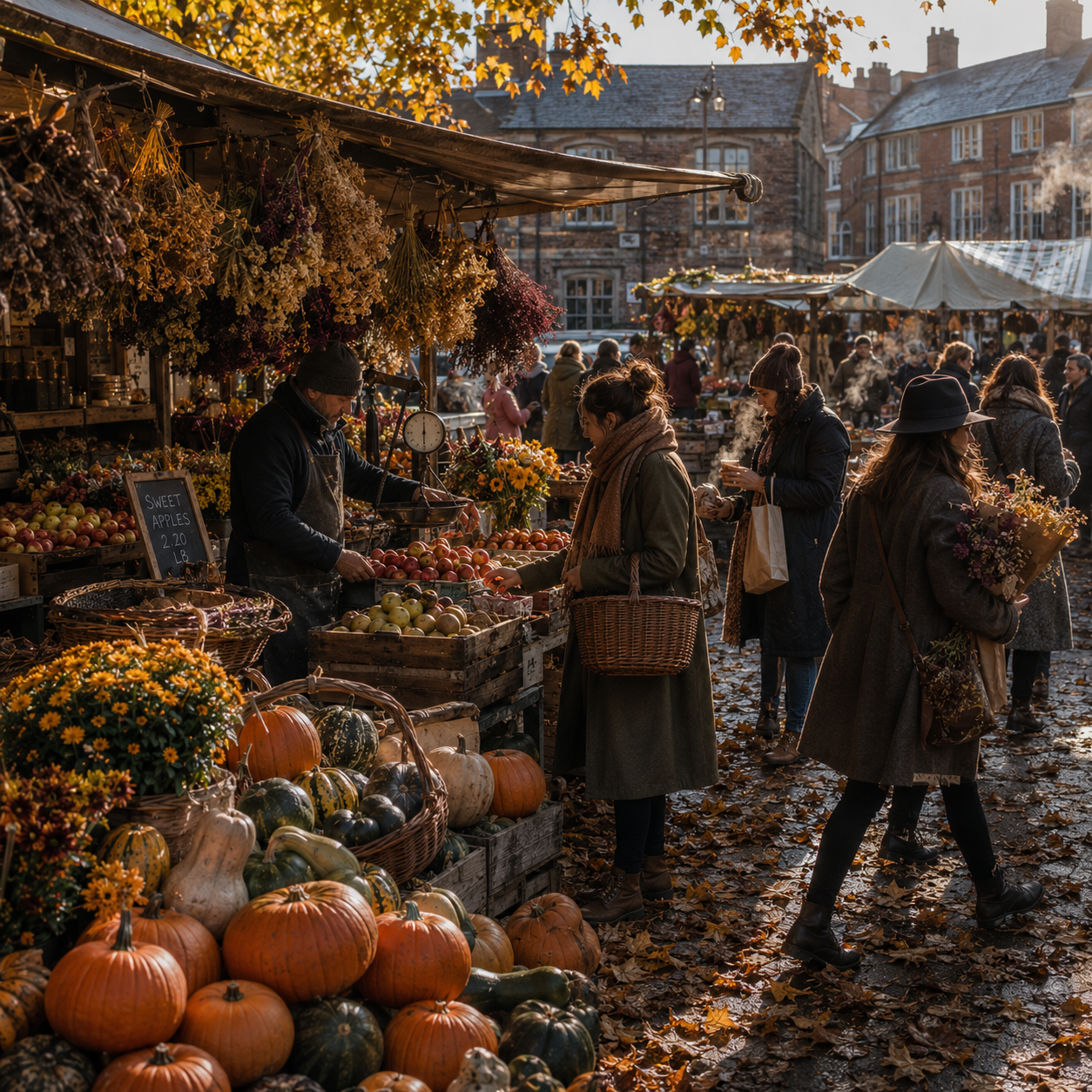
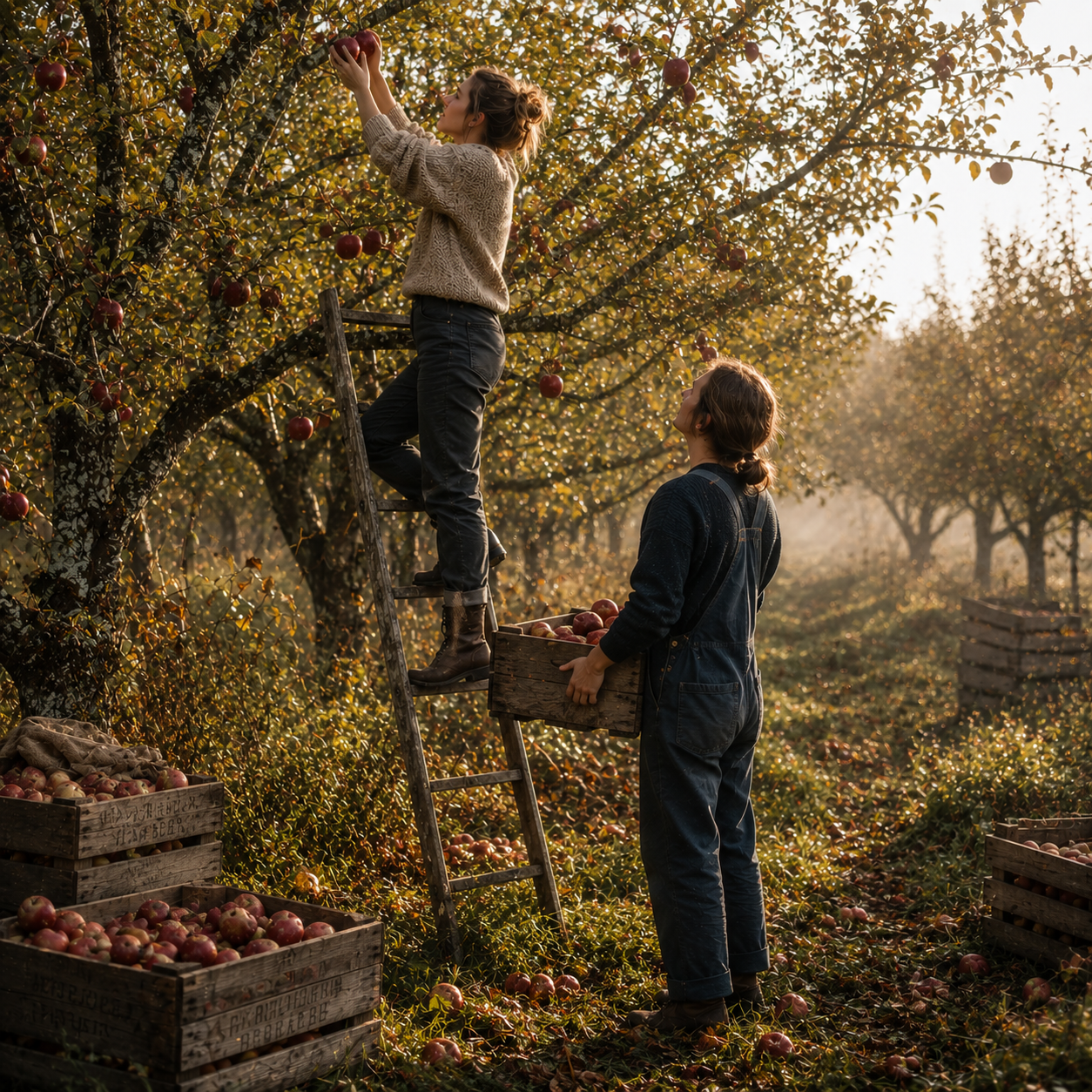

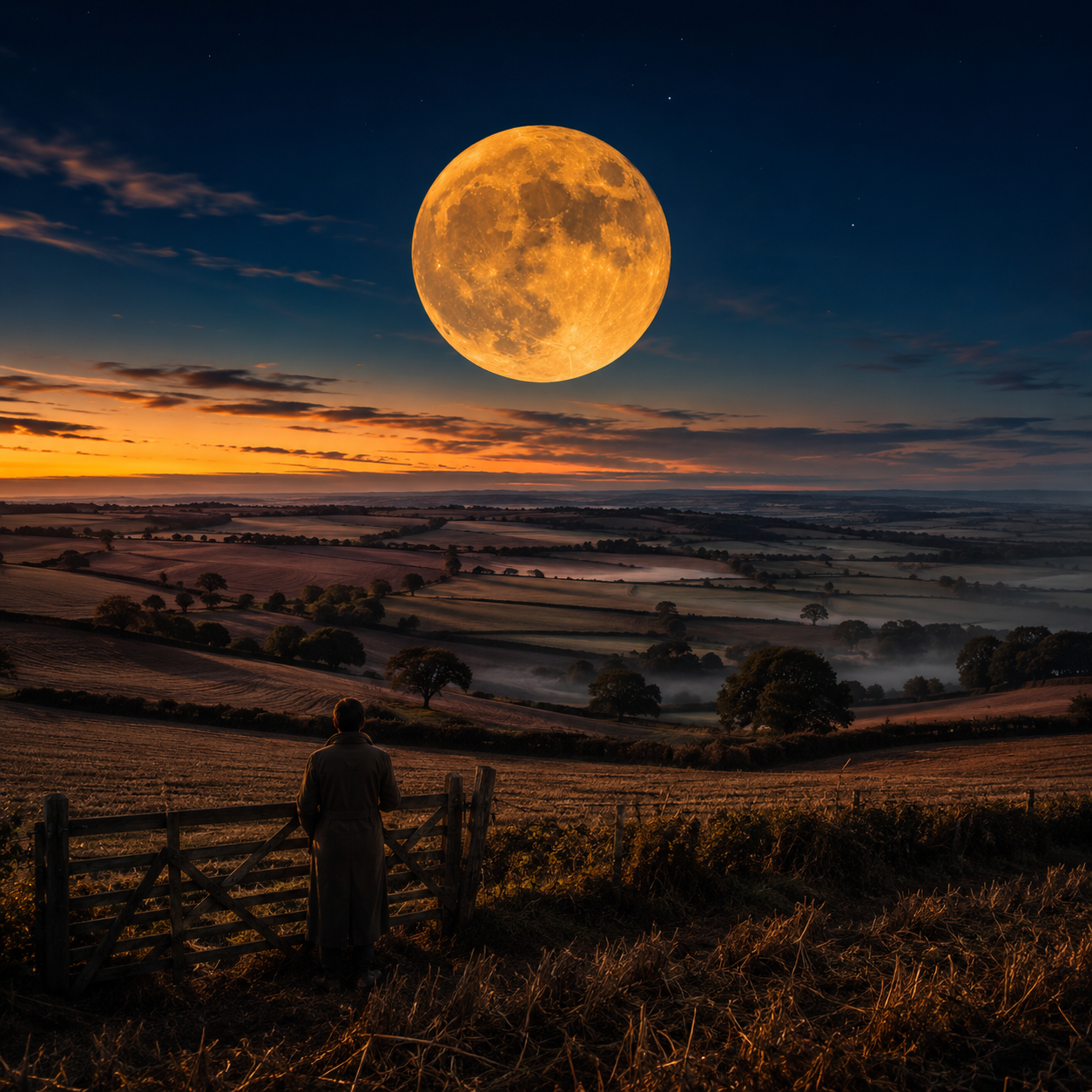
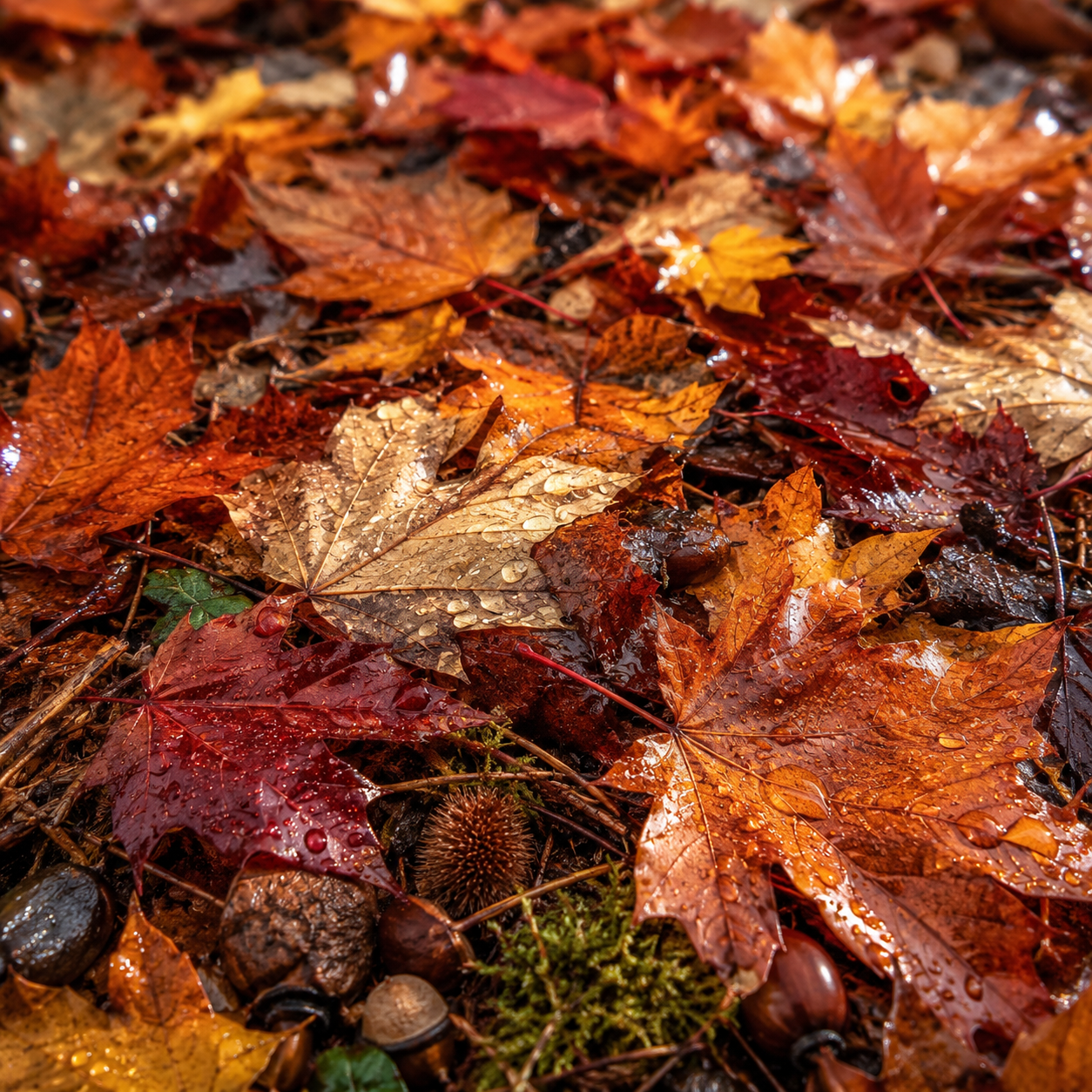
What Do You Notice?
What immediately draws your attention in this autumn scene?
Which three small details best reveal the season?
How do the colours, light and shadows influence the atmosphere?
Where does your eye travel after looking at the image for a few moments?
Which tiny detail could you describe first before gradually revealing the wider landscape?
Sensory Questions
What sounds might you hear if you were standing inside this scene?
What scents might fill the air, from damp earth and fallen leaves to rain, woodsmoke, fruit or flowers?
Which objects or surfaces would have the most interesting textures to describe?
How might the temperature, wind, rain or moisture feel against your skin?
If taste is relevant to the image, which seasonal flavours might become part of the experience?
Atmosphere & Language
Which three words best capture the atmosphere of the image?
Which colours could you describe more precisely than simply red, orange, yellow or brown?
What simile, metaphor or example of personification could strengthen your description?
How could you use movement—or complete stillness—to emphasise the atmosphere?
How could you make this same scene feel cosy, joyful, peaceful, melancholic or unsettling simply by changing the details you emphasise?
Writing Task
Write a vivid descriptive paragraph inspired by the image. Use precise vocabulary, sensory imagery and carefully chosen figurative language to bring the autumn scene to life. Focus on colour, texture, light, movement, weather and atmosphere while capturing the distinctive character of the season rather than developing a story.
Go Deeper into Autumn Descriptive Writing
Autumn is particularly powerful for descriptive writing because nothing stays the same for long. Landscapes change colour, leaves fall, daylight shortens, temperatures drop and the abundance of early autumn gradually gives way to the quieter landscape of approaching winter. Capturing these changes encourages you to notice not only what a place looks like, but how light, weather, movement, sound and atmosphere can transform it.
◆ Explore more than the obvious autumn colours. Instead of relying on red, orange, yellow and brown, experiment with more precise shades such as amber, ochre, copper, russet, burgundy, mustard, gold and crimson. Look for subtler colours too: the silvery grey of morning mist, dark green ivy, purple berries, rain-blackened bark or the pale blue of a cold autumn sky.
◆ Pay attention to movement. Autumn landscapes rarely feel completely static. Leaves spiral from branches, grasses bend beneath the wind, rain runs along windows, clouds race overhead and migrating birds cross the sky. Strong verbs can help you capture these movements and give your descriptions energy.
◆ Use weather to transform familiar places. A woodland in golden sunlight feels completely different beneath heavy rain or thick morning fog. Consider how autumn weather changes colour, visibility, sound, texture and even the way people move through a landscape.
◆ Notice texture. Autumn offers an enormous variety of surfaces to describe: brittle leaves, rough bark, smooth conkers, waxy berries, damp moss, muddy paths, crisp apple skin, delicate fungi and frost-covered grass. Including tactile details helps readers experience a setting rather than simply picture it.
◆ Experiment with scale and focus. Begin with a single raindrop caught in the veins of a fallen leaf before gradually revealing an entire rain-soaked woodland, or start with a vast autumn valley before narrowing your attention to one berry hanging from a branch. Moving between tiny details and wider landscapes can make descriptions feel more immersive.
◆ Use light to establish atmosphere. Autumn light can be warm and golden, pale and misty, dramatically stormy or increasingly weak as winter approaches. Notice how sunlight filters through changing leaves, reflects from wet surfaces, disappears behind clouds or catches the edges of frost.
◆ Listen to the season. Autumn has its own soundscape: leaves crunching beneath footsteps, rain tapping against windows, wind moving through branches, migrating birds calling overhead, apples dropping onto the ground or the crackle of a bonfire. Sound can make even a quiet landscape feel alive.
◆ Capture seasonal change. Rather than describing autumn as one fixed moment, look for evidence of transition. A tree might still hold green leaves beside branches already turning gold, flowers might fade beside newly ripened berries, or the first frost might appear while autumn leaves still cover the ground.
◆ Use contrast to strengthen description. Place warmth against cold, stillness against movement, brilliant foliage against a grey sky or a cosy interior against heavy rain outside. Contrasting details can make both sides of the scene feel more vivid.
◆ Explore different autumn moods. Autumn does not have to be melancholic. The season can feel abundant, energetic, peaceful, cosy, dramatic, romantic, nostalgic or exhilarating as well as reflective. The atmosphere comes from the details you choose to emphasise, so experiment with describing the same setting in completely different ways.
Final Thoughts
Autumn provides almost endless inspiration for descriptive writing. From the intricate veins of a rain-covered leaf to an entire countryside glowing beneath a harvest moon, the season encourages writers to observe colour, texture, movement, weather and light at every scale. Its constantly changing landscapes also offer an opportunity to capture something particularly important in description: the feeling of a moment that will not remain exactly the same for long.
These 70 Autumn Descriptive Writing Prompts are designed to help you explore the season from different perspectives, whether you're describing a misty lake at sunrise, walking through fallen leaves, experiencing an autumn storm, observing the first frost or experimenting with unusual language and creative restrictions. Use the exercises to practise precise vocabulary, sensory imagery, figurative language, sentence structure and the careful selection of details that create atmosphere.
Remember that strong autumn writing does not have to rely on familiar images of golden leaves and cosy evenings. Look closer. Notice raindrops caught on berries, mud beneath fallen leaves, birds gathering before migration, fruit remaining on almost-bare branches or the changing quality of the afternoon light. Often, these smaller and less obvious observations are what make a description feel distinctive and real.
For even more inspiration, exercises and techniques, explore the Descriptive Writing Hub, where you'll find descriptive writing prompts covering landscapes, weather, settings, seasons, characters, emotions, sensory details and much more.
Choose Your Next Adventure