from Our Casuarina Tree by Toru Dutt: Summary, Themes & Analysis
Toru Dutt's from Our Casuarina Tree transforms a beloved tree from her childhood into a powerful symbol of memory, family, love, loss, and the enduring connection between people and place. In the opening section, Dutt presents the casuarina as an immense and almost heroic presence, surrounded by a flourishing ecosystem of flowers, birds, animals, and water, yet the poem gradually reveals that its significance extends far beyond its physical beauty. Through vivid natural imagery, personification, symbolism, and deeply nostalgic reflection, the tree becomes inseparable from memories of the speaker's lost loved ones, allowing Dutt to explore how places preserve emotional connections long after people themselves have gone. If you are studying or teaching Songs of Ourselves Volume 3, explore all the poems in depth in our Songs of Ourselves Volume 3 Hub, or discover a wider range of poetry, prose, and drama in the Literature Library.

Context of from Our Casuarina Tree
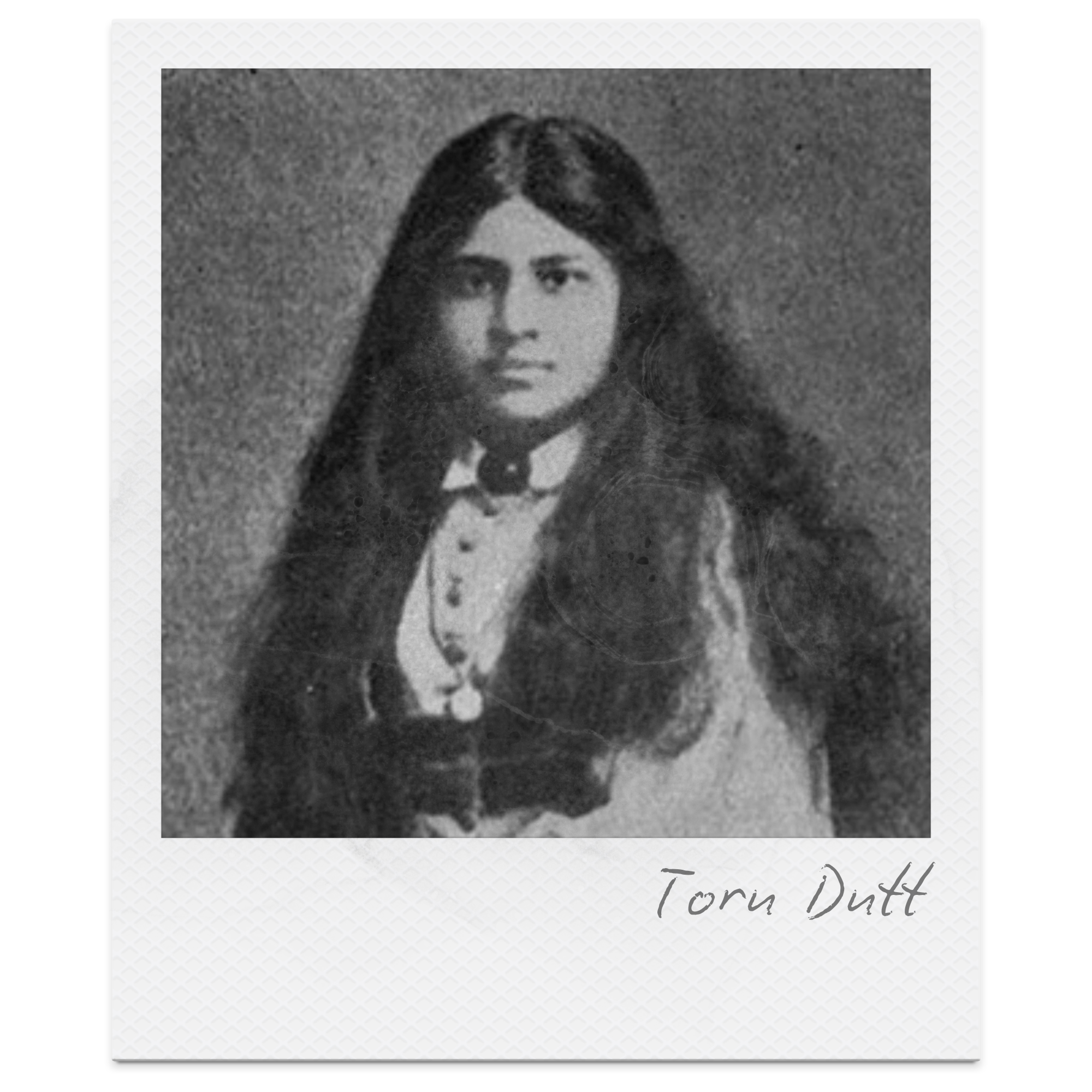
Toru Dutt (1856–1877) was a pioneering Bengali Indian poet writing in English and French during the colonial period, whose work frequently brings European literary traditions into conversation with Indian landscapes, culture, and memory. She spent much of her childhood at her family's garden-house in Baugmaree, near Calcutta, where the casuarina tree and surrounding garden formed part of the landscape she shared with her siblings, Abju and Aru. Both died young—Abju in 1865 and Aru in 1874—giving the tree profound emotional significance as a surviving connection to a childhood that can never be recovered.
Dutt also spent several formative years in Europe, particularly France and England, and her writing reflects both Indian and European literary influences. In from Our Casuarina Tree, the detailed Indian setting—kokilas, baboons, water-lilies and the casuarina itself—is combined with the elevated language and meditation on nature, memory, mortality and poetic immortality associated with Romantic poetry. The tree therefore becomes more than part of a remembered landscape: it connects India and absence, childhood and adulthood, the living and the dead. Dutt ultimately attempts to preserve the tree and those associated with it through poetry, making art itself a defence against forgetting. The poem was published posthumously in Ancient Ballads and Legends of Hindustan in 1882, five years after Dutt's death at only twenty-one.
from Our Casuarina Tree: At a Glance
Form: A lyric poem that moves from detailed observation of the natural world into increasingly personal reflection on memory, grief, home, and poetic immortality.
Mood: Initially vibrant, celebratory, and affectionate, gradually becoming nostalgic, mournful, and reflective before ending with a determined desire to preserve what has been lost.
Central tension: The apparent endurance of the casuarina tree is contrasted with human mortality and the passing of time; the speaker cannot recover her childhood or lost loved ones, but memory, nature, and poetry allow their emotional presence to survive.
Core themes: Nature and memory, childhood, sibling love, grief and loss, home and belonging, mortality, nostalgia, cultural identity, and poetic immortality.
One-sentence meaning: Dutt transforms the casuarina tree from a magnificent feature of the Indian landscape into a living monument to childhood, home, and lost loved ones, before using poetry itself as a means of resisting separation, death, and forgetting.
Quick Summary of from Our Casuarina Tree
The poem begins with an extended description of the casuarina tree as immense, strong, and full of life. A creeper winds around its scarred trunk, while crimson flowers, birds, bees, and birdsong fill its branches. Dutt then widens the scene to capture the rich natural world surrounding the tree at dawn: a baboon watches the sunrise, its young play among the branches, kokilas call, cattle move towards their pastures, and water-lilies grow in the tree's vast shadow. The poem then shifts from description to personal reflection as the speaker reveals that the tree is precious not simply because of its beauty, but because it is inseparable from memories of childhood and the loved ones with whom she once shared it.
As the poem develops, the casuarina becomes increasingly connected with absence, grief, home, and memory. Even while travelling in France and Italy, the speaker imagines hearing the tree's mournful sound, which immediately transports her back to her "loved native clime." In the final stanza, she turns from remembering the tree to attempting to preserve it, dedicating her poetry to it and comparing its emotional significance with the famous trees celebrated in European literature. The poem ultimately becomes an act of remembrance: through love and poetry, the speaker hopes to protect the casuarina—and the people and childhood memories it represents—from time, death, and "Oblivion's curse."
Title, Form, Structure, and Metre
Dutt's formal choices allow the poem to move from close observation of the casuarina tree towards increasingly personal memories of childhood, grief, and loss. Its continuous form, flowing sentences, recurring natural imagery, and controlled rhythmic movement help the tree develop from a physical presence into a symbol of love, memory, home, and resistance to forgetting.
Title
The possessive pronoun "Our" is one of the most important words in the title. Dutt does not call the poem simply The Casuarina Tree or My Casuarina Tree: "Our" immediately establishes shared ownership and emotional connection. The tree belongs not only to the speaker but to the family and, crucially, to the childhood she shared with her brother and sister. Once the poem reveals that those loved companions have died, the title becomes increasingly poignant. "Our" preserves a relationship that death has physically broken, allowing the speaker to continue imagining the tree as something collectively possessed.
The word also gives the tree significance beyond its botanical identity. This is not simply a casuarina tree but "Our Casuarina Tree": a particular place invested with personal history. The title therefore anticipates the poem's transformation of landscape into memory. As the poem develops, the tree becomes a kind of living memorial, preserving the speaker's connection with family, childhood, and her Indian home.
There is also a subtle tension between "Our" and the poem's later experience of solitude and separation. The communal pronoun evokes togetherness even when those who once constituted that community are absent. In this sense, the title itself performs one of the poem's central acts: language keeps the dead connected to the living.
Form and Structure
from Our Casuarina Tree is a single continuous lyric poem, which suits its movement through observation, memory, grief, geographical separation, and finally poetic commemoration. Rather than dividing these experiences into isolated episodes, the continuous form allows one thought to trigger another, reflecting the associative movement of memory.
The poem initially concentrates closely on the physical tree, beginning with its "rugged trunk" and climbing upwards towards its "summit near the stars." Dutt then expands the perspective to include the ecosystem surrounding it: creepers, flowers, birds, bees, baboons, cattle, and water-lilies. This movement establishes the casuarina as the centre of a rich, interconnected natural world before its deeper emotional significance is revealed.
The structural movement from external description to internal memory is particularly important. What initially appears to be a nature poem gradually becomes an elegy as the speaker explains why the tree is "dear" to her. From there, the poem expands geographically as memories of the tree accompany her beyond India, before finally moving towards the future as she attempts to preserve it through poetry. The structure therefore moves through place → memory → absence → preservation, mirroring the speaker's growing recognition that the tree's greatest importance lies in what it allows her to remember.
The ending gives this progression its final purpose. Having been preserved first by memory, the tree is ultimately preserved through art, as Dutt attempts to protect it from "Oblivion's curse." The poem itself therefore becomes the memorial it describes.
Rhyme Scheme and Poetic Pattern
Although from Our Casuarina Tree appears as a single continuous poem in the anthology, Dutt creates considerable formal order through recurring patterns of end rhyme. The opening movement, for example, contains the rhyming pairs "scars" / "stars," "hung" / "among," "bee" / "tree," and "overflows" / "close" / "repose." The rhyme gives the description a musical, harmonious quality that reflects the richness of the natural environment surrounding the casuarina.
Some rhymes stretch across several intervening lines. The opening "round" eventually connects with "bound," while "gallantly" anticipates "bee." This means the poem does not simply progress through neat consecutive couplets. Instead, sounds disappear and return, creating a pattern of separation followed by reconnection. This becomes particularly appropriate in a poem concerned with memory: people and places may become physically distant, but connections can survive across time and absence.
Dutt also uses particularly noticeable clusters of rhyme. The sequence:
"overflows"
"close"
"repose"
creates an extended -ose sound across three consecutive lines. The repeated long vowel slows and softens the passage, complementing the nocturnal tranquillity of the garden and the seemingly endless "sweet song" emerging from the tree. Sound therefore contributes to the sense that the casuarina is not merely seen but experienced as an almost continuous presence.
A similar musical pattern appears later through "rest" / "crest," "alone" / "thrown," "play" / "day," and "cast" / "vast." These repeated sonic connections bind together apparently separate elements of the landscape: the speaker, tree, baboons, birds, cattle, water, and flowers. The rhyme consequently contributes to the impression of an interconnected ecosystem, with the casuarina functioning as its centre.
The regular return of rhyme is also important to the poem's treatment of memory and permanence. Human beings disappear, landscapes become distant, and time moves forward, yet sounds repeatedly return. Dutt's poetic pattern can therefore be read as formally enacting one of the poem's central ideas: what seems lost can return through memory and art.
Metre and Rhythmic Movement
Dutt frequently writes in a rhythm close to iambic pentameter, creating an underlying pattern of five stresses in which unstressed syllables tend to move towards stressed ones. However, she does not maintain perfectly regular iambs throughout. Instead, variations in stress make the poem sound more natural and allow significant images to receive additional emphasis.
A relatively clear example can be heard in:
like A | huge PY | thon WIND | ing ROUND | and ROUND
The movement is broadly iambic, but the repeated stresses around "Python," "winding," and particularly "round and round" create a heavier, more muscular rhythm. The sound seems almost to imitate the creeper physically twisting around the casuarina, so rhythm contributes directly to the visual image.
The following line settles into a more controlled movement:
the RUG | ged TRUNK | inDENT | ed DEEP | with SCARS
The strong stresses on "trunk," "deep," and "scars" give the description weight and solidity. The casuarina consequently feels ancient and physically imposing, while "scars" introduces the idea that its strength has been achieved through endurance. This becomes increasingly significant once the tree develops into a symbol of memory surviving suffering and loss.
Dutt also uses rhythm to emphasise the tree's extraordinary height:
up TO | its VER | y SUM | mit NEAR | the STARS
The rising movement of the line complements the upward visual journey towards the tree's "summit." Ending on the strongly stressed "stars" gives the image a sense of elevation and grandeur, making the casuarina appear almost to connect the earthly and celestial worlds. This prepares for its later symbolic role as something capable of connecting present and past, presence and absence, life and death.
Elsewhere, the rhythm becomes lighter and more animated when Dutt describes wildlife:
his PUN | y OFF | spring LEAP | aBOUT | and PLAY
The energetic stresses on "leap" and "play" reproduce the movement of the young baboons, contrasting with the adult baboon sitting "statue-like alone." Dutt therefore varies rhythmic energy according to what she observes, helping the remembered landscape feel vivid and alive.
Enjambment also contributes significantly to the poem's movement. Sentences frequently continue beyond individual line endings, allowing images to flow into one another rather than remaining isolated. This is especially effective during the opening description, where creeper, tree, flowers, birds, bees, song, animals, and water seem to form one continuous living environment.
By contrast, caesura and punctuation interrupt this flow at moments of observation or reflection. The pause within "Sometimes, and most in winter, -" momentarily suspends the movement before the speaker's attention settles on the solitary baboon. These rhythmic pauses imitate the movement of memory itself: the speaker's recollections flow freely but repeatedly stop upon particularly vivid images.
The combination of underlying metrical regularity, variation, rhyme, enjambment, and deliberate pauses therefore prevents the poem from sounding mechanically formal. Instead, Dutt creates a rhythm that can accommodate both the abundance of the natural world and the speaker's later emotional reflection. The poem's formal patterns repeatedly create continuity within change, reinforcing its central desire to preserve the casuarina, childhood, and lost loved ones against the disruptive forces of time and death.
The Speaker in from Our Casuarina Tree
The speaker is a deeply personal, autobiographical voice closely associated with Toru Dutt herself, looking back on the casuarina tree as both a physical feature of her childhood home and a repository of memories shared with her siblings. Her perspective moves between delighted observation and profound nostalgia: she initially responds to the tree and its surrounding wildlife with wonder, but gradually reveals that its true importance comes from its connection with childhood, family love, absence, and grief. The possessive language of "our" is crucial to the voice because it keeps the speaker connected to people who are no longer physically present, transforming the tree into something collectively remembered rather than individually possessed. As geographical and temporal distance increase, the speaker's tone becomes increasingly elegiac and yearning, yet it never collapses into despair; instead, she turns towards poetry as a means of preserving what mortality has taken from her. This combination of intimate first-person memory and elevated poetic reflection allows the casuarina to become more than a private object of affection: through the speaker's voice, it develops into a universal symbol of the places through which people remember those they have loved and lost.
Line-by-Line Analysis of from Our Casuarina Tree
Because from Our Casuarina Tree is a single continuous poem, a line-by-line approach allows us to follow Dutt's gradual movement from vivid observation of the casuarina and its surrounding ecosystem towards childhood memory, grief, geographical separation, and poetic immortality. Rather than treating every individual line in isolation, the analysis will group closely connected lines together, exploring how imagery, symbolism, personification, sound, structure, and shifts in tone progressively transform the tree from a magnificent physical presence into a deeply personal symbol of family, home, memory, and resistance to forgetting.
Lines 1–5: Strength, Struggle, and the Embrace of the Creeper
The poem opens with an immediately dramatic simile: "Like a huge Python, winding round and round". By comparing the creeper to a "huge Python", Dutt transforms an ordinary plant into something powerful, muscular, and potentially threatening. The repeated phrase "round and round" creates a sense of continuous circular movement, almost allowing the reader to visualise the creeper coiling upwards around the tree. The image initially suggests constriction or danger, particularly because a python kills through constriction, creating an expectation that the tree should be overwhelmed.
However, Dutt immediately establishes the casuarina's extraordinary resilience. Its "rugged trunk, indented deep with scars" suggests age, endurance, and past suffering. The adjective "rugged" conveys physical strength, while "scars" personifies the tree by giving its trunk marks associated with a body that has survived injury. This becomes particularly significant within the wider poem: the tree's ability to remain standing despite its scars anticipates its later symbolic association with survival, memory, and endurance in the face of loss.
The upward movement of the creeper continues "Up to its very summit near the stars", introducing hyperbole that makes the casuarina appear enormous and almost sublime. The movement from the scarred trunk towards the "stars" elevates the tree beyond an ordinary feature of the garden. It seems to connect earth and sky, an idea that becomes increasingly meaningful as the tree later connects past and present, India and distant places, and the living speaker with those who have died.
The creeper itself is then described through the language of intimacy: "in whose embraces bound / No other tree could live." The noun "embraces" creates an important ambiguity. An embrace normally signifies affection and closeness, yet here it is potentially suffocating. Dutt therefore establishes a tension between love and constraint, tenderness and danger. The image may also anticipate the poem's wider exploration of memory: emotional attachment can be sustaining and beautiful, but it can also bind the speaker powerfully to what has been lost.
The declaration that "No other tree could live" intensifies the casuarina's exceptional status. Rather than being destroyed by the creeper, it survives something that would kill another tree. The tree is therefore established from the opening lines as ancient, wounded, resilient, and extraordinary, preparing readers for its later transformation into a monument capable of surviving symbolically against time and death.
Lines 5–8: The Casuarina as a Gallant Giant
The conjunction "But" creates an immediate reversal. Despite the potentially deadly embrace of the creeper, the casuarina does not appear oppressed. Instead, "gallantly / The giant wears the scarf" transforms apparent restriction into decoration. The adverb "gallantly" personifies the tree as courageous and dignified, almost like a heroic figure proudly bearing the evidence of its struggles.
Calling the tree "The giant" reinforces its immense physical scale while also giving it an almost legendary quality. Dutt's metaphor elevates the casuarina beyond ordinary nature: it becomes a powerful character within the poem. The creeper that initially resembled a threatening python is now transformed into a "scarf", demonstrating how perspective changes the meaning of the relationship. What appeared capable of killing the tree instead becomes something the tree incorporates into its own beauty.
The visual imagery becomes increasingly rich as "flowers are hung / In crimson clusters all the boughs among". The vivid colour adjective "crimson" introduces warmth and vitality, contrasting with the earlier "scars" of the trunk. The tree therefore simultaneously contains evidence of injury and abundant life. This combination strengthens its later symbolic significance: suffering does not prevent beauty, growth, or continuity.
The tree also supports an entire ecosystem, as "all day are gathered bird and bee." The pairing of "bird and bee" creates gentle alliteration and emphasises the variety of life drawn towards the casuarina. Dutt consequently presents the tree not simply as an individual organism but as the centre of a living community, providing food, shelter, and gathering space. This abundance helps explain why the speaker's attachment to it is so intense: the tree embodies an entire remembered world.
Lines 9–11: The Tree's Endless Night Song
Dutt shifts from visual imagery towards sound as "oft at nights the garden overflows / With one sweet song that seems to have no close." The verb "overflows" suggests abundance, as though the birdsong is so powerful that the physical garden cannot contain it. This continues the poem's presentation of the natural world as extraordinarily fertile and alive.
The adjective "sweet" conveys the speaker's pleasure in the sound, while the suggestion that the song "seems to have no close" introduces the idea of continuity and permanence. Although individual lives end, the song appears endless. This quietly anticipates the poem's later concern with mortality and the desire to make memory endure beyond death.
The phrase "Sung darkling from our tree" gives the nocturnal scene a more mysterious quality. "Darkling" means in darkness and also carries strong poetic associations, including Romantic poetry and Keats's Ode to a Nightingale. The elevated diction places Dutt's Indian landscape within a wider literary tradition while keeping the casuarina firmly at the centre of the scene.
Crucially, Dutt calls it "our tree." The possessive pronoun returns the reader to the emotional significance established by the title. It is not simply a beautiful tree observed from a distance; it belongs within a shared family memory. Against the sleeping human world—"while men repose"—the tree remains alive with song, subtly reinforcing its association with continuity and endurance.
Lines 12–15: Dawn and the Solitary Baboon
The poem moves from night into morning through the speaker's personal perspective: "When first my casement is wide open thrown / At dawn, my eyes delighted on it rest." The possessive "my" brings the speaker more explicitly into the poem, shifting from relatively objective description towards intimate recollection. Opening the casement becomes almost ritualistic: the tree is the first sight towards which her attention is drawn.
The phrase "my eyes delighted on it rest" directly communicates affection. The verb "rest" suggests tranquillity as well as observation, implying that the tree provides emotional comfort. Dutt is therefore beginning to establish the casuarina not merely as something beautiful to look at but as a source of familiarity, stability, and belonging.
The focus then narrows to "A gray baboon sits statue-like alone / Watching the sunrise." The simile "statue-like" freezes the animal momentarily within the otherwise active landscape. Its stillness contrasts with the abundant movement surrounding the tree, creating a striking visual tableau.
The word "alone" may also subtly foreshadow the poem's later emotional concerns. At this stage, solitude is simply part of the natural scene, but once the speaker reveals her experiences of bereavement, images of aloneness acquire greater emotional resonance. The baboon silently watching the sunrise can therefore be read as introducing a faint note of solitude within an otherwise flourishing world.
Lines 16–19: Movement, Sound, and Everyday Life
The stillness of the adult baboon is immediately contrasted with its "puny offspring", who "leap about and play." The energetic verbs "leap" and "play" create a lively rhythm and reinforce the vitality of the tree. It is simultaneously a place of stillness and activity, capable of supporting different generations of life.
There is also a subtle image of continuity between generations. The adult baboon watches while its offspring play beneath it, presenting natural life as cyclical and regenerative. In the wider context of a poem shaped by the premature deaths of the speaker's siblings, this ordinary continuation of generations may acquire additional poignancy.
Sound returns as "far and near kokilas hail the day." The verb "hail" personifies the birds as actively welcoming the morning, giving the sunrise a celebratory quality. Naming the kokila, rather than substituting a more familiar European bird, also anchors the poem within its Indian environment. Dutt's landscape is specific and culturally rooted, even while her poetic form draws upon English literary traditions.
The "sleepy cows" moving towards their pastures then introduce human agriculture into the scene without disrupting its harmony. Nature, animals, and village life coexist peacefully. The adjective "sleepy" gives the scene an affectionate domestic quality, suggesting that the speaker remembers not only spectacular natural beauty but also the ordinary rhythms of home.
Lines 20–22: Beauty, Age, and the Tree's Vast Shadow
The final lines of this section widen the perspective once again as the tree casts its shadow "on the broad tank." The enormous shadow reinforces the physical dominance of the casuarina: even beyond its own branches, it shapes the surrounding landscape.
Dutt describes it as "that hoar tree, so beautiful and vast." The adjective "hoar", associated with whiteness and great age, gives the casuarina an ancient, venerable quality. Combined with "beautiful and vast," it presents the tree as something approaching the sublime—both aesthetically magnificent and greater than ordinary human scale. Its age also strengthens the contrast that will emerge between the longevity of nature and the brevity of human life.
The passage concludes with another striking simile: "The water-lilies spring, like snow enmassed." The verb "spring" suggests spontaneous life and renewal, while the comparison with accumulated "snow" emphasises the whiteness and abundance of the flowers. There is also a subtle blending of cultural and geographical imagery: tropical water-lilies within an Indian landscape are imagined through snow, an image associated with colder climates. This reflects Dutt's wider poetic ability to bring Indian experience and European literary imagery into conversation.
The closing image completes the opening movement's presentation of the casuarina as the centre of an extraordinarily abundant, interconnected, and cherished world. Creeper, flowers, birds, bees, baboons, kokilas, cattle, water, and lilies all exist around it. By establishing this richness before revealing the speaker's bereavement, Dutt ensures that the tree later represents far more than nature: it holds within itself the sensory texture of home, childhood, family, and a world that survives most completely in memory.
Key Quotes and Methods in from Our Casuarina Tree
Dutt's most important quotations trace the transformation of the casuarina from a magnificent physical tree into a symbol of memory, family, endurance, home, and loss. Her imagery repeatedly gives the natural world human or emotional qualities, allowing the tree to become inseparable from the speaker's inner life. Strong analysis should therefore consider not only what each image describes, but how Dutt gradually changes what the tree means.
"Like a huge Python, winding round and round"
◆ Technique: Simile, animal imagery, repetition
◆ Meaning: The creeper winding around the casuarina is compared to a huge python coiling around its body.
◆ Purpose: Dutt immediately establishes the tree's immense scale and physical strength while making the surrounding vegetation appear powerful and almost threatening. The repetition of "round and round" imitates the creeper's continuous movement.
◆ Impact: The dramatic opening captures the reader's imagination and establishes the casuarina as something extraordinary rather than decorative. Its ability to withstand the python-like creeper begins the poem's association between the tree and resilience.
"The rugged trunk, indented deep with scars"
◆ Technique: Tactile imagery, personification, symbolism
◆ Meaning: The tree's damaged bark resembles a body marked by wounds accumulated over time.
◆ Purpose: The adjective "rugged" emphasises toughness, while "scars" humanises the tree and suggests that its age has involved endurance rather than passive existence.
◆ Impact: Readers are encouraged to admire the casuarina as a survivor. The scars also become increasingly significant within a poem concerned with bereavement, suggesting that lasting things may carry visible or invisible evidence of suffering.
"its very summit near the stars"
◆ Technique: Hyperbole, vertical imagery, symbolism
◆ Meaning: The casuarina appears so tall that its highest branches almost reach the stars.
◆ Purpose: Dutt exaggerates the tree's height to give it grandeur and elevate it above the ordinary landscape.
◆ Impact: The image gives the tree an almost transcendent quality. Its apparent connection between earth and sky anticipates its later symbolic ability to connect past and present, home and distance, and the living with the dead.
"in whose embraces bound / No other tree could live"
◆ Technique: Personification, metaphor, ambiguity
◆ Meaning: The creeper's growth around the casuarina is imagined as an "embrace", although that embrace would suffocate a weaker tree.
◆ Purpose: Dutt combines the language of affection with the possibility of destruction, creating a complex image in which closeness can be both beautiful and painful.
◆ Impact: The ambiguity gives the natural description greater emotional depth and may foreshadow the poem's treatment of love and memory as bonds that continue even through suffering and death.
"But gallantly / The giant wears the scarf"
◆ Technique: Personification, metaphor, heroic diction
◆ Meaning: Instead of appearing strangled by the creeper, the enormous casuarina seems to wear it proudly like a scarf.
◆ Purpose: The conjunction "But" reverses the expectation created by the threatening python image, while "gallantly" gives the tree courage and dignity.
◆ Impact: Dutt transforms vulnerability into strength. The casuarina appears capable of absorbing hardship without being destroyed by it, reinforcing its later significance as a symbol of endurance against loss and time.
"flowers are hung / In crimson clusters"
◆ Technique: Visual imagery, colour imagery, contrast
◆ Meaning: Bright red flowers cover the branches of the tree despite the scars and constricting creeper.
◆ Purpose: The vivid "crimson" contrasts with the rugged, scarred trunk, allowing Dutt to place evidence of suffering alongside evidence of abundant life.
◆ Impact: The casuarina becomes simultaneously ancient and fertile, suggesting that beauty and vitality can persist despite damage.
"the garden overflows / With one sweet song that seems to have no close"
◆ Technique: Auditory imagery, hyperbole, metaphor
◆ Meaning: Birdsong fills the garden so completely that it seems endless.
◆ Purpose: The verb "overflows" presents sound as something almost physical, emphasising the abundance of life surrounding the tree, while "no close" introduces the idea of apparent permanence.
◆ Impact: The endless song creates tranquillity but also anticipates one of the poem's central concerns: the human desire for love, memory, and beauty to continue beyond the limits imposed by mortality.
"Sung darkling from our tree"
◆ Technique: Elevated diction, auditory imagery, possessive pronoun
◆ Meaning: A bird sings from the tree during the darkness of night, but the speaker identifies the casuarina intimately as "our tree."
◆ Purpose: The possessive pronoun shifts the tree from landscape into personal experience. It belongs to a shared world of family memory rather than to the speaker alone.
◆ Impact:"Our" becomes emotionally significant because it preserves togetherness through language. Even when the people who shared the tree are absent, the speaker continues to define it through collective possession and memory.
"my eyes delighted on it rest"
◆ Technique: First-person perspective, emotive diction
◆ Meaning: The casuarina is the object towards which the speaker instinctively looks when she opens her window at dawn.
◆ Purpose: Dutt moves from external description towards the speaker's personal response, making explicit the pleasure and comfort the tree provides.
◆ Impact: The tree becomes associated with emotional security and belonging. It is not simply admired for its appearance; seeing it forms part of the speaker's experience of home.
"A gray baboon sits statue-like alone"
◆ Technique: Simile, visual imagery, juxtaposition
◆ Meaning: The adult baboon remains completely still while sitting high in the tree.
◆ Purpose: Comparing the baboon to a "statue" freezes the scene momentarily and contrasts its stillness with the movement of its offspring below.
◆ Impact: The word "alone" introduces a subtle note of solitude into the otherwise abundant landscape. In the context of the poem's later grief, this image can acquire additional emotional resonance.
"His puny offspring leap about and play"
◆ Technique: Dynamic imagery, contrast, energetic verbs
◆ Meaning: The young baboons move energetically around the lower branches while the adult remains still above them.
◆ Purpose: Dutt contrasts stillness and movement, maturity and youth, filling the tree with different generations of life.
◆ Impact: The image reinforces the casuarina's association with family, childhood, and generational continuity, ideas that become more poignant when the speaker's own experiences of sibling loss emerge.
"far and near kokilas hail the day"
◆ Technique: Auditory imagery, personification, culturally specific natural imagery
◆ Meaning: The calls of kokilas can be heard throughout the landscape as morning begins.
◆ Purpose: The verb "hail" makes the birds seem to celebrate the arrival of the new day, while the specifically Indian kokila anchors the remembered scene within the speaker's homeland.
◆ Impact: Dutt creates a landscape that is simultaneously beautiful and culturally distinctive. Nature becomes part of the speaker's sense of place and cultural belonging, strengthening the later connection between the tree and her "native clime."
"that hoar tree, so beautiful and vast"
◆ Technique: Archaic diction, juxtaposition, elevated imagery
◆ Meaning: The tree is presented as extremely old but still magnificent.
◆ Purpose:"Hoar" associates the casuarina with age and venerability, while "beautiful and vast" combines aesthetic beauty with immense physical scale.
◆ Impact: The tree begins to seem almost timeless. Its age contrasts with the brevity and fragility of human life, helping explain why it can later function as a repository for memories of people who have died.
"The water-lilies spring, like snow enmassed"
◆ Technique: Simile, visual imagery, juxtaposition
◆ Meaning: Large numbers of pale water-lilies appear across the tank beneath the tree's shadow, resembling accumulated snow.
◆ Purpose: Dutt ends this descriptive movement with an image of abundance and renewal. The comparison also brings together an Indian landscape and imagery associated with colder European environments.
◆ Impact: The image reinforces the richness of the remembered world surrounding the casuarina while demonstrating Dutt's blending of Indian experience with European poetic imagery. The tree becomes the centre of a landscape preserved in extraordinary sensory detail through memory.
How the Writer Creates Meaning and Impact in from Our Casuarina Tree
Dutt creates meaning by gradually transforming the casuarina from a physical feature of the landscape into a symbol of family, memory, endurance, home, and resistance to loss. The richness of the natural description establishes why the tree is worthy of admiration, but its deeper significance comes from the human experiences attached to it. Through symbolism, personification, sensory imagery, structural progression, sound, and an increasingly personal voice, Dutt shows how a place can preserve emotional connections even when time, distance, and death make physical return impossible.
◆ Language and imagery – Dutt initially establishes the casuarina through images of extraordinary physical strength. The creeper winds around it "Like a huge Python," while its "rugged trunk" is "indented deep with scars." The combination of threatening animal imagery and bodily language makes the tree seem like a living being that has experienced suffering yet survived it. This prepares the reader for its wider symbolic significance: the tree becomes an image of endurance, capable of carrying the marks of the past without being destroyed by them. When the speaker's own experiences of bereavement become central to the poem, the scarred but surviving tree can therefore reflect the emotional experience of continuing to live while carrying grief.
◆ Symbolism – The casuarina develops into the poem's central symbol because it connects multiple experiences that would otherwise remain separated. It belongs simultaneously to nature and family, childhood and adulthood, India and distant countries, the living and the dead. Its longevity makes it particularly important: human relationships are interrupted by mortality, but the tree appears capable of surviving across generations. Dutt ultimately strengthens this symbolism by preserving the tree within the poem itself. The physical tree may eventually die, but the literary version can continue to exist, making the casuarina a symbol not only of memory but of art's attempt to overcome time and oblivion.
◆ Personification – Dutt repeatedly gives the casuarina human qualities, describing its "scars" and presenting it as a "giant" that "gallantly" wears the creeper like a scarf. This heroic personification turns the tree into an active presence rather than passive scenery. Its dignity and resilience encourage the reader to understand why the speaker forms such a profound attachment to it. Personification also reduces the distance between humanity and nature: the tree seems capable of carrying history and suffering just as a person might, supporting the poem's presentation of nature as a participant in human memory.
◆ Contrast and juxtaposition – Dutt repeatedly places apparent opposites beside one another: scars and flowers, danger and beauty, age and renewal, stillness and movement, solitude and community. The threatening creeper becomes a decorative "scarf"; the scarred tree produces "crimson clusters" of flowers; the solitary adult baboon watches while its offspring "leap about and play." These contrasts prevent the natural world from becoming an uncomplicated paradise. Instead, the landscape contains suffering and renewal simultaneously, reflecting the poem's wider understanding that love and grief, memory and absence, can coexist.
◆ Sensory imagery – The opening description immerses the reader in the remembered landscape through sight, sound, colour, movement, and texture. Dutt gives us the "rugged trunk," "crimson clusters," the song that fills the night, calling kokilas, playing baboons, sleepy cattle, and water-lilies "like snow enmassed." This accumulation of sensory detail makes the memory unusually vivid, demonstrating how strongly the landscape remains embedded in the speaker's consciousness. The reader therefore experiences the casuarina not as an abstract symbol but as part of a fully remembered world, making the later revelation of loss considerably more affecting.
◆ Voice and possessive language – The movement between "my" and "our" is central to the poem's emotional meaning. The speaker describes "my casement" and "my eyes," emphasising her individual act of remembering, but the casuarina remains "our tree." The distinction is significant: the present speaker may be alone, but the tree continues to belong linguistically to the family who once experienced it together. The possessive pronoun "our" therefore becomes an act of resistance against separation, preserving a shared identity even when the people included within that pronoun can no longer physically gather beneath the tree.
◆ Structure and progression – The poem's movement from detailed observation towards increasingly personal reflection allows the significance of the tree to emerge gradually. Dutt does not begin by telling readers that the casuarina represents her lost siblings; she first makes us see, hear, and experience it. Only after establishing its extraordinary vitality does she reveal its emotional importance. The poem then expands beyond the immediate landscape into memory, geographical separation, grief, and finally the desire for poetic preservation. This progression from tree → landscape → memory → loss → immortality mirrors the speaker's own process of understanding what the casuarina means to her.
◆ Nature and cultural identity – Dutt's use of specifically Indian natural imagery gives the poem a strong sense of place. References to kokilas, the casuarina, baboons, cattle, the broad tank, and water-lilies create a landscape that is recognisably connected with her Indian home. This becomes especially significant when the speaker remembers the tree while abroad. The casuarina consequently represents more than private childhood memory: it becomes associated with homeland, belonging, and cultural identity, demonstrating how attachment to landscape can survive geographical displacement.
◆ Sound and rhythm – Dutt's recurring rhyme, alliteration, enjambment, and broadly regular rhythmic movement give the poem a musical continuity that complements its concern with remembrance. The description of the garden overflowing with "one sweet song that seems to have no close" is particularly important because the apparently endless song anticipates the speaker's desire to make memory endure. Flowing sentences and enjambment allow images to merge into one another, recreating the abundance of the remembered landscape, while pauses slow the poem at moments of contemplation. Sound therefore becomes another form of continuity, reinforcing the speaker's refusal to allow the past simply to disappear.
◆ Reader impact – The poem's emotional power comes from Dutt's ability to make an intensely personal object recognisable to readers who have never seen the original tree. The casuarina becomes representative of the places, objects, and landscapes that accumulate emotional meaning because of the people associated with them. Readers are encouraged first to admire the tree, then to understand why the speaker loves it, and finally to recognise what preserving it means. By transforming private memory into poetry, Dutt suggests that although human beings cannot defeat mortality, memory and art can preserve something of what love refuses to forget.
Themes in from Our Casuarina Tree
At the heart of from Our Casuarina Tree is Dutt's exploration of the ways nature can preserve human experience. The casuarina begins as a magnificent feature of the landscape but gradually accumulates emotional and symbolic significance, connecting the speaker with childhood, lost siblings, homeland, and the past. Through symbolism, natural imagery, shifts in tone, and the movement from observation to remembrance, Dutt explores the painful tension between human mortality and the desire to keep people, places, and experiences alive through memory and poetry.
Nature and Memory
Nature and memory are inseparable throughout the poem. The casuarina is not valuable to the speaker simply because it is "beautiful and vast"; its deepest importance comes from the memories attached to it. The detailed descriptions of its "rugged trunk," "crimson clusters," birds, baboons, cattle, and surrounding water-lilies demonstrate how vividly the landscape survives within the speaker's consciousness.
The tree consequently functions as a repository of memory. Looking at it—or later remembering it from elsewhere—allows the speaker to recover experiences that would otherwise belong entirely to the past. Dutt suggests that physical places can retain emotional significance because human memories become attached to them. The casuarina therefore connects the external natural world with the speaker's internal world of remembrance.
As the poem develops, this relationship becomes increasingly important because memory offers continuity where time creates separation. The speaker cannot physically return to childhood, but the tree allows that childhood to remain emotionally accessible.
Childhood
The casuarina becomes a symbol of a lost childhood that can be remembered but never recovered. The speaker's recollections are filled with sensory detail, suggesting that these early experiences remain extraordinarily vivid despite the passage of time. The tree stands at the centre of this remembered world, connecting everyday sights and sounds with a period of security, intimacy, and family life.
Dutt's presentation of childhood is therefore affectionate but increasingly poignant. Images of young animals that "leap about and play" reinforce ideas of youthful energy and innocence, while the abundant landscape creates an impression of a world filled with possibility and life.
However, the adult speaker remembers this childhood retrospectively. The reader gradually becomes aware of the distance between the remembering self and the remembered child, making the beauty of these recollections bittersweet. Childhood survives through memory precisely because it has disappeared from the present.
Sibling Love
The possessive pronoun in the title, "Our," is central to Dutt's presentation of sibling love. The casuarina does not belong solely to the speaker; it belongs to the shared childhood world she experienced with her brother and sister. Even after their deaths, she continues to describe it through a plural possessive, preserving their presence within language.
The tree consequently becomes a living memorial to familial love. Its emotional importance comes not merely from what the speaker saw beneath its branches but from who was there with her. This transforms the poem's celebration of nature into something much more intimate.
Dutt also avoids reducing her siblings to detailed portraits. Instead, their presence survives through the landscape they shared. This makes sibling love feel embedded within the tree itself: remembering the casuarina becomes inseparable from remembering those she loved beside it.
Grief and Loss
Grief gradually emerges beneath the poem's celebration of natural beauty. The opening imagery is overwhelmingly alive—flowers bloom, birds sing, animals play—but this abundance eventually contrasts painfully with the human lives that have ended. Dutt therefore allows grief to emerge through contrast rather than beginning with explicit mourning.
The enduring casuarina becomes particularly poignant because it survives while the speaker's loved ones do not. This creates a painful tension between natural continuity and human absence. The tree remains capable of returning the speaker imaginatively to the past, but it cannot restore the people associated with those memories.
Importantly, Dutt's grief is not presented as purely destructive. Through remembrance, loss becomes transformed into affection and commemoration. The poem suggests that grief is partly the continuation of love after physical presence has become impossible.
Home and Belonging
The casuarina represents home as an emotional rather than merely geographical place. Dutt's attention to small details—the morning view through the casement, birdsong, cattle moving towards pasture, animals among the branches—creates an intimate landscape shaped by familiarity.
The repeated possessive language reinforces this attachment. It is "our tree", belonging within a shared personal world, while the speaker's later description of her "loved native clime" connects the casuarina more explicitly with homeland. When she remembers the tree while physically distant from India, it becomes an imaginative route home.
Dutt therefore suggests that belonging can survive displacement. A person may leave a landscape physically while continuing to carry it through memory, imagination, and emotional attachment.
Mortality
Human mortality becomes increasingly significant as the apparent longevity of the casuarina is contrasted with the brevity of individual lives. The tree is described as "hoar," "rugged," and marked by "scars," suggesting that it has survived years of change and hardship.
Its endurance makes human mortality more painful. The speaker's siblings have died, yet the tree associated with their childhood remains. Dutt therefore uses the casuarina to confront a fundamental imbalance: places can outlive the people whose experiences gave those places meaning.
However, the tree itself is not genuinely immortal. The poem's eventual desire to protect it from "Oblivion's curse" acknowledges that everything physical is vulnerable to time. Mortality therefore affects humans and nature alike, creating the need for another form of preservation: poetry.
Nostalgia
Nostalgia shapes both the poem's imagery and its emotional movement. The remembered landscape is presented with extraordinary richness, filled with colour, sound, movement, and abundance. Such detail suggests not only accurate recollection but the emotional intensity with which the speaker looks backwards.
Yet Dutt's nostalgia is not simply sentimental idealisation. The beauty of the remembered landscape is inseparable from the knowledge that the past cannot be restored. This gives apparently joyful images a retrospective sadness: what the reader sees flourishing within the poem belongs to a world that the speaker can access only through memory.
Nostalgia therefore becomes both comforting and painful. It allows the speaker to revisit what she loved, while simultaneously reminding her of its irretrievability.
Cultural Identity
Dutt grounds the poem within a distinctly Indian natural and cultural landscape, using specific details rather than presenting an abstract or generic vision of nature. References to kokilas, the casuarina, the broad tank, cattle, tropical vegetation, and the surrounding garden create a strong sense of geographical and cultural place.
This is particularly significant because Dutt wrote in English and was deeply familiar with European literary traditions. Her use of English poetic forms and allusions alongside distinctly Indian imagery creates a poem in which Indian experience occupies the centre of an English-language literary work.
The casuarina can therefore be interpreted as a symbol of cultural belonging as well as personal memory. When remembered from Europe, the tree reconnects the speaker with her "native clime," suggesting that landscape can become an important means through which cultural identity survives geographical separation.
Poetic Immortality
The poem ultimately moves beyond remembering the casuarina towards an attempt to immortalise it through poetry. Dutt recognises that neither human beings nor trees can physically escape mortality, but art offers another form of endurance.
This gives the poem a self-conscious dimension: from Our Casuarina Tree is itself performing the act of preservation that the speaker desires. By writing about the tree, Dutt ensures that readers who never saw it can nevertheless imagine its python-like creeper, scarred trunk, crimson flowers, birdsong, animals, and immense shadow.
The desire to protect the tree from "Oblivion's curse" therefore extends beyond physical survival. Oblivion represents the possibility of being forgotten, and poetry becomes Dutt's defence against that disappearance. In preserving the tree, she simultaneously preserves her childhood, her siblings, her homeland, and the emotional world associated with them. The poem consequently suggests that although art cannot reverse death, it can grant a different kind of immortality by ensuring that what has been loved continues to exist within language and memory.
Alternative Interpretations of from Our Casuarina Tree
Although from Our Casuarina Tree can be read primarily as an elegiac poem about memory, family, and bereavement, Dutt's symbolism allows the casuarina to carry several overlapping meanings. The tree can represent psychological endurance, familial connection, cultural belonging, and the power of artistic creation. These interpretations are not mutually exclusive; instead, they reveal how Dutt transforms one deeply personal landscape into a wider meditation on how human beings preserve what time and death threaten to erase.
Psychological Interpretation: The Tree as a Repository of Grief
From a psychological perspective, the casuarina can be interpreted as an external container for the speaker's memories and grief. Rather than remembering her lost siblings only through direct recollection, the speaker attaches those memories to a physical object that has survived them. The tree therefore allows painful memories to become tangible and manageable: looking at or imagining the casuarina enables the speaker to maintain an emotional connection with people who are no longer physically present.
Its "rugged trunk, indented deep with scars" may consequently acquire psychological significance. Like the tree, the speaker has been marked by loss but continues to endure. The casuarina's combination of wounds and continued vitality reflects a model of grief in which suffering is not erased but incorporated into identity. Dutt therefore suggests that healing does not necessarily mean forgetting; survival may instead involve carrying the traces of those who have been lost.
Familial Interpretation: Our as a Refusal of Separation
The poem can also be interpreted as an attempt to preserve family unity against the separating force of death. The title's possessive pronoun "Our" becomes especially important from this perspective. Although the speaker's siblings are dead, she refuses linguistically to transform the shared tree into something that belongs only to herself.
The casuarina therefore preserves a form of collective identity. "Our tree" implies that the dead remain included within the speaker's understanding of family, even though they can no longer participate physically in the present. The tree becomes a meeting point between memory and absence, allowing the speaker to continue imagining herself as part of the sibling group that once experienced the landscape together. The poem may therefore suggest that love survives death through the language of continued belonging.
Postcolonial Interpretation: An Indian Landscape at the Centre of English Poetry
A postcolonial reading can focus on Dutt's decision to place a specifically Indian landscape at the centre of an English-language poem. The casuarina, kokilas, broad tank, tropical vegetation, cattle, and other details are not translated into a generic European pastoral setting. Instead, Dutt presents the Indian environment as worthy of the same elevated poetic treatment traditionally given to landscapes within European Romantic poetry.
This becomes particularly significant because Dutt draws upon European poetic forms and literary traditions while writing from an Indian cultural perspective during the colonial period. Rather than simply imitating English poetry, she adapts its language and conventions to preserve Indian place, memory, and identity. The casuarina can therefore represent cultural rootedness: even when the speaker travels through Europe, her imagination returns to her "loved native clime." The poem consequently asserts that cultural belonging can survive geographical displacement and that Indian experience deserves literary permanence within the English language.
Metapoetic Interpretation: Poetry as Resistance to Oblivion
The casuarina can finally be interpreted as a symbol of poetry's ability to resist disappearance. The speaker knows that neither people nor trees can remain physically unchanged forever, so her desire to save the tree from "Oblivion's curse" cannot ultimately depend upon its biological survival. Instead, she preserves it by transforming it into literature.
This makes the poem self-reflexive: from Our Casuarina Tree does exactly what its speaker hopes poetry can do. The physical tree may eventually disappear, but the poetic tree—with its python-like creeper, "crimson clusters," birdsong, baboons, water-lilies, and immense shadow—can continue to exist for readers who never encountered the original landscape.
The poem therefore becomes a form of literary memorialisation. By immortalising the tree, Dutt also preserves the siblings, childhood experiences, homeland, and relationships associated with it. Poetry cannot restore the dead or stop time, but it can resist the second loss of being forgotten. From this perspective, Dutt presents artistic creation as a limited but profoundly meaningful form of immortality: what cannot continue in life may continue in language.
Exam-Ready Insight for from Our Casuarina Tree
Strong responses to from Our Casuarina Tree should recognise that Dutt's description of nature is ultimately a way of exploring memory, love, grief, belonging, and the desire to resist forgetting. The casuarina changes in significance as the poem develops: it begins as a magnificent physical presence, becomes inseparable from memories of the speaker's siblings and childhood, and ultimately becomes something she attempts to preserve through poetry. The strongest analysis therefore traces this development while explaining how Dutt's symbolism, imagery, personification, structural progression, and shifts in tone create the poem's emotional impact.
What strong responses do:
◆ Focus closely on the question, selecting evidence that directly supports a clear interpretation rather than reproducing a prepared discussion of the poem.
◆ Analyse methods, not just ideas, explaining how Dutt uses symbolism, personification, simile, natural imagery, possessive language, sound, and structural progression to develop the casuarina's significance.
◆ Track the changing symbolism of the tree, recognising that it represents different but connected ideas: natural strength, childhood, sibling love, homeland, memory, endurance, and ultimately poetic immortality.
◆ Explore significant contrasts, particularly between permanence and mortality, presence and absence, childhood and adulthood, physical distance and emotional closeness, and the endurance of the tree against the deaths of the people associated with it.
◆ Pay attention to small linguistic choices, especially the possessive "Our", which transforms the tree from an individual possession into something belonging to a shared family past.
◆ Analyse structural development, showing how Dutt moves from detailed physical observation towards personal memory, grief, geographical separation, and finally the attempt to preserve the tree through poetry.
◆ Use well-selected quotations, choosing concise evidence such as "rugged trunk," "our tree," "beautiful and vast," and "Oblivion's curse" that allows detailed analysis rather than relying on long quotations.
Strong Thesis Statement
In from Our Casuarina Tree, Dutt transforms the casuarina from a magnificent feature of the Indian landscape into a living monument to childhood, sibling love, and cultural belonging, using symbolism, personification, sensory imagery, and a gradual shift from observation to elegiac reflection to explore how memory and poetry can preserve emotional connections against distance, mortality, and oblivion.
Model Analytical Paragraph
Dutt presents the casuarina as a symbol of shared memory and enduring familial love through the seemingly simple phrase "our tree." The possessive pronoun "our" is significant because the speaker does not claim the casuarina individually, despite speaking retrospectively from her own perspective; instead, she continues to define it through the collective identity she once shared with her siblings. This transforms the tree from part of the physical landscape into a repository for relationships that death has interrupted, suggesting that memory allows the speaker to maintain an emotional connection with those who are absent. The phrase also echoes the title, from Our Casuarina Tree, making shared possession central to the poem from its beginning and reinforcing the idea that the tree's importance lies less in its physical beauty than in the people and experiences associated with it. For the reader, the ordinary possessive pronoun therefore acquires considerable emotional power: although mortality can separate people physically, language and memory allow the speaker to continue imagining the tree—and the past it represents—as something that still belongs to them together.
Teaching Ideas for from Our Casuarina Tree
These activities encourage students to explore how Toru Dutt creates meaning through language, symbolism, structure, imagery, and voice, while developing close-reading and analytical skills. The activities move beyond identifying techniques by asking students to consider how the casuarina changes in significance throughout the poem and how Dutt connects nature with memory, family, grief, and belonging.
1. Collaborative Analytical Paragraph
Working in pairs, students should explore the significance of the possessive pronoun "our" in the title and the later phrase "our tree." Ask them to consider why Dutt chooses collective rather than individual ownership and how the word becomes more poignant once the poem's connection with her lost siblings is understood.
Each pair should construct a PETAL paragraph answering the question:
How does Dutt use the casuarina tree to explore the enduring power of family memory?
Encourage students to move beyond identifying the possessive pronoun and explain how "our" preserves a sense of togetherness despite separation and death. Pairs can then exchange paragraphs and identify where method, purpose, and reader impact have been successfully connected.
2. Structured Group Close Analysis
Divide students into small groups and assign each group one aspect of the casuarina's presentation:
◆ The physical tree – strength, age, scars, size, flowers, and the creeper
◆ The living ecosystem – birds, bees, baboons, kokilas, cattle, and water-lilies
◆ The remembered tree – childhood, siblings, home, and emotional attachment
◆ The symbolic tree – grief, endurance, cultural identity, and poetic immortality
Ask each group to select three significant quotations and analyse how Dutt's methods develop their assigned aspect of the tree. They should consider imagery, symbolism, personification, sound, and significant individual words rather than simply identifying techniques.
Bring the groups together to create a shared interpretation showing how the casuarina develops from a physical object → a childhood landmark → a repository of memory → a symbol of enduring love → something preserved through poetry. This helps students understand that literary symbols can accumulate and change in meaning as a poem progresses rather than having one fixed interpretation.
3. Debate
Debate encourages students to recognise that from Our Casuarina Tree can support multiple interpretations, provided those interpretations are supported with precise textual evidence. Divide the class into groups and ask students to prepare arguments for and against one of the following statements before opening the discussion to the wider class.
Debate Questions:
Is from Our Casuarina Tree ultimately more concerned with human memory and grief than with the natural world?
Does Dutt suggest that poetry can successfully overcome the destructive effects of time and death?
Students should support their arguments with carefully selected quotations and analysis of Dutt's methods, considering how symbolism, imagery, structure, and shifts in tone might support different interpretations. Encourage students to respond directly to opposing arguments rather than simply presenting prepared points, reinforcing the idea that strong literary interpretation involves evaluating alternative readings of the same evidence.
4. Creative Writing Task
Creative responses can help students understand why particular landscapes become emotionally significant and how Dutt transforms physical description into a meditation on memory.
Creative Writing Tasks:
Write a descriptive piece centred on one place or natural object connected with an important memory. Begin by describing it entirely through sensory imagery before gradually revealing why it matters to the speaker. Like Dutt, allow the emotional significance to emerge through the description rather than explaining it immediately.
Alternatively, write from the perspective of the casuarina tree itself, imagining what it has witnessed across generations. Consider the people who have gathered beneath it, the changes it has survived, and what it might remember after those people have gone. Use personification and symbolism deliberately to explore the relationship between place, memory, and loss.
Looking for more creative writing inspiration? Explore the Creative Writing Archive for imaginative prompts, descriptive writing activities, and storytelling resources that encourage students to experiment with imagery, symbolism, voice, and setting.
Go Deeper into from Our Casuarina Tree
If from Our Casuarina Tree has sparked your interest, these poems and prose texts explore similar ideas about nature, memory, grief, childhood, cultural belonging, and the desire to preserve what has been lost. Reading beyond the anthology can deepen your appreciation of Dutt's treatment of the natural world while providing useful comparisons for the ways writers transform particular places and objects into symbols of personal and collective memory.
◆ Baugmaree – Toru Dutt – Another of Dutt's poems rooted in the landscape of her childhood home, Baugmaree celebrates the colours and richness of the natural world. Read alongside from Our Casuarina Tree, it reveals how strongly place, nature, and memory shape Dutt's poetry and provides an especially valuable comparison for her presentation of the Indian landscape.
◆ Ode to a Nightingale – John Keats – Keats uses the apparently immortal song of the nightingale to explore mortality, transience, memory, and the limitations of human life. His contrast between the enduring natural song and individual human mortality provides a fascinating parallel with Dutt's desire to preserve the casuarina and the memories associated with it.
◆ Lines Written a Few Miles above Tintern Abbey – William Wordsworth – Wordsworth returns imaginatively to a beloved landscape and reflects on how his relationship with it has changed over time. Like Dutt, he presents nature as something preserved within memory, capable of sustaining emotional connections even when the original moment has passed.
◆ Remember – Christina Rossetti – Rossetti's meditation on death and remembrance offers a useful comparison with Dutt's exploration of love surviving physical absence. While Dutt turns towards nature and poetry to preserve the past, Rossetti questions what it means to continue remembering someone after death.
◆ The Trees – Philip Larkin – Larkin uses the annual renewal of trees to explore the tension between natural regeneration and human mortality. The apparent permanence of nature becomes complicated by the recognition that trees themselves age, making the poem an interesting counterpart to Dutt's presentation of the ancient, enduring casuarina.
◆ In Search of Lost Time – Marcel Proust – Proust's novel explores the extraordinary ability of sensory experiences, places, and objects to recover apparently lost moments from the past. Its treatment of involuntary memory and the preservation of experience through art provides a wider literary parallel to Dutt's transformation of the casuarina into a repository for childhood, family, and home.
Final Thoughts
from Our Casuarina Tree begins as a celebration of a magnificent tree but gradually becomes a deeply personal meditation on memory, sibling love, grief, home, and mortality. Through rich natural imagery, personification, symbolism, and carefully controlled shifts from observation to reflection, Toru Dutt transforms the casuarina into far more than part of the landscape. Its scarred trunk, immense height, abundant wildlife, and enduring presence make it a living monument to the speaker's childhood, preserving connections with the people and places that time and death have placed beyond her reach.
The poem's emotional power lies particularly in the tension between what survives and what disappears. The casuarina remains while the speaker's childhood passes, her siblings die, and geographical distance separates her from her Indian home. Yet Dutt refuses to allow absence to become complete erasure. The simple possessive "our" continues to bind the speaker to those with whom she once shared the tree, while memory allows a distant landscape to remain intensely present. Nature therefore becomes a bridge across time, distance, and mortality, demonstrating how particular places can retain the emotional presence of people who are no longer there.
Ultimately, however, even the casuarina cannot offer genuine permanence. Dutt's final response to mortality is poetry itself. By writing the tree into literature and attempting to protect it from "Oblivion's curse," she preserves not only its physical beauty but the childhood, family relationships, homeland, and memories contained within it. This makes from Our Casuarina Tree especially memorable: it is simultaneously a nature poem, an elegy, a celebration of cultural belonging, and an exploration of art's ability to preserve what life cannot. Dutt cannot reverse loss, but through poetry she can ensure that what she loved is remembered.
Continue exploring the anthology in the Songs of Ourselves Volume 3 Hub, or browse the Literature Library for more in-depth analyses of poetry, novels, plays, and short stories from a wide range of literary traditions.
Choose Your Next Text