A Blessing by James Wright: Summary, Themes & Analysis
In A Blessing, James Wright transforms an ordinary roadside encounter into a profound moment of connection, nature, and spiritual awakening. Through vivid imagery, gentle symbolism, and a reflective first-person voice, the poem explores how brief encounters with the natural world can dissolve emotional barriers and awaken a deeper awareness of life, beauty, and belonging. The poem culminates in a striking moment of personal revelation, suggesting that genuine openness to nature has the power to transform both perception and the self. If you are studying or teaching Songs of Ourselves Volume 3 for Cambridge IGCSE World Literature (0408) Paper 2 (2028–2030), explore all the poems in depth in the Songs of Ourselves Volume 3 Hub, or discover a wider range of poetry, novels, plays, and short stories in the Literature Library.

Context of A Blessing
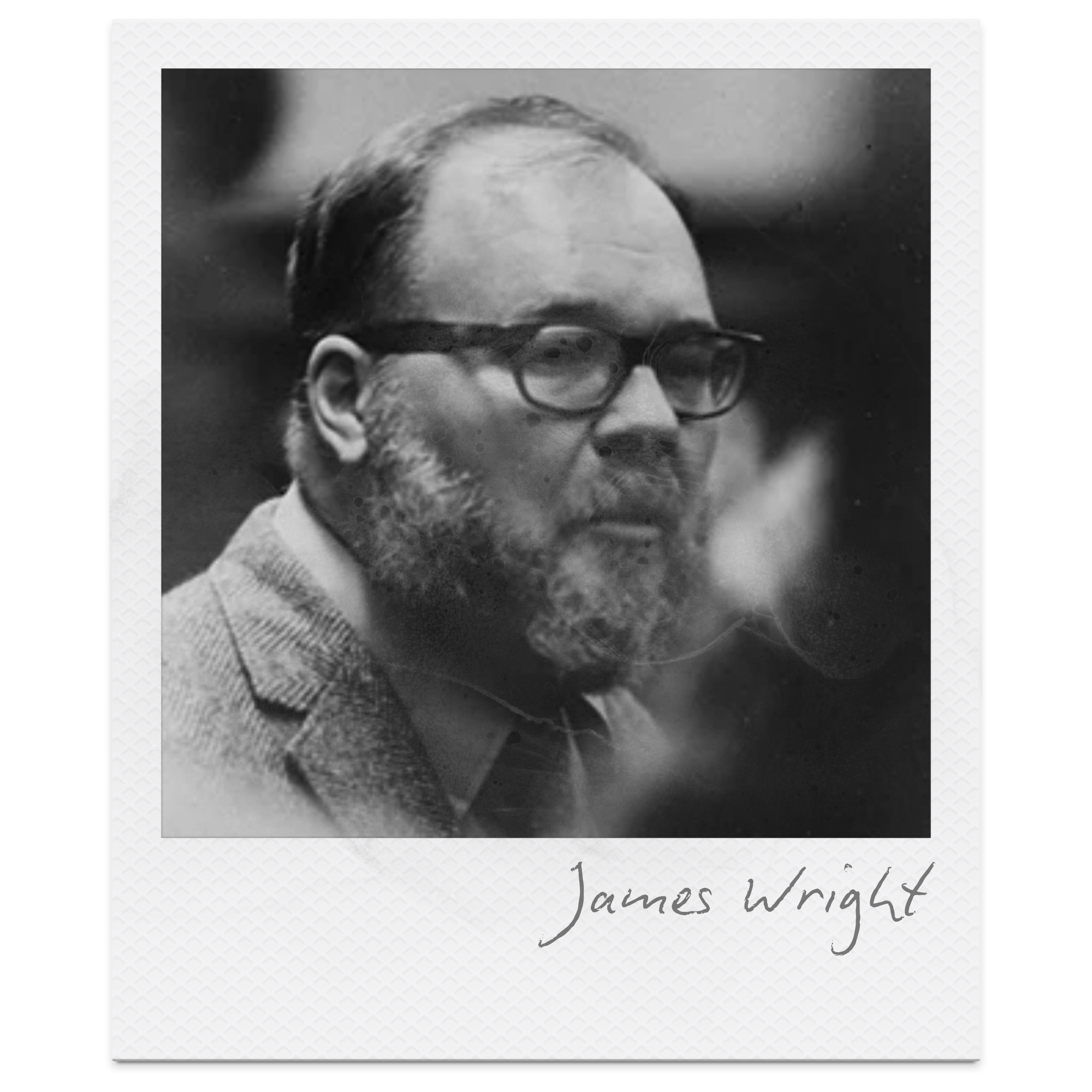
James Wright (1927–1980) was one of the most influential American poets of the twentieth century, celebrated for moving away from formal verse towards a more lyrical, imagistic, and deeply personal style. By the time he published A Blessing in 1963 in his collection The Branch Will Not Break, Wright had become associated with the emerging Deep Image movement, which used vivid natural imagery to express emotional and spiritual experiences that could not easily be explained through logic alone. Although the poem is dated 1961, it reflects this important shift in his poetic style.
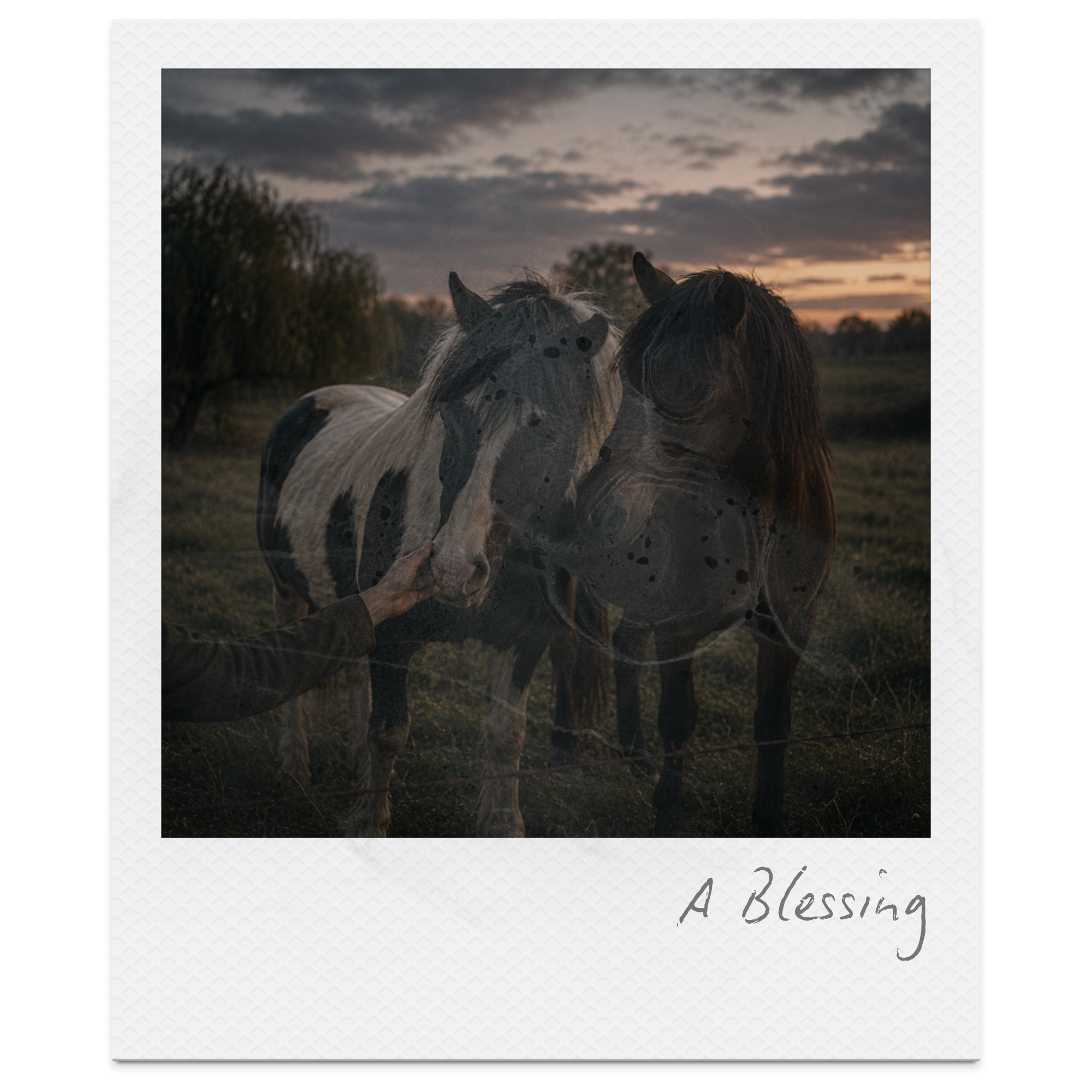
The poem is inspired by a real encounter near Rochester, Minnesota, where Wright and his friend, the fellow poet Robert Bly, stopped to visit two ponies grazing beside a roadside pasture. Bly's influence was significant: both poets admired forms of poetry that valued intuition, nature, and moments of sudden revelation over rigid formalism. This shared interest helps explain the poem's quiet, contemplative tone and its movement from simple observation to profound personal insight.
Written during a period of increasing industrialisation and social change in post-war America, A Blessing offers a gentle contrast to the speed and detachment of modern life. The opening image of a highway immediately places the natural world alongside human civilisation, yet the speaker's encounter with the ponies reveals the restorative power of slowing down and reconnecting with nature. This context enriches the poem's exploration of belonging, human-animal relationships, and the possibility of spiritual renewal through moments of genuine attention and compassion.
A Blessing: At a Glance
Form: Free verse lyric poem.
Mood: Gentle, contemplative, joyful, and spiritually uplifting.
Central tension: The speaker moves from detached observation to profound emotional and spiritual connection with the natural world.
Core themes: Nature, human-animal connection, spiritual awakening, belonging, transformation, wonder, and the restorative power of compassion.
One-sentence meaning: Through a simple encounter with two ponies, Wright suggests that moments of genuine openness to the natural world can dissolve emotional boundaries, leading to a profound sense of renewal, unity, and personal transformation.
Quick Summary of A Blessing
The poem begins with the speaker and a companion stopping beside a pasture just off a highway near Rochester, Minnesota, where they encounter two Indian ponies grazing alone. Drawn by the animals' gentle curiosity, the pair step over the barbed wire into the field, and the ponies approach them with warmth and trust. As the speaker observes their affectionate behaviour towards one another and experiences their quiet acceptance, the ordinary roadside meeting gradually becomes something deeply meaningful.
In the second half of the poem, the speaker focuses on one of the ponies, describing its appearance with tenderness as it nuzzles his hand and allows him to stroke its ear. This intimate moment of connection leads to an unexpected personal revelation. The poem concludes with the speaker realising that the encounter has profoundly transformed his perception, ending with the unforgettable image that, if he could "step out of my body," he would "break / Into blossom," suggesting a moment of emotional, spiritual, and imaginative renewal.
Title, Form, Structure, and Metre
James Wright's formal choices reinforce the poem's movement from an ordinary roadside encounter to a profound moment of connection, wonder, and spiritual renewal. The simple title, free verse form, and natural rhythmic flow allow the experience to unfold gradually, mirroring the speaker's increasing openness to the natural world and the quiet transformation that concludes the poem.
Title
The title, A Blessing, immediately suggests that the poem will describe a gift, an act of grace, or an experience with lasting significance. Readers may initially expect a religious blessing or a clearly defined moment of divine intervention. Instead, Wright reveals that the blessing comes through an ordinary encounter with two ponies, transforming a seemingly insignificant event into something spiritually profound.
As the poem progresses, the title acquires a deeper meaning. The blessing is not simply the opportunity to meet the animals but the emotional and spiritual awakening they inspire. By ending with an image of personal transformation rather than a conventional conclusion, Wright suggests that moments of genuine connection with nature can become life-changing experiences, encouraging readers to reconsider where blessings may be found.
Form and Structure
A Blessing is written in free verse, allowing the poem to develop with the natural rhythms of observation and reflection. Without the constraints of a fixed poetic form, Wright creates the impression that the speaker's thoughts emerge organically, making the emotional journey feel spontaneous and authentic. This openness reflects one of the poem's central ideas: meaningful experiences cannot be planned but arise unexpectedly through attentiveness and openness to the world.
The poem follows a clear structural progression. It begins by establishing the setting beside a busy highway before gradually shifting attention towards the ponies themselves. As the speaker moves physically closer to the animals, the poem also becomes increasingly intimate, narrowing its focus from the landscape to the gentle interaction between human and animal. The final lines shift inward once again, transforming external observation into personal revelation.
Wright carefully controls the poem's pace throughout this progression. The opening moves steadily as the setting and encounter are introduced, before slowing considerably as individual details of the ponies are described with increasing tenderness. This gradual deceleration encourages readers to linger alongside the speaker, mirroring the careful observation that ultimately leads to his moment of insight. The poem concludes not by resolving the encounter itself but by ending with an unexpected epiphany, leaving readers to reflect on the lasting significance of what appears to have been an ordinary meeting.
Rhyme Scheme and Poetic Pattern
The poem contains no regular rhyme scheme, reinforcing its conversational tone and natural development. Rather than relying on predictable sound patterns, Wright creates cohesion through recurring imagery, gentle repetition, and the steady progression of emotional experience.
The absence of rhyme contributes to the poem's realism, allowing the speaker's reflections to feel immediate and unforced. Instead of directing attention towards formal patterning, Wright encourages readers to focus on the changing relationship between the speaker and the ponies. The poem's quiet musicality emerges through carefully balanced sentences, repeated references to movement and touch, and subtle sound echoes that create harmony without becoming intrusive.
This freedom from rigid poetic patterns also reflects the poem's wider themes. Just as the speaker experiences an unexpected emotional awakening, the poem itself resists formal constraint, suggesting that moments of beauty and transformation cannot always be contained within predictable structures.
Metre and Rhythmic Movement
Rather than following a consistent metrical pattern, A Blessing uses a flexible, speech-like rhythm that mirrors natural thought and conversation. The varying line lengths create an unhurried pace, encouraging readers to slow down alongside the speaker as he becomes increasingly attentive to his surroundings. This measured rhythm reflects the poem's movement away from the speed and distraction of the highway towards stillness, observation, and quiet contemplation.
Although no dominant metre governs the entire poem, Wright occasionally creates passages that approximate iambic movement, allowing the rhythm to flow smoothly before gently varying it. These subtle shifts prevent the poem from feeling mechanical while preserving its reflective quality. Because the metre remains flexible, readers experience the poem as a series of unfolding observations rather than a carefully orchestrated performance.
Enjambment plays an especially important role in shaping the rhythm. Thoughts frequently continue across line breaks without interruption, creating a sense of fluid movement that mirrors both the speaker's growing emotional engagement and the natural behaviour of the ponies. The flowing syntax reinforces the poem's atmosphere of trust, openness, and quiet discovery.
Towards the conclusion, Wright's rhythm becomes noticeably slower and more deliberate. Shorter phrases and increased emphasis on the final image encourage readers to pause, allowing the speaker's moment of transformation to resonate fully. Rather than ending with explanation or certainty, the poem closes with a lyrical image whose simplicity and rhythmic restraint reinforce its enduring sense of wonder and spiritual renewal.
The Speaker in A Blessing
The speaker is a first-person observer who recounts a seemingly ordinary encounter with quiet honesty and increasing emotional openness. At the beginning of the poem, the voice is calm, reflective, and primarily focused on describing the surrounding landscape and the behaviour of the ponies. As the encounter develops, however, the speaker becomes more personally involved, moving from detached observation to genuine affection and wonder. This gradual shift in perspective mirrors the poem's wider movement from simple experience to profound spiritual and emotional awakening.
The speaker's tone remains gentle, humble, and deeply attentive throughout, avoiding dramatic language or exaggerated emotion. Instead, Wright allows the speaker's growing appreciation of the ponies to emerge naturally through careful observation and quiet reflection. By presenting the final moment of transformation as a sincere personal realisation rather than a grand declaration, the speaker invites readers to recognise that moments of extraordinary insight often arise from ordinary experiences. The reflective first-person voice therefore shapes the poem as both a record of an encounter with nature and a meditation on the transformative power of kindness, presence, and human connection with the natural world.
Line-by-Line Analysis of A Blessing
James Wright's poem unfolds as a single continuous movement, with each group of lines developing the speaker's journey from simple observation to profound spiritual awakening. Rather than dividing the poem into separate stanzas, this close reading follows the poem's natural progression, exploring how Wright uses imagery, symbolism, structure, tone, and voice to deepen the encounter with the ponies and gradually reveal its transformative significance. As the analysis progresses, notice how each section builds upon the last, leading naturally to the poem's unforgettable final revelation.
Lines 1–4: An Ordinary Landscape Filled with Quiet Wonder
Wright opens the poem by placing the reader in an entirely ordinary setting, "Just off the highway to Rochester, Minnesota," grounding the scene in a recognisable modern landscape rather than an idealised rural paradise. This precise geographical detail creates a sense of realism while immediately establishing a contrast between the speed and artificiality of the highway and the peaceful natural world that exists just beyond it. The speaker does not embark on a deliberate search for enlightenment; instead, the extraordinary emerges unexpectedly from the everyday, suggesting that moments of beauty and transformation are often found in the most unassuming places.
The personification of "Twilight bounds softly forth on the grass" transforms the evening into a living presence. The energetic verb "bounds" evokes graceful movement and vitality, while the adverb "softly" tempers this energy with gentleness and tranquillity. Rather than describing twilight as something passive that simply falls, Wright presents nature as active and welcoming, creating an atmosphere of quiet wonder before the ponies even appear. This gentle animation of the landscape prepares readers for a poem in which the natural world possesses its own emotional life and spiritual significance.
The introduction of the "two Indian ponies" immediately shifts the poem's focus towards living creatures whose presence feels both humble and symbolic. Wright offers almost no physical description at first, choosing instead to concentrate on their eyes, which "Darken with kindness." This striking example of personification attributes a deeply human emotion to the animals, immediately dissolving any sense of separation between human beings and nature. The verb "darken" is particularly effective because it suggests a subtle emotional change rather than a dramatic action, allowing kindness to emerge naturally through the ponies' gaze.
By ending the opening section with this image, Wright establishes one of the poem's central ideas: true communication does not depend upon words but upon mutual recognition, empathy, and presence. The ponies' kindness is instinctive and unconditional, encouraging readers to view them not simply as animals but as beings capable of emotional connection. Through this gentle beginning, Wright invites readers into a world where ordinary encounters possess extraordinary emotional depth, laying the foundations for the speaker's later transformation.
Lines 5–10: Crossing Boundaries and an Unexpected Welcome
As the encounter develops, Wright presents the ponies as active participants rather than passive objects of observation. The statement that they have come "gladly out of the willows" immediately attributes warmth and intention to their behaviour. The adverb "gladly" conveys genuine eagerness, suggesting that the animals freely choose to approach the visitors rather than reacting out of curiosity or fear. Their emergence from the shelter of the willows also carries symbolic significance, as they move from concealment into openness, mirroring the emotional openness that gradually develops throughout the poem.
The declaration that they come "To welcome my friend and me" further strengthens this sense of mutual acceptance. Wright reverses the expected relationship between humans and animals: rather than the speaker approaching and observing the ponies, it is the ponies who appear to offer hospitality. This inversion challenges assumptions about human superiority, presenting the animals as generous hosts within their own environment.
The line "We step over the barbed wire into the pasture" introduces one of the poem's most significant symbols. On a literal level, the barbed wire marks the boundary of the field, separating the roadside from the ponies' grazing land. Symbolically, however, it represents the barriers that often divide humanity from the natural world. By physically crossing this boundary, the speaker also begins crossing emotional and psychological boundaries, moving away from detachment and towards genuine connection.
Wright's description of the ponies "grazing all day, alone" initially suggests isolation, but the following lines immediately complicate this idea. The vivid image that they "ripple tensely" combines kinetic imagery with subtle personification, suggesting restrained excitement running through their bodies. Their happiness is so great that they "can hardly contain" it, transforming what could have been an ordinary meeting into a joyful reunion. Through this emotional intensity, Wright challenges stereotypes of emotional reserve in animals, encouraging readers to recognise shared capacities for affection, anticipation, and companionship across species.
Lines 11–14: Companionship, Belonging, and Shared Solitude
This section slows the poem's pace, allowing Wright to reflect on the quiet relationship between the two ponies. The simile "They bow shyly as wet swans" combines elegance with vulnerability. Swans are traditionally associated with grace and beauty, yet the adjective "wet" removes any sense of idealisation, making the comparison feel natural and authentic rather than decorative. The image captures the ponies' gentleness while emphasising their modesty and trust.
The simple statement "They love each other." is remarkable for its directness. Wright offers no explanation or qualification, presenting love as an observable reality rather than an emotion reserved exclusively for humans. The brevity of the sentence gives it particular force, encouraging readers to accept the animals' emotional lives without scepticism or sentimentality.
The following line introduces one of the poem's most thought-provoking paradoxes: "There is no loneliness like theirs." At first glance, the statement appears contradictory because the ponies are together rather than alone. However, Wright suggests that loneliness is not simply the absence of companionship but an awareness of separation from the wider world. The ponies possess one another, yet they remain isolated within the boundaries of the pasture, creating a poignant tension between intimacy and exclusion.
The section concludes with the ponies returning to the ordinary act of grazing as darkness falls. This return to routine reinforces their sense of belonging within the landscape while also preserving the quiet atmosphere that has developed throughout the poem. The encounter has not disrupted nature but has become part of its gentle rhythm, emphasising harmony rather than intrusion.
Lines 15–21: Intimacy and the Gentle Power of Touch
The focus now narrows from the two ponies to a deeply personal interaction between the speaker and one animal. The speaker's desire to hold "the slenderer one" reveals an emotional response that goes beyond admiration, suggesting tenderness, affection, and a longing for closeness. Importantly, this desire remains gentle rather than possessive, reflecting the respect that characterises the relationship throughout the poem.
The pony's decision to approach and "nuzzle" the speaker's hand represents the emotional climax of their physical encounter. The verb conveys affection, trust, and vulnerability, demonstrating that the connection is mutual rather than imposed by the human observer. Wright presents this contact without sentimentality, allowing its simplicity to communicate its emotional significance.
As the speaker begins describing the pony's appearance, the imagery becomes increasingly tactile. Rather than focusing on dramatic features, Wright notices small, intimate details, including the pony's wild mane and delicate ear. This careful attention reflects the speaker's growing mindfulness, showing how genuine appreciation often emerges through patient observation rather than grand gestures.
The simile comparing the pony's ear to "the skin over a girl's wrist" highlights extraordinary delicacy and fragility. By linking the animal to a familiar human image, Wright dissolves the perceived distance between species while emphasising tenderness rather than dominance. The speaker's decision to caress rather than control reinforces the poem's celebration of compassion, suggesting that authentic relationships with nature are founded upon gentleness, trust, and mutual respect.
Lines 22–24: A Moment of Spiritual Transformation
The poem reaches its climax with the abrupt declaration "Suddenly I realize," marking a decisive structural shift from observation to revelation. Throughout the poem, Wright has gradually prepared readers for this moment by slowing the pace and deepening the speaker's emotional engagement. The adverb "Suddenly" captures the unpredictable nature of genuine insight, suggesting that profound understanding often arrives unexpectedly after long periods of quiet attentiveness.
The extraordinary metaphor that follows transforms the personal encounter into a moment of spiritual awakening. The speaker imagines stepping beyond the limitations of the physical self and "break[ing] / Into blossom." Blossoming traditionally symbolises growth, renewal, beauty, and new life, making it an especially powerful image of emotional and spiritual transformation. Rather than suggesting escape from reality, the metaphor implies a fuller participation in it, as though the speaker has become more completely alive through the experience.
The final image deliberately remains open to interpretation. It may represent a moment of transcendence, a heightened awareness of unity with nature, or the release of an inner self that has remained hidden beneath the routines of ordinary life. By ending with this lyrical metaphor rather than explaining its meaning directly, Wright invites readers to experience the same sense of wonder as the speaker. The poem therefore concludes by suggesting that moments of genuine connection with the natural world possess the power to transform not only how we see our surroundings but how we understand ourselves.
Key Quotes and Methods in A Blessing
The following quotations capture the poem's most significant moments, demonstrating how James Wright uses imagery, symbolism, personification, and structure to transform an ordinary encounter into a profound meditation on nature, connection, and spiritual renewal.
"Twilight bounds softly forth on the grass."
◆ Technique: Personification, visual imagery, dynamic verb.
◆ Meaning: Twilight is presented as an active, living presence rather than a passive backdrop, giving the natural world vitality and energy.
◆ Purpose: Wright establishes an atmosphere in which nature appears welcoming and emotionally responsive, preparing readers for the transformative encounter that follows.
◆ Impact: Readers immediately enter a landscape that feels alive, encouraging them to view the natural world as an active participant in the poem rather than simply its setting.
"Darken with kindness."
◆ Technique: Personification, emotive language, visual imagery.
◆ Meaning: The ponies' eyes appear to communicate warmth and compassion, suggesting an emotional connection between humans and animals.
◆ Purpose: Wright challenges assumptions that kindness is an exclusively human quality, presenting empathy as something shared across species.
◆ Impact: Readers develop an immediate sense of affection for the ponies, making the encounter feel sincere and emotionally significant.
"We step over the barbed wire into the pasture"
◆ Technique: Symbolism, physical imagery.
◆ Meaning: The speaker crosses a literal boundary while also beginning a symbolic journey from detachment towards emotional openness.
◆ Purpose: Wright uses the fence to represent the divisions that often exist between humanity and the natural world.
◆ Impact: Readers recognise that the encounter is becoming more than a simple visit, marking the beginning of the speaker's personal transformation.
"They ripple tensely"
◆ Technique: Kinetic imagery, metaphor.
◆ Meaning: The ponies' excitement is conveyed through subtle physical movement, suggesting restrained joy and anticipation.
◆ Purpose: Wright communicates emotion through observation rather than direct explanation, allowing readers to infer the animals' feelings.
◆ Impact: The image creates a vivid sense of energy and affection, strengthening the emotional bond between the speaker and the ponies.
"They love each other."
◆ Technique: Simple declarative sentence, direct statement.
◆ Meaning: Wright presents the ponies' affection as an unquestionable reality rather than something requiring explanation.
◆ Purpose: The straightforward language emphasises the naturalness and purity of their relationship.
◆ Impact: Readers are encouraged to recognise emotional depth within the natural world, reinforcing the poem's message about connection and compassion.
"There is no loneliness like theirs."
◆ Technique: Paradox, reflective statement.
◆ Meaning: Although the ponies are together, they remain isolated from the wider world, creating a complex understanding of loneliness.
◆ Purpose: Wright encourages readers to think beyond conventional definitions of isolation and companionship.
◆ Impact: The paradox deepens the emotional complexity of the poem, inviting multiple interpretations of both the ponies' experience and the speaker's response.
"And nuzzled my left hand."
◆ Technique: Tactile imagery, gentle verb.
◆ Meaning: The pony initiates physical contact, demonstrating trust and affection.
◆ Purpose: Wright presents the connection between human and animal as mutual rather than one-sided.
◆ Impact: Readers experience the intimacy of the encounter, making the speaker's later transformation feel genuine and emotionally earned.
"That is delicate as the skin over a girl's wrist."
◆ Technique: Simile, tactile imagery.
◆ Meaning: The comparison highlights the extraordinary softness and vulnerability of the pony.
◆ Purpose: Wright encourages readers to appreciate the beauty of small physical details while emphasising the need for gentleness and care.
◆ Impact: The simile strengthens the poem's atmosphere of tenderness, encouraging readers to value sensitivity over strength or control.
"Suddenly I realize"
◆ Technique: Structural shift, first-person reflection.
◆ Meaning: The speaker experiences an unexpected moment of insight that changes the meaning of the entire encounter.
◆ Purpose: Wright marks the transition from external observation to internal revelation.
◆ Impact: Readers recognise that the poem is moving beyond description towards a profound personal and spiritual realisation.
"if I stepped out of my body I would break / Into blossom."
◆ Technique: Extended metaphor, symbolism, imagery.
◆ Meaning: The speaker imagines an emotional and spiritual transformation in which the self becomes fully alive, renewed, and connected with nature.
◆ Purpose: Wright concludes the poem by expressing the life-changing power of compassion, beauty, and openness to the natural world.
◆ Impact: The unforgettable final image leaves readers with a lasting sense of wonder, suggesting that even the simplest encounters can transform the way we experience ourselves and the world around us.
Key Techniques in A Blessing
James Wright combines imagery, symbolism, free verse, and a deeply reflective voice to transform an everyday encounter into a meditation on nature, human connection, and spiritual renewal. Rather than relying on dramatic events, he allows meaning to emerge gradually through careful observation, emotional restraint, and an increasing sense of intimacy between the speaker and the natural world.
◆ Imagery – Wright creates vivid visual, tactile, and sensory imagery that immerses readers in the landscape. His detailed descriptions of the ponies and their surroundings encourage readers to observe the natural world with the same attentiveness as the speaker, making the final moment of transformation feel authentic and deeply earned.
◆ Personification – Nature is repeatedly given human qualities, from the movement of twilight to the emotional warmth of the ponies. This technique dissolves the boundary between humanity and the natural world, suggesting that kindness, affection, and companionship are shared across all living things.
◆ Symbolism – The ponies symbolise innocence, trust, and the possibility of genuine connection, while the barbed wire represents the physical and emotional boundaries that separate people from nature. The final image of blossom symbolises personal renewal, spiritual awakening, and emotional growth.
◆ Extended Metaphor – The poem's concluding image transforms the speaker's emotional response into a metaphor for spiritual rebirth. Rather than describing change literally, Wright suggests that profound encounters with beauty can reshape a person's inner life.
◆ Free Verse – The absence of a fixed rhyme scheme or regular stanza pattern allows the poem to unfold naturally, reflecting the spontaneous nature of the encounter and the speaker's gradual emotional development.
◆ Enjambment – Wright frequently carries sentences across line breaks, creating a gentle, flowing rhythm that mirrors the speaker's reflective thoughts and the calm movements of the ponies. This fluidity reinforces the poem's atmosphere of openness and quiet discovery.
◆ Simile – Comparisons drawn from the natural and human worlds emphasise the ponies' gentleness, beauty, and vulnerability. These similes encourage readers to recognise unexpected connections between people, animals, and the wider environment.
◆ Contrast – Wright contrasts the busy, man-made world of the highway with the peaceful pasture, highlighting the restorative power of nature. He also contrasts ordinary observation with extraordinary revelation, showing how seemingly simple experiences can become spiritually significant.
◆ Juxtaposition – Images of civilisation and wilderness, movement and stillness, solitude and companionship are placed alongside one another throughout the poem. These contrasts deepen the speaker's appreciation of the encounter and reinforce the poem's central message about reconnecting with the natural world.
◆ First-Person Narrative Voice – The reflective first-person perspective allows readers to experience the speaker's gradual emotional awakening from within. As the poem progresses, the voice becomes increasingly personal, drawing readers into the speaker's moment of self-discovery.
◆ Natural Diction – Wright's language is deliberately simple and conversational, avoiding elaborate vocabulary or artificial ornamentation. This understated style allows the emotional significance of the encounter to emerge naturally, making the final revelation feel sincere rather than sentimental.
◆ Structural Progression – The poem follows a carefully controlled emotional journey from observation, to interaction, to intimate connection, and finally to spiritual transformation. This gradual progression mirrors the speaker's expanding awareness and ensures that the closing image feels both surprising and inevitable.
◆ Epiphany – The poem culminates in a moment of sudden personal revelation that transforms the meaning of everything that has come before. Wright uses this epiphany to suggest that ordinary encounters with kindness and nature can fundamentally alter the way individuals understand themselves and the world around them.
How the Writer Creates Meaning and Impact in A Blessing
James Wright creates meaning in A Blessing by combining rich natural imagery, gentle symbolism, free verse, and a deeply reflective narrative voice. Rather than presenting nature as something distant or decorative, he invites readers into an intimate encounter that gradually transforms both the speaker's perspective and their understanding of the relationship between humanity and the natural world. Every poetic choice contributes to the poem's movement from quiet observation to profound emotional and spiritual awakening.
◆ Language: Imagery, symbolism, and natural diction – Wright's language is deliberately simple yet richly evocative, allowing the emotional significance of the encounter to emerge through careful observation rather than dramatic description. His vivid sensory imagery encourages readers to appreciate the beauty found in small, everyday details, while symbols such as the ponies, barbed wire, and blossom develop broader ideas about trust, connection, freedom, and personal renewal. This understated diction makes the poem feel sincere and authentic, strengthening its emotional impact.
◆ Structure: A gradual journey towards revelation – The poem follows a carefully controlled progression from setting, to encounter, to intimacy, before culminating in a sudden moment of personal realisation. Each stage builds naturally upon the previous one, allowing the speaker's emotional transformation to develop gradually rather than appearing abrupt. By reserving the poem's most striking image until the closing lines, Wright ensures that the final revelation feels both unexpected and inevitable, encouraging readers to reconsider the significance of everything that has come before.
◆ Voice and Tone: Reflective, humble, and quietly joyful – Wright's first-person narration creates an intimate relationship between the speaker and the reader. His voice remains calm, observant, and free from exaggeration, allowing genuine emotion to emerge through thoughtful reflection rather than overt sentimentality. As the poem progresses, the tone shifts almost imperceptibly from simple curiosity to wonder and spiritual fulfilment, mirroring the speaker's expanding awareness and inviting readers to share in that experience.
◆ Sound and Rhythm: Natural movement and quiet harmony – The poem's free verse structure and flowing enjambment create a rhythm that closely resembles natural speech and quiet contemplation. Without the restrictions of a fixed rhyme scheme, Wright allows each observation to unfold organically, reflecting the unhurried pace of the encounter itself. Soft alliterative patterns and balanced phrasing contribute to the poem's peaceful atmosphere, reinforcing its themes of harmony, gentleness, and emotional openness.
◆ Method, Purpose, and Reader Impact – Through his combination of imagery, symbolism, free verse, structural progression, and a deeply reflective voice, Wright transforms a brief meeting with two ponies into a universal meditation on the restorative power of nature. Readers are encouraged to recognise that moments of kindness, stillness, and genuine attention can reshape the way we understand both the world around us and our own inner lives. The poem's restrained style ultimately heightens the emotional impact of its final revelation, leaving readers with an enduring sense of wonder, hope, and the possibility of personal transformation.
Themes in A Blessing
Although A Blessing describes a brief roadside encounter with two ponies, James Wright uses this simple experience to explore profound ideas about nature, human connection, and spiritual renewal. Through imagery, symbolism, free verse, and a reflective narrative voice, the poem suggests that moments of genuine openness can transform the way we understand both the natural world and ourselves.
Nature
Nature is presented as a living presence that possesses the power to comfort, inspire, and transform. From the opening description of twilight to the peaceful pasture where the ponies graze, Wright creates an environment that feels vibrant, welcoming, and emotionally responsive. Rather than functioning as a passive backdrop, the landscape actively shapes the speaker's experience, encouraging him to slow down, observe carefully, and become fully present. Through this immersive natural setting, Wright suggests that meaningful encounters with the environment can awaken a deeper appreciation of beauty and life.
Human-Animal Connection
The relationship between the speaker and the ponies lies at the heart of the poem. Wright presents their interaction as one based on mutual trust, gentleness, and respect, challenging the idea that emotional understanding belongs exclusively to human beings. The ponies are not treated as objects to be admired or controlled but as individuals capable of affection, curiosity, and kindness. By portraying this connection as reciprocal, Wright dissolves the boundaries between species and suggests that empathy can exist wherever openness and compassion are present.
Spiritual Awakening
The poem gradually develops from a simple observation into a moment of profound spiritual insight. Rather than depicting a traditional religious experience, Wright presents awakening as something that emerges unexpectedly through ordinary life. The speaker's encounter with the ponies leads him to perceive both the natural world and himself differently, suggesting that spiritual growth often arises through moments of quiet attentiveness rather than dramatic revelation. The poem ultimately proposes that genuine awareness begins when people become fully receptive to the world around them.
Belonging
Throughout the poem, Wright explores what it means to belong both within a community and within the natural world. The ponies appear entirely at ease in their surroundings, while the speaker gradually moves from being an outsider observing the landscape to someone who feels emotionally connected to it. This growing sense of belonging is not achieved through ownership or control but through acceptance, trust, and shared presence. Wright suggests that belonging is created through meaningful relationships rather than physical location alone.
Transformation
Transformation is the poem's central emotional journey. The speaker begins by describing an ordinary roadside stop but gradually experiences a profound change in perception and self-understanding. Wright carefully structures the poem so that each interaction deepens the speaker's emotional engagement, culminating in an image of renewal that symbolises inner growth rather than external change. This transformation demonstrates that seemingly insignificant moments can reshape the way people understand themselves and their place within the wider world.
Wonder
A quiet sense of wonder runs throughout the poem, emerging not from extraordinary events but from careful attention to ordinary experiences. Wright encourages readers to appreciate small gestures, gentle movements, and subtle moments of connection that might otherwise go unnoticed. His restrained language allows feelings of awe to develop naturally, suggesting that wonder is not created by spectacle but by the willingness to observe the world with openness, curiosity, and humility.
The Restorative Power of Compassion
Compassion is presented as a quietly transformative force that benefits both those who offer it and those who receive it. The kindness shown by the ponies, together with the speaker's own gentle response, creates an atmosphere of trust that allows genuine emotional connection to develop. Wright suggests that acts of tenderness have the power to restore a sense of peace, belonging, and emotional wholeness in a world often characterised by speed and separation. By presenting compassion as something that crosses the boundary between humans and animals, the poem argues that kindness is one of the most fundamental and restorative forces in existence.
Alternative Interpretations of A Blessing
Although A Blessing appears to describe a simple encounter with two ponies beside a country road, its rich symbolism and reflective voice invite a range of interpretations. Wright deliberately leaves the poem's concluding revelation open-ended, allowing readers to understand the speaker's transformation through psychological, social, philosophical, or spiritual perspectives.
Psychological Interpretation: Emotional Healing Through Connection
From a psychological perspective, the poem explores the restorative effects of genuine emotional connection. The speaker begins as a detached observer but gradually becomes more open and emotionally receptive through his interaction with the ponies. Their instinctive trust and kindness encourage him to lower his own emotional defences, allowing him to experience feelings of tenderness, vulnerability, and joy. The final image of personal transformation can therefore be interpreted as a moment of emotional healing, suggesting that compassion and meaningful connection have the power to restore parts of ourselves that everyday life may have suppressed.
Social Interpretation: Reconnecting in an Increasingly Disconnected World
The poem can also be read as a response to the growing distance between modern society and the natural world. The opening setting beside a highway places the encounter within an environment associated with speed, industry, and routine, yet the speaker discovers a very different way of experiencing life once he leaves the road behind. The act of crossing into the pasture symbolises a movement away from distraction and towards presence, reminding readers that genuine fulfilment often lies in slowing down and reconnecting with the world around them. Wright therefore suggests that modern life can distance people from both nature and themselves, while moments of quiet attention offer an opportunity to restore that lost connection.
Philosophical and Existential Interpretation: Discovering Meaning Through Presence
From an existential perspective, A Blessing explores how meaning emerges through direct experience rather than intellectual reflection. The speaker does not set out searching for enlightenment, nor does the poem offer abstract philosophical arguments. Instead, understanding develops naturally through careful observation, openness, and physical presence. The final transformation suggests that life's deepest moments of meaning often arise unexpectedly when individuals become fully engaged with the present rather than distracted by routine or self-consciousness. Wright therefore proposes that fulfilment is found not through achievement or certainty but through wholehearted participation in the living world.
Spiritual Interpretation: A Moment of Grace Beyond Religion
The poem may also be interpreted as describing a profoundly spiritual experience that exists outside formal religious belief. The title itself suggests a gift or blessing, yet no religious ceremony or divine figure appears within the poem. Instead, the speaker experiences a moment of grace through the kindness of the ponies and the beauty of the natural world. The concluding image of blossoming symbolises renewal, transcendence, and the possibility of becoming something greater than oneself. From this perspective, Wright suggests that spiritual awakening can occur through ordinary encounters, revealing the sacred within everyday life rather than within traditional religious practice alone.
Exam-Ready Insight for A Blessing
Strong responses to A Blessing move beyond describing the speaker's encounter with the ponies and instead explore how James Wright transforms an ordinary moment into a profound experience of connection, wonder, and spiritual renewal. The most successful essays remain closely focused on the question, selecting carefully chosen quotations and explaining how Wright's methods shape both meaning and the reader's response.
Strong responses typically:
◆ Develop a clear interpretation that is sustained throughout the response rather than commenting on individual quotations in isolation.
◆ Analyse the writer's methods, exploring how imagery, symbolism, structure, free verse, and the reflective narrative voice work together to create meaning.
◆ Explain the progression of the poem, showing how Wright carefully develops the speaker's emotional journey from observation to transformation.
◆ Explore the significance of the natural world, considering how the landscape and the ponies become symbols of wider ideas about compassion, belonging, and renewal.
◆ Support every point with precise textual evidence, ensuring that quotations are fully analysed rather than simply identified.
Strong Thesis Statement
In A Blessing, James Wright uses vivid natural imagery, gentle symbolism, and a carefully controlled structural progression to transform an ordinary encounter with two ponies into a profound meditation on human connection, spiritual renewal, and the restorative power of the natural world.
Model Analytical Paragraph
Wright presents the encounter with the ponies as a moment that dissolves the boundaries between humanity and nature, allowing the speaker to experience a profound emotional awakening. This is evident when the ponies' eyes "Darken with kindness," where personification attributes a deeply human quality to the animals. Rather than presenting kindness as an emotion exclusive to people, Wright suggests that compassion exists naturally within the wider living world. This challenges the reader to reconsider conventional distinctions between humans and animals while establishing an atmosphere of trust and mutual understanding. As the speaker becomes increasingly receptive to this quiet act of kindness, the poem gradually moves beyond simple observation towards spiritual transformation, reinforcing Wright's message that genuine openness to nature can fundamentally change the way we experience both the world around us and ourselves.
Teaching Ideas for A Blessing
These activities encourage students to explore how James Wright creates meaning through imagery, symbolism, structure, and voice, while developing the analytical skills required for Cambridge IGCSE World Literature (0408) Paper 2. The focus should remain on explaining how the poem achieves its effects rather than simply identifying literary techniques.
1. Close Analytical Discussion
Use these questions to encourage students to support their ideas with detailed textual evidence and thoughtful analysis of Wright's methods.
Discussion Questions:
How does Wright transform an ordinary roadside encounter into a profound moment of spiritual awakening? Consider his use of imagery, symbolism, and structural progression.
How does the speaker's relationship with the ponies develop throughout the poem? Explore how Wright presents growing trust, emotional openness, and connection through language and tone.
2. Exploring Themes and Interpretation
These questions encourage students to consider the poem's wider ideas while recognising that multiple interpretations can be supported by the text.
Discussion Questions:
Does the poem suggest that nature possesses a unique power to transform people, or is the speaker's change entirely personal? Support your ideas with evidence from the poem.
What does Wright suggest about kindness and compassion through his presentation of the ponies? Consider how the animals challenge readers' assumptions about human relationships with nature.
3. Exam Skills
These activities develop the close-reading and analytical writing skills needed for Paper 2.
Tasks:
Write a PETAL paragraph analysing how Wright presents the growing connection between the speaker and one of the ponies. Focus on the writer's methods as well as their effects.
Annotate the final three lines of the poem, identifying three literary methods that contribute to the speaker's moment of transformation. Explain how each method shapes the reader's interpretation of the ending.
4. Creative Writing Task
Creative responses encourage students to engage more deeply with the poem's themes while developing their own descriptive and reflective writing.
Creative Writing Tasks:
Write a descriptive scene in which an ordinary encounter with nature leads to an unexpected moment of personal insight or transformation. Focus on building the experience gradually through sensory imagery.
Write the poem from the perspective of one of the ponies, exploring how the arrival of the two visitors is experienced and what the encounter reveals about trust, companionship, and the natural world.
Looking for more creative writing inspiration? Explore the Creative Writing Archive for imaginative prompts, descriptive writing activities, and storytelling resources that help students develop richer observation, reflection, and narrative voice.
Go Deeper into A Blessing
If A Blessing has sparked your interest, these poems, novels, and plays explore similar ideas about nature, human connection, spiritual awakening, and the transformative power of ordinary experiences. Reading beyond the anthology can deepen your appreciation of Wright's poetic methods, introduce new literary perspectives, and provide valuable inspiration for wider study and teaching.
◆ The Peace of Wild Things – Wendell Berry – Berry explores how the natural world offers comfort, perspective, and emotional restoration during times of fear and uncertainty, celebrating nature as a source of peace and healing.
◆ The Tyger – William Blake – Blake reflects on the mystery, beauty, and power of the natural world through the image of the tiger, encouraging readers to consider humanity's relationship with creation and the forces that shape existence.
◆ Lines Composed a Few Miles above Tintern Abbey – William Wordsworth – Wordsworth explores memory, nature, and spiritual renewal, showing how encounters with the natural landscape continue to shape identity, imagination, and emotional wellbeing long after they have ended.
◆ Walden – Henry David Thoreau – Thoreau's classic work of reflective prose examines the value of simplicity, solitude, and immersion in nature, arguing that stepping away from modern life allows individuals to discover greater clarity and purpose.
◆ The Windhover – Gerard Manley Hopkins – Hopkins transforms the observation of a bird in flight into a meditation on beauty, wonder, and spiritual revelation, demonstrating how close attention to nature can lead to profound moments of insight.
◆ Pilgrim at Tinker Creek – Annie Dillard – Dillard combines detailed observation of the natural world with philosophical reflection, encouraging readers to recognise extraordinary beauty and meaning within everyday experiences.
Final Thoughts
A Blessing demonstrates how extraordinary moments often emerge from the most ordinary experiences. Through vivid natural imagery, gentle symbolism, free verse, and a deeply reflective narrative voice, James Wright transforms a brief encounter with two ponies into a meditation on kindness, belonging, and spiritual renewal. Rather than presenting nature as something to admire from a distance, the poem invites readers to experience it as a source of compassion, connection, and quiet transformation.
The poem's enduring power lies in its restraint. Wright avoids dramatic events or elaborate language, allowing small gestures and careful observations to accumulate until they culminate in a profound moment of personal revelation. By suggesting that genuine openness to the natural world can change the way we see both ourselves and our surroundings, A Blessing reminds readers that moments of wonder are often found not through extraordinary circumstances but through the willingness to pause, notice, and truly connect.
Continue exploring the anthology in the Songs of Ourselves Volume 3 Hub, or browse the Literature Library for more in-depth analyses of poetry, novels, plays, and short stories from a wide range of literary traditions.
Choose Your Next Text