Ray Bradbury: Context, Themes, Works & Literary Significance
Ray Bradbury is often introduced to students through dystopian futures, speculative technologies, or cautionary tales about censorship and conformity. Yet to reduce his work to warnings about technology alone is to miss its deeper emotional and philosophical core. Writing primarily in mid-twentieth-century America, Bradbury produced fiction that sits at the intersection of science fiction, speculative fiction, fantasy, and literary realism, exploring memory, childhood, fear, and moral responsibility within rapidly changing modern societies.
To read Ray Bradbury in context is to recognise how deeply his writing is shaped by the anxieties and contradictions of the twentieth century. Emerging during periods marked by war, mass media expansion, Cold War paranoia, and accelerating technological change, Bradbury’s stories repeatedly return to questions of censorship, conformity, violence, and emotional suppression. His speculative settings are rarely about the future for its own sake; they function as mirrors held up to the present, exposing the costs of fear, control, and cultural amnesia.
This post explores Ray Bradbury’s context, the core Ray Bradbury themes that recur across his fiction, and his literary significance within American and global literature. Rather than offering close analysis of a single text, it provides a broader framework for understanding how Bradbury’s writing operates — how genre is used to explore moral and emotional truth, why his stories remain so widely taught, and where his work sits within the traditions of speculative and literary fiction.

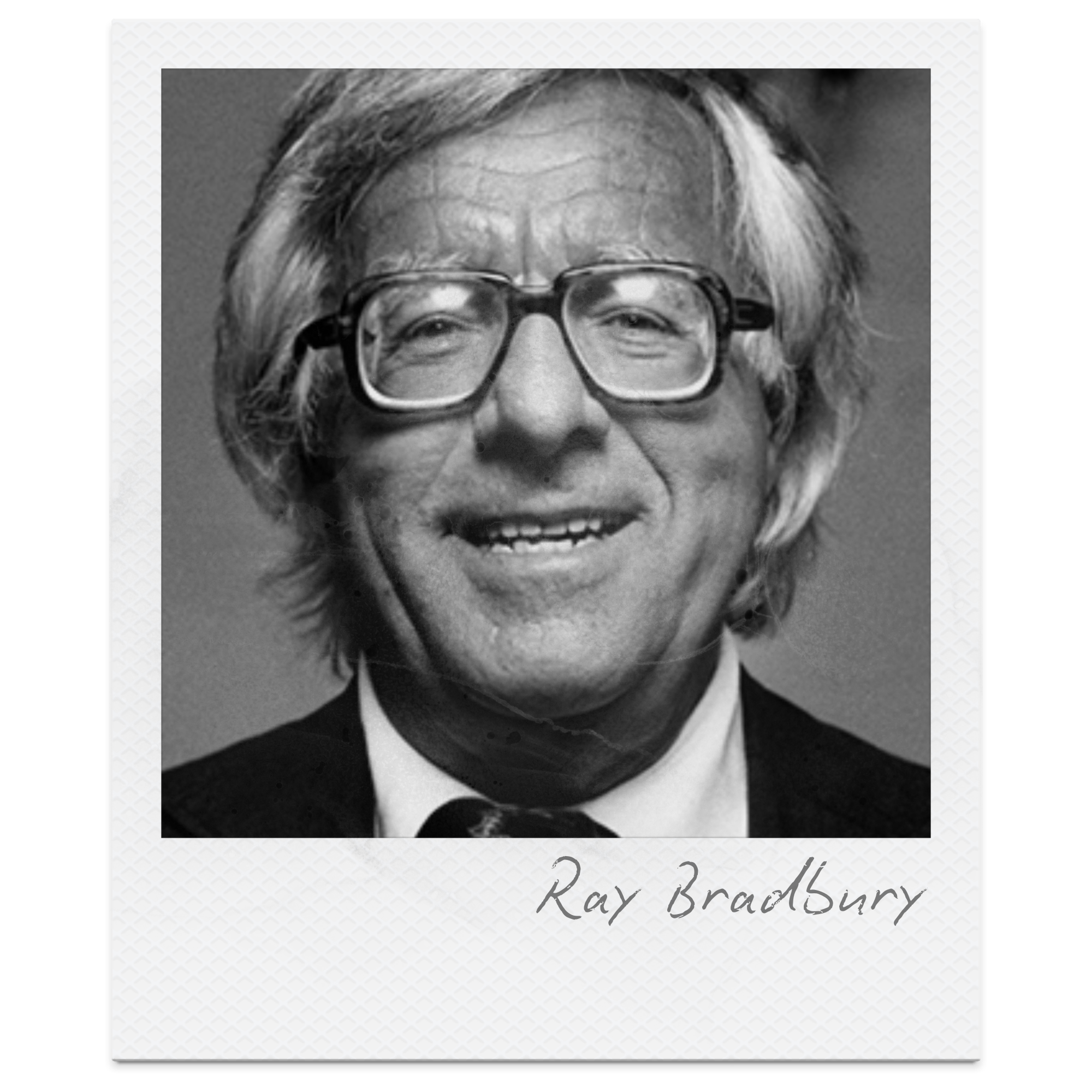
Who Was Ray Bradbury?
Ray Bradbury (1920–2012) was an American author best known for his short stories and novels that blend science fiction, fantasy, horror, and social commentary. Born in Waukegan, Illinois, Bradbury grew up during the Great Depression and came of age during World War II — formative experiences that shaped his sensitivity to loss, fear, nostalgia, and the fragility of human connection.
Unlike many of his contemporaries, Bradbury did not follow a traditional academic path. He never attended university, instead educating himself through extensive reading in public libraries. This self-directed literary education fostered a writing style that privileges emotional immediacy, lyrical language, and symbolic resonance over scientific precision or technical realism.
Bradbury wrote with a deep awareness of childhood memory and imagination. His work often returns to the textures of youth — small towns, family rituals, summer nights — not as sentimental idealisations, but as vulnerable spaces where innocence collides with cruelty, fear, and loss. This focus on emotional experience rather than technological speculation distinguishes Bradbury from more hard-science-oriented writers and positions him firmly within a broader speculative literature tradition.
Historical and Social Context
Bradbury’s writing emerges from the cultural tensions of mid-twentieth-century America, particularly the decades following World War II. This period was marked by rapid technological advancement, the rise of mass media, Cold War anxiety, and widespread fear surrounding ideological conformity. The threat of nuclear annihilation, alongside the expansion of television and consumer culture, created an atmosphere of both optimism and profound unease.
Censorship and surveillance were central concerns during Bradbury’s lifetime. The era of McCarthyism and the Red Scare fostered suspicion, fear, and the silencing of dissenting voices. These anxieties surface powerfully in Fahrenheit 451, where censorship is enforced not only through authoritarian control, but through public apathy and the voluntary abandonment of critical thought.
Bradbury also wrote during a period when childhood was increasingly idealised as a protected stage of life, even as violence and fear permeated the adult world. His stories frequently disrupt this illusion. In texts such as The Veldt and All Summer in a Day, childhood becomes a lens through which cruelty, power, and emotional neglect are exposed rather than concealed.
Importantly, Bradbury’s speculative settings rarely rely on distant futures or alien worlds. Many stories are set in familiar domestic or suburban spaces, reinforcing the idea that danger arises not from technology itself, but from human choices made within ordinary environments.
Literary Movements and Genre Positioning
Although Ray Bradbury is frequently categorised as a science fiction writer, his relationship to genre is complex. While his work often includes futuristic settings or speculative premises, Bradbury resisted rigid labels. He viewed genre as a tool rather than a boundary — a means of exploring fear, memory, ethics, and human behaviour.
Bradbury’s writing aligns closely with traditions of speculative fiction, fantasy, and gothic literature. His stories rely on symbolism, metaphor, and atmosphere rather than scientific plausibility, placing him in dialogue with writers such as Edgar Allan Poe and Nathaniel Hawthorne. Psychological tension and moral consequence take precedence over realism.
Unlike much Golden Age science fiction, which emphasised progress and technological mastery, Bradbury’s work is sceptical of unchecked advancement. Technology often amplifies existing human flaws — cruelty, conformity, emotional detachment — rather than solving them. This positions Bradbury between genre fiction and literary writing, making his work particularly adaptable for classroom study and critical analysis.
Short fiction is central to Bradbury’s literary identity. The compressed form allows him to construct intense emotional experiences, often ending with moments of revelation, loss, or moral reckoning. His prose style is lyrical and image-driven, prioritising mood and memory over exposition.
Core Themes Across Bradbury’s Work
Across his fiction, Ray Bradbury themes recur with striking consistency. These themes operate as emotional pressures that shape character, conflict, and consequence.
Technology vs Humanity
Ray Bradbury consistently presents technology as morally neutral but emotionally dangerous when it replaces human connection. His stories explore how screens, automation, and artificial environments dull empathy, disrupt relationships, and encourage passive living. Rather than focusing on futuristic spectacle, Bradbury places technology inside domestic spaces, forcing readers to confront how easily comfort and convenience can erode human responsibility.
Control, Conformity, and Surveillance
A recurring concern in Ray Bradbury’s work is the subtle nature of control. Authority is rarely enforced through overt violence; instead, it operates through social norms, fear of difference, and voluntary conformity. Surveillance often appears indirect or normalised, highlighting how societies maintain order not through oppression alone, but through collective compliance and self-censorship.
Media, Consumerism, and Passive Living
Bradbury’s depiction of mass media anticipates modern concerns about distraction, consumer culture, and emotional disengagement. Characters are frequently surrounded by noise, entertainment, and spectacle, yet remain isolated and unfulfilled. These narratives invite readers to consider how constant stimulation suppresses critical thinking and reduces meaningful engagement with the world.
Parental Responsibility and Moral Failure
One of Bradbury’s most unsettling themes is the failure of adult responsibility. Parents and authority figures often abdicate their moral duties, choosing comfort, avoidance, or technological substitution over care and guidance. By placing harm within the family unit, Bradbury challenges readers to confront how neglect and passivity can be as destructive as deliberate cruelty.
Childhood, Power, and Vulnerability
Childhood in Bradbury’s fiction is rarely a protected or innocent state. Children are positioned as active participants within systems of power, capable of manipulation, resistance, or moral clarity. This theme allows exploration of agency, vulnerability, and the consequences of granting children unchecked authority within controlled environments.
Isolation, Memory, and Emotional Disconnection
Underlying many of Bradbury’s stories is a profound sense of isolation. Characters struggle to form genuine connections, often retreating into memory, routine, or fantasy. Bradbury uses emotional disconnection to examine what is lost when societies prioritise efficiency, entertainment, and order over reflection, grief, and remembrance.
Bradbury’s Enduring Literary Significance
Ray Bradbury’s literary significance lies in his ability to merge speculative imagination with emotional realism. His stories endure not because they predict the future, but because they interrogate enduring human fears: loss of freedom, erosion of empathy, and cultural amnesia.
Bradbury’s language is central to this durability. His prose is lyrical and symbolic, encouraging emotional as well as intellectual engagement. Meaning is left unresolved, requiring readers to confront moral ambiguity rather than accept instruction.
Equally important is Bradbury’s use of speculative fiction as a critical lens. By blending science fiction, fantasy, and horror with literary techniques, Bradbury expands the possibilities of genre writing. His work occupies a space where imagination becomes a vehicle for ethical inquiry.
For these reasons, Bradbury functions not merely as a science fiction writer, but as a cultural commentator. His fiction provides a framework for examining censorship, conformity, childhood, and moral responsibility within modern societies.
Go Deeper Into Bradbury’s Context and Ideas
The ideas outlined above connect directly to broader discussions of power, censorship, technology, and responsibility in twentieth-century literature. The following posts explore these areas in greater depth:
◆ Censorship and Control in Bradbury’s Fiction
◆ Technology, Violence, and Emotional Detachment
◆ Childhood, Memory, and Loss of Innocence
◆ Fear, Conformity, and Social Pressure
◆ Hope, Imagination, and Resistance
You may also wish to explore individual stories, comparative texts, and creative writing responses, where these ideas take on different forms across Bradbury’s fiction.
Final Thoughts
Understanding Ray Bradbury begins with context. His stories emerge from a world shaped by war, censorship, and technological acceleration, yet they endure because they explore emotional and ethical pressures that remain urgently relevant.
Approaching Bradbury through context and theme rather than isolated texts reveals the coherence of his work across genres. Science fiction, fantasy, and horror become lenses through which Bradbury examines power, fear, and responsibility.
For further exploration of Bradbury and other major writers, texts, and themes, visit the Literature Library, where related analyses and critical frameworks are organised to support deeper reading across English literature.
Choose Your Bradbury Text