The Veldt by Ray Bradbury: Summary, Themes, Meaning & Analysis
The Veldt by Ray Bradbury is often read as a warning about technology gone too far, a classic piece of science fiction exploring automation, virtual reality, and control. Students remember the nursery, the lions, and the shocking ending — but when the story is reduced to an anti-technology message, its most unsettling ideas are lost.
At its core, The Veldt is a story about parenting, power, and moral responsibility, and what happens when authority is delayed in favour of comfort. The Hadleys do not lose control because machines are stronger than them; they lose it because responsibility is avoided and emotional labour is outsourced. For more of Bradbury’s work, explore the Ray Bradbury Hub, or browse the Literature Library for teaching resources and analysis.

Context of The Veldt
In The Veldt, Ray Bradbury’s writing reflects a deep unease about comfort, complacency, and emotional passivity rather than a fascination with futuristic technology. Writing in the decades following the Second World War, Bradbury witnessed a period of rapid technological optimism in the United States: homes filled with labour-saving devices, entertainment becoming increasingly immersive, and the idea that convenience equated to progress. Beneath that optimism, however, sat a quieter anxiety about what might be lost when machines began to replace human effort, judgement, and connection.
Unlike many science fiction writers of his time, Bradbury was not interested in predicting the future with technical accuracy. He used speculative settings to explore human behaviour, particularly the ways people avoid discomfort, responsibility, and difficult emotional work. His fears were domestic rather than cosmic. In stories like The Veldt, danger does not arrive from outside the home; it is built into the family space itself, disguised as care, luxury, and protection.
This post-war domestic setting is crucial to understanding the story. The Hadleys live in a world where parenting has been streamlined and softened, where conflict can be switched off and emotional labour outsourced. Bradbury is responding to a cultural moment that increasingly framed good parenting as providing comfort rather than guidance. In that context, the nursery becomes a symbol not of advanced technology, but of avoidance — a place where difficult emotions, discipline, and boundaries are quietly handed over to something else.
Seen this way, The Veldt is not a rejection of progress, but a warning about abdication. Bradbury asks what happens when adults surrender authority in the name of ease, and when responsibility is delayed until it becomes impossible to reclaim. The horror of the story grows not from innovation itself, but from a culture willing to trade human judgement and moral responsibility for the illusion of harmony and control.
Read within Ray Bradbury’s wider literary context, The Veldt exemplifies his recurring warning that technological comfort, when used to avoid emotional responsibility, ultimately exposes the fragility of authority, care, and human connection.
The Veldt: At a Glance
Form: Short story; speculative fiction
Mood: Unsettling, oppressive, eerily calm
Central tension: The conflict between parental authority and technological control within the family
Core themes: parenting and power, technology and control, illusion versus reality, emotional outsourcing, moral responsibility
One-sentence meaning: When authority is delayed and responsibility is outsourced, control shifts irreversibly, and care becomes indistinguishable from harm.
Quick Summary of The Veldt
George and Lydia Hadley live in a technologically advanced home designed to meet their every need, including a virtual reality nursery that brings their children’s thoughts to life. Concerned by the nursery’s repeated African veldt setting—complete with lions and an oppressive atmosphere—Lydia urges George to shut it down. Although he hesitates, George eventually agrees that the house and nursery may be having a harmful effect on their children, Peter and Wendy.
As the parents begin to question their reliance on the house, they notice the children’s increasing emotional attachment to the nursery and resistance to any attempt to limit its use. The psychologist, David McClean, warns that the nursery reflects the children’s inner thoughts and suggests shutting it off immediately. George finally asserts control, announcing that the nursery will be locked and the house turned off, a decision that is met with quiet but intense opposition from the children.
In the final moments, Peter and Wendy lure their parents into the nursery under the pretence of one last visit. Once inside, George and Lydia realise too late that the lions are real manifestations of their children’s violent desires. The nursery door locks behind them, and the children calmly remain outside as the simulation continues, revealing that control has already shifted beyond recovery.
Title of The Veldt
Ray Bradbury’s titles often do more than label the story: they establish tone, suggest conflict, create expectations, introduce symbolism, and hint at irony.
At first, The Veldt seems deceptively simple. The title refers to the African grassland created inside the nursery, directing attention to the story’s most vivid setting. It suggests distance, exoticism, and wilderness, preparing the reader for a story shaped by atmosphere and landscape rather than domestic conflict.
As the story unfolds, however, the meaning of the title deepens. The veldt is not merely a backdrop but the physical expression of the children’s inner world, making it symbolic of desire, violence, and unchecked emotional power. What initially appears to be a fantasy setting becomes the dominant force in the story, replacing the safety of home with a landscape of threat and predation.
There is also a strong irony in the title. Rather than naming the family, the house, or the nursery, Bradbury names the artificial world that overwhelms them. This suggests that the real centre of the story is no longer the Hadleys themselves, but the space that has taken over their lives. The title reflects the displacement of parental authority by a simulated environment that feels more powerful than reality.
Emotionally and thematically, The Veldt carries a sense of heat, exposure, and inevitability. By the end of the story, the title no longer evokes a mere setting, but a symbolic landscape where moral responsibility has collapsed and where the family’s hidden tensions are made terrifyingly real.
Structure of The Veldt
The structure of The Veldt shapes its tension, revelation, and emotional impact, moving from domestic normality to inevitable horror. Bradbury carefully controls what is revealed and when, using escalation, withheld information, and structural irony to create a sense of quiet but unstoppable progression.
Opening (Exposition)
The story begins in a seemingly ordinary domestic setting, immediately introducing the Happylife Home and the advanced technology that defines the Hadleys’ world. The nursery is presented as impressive but slightly unsettling, with its hyper-realistic African veldt and Lydia’s instinctive discomfort. This opening establishes the central tension between comfort and unease, while subtly foreshadowing danger through sensory detail and Lydia’s fear.
Rising Action
As the narrative develops, the tension builds through repeated returns to the nursery. The persistence of the veldt, the presence of the lions, and the children’s emotional attachment all suggest that something is wrong. Key moments—such as the bloody wallet, the children’s evasiveness, and the psychologist’s warning—introduce increasingly explicit signs of danger. Bradbury withholds full explanation, allowing suspicion and dread to grow gradually.
Turning Point / Climax
The turning point occurs when George decides to shut down the nursery and the house, attempting to reassert parental authority. This decision marks a shift from passive concern to active intervention, but it comes too late. Structurally, this moment feels abrupt, highlighting how delayed action transforms necessary discipline into perceived punishment.
Falling Action
The apparent resolution is undercut when George allows the nursery to be turned on “for just a minute.” This brief concession becomes the final mistake, reinforcing the pattern of hesitation and compromise that has defined the parents’ behaviour throughout the story. The children’s compliance feels unnatural, signalling that control has already shifted.
Ending (Resolution)
The ending is deliberately abrupt and quietly devastating. The parents are locked inside the nursery, and the violence occurs offstage, replaced by the calm image of the children having tea. This use of structural irony—pairing horrific implication with peaceful imagery—creates a powerful emotional after-effect. The story closes without moral resolution, leaving the consequences of delayed authority and emotional outsourcing to resonate beyond the final line.
Overall, the structure reinforces the idea that the ending is not a sudden twist but the inevitable result of sustained avoidance, where each small decision contributes to an irreversible shift in control.
Setting of The Veldt
The setting of The Veldt shapes its tone, meaning, and conflict, moving between the artificial comfort of the home and the threatening realism of the nursery. In Bradbury’s work, setting is never passive; it acts as a symbolic landscape that reflects emotional states and shifting power.
The Happylife Home is presented as a space of total convenience, a house that “clothed and fed and rocked them to sleep,” removing the need for effort, responsibility, or even interaction. This creates an atmosphere of sterility and dependency, where the parents have become passive within their own lives. The house is described as being “good to them,” suggesting a subtle reversal of roles, where technology takes on the function of caregiver.
In contrast, the nursery introduces instability and unease. When activated, “the walls began to purr and recede into crystalline distance,” transforming the safe domestic interior into something vast and uncontrollable. The illusion is so complete that it overwhelms the senses: “the hot straw smell of lion grass,” “the great rusty smell of animals,” and “the smell of dust like a red paprika in the hot air.” These details create an immersive environment where the boundary between reality and simulation collapses.
The African veldt itself becomes the dominant symbolic setting. It is described as “an empty as a jungle glade at hot high noon,” filled with oppressive heat and stillness. The presence of the lions, watching with “terrible green-yellow eyes,” introduces a constant sense of threat and predation. The veldt reflects the children’s inner world, turning their thoughts into a landscape defined by violence and control.
Bradbury also uses contrast between settings to highlight the shift in power. The controlled, automated house is gradually overshadowed by the uncontrollable nursery, where the parents’ authority no longer functions. The illusion becomes more powerful than reality, as shown when the lions do not respond to George’s command: “Come on, room! I demand Aladdin!” The failure of the setting to change reveals that control has already moved elsewhere.
By the end of the story, the nursery has fully replaced the home as the central space of meaning. The final image of the veldt, calm and unchanged, emphasises the permanence of this shift. The setting is no longer a projection of imagination, but a fixed reality shaped by desire, power, and the collapse of parental authority.
Narrative Voice in The Veldt
The narrative voice in The Veldt shapes how the reader interprets events, creating a sense of unease, distance, and dramatic irony. Bradbury uses a third-person limited perspective, primarily aligned with George Hadley, to control what is seen, understood, and overlooked.
The narration closely follows George’s thoughts and perceptions, allowing the reader to experience the nursery through his attempts to rationalise it. He repeatedly reassures himself that the room is harmless, describing it as “all dimensional, superreactionary, supersensitive color film,” reducing the threat to something mechanical and explainable. This creates a gap between what George believes and what the reader suspects, generating tension through limited understanding.
At the same time, the voice is subtly ironic. While George dismisses Lydia’s fears, the sensory detail of the veldt—its heat, smell, and violence—suggests that her instincts are more accurate than his logic. This contrast positions the reader to question George’s authority and recognise the danger before he fully does, creating a sense of foreboding.
Bradbury also uses shifts in tone to deepen the unease. The narration moves from calm domestic description to moments of heightened sensory intensity, particularly in the nursery scenes. The lions are described with visceral precision, their presence dominating the narrative space, which creates a clash between the supposed artificiality of the setting and its overwhelming realism.
Importantly, the narrative voice withholds full explanation. The children’s thoughts are never directly accessed, and their motivations remain partially obscured. This lack of access reinforces their mysterious and unsettling nature, making their actions feel controlled but not fully understood.
Overall, the narrative voice creates a layered effect: it aligns the reader with George’s perspective while simultaneously undermining it. This combination of limited insight, irony, and sensory intensity ensures that the story’s danger is felt long before it is fully recognised, reinforcing the theme that control has already begun to slip away.
The Purpose and Impact of The Veldt
The purpose of The Veldt is to explore the consequences of emotional outsourcing, delayed authority, and the quiet erosion of parental responsibility in a world shaped by technological comfort. Rather than presenting technology as an external threat, Bradbury examines how human choices—particularly the desire for ease and avoidance of conflict—create the conditions for loss of control.
The story functions as a warning about complacency. George and Lydia do not lose power suddenly; they surrender it gradually, prioritising comfort over confrontation and convenience over care. This creates a deeply unsettling emotional effect, as the reader recognises that the tragedy is not caused by a single mistake, but by a pattern of avoidance and inaction.
The emotional impact of the story lies in its restraint. The final scene is not chaotic or violent in a conventional sense; instead, it is marked by calmness, silence, and inevitability. The image of the children sitting peacefully while the lions feed creates a powerful sense of moral unease, forcing the reader to confront the gap between appearance and reality.
Intellectually, the story challenges assumptions about progress, control, and parenting. It raises uncomfortable questions about what happens when authority is exercised too late, and whether care that avoids discipline can still be considered care at all. The ambiguity of the ending ensures that these questions remain unresolved, extending the story’s impact beyond its final moments.
The moral of The Veldt is that when responsibility is consistently avoided and authority is delayed, control does not disappear—it is transferred, often to forces that cannot be guided or reversed.
Ultimately, the story lingers because it refuses to offer reassurance. Its after-effect is one of quiet disturbance, leaving the reader to reflect on how easily power, care, and control can be reshaped by the choices people make in the name of comfort.
Characters in The Veldt
The characters in The Veldt function as embodiments of power, control, and emotional responsibility, with each figure reflecting a different response to the shifting balance between humans and technology.
George Hadley
George represents delayed authority and the illusion of control. Although he is the nominal head of the household, his power is weakened by hesitation and inconsistency. He attempts to rationalise the nursery, insisting it is “all dimensional, superreactionary, supersensitive color film,” reducing its threat to something manageable. However, his authority is only asserted after prolonged inaction, making his final decision to shut down the nursery feel abrupt and ineffective. George embodies the danger of avoiding responsibility until it is too late to reclaim it.
Lydia Hadley
Lydia represents instinctive awareness and emotional unease. Unlike George, she senses early that something is wrong, admitting, “I’m afraid,” and recognising that the house has replaced her role as a mother. Her observation that “the house is wife and mother now” highlights the displacement of human connection by technology. Despite this awareness, Lydia ultimately lacks the power to act decisively, reflecting how insight without authority cannot prevent the collapse of control.
Peter Hadley
Peter embodies unchecked power and the consequences of emotional detachment. He is calm, controlled, and quietly threatening, particularly in moments such as “I don’t think you’d better consider it any more, Father.” His refusal to engage emotionally and his resistance to authority reveal a child who has grown accustomed to control without limits. Peter’s behaviour suggests not impulsive cruelty, but a learned understanding that power lies where desire is fulfilled without restriction.
Wendy Hadley
Wendy mirrors Peter but appears less dominant, representing complicity and shared influence. She supports her brother’s actions and participates in the manipulation of their parents, reinforcing the idea that the children operate as a unified force. Her calmness in the final scene, offering tea while the lions feed, reflects a complete detachment from the consequences of their actions, highlighting the extent to which moral boundaries have failed to develop.
David McClean
David McClean functions as the voice of reason and warning, representing an external attempt to restore order. He recognises that the nursery has become “a channel toward destructive thoughts,” identifying the underlying issue as one of parental failure rather than technological fault. However, his intervention comes too late, reinforcing the idea that once control has been surrendered, it cannot easily be regained.
Collectively, the characters illustrate how authority, responsibility, and emotional connection can erode when replaced by convenience. Each figure contributes to the central conflict, revealing that the collapse of the family is not caused by a single individual, but by a system in which power is misdirected and responsibility is avoided.
Key Themes in The Veldt
The themes in The Veldt centre on power, control, and the consequences of emotional neglect, with Bradbury exploring how authority shifts when responsibility is avoided.
Childhood and Power
Bradbury challenges the idea of childhood innocence by presenting children who possess power without limitation. Peter and Wendy are not chaotic or impulsive; they are controlled and deliberate, operating within a system that rewards their desires without resistance. The nursery allows their thoughts to become reality, meaning their emotional world is no longer mediated by adult guidance. This creates a dangerous imbalance, where childhood imagination becomes a source of control rather than creativity.
Trust and Betrayal
The story explores the breakdown of trust within the family, particularly between parents and children. George and Lydia believe they are providing care and comfort, yet this trust is undermined by secrecy and manipulation. The children’s final act—luring their parents into the nursery—represents the ultimate betrayal, revealing that emotional bonds have been replaced by self-interest and control. Trust, once eroded, cannot be easily restored.
Invasion and Infiltration
The idea of invasion operates on both a literal and symbolic level. The nursery is initially a contained space, but it gradually infiltrates the home, dominating the family’s emotional and psychological environment. The African veldt does not remain within its walls; its presence is felt through smell, sound, and memory, suggesting that the boundary between reality and simulation has been breached. This reflects a deeper fear of systems that infiltrate quietly, reshaping behaviour before they are recognised as threats.
Complacency and Control
Bradbury presents complacency as a central cause of the family’s downfall. George and Lydia repeatedly delay action, choosing comfort over confrontation and convenience over discipline. This allows control to shift gradually, making their eventual attempt to reassert authority feel both sudden and ineffective. The story suggests that control is not lost in a single moment, but through a series of small decisions that prioritise ease over responsibility.
Illusion versus Reality
The blurred boundary between illusion and reality is one of the story’s most unsettling elements. The nursery creates environments that are indistinguishable from the real world, undermining the characters’ ability to differentiate between simulation and truth. This is most evident when the lions, initially understood as projections, become functionally real. Bradbury uses this theme to explore how perception shapes experience, suggesting that when illusion is convincing enough, it becomes a form of reality.
Parenting and Moral Responsibility
At the heart of the story is a critique of parenting and moral responsibility. George and Lydia’s reliance on the house reflects a desire to avoid the difficulties of raising children, including conflict, discipline, and emotional labour. By outsourcing these responsibilities, they weaken their authority and fail to guide their children’s development. The story ultimately suggests that care requires boundaries, and that avoiding responsibility in the name of comfort leads to irreversible consequences.
Together, these themes reveal a world in which power shifts silently, authority erodes gradually, and the structures designed to provide comfort ultimately create vulnerability.
Symbolism in The Veldt
Bradbury uses symbolism throughout The Veldt to explore power, control, emotional absence, and illusion, with objects and settings acting as extensions of the characters’ inner worlds.
The Nursery
The nursery symbolises emotional outsourcing and the replacement of parental authority. It is not simply a piece of technology, but a space that absorbs imagination, discipline, and emotional regulation. Described as a room where “the walls began to purr and recede,” it becomes a living environment shaped by the children’s thoughts. Over time, it replaces the parents entirely, functioning as both provider and authority figure. The nursery ultimately represents a system where desire operates without boundaries, making it both seductive and dangerous.
The African Veldt
The African veldt symbolises unchecked instinct, violence, and psychological reality. Its repeated appearance suggests that the children’s minds are fixated on a single emotional pattern—one rooted in hostility and control. The heat, described as “a hot yellow sun,” and the sensory overload of “the smell of dust like a red paprika,” create an environment that feels oppressive and inescapable. The veldt reflects a world without restraint, where primal urges dominate and moral boundaries disappear.
The Lions
The lions are the most explicit symbol of latent violence and suppressed hostility. Initially perceived as part of the illusion, they gradually become manifestations of the children’s darker impulses. Their physicality—“the smell of meat from the panting, dripping mouths”—emphasises their transition from imagined to real. The lions symbolise the consequences of unregulated desire, as well as the children’s ability to act without empathy or consequence.
The House (Happylife Home)
The Happylife Home symbolises comfort, dependency, and the erosion of identity. Designed to perform every task, it removes the need for effort, decision-making, and responsibility. Lydia’s realisation that “the house is wife and mother now” highlights how the home has replaced human roles. The house represents a system where convenience overrides connection, leading to emotional detachment and a loss of purpose.
The Locked Door
The nursery door symbolises control, denial, and false security. George repeatedly locks and unlocks it, believing he can regulate access and maintain authority. However, the door ultimately becomes meaningless, as the children bypass it and use it against their parents. When the door locks from the outside, it signifies the complete reversal of power. The symbol reveals that control, once weakened, cannot simply be reasserted through force.
The Wallet and Scarf
The appearance of George’s wallet, “chewed” and marked with “drops of saliva,” and Lydia’s bloody scarf symbolise the collapse of illusion into reality. These objects act as physical evidence that the nursery’s creations are no longer contained. They blur the boundary between imagination and the real world, reinforcing the idea that the consequences of emotional neglect are tangible and irreversible.
Through these symbols, Bradbury constructs a world where technology reflects human behaviour, rather than controlling it outright. The danger lies not in the objects themselves, but in what they reveal about power, responsibility, and the human tendency to avoid difficult truths.
Key Techniques in The Veldt
Bradbury uses language and structure to create tension, unease, and moral ambiguity, reinforcing the story’s warning about power, control, and emotional neglect.
◆ Sensory imagery — vivid descriptions of the veldt (“the smell of dust,” “the hot yellow sun”) immerse the reader, making the illusion feel real and reinforcing how easily boundaries between imagination and reality collapse
◆ Juxtaposition — the contrast between the comfortable, automated home and the violent African landscape highlights the clash between civilisation and primal instinct, exposing the fragility of control
◆ Symbolism — the nursery, lions, and house act as symbolic extensions of human behaviour, revealing how emotional absence and unchecked desire lead to destructive outcomes
◆ Foreshadowing — repeated references to screams, blood, and the lions feeding hint at the ending, creating a sense of inevitability rather than surprise
◆ Dialogue — conversations between George, Lydia, and the children reveal shifting power dynamics, with the children’s calm defiance exposing the parents’ weakening authority
◆ Irony — the house designed to provide comfort and safety becomes the source of danger, showing how technology meant to protect ultimately destroys
◆ Repetition — the recurring veldt setting and lion imagery reflect the children’s fixated thoughts, suggesting that their desires are becoming permanent and uncontrollable
◆ Gradual tonal shift — the story moves from domestic normality to quiet horror, with tension building subtly rather than through sudden action, making the ending feel disturbingly inevitable
Important Quotes from The Veldt
Quotes in The Veldt reveal character, theme, and tone, particularly the shifts in power, control, and emotional authority.
Parental Unease and Loss of Control
“George, I wish you’d look at the nursery.”
◆ Method — understated dialogue opens the story with concern
◆ Effect — immediately signals that something is wrong beneath domestic normality
◆ Link to theme — introduces complacency and control beginning to fracture
“I feel like I don’t belong here. The house is wife and mother now.”
◆ Method — metaphor equating the house with parental roles
◆ Effect — highlights Lydia’s growing sense of redundancy and displacement
◆ Link to theme — reinforces emotional outsourcing and parental absence
The Illusion Becoming Reality
“The walls began to purr and recede into crystalline distance.”
◆ Method — personification and sensory imagery
◆ Effect — makes the nursery feel alive and immersive
◆ Link to theme — blurs the boundary between illusion and reality
“You could feel the prickling fur on your hand.”
◆ Method — tactile imagery
◆ Effect — intensifies realism, making the danger feel immediate
◆ Link to theme — shows how technology overrides rational perception
Violence and Foreshadowing
“There were drops of saliva on it, it had been chewed, and there were blood smears on both sides.”
◆ Method — graphic imagery
◆ Effect — introduces physical evidence of violence before it is fully understood
◆ Link to theme — foreshadows the collapse of illusion into reality
“The lions were feeding.”
◆ Method — simple, declarative sentence
◆ Effect — creates chilling detachment and normalises violence
◆ Link to theme — reflects emotional numbness and inevitability
Children and Power
“I don’t want to do anything but look and listen and smell; what else is there to do?”
◆ Method — rhetorical question
◆ Effect — reveals dependency on passive experience rather than action
◆ Link to theme — highlights complacency and loss of agency
“I wish you were dead!”
◆ Method — blunt, shocking dialogue
◆ Effect — exposes the children’s hostility without emotional restraint
◆ Link to theme — links to childhood power and suppressed violence
The Final Shift in Control
“Don’t let them switch off the nursery and the house.”
◆ Method — imperative language
◆ Effect — shows Peter prioritising the system over his parents
◆ Link to theme — demonstrates the complete reversal of authority and control
“A cup of tea?”
◆ Method — understated, polite dialogue
◆ Effect — creates disturbing calm after implied violence
◆ Link to theme — reinforces illusion versus reality and emotional detachment
These quotes trace the movement from unease → control slipping → illusion breaking → power reversal, making the ending feel inevitable rather than sudden.
Why The Veldt Still Matters
The Veldt remains strikingly relevant because it explores human behaviour, parenting, and control in ways that feel even more urgent in a world shaped by technology, automation, and digital environments. Bradbury’s story is not simply about futuristic machines, but about what happens when people begin to prioritise comfort over responsibility and convenience over connection.
At its core, the story speaks to modern concerns about screen dependency, virtual spaces, and algorithm-driven environments. Like the nursery, many digital systems today are designed to respond instantly to our desires, reducing friction and effort. This raises important questions about agency and control: when everything is tailored to us, do we become more powerful—or more dependent? Bradbury’s warning suggests that when individuals stop engaging actively with the world, they risk losing the ability to set boundaries, make decisions, and exercise authority.
The story is also deeply relevant in its exploration of parenting and emotional presence. George and Lydia do not fail because they are cruel, but because they are absent in subtle, everyday ways, allowing a system to take over roles that require human judgement and care. This reflects ongoing conversations about work-life balance, emotional availability, and the impact of outsourcing care to technology or systems. Bradbury challenges the idea that providing comfort is the same as providing guidance, showing how avoidance can have long-term consequences.
Perhaps most importantly, The Veldt resonates because it examines how power shifts quietly. The children do not take control through force, but through a gradual process in which authority is delayed, weakened, and finally reversed. This reflects broader societal concerns about systems, control, and dependency, where power is often surrendered not through conflict, but through complacency and inaction.
For students, the story offers more than a warning about technology. It encourages reflection on responsibility, choice, and consequence, asking difficult questions about what we allow to replace human roles in our lives. Bradbury’s message endures because it is not about the future—it is about patterns of behaviour that continue to shape the present.
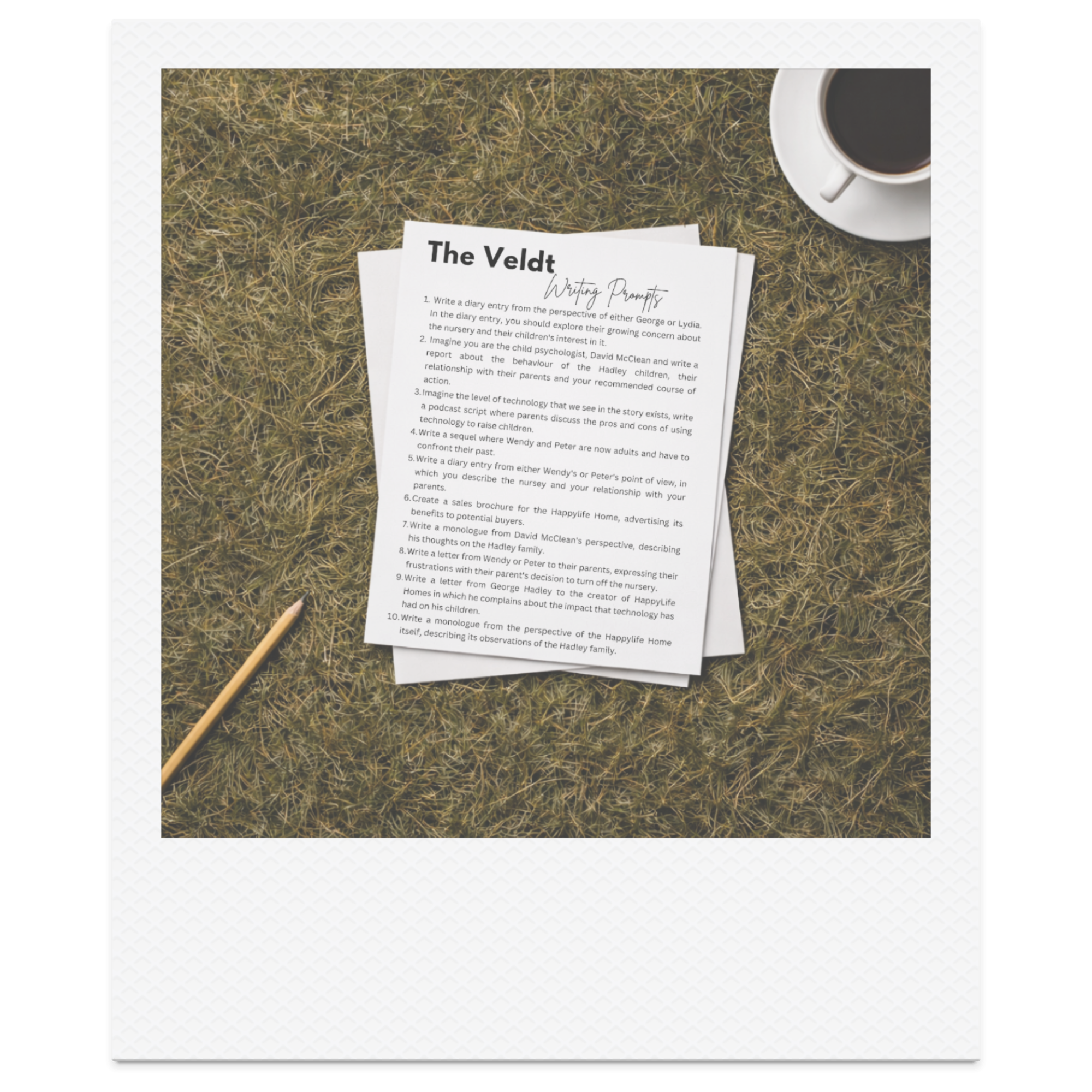
Teaching The Veldt in the Classroom
Teaching The Veldt well requires more than checking comprehension or identifying symbols. The story’s power lies in its moral ambiguity, its refusal to offer a clear villain, and its unsettling portrayal of parenting, authority, and control. Students are often disturbed by the ending but struggle to articulate why, which makes the text rich, but also challenging, to handle in the classroom.
The most effective approaches balance structured analysis with open-ended thinking, allowing students to explore discomfort without rushing towards certainty. This is a story that benefits from discussion, debate, creative response, and varied modes of assessment rather than a single, linear teaching path.
When planning lessons around The Veldt, it helps to think in terms of purpose, not just activities:
◆ Assessment and comprehension
Low-stakes quizzes and retrieval tasks help students secure understanding of plot, character, and setting, freeing up cognitive space for deeper ethical and thematic analysis.
◆ Creative and narrative response
Creative writing tasks allow students to explore perspective, motivation, and consequence in ways traditional essays sometimes cannot, particularly when grappling with implication rather than explanation.
◆ Discussion and ethical debate
Structured discussion — including paired talk, group tasks, and silent written debate — encourages students to test interpretations, challenge assumptions, and recognise that multiple readings can coexist.
◆ Revision and consolidation
Games and vocabulary-based activities support recall while revisiting key ideas from different angles, helping students retain both detail and thematic understanding.
◆ Visual and alternative responses
Picture prompts and design-based tasks support students who think visually or struggle to access abstract ethical ideas through text alone, often surfacing insights that don’t emerge through written analysis.
To support this kind of teaching, I’ve created agrowing classroom bundle for The Veldt, designed specifically for middle and high school ELA classrooms. The bundle brings together assessment, discussion, creative writing, and visual tasks so teachers don’t have to build everything from scratch and can adapt lessons to suit different classes, abilities, and time constraints.
At present, the bundle includes a wide range of assessment, discussion, and creative response activities, including:
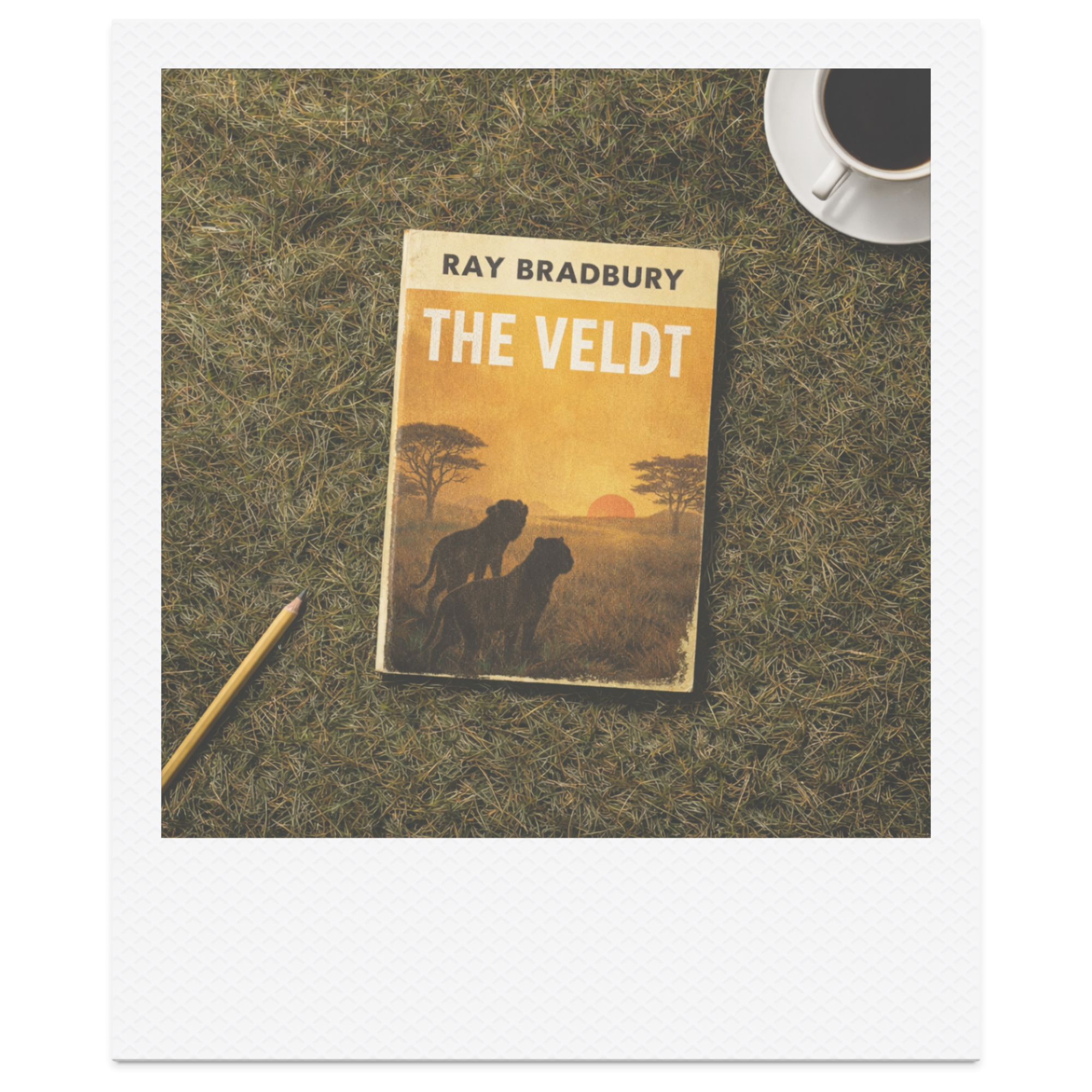
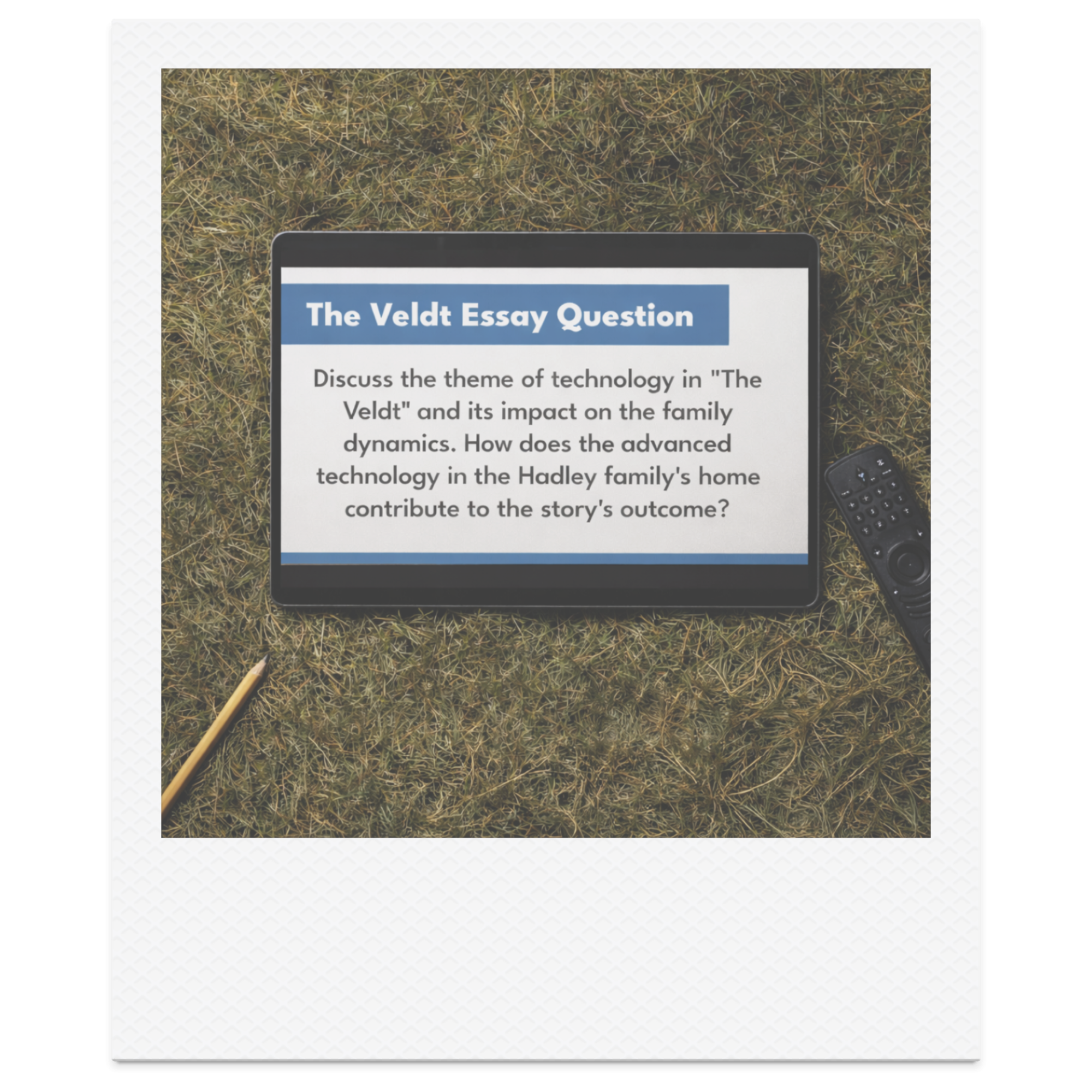
◆ Assessment and retrieval tasks, such as a digital multiple-choice quiz, essay questions, and structured revision games
◆ Creative writing prompts in both printable and editable digital formats, designed to explore theme, perspective, and consequence
◆ Discussion and debate activities, including Roll the Dice discussion boards and silent debate prompts focused on technology, parenting, and control
◆ Post-reading creative tasks, offering modern response formats that allow students to interpret the text in varied ways
◆ Visual and vocabulary-based activities, including picture prompts, crosswords, word searches, and curated colouring pages
Designed to work across lessons, homework, revision sessions, cover work, and sub plans, the bundle offers both digital and printable formats and continues to grow over time. It supports thoughtful, ethical teaching of a complex text without flattening its discomfort or over-simplifying its ideas.
If you’re looking to extend this further, you’ll also find a wide range of text-linked creative writing prompts designed to help students explore themes, perspective, and consequence in more depth — alongside broader genre-based ideas — in the Creative Writing Archive.
Go Deeper into The Veldt
Once students have a secure understanding of The Veldt, the story opens into wider conversations about technology, power, and control, particularly how modern systems shape behaviour long before we consciously recognise their influence. This is where the text moves beyond plot and into ideas that feel uncomfortably current.
Rather than pushing towards a single interpretation, going deeper with The Veldt works best when students are encouraged to question assumptions, recognise patterns, and sit with uncertainty rather than resolve it too quickly.
◆ Shift discussion from technology to systems. Encourage students to look beyond the nursery as a single invention and towards the wider structure it represents. Who designs it, who benefits from it, and who avoids responsibility because it exists?
◆ Interrogate the idea of safety. George and Lydia repeatedly frame the nursery as something that keeps their children happy and protected, but at what cost — and for whose comfort? When does protection begin to resemble control?
◆ Examine emotional distance rather than violence. The most unsettling aspects of the story are the moments of calm, hesitation, and avoidance. Returning to these quieter scenes helps students recognise how harm can emerge without spectacle.
◆ Encourage moral uncertainty. The Veldt resists neat conclusions. Allowing students to disagree about responsibility, blame, and intention mirrors the story’s refusal to offer reassurance.
For classes ready to make broader cultural connections, The Veldt pairs naturally with modern dystopian storytelling. Bradbury’s concerns about surveillance, control, emotional outsourcing, and parental authority anticipate many of the same questions explored in contemporary media. I explore this further in Why Ray Bradbury Is the Original Black Mirror (and How to Teach Both in the Classroom), where Bradbury’s work is placed alongside carefully selected examples of modern tech dystopia to examine how power and responsibility shift across generations.
Going deeper into The Veldt means resisting the urge to resolve it. Bradbury does not offer a clear warning or a tidy moral. Instead, he asks readers to notice how easily responsibility can be surrendered — and how difficult it is to reclaim once it has been given away.
That discomfort is not something to smooth over. And that’s the point.
Final Thoughts
The Veldt endures not because of its futuristic setting, but because of how quietly and precisely it exposes the consequences of avoidance. Bradbury does not present technology as an external threat or children as innately dangerous. Instead, he traces how responsibility is gradually surrendered, how authority is delayed, and how comfort is mistaken for care.
When taught thoughtfully, The Veldt becomes a powerful way for students to explore moral responsibility, power, and the ethics of control. It challenges the assumption that good intentions are enough, and it complicates easy narratives about safety, progress, and protection. The story’s discomfort lies in its familiarity: the systems Bradbury questions are not distant or speculative, but embedded in everyday life.
For the classroom, this makes The Veldt an invaluable text. It invites discussion rather than answers, encourages ethical questioning over symbolic certainty, and rewards close attention to what is left unsaid. Bradbury asks readers to consider not just what technology can do, but what we allow it to replace — and what happens when authority arrives too late to matter.
That is why The Veldt continues to resonate. Not as a warning about the future, but as a reminder that responsibility, once surrendered, is difficult to reclaim — and that the most dangerous choices are often the quietest ones.
If you’re looking to extend this work into the classroom, you might also explore my favourite Ray Bradbury stories to teach, which pair especially well with speculative fiction, modern folklore, and atmosphere-driven storytelling.
Looking to explore more of Bradbury’s work? Then visit the Ray Bradbury Hub and the Literature Library.
Choose Your Next Text