Notes from the Inkpot
Writing, teaching, creating - one ink-stained idea at a time.


The Copper Beeches by Sir Arthur Conan Doyle: Summary, Themes & Analysis
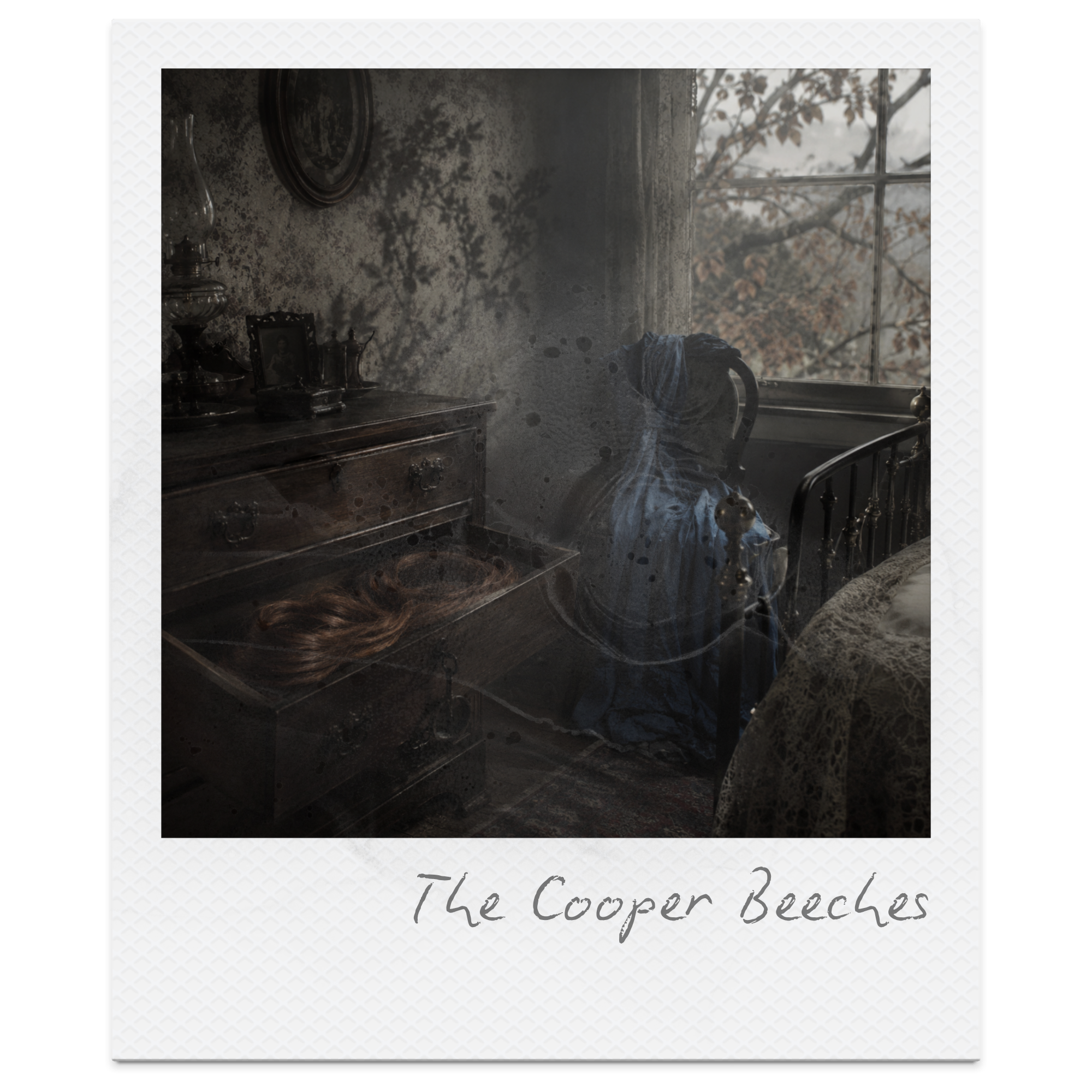
In this detailed analysis of The Copper Beeches by Sir Arthur Conan Doyle, we explore how Doyle combines detective fiction, Gothic atmosphere, and psychological tension to examine power, imprisonment, deception, gender control, and appearance versus reality. Through the mysterious Copper Beeches house, the unsettling behaviour of the Rucastles, and Sherlock Holmes’s analytical methods, the story gradually reveals hidden cruelty beneath outward respectability. Designed for CIE IGCSE World Literature (0408) and wider secondary literature study, this guide explores structure, symbolism, narrative voice, key quotes, themes, and writer’s methods in a clear, classroom-ready format. Perfect for revision, essay planning, close analysis, and discussion-based learning.

70 Sci-Fi Fantasy Writing Prompts: Technology, Power, and Possibility
Sci-fi fantasy exists at the intersection of two expansive genres—where advanced technology and speculative science collide with magic, myth, and the unknown. In texts like Dune, The Fifth Season, and Star Wars, systems of power are shaped not just by innovation, but by belief, prophecy, and forces that resist explanation. These worlds challenge the idea that science and magic are separate, instead presenting them as intertwined—two ways of understanding power, control, and possibility. This collection of 70 Sci-Fi Fantasy Writing Prompts explores that tension, offering a complete creative toolkit of plot hooks, titles, opening and closing lines, characters, settings, and visual inspiration. From engineered magic systems to sentient technology and collapsing realities, these prompts are designed to help you build immersive worlds where the boundaries between logic and imagination no longer hold.

For Heidi With Blue Hair by Fleur Adcock: Summary, Themes & Analysis
Fleur Adcock’s For Heidi With Blue Hair explores individuality, authority, and conformity through a seemingly minor conflict that reveals deeper tensions between self-expression and institutional control. Through a conversational voice, irony, and narrative progression, the poem presents the school’s response as rigid and inconsistent, exposing how rules are interpreted to enforce conformity rather than fairness. The detailed imagery of Heidi’s hair emphasises deliberate self-expression, while the use of dialogue allows competing perspectives to emerge. As the poem develops, a subtle shift introduces emotional depth, as the reference to the mother’s death “shimmer[s] behind the arguments,” suggesting that the conflict is shaped by unspoken grief as well as institutional pressure. The resolution, marked by an act of solidarity, reframes the situation as one where authority is quietly undermined rather than directly confronted. This movement from surface conflict to deeper meaning reveals how identity, emotion, and power interact, giving the poem its lasting impact.
70 Magical School & Academy Writing Prompts: Power, Knowledge, and Hidden Worlds
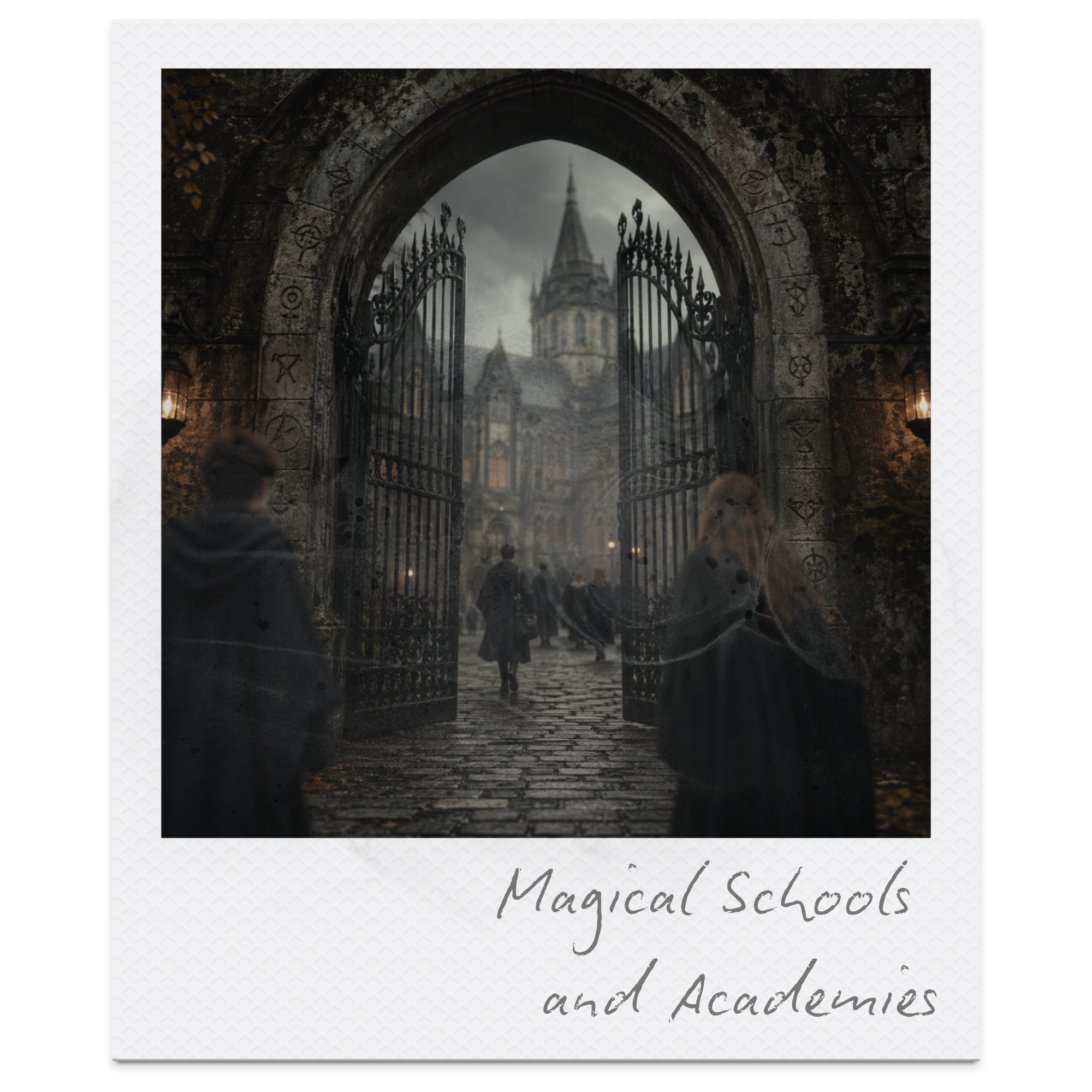
Magical schools and academies offer a rich foundation for fantasy storytelling, blending knowledge, power, secrecy, and transformation into settings that shape both character and conflict. From prestigious institutions with hidden hierarchies to dangerous academies where survival is never guaranteed, these environments reveal how learning itself can become a form of control. Beneath structured lessons and ancient traditions, something deeper is always at work—systems that test, manipulate, and ultimately redefine those who enter. This collection of 70 Magical School & Academy Writing Prompts is designed as a complete creative toolkit, combining plot hooks, title ideas, opening lines, and more to help you build immersive, original worlds. Whether you are exploring rival factions within a hidden university, forbidden knowledge buried in a shifting library, or students uncovering the true purpose of their education, these prompts will help you craft stories where every lesson carries consequence.

The Fox and the Forest by Ray Bradbury: Summary, Themes, Symbolism & Analysis
Ray Bradbury’s The Fox and the Forest is a powerful science fiction and dystopian short story that explores escape, surveillance, and the illusion of freedom. Set between a vibrant 1938 Mexico and a war-torn future, the story follows a couple attempting to flee a society built on control, militarisation, and destruction—only to discover that even time itself cannot protect them. Bradbury uses vivid contrasts, shifting tension, and symbolic imagery to create a narrative where hope and fear exist side by side. This analysis explores the story’s themes, symbolism, structure, and key ideas, revealing how Bradbury presents a world in which authority is inescapable and freedom is fragile. From the relentless pursuit of the Searchers to the devastating final twist, The Fox and the Forest raises unsettling questions about responsibility, resistance, and the cost of survival.

The Flying Machine by Ray Bradbury: Summary, Themes, Symbolism & Analysis
Ray Bradbury’s The Flying Machine explores the uneasy relationship between innovation and fear, presenting a world where beauty and progress are not always welcomed. Set in ancient China, the story follows an inventor who achieves the impossible—human flight—only to face the Emperor’s growing concern about what such a discovery might become. Through this encounter, Bradbury examines the fragile balance between creativity and control, raising questions about whether all knowledge should be allowed to exist. At its core, the story reflects a deeper anxiety about the consequences of progress, particularly when invention can be replicated and misused. The Emperor’s decision to destroy both the machine and its creator reveals a chilling logic: that protecting the future may require the sacrifice of something extraordinary in the present. Blending speculative fiction with philosophical insight, The Flying Machine leaves readers questioning whether humanity can truly be trusted with its own creations—and what might be lost when fear takes precedence over wonder.
The Purloined Letter by Edgar Allan Poe: Summary, Themes, Symbolism & Analysis
The Purloined Letter is a clever and thought-provoking detective story that challenges the idea that mysteries are always complex. Instead, Edgar Allan Poe presents a case where the solution is hidden in plain sight, revealing how assumptions and rigid thinking can prevent us from seeing the obvious. Through the character of Dupin, Poe explores how true intelligence lies in understanding how others think, rather than simply relying on method or procedure. As the investigation unfolds, the story shifts from a traditional search for hidden clues to a deeper exploration of perception, power, and psychological strategy. The stolen letter becomes more than just an object—it represents control, secrecy, and vulnerability, showing how knowledge can be used as a form of influence. Ultimately, the story leaves readers questioning not just the mystery itself, but the way human reasoning shapes what we see—and what we miss.
The Ultimate Guide to Teaching Ray Bradbury in the Secondary English Classroom
Ray Bradbury is one of the most powerful and versatile writers to teach in the secondary English classroom. His short stories and novels combine accessible narratives with conceptual depth, making them ideal for close reading, discussion-led learning, and ethical debate. From dystopian fiction to speculative moral fables, Bradbury’s work encourages students to question technology, conformity, media influence, and human responsibility — themes that remain strikingly relevant in a modern, screen-driven world. This guide offers a complete framework for teaching Ray Bradbury with confidence, bringing together key contexts, recurring themes, teachable texts, classroom strategies, and creative writing extensions. Designed for middle and high school English teachers, it shows how Bradbury can be used for analytical study, comparative work, and idea-led creative writing across a range of age groups and learning contexts.
My Favourite Ray Bradbury Texts (And How I Use Them in the Classroom)
Ray Bradbury remains one of the most powerful and teachable voices in dystopian and speculative fiction. His texts explore technology, control, conformity, responsibility, and human behaviour in ways that feel unsettlingly familiar to modern students. From short stories like The Veldt and A Sound of Thunder to novels such as Fahrenheit 451 and Something Wicked This Way Comes, Bradbury’s writing invites discussion without overwhelming students with complexity or historical distance. This post brings together my favourite Ray Bradbury texts for the classroom, organised by theme and paired with practical teaching ideas. Rather than treating each story in isolation, it explores how Bradbury’s work functions as a connected body of warnings — about comfort, power, environment, and choice. If you’re looking for engaging ways to teach Ray Bradbury, build discussion-led lessons, or introduce dystopian fiction in a way that feels relevant and accessible, this is a strong place to start.

The Veldt by Ray Bradbury: Summary, Themes, Meaning & Analysis
Ray Bradbury’s The Veldt is often taught as a warning about technology gone too far — but that reading only scratches the surface. Beneath the virtual nursery and its unsettling imagery, the story is really about parenting, power, and what happens when moral responsibility is repeatedly deferred in favour of comfort. In this in-depth analysis for English teachers, I explore how The Veldt exposes emotional outsourcing, delayed authority, and the quiet consequences of avoidance. The post examines Bradbury’s post-war context, the nursery as a site of control rather than care, and why the story’s ending feels inevitable rather than shocking. With clear classroom insight, teaching guidance, and extension ideas, this post helps teachers move beyond surface-level symbolism and into richer discussion about technology, control, and responsibility — showing why The Veldt remains one of Bradbury’s most disturbing and relevant stories to teach.

Favourite Short Stories for the Classroom: Powerful Texts That Spark Discussion and Debate
Short stories offer some of the richest opportunities for discussion in the classroom. Their compact form allows students to engage deeply with power, choice, identity, and consequence, while leaving space for interpretation rather than easy answers. The best short stories do not rush towards resolution; they invite debate, uncertainty, and close attention to language. This post brings together favourite short stories for the classroom — texts that consistently spark discussion and reward close reading. Organised by theme, it explores stories such as The Lottery, The Yellow Wallpaper, The Necklace, and The Monkey’s Paw, alongside practical classroom ideas designed to support thoughtful, discussion-led teaching.
Lord of the Flies: Why Students Engage, and Why Teachers Need More Than a Summary Sheet
Lord of the Flies is a novel that consistently engages students, but teaching it well requires more than summary sheets and surface-level analysis. This post explores why Lord of the Flies works so powerfully in the classroom, how students instinctively respond to its themes of power, fear, and responsibility, and where lessons often begin to break down once discussion deepens. Written for teachers working across different classrooms and curricula, this guide focuses on how to teach Lord of the Flies effectively — from structuring discussion and securing recall to using creative writing as a way into deeper analysis. It also shares practical classroom strategies and introduces a comprehensive Lord of the Flies resource bundle designed to support discussion, analysis, and assessment without increasing planning workload.
How to Teach All Summer in a Day (Including Discussion Ideas & Creative Writing Activities)
All Summer in a Day by Ray Bradbury is a powerful KS3 short story that explores conformity, bullying, empathy, and collective cruelty through a deceptively simple science-fiction setting. This classroom-focused guide shares practical teaching strategies, discussion ideas, and creative writing approaches to help students engage deeply with the text while encouraging thoughtful analysis and reflection. Drawing on literary context, lesson flow, and meaningful creative responses, this post shows how All Summer in a Day can be taught as more than a plot-driven story — and how it opens into wider conversations about responsibility, silence, and moral choice in both literature and the classroom.

Why Macbeth Is the Only Shakespeare Play I’ll Never Get Sick Of (And Why It Works So Well in the Classroom)
Why is Macbeth still one of the most effective Shakespeare plays to teach? Because it refuses easy answers. Packed with ambition, power, guilt, and moral consequence, Macbeth invites students to interrogate responsibility, persuasion, and the slow erosion of ethical boundaries. Far from feeling dated, the play’s questions about decision-making and complicity remain deeply recognisable in modern classrooms. In this post, I explore why Macbeth continues to work so well with students, how its structure naturally invites debate and interpretation, and how creative and discussion-based approaches can deepen understanding without sacrificing rigour. I also share a free Macbeth classroom resource and explain how I use flexible, reusable teaching tools to support analysis, creative writing, and meaningful discussion across the play.

How to Teach 1984: Context, Classroom Activities, and Real-World Connections
George Orwell’s 1984 remains one of the most powerful texts for exploring power, surveillance, and truth in the classroom. This teaching guide examines the novel’s political context, the totalitarian system of Oceania, and the mechanisms of control that shape Orwell’s dystopian world — from language manipulation to constant observation. Blending classroom experience with practical teaching strategies, this post explores how 1984 can be taught thoughtfully through discussion, real-world connections, and creative responses. It also includes a classroom social experiment, guidance on why the novel is often banned or challenged, and ideas for extending learning beyond the text — making 1984 accessible, relevant, and deeply engaging for students.
A Midsummer Night’s Dream: Overview, Context, Key Ideas & Teaching Approaches
A Midsummer Night’s Dream is often taught as one of William Shakespeare’s lightest comedies, yet beneath its enchantment and humour lies a complex exploration of power, desire, authority, and social control. Set between the rigid law of Athens and the destabilising freedom of the forest, the play uses comedy, magic, and mistaken identity to expose how easily order can fracture — and how carefully it must be restored. This context-led overview explores A Midsummer Night’s Dream through historical background, genre, and key ideas, before considering effective ways to teach the play through discussion, performance, and creative writing. Rather than offering close analysis of individual scenes, it provides a framework for understanding how the play operates as a whole, and why it continues to reward reinterpretation, classroom debate, and creative response.
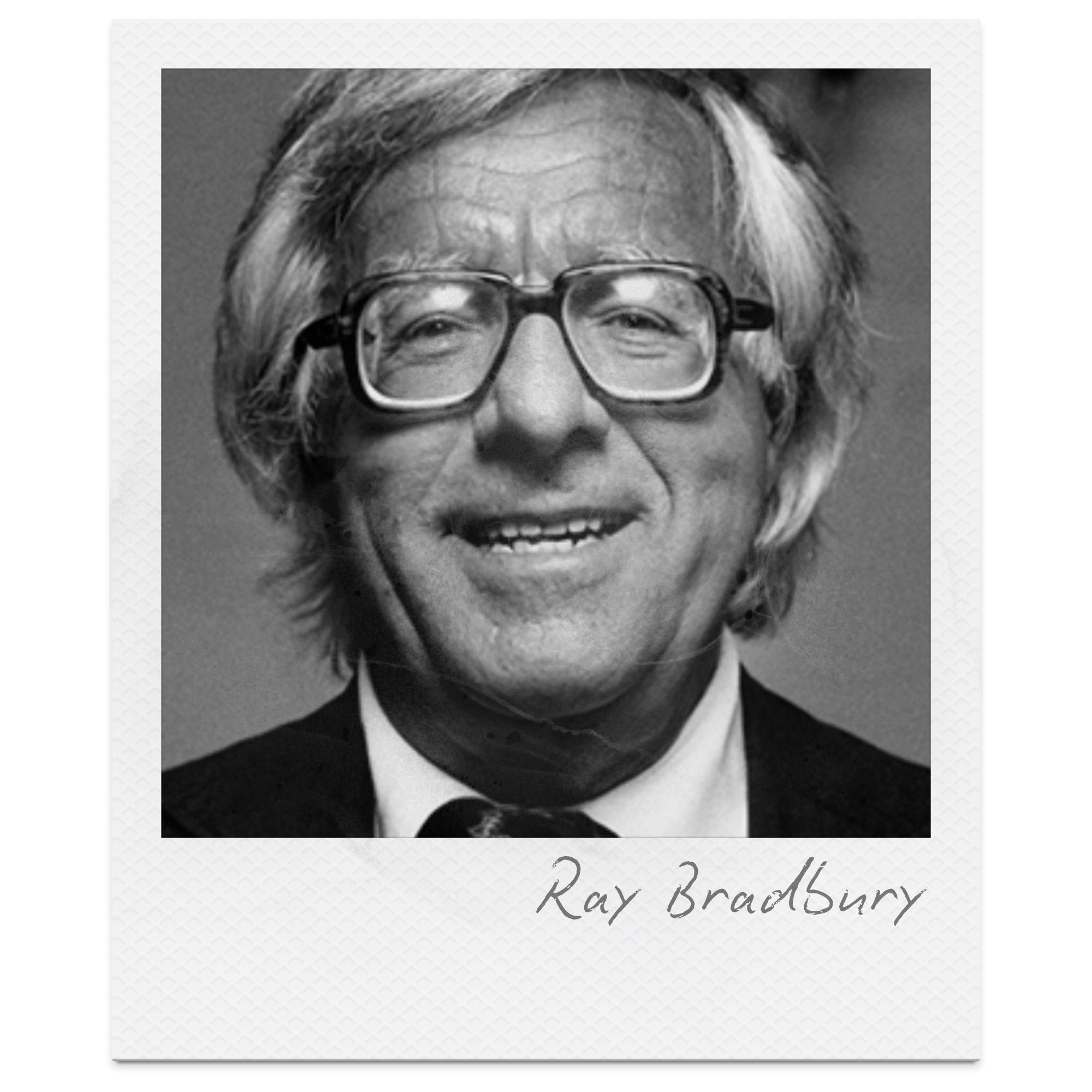
Ray Bradbury: Context, Themes, Works & Literary Significance
Ray Bradbury’s fiction is often associated with dystopian futures and speculative technologies, but his work is best understood through the historical and cultural context in which it was written. Emerging in mid-twentieth-century America, Bradbury wrote during a period shaped by war, Cold War paranoia, mass media expansion, and growing anxieties about conformity and control. His stories use speculative settings not to predict the future, but to expose how fear, censorship, and emotional detachment operate within ordinary domestic and social spaces. This context-focused overview explores the key themes that define Ray Bradbury’s work, including technology versus humanity, media and passive living, parental responsibility, childhood and power, and moral failure. Rather than offering close analysis of individual texts, it provides a broader framework for understanding how Bradbury uses speculative fiction to examine human behaviour, ethical responsibility, and the consequences of choosing comfort over connection.
Why I Still Teach Romeo and Juliet (Even Though I Hate It) — And Why It Still Works in the Classroom
Why does Romeo and Juliet still earn its place in the English classroom, even when it’s so often misunderstood? This reflective teaching post explores why Shakespeare’s most over-romanticised play continues to work with students, examining impulsiveness, authority, and avoidable loss rather than idealised love. By reframing the play away from romance and towards consequence, Romeo and Juliet becomes far more relevant — and far more teachable. Drawing on classroom experience, this post explores how and why to teach Romeo and Juliet, from contextualising it within Shakespeare’s wider work to using discussion, creative writing, and debate to deepen understanding. It also shares classroom-tested strategies and resources designed to support meaningful engagement with the play across secondary English.