The Purloined Letter by Edgar Allan Poe: Summary, Themes, Symbolism & Analysis
The Purloined Letter by Edgar Allan Poe is a sophisticated work of detective fiction that explores intellect, concealment, and power through a mystery that is both deceptively simple and psychologically complex. Rather than centring on violence or spectacle, the story focuses on how a stolen letter can become an instrument of control, manipulation, and political leverage.
At its core, the story examines the relationship between appearance and reality, logic and imagination, and perception and misperception, showing how the most obvious truth can remain hidden when people search in the wrong way. Poe also uses the case to develop his interest in analytical reasoning and the contrast between different kinds of intelligence. For further exploration of Poe’s work, visit the Edgar Allan Poe Hub and the Literature Library.

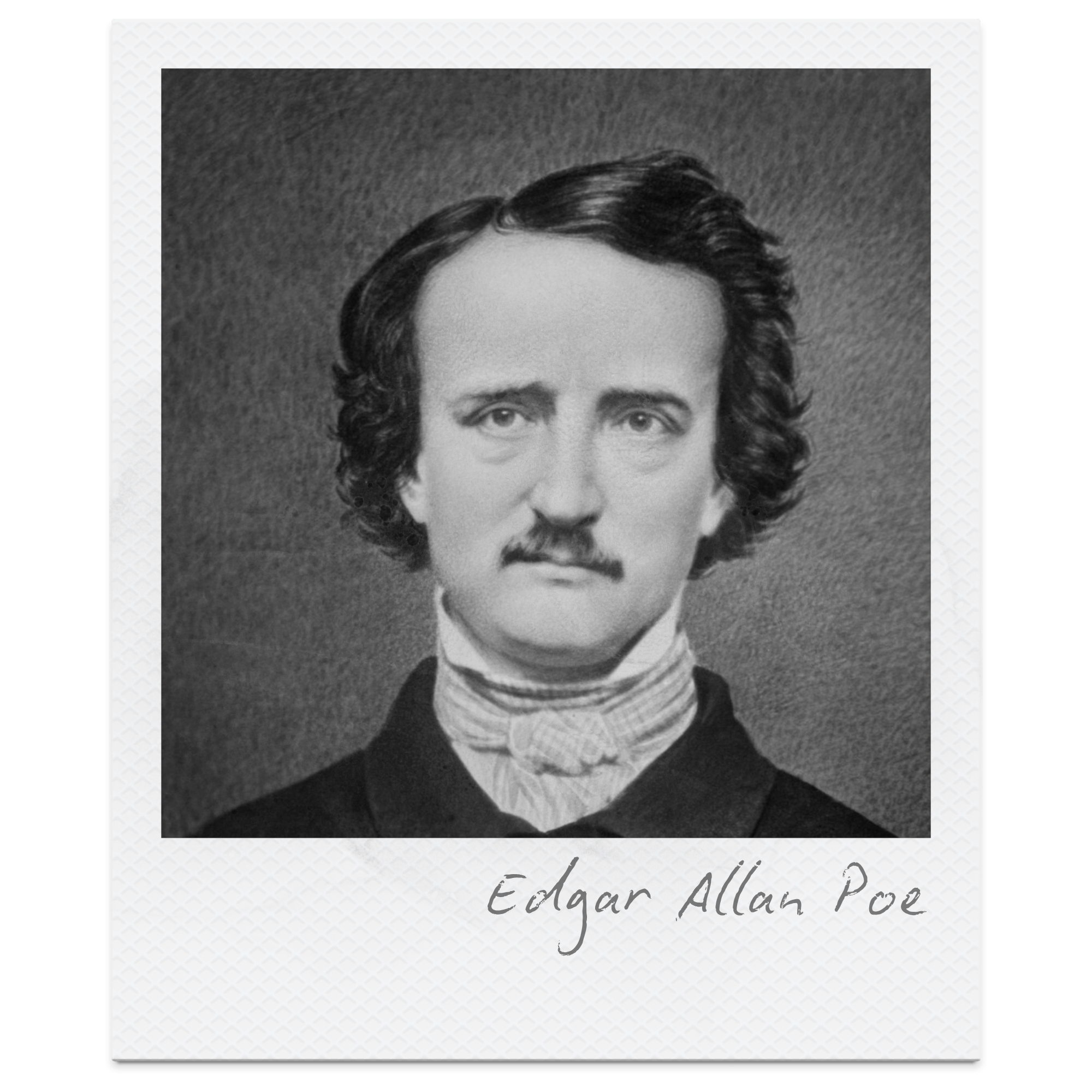
Context of The Purloined Letter
As part of Dupin detective stories, The Purloined Letter represents one of Edgar Allan Poe’s most refined explorations of analytical reasoning. By the time he wrote this story (1845), Poe had already established C. Auguste Dupin as a prototype detective in earlier works such as The Murders in the Rue Morgue. These stories are often considered foundational to the development of modern detective fiction, introducing key conventions such as the brilliant but unconventional investigator, the less perceptive official police force, and the emphasis on intellectual problem-solving over action.
Set in a shadowy, politically charged version of Paris, the story reflects 19th-century anxieties surrounding secrecy, surveillance, and power within elite institutions. Unlike Poe’s more overtly Gothic tales, this narrative shifts toward psychological and intellectual tension, where the threat lies not in physical danger but in social exposure and manipulation. The stolen letter itself becomes a symbol of political leverage and personal vulnerability, showing how knowledge can function as a form of control. This aligns with broader Gothic concerns—particularly hidden truths, duplicity, and unseen threats—but reimagines them within a rational, almost clinical framework of detection.
For a broader understanding of Poe’s literary context, themes, and influences, see the Edgar Allan Poe Context Post.
The Purloined Letter: At a Glance
Form: Short story / Detective fiction (with Gothic undertones)
Mood: cerebral, ironic, tense
Central tension: A stolen letter gives the Minister D— dangerous power over a royal figure, and the police cannot recover it despite exhaustive searches
Core themes: power and control, appearance vs reality, intellect and reasoning, surveillance and secrecy, psychological insight, misdirection
One-sentence meaning: The story reveals that true intelligence lies not in complexity, but in understanding how others think—and that the most effective concealment is often complete visibility.
Quick Summary of The Purloined Letter
The story opens in Paris, where the unnamed narrator visits Dupin, an intellectual detective figure, when they are joined by the Prefect of Police. He presents a case involving a stolen letter taken from a powerful woman by the cunning Minister D—. The letter contains sensitive information, giving the Minister dangerous political power and control over its owner. Despite knowing the thief’s identity, the police cannot recover it.
The Prefect explains that he has conducted an exhaustive and methodical search of the Minister’s residence, examining every possible hiding place using highly precise investigative techniques. However, Dupin suggests that the failure lies in the police’s assumptions: they search for what is hidden in complex ways, rather than considering the possibility that the letter may be hidden in plain sight.
Later, Dupin reveals that he has already solved the case. By understanding the Minister’s psychological intelligence and strategic thinking, he deduces that the letter is not concealed but openly displayed in disguise. Dupin retrieves it by cleverly replacing it with a duplicate, thereby restoring the letter while also ensuring the Minister’s eventual downfall. The story concludes by emphasising that true analytical power lies in understanding human behaviour, not just applying rigid methods of logic.
Title, Form, Structure, and Narrative Voice of The Purloined Letter
The Purloined Letter is a story where structure and reasoning are the plot. Rather than relying on action or suspense, Poe builds meaning through intellectual progression, forcing the reader to follow not what happens, but how it is understood.
Title
The title The Purloined Letter immediately centres the narrative on a single object, but its meaning is more layered than it first appears. The word “purloined” implies secrecy, cunning, and deliberate theft, aligning the story with themes of deception, concealment, and power.
Yet the irony is that the letter is not hidden in any elaborate way. Instead, it is left in plain sight, disguised only by context and perception. The title therefore reflects one of the story’s key ideas: that what is most visible can also be most effectively concealed, particularly when observers are conditioned to expect complexity.
Epigraph (Seneca)
The opening epigraph—“Nil sapientiae odiosius acumine nimio” (“Nothing is more hateful to wisdom than excessive cleverness”)—acts as a warning to the reader. It frames the story as a critique of overcomplicated thinking and misplaced intellectual confidence.
This idea is embodied in the Prefect, whose investigation relies on methodical precision and exhaustive detail, yet ultimately fails. His approach represents intelligence without insight—a kind of thinking that is technically impressive but fundamentally misguided.
In contrast, Dupin succeeds because he avoids this trap. He recognises that the solution lies not in increasing complexity, but in understanding human psychology and intention. The epigraph therefore sets up the story’s central argument: that true wisdom lies in recognising simplicity where others expect difficulty.
Form and Structure
The story takes the form of a detective narrative, but it deliberately resists the conventions of suspense and action. Instead of following a sequence of events, the structure unfolds through conversation and explanation, particularly between Dupin, the narrator, and the Prefect.
The exposition is delivered through the Prefect’s account of the crime: the theft of the letter and the political power it grants the Minister. This establishes the central conflict—knowledge as control—without showing the crime directly.
The rising action is intellectual rather than physical. It develops through the Prefect’s increasingly detailed descriptions of his failed investigation, which builds tension by highlighting the gap between effort and success. The more thorough the search becomes, the more puzzling the failure appears.
The climax arrives not through confrontation, but through revelation. Dupin calmly explains that he has already solved the mystery, shifting the focus from what happened to how it was understood. This inversion of structure reflects the story’s emphasis on reasoning over action.
The resolution reinforces this intellectual dominance. Dupin retrieves the letter through strategy rather than force, demonstrating that insight, not effort, determines success. The structure as a whole mirrors the story’s central idea: that clarity emerges from perception, not complexity.
Narrative Voice
The story is told through a first-person narrator, who serves as an observer rather than an active participant. This creates distance between the reader and Dupin, allowing his reasoning to appear more impressive and authoritative.
The narrator’s limited understanding is essential to the story’s effect. Like the Prefect, he initially fails to grasp the simplicity of the solution, which positions the reader in a similar state of partial ignorance. This makes Dupin’s final explanation more striking, as it reveals how easily perception can be misled.
The tone of the narration is calm, reflective, and occasionally ironic, particularly in its portrayal of the Prefect. This reinforces the story’s critique of rigid, institutional thinking, contrasting it with Dupin’s more flexible and intuitive intelligence.
Ultimately, the narrative voice supports the story’s central theme: that understanding depends not on what is seen, but on how it is interpreted.
Setting of The Purloined Letter
The setting of The Purloined Letter is strikingly understated, yet it plays a crucial role in shaping the story’s meaning. Rather than relying on dramatic Gothic locations, Poe situates the narrative within ordinary, enclosed spaces—rooms, libraries, and apartments—where the real tension emerges from intellect, observation, and perception.
The story opens in Dupin’s apartment in Paris, described as a “little back library, or book-closet,” where he and the narrator sit in near darkness, absorbed in thought. The atmosphere is one of quiet contemplation and intellectual isolation, reinforced by the image of “the curling eddies of smoke that oppressed the atmosphere of the chamber.” This setting reflects Dupin’s method: slow, reflective, and detached from the noise of the outside world. It also establishes a contrast with the Prefect, whose approach is far more active, procedural, and external.
Paris itself functions as a symbolic backdrop rather than a fully realised setting. It represents a world of politics, secrecy, and social performance, where appearances must be carefully managed. The crime originates in the “royal apartments,” immediately linking the narrative to power structures and vulnerability at the highest level of society. The letter’s significance lies not in its physical form, but in the social and political consequences it carries within this environment.
The Minister’s hotel becomes the central site of investigation, yet it is described primarily through the Prefect’s methodical search. He recounts examining “every possible drawer,” probing furniture, dismantling objects, and scrutinising “each individual square inch throughout the premises.” This obsessive attention to physical detail creates a sense of claustrophobic control, but it also reveals a key limitation: the police treat space as something to be measured and penetrated, rather than interpreted.
In contrast, Dupin understands the setting differently. He recognises that the Minister, aware of these investigative methods, would avoid traditional hiding places altogether. The crucial detail is that the letter is found not in a hidden compartment, but in a visible, almost careless position: “a trumpery filigree card-rack of pasteboard… just beneath the middle of the mantelpiece.” Its placement “full in the view of every visitor” transforms the setting itself into a kind of psychological trap, where visibility ensures invisibility.
This use of space reinforces the story’s central idea that environment is inseparable from perception. The same room can conceal or reveal depending on how it is read. For the Prefect, the setting is a physical puzzle to be solved through force and precision; for Dupin, it is a reflection of human behaviour, intention, and strategy.
Ultimately, the setting of The Purloined Letter demonstrates that meaning does not lie in hidden depths, but in the relationship between space and understanding. The letter is not concealed by walls or objects, but by the assumptions of those who search for it.
Characters in The Purloined Letter
The characters in The Purloined Letter are defined less by physical description and more by their intellectual approaches to the world. Each represents a different way of thinking, allowing Poe to explore the contrast between mechanical reasoning and psychological insight.
C. Auguste Dupin
Dupin is the central figure of the story, embodying analytical intelligence, psychological awareness, and strategic thinking. Unlike the Prefect, he does not rely on exhaustive methods, but instead seeks to understand how others think. His approach is captured when he suggests that failure may come from the mystery being “a little too self-evident,” highlighting his ability to recognise simplicity where others expect complexity.
Dupin’s reasoning is rooted in empathy and intellectual identification. He explains that success depends on “an identification of the reasoner’s intellect with that of his opponent,” revealing his belief that true analysis requires entering the mind of another.
Symbolically, Dupin represents ideal intelligence—a balance of logic and imagination. Psychologically, he demonstrates that insight comes not from accumulating detail, but from understanding motivation, perception, and strategy.
The Prefect (Monsieur G—)
The Prefect represents institutional authority and methodical but limited reasoning. He is diligent and experienced, yet ultimately incapable of solving the case because he relies too heavily on rigid systems. His confidence is evident when he insists that the case is “very simple indeed,” yet paradoxically admits that it “baffles us altogether.”
His investigative methods are exhaustive to the point of absurdity. He describes how the police examined “every possible drawer” and even scrutinised “each individual square inch throughout the premises.” These quotations reveal a mindset focused entirely on physical concealment, ignoring the possibility of psychological strategy.
Symbolically, the Prefect represents conventional intelligence—precise but inflexible. Psychologically, he illustrates how overreliance on method can lead to blindness, particularly when faced with unconventional thinking.
Minister D—
The Minister D— is the unseen antagonist of the story, defined through his cunning, boldness, and intellectual adaptability. He is described as a man who “dares all things,” suggesting both confidence and moral ambiguity. His power comes not just from possessing the letter, but from understanding how to manipulate perception.
Unlike the Prefect, the Minister anticipates the methods of the police and deliberately exploits them. His decision to leave the letter visible demonstrates his understanding that people expect complexity, making simplicity the perfect disguise.
Dupin recognises that the Minister is both a “poet and mathematician,” a combination that allows him to balance logic and imagination. Symbolically, the Minister represents intellectual rivalry—a mind capable of both creation and manipulation. Psychologically, he reflects the darker side of intelligence: the use of insight for control and advantage.
The Narrator
The unnamed narrator serves as an observer, representing the average reader’s perspective. He is intelligent enough to follow the discussion, but lacks Dupin’s depth of insight. His role is to ask questions and express confusion, allowing Dupin’s reasoning to unfold gradually.
For example, he admits uncertainty when he says, “I do not quite understand,” reflecting his position as an intermediary between the Prefect’s confusion and Dupin’s clarity.
Symbolically, the narrator represents limited perception, highlighting how easily individuals can overlook what is directly in front of them. Psychologically, he reinforces the story’s central idea that understanding depends on interpretation, not observation alone.
The Royal Figure (The Victim)
Although never directly described, the royal figure whose letter is stolen is central to the story’s stakes. Her vulnerability is revealed when she is forced to leave the letter exposed, unable to act without risking exposure: she “dared not call attention to the act.”
This character represents power constrained by social expectation, showing how even those in positions of authority can be rendered helpless by secrecy and reputation. Symbolically, she embodies the theme of appearance vs reality, where public image holds more weight than private truth.
Themes in The Purloined Letter
The Purloined Letter is driven by ideas rather than action, using a seemingly simple mystery to explore how power, perception, and intelligence operate within society. Each theme reinforces the central idea that what is seen—and what is missed—depends entirely on how we think.
Power and Control
At the heart of the story is the idea that knowledge creates power. The stolen letter gives the Minister D— complete control over a royal figure, not through force, but through the threat of exposure. As the Prefect explains, the document “gives its holder a certain power… immensely valuable,” highlighting how information can be weaponised.
This power dynamic reveals that control in the story is not physical, but psychological and political. The Minister’s authority depends on what he knows and what others fear he might reveal, making power inseparable from secrecy and perception.
Appearance vs Reality
One of the most important ideas in the story is that what appears obvious may be the most deceptive. The police assume the letter must be hidden in a complex way, yet Dupin recognises that it is concealed precisely because it is visible.
This is captured in Dupin’s suggestion that the mystery may be “a little too self-evident.” The failure of the investigation comes from an inability to question assumptions, showing that reality is often obscured by expectation and habit.
Intellect and Reasoning
The story contrasts different forms of intelligence, showing that not all reasoning is equally effective. The Prefect relies on method, measurement, and procedure, while Dupin uses flexibility, imagination, and psychological understanding.
Dupin explains that success depends on “an identification of the reasoner’s intellect with that of his opponent,” suggesting that true reasoning requires empathy as well as logic. This challenges the idea that intelligence is purely analytical, presenting it instead as a combination of observation, interpretation, and insight.
Surveillance and Secrecy
The narrative is shaped by a constant tension between watching and hiding. The Prefect’s investigation represents an extreme form of surveillance, as he describes examining “each individual square inch throughout the premises.”
Yet this intense scrutiny fails because it is focused on physical concealment rather than psychological strategy. The story suggests that secrecy is not simply about hiding objects, but about controlling how information is perceived and interpreted.
Psychological Insight
Dupin’s success comes from his ability to understand the mind of the Minister, rather than the physical environment. He recognises that the Minister, being both intelligent and strategic, would anticipate the methods of the police and act accordingly.
This idea is reinforced when Dupin reflects on matching another person’s thinking: “fashion the expression of my face… in accordance with the expression of his.” This metaphor highlights the importance of empathy and mental alignment in solving problems.
Misdirection
Misdirection operates throughout the story, both within the plot and in the reader’s expectations. The Minister deliberately disguises the letter, altering its appearance so that it seems insignificant: it is described as “much soiled and crumpled,” suggesting worthlessness.
At the same time, the police misdirect themselves by focusing on complexity. Their search becomes increasingly elaborate, drawing attention away from the simplest possibility. This reinforces the idea that misdirection does not require elaborate deception—only the manipulation of expectation.
Simplicity vs Complexity
Running beneath all these themes is the tension between simplicity and complexity. The Prefect believes that difficulty requires intricate solutions, while Dupin understands that the answer may lie in what is overlooked because it seems too obvious.
This is why the epigraph’s warning about “excessive cleverness” is so important. The story ultimately argues that overcomplication is a form of blindness, and that true understanding depends on recognising when something is simple rather than assuming it must be complex.
Key Quotes from The Purloined Letter
These quotations capture the story’s central ideas, particularly around intellect, perception, and power, showing how meaning is constructed through language, reasoning, and irony.
“The fact is, the business is very simple indeed… and yet baffles us altogether.”
◆ Paradox – The juxtaposition of “simple” and “baffles” highlights the central irony of the story
◆ Meaning – The mystery is difficult not because it is complex, but because it is too obvious
◆ Effect – Emphasises Poe’s critique of overcomplicated reasoning and sets up the failure of the police
“Perhaps it is the very simplicity of the thing which puts you at fault.”
◆ Direct statement of theme – Dupin articulates the story’s central idea about simplicity vs complexity
◆ Meaning – The Prefect’s methods fail because they assume hidden complexity
◆ Effect – Positions Dupin as intellectually superior and reframes the mystery for the reader
“A little too self-evident.”
◆ Irony – Something “self-evident” should be easily understood, yet it is overlooked
◆ Meaning – Truth can remain hidden when it is too visible
◆ Effect – Reinforces the theme of appearance vs reality and the limits of perception
“The letter is not upon the premises, as you suppose.”
◆ Declarative tone – Dupin challenges the Prefect’s certainty
◆ Meaning – Suggests that assumptions about space and concealment are flawed
◆ Effect – Builds tension by undermining the authority of the police investigation
“An identification of the reasoner’s intellect with that of his opponent.”
◆ Metaphor for reasoning – Intelligence is framed as psychological alignment rather than logic alone
◆ Meaning – True analysis requires understanding how another person thinks
◆ Effect – Elevates Dupin’s method and introduces psychological insight as key to solving the mystery
“He dares all things, those unbecoming as well as those becoming a man.”
◆ Characterisation – The Minister is presented as bold and morally ambiguous
◆ Meaning – His willingness to act without restraint gives him power and control
◆ Effect – Establishes him as a worthy intellectual opponent to Dupin
“A trumpery filigree card-rack of pasteboard… just beneath the middle of the mantelpiece.”
◆ Detailed imagery – The ordinary description contrasts with the importance of the object
◆ Meaning – The letter is hidden in plain sight, disguised by its banality
◆ Effect – Highlights the theme of misdirection and the failure of the police to see what is obvious
“Full in the view of every visitor.”
◆ Irony – Visibility becomes a form of concealment
◆ Meaning – The letter escapes detection because no one expects it to be openly displayed
◆ Effect – Reinforces the idea that perception is shaped by expectation
“The measures adopted were not only the best of their kind, but carried out to absolute perfection.”
◆ Formal tone – Acknowledges the Prefect’s competence
◆ Meaning – The failure is not due to poor execution, but flawed reasoning
◆ Effect – Strengthens Poe’s critique of rigid, institutional thinking
“They consider only their own ideas of ingenuity.”
◆ Critique of perspective – The police project their own thinking onto the criminal
◆ Meaning – Their inability to think differently leads to failure
◆ Effect – Emphasises the importance of flexibility and psychological insight in problem-solving
Key Techniques in The Purloined Letter
Poe uses a tightly controlled set of techniques to build meaning through intellect, perception, and psychological strategy, rather than action. Each technique reinforces the idea that success depends on how reality is interpreted, not simply observed.
◆ Symbolism – The letter functions as a symbol of power and control, as its contents grant the Minister influence over a royal figure. Its physical insignificance contrasts with its political weight, showing how information, rather than force, governs authority. This reinforces the idea that power in the story is invisible yet decisive.
◆ Irony – The central irony lies in the fact that the letter is concealed by being openly visible, rather than hidden. The police search obsessively for something concealed, yet fail to see what is directly in front of them. This exposes the limitations of assumption-based thinking and highlights the story’s critique of overcomplication.
◆ Paradox – Poe repeatedly presents the idea that something can be “too obvious” to be recognised. This paradox challenges conventional logic, suggesting that simplicity can be more deceptive than complexity. The effect is to destabilise the reader’s expectations and emphasise the theme of appearance vs reality.
◆ Character contrast – The contrast between Dupin and the Prefect allows Poe to explore different models of intellect and reasoning. The Prefect relies on rigid, methodical investigation, while Dupin uses flexibility and psychological insight. This contrast demonstrates that intelligence is not about effort or precision alone, but about adaptability and perception.
◆ Psychological reasoning – Dupin’s method is based on understanding the mindset of his opponent, rather than focusing solely on physical evidence. By identifying with the Minister’s thinking, he anticipates his strategy. This technique elevates the story beyond a simple mystery, presenting detection as an act of empathy and intellectual alignment.
◆ Misdirection – The Minister deliberately disguises the letter by altering its appearance and placing it in an obvious location, relying on observers to overlook it. At the same time, the police misdirect themselves by focusing on increasingly complex hiding places. This dual misdirection shows how perception can be manipulated, making the obvious invisible.
◆ Setting as meaning – The domestic interior, particularly the Minister’s apartment, is not just a backdrop but a reflection of psychological strategy. The letter’s placement within an ordinary object demonstrates how space can conceal meaning through context, linking environment directly to theme.
◆ Dialogue-driven structure – The story unfolds almost entirely through conversation, allowing Poe to foreground ideas and reasoning rather than action. This creates a cerebral tone and invites the reader to engage intellectually, reinforcing the story’s focus on analysis over event.
◆ Narrative framing – The use of a first-person narrator who lacks Dupin’s insight creates a gap between observation and understanding. This allows the reader to experience the same confusion as the narrator, making Dupin’s explanation more impactful and highlighting the limits of surface-level perception.
◆ Allusion (Classical reference) – The epigraph from Seneca introduces the idea that excessive cleverness obstructs true wisdom. This frames the entire narrative as a critique of intellectual arrogance, particularly in the Prefect’s approach, and reinforces the importance of clarity over complexity.
Alternative Interpretations of The Purloined Letter
The Purloined Letter invites multiple readings because its conflict is not physical, but intellectual and psychological. The story’s simplicity allows it to function as a study of power, perception, and human behaviour, making it open to a range of interpretive lenses.
Psychological Interpretation: Perception and Cognitive Bias
From a psychological perspective, the story explores how cognitive bias shapes perception. The Prefect fails not because he lacks intelligence, but because he is trapped within a rigid framework of thinking. His assumption that the letter must be hidden in a complex way prevents him from recognising the obvious.
Dupin, by contrast, succeeds because he understands how the Minister thinks, demonstrating that perception depends on mental flexibility and self-awareness. The story can therefore be read as a study of how assumptions distort reality, and how insight requires stepping outside one’s own habitual patterns of thought.
Power and Political Interpretation: Knowledge as Control
The letter itself can be interpreted as a symbol of political power and surveillance, reflecting a world in which information determines authority. The Minister’s control over the royal figure is based entirely on his possession of the letter, showing that power is not always visible or institutional, but often hidden within systems of knowledge and secrecy.
This reading highlights the vulnerability of even the most powerful individuals, suggesting that social and political structures are governed by what is known, concealed, or revealed.
Structuralist Interpretation: Signs, Meaning, and Visibility
From a structuralist perspective, the story examines how meaning is constructed through signs and interpretation. The letter is not important because of what it physically is, but because of what it represents within a network of relationships.
Its concealment in plain sight demonstrates that meaning depends on context and expectation. The police fail because they interpret the environment according to fixed rules, while Dupin succeeds by recognising that meaning is fluid and dependent on perspective.
Meta-Detective Interpretation: A Critique of Detection Itself
The story can also be read as a commentary on the genre of detective fiction. Rather than presenting a complex puzzle, Poe deliberately constructs a mystery that is simple but misunderstood, challenging the idea that detection is about uncovering hidden truths through effort and precision.
Instead, the story suggests that detection is an act of interpretation, not discovery. The failure of the police becomes a critique of traditional investigative methods, while Dupin represents a new model of intelligence based on psychological and conceptual insight.
Moral Interpretation: Intellect and Ethical Ambiguity
Finally, the story raises questions about the ethical use of intelligence. Both Dupin and the Minister are highly intelligent, yet they use their abilities in different ways. The Minister exploits knowledge for manipulation and control, while Dupin uses it to restore balance—but not without personal motives.
This suggests that intelligence itself is morally neutral, and that its value depends on how it is applied. The story therefore invites readers to consider not just how intelligence works, but what it is used for.
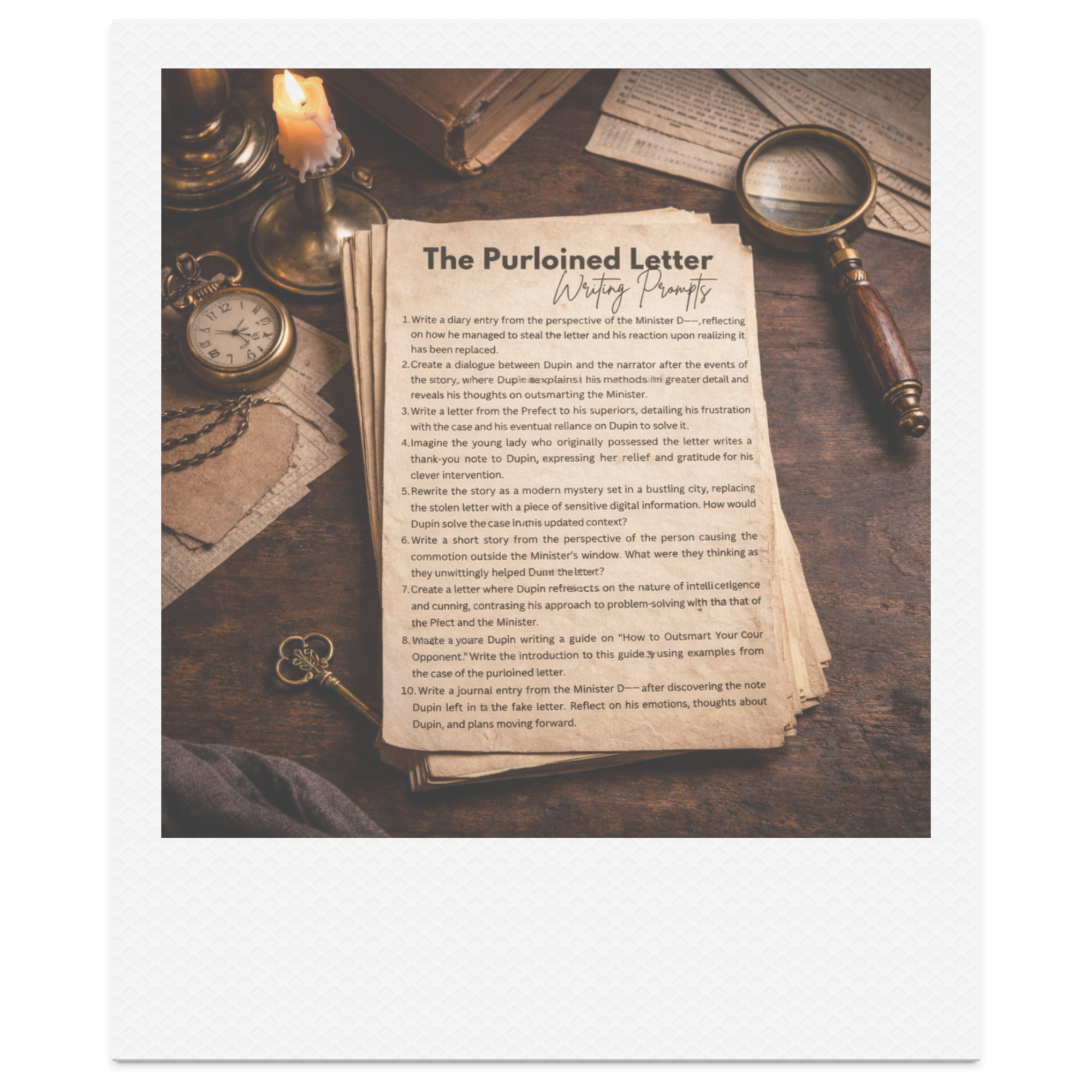
Teaching Ideas for The Purloined Letter
The Purloined Letter is ideal for exploring analytical thinking, perception, and interpretation, making it perfect for lessons that combine discussion, writing, and critical reasoning.
1. Perception vs Reality Discussion
◆ Why does the Prefect fail despite his thorough investigation?
◆ What assumptions shape the way the police search for the letter?
◆ How does Dupin’s thinking differ from the Prefect’s approach?
◆ Can something be hidden simply by being too obvious?
This works well as a whole-class discussion or paired task, encouraging students to explore how interpretation shapes understanding.
2. Analytical Paragraph + Peer Marking
Students write a focused paragraph answering:
How does Poe present intelligence in The Purloined Letter?
Model paragraph:
Poe presents intelligence as a combination of logic and psychological insight, rather than method alone. While the Prefect relies on “each individual square inch throughout the premises,” his approach ultimately fails because it is based on rigid assumptions about concealment. In contrast, Dupin recognises that the mystery may be “a little too self-evident,” showing his ability to question expectations and think flexibly. This contrast suggests that true intelligence lies not in effort or precision, but in understanding how others think. By presenting Dupin’s success alongside the Prefect’s failure, Poe reinforces the idea that perception, not procedure, determines understanding.
Students then peer mark using success criteria:
◆ Clear argument
◆ Embedded quotations
◆ Analysis of methods
◆ Link to theme
3. Debate: What Counts as Intelligence?
Set up a class debate around the question:
“The Prefect is intelligent—he just approaches the problem incorrectly.”
Students can argue:
◆ For: His methods are thorough and logical
◆ Against: His thinking is too rigid to be effective
This encourages students to evaluate different types of intellect and reasoning, linking directly to the story’s core ideas.
4. Creative Writing Extension
Students write their own short piece inspired by the idea of “hidden in plain sight.”
Prompts could include:
◆ A character hides something important where no one would think to look
◆ A detective realises the answer has always been visible
◆ A secret is disguised as something ordinary
Encourage students to focus on psychological tension and misdirection, rather than action.
For more ideas and resources, students can explore the Gothic Writing Hub and the Creative Writing Archive, where they can develop their own atmosphere-driven and concept-led writing.
5. Classroom Resource Bundle
If you’re teaching this text regularly, having a structured set of activities makes a huge difference to both engagement and workload.
Our bundle is designed to take the pressure off planning while still delivering high-quality, varied lessons. It combines quick-win activities (like the word search, crossword, and bingo review) with more in-depth tasks such as essay questions, creative writing prompts, and discussion-based activities.
There’s also a strong focus on student engagement, with interactive elements like the Roll the Dice discussion board, silent debate, and digital quiz, alongside creative tasks that allow students to explore the text through podcasts, scripts, and symbolic design.
It’s essentially a full toolkit for teaching The Purloined Letter—whether you need a one-off lesson, a full scheme, or flexible activities for revision, cover, or mixed-ability classes.
Go Deeper into The Purloined Letter
The Purloined Letter becomes even more interesting when read alongside other texts that explore intellect, perception, and hidden truths. These comparisons help students see how Poe develops ideas across his work—and how these themes appear more widely in literature.
◆ The Murders in the Rue Morgue – Compare how Dupin solves both cases; in Rue Morgue, the mystery is solved through physical clues and deduction, whereas in The Purloined Letter, it relies on psychological insight and perception
◆ The Mystery of Marie Rogêt – Both stories focus on analytical reasoning, but this text places more emphasis on logic and probability, making The Purloined Letter feel more abstract and conceptual
◆ The Tell-Tale Heart – Explore how Poe presents psychology and perception differently; here, the focus is on a disturbed mind, while The Purloined Letter presents a controlled, strategic intelligence
◆ The Strange Case of Dr Jekyll and Mr Hyde by Robert Louis Stevenson – Both texts explore hidden truths and duality, though Stevenson externalises this through physical transformation, while Poe embeds it in intellectual concealment
◆ The Yellow Wallpaper by Charlotte Perkins Gilman – A useful comparison for perception and reality, showing how interpretation shapes understanding, though in a far more psychological and unstable context
◆ The Monkey’s Paw by W. W. Jacobs – Both texts deal with unseen forces and consequences, but Poe’s story shifts this into the realm of intellect and social power rather than the supernatural
◆ The Fall of the House of Usher – Compare how Poe uses setting and psychology; in Usher, the environment reflects mental collapse, whereas in The Purloined Letter, the setting reflects strategic thinking and concealment
For a broader selection of texts that work well in the classroom, see your best Poe texts for the classroom post, where you can build comparison-based lessons and deepen students’ understanding of Gothic and detective conventions.
Final Thoughts
The Purloined Letter stands out as one of Poe’s most intellectually sophisticated works, showing that a compelling narrative does not require dramatic action, but clarity of idea and precision of thought. By shifting the focus from physical mystery to psychological insight, Poe redefines what it means to solve a problem, placing emphasis on perception, interpretation, and human behaviour.
At the same time, the story resists a single, fixed meaning. Is Dupin a force of justice, or simply a more skilful manipulator than the Minister? Is the letter truly hidden, or does it reveal how limited human perception can be? This ambiguity keeps the story relevant, inviting readers to question not just the solution, but the systems of thinking that lead to it.
To explore more of Poe’s work and its key ideas, visit the Edgar Allan Poe Hub and the Literature Library, where you can continue building connections across texts, themes, and interpretations.
Choose Your Next Text