The Masque of the Red Death by Edgar Allan Poe: Summary, Themes, Symbolism & Analysis
The Masque of the Red Death by Edgar Allan Poe is a chilling Gothic allegory that explores mortality, time, and the illusion of human control in the face of inevitable death. Through Prince Prospero’s attempt to seal himself away from a devastating plague, Poe constructs a symbolic narrative where wealth, power, and denial collapse under the relentless force of reality.
Beyond its surface narrative, the story becomes a meditation on escapism, decadence, and the psychological refusal to confront death. The shifting rooms, the ominous clock, and the masked figure all work together to create a world where setting becomes meaning, reflecting the characters’ internal fears and denial. For a broader exploration of Poe’s Gothic vision, see the Edgar Allan Poe Hub, or explore wider literary connections in the Literature Library.
Context of The Masque of the Red Death
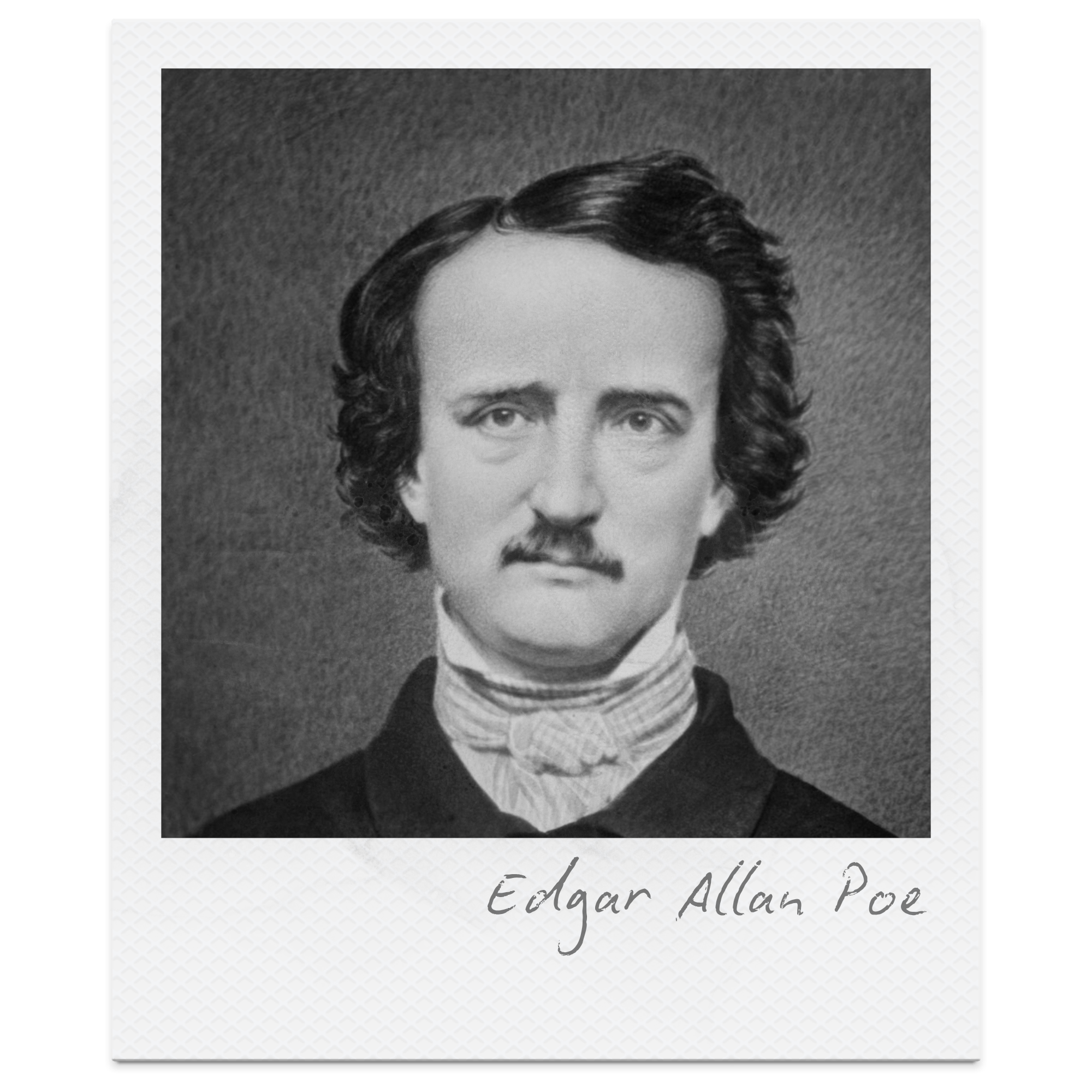
Edgar Allan Poe wrote The Masque of the Red Death in 1842, during a period shaped by personal loss, illness, and a deepening literary focus on death and human fragility. Poe’s life was marked by repeated encounters with tuberculosis and early death, experiences that informed his recurring obsession with mortality, decay, and the limits of human control. As a key writer within Gothic fiction and Dark Romanticism, Poe consistently explores the psychological impact of fear, denial, and inevitability, placing characters in symbolic environments that mirror their internal states. For a deeper understanding of these influences, see the Edgar Allan Poe Context Post.
The story also reflects wider 19th-century anxieties surrounding disease, social inequality, and the illusion of security through wealth. Epidemics such as cholera exposed how quickly society could collapse, yet Poe critiques the belief that the privileged can escape this reality. Prince Prospero’s sealed abbey becomes a symbol of decadence, escapism, and denial, where the characters attempt to shut out death through spectacle and distraction. However, the structured progression of rooms and the ever-present clock reinforce a central idea: time is unstoppable, and death is inescapable. In this way, Poe transforms historical fear into a broader philosophical allegory about the inevitability of human mortality.
The Masque of the Red Death: At a Glance
Form: Short story / Gothic allegory
Mood: opulent, eerie, foreboding
Central tension: The attempt to escape death vs the inevitability of mortality
Core themes: mortality, time, denial, wealth and power, inevitability, illusion vs reality
One-sentence meaning: No matter how far humans retreat into wealth, pleasure, or denial, death remains unavoidable and ultimately inescapable
Quick Summary of The Masque of the Red Death
A deadly plague known as the Red Death devastates the country, causing rapid and gruesome death. In an attempt to escape the disease, Prince Prospero gathers a thousand wealthy nobles and retreats to a fortified abbey, sealing the gates to keep the outside world—and death itself—at bay. Inside, they indulge in luxury, entertainment, and decadence, believing they have successfully isolated themselves from the suffering beyond the walls.
As time passes, the prince hosts an elaborate masquerade ball within a suite of seven colour-coded rooms, each arranged in a sequence that grows increasingly unsettling. The final room, draped in black with blood-red windows, creates an atmosphere of unease, intensified by a massive ebony clock whose chimes repeatedly interrupt the festivities. Despite their attempts at distraction, the guests are subconsciously aware of time passing and the approach of death.
At the height of the celebration, a mysterious masked figure appears, dressed as a victim of the Red Death. Enraged, Prospero confronts the figure, only to collapse and die upon reaching it. One by one, the guests follow, revealing that the figure is not a person but the embodiment of the plague itself. In the end, the illusion of safety collapses, and death claims all, proving that no barrier—physical or psychological—can hold it back.
Title, Form, Structure, and Narrative Voice
Poe constructs The Masque of the Red Death as more than a simple narrative; it is a carefully controlled Gothic allegory where structure, voice, and setting work together to reinforce the inevitability of time and death. The story’s progression mirrors a psychological journey from denial to confrontation, using form and narrative perspective to trap both characters and readers within an inescapable system.
Title
The title immediately foregrounds the story’s central tension between illusion and reality. The word “masque” suggests performance, disguise, and artificiality, reflecting the prince’s attempt to hide from the outside world through spectacle and excess. In contrast, the “Red Death” represents a force that cannot be disguised or avoided, symbolising mortality, violence, and inevitability.
Together, the title encapsulates the story’s core idea: human beings may construct elaborate illusions, but death ultimately exposes them.
Form and Structure
The story follows a clear narrative arc, but Poe elevates this into a symbolic structure that reflects the passage of time and the illusion of control.
Exposition:
The opening establishes the devastation of the Red Death and introduces Prince Prospero’s response: retreating into a fortified abbey with a select group of nobles. This creates an immediate contrast between external chaos and internal luxury, setting up the central conflict between reality and denial.
Rising Action:
The masquerade ball unfolds within the abbey, with increasing emphasis on decadence, excess, and subtle unease. The presence of the ebony clock disrupts the festivities, reminding the guests—and the reader—of time passing and the inevitability of death.
Climax:
The appearance of the mysterious masked figure dressed as a victim of the Red Death marks the turning point. Prospero’s attempt to confront and control this figure reflects his ultimate act of defiance against mortality.
Falling Action:
Prospero collapses and dies upon reaching the figure, and the illusion of safety begins to unravel as the guests realise the truth of the intruder.
Resolution:
The story concludes with the complete triumph of the Red Death, reinforcing the idea that no barrier—physical, social, or psychological—can prevent death’s arrival.
Narrative Voice
The story is told through a third-person omniscient narrator, creating a tone that is both detached and authoritative. This distance allows Poe to present events with a sense of inevitability, as though the outcome is already determined.
The narrator’s voice is controlled, measured, and almost clinical when describing horror, which heightens its impact. Rather than relying on emotional panic, Poe creates unease through precision and certainty, reinforcing the idea that death is not chaotic, but inevitable and ordered.
At the same time, the lack of a personalised narrator removes any sense of escape or subjectivity, trapping the reader within the same deterministic structure as the characters. This reinforces the story’s central message: death is universal, impartial, and unavoidable.
Setting of The Masque of the Red Death
The setting of The Masque of the Red Death is not merely a backdrop; it is a fully constructed symbolic system through which Poe explores time, mortality, and psychological denial. The isolated abbey, the sequence of rooms, and the sensory distortions within the space all work together to create a world where environment mirrors the human condition.
The Abbey as Psychological and Social Isolation
The fortified abbey represents an attempt to create absolute separation from death and reality. Prospero’s decision to seal himself and his courtiers inside reflects both arrogance and fear, suggesting a belief that wealth and power can override natural law.
“They resolved to leave means neither of ingress nor egress…”
This complete isolation transforms the abbey into a closed psychological space, where the characters are trapped not only physically but mentally. The outside world—associated with suffering and death—is deliberately ignored:
“The external world could take care of itself.”
This reinforces the theme of denial, as the characters construct an artificial reality defined by pleasure, distraction, and illusion.
The Seven Rooms as a Symbolic Structure of Life and Time
The suite of seven rooms forms the core of the story’s symbolic setting. Unlike traditional palace design, the rooms are arranged in a winding, segmented structure, preventing a clear view from beginning to end:
“The apartments were so irregularly disposed that the vision embraced but little more than one at a time.”
This fragmentation mirrors the human experience of time—we move forward without fully seeing what lies ahead.
Each room is associated with a distinct colour, and together they create a progression often interpreted as a symbolic representation of the stages of life:
Blue (East) → birth / beginnings
Positioned in the east, traditionally associated with sunrise and origin, the blue room represents the start of life and innocence.Purple → growth / transition
A colour blending calm and intensity, suggesting the movement from childhood into maturity.Green → youth / vitality
Associated with life, energy, and natural growth.Orange → adulthood / strength
A colour of warmth and intensity, reflecting the height of human experience.White → age / decline
Suggesting fading vitality, sterility, and the approach of the end.Violet → approaching death
A darker, more somber tone, symbolising the transition into finality.Black with red windows (West) → death
The final room represents the end of life, combining black (death) with blood-red light, directly linking to the Red Death itself:
“The seventh apartment was closely shrouded in black… the panes here were scarlet—a deep blood colour.”
The movement through these rooms reflects the irreversible passage of time, culminating in death. Importantly, the guests avoid the final room, revealing a collective refusal to confront mortality.
Light, Distortion, and Unnatural Perception
The lighting in the rooms further reinforces the distorted nature of this world. There is no natural light; instead, firelight shines through coloured glass, creating unnatural visual effects:
“There was no light of any kind emanating from lamp or candle… but… a brazier of fire… projected its rays through the tinted glass.”
This artificial lighting suggests that the characters are not seeing reality clearly. Instead, they exist within a distorted perception, shaped by their own denial and self-deception.
The result is a world that feels dreamlike, unstable, and unsettling—mirroring the psychological state of the characters.
The Black Room and the Ebony Clock
The final room is the most significant space in the story. Its oppressive atmosphere creates fear even among the revellers:
“There were few of the company bold enough to set foot within its precincts at all.”
This avoidance highlights the human tendency to fear and avoid death, even when it is inevitable.
Within this room stands the ebony clock, a powerful symbol of time’s relentless movement. Its sound interrupts the masquerade repeatedly:
“The musicians… were constrained to pause… and thus the waltzers perforce ceased…”
Each chime forces the characters into a moment of self-awareness, breaking through their illusion of safety. The clock serves as a reminder that time cannot be ignored, no matter how intense the distraction.
At midnight—the symbolic end of time—the illusion fully collapses.
Setting as Meaning
Ultimately, the setting of the story is a complete symbolic system where:
space = time
movement = life progression
light = perception
architecture = psychological control
Poe transforms the abbey into a representation of the human condition itself. The characters believe they are moving freely through a space of pleasure, but in reality, they are moving inevitably toward death.
This is where Poe surpasses simple Gothic atmosphere: the setting does not just create mood—it embodies the central message that death is unavoidable, and denial only delays confrontation, never prevents it.
Characters in The Masque of the Red Death
Rather than presenting a wide cast of individually developed characters, Edgar Allan Poe constructs figures that function as symbols within a larger allegorical system. Each character represents a psychological or philosophical response to mortality, reinforcing the idea that death cannot be escaped—only denied.
Prince Prospero
Prince Prospero represents wealth, power, and the illusion of control over death. His decision to retreat into the abbey with a select group of nobles reveals both confidence and arrogance, as he attempts to isolate himself from the suffering of the outside world. This is reflected in the emphasis on excess and pleasure, as “the prince had provided all the appliances of pleasure,” suggesting a deliberate attempt to replace reality with distraction.
Psychologically, Prospero embodies the belief that status and privilege can override natural limits. He is described as “happy and dauntless and sagacious,” reinforcing his sense of superiority and control. However, this confidence is ultimately superficial, masking a deeper fear of mortality.
When the masked figure appears, Prospero’s authority begins to collapse. His demand, “who dares insult us with this blasphemous mockery?” reveals both anger and fear, as he attempts to reassert control over something he does not understand. His final act—rushing at the figure with a dagger—represents a desperate attempt to confront death directly. However, this leads to his immediate downfall, as he falls “prostrate in death,” confirming that his power has always been an illusion.
Symbolically, Prospero represents the illusion of control—the belief that death can be delayed or avoided through wealth and status. His death exposes this belief as fundamentally flawed.
The Masked Figure (The Red Death)
The masked figure is not a conventional character but the embodiment of the Red Death itself, representing inevitable mortality and the collapse of illusion. Its appearance disrupts the artificial world Prospero has constructed, forcing the characters to confront the reality they have tried to exclude.
It is described as “tall and gaunt, and shrouded from head to foot in the habiliments of the grave,” immediately associating it with death and decay. More disturbingly, its appearance mirrors the disease itself, as its “vesture was dabbled in blood” and its face marked with the “scarlet horror.” This creates a direct link between the symbolic figure and the physical reality of the plague.
Psychologically, the figure represents the moment when denial fails. The courtiers’ inability to confront or even touch it reflects their deep-seated fear of death, while its silent, unstoppable movement through the rooms reinforces the idea that death cannot be resisted or controlled.
Unlike Prospero, who reacts with rage, the figure remains calm and inevitable, suggesting that death is not chaotic but ordered, patient, and unavoidable.
The Courtiers
The courtiers function as a collective representation of society in denial. They follow Prospero into isolation and willingly participate in the illusion of safety, prioritising pleasure, appearance, and distraction over reality.
Their behaviour during the masquerade reflects this mindset, as the event is described as filled with “much glare and glitter and piquancy and phantasm,” suggesting a world of excess and artificiality. The imagery of “dreams” that “writhed in and about” reinforces the idea that they exist in a distorted, unreal state, disconnected from the truth outside the abbey.
However, moments of psychological awareness break through this illusion. When the clock chimes, “the giddiest grew pale,” revealing an underlying awareness of time and mortality. These moments suggest that, despite their attempts at denial, the courtiers cannot fully escape their awareness of death.
When the masked figure appears, their reaction shifts to “terror, horror, and disgust,” demonstrating the collapse of their constructed reality. Their collective death at the end of the story reinforces the idea that denial offers no protection, and that all individuals, regardless of status, share the same fate.
Themes in The Masque of the Red Death
The Masque of the Red Death is a tightly constructed Gothic allegory in which multiple themes overlap to reinforce a single central truth: death is inevitable, and human attempts to escape it are ultimately futile. Poe explores this through symbolic setting, character behaviour, and structural progression, creating a world where psychology and environment merge.
Mortality
The most dominant theme in the story is mortality, presented as unavoidable and indiscriminate. The Red Death itself is described with visceral intensity, as its victims are marked by “the redness and the horror of blood,” emphasising the physical reality of death.
Poe presents death not as distant or abstract, but as immediate and unstoppable. The rapid progression of the disease—“the whole seizure, progress and termination… were the incidents of half an hour”—reinforces the fragility of human life.
Ultimately, the story asserts that no individual, regardless of status, can escape death, as even Prospero and his carefully selected courtiers are destroyed.
Time
Closely linked to mortality is the theme of time, which functions as an invisible but relentless force throughout the story. The ebony clock serves as a constant reminder of its passage, disrupting the illusion of safety:
“the musicians… were constrained to pause…”
Each chime forces the characters into a moment of awareness, highlighting the inevitability of time moving forward. The structured sequence of rooms further reinforces this idea, as movement through the space mirrors the progression of life.
Time is presented as something that cannot be controlled, paused, or ignored—only temporarily forgotten.
Denial
Denial operates as a central psychological theme, shaping the behaviour of both Prospero and his courtiers. Rather than confronting the reality of the plague, they retreat into luxury, entertainment, and excess:
“it was folly to grieve, or to think.”
This deliberate avoidance reflects a refusal to engage with mortality, suggesting that humans often respond to fear by constructing artificial realities.
However, Poe demonstrates that denial is ultimately ineffective. Moments such as the clock’s chime and the appearance of the masked figure break through this illusion, forcing the characters to confront what they have tried to ignore.
Wealth and Power
The story critiques the belief that wealth and power can provide protection from death. Prospero’s abbey is described as “extensive and magnificent,” and its sealed gates symbolise an attempt to control access to life and death itself.
However, this illusion of control is dismantled when the Red Death enters regardless. Poe suggests that social status offers no real security, exposing the vulnerability shared by all humans.
The exclusivity of the abbey also highlights a moral dimension: while the elite indulge in pleasure, the outside world suffers, reinforcing themes of selfishness and detachment.
Inevitability
Underlying every aspect of the story is the theme of inevitability. From the opening description of the plague to the final collapse of the masquerade, the narrative moves toward a predetermined conclusion.
The masked figure’s calm, uninterrupted movement through the rooms symbolises this inevitability. It cannot be stopped, delayed, or resisted.
The final line reinforces this idea completely, as “Darkness and Decay and the Red Death held illimitable dominion over all,” suggesting that death ultimately governs all human existence.
Illusion vs Reality
The tension between illusion and reality drives the story’s psychological depth. The masquerade itself represents a constructed world of performance, disguise, and escape, where the courtiers attempt to hide from the truth.
The imagery of “dreams” that “writhed in and about” reinforces the idea that the characters exist in a distorted, unreal state. However, this illusion is repeatedly disrupted—by the clock, by moments of unease, and finally by the appearance of the Red Death.
Poe ultimately reveals that reality cannot be suppressed indefinitely. The collapse of the masquerade demonstrates that illusions may delay confrontation, but they cannot prevent it.
Key Quotes from The Masque of the Red Death
Poe’s use of symbolic imagery, precise description, and controlled narrative voice allows each key quote to function on multiple levels. These quotations reveal how character, setting, and symbolism combine to reinforce the story’s central concerns with mortality, time, and denial.
Character
Prince Prospero
“The Prince Prospero was happy and dauntless and sagacious.”
◆ Technique – Tricolon / characterisation
◆ Meaning – Presents Prospero as confident and intellectually assured
◆ Effect – Establishes his belief in control and superiority, which is later exposed as false
“Who dares insult us with this blasphemous mockery?”
◆ Technique – Rhetorical question / emotive language
◆ Meaning – Reveals Prospero’s anger and inability to comprehend death
◆ Effect – Highlights the collapse of his authority when faced with something uncontrollable
“There was a sharp cry… and fell prostrate in death the Prince Prospero.”
◆ Technique – Sudden tonal shift / abrupt ending
◆ Meaning – Marks the instant defeat of power by mortality
◆ Effect – Reinforces that death overrides status and control instantly
Setting
“They resolved to leave means neither of ingress nor egress…”
◆ Technique – Absolute language / enclosure imagery
◆ Meaning – Emphasises total isolation from the outside world
◆ Effect – Symbolises denial and the illusion that death can be shut out
“The apartments were so irregularly disposed that the vision embraced but little more than one at a time.”
◆ Technique – Structural imagery
◆ Meaning – Reflects limited human understanding of time and life
◆ Effect – Reinforces that individuals cannot see the full trajectory of existence
“There was no light of any kind emanating from lamp or candle…”
◆ Technique – Absence imagery / unnatural lighting
◆ Meaning – Suggests distorted perception of reality
◆ Effect – Creates a dreamlike, artificial world shaped by denial
Symbolism
“The seventh apartment was closely shrouded in black… the panes here were scarlet—a deep blood colour.”
◆ Technique – Colour symbolism
◆ Meaning – Black represents death; red represents blood and the plague
◆ Effect – Confronts the reader with the unavoidable presence of mortality
“The life of the ebony clock went out with that of the last of the gay.”
◆ Technique – Symbolism / personification
◆ Meaning – Links time directly to human life
◆ Effect – Suggests that when life ends, time becomes meaningless
“The dreams… writhed in and about taking hue from the rooms.”
◆ Technique – Metaphor / surreal imagery
◆ Meaning – The revellers are likened to dreams shaped by their environment
◆ Effect – Reinforces the idea of illusion and distorted reality
Themes
Mortality
“The whole seizure, progress and termination… were the incidents of half an hour.”
◆ Technique – Compressed time / clinical description
◆ Meaning – Highlights the rapid, uncontrollable nature of death
◆ Effect – Emphasises the fragility of life and inevitability of mortality
Time
“The musicians… were constrained to pause…”
◆ Technique – Symbolism of interruption
◆ Meaning – Time disrupts pleasure and illusion
◆ Effect – Forces awareness of inevitable progression toward death
Denial
“It was folly to grieve, or to think.”
◆ Technique – Declarative statement
◆ Meaning – Rejects reflection and emotional engagement
◆ Effect – Shows deliberate psychological avoidance of reality
Inevitability
“And Darkness and Decay and the Red Death held illimitable dominion over all.”
◆ Technique – Triadic structure / personification
◆ Meaning – Death is presented as an ultimate ruling force
◆ Effect – Confirms the complete and unavoidable triumph of mortality
Key Techniques in The Masque of the Red Death
Edgar Allan Poe uses a tightly controlled range of Gothic techniques to construct a symbolic world where setting, structure, and imagery work together to reinforce the inevitability of death. Each technique is deliberately layered, ensuring that meaning is conveyed not just through plot, but through the form and atmosphere of the narrative itself.
◆ Symbolism – Poe saturates the story with symbolic elements, most notably the seven rooms, the ebony clock, and the masked figure, each representing aspects of time, life progression, and mortality. This transforms the narrative into a Gothic allegory, where every object contributes to the central message that death is unavoidable.
◆ Colour Imagery – The sequence of coloured rooms creates a visual representation of the stages of life, moving from blue (beginning) to black/red (death). This use of colour allows readers to see the progression of time, reinforcing the inevitability of the ending.
◆ Setting as Meaning – The abbey is constructed as a closed, controlled environment, symbolising psychological denial and social isolation. The distorted layout and artificial lighting create a space where reality is obscured, showing how characters attempt—and fail—to escape mortality.
◆ Allegory – The entire story operates as an extended allegory for the human condition, particularly the futile attempt to escape death. Characters, setting, and events all function symbolically rather than realistically, allowing Poe to communicate philosophical ideas through narrative.
◆ Imagery (Gothic and Grotesque) – Poe uses vivid, unsettling imagery such as “the redness and the horror of blood” to emphasise the physical reality of death. This contrasts with the artificial beauty of the masquerade, highlighting the tension between appearance and truth.
◆ Narrative Voice (Detached Omniscience) – The third-person narrator maintains a controlled, almost clinical tone, which heightens the horror by presenting events as inevitable rather than chaotic. This reinforces the idea that death is ordered and unavoidable, not random.
◆ Sound and Repetition – The recurring chime of the ebony clock interrupts the masquerade, creating a rhythmic reminder of time passing. This repetition builds tension and forces both characters and readers to confront the reality they are trying to ignore.
◆ Juxtaposition – Poe contrasts luxury and decay, celebration and death, and illusion and reality throughout the story. This sharp opposition exposes the fragility of human attempts to control or deny mortality.
◆ Foreshadowing – From the opening description of the Red Death to the ominous presence of the final room, Poe signals the inevitable outcome. This creates a sense of fatalism, where the ending feels predetermined.
◆ Structural Progression – The movement through the rooms and the build toward midnight mirror the progression of life toward death, embedding meaning into the structure itself. This ensures that the narrative form reinforces the thematic message.
Alternative Interpretations of The Masque of the Red Death
The Masque of the Red Death can be read in multiple ways, as Poe constructs a narrative rich in symbolism and allegory. While the story clearly explores mortality, different interpretations reveal deeper meanings related to psychology, society, and human existence.
Psychological Interpretation: Denial and the Repressed Mind
From a psychological perspective, the story explores denial and the human tendency to repress uncomfortable truths. Prince Prospero and his courtiers construct an artificial world of pleasure and distraction, avoiding any confrontation with death. The abbey can be read as a representation of the mind itself, where external threats are shut out in an attempt to maintain control.
However, this repression is unstable. The repeated interruptions of the clock suggest moments where awareness breaks through, forcing the characters into brief confrontation with reality. The appearance of the Red Death can therefore be interpreted as the return of the repressed subconscious, materialising in a form that cannot be ignored. From this perspective, the story suggests that denial does not eliminate fear—it intensifies it until it becomes unavoidable.
Marxist Interpretation: Class, Privilege, and Social Isolation
A Marxist reading highlights the role of class division and social inequality within the story. While the general population suffers and dies from the plague, Prospero and his elite courtiers isolate themselves in luxury, effectively abandoning society. The abbey becomes a symbol of the privileged upper class, who believe their wealth grants them protection from the consequences faced by others.
The excessive focus on spectacle and indulgence reflects a system built on detachment and self-preservation, where suffering is ignored as long as it remains outside the walls. However, the arrival of the Red Death exposes the fragility of this system, demonstrating that class boundaries cannot ultimately protect against universal human experiences such as death.
Religious Interpretation: Judgment and Moral Reckoning
From a religious perspective, the story can be read as a form of moral allegory, where the Red Death represents divine judgment. Prospero’s actions—sealing himself away, indulging in excess, and ignoring the suffering of others—can be interpreted as acts of moral failure.
The progression toward midnight reflects an approaching moment of judgment, while the final arrival of the Red Death suggests an unavoidable reckoning. In this reading, the story reinforces the idea that no individual can escape moral accountability, and that death functions as a form of ultimate justice.
Existential Interpretation: The Inevitability of Death
An existential reading focuses on the inevitability and meaninglessness of death. The characters attempt to create purpose through pleasure, artifice, and celebration, yet these efforts are ultimately empty in the face of mortality.
The structured movement through the rooms and the relentless passage of time emphasise that life progresses toward a fixed endpoint. The sudden collapse of the masquerade suggests that human attempts to impose meaning or control are ultimately fragile, reinforcing a view of existence where death is the only certainty.
Teaching Ideas for The Masque of the Red Death
The Masque of the Red Death offers rich opportunities for exploring Gothic conventions, symbolism, and interpretation, making it ideal for both analytical and creative classroom work. These activities are designed to deepen understanding while supporting both exam-focused analysis and engagement.
1. Symbolism and Setting Analysis
The setting in this story functions as a complete symbolic system, making it ideal for focused analysis. This activity encourages students to move beyond surface-level description and explore how space creates meaning.
◆ How do the seven rooms represent the progression of life?
◆ Why is the final room designed to be so unsettling?
◆ How does the ebony clock reinforce the theme of time?
◆ In what ways does the setting reflect the characters’ psychological denial?
Students can map the rooms visually and annotate each with symbolic meaning, linking colour, movement, and structure to mortality.
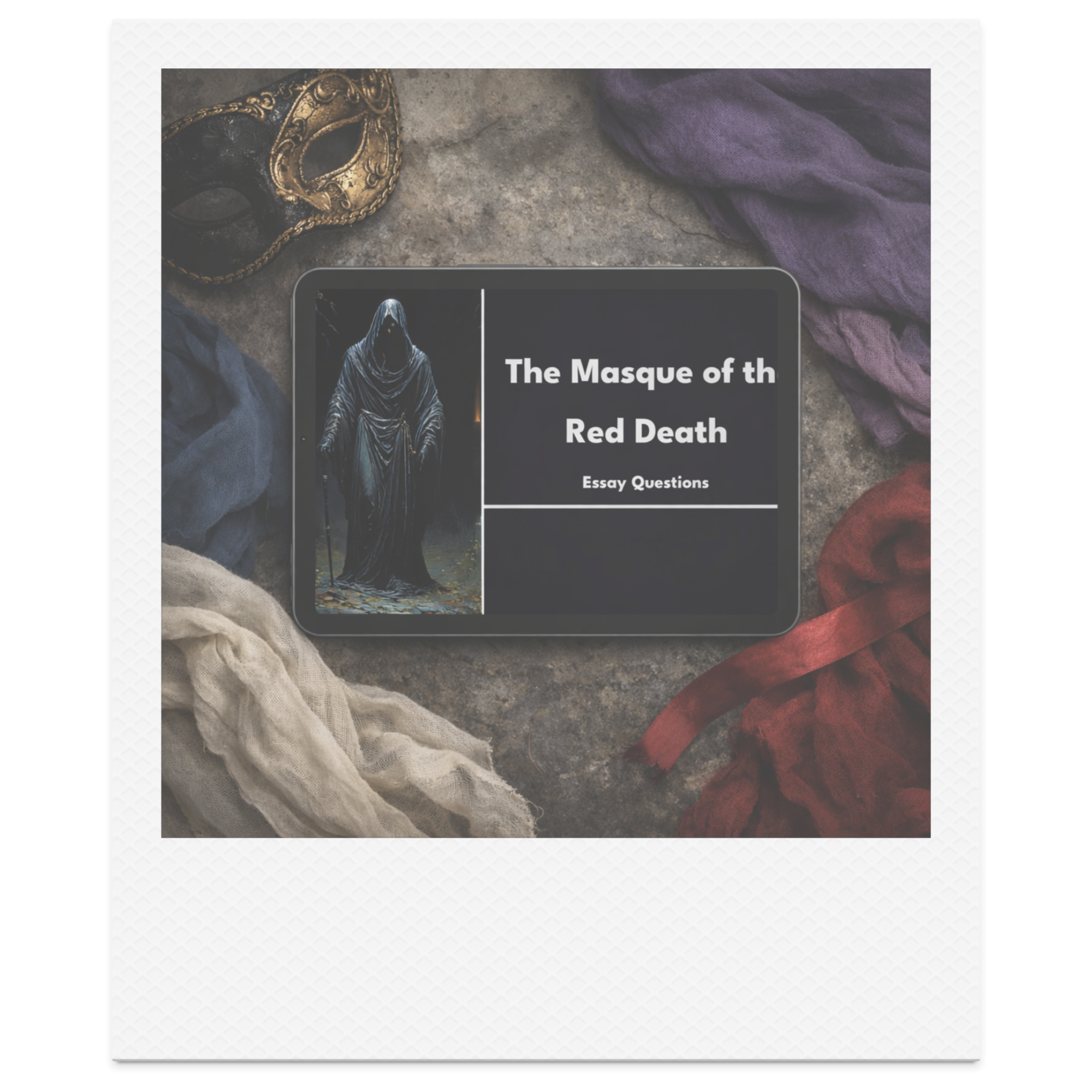
2. Essay Focus: Power, Denial, and Control
This text is particularly strong for developing conceptual essay writing, as multiple themes overlap and reinforce each other. Students can explore how Poe critiques both individual psychology and social structures.
◆ To what extent does Poe present wealth as powerless against death?
◆ How does Prospero represent the illusion of control?
◆ How are denial and escapism presented through the abbey setting?
Encourage students to embed quotations and analyse techniques + effects to develop more sophisticated responses.
3. Analytical Paragraph + Peer Marking
This activity builds precision in analytical writing, helping students move from general ideas to focused, evidence-based responses.
Question: How does Poe use setting to present the inevitability of death?
Students should:
◆ Embed short quotations
◆ Analyse symbolism, imagery, and structure
◆ Link clearly to theme
Peer assess using:
◆ Clear argument
◆ Evidence integrated
◆ Technique + effect explained
◆ Conceptual link to mortality
4. Structured Debate
This task encourages students to engage with alternative interpretations, developing confidence in forming and defending arguments.
“The characters are punished for their arrogance, not their ignorance.”
◆ One side argues a moral / religious interpretation
◆ The other argues an existential interpretation
This helps students recognise that the text supports multiple valid readings.
5. Full Unit Resource Bundle
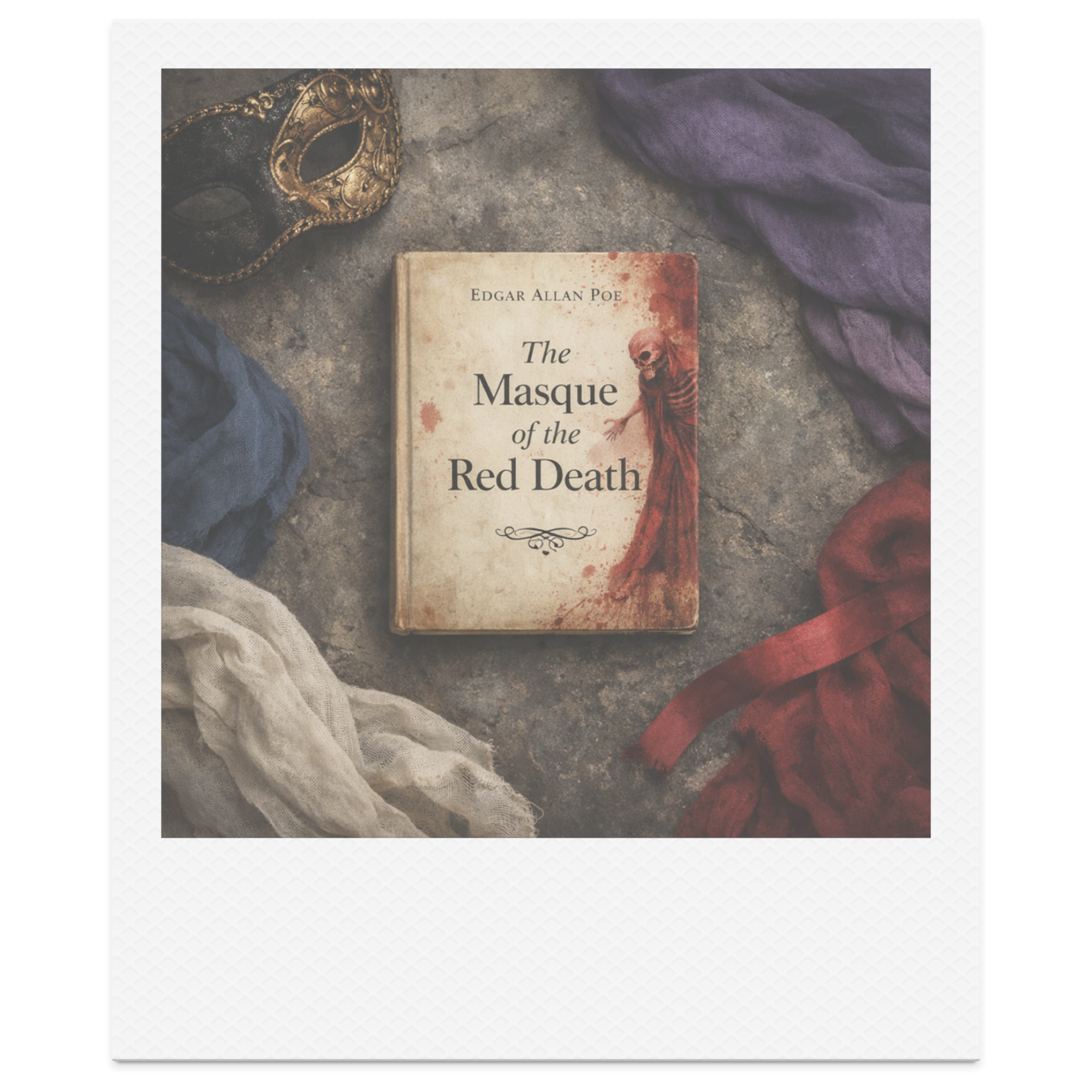
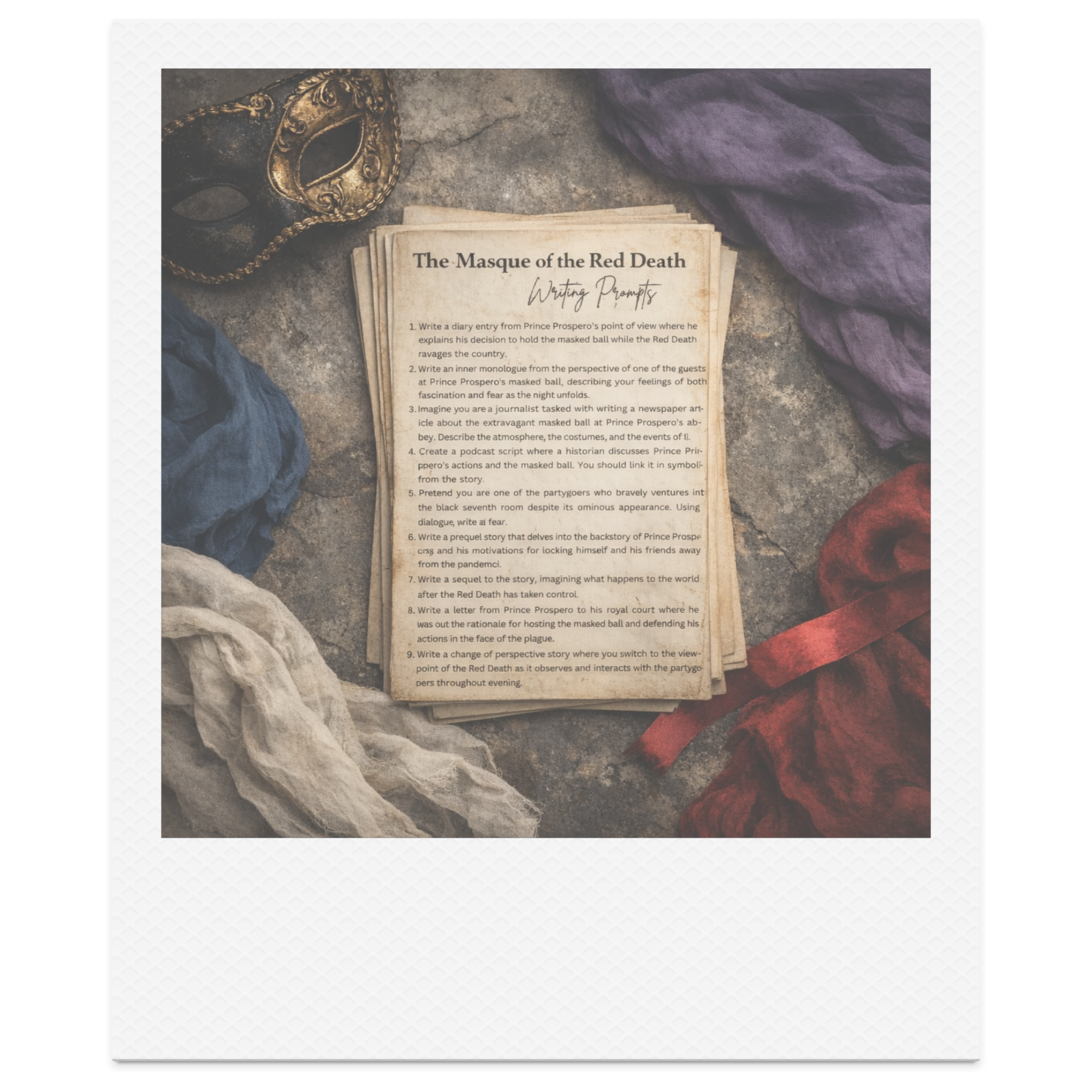
If you want a fully structured approach, our dedicated teaching bundle can transform how this text is delivered. A strong resource set should combine analysis, discussion, and creative engagement, allowing students to explore the story from multiple angles while saving significant planning time.
For example, a comprehensive bundle might include a mix of interactive review activities, discussion frameworks, creative writing tasks, and assessment tools—from quizzes and crosswords to essay questions, debate prompts, and visually rich picture prompts designed to explore atmosphere and symbolism.
This kind of resource works particularly well with The Masque of the Red Death because it supports both knowledge retrieval and deeper interpretation, helping students move from understanding the plot to analysing theme, structure, and meaning with confidence.
6. Creative Writing
This story is an excellent model for symbolic and allegorical writing, where setting and structure carry deeper meaning. Students can use it as inspiration to craft their own Gothic narratives.
◆ Write a story where a setting represents a psychological state
◆ Use symbolic spaces or objects to represent abstract ideas (e.g. time, fear, guilt)
◆ Build toward a moment of inevitable confrontation
For further inspiration, explore the Gothic Writing Hub and the Creative Writing Archive, where students can draw on a wide range of prompts and models. These can be easily linked to specific prompt collections that align with Gothic atmosphere, dark symbolism, and allegorical storytelling.
Go Deeper into The Masque of the Red Death
The Masque of the Red Death sits at the centre of Poe’s exploration of mortality, psychology, and Gothic symbolism. Exploring it alongside other texts allows students to deepen their understanding of how writers present death, fear, and the limits of human control across different contexts.
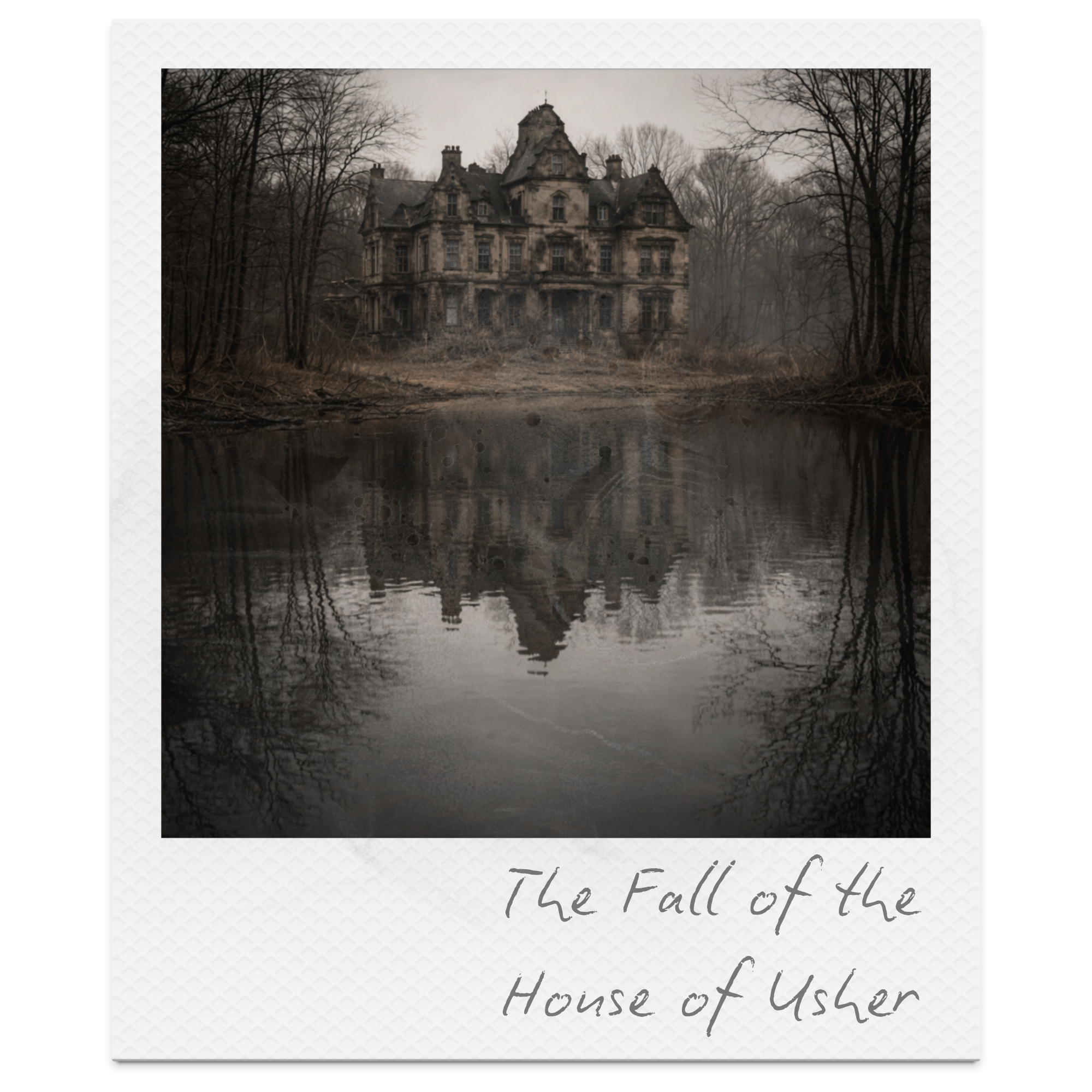
◆ The Fall of the House of Usher – A powerful comparison for setting as psychology, where the decaying house reflects the mental and physical collapse of its inhabitants. Both texts use environment as meaning, but Usher is internal and psychological, while Red Death is structured and allegorical.
◆ The Tell-Tale Heart – Links closely to psychological denial and inevitability, as the narrator attempts to suppress guilt in the same way Prospero suppresses fear of death. Both texts show that what is repressed inevitably returns.
◆ The Raven – Explores grief, loss, and the permanence of death, but through a more emotional and lyrical lens. Where The Masque of the Red Death is allegorical, The Raven is intensely personal.
◆ Dr Jekyll and Mr Hyde – A strong non-Poe comparison for duality and repression, where attempts to separate or control darker aspects of the self ultimately fail. Both texts explore the consequences of denying fundamental truths.
◆ The Great Gatsby – Offers a comparison in terms of wealth, illusion, and denial, where characters construct artificial worlds to escape reality. Like Prospero, Gatsby represents the belief that status can reshape fate.
◆ An Inspector Calls – Useful for exploring social responsibility and moral reckoning, particularly in relation to class. Both texts critique the detachment of the privileged and suggest that consequences are ultimately unavoidable.
For a broader selection of high-impact texts, see my Favourite Poe Texts for the Classroom post, which brings together the most effective works for teaching Gothic fiction, symbolism, and psychological themes.
If you teach Poe regularly and want to save hours of time planning, then check out our Poe Mega Bundle, which provides a structured approach to teaching Poe’s most commonly taught short stories and poems by supplying resources that support both analysis and engagement across multiple texts.
Final Thoughts
The Masque of the Red Death remains one of Edgar Allan Poe’s most powerful explorations of mortality, using symbolism, structure, and setting to construct a world where death is both inevitable and inescapable. Through the figure of Prince Prospero and the carefully controlled environment of the abbey, Poe exposes the fragility of wealth, power, and human illusion.
At its core, the story resists a single fixed interpretation. It can be read as a moral warning, a psychological study of denial, or an existential reflection on the limits of human control. This ambiguity is what gives the text its lasting impact, encouraging readers to confront uncomfortable truths about time, fear, and the nature of death itself.
For further exploration, visit the Edgar Allan Poe Hub for more detailed analyses of Poe’s works, or explore broader literary connections in the Literature Library.
Choose Your Next Text