The Man of the Crowd by Edgar Allan Poe: Summary, Themes, Symbolism & Psychological Analysis
The Man of the Crowd by Edgar Allan Poe is a haunting exploration of urban anonymity, psychological obsession, and the unknowability of others. Set within the shifting crowds of London, the story follows a narrator whose casual observation of city life transforms into an intense fixation on a single mysterious figure — a man who seems both ordinary and profoundly unreadable. What begins as detached curiosity quickly develops into something more unsettling: a pursuit driven by the desperate need to understand what resists interpretation.
At its core, the story interrogates identity, surveillance, alienation, and the limits of human knowledge, presenting the crowd not as a backdrop, but as a living, symbolic force. Poe blurs the boundary between observer and participant, raising unsettling questions about whether a true understanding of another person is ever possible. This ambiguity places The Man of the Crowd firmly within the tradition of Gothic fiction and early psychological literature, while also anticipating modern concerns about anonymity in urban spaces.
For more explorations of Poe’s work, see the Edgar Allan Poe Hub, or browse the wider Literature Library for connected texts and themes.

Context of The Man of the Crowd
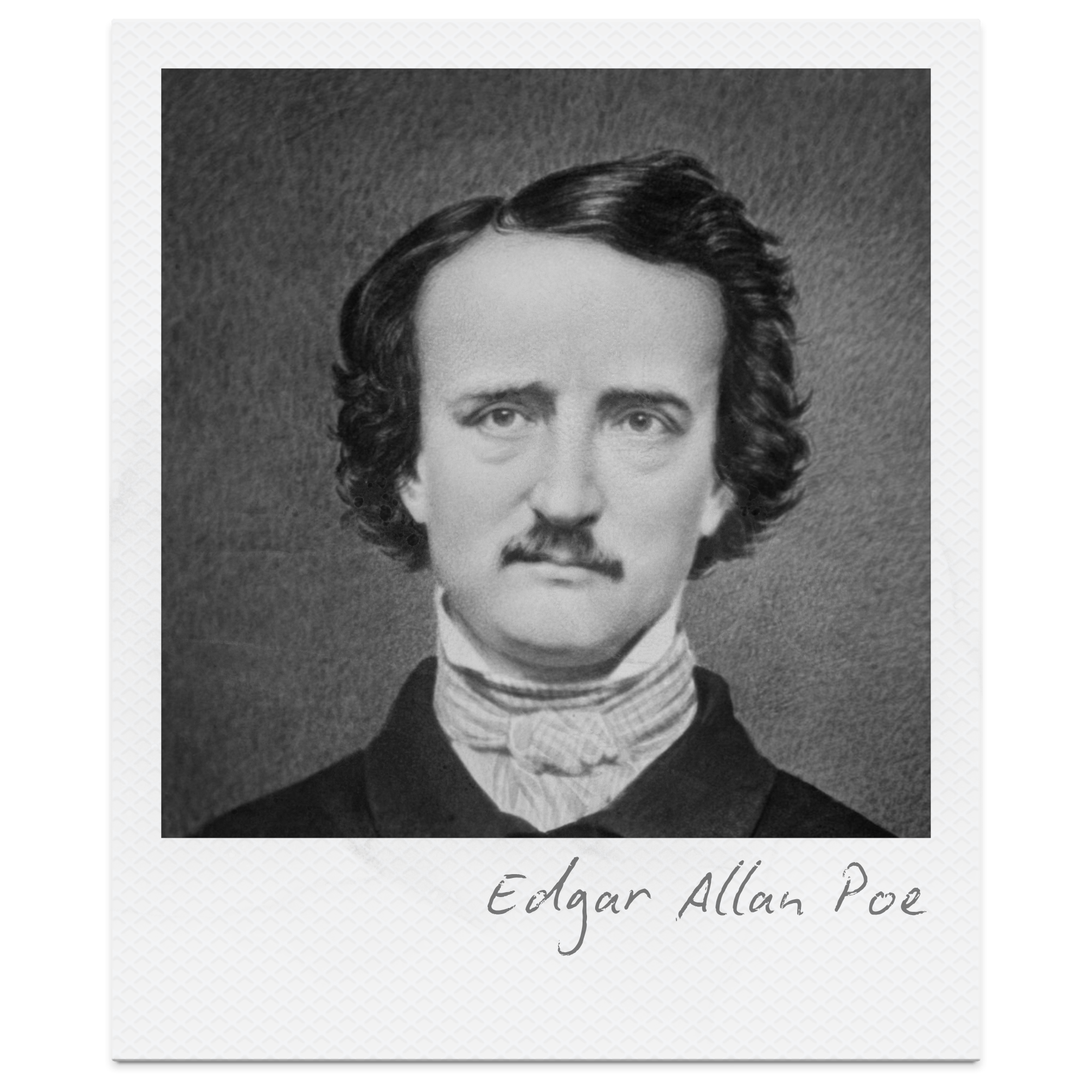
Edgar Allan Poe was a central figure in the development of Gothic fiction, detective narrative, and psychological literature, and The Man of the Crowd sits at a fascinating intersection of all three. Written in 1845, the story reflects Poe’s deep interest in the workings of the human mind, particularly its darker, more irrational impulses. Across his work, Poe repeatedly explores obsession, guilt, perception, and the limits of reason, often through narrators whose authority is subtly undermined. Here, rather than presenting a clear crime or confession, Poe offers something more elusive: a figure who seems to embody mystery itself, resisting both categorisation and understanding. For a broader exploration of these recurring ideas, see the Edgar Allan Poe Context Post.
The story is also shaped by the rapid urbanisation of the nineteenth century, particularly the rise of the modern city as a space of crowds, anonymity, and social fragmentation. London becomes more than a setting — it is a psychological landscape where identity dissolves into the mass of humanity. This reflects contemporary anxieties about industrialisation, surveillance, and the loss of individual identity, as well as a growing fascination with observing and classifying others. At the same time, the story anticipates later developments in detective fiction, yet subverts them entirely: instead of solving a mystery, the narrator confronts one that cannot be solved. In this way, Poe suggests that some truths — particularly those tied to the human psyche — resist interpretation altogether.
The Man of the Crowd: At a Glance
Form: Short story / Gothic fiction
Mood: Observational, obsessive, unsettling
Central tension: The narrator’s desire to understand a mysterious man vs the man’s complete resistance to interpretation
Core themes: Anonymity, urban alienation, psychological obsession, surveillance, unknowability, identity
One-sentence meaning: In a world of endless observation, some individuals remain fundamentally unreadable, exposing the limits of human understanding.
Quick Summary of The Man of the Crowd
The story begins with a narrator seated in a London coffee-house, recovering from illness and absorbed in observing the busy street outside. At first, he studies the crowd in a detached, analytical way, categorising individuals based on appearance, behaviour, and social role. The city appears vibrant and varied, filled with merchants, clerks, criminals, labourers, and beggars — each seemingly readable and classifiable within the narrator’s system of observation and control.
This sense of control is disrupted when the narrator notices a strange old man whose face defies interpretation. The man’s expression appears to contain contradictory qualities — intelligence and madness, fear and triumph — leaving the narrator both fascinated and unsettled. Driven by an intense psychological obsession, he follows the man through the streets of London. As night falls, the pursuit intensifies, with the old man wandering restlessly through crowded streets, quiet alleys, markets, and theatres, never settling and never appearing to act with purpose.
Despite hours of relentless pursuit, the narrator is unable to uncover the man’s identity or motive. By the following day, exhausted and defeated, he concludes that the old man represents something fundamentally unknowable — “the man of the crowd,” a figure who cannot exist outside the anonymity of the masses. The story ends with the narrator’s realisation that some aspects of human nature remain permanently hidden, reinforcing the central idea of unknowability, urban alienation, and the limits of human understanding.
Title, Form, Structure, and Narrative Voice of The Man of the Crowd
This section explores how Poe constructs meaning through title, structure, narrative voice, and setting, revealing how the story’s form mirrors its central concerns with obsession, anonymity, and the limits of understanding. Every structural choice contributes to the sense that the narrator is attempting — and failing — to impose order on something fundamentally unknowable.
Title
The title The Man of the Crowd immediately foregrounds anonymity and identity, suggesting a figure who exists not as an individual, but as part of a larger mass. The phrase implies both belonging and erasure: the man is defined by the crowd, yet simultaneously lost within it. Rather than presenting a character with a name, history, or clear identity, Poe offers a label that is deliberately impersonal, reinforcing the story’s concern with unknowability and the limits of observation.
This idea is deepened by the epigraph which opens the story: “Ce grand malheur, de ne pouvoir être seul” — translated as “This great misfortune, not to be able to be alone.” This statement frames the entire narrative, suggesting that the inability to exist outside the crowd is not merely social, but psychological. The old man’s constant movement through crowds reflects a deeper compulsion, implying that he cannot endure solitude, and may be attempting to escape something within himself. The title, therefore, becomes less a description and more a diagnosis.
Form and Structure
Poe structures the story as a progression from detached observation to obsessive pursuit, but this progression deliberately resists a traditional narrative arc. The opening functions as a kind of exposition, with the narrator calmly analysing the crowd and presenting the illusion that human behaviour can be categorised and understood. At this stage, the narrative feels controlled, rational, and almost scientific in its approach to observation.
The appearance of the old man marks a shift into rising tension, as the narrator becomes increasingly fixated on a figure who cannot be classified. From this point onwards, the narrative is driven not by external events, but by psychological escalation. The act of following becomes the central movement of the story, replacing conventional plot development with a growing sense of unease and obsession.
However, rather than building towards a clear climax or resolution, the structure collapses into something far more unsettling. The pursuit stretches across multiple urban spaces — streets, markets, theatres, and slums — yet nothing is revealed. Instead of resolution, the story returns to its starting point, creating a cyclical structure that mirrors the old man’s endless wandering.
This distortion of narrative shape is crucial. By denying the reader a traditional climax or explanation, Poe reinforces the central idea of unknowability. The story begins with the promise that people can be read and understood, but ends by exposing the limits of that belief. In this way, the structure itself becomes an expression of failure — the failure of observation, of reason, and of narrative to fully explain human nature.
Narrative Voice
The story is told through a first-person narrator whose perspective initially appears rational, observant, and authoritative. He presents himself as a careful analyst of human behaviour, capable of reading individuals through appearance and gesture. However, as the narrative progresses, this authority becomes increasingly unstable. His shift from passive observer to active pursuer reveals a growing psychological obsession, calling into question the reliability of his interpretations.
The narrator’s tone moves from controlled curiosity to near compulsion, suggesting that his need to understand the old man is driven less by logic and more by an irrational fixation. This blurring of rational analysis and emotional obsession reflects a key tension in the story: the desire to know versus the impossibility of truly knowing. In this sense, the narrator becomes a mirror of the very mystery he seeks to solve.
Setting as Structure
In The Man of the Crowd, setting is not merely a backdrop but a structural force that shapes the narrative itself. The movement through London — from crowded streets to isolated alleys and back again — mirrors the narrator’s psychological journey. The city becomes a living system of movement, noise, and anonymity, where identity is constantly shifting and dissolving.
The old man’s refusal to leave the crowd suggests that the urban environment is essential to his existence. He is sustained by the presence of others, yet remains fundamentally disconnected from them. This creates a powerful link between environment and psychology, where the external chaos of the city reflects an internal state of unrest. In this way, Poe uses setting as a structural device to reinforce the story’s central themes, demonstrating that the crowd is not just where the story takes place — it is what the story is about.
Setting of The Man of the Crowd
The setting of The Man of the Crowd is the bustling, ever-shifting city of London, presented not simply as a physical location, but as a dynamic and psychologically charged environment. From the opening scene in the coffee-house to the endless movement through streets, markets, and slums, the city is depicted as a space of constant motion and overwhelming sensory detail. The narrator describes “two dense and continuous tides of population,” immediately framing the crowd as something fluid, powerful, and almost uncontrollable — less a collection of individuals and more a single, moving force. This makes the setting central to the story’s exploration of urban anonymity, social fragmentation, and psychological unease.
As the evening deepens, the atmosphere becomes increasingly intense and distorted. The gas lamps cast a “fitful and garish lustre” over the streets, transforming the city into something both illuminated and obscured at once. This unstable lighting reflects the narrator’s shifting perception: although he believes he can read the faces around him, the environment itself suggests that clarity is an illusion. Poe’s description of the street as “dark yet splendid” captures this contradiction perfectly, reinforcing the idea that the city is both seductive and deeply threatening. The setting therefore supports the story’s wider concern with appearance versus reality.
Poe repeatedly links the external environment to internal psychological states. The narrator becomes “absorbed in contemplation” of the scene, suggesting that the crowd exerts a powerful influence over his mind and dissolves the distance between observer and object. This connection intensifies when the old man appears, because his identity seems inseparable from the urban world through which he moves. He does not merely walk through the city; he seems sustained by its movement, noise, and density. Setting and character become intertwined, revealing the relationship between environment and psychology.
The city also shifts dramatically over the course of the story. The pursuit moves from crowded thoroughfares to cross streets, squares, bazaars, theatres, and finally “the most noisome quarter of London,” where “horrible filth festered in the dammed-up gutters.” This descent into darker and more chaotic spaces mirrors the narrator’s growing obsession and the increasingly sinister aura surrounding the old man. Even when the streets thin out, there is no sense of peace or clarity. Instead, the old man repeatedly seeks out new concentrations of people, as though solitude itself is intolerable.
This is why setting in the story is not just descriptive but symbolic. London becomes a landscape of alienation, restlessness, and moral ambiguity, where individuals are swallowed by the crowd and reduced to passing impressions. The old man’s repeated return to busy spaces suggests that the city enables concealment: within the mass of humanity, he can remain both visible and unknowable. Ultimately, Poe presents the modern urban setting as a place where identity dissolves, where observation fails, and where the deepest truths about other people remain permanently out of reach.
Characters in The Man of the Crowd
Poe presents characters in The Man of the Crowd not as fully developed individuals, but as figures shaped by psychology, observation, and symbolism. Rather than offering clear identities, the story reduces people to types, impressions, and fleeting readings, reinforcing the central idea of unknowability and urban anonymity. The two central figures — the narrator and the old man — exist in a tense relationship between observer and observed, yet both ultimately resist full understanding.
The Narrator
The narrator initially presents himself as rational, controlled, and analytically detached. Seated in the coffee-house, he describes himself as taking “a calm but inquisitive interest in every thing,” suggesting a position of intellectual authority. He categorises the crowd with confidence, reading individuals through their appearance and behaviour, and believing that people can be understood through careful observation and classification.
However, this sense of control quickly begins to unravel. When he encounters the old man, he is struck by “the absolute idiosyncrasy of its expression,” admitting that he has “never seen before” anything like it. This moment destabilises his authority, revealing the limits of his analytical method. What follows is not rational investigation, but psychological obsession. His decision to follow the man — driven by “a craving desire to keep the man in view” — marks a shift from detached observer to compulsive pursuer.
As the story progresses, the narrator’s behaviour becomes increasingly irrational. He follows the old man for hours through changing environments, despite gaining no new understanding. His insistence on meaning, even in the absence of evidence, raises questions about his reliability. Rather than uncovering truth, he projects interpretation onto what he cannot explain. By the end, his conclusion that the man is “the type and the genius of deep crime” reveals more about his own need for certainty than about the old man himself. In this sense, the narrator embodies the danger of over-interpretation and the human compulsion to impose meaning.
The Old Man
The old man is the most enigmatic figure in the story, defined by contradiction and resistance to interpretation. When the narrator first sees him, he is overwhelmed by the complexity of his expression, describing “the ideas of vast mental power, of caution, of penuriousness, of avarice… of excessive terror, of intense — of supreme despair.” This accumulation of conflicting traits makes the man impossible to categorise, positioning him as a symbol of unknowability and psychological depth.
Physically, the old man appears frail and impoverished — “very thin, and apparently very feeble” — yet there are unsettling hints of hidden wealth and violence. The narrator glimpses “a diamond and a dagger,” suggesting a concealed duality: refinement and danger existing simultaneously. This reinforces the idea that outward appearances are deceptive, and that identity cannot be easily read.
The old man’s behaviour is equally disturbing. He moves restlessly through the city, “without apparent object,” repeatedly seeking out crowded spaces and avoiding solitude. His constant motion suggests a form of compulsion, as though he is unable to stop or to exist alone. Even when the streets empty, he searches for new crowds, eventually returning to the same locations in a cyclical pattern. This makes him less a character and more a manifestation of urban alienation and existential unrest.
By the end of the story, the narrator defines him as “the man of the crowd,” a figure who “refuses to be alone.” This final judgement transforms the old man into a symbolic presence — not just an individual, but a representation of something larger and more disturbing. He becomes the embodiment of a life that cannot be understood, read, or resolved, reinforcing the story’s central concern with the limits of human knowledge.
Themes in The Man of the Crowd
Poe’s story explores a range of interconnected ideas centred on modern urban life, perception, and the limits of understanding. Through the narrator’s fixation and the old man’s resistance to interpretation, The Man of the Crowd becomes a study of how individuals exist — and disappear — within the overwhelming presence of others.
Anonymity
One of the most dominant themes in the story is anonymity, particularly within the context of the modern city. The crowd is described as “two dense and continuous tides of population,” suggesting that individuals are absorbed into something larger and indistinguishable. People pass by in endless motion, reduced to types and surface impressions rather than recognised as unique individuals.
The old man embodies this idea completely. Despite being followed for hours, he remains unknowable, never speaking, never revealing his purpose, and never acknowledging the narrator. His identity is inseparable from the crowd itself — he is not simply in it, but defined by it. Poe suggests that within the anonymity of the city, it is possible to exist without ever being truly seen or understood.
Urban Alienation
Closely linked to anonymity is the theme of urban alienation. Although the city is full of people, it is not a place of connection. Instead, it is characterised by distance, isolation, and fragmentation. The narrator observes countless individuals, yet forms no meaningful interaction with any of them.
The old man’s behaviour intensifies this sense of alienation. He moves constantly among others, yet remains entirely disconnected, never engaging, never belonging. Even in the most crowded spaces, he is fundamentally alone. This creates a paradox at the heart of the story: the more densely populated the environment, the more profound the sense of isolation becomes.
Psychological Obsession
The narrator’s transformation from observer to pursuer highlights the theme of psychological obsession. Initially calm and analytical, he becomes fixated on the old man after noticing the “absolute idiosyncrasy” of his expression. What begins as curiosity quickly develops into a compulsive need to understand.
His decision to follow the man through the city — for hours, across multiple locations, and without any clear justification — reveals a loss of rational control. The pursuit becomes an end in itself, driven by an overwhelming desire to impose meaning where none is given. This obsession reflects a broader human tendency to seek patterns, explanations, and certainty, even when faced with something that resists all interpretation.
Surveillance
The act of watching is central to the story, making surveillance a key theme. The narrator spends much of the narrative observing others, initially from the detached position of the coffee-house window, where he reads people as if they were texts to be interpreted.
However, this act of observation becomes increasingly invasive. The narrator follows the old man closely, “yet cautiously, so as not to attract his attention,” turning passive observation into active surveillance. Despite this, the power of observation proves limited. Even under constant scrutiny, the old man remains unreadable, suggesting that seeing does not equate to understanding.
Unknowability
Perhaps the most significant theme in the story is unknowability. From the opening paragraph, Poe establishes the idea that some truths “do not permit themselves to be told,” introducing the notion that certain aspects of human experience cannot be articulated or understood.
The old man becomes the ultimate representation of this idea. Despite the narrator’s relentless pursuit, no explanation is ever revealed. His identity, motives, and history remain inaccessible. The narrator’s final conclusion — that “it will be in vain to follow; for I shall learn no more of him” — reinforces the idea that some mysteries are permanent and irresolvable.
Identity
The story also explores the instability of identity within the modern world. The narrator initially believes that identity can be read through external markers such as dress, behaviour, and social role. However, the old man disrupts this belief entirely.
He appears to contain multiple, contradictory identities at once — wealth and poverty, weakness and vitality, sanity and madness. This makes him impossible to define within a fixed category. Poe suggests that identity is not stable or easily legible, but fragmented and obscured, particularly within the anonymity of the urban environment.
Appearance vs Reality
Poe further develops the theme of appearance versus reality, showing how surfaces can mislead and conceal deeper truths. The narrator assumes he can interpret the crowd accurately, yet his encounter with the old man exposes the limitations of this belief.
Details such as the glimpse of “a diamond and a dagger” hint at hidden depths beneath outward appearances, suggesting that what is visible is only a fragment of a much more complex reality. This reinforces the idea that perception is inherently unreliable, and that true understanding may always remain out of reach.
Key Quotes from The Man of the Crowd
Poe’s use of language in The Man of the Crowd is central to its exploration of psychology, urban life, and the limits of perception. The following quotes are organised by theme and function, allowing for a more precise analysis of how meaning is constructed through imagery, narrative voice, and symbolism.
Characters
These quotes focus on the presentation of the narrator and the old man, revealing how both figures embody obsession, instability, and unknowability.
“a calm but inquisitive interest in every thing”
♦ Technique: First-person narrative voice / controlled tone
♦ Meaning: Establishes the narrator as rational and observant, positioning him as a reliable interpreter of the world around him
♦ Effect: Creates initial trust, which is later undermined as his behaviour becomes increasingly driven by psychological obsession
“a craving desire to keep the man in view”
♦ Technique: Emotive language
♦ Meaning: Suggests a shift from passive observation to active compulsion
♦ Effect: Reveals the narrator’s loss of control, reinforcing the theme of obsession and instability
“the absolute idiosyncrasy of its expression”
♦ Technique: Abstract noun / ambiguity
♦ Meaning: Emphasises the uniqueness and unreadability of the old man’s face
♦ Effect: Reinforces the theme of unknowability, as the narrator cannot categorise him
“the ideas of vast mental power… of excessive terror, of intense — of supreme despair”
♦ Technique: Listing / accumulation of contradictions
♦ Meaning: Presents the old man as a fusion of conflicting qualities
♦ Effect: Creates a sense of psychological complexity that resists interpretation, positioning him as a symbol rather than a fixed identity
Setting
These quotes highlight how the urban environment reflects movement, chaos, and psychological intensity.
“two dense and continuous tides of population”
♦ Technique: Metaphor
♦ Meaning: Compares the crowd to a powerful natural force
♦ Effect: Suggests loss of individuality, reinforcing urban anonymity
“dark yet splendid”
♦ Technique: Juxtaposition
♦ Meaning: Presents the city as both attractive and threatening
♦ Effect: Reflects the dual nature of the urban environment, linking to appearance versus reality
“the most noisome quarter of London… horrible filth festered in the dammed-up gutters”
♦ Technique: Sensory imagery / decay imagery
♦ Meaning: Depicts the city’s darker, more corrupt spaces
♦ Effect: Mirrors the narrator’s deepening obsession and the moral ambiguity of the old man
Appearance vs Reality
These quotes explore how surfaces conceal deeper truths, challenging the narrator’s belief in his ability to interpret others.
“his linen, although dirty, was of beautiful texture”
♦ Technique: Contrast
♦ Meaning: Suggests hidden refinement beneath outward poverty
♦ Effect: Undermines surface-level judgement, reinforcing the instability of identity
“I caught a glimpse both of a diamond and of a dagger”
♦ Technique: Symbolism
♦ Meaning: The diamond represents wealth or value, while the dagger suggests danger or violence
♦ Effect: Highlights the coexistence of opposing traits, reinforcing the theme of hidden identity and deception
Unknowability
These quotes reinforce the idea that some truths cannot be fully understood or revealed.
“there are some secrets which do not permit themselves to be told”
♦ Technique: Declarative statement / philosophical tone
♦ Meaning: Establishes the idea that certain truths are inherently inaccessible
♦ Effect: Frames the entire narrative around unknowability, preparing the reader for the lack of resolution
“it will be in vain to follow; for I shall learn no more of him”
♦ Technique: Definitive conclusion / first-person reflection
♦ Meaning: Acknowledges the failure of the narrator’s pursuit
♦ Effect: Reinforces the limits of observation and understanding, denying closure
Surveillance and Observation
These quotes highlight the act of watching and its limitations.
“I was thus occupied in scrutinizing the mob”
♦ Technique: Verb choice (“scrutinizing”)
♦ Meaning: Suggests close, analytical observation
♦ Effect: Positions the narrator within a framework of surveillance, treating people as objects of study
“followed him closely, yet cautiously, so as not to attract his attention”
♦ Technique: Adverbial phrasing / tension
♦ Meaning: Reveals deliberate, secretive observation
♦ Effect: Transforms passive viewing into active surveillance, reinforcing the narrator’s growing obsession
Key Techniques in The Man of the Crowd
Poe’s The Man of the Crowd is driven by a sophisticated use of language, structure, and narrative perspective, all of which reinforce the story’s central concerns with unknowability, obsession, and urban life. Rather than offering clarity, these techniques repeatedly undermine certainty, exposing the limits of perception and interpretation.
♦ Symbolism – The old man functions as a symbol of unknowability and hidden identity, representing a life that cannot be read or understood. This is reinforced in the narrator’s final declaration that he is “the type and the genius of deep crime,” elevating the man beyond an individual into something abstract and universal.
♦ Effect: Transforms the story from a simple pursuit into a philosophical exploration of human mystery and moral ambiguity
♦ Imagery (Urban and Sensory) – Poe uses vivid imagery to construct the city as a living, overwhelming force. The crowd is described as “two dense and continuous tides of population,” creating a sense of movement and power, while darker spaces are depicted through decay: “horrible filth festered in the dammed-up gutters.”
♦ Effect: Reinforces urban chaos and alienation, while linking the physical environment to psychological disturbance
♦ Narrative Voice (First-Person Perspective) – The use of a first-person narrator allows readers direct access to a mind that appears rational but gradually becomes unstable. His claim of having “a calm but inquisitive interest in every thing” establishes authority, but this is undermined by his obsessive behaviour.
♦ Effect: Creates tension between perceived reliability and actual instability, encouraging readers to question his interpretations
♦ Repetition and Cyclical Structure – The old man’s movements are repetitive and circular, as he “crossed and re-crossed the way repeatedly without apparent aim.” This lack of progression mirrors the narrator’s inability to reach any conclusion.
♦ Effect: Reinforces the theme of futility and entrapment, suggesting that some pursuits lead nowhere
♦ Juxtaposition – Poe frequently contrasts opposing ideas, such as “dark yet splendid,” to highlight the dual nature of the city. Similarly, the old man embodies contradictions — wealth and poverty, strength and weakness.
♦ Effect: Emphasises appearance versus reality, showing that surfaces conceal deeper complexities
♦ Listing and Accumulation – The narrator’s description of the old man’s expression — “vast mental power… excessive terror… supreme despair” — piles together conflicting traits.
♦ Effect: Creates a sense of overwhelming complexity, reinforcing the impossibility of reducing the man to a single identity
♦ Symbolic Objects – Small details carry significant meaning, such as the glimpse of “a diamond and a dagger.” These objects symbolise wealth and violence, suggesting hidden layers beneath outward appearances.
♦ Effect: Reinforces the theme of concealed identity and moral ambiguity, hinting at a deeper, unreadable past
♦ Light and Darkness Imagery – The “fitful and garish lustre” of the gas lamps creates unstable lighting conditions, where things are both revealed and obscured.
♦ Effect: Mirrors the narrator’s flawed perception, reinforcing the idea that seeing does not equal understanding
♦ Psychological Language – Words such as “absorbed,” “craving,” and “scrutinizing” emphasise the narrator’s mental state, shifting the focus from external events to internal experience.
♦ Effect: Centres the story on psychological obsession, making the pursuit as much about the narrator as the old man
Alternative Interpretations of The Man of the Crowd
While the story resists definitive explanation, it invites multiple readings that deepen its exploration of identity, perception, and the limits of knowledge. Through different critical lenses, the relationship between the narrator, the old man, and the city can be understood in strikingly different ways.
Psychoanalytical Interpretation: The Unconscious, Projection, and the Limits of Control
Through a psychoanalytical lens, the old man can be read as a projection of the narrator’s unconscious or repressed self, representing the aspects of identity that resist rational control. At the beginning of the story, the narrator positions himself as logical and analytical, confidently categorising the crowd and believing that human behaviour can be understood through careful observation. However, his encounter with the old man disrupts this illusion, exposing the instability beneath his apparent control.
The old man’s expression — containing “vast mental power… excessive terror… supreme despair” — reflects the contradictory and layered nature of the unconscious mind. Rather than representing a single, coherent identity, he embodies multiple, conflicting impulses at once. The narrator’s growing fixation suggests a form of projection, where he attributes meaning to the old man in an attempt to understand something internal that cannot be easily articulated.
From a contemporary perspective, this dynamic can be loosely linked to the tension between rational awareness and deeper instinctive drives. The narrator’s shift from detached observer to obsessive pursuer mirrors a loss of control, as the boundary between observer and subject collapses. The pursuit becomes psychological rather than physical, suggesting that the true mystery lies not in the old man himself, but in the narrator’s inability to confront or comprehend the hidden aspects of his own mind.
Urban / Modernity Interpretation: Anonymity, Overstimulation, and the Modern City
From an urban or modernity lens, the story reflects the disorienting effects of the nineteenth-century city, where rapid industrialisation and population growth created environments defined by anonymity, movement, and sensory overload. London is presented as a space where individuals are absorbed into the crowd, described as “two dense and continuous tides of population,” reducing people to fleeting impressions rather than distinct identities.
Within this context, the old man becomes a product of the city itself. His constant movement through crowds suggests that he is sustained by the presence of others, yet remains fundamentally disconnected from them. He cannot exist in solitude, implying a psychological dependence on the stimulation and anonymity of urban life. This reflects a broader anxiety about the modern condition, where individuals may feel both surrounded and isolated at the same time.
The narrator’s behaviour also reflects this environment. His obsessive observation mirrors the way the modern city encourages constant surveillance and interpretation of others, yet ultimately offers no true understanding. From this perspective, the story becomes a commentary on urban alienation and the fragmentation of identity, suggesting that the more populated and interconnected society becomes, the more difficult it is to truly know others.
Existential Interpretation: Meaninglessness and the Failure of Understanding
An existential reading of the story emphasises its focus on meaninglessness, uncertainty, and the limits of human knowledge. The narrator begins with the belief that the world can be understood through observation and analysis, but this belief is gradually dismantled as he fails to uncover any truth about the old man.
The endless pursuit, which leads nowhere and reveals nothing, reflects the idea that not all questions have answers. The old man’s aimless wandering — moving “without apparent object” — suggests a form of existence without clear purpose or direction. This lack of resolution challenges the expectation that narratives, like lives, should lead to meaningful conclusions.
The narrator’s final admission that “it will be in vain to follow” marks a moment of existential recognition. He is forced to accept that some aspects of reality remain inaccessible, and that the desire for understanding may itself be futile. In this way, the story presents a world where certainty is impossible, and where individuals must confront the unsettling possibility that meaning cannot always be found.
Proto-Detective Interpretation: The Failure of Logic and the Unsolvable Mystery
From a proto-detective lens, the narrator can be seen as an early version of a detective figure, observing, analysing, and attempting to uncover hidden truths. He studies the crowd systematically, categorising individuals and reading their behaviour as though solving a series of small mysteries. When the old man appears, this method intensifies into a full investigation, with the narrator following him in an attempt to discover his identity and purpose.
However, unlike traditional detective narratives, this investigation leads to no resolution. Despite hours of surveillance, the narrator uncovers nothing of substance. The old man remains silent, elusive, and unreadable. This subverts the expectation that observation and reason can lead to truth, instead presenting a mystery that cannot be solved.
This failure is significant. It suggests that the tools of logic and analysis are insufficient when faced with the complexity of human behaviour. Rather than revealing truth, the narrator’s investigation exposes the limits of his own method. The story therefore anticipates detective fiction while simultaneously undermining it, presenting a world in which some mysteries remain permanently beyond explanation.
Gothic Interpretation: Psychological Horror and the Fear of the Unknowable
From a Gothic lens, the story shifts from a tale of observation to one of psychological horror and unease. Unlike traditional Gothic settings filled with castles or supernatural elements, Poe locates horror within the ordinary environment of the modern city. The crowd itself becomes uncanny, transforming from a familiar social space into something overwhelming and threatening.
The old man embodies this sense of unease. He appears human, yet his behaviour and expression make him deeply unsettling. His inability to be alone, his endless wandering, and his resistance to interpretation create a sense of dread that is psychological rather than physical. He is not overtly violent, yet the narrator associates him with “deep crime,” suggesting a hidden darkness that cannot be fully articulated.
This aligns with the Gothic fascination with what lies beneath the surface — the hidden, the repressed, and the unknowable. The horror of the story lies not in what is revealed, but in what remains concealed. By the end, the narrator is left not with answers, but with a deeper awareness of the limits of understanding, reinforcing the idea that the most disturbing truths are those that cannot be uncovered.
Teaching Ideas for The Man of the Crowd
This story offers rich opportunities to explore psychology, narrative voice, and the limits of interpretation, making it ideal for discussion, close analysis, and independent critical thinking. Its ambiguity encourages students to engage with multiple perspectives while developing more sophisticated responses to character, setting, and theme.
1. Prediction and Interpretation Activity
Before revealing the narrator’s final conclusion, ask students to pause during the pursuit — for example, once the narrator has followed the old man through several locations but still has no clear explanation.
At this point, students can discuss what they believe the old man represents and what they expect will be revealed.
Encourage students to consider:
The contradictory description of the old man’s expression
His constant movement through the crowd
The narrator’s increasing psychological obsession
This activity helps students recognise how writers build mystery and tension, while also preparing them for the possibility that the narrative may resist resolution.
2. Setting and Symbolism Investigation
Students can explore how Poe uses the city as a symbolic and psychological environment rather than simply a backdrop.
Ask students to identify key details such as:
“two dense and continuous tides of population”
“dark yet splendid”
“the most noisome quarter of London”
Working in pairs or small groups, students can analyse how these details reflect urban anonymity, alienation, and psychological unrest.
Students should consider:
How the crowd functions as a collective force rather than a group of individuals
How movement through different locations mirrors the narrator’s mental state
How the setting reinforces the theme of unknowability
This activity encourages students to move beyond surface-level reading and engage with environment as meaning.
3. Character and Perspective Debate
The story raises complex questions about reliability, obsession, and interpretation.
Students can debate the statement:
The narrator is more unsettling than the old man.
Students can argue that:
The narrator begins as rational and analytical but becomes increasingly unstable
His behaviour reflects obsession, surveillance, and projection
The old man represents something external and unknowable
Alternatively, the old man may be a projection of the narrator’s own psyche
This activity encourages students to explore multiple interpretations and support their ideas with precise textual evidence.
4. Model Analytical Paragraph + Evaluation
Students benefit from seeing a strong model of analytical writing before producing their own responses.
Start with a question such as:
How does Poe present the idea of unknowability in The Man of the Crowd?
Students can then read and evaluate the following paragraph.
Example Analytical Paragraph
Poe presents the idea of unknowability through the narrator’s inability to interpret the old man. When he first sees him, the narrator describes “the absolute idiosyncrasy of its expression.” The abstract noun “idiosyncrasy” suggests something uniquely individual and resistant to categorisation, implying that the man cannot be understood through ordinary observation. This is reinforced by the accumulation of contradictory traits — “vast mental power… supreme despair” — which prevents the narrator from forming a stable interpretation. As a result, the old man becomes a symbol of the limits of human understanding, highlighting Poe’s suggestion that some aspects of identity remain permanently hidden.
Students can then:
Identify how the argument is constructed
Evaluate the use of evidence and terminology
Improve the paragraph by adding alternative interpretations or deeper analysis
This activity develops students’ ability to write precise, conceptual literary analysis.
5. Creative Writing Extension
Students can use the story as inspiration for their own Gothic or psychological writing, focusing on atmosphere, ambiguity, and internal conflict.
Possible tasks include:
Writing the story from the old man’s perspective
Creating a modern version set in a contemporary city, exploring surveillance and anonymity
Writing a continuation in which the narrator attempts to confront the old man
Encourage students to prioritise mood, tension, and psychological depth, rather than clear resolution.
The collection of prompts below works particularly well with this story, allowing students to explore ideas of obsession, identity, and the unknowable through their own writing. For further inspiration, students can also explore the Gothic Writing Hub and the Creative Writing Archive, where a wide range of prompts can support creative development.

Go Deeper into The Man of the Crowd
This story opens up a wider exploration of obsession, identity, and the limits of understanding across Poe’s work and beyond. By comparing The Man of the Crowd with other texts, students can deepen their understanding of how similar ideas are developed in different ways.
◆ The Tell-Tale Heart – Like The Man of the Crowd, this story explores psychological obsession and unstable narration. Both narrators insist on their rationality, yet reveal their instability through their actions and language. However, while The Tell-Tale Heart culminates in confession, The Man of the Crowd denies resolution, reinforcing the theme of unknowability.
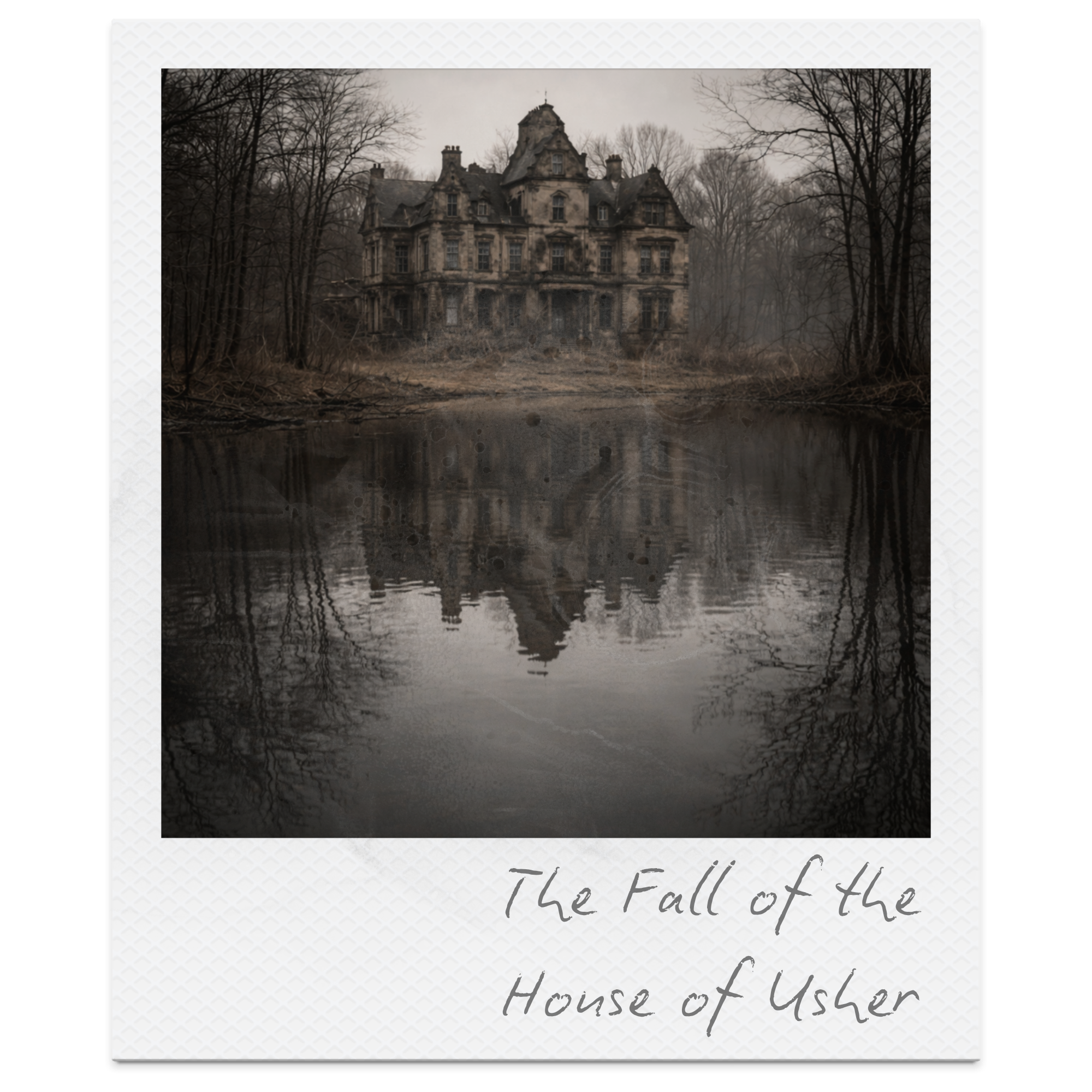
◆ The Fall of the House of Usher – Both texts use setting as a reflection of psychological state, but in different ways. In Usher, the house mirrors Roderick’s mental collapse, whereas in The Man of the Crowd, the city itself becomes a living system of movement, anonymity, and fragmentation. This comparison highlights how Poe adapts Gothic conventions to different environments.
◆ The Masque of the Red Death – This story offers another perspective on inescapable forces and hidden truths. While The Man of the Crowd presents a mystery that cannot be solved, The Masque of the Red Death presents a threat that cannot be avoided. Both texts suggest limits to human control and understanding, though one is psychological and the other more overtly symbolic.
◆ Modern Urban Texts (Extension) – Students can connect the story to later representations of city life, where individuals experience isolation within crowds and fragmented identity. For example, Mrs Dalloway explores consciousness and urban movement through London, while The Waste Land presents a fragmented modern city filled with disconnected voices. Similarly, Taxi Driver depicts urban alienation and psychological instability within a crowded yet isolating environment. These texts highlight how themes of anonymity, surveillance, and existential disconnection continue to shape representations of modern life.
By exploring these connections, students can see how The Man of the Crowd fits within a broader literary conversation about human psychology, environment, and the unknowable, while also strengthening comparative analysis skills. I also have a post discussing my favourite Poe texts for the classroom, which you can read here.
Final Thoughts
The Man of the Crowd remains one of Poe’s most unsettling and intellectually challenging works, precisely because it refuses to offer resolution. Rather than presenting a clear narrative or explanation, the story exposes the limits of observation, reason, and human understanding, suggesting that some aspects of identity can never be fully known. The old man, as a figure who “refuses to be alone,” becomes a powerful symbol of urban anonymity and psychological unrest, embodying a life that exists in motion but resists interpretation.
At the same time, the story raises deeper questions about the act of reading itself. The narrator believes he can interpret the world around him, yet his failure to understand the old man reveals the instability of that belief. Poe challenges the assumption that people can be easily categorised or explained, instead presenting identity as fragmented, contradictory, and ultimately unknowable. This ambiguity is what gives the story its lasting power, forcing readers to confront the discomfort of not having answers.
For further exploration of Poe’s work, visit the Poe Hub, where you can find analyses of key texts and themes, or browse the Literature Library to connect this story to a wider range of literary ideas and contexts.
Choose Your Next Text