Ulalume by Edgar Allan Poe: Summary, Themes, Meaning & Analysis
Edgar Allan Poe’s Ulalume is a haunting exploration of grief, memory, death, and psychological fragmentation, unfolding through a dreamlike journey into a landscape shaped as much by the mind as by the physical world. Set in a desolate October night, the poem follows a speaker wandering through a Gothic, symbolic landscape, accompanied by Psyche—his own soul—towards a destination he does not consciously recognise. Through its repetitive rhythms, incantatory language, and surreal imagery, Ulalume captures the unsettling persistence of loss and the way the past resurfaces despite attempts to forget.
At its core, the poem explores the tension between conscious denial and unconscious remembrance, revealing how grief can remain buried yet active beneath the surface of the mind. Poe deliberately blurs the boundary between reality and hallucination, leaving the reader uncertain whether the speaker’s journey is physical, psychological, or entirely symbolic. This ambiguity invites multiple interpretations, from a descent into madness to a confrontation with repressed trauma. As with much of Poe’s work, Ulalume resists a single fixed meaning, instead offering a layered meditation on memory, mourning, and the inevitability of emotional return—linking closely to broader concerns explored across the Edgar Allan Poe Hub and the wider Literature Library.

Context of Ulalume
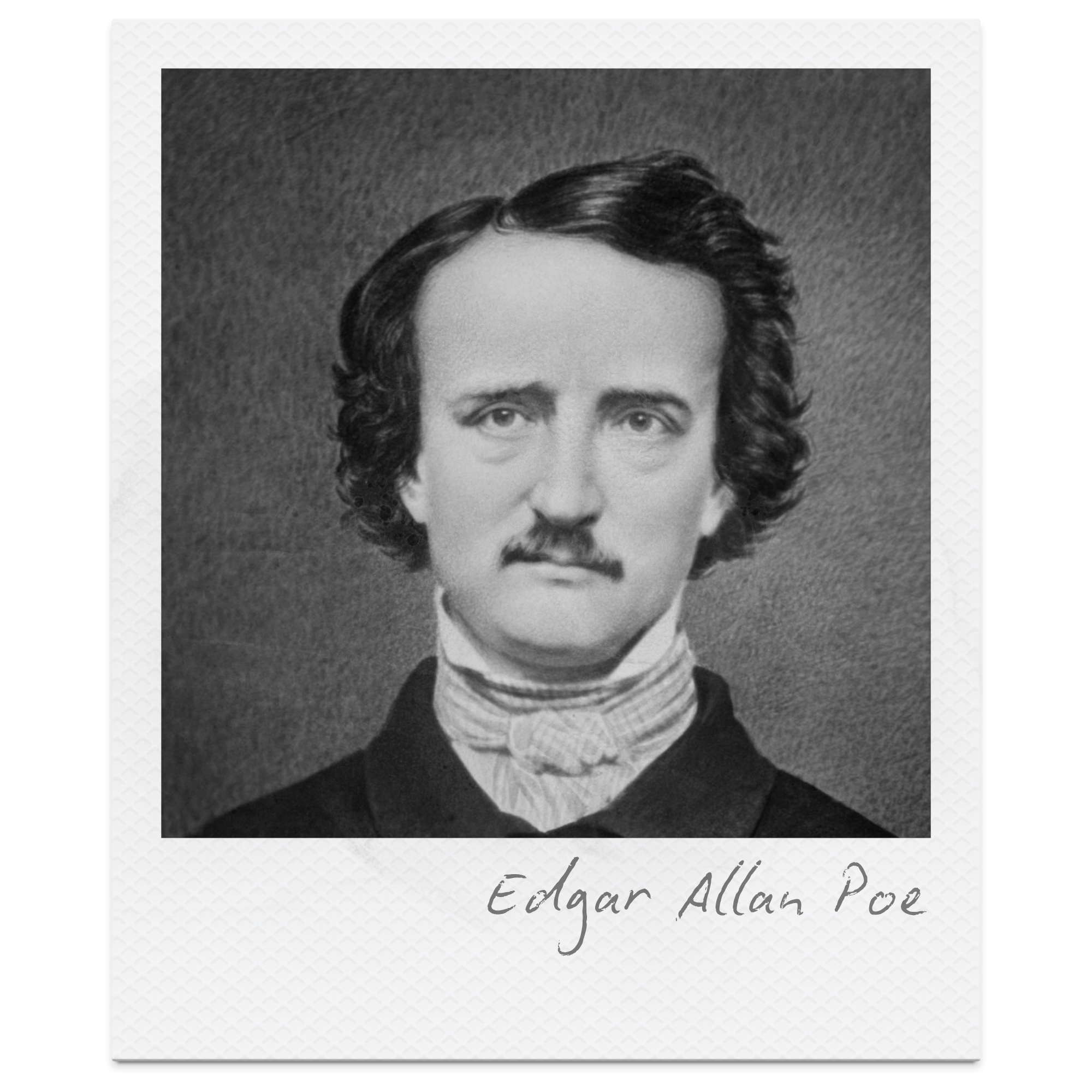
Written in 1847, shortly after the death of his wife Virginia, Ulalume emerges from one of the most emotionally turbulent periods of Edgar Allan Poe’s life, reflecting his deep preoccupation with loss, mourning, and the persistence of grief. The poem sits firmly within the American Gothic tradition, blending Romantic introspection with darker psychological exploration. Poe’s work often centres on the idea that the death of a beautiful woman is the most poetic subject, and Ulalume develops this further by focusing not just on loss itself, but on the mind’s inability to escape it. The poem’s musicality, repetition, and hypnotic rhythm also reflect Poe’s interest in poetry as an emotional experience rather than a purely narrative form, aligning with his broader literary theories. For a deeper exploration of these influences, see the Poe Context Post.
Thematically, Ulalume explores grief as a cyclical and subconscious force, where memory operates beneath awareness until it resurfaces with overwhelming clarity. The speaker’s journey through the ghoul-haunted woodland becomes a symbolic descent into the unconscious, where repressed trauma, longing, and denial converge. The poem reflects broader 19th-century anxieties surrounding death, the afterlife, and the fragility of the human mind, while also engaging with ideas of doubling and internal conflict through the presence of Psyche. These elements connect closely to key themes in Poe’s work, including death and memory, the instability of perception, and the blurred boundary between reality and imagination, all of which shape the poem’s unsettling emotional power.
Ulalume: At a Glance
Form: Lyric narrative poem with strong musicality and refrain-like repetition
Mood: Haunting, melancholic, hypnotic
Central tension: The conflict between conscious denial and unconscious remembrance
Core themes: Grief, memory, death, psychological fragmentation, self-deception, the unconscious mind
One-sentence meaning: A speaker unknowingly retraces his steps to the tomb of his lost love, revealing how grief persists beneath consciousness and inevitably resurfaces.
Quick Summary of Ulalume
The poem opens on a bleak October night, where the speaker wanders through a desolate, ghoul-haunted landscape beside a dim lake, accompanied by Psyche—his own soul. The setting is cold, lifeless, and repetitive, reflecting a mind caught in a state of emotional stagnation. Although the speaker describes the environment in detail, he appears detached, unaware of the deeper significance of his surroundings or the date itself.
As they continue their journey, a strange, luminous star appears in the sky, which the speaker interprets as a hopeful and guiding presence. He persuades Psyche to trust this light, despite her fear and hesitation. This moment introduces a shift from stillness to movement, as the speaker becomes increasingly convinced that the light will lead them toward peace, revealing his desire to escape grief through illusion.
However, this apparent hope leads them directly to a tomb, where Psyche reveals the truth: it is the burial place of Ulalume, the speaker’s lost love. In this moment, the speaker realises that he has unconsciously returned to the site of his grief on the anniversary of her death. The poem ends with this sudden recognition, exposing how memory and loss persist beneath awareness, and how the mind can unknowingly guide itself back to what it tries to forget.
Title, Form, Structure, and Metre
Poe’s formal choices in Ulalume are central to the poem’s hypnotic, disorientating power. Through its intricate sound patterns, heavy repetition, and fluid stanza structure, the poem creates a dreamlike, almost trance-like experience that mirrors the speaker’s unconscious journey toward buried grief. Rather than progressing in a clear, linear way, the poem moves in circles, its rhythms and refrains reinforcing the sense that the speaker is trapped within memory. In this way, form and metre do not simply support meaning: they enact the poem’s central idea that grief is cyclical, inescapable, and deeply embedded in the mind.
Title
The title Ulalume immediately establishes the poem’s musical and symbolic focus, centring on a name that feels more like a sound than a fixed identity. Its soft, echoing vowels create an incantatory effect, reinforcing the poem’s haunting, elegiac tone. Like a whispered refrain, the name suggests something that lingers just beyond full comprehension, reflecting the way the speaker’s memory operates throughout the poem.
At the same time, the title functions as a memorial marker, placing the lost woman at the centre of the poem while also distancing her from reality. Ulalume becomes less a fully realised individual and more a symbol of grief, absence, and emotional fixation, shaped entirely through the speaker’s recollection. The repetition of her name within the poem reinforces this, transforming it into a refrain that echoes the persistence of loss.
Form and Structure
Ulalume is structured as a lyric narrative with strong ballad-like elements, unfolding across a series of uneven stanzas that prioritise atmosphere over narrative clarity. Although the poem recounts a journey, its structure resists straightforward progression, instead moving through repetition, variation, and gradual revelation. This creates a sense of circularity, as if the speaker is wandering not just through a physical landscape but through the recesses of his own mind.
The stanzas themselves are irregular in length, typically expanding and contracting in ways that reflect the speaker’s shifting emotional state. This lack of uniformity contributes to the poem’s instability and unpredictability, reinforcing the idea that the speaker is not fully in control of his thoughts or direction. Structurally, the poem builds toward a moment of recognition, but this revelation feels less like a resolution and more like a return to something already known but repressed, emphasising the cyclical nature of grief.
Rhyme Scheme and Poetic Pattern
One of the most striking features of Ulalume is its dense and intricate musical patterning. Poe employs a highly elaborate rhyme scheme that frequently shifts within and across stanzas, combining end rhyme, internal rhyme, and repeated sounds to create a layered, echoing effect. While certain patterns emerge, they are often complicated by variation, producing a sense of instability beneath apparent structure.
Repetition plays a central role, particularly in phrases such as “sere,” “Auber,” and “Weir,” which recur throughout the poem. These repeated sounds create a hypnotic, incantatory rhythm, reinforcing the idea that the speaker is caught in a loop of memory. The effect is both musical and unsettling, as the poem seems to circle back on itself, echoing the speaker’s unconscious return to the site of his loss.
Metre and Rhythmic Movement
The metre of Ulalume is predominantly anapestic, characterised by a rolling rhythm that propels the poem forward while also creating a sense of instability. This pattern, built from two unstressed syllables followed by a stressed one, produces a swaying, almost hypnotic movement that mirrors both walking and wandering thought.
However, Poe frequently disrupts this regularity through variation in stress, line length, and pacing. These subtle irregularities prevent the rhythm from becoming predictable, instead reflecting the speaker’s psychological unease and shifting awareness. The use of feminine rhyme, where lines end on an unstressed syllable, further softens the rhythm, creating a trailing, unresolved quality that enhances the poem’s melancholic tone.
At key moments, the rhythm intensifies or becomes more insistent, particularly as the speaker interprets the star as a sign of hope. This heightened movement contrasts sharply with the stillness of the opening, marking a shift from passive wandering to active (though misguided) belief. By the end of the poem, the rhythm collapses back into repetition and recognition, reinforcing the idea that the speaker’s journey has not led forward, but instead returned him to the centre of his grief.
The Speaker of Ulalume
The speaker of Ulalume is a deeply unstable and divided consciousness, presented as both a wandering individual and a mind in conflict with itself. He moves through the poem accompanied by Psyche, who represents his soul or inner awareness, creating a dual structure that exposes the tension between instinct and reason, desire and warning, denial and recognition. This division allows Poe to dramatise an internal psychological struggle, where one part of the self is drawn toward memory while another attempts to resist it.
At the beginning of the poem, the speaker appears detached and almost passive, describing the landscape in precise yet emotionally muted terms. This suggests a state of repression, as he fails to recognise both the significance of the setting and the date itself. His tone is controlled and observational, but this calmness is deceptive, masking a deeper emotional disturbance that gradually surfaces as the poem progresses.
As the journey continues, the speaker becomes increasingly assertive, particularly when he interprets the rising star as a sign of hope. Here, his voice shifts toward confidence and persuasion, as he attempts to convince Psyche—and himself—that the light will lead them toward peace. This moment reveals his unreliability, as he misreads the very force guiding him, projecting meaning onto it in order to avoid confronting the truth.
By the end of the poem, the speaker’s voice fractures under the weight of recognition. When Psyche reveals that they have arrived at the tomb of Ulalume, his earlier certainty collapses, replaced by shock and retrospective understanding. This final shift exposes the central nature of his character: a mind caught between forgetting and remembering, drawn inevitably back to what it has tried to suppress.
Stanza-by-Stanza Analysis of Ulalume
Poe structures Ulalume as a gradual psychological unfolding, moving from detached wandering to subconscious recognition and emotional collapse. Each stanza contributes to this progression, layering imagery, repetition, and shifting tone to reflect the speaker’s journey through both a physical landscape and the hidden depths of his own mind. Rather than advancing in a clear, logical sequence, the poem develops through echo, return, and variation, reinforcing the sense that the speaker is trapped within a cycle of memory.
The poem begins with a bleak and desolate setting, establishing an atmosphere of decay, stillness, and emotional numbness, before introducing subtle disturbances that suggest something beneath the surface. As the stanzas progress, moments of apparent hope emerge, only to lead the speaker further toward the truth he has unconsciously avoided. By tracing the poem stanza by stanza, it becomes clear that Ulalume is not simply about grief, but about the mind’s inability to escape it, revealing how memory operates beyond conscious control and inevitably forces recognition.
Stanza One: Desolation, Decay, and the Externalisation of Inner State
The opening stanza establishes a landscape defined by decay, stillness, and emotional depletion, immediately aligning the physical environment with the speaker’s internal state. The repeated descriptions—“ashen and sober,” “crispéd and sere,” “withering and sere”—create a sense of lifelessness, where nature itself appears drained of vitality. The insistence on “sere” reinforces this barrenness, suggesting not just seasonal decline, but a deeper condition of emotional exhaustion and irreversibility, as though everything has already passed beyond renewal.
Poe strengthens this atmosphere through repetition and structural echo, particularly in the mirrored phrasing of “The leaves they were…” which slows the rhythm and produces a hypnotic, incantatory effect. This repetition traps the reader within the same descriptive loop, reflecting how the speaker is already moving within a fixed psychological state, unable to progress beyond this moment of stagnation. The landscape is therefore not merely observed but experienced as something enclosing and inescapable.
The setting becomes more specific through the naming of place: the “dim lake of Auber” and the “ghoul-haunted woodland of Weir.” These locations feel simultaneously precise and unreal, contributing to the poem’s dreamlike, liminal quality. Their repetition gives them symbolic weight, transforming them into spaces associated with memory, death, and the uncanny, rather than stable, geographical reality. The adjective “ghoul-haunted” introduces a distinctly Gothic element, suggesting that the landscape is inhabited by forces connected to death and the past.
The temporal framing—“the lonesome October / Of my most immemorial year”—further complicates the speaker’s awareness. October, traditionally associated with decline, endings, and the approach of death, reinforces the seasonal symbolism of decay, while the phrase “immemorial year” suggests something paradoxical: a moment both deeply significant and not fully remembered. This introduces an early tension between conscious perception and buried memory, hinting that the speaker is already moving through a space charged with meaning he does not yet recognise.
Overall, the stanza functions as more than a setting; it establishes the poem’s central dynamic, where the external world reflects and intensifies the speaker’s internal condition of grief, repression, and unresolved loss.
Stanza Two: The Divided Self and the Violence Beneath Repression
The second stanza introduces a crucial shift from external landscape to internal psychological division, as the speaker reveals that he is not alone, but accompanied by Psyche—his “Soul.” This pairing immediately establishes a tension between conscious movement and inner awareness, suggesting that the journey is as much mental as it is physical. The repetition of “with my Soul— / Of cypress, with Psyche, my Soul” reinforces this doubling, creating a sense of echo that mirrors the speaker’s fragmented consciousness.
The setting of the “alley Titanic / Of cypress” carries strong symbolic weight. Cypress trees are traditionally associated with mourning and death, linking the path directly to themes of grief and burial. The word “Titanic” elevates the scene, suggesting something vast, ancient, and overwhelming, as though the speaker is moving through a space that is both mythic and psychologically immense. This transforms the journey into something more than a simple walk, framing it as a passage through memory and emotional depth.
The stanza then intensifies dramatically through the introduction of volcanic imagery, as the speaker recalls a time when his “heart was volcanic.” This metaphor signals a shift from the stillness of the previous stanza to a state of violent emotional energy, suggesting that beneath the surface of repression lies something powerful and unstable. The comparison to “scoriac rivers” and “lavas that restlessly roll” evokes continuous, unstoppable movement, reinforcing the idea that these emotions cannot be contained indefinitely.
The repeated references to “Yaanek” and the “boreal pole” create a sense of distance and extremity, placing this imagery in a remote, almost otherworldly location. This geographical abstraction contributes to the poem’s dreamlike and symbolic quality, where physical spaces reflect emotional states rather than real places. The groaning, rolling movement of the lava further emphasises a sense of pressure and inevitability, as though something buried is pushing toward release.
Overall, this stanza reveals the tension between surface calm and underlying intensity, exposing the speaker’s emotional state as far more volatile than the opening suggested. The introduction of Psyche alongside imagery of eruption and movement suggests that while the speaker appears controlled, his inner self is already aware of—and reacting to—the forces he is attempting to suppress.
Stanza Three: Repression, Forgetting, and the Failure of Conscious Awareness
The third stanza deepens the poem’s psychological focus, revealing the extent of the speaker’s disconnection from memory and reality. While the speaker and Psyche engage in “serious and sober” conversation, this apparent rationality is immediately undermined by the admission that their “thoughts… were palsied and sere.” The repetition of “sere” links this mental state directly to the earlier imagery of decay, suggesting that the speaker’s mind, like the landscape, is withered, stagnant, and incapable of renewal.
The stanza introduces a critical idea: the failure of conscious awareness. The speaker confesses that they “knew not the month was October” and “marked not the night of the year,” indicating a profound detachment from time. This lack of recognition is not accidental but symbolic, reflecting a form of psychological repression, where the mind actively avoids acknowledging a significant and painful memory. The parenthetical interruption—“(Ah, night of all nights in the year!)”—breaks this denial, hinting at an underlying awareness that momentarily surfaces before being suppressed again.
Repetition continues to play a central role, particularly in the recurring references to “Auber” and “Weir.” Despite their earlier prominence, the speaker now insists that they “noted not” and “remembered not” these locations, even though they have “journeyed down here” before. This contradiction exposes the instability of the speaker’s perception, suggesting that memory is present but actively resisted or distorted. The repeated naming of these places reinforces their significance, even as the speaker claims ignorance, creating a tension between knowing and not knowing.
Structurally, the stanza mirrors this psychological conflict through its use of repetition and interruption. The echoing phrases and bracketed exclamation create a sense of fragmentation, as though the speaker’s thoughts are breaking through the surface of his controlled narrative. This instability reflects the struggle between repression and recognition, where the mind attempts to maintain distance from trauma but cannot fully erase it.
Overall, the stanza reveals that the speaker’s journey is not one of discovery, but of reluctant return, guided by forces he does not consciously acknowledge. The emphasis on forgetting paradoxically highlights the persistence of memory, suggesting that what is denied at the surface continues to shape perception and experience beneath it.
Stanza Four: Illusion of Hope and the Emergence of False Guidance
The fourth stanza marks a significant tonal shift, introducing a moment of apparent illumination that contrasts sharply with the earlier imagery of decay and repression. As the “night was senescent” and the “star-dials pointed to morn,” the language suggests transition and renewal, implying that darkness may be giving way to light. This movement toward morning carries connotations of hope, clarity, and awakening, creating the illusion that the speaker’s journey is progressing toward resolution.
This sense of emerging meaning is embodied in the “liquescent / And nebulous lustre” that appears at the end of the path. The adjectives “liquescent” and “nebulous” emphasise the light’s fluidity and instability, suggesting that it lacks clear form or substance. Rather than offering solid guidance, the light is indistinct and shifting, hinting that this moment of hope may be deceptive. The gradual formation of the “miraculous crescent” reinforces this ambiguity, as it appears both beautiful and otherworldly, suspended between revelation and illusion.
The identification of this crescent as “Astarte’s bediamonded crescent” introduces mythological significance, linking the image to Astarte, a figure associated with love, fertility, and celestial power. This connection suggests that the light carries emotional and symbolic weight, potentially representing comfort, longing, or the promise of transcendence. However, the repeated emphasis on the “duplicate horn” creates a subtle unease, as the duplication implies distortion or unnaturalness, undermining the apparent perfection of the image.
Structurally, the stanza builds through repetition and refinement, with each line adding detail to the emerging light. This gradual intensification mirrors the speaker’s growing focus on the crescent, drawing both him and the reader toward it. Yet the language’s emphasis on ambiguity and instability suggests that this guiding presence is not trustworthy, foreshadowing the role it will play in leading the speaker further into confrontation rather than away from it.
Overall, the stanza introduces the idea of false hope, where beauty and light mask a deeper, more troubling reality. The emergence of the crescent signals a shift from passive wandering to directed movement, but this direction is shaped by illusion, reinforcing the poem’s central tension between perception and truth.
Stanza Five: Projection, Self-Deception, and the Seduction of False Hope
In the fifth stanza, the speaker responds to the crescent with growing certainty, projecting onto it a meaning shaped by his own emotional need for comfort and escape. His declaration that “She is warmer than Dian” establishes a contrast between cold, distant chastity (associated with Diana) and a more intimate, responsive presence. By feminising the celestial body and attributing warmth to it, the speaker transforms it into a figure of compassion and emotional recognition, suggesting that it understands his grief.
This projection intensifies through the repeated imagery of “sighs,” as the crescent is imagined to move through an “ether of sighs” and to “revel in a region of sighs.” These phrases create a soft, sensual atmosphere, reinforcing the idea that the speaker is not encountering objective reality, but constructing a vision shaped by longing. The repetition of “sighs” also echoes emotional release, implying that the speaker is drawn toward the possibility of relief from his suppressed grief.
The line “She has seen that the tears are not dry on / These cheeks” introduces a more personal dimension, suggesting that the speaker believes this presence has recognised his suffering. This moment reveals the depth of his self-deception, as he attributes awareness and intention to an external force in order to validate his emotional state. The reference to “the worm [that] never dies” introduces a darker undertone, evoking imagery of decay and mortality, and hinting that this apparent comfort is still bound to the reality of death.
The speaker’s language becomes increasingly persuasive and insistent as he interprets the crescent as a guide, claiming it will “point us the path to the skies” and lead them toward “Lethean peace.” The reference to Lethe, the river of forgetfulness in classical mythology, is significant, suggesting that what the speaker truly seeks is not transcendence, but oblivion or escape from memory. His repetition of imperatives—“Come up… Come up”—reinforces his urgency, as he attempts to convince both Psyche and himself that this light offers salvation.
However, the repeated references to the “Lion” subtly undermine this confidence. Associated with danger and cosmic opposition, the Lion suggests that the path is not as safe or benevolent as the speaker believes. Despite this, he continues to frame the crescent as loving and protective, revealing the extent to which he is guided not by reason, but by desire and denial.
Overall, the stanza exposes the speaker’s increasing reliance on illusion, as he transforms an ambiguous celestial sign into a source of hope. This moment marks a shift from passive wandering to active belief, but this belief is rooted in projection and self-deception, drawing him further away from truth even as he believes he is approaching it.
Stanza Six: Intuition, Warning, and the Voice of Inner Resistance
In the sixth stanza, Psyche emerges as a direct counterforce to the speaker’s growing certainty, introducing a voice of intuition, caution, and emotional truth. Her immediate mistrust of the star—“Sadly this star I mistrust— / Her pallor I strangely mistrust”—contrasts sharply with the speaker’s earlier idealisation, exposing the same light as something cold, unnatural, and potentially dangerous. The repetition of “mistrust” reinforces her urgency, suggesting that her response is instinctive rather than reasoned, rooted in a deeper awareness the speaker refuses to acknowledge.
Psyche’s language becomes increasingly urgent and imperative, with the repeated cries of “Oh, hasten!… Oh, fly!—let us fly!” creating a sense of panic and imminent threat. This shift in tone disrupts the speaker’s constructed sense of calm, replacing it with emotional intensity and fear. Structurally, the repetition of these commands accelerates the rhythm, mirroring her desire to escape and reinforcing the idea that they are moving toward something inescapably significant and potentially harmful.
Her physical imagery further emphasises this emotional collapse. The description of her wings and plumes “trailing in the dust” conveys a loss of elevation and power, suggesting that her ability to guide or protect is being diminished. Traditionally associated with transcendence or spiritual ascent, wings here become symbols of defeat, exhaustion, and despair, as Psyche is pulled downward rather than lifted upward. The repeated phrasing intensifies this image, creating a sense of weight and inevitability, as though she is being overcome by forces she cannot resist.
The emotional language—“in terror,” “in agony,” “sorrowfully”—reveals the depth of Psyche’s response, positioning her as the embodiment of the speaker’s repressed awareness of truth. While the speaker projects hope onto the star, Psyche recognises its darker implications, suggesting that the journey is not leading toward peace, but toward confrontation.
Overall, the stanza highlights the conflict between intuition and denial, with Psyche representing a voice the speaker actively resists. Her warnings introduce a moment of potential escape, but her weakening state suggests that this resistance is failing, allowing the speaker’s self-deception to continue guiding them forward.
Stanza Seven: Denial, Rationalisation, and the Reinforcement of Illusion
In the seventh stanza, the speaker directly rejects Psyche’s warning, reasserting control through denial and rationalisation. His response—“This is nothing but dreaming”—dismisses her fear entirely, reducing her instinctive mistrust to something unreal and insignificant. This moment reveals the extent of his psychological resistance, as he actively suppresses the voice of intuition in order to maintain his belief in the guiding light.
The speaker’s language becomes increasingly persuasive and insistent, marked by repetition and imperative phrasing: “Let us on… Let us bathe…” These commands create a sense of forward momentum, as though he is compelling both Psyche and himself to continue despite the warning. The repeated emphasis on the light—“tremulous,” “crystalline,” “Sybilic splendor”—elevates it into something almost sacred, suggesting prophecy, purity, and divine guidance. This transformation reveals how the speaker reshapes ambiguity into certainty, projecting onto the light qualities that reflect his desire for hope, beauty, and escape.
The reference to “Sybilic splendor” is particularly significant, invoking the Sibyls of classical mythology, who were associated with prophecy and divine insight. By aligning the light with prophetic authority, the speaker strengthens his conviction that it will “lead us aright,” reinforcing his misplaced trust. However, this confidence is constructed rather than grounded, built upon interpretation rather than evidence, which underscores his unreliability.
Repetition continues to dominate the stanza, especially in the insistence that the light “will lead us aright” and “cannot but guide us aright.” This echoing structure creates a self-reinforcing logic, where repetition replaces reasoning, and belief becomes its own justification. The upward imagery—“flickers up… to Heaven”—further supports the illusion of transcendence, suggesting ascent and spiritual resolution.
However, this insistence masks a deeper instability. The speaker’s need to repeat and reaffirm his belief suggests underlying doubt, even as he denies it. By overriding Psyche’s warning and committing fully to the light, he moves further into self-deception, allowing illusion to guide his actions.
Overall, the stanza represents a critical turning point where denial triumphs over intuition, and the speaker actively chooses illusion over truth. This decision propels the poem forward, ensuring that the journey will culminate not in escape, but in unavoidable recognition.
Stanza Eight: Suppression, Revelation, and the Collapse of Illusion
In the eighth stanza, the speaker asserts control over Psyche, declaring that he has “pacified” and “conquered” her doubts. The language of persuasion—“kissed her,” “tempted her out of her gloom”—suggests a deliberate suppression of intuition and inner resistance, as the speaker overrides the warning voice that has attempted to redirect him. The repetition of “gloom” reinforces the emotional weight of Psyche’s response, while also implying that the speaker views her fear as something to be dismissed rather than understood.
This moment of apparent victory is immediately undercut by the abrupt arrival at “the door of a tomb.” The shift is sudden and decisive, marking the point where the speaker’s illusion collapses into reality. The repetition—“the door of a tomb… the door of a legended tomb”—slows the moment, creating a sense of inevitability, as though the journey has always been leading here. The word “legended” adds an element of myth or narrative significance, suggesting that this place is not only real, but charged with memory and meaning.
The speaker’s question—“What is written, sweet sister, / On the door of this legended tomb?”—reveals his continued lack of conscious awareness, as he still does not recognise where he has arrived. His use of “sweet sister” reinforces the intimacy between himself and Psyche, even as he ignores her earlier warnings, highlighting the tension between connection and control within this divided self.
The revelation comes through Psyche, whose response—“Ulalume—Ulalume— / ’Tis the vault of thy lost Ulalume!”—breaks through the speaker’s denial. The repetition of the name functions as a moment of recognition, echoing with both finality and emotional force. This is the point at which the speaker’s unconscious journey becomes conscious, as the truth he has been avoiding is named directly.
Overall, the stanza represents the culmination of the poem’s structural progression, where repression gives way to revelation. The speaker’s attempt to guide himself toward hope instead leads him back to the site of his grief, exposing the inevitability of memory and the impossibility of escape.
Stanza Nine: Recognition, Return, and the Collapse into Memory
The ninth stanza marks the moment of full recognition, where the speaker’s repression gives way to sudden, overwhelming awareness. The opening line—“my heart it grew ashen and sober”—directly echoes the imagery of the first stanza, creating a powerful sense of circular return. The repetition of “crispèd and sere” and “withering and sere” reinforces this connection, revealing that the external landscape was always a reflection of the speaker’s internal condition, now consciously acknowledged.
The speaker’s exclamation—“It was surely October / On this very night of last year”—signals the recovery of memory, as he realises that this journey is not new, but a repetition of a past event. The repetition of “I journeyed—I journeyed down here” emphasises both shock and inevitability, suggesting that he has been drawn back to this place without conscious intention. The phrase “a dread burden” implies that he himself was responsible for bringing Ulalume to this tomb, intensifying the emotional weight of the moment and introducing a sense of guilt and responsibility.
The rhetorical question—“Oh, what demon has tempted me here?”—reveals the speaker’s attempt to externalise blame, attributing his return to some supernatural force. This reflects his continued struggle to reconcile his actions with his awareness, as he seeks to distance himself from the truth that his own mind has guided him back. The reference to a “demon” also reinforces the Gothic atmosphere, suggesting that the journey has been shaped by forces that feel both internal and otherworldly.
Repetition once again plays a central role, particularly in the renewed naming of “Auber” and “Weir.” However, unlike earlier in the poem, the speaker now declares, “Well I know, now,” signalling a shift from denial to recognition. These places are no longer unfamiliar or forgotten, but fully understood as sites of memory, loss, and emotional significance. The repetition transforms from a marker of confusion into one of clarity, though this clarity brings only distress.
Overall, the stanza represents the emotional climax of the poem, where illusion collapses entirely and memory asserts itself. The speaker is forced to confront the truth he has been unconsciously avoiding, revealing that his journey was not guided by external forces, but by the persistent and inescapable pull of grief.
Stanza Ten: Rationalisation, Supernatural Framing, and the Attempt to Recontain Meaning
In the final stanza, the speaker and Psyche speak together—“Said we, then—the two, then”—suggesting a momentary merging of the divided self. This shift in voice creates the impression of shared interpretation, as though both consciousness and soul are attempting to make sense of what has just been revealed. However, rather than accepting responsibility, the speaker immediately turns toward rationalisation through the supernatural, reframing the experience in terms of external forces.
The repeated reference to the “woodlandish ghouls” introduces a strange duality, as they are described as both “pitiful” and “merciful.” This ambiguity complicates their role, suggesting that they may not be malevolent, but instead act as agents attempting to prevent or delay recognition. The idea that they sought “to bar up our way” implies that the speaker was being protected from confronting the truth too soon, reinforcing the notion that the journey toward memory is both inevitable and resisted.
The stanza then reinterprets the guiding star as a “spectre of a planet,” shifting its meaning from hopeful light to something illusory and potentially deceptive. The language becomes increasingly abstract and cosmic—“limbo of lunary souls,” “Hell of the planetary souls”—placing the experience within a vast, otherworldly framework. This expansion outward reflects the speaker’s attempt to distance the event from his own psyche, projecting it onto a larger, supernatural system in order to avoid full internal accountability.
The description of the planet as “sinfully scintillant” reinforces this tension between attraction and danger. The brightness of the light remains alluring, but it is now explicitly associated with moral and existential unease, suggesting that what appeared beautiful and guiding was, in fact, misleading. The repetition and elaboration of this image create a sense of over-explanation, as though the speaker is trying to impose meaning on an experience that resists clear interpretation.
Overall, the stanza represents a final attempt to recontain and reinterpret the experience, shifting from recognition back toward uncertainty. Rather than resolving the poem’s tension, it leaves the speaker—and the reader—within a state of ambiguity, where the boundaries between psychological reality and supernatural influence remain unresolved.
Key Quotes from Ulalume
Poe’s language in Ulalume is central to its meaning, with repetition, sound patterning, and symbolic imagery working together to create a poem that is both musical and psychologically revealing. The following key quotes demonstrate how Poe uses language to explore grief, memory, self-deception, and the unconscious mind, with each moment contributing to the speaker’s gradual movement toward recognition.
Death and Decay
“The skies they were ashen and sober”
♦ Imagery
♦ Establishes a lifeless, colourless landscape that reflects emotional emptiness
♦ Reinforces the speaker’s internal state of grief and detachment
“The leaves they were crispéd and sere”
♦ Repetition and symbolism
♦ Emphasises decay and the end of natural cycles
♦ Suggests irreversibility, linking nature to emotional exhaustion and loss
Psychological Fragmentation
“Of cypress, with Psyche, my Soul”
♦ Symbolism
♦ Introduces Psyche as a representation of the speaker’s divided self
♦ Highlights internal conflict between awareness and denial
“Our memories were treacherous and sere”
♦ Personification
♦ Presents memory as unreliable and deceptive
♦ Suggests repression, where the mind actively distorts or avoids painful truth
Illusion and False Hope
“Astarte’s bediamonded crescent”
♦ Mythological imagery
♦ Elevates the star into a symbol of beauty and divine presence
♦ Reflects the speaker’s projection of hope onto something ambiguous
“Its Sybilic splendor is beaming”
♦ Allusion
♦ Links the light to prophecy and divine guidance
♦ Reinforces the speaker’s misplaced belief that he is being led toward truth
Denial and Self-Deception
“This is nothing but dreaming”
♦ Dismissive tone
♦ Rejects Psyche’s warning and suppresses intuition
♦ Reveals the speaker’s active denial of reality
“We safely may trust to its gleaming”
♦ Repetition
♦ Creates a self-reinforcing belief without evidence
♦ Highlights the speaker’s need to convince himself of false hope
Recognition and Memory
“‘Tis the vault of thy lost Ulalume!”
♦ Repetition and revelation
♦ Marks the moment of recognition and confrontation with truth
♦ The repetition of the name intensifies emotional impact and finality
“Well I know, now, this dim lake of Auber”
♦ Shift in tone
♦ Signals movement from denial to awareness
♦ Repetition transforms confusion into painful clarity
Key Techniques in Ulalume
Poe’s Ulalume uses a range of poetic techniques to create its hypnotic, disorientating atmosphere, reinforcing the poem’s exploration of grief, memory, and psychological fragmentation. Through intricate sound patterns, repetition, and symbolic imagery, the poem blurs the boundary between conscious thought and unconscious experience, allowing language itself to mirror the speaker’s descent into recognition.
♦ Repetition – Repetition is one of the most dominant techniques in the poem, seen in phrases such as “sere,” “Auber,” and “Weir.” This constant echoing creates a cyclical, incantatory rhythm, reflecting how the speaker is trapped within recurring patterns of thought and memory. The repetition also slows the poem’s pace, reinforcing the sense of psychological stagnation and the inability to move forward.
♦ Internal Rhyme – Poe layers internal rhyme throughout the poem, often placing rhyming sounds within the same line rather than only at the end. This creates a dense, musical texture that enhances the poem’s hypnotic quality, drawing the reader into the same disorientating rhythm as the speaker. The effect is both immersive and unsettling, as the sound patterns blur clarity and reinforce emotional intensity.
♦ Feminine Rhyme – The frequent use of feminine rhyme, where lines end on an unstressed syllable (e.g. “sober,” “October,” “Auber”), produces a soft, trailing sound that prevents closure. This lack of resolution mirrors the poem’s themes of incomplete grief and lingering memory, as each line fades into the next without finality.
♦ Symbolism – The poem is rich in symbolic imagery, particularly in its use of landscape and celestial elements. The “ghoul-haunted woodland,” the “tarn of Auber,” and the “bediamonded crescent” function not as literal settings, but as representations of memory, death, and emotional states. This symbolic layering transforms the journey into a psychological and internal experience.
♦ Anapestic Rhythm – The poem’s predominant anapestic metre creates a rolling, forward-moving rhythm that mimics both walking and wandering thought. This rhythmic movement draws the reader through the poem while also reinforcing its dreamlike quality. However, variations within this pattern introduce instability, reflecting the speaker’s uneasy mental state.
♦ Allusion – Poe incorporates mythological references, such as Astarte and the river Lethe, to situate the poem within a broader symbolic framework. These allusions connect the speaker’s experience to themes of love, death, and forgetting, elevating the poem beyond the personal and reinforcing its philosophical depth.
♦ Personification – The speaker repeatedly attributes human qualities to the star, presenting it as a guiding presence that sees and understands his grief. This personification reveals his projection and self-deception, as he imposes meaning onto an ambiguous object in order to avoid confronting reality.
♦ Imagery – Vivid sensory imagery shapes the poem’s atmosphere, particularly in descriptions of decay, darkness, and light. The contrast between the bleak landscape and the luminous crescent reinforces the tension between despair and false hope, highlighting the speaker’s shifting perception.
Themes in Ulalume
Poe’s Ulalume explores a complex network of interrelated themes, using its dreamlike structure, musical language, and symbolic landscape to examine the inner workings of the mind. Rather than presenting grief as a singular emotion, the poem reveals it as something cyclical, repressed, and psychologically destabilising, where memory operates beneath conscious awareness and inevitably resurfaces. Through this, Poe develops a meditation on how the human mind responds to loss, exposing the tension between denial and recognition, illusion and truth.
Grief
Grief in Ulalume is not immediate or openly expressed, but buried and delayed, shaping the speaker’s experience without his full awareness. Unlike traditional elegies that foreground mourning, the poem presents grief as something subconscious and inescapable, emerging gradually as the speaker is drawn back to the site of loss. The cyclical structure reinforces this idea, suggesting that grief is not resolved but continually revisited, existing as a persistent force that governs perception and movement.
Memory
Memory functions as both a hidden and dominant force within the poem, operating beneath the surface until it breaks through into consciousness. The speaker’s repeated insistence that he does not recognise the place or time highlights the role of repression, where memory is actively avoided. However, the eventual moment of recognition reveals that memory cannot be erased, only delayed. Poe presents memory as something unreliable yet inevitable, capable of distorting perception while still guiding the individual back to truth.
Death
Death in Ulalume is not simply an event, but a lingering presence that shapes the entire landscape of the poem. The imagery of decay, the “ghoul-haunted woodland,” and the final revelation of the tomb all reinforce death as something inescapable and ever-present. However, the poem complicates this by linking death to memory, suggesting that its true power lies not in physical absence, but in its ability to persist within the mind. Death becomes both a reality and a psychological condition, blurring the boundary between the external world and internal experience.
Psychological Fragmentation
The presence of Psyche as the speaker’s “Soul” introduces the theme of divided consciousness, where the self is split between competing impulses. The speaker and Psyche represent opposing forces—denial and intuition, projection and awareness—creating an internal conflict that drives the poem forward. This fragmentation reflects a mind that is not unified, but struggling to reconcile its own contradictions, reinforcing the instability at the heart of the speaker’s experience.
Self-Deception
Self-deception is central to the speaker’s journey, as he repeatedly misinterprets the signs around him in order to avoid confronting painful truth. His idealisation of the crescent as a source of hope reveals his tendency to project meaning onto ambiguity, shaping reality according to his emotional needs. This self-deception is not passive, but active, as he dismisses Psyche’s warnings and constructs a narrative that allows him to continue forward. The poem exposes how the mind can create illusions to protect itself, even when those illusions lead to greater distress.
The Unconscious Mind
The poem operates as a representation of the unconscious, where thoughts, memories, and emotions exist beyond the speaker’s immediate awareness. The journey through the landscape mirrors a descent into this hidden space, where repressed material gradually emerges. Psyche functions as a voice of the unconscious, recognising truths that the speaker resists. Poe suggests that the unconscious is not passive, but actively shapes behaviour and perception, guiding the individual toward recognition even when they attempt to avoid it.
Time and Cyclical Experience
Time in Ulalume is presented as non-linear and cyclical, rather than progressive. The speaker’s return to the same place on the anniversary of Ulalume’s death reveals that the past continues to exert influence over the present. The repetition of imagery and structure reinforces this sense of circularity, suggesting that the speaker is trapped within a loop of memory. This challenges the idea of closure, presenting time as something that repeats and reasserts itself, particularly in relation to trauma and loss.
Alternative Interpretations of Ulalume
Although Ulalume can be read as a poem about grief, memory, and inevitable recognition, Poe’s use of ambiguity, repetition, and symbolic imagery allows for multiple interpretations. The blurred boundaries between reality and hallucination, alongside the divided voice of the speaker and Psyche, invite readers to question whether the poem presents a psychological journey, a supernatural encounter, or a meditation on the nature of consciousness itself.
Psychoanalytical Interpretation: Repression and the Return of the Unconscious
From a psychoanalytical perspective, Ulalume can be read as a representation of repressed trauma resurfacing into consciousness. The speaker’s inability to recognise the setting and time suggests a deliberate suppression of memory, while the journey itself becomes a symbolic descent into the unconscious mind. Psyche functions as an embodiment of inner awareness, warning against the path the speaker is taking, while the speaker’s dismissal of her reflects the mind’s resistance to confronting painful truth.
The eventual arrival at the tomb represents the moment when repression fails, and the unconscious forces recognition. In this reading, the poem illustrates how buried grief cannot be permanently avoided, but instead shapes behaviour and perception until it is acknowledged.
Gothic Interpretation: Supernatural Guidance and Fatal Attraction
A Gothic reading emphasises the poem’s uncanny atmosphere and supernatural elements, interpreting the journey as influenced by forces beyond the speaker’s control. The “ghoul-haunted woodland,” the mysterious crescent, and the suggestion of “woodlandish ghouls” guiding or misleading the speaker all contribute to a sense that he is being drawn toward his fate by external, possibly malevolent forces.
In this interpretation, the star becomes a deceptive or spectral presence, leading the speaker toward the tomb rather than away from it. The poem thus aligns with Gothic conventions of fatal attraction and inevitable doom, where the protagonist is compelled toward a revelation that cannot be escaped.
Existential Interpretation: The Inescapability of Memory and Meaning
From an existential perspective, Ulalume can be read as an exploration of the human condition, where individuals are bound to confront the persistence of memory and the inevitability of loss. The speaker’s attempt to interpret the star as a source of meaning reflects a desire to impose order and purpose on an uncertain world. However, this meaning proves illusory, leading him back to the reality he sought to avoid.
In this reading, the poem suggests that attempts to escape or redefine suffering are ultimately unsuccessful, as the past continues to shape the present. The speaker’s journey becomes a reflection of the human tendency to seek comfort in illusion, only to be confronted by the limits of that belief.
Romantic Interpretation: Emotion, Imagination, and the Power of the Mind
A Romantic reading highlights the poem’s emphasis on emotion, imagination, and the subjective experience of reality. The landscape, the star, and even Psyche can be seen as products of the speaker’s imaginative consciousness, where external reality is shaped by internal feeling. The heightened language and musicality reinforce this focus on emotional intensity, aligning the poem with Romantic ideals of individual perception and creative expression.
However, Poe complicates this by showing how imagination can both illuminate and distort. The speaker’s interpretation of the crescent as a source of hope reveals the power of imagination to create meaning, but also its capacity for self-deception, blurring the line between insight and illusion.
Teaching Ideas for Ulalume
Ulalume is particularly effective in the classroom because its layered symbolism, divided speaker, and cyclical structure allow students to explore complex ideas about grief, memory, and the unconscious mind. The poem’s ambiguity encourages multiple interpretations, making it ideal for discussion, debate, and analytical writing, while its rich imagery also lends itself to creative and visual responses.
1. The Divided Self: Speaker vs Psyche
Ask students to explore how the poem presents two aspects of the same mind through the speaker and Psyche.
Possible discussion prompts include:
◆ What does Psyche represent in relation to the speaker?
◆ How do their responses to the star differ, and why?
◆ At what point does the speaker ignore or override Psyche, and what are the consequences?
This activity helps students analyse psychological fragmentation, while also introducing the idea that internal conflict can be represented through structure and voice.
2. Illusion vs Reality
Students can examine how Poe creates tension between what appears to be true and what is actually real.
Focus on moments such as:
◆ The description of the “bediamonded crescent”
◆ The speaker’s belief that the light will “lead us aright”
◆ The final revelation of the tomb
Students can explore how language creates false hope, and discuss how the poem gradually reveals the gap between perception and reality. This develops skills in tracking shifts in meaning and tone.
3. Character / Theme Debate
Set up a debate around the central question:
Is the speaker a victim of external forces, or responsible for his own self-deception?
Students can argue different perspectives, using evidence from across the poem.
This encourages students to engage with interpretation and ambiguity, while supporting their ideas with close textual analysis.
4. Model Analytical Paragraph + Evaluation
Question:
How does Poe present the relationship between memory and grief in Ulalume?
Model paragraph:
Poe presents memory as an inescapable force that operates beneath conscious awareness, gradually shaping the speaker’s journey toward recognition. This is evident in the repeated references to the landscape, such as the “dim lake of Auber,” which the speaker initially claims not to recognise but later acknowledges with certainty. The repetition of this image reflects how memory persists even when denied, suggesting that grief cannot be fully suppressed. Furthermore, the cyclical structure of the poem reinforces this idea, as the speaker unknowingly retraces his steps to the site of Ulalume’s death. This demonstrates that memory is not passive, but actively guides behaviour, revealing the deep connection between remembrance and emotional experience.
Student tasks:
◆ Identify and label the techniques used in the paragraph
◆ Add an additional quotation to extend the argument
◆ Rewrite the paragraph from a different interpretative perspective
5. Creative Writing Extension
Students can create their own piece inspired by Ulalume, focusing on memory, atmosphere, and psychological tension.
Possible tasks include:
◆ Write a short narrative where a character unknowingly returns to a significant place
◆ Create a poem using repetition and cyclical imagery to reflect memory
◆ Describe a landscape that mirrors a character’s internal emotional state
This task encourages students to apply Poe’s techniques creatively while deepening their understanding of symbolism and mood.
Students can further develop these ideas by exploring similar atmospheric prompts in the Gothic Writing Hub and extending their work through structured exercises in the Creative Writing Archive.
Go Deeper into Ulalume
Although Ulalume focuses on grief, memory, and the unconscious return to loss, it also connects closely with many of Edgar Allan Poe’s other works. Poe repeatedly explores how the mind responds to death, often blurring the boundary between reality and illusion, consciousness and the subconscious, to reveal how grief reshapes perception. Reading Ulalume alongside other Poe texts allows students to trace these recurring ideas across both his poetry and prose.
The following poems and stories offer useful comparisons for exploring these shared themes.
◆ Annabel Lee – Both poems centre on the death of a young woman, but while Annabel Lee presents grief as enduring romantic devotion, Ulalume explores repression and delayed recognition, revealing a more psychological and fragmented response to loss.
◆ A Dream Within a Dream – Both texts question the stability of perception. While Ulalume presents a journey shaped by unconscious memory, A Dream Within a Dream focuses on the fragility of reality itself, creating a shared sense of uncertainty and loss.
◆ The Raven – Like Ulalume, this poem presents a speaker consumed by grief, but The Raven emphasises obsessive remembrance and psychological torment, offering a more immediate and relentless confrontation with loss.
◆ The Fall of the House of Usher – This story, like Ulalume, explores how the past continues to shape the present. Both texts use atmosphere and setting to reflect internal states, suggesting that grief can become embedded within both the mind and the environment.
◆ The Black Cat – While Ulalume explores grief through repression and unconscious return, The Black Cat focuses on guilt and psychological instability, revealing another dimension of Poe’s interest in the darker workings of the human mind.
Reading these works together reveals how Poe consistently examines the relationship between grief, memory, psychological instability, and the supernatural, themes that define his contribution to Gothic literature. For more classroom-focused Poe texts and ideas, see My Favourite Poe Texts for the Classroom Post.
Final Thoughts
Ulalume stands out within Poe’s poetry for its exploration of grief not as an immediate emotional response, but as a subconscious force that resists suppression and inevitably returns. Through its cyclical structure and hypnotic language, the poem presents memory as something that operates beyond conscious control, guiding the speaker back to the very truth he seeks to avoid.
At the same time, the poem invites multiple interpretations. The speaker’s journey can be read as a psychological process, a supernatural encounter, or a symbolic exploration of the unconscious, leaving open the question of whether the forces guiding him are internal or external. This ambiguity prevents the poem from offering a fixed meaning, instead emphasising the instability of perception and the complexity of grief.
Ultimately, Ulalume reveals how the mind responds to loss through denial, projection, and eventual recognition, showing that grief cannot be escaped, only confronted. To explore more of Poe’s work and related literary themes, visit the Edgar Allan Poe Hub and the Literature Library.
Choose Your Next Text