The City in the Sea by Edgar Allan Poe: Summary, Themes, Meaning & Analysis
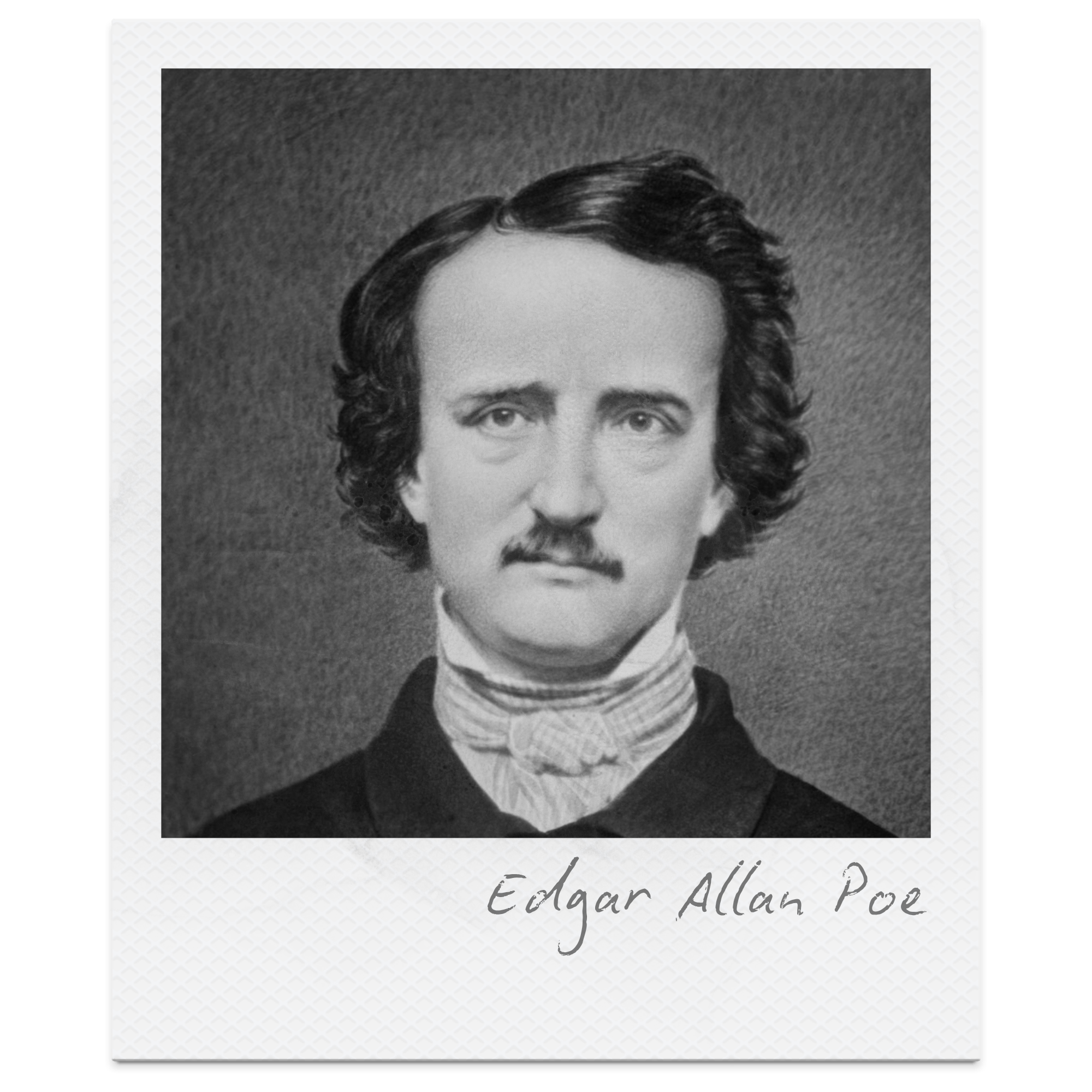
The City in the Sea by Edgar Allan Poe is a haunting gothic poem that explores death, decay, the afterlife, and the collapse of human grandeur. Set within a strange, submerged city ruled by Death itself, the poem creates a vision of stillness and suspended time, where civilisation has not simply ended but lingers in a state of eerie preservation. Through its rich imagery and unsettling atmosphere, Poe presents a world in which beauty and ruin coexist, and where the boundaries between life and death have dissolved.
On a deeper level, the poem raises questions about mortality, memory, and the illusion of permanence, suggesting that even the most magnificent human achievements are ultimately consumed by time. The city becomes both a physical space and a symbolic landscape, representing the inevitability of decline and the seductive stillness of death. Like much of Poe’s work, The City in the Sea resists a single fixed interpretation, inviting readings that range from a gothic allegory of death to a meditation on the fragility of civilisation itself. For more on Poe’s wider themes and style, explore the Edgar Allan Poe Hub, or browse related texts in the Literature Library.

Context of The City in the Sea
Written during the height of the American Romantic and Gothic movement, The City in the Sea reflects Edgar Allan Poe’s fascination with death, decay, and the psychological landscapes of the afterlife. The poem evolved from an earlier version titled The Doomed City, and its revision shows Poe refining his characteristic style: richly layered imagery, controlled rhythm, and an atmosphere of eerie stillness rather than overt horror. Unlike narrative poems such as The Raven, this piece is almost entirely symbolic and descriptive, presenting a static vision of a city governed by Death rather than a sequence of events. This aligns with Poe’s broader literary aim to create a “unity of effect”, where every image contributes to a single, overwhelming emotional response.
Thematically, the poem draws on Gothic traditions of ruined civilisations and fallen grandeur, echoing earlier works such as Ozymandias, while pushing further into a more supernatural and metaphysical realm. The submerged city becomes a powerful symbol of inevitable decline and the illusion of permanence, suggesting that even the most magnificent human achievements are ultimately swallowed by time and death. The unnatural stillness of the water, the inverted light rising from below, and the final sinking of the city all reinforce a world in which natural order has been reversed. For a broader understanding of Poe’s recurring concerns with mortality, memory, and psychological terror, see the Edgar Allan Poe Context Post, where these themes are explored in greater depth across his work.
The City in the Sea: At a Glance
Form: Lyric poem with strong descriptive and symbolic focus, blending narrative elements with atmospheric imagery
Mood: Eerie, oppressive, hypnotic
Central tension: The illusion of stillness and permanence versus the inevitable collapse and descent into death
Core themes:
◆ Death as a ruling force
◆ Decay and fallen civilisation
◆ Illusion vs reality
◆ Time and inevitability
◆ The afterlife and suspended existence
◆ Human insignificance against eternity
One-sentence meaning:
A haunting vision of a submerged city ruled by Death, where the illusion of permanence is ultimately shattered as all human grandeur sinks into oblivion.
Quick Summary of The City in the Sea
The poem opens with a vision of a strange, isolated city ruled by Death, where all people—“the good and the bad and the worst and the best”—have come to their final rest. This gothic city is filled with towers, shrines, and palaces that appear untouched by time, creating an unsettling sense of suspended existence beneath a dim and distant sky.
As the description develops, the city is illuminated not by heaven, but by a lurid, unnatural light rising from the sea, suggesting a reversal of natural order. The architecture seems almost weightless, with shadows and reflections blending together, reinforcing the idea that this is a space between life and death, where reality itself feels unstable and distorted.
In the final section, the illusion of stillness begins to collapse. A subtle movement disturbs the water, and the city slowly starts to sink, as if drawn downward into the depths. The poem ends with a chilling image of inevitable descent, as Hell rises in reverence, confirming that all human grandeur and imagined permanence must ultimately give way to death and decay.
Title, Form, Structure, and Voice of The City in the Sea
The title, form, and structure of The City in the Sea are central to how Poe constructs a world defined by death, illusion, and inevitable collapse. Rather than following a stable, symmetrical poetic pattern, Poe deliberately builds irregularity, repetition, and rhythmic instability into the poem, mirroring the unsettling nature of the city itself—a place that appears permanent, yet is already in the process of sinking.
Title
The title The City in the Sea immediately establishes a powerful paradox. A city, associated with civilisation, order, and permanence, is placed within the sea, a symbol of depth, dissolution, and the unknown. This juxtaposition signals that the poem will explore not a living world, but a space where human structures remain while life has vanished.
Symbolically, the title encapsulates the poem’s central tension: human ambition versus inevitable erasure. The city represents grandeur and legacy, while the sea represents time, oblivion, and decay. From the outset, the reader is positioned within a world where permanence is an illusion and where all things are destined to be submerged and forgotten.
Form and Structure
The poem is composed of four stanzas of unequal length (11, 18, 12, and 12 lines), and this irregularity is deliberate. The expanded second stanza creates a sense of overflow and immersion, as the description of the city becomes increasingly elaborate and almost overwhelming, while the surrounding stanzas frame this expansion and guide the poem toward its eventual collapse.
This uneven structure produces a subtle sense of imbalance, reinforcing the idea that the world being described is not stable, despite its apparent stillness. The poem unfolds through layered, accumulative description rather than a traditional narrative, gradually shifting from static observation to movement and descent.
Structurally, the poem follows a clear progression:
◆ Stanza 1: Establishes Death’s dominion and the city as a resting place
◆ Stanza 2: Expands into rich, excessive gothic description and illusion
◆ Stanza 3: Emphasises unnatural stillness and suspended time
◆ Stanza 4: Introduces disturbance, culminating in the city’s descent
This movement from stillness to collapse reflects the poem’s central idea that what appears eternal is already unstable and doomed to fall.
Rhyme Scheme
Poe employs a fluid, evolving rhyme scheme, often forming extended AABBB patterns and longer rhyme chains, rather than relying on strict couplets. This creates a rolling, accumulative musicality, where sound builds and lingers across multiple lines.
For example:
throne (A)
alone (A)
West (B)
best (B)
rest (B)
This AABBB structure demonstrates how rhyme extends beyond simple pairs, producing a sense of continuity and momentum. As the poem progresses, these rhyme chains expand and contract, preventing the reader from settling into a fixed pattern.
The effect is twofold: the poem becomes hypnotic and incantatory, while also subtly unstable. The lack of neat closure mirrors the poem’s themes of illusion, suspension, and inevitability, as if the sound itself is caught in a slow, inescapable descent.
Metre
The poem is built on a flexible, predominantly iambic foundation, but Poe deliberately varies line length and stress patterns to create a wave-like, hypnotic rhythm. Lines move between trimeter, tetrameter, and pentameter, producing a cadence that feels fluid rather than fixed.
For example:
“Lo! Death has reared himself a throne”
˘ / ˘ / ˘ / ˘ /
Lo! DEATH | has REARED | himSELF | a THRONE
While broadly iambic tetrameter, the heavy stress on “Death” disrupts the expected softness of the line, immediately foregrounding the poem’s central force.
“In a strange city lying alone”
˘ ˘ / ˘ / ˘ / ˘ /
In a STRANGE | CIty | LYing | aLONE
Here, additional unstressed syllables create a drifting, suspended rhythm, reinforcing the city’s isolation and instability.
“Resignedly beneath the sky”
˘ / ˘ / ˘ / ˘ /
reSIGNED | ly beNEATH | the SKY
This repeated line has a falling, almost sigh-like cadence, emphasising passivity, surrender, and inevitability, as though the world itself has submitted to death.
Across the poem, these variations produce a rhythm that feels both controlled and unstable, echoing the motion of the sea itself. The metre reinforces the poem’s atmosphere of hypnotic suspension, which is ultimately broken as the city begins to sink.
The Speaker of The City in the Sea
The speaker of The City in the Sea is a detached, omniscient observer, positioned outside the city and describing it with a sense of distance, control, and authority. This speaker is not a participant in the world of the poem, but rather a voice that surveys it from above, reinforcing the idea that the city—and everything within it—is already fixed, final, and beyond human intervention.
The tone of the speaker is notably calm, measured, and almost reverential, even when describing images of death, decay, and collapse. This emotional restraint is crucial to the poem’s effect. Instead of presenting death as chaotic or terrifying, the speaker frames it as inevitable, ordered, and even dignified, particularly in the image of Death “rearing himself a throne” and presiding over the city. This suggests a world in which death is not an interruption of life, but its ultimate governing force.
Importantly, the speaker shows no desire to resist or escape this reality. There is a sense of acceptance—almost resignation—that mirrors the repeated line, “Resignedly beneath the sky / The melancholy waters lie.” The voice does not question what it sees; it simply records it, reinforcing the idea that the fate of the city is predetermined and unavoidable.
As the poem progresses and the city begins to sink, the speaker’s tone remains unchanged. This lack of emotional shift heightens the unsettling atmosphere, suggesting that even the final collapse is not dramatic, but inevitable and expected. The speaker’s composure therefore mirrors the poem’s central message: that all human structures, no matter how grand, are subject to the quiet, absolute authority of death.
Stanza by Stanza Analysis of The City in the Sea
A stanza-by-stanza analysis of The City in the Sea reveals how Edgar Allan Poe carefully constructs a world that moves from eerie stillness to inevitable collapse. Each stanza builds upon the last, layering gothic imagery, repetition, and rhythmic control to create a sense of suspension, illusion, and slow descent.
Rather than presenting a traditional narrative, the poem develops through accumulative description, with each stanza deepening the reader’s understanding of the city’s unnatural state. The progression is deliberate: the opening establishes Death’s dominion, the second expands into overwhelming architectural grandeur and illusion, the third reinforces unnatural stillness, and the final stanza introduces movement and collapse.
By analysing each stanza individually, we can see how Poe uses structure, sound, and imagery to mirror the poem’s central idea: that what appears permanent is already unstable and destined to sink into oblivion.
Stanza One: Death’s Dominion, Isolation, and the Illusion of Stillness
The opening stanza establishes a landscape governed entirely by Death, presenting the city not as a place of life, but as a completed, final state of existence. The declarative opening—“Lo! Death has reared himself a throne”—immediately elevates death into a position of authority and permanence, transforming it from an abstract concept into an active, ruling presence. The image of a “throne” suggests order, hierarchy, and control, implying that this is not a chaotic afterlife, but a structured domain where death presides absolutely.
The city itself is defined through isolation and removal from the living world. Described as “a strange city lying alone / Far down within the dim West,” it exists both geographically and symbolically at the edge of existence. The “dim West” evokes the setting sun and the end of life, reinforcing the idea that this space lies beyond temporal progression. The adjectives “strange” and “alone” emphasise its separation, suggesting a realm that is not only physically distant, but ontologically distinct from human reality.
Poe deepens this sense of finality through the inclusive phrasing “the good and the bad and the worst and the best,” which collapses moral distinctions and presents death as the ultimate equalising force. All human categories dissolve within this space, where every individual has reached “their eternal rest.” The phrase carries a surface sense of peace, but within the context of the poem, it becomes unsettling, suggesting not comfort but irreversible stasis, where movement and change are no longer possible.
The architectural imagery—“shrines and palaces and towers”—initially evokes grandeur and civilisation, but this is immediately undercut by the parenthetical aside “(Time-eaten towers and tremble not!).” The phrase “time-eaten” introduces the idea of decay and erosion, yet the towers “tremble not,” creating a paradox: structures that should be collapsing remain unnaturally still. This reinforces the poem’s central tension between decay and suspension, where the natural process of decline has been halted, leaving the city trapped in a state of frozen deterioration.
This sense of unnatural stillness extends into the natural world. The line “Around, by lifting winds forgot” suggests a complete absence of movement, as even the wind—typically associated with change and vitality—has abandoned this space. The repetition of the line “Resignedly beneath the sky / The melancholy waters lie” reinforces this passivity, with the adverb “resignedly” implying a kind of cosmic surrender. The waters do not move or resist; they simply exist in a state of quiet submission, mirroring the fate of the city itself.
Overall, the stanza constructs a world defined by stillness, finality, and controlled decay, where both human and natural elements have entered a state of suspended existence. The external landscape reflects a deeper condition of inevitability and resignation, establishing the poem’s central idea that death is not an event, but a permanent and governing state.
Stanza Two: Inversion, Illusion, and the Aestheticisation of Death
The second stanza expands the city into a space of overwhelming visual richness and distortion, where natural order is not simply absent but actively reversed. The opening lines—“No rays from the holy Heaven come down / On the long night-time of that town”—establish a complete severance from divine or natural light, suggesting a world cut off from transcendence, salvation, or moral order. The phrase “long night-time” reinforces a sense of permanence, as if darkness is no longer temporary but the defining condition of existence.
In place of heavenly light, illumination rises from below: “light from out the lurid sea / Streams up the turrets silently.” This inversion is crucial. Light, traditionally associated with truth, divinity, and clarity, becomes unnatural and unsettling when it emerges from the depths. The adjective “lurid” carries connotations of distortion, excess, and the grotesque, transforming the city’s beauty into something uncanny. The upward movement of this light reverses the expected vertical order, reinforcing the poem’s broader theme of a world where natural hierarchies have collapsed.
Poe intensifies this effect through accumulative, almost breathless listing: “Up domes—up spires—up kingly halls— / Up fanes—up Babylon-like walls—”. The repetition of “up” creates a rhythmic propulsion, drawing the reader’s gaze higher and higher, while simultaneously suggesting that the entire city is being constructed or revealed through illusion. The reference to “Babylon-like walls” introduces a symbolic layer of decadence, excess, and fallen civilisation, aligning the city with historical narratives of grandeur followed by destruction.
This sense of artificial beauty continues in the description of “shadowy long-forgotten bowers / Of sculptured ivy and stone flowers.” Here, natural elements such as ivy and flowers are rendered in stone, suggesting a world where life has been frozen into decorative form. The city becomes a monument not to vitality, but to preserved decay, where growth has been replaced by imitation. Even the intricate detail—“The viol, the violet, and the vine”—blends art, nature, and ornamentation, reinforcing the idea that everything here exists in a state of aestheticised stillness rather than living reality.
The repeated line “Resignedly beneath the sky / The melancholy waters lie” returns as a structural anchor, reinforcing the poem’s sense of stasis and inevitability. However, in this stanza, it follows an overwhelming surge of imagery, creating a contrast between movement in description and stillness in reality, as though the richness of the city is merely surface-level illusion.
This illusion becomes more explicit in the lines “So blend the turrets and shadows there / That all seem pendulous in air,” where the city appears to hover, suspended between reality and unreality. The word “pendulous” suggests both instability and suspension, as if the entire structure is delicately balanced and on the verge of collapse.
The stanza culminates in the image of Death observing from above: “While from a proud tower in the town / Death looks gigantically down.” This final image reasserts Death’s dominance, but now on a monumental scale. The adverb “gigantically” exaggerates Death’s presence, making it overwhelming and inescapable, while the verb “looks” suggests a calm, watchful authority. Despite the city’s grandeur and illusion, it remains entirely subject to Death’s controlling gaze, reinforcing that all beauty and structure exist under its absolute power.
Stanza Three: Stasis, Refusal of Life, and the Horror of Absolute Stillness
The third stanza shifts focus from the city’s grandeur to a more explicit confrontation with death, burial, and unnatural stillness, intensifying the poem’s atmosphere of suspension and lifelessness. The opening image—“There open fanes and gaping graves / Yawn level with the luminous waves”—collapses the boundary between sacred space and burial ground, suggesting a world where religious structures (“fanes”) and graves are indistinguishable. The verb “yawn” personifies the graves as open, devouring mouths, reinforcing the idea that death here is not passive, but endlessly present and consuming.
Poe then introduces the idea of wealth and ornamentation, referencing “the riches” and “each idol’s diamond eye,” as well as the “gaily-jewelled dead.” These images evoke traditional associations of status, value, and permanence, yet they are immediately undercut. Despite their richness, they “tempt not the waters from their bed,” suggesting that even the most glittering remnants of human life are powerless to disturb this environment. Material wealth, which might signify importance in life, is rendered meaningless in the face of absolute death.
The stanza’s most striking feature is its emphasis on complete stillness, achieved through relentless negation. The repetition of “no”—“no ripples curl,” “no swellings tell,” “no heavings hint”—creates a rhythmic pattern of denial and absence, reinforcing the idea that movement itself has been erased. This structural repetition mirrors the poem’s earlier use of refrain, but here it becomes more insistent, almost oppressive, as if the poem is systematically removing every possibility of change or disturbance.
The description of the sea as a “wilderness of glass” is particularly significant. The simile transforms the water into something rigid, reflective, and lifeless, stripping it of its natural fluidity. The sea, typically associated with motion and unpredictability, becomes instead a surface of perfect, unnatural stillness, reinforcing the idea that this world exists outside normal physical laws.
The final lines—“On seas less hideously serene”—introduce a subtle but crucial shift. The phrase “hideously serene” combines beauty with horror, suggesting that this stillness, while outwardly calm, is fundamentally unnatural and disturbing. The comparison to “far-off happier” seas implies that movement, change, and even imperfection are preferable to this absolute, frozen perfection.
Overall, the stanza deepens the poem’s central tension by presenting a world in which not only life, but even the possibility of movement or change, has been extinguished. The external landscape becomes a reflection of total stasis, where death is not simply present, but has eradicated all traces of vitality, leaving behind a silence that is both beautiful and profoundly unsettling.
Stanza Four: Disturbance, Collapse, and the Inevitable Descent into Hell
The final stanza introduces a decisive shift from absolute stillness to subtle movement, marking the beginning of the city’s long-anticipated collapse. The opening—“But lo, a stir is in the air!”—echoes the exclamative tone of the first stanza, but where the earlier “Lo!” revealed Death’s dominion, this moment signals a disturbance within that fixed order. The repetition—“The wave—there is a movement there!”—emphasises the significance of even the slightest change, as movement, previously denied throughout the poem, now emerges as both inevitable and destabilising.
This movement is tentative and ambiguous. The city does not collapse suddenly; instead, it appears to shift and yield, “as if the towers had thrust aside, / In slightly sinking, the dull tide.” The phrasing suggests hesitation and fragility, reinforced by “feebly given,” as though the structures themselves are no longer able to resist the forces surrounding them. The city, once suspended in eerie stillness, is now revealed to be structurally unstable, its apparent permanence exposed as illusion.
The image of “a void within the filmy Heaven” continues the poem’s theme of inversion and distortion. Heaven itself becomes insubstantial—“filmy,” thin, and penetrable—suggesting that the boundary between realms has weakened. As the city begins to descend, the natural order does not restore itself; instead, the entire system remains unsettled and unreal, reinforcing the poem’s gothic atmosphere.
Colour imagery intensifies this shift: “The waves have now a redder glow—”. The emergence of red introduces associations of blood, violence, and infernal imagery, linking the sea more explicitly to Hell. At the same time, the personification of time—“The hours are breathing faint and low”—creates a sense of slowing, weakening life, as though time itself is fading along with the city.
The repetition “Down, down that town shall settle hence” creates a rhythmic descent, mimicking the motion it describes. This doubling reinforces the inevitability of the fall, transforming it into a measured, unstoppable process rather than a sudden event. The absence of “earthly moans” is particularly significant: there is no human response, no grief or resistance, suggesting that this collapse occurs beyond the realm of the living, in a space where human emotion no longer has relevance.
The final image is both grand and deeply unsettling: “Hell, rising from a thousand thrones, / Shall do it reverence.” In a striking reversal, Hell itself rises to honour the sinking city. This moment completes the poem’s pattern of inversion, where upward and downward movement lose their conventional meanings. Rather than the city being judged or destroyed, it is acknowledged and revered, suggesting that it belongs fully to the domain of death and damnation.
Overall, the stanza resolves the poem’s central tension by revealing that the city’s apparent stillness was never permanence, but merely a temporary suspension before inevitable descent. The final movement is not chaotic, but controlled and ceremonial, reinforcing the idea that all human structures, no matter how grand, ultimately yield to the quiet, absolute authority of death.
Key Quotes from The City in the Sea
The language of The City in the Sea is rich in symbolism, repetition, and gothic imagery, with each key line contributing to the poem’s exploration of death, illusion, and inevitable decay. Poe’s use of personification, inversion, and sound patterns creates a world that feels both hypnotic and deeply unsettling, where meaning is constructed through the interaction of image, rhythm, and tone.
Death, Power, and Dominion
“Lo! Death has reared himself a throne”
◆ Personification
◆ Death is presented as a sovereign ruler, suggesting total authority
◆ Establishes death as structured and absolute, not chaotic
“Death looks gigantically down”
◆ Hyperbolic imagery
◆ The adverb “gigantically” magnifies Death’s presence
◆ Reinforces the sense of inescapable surveillance and dominance
Illusion, Inversion, and Distorted Reality
“But light from out the lurid sea / Streams up the turrets silently”
◆ Inversion of natural order
◆ Light rises from below instead of descending from heaven
◆ Suggests a world where truth and reality are distorted
“So blend the turrets and shadows there / That all seem pendulous in air”
◆ Visual ambiguity
◆ The city appears suspended, neither grounded nor stable
◆ Reflects themes of illusion, instability, and unreality
Stillness, Stasis, and Suspension
“Resignedly beneath the sky / The melancholy waters lie”
◆ Repetition + tone
◆ “Resignedly” implies passive surrender
◆ Reinforces the poem’s atmosphere of inevitable stillness and acceptance of death
“For no ripples curl, alas! / Along that wilderness of glass”
◆ Negation + metaphor
◆ “Wilderness of glass” transforms water into something rigid and lifeless
◆ Emphasises complete absence of movement and vitality
“No swellings tell that winds may be”
◆ Anaphora (“No…”)
◆ Repeated negation removes all possibility of change
◆ Creates a sense of oppressive, absolute stillness
Decay, Wealth, and Futility
“Not the riches there that lie / In each idol’s diamond eye”
◆ Symbolism of wealth
◆ Material riches are rendered meaningless in death
◆ Highlights the futility of human value systems
“Not the gaily-jewelled dead”
◆ Juxtaposition
◆ “Gaily” contrasts with death, creating unease
◆ Suggests the superficiality of beauty and status
Collapse, Movement, and Descent
“But lo, a stir is in the air!”
◆ Shift in tone
◆ Introduces the first sign of movement
◆ Signals the beginning of collapse and disruption of illusion
“Down, down that town shall settle hence”
◆ Repetition + rhythm
◆ Mimics the motion of sinking
◆ Reinforces the inevitability of descent and destruction
“Hell, rising from a thousand thrones, / Shall do it reverence”
◆ Inversion + personification
◆ Hell rises rather than the city falling alone
◆ Suggests the city belongs fully to death and damnation, completing its descent
Key Techniques in The City in the Sea
Poe’s The City in the Sea is driven by a carefully controlled use of imagery, sound, structure, and symbolic inversion, all of which contribute to its atmosphere of suspension, illusion, and inevitable collapse. Rather than relying on narrative progression, Poe constructs meaning through layered description and rhythmic patterning, creating a poem that feels both hypnotic and deeply unsettling.
◆ Personification – Death is consistently presented as a ruling, conscious force (“Death has reared himself a throne”), transforming an abstract concept into an active authority that governs the entire city, reinforcing themes of inevitability and control
◆ Inversion of Natural Order – Light rises from the sea rather than descending from heaven, and Hell rises at the end instead of remaining below, creating a world where natural hierarchies are reversed, reflecting distortion, moral ambiguity, and the breakdown of reality
◆ Gothic Imagery – The poem is saturated with images of ruins, graves, towers, and shadowy architecture, constructing a landscape defined by decay, grandeur, and death, aligning with core gothic conventions while elevating them into a symbolic, almost dreamlike space
◆ Repetition and Refrain – The repeated line “Resignedly beneath the sky / The melancholy waters lie” creates a sense of stasis and inevitability, while also producing an incantatory rhythm that traps the reader within the poem’s suspended world
◆ Anaphora and Negation – The repeated use of “no” (“no ripples curl,” “no swellings tell,” “no heavings hint”) systematically removes all possibility of movement, reinforcing the poem’s atmosphere of absolute stillness and lifelessness
◆ Accumulative Listing – The extended sequences (“Up domes—up spires—up kingly halls—”) create a sense of expansion and excess, reflecting the city’s illusory grandeur while also overwhelming the reader, mirroring the instability beneath its surface
◆ Symbolism – The city represents human civilisation and ambition, while the sea symbolises time, oblivion, and erasure. Together, they construct a central metaphor for the inevitable collapse of human achievement
◆ Sound and Musicality – The flexible rhyme scheme (often AABBB patterns) and shifting meter create a hypnotic, wave-like rhythm, echoing the movement—or absence of movement—within the sea, reinforcing the poem’s themes of suspension and descent
◆ Visual Imagery and Illusion – The blending of “turrets and shadows” and the description of the city as “pendulous in air” create a sense of optical instability, suggesting that the city exists between states, neither fully real nor entirely unreal
◆ Controlled Structural Shift – The poem moves from stillness to disturbance to collapse, with the final stanza introducing movement after prolonged stasis, reinforcing the central idea that apparent permanence is ultimately an illusion
Themes in The City in the Sea
The themes in The City in the Sea are developed through symbolic imagery, structural control, and atmospheric repetition, creating a poem that explores not just death itself, but the conditions surrounding it: stillness, illusion, and the collapse of meaning. Poe presents a world where human structures remain, but their purpose has been emptied, leaving behind a haunting vision of existence without life.
Death as a Ruling Force
Death is not presented as an end, but as a governing presence. From the opening image of Death “rearing himself a throne,” it becomes clear that death functions as an active authority, overseeing and containing the city. This transforms the poem’s landscape into a kingdom of death, where all human life has been absorbed into a fixed and permanent state.
Decay and Fallen Civilisation
The city is filled with “shrines and palaces and towers,” suggesting past grandeur, yet these structures are described as “time-eaten,” indicating erosion and decline. This juxtaposition creates a vision of a civilisation that persists in form but not in function, reinforcing the idea of fallen grandeur. The city becomes a monument to what once was, now reduced to static, decorative decay.
Illusion vs Reality
Throughout the poem, appearances are deceptive. The city seems intact and even beautiful, yet it exists in a state of unreality and distortion. The blending of “turrets and shadows” and the illusion that structures are “pendulous in air” suggest a world that cannot be trusted. Poe constructs a landscape where surface beauty masks underlying instability, reinforcing the tension between what is seen and what is real.
Time and Inevitability
Time operates in a paradoxical way within the poem. The city appears frozen—unchanging and still—yet it is simultaneously described as “time-eaten,” suggesting that decay has already occurred. This creates a sense that time has both stopped and completed its work. The eventual sinking of the city confirms that all things are subject to inevitable decline, even when they appear suspended.
The Afterlife and Suspended Existence
The city exists in a liminal space between life and death, where inhabitants have reached their “eternal rest,” yet remain within a structured environment. This suggests an afterlife defined not by activity or progression, but by stasis. The repeated emphasis on stillness and the absence of movement reinforces the idea of a suspended existence, where nothing changes and nothing escapes.
Human Insignificance Against Eternity
The inclusion of “the good and the bad and the worst and the best” emphasises that all human distinctions dissolve in death. Individual identity, morality, and achievement are rendered meaningless, highlighting the insignificance of human life when measured against eternity. The grandeur of the city does not elevate humanity; instead, it underscores how even the greatest civilisations are ultimately powerless.
Inversion and the Breakdown of Natural Order
A recurring theme throughout the poem is the reversal of expected structures. Light rises from the sea rather than descending from heaven, and Hell rises at the end instead of remaining below. These inversions create a world where natural laws no longer apply, reinforcing the sense of distortion and unease. This breakdown of order reflects a deeper instability at the heart of existence.
Beauty and the Aestheticisation of Death
Poe presents death through images of ornamentation and visual richness, from “diamond eyes” to “stone flowers.” This aestheticisation transforms decay into something strangely beautiful, blurring the line between attraction and repulsion. The result is a world where death is not only inevitable, but also visually compelling, complicating the reader’s response and reinforcing the poem’s unsettling tone.
Alternative Interpretations of The City in the Sea
The richness of The City in the Sea lies in its resistance to a single fixed meaning. While it clearly explores death, decay, and collapse, the poem can also be read through multiple critical lenses, each revealing different dimensions of its imagery, structure, and symbolism.
Psychoanalytical Interpretation: Death as Repression and the Submerged Unconscious
From a psychoanalytical perspective, the city can be understood as a representation of the unconscious mind, submerged beneath the surface of awareness. The sea functions as a symbol of the repressed, with the city existing “far down” in a space where unresolved thoughts, memories, and fears are contained.
The unnatural stillness—where “no ripples curl” and “no swellings tell”—suggests a state of psychological suppression, where emotion and movement have been forcibly contained. However, the final disturbance and sinking of the city implies that repression cannot be sustained indefinitely. The eventual collapse reflects the return of the repressed, where what has been buried resurfaces in a more destabilising form.
Gothic Interpretation: The Aesthetic of Decay and the Seduction of Death
From a Gothic lens, the poem exemplifies the genre’s fascination with ruins, decay, and the sublime beauty of destruction. The city, with its “shrines and palaces and towers,” embodies a world of grandeur that has been preserved in a state of frozen decay, aligning with the Gothic tradition of beautiful ruin.
Importantly, the poem does not present death as purely horrific. Instead, it aestheticises it through ornamentation, symmetry, and visual richness, creating a sense of attraction alongside unease. The final image of Hell rising in reverence suggests that the city belongs fully within the Gothic imagination—a space where death is not resisted, but elevated and admired.
Existential Interpretation: Meaninglessness and the Collapse of Human Significance
An existential reading positions the poem as a meditation on the insignificance of human life and achievement. The city, filled with symbols of civilisation, ultimately exists in a state of futility, where all human distinctions—“the good and the bad and the worst and the best”—are erased.
The absence of movement and the inevitability of collapse suggest a universe governed not by purpose or moral order, but by indifference and inevitability. The final descent of the city reinforces the idea that all human structures, no matter how grand, are ultimately meaningless in the face of time and eternity.
Religious Interpretation: A Fallen World Cut Off from Divine Light
From a religious perspective, the poem can be read as a vision of a world severed from divine grace. The absence of “rays from the holy Heaven” suggests a complete disconnection from God, while the unnatural light rising from the sea implies a corrupted or infernal substitute for divine illumination.
The city may therefore represent a form of damned existence, where souls are trapped in a state of eternal stillness, removed from salvation. The final image of Hell rising in reverence reinforces this reading, suggesting that the city belongs not to heaven, but to a realm of judgment, punishment, or spiritual abandonment.
Symbolic Interpretation: Civilisation as an Illusion of Permanence
Symbolically, the city can be interpreted as a representation of human civilisation itself, with its monuments, wealth, and structures standing as markers of ambition and achievement. However, these are revealed to be illusory, as they exist in a state of decay and eventual collapse.
The sea, in contrast, represents time, nature, or oblivion, forces that ultimately overwhelm all human creations. The sinking of the city becomes a metaphor for the inevitable decline of all civilisations, reinforcing the idea that permanence is an illusion sustained only temporarily.
Temporal Interpretation: Suspension Between Time and Eternity
Another lens focuses on the poem’s treatment of time. The city exists in a paradoxical state where time appears to have stopped—nothing moves, nothing changes—yet decay has already taken place. This creates a sense of temporal suspension, where the city is trapped between past collapse and future descent.
The final movement of the city disrupts this suspension, reintroducing time in the form of inevitable progression toward destruction. This reading highlights the tension between stasis and movement, suggesting that time cannot be permanently halted, only delayed.
Teaching Ideas for The City in the Sea
The City in the Sea offers rich opportunities to explore gothic imagery, symbolism, and structural analysis, while also encouraging students to think conceptually about death, illusion, and the collapse of civilisation. Its descriptive, non-narrative form makes it particularly effective for developing interpretative skills and creative responses.
1. Mapping the City: Visualising Symbolism
Students create a labelled diagram or map of the city based on the poem’s imagery. They must include key features (towers, graves, sea, light source) and annotate each with its symbolic meaning.
This activity helps students move from surface description to conceptual interpretation, reinforcing how setting reflects themes such as death, illusion, and decay.
2. Tracking Stillness to Movement
Students track how the poem moves from complete stillness to subtle disturbance and collapse. They identify key moments where language shifts (e.g., repetition of “no…”, then “a stir is in the air”).
They then write a short explanation of how Poe uses structure and language to reflect the poem’s central idea of inevitable change beneath apparent permanence.
3. Symbolism Focus: Light and Inversion
Students explore the significance of light rising from the sea rather than descending from heaven. They analyse what this inversion suggests about truth, morality, and the natural order.
This can be extended into a short analytical paragraph, encouraging students to link language → technique → theme → effect.
4. Character / Theme Debate
Statement: “The city is not a place of punishment, but a place of peaceful rest.”
Students debate this statement using evidence from the poem, considering whether the atmosphere is calm, oppressive, beautiful, or disturbing.
This encourages students to engage with ambiguity and interpretation, rather than seeking a single “correct” reading.
5. Model Analytical Paragraph + Evaluation
Question: How does Poe present death as a controlling force in The City in the Sea?
Model paragraph:
Poe presents death as a controlling and absolute force through the personification of “Death” as a ruler who “has reared himself a throne.” The noun “throne” suggests authority and permanence, implying that death governs the entire city rather than simply existing within it. This is reinforced by the elevated perspective in “Death looks gigantically down,” where the adverb “gigantically” magnifies its dominance and creates a sense of inescapable surveillance. Through these images, Poe transforms death into an organised, almost sovereign power, reinforcing the idea that all human life ultimately falls under its control.
Student tasks:
◆ Identify and label the techniques used
◆ Add one additional quote and extend the paragraph
◆ Evaluate which word in the quotation is most significant and explain why
6. Creative Writing Extension: Building a Gothic World
Students use the poem as a springboard to create their own gothic setting or symbolic landscape, inspired by Poe’s use of imagery, inversion, and atmosphere.
Possible tasks:
◆ Write a description of a place where natural laws are reversed (e.g., light rises from below, time moves unevenly)
◆ Create a setting where a concept (e.g., Time, Memory, Fear) is personified as a ruling force
◆ Describe a fallen civilisation preserved in a state of eerie stillness
Encourage students to focus on:
◆ Atmosphere and sensory detail
◆ Symbolism rather than plot
◆ Controlled repetition and rhythm
Students can then develop their ideas further using the Gothic Writing Hub and the Creative Writing Archive, where they can explore additional prompt collections and structured writing tasks linked to gothic settings, decay, and psychological landscapes.
Go Deeper into The City in the Sea
To deepen understanding of The City in the Sea, it is useful to compare it with other texts that explore death, decay, illusion, and the collapse of human structures. Poe repeatedly returns to these ideas across his work, using setting, symbolism, and atmosphere to construct worlds where reality becomes unstable and human significance is diminished. Exploring these connections helps position the poem within a wider Gothic and philosophical framework. You can also explore further teaching-friendly texts in my Favourite Poe Texts for the Classroom Post.
Poe Comparisons
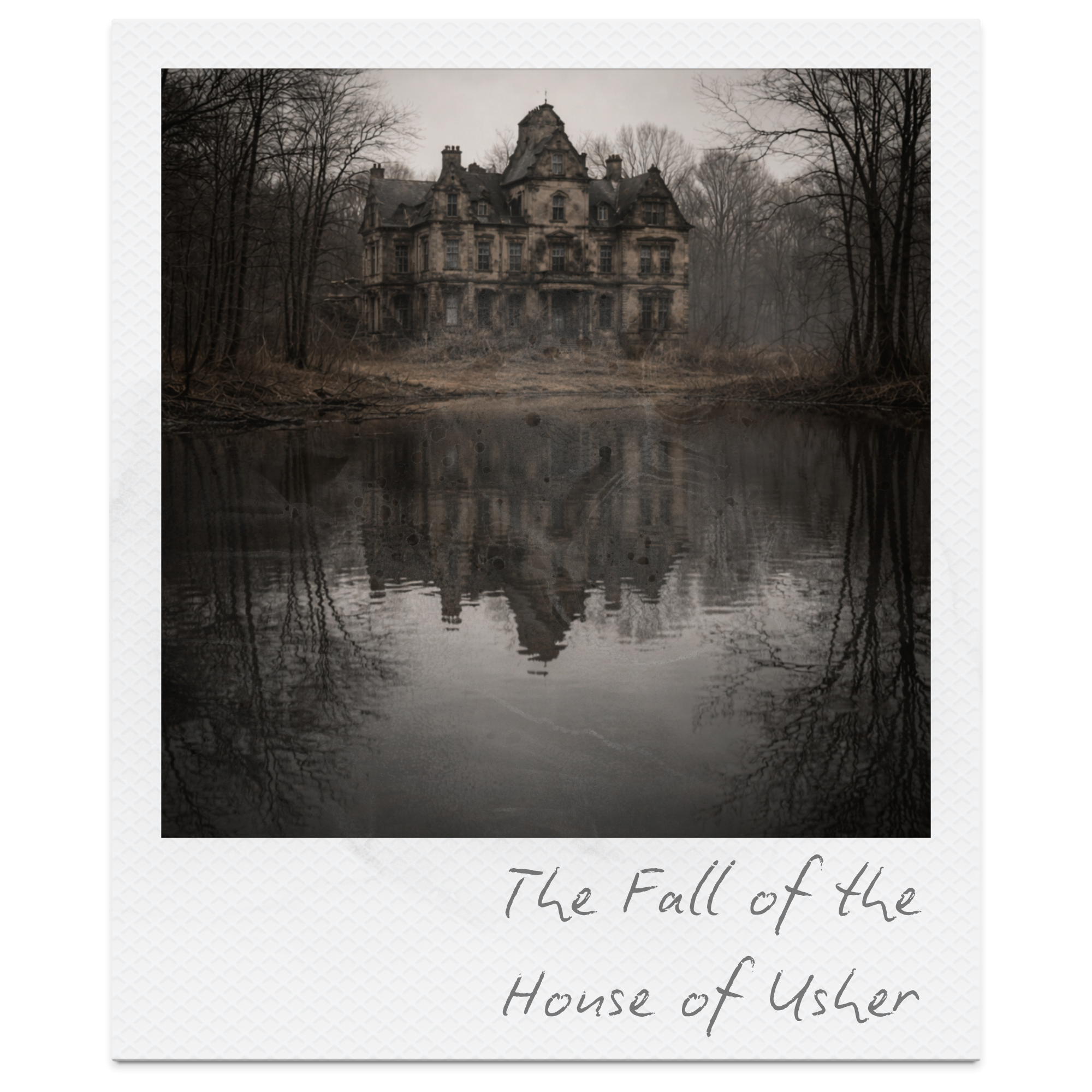
◆ The Fall of the House of Usher – A decaying structure mirrors psychological and familial collapse, reinforcing the link between architecture and internal state
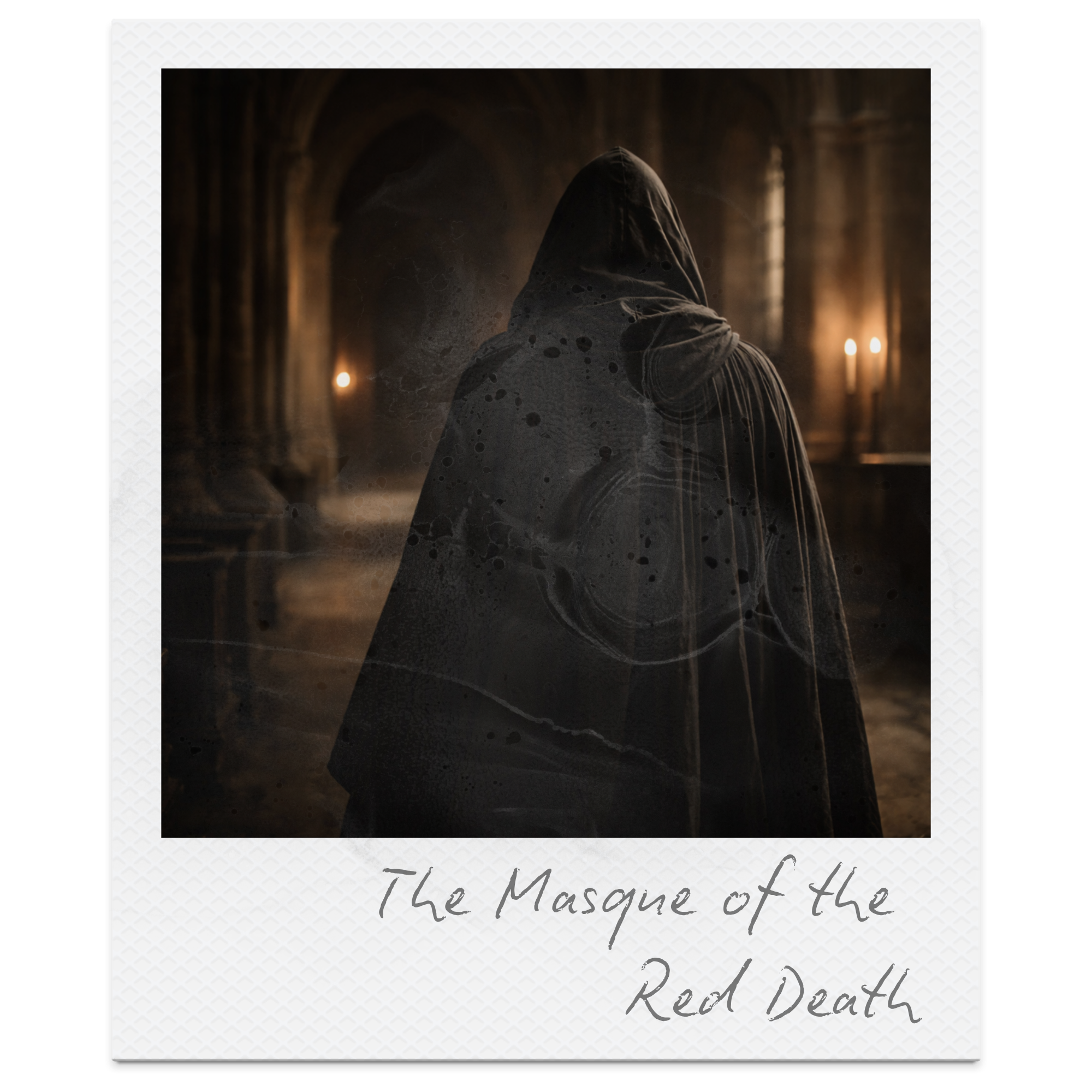
◆ The Masque of the Red Death – Explores death as an inescapable force, where illusion and control ultimately fail
◆ The Raven – Uses repetition and sound to create psychological entrapment and the persistence of grief
◆ The Bells – Demonstrates how sound and rhythm construct meaning, shifting from harmony to chaos
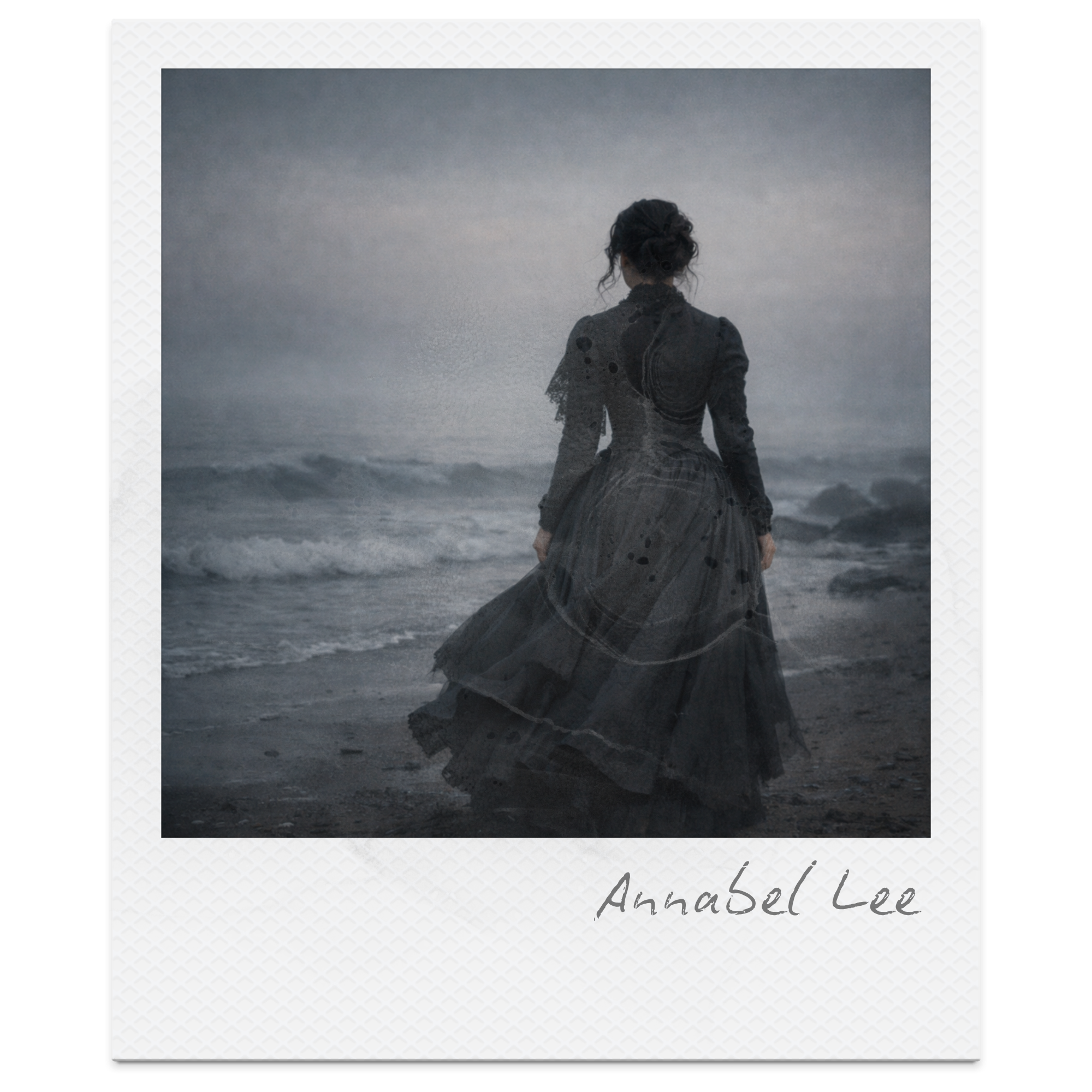
◆ Annabel Lee – Presents death in a romanticised, mythic form, contrasting with the colder, more symbolic treatment in The City in the Sea
Wider Literary Comparisons
◆ Ozymandias – Shelley explores the illusion of permanence and the inevitability of decay, with human power reduced to ruin
◆ The Waste Land – Eliot presents a fragmented, lifeless landscape reflecting cultural and spiritual collapse
◆ The Kraken – Tennyson explores a submerged, otherworldly existence, where the sea conceals something vast and unsettling
Final Thoughts
The City in the Sea endures as one of Poe’s most striking explorations of death, illusion, and the collapse of human grandeur, not through narrative, but through atmosphere, structure, and symbolic intensity. The poem’s power lies in its ability to construct a world that feels both visually rich and profoundly empty, where civilisation remains in form but has been stripped of all life and meaning.
At its core, the poem challenges the idea of permanence. The city appears stable, even beautiful, yet it exists in a state of suspended decay, ultimately revealed as fragile and destined to fall. This tension between appearance and reality runs throughout the poem, reinforcing Poe’s broader fascination with the instability of human perception and the inevitability of decline.
Perhaps most unsettling is the poem’s tone. There is no panic, no resistance—only a quiet, controlled descent. Death is not presented as an interruption, but as a governing force, shaping and containing the world itself. This calm acceptance intensifies the poem’s impact, leaving the reader with a vision of existence defined not by life, but by inevitable surrender.
To explore more of Poe’s work and recurring themes, visit the Edgar Allan Poe Hub, or continue your study of related texts and ideas in the Literature Library.
Choose Your Next Text