The Tell-Tale Heart by Edgar Allan Poe: Summary, Themes, Madness & Analysis
The Tell-Tale Heart by Edgar Allan Poe is a chilling work of gothic fiction that explores madness, guilt, obsession, and the unreliability of perception. Through its intense first-person narration, the story draws readers into the disturbed mind of a speaker who insists on their sanity while calmly recounting a calculated murder. The result is a deeply unsettling psychological portrait where logic and insanity blur, and where the true horror lies not in the act itself, but in the mind that justifies it.
Beyond its surface narrative, the story becomes a powerful exploration of conscience, control, and the limits of rational thought. Poe exposes how attempts to impose order—through precision, routine, and reasoning—ultimately collapse under the weight of internal guilt. The narrator’s obsessive focus on the old man’s eye, and later the imagined heartbeat, reflects a deeper struggle between suppression and psychological exposure. Read alongside other works in the Edgar Allan Poe Hub and connected analyses within the Literature Library, The Tell-Tale Heart stands as a defining example of how gothic setting, narrative voice, and psychological tension converge to create meaning.

Context of The Tell-Tale Heart
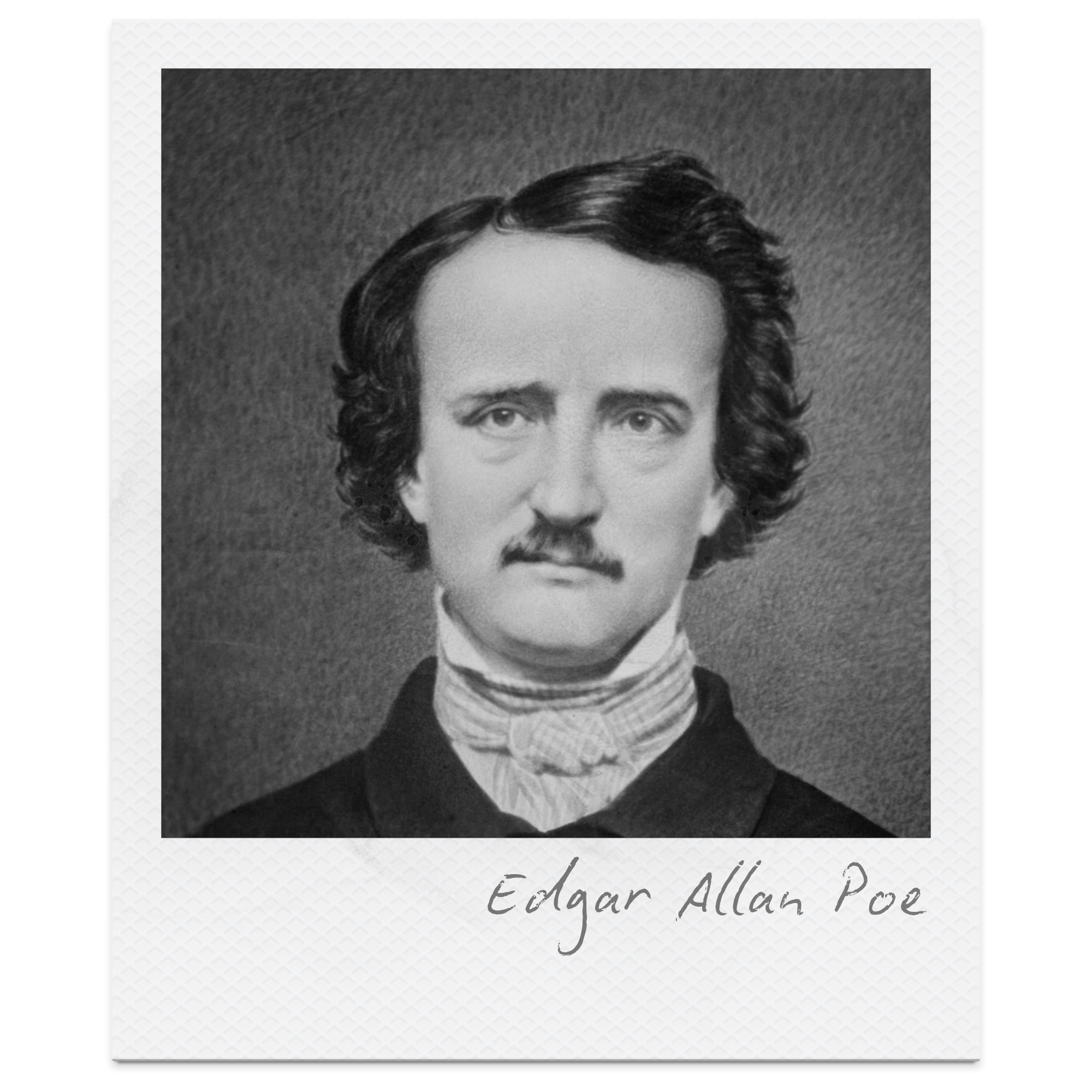
Edgar Allan Poe’s The Tell-Tale Heart reflects his fascination with the human mind under pressure, particularly the blurred boundary between sanity and madness. Writing during the rise of psychological inquiry in the 19th century, Poe was deeply interested in how individuals justify irrational behaviour through distorted logic. His narrators often insist on their rationality while revealing the opposite, mirroring contemporary anxieties about mental instability, perception, and control. This story fits squarely within Poe’s wider body of work, where internal states—rather than external threats—become the true source of horror. For a broader understanding of these influences, see the Edgar Allan Poe Context Post.
The story is also shaped by the conventions of Gothic fiction, but Poe redefines the genre by shifting terror inward. Instead of castles or supernatural forces, the horror emerges from ordinary domestic space and psychological intensity. The claustrophobic bedroom setting, the fixation on the old man’s eye, and the obsessive repetition of nightly rituals all reflect themes of surveillance, control, and the inevitability of guilt. In this sense, The Tell-Tale Heart becomes less about murder and more about the impossibility of escaping one’s own conscience, aligning with wider gothic concerns about hidden corruption, moral decay, and the exposure of inner truth.
The Tell-Tale Heart: At a Glance
Form: Short story / Gothic fiction
Mood: Claustrophobic, obsessive, intense
Central tension: The narrator’s insistence on sanity versus the clear evidence of psychological instability
Core themes: Madness, guilt, obsession, perception vs reality, control, conscience
One-sentence meaning: Attempts to control and conceal wrongdoing collapse under the psychological force of guilt, revealing that the mind itself cannot be deceived.
Quick Summary of The Tell-Tale Heart
The story is narrated by an unnamed speaker who insists they are not mad, despite admitting to murdering an old man. The narrator claims to love the old man and has no desire for his wealth, but becomes fixated on his “vulture eye,” which they find unbearable. Determined to rid themselves of the eye, the narrator carefully plans the murder, visiting the old man’s room each night at midnight and watching him sleep.
On the eighth night, the plan is put into action. The narrator accidentally makes a noise, waking the old man, who lies in terror in the darkness. When the narrator finally reveals a thin beam of light onto the eye and hears the old man’s heart beating louder and louder, they become overwhelmed and kill him, dismembering the body and hiding it beneath the floorboards.
When the police arrive to investigate a reported shriek, the narrator remains calm and confident, even placing their chair directly above the concealed body. However, as they speak with the officers, they begin to hear a growing sound—a heartbeat. Convinced that the police can hear it too and are mocking them, the narrator breaks down and confesses, revealing that the sound is the imagined beating of the old man’s heart, driven by their overwhelming guilt.
Title, Form, Structure, and Narrative Voice
This section explores how Poe constructs meaning through title, narrative form, structural progression, and voice, revealing that the story’s true horror lies not in the act of murder, but in the psychological mechanisms of self-deception and exposure. Each element works to destabilise the narrator’s claim to rational control, ultimately demonstrating that the mind cannot sustain its own lies.
Title
The title The Tell-Tale Heart foregrounds the idea of involuntary confession and psychological betrayal. The phrase “tell-tale” implies something that reveals truth despite attempts to conceal it, immediately undermining the narrator’s insistence on control and sanity.
Crucially, the “heart” operates on multiple levels:
◆ Literal → the old man’s heart, associated with life and death
◆ Psychological → the narrator’s conscience, which cannot be silenced
◆ Symbolic → an internal force of truth that resists repression
The title therefore reframes the narrative: this is not a story about murder, but about the inevitability of self-exposure, where the mind becomes both perpetrator and witness.
Form and Structure
Poe employs a first-person gothic monologue, resembling a confession or testimony, though its intended audience remains ambiguous. This ambiguity reinforces the idea that the narrator is attempting to justify themselves, rather than simply recount events.
Structurally, the narrative follows a recognisable pattern, but with psychological distortion:
◆ Exposition → The narrator asserts sanity while introducing the obsessive fixation on the “vulture eye”
◆ Rising Action → The repeated nightly surveillance establishes a ritualistic pattern, reflecting compulsion and control
◆ Climax → The murder occurs not out of necessity, but in response to the unbearable intensity of the heartbeat, linking violence to psychological overload
◆ Falling Action → The concealment of the body suggests restored order and mastery
◆ Resolution → The narrative collapses into confession, driven by auditory hallucination and overwhelming guilt
What elevates this structure is its alignment with the narrator’s mental state: the story mimics a movement from constructed rationality → obsessive repetition → sensory overload → collapse.
This creates a form of psychological realism, where structure itself becomes a reflection of cognitive breakdown.
Narrative Voice
The first-person narrative voice is central to the story’s effect, creating both intimacy and instability. The narrator directly addresses the reader (“you”), attempting to control interpretation, but this only heightens their unreliability.
Key features of the voice include:
◆ Defensive rationalisation → repeated insistence on sanity reveals anxiety rather than control
◆ Fragmented syntax and punctuation → mirrors disordered thinking and escalating tension
◆ Heightened sensory language → especially sound, reinforcing the narrator’s claim of “over-acuteness”
◆ Contradiction and self-undermining logic → exposes the gap between perceived reason and actual madness
From a psychological perspective, the narrator demonstrates traits associated with obsessive fixation and paranoia, but Poe resists clinical certainty. Instead, the voice forces readers to confront a more unsettling idea: that madness can present itself through the language of reason.
Setting as Structure
Although explored in detail later, it is crucial to recognise here that setting is not merely a backdrop, but a structural force. The narrative is spatially compressed, moving inward from the house → bedroom → darkness → beneath the floorboards, mirroring a descent into the subconscious.
This inward movement aligns with the narrator’s psychological trajectory:
◆ external control → internal fixation → buried truth → forced revelation
The final confession occurs not because of external pressure, but because the narrator can no longer contain what has been symbolically buried.
This is where Poe surpasses many Gothic writers: the setting does not simply create atmosphere—it becomes a mechanism through which psychological truth is exposed.
Setting of The Tell-Tale Heart
Poe’s setting in The Tell-Tale Heart is deliberately claustrophobic, minimal, and psychologically charged, transforming an ordinary domestic space into a site of obsession, surveillance, and internal collapse. Rather than relying on traditional gothic locations, Poe situates horror within the intimate, enclosed environment of the home, reinforcing the idea that the true threat is not external, but rooted in the human mind.
The physical setting is strikingly limited. The action takes place almost entirely within the old man’s house, and more specifically, within his bedroom, described as “black as pitch with the thick darkness.” This absence of light is crucial: it reflects both the narrator’s desire for concealment and the wider theme of moral blindness. Darkness here is not simply atmospheric—it becomes a condition that allows the narrator’s distorted logic to operate unchecked.
The narrator’s repeated movement through space transforms the setting into a structure of ritual and control. Each night, they open the door “oh, so gently!” and spend an hour placing their head into the room. This slow, deliberate navigation of space reflects an obsessive need for precision and dominance, turning the bedroom into a site of psychological performance rather than rest. The setting is therefore not passive—it is actively shaped by the narrator’s compulsion.
The most significant spatial detail is the division between what is visible and hidden. The narrow beam of light—“a single thin ray”—that falls upon the old man’s eye isolates a single point of focus, reinforcing the narrator’s fixation. Everything else is obscured, suggesting a mind that cannot process reality as a whole, but instead becomes trapped in fragmented perception.
This fragmentation is taken further through the concealment of the body beneath the floorboards. The narrator proudly insists that the corpse is hidden so perfectly that “no human eye—not even his—could have detected any thing wrong.” The house itself becomes a metaphor for the mind: a surface of apparent order concealing something deeply disturbing beneath. The floorboards function as a boundary between conscious control and repressed truth.
However, this boundary ultimately fails. The sound of the heartbeat—“a low, dull, quick sound—much such a sound as a watch makes when enveloped in cotton”—emerges from beneath the floor, symbolically breaking through the divide between hidden and exposed. The setting, which initially enables concealment, becomes the mechanism of revelation. The house no longer protects the narrator; instead, it amplifies their guilt and paranoia.
Crucially, Poe collapses the distinction between environment and psychology. The darkened room, the enclosed space, and the hidden body all mirror the narrator’s internal state: controlled on the surface, but increasingly unstable beneath. The setting therefore operates as an extension of the narrator’s mind, demonstrating that space in gothic fiction is never neutral—it is a reflection of inner truth.
In this way, The Tell-Tale Heart redefines gothic setting. Horror does not reside in distant castles or supernatural landscapes, but within the ordinary spaces we inhabit, suggesting that the most terrifying environments are those shaped by human perception, obsession, and guilt.
Characters in The Tell-Tale Heart
Poe’s characters in The Tell-Tale Heart are deliberately minimal, allowing the narrative to function as an intense study of psychology, perception, and moral collapse. Rather than fully developed individuals, the characters operate as symbolic extensions of theme, particularly the tension between control and guilt, and between rationality and madness.
The Narrator
The unnamed narrator dominates the story, presenting themselves as calm and rational while simultaneously revealing profound psychological instability. From the opening line—“why will you say that I am mad?”—the narrator attempts to control the reader’s perception, but this defensive tone immediately signals unreliability.
The narrator’s defining trait is their obsessive fixation on the old man’s eye: “I think it was his eye! yes, it was this!” This repetition reflects a mind caught in compulsion, unable to move beyond a single idea. Crucially, the narrator insists that their actions are logical, describing their process as “how wisely I proceeded—with what caution—with what foresight.” However, this emphasis on method only heightens the sense of madness disguised as reason.
Psychologically, the narrator demonstrates a fractured moral awareness. They claim affection—“I loved the old man”—yet proceed to murder him, revealing a disconnect between emotion and action. This contradiction suggests that the narrator is not devoid of feeling, but rather unable to process it coherently.
The narrator’s heightened sensory perception is central to their character. Their claim that “the disease had sharpened my senses” introduces the idea of hyper-awareness, particularly of sound. This culminates in the imagined heartbeat, which grows “louder—louder—louder!” until it overwhelms them. The repetition mirrors escalating panic, demonstrating how internal guilt manifests as external sensory experience.
Ultimately, the narrator is both perpetrator and victim. While they commit the murder, they are also destroyed by their own conscience. Their final confession—“I admit the deed!—tear up the planks!”—reveals that the true force driving the narrative is not the crime itself, but the psychological impossibility of concealment.
The Old Man
The old man is a largely passive figure, yet he holds immense symbolic significance within the story. He is characterised not through action, but through the narrator’s perception, particularly his “vulture eye—a pale blue eye, with a film over it.” This description transforms him into something unnatural and threatening, despite the lack of evidence that he has done anything wrong.
Importantly, the narrator repeatedly denies any rational motive: “He had never wronged me… For his gold I had no desire.” This positions the old man as an innocent victim, reinforcing the irrationality of the narrator’s obsession. The violence is therefore not justified by circumstance, but driven entirely by perception and projection.
The old man’s most powerful moment comes during the murder scene, where he lies awake in terror. His suppressed fear—“the groan of mortal terror”—humanises him, contrasting sharply with the narrator’s emotional detachment. This moment exposes the reality of the crime, disrupting the narrator’s attempt to frame it as controlled or rational.
Symbolically, the old man represents multiple ideas:
◆ The object of obsession, onto which the narrator projects fear
◆ A figure of innocence and vulnerability
◆ A catalyst for the narrator’s psychological unraveling
Even in death, the old man exerts influence through the imagined heartbeat, suggesting that he becomes a manifestation of the narrator’s guilt and conscience.
The Police Officers
The police officers serve a subtle but crucial role in the story. They are presented as calm, polite, and entirely unaware of the crime, described as entering “with perfect suavity.” Their composure contrasts sharply with the narrator’s increasing agitation, highlighting the gap between external reality and internal perception.
Importantly, there is no evidence that the officers suspect anything. The narrator notes that they “chatted pleasantly, and smiled,” reinforcing their normality. However, the narrator interprets this behaviour as mockery, believing “they suspected!—they knew!” This misinterpretation reveals the extent of the narrator’s paranoia, where neutral actions are transformed into perceived threats.
The officers therefore function less as active characters and more as psychological triggers. Their presence intensifies the narrator’s internal conflict, ultimately leading to the confession. They represent external order and rationality, which the narrator cannot withstand.
Together, these characters create a tightly controlled psychological dynamic. The narrator embodies distorted perception, the old man represents projected fear and guilt, and the officers serve as catalysts for exposure and collapse. Through this minimal cast, Poe demonstrates that the most powerful conflicts are not between people, but within the human mind itself.
Themes in The Tell-Tale Heart
Poe’s The Tell-Tale Heart explores a tightly interwoven set of themes centred on psychological instability, moral conflict, and distorted perception. Rather than presenting these ideas separately, the story shows how madness, guilt, and obsession feed into one another, ultimately leading to the narrator’s collapse.
Madness
Madness is the most explicit theme, but Poe complicates it by presenting a narrator who insists on their own sanity. From the opening—“why will you say that I am mad?”—the narrator frames madness as a matter of perception rather than fact.
However, their behaviour contradicts this claim. The obsessive focus on the eye, the elaborate nightly ritual, and the exaggerated sensory experiences all suggest a mind operating outside rational norms. The narrator’s belief that their actions demonstrate intelligence—“would a madman have been so wise as this?”—ironically reinforces their instability.
Poe therefore presents madness not as chaos, but as misguided logic taken to extremes, where reason becomes a tool for justifying irrational behaviour.
Guilt
Guilt operates as the driving force of the narrative’s resolution, transforming the story from a tale of calculated murder into one of psychological collapse. Initially, the narrator appears free from remorse, confidently concealing the body and welcoming the police.
However, this illusion of control disintegrates with the emergence of the heartbeat, described as “a low, dull, quick sound.” Whether real or imagined, the sound represents the narrator’s inability to suppress internal guilt.
As the sound grows “louder—louder—louder!,” it overwhelms the narrator’s composure, leading to confession. Poe suggests that guilt is not imposed externally, but arises from within, making it inescapable and self-destructive.
Obsession
The narrator’s fixation on the old man’s eye is a clear example of obsession overriding reason. The eye is described as “the eye of a vulture,” transforming a physical feature into something symbolic and threatening.
Importantly, the narrator acknowledges that there is no logical motive—“Object there was none. Passion there was none”—yet continues to act. This highlights the irrational nature of obsession, where thought becomes circular and consuming.
The repetitive structure of the nightly visits reinforces this theme, showing how obsession creates patterns of behaviour that are both ritualistic and compulsive.
Perception vs Reality
A central tension in the story lies between what is real and what is perceived. The narrator believes they possess heightened senses—“the disease had sharpened my senses”—yet this supposed clarity leads to distorted interpretations.
The most significant example is the heartbeat. While the narrator is convinced it is real and audible to others, the police remain unaffected. This suggests that the sound exists only within the narrator’s mind, highlighting the unreliability of subjective experience.
Poe challenges the idea of objective truth, suggesting that reality is shaped—and often distorted—by individual perception.
Control
Control is a theme that initially appears to define the narrator. Their methodical approach—opening the door “oh, so gently!” and planning each step—creates an illusion of precision and mastery.
Even after the murder, the narrator believes they have achieved complete control, stating that “no human eye… could have detected any thing wrong.” However, this control is superficial. The narrator cannot control their own mind, particularly the intrusive sound of the heartbeat.
Poe demonstrates that attempts to impose external order cannot suppress internal instability, making control ultimately fragile and temporary.
Conscience
Closely linked to guilt, the theme of conscience is embodied in the persistent heartbeat, which functions as a symbolic representation of moral awareness. The narrator may attempt to rationalise the murder, but their conscience cannot be silenced.
The final confession—“I admit the deed!—tear up the planks!”—is not prompted by external pressure, but by an overwhelming internal force. The conscience operates independently of reason, exposing truth even when the individual seeks to hide it.
Poe suggests that conscience is both inescapable and authoritative, acting as a final check against self-deception.
The Uncanny Domestic
Poe transforms the familiar setting of the home into something deeply unsettling, creating a sense of the uncanny—where the ordinary becomes strange. The bedroom, a space associated with safety and rest, becomes a site of surveillance, fear, and violence.
Details such as the darkened room, the slow opening of the door, and the hidden body beneath the floorboards all contribute to this effect. The horror lies not in supernatural elements, but in the realisation that danger exists within everyday spaces.
This reinforces the idea that the most disturbing threats are not external, but embedded within human behaviour and perception.
Together, these themes create a unified exploration of the human mind under strain. Poe shows that madness, guilt, and obsession are not isolated forces, but interconnected elements that erode the illusion of control, ultimately revealing the truth that cannot be hidden.
Key Quotes from The Tell-Tale Heart
Poe’s language in The Tell-Tale Heart is tightly controlled yet psychologically revealing, with key moments exposing the narrator’s obsession, instability, and ultimate collapse. The following quotes are organised by character, setting, symbolism, and thematic focus, allowing for precise analysis across the text.
Characterisation of the Narrator
“why will you say that I am mad?”
◆ Rhetorical question
◆ Immediately defensive, suggesting anxiety rather than confidence
◆ Establishes unreliable narration from the outset
“would a madman have been so wise as this?”
◆ Irony
◆ Attempts to prove sanity through logic
◆ Reveals madness disguised as reason
“I loved the old man”
◆ Juxtaposition (love vs murder)
◆ Highlights contradiction in the narrator’s psyche
◆ Suggests fractured moral understanding
Characterisation of the Old Man
“the eye of a vulture—a pale blue eye, with a film over it”
◆ Simile / imagery
◆ Dehumanises the old man
◆ Reflects the narrator’s distorted perception
“He had never wronged me… For his gold I had no desire”
◆ Direct statement / negation
◆ Removes rational motive
◆ Emphasises irrational obsession
“the groan of mortal terror”
◆ Emotive language
◆ Humanises the victim
◆ Contrasts with narrator’s detachment
Setting and Atmosphere
“black as pitch with the thick darkness”
◆ Simile / gothic imagery
◆ Creates claustrophobic, oppressive atmosphere
◆ Symbolises moral blindness and concealment
“oh, so gently!”
◆ Exclamatory repetition
◆ Reflects obsessive control within confined space
◆ Reinforces tension and ritualistic movement
“no human eye—not even his—could have detected any thing wrong”
◆ Irony
◆ Suggests complete control over space
◆ Foreshadows eventual exposure
Symbolism
“a single thin ray fell upon the vulture eye”
◆ Light imagery / symbolism
◆ Isolates the object of obsession
◆ Suggests narrow, fragmented perception
“It is the beating of his hideous heart!”
◆ Auditory imagery / symbol
◆ Represents guilt and conscience
◆ Marks the collapse of control
“a low, dull, quick sound—much such a sound as a watch makes when enveloped in cotton”
◆ Simile
◆ Links sound to time
◆ Reinforces inevitability of exposure and mortality
Madness and Obsession
“I think it was his eye! yes, it was this!”
◆ Repetition / fragmented syntax
◆ Reflects obsessive fixation
◆ Shows narrowing of thought
“Object there was none. Passion there was none.”
◆ Parallel structure
◆ Emphasises lack of rational motive
◆ Highlights irrational nature of obsession
“very, very slowly”
◆ Repetition
◆ Suggests extreme control
◆ Ironically reveals compulsive behaviour
Guilt and Conscience
“louder—louder—louder!”
◆ Repetition / crescendo
◆ Builds psychological intensity
◆ Reflects overwhelming guilt
“they suspected!—they knew!”
◆ Exclamatory repetition
◆ Shows paranoia and projection
◆ Blurs reality vs perception
“I admit the deed!—tear up the planks!”
◆ Exclamatory confession
◆ Climactic release of guilt
◆ Demonstrates inevitability of self-exposure
Perception vs Reality
“the disease had sharpened my senses—not destroyed—not dulled them”
◆ Defensive tone / repetition
◆ Suggests heightened perception
◆ Actually signals distorted reality
“I heard all things in the heaven and in the earth. I heard many things in hell.”
◆ Hyperbole
◆ Indicates sensory overload
◆ Blurs line between reality and imagination
These quotes collectively reveal how Poe constructs a narrative driven by psychological intensity, symbolic detail, and thematic cohesion, where language itself becomes a tool for exposing the narrator’s inner truth.
Key Techniques in The Tell-Tale Heart
Poe’s The Tell-Tale Heart is driven by a carefully controlled set of literary and structural techniques that work together to create intense psychological tension. Rather than relying on external action, Poe uses language, form, and perspective to immerse the reader in the narrator’s distorted consciousness, where meaning emerges through voice, symbolism, and structure.
◆ Unreliable First-Person Narration – The entire story is filtered through a narrator who insists on their sanity, yet continually contradicts themselves. This creates a gap between what is said and what is revealed, forcing the reader to actively interpret the truth. The technique generates tension by making the narrator both guide and source of distortion.
◆ Repetition – Poe repeatedly uses words and phrases such as “very, very slowly” and “louder—louder—louder!” to mirror the narrator’s obsessive thought patterns. This creates rhythm and intensity while reflecting the cyclical nature of fixation and psychological escalation.
◆ Fragmented Syntax and Punctuation – The use of dashes, exclamations, and short, broken sentences mimics the narrator’s disordered thinking. This technique disrupts the flow of the narrative, reinforcing the sense of instability and emotional volatility.
◆ Symbolism – Key elements operate symbolically rather than literally:
The eye represents perception, judgment, and internal fear
The heartbeat symbolises guilt and conscience
The floorboards represent concealment and repression
These symbols allow Poe to explore abstract ideas through concrete imagery, deepening the psychological dimension of the text.
◆ Auditory Imagery – Sound is central to the story, particularly the recurring motif of the heartbeat. Descriptions such as “a low, dull, quick sound” intensify the sensory experience, drawing the reader into the narrator’s heightened awareness. This technique blurs the line between external reality and internal perception.
◆ Gothic Atmosphere through Minimalism – Unlike traditional gothic settings, Poe uses a restricted, domestic environment to create tension. Darkness, silence, and confined space generate a sense of claustrophobia, proving that horror can emerge from the ordinary rather than the supernatural.
◆ Irony – The narrator’s belief in their own rationality and control is deeply ironic. Their careful planning is presented as evidence of sanity, yet it ultimately highlights their madness. This contrast between intention and reality reinforces the theme of self-deception.
◆ Structural Crescendo – The narrative builds in intensity through a gradual escalation of events, culminating in the heartbeat scene. The increasing pace and volume of the sound create a sense of inevitability, driving the story toward its final confession.
◆ Direct Address – The narrator frequently speaks directly to the reader (“you should have seen me”), attempting to control interpretation. This creates an uncomfortable intimacy, making the reader feel implicated while also highlighting the narrator’s need for validation.
◆ Motif of Time – References to midnight, the repeated nightly visits, and the comparison of the heartbeat to a watch introduce a subtle motif of time. This reinforces the inevitability of death, exposure, and psychological collapse, suggesting that the narrator cannot escape the passage of time or its consequences.
Together, these techniques demonstrate Poe’s mastery of psychological gothic writing, where tension is not driven by plot alone, but by the intricate interplay of language, perception, and internal conflict.
Alternative Interpretations of The Tell-Tale Heart
While The Tell-Tale Heart is often read as a study of madness and guilt, the text invites multiple interpretations depending on the critical lens applied. Poe deliberately leaves key elements unresolved, allowing readers to explore the narrative through psychological, moral, symbolic, and philosophical perspectives.
Psychological Interpretation: Mind Under Strain
From a psychological perspective, the story can be read as a portrayal of obsession, paranoia, and cognitive distortion. The narrator’s repetitive actions—returning each night at midnight, opening the door “very, very slowly”—suggest a compulsive need for control and certainty.
The fixation on the eye reflects an intrusive thought that cannot be dismissed, while the heartbeat represents the externalisation of internal anxiety or guilt. The narrator’s insistence on sanity becomes part of the disorder itself, revealing how the mind can construct false logic to sustain instability.
Moral Interpretation: Conscience and Self-Exposure
This reading positions the story as a moral exploration of guilt and conscience. The narrator may successfully conceal the body, but cannot escape the internal consequences of their actions.
The heartbeat—“a low, dull, quick sound”—functions as a symbolic expression of moral awareness, growing louder as the narrator attempts to suppress it. The final confession suggests that conscience operates independently of reason, ultimately forcing truth into the open.
Symbolic Interpretation: The Eye as Surveillance
From a symbolic perspective, the old man’s eye can be interpreted as a representation of judgment, surveillance, or perceived scrutiny. Described as “the eye of a vulture,” it becomes something the narrator feels watched or threatened by, even without justification.
The murder can therefore be seen as an attempt to destroy this sense of being observed. However, the persistence of the heartbeat suggests that internal surveillance (conscience) cannot be eliminated, even if the external object is removed.
Philosophical Interpretation: Reality and Perception
This interpretation focuses on the instability of truth and perception. The narrator believes their senses are heightened—“the disease had sharpened my senses”—yet this supposed clarity leads to distortion rather than insight.
The ambiguity of the heartbeat raises a key question: is reality defined by what is objectively true, or by what is experienced as real? Poe challenges the reader to consider how easily perception can override logic, creating a world where certainty is impossible.
Gothic Interpretation: Horror Within the Ordinary
From a gothic perspective, the story redefines traditional horror by locating it within the domestic and familiar. There are no supernatural elements—only a house, a bedroom, and a mind under strain.
The darkness, silence, and enclosed space create a sense of claustrophobia, while the true horror emerges from the narrator’s psychological state. This suggests that gothic terror does not require external threats, but can arise from the hidden instability within everyday life.
Together, these interpretations demonstrate the richness of Poe’s writing. Rather than offering a single meaning, The Tell-Tale Heart operates as a text that demands interpretation, revealing new layers depending on how it is read.

Teaching Ideas for The Tell-Tale Heart
The Tell-Tale Heart offers rich opportunities to explore psychology, narrative voice, and gothic technique, making it ideal for both analytical and creative classroom work. The activities below are designed to deepen understanding while encouraging independent interpretation and critical thinking.
1. Unreliable Narrator Focus
This activity helps students move beyond simply identifying the narrator as “mad” and instead analyse how Poe constructs unreliability through language and structure. It encourages close reading and challenges students to interrogate voice as a persuasive tool.
◆ How does Poe make the narrator seem convincing yet untrustworthy?
◆ Track moments where the narrator claims sanity vs where language suggests madness
◆ How does direct address (“you”) manipulate the reader?
Push students to identify the gap between intention and effect, encouraging precise quotation analysis.
2. Guilt and Conscience Exploration
This task focuses on one of the most exam-relevant ideas in the text: the relationship between guilt, conscience, and perception. It works well as a bridge between discussion and analytical writing.
◆ Is the heartbeat real, imagined, or symbolic?
◆ At what point does control shift into panic?
◆ Does the narrator confess because of fear—or because of conscience?
This can be run as a paired discussion before feeding into a short written response.
3. Analytical Writing + Critical Depth
This activity pushes students beyond formulaic responses, encouraging conceptual, exploratory analysis that engages with ambiguity rather than resolving it too quickly.
Question: How does Poe present the relationship between control and psychological collapse in The Tell-Tale Heart?
Model paragraph:
Poe presents control not as a sign of rationality, but as a fragile construct that ultimately accelerates psychological collapse. The narrator’s obsessive emphasis on precision—“very, very slowly”—initially suggests discipline and method; however, this exaggerated control becomes inseparable from compulsion. Rather than stabilising the mind, it reveals an underlying instability, where order is imposed to suppress something more chaotic beneath. This tension culminates in the auditory motif of the heartbeat, which transforms internal guilt into an externalised force that cannot be regulated or contained. As the sound grows “louder—louder—louder!”, the narrator’s carefully constructed sense of authority disintegrates, suggesting that control in the text is not genuine mastery, but a temporary defence against inevitable psychological exposure.
◆ Students identify where the paragraph moves beyond feature spotting into interpretation
◆ Use a marking grid focused on conceptual argument, precision, and layered analysis
◆ Extend by asking students to offer an alternative interpretation of the same evidence
4. Debate: Madness or Hyper-Rationality?
This debate pushes students into conceptual thinking, encouraging them to move beyond surface interpretations and construct evidence-based arguments about the narrator’s state of mind.
Statement: “The narrator is not mad, but dangerously logical.”
◆ Students prepare arguments using textual evidence
◆ Encourage reference to structure, voice, and method
◆ Extend into a whole-class debate or silent debate format
This works particularly well for developing confidence in argument and interpretation.
5. High-Impact Resource Bundle (Ready-to-Teach)
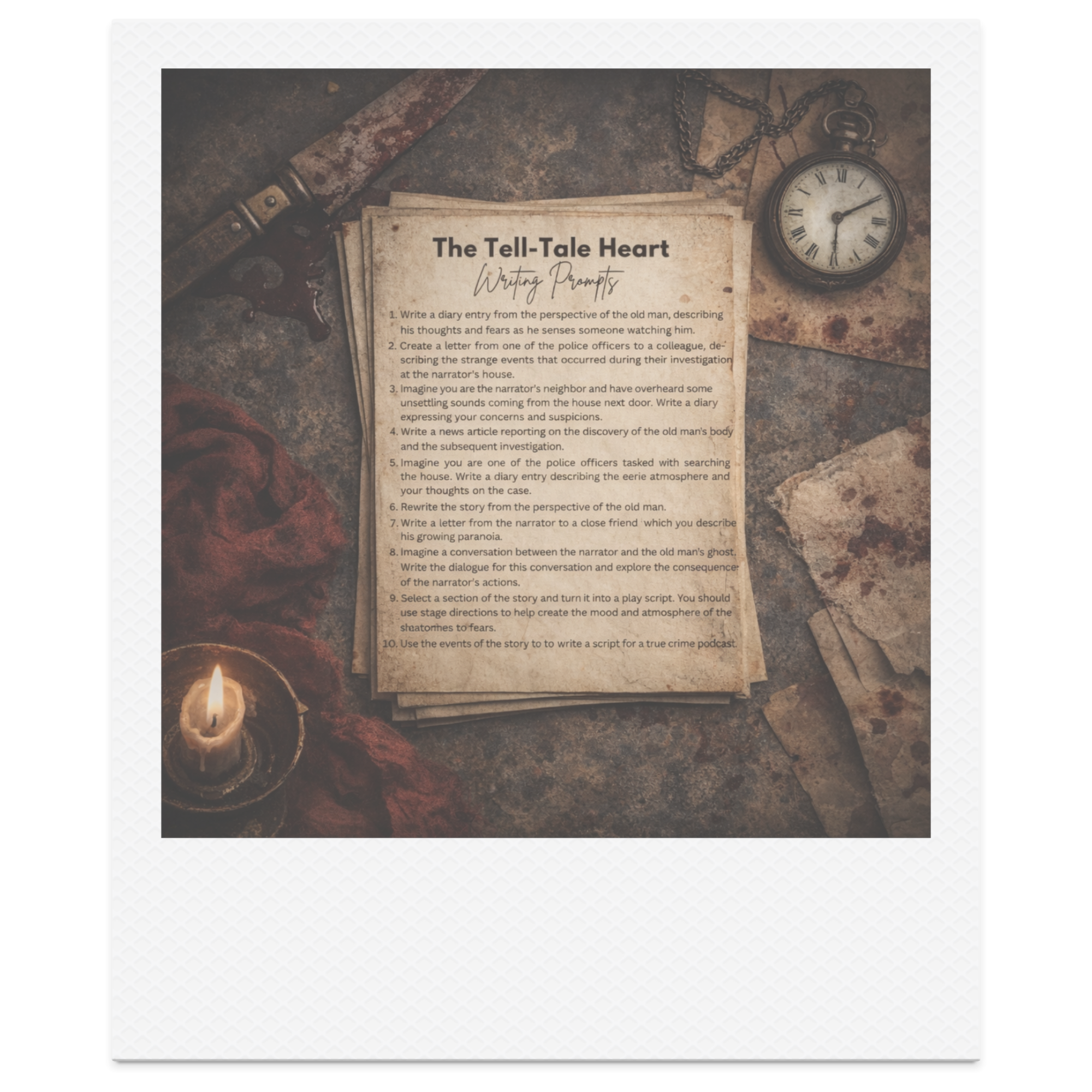
For a more structured approach, our comprehensive Tell-Tale Heart resource bundle allows you to teach the text with depth and variety without building every element from scratch. It brings together analytical tasks, discussion frameworks, creative responses, and retrieval-based activities, all designed to reinforce key ideas like madness, guilt, and paranoia.
With a mix of discussion tools, essay questions, interactive quizzes, and imaginative tasks, it supports both deep analysis and sustained engagement across multiple lessons. It’s particularly effective for maintaining momentum while ensuring students repeatedly return to core themes and techniques from different angles.
6. Creative Writing Extension
This final task allows students to apply Poe’s techniques directly, transforming analysis into creative production. It reinforces understanding of voice, tension, and psychological perspective.
◆ Rewrite the story from the old man’s perspective
◆ Continue the narrative after the confession
◆ Write a monologue in which the narrator attempts to justify their actions to an unseen audience
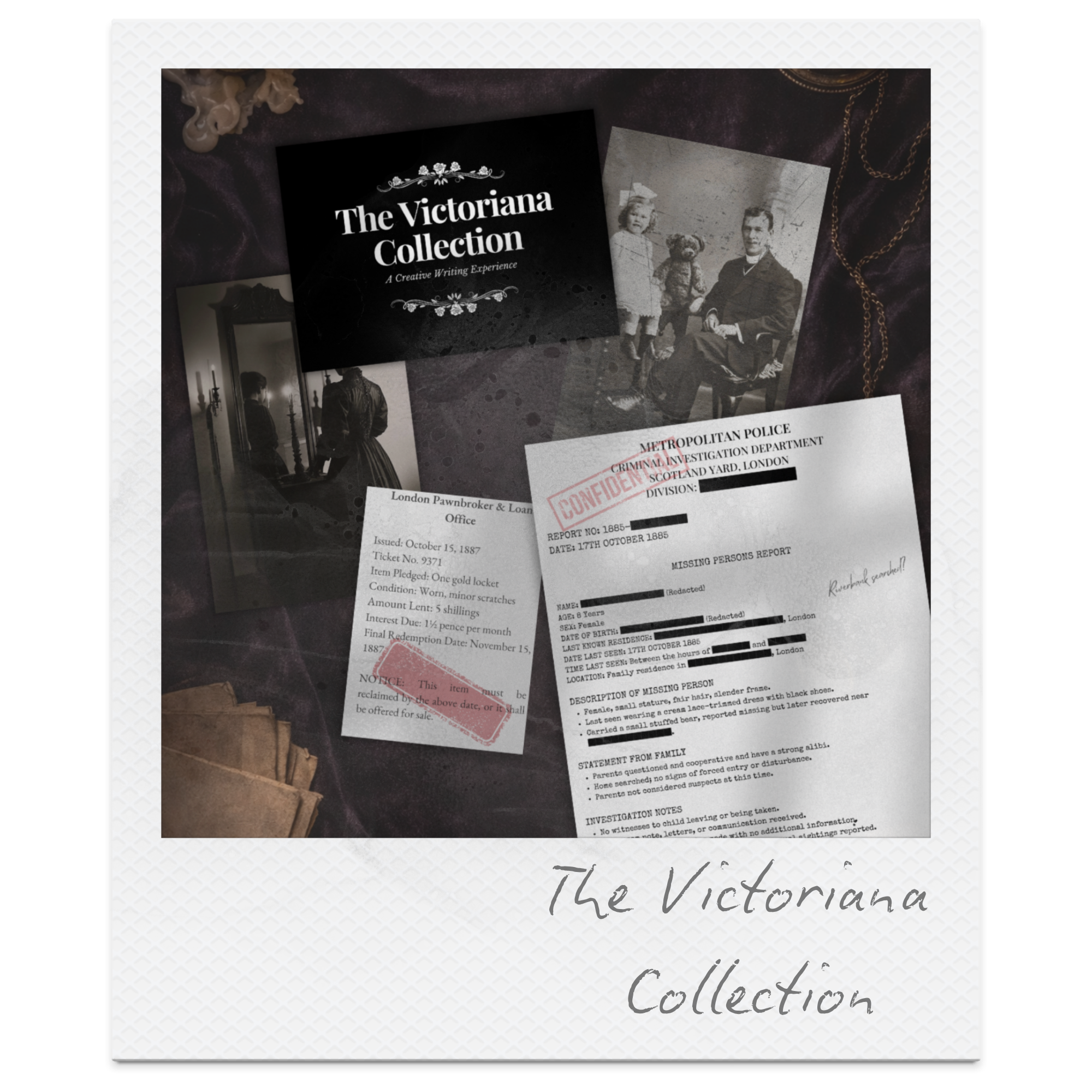
For extended work, link students to the Gothic Writing Hub and the Creative Writing Archive, where they can explore prompt collections centred on obsession, paranoia, and unreliable narration, applying Poe’s methods within their own writing. Below are creative writing resources that fit well with the text.
Go Deeper into The Tell-Tale Heart
This section encourages students to extend their understanding through comparison, thematic links, and wider reading, helping them situate the story within both Poe’s work and the broader literary tradition.
◆ Explore how Poe develops unreliable narrators across different texts
◆ Compare how guilt and conscience operate in different narrative forms
◆ Analyse how gothic settings shift from external landscapes to internal psychology
◆ Check out the Best Poe Texts for the Classroom for a curated list of his most teachable works
Within Poe’s Works
◆ The Black Cat – Another first-person narrator who insists on their sanity while revealing moral collapse, with guilt emerging through symbolic and psychological pressure
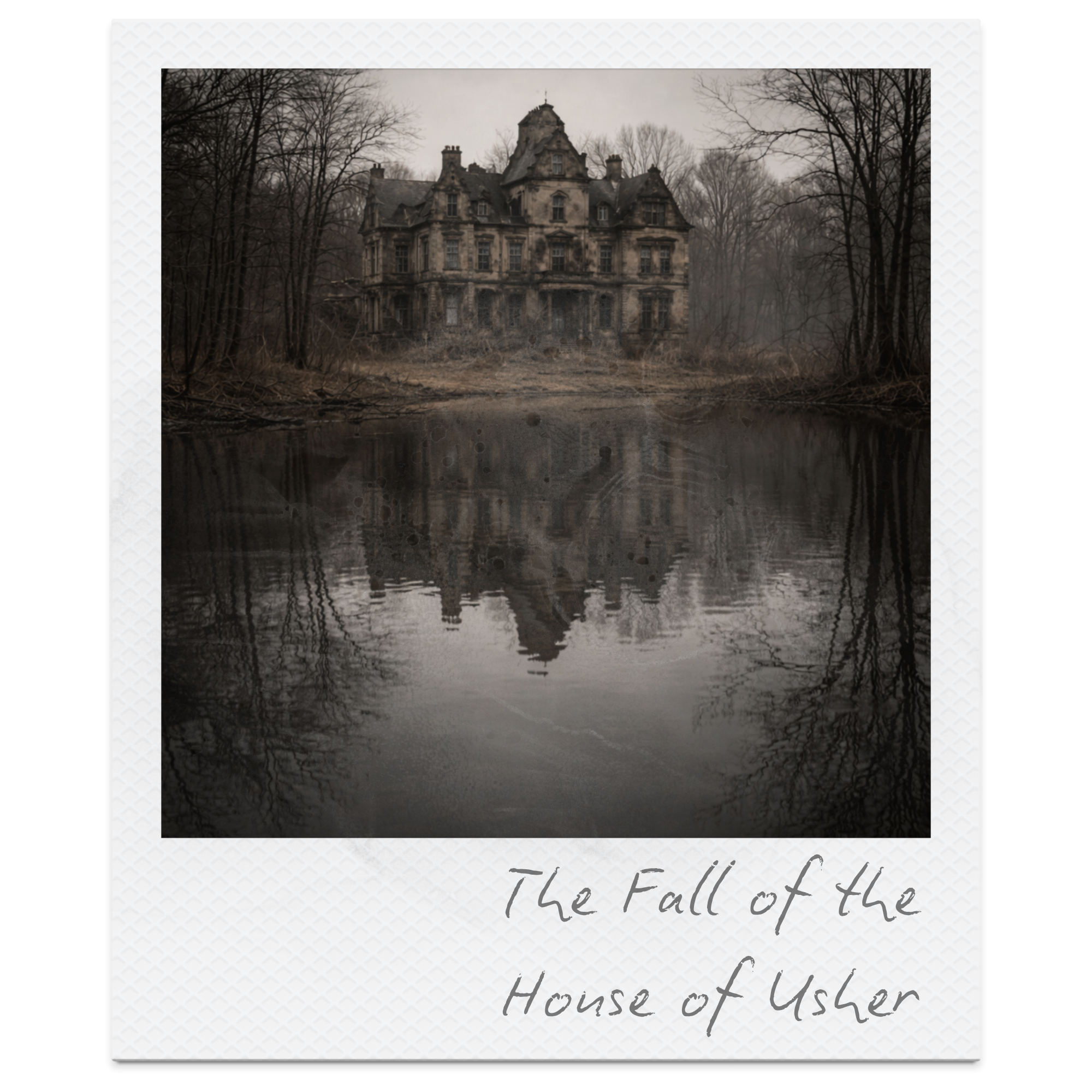
◆ The Fall of the House of Usher – Explores how setting mirrors mental deterioration, offering a useful contrast with the more confined, internalised space of The Tell-Tale Heart
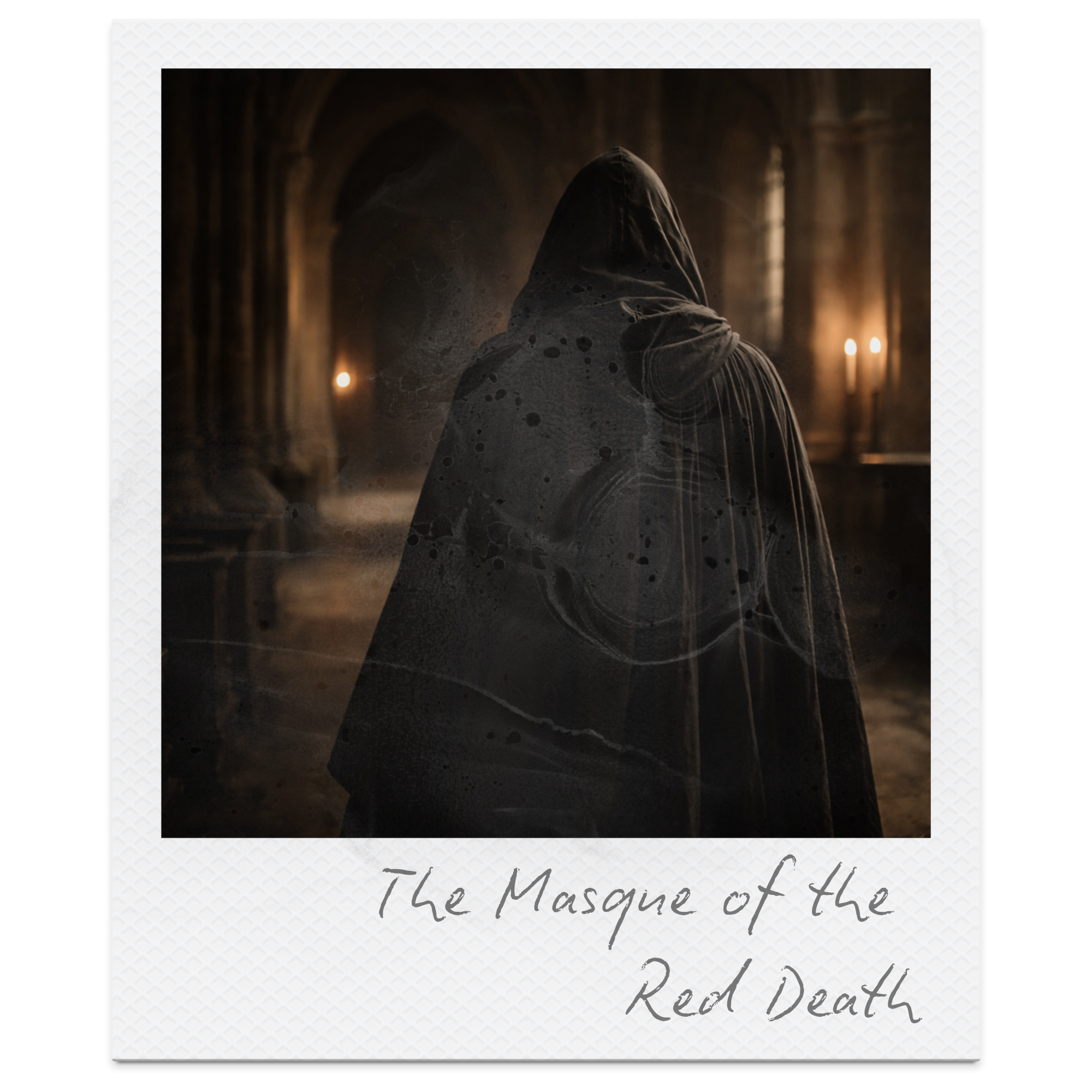
◆ The Masque of the Red Death – Shifts from psychological realism to allegorical gothic, but similarly emphasises the inevitability of death and exposure
These comparisons help students see how Poe repeatedly returns to obsession, perception, and the limits of control, while varying form and scale.
Beyond Poe
◆ Dr Jekyll and Mr Hyde – Explores the division between public self and hidden identity, linking to themes of repression and moral duality
◆ Macbeth – Provides a powerful comparison for guilt manifesting as sensory disturbance, particularly through hallucinations and psychological unraveling
◆ The Yellow Wallpaper – Examines mental instability and unreliable narration, with a similar descent into obsessive perception
◆ Crime and Punishment – Offers a broader philosophical exploration of guilt, conscience, and confession, allowing for more advanced conceptual comparison
These texts allow students to trace how writers across periods explore the same core concerns: guilt, identity, perception, and the human mind under pressure.
By connecting The Tell-Tale Heart to both Poe’s wider work and other literary texts, students can move beyond isolated analysis and begin to develop a more comparative, conceptual understanding of literature—a key skill for higher-level study.
Final Thoughts
The Tell-Tale Heart endures as one of Poe’s most powerful explorations of the human mind under pressure, revealing how madness, guilt, and obsession can distort perception and dismantle the illusion of control. Its brilliance lies in its simplicity: a confined setting, a limited cast, and a single voice—yet from these elements, Poe constructs a narrative of intense psychological depth and lasting unease.
At its core, the story resists certainty. Is the narrator mad, or simply trapped within a logic that has turned inward? Is the heartbeat real, imagined, or symbolic? This ambiguity ensures that the text remains open to multiple interpretations, rewarding close analysis and critical debate.
To explore further, visit the Edgar Allan Poe Hub for more analyses of his key works, and the Literature Library to connect this story to wider themes, authors, and literary movements.
Choose Your Next Text