Notes from the Inkpot
Writing, teaching, creating - one ink-stained idea at a time.




Late Wisdom by George Crabbe: Meaning, Mortality and the Limits of Experience
Late Wisdom by George Crabbe is a thoughtful exploration of ageing, experience, hindsight, and self-knowledge. Through the powerful symbolism of a "maze of error" and a "torch of truth," Crabbe examines the uncomfortable reality that wisdom often arrives only after life's most important mistakes and opportunities have passed. This analysis explores the poem's themes, symbolism, structure, literary techniques, key quotes, and exam-ready insights, revealing how Crabbe transforms a reflection on old age into a deeper meditation on human limitation and the true value of understanding.

Old Man and Very Old Man by Henry James: Summary, Themes & Analysis
Old Man and Very Old Man by Henry James explore ageing, mortality, memory, and the passage of time through two closely connected reflections on later life. Using powerful symbolism, cyclical structures, and philosophical imagery, James examines humanity's lifelong search for fulfilment and understanding. This analysis explores the poems' themes, symbolism, structure, key quotes, and literary methods, revealing how James challenges assumptions about ageing by suggesting that uncertainty and unanswered questions remain with us from childhood to old age.

Excelsior by Henry Wadsworth Longfellow: Analysis of Ambition, Idealism and the Cost of Aspiration
Henry Wadsworth Longfellow's Excelsior is a powerful poem about ambition, idealism, and the pursuit of goals that lie beyond ordinary human experience. Through the symbolic journey of a young traveller who repeatedly rejects comfort, safety, and companionship, Longfellow explores the tension between aspiration and sacrifice, inviting readers to question whether the pursuit of higher ideals is heroic, reckless, or both. This analysis examines the poem's symbolism, structure, imagery, and recurring refrain, exploring how Longfellow creates a complex and ambiguous portrait of determination. Ideal for students and teachers studying Cambridge International AS & A Level Literature in English (9695), it also includes key quotes, themes, comparisons, alternative interpretations, and exam-focused insights.
The Rocket by Ray Bradbury: Summary, Themes, Meaning & Analysis
The Rocket by Ray Bradbury is a quietly powerful piece of speculative fiction that explores aspiration, inequality, and the emotional weight of unattainable dreams. Through the character of Fiorello Bodoni, Bradbury presents a world where space travel exists—but only for the wealthy—forcing ordinary people to confront the painful distance between possibility and access. As Bodoni listens to rockets “sighing in the dark sky,” the story establishes a deep sense of longing, framing space not as a destination, but as a symbol of everything just out of reach. As the narrative unfolds, Bradbury shifts the focus from physical reality to emotional truth, revealing that the journey itself is an illusion. Yet this illusion becomes profoundly meaningful, as Bodoni creates an experience his children will “remember… for always.” In doing so, the story challenges the idea that reality is inherently more valuable than imagination, suggesting instead that shared experience, memory, and love can hold greater significance than material achievement.

The Rocket Man by Ray Bradbury: Summary, Themes, Symbolism & Analysis
The Rocket Man by Ray Bradbury is a deeply emotional science fiction story exploring family, absence, and the cost of ambition. Told through the eyes of a young boy, the narrative follows a father who is torn between his life on Earth and his work in space, creating a cycle of return and departure that shapes the family’s entire existence. Bradbury presents space travel not as heroic, but as something that quietly disrupts relationships and emotional stability. As the story unfolds, the tension between presence and absence becomes increasingly painful, particularly through the mother’s coping strategy of treating her husband as if he is already dead. When the father’s final journey ends in tragedy, the emotional impact is devastating, leaving the family to navigate a world permanently altered by loss. Through its restrained style and symbolic imagery, the story reveals how ambition, love, and grief can coexist in ways that are both powerful and deeply unsettling.
The Man by Ray Bradbury: Summary, Themes, Symbolism & Analysis
The Man by Ray Bradbury is a powerful work of science fiction that explores faith, belief, and the limits of human understanding. When Captain Hart and his crew land on a distant planet expecting recognition for their achievement, they are met with complete indifference. Instead, they discover that something far more significant has already taken place—a mysterious visitor who healed the sick and inspired quiet, unwavering belief among the inhabitants. As Hart clings to logic and proof, refusing to accept what he cannot explain, his lieutenant Martin begins to recognise that they have just missed something extraordinary. The story becomes a subtle but striking exploration of ego, skepticism, and the search for meaning, raising a central question: what happens when truth appears, but we are unwilling—or unable—to see it?
To Helen by Edgar Allan Poe: Summary, Themes, Meaning & Analysis
To Helen is a lyrical and deeply reflective poem exploring beauty, idealisation, and the power of memory. Drawing on rich classical imagery and mythological allusion, Poe presents Helen not simply as a person, but as a symbol of perfect, timeless beauty—one that offers the speaker a sense of restoration, belonging, and emotional return. This analysis explores the poem’s structure, key themes, and layered meanings, from its shifting metre and subtle rhyme to its exploration of love as transcendence and beauty as art. Through close reading and teaching ideas, it reveals how To Helen moves beyond admiration into something more profound: a meditation on how beauty can elevate, shape, and ultimately distance human experience.
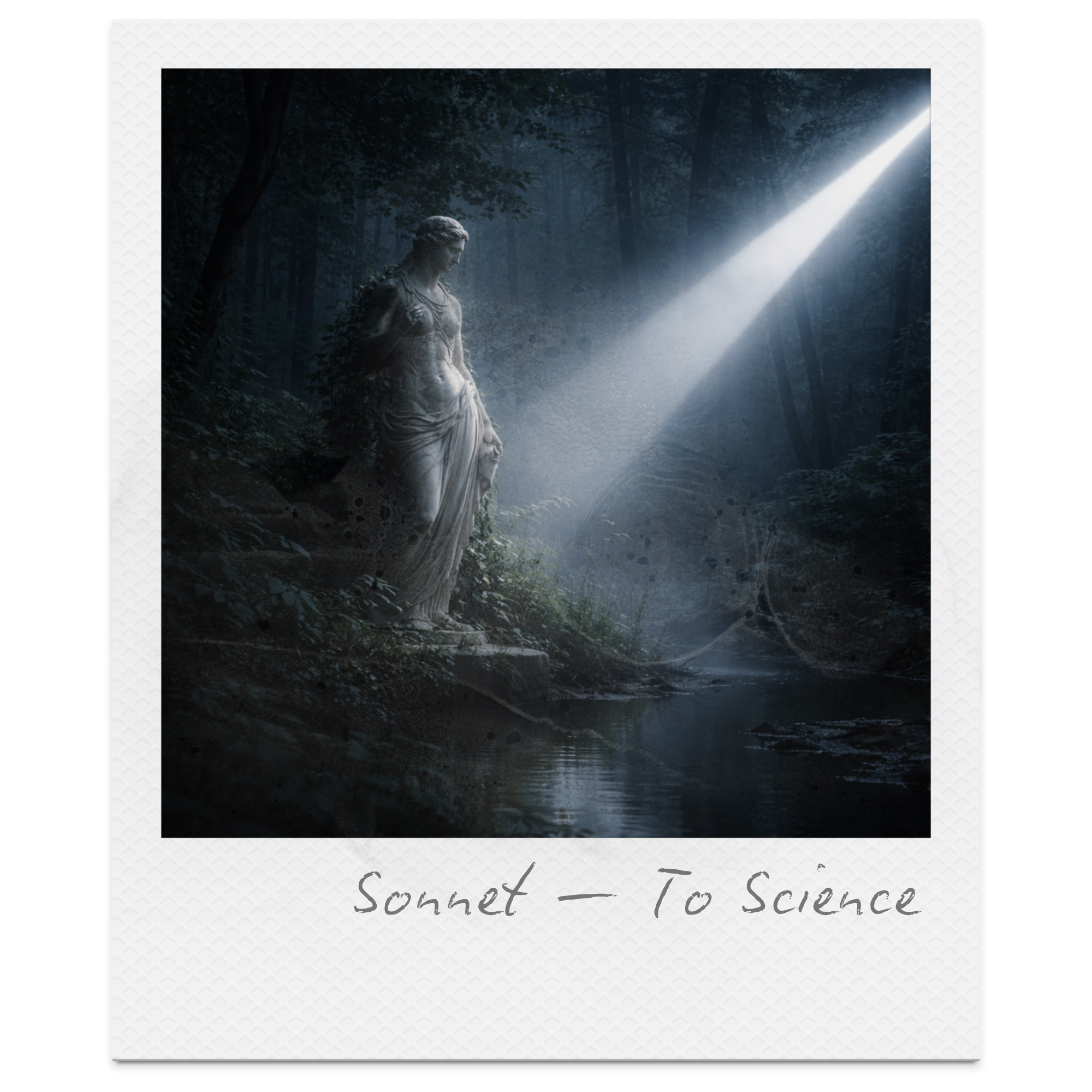
Sonnet—To Science by Edgar Allan Poe: Summary, Themes, Meaning & Analysis
Edgar Allan Poe’s Sonnet—To Science explores the tension between imagination and reason, presenting science as a force that strips the world of its wonder, beauty, and myth. Through a structured sonnet form and a confrontational voice, Poe challenges the dominance of rational thought, suggesting that scientific progress may come at the cost of creativity, emotional depth, and symbolic meaning. The poem draws on classical mythology and rich imagery to show how explanation can replace enchantment, leaving the world diminished. At the same time, the poem remains deliberately ambiguous. While science is criticised for its intrusive “peering eyes,” it is also shown to be an unavoidable force shaped by time and progress. This creates a deeper question at the heart of the poem: does understanding the world mean losing the ability to experience it with wonder? Through this unresolved tension, Poe invites readers to reflect on the balance between knowledge and imagination, making the poem as relevant now as it was in his own time.

Eldorado by Edgar Allan Poe: Summary, Themes, Meaning & Analysis
Eldorado by Edgar Allan Poe presents a deceptively simple tale of a knight’s lifelong quest, yet beneath its musical, ballad-like surface lies a powerful exploration of illusion, ambition, and the passage of time. As the knight searches endlessly for the legendary land of gold, the poem gradually reveals that fulfilment may be unattainable, transforming what begins as a hopeful journey into a meditation on disillusionment and human limitation. Through its shifting imagery and tightly controlled structure, Eldorado moves from youthful optimism to existential uncertainty, culminating in a haunting suggestion that the knight’s goal lies beyond the physical world. Poe leaves the meaning deliberately open, inviting readers to question whether the pursuit itself gives life meaning, or whether some desires are destined to remain forever out of reach.